Home Blog Page 7028

Incidents of violence, vandalism and disruptions reported during Bharat Bandh

0

The Congress party has called for a Bharat Bandh in protest of rising fuel prices across the country. Most of the opposition parties have joined the protests too. However, the protests have not been peaceful in many cities and workers of several political parties have been indulging in vandalism, violence and disruptions.

According to reports, in Patna, the workers of Pappu Yadav’s Jan Adhikar Party have reportedly vandalised vehicles in the streets of Patna and have disrupted railways and roadways traffic in several locations.


Train transport has also been disrupted in several locations as political groups have stopped trains by protesting on busy railway tracks. The Patna-Gaya route is said to be badly affected and trains have been delayed. In Arrah, NSUI and AISA workers have reportedly stopped many trains


In Mumbai, the MNS had announced yesterday that it would be supporting the Bharat Bandh while Shiv Sena decided to sit it out. MNS workers have reportedly been busy vandalising shops and destroying public properties in many areas. In Pune, while the MNS workers began damaging Municipal corporation buses early in the morning, they have also set buses on fire.


In several areas of Mumbai, MNS workers have reportedly vandalised shops and blocked local and metro trains too. Media reports have shown MNS workers forcefully shutting down shops and creating a ruckus in busy market areas.

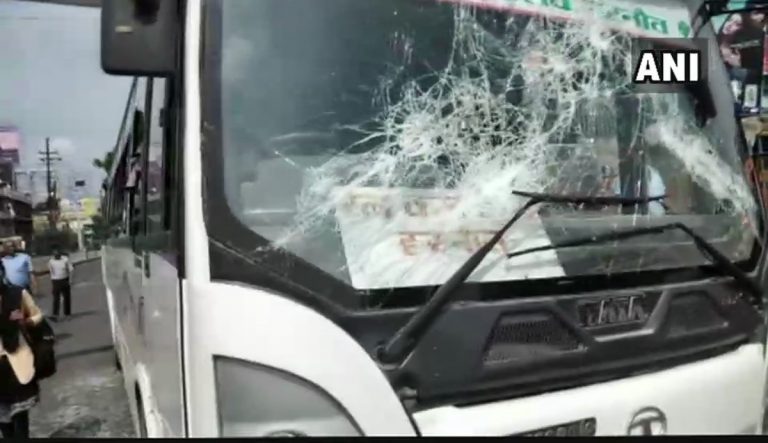
In Pune, a school bus has also been reportedly targeted by protesting workers and has been damaged. People on social media have condemned such acts and have openly expressed that political protests should not target innocents.


In Ujjain, Madhya Pradesh, Congress workers have reportedly vandalised a petrol pump. In Bengaluru, transport and public services have been badly affected due to the Bharat Bandh as several transport associations are participating in the protests. Schools and Colleges across the city have been shut.

Previously in April, widespread incidents of violence and vandalism have been reported during the Bharat Bandh protests against the Supreme Court’s decision to amend the SC/ST Act. Many people had died and several others were injured.

CWC study reveals Kerala dams being full up even before torrential rains of mid-August

0

According to a detailed study on Kerala flood carried out by the Central Water Commission (CWC), the state’s major dams, on the eve of torrential rains, barring Idukki, were all already full to capacity. Thus making it impossible to contain cumulative runoff totalling more than 200 per cent of the storage capacity of all the small and big reservoirs in the state.

As stated in the detailed report submitted by the CWC to the water resources ministry last week, Kerala received 12 billion cubic meters (BCM) of water in three days of exceptional rain lasting from 15th to 17th August. This is almost more than double the capacity (5.8 BCM) of all the reservoirs in the state.

In view of the state’s experience and several affirmations made the report recommended revisiting the ‘rule curves’- strategic water levels for planning operations of a dam and all reservoirs. The report said that the dams neither added to the flood nor did it help to reduce the flow. Though standard operating procedures were followed incessant rains in June-July and exceptional rains in August left the state defenceless, the report said.

Sources: The Times Of India

CWC director (hydrology) N N Rai said, “The dams did not release anything extra of what they received. The authorities had released water in a controlled manner. The commission has come to the conclusion after computing and analysing step by step inflow and outflow of water during the entire season”. He also shared that the report would recommend “revisiting rule curves of all reservoirs” in view of shrinking of their water carrying capacity over the years.

The CWC besides listing extreme weather conditions have also referred to other reasons including encroachment of floodplains and other activities in the catchment area behind the disastrous outcome of such intense rainfall.

The CWC is, however, an advisory commission only. All the dams are maintained by the state government with the help of experts in the management bodies, taking into account periodic alerts sent by different central agencies.

The World Hindu Congress and the diatribe against it

0

Coinciding with the 125th Anniversary of Swami Vivekananda’s speech to the Parliament of World Religions, the World Hindu Congress (WHC) has irked a lot of those belonging to the “liberal” side of the political spectrum. The usual leftist garbage about Hindutva, the demonising of the Sangh Parivar and the mandatory sloganeering against “Hindu Nationalism” has all been recycled once again to pull the WHC into a storm of controversy, with the usual suspects leading this manoeuvre.

This devious diatribe soon imploded into what it actually is: A Hindu-hating, India-hating effort white-washed as “protecting” Indian secularism and pluralism. Take the example of the South Asian Solidarity Initiative which has been actively against the WHC. It maintains a “Hindutva Watchlist” that lists overseas organizations that seek to promote the RSS agenda of “instigating terror… and advocat[ing] the ongoing oppression of the Kashmiri People.” Organizations that come under the list include even the Chinmaya Mission. One wonders how an organization that spreads spiritual and educational values through charitable activities comes under a list of “terror” organizations. But that is the main agenda of those wanting to vilify the WHC: Label those involved in uniting and promoting the interests of Hindus as “terror” organizations and rant against them.

These are obvious attempts by the global Left to demean the WHC. Activists like Harsha Walia have called for Antifa, the far-left movement that for all its “anti-fascist” rhetoric has engaged in harassing the press, to “pay attention” to the World Hindu Congress. Why exactly should an organization that is willing to use violence be brought into an event that has Hindus celebrating their way of life? Is this dialogue among Hindus so repulsive to these forces that they must be met with violence?


This is in sharp contrast to how none of these groups, seem to be bothered about say, the Chicago-based Nation of Islam whose leader has called Asians as “bloodsuckers”.

And of course, there are the self-proclaimed HR activists who denounced “Hindu fascism’s targeting of Muslims, Sikhs, Dalits, Christians and Buddhists.” The irony of this entire narrative is that His Holiness The 14th Dalai Lama has himself graced the World Hindu Congress in the past. Why would the most venerated leader of Buddhism and a Nobel Peace Prize Laureate do that if the WHC wishes to persecute minorities including Buddhists?


There is also this effort to coin a new term, i.e., Hindu fascism, much along the lines of Hindu terror. So, Hindu Fascists shall be the new tag that Hindus will have to battle.

When ABCDs (American-born Communist desis) are protesting against something, can our homegrown variety of leftists be far behind?


According to Rana Ayyub’s logic, a Vice-President who is also a practising Hindu attending the World Hindu Congress is a sign that India is a Hindu Rashtra. By an extension of the same logic, does holding Iftar parties at the taxpayer’s expense also indicate that India is an Islamic nation?

Hindus from throughout the globe, from the Hindu heartland, India to far-off places like Ghana, congregated to share their ideas and discuss many issues that involve the community. This is a means to display the unity among Hindus and should be welcomed by all. And yet, this platform is diabolized. The obvious question arises: Why is the Left so upset with Hindus uniting? A revival of the lost Hindu unity does not deserve the amount of venom that the WHC is receiving.

The raising Hindu self-awareness seems to threaten the already paranoid and insecure Left. After labelling Janmashtami celebrations as “right-wing”, even a normal gathering of Hindus is seen as fascist. It is clear that liberals do not want to see a united and assertive Hindu community. Hence, the vicious narrative against the World Hindu Congress. If nothing else, Hindus should consider this is as enough reason to take pride and learn to celebrate their identity.

Youth Congress leader nabbed on accusations of sexually harassing a scheduled tribe girl in Telangana

0

Bandari Bala Kumar, Sircilla unit Youth Congress president, was taken into custody after he allegedly entered the hostel in the town and harassed the girls allegedly under inebriated condition. Reportedly, he later attempted self-immolation after being arrested by police on the charge of harassing girls at a scheduled tribe hostel in Rajanna Sircilla district Sunday, according to the police.

The Youth Congress President attempted suicide when he was taken to a hospital for a procedural examination. He doused himself with kerosene and attempted to set himself on fire. However, police managed to foil his attempt. He was later produced before a court which remanded him to judicial custody.

This is not the first time Congress functionaries have found themselves in such situations. In July, Delhi Police had arrested Congress IT cell member Chirag Patnaik on complaints of sexual harassment filed by a former employee. The victim at that point in time had pointed out how the social media in-charge of Congress, Divya Spandana failed to act on her complaint.

Uttar Pradesh: Fearing police action, nearly 10,000 criminals head back to jail

0

The Uttar Pradesh government led by Yogi Adityanath has released a new set of data, which claims a significant reduction of crimes in Uttar Pradesh till July of this year, reports The Economic Times.

The report says that almost 10,000 criminals in the state have surrendered and are back in jail after cancelling their bail. According to the report, the number of rape cases has been reduced to 2,444 in the six-month period from January to June of this year from 2,614 in the corresponding period last year. There was also a slight reduction in murder cases to 2,505 this year as compared to 2,462 and 2,766 in the past two years respectively.

Chandra Mohan, the UP BJP Spokesperson said, “An effective campaign has been launched across criminals in the state leading to 63 dreaded criminals being killed and 650 were injured in encounters and 3430 wanted criminals being arrested and sent to jail. In the year 2018 so far, 9866 criminals have got their bail cancelled and presented themselves before courts to go to jail. 14746 criminals were booked under the Gangsters Act. Criminals no longer have political shelter. A good atmosphere has been created for investment”.

Yogi government after taking charge of the Uttar Pradesh government seems to have been successful in regulating law and order in the state, which had deteriorated over the years. This is not the first time the criminals have cancelled their bail, as recently nearly 5,500 criminals got their bails cancelled, fearing action by the police.

The DGP of UP, Om Prakash Singh said that from March 2017 to January 2018, a whopping 1,331 encounters were conducted by the UP police, as a result of which 3,091 criminals were arrested and 43 were killed. Apart from this recently, two dreaded in UP, Salim Ali and Irshad Ahmed, fearing the action by the Yogi Adityanath led government had carried placards and marched around town with vows to stay away from crimes.

BJP’s National Executive Meet: PM Modi calls for ‘Ajay Bharat, Atal BhaJaPa’

0

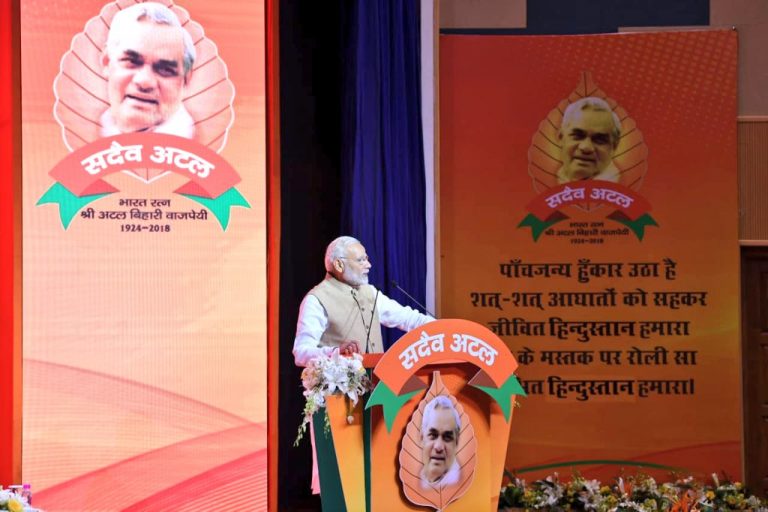
The Bharatiya Janata Party organised its National Executive Meet at Delhi yesterday. Prime Minister Narendra Modi, addressing the workers and leaders of his party from across the country, gave the slogan of ‘Ajay Bharat, Atal BhaJaPa’. According to reports, the PM, remembering the works and visions of former PM Atal Bihari Vajpayee, urged his party men to work hard for a better India. PM Modi called the party workers to ‘serve the people, not power’.

Giving a brief about the meet where media was not allowed, union minister Ravi Shankar Prasad said that PM gave the clarion call ‘Ajay Bharat, Atal Bhajapa’, meaning an India which is unconquerable, remains victorious, which can’t be subjugated by anyone, and a BJP which remain firmly committed to its principles.


Addressing the party workers, Modi said I am from Gujarat, where our party has been in power for 31 years. He said, “this is because we don’t have an ego of power, we don’t see power as only as an instrument of sitting in the chair, but we see power as an instrument to go before the people, work for them and empower them”. The PM also said, “we work for our dedication, our principles, and we have niti (principle) and also we have rananiti (strategy). The principle remains firm, but strategy keeps changing from time to time.”


Regarding the BJP’s performance in the upcoming general elections and the state assembly elections, the PM said, “we don’t see a challenge anywhere”. He added further that there should be an opposition in a democracy. But the irony is that those who were a failure in governance have also failed in being an opposition.

Launching an attack on Congress, the Prime Minister stated that a comparison should be done between the work done by one family for 48 years and the work done by the current government in 48 months. But the problem is that they neither fight on issues nor on work. They fight on lies. Every day they tell a new lie, telling lies, building lies and repeating lies has become their habit. The PM said that the problem is we can fight with principles, but we don’t know how to fight with lies. But as a strategy, their lies must be countered, and reply must be given through our work.

The prime minister called upon the party workers to expose the falsehood of opposition in general and the Congress party in particular.

Modi also mocked the effort to form a ‘mahagathbandhan’ (grand alliance) among opposition parties to defeat the BJP. He said, “people who do not see eye to eye, who do not have ideological of political understanding to work together, who can’t even tolerate each other, today they are thinking of forming a mahagathbandhan, and that is the biggest vindication of our success because of the popularity of BJP among the people of India.”

In a significant comment, Modi said that nobody is ready to accept the leadership of Congress, even the smaller parties consider the Congress leadership to be a burden. He said that even if many parties are coming together with Congress under compulsion, they think that Congress party leaders are not capable of providing leadership. PM added that the situation of not accepting the leadership of Congress is present inside the Congress party too.

Addressing the meet, BJP president Amit Shah had previously stated that the BJP is going to remain undefeated for the next 50 years.


AICC Secretary falls for parody account, Nirmala Sitharaman calls him out

0

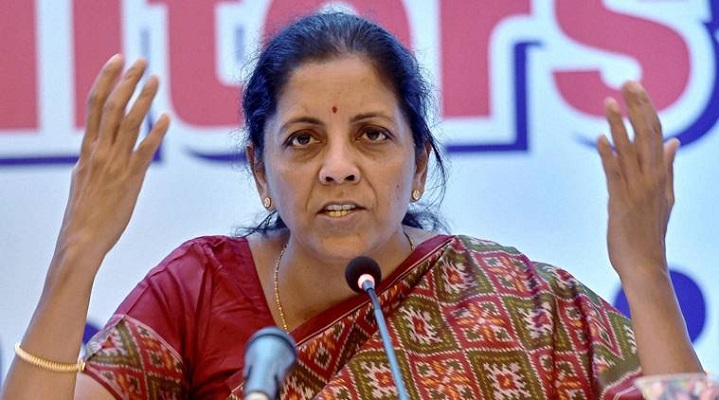
All India Congress Committee secretary Manickam Tagore fell for a parody account and used it to attack Defence Minister Nirmala Sitharaman, calling her ‘unfit’ to be the defence minister.

Tweet by Manickam Tagore, now deleted

Tagore quoted a parody account of news channel ‘Republic’, ‘RepubliicTv’, which claimed that Sitharaman was questioning Rahul Gandhi’s Mansarovar Yatra because the shadow of the stick was missing.


Tagore quoted this tweet and mocked Sitharaman, calling her ‘unfit’ to be the Defence Minister and that she should undergo checkup. However, Sitharaman called him out for falling for a parody account.


He later deleted his tweet and apologised to the minister.

China opens trade doors for Nepal, allows access to ports. What does it mean for India

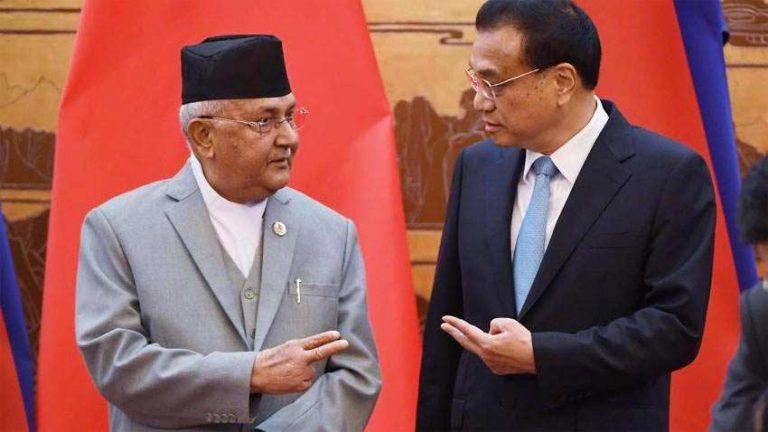
Nepal and China have finalized the protocol text of the Nepal-China Transit and Transport Agreement. This agreement is set to allow Nepal access to Chinese ports, including Tianjin, Shenzhen, Lianyungang and Zhanjiang open seaports and Lanzhou, Lhasa and Xigatse dry ports in China for third country trade.

This agreement is being touted within the Indian media as an end of India’s monopoly over transit rights to Nepal. While such agreements definitely make good headlines provided the popular frame of looking at China’s increasing involvement in South Asia as an act of undercutting India’s influence but ground realities are very different.

A little background

Being a landlocked country, Nepal relies on access from neighbouring countries to participate in international trade. With India, mainly two agreements govern the transit: the India-Nepal Treaty of Trade and Transit and the India-Nepal Rail Services Agreement. Nepal uses Kolkata and Haldia ports for its international trade where Kolkata port handles mostly containers and Haldia port handles heavy cargo such as coal and cement. Around 6,000 of Nepalese containers are moved through the West Bengal ports compared to just 150 for Bhutan. According to some estimates, 90% of Nepal’s international trade is routed through these ports. Off late there has also been a trend to route Nepal’s imports through the Vishakhapatnam Port due to importers concern with rising costs at the ports located in West Bengal.

Due to its landlocked status, Nepal is dependent on Indian ports for its trade. There are always minor issues involved with the use of these ports such as cost factors and delays etc. However, a blockade at the India-Nepal border in 2015 where Nepal’s essential supplies were cut-off for a period of two months triggered anti-Indian sentiments at another level altogether. The blockade was caused due to protests by Madhesis demanding a greater representation in the country’s new constitution. But the government in Nepal started viewing it as an “unofficial blockade” by the Indian government in solidarity with the Madhesis who ethnically, in terms of language and culturally have a resemblance to people in the Indian state of Bihar and Uttar Pradesh. This understanding of the Nepalese government led it to look for alternative options for transit trade. Even during the blockade, China came to the aid of Nepal by supplying essential commodities and fuel providing relief to some extent.

While Nepal under KP Oli’s Prime Ministership has taken a number of steps to increase economic linkages with China. There has been a sharp departure in China’s policy as well towards Nepal. While earlier it was content with the Himalayan Kingdom paying lip-service to the ‘One China’ policy and keeping Tibetan activists under a hard watch, now China has started to actively cultivate its influence in every manner possible- investments, outreach initiatives, cultural diplomacy, academic exchanges et al. While this can worry India at many levels but as far as the transit rights are concerned, Himalayas continue to remain the most important challenge to the Nepal-China transit story. Any talk of China allowing access to its ports or a rail-link substituting the existing transit trade must be carefully weighed in on the basis of the facts at hand.

Why China cannot replace India?

The ports that China has promised to provide access to are roughly more than 3,000 Km away from Nepal. The nearest port is Zhanjiang which is 2,755 km away from Nepal while the rest of the ports are more than 3,000 km away. In trade, every kilometre of transit increases the cost of the final product. Traversing this distance in comparison to Kolkata which is 774 kilometres away and Vishakhapatnam which is 1194 kilometres away would entail exorbitant cost and time. In fact, the road infrastructure, especially from the Nepalese side, would require a high level of investments, something that Nepal might not be able to commit to owing to the size of its economy. 

China had earlier expressed its desire to supply petroleum products to Nepal. Nepal also showed interest in importing at least 1/3rd of its requirements from China but difficult Himalayan terrain poses a significant challenge to any meaningful fuel-trade between the two countries. The officials in the Nepal government are also aware of the challenge especially due to the absence of infrastructure on the Nepalese side. There already is an awareness amongst the policymakers that China will not be interested in commercially supplying fuel to Nepal if it is not economically viable for the country. Nepal Oil Corporation even signed an MoU with PetroChina to import fuel for Nepal from China however that agreement has not been implemented commercially. Plus, the Nepalese government has started granting petroleum import license to private firms who have shown a preference to import fuel from India at much cheaper rates instead of considering the Chinese option which is expensive and not commercially viable.

There is also a tendency to place hopes on the China-Nepal rail link through Tibet. China cannot fulfil Nepal’s fuel requirements even if the Tibet railways reach right up to the Nepal-Tibet border. First of all, providing access to Tibet is China’s own security pressure point. One of the reasons why China is interested in a healthy relationship with Nepal is because of the large Tibetan community whose activism if goes unchecked can become a nuisance. Opening Tibet to Nepal on a scale that trade relations normally require would be a security headache for China and it will surely prefer to avoid it.

Secondly, the Kolkata-Raxaul railway line is a much cheaper and less costly alternative to the China-Nepal rail link. Because a rail link in the difficult Himalayan terrain requires heavy investments with mostly bridges and tunnels lining up the entire route. Is it logistically wise to depend on rail links in such difficult terrains for your key supplies? The railway project is clearly fraught with dangers. The contractors needed to work on the project have been tough to find because of health and environmental hazards. More than a 100 died during the construction of a small section only. The cost is again very prohibitive with even a conservative estimate putting it at $16.1 Million per 0.6 miles.

Long story, cut short, the fears of Nepal’s transit dependence on India being replaced by China are not new. The Araniko Highway, connecting Kathmandu to Tibet constructed in the 1960s has been used in the past also to play the China card against India. However, to imagine that it can handle volumes of cargo traffic that can fulfil Nepal’s essential requirement is impossible. In fact, this oldest infrastructural link between modern-day Nepal and China can’t handle Nepal and China trade alone. A huge quantity of goods continues to come from China to Nepal through the Kolkata seaports. This highway has often fuelled many fantasies of China-Nepal trade but it is environmentally vulnerable to the extent that the friendship bridge that links the highway on both sides is reduced to just minor foot traffic after the 2015 earthquake. Thus, this link continues to remain one of the most dangerous roads in the world with frequent instances of landslides blocking access.

In the current scheme of things, it looks very difficult that any transit rights provided by China to Nepal can end the historic relationship of transit and trade that exists between India and Nepal. In fact, Nepal’s own media believes that such agreements provide “psychological boost” at best and might reduce the “excessive dependence” of the landlocked country by India. Even they understand that China cannot replace India or end its monopoly. Nepal’s own foreign policy experts call the transit agreement as posturing by Nepalese elites to please the public back home and send a message to India.

Kerala nun rape case: In a first, nuns in Kerala defy vows, join in the against Bishop Franco Mulakkal

0

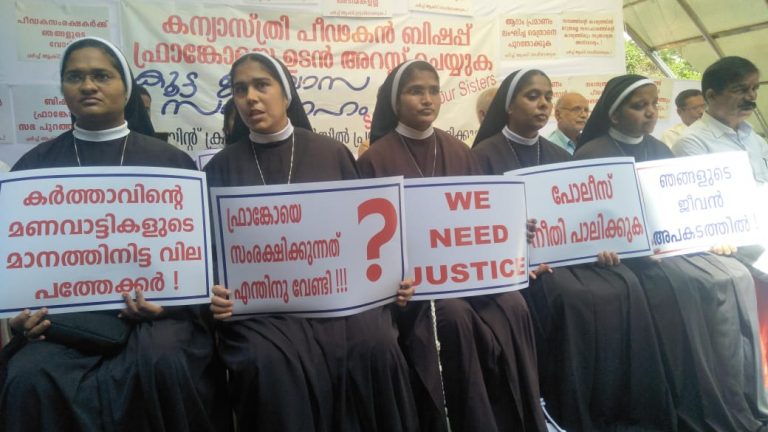
For the first time in the history of the Catholic Church in Kerala, nuns have joined the protests against the Bishop Franco Mulakkal, Bishop of the Roman Catholic Diocese of Jalandhar, who is accused of raping a nun for two years. A group of nuns have defied their vows to protest against Church atrocities and the attempts by the police to hush up the incident. Members of Joint Christian Council in Kochi have also been protesting, demanding the arrest of the accused.


“The Bishop has political clout in Kerala as well as Punjab. He is using money to influence everyone,” alleged Sister Anupama, who joined the protests. George Joseph, working president of the Joint Christian Council said that once the Bishop is arrested, the Church will be forced to take action against him. The police, however, says that there is no scientific evidence to substantiate the rape charges. The police even claim that no other nun has given a statement accusing the bishop.

Yesterday, independent MLA from Kerala PC George had referred to the nun who has accused the bishop of rape as ‘prostitute’ and even questioned her character. The nun who was deeply hurt and disturbed by George’s derogative remarks, reportedly locked herself in her room and refused to take calls.

The News Minute editor-in-chief, Dhanya Rajendran, reacting to coverage of George’s statement said that ‘As a first step, media should stop covering his disgusting, vile press meets live.


However, Dhanya got called out trying to cover up for George.


She also got called out how the media goes after abusive tweets of those accounts who are followed by Prime Minister Modi but wanted to not restrain media from Goerge’s abusive views.


Shockingly, this is not the first time PC George has shown insensitivity towards women and sided with the accused. Last year, Dileep, a Malayalam film industry heavyweight, was arrested in the abduction case of a Malayalam film actress and George had insisted Dileep is innocent. Despite medical evidence that she was assaulted, George insisted the actress was lying about it.

It is time that our politicians stop defiling and trampling over India’s Non-Negotiables

0

Diversity and pluralism are beautiful. For Indians, diversity and pluralism are in their DNA. We are born and raised in a country where we have had multiple languages, multiple cuisines and a variety of philosophies/religions. The level of comfort an average Indian has with diversity at multiple levels including intellectual diversity is something the world could learn a lot from.

But, this celebration of our diversity is based on some assumptions. It can only work when there are some basic shared values between all these diverse groups. So as these groups go about living their lives with their relative differences they agree on a certain set of common values. I would like to call those values “India’s Non-Negotiables”. But some of these Non-Negotiables have been under a constant assault in India.

Elections come and go, but over the years the narrative in India has gone from being seriously annoying to the theatre of the absurd. Especially, since the election of 2014 where Indians voted the Narendra Modi led NDA to power the assault on India’s Non-Negotiables has been amped up to a very high decibel.

So what are these Non-Negotiables? What are these values/rules that should not be breached if we want to maintain the integrity of our nation? So here are some of the points that I believe should qualify as Non-Negotiables in India.

There can be no compromise on the Nations integrity and National security. When it comes to issues like Kashmir, Naxalism, some areas in the North-East or some separatist elements in Tamil Nadu and Punjab, everyone irrespective of their political leaning should speak in a united voice. But does that happen in India?

Let us examine a few examples. According to this India TV News Desk report on August 30, 2018, Congress leaders are “Talking about inspiring and funding members of several students unions across the country over ‘BHU-like incidents’, one of the letters allegedly written by Comrade Prakash says that Congress leaders are willing to assist them.”

The letters accessed by India TV allegedly state “We must intensify protests using students, state forces will be soft against students which will gradually put the state at a disadvantage while acting against us. Congress leaders are very much willing to assist us in the process and have also agreed to fund their further agitations whenever such opportunities arrive,”

A few months ago on June 22nd Senior Congress leader Saifuddin Soz was quoted by ANI saying “Musharraf said Kashmiris don’t want to merge with Pakistan… their first choice is independence. The statement was true then and remains true now also. I say the same but I know that it is not possible.”

As if this was not enough former Cabinet Minister from the Congress Mr Kapil Sibal was speaking to ANI where he was quoted saying that the current Indian Government should listen to the point of view of a separatist outfit like the Hurriyat.

In the bid to score political brownie points over the current political dispensation the Congress party and the larger left ecosystem is willing to compromise India’s integrity and national security. This is a path which is fraught with danger. One would hope that the Congress party would learn from their mistakes in the past where it was their flirtation with extremists that led to the Khalistan movement which culminated in the loss of many lives in Punjab and eventually cost us the life of India’s then Prime Minister Indira Gandhi.

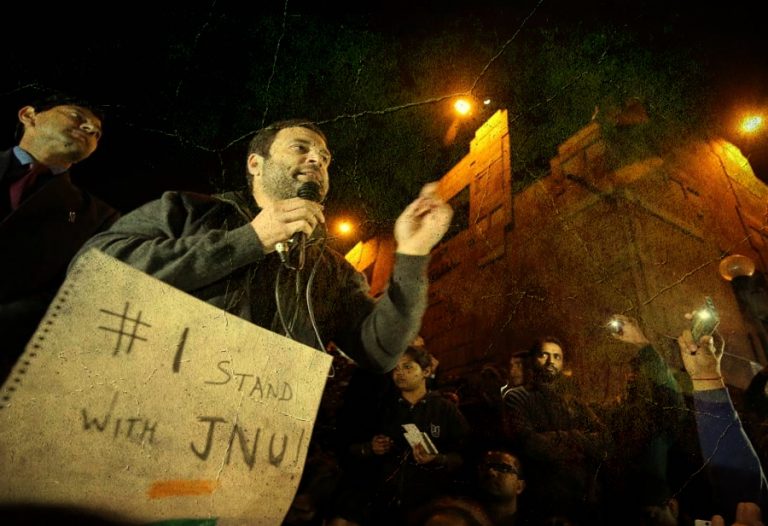
The monopoly of violence in any sane and civilised society has to be with the state. This is Non-Negotiable. But is that the case in India? Does India’s left ecosystem really believe in that? When students in JNU chant “‘bandook ki nok pe lenge azadi’ (we will take freedom with guns)” what should be the response of India’s intelligentsia? How should the Congress party that is India’s premier opposition party behave? In any normal society, you would see all mainstream political outfits completely distancing themselves from such elements. But as we see time and again not only is the Congress party President meeting the leaders of these separatist urban movements to encourage them, they take their assistance when it comes to election campaigning.

We have come to point in India where violence by Naxals has been defended and re-contextualised by “intellectuals” and “experts” on Twitter like @suchitrav where they say “Naxal movements have used violence – this is undeniable. But what is often lost in the analysis is this — the violence of the powerful  cannot be equated to the violence of the powerless.”


A “secular” and “socialist” state should treat all its citizens equally. That is an absolute Non-Negotiable. There can be no discrimination on the basis of identity. But India is a unique nation where our former Honourable Prime Minister Shri Manmohan Singh during the 52nd address to the National Development Council was quoted saying “We will have to devise innovative plans to ensure that minorities, particularly the Muslim minority, are empowered to share equitably the fruits of development. These must have the first claim on resources.”

Yes, you have read that right, the former Prime Minister of India believes “Muslims must have the first claim on India’s resources”. A specific set of people in India should be given a preference in a basic claim on its resources. Leave the majority aside for once, I wonder what the other minorities in India think about this?

I would like to end this article with one last example. For me, this is the supreme value in any secular democratic republic. That is the right to speak freely without any fear or intimidation. Freedom of Speech is a very important Non-Negotiable. But in India, we have seen a consistent assault on our right to speak from every single political outfit from time immemorial. It does not matter which state you live in India, from Kashmir to Kanyakumari we have one common thread.

These Twitter Threads on assaults on our Freedom of Expression by Congress and BJP by Anand Ranganathan expose the hypocrisy of our two premier political outfits and how they have muzzled our basic rights from time to time. Every political outfit will try to curb our right to speak freely by giving ridiculous arguments like “hurt sentiments”. What we have in the name of free speech in India is a farce. On any given day, any fringe group can basically get up and give threats, come on the streets, damage public property and even kill people sometimes because their sentiments are hurt by something written or spoken by someone. And they are able to get away with this with impunity because there is no law and order in India and in many cases, the government in power is tacitly involved in the harakiri.

No society can survive and sustain itself without these Non-Negotiables. If we remove them, India’s diversity and pluralism will collapse. If they cease to exist, the very edifice of The Republic of India will cease to exist. There is a fine line, and that line needs to be defined. It does get updated from time to time as the moral arch of our society expands, but, it still exists and a dispassionate analysis of India’s socio-political climate today should give us a cause for concern. We have to stop looking at everything through the prism of victimhood and oppression. India is far more than a nation of tyrannical majorities and victim minorities. Unless this prism is challenged we will go on having these assaults on our Non-Negotiables.

There is more to life than the game of Oppression Olympics and Victimology Poker. So I would end this article by asking all of you a few questions. Can everyone irrespective of their political affiliation agree that the values of free speech, equal treatment of every citizen and the integrity and security of our nation Non-Negotiable? Can we at least attempt to have this conversation in India? (I’ve already discarded the Marxists, but what about the rest of us?) If you think you have nothing in common with other socio-political groups why is it so? Share your reasons. Also, how can we build a healthy society in such a scenario?