Home Blog Page 7039

Congress leader Navjot Sidhu’s claims discredited by Pakistan

0

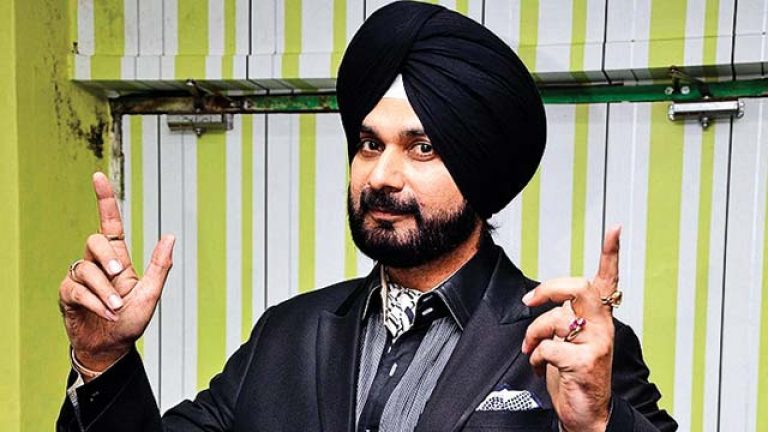
Congress leader and a minister in Punjab government Navjot Singh Sidhu who had stirred up controversy from the moment he showed a keen interest in attending Imran Khan’s swearing-in ceremony in Pakistan is on the news yet again as Pakistan has contradicted his claims.


The leader claimed that the sacred Kartarpur corridor, a religious road to Kartarpur Sahib Gurudwara would be opened by Pakistan, indicating that it shows Pakistan’s commitment towards honouring Sikh sentiments as many Indians seek to travel to Kartarpur Sahib on the occasion of Guru Nanak’s birth anniversary. Giving justification for the much ‘controversial hug’ he extended towards General Bajwa, which was highly criticised by many, the Congress leader said that he had asked General Bajwa to open the Kartarpur route, claiming that general Bajwa agreeing to it got him emotional and so he hugged him.

Now when Pakistan openly denies Sidhu’s claim, saying that there is a wide gulf between India and Pakistan that the authorities are trying to narrow down and the Kartarpur corridor issue cannot be considered in isolation, the Congress who had all this while defended Sidhu’s ‘controversial hug’ saying that it was done in ‘sportsman spirit’ and even had gone ahead to criticise PM Modi writing a congratulatory letter to Imran Khan, is yet to clarify on the issue. It is notable here that Punjab Congress Sunil Jakhar had asserted that as Sidhu has got General Bajwa’s remark on the issue, the ball is now in the court of the Indian ministry of external affairs to take the matter forward.

Akali Dal, who has long been at loggerheads with the Congress party in Punjab, lambasted at the Congress leader claiming that Sidhu to save himself from the embarrassment has given the entire episode a religious twist. After the Pakistan government, today denied claims made by Sidhu, Akali Dal alleged that Sidhu lied blatantly in order to save his skin.

Pakistan of today is at a very risky juncture. In the recently concluded elections, it saw terrorist organisations gaining political legitimacy. Hafiz Sayeed’s organisation contested elections, a terrorist group named Tehrik-e-Labbaik even managed to gather two million votes. The legitimisation of radicalised terror organisations who openly declare India as their enemy puts the already strained bilateral relationship at a much more delicate state. Sidhu can claim that he had the nation’s best interests at heart but any keen observer would refrain from taking issues with Pakistan lightly, especially the ones that have religious implications and can be used (or rather misused) by combative elements in a fragile nation like Pakistan to further complicate its ties with India.

OBC data to be collected for the first time in Independent India: Home ministry

0

The central government is all set to collect data on other backward classes in the 2021 census for the first time since 1931. It is believed that this data will aid the central government in deciding the need and the quantum of providing reservations to various Backward classes, which till date are defined as a group rather than separate communities.

Mandal commission recommended such move and the commission’s recommendations were accepted by the V.P.Singh government. The 27% reservation was implemented by the Narshima Rao government later. The Supreme Court had earlier inquired about the scientific basis of reserving 27% of the reservations to the OBC. This data can be useful in answering that very question.

The government already possesses raw data on castes collected through the Social Economic and Caste Census (SECC), 2011. A former Registrar-General of India officer told a news outlet on conditions of anonymity that all citizens were covered by declared caste names in the SECC and all that was required was to collate the information to get a fair idea on different aspects of Scheduled Castes, Scheduled Tribes, and OBCs.

The issue with the current disposition is one of the varied lists of castes in different states. Each state has their own list, thus it has been noticed that it is very much of a possibility that a person belonging in one state’s OBC list might not be able to avail the benefits of it in another state. The government had earlier formed a five-member commission to examine the issues of the central OBC list and the sub-categorisation of it.

Union home minister Rajnath Singh recently chaired a review meeting to discuss the road ahead for undertaking Census 2021. According to the official statement from the Home ministry on Friday, the meeting envisaged collecting data on OBC for the first time in Independent India. The Home Minister also emphasised improvements made on technological and design in the Census, which he believes will aid the target of finalising the data within 3 years.

The Centre released the socio-economic profile generated through SECC in 2015, but the data on caste percentage was held back despite the opposition’s demand to make it public.

Here is why SC has stayed construction in some states and union territories

0

The Supreme Court of India on Friday stayed construction activities in several States and Union Territories (UT) until they frame of a Policy under the Solid Waste Management Rules, 2016. This strongly worded order was issued by a bench of Justice MB Lokur and Justice S. Abdul Nazeer after they slammed the states and UTs for their “pathetic attitude” in delaying the formulation of the policy even after two years.

The order read:

It is unfortunate that some States and Union Territories have not yet framed any Policy under the Solid Waste Management Rules, 2016.

In case the States have the interest of the people in mind and cleanliness and sanitation, they should frame a Policy in terms of the Solid Waste Management Rules so that the States remain clean.

The attitude of the States/Union Territories in not yet framing a Policy even after two years is pathetic, to say the least.

Further constructions in the States/Union Territories are stayed until the Policy is framed.

The court also imposed a fine of ₹5,00,000 and ₹3,00,000 on Andhra Pradesh and Chandigarh, for not framing the policy yet, and also for not being present in court. While Madhya Pradesh, Maharashtra, Odisha and Uttarakhand were fined ₹3,00,000 each for not framing a policy or not complying with court order.

This case was taken up by the court on the basis of the news report titled “Outrage as parents end life after child’s dengue death” published in the Times of India dated 13th September 2015. After publication of the report, Chief Justice of India had passed an order on 16th September 2015 to treat it as a Suo Moto Public Interest Litigation. All the states and Union Territories of India are listed as respondents in this case.

Income Tax Tribunal upholds tax penalty imposed on Congress’ Young Indian: Reports

0

The Delhi bench of the Income Tax Appellate Tribunal (ITAT) has upheld the penalty imposed by the I-T department on Young Indian, the organisation involved in the National Herald scam. As per a report in the Times of India, the ITAT has upheld the penalty levied on Young Indian on the grounds that it did not submit the information sought by the Income Tax Department.

According to the report, the bench remarked that the conduct of the assessee is not at all bonafide. The Young Indian had argued in its defence that the information which the IT department is seeking is similar to the points made BJP MP Subramanian Swamy in his PIL, which is currently pending before the Delhi High Court. It also argued further that any adjudication made by the IT court in the matter might further impact to the case which is pending before the Delhi high court. The ITAT, however, reportedly rejected te argument.

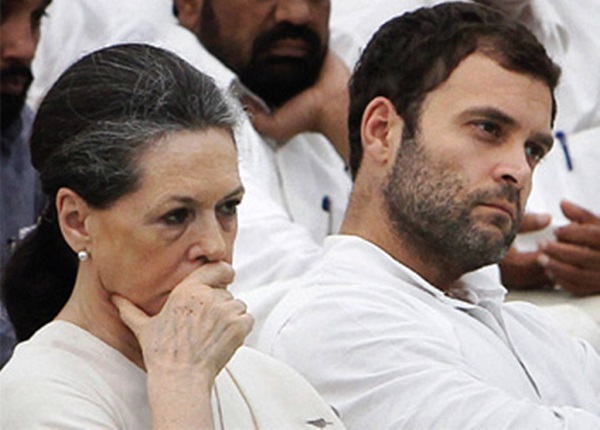
The investigations of the Income Tax department are giving the Congress party plenty of causes for worry. We had reported earlier that the IT Department suspected that Rahul Gandhi had failed to declare a significant portion of his income as he had hidden the fact that he was a director of Young India. Rahul Gandhi and his mother Sonia had also approached the Delhi High Court seeking a stay on the Rs 249.15 crore income tax proceedings against it. They had also pleased the Court to gag the media from reporting on the matter, a request that was declined.

It is pertinent to mention that Young India is at the heart of the National Herald case. The crux of the National Herald case revolves around the allegation that the Gandhis acquired property worth millions of rupees after Young India acquired Associate Journals Limited (AJL), which published the Congress mouthpiece, National Herald, via suspicious means of ownership transfer.

High Courts grant bail to litigants on the condition of contributing towards Kerala Flood relief

0

The Judiciary has invented an innovative way of collecting funds for the flood victims in Kerala. The Judges of the Court are now granting bails to accused on the condition that they contribute to the Kerala Flood Relief Fund. As per LiveLaw, “Justice Ananda Sen of the Jharkhand High Court has allowed more than 20 such bail applications since 27 August, with the amount directed to be deposited ranging from Rs. 5,000 to Rs. 75,000. A total amount of more than Rs. 4 lakhs has been ordered to be deposited to the fund.”

In a case involving alleged contempt of court by former RJD MLA Bhola Yadav concerning his comments made on the Fodder Scam verdict, the Jharkhand HC reportedly dropped contempt proceedings against him on the condition that he pay Rs. 2.5 lakh as a contribution towards the Kerala flood relief. A division bench comprising of Justices Aparesh Kumar Singh and Ratnakar Bhengra said in an order passed on the 21st of August, “We are of the opinion that his unconditional and unqualified apology can be accepted, subject to payment of the cost of Rs 2.5 lakh. The cost be paid towards Kerala Relief Fund in the designated account.”

In other instances, anticipatory bail was granted to one Utpal Ray in a cheating and forgery case and bail applications of Dhaneswar Mandal and Sambhu Mandal accused of fraud was granted on the condition that they make contributions of Rs. 5000 each. In another case, Delhi High Court agreed to squash an FIR against one Tarun Singh accused of sexual harassment, stalking, and criminal intimidation, after the complainant confirmed the accused’s claim that the allegations were a consequence of a misunderstanding between them, However, the court also included that a sum of Rs. 15,000 towards the cost of proceedings be deposited in the  Chief Minister’s Disaster Relief Fund for the State of Kerala within two weeks.

Hemant Kumar Sikarwar, the general secretary of the Jharkhand High Court Advocate Association has reportedly claimed that High Courts in Madhya Pradesh and Karnataka have also been issuing similar directions to litigants. It is notable here that after the devastating floods hit Kerala in the month of August, the central government, various state governments and private organisations had come forward to offer aid to the southern state. The Indian armed forces were deployed in large numbers to carry out rescue and relief operations on an unprecedented scale.

Look East : Prime Minister Modi gives priority to Northastern India in BIMSTEC Summit

0

The Fourth summit of BIMSTEC (Bay of Bengal Initiative for Multi-Sectoral Technical and Economic Cooperation) was held at Nepal capital Kathmandu on 30th and 31th August 2018. Prime Minister of India Narendra Modi attended the summit, along with heads of other member countries.

In his address in the summit, Modi emphasised connectivity and greater “cooperation and coordination” among member states. All speakers in the event resolved to enhance cooperation among the nations. In the side-line of the summit, the Indian PM also held bilateral talks with regional leaders.

An important aspect of India’s participation in this summit was the emphasis given on north-eastern region of India by PM Modi. Speaking at the summit meeting, Modi said that the north-eastern part of India will have an important role in enhancing connectivity with BIMSTEC member nations. He mentioned that the government of India has proposed to extend the “Science and Technology interventions in the northeastern region”, a program for development of northeast India, to BIMSTEC members.

Similarly, the government will provide 24 scholarships to researchers, students and professors from BIMSTEC countries in the North Eastern Space Application Centre. North Eastern Space Applications Centre (NESAC) was established as a joint initiative of Department of Space (DOS) and the North Eastern Council (NEC) and it is located at Umiam, Meghalaya.

The northeastern region shares borders with four-member states — Bangladesh, Myanmar, Bhutan and Nepal, and increased cooperation with BIMSTEC could play a key role overall development of North East India. This also goes along with Indian government’s Look East policy. The government of India plans to integrate the remote northeastern states with neighbouring countries with better connectivity, increased trade networks and enhanced cultural exchange. The Modi government is also working with these nations for seamless road transport across borders. Better cooperation with neighbouring countries is also important in combating insurgency in the north-eastern region.

PM’s emphasize on north-east was reflected on gifts he presented to other BIMSTEC members. The gifts comprised stoles and shawls depicting traditional motifs from the north-eastern states and the Kantha embroidery of West Bengal. The shawls were made from Assam’s famed golden Muga and Eri silk, besides cotton. Muga silk is exclusive to Assam and it has got Geographical Indication (GI) registration for it. Eri silk is also primarily produced in Assam though some other states also make it.

Not only that, a cultural evening was organised at the summit, and India’s contribution to the event was a beautiful presentation of Bihu folk dance from Assam. Official spokesperson of the Ministry of External Affairs posted a clip of the dance on Twitter, commenting on the performance “left the audience spellbound”.

[tweet https://twitter.com/MEAIndia/status/1035185822667026432]

After decades of neglect by successive govts, the current central government has given greater importance to the development of the north-eastern region. States without rail connectivity for more than half century are being added to the rail network, highways are being built at fast speed, river transport facilities being developed. With this enhanced connectivity with neighbouring countries under BIMSTEC umbrella and also with Look East Policy, it is expected that development of the region will finally catch up with other regions of the nation.

GDP hits 8.2% quarterly growth, BJP leaders hail government’s economic reforms

0

As per reports, India’s quarterly growth rate for the first three months of the current fiscal year has hit 8.2%, the highest in 15 quarters. India has cemented its place as the fastest growing economy with China clocking a 6.7% growth rate in the same quarter. According to reports, GDP at constant (2011-12) prices in Q1 of 2018-19 is estimated at 33.74 lakh crore, as against 31.18 lakh crore in Q1 of 2017-18, showing a growth rate of 8.2%.

Private consumption picked up in the quarter and investment demand showed a spurt as well indicating an increase in the consumption demand and that factories may be increasing their capacity. Livemint reported, “Manufacturing grew in double digits at 13.5% in the June quarter from a contraction of 1.8% in the same quarter a year ago, while construction made strong recovery to grow at 8.7% against 1.8% during same period last year, which is good for the job market, according to data released by the Central Statistics Office (CSO) on Friday. Agriculture also grew at a robust 5.3% in the June quarter against 3% during the same quarter a year ago.”

Additionally, The petrochemicals sector saw a credit offtake growth of 19.14 per cent in the first quarter against a 2.9 per cent growth last year. Textiles saw a credit offtake growth of 5.38 per cent against a 4.22 per cent contraction last year. Also, engineering posted a 4.29 per cent growth in credit against a 4.05 per cent contraction previously.

“With the manufacturing sector growing well, it all comes to the banks now. Banks must ensure that flow of credit must start taking place in a big way. The demand for credit will start picking up now,” Amitabh Kant, CEO, Niti Aayog, told Business Standard. “With capacity utilisation at a peak, a majority in the private sector wants to make a fresh investment to meet the growing demand in the auto and engineering sectors. This is a good sign,” he added.

Shashank Mendiratta, an India economist at ANZ Bank, said: “The numbers are pretty solid and mostly driven by public investment and higher consumption, especially, in the rural-end with this being a pre-election year. “This is probably the best GDP trend we have seen in the first half helped by a favourable base. Going ahead, I expect the growth rate to be moderate as private investment is unlikely to grow at a faster rate due to stressed assets.”

DEA secretary Subhash C Garg opined, “We had over 8% of quarterly growth last time in the first quarter of 2016-17. Now after 8 quarters, we are at 8.2%. From 8.1% we have come to 8.2% which signals economic growth now on a steady high growth path.”

“India’s GDP for the first quarter this year growing at 8.2% in otherwise an environment of global turmoil represents the potential of New India. Reforms and fiscal prudence are serving us well. India is witnessing an expansion of the neo-middle class,” Finance Minister Arun Jaitley tweeted.

BJP President Amit Shah tweeted, “India’s rapidly growing GDP is a reflection on the transformative changes being ushered in by Prime Minister Shri Narendra Modi’s government. Indian economy is witnessing unprecedented growth in every sector, from manufacturing to agriculture.”

Ahead of Lok Sabha elections next year, the GDP growth rate which has exceeded expectations will come as a huge boost to the Narendra Modi government. The numbers are a strong refutation of the claims made by the opposition parties that the economy is in tatters. The numbers also bust the narrative that demonetization and the implementation of GST by the BJP government have doomed the Indian economy. Also, rural growth has overtaken urban India in automobile sales which is another indication that the rural economy is flourishing. With the formalization of the economy strongly afoot, the economy will continue to prosper moving forward.

No, freedom fighters from a century ago and Maoists aren’t the same

0

There is this conscious effort from a section of the educated masses to paint Maoists as dissenters and in some extreme cases, they are also being put in parallel with freedom fighters and leaders from the Indian independence movement.

Their argument rests on the flimsy grounds of a presupposition that Naxals and Maoists are fighting against the government which according to them, is regressive and maintaining their authority by use of military and other enforcement apparatus which is eerily similar to the modus operandi of the Colonial government of India. Some comedians, after the crackdown on Urban Maoists recently, took to Twitter to claim that Bhagat Singh and MK Gandhi were ‘urban Naxals’ from a century ago.

Many would find this logic to be fundamentally flawed due to the basic differences in the nature and structure of the government and rights granted to every citizen of the Union of India compared to that of the colonial set up.

Their goal, apart from making heroes out of alleged Maoists arrested recently, was to normalize violence in the name of ‘democratic rights’. The Maoists sympathizer, knowingly or unknowingly, seeks to establish the notion of equivalence between Maoist Guerrillas with freedom fighters. They also create a façade of legitimacy about their ‘armed struggle’. In achieving that particular goal, the sympathizer uses whatever somewhat coherent and unsubstantiated argument he or she can.

Going back to the previously mentioned point of the presumption that the Indian government is using force and state apparatus to deny these people their rights and that is why these people have revolted against the government and took up arms, is not only incorrect but also reeks of malicious intent.

To put this in context, the British government did not hold Indians as equals. There are numerous instances where segregation has been mentioned and racism was the general norm. So much so, this is what Churchill, who is falsely held in high regard by many as a vanguard of free speech and progressive values stated –

“I hate Indians. They are a beastly people with a beastly religion . . . Let the Viceroy sit on the back of a giant elephant and trample Gandhi into the dirt.”

Indeed, The Queen’s proclamation in 1858 was false and in stark contrast with the atrocities carried out by the English in India. The Queen stated –

“In their prosperity will be our strength, in their contentment our security and in their gratitude our best reward”.

As late as 1930’s only 4% of Imperial civil service was filled by Indians. Nehru called it “Neither Indian, nor civil, nor a service”. This exploitative mentality was apparent in all the colonial endeavours in India. The British deliberately smashed thumbs of the master craftsman so that the native muslin industry could be crushed and Britain could sell their ready-made produce in India.

Several famines were caused by the British. It is estimated that around thirty-five (35) million people lost their lives due to starvation. Four million people died in the Bengal Famine alone in 1943, which nobody talks about. By 1890, around 6,000 British ruled over 650 million Indians. Indians had no say in budgetary issue or any stately issues that matter. There was next to none representation of Indian in the colonial structure. A comment made by William Joynson-Hicks, home secretary in the 1928 Conservative government of Stanley Baldwin reveals the nature and the intent of the colonial government:

“We conquered India by the sword and by the sword we shall hold it. I am not such a hypocrite to say we hold India for the Indians.”

To compare, the above mentioned atrocious and exploitative regime to the one which is representative of this diverse and plural nation and is democratically elected is something that Maoist have always done.

The Communist Parrty of India (Maoist) aims to ‘overthrow’ the democratically elected Government of India through ‘people’s war’. The dichotomy lies within this fundamental proclamation by the party. The concept of ‘people’s war’ against the government which is elected by democratic and fair elections is misleading at best and subversive at worst.

the Maoist believe that India is run by run by a “collaboration of imperialists, the comprador bourgeoisie, and feudal lords.” It is particularly interesting that in a country where most all states have taken one of the other forms of land reforms and measures to bring about equity and opportunity in the country these terrorists continue to hide behind superfluous words to perpetuate violence. This not the only difference between the colonial empire and the democratically elected Government of India.

The most fundamental difference between the incumbent government structure and that of colonial government is of native representation. In colonial governments, for the most part, Indian representation was kept out and the entire power of the state and more importantly the budget allocating authority rested with the Crown’s representative. Since, Government of India Act, 1858 gave way to absolute control of the British crown, this particular document is very revealing of the mindset of the British imperialist.

The document made the administration of the country unitary and rigidly centralized. Territories were divided into provinces. All three main facets of administration were under the control of Secretary of State who ruled India through the Governor-General. The Secretary of the State was assisted by the council of India, which comprised of fifteen members exclusively from England quite ironically.  It was only in 1919 they substantially introduced an Indian element in the system that too with limitations which severely compromised the ability of Indian representation to be effective.

On the other hand, if we look at the Indian constitution and our electoral setup then despite its many shortcomings, India is the world’s largest democracy. People select their representation through exercising their votes and it is a constitutional right of the masses to do so. It is worth remembering that the idea of Universal Suffrage was not as widespread at the time of Indian independence but it is to the credit of the statesmen and policymakers of that time that we had universal suffrage from the very beginning. In summary, the implementation of the Indian constitution ensures that government is representative of the people and the will of the people dictates the way of the country, not a colonial entity.

The crux of the issue here is equating a democratic and federal union of India with the tyrannical and oppressive colonial regime which ruled India with the objective of enriching the homeland rather than the people. The Maoists are not fighting a foreign entity, they are not fighting for the rights of the poor, if they were then they would not be avail the multiple avenues that democratic India had and continues to offer to them through electoral representation or other.

The Freedom fighters had no choice but to fight the British because there was no electoral and socio-economical alternate available to these great men. The British had a monopoly. To argue that the state of affairs is the same for today’s Maoists is an abomination and outright manipulation of the constitutional truth. This is not the first time these section people have tried to whitewash Indian history


More than 1 lakh ‘bogus’ voters dropped from Delhi’s draft electoral roll

0

More than 1 lakh names of voters have been dropped as compared to 2017 electoral roll in Delhi. According to a report in DNA, the draft electoral roll, which is available from today, has around 1 lakh 41 thousand names dropped off from the electoral roll of 2017.

The report says, as per data provided by the Chief Election Commissioner of Delhi, the number of male voters is reduced from 76,14,359 in 2017 roll to 75,20,824 in the current draft roll. Likewise, the number of female voters has been reduced from 61,42,143 in 2017 to 60,94,115 in the current roll. The total number of voters dropped since 2017 electoral roll stands at the total of 1,41,766. The election commission has reportedly stated that the drop in the numbers is due to the scrutiny and removal of bogus voters from the electoral roll.

The draft roll has been made available for the public since today. The election commission will take claims and objections regarding inclusion/deletion in the electoral roll till 31st October. The draft roll has been prepared to keep the upcoming general as well as Assembly elections in view. The exercise is a part of the special summary revision for 2019 and its primary objective was to include young voters who would be eligible to vote for the first time in 2019. The draft roll also aims to provide voters with the opportunity to update and correct their particulars and remove the bogus voters’ names to avoid proxy votings.

There has been a long-standing complaint of a large number of bogus voters being present in Delhi’s electoral roll. Several political parties including the BJP and AAP have alleged in the past that there are lakhs of bogus voters in Delhi’s electoral roll. in 2013, the Delhi Election Commission had admitted to a large voter scam and had removed over 12 lakh bogus voters from its electoral roll. At that time it was almost 10% of the total voter population in the national capital. In 2015, the AAP had claimed that there are over 3 lakh bogus voters still registered in Delhi. AAP’s claim was after BJP had alleged that AAP leader Manish Sisodiya had won the assembly election in Pratapganj constituency because of bogus voting. A random comparison of the names and details in the constituency had reportedly revealed that at least 40 bogus voters had voted in each polling booth. The BJP had claimed that there are 15000 to 18000 bogus voters in Pratapganj constituency alone.

Earlier this year, the Congress had claimed that there are thousands of fake voters listed in Madhya Pradesh but the MP election commission had refuted the claim after conducting field verifications. The chief election commissioner in MP had stated that there are no fake or bogus voters listed in the state.

A village in Rahul Gandhi’s Amethi ultimately required BJP’s grit to go digital

0

A village in Rahul Gandhi’s Amethi constituency in Uttar Pradesh, a seat which he has held since 2004, is going digital from today with access to over 200 government services at the click of a mouse. But interestingly this initiative has been taken not by the Congress President but by the Union Textiles Minister Smriti Irani who has been instrumental in reducing Rahul’s victory margin in Amethi from some 3.70 lakh votes in 2009 to 1.07 lakh in 2014.

Located in Musafirkhana tehsil of the district, the Pindara Thakur village would go digital under the ‘Digital India Programme’ of the Union government.

Smriti Irani, who has been pitched by the BJP as Rahul Gandhi’s rival in the constituency, which has been the Gandhi family stronghold, has been working untiringly there and is set to launch the “digital avatar” of the village in a ceremony on Saturday.

Musafirkhana Sub Divisional Magistrate Devi Dayal Verma told PTI that villagers of Pindara Thakur would be linked with Wi-Fi Chaupal and may use 2 GB free data for 15 days in the beginning and later this service would be provided to them at cheaper rates.

The union minister would also inaugurate the ‘Digital India Banking Service’ at the head post office of Amethi, which would help speed up the payment services in post offices.

Rahul Gandhi, who, for all this while has hardly missed an opportunity to take pot shots at the Prime Minister, had made assertions that in another 10-15 years, Amethi would develop so quickly that when people talk of the city-state of Singapore and California in the United States, they would talk of Amethi in the same breath.

Little did the people then understand that probably, judging by the current scenario, the Congress prince was making such attestations solely depending on the development schemes the BJP government has been planning and implementing, not only in Amethi but all across the nation.