Home Blog Page 7059

‘Neil Armstrong’ gets BMC aproval to slaughter goats inside Bombay High Court

0

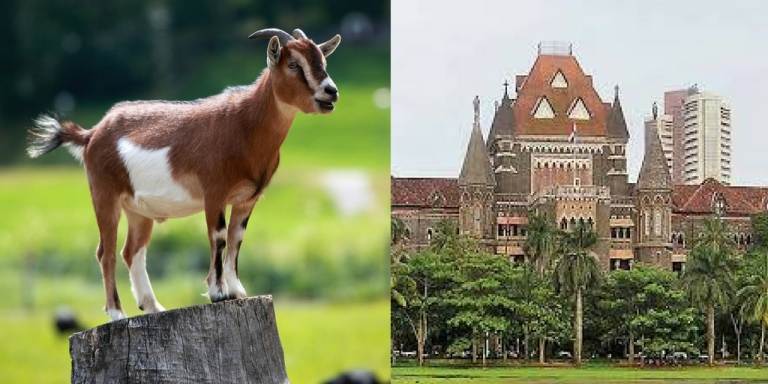
In a bizarre incident, a person named ‘Neil Armstrong’ has been granted permission by the Brihanmumbai Municipal Corporation (BMC) through an online application system to slaughter 5 goats inside a courtroom in Bombay High Court. According to reports, the Bombay HC has taken a note over the incident on August 14th and has asked the BMC to halt the online process of granting permission for goat slaughter for the occasion of Bakr-Eid.

The Bombay HC was reportedly hearing a petition by the Jiv Maitri trust, which had petitioned against the new online process set up by the BMC to grant permission for goat slaughter. The petitioners have appealed that the BMC has been granting online permissions without any verification and the entire process is faulty. The petitioner’s lawyer, advocate Sujay Kantawalla, then went ahead and produced permissions that his colleagues had secured under random names. One such applicant named ‘Neil Armstrong’ had been given permission to slaughter 5 goats inside the courtroom 13, the very room where the case was being heard. Another applicant had secured permission to slaughter goats inside courtroom 52, which is presided by the acting chief justice of the Bombay Hogh Court.

Justice Abhay Oka, who was hearing the petition with Justice RI Chigla had reportedly expressed shock over the entire process and remarked that the online system is ridiculous and should be stopped immediately. Taking note of the erroneous system, the High Court bench had reportedly remarked that the BMC has been granting permissions ‘without any application of mind’.

The HC bench had also remarked that the issue of granting permission without verification also violates the law under the Prevention of Cruelty to Animals Act, which mandates that animal slaughter can only be carried out at licensed abattoirs. The bench has reportedly asked the BMC to halt the process of granting online permissions till the next hearing. The bench also reportedly stated that the BMC needs to re-verify the permissions that have already been granted. The BMC has been instructed to file a reply on the corrective measures taken by Saturday, 19th August.

Congress leader Ahmed Patel’s close aide and accused in Rs. 5,000 crore Sterling Biotech fraud case held in Dubai

0

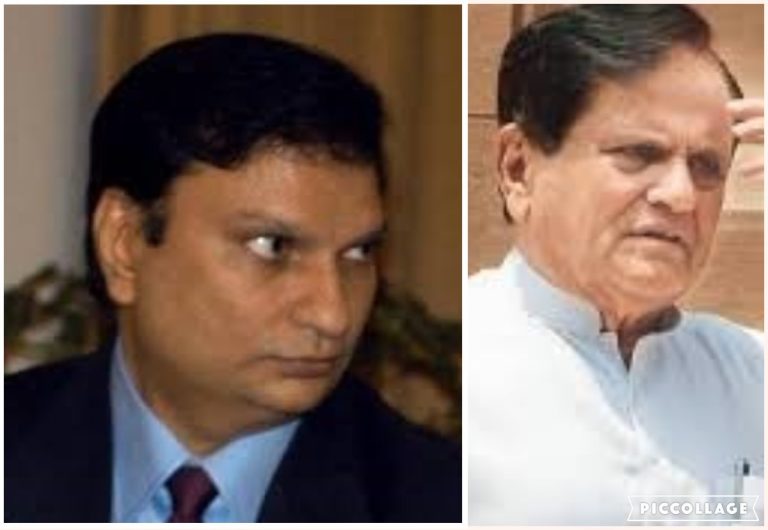
Nitin Sandesara, an absconding director of a Gujarat based pharmaceutical company ‘Sterling Biotech’ and a close aide of Congress leader Ahmed Patel has been arrested by the Dubai police. As confirmed by an official to Economic Times, the legal process post the arrest is taking place in Dubai and the Indian agencies will try to get him deported.

Sandesera was arrested by the Dubai police based on a non-bailable arrest warrant issued by an Indian court. His company has been under the scanner as it had taken a loan worth Rs. 5,000 crores from a consortium of banks including Andhra Bank, but the loan has turned into a non-performing asset (NPA).

The Enforcement Directorate, which is investigating the matter, had written to the foreign ministry in March seeking revocation of passports of the fugitive businessmen Nitin and Chetan Sandesara, who fled the country with family members last year before the CBI could register a case against them. According to senior ED officials, the Sandesara group allegedly cheated several banks and its total outstanding against banks and investors may go beyond Rs 10,000 crore.

Sandesara brothers first came under the radar of investigating agencies in 2011 after the income tax department searched their house in Vadodara and recovered a diary with details of payoffs to high profile politician (Congress Leader Ahmed Patel) and their relatives. Later, based on the diary entries, cases against three I-T officers at the level of commissioners and principal commissioners were registered.

As the Enforcement Directorate tightened its investigation, senior Congress leader Ahmed Patel’s association in this case resurfaced. Earlier this month, ED produced a man named Ranjit Malik, alias Jonny, before the duty magistrate of a Delhi court, who granted his custody to the agency for a day, for allegedly sending Rs 25 lakh cash to the official residence of a senior Congress leader, Ahmed Patel.

Earlier too, Sunil Yadav, employed by the Sandesara group, had alleged the involvement of senior Congress leader Ahmed Patel, his son, Faisal Patel, and his son-in-law, Irfan Siddiqui in the same, through his written statement to the directorate.

The ED had earlier arrested three persons, including Delhi-based businessman Gagan Dhawan, former director of Andhra Bank, Anup Garg and Sterling Biotech director, Rajbhushan Dixit in this case.

The arrest of the Nitin Sandesara is being seen as a key breakthrough in this case, as his arrest may lead the ED to further confirm the extent of involvement of the Congress leader and his associates in the fraud case.

How not to pay tribute to the departed – these two cartoons are the best examples

0

Recently, a cartoonist used his freedom of expression to declare to the world how his freedom of expression is being throttled by some media houses. Irony aside, the cartoonist, Satish Acharya claimed that some of his recent cartoons, of which some were critical of Prime Minister Narendra Modi or BJP, were rejected or asked to be tinkered by some media houses. This rejection or suggestion to edit was linked to how media houses were indirectly being influenced by the ruling party. Thus, another creative martyr was born.

Of course, he did not explore the possibility that the editors at those media houses just didn’t feel the cartoons were good enough.

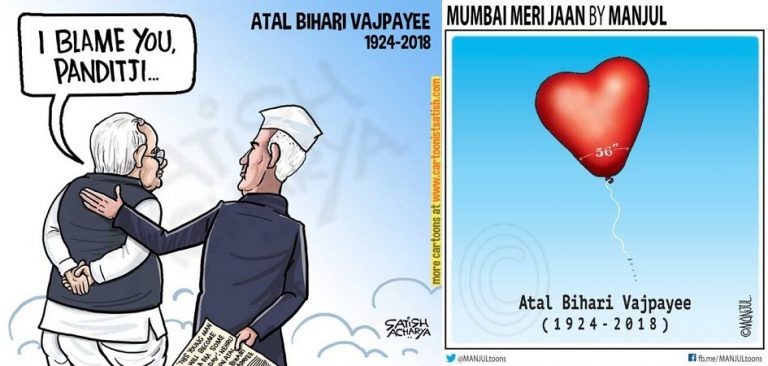
Whatever may be the truth of the above episode, his recent cartoon on the death of former PM Atal Bihari Vajpayee, speaks more than it should. Acharya published the following cartoon last night, and promptly received brickbats from all:

Tribute to Vajpayee or Nehru bhakti?
Cartoon that sparked controversy on Twitter

Let us try to analyse this masterpiece. On first glance, nobody would be able to guess this was a cartoon paying tributes to Vajpayee on his death. Instead, the “blaming” Nehru, can be easily construed to be a jibe directed at Modi and BJP at large, who often illustrate how Nehru’s policies led to India’s backwardness as compared to other contemporary countries.

Of late, the entire Congress-left ecosystem has been trying to convince everyone that blaming Nehru for India’s current condition is something that is unwise and foolish. In order to discourage this, they are espousing themes that mock any criticism of Nehru. The same ecosystem doesn’t leave any chance to praise Nehru even for the air they breathe, but has problems when his follies – which had long terms impact – are pointed out. To discourage people from pointing follies of Nehru, the ecosystem has been trying to mock any attempt to critique Nehru. This cartoon further the same agenda in my eyes.

But maybe I am reading too much into it? Could there be another message hidden in the cartoon?

If one strains his eyes, one can see at the bottom, Nehru carrying a newspaper which says that Nehru had predicted Vajpayee would be Prime Minister one day. With this, the context of the first line printed in bold in the cartoon changes. Now, Vajpayee can be construed to be giving credit to Nehru, for becoming the Prime Minister of India, and therefore achieving greatness.

This cartoon can either be classified as in bad taste (for the first interpretation) or poor (for the second interpretation). Bad taste, for using the death of Vajpayee to take a jibe at BJP or Modi. Poor, because one obscure comment of Nehru is used to make a cartoon on Vajpayee, when Vajpayee himself has so many other facets. Poor, also because the cartoon is unclear and the cartoonist eventually had to explain himself, albeit in a condescending manner:


But one thing is clear: The vileness towards BJP and ‘Bhakts’, and the desperate need to glorifying Nehru even in the death of Vajpayee.

I’m sorry, and I’m angry, but I have to say that only a sick sycophant, bereft of any creative ideas, would even dream of Nehru on a day when Atal Bihari Vajpayee ascends to Heaven. Not only has the cartoon exposed the cartoonist’s loyalties, but also his limited imagination. Further, if the cartoon could not communicate what the cartoonist intended to say, then for sure the cartoonist had failed.

How are we to know if the editors in the past rejected many such cartoons for their sheer lack of quality?

Not to be left behind, another cartoonist had this cartoon for paying tributes to Vajpayee:

Tributes to Vajpayee or jibe at Modi?
Cartoon by Manjul on Vajpayee’s death

Deciphering this masterpiece by our Michelangelo is even harder. A heart balloon, the width if which is indicated to be more than 56 inches, floats towards the sky.

Yes, what a nice tribute to Atal Bihari Vajpayee, who often used the “56 inches” phrase in all his speeches. This cartoon has nothing to do with current PM Modi, or his rumoured chest size. No sir, this is what India’s brilliant cartoonists pass off as tributes.

If you can’t stop yourself from sucking up to the Nehru-Gandhi family or taking a jibe at Modi when someone has died, it’s time to take a break and make a cartoon on your dark soul.

R K Laxman, how we miss you!

‘Gau rakshak who supports no political party’ – says former aide of man who claimed attack on Umar Khalid

0

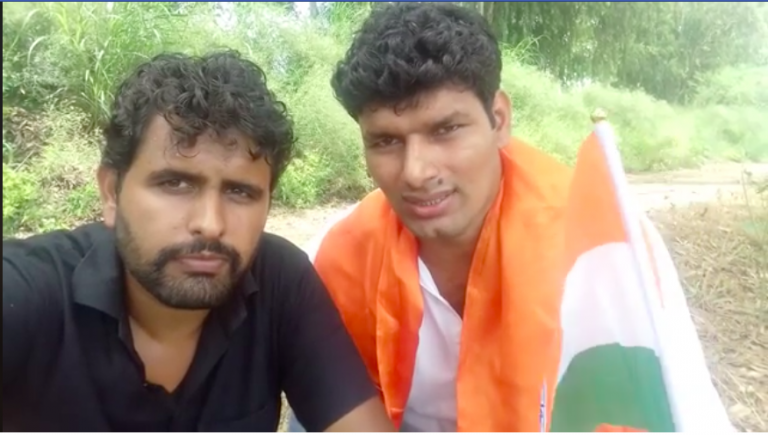
Yesterday, the now rusticated JNU student Umar Khalid shared an image of one Naveen Dalal claiming to be the one who shot at him earlier this week. A video had gone viral on social media where two men were seen claiming responsibility for the attack on Khalid. In the video, they say they respect the Supreme Court and the Constitution and referring to the ‘JNU gang’ as ‘pagal kutte‘, they say the ‘mad dogs’ should be ‘adjusted’ without any delay. The two men identify themselves as Sarvesh Shahpur and Naveen Dalal and say that they are responsible for the ‘incident’ involving Umar Khalid. That they wanted to give this as a gift to people of India on occasion of Independence Day.

They request the police not to ‘harass’ anyone as on 17th August at noon, they would voluntarily like to surrender at the house of Sikh leader Kartar Singh Sarabha. They request the authorities not to create hurdles for them as they proceed to surrender themselves, forcing them to flee. They say they were upset with Khalid and his associates who chanted the anti-India slogans.

The Facebook profile of one of the accused, Naveen Dalal shows that he is a staunch gau rakshak and his Facebook posts about protecting the cow. He seems deeply moved and agitated by the deaths of gau rakshaks, whom he refers as ‘martyrs’.

Naveen Dalal on gau raksha

In one of the images he has shared, he is supporting Congress leader and former Haryana Chief Minister Bhupinder Singh Hooda.

Naveen Dalal supporting Congress leader Bhupinder Singh Hooda

He refers to himself as President of ‘Gau Rakshak Sena’.

He has also been very critical of the BJP government which announced compensation for those who died in mob lynching by ‘Gau Rakshaks’.

Naveen Dalal being critical of the BJP government for being ‘partial’ against gau rakshaks.

To confirm, OpIndia tried to call Dalal on the number on his Facebook profile, but his number was out of reach. We called one of the contact numbers given on one of the Facebook profiles tagged in the original post of the video shared by Naveen. The person said that he is no longer an ally of Dalal and quickly hung up the phone. Before hanging up, he said that Dalal didn’t not support any political party, though Dalal’s Facebook profile has a post where he’s put up a message along with picture of Haryana Congress leaders. The person OpIndia talked to also said that he had no idea who Umar Khalid was.

As per reports, the police has said that if what they claim is found corroborative, they will be arrested. Police said that they would take the help of their counterparts in Haryana and Punjab to track down the two men. Earlier we had reported how the ‘liberals’ had blamed Arnab Goswami for the incident.

Atal Bihari Vajpayee : The Quintessential Indian

0

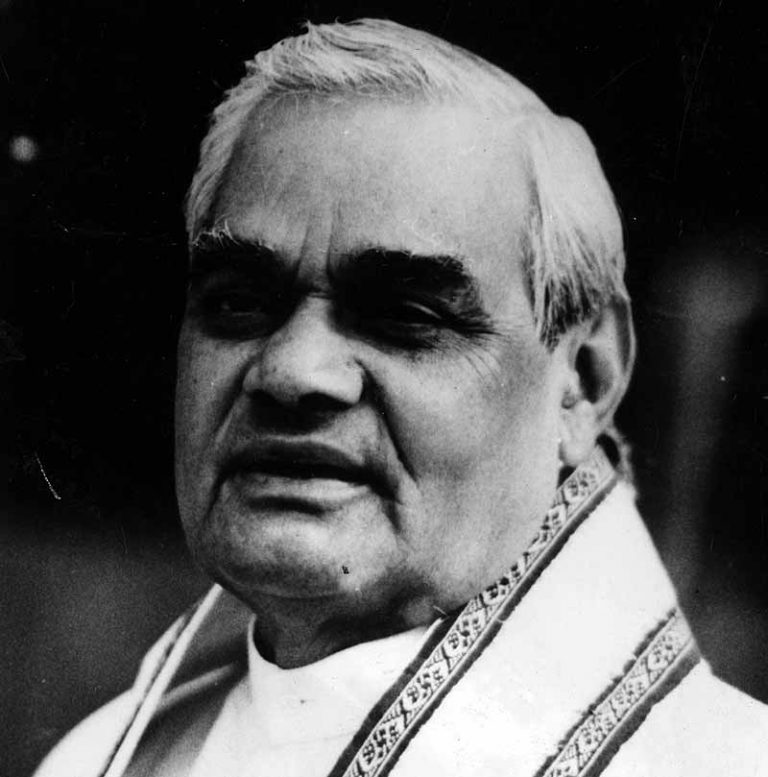
Atal Bihari Vajpayee, a name which reverberates in one’s heart constantly, not for a reason that he was one among thirteen others to be chosen as the Prime Minister to lead this country, rather for waking up a country from its slumber of ignorance.

The word Statesman is a thumping word, rarely bestowed upon the greatest individuals associated with an indomitable world called Politics. Atal Bihari Vajpayee is one man who deserves to be called a Statesman.

I was just a 7 or 8 year old kid when I first got acquainted with a name called Atal Bihari Vajpayee, who had already sworn in as the tenth Prime Minister of the country. As a school going kid, the word ‘Prime Minister’ or politics did not mean much to any of us then. Most of the post-liberalization era kids of the 90s agree on one fact that, it was Atal Bihari Vajpayee, who sowed the seeds of positive political awareness in the hearts and minds of the youths of this country.

Atalji started young, may be at 18. He was jailed by the British for his involvement in Quit India Movement. Later he grew up with the Rashtriya Swayamsevak Sangh and joined Bharatiya Jan Sangh in 1951. He rose to fame when he took the fight against the horrors of Indira Gandhi in 1975-77 and yet again landed up in jail during the infamous Emergency. Atalji built the BJP in early 80s along with his close aides Lal Krishna Advani and Bhairon Singh Shekhawat.

Vajpayee was an astute leader, master strategist of Indian politics, poet and an orator par excellence. Vajpayee took the responsibility of building Bharatiya Janata Party after it was decimated and reduced to just two seats in 1984 elections. Atalji succeeded in reviving the image of the Bharatiya Janata Party after the historic Babri Masjid demolition, made the party more acceptable to the masses of the country.

My memories of Vajpayee are associated with his speeches, bold policy decisions and his famous poems. I still remember the days of the late 90s when our country was still struggling with fine tuning the massive economic reforms, initiated by Narasimha Rao government of the early nineties. Those years were not that great as for as Indian politics is concerned. There were too many governments in a very short span of time. Atal Bihari Vajpayee, who took the ruins at a critical time, stood tall amidst the chaos. Those tough years are often associated with two greatest incidents that would change the country forever- Operation Shakti and the Kargil wars.

We, as young kids had no idea what was it all about, but all we knew was Atalji had something to do with these successes. The historic press conference in 1998, when Atalji announced the success of the Pokhran Nuclear test and his outstanding leadership during the tough Kargil wars had inspired the whole nation. Those two incidents transformed my views about India as a country and Atal Bihari Vajpayee had everything to do with. We as kids looked him as the new Mahatma, talked about him, admired him.

Vajpayee was the epitome of Indianess. Atalji was a quintessential nationalist, widely remembered for his sharp extempore speeches. For a common man it was something magical. His speeches had a massive connect with the masses, especially his famous speech in the Parliament, after the fall of his 13 days old government on 27th May 1996. This particular speech, not only brought huge political gains for the party in the future, but also more importantly, it inspired a lot of youngsters like us to be a part of Center-right politics. The speech took Atal Bihari Vapayee and the BJP to every household in the country.


One thing stood out for me was his exceptional intent to foster relationship with the Pakistan. The historic Delhi-Lahore bus service to strengthen relationships between India and Pakistan was truly phenomenal. He even traveled to Pakistan during its inaugural run on February 19, 1999 along with other dignitaries and was received by Pakistani Prime Minister Nawaz Sharif. Vajpayee was the only person who had the guts to visit Pakistan in such a manner. His historic speech in Minar-e-Pakistan was an emotional moment for people from both the countries. After his poignant speech, Nawaz Sharif had joked to Vajpayee “Vajpayee sahib, ab to aap Pakistan mein bhi election jeet sakte hain (Now you can we even an election in Pakistan)”, such was a man Atal Bihari Vajpayee.

In today’s world of political binaries, Atal Bihari Vajyapee will be remembered for his greatest political moderation. A Political touchstone of sorts, who represented almost everything that existed in a political order. An extraordinary politician, who did his politics beyond any permutations and combinations of numbers. He did the impossible task of managing a coalition which had so much inconsistency within itself and still managed to come out of it successfully, without any stains. When he became the Prime Minister of the country, he had very unusual coalition partners, he had a socialist like George Fernandez in his cabinet, a furious Mamata and also a mysterious ally like Jayalalithaa. Opposition parties respected him as much his own party did. In 1994, Atalji despite being an opposition leader was made head of the delegation, by then Prime Minister P V Narasimha Rao to represent India’s case in Geneva. Dr Manmohan Singh simply called him the ‘Bhishma Pitamaha’ of Indian politics, referring to him as grand old man of modern Indian politics.

Atalji had won the mastery of that art to walk safely in the political minefield. It is astonishing that Atalji led a coalition government with 26 political parties, which is nearly impossible in today’s political scenario. He was also the first Prime Minister of India, who gracefully retired from politics in 2009; the term ‘retirement’ is elusive in Indian politics.

Atal Bihari Vajpayee is irreplaceable in Indian politics. A leader, not only appreciated by all political parties, but also among those world leaders, who received a huge respect across the globe. The loss of a leader, a nationalist cannot be expressed in any words. He has left a legacy, which we as a fellow countrymen should cherish and honour. For me, he was the greatest Prime Minister that India ever had. The legend has lived his life and its time we send him with the greatest grace and respect.

Even in death, this rumour does not leave Atal Bihari Vajpayee

Today, one of India’s tallest political leaders, Atal Bihari Vajpayee departed on his final journey at the age of 93. However, even in his final hours, the usual suspects were caught using him, to shower adulation on the first family of India: The Gandhis. Now, even after his death, a rumour is being replanted.

This rumour is that Atalji had referred to Indira Gandhi as Durga. Senior journalist Nikhil Wagle tweeted this soon after the news of Vajpayee’s death broke:


Social media users also reported that some TV panellists also used this line:


Other portals also claimed the same:


This rumour had surfaced earlier as well, on Indira Gandhi’s death anniversary. The fact of the matter is, Vajpayee had never called Indira Gandhi “Durga” and had himself used every possible platform to deny this


In the above video, Vajpayee explains how this line was attributed to him by the media, and how he had denied it from day one. Finally, when an author carried out researched on this, by looking into all the records, it was proved that he had never uttered the phrase.

Vajpayee ends the explanation in a lighter vein by saying: “lekin abhi bhi durga mere peeche hai” (Durga is still chasing me). His words from then, are true even today, after his death. At least now, people should respect his soul and stop this false propaganda, which they might be using, to again glorify the Gandhi family, using Vajpayee.

UP: Yogi Adityanath govt requests Centre to rename Bareilly, Kanpur, Agra airports

0

The Uttar Pradesh government has requested the Centre to approve the proposal to rename the airports in Bareilly, Kanpur and Agra. The three airports which are currently defence establishments will be converted into civilian airports as part of the regional connectivity scheme of the Airports Authority of India (AAI).

The state civil aviation department has sent a proposal to rename the Bareilly airport as ‘Nath Nagri’, which is said to be the ancient name of the city for its history of having ardent worshippers of Lord Shiva. The city of Bareilly is surrounded on all sides by as many as seven Lord Shiva temples–Alakhnath, Trivatinath, Marhinath, Dhopeshwarnath, Vankhandinath, Tapeshwarnath and Pashupatinath.

The Agra airport proposed to be named after BJP ideologue Deen Dayal Upadhyay, while the Kanpur’s Chakeri airport is proposed to be renamed after Ganesh Shankar Vidyarthi, the report says. The proposal says that Kanpur was earlier known as Kanha Pur and was founded by Sachendi King Hindu Singh.

Chief Minister Yogi Adityanath had earlier renamed the civil terminals of the IAF’s Gorakhpur airport to Mahayogi Gorakhnath Airport. UP Civil Aviation Minister Nand Gopal Nandi said, “We have reached out to the Centre to get the airports renamed. A meeting with the Union Ministry of Civil Aviation is expected soon”.

Recently, the government had renamed the Mughalsarai railway station to Deen Dayal Upadhyaya Junction in a bid to revive the legacy of Deen Dayal Upadhyaya. The state government is also moving to rename Allahabad as Prayagraj before the Kumbh Mela to be held in the city in 2019.

12 things Vajpayee talked about in his speech on Savarkar that hold relevance even today

0

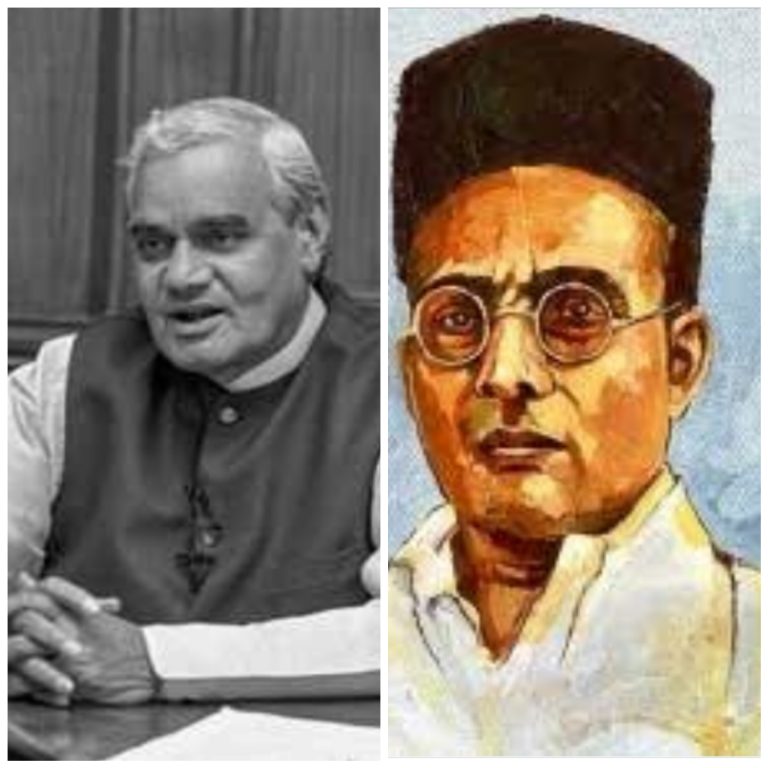
India’s former Prime Minister Atal Bihari Vajpayee is known not only for his stellar career as a strong politician with a clean image, he is revered and respected for his exemplary oratory skills. A venerated poet and veteran of Indian Right Wing politics, Vajpayee’s speeches are powerful and thought-provoking. His words are always dipped in his deep nationalistic values and adulation for Indian culture and its civilisational heritage. His speech on the occasion of Veer Savarkar Jayanti in Pune, in 2006, is one of his many popular speeches and it reflects not only his admiration for Savarkar but how far he believed Savarkar’s ideas and thoughts can teach and inspire countless Indians of future generations.

In the speech, Vajpayee begins discussing Savarkar by stating that Savarkar is not a person, he is an entire ideology, he is not a kindling, but a fire, not limited to definitions but vast expanse and the kind of harmony he displayed in his speech and actions during his lifespan is unheard of, almost divine. Vajpayee’s speech on Savarkar and the relevance of his ideologies can be summarised in the following points:

  • Savarkar was inspired from freedom fighters mentioned in the annals of history but he became an inspiration himself. From the tender age of 11, a boy showing such brilliance, such dedication for the motherland and willingness to sacrifice his life is nothing but divine powers on display. Vajpayee, in his quintessential style of wordplay, compares Veer Savarkar to Tatva (elements), Tark (arguments), Tarunya (Youth), Tej (brilliance), Tyag (sacrifice) and Tap (penance).
  • Savarkar had courage as mighty as the ocean. He never let the great walls of the cellular jail in Andaman enclose in spirit, he created some of his most powerful and best literary works in the jail. Despite being watched constantly and being put to rigorous physical work, his courage and conviction never faltered. He never swayed from his course and kept the flame of patriotism burning.
  • Vajpayee states it was through Savarkar’s poetry that had been initially attached with the Sangh Parivar. He had even translated some of Savarkar’s Marathi poems into Hindi and that has left him speechless. Vajpayee expresses wonder on how a dedicated, strong hearted patriot can write poetry so fluid and with such brilliance in wordplay. He explains that Savarkar was one of those gifted personalities who has merged the creativity of imagination with the vision of pragmatism in his poetry.
  • The former PM also goes ahead to state how the entirety of Savarkar’s life is full of such unprecedented qualities. He was the epitome of unapologetic, uncompromising nationalism. But Savarkar’s patriotism was also adorned with his unique characteristics of a social reformer. He was not only a fierce nationalist but his nationalism was not blind to the shortcomings of his contemporary society. He had the guts to face, question and fight the negativities of society that were stopping Indians from attaining true freedom. Not a mere social reformer, he was the social sculpturist who addressed the flaws and had the visions to create the perfect India from it.
  • Savarkar addressed the pain and problems of child-widows in his time. Had he been alive today, his words would have reflected the sufferings of Shah Bano and the injustice she faced. His understanding and visions to address social issues were never limited to one religion or community, he encompassed all, felt for all and it was an inclusive, compassionate India that was his dream.
  • Long before Mahatma Gandhi spoke of the issue of untouchability in Indian society, it was Savarkar who wrote ‘Malaa Devaache Darshan Gheu Dya’ (Let me see my God), the Marathi poem that spoke of the pain and injustice of untouchability that did not let people of a certain caste inside temples. The India Savarkar envisioned was one that would be free from the shackles of its past, one where no one will stand between a devotee and his god.
  • Savarkar was one of the very few nationalists who dared to admit the shortcomings of the Hindu society. He was aware of the fault lines and the weaknesses that had made Hindus submit to foreign invaders and rulers. He had the grit to accept the fact that more than outsiders, it was Hindus themselves who are responsible for the civilisational slavery and loss they had been suffering for centuries. It was us who have misinterpreted the ancient practice of Varna and erected walls within our own society. It was this very narrow thought and vulnerability that foreign invaders have benefitted from. We did not lose in the hands of foreign invaders, our own people have fought and won this land and gifted it to invaders.
  • Vajpayee further explains that the enclosed Indian society had committed a grave mistake by dividing its people into castes and class. While a large population have been instructed not to lift weapons because it is the job of Kshatriyas, an equally large portion have been denied the knowledge and enlightenment of Vedas. It was this discrimination Savarkar was against.
  • In the speech, Vajpayee also highlights the importance of honouring one’s ancestral heritage. He asserts, changing the mode of worship does not mean one changes his forefathers and denies his own heredity. India has been a land of ancient wisdom and no society will prosper until they learn to be proud of their own identity.
  • Vajpayee asserts strongly that Savarkar was an advocate of establishing India as a Hindu Rashtra. But Savarkar’s vision of a Hindu Rashtra was one where people are not discriminated against based on how they chose to worship their god. The Hindu Rashtra of Savarkar’s dreams was to acknowledge and honour its Hindu heritage while allowing its citizens to practice whatever faith they choose.
  • Vajpayee states that there was a time when Savarkar’s poetry could not be read but the tides have changed. True patriots are not forgotten for long. Savarkar’s legacy has been neglected for political reasons, but political tides are never permanent. The social awakening that Savarkar envisioned has already begun and no one can stop it.
  • Savarkar’s Hindutva was vast, widespread, his ideology is not one to be bound by narrow definitions of communalism. The India of Savarkar’s dream is a nation of unity, harmony, knowledge and bravery.

It is interesting to note the similarities between the words of Savarkar, Vajpayee and our current Prime Minister Narendra Modi. They all speak of an inclusive Indian society that has equal opportunity and rights for its citizens, that holds absolute reverence for its ancient heritage and one that holds its head high among other nations in the world.

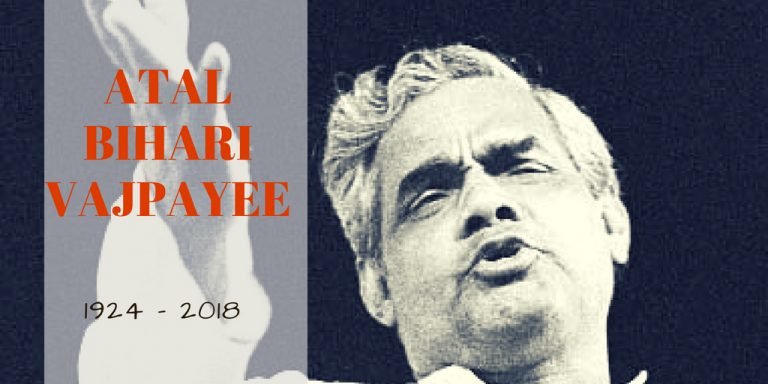
Atal Bihari Vajpayee: The man, the legend, the people’s politician

0

To say that Mr Vajpayee had a life of impact and significance would be an understatement. It would not be worthy of the stature of the man. A people’s leader, an impeccable orator and a poet, Vajpayee wore a lot of hats and unlike many they did not burden his head. It is said that how a man performs under pressure and in the face of adversities is telling of the mettle of the man, it is by this virtue that Mr Vajpayee would be remembered as the man who brought grace, poetry and most importantly the quintessential ‘Indianness’ into Indian polity. The prestigious ‘Bharat Ratna’ award was conferred on Vajpayee on 27th March 2015. His birthday, 25th December is also celebrated as ‘Good Governance Day’. Even when he wrote his simplicity and humbleness became apparent –

ऊंचे पहाड़ पर,
पेड़ नहीं लगते,
पौधे नहीं उगते,
न घास ही जमती है।
जमती है सिर्फ बर्फ,
जो कफन की तरह सफेद और
मौत की तरह ठंडी होती है।
मेरे प्रभु!
मुझे इतनी ऊंचाई कभी मत देना
गैरों को गले न लगा सकूं
इतनी रुखाई कभी मत देना।

Born to Krishna Devi and Krishna Bihari Vajpayee on 25th December 1924 in Gwalior, Vajpayee did his initial schooling from Saraswati Sishu Mandir, Gwalior. He later graduated from Gwalior’s Victoria College which has been renamed to Laxmi Bai College with distinctions in Hindi, English and Sanskrit. He furthered his education by completing his masters in Political Science from DAV College, Kanpur.

A young politician in a young Democracy

Vajpayee’s political career coincides with the rise of the Indian democracy. As the nation built its institutions time and time again Vajpayee reinvented himself to adapt and often, was the agent for change.

Vajpayee’s political career is as vast as the number of accomplishments of the man. A parliamentarian for over four decades Vajpayee was elected to the ‘Lok Sabha’ ten times and to the Rajya Sabha two times.

The young Vajpayee joined the Rashtriya Swayamsevak Sangha (RSS) in 1939 and became a ‘Pracharak’ in 1947. He was chosen to be the National Secretary of the newly founded ‘Jan Sangh’ the party which is considered to be the predecessor to the Bharatiya Janata Party of today.

Vajpayee grew close to Shyama Prasad Mukherjee and participated in a fast-unto-death in protest of inferior treatment received by non-Kashmiri Indians in the state of Kashmir. He was elected for the first time in 1957 from the ‘Balrampur’ constituency to the Lok Sabha. Soon after Mukherjee’s death, the mammoth task of leading Jan Sangh came unto the young Vajpayee and he became the National President of the party in 1968. It was his excellent oratory skills that made him the face of Jan Sangh.

Emergency and birth of a new era

It was the mid-seventies and the then Prime Minister Indira Gandhi had imposed internal emergency on 1975. Vajpayee along with other leaders was arrested. In 1977 when the emergency ended the nation wanted a unified opposition and Vajpayee heeded to the call of the nation. He merged Jan Sangh into the newly formed grand-alliance, the Janata Party.

Janta Party swept the polls in 1977. Vajpayee became the Minister of External Affairs in Prime Minister Moraji Desai’s cabinet. Vajpayee has always been a propagator of Indian linguistic prowess and he displayed by becoming the first person to deliver a speech to United Nations General Assembly in Hindi, but all was not calm in the Janata Government.

The Janata Party dissolved as soon as Prime Minister Desai handed in his resignation. Vajpayee after getting out of the Janata coalition decided to form a new party alongside L.K.Advani and Bhairon Singh Shekhawat namely Bharatiya Janta Party in 1980.  Vajpayee became the party’s first president and then came 1984 the lowest point in BJP’s history. BJP was reduced to only two parliamentary seats in 1984 elections.

Ram Janmabhoomi Movement & the turning of BJP’s electoral fate

From the mid 80’s to the early 90’s the entire nation was abuzz with the Ram Janmabhoomi Movement, which sought to build a temple dedicated to Lord Rama in Ayodhya. This campaign proved to be a turning point for BJP. BJP in 1995 declared Vajpayee as the prime ministerial candidate for the 1996 parliamentary elections.

1996 general election results made the Bharatiya Janata Party the single largest party in Lok Sabha. Shankar Dayal Sharma invited Vajpayee to form the government and Vajpayee was sworn in as the 10th Prime Minister of India but the BJP could not pass the floor test and the government lasted only 13 days.

Pokhran and the Kargil war

Between 1996 and 1998 two more United front governments fell and Lok Sabha was dissolved and fresh elections were announced and held. This time, a cohesive bloc of political parties joined the BJP to form the National Democratic Alliance (NDA), and Vajpayee was sworn in as the Prime Minister.

The NDA proved its majority in the parliament. The government lasted 13 months until mid-1999 when the AIADMK under Jayalalithaa withdrew its support to the government. The government lost the ensuing vote of confidence motion in the Lok Sabha by a single vote on 17 April 1999. As the Opposition was unable to come up with the numbers to form the new government, the Lok Sabha was again dissolved and fresh elections were held. Vajpayee remaining the Prime Minister until the elections were held.

Vajpayee then focused on India’s nuclear ambitions. He successfully negotiated with and deterred any attempt made by foreign countries to stop India from weaponizing its nuclear capability. In May 1998 India conducted five underground nuclear tests in Rajasthan. These tests were held just after the first month of Vajpayee government’s assuming of power. It is believed that the CIA was complete shocked by this development as they had no intelligence input about the programme. At that point in time, Russia and France endorsed India’s right to defend itself many countries like the U.S, U.K, Canada, Japan and E.U imposed various sanctions on India. Vajpayee did not succumb to the international pressure rendering the sanctions futile. The nuclear test was called – Pokhran II.

Vajpayee showed great leadership in leading India through the Kargil war. He showed a great sense of control and statesman attributes when he sent a secret letter to the then U.S president Bill Clinton stating – “we will get them out, one way or the other.” The Kargil war started when militants and non-uniformed Pakistani soldiers had infiltrated into the Kashmir Valley and captured control of border hilltops, unmanned border posts. The incursion was centred around the town of Kargil, but also included the Batalik and Akhnoor sectors and artillery exchanges at the Siachen Glacier.

Indian army units were swiftly rushed into Kashmir in response. Operation Vijay, launched in June 1999, saw the Indian military fighting thousands of militants and soldiers in the midst of heavy artillery shelling and while facing harsh weather and treacherous terrain at the high altitude. Over 500 Indian soldiers were killed in the three-month-long Kargil War, and it is estimated around 600-4,000 Pakistani militants and soldiers died as well. India pushed back the Pakistani militants and Northern Light Infantry soldiers.

The first full term Non-congress Prime Minister assumed office

Due to Vajpayee’s strong leadership during the Kargil war, BJP won 303 seats out of the available 543, giving them a secured majority in Parliament. Vajpayee took oath as the Prime minister of India on 13th October 199.

One of the key features of the Vajpayee government was their road infrastructure building capability and efficiency. His government was so good that even UPA government accepted before the Supreme Court in 2013 that half of the roads developed in the last 32 years have been developed in Vajpayee’s 5-year stint. Two of the most important projects taken up by the Vajpayee government was National Highways Development Project and Pradhan Mantri Gram Sadak Yojana, both were aimed at connectivity and logistics.

He also showed a great awareness of foreign policy when the President of the United States of America Bill Clinton visited India in 2000. Clinton was the first the first U.S president to visit India in 22 years after Jimmy Carter. It was indicative that the Vajpayee administration understands the changing geopolitical scenario at that time.

Vajpayee was pushed for privatization during his tenure as the Prime Minister. His economic policies were aimed at free-market policies which were pro-business to reinvigorate India’s economy. All of these steps ensured an increased foreign investment and economic expansion of the country.

The former PM breathed his last today at 5:05 PM in Delhi. As the nation mourns the loss of one of its finest statesman, let us remember Vajpayee the poet who wrote about the undying spirit of life and the need to search for the silver lining under every dark cloud.

टूटे हुए सपने की सुने कौन सिसकी,
अंतः की चिर व्यथा, पलाको पर ठिठकी,
हार नही मानूगा, रार नही ठानुगा,
कल के कपाल पर लिखता, मिटाता हूँ|
गीत नया गाता हूँ|

–  Sri Atal Bihari Vajpayee.

Media Courtiers use ailing Atal Bihari Vajpayee to shower adulation on the Dynasty

0

The King is never wrong and even if he is, it is upon his noble courtiers to remind the ill-informed peasantry about the greatness and grandiose of the King. The world may have moved towards democracy and done away with monarchy to a fair degree, but the culture of the courtier and the importance of their presence seem to be omnipresent in our modern democracies.

If we take the Indian example, the Gandhi family has established themselves as the kings or the de-facto rulers of the land called India. It is of paramount importance that a king has his courtiers and to solve this problem a section of the media has offered their expertise. This media is persistent about propagating a finely tuned message about the Dynasts and how it was them and them only who created the Indian nation and others were merely side watchers.

Thus constant devotion to their king has often made them write or say things that may seem perplexing to the ordinary citizen. The case in point, when today the entire nation is talking about the critical medical condition of our former prime minister Sri Atal Bihari Vajpayee.

These courtiers just like clockwork started to link the ailing leader with the king and narrated a story about how even the opposition revered their king and respected him. This subtle gesture that the King is always right and his magnanimity is over narrow political lines is a brilliantly manipulative tact used by the courtiers to subdue the peasants into believing that the Dynast can do nothing wrong.

Sagarika Ghosh in a rather sycophantic way linked an outlook article on Atal Bihari Vajpayee with the late Rajiv Gandhi. It is not only that several others from the courtier’s club also posted similar tweets and tried to mimic this bizarre adulation of the Nehru dynasty and somewhat disgusting opportunism displayed by Sagarika and her ilk.


This is indicative of the underlying mindset of such courtiers. It is only when the King can be praised then only talk about the greatness of a man, as in the politician or the person is just a mere tool to be used to propagate the vision of their king.

It is indeed saddening that after 71 years of Independence we still have an unofficial monarchy in the Indian state, a monarchy which exerts its power through such courtiers who pose themselves as journalists.