Home Blog Page 7173

Arun Jaitley accepts the poetically written apology from AAP leader Kumar Vishwas

AAP leader and poet Kumar Vishwas has tendered a written apology to Finance Minister Arun Jaitley in the defamation case. According to reports, Jaitley has accepted the apology and the Delhi High Court has disposed of the case.


Vishwas has reportedly written in his apology letter that he had put allegations against Jaitley after believing the assertions made by party leader Arvind Kejriwal and he is currently not in contact with Kejriwal. Vishwas has reportedly also called Arvind Kejriwal a habitual liar and stated that he has vanished after spreading lies. After Jaitley’s acceptance of Vishwas’ apology letter, the defamation case has finally come to an end after many months.

Vishwas has reportedly written a poetic letter to the Finance Minister citing how he and many other AAP workers have been betrayed by Arvind Kejriwal requested him not to pursue the case.


According to reports, Vishwas was the only AAP leader against whom the defamation suit was remaining after all others accused in the case have already tendered apologies to the Finance Minister. On May 3rd, Vishwas had reportedly told Delhi High Court that his statements against Jaitley were based on information received from Kejriwal. The suit was filed against 6 AAP leaders including Kejriwal, Raghav Chaddha, Ashutosh, Deepak Bajpai and Sanjay Singh. All others except Vishwas had already tendered their apologies to Jaitley.

The defamation case, while was filed in 2015 had prominent lawyer Ram Jethmalani representing Kejriwal but after a snide remark by Jethmalani, saw a second defamation suit filed on top of it. Jethmalani had quit after the controversy calling Kejriwal a liar. 2018 has so far been the year of apologies for Kejriwal and many of his party men. Kejriwal had already written apology letters to Bikram Majithia, Nitin Gadkari and Kapil Sibal too.

‘Pakistan should vacate areas under its illegal occupation: MEA lashes out at Pak’s Gilgit-Baltistan order

0

Pakistan, showing its usual disregard and insolence, has rejected India’s protest over the Gilgit Baltistan order. Commenting on the Indian protest, A Pakistani spokesperson stated, “Pakistan categorically rejects India’s protest against the Gilgit-Baltistan Order 2018 and its claim over Jammu and Kashmir as an ‘integral part’ of India. Everything from history to law to morality to the situation on the ground belies India’s spurious claim,”

Ministry of External Affairs (MEA) summoned Pakistan’s deputy high commissioner Syed Haider Shah and lodged a protest against Pakistan’s “Gilgit Baltistan Order, 2018” earlier on Sunday.

The Gilgit- Baltistan Order had previously generated a lot of concern among politician and the general public alike in Gilgit-Baltistan. The Province till now has been given restricted autonomy under of Gilgit Baltistan Empowerment and Self Governance Order of 2009.

The new order seeks to replace the previous one. The civilian and political representatives of this province, cutting across political lines, see this as a measure by the Pakistani state which is discriminatory, authoritative and suppressive in nature.

The MEA commenting upon the illegal occupation of Gilgit-Baltistan by the Pakistani state and the unacceptable malicious nature of the order stated –

“The entire state of Jammu and Kashmir which also includes the so-called ‘Gilgit-Baltistan’ areas is an integral part of India by virtue of its accession in 1947. Any action to alter the status of any part of the territory under the forcible and illegal occupation of Pakistan has no legal basis whatsoever and is completely unacceptable. Instead of seeking to alter the status of the occupied territories, Pakistan should immediately vacate all areas under its illegal occupation,”

The MEA on Sunday also commented about the futility of such an order by Pakistan in trying to hide the illegal occupation of the part of Jammu and Kashmir. The MEA also stated that Pakistan cannot “hide the illegal occupation of the part of Jammu and Kashmir by Pakistan nor the grave human rights violations, exploitation and denial of freedom to the people residing in Pakistan occupied territories for the past seven decades.”

One member of the Gilgit Baltistan legislative assembly while talking to ANI reflected on the seriousness and unified opposing sentiment to the order. He said, “This has happened for the first time in the history of Gilgit-Baltistan that all MLAs cutting across party lines have come together for an issue. People ask as to why this didn’t happen in 2009? That time the situation was not same when GESA (Gilgit-Baltistan Empowerment and Self-Governance Order 2009) was promulgated then each party had individually pointed out the flaws in the act. Today also, the situation is same and we are watching wrong transpiring before us. Government is doing what is beneficial for it (not us). We believe, if the 2018 ordinance comes into force then Gilgit-Baltistan will never be able to rise,”

India has always maintained that Gilgit-Baltistan is an integral part of India and this move by Pakistan seems to be yet another ply to provoke India. How or whether this matter escalates will have to be observed in the next few days.

Baijayant Panda quits BJD, accuses party of ‘reprehensible Stalinist tactics’ in resignation letter

Senior Odisha politician Baijayant Panda quit the Biju Janata Dal (BJD) on Monday, by announcing his decision in a resignation letter sent to party president Naveen Patnaik. He would later also convey the same to the Lok Sabha speaker, as reported by ANI:


Following the news-break, media channel OTV News managed to get hold of Panda’s resignation letter, where he has been scathing in his attack on the BJD.

In the letter, Panda expressed deep anguish on no BJD leader arriving to pay his/her respects to his deceased father, who as per him used to be a close friend and supporter of late Biju Patnaik. This as claimed was owing to the party restraining them from doing so. His father died on 22 May.

Panda thus claimed that the BJD’s desire to expel him was “irrefutably clear”.

In a further indictment of the party’s ungratefulness, Panda reminded Patnaik about his support for the party through thick and thin since 1995 – when he got involved in politics. He also reminded Patnaik about the unflinching support he (Panda) gave him solely based on his unconditional affection and with the hope for a better Odisha.

Panda claims that the BJD has been deviating from its original philosophy of humility and transparency to corruption and goondaism, which he claims was brought to Patnaik’s attention multiple times.

He was also seen expressing his disappointment at him being attacked with stones, eggs and footwear by supporters of his then party colleague Health Minister Pratap Jena, even after which Patnaik didn’t inquire about his health and safety.

In a parting shot, Panda claimed that the organised threats to try and get his supporters to denounce him and the harassment of his relatives amounted to “reprehensible Stalinist tactics” which had no place in any Indian political party.

After the completion of his late father’s religious ceremony, he would also notify the Lok Sabha speaker of his resignation.

This decision by Panda comes a few months after he was suspended from the BJD in January. He was already suspended as the party spokesperson since May 2017.

ED to move court to seize Nirav Modi’s assets under provisions of Fugitive Economic Offenders Ordinance

The Enforcement Directorate is set to move the special court in Mumbai requesting permission for ‘immediate confiscation’ of about 7000 crores worth assets of designer diamond jeweller Nirav Modi under the recently annunciated ‘Fugitive Economic Offenders Ordinance’.

The ED will seek an official declaration to categorize Nirav Modi a ‘fugitive’ based on the charge sheet filed before a special court in Mumbai last week under the Prevention of Money Laundering Act (PMLA).

On May 24, a charge sheet including 24 accused, to name a few, Nirav Modi, his father, brother Neeshal Modi, sister Purvi Modi, brother-in-law Mayank Mehta and firms M/s Solar Exports, Stellar Diamonds and Diamonds R Us, was filed in the USD 2 billion PNB fraud case stating that over Rs 6,400 crore of bank funds were allegedly laundered abroad to dummy companies.

As said by a senior officer of ED, the court is expected to take cognisance of the 12,000 page charge sheet tomorrow and the counsel for the agency will subsequently seek its permission to invoke the provisions of the Fugitive Economic Offenders Ordinance against Modi and immediately begin the procedure to confiscate all the assets “of and linked to” Modi in India and abroad.

The court had issued a non-bailable warrant against Nirav Modi and the ED has also moved Interpol to get a global arrest warrant issued against him.

The Modi Government had bought an ordinance last month aimed at impeding economic offenders from evading the process of law by remaining outside the jurisdiction of Indian courts because as per the existing law, the ED could only confiscate assets once the trial finishes which usually is a very long process, and there have been many incidences where the offenders have fled the jurisdiction anticipating the commencement, or during the awaiting of criminal proceedings,” the government said.

The Union cabinet had approved the ordinance with the President’s consent as the Fugitive Economic Offenders Bill, 2018 which was introduced in the Lok Sabha on March 12 could not be taken up by the Parliament.

The ordinance makes provisions for special courts under the Prevention of Money Laundering Act, 2002 to declare a person as a fugitive economic offender. However, only cases of frauds, cheque dishonour or loan default of over Rs 200 crore would come under this ordinance.

As per the government, “A Fugitive Economic Offender is a person against whom an arrest warrant has been issued in respect of a scheduled offence and who has left India so as to avoid criminal prosecution, or being abroad, refuses to return to India to face criminal prosecution.”

The agency will initiate the same action against absconding liquor baron Vijay Mallya, against whom the Enforcement Directorate and the CBI had filed their respective charge sheets last year.

Should Congress get credit for the Delhi-Meerut Expressway inaugurated by PM Narendra Modi?

Former Member of Parliament and spokesperson of the Indian National Congress, Shakeel Ahmed, took to Twitter to take a dig at Prime Minister Narendra Modi and accused him of not giving credit to the Congress party for announcing the Delhi-Meerut Expressway project in his 2006 budget speech.


Although it is a fact that the project was announced by P. Chidambaram in 2006, work on the construction of the expressway had not begun till Narendra Modi came into power. The project was delayed due to one reason or the other and it was only on the 31st of December, 2015 that the foundation stone was laid for the expressway by Narendra Modi. The first phase of the project was finally completed this year in April and was inaugurated on the 27th of May by Prime Minister Modi. It is amusing that the Congress is claiming credit for a project it merely announced but could not even begin work on it in the next 8 years that it ruled the country.

Certain media outlets appear to be working to give credit to Congress and spin the narrative to indicate that work on the project has been going on for the past 13 years, which is blatantly untrue.


People on Twitter were quick to pounce on the Congress leader for trying to claim credit for a project that was not completed within the tenure of the UPA regime which lasted until 2014.


People also mocked the Congress for their perennial habit of claiming credit for the work done by other governments.


Congress seems to have developed a penchant for claiming credit for achievements it didn’t have any role in. For instance, former Chief Minister of Karnataka, Siddaramaiah, had claimed credit for an increase in forest cover in the state while the Principal Chief Conservator of Forests credit the central government’s initiative of providing free LPG connections to economically weaker sections of the society for the same. The party has also on several occasions claimed that the schemes implemented by the BJP are merely copies of schemes from the UPA era.

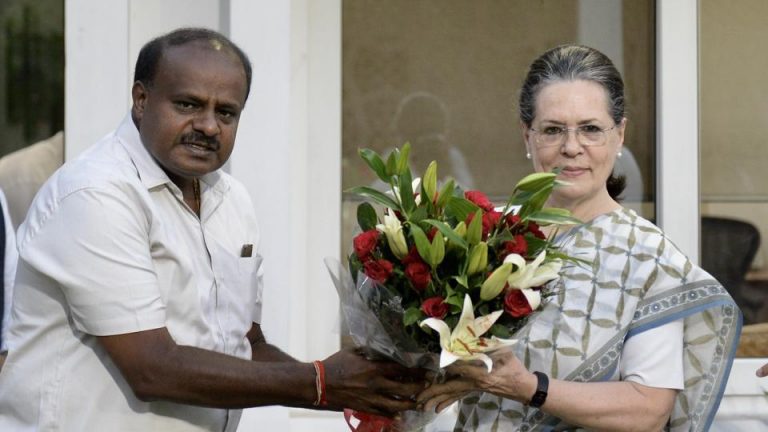
‘Without permission I can’t do anything’ : Kumaraswamy shows just how indebted he is to Congress

Karnataka CM HD Kumaraswamy has clarified just how indebted he is the Congress party for their support in making him the Chief Minister of Karnataka. Today, he issued a statement saying that he is at the mercy of Congress. He also said that as the CM, he is responsible for the state’s development but ‘that is a different matter’. To do anything, he has to take Congress leaders’ permission without which he can’t do anything since they have offered support to him.


This statement comes after it was reported yesterday how Karnataka CM HD Kumaraswamy has stated that he is at the mercy of Congress and not to the people of Karnataka. This generated a lot of reactions in the social media. While many condemned the statement and criticised his disregard for voters, there were also some opinions that his statement has been taken out of context.

As per reports, Kumaraswamy was speaking to reporters after paying tributes to Nehru on his death anniversary. He was answering questions of some reporters on the farm loan waiver issue. It is notable here that the BJP has given a call for statewide bandh if Kumaraswamy does not announce farm loan waivers in a day.

While most of the articles did contain the exact context and translation of the statement of Kumaraswamy, the headlines made people believe that Kumaraswamy was disrespecting the people of Karnataka and showing subservience to Congress. It was reflected in some social media reactions to the CM’s statement.


Looking at the entire text and context of his statements yesterday, it looked probable that his statement has been blown out of proportions. He was speaking about not being in the absolute majority and being the Chief Minister due to Congress support. As per the report in Deccan Herald, he also stated that he appeals to the farmers in the state to give him one week time. He reportedly added that in case he fails to waive off farmer loans he will resign as CM voluntarily. By stating ‘being indebted to Congress’ he was only referring to being in a coalition government and his inability to take decisions without consulting the Congress.

This is an exact translation of what Kumaraswamy had said yesterday.


Though till now it seemed like the newspapers headlines misled people into reacting wrongly to Kumaraswamy’s statement, his most recent statement today proves that the social media reactions were not too far off the mark anyway. It only shows the predicament of a coalition government where decisions are taken not for the benefit of people but to appease the coalition partners. It is only ironic that the coalition government was being projected as ‘victory of democracy’ by loyalists. Many have also wondered, why Kumaraswamy would bother allying with the Congress if he thought they might not let him discharge his duties to the state properly.

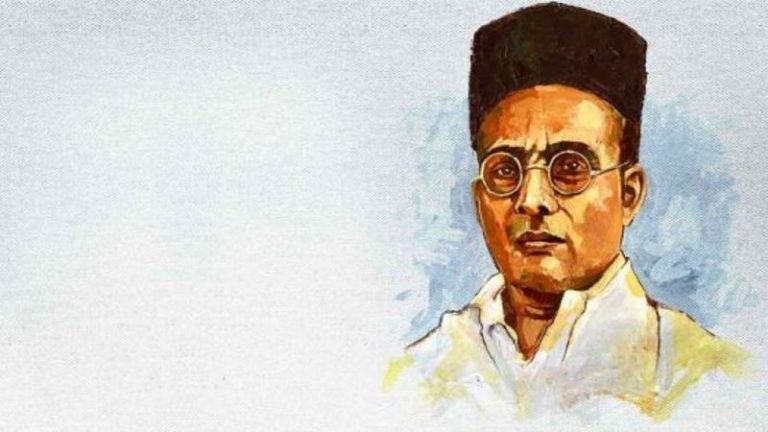
Here are the 5 most popular lies that leftists peddle against Veer Savarkar

0

Veer Savarkar is not in public discourse. His portrait in Central Hall of the Parliament, unveiled in 2003 by Atal Behari Vajpayee, was the first stirring for his recognition. Unsurprisingly, Congress boycotted that moment. Sonia Gandhi stood with the opposition in snubbing the event. The Left had written to President A.P.J. Abdul Kalam to stay away from the function—he didn’t.

People must be prepared to witness to the “Hate-Veer-Savarkar” moment in blogs and social media posts on his 135th birth anniversary on May 28. As the creator of “Hindutva” philosophy, the annual reviling of the man would be done in unison by the likes of TheLiars, Squint, Scrolls and Duff-Posts; besides editorial pieces in “Journalism of Courage.” In essence, these hacks and compromised academicians would take recourse to five issues to revile the man:

Lie 1: Savarkar sought mercy from the British

Savarkar spent 27 years in jail and under prison-restrictions: between 1910-1937. He was sentenced to 50-years imprisonment and transported to the infamous Cellular Jail in the Andaman and Nicobar Islands (“Kaalapaani”) on July 4, 1911. In next decade, he wrote at least four mercy petition for his release. The Left-Liberal echo-chamber hold it as an evidence of his opportunism.

Let’s look at what Savarkar underwent while serving “Kaalapaani,” in the most inhuman jail of all. Prisoners were manacled; gruel to eat was riddled with worms; inmates, formed in groups, were chained like bullocks and hauled to oil mills, grinding mustard seed for endless hours. Prisoners were flogged. The light was scarce. No talking between prisoners at mealtime. No contact with outside world. Those resisting food had a rubber catheter inserted through the nostril and into the gullet and so to the stomach. Medical aid was none. It was a precursor to Gulag Archipelago and Guantanamo Bay prisons of our times.

Savarkar endured all this and much more. His badge was marked “D”—for Dangerous. He was subjected to unspeakable cruelties. Every time there was trouble in the compound, Savarkar was punished. The British were determined he must not be allowed to leave the prison alive.

The Leftists often brush the cruelty off by asserting that Jawaharlal Nehru too was imprisoned and that he didn’t ‘cow down’ to the enemy. Let’s see how it contrasted with jails of pliable Congress leaders: it was almost a holiday vacation. We have the good word of none other than Asaf Ali: that Nehru almost had a bungalow to himself in his so-called jail with curtains of his choicest colour: blue.  He could do gardening at leisure and write his books. When his wife was sick, his sentence was suspended even without he asking for it! Nehru “graciously” accepted the offer.

As subsequent events were to show, there was a method in Savarkar’s mercy pleas. He didn’t want his life’s mission to rot away in prison and come to a grief as it happened to Rajput warriors in the past. Jaywant Joglekar, who authored a book on him, dubbed his clemency pleas a tactical ploy like Shivaji’s letter to Aurangzeb during his arrest in Agra.

After his release in 1937, Savarkar led a political movement to prevent the Partition of India as president of Hindu Mahasabha.

Lie 2: Didn’t support the Quit India Movement; Pledged soldiers to the British in World War 2

Savarkar’s stance to British was: ”Quit India but not Army.” Unlike Gandhi, he firmly believed “military strength” as key to India’s survival. He pledged Indian men as soldiers to British and helped Hindu-Sikh youths to join Indian army and thus reduce latter’s essentially Muslim-dominated numbers. It came handy during the partition or even when Pakistani raiders came up to Srinagar in 1947. But for these “secular” numbers, not just Jammu and Kashmir, event West Bengal, East Punjab or Delhi could’ve been overwhelmed.

It’s laughable to even suggest Savarkar worked for the British. After Second World War broke out, he wrote once and cabled on another occasion to US President Franklin Roosevelt, urging him to ask “Britain too to withdraw armed domination over Hindustan.”

Savarkar and Dr Bhimrao Ramji Ambedkar were keen on Indianising the British-India army. This effort of his was endorsed by both Rash Behari Bose and Subhas Chandra Bose—the revolutionaries behind the Indian National Army (INA). Subhas Bose praised Savarkar in his broadcast from Singapore on June 25, 1944 “for fearlessly exhorting the youth to enlist in the armed forces.” Rash Behari Bose spoke thus in his radio broadcast: “In saluting you, I have the joy of doing my duty towards one of my elderly comrades in arms. In saluting you, I am saluting the symbol of sacrifice itself.”

It was INA which forced Britain’s hands to quit India.

Further, Bhagat Singh and Sukhdev had made “Life of Barrister Savarkar” a necessary reading for revolutionaries, as their associate Durga Das Khanna was to reveal in 1976. The book was clearly anti-British.

Lie 3: Savarkar had a hand in Gandhi’s murder

Savarkar was 14 years younger to Gandhi. But his vision was far clearer. He asked for complete independence in 1900; Gandhi’s demand only came in 1929. It was Savarkar who first made a bonfire of foreign clothes in 1905; his movement against “untouchability” was stunning as even his critics admit.

Savarkar was a fierce critic of Gandhi. He termed Gandhi a hypocrite for the latter had supported the use of violence by British against Germany during World War 1. He was also critical of Gandhi’s Muslim appeasement during the Khilafat movement.

In his articles between 1920-1940, Savarkar considered Gandhi a naïve leader who “happens to babble…(about) compassion, forgiveness”, yet “notwithstanding his sublime and broad heart, the Mahatma has a very narrow and immature head.”

As for his hand in Gandhi’s murder, he was honourably acquitted by the court. Perhaps the Leftists believe that the Court’s verdict can be accepted when it conforms to their agenda, and be doubted and discarded when it doesn’t.

Lie 4: Savarkar and his ‘Hindutva’ was anti-muslim

It was Savarkar who expounded the philosophy of Hindutva in the book by the same name in 1923. His Hindutva espoused Hindu-Muslim unity. He was against the Partition and believed that Muslim should stay in India as Hindustani Muslims, just as they are alright with being in minority in Greece (Greek Muslims), Poland (Polish Muslims) and elsewhere.

He believed in a Hindu Rashtra which didn’t curb the religion of a minority in any way. But he was against “creation of a nation within a nation in the name of religious minoritism.” How true the words sound in today’s context. He once described his difference with Jinnah thus: “I stand for equality and no concessions while Jinnah is for more concessions and doesn’t stand for equality.” His view was not Hindus supremacy but that of Hindus’ protection.

Lie 5: Savarkar was Nazi in word and spirit

The critics must make up their mind whether Savarkar was pro-British or pro-Nazi. He couldn’t be both at the same time. After all, he actively campaigned for recruitment in British-Indian army during WW 2. He supported the allied war effort against the Axis. He said: “After all, there is throughout this world…but a single race, the human race, kept alive by one common blood, the human blood.” Adolf Hitler, on the other hand, believed in the superiority of his race, the “pure race.” The truth is Savarkar believed in military strength which his shameless critics equate with support for Nazism.

What critics won’t tell you is that Vinayak Damodar Savarkar (May 28, 1883- February 26, 1966) was an atheist. He had asked his relatives to perform only his funeral and no rituals of the 10th or 13th day as is done in Hindu faith. He was called Veer for when only 12, he led fellow students against a rampaging horde of Muslims that attacked his village in Nasik. He wrote several books, most of them while in jail.

Since his death, the airport at Port Blair has been named in his name. India House in England has a plaque in his name. In recent past, there have been calls to award him the “Bharat Ratna” posthumously.


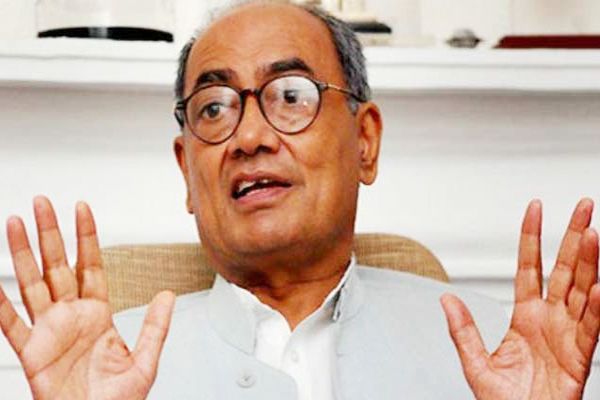
Digvijaya Singh ceases to be Congress general secretary after being removed as party’s Andhra in charge

In possible signs of him being sidelined by the party, senior Congress leader Digvijaya Singh lost his position as Congress general secretary following his removal as party’s Andhra Pradesh in-charge, PTI has reported.

This meant that Digvijaya lost his last standing All India Congress Committee (AICC) role, which had already seen a depletion after he was earlier removed as general secretary in-charge of states like Goa, Karnataka and Telangana.

The role of Digvijaya Singh was in turn given to former Kerala chief minister and solar scam accused Oommen Chandy. Another general secretary CP Joshi too lost his general secretary role in the states of West Bengal and Andaman & Nicobar islands. He was replaced by Gaurav Gogoi – son of former Assam Chief Minister Tarun Gogoi.

Such a reshuffle naturally raises the question whether the party was unhappy with Digvijaya’s performance, or whether it now wants him to totally focus on the upcoming Madhya Pradesh elections, following his appointment as the party’s coordination committee chairman in the state.

It was famously reported how Digvijaya had been held accountable for failing in his role as the Goa in charge when the Congress failed to form a government in the state despite emerging as a single largest party.

As reported by us, the then party state chief Luizinho Faleiro had attacked Digvijaya for his inaction which led the party losing out on power. As per him, Congress was in pole position to form the government, with the state unit wanting to stake the claim.

But Faleiro claimed that Digvijaya stopped him from approaching the Governor, in spite of having a letter ready. He said Digvijay Singh felt that the Governor should come to them, and they should not approach her. He also claimed that Digvijaya wanted to bide his time until they got the support of 24 MLAs, which never happened.

Former President of India Pranab Mukherjee to address RSS cadre at Nagpur

Former President of India, Shri Pranab Mukherjee, is set to deliver the valedictory address at the function of Third Year Sangha Shiksha Varga (SSV) of the Rashtriya Swayamsevak Sangh (RSS) at Nagpur. The RSS had formally extended an invitation to Mukherjee which the former Congress stalwart chose to accept.

“Mukherjee always had cordial relations with the RSS. During his meeting with Sarsanghachalak Mohan Bhagwat at Rashtrapati Bhavan last year he had expressed a desire to have a close look at the RSS work after stepping down as President. Accordingly, an invitation was sent to him and he has accepted it,” Pramod Bapat, Kshetriya Prachar Pramukh of the RSS told the New Indian Express. “Being an apolitical organization the RSS always strives to invite prominent people from all walks of life on such occasions. Politics is a part of social life and hence politicians are invited to such functions occasionally. In that sense nobody is ‘untouchable’ to the RSS,” he added.

The chief of RSS, Mohan Bhagwat, and Pranab Mukherjee are known to share a cordial relationship. During his Presidential tenure, Bhagwat visited the Rashtrapati Bhavan on several occasions. In June last year, Mukherjee even hosted the Bhagwat for lunch. In the past, they have been known to exchange Diwali greetings and share opinions on the state of the nation.

‘Does Chandrababu Naidu think he is the Nizam of Andhra Pradesh?’: BJP Spokesperson GVL Narasimha Rao

National Spokesperson of the Bharatiya Janata Party and Rajya Sabha MP, GVL Narasimha Rao, has slammed the Chief Minister of Andhra Pradesh, Chandrababu Naidu, after a video emerged of a senior minister in his cabinet demanding that Ramana Deekshitulu be arrested and thrashed after the former chief priest at Tirumala Tirupati Devasthanam made a series of allegations against the state government and Temple administration and accused them of corruption.


GVL Narasimha Rao linked Chandrababu Naidu to Tipu Sultan and the Nizam and wondered if the real cause of insensitivity towards the former chief priest is that the state government has skeletons in its closet that it does not want to be exposed. Rao told reporters on Friday, “The TDP is interfering in the TTD administrative affairs as if the temple is another political outfit. If the State government does not have anything to hide and no one to protect, it should immediately come forward to probe the allegations.” Rao also slammed the state government for sacking the priest claiming they had no authority to do so. “They interpreted GO 611 as per their convenience and decided to sack the priests. Who are they (government authorities) to remove the priests who are not even government employees?” he said.

We had reported earlier that Ramana Deekshitulu had accused the state government and Temple administration of impropriety and corruption and also rued the fact that the authorities had no respect for the scriptures and traditions. Since then, Jaganmohan Reddy, leader of Opposition in the AP Assembly, has asserted that the controversy surrounding the TTD is evidence of Chief Minister Naidu’s lust for money and power. BJP MP Subramanian Swamy has also come out in support of the sacked chief priest and stated that he will move the Supreme Court against the state government’s decision to sack him and request a Court-monitored CBI investigation into the matter.