The Supreme Court on Friday dismissed a petition filed by Delhi based hospitality firm – Sky Light Hospitality LLP, where it challenged an Income Tax notice which sought the reassessment of its land deal profits in Haryana and Rajasthan for the year 2010-2011.
As per the Income Tax department’s tax evasion report, which was tabled before the Delhi High Court, the IT department had “reasons to believe” that about Rs 35 crores earned by the firm in 2010-11 had escaped the IT assessment.
This setback comes after Sky Light had got a similar result in form of a Delhi High Court’s dismissal of its petition back in February, regarding this matter.
Sky Light Hospitality has attracted attention owing to it having Sonia Gandhi’s son-in-law Robert Vadra as a partner. Following the dismissal by the High Court, Vadra was rendered open for being questioned by the I-T department along with other stakeholders in Sky Light Hospitality.
The Supreme Court bench of Justices A K Sikri and Ashok Bhushan refused to interfere with the Delhi High Court order after a brief hearing regarding the matter. The High Court order had incidentally also instructed the company to join the proceedings before the IT assessing officer.
The High Court in its ruling had observed that after going through the arguments, the “reasons to believe” provided by the IT department were satisfactory to draw the inference that income had escaped assessment, thus a notice was required to be issued.
Sky Light Hospitality though contended that the IT department’s “reasons to believe” wasn’t enough to draw such a conclusion. To this, the High Court had contended that absolute certainty wasn’t needed for issuing the notice and that the stipulated reasons are invalid if they are based on suspicion, gossip or rumour. This wasn’t the case here, as according to the High Court, material and evidence were placed on record to justify the notice.
Incidentally, this isn’t the only controversy Sky Light Hospitality has had to contend with.
It had been reported that an individual linked to Sky Light Hospitality was arrested by the Enforcement Directorate (ED) in December, in connection with the Bikaner Land Scam. The ED has a suspicion that large sums of money was laundered by people who bought land at cheap rates via forged documents.
Why is Lord Ram the most important deity for Hindus? Why does anti – Hindu cabal hate Lord Ram?
These were some of the questions that emerged when I saw the response to two pieces of news. The first was that of UP governor’s advice to use the full name of BR Ambedkar i.e Bhimrao Ramji Ambedkar. The second was the opposition for use of CSR funds for a Ram statue in Ayodhya. I shall delve into the questions that arose in my mind in some detail.
BR Ambedkar’s father’s name ‘Ramji’ has been used in many stamps issued by previous governments
Why is Lord Ram important for Hinduism?
Ram took centre stage in Hindu discourse because he represents the ethos of Hindu civilisation. Ram represents the values of self-sacrifice, obedience for parents, respect for elders, courage and valour in times of need. He is the ideal son, ideal husband and ideal brother. These are the values that held in high esteem by every Hindu family. The Ramayana and the character of Ram serve as vehicles for the transmission of these values.
Lord Ram is a symbol of cultural unity of India
Lord Ram is a pan Indian deity where every major language in both South India and North India have a considerable amount of literature and music associated with him. A quick glance at various versions of Ramayana will reinforce this point
Sri Rama Vijaya by Sankaradeva in Assamese (15th century)
Torave Ramayana by Narahari in Kannada ( 16th century)
Sri Rangantha Ramayanam by Gona Budha Reddy in Telugu (14th century)
Ramacharitamanas by Tulsidas in Awadhi, a dialect of Hindi (16th century)
Ram is the mascot of Hinduism and Hindu civilisation because he unites people from all languages and geographies. He unites people of all castes and creeds because they respect the values that Ram stood for in his life. Of course, the same can be said for Lord Shiva and Lord Vishnu to some extent. The character of Ram unifies India as there are stories associated along the trail to Sri Lanka where he fought Ravan to rescue Sita. The slogan ‘Jai Shri Ram’ is not just a slogan but an affirmation of the cultural unity of India.
Lessons for politicians from Ramayana
Ram not only serves as an ideal for families but also for politicians and administrators. Politicians and societies also draw lessons from Ramayana. Ram’s kingdom had reached the ideal of ‘Ram-Rajya’ a phrase that Mahatma Gandhi latched on to in his writings.
Whether Rama of my imagination ever lived or not on this earth, the ancient ideal of Ramarajya is undoubtedly one of true democracy in which the meanest citizen could be sure of swift justice without an elaborate and costly procedure. Even the dog is described by the poet to have received justice under Ramarajya. – Mahatma Gandhi
The concept of Ram – Rajya is diametrically opposite to the British idea of ‘divide and rule’ which is being practised by Congress since independence. In addition to social divisions like religion, caste and sect Congress has now added the north-south divide as well into its box of tools.
Why does anti – Hindu cabal hate Lord Ram?
Secular Liberal Hindu haters can’t digest Ram’s ability to unite Hindus. They hate the fact that the deity is able to unite all castes, linguistic groups, geographies through the story of Ramayana. Once this unity is broken, their project of conversions, divide and rule policy will move smoothly. Thus, it is extremely important for the secular liberal cabal to defame and erase the memory of Lord Ram. They do this in many ways.
Strategy No 1 : Remove structures related to Ram and question his existence
They attack the veracity of Ramayana and the desire to break Ram Sethu and bury evidence related to Ram Temple in Ayodhya were two attempts to remove the faith of Indians in Lord Ram. Fortunately, they did not succeed. If you can make people forget about Ram, you can very well make them forget about their Hindu identity.
Strategy No 2: Portray Ram (and by extension Hinduism) as anti -Women
Self-proclaimed ‘feminists’ use Lord Ram to paint Hinduism as an anti-Woman religion. They pick up specific instances from mythology to argue about their theory. The concept of purity of Sita portrayed in Ramayana irks this section of the cabal.
Sita’s agni pariksha (trial by fire) after she is rescued is one of the punching bags of so-called ‘feminists’. It is illogical to argue in favour of ‘feminism’ using a story that has elements of fantasy in it. Of course, there is no chance of anyone coming out of a pyre alive if he/she enters it.
The fact that he banished his wife to the forest based on a rogue comment by a citizen is also a key argument against Ram by self-proclaimed feminists. It is quite possible that Lord Ram placed his responsibility as a king above that of a husband. That might have led to Sita’s return to the forest. Probably he wanted to shield Sita from further criticism by vile people in his kingdom. Using this example to paint Hinduism as anti-Women is nothing but juvenile propaganda.
Hindus have been in the forefront of promoting gender equality in India. The Hindu code and anti Dowry acts are some examples. Participation of Hindu women in all fields has also been increasing over the years. It must be noted that secular liberals who criticise ‘patriarchy’ in Ramayana and ‘anti-women’ nature of Hinduism are the ones who are investing enormous energies in retaining practices like triple talaq, polygamy and nikah halala among Muslims.
The ‘feminist’ campaigns which are sympathetic to polyamory and live-in-relationships campaigns are antithetical to the values of monogamy and husband-wife relationship portrayed in Ramayana. Detachment from Lord Ram is essential for these ‘progressive’ activists to break the institution of family in India.
Lord Ram is the worst enemy of liberals
The secular liberal cabal’s worst enemy is not Yogi or Modi, for they are all mortals. Lord Ram is the real enemy because he is the mascot of Hinduism and he is immortal in the hearts of all Hindus. Forgetting Ram would verily change the nature of society and country that we are today. That is the biggest threat for Hindus. Therefore, we must invest all our energies in keeping alive the memory and ideals of Lord Shri Ram.
Kashmir situation has been on the boil in recent months. 13 militants, four protesters and three army personnel have died in a recent operation in Kashmir. Media reports suggest that there is widespread anger and protests against these ‘killings’ of militants. But the same militants have been unleashing violence on civilians.
Manzoor Ahmed Bhat, a man who was abducted by LeT (Lashkar-e-Taiba) militants has been found beheaded in Hajin (Bandipora district). Bhat’s body was found a day after his abduction.
“The body of Manzoor Ahmed Bhat, who was abducted by Lashkar-e-Taiba (LeT) terrorists on the intervening night of April 4 and 5, was found on the outskirts of Hajin early today,” a police spokesperson told Hindustan Times.
The suspected LeT militant Mohd Saleem Parrey and his Pakistani counterparts are the current suspects in the killing of Bhat. The militants had abducted both Bhat and his father Abdul Gaffar. However, Gaffar managed to escape. He is now hospitalised with bullet injuries. The reason for the beheading is not known.
AAP supremo Arvind Kejriwal who doubles up as the Chief Minister of Delhi, suffered a bad Thursday on Twitter after he was slammed for indulging in fear-mongering with respect to bank deposits.
While piggybacking on rebel BJP leader Shatrughan Sinha’s tweet, Kejriwal claimed that he is regularly approached by people worried about the safety of their bank deposits in light of various bank frauds. He thus appealed to PM Modi that he inform people as to which bank was the safest to deposit money:
A no of people approach me daily worried abt the safety of their money in banks considering large no of bank frauds coming to light daily. PM may kindly inform the public which bank is safe for people to keep their money. https://t.co/eIkAvYjxYS
Kejriwal is currently one of the most well-known politicians in India today and has a Twitter following of more than 13 million people. When he comes out with an intuition that people’s money isn’t safe in Indian banks, there’s a strong possibility of gullible people taking his allegations seriously and panicking about the health of India’s banking system.
In short, the narrative of Indian banks failing to owe to financial frauds by the likes of Nirav Modi, barely make any sense considering, PNB is speculated to have lost about Rs 12,000 crores in the Nirav Modi fraud and in comparison its total business turnover is pegged at a whopping Rs 11 lakh crores, thereby putting the size of a banking institution into context.
This possible attempt to spread panic among people with regards to one of the most important commodities around called “money”, didn’t sit well with people who heavily slammed people:
Indian politicians making loaded statements which can trigger a run on the country’s banking system because it suits their political ends. New low. https://t.co/ir192CsZiX
I haven’t seen bigger a scum than you. And you’re Ex-IRS officer. In the past including 2008 meltdown, dozens of banks worldwide went bankrupt but we stood tall because of robust systems & checks of RBI. No Indian bank has ever devolved its commitment. Neither will it ever happen https://t.co/oZzetMhrUP
Even Mohandas Pai the former CFO of Infosys, dismissed Kejriwal’s narrative as a joke:
What a joke, total frauds is less than 0.20% of deposits a year; pl stop this exaggeration to show your pathological hatred for the govt: you need to grow up, act like a CM not an anarchist https://t.co/oXyDxShGpr
Incidentally “your money isn’t safe in the banks” narrative has been peddled for some time now, earlier via the proposed FRDI bill and now via bank frauds. We had earlier debunked such fear mongering in a YouTube video:
[youtube https://www.youtube.com/watch?v=V-Q7uk2QcAE?rel=0]
The Indian Air Force is scheduled to hold war game exercise ‘Gagan Shakti’ from April 8th to better train its fighters for crisis situations. According to reports, the exercise is meant to practise and strategise rapid force deployment from one valley to another in the high mountainous region along the China border.
The drill is aimed to tackle the situation of sudden invasion or attack along the difficult terrains. The IAF troops will be trained to rapidly provide reinforcement in the areas along the Chinese border. The war games are likely to be carried out in the mountainous regions of Dharasu and Pithoragarh in Uttarakhand. According to reports, the Air Force is likely to mobilise almost its entire fleet of combat and transport aircraft along with helicopters and ground-based assets.
The war games for rapid force deployment are expected to be carried out using the Mi-17V5 helicopters and the C-130J Super Hercules Special Operations aircraft which are capable of take-off and landing even in small runways.
The exercise is also expected to include special forces like the Garud commandoes for the enactment of sabotage operations beyond the enemy lines. ‘Gagan Shakti’ is expected to continue for two weeks.
The Light Combat Aircraft (LCA) Tejas, which has been inducted in the 45th squadron of IAF in the Initial Operational Clearance (IOC) configuration is also going to be a participant in the mega exercise.
About 1000 aircrafts including fighter jets, helicopters and strategic transport crafts are expected to participate in the exercise. It is being considered as the biggest war games ever to be conducted by the Indian Air Force.
According to reports, India’s first three female fighter pilots, Avani Chaturvedi, Bhavna Kanth and Mohana Singh will also participate in the war games. Flying Officer Avani recently created history by becoming the first Indian female to fly solo in a fighter jet.
Last year India and China were engaged in a standoff at the Doklam tri-junction which created global headlines. China has been involved in several transgressions into the Indian territory and this exercise is expected to display India’s preparedness for Doklam like situations and ability to confront in a two-pronged war.
Pakistan has officially asked the World Bank to ‘recognise its responsibility’ under the Indus Water Treaty of 1960 and requested it to intervene after confirming that India has completed the Kishanganga hydropower project.
According to reports, the power division of Pakistan’s energy ministry has sent a letter to the Vice President of the international financial organisation requesting them to make sure that India abides by the rules under the Indus Water Treaty while building the projects. A Pakistani official has stated to media outlets that Pakistan is certain that India has completed the 330 MW Kishanganga project while the World Bank has ‘paused’ it for a constitution of a Court of Arbitration (CoA) as requested by Pakistan in 2016. India had countered Pakistan’s request by calling for a neutral expert.
Under the guidelines of the Indus Water Treaty, the water of the eastern rivers, Sutlej, Beas and Ravi has been allocated to India and that of the western rivers, Indus, Jhelum and Chenab are allocated to Pakistan except for non-consumptive use. The Neelum river is called Kishanganga in India and originates in Gurais. It merges into the Jhelum near Muzaffarabad in Pakistan.
The Indian Government has maintained that India’s share of water has also been going to Pakistan over the years and it will make sure that it is avoided by bringing in better projects.
Prime Minister Modi, soon after the Uri attacks, had chaired a review meeting of the Indus Water Treaty and stated that India would no longer be lenient on the treaty and would ensure that it exploits to the maximum of the water share under the pact. ‘Blood and water cannot flow together’, was the PM’s remark on the meeting. He had also announced the formation of an inter-ministerial task force to go into the details of the treaty and strategise better utilisation of the water of the rivers inside Indian territory.
Recently, Union Minister Nitin Gadkari also echoed the PM’s statements.
Under the Indus Treaty,water from 3 rivers being given to Pakistan&water from 3 rivers coming to us. Water from our rivers was going into Pak, we are making detailed project reports to stop that from happening&water will be given to Punjab, Rajasthan, Delhi&Haryana: Nitin Gadkari pic.twitter.com/5CULHZeqCh
World Bank is the mediator between India and Pakistan on the water distribution treaty of 1960. Pakistan had earlier called for resolution of disputes on the Kishanganga project on Neelum and the Ratle (850 MW) project on the Chenab. It has also raised concerns over India’s proposed hydropower projects namely the Pakal Dul (1000 MW), Miyar (120 MW) and Lower Kalnai ( 48 MW). Pakistan alleges that these projects will significantly reduce water flow into their territory.
The Indus River System. courtesy: gktoday
The letter was sent to the World Bank after a Pakistani delegation of the Indus Water Commission was not allowed to visit projects in India, including the Kishanganga and Ratle. Pakistan had been alleging that the designs of the projects are not in line with the criteria laid down in the IW treaty but India has always insisted that they are ‘well within parameters’ and had urged the World Bank officials to appoint a neutral expert.
According to reports in the Pakistan media, the Pakistan government is under severe criticism from experts for failing to assert its rights internationally and losing legal battles over the issue. Pakistan has been accusing India of carrying out ‘water aggression’.
The last round of talks between India and Pakistan over the issue was mediated by The World Bank in Washington DC in September 2017 and ended in Pakistan’s disappointment. According to reports, the World Bank tried to bring the two countries to the negotiating table again but failed.
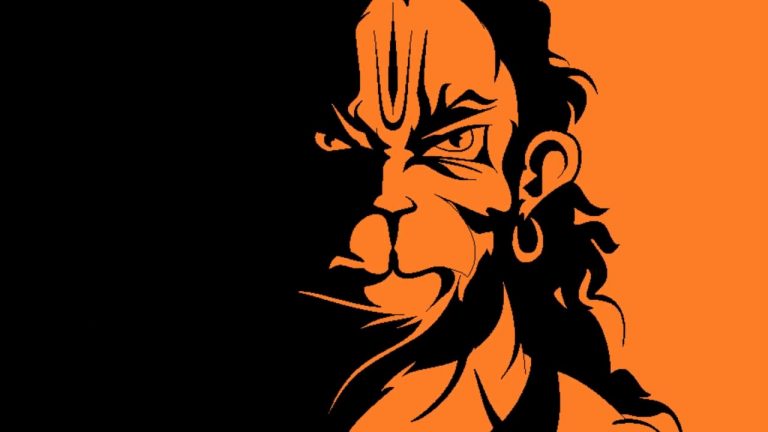
On the morning of the 5th of April, I had the misfortune of coming across an article on The Wire that lamented the rise of ‘Militant Hinduism’ and what the author calls the ‘reincarnation of Hanuman’. The article alleged that Hindutva had transformed the ‘benign’ Lord Hanuman into an aggressive ‘destroyer’. The author says, referring to a representation of the God that depicts Him against a saffron background, “His thunderous expression spells danger, and makes it clear he is no longer a server but a destroyer.” The article features the stereotypical taxi driver whose opinions always seem to ally with the journalist who has hired him for a ride.
Credit: Amazon.com
Shri Hanuman has been worshipped by our people for centuries for his devotion and duty towards Shri Rama. The author’s bewilderment at people’s devotion towards Lord Hanuman is rather amusing. The author also appears to suffer from a severe form of delusion. Lord Hanuman has been described often as a benign devotee but one should take care to remember that He is a warrior as well, a fearsome warrior who turned Ravana’s Lanka to ashes.
The ignorance of the author might have led her to conclude that ‘Hanuman 2.0’ is a creation of Hindutva but Hindus have always regarded Lord Hanuman as a great warrior and a graphic representation capturing His essence in that form is very much consistent with His legendary prowess in battle. As such, the depiction of the God with wrath etched across His face is consistent with the aspect of Him as a great warrior. It is not a new development at all.
The recurrent theme of the article appears to be the author’s disgruntlement over the overt display of Hinduism on the streets of our country. The author is quite clearly rattled over the chants of “Jai Shri Ram” and “Jai Hanuman” on the roads of Noida. Our religion is a living religion. We have not yet been relegated to the museums of history, much to the unhappiness of some Abrahamics. Until such a moment comes to pass, chants proclaiming the glory of our Gods will grace every nook and crevice of this country we call our home. Liberals have little choice over the matter. And at a time when our faith is under threat from the secular state that bans our festivals and controls our Temples, illegal immigration and a million other maladies, it is only natural that our people are once again turning to the warrior aspect of our Gods.
The author conjures the myth of a ‘Militant Hinduism’ from the narrative she weaves from her tale of chants of “Jai Shri Ram” and “Jai Hanuman”. She even goes on to proclaim that devotees wielding swords in the streets wearing saffron is a warning that we need to pay heed to. Liberals always profess that they are just as much Hindu as Hindutvavadis but really, what kind of a Hindu has a problem with devotees of Shri Rama and Lord Hanuman chanting glory of our Gods on the streets? Yes, the kind that claims to be Hindu only to score political points and not due to any sincere allegiance to Hinduism.
The article also wreaks of a detestable elitism. The author devotes an entire paragraph to what comes across as a rant towards the youth of Noida who she appears to blame for the rise of Hindutva. “Gujjar boys”, who are apparently fueling the worship of the aggressive Lord Hanuman, do not have a proper education. Journalists, for far too long, have been living in an echo-chamber of their own making where they perceive themselves, quite wrongly, to be the moral guardians of society. In her perceived moral superiority, which she has quite evidently done nothing to earn, she deems an entire class of citizens as not being properly educated merely because they are vocal devotees of Lord Hanuman and quite likely have different political opinions than hers. The death of journalism was pronounced when journalists accorded to themselves the authority to pass judgments upon large swathes of the population through their work and the consequence of it is for all to see.
The author concludes her atrocious piece with the words, “Noida is the new India. And the enormous success of Hindutva groups here is a warning that we will do well to pay heed to. And soon.” What does it say about liberals, who never fail to scream about their Hindu identity from rooftops, that they feel threatened so much by rallies dedicated to Lord Hanuman? And what does it say about our political scene that in a country, which has more than 75% of Hindus, there is only one political party that is associated with an overt display of Hinduism? The terror that seems to have engulfed the hearts of liberals is not driven by any malicious activity of Hindutva organizations. It is driven primarily by their repulsion towards an assertive Hinduism and they will soon discover that much to their dismay, Hinduism will continue to get more assertive every day in response to their concerted attempt at denigrating our festivals and way of life and that there’s very little they could do about it.
The Ministry of Information and Broadcasting has decided to constitute a committee for the regulation of online media websites. A letter dated April 4 states that the ministry will form a committee to suggest a regulatory framework for online media like news portals including digital broadcasting like entertainment/infotainment and news.
The letter lists the secretary, I&B as the convenor and secretaries of the ministries of Law, Home, Electronics and Information Technology, and the Department of Industrial Policy and Promotions. The CEO of MyGov and one representative each from the Press Council of India (PCI), News Broadcaster’s Association (NBA) and the Indian Broadcasting Foundation (IBF) will also be part of the committee.
The letter states that while the content telecast on private satellite channels and cable TV are under the regulations of the Cable Television Network Regulations Act, 1995 and the independent body PCI has its own norms to regulate the print media, there are no norms or guidelines to regulate the content of online media. The proposed committee is expected to work in close associations of the PCI, NBA and the IBF while laying out regulations for the content presented to the public through online portals.
This letter comes after the Prime Minister’s Office advised the Ministry of Information and Broadcasting that any attempts at regulations of online media should be done by independent bodies like PCI.
The ministry of I & B has expressed its concern over the menace of fake news circulated rampantly to mislead the public and had attempted to take disciplinary steps to stop journalists from spreading fake news. After the PMO struck down the proposal, the ministry has now come up with the proposal of the regulation committee as per the directive of the PMO.
The Punjab police on Thursday arrested a Sikh youth named Inderjit Singh, who as per the authorities, was planning a major lone wolf terror attack. The said Khalistani terrorist was arrested from Mohali, following which chemicals, explosive materials and advanced electronic remote controls were recovered from his car. The police have described him as a highly radicalised individual who was motivated to carry out terror attacks.
As per local reports, the primary investigation had revealed that he was working at the behest of his handlers from Pakistan’s Inter-Services Intelligence (ISI) agency, who wanted him to carry out explosions in Punjab, by making bombs using locally sourced chemicals and devices available online.
The police also claimed that Inderjit who is an Engineer plus MBA was working with a Faridabad company. He was first contacted by the ISI about three years ago, via Facebook. The ISI supposedly got in touch with him, due to his social media posts, following which they went on to further radicalise him. Since then he was in contact with his ISI handlers and was learning to make explosives via Do It Yourself (DIY) kits.
Following the arrest, the police have registered a case against Inderjit, under sections 17,18 and 20 of Prevention of Unlawful Activities Act and sections 3, 4, 5 of the explosives act.
As per reports, Inderjit’s handlers were also in contact with a Mohali based Harbarinder Singh led terror module, which was busted by Punjab police’s Counter Intelligence Wing on 29th May 2017.
Incidentally, the arrest of Inderjit comes just a couple of weeks after it was reported that the ISI was training Sikh youths to revive the Khalistani terrorist movement in India. As per the information shared by the Home Ministry, the youths were radicalised via provocative and false propaganda.
This was followed by the Punjab police arresting four people on Monday for allegedly trying to publicise pro-Khalistan campaign ‘Referendum 2020’ which was also supported by the ISI.
A Panchkula woman has alleged ‘love jihad’ and has claimed that her husband is forcing her to convert to Islam, as reported by Times Now.
#BREAKING Haryana: Panchkula woman alleges love jehad, ‘Husband forcing me to convert’, claims being threatened with Talaq, Husband shared photos with friends @mongavishal with details pic.twitter.com/kHYD3sAuvM
As per Times Now, the accused has been arrested and has been presented in the court following which he has been taken on police remand.
According to report, this is the first such ‘love jihad’ case in Haryana where a Hindu woman has accused her Muslim husband of forceful religious conversion. She has accused her husband of threatening her with ‘talaq’ if she does not convert to Islam. She has also accused him of sharing her private photographs with his friends to defame her. The husband has been reportedly booked under the IT Act and various other acts dealing with fraud. It is reported that the police is investigating the matter.