Home Blog Page 7282

Here lies the political ruins of Kejriwal and AAP, rest and leave us in peace

0

The patron saint of foot-in-mouth and chief of political outfit Aam Aadmi Party Arvind Kejriwal has done it again. He has tendered an ‘unconditional apology’ to Punjab’s Shiromani Akali Dal leader Bikram Singh Majithia after accusing him of being involved in Punjab’s drug trade, for which Majithia had slapped a defamation case against him. After years of being on the offensive and being the judge and pronouncing judgements on Majithia, Kejriwal has said that he realised the allegations were unfounded. It is believed a series of closed-door meetings took place between the leaders of the two parties.

Kejriwal reportedly decided to back off because his conviction was nearly certain. Of course, AAP supporters are calling it a brilliant move to take down BJP in 2019, because according to AAP sympathisers, if Kejriwal spends 15 days a month in courts, when will he work? And we thought Kejriwal has not been doing his work because Modiji doesn’t let him! Shocking!

However, AAP rebel leader Kapil Mishra has pointed out that Kejriwal is not supposed to be physically present in Bikram Majithia case.


Mishra has also alleged that on 13th March, Ashish Khetan, brokered the deal between Kejriwal and Majithia, which was even confirmed by Krishna Pratap Singh, another AAP sympathiser.


Mayank Gandhi, the former AAP leader, also came down heavily on Kejriwal and AAP apologists.


The apology has also brought out the rift within the AAP in full public view. As is evident, all the promises made by the ‘Dilli Ke Maalik‘ (owner of Delhi) were nothing but hogwash.

AAP social media head Ankit Lal claims that it wasn’t the financial constraint that has made Kejriwal back off, but the fact that the lawyers in Punjab didn’t ‘have the courage’ to fight the defamation case against the Majithias.


In further defence, AAP started playing blame games on those who have been critical of their decisions. Lal, along with AAP lawyer Rishikesh posted a video taking on Kumar Vishwas, who was critical of Kejriwal.


He further says that Kejriwal is not afraid of conviction or going to jail, but if at all he gets convicted, he cannot be allowed to contest elections for six years.


Does that mean Kejriwal is apologising not because he has no proof of his wild allegations, but because he does not want to let go of the power? They even blamed the Punjab unit of AAP for ‘lack of support’ to Kejriwal in fighting the case against Majithia. They claim that the Punjab team of AAP did not provide resources or support in terms of a lawyer to monitor the case.

AAP has essentially washed hands off the anti-corruption crusade and asked agencies to take care of it, leaving it midway, just as how Kejriwal has washed his hands off the responsibility of Delhi’s governance, blaming his lack of efficiency of Prime Minister Modi.

Rather in apologising for his lack of self-control on what he speaks, Kejriwal should apologise to every single person who had pinned hopes on him for bringing about a political change in India. He should apologise to everyone who has voted for him and he has not managed to stay true to his word.

Kejriwal and his idiotic “political outfit” started with lofty ideals of anti-corruption. The chief dramebaaz did his little piece. Promising that he doesn’t want to join politics. Swearing on his children. Not paying bail money because nothing spells political hero like a crusader in jail. To jog everyone’s memory, this happened in another defamation case filed by Nitin Gadkari. One wonders then, what happened to him now? What happened to those tall claims?

It appears AAP was the proverbial Schrödinger’s cat. At one point, everyone knew they had no substance and their chieftain was doing nothing but hoodwinking the public. But people waited. They were proverbially dead and alive at the same time. Now, finally, the box is open and we know for a fact, the cat is dead.

Dear AAP, rest, and just let us live in peace.
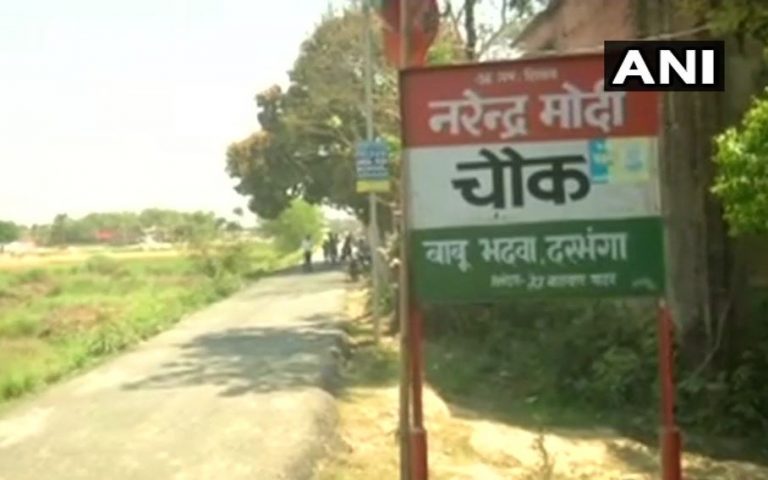
Police lying and pressurising us, claim family members of Bihar man beheaded for naming ‘chowk’ after PM Modi

0

The brutal incident of beheading of a man named Ramchand Yadav, father of a BJP leader Tej Narayan in Bhada village of Darbhanga district in Bihar, had shocked the nation. The reason for this brutal murder, according to the family, was the naming of a village square or a chowk after Narendra Modi.

The police authorities and the deputy CM of the state Sushil Modi, however, had denied that the murder was result of naming of the chowk:

Sushil Modi Tweet


Several portals and Twitter users had tried to use the tweet of Sushil Modi and the statements of the police establishment in order to deny the claim of the victim’s family. Suspended BJP MP Kirti Azad too had tried to deny any political or religious angle in the murder:

Kirti Azad Tweet

However, the family members of the slain man have reiterated that the murder took place due to the reason cited earlier. Family members have also claimed that they are under pressure from the administration.

Sushila, the daughter-in-law of Ramchand Yadav said that there was no land dispute, which was claimed as the reason for murder by the police. Tej Narayan, son of the victim told news agency ANI that there was no other reason for the brutal beheading of his father other than naming of the village square.

He further said that he was contemplating leaving the place due to pressure and threats. He said that there is pressure on him and his injured brother from police. Tej Narayan claimed that the police is misleading people.


The family members have received some support though. Bihar BJP chief Nityanand Rai and Union Minister Giriraj Singh met them to assure help. Rai had said that he would complain to the government regarding attempts to delink the crime from the ‘Narendra Modi chowk’.

The need of the hour is to reach out to the family, accept their complaints, investigate in a impartial manner and punish the guilty.

Bihar DGP says arrested accused don’t deny Araria video, parents say it is doctored

0

The Bihar DGP KS Dwivedi has told Times Now that the controversial video in which some youth allegedly shouted anti-national slogans is under investigation. Out of three accused two of them (Sultan Aazmi & Shehjad) have been arrested as per the information provided by the DGP of Bihar. The video emerged after RJD’s victory in a bypoll in Araria Lok Sabha constituency. The video had gone viral on social media and raised concerns about the law and order situation in Araria.

When asked whether the video was doctored, the DGP remarked that the video doesn’t seem to be doctored. He added that video has been sent for forensic verification. He has also mentioned that the accused have not denied charges against them.


The DGP had given a similar statement to Aaj Tak as well.

Bihar DGP statement to Aaj Tak

The parents of the accused have claimed that the video is doctored while speaking to Indian Express. The video families have submitted to police have the slogans “Katno kariyo baap baap, lalten chhaap (However hard opponents try, the RJD will win).” as per Indian Express reports.

The DGP had said there is no law and order situation and the videos have been sent for forensic investigation as of now. He confirmed that the youth were not affiliated to any political party. Further updates on the issue are awaited.

As crackdown intensifies, farmers ‘reclaim’ Nirav Modi’s land, say cultivation on 125 acres of land will begin soon

0

Protesting farmers from Khandala village In Maharashtra’s Ahmednagar district have ‘reclaimed‘ over a hundred acres of Nirav Modi’s land which they accuse the absconding businessman of acquiring at less than prevailing rates. The farmers, who arrived in bullock carts at the tract of land, said that they will soon start cultivation on the 125 acres of land.

Karbhari Gawli, a lawyer and activist who was part of Saturday’s protest, told PTI, “The land was acquired from farmers at around Rs 15,000 per acre, whereas the government rate for land compensation in the area is around Rs 20 lakh per acre now.” They ploughed a small part of the land as a symbolic gesture of reclaiming the land. According to a farmer activist, the land is among the properties attached by the Enforcement Directorate (ED) in its probe against the disgraced businessman who is accused of committing a fraud of over 11,000 crores.

Times Now has reported that the crackdown on Nirav Modi and Mehul Choksi has intensified. According to the channel, the attached land can be reclaimed by the previous owner under certain conditions after the attachment of properties by the ED has been ratified by an independent adjudicator. The ED is working in haste towards the liquidation assets so that money can be recovered.


The Punjab National Bank had last month blown the lid off a fraud of over 11,000 crores of rupees in one of its branches involving Nirav Modi and Mehul Choksi. Since then, the ED has been conducting a series of raids across the country and has already seized many of their properties worth thousands of crores.

Survey says living in Bengaluru is cheaper than living in Karachi

0

The Economist Intelligence Unit conducted a study, reporting the Worldwide Cost of Living as of 2018. The aim of the study was to understand which respective cities involved the most and least amount of investment and/or spending for both businesses and individuals.

How Was the Study Conducted?

The survey compared the prices of 160 goods and services in 133 cities around the world. Human resources managers then had to calculate compensation packages for overseas postings and conclude the placement of these various 133 cities accordingly. Therefore, the findings of the study can be regarded as fairly reputable and representative of the population in the different cities.

What Were the Findings? What Does It Mean to us?

The results suggested that this was a “year of currency fluctuations”, which explained why there were so many changes in the rankings. The report further observed that there were “changes at the bottom”. “Within Asia, the best value for money has traditionally been offered by South Asian cities, particularly those in India and Pakistan”, it says. Therefore, unlike other countries at the bottom of the list, the presence of Indian cities and Karachi are shown to be quite expected.

The report claims, “To an extent, this remains true, and Bangalore, Chennai, Karachi and New Delhi feature among the ten cheapest locations surveyed. India is tipped for rapid economic expansion, but in per head terms wage and spending growth will remain low”. And they argue the reason for that to be “High-income inequality” in India.

“This, combined with a cheap and plentiful supply of goods into cities from rural producers with short supply chains as well as government subsidies on some products, has kept prices down, especially by Western standards”. The reference to a “short supply chain”, essentially indicates that there are fewer middlemen for the consumer to access a product. As a result, the price reduces to a large extent.

While referring to the cheapest cities in the world, the same intelligence unit says the cities are “cheap but not always cheerful”. The main emphasis on ‘not being cheerful’ is placed on the Syrian and Venezuelan capitals, “Damascus and Caracas show, a growing number of locations are becoming cheaper because of the impact of political or economic disruption”.

However, India still remains well in the picture. The report states, “instability is becoming an increasingly prominent factor in the Indian subcontinent in lowering the relative cost of living”. They thus conclude that there is a “considerable element of risk in the cheapest cities”: three of which are India’s in the top 10.

The EIU seems to believe that while Lagos, Karachi, Algiers and Almaty have faced socio-economic, political, security and infrastructural issues in the past, India’s main issue seems to be the “high-income inequality” and “instability”. They also say that ‘Cheaper cities tend to be less liveable’.

When three of our most popular cities, including our national capital, is the “cheapest cities in the world”, it is apparent that a sense of being less “liveable” is reflected by the study. At least in theory.

We need heroes, and Minhaz Merchant reminded us of one by celebrating AM Naik, the Nationalist

It is now a critical time for India which, as a budding nation-state and a hoary civilisation, is undergoing through the complex process of decolonisation with ups and downs, forwards and setbacks. It is near-universally acknowledged that India has no dearth of talent and successes, at a private level. However, the critical problem for India is to devise institutions that can succeed. Only then, India as a nation will be recognised and respected.

Devising institutions is a critical challenge. It requires a fair balancing between centralisation and decentralisation, between collective understanding and individual decisiveness, between institutionalising structures (derisively called bureaucracy) and lack of structures (admonished as unprofessionalism). Usually, this job is reserved for statesman and bureaucrats. The Nationalist, therefore, is a term that is typically reserved for statesmen working in governance or ideologues in the political domain.

Can a person from a corporate firm with profit motive be that nationalist? A shining example is Anil Manibhai Naik, a business executive who worked 18-hour days for 53 years! Such tremendous and selfless action is not possible without an inspiration of the highest kind.

And, what is that inspiration for Naik?

Minhaz Merchant delved deep into Naik’s family background to find the answer to this key question. Naik’s father was a staunch Gandhian for whom ideology was not a virtue-signalling word but a way of life. He quit a prestigious position in Mumbai voluntarily, to serve the village and thus, became a teacher in a rural school. His ideology was reflected in his uprightness which was not very conducive to the stability of his job in a rural political milieu. It is rather a common knowledge that ideologists are not exactly pragmatists.

And, this is exactly what inspired Naik. He is sharp — a combination of engineer-chartered accountant-economist-lawyer-manager; but more than that, his ideology is strong. He assesses people by their honesty. He has learnt his lessons from his ideologist father and kept his pragmatic side forever awake, without compromising his honesty.

Micro-management and macro-management are two sides of the management process. Naik is an ambidextrous person proficient in both. In his early career, he used his micro-management skills to decide where to stop his scooter during his midnight supervision of the factory floor so that workers would not be alarmed by the engine-noise of his scooter. In his late career, after taking over as CEO of L&T, he used his overall business policy skills to materialise an exponential growth. Market capitalisation rose from around Rs 2,000 crore in 1999 to over Rs 1,70,000 crore in 2017 for L&T and made it a 25 billion dollar company today. During this expansion phase, he implemented decentralisation in L&T too, an impossibility unless someone has the big picture in front of his eyes.

This expansion is not a matter of number but one of selfless vision and institution building. When confronted with difficult questions, their answer was also found with patience and perseverance. The entanglement of L&T with Dhirubhai Ambani and Kumar Mangalam Birla is a good example. The key element was the cement business of L&T and Naik let it go in the greater interest of the company.

Is his life a bed of roses? No surely not. On the contrary, personal tragedies are very much part of his life. But he finds solace amid those tragedies, not in bemoaning and grieving, but in his temple, the L&T. For Naik, the family is not a source of corruption but a support to his worship — working for L&T to nation-building.

What does India need at this critical juncture to regain her civilizational values? We do not need censures and “Why-this-would-not-work” sermons. We need heroes; we need a celebration of institution-building and selfless action. Merchant has precisely done that by celebrating Naik, the Nationalist. This book is the call of the present times.

MoS Hardeep Singh Puri talks about Swachh Bharat, Pradhan Mantri Awas Yojana, Smart Cities and more

0

The World Urban Forum is the biggest non-legislative, bi-annual conference of the United Nations to discuss Sustainable Urbanization and Cities. The ninth session of the World Urban Forum (WUF9) was convened by UN-Habitat in Kuala Lumpur during 7-13 February 2018. The focus of WUF9 was to Scale up and Localize the New Urban Agenda (NUA) which was formally adopted by world community including India during UN-Habitat’s Habitat-3 conference in 2016, Quito (Ecuador). NUA provides a vision for the future cities of 2030 and a framework to achieve that. NUA envisions future Cities of 2030 as Inclusive, Just & Safe, Healthy & Accessible, Prosperous & Affordable, Resilient & Sustainable Cities.

The outcome of the WUF9, the Kuala Lumpur Declaration made several recommendations including 1. Persuading nations to bring a comprehensive National Urban Policy for implementing NUA at National, Regional and Local Level; 2. Empowerment of Urban Governments & Mayors; 3. Territorial development of city regions including urban, peri-urban and rural areas. 4. Regional Economic Development of the city regions and development of trade corridors especially for landlocked regions by cooperation and partnership between cities. 5. Extending urban rights to the international migrants (refugees).

Hardeep Singh Puri, Union Minister of State for Housing and Urban Affairs (MoS, MoHUA), India, was representing Government of India at WUF9.

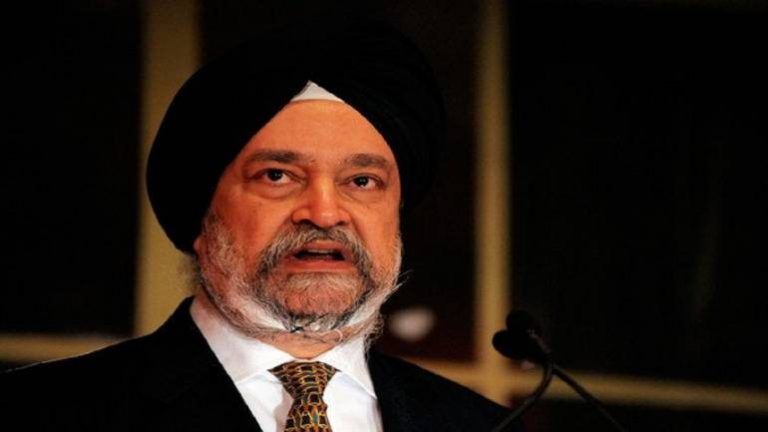
Hardeep Singh Puri, MoS, MoHUA, India

Hardeep Singh Puri is the Union Minister of State for Housing and Urban Affairs (MoS, MoHUA) since 3rd September 2017. He is Member of Upper House of the Legislature, i.e. Rajya Sabha. Before joining active politics in the year 2014, he had an illustrious diplomatic career. He was permanent representative of India to the United Nations in Geneva and New York, president of the United Nations Security Council and chairman of the Counter-Terrorism Committee of the UN Security Council (2011-12). He played an active role in formulating women’s body of United Nations, i.e. UN-Women while he was India’s permanent representative of India to UN. Mr Puri was appointed as the President of UN-Habitat’s Governing Council at Kuala Lumpur in 1st week of February 2018. As an urban journalist, I was covering the conference (WUF9) and I had an opportunity to interview him. Here is what he responded to my queries:

On India’s role in multilateral negotiations in WUF9 and about the implementation of NUA in India: 

“I will briefly refer to the sustainable development goals which were adopted by the UN in 2015 and the New Urban Agenda which was adopted in Quito in 2016. New Urban Agenda is very much part of the Sustainable Development Goals. SDGs has 17 goals, one of the goal is goal 11 which is about Sustainable Cities and Communities. And much of what most countries are doing, at least certainly what India is doing, broadly conforms to that. But countries have their own programs, countries also look at the evolving narratives outside… India has been an active player in the multilateral negotiations when it came to the negotiations of the sustainable development goals. India was an active participant and many of those goals including goal 11, are areas on which India has autonomously embarked.”

“India has already initiated a lot of programmes, Affordable Housing Scheme, Smart Cities, Swachh Bharat, these are all part of it. We also have other schemes like AMRUT where we are giving water connections and helping with sewage management system in 500 cities. HRIDAY is scheme more of limited duration, it will run till about October this year after HRIDAY scheme is being implemented, it will be dovetailed in the scheme, in the work done by tourism ministry to avoid duplication of work.”

Part Video recording of the interview

[wpvideo MQ8owBx3]

(The unedited video recording of the interview is with author)

On India’s Urbanization Challenges:

“I will try and give you a brief overview and perspective of challenges of urbanization as I see them. In 1947, 17% of India’s population lived in urban areas, that was 17% out of a population base of only 300 million. According to the census of 2011, 30% of Indians live in urban spaces. But the population of India meanwhile has gone up to 1.25 Billion. By the year 2030 when the sustainable development goals are supposed to be completed, close to 600 million people will live in urban spaces in India. To build the India of 2030, we will have to construct something like 700 to 900 million square meters of residential and commercial space every year between now and 2030. In other words, 70% of the India of 2030 has still to be built.

Why is the urbanisation in India is opportunity and challenge? As it is the Indian cities provide for 65% of India GDP, they also provide for 90% of India’s tax returns. Every month, 1 million people move from the rural areas to the urban areas in search of economic opportunities. Quite simply because the contribution of the agriculture to our GDP is less than 15% now, I think it is around 14.6%. This places massive pressure and strain on the existing urban infrastructure that is why it has to be built.

When Prime Minister Modi was elected in May 2014, he conceived and announced several major flagship programs and I want to cover three of them which will alter the shape and structure of India’s Urbanization and produce rejuvenation.”

About Clean India or Swachh Bharat campaign:

“Swachh Bharat campaign was announced by the Prime Minister on 15th August 2014 and by the time we celebrate 150th birth anniversary of the father of the nation ‘Shri Mahatma Gandhi’, India should be completely open defecation free, India should have hundred percent scientific waste management capacity, there should be enough toilets in urban and rural areas.

So far as urban areas are concerned, we are required to build something like 67 lakhs toilets and 5 lakhs community toilets. In next three quarters, we will get the required number of toilets built by at least one year in advance of the 2019 deadline. It is one thing to build toilets, but it is quite another thing to make sure that people use them. That will require some behavioural change.

Also, one area where we might have to put in much more efforts is to ensure that we produce 100% scientific waste management. In India we generate something like 62 million tons of waste every year, we haven’t placed a good policy to produce compost and energy from waste. We will be able to do more certainly by the time we reach October 2019.”

On Housing for All or Pradhan Mantri Awas Yojana (PMAY):

“Pradhan Mantri Awas Yojana or the affordable housing scheme is an ambitious scheme. We need to build 10 or 11 million homes by the year 2022 and not all houses have to be built by the government, a lot will be built by the private sector. In PMAY, Government provides the land in 6 out of the 8 options and subsidy (the direct grant or credit linked) to cushion the interest rate. The title house home (in PMAY scheme) will have to be in the name of the lady of the house which will give the push to the Gender Empowerment.

We gave the infrastructure status to affordable housing. We introduced new legislation called as RERA in May last year which was languishing for many years. The previous budget also provided fiscal incentives for affordable housing. Affordable housing fund has been created under the National Housing Bank of something like 25000 crores. Every Indian citizen will have a house they can call their own by 2022. The house in PMAY will have all the modern amenities, they will come in different sizes ranging from 30 square meters 250 square metres.”

On Smart Cities Programme:

“100 cities have been selected in the Smart City programme, 99 have been identified. These smart cities will use technology to improve the standard of living. Different cities are in different stages of implementation, around June to October this year, you will begin to see the physical contours of the Smart Cities.

We also have other schemes like AMRUT where we are giving water connections and helping with sewage management system in 500 cities. So, I am just mentioning these. HRIDAY is scheme more of limited duration, it will run till about October this year after HRIDAY scheme is being implemented, it will be dovetailed in the scheme, in the work done by tourism ministry to avoid duplication of work.”

About Territorial development, Landlocked countries and Economic corridors:

“You cannot think only in terms of urban spaces very often you have to deal with rural issues and you know there are new words being designed like RUrban which is partly rural partly urban, you know one of our former Presidents used word ‘PURA’ Providing Urban Amenities to Rural Areas. Landlocked countries is not an urban agenda issue, it has got many other dimensions. However, we have excellent relations with Nepal, Bhutan. On the issue of landlocked Countries, India takes very progressive & forward-looking view.”

Conclusion : 

The World Urban Hon. MoS Mr Puri reiterated India’s commitment towards implementing New Urban Agenda (NUA) and informed about India’s participation in multilateral negotiations of Sustainable Development Goals (SDGs) and the NUA. He provided a brief overview of urbanization in India and advocated affirmative action by government to drive the development. He said that India is working on the urban issues extensively and what India is doing, broadly conforms to the New Urban Agenda. However, critical issues like bringing comprehensive National Urban Policy in conformity with NUA, rights to migrants, amendments to the law for gender equity etc could not be pursued in the due paucity of time.

India is home to a very large number of economic migrants as well as persecuted peoples such as Bangladeshis, Afghans, Tibetans and now Rohingyas. The influx of migrants having diverse ethnic, racial and economic backgrounds has created not only local demographic challenges but also challenges of assimilation. In the context of urbanization, provision of housing, sustainable livelihood and extending other social sector schemes to migrants has become an important factor in sustainable urbanization. India must meet this challenge of inclusiveness and sustainability while marching ahead in urbanization. There is a need for better articulation of policies from the government in this regard.

Similarly, India is a federal polity with three levels of governance – national, regional and local. Under the constitution, Urban development is a state subject. Policies with regard to gender discrimination against women, LGBT is not in the realm of urban development. However, to implement NUA, a comprehensive National Urban policy for future of urbanization in India has to be forged with the participation of all three tiers of government. Stakeholders from all three levels of government and civil society will have to come together on a common platform for effective implementation of NUA. That is a challenge in nutshell.

It may be too early to expect clear picture about India’s plan for implementation of NUA. However, the feedback pertaining to implementation of New Urban Agenda by all the National Governments of member countries to UN-Habitat is scheduled in July 2018. I wish to interact with Hon. Minister in next few days for following up on the issues.

New Urban Agenda Implementation Plan 2018 – 2026

NDTV in the dock : SEBI imposes fine on the channel and its executives for disclosure lapses

0

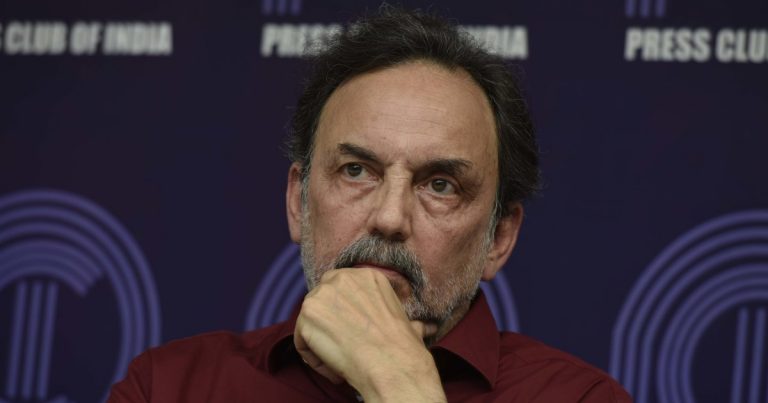
Market regulator SEBI (Securities and Exchange Board of India) has imposed a penalty of Rs. 10 lakh on NDTV and Rs. 3 lakh each on four individuals, including promoters Prannoy Roy and Radhika Roy for certain disclosure lapses. This order is preceded by a probe by SEBI into the alleged delay in disclosure of income tax demand of about Rs. 450 crore, which has subsequently been challenged by NDTV, regarding the sale of some shares by a top company executive over four years ago.

In the order dated 16th March, the SEBI imposed a penalty of Rs. 10 lakh on NDTV and Rs. 3 lakh each on Prannoy Roy, Radhika Roy, Vikramaditya Chandra (Group CEO back in 2014) and Anoop Singh Juneja (Compliance Officer). The SEBI said there were allegations against K V L Narayan Rao, NDTV’s Executive Chairman, but proceedings against him were dropped after his death last year. The investigation by SEBI was conducted based on a complaint from Quantum Securities, a shareholder with NDTV, that the company did not disclose the order of the income tax department, within two days of receipt of information, to the stock exchanges.

Quantum Securities, had been associated with NDTV since 2006, but had a fallout with it within two years, following which the owners, Sanjay Dutt and his partner Sanjay Jain, have filed a series of complaint against NDTV’s promoters with the income tax department, SEBI, Ministry of Corporate Affairs and the Enforcement Directorate alleging fraud, money laundering and FEMA violations.

In the said order, the SEBI has said the persons in charge of a company or principal officer are liable for the compliance of clause 36 of the listing agreement, which makes it mandatory for a listed company to disclose any information which is share-price sensitive. The order said that the above four persons have violated the listing agreement and therefore, liable to pay penalty.

Earlier, NDTV has already been penalised Rs. 2 crores through a different proceeding with respect to non-disclosure of the said income tax demand of Rs. 450 crore.

Subramanian Swamy suggests govt to bring an ordinance to build Ram Temple

0

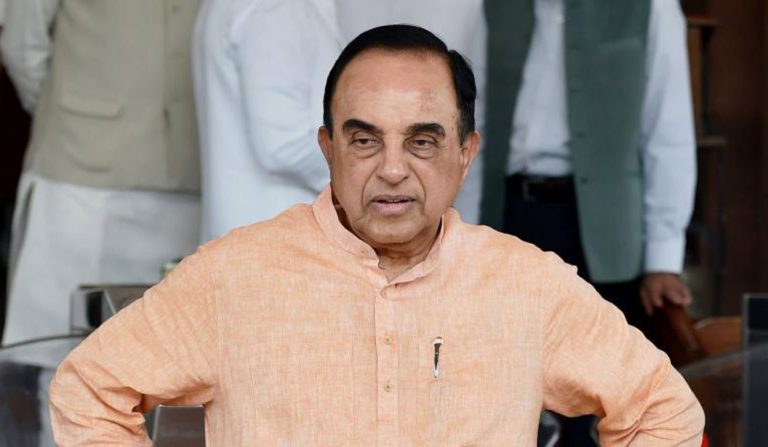
BJP leader Subramanian Swamy has suggested that an ordinance be brought in the Ram Janmabhoomi case in order to build a Ram Temple. He was one of the petitioners in the case until the Supreme Court rejected all intervention petitions. However, Dr Swamy had been allowed to pursue a writ petition.

He said that the land be compensated to the Muslim side in exchange for Ram Janmabhoomi.


He also added that Congress influenced lawyers were bringing a halt in the legal process in accordance with the party’s agenda, and thus the law and constitution must be used by the government.

The legal feasibility and political will of the current government will influence further action on this suggestion. It remains to be seen as to how the BJP and Prime Minister respond to the letter of the Subramanian Swamy.

Desalinated water will soon be available at 5 paise per liter: Nitin Gadkari

0

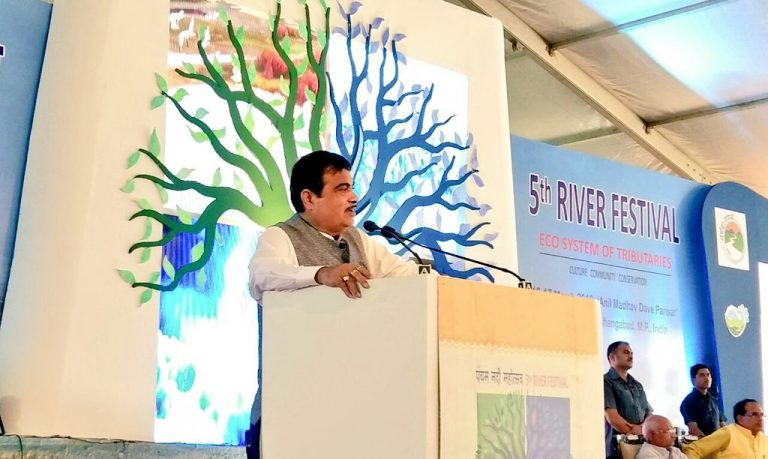
Nitin Gadkari, Union Water Resources Minister, has stated at an address during the inaugural session of Nadi Mahotsava at Bandhraban, Madhya Pradesh that potable water from seawater will soon be available at just 5 paise per liter. Trials have been started in Tuticorin, Tamil Nadu, for the conversion of seawater into potable water.

The Union Minister also remarked that it was tragic that states in India quarrel over water and yet, water from three rivers in India flows into Pakistan unused and yet hardly anyone complains about it. He further stated that all that water is going to Pakistan but no newspaper writes about and neither does any MLA demand that it be stopped.

Nitin Gadkari mentioned the use of treated sewage water in thermal power stations in Nagpur while highlighting the need to focus on the conservation of water. He also said that the government plans to earn more revenue by selling treated sewage water to industries, railway stations and power plants.

Nitin Gadkari strongly emphasized on the gravity of the water problem in India. He said, “Water is the biggest problem in India. Only if we manage to save water, forest and animals we would be able to go ahead. It is directly linked to our country and the society.” He added that the pioneering event, Nadi Mahotsav, will not only revive rivers but also improve the livelihood of the people living on their banks.