Home Blog Page 7335

Government control of Temples : A perspective from Shri Jagannath Temple, Puri

0

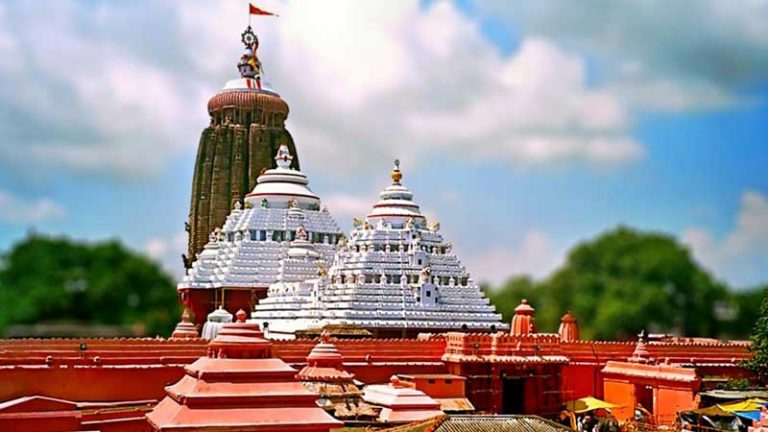
Government control of Hindu Temples, a matter which has been debated and discussed innumerable times. Questions have been raised whether it is appropriate for a secular government to manage religious denominations. Counter arguments have been provided as to what constitutes a religious affair and do the extent of government control really meddles in it. Are financial matters of the temple religious in nature? The definition of secularism has been broadened as and when it suited the state. There have been examples where the state was trusted to oversee the daily affairs of a temple and even empowered to decide what rites should be performed. To argue for the cause, we need to understand who exactly in the government controls these temples, are these government committees unilateral, what is the extent of government’s intervention in religious matters, how much and for what purpose the temple funds can be used by such government-appointed committees. These are some of the precise points I will try to elaborate in this article through the context of Shri Jagannath Temple, Puri, one of the 4 dhaams of Hindu.

The Paradox of the Indian Secular State – Robert D. Baird.

Photo Courtesy: https://twitter.com/ravithinkz/status/673243694418419712

Shree Jagannath Temple Act was an act passed by Odisha government, notified in the Odisha Gazette in 1954 to “provide for better administration and governance of Shri Jagannath Temple at Puri and its endowments”.

Who in the government (And outside it) actually controls it

The committee which administers Shri Jagannath Temple, Puri has substantial government clout. While there are members from all sections of the society including members of the public, government officers and temple servitors, the government officers enjoy executive powers and influence much of the decision making. Also, the who among member of public and servitor will be part of the committee is decided by the government.

The administration and governance of the temple are vested upon a committee which is constituted by people from all walks of life including ex-officio members who become a member by the virtue of the position they hold within the government. The committee includes the following people in various capacities.

  • The Raja of Puri, who has the first right over worship of Shri Jagannath is the chairman of the committee.
  • An officer of Odisha government, not below the rank of Addl. Chief Secy will be the working chairman.
  • An officer from the Indian Administrative Service (IAS) not below the rank of Revenue Divisional Commissioner serves as the secretary

Apart from these, the government officers who are part of this committee includes

  • Puri collector
  • Superintendent of Police, Puri
  • An officer from Archeological Survey of India (ASI)
  • Addl Secy, Department of Law, Govt of Odisha

Apart from government officers, below-mentioned people are also inducted as the member of the committee which are nonetheless nominated and appointed by the government

  • One person from among persons entitled to sit of Mukti Mandapa.
  • 5 persons from among all Sevaks of the temple.
  • 1 person from the Mathas or other religious institutions related to the Nitis of the temple
  • One Chartered Accountant (CA) who doesn’t in anyway belong to or is related to any person in the above category

All the members of this committee, including the government officers must profess Hindu religion, failing which their membership automatically ceases to exist.

What is the extent of control this committee exercises over the temple

The committee controls the record-of-rights (Niti, Seva and Puja), has significant say over temple administration, is the proprietor of the funds as well as all the immovable properties and temple endowments.

The duties of the committee and its members are outlined in detail as follows

  • The committee maintains the records-of-rights i.e. the nitis and rituals of the temple and who is entrusted with what.
  • It ensures safe custody of funds in terms of endowments(land), donations, Ratna Bhandar and other movable properties of the temple.
  • It is also incumbent upon this committee to upkeep general cleanliness, hygiene and ensures discipline in the temple premises. This includes ensuring the purity and hygiene in the offerings (Mahaprasad or Bhog) as per standards.
  • The committee must make provisions for payment of the monthly salary of the temple staff.
  • To consult with state government on sale, lease or put immovable properties of the temple to agricultural use.
  • Remove encroachment from the Temple land.

The committee submits an annual administrative report to the state government in order for the government to assess the performance of the members. In addition to the committee, the secretary enjoys some executive powers which include the following

  • Can decide to lease Temple land for a period of fewer than 3 years
  • Resolve disputes on rights, privileges, duties and obligations among sevaks on niti, seva, puja in accordance with Record-of-rights.
  • Control activities, conduct and management of all institutions within the temple including the Mukti Mandapa and Pandit Sabha.
  • Suspend, dismiss or impose a fine on any of the sevak for non-performance of religious duty, disobedience or general misconduct.

Control over Temple Funds and Properties

The committee is the proprietor of most of the temple funds but it can be used only for the temple purposes or propagating Shri Jagannath culture. The donations received from various sources is managed by another committee headed by CM of Odisha which is used for salary and welfare of temple staff namely the servitors.

There are various incomes as well as expenditures of the temple. The Chief administrator is entrusted with preparing a budget for the annual income and expenditure of the temple which is to be approved by the committee and then passed in Odisha assembly. The temple fund consists of

  • Income from movable and immovable properties of the temple
  • Contributions from the state government in terms of grants
  • Gifts and contributions by public, institutions or local authorities

This fund can only be utilised for certain said purposes as defined in the act

  • Maintenance and repairs of the temple and its properties.
  • Training of sevaks to perform the daily rituals.
  • General hygiene for the worshippers and devotees as well as for medical relief, water supply and other sanitary arrangements.
  • Propagation of Shri Jagannath Culture and philosophy.
  • In addition, the committee must look into and try to utilise donations in a way as wished by the donating body be it a member of the public or any institution.
  • General day-to-day expenditure of the temple.

The cash offerings from devotees and other institutions go to a temple Hundi which is part of the “Shri Jagannath Temple Foundation Fund”. This fund is managed by the financial committee headed by the Chief Minister of Odisha aided by the Law minister who acts as the vice chairman. These are invested in long-term FDs the interest of which is used to pay salary to the sevaks and other temple employees as well as their welfare. These FDs can’t be encumbered without approval from the state government. 

Conclusion

With government intervention, it certainly brings in certain transparency in funds management. Also, as the custodian of Record-of-Rights, the government, which is a representative of people, makes sure the nitis and sevas are performed on time and as per ritual so as to maintain the sanctity. There have been instances where servitors of a particular Nijoga have not done their duty on time or as per ritual – Nijoga : A particular type of servitor engaged in performing some assigned responsibility like “Kumbhakara Nijoga” create earthen pots for the temple kitchen. There are 36 Nijogas in total. The temple administration has taken necessary action in these cases to maintain order, the Nabakalebara fiasco being the significant one. To summarise, it brings some accountability to the otherwise all-powerful and sometimes unruly nijogas. Recently, the administration also mandated quality check on the raw materials used for Mahaprasad to ensure hygiene. There was a complaint from a lot of quarters that the general quality ofMahaprasad was going down. By these limited interventions, the administration acts as a bridge between devotees and temple servitors.

However, it again raises the point mentioned in the beginning. Does a government which asserts itself to be secular should meddle in the religious affair, whether for a noble purpose and who gets to decide the nobility of the purpose. What will be ideal is, while govt ascribes itself to some form of financial management, which as Puri temple shows, should only be used for purposes directly related to the temple and Hindu culture and philosophies. This will bring some kind of transparency which is desirable. However, a secular government should always stay away from the religious affairs and let the temple administration viz. the sevaks and worshippers decide that. A selective approach to dabble in the religious affairs of only one community while others enjoy “religious freedom” would be seen by many as anti-Hindu which doesn’t augur well for a secular government.

As they say in Odia, “Chaka aakhi sabu dekhuchi”, The Lord with round eyes is watching it all.
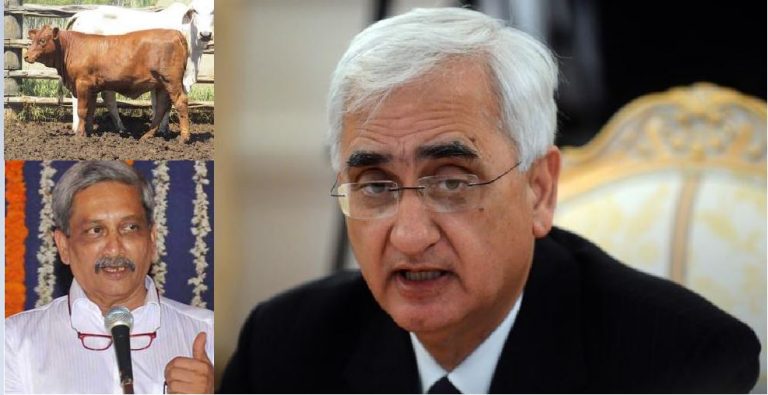
Salman Khurshid feels that drinking cow urine is more dangerous than drinking beer

0

The comment on ‘girls drinking beer’ by Manohar Parikkar has been distorted and politicised by the media. The context and meaning of the actual statement had not been understood fully by those who reported on this comment. We had published the full translated statement given by the Goa CM. Parikkar had expressed concerns about minor/college going girls had started consuming beer.

The person who interviewed Parikkar had also clarified that the CM’s comment had been distorted by media.

Congress leader Salman Khurshid jumps into the fray

Relying on the mainstream media’s distortion of the ‘beer comment’, former Congress minister Salman Khurshid has jumped into the fray and remarked that drinking cow urine was more dangerous than drinking beer.

“I don’t want to be facetious, but a lot of people are worried about the health minister of Rajasthan promoting cow urine. I think people should be more worried about drinking cow urine than being worried about people drinking beer, that too of all places in Goa. I don’t think these kinds of comments actually deserve any response to tell you the truth.”

This is yet another instance of commentary and politicisation of distorted comments. Khurshid has not only believed media reports of the ‘beer comment’ but has also given it a communal twist by dragging in cow urine into the debate.

Incidentally the cow urine or “gau mutra” angle is regularly used by so called liberals to attack devout Hindus for either their reverence for cows or anyone tilting towards the right wing when there are no better counter arguments over an issue.

Disregarding the health benefits pivot, as both the beer and cow urine camp claim to boast about them, what might raise questions is, Khurshid’s intention to communally mock Parrikar’s comment which, as reported was already taken out of context.

Kapil Mishra accuses Kejriwal government of wasting Development Fund of Rs. 17,000 crores

0

AAP rebel leader Kapil Mishra has accused Arvind Kejriwal led Delhi government of sitting on a Development Fund of Rs, 17,000 crores, and not spending a rupee on 49 development projects. In a series of tweets, Mishra has listed out the 49 projects on which despite the allocation of funds by Delhi government in the budget, no amount is spent on the projects.


He claimed no money has been spent on 49 major projects, of which 18 are related to education, 4 in health, 11 in transport and PWD, 4 in water, 2 in housing and slum department, 2 in the environment, 3 in rural development, 3 in tourism and other 2 major projects. He claimed that Rs. 11,000 crore was allocated to the education department. One of the projects in education department was to start 24 new schools and 156 pre-primary classes were to start, none of which have materialised.

He claimed Rs. 55 crore was allocated to add a banana or a boiled egg in mid-day meals. However, only one school in Vinod Nagar now provides milk in mid-day meals, that too without following due processes, claims Mishra.


Regarding projects in the health department, Mishra said that a total budget of Rs. 5,736 crore was allocated. One of the projects in the department was to complete 1,000 Mohalla Clinics and make them functional. However, tenders of Rs. 200 crore is allotted without identifying sites with just 10% of the work done.


He claims that while the government promised to increase the number of hospital beds from 10,000 to 20,000, the number of beds is actually 9,500.


On water department, which Chief Minister Kejriwal himself has taken up after ousting Kapil Mishra, Mishra claims not a single rupee was spent on bringing piped drinking water to households in jhuggi clusters.


He also claims the 24×7 water supply project which had started last year has been stopped.


Mishra accuses Kejriwal of running the government on ‘Facebook Model of Development’ where he carries out an event, posts pictures on social media, but there is no on-ground activity.

The saga of a 9 day old ‘news website’ and a sleazy hit-job against Ram Madhav ahead of Nagaland polls

0

The Northeastern state of Nagaland is up for polls on 27th February and it has already witnessed a drama in the form of the Congress party failing to find candidates to contest for it.

The state again became a backdrop of much frenzy after a propaganda portal called “The News Joint” published a sensational article titled, “Has Ram Madhav landed in trouble in Nagaland”:

Screenshot via @WithPGV

The website which had a tagline of “Get High On News” alleged in the content that he was caught in a compromising position with two Naga women in a hotel room. It further alleged that the National Socialist Council of Nagaland (NSCN), caught him in the act and proceeded to hold him captive for hours, following which Himanta Biswa Sarama secured his release.

Even though the News website in question was barely popular, Congress MPs and activists proceeded to use it as a tool to attack Madhav, possibly before verifying the allegations:


The BJP Nagaland was quick to vehemently condemn this story as fake news and even Himanta Biswa Sarma put out a tweet:


With such slanderous allegations doing the round about a top BJP leader, people decided to investigate more about the website and that’s when skeletons began to tumble out.

As uncovered by Twitter users, this website was registered on 2nd February, a mere nine days before the story got published and is owned by “Domain by Proxy” which allows the website owners to remain anonymous.

An ANI editor also claimed that the IP address of the website gave no contact information and its IP address was traced to Singapore.


To further put the website in the dock, since the publication of the story, it also gone offline, and even its domain has been put up for sale, where people are now directed to, after clicking on the story link:

As a result of all this, the BJP filed a FIR against the website for Ram Madhav’s character assassination and an attempt to sabotage the party’s campaign in the state:

In the letter addressed to the Officer-in-charge of the East Police Station in Dimapur, the party also drove home its point by explaining that Ram Madhav was only in Dimapur for a brief three hour stopover, when he held meetings with political leaders. After which he soon left, thus as per the party no such alleged incident happened.

Since then BJP’s IT head Amit Malviya has alleged that the story was a plant and was only known to Congress workers and its supporters. He also asserted that the truth would come out following a criminal investigation.

This whole episode raises the question whether the website only created in order to defame Ram Madhav, and if so who is the BJP making so nervous that they have decided to resort to such measures?

It remains to be seen whether the cyber experts in the law enforcement agencies would be able to get to the bottom of this affair.

While Rahul Gandhi tours Karnataka, District Congress President arrested for prostitution racket

0

Crime Branch officials on 10th February arrested Tumakuru District Congress President Ramakrishnaiah on allegations of involvement in a prostitution racket. The officials had raided a residential dwelling within the Peenya police station limits in the Puliyaridaralluin area during the raid. As per reports, three other persons were also arrested for involvement in the case. Two girls were rescued.

The Crime Branch has lodged an FIR in the Peenya Police Station regarding this case. The three other persons arrested with Ramakrishnaiah are named as Raju, Mahantesh and Shilpa.

According to reports the CCB had received a tip-off about the alleged prostitution racket in the area and had conducted the raid on the suspected house. Ramakrishnaiah (alias Ravikumar) allegedly had gone there as a customer and was caught in the act. The three other persons are reportedly the kingpins of the alleged racket.

All the four were produced before the 45th ACMM court judge Justice Chandrasekhar by the CCB where Ramakrishnaiah was later granted conditional bail. The other three were sent to judicial custody.

Ramakrishnaiah’s arrest has come as a jolt to Karnataka Congress as the KPCC President G Parameshwara also hails from Tumakuru area and Congress President Rahul Gandhi is currently campaigning in the state for the upcoming Assembly elections. The KPCC has expelled Ramakrishnaiah.

The BJP Karnataka has questioned Rahul Gandhi on the issue:


It is not the first time a Congress leader has been involved in a sex Racket. Earlier in Bihar, the Vice President of the state Congress unit Brijesh Pandey was booked for allegedly running a sex racket.

Fact-check: Did RSS chief Bhagwat insult the Indian army?

0

Today media houses reported the speech of RSS chief Mohan Bhagwat, which he gave at a function in Muzaffarpur. The headlines of some stories were as below:

Some other media houses had their headlines presenting that Bhagwat had taken a jibe at the army, and had somehow disrespected it. 

Most of the reports, were based on a quote of Bhagwat, which was as below (as reported in above stories):

Scroll.in, quoting Jansatta: While the Army would take six to seven months to get ready to fight, the RSS would take only two to three days

Thewire.in, quoting Times of India: The Sangh will prepare military personnel within three days, something the Army would do in 6-7 months to do. This is our capability.

The New Indian Express: The Army may take six to seven days to prepare for a war, but RSS can put together an army in just three days, if necessary

Economic Times, based on a PTI report: Sangh will prepare military personnel within three days which the Army would do in 6-7 months. 

The Indian Express: ….then the Army would take six to seven months to get ready, our volunteers will take three days.

Rahul Gandhi too took support of media reports and claimed that RSS chief had insulted every Indian, the flag, the army and our martyrs, hence RSS has to apologise:


So did he really say this? A video of the speech is available online, which shows what Bhagwat said:

A transcript of what he said in Hindi, is as below:

“Hamara, military sanghatan nahi hai, military jaisi discipline humari hai. Aur agar desh ko zaroorat pade, aur desh ka sanvodhan/kanoon kahe, to sena tayyar karne ko 6-7 mahina lag jaayega, sangh ke swamsevakon ko lenge, 3 din mein tayyar ho…..”

A translation of the above is:

“We are not a military organisation, our discipline is like that of the military. If the nation needs it, and if the constitution and the law says, then it will take 6-7 months to prepare (an/the) army. If sangh’s swayamsevaks are taken, will get ready in 3 days”

The crucial sentence here is “sena tayyar karne ko 6-7 mahina lag jaayega”.  In this sentence, Bhagwat has said it will take 6-7 months to raise an army. He does not specify whether it is “the” army, or “an” army.  Hence, the confusion. “The” army would obviously mean the Indian army, and “an” army, in the above context would mean an army of citizens or public. However, as seen above, most English translations in media reports, have assumed that he has referred to “the” army.

In fact, if we see The Indian Express’s report, they give both the versions, in Hindi and in English. In Hindi, “sena” is unspecified, in English, it somehow becomes “the Army would take six to seven months to get ready“. As soon as the word “the” is inserted, it becomes a reference to the Indian army, via the context.

This addition of “the” changes the meaning of the statement, and has become the basis for all media reports. The RSS on its part has given a clarification that the remarks of Bhagwat are being misrepresented:

Sarsanghchalak Mohan Bhagwat’s speech in Muzzafpur(Bihar) is being misrepresented.

Bhagwat ji had said that if situation arises and the Constitution permits, Indian army would take 6 months to prepare the society whereas Sangh swayamsevaks can be trained in 3 days, as Swayamsevaks practise discipline regularly.
This was no way a comparison between the Indian army and the Sangh swayamsevaks but it was a comparison between general society and swayamsevaks.Both are to be trained by the Indian Army only.

– Dr.Manmohan Vaidya
Akhil Bharatiya Prachaar Pramukh

The RSS claims that Bhagwat was saying that the army would take 6-7 months to train the society, whereas RSS workers could be trained in 3 days. The original speech does not say “sena ko tayyar karne ko” (the army, to get ready), but instead says “sena tayyar karne ko”. Thus by itself, the speech is not clearly saying that the Indian army was being referred to.

Adding to this, the clarification by RSS makes it clear that the RSS chief was not in fact referring to the Indian army, but was talking about how long an army of ordinary people would take to be trained, as opposed to training an army of the RSS.

However, Indian media and politicians from the opposition, have already begun the narrative that the RSS chief had insulted the army. Thus, it remains to be seen whether the correct version will ever be reported by the media.

There seems to be no scam in the Rafale deal unless Congress dreamt one up : All you need to know

0

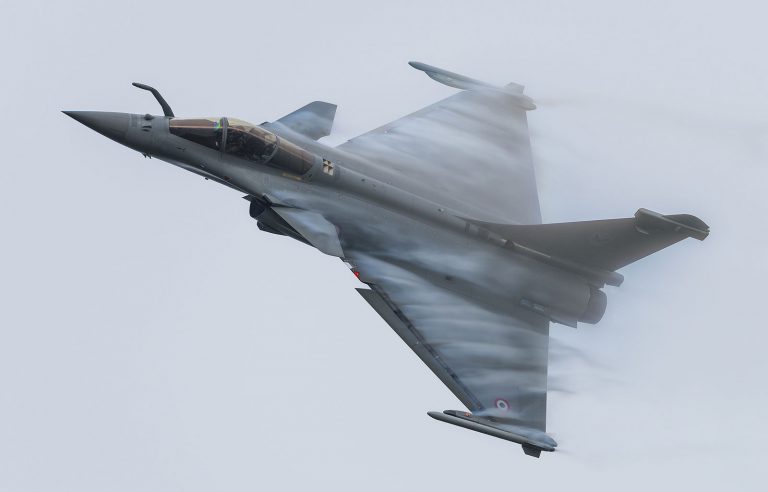
Of late, the controversy around the Rafale deal signed between the Indian and French governments for 36 Rafale jets has dominated the news. While the opposition led by Congress sees a potential scam in the deal which it can use for the crucial 2019 General Elections, the government has strongly denied any wrongdoing. Defence deals are always complex with cumbersome negotiations, therefore there are no easy answers to several questions raised.

In order to find the answer to the question “Is the Rafale deal a scam?”, we have to look at the chronology of events (which is spread over more than a decade), go through publicly available documents and arrive at some logical assumptions.

The events date back to the early 2000’s when the requirement to procure new combat aircraft was felt to strengthen the IAF fleet. The Medium Multi-Role Combat Aircraft (MMRCA) procurement process was initiated in 2007 with a request for proposal (RFP). There were 6 combat aircraft in the race and were evaluated by the IAF technical team: Boeing’s F/A-18E/F Super Hornet, Lockheed Martin’s F-16IN Super Viper, RAC MiG’s MiG-35, Saab’s Gripen C, the Eurofighter Typhoon and Dassault Rafale. The evaluation phase lasted for close to 4 years and by 2011 only Eurofighter Typhoon and Dassault Rafale remained in the competition.

In January 2012, Rafale was selected as the winner of the MMRCA process and the price negotiation started for the procurement of 126 Rafale jets. Out of 126, 18 were to be provided in flyaway condition and rest of 108 were supposed to be assembled in India at HAL facilities after a Transfer of Technology (ToT). The discussions reached a deadlock and many reports blame the then Defence Minister AK Antony’s overcautious approach as he wanted to steer away from any potential corruption scandal. This was in 2012 when some major corruption scandals had surfaced and there was an anti-corruption sentiment in the country aided by Anna Hazare’s fast demanding for a Lokpal law.

The negotiations didn’t progress and the process went into limbo for almost two years till Narendra Modi’s BJP came to power.  In July 2014, Eurofighter offered a 20% reduction in price for Typhoon.

Euro2-highlighted.jpg
Eurofighter letter to the then Raksha Mantri Arun Jaitley offering a 20% discount (Image Source: The Print)

As per this offer, a deal with Eurofighter would have cost less than the Rafale deal and that brings the first allegation against the NDA Government. Critics have raised questions on why the government passed over such a lucrative offer and pursued the Rafale deal negotiations of which was already stuck because of the price. The answer lies in the “Defence Procurement Procedure“. It doesn’t allow to consider a revised bid from another bidder when a tender is active and in the commercial negotiation phase.

In 2015, the government declared the lengthy MMRCA process as dead. Instead, the Modi government decided to acquire 36 Rafale jets off the shelf as the ageing IAF fleet was depleting fast and the decade-long negotiations had resulted to nothing. India confirmed the order for 36 Rafale jets in 2016 signing an intergovernmental agreement with France with the price of the deal at Rs 58,000 Cr.

Now, let’s come to the biggest contention of the opposition, which is the price of the deal. The Congress claims that they had negotiated a deal of Rs 54,000 Cr for 126 jets whereas the NDA bought 36 jets for Rs 58000 cr that too without any transfer of technology.

Though it looks like a huge question mark, the truth lies in the details. First of all, the UPA government didn’t finalise any deal with Dassault. Second, the figure of Rs 54,000 cr was an estimate based on 2011 prices. Third, there’s no clarity if the estimate of Rs 54,000 cr includes the cost of spares, weapons system, maintenance. Fourth, it is futile to compare a deal where major manufacturing was supposed to happen in India with a deal in which India was procuring jets in ready to fly condition.

Congress President Rahul Gandhi has been asking for the specific cost of the deal which the government has denied disclosing citing the secrecy clause. Why is the government not disclosing the cost and hiding behind a secrecy clause?

To be honest, there are enough price figures available in the public. On November 18, 2016, Minister of State for Defence Dr Subhash Bhamre told Lok Sabha in a written reply to unstarred Question 533 that the “cost of each Rafale aircraft is around Rs 670 crore“.

LS Reply.jpg

The total deal size is at Rs 58,000 Cr which includes the cost of the weapons system, spare parts, maintenance and logistical support etc. apart from the cost of 36 ready to fly Rafale jets. Now the reason cited by the government (MoD press briefing as well as Arun Jaitley’s reply in the Parliament) for not giving the cost of the specifics is that it will reveal the specific subs systems used in the jets. The argument sounds logical as you wouldn’t really want the enemy to know (or make an informed guess) what the fighter jets are capable of even before the jets are deployed. Also, the aircraft manufacturer wouldn’t want these specific details to be made publicised to protect its commercial interests which makes pretty solid ground for the secrecy clause in the contract. There is also a talk of the nuclear delivery role of the Rafale jets. If there indeed will be a nuclear delivery mechanism installed in these jets, the secrecy around the components of the jets is obvious.

Then comes the allegation of the govt. favouring Anil Ambani’s company Reliance Defence Limited as Dassault’s partner. The reality is Indian govt.’s deal is with Dassault. Whom Dassault chooses as its partner (as part of the offset clause of the deal) is Dassault’s prerogative. Dassault has also selected DRDO as one of the major partners as part of this clause. Read more about the offset clause here.

Going by all publicly available documents and arguments, there doesn’t seem to be any impropriety in the whole Rafale deal. In fact, PM Modi should be appreciated for his personal intervention to finalise the Rafale deal to strengthen the ageing IAF fleet after the initial decade-long negotiations failed under UPA.

Karnataka: People show black flags to Congress President Rahul Gandhi, stop convoy

0

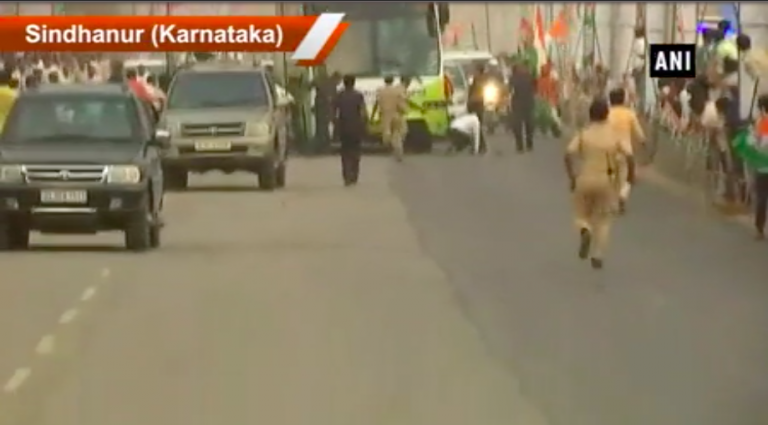
Congress President Rahul Gandhi, who has kicked off the campaign in poll-bound Karnataka, was shown black flags and booed at during his roadshow yesterday.

Rahul Gandhi, who arrived in Sindhnur on Sunday, was shown black flags and his convoy was attacked by protestors. After security personnel took them away, they started throwing black flags at the bus. Gandhi is on a four day visit to Karnataka which goes to polls in coming months.

As per a report by Times Now, money was also distributed to people to attend Gandhi’s rally in Koppal, Karnataka.


Moreover, in a major embarrassment to Rahul Gandhi, as per local reports, to make roads greener for Gandhi’s visit expensive fully grown trees, each costing Rs. 14,000 were planted on the roads.


This is not the first time Gandhi was shown black flags by protestors. During his Gujarat visit as a run-up to the December 2017 elections, protestors had allegedly pelted stones at his convoy, which Gandhi escaped unhurt. People were allegedly angry at Gujarat Congress MLAs for abandoning the flood-hit Gujarat and vacation in a resort near Bengaluru in Karnataka to help save Rajya Sabha MP Ahmed Patel’s seat during August elections.

Youth Congress leader courts controversy as he depicts Rahul Gandhi as Shri Krishna in a Facebook post

0

A local Youth Congress leader from Allahabad has created a controversy by posting an image on Facebook that depicted Rahul Gandhi as Shri Krishna protecting Renuka Chowdhury’s honour and BJP leaders including the Prime Minister as Kauravas as a recreation of the famous episode from the Mahabharata when the Kauravas attempted to disrobe Draupadi.

The poster reads, “Rakshamam… Rahul Gandhi. Ek stri ki hansi Duryodhan ko khal gayee thi — yaad karo, 100 Kauravon ki chita jal gayi thi (Protect us, Rahul Gandhi, Duryodhan was once offended by the laughter of Draupadi and the pyres of a hundred Kauravas had to be burnt).”

The Congress chose to feign ignorance about the poster and the BJP described it as a publicity stunt. The Congress was deeply rattled by the Prime Minister’s sarcastic remark during his address in the Rajya Sabha when Renuka Chowdhury could be heard laughing hysterically. Since then, the Congress has attempted to portray it as an insult to the dignity of all Indian women.

Haseeb Ahmed said, “It’s sad that the PM has shown disrespect to a woman MP in Rajya Sabha. Modi described the laughter of the woman MP in the context of the Ramayana and we have launched a Mahabharat against him and his team.” Haseeb also demanded that the Prime Minister apologize to the crores of Indian women, who according to him, have been insulted by Narendra Modi’s jibe.

Earlier, posters depicting Rahul Gandhi as Lord Rama had also appeared. The winds of change which started blowing when Narendra Modi became the Prime Minister seems to have had a ‘Hinduizing’ effect on the Congress party, mostly only on the surface and not on its nature itself.

Journalist who interviewed Parrikar clears the air on ‘Girls drinking beer’ comment

0

Former Defence Minister and current Goa CM Manohar Parrikar, was panned across social media over the past few days for one of his comments. At the state youth parliament, while speaking to college students through an interview, Parrikar had made a remark which was the centre of the storm.

“The reason I fear today is that even girls have begun drinking beer, which is scary. The tolerance limit has been crossed” was the controversial remark which got him into a soup. “Feminists” and others ganged up to trend the hashtag #GirlsDrinkingBeer to counter Parrikar’s alleged archaic thoughts.

As explained in this post, when one sees the full answer to the question posed to him, and sees the context, one realises that Parrikar might have been a victim of being misquoted or quoted out of context. The full quote by the Chief Minister shows that Manohar Parrikar was perhaps speaking of the larger drug menace and it was an innocuous remark made in the context of his larger observations. A rough translation of the speech, by a Twitter user who goes by the handle ‘@ThisPosable‘, is as follows.

Now, the journalist who had interviewed Parrikar in the above conversation has taken to social media to clear the air on this matter. In a Facebook post, Pramod Acharya, the journalist, has clarified that the example of “girls drinking beer” was given while speaking about the drug menace in colleges. Thus, as per Acharya, Parrikar was “ONLY referring to school/college going girls and boys”

Will this put the controversy to rest?