Home Blog Page 7349

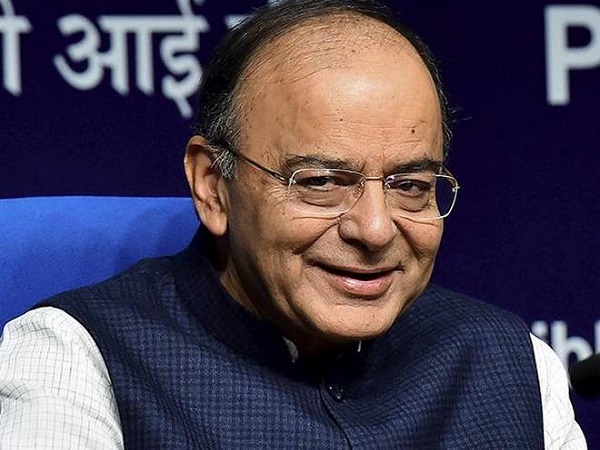
Jaitley pushes for future tech like AI and Blockchain but strikes a blow on cryptocurrency

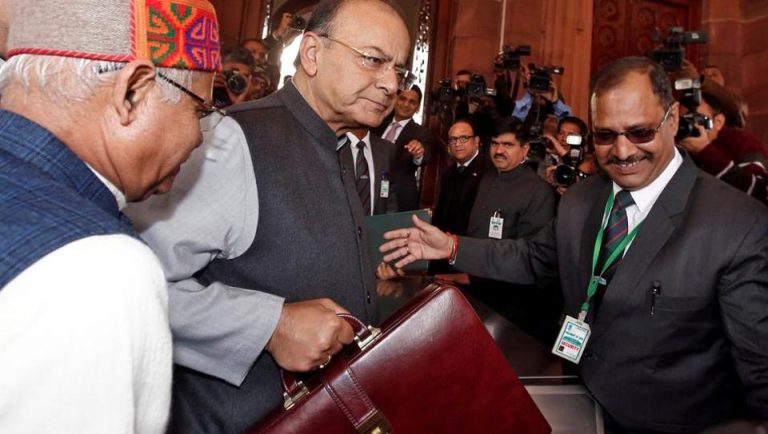
The Union 2018 Budget delivered by Finance Minister Arun Jaitley, made a visible push towards farmer welfare and betterment of the rural population. Besides this, the budget also saw the government introducing the National Health Protection Scheme (NHPS), which is being dubbed as the world’s largest government funded health protection scheme.

Even though the tilt of budget seemed to be towards the grassroots, future tech like Artificial Intelligence and Blockchain did find mention in Jaitey’s speech, with respect to the digital economy.

Jaitley acknowledged that the global economy was being transformed into a digital technology due to the development of cutting edge technology like Artificial Intelligence, machine learning, internet of things (IOT) to name a few. After asserting that his government was establishing India as a digital society via schemes like Digital India, start-up India, Jaitley claimed that NITI Aayog would initiate a national program for directing the government’s efforts into Artificial Intelligence. This includes research and development of AI based applications.

Apart from this, other announcements in this area include:

  • Doubling the allocation for Digital India to Rs 3073 in 2018-19.
  • Launching mission on Cyber Physical Systems to invest in research, skill development in robotics, artificial intelligence, digital manufacturing, big data analysis, quantum communication and internet of things.
  • Setting up of an indigenous 5G Test Bed at IIT Chennai for harnessing the benefits of the 5th Generation technologies.
  • Exploring the use of Blockchain technology and its implementation in the digital economy.

Even though the above steps are commendable, Arun Jaitley did dampen the spirits of tech enthusiasts by outright proclaiming that his government does not consider crypto-currencies as legal tender and would do whatever it can to eliminate the use of crypto-assets as part of the payment system or in financing “illegitimate activities”.

Government’s assertion that it wishes to eliminate cryptocurrency from the payment system, might signal that the future is bleak for the development of this alternate but fast picking medium of exchange in India. It also remains to be seen how the government proceeds to define “illegitimate activities” to crack down on cryptocurrencies and what it proceeds to do with the cryptocurrency which is already being held by Indian citizens.

How Budget 2018 has quietly made a major step in increasing the tax base

0

In the past few years, one has seen that the Modi Government has focused on expanding the tax net. GST and Demonetisation were two major steps which have already reaped results. With Budget 2018 the Government has brought in one more rule which will take this agenda further.

Currently, as per the Income Tax Act, an entity needs to obtain a PAN only if the taxable income crosses the minimum tax threshold limit, or if its sales are expected to cross Rs 5 lacs. There are some other clauses which make certain specific bodies liable to obtain a PAN. The clauses of applicability are linked to incomes.

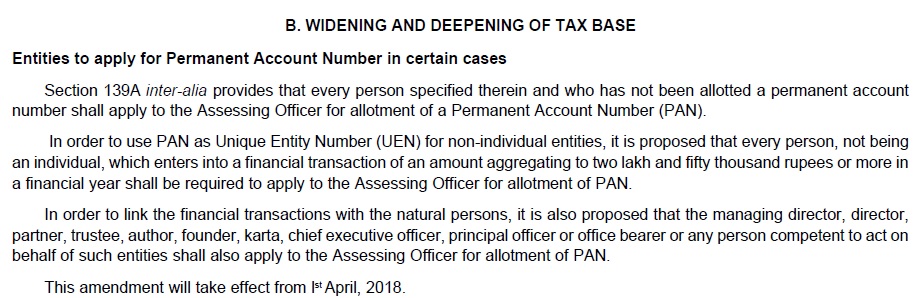
Now the budget has proposed to bring in another clause which links the requirement of having a PAN, with transactions other than income. It is proposed to amend Section 139A of the Income Tax Act and mandate that every entity not being an individual, will have to apply for a PAN if it enters into a financial transaction of an amount aggregating to Rs 2.5 lakh in a financial year.

In simple terms, you have to obtain a PAN if you do any sort of transaction, and the total of such transactions in any financial year crosses Rs 2.5 lacs. The departure from using the word “income” and using the word “transaction” indicates how the scope has now been widened.

Thus under this clause, even loans and other non income transactions get triggered, and that entity has to obtain a PAN. Once a PAN is obtained, automatically, the tax net is widened. The budget document states that this has been done in order to use PAN as Unique Entity Number (UEN) for non-individual entities.

The clause further provides that not only such entity, but its promoters will also have to obtain a PAN. Thus managing director, director, partner, trustee, author, founder, karta, chief executive officer, principal officer or office bearer or any person competent to act on behalf of such entities will also have to apply for a PAN.

This move will certainly help bring more entities under the cover of Income Tax Act. Once this comes into force from April 2018, one can hope that the meager tax base of merely 2% odd of India’s population, will be given a boost with the new registrations via this clause.

The only summary of Union Budget 2018-2019 you need to read

0

Let’s say you are a salaried employee. Consider this possibility for 2018-19 – You open a small firm in your senior citizen father’s name, which starts providing professional consulting service to your employer doing through you doing exactly what you do today. You then become an underpaid employee in this firm and claim the ₹5 lakh a year medical insurance benefit from the government, while your father pays tax as a notional imputed tax as a small business firm, after covering your expenses as legitimate business expenses. This is perhaps the only scenario in which you will be paying less tax than the current year.

In every other case, the salaried employee is going to be worse off in 2018-19 than today. While the salaried urban voter perhaps considers savings, cash-in-hand, and such economic metrics as one of the key inputs to her vote, it remains to be seen if the budget translates in sufficient personal gains for the non-salaried voters to retain or convert them as voters. The government is betting on this trade off via a budget which was widely expected to be political in nature.

The budget is still very much political except for the traditional voters and vocal supporters of the Bharatiya Janata Party (BJP) on social media. Many of the nearly 2 crore salaried individuals – translating to about 8 crore household members – will likely not vote out of habit or may continue to support the party irrespective of personal disappointments. Specifically, there are two disappointments – the personal income tax structure remains unchanged, with standard deduction now higher, but subsuming transport and medical allowances. Secondly, the securities markets taxes – the 10% long term capital gains (LTCG) tax over ₹1 lakh and the tax on dividend distribution by equity mutual funds – seem harsh.

These provisions have three problems. First, the standard deduction limit raise will mean an extra saving of about ₹6,000 a year. Although the LTCGs have been grandfathered, the future trade off point will be ₹60,000 of LTCG per year, at which a salaried person investing in securities markets will start paying more taxes. Second, the taxes come in just as the financialization in the Indian markets was increasing at a record pace – some of it may potentially slow down. And lastly, the initial estimates suggest an upside of ₹20,000 crores from these LTCG measures – that’s not a very big amount for the government to create such poor optics for its most vocal support base.

The disappointment of the pro-BJP meme-making class aside, the budget does four important things.

First, there is a big focus on education, health, and social indicators. An increase of almost ₹15,000 crores over the previous year, the 2018-19 budget of ₹153,000 crores is a big jump. By 2022, the government wants to create an Eklavya Vidyalaya in every block which has a minimum 50% population from scheduled tribes. Providing Ph.D. scholarships to 1,000 students at Indian Institutes of Technology (IITs) and Indian Institute of Science (IISc) is a great idea to promote research and development. The 150,000 centers for health and wellness to be created under Ayushman Bharat program are again a step in the right direction. These centers will provide the primary and parts of secondary healthcare focusing on non-communicable diseases, maternity benefits, diagnostics, and deliver cheap medicines. And the biggest step of them all is the new Modicare – ₹5 lakh insurance cover per family, a significant increase from the current ₹30,000 cover under the Rashtriya Swastha Bima Yojana. Currently proposed for 10 crore poor and vulnerable families, leading to more than 40 crore potential beneficiaries, this will be the largest healthcare program in the world! The government has also made the intention of providing universal healthcare clear – so we are moving in the direction of a single payer model over time for basic healthcare delivery. There’s also a provision to create 24 new medical colleges and hospitals.

Second, the budgetary and non-budgetary support for infrastructure spending will be up from ₹4.94 lakh crore to ₹5.97 lakh crore. There were no surprises on the infrastructure side, as most programs across roads, railways, ports, waterways, and airports are already underway. One significant announcement was the intent to link all rural habitations to a high school, a hospital, and a grameen agriculture market (GAM) under the revamped Pradhan Mantri Gram Sadak Yojana. There will be a provision for 3 crore more LPG connections under Ujjwala, 51 lakh rural and 37 lakh urban houses under Pradhan Mantri Awas Yojana, 1.88 crore new toilets, and more than 3 lakh kms of new rural roads. The government will create 5 lakh rural wi-fi hotspots now that the BharatNet project has scaled up connecting 2.5 lakh gram panchayats. Almost ₹30,000 crores will be invested in the Mumbai and Bengaluru suburban rail networks – that’s a big commitment for urban transport. Much of the Mumbai plans were already announced earlier, but Bengaluru will be keen to know specific projects under this announcement.

Third, there is a lot of focus on job creation based on the learning from the textile sector gains made last year. The Micro, Small, and Medium Enterprises (MSMEs) have practically all been brought under the 25% tax bracket. The government plans to connect the Trade Receivables Discounting System (TReDS) with the Goods and Services Tax (GST) network, which will promote flow based credit for these enterprises. Fixed term employment, currently meant for the textile sector, is being extended to all sectors – a labour reform in disguise of the Finance Bill. The footwear and leather industries will get benefits of deduction on employee emoluments at par with the textile industry. The government will cover 12% of the EPFO contributions for new employees in small industries for a fixed period. New women employees will contribute 8% to the EPFO, while the employer contribution will remain the same. There’s also the ₹7,000 crore budget for the textile sector – the star of the second half of 2017 Indian industrial revival. And finally, the MUDRA loan refinance facility will see increased outlay, retaining the thrust on promoting small entrepreneurship.

Fourth, the government is betting big on agriculture. Starting next kharif season, the government is now promising a 1.5 times the input costs as fair remuneration for the farmers in the form of minimum support prices (MSPs). There’s also a provision for connecting 22,000 GAMs with the national agriculture market, for better market access and increased aggregation and lot size rationalization. Finance Minister Jaitley also made an interesting comment about such GAMs bypassing the local Agriculture Produce and Marketing Committees (APMCs) and ability to sell across the country. This comment should be tracked closely as it can be another big stealth reform if the hold of APMCs in the agriculture marketing is reduced. Jaitley also spoke about better import and export management, investments in agriculture logistics, and use of futures and options for agri-commodities. All of these are important measures, but the details of what and how are more critical than the announcements themselves. There are specific provisions for a host of agriculture value chain areas like organic farming, bamboo cultivation, fisheries, animal husbandry, and food processing. Jaitley mention an Operation Green dealing with commonly used perishables which will be managed better through agri-logistics investments. All in all, a significant part of the budget speech was devoted to agriculture and rural India – how the government translates these announcements into results remains to be seen.

For the international investors, the Finance Ministers made the right noises. He intends to keep the fiscal deficit at 3.3% of the GDP. He also wants the central government borrowing limited to 40% of the GDP, accepting it a key operational target. The expenditure of ₹21.57 lakh crore net of GST compensation to the states is not very high compared to the budget estimates. Overall, while the current year fiscal deficit was at 3.5%, the expectations around a revised but controlled glide path for the metric seem to have been well-managed. Jaitley also threw in announcements around consolidation and listing of government insurance firms and a commitment to complete the Air India divestment by June, enough to keep the institutional investors happy about the general reform trajectory.

Ultimately, the government will have to demonstrate how it implements the various announcements. Especially in the agriculture sector, the government has to ensure that there are no pies left hanging in the sky. Currently there are 23 crops on which the central government declares MSPs. When the government says ‘input costs’, does it intend to use the input costs of actual physical inputs, or also add the imputed costs of farmer labour, opportunity cost of not renting the land, and interest paid by the farmers? If it is indeed the latter, how will the government manage the increased food inflation in an election year? Is the government planning for better supply side logistics to address this problem and if yes, how? What happens if the market prices are below MSP – will NITI Aayog work on a price difference program (akin to the Bhavantar Bhugtan Yojana in Madhya Pradesh)? None of these questions were answered in the budget today. In fact, some of the issues were not even identified in the main budget speech, so there is some work to be done here.

Similar is the case for the 22,000 GAMs that Jaitley spoke about. Agriculture is a concurrent subject, so it is not clear how the central government will identify and empower these GAMs. Most states have not implemented the model APMC act, so letting GAMs bypass or compete with APMCs will run into rough political weather in most states, where APMCs are instruments of local political patronage.

Even for Modicare, what was not stated was how the government will fund the premiums. Today the Rashtriya Swastha Bima Yojana has a ₹365 a year premium for coverage of ₹30,000. With near 17-fold increase in coverage, where will the cost of premiums come from? Will these be borne by the beneficiaries in some ratio? Or will the state governments be asked to cover past of these costs? The actual program design will have to be studied carefully to understand the fine print.

Finally, there are the usual irritants to deal with, which with remarkable continuity manifest themselves as duty rejig. The basic and additional excise duties on petrol and diesel have been replaced with a new road cess. This basically tells the state governments to either control their value added tax (VAT) on petroleum products or let these products flow into the GST net. The central government will no longer have much room to cut the excise duties when the petrol prices head north of ₹80 per liter. Components of mobile phones and other electronics will be costlier now with greater import duties. This is ostensibly to promote ‘Make In India’. In reality, no major factories working end to end may come up in the country in the short term, but the prices of mobile phones – the most aspirational symbol of an upwardly mobile society – will go up on April 1, 2018 pronto.

If this were 2015 or 2016, this budget would be alright. But given this is the last full budget before the Lok Sabha election, the budget comes across as neither populist nor political enough. And that’s strange going into the 2019 polls. The budget puts even more pressure on Narendra Modi, the campaigner, to work harder as the election cycle kicks off with Karnataka in a couple of months time.

Overall budget rating – Good in aspiration, poor in optics, and far too much left for the rest of the year to translate the budget into intent!


Tax rates depend on how far we want to go as a Nation

0

Tax Rate Cuts

Every year when the Budget comes, people everywhere expect Tax Rate Cuts. They consider it a small part of “Tax Reforms”. Its an annual ritual, and it nearly always ends up in disappointment because the Govt is either seen reducing Direct Taxes and increasing Indirect Taxes, in other words, giving in one pocket and taking out of the other one, or the rate remains unchanged and government is simply seen adding news areas into taxation to increase Tax base.

India’s population is growing at a pace where we will soon beat China. Our need for employment, education, healthcare, need for expansionary fiscal policy, need for new robust infrastructure to last for next 50-100 years, need for more powerful armed forces to maintain dominance over wider geography, including land and maritime areas, and our need to sustain natural resources and agriculture to cater to burgeoning population, all are on the rise. Every single item on this bucket list needs serious money to be invested even if they are undertaken in a PPP mode by the government.

Yet, for some strange reason, people expect Tax Rate Cuts. Why? Because last year or last two years government collected more tax than usual. Why do we want the government to squander it away on us? In any case, these taxes were collected from Corporates or high income groups, not middle class.

Indians want to be a super power, but we do not want to invest in Super Power India. We want the government to finance it, but we do not want the government to have any source of rich income. We don’t want government to run its own PSUs. We only celebrate disinvestment. We also want government to cut the tax rates. Well, sirs, how do we settle this paradox?

Modi Government’s Perspective

Though initial utterances have been made again and again, yet, somehow a key message from the Modi Government has not percolated down enough for everyone to have a top of the mind recall.

If you will think carefully, in the initial years, Narendra Modi and Amit Shah spoke in terms of 25 years or 50 years. Many thought they are talking about their own rule at the Centre. That may be incidental. But that is not full justice to the grand leadership of Prime Minister Narendra Modi.

Narendra Modi has marked a change in generation of India’s Leadership. He is the first Prime Minister of India born post-Independence. It’s a fact he has himself emphasized on the eve of his swearing in ceremony in May 2014. A Leader who is conscious of this is not looking at what he can do for this nation in 5 years. He is looking at what he can do for this country for the next 50 years.

Smart City, Make in India, Bullet Train, Indo-Pacific Domination, Direct Transfer of Benefits, National Identity Card, Train the Trainers, Agricultural programs like Soil Health Card, focus on Agriculture Yield, integration of North-East and tapping Human and Natural Resources in that region, all are part of preparing today’s India for the next 50 years.

The Prime Minister is calling this a New India. He has re-emphasized this New India Vision in World Economic Forum at Davos too. His Ministers throughout this period are emphasizing on New India. But message is yet to reach the bottom of the pyramid.

Invest in New India

If we want to see this New India to fly out of the paper into the real world, it will need real money and real execution. This real money comes from our Taxes. And very few pay taxes in this country. Till the Direct-Tax Base of India remains at a mere 4% or so, it is unreasonable to expect Tax Cuts. Question people have to ask is if government is doing anything to increase Tax Base of India. GST and linking Aadhar Card to PAN is indeed an effort in that direction. Tax terrorism has to go down, Tax base has to go up and Tax rates, well, depends on how far we want to go as a nation.

Social Media shuts down allegations of ‘Hindi imposition’ against the BJP for Arun Jaitley’s budget speech

0

In the recent past, there has been a lot of hue and cry about the alleged ‘Hindi imposition’ by the Center. And as Finance Minister Arun Jaitley presented the Union Budget talking in Hindi at times apart from English, shrieks of ‘Hindia’ and imposition again flooded social media.


Manuraj S, spokesperson for the DMK took to Twitter to urge his followers to ‘stop Hindi imposition.


Some even tried to paint it as a bigger talking point than the contents of the budget itself.


People, as expected, were not pleased at these attempts at sowing division within the country.


Opposition to alleged ‘Hindi imposition’ has become fashionable at this point with politicians looking to benefit electorally from the divisive rhetoric. However, when one resorts to attack the Finance Minister for presenting the budget in English and Hindi, it reeks more of desperation than anything else.

How the new Capital Gains Tax on shares will impact you

0

In a largely farmer oriented budget, the finance minister Arun Jaitley signalled a fundamental change in how Long Term Capital Gains is taxed on the sale of equity shares and equity oriented mutual funds. Was this tax warranted? Let us try to see the scenario we are operating in.

First of all, “Capital Gains” are those gains or profits made on selling “Capital Assets”. Capital Assets are those assets in which a person does not trade in, and expects to hold for a longer time. Classic examples could be personal houses, investments in the form of gold, shares, vehicles or any other asset. Profit on sale of such assets is deemed to be Capital Gains.

The Capital Gains are called “Long Term” when the above assets are ordinarily sold after holding them for 3 consecutive years. In the last budget this period of holding was reduced to 2 years in case of immovable property being land, building, and house property. Thus if you hold any of the above assets for 3 or 2 years as the case maybe, and then sell them, you would incur Capital Gains.

The gains are calculated as the difference between the selling price, and the cost price, after it has been adjusted for inflation. This adjustment is called “indexing”. The tax rate on all such gains is a flat 20% + surcharge and education cess, irrespective of your income tax slab.

Now read the above paragraph again, except bear in mind that all of the above does not apply to a specific class of assets:

  • Equity or preference shares in a company listed on a recognized stock exchange in India
  • Securities (like debentures, bonds, govt securities etc.) listed on a recognized stock exchange in India
  • Units of UTI, whether quoted or not
  • Units of equity oriented mutual fund, whether quoted or not
  • Zero coupon bonds, whether quoted or not

The above are mostly shares and stocks related instruments. Let us focus on equity shares i.e. shares one buys on the stock market and equity based mutual funds, since most of us would be exposed to that. Neither the 3/2 year holding period, neither the 20%(++) tax applied to such instruments.

The tax scheme for them was this:

  1. You need to hold them for just 1 year, to call it a Long Term Capital Asset
  2. The entire profit on sale was exempt
  3. Instead, you paid a flat tax of 0.1% or 0.025% on the traded value of shares. This is called Securities Transaction Tax

On the face of it, the tax benefits given to equity shares as compared to other class of assets are huge. The logical question would then be: Is it justified to give equity shares a special treatment?

As per a report of March 2015, only 16% of the share market was owned by retail investors i.e. common public. A more recent report, but of only 75 top companies, showed that only 7.9% of the shares of these companies were held by “Indian public”. Mutual funds held another 5.6%, which can be considered to be indirectly held by the Indian public itself. Promoters of the companies held close to 50% of the shares, so balance 30% odd can be attributed to foreign portfolio investors and institutional investors.

Irrespective of the exact figures, it will not be wrong to say that foreign portfolio investors and institutional investors, which are usually large corporates of wealthy businesses, own a substantial chunk of equity shares. Why then should they pay no tax on sale of shares held for over a year, but a common Indian man has to face a 20%(++) tax rate if he sells any other asset, even after holding it for 2/3 years?

This anomaly has been finally sought to be corrected in the current budget. The budget now proposes to tax such gains on sale of equity shares and equity oriented mutual funds, held for over a year, at 10%, if the gain exceeds Rs 1 lakh per person.

This provision achieves multiple objectives:

1. The limit of Rs 1 lakh ensures that small retail investors will not be touched by this tax.

2. The tax rate is a modest 10%, which is still far lower than the 20% on gains on other assets

3. The provision also has a clause which states that gains accrued till 31.01.2018 will not be taxed thus making it a prospective tax minimizing retrospective impact. This can be explained with an example:

Assume a share purchased on 30.06.2017 for Rs 100. You hold this share for say 15 months (making it a long term capital asset) and sell it on 30.09.2018 for Rs 150. The market value of the share on 31.01.2018 was Rs 120. The tax will be levied as below:

On Rs 120 – Rs 100 =  Profit of Rs 20 – NO TAX  i.e. no tax on capital gains till date prior to budget.

On Rs 150 – Rs 120 = Profit of Rs 30 – TAXED AT 10% i.e. tax only on the gains accrued post budget date. Again, this tax will apply only if the total capital gains exceed Rs 1 lakh

The exact provisions of the law can be debated i.e one could argue that only future purchases be taxed etc. But the broad logic and intention, i.e. to stop the preferential treatment given to equity shares over other assets is sound.

With this move, one holy cow in the business world has been touched by the allegedly “suit boot ki sarkar”. The impact of this move would be felt mostly by large-scale share holders and High Networth Individuals who have huge share holdings. The next bell to cat would have been the rich “farmers” since entire agricultural income, irrespective of amount, is currently tax free. Maybe next time?

Budget 2018 : senior citizens get relief, exemption of interest income on deposits increased to Rs. 50,000

0

Finance Minister Arun Jaitley, who presented the Union Budget today, provided a relief to senior citizens by giving significant incentives. He increased the exemption on interest income on deposits with banks and post offices from Rs. 10,000 to Rs. 50,000 and TDS shall not be required to be deducted on such income, under section 194A. This benefit shall be available also for interest from all fixed deposits schemes and recurring deposit schemes.

Limit of deduction for health insurance premium and/or medical expenditure for senior citizens has also been increased from Rs. 30,000 to Rs. 50,000, under section 80D. All senior citizens will now be able to claim benefit of deduction up to Rs. 50,000 per annum in respect of any health insurance premium and/or any general medical expenditure incurred.

Further, raising the limit of deduction for medical expenditure in respect of certain critical illness from Rs. 60,000 in case of senior citizens and from Rs. 80,000 in case of very senior citizens, to Rs. 1 lakh in respect of all senior citizens, under section 80DDB has also been proposed.

These concessions are expected to give extra benefits of Rs. 4,000 to senior citizens.

Over and above that, Jaitley also proposed to extend the Pradhan Mantri Vaya Vandana Yojana up to March 2020 under which an assured return of 8% is given by Life Insurance Corporation of India. The existing limit on investment of Rs. 7.5 lakh per senior citizen under this scheme is also being enhanced to Rs. 15 lakh.

No more of MP’s increasing their own salary, Jaitley has put a stop to it

0

Being a Member of Parliament brings with it many benefits, which include a prestigious lifestyle, ability to bring change to the lives of countless Indian citizens, and the perks, allowances which accompany the job.

But possibly one of the ‘bigger advantages’ of being an MP, is the ability to increase one’s own salary. This has time and again resulted in a debate over the ethics of this arrangement. In the current situation, the Parliamentary Committee on Salaries and Allowances, recommends the total hike in MPs salaries. Thus in 2016, the committee led by now UP CM Yogi Adityanath had suggested a 100% increase to their salary.

One of the other contentious points in this regard was lack of proper justification, rationale behind these hikes. Even though other countries like Canada follow the same practice, United Kingdom and Australia set MPs salaries via an independent Parliamentary Standards Authority and Renumeration tribunal.

And as a result of the power bestowed upon them, as per a 2017 report, the Indian MPs have enjoyed a 1,250% salary hike in the past 20 years with a Rs 34,000 salary hike coming in 2010.

Now in the 2018-19 Budget, Finance Minister Arun Jaitley has decided to put a stop to the whole debate, by fixing the salaries of MP’s which will be adjusted every five years, subject to inflation.

Jaitley acknowledged the public debate and criticism regarding the matter of emoluments paid to the MPs, and pointed out how present practice allowed for the Parliamentarians to fix their own salaries. Thus he proposed a necessary change to revise the salary, constituency allowance, office expenses and meeting allowance, paid to them from 1st April 2018.

Under this proposal, the salary of the MP’s would be automatically revised every five years, indexed to inflation. Finally he cheekily stated that he hoped the MPs would welcome this initiative and not suffer future criticism in this regard.

Defence manufacturing gets a big push, tunnel to be constructed under Se-La pass

0

The word ‘defence’ appeared seven times in the finance minister’s budget speech. He spoke on defence manufacturing and infrastructure projects that are critical for India.

Defence manufacturing

The minister said the following on the topic of defence manufacturing :

Ever since the NDA Government has assumed office in 2014, lot of emphasis has been given to modernizing and enhancing the operational capability of the Defence Forces. A number of initiatives have been taken to develop and nurture intrinsic defence production capability to make the Nation self-reliant for meeting our defence needs. Ensuring adequate budgetary support will be our priority.

We have opened up private investment in defence production including liberalizing foreign direct investment. We will take measures to develop two defence industrial production corridors in the country. The Government will also bring out an industry friendly Defence Production Policy 2018 to promote domestic production by public sector,
private sector and MSMEs.

Opening up private investment for defence production will enhance performance of local defence industry. It will also reduce India’s dependence on foreign nations for its defence requirements.

Defence infrastructure in border areas

While speaking on defence infrastructure the finance minister said :

To secure India’s defences, we are developing connectivity infrastructure in border areas. Rohtang tunnel has been completed to provide all weather connectivity to the Ladakh region. Contract for construction of Zozila Pass tunnel of more than 14 kilometer is progressing well. I now propose to take up construction of tunnel under Sela Pass.

Se la pass

Se- La pass is a high altitude mountain pass between Tawang and West Kameng districts of Arunanchal Pradesh. It is also an area under dispute as Chinese have claimed the region to be theirs. This region had also seen action during the 1962 war between India and China.


This is a very important infrastructure project to maintain vigilance on the borders and provide infrastructure in the borders swift movement of Indian forces when the need arises. Se-La pass gets blocked whenever there is a landslides. Fortunately, the budget has given importance for tunnel infrastructure in this strategic location.

Budget 2018 : Big boost to the poor and rural population

0

Finance Minister Arun Jaitley is presenting the Union Budget in the Parliament now. So far his announcements are all about positivity and empowerment of all people.

The FM announced that the Ujjwala Scheme which gave poor and rural women access to LPG connection, saving them from the hazardous fumes of traditional fuel burning will be getting a big boost. From the previous target of providing LPG connections to 5 crores, The Pradhan Mantri Ujjwala Yojna will now reach to 8 crore women.

Under Pradhan Mantri Sahaj Bijli Har Ghar Yojna popularly known as Soubhagya Scheme, The FM has announced that the government has now allocated Rs 16,000 crores to provide free electricity connections to poor households.


Speaking of difficulties faced by poor families due to lack of electricity, Mr Jaitly said the new financial boost to the Saubhagya Scheme will brighten lives of millions of people.

The FM also emphasized the need for quality education to marginalised and backward population groups. In a significant move, he announced that by 2022, each block with more than 50% sc/st population will have an Ekalavya Vidyalaya at par with the Navodaya Vidyalayas.


Under Pradhan Mantri Awaas Yojna, the ambitious plan to provide housing for all, the Government will be adding 1 crore new houses to the poor, the FM declared to loud applause in the Parliament.


The FM mentioned that the improvement of infrastructure at the rural level will boost the rural economy as it will provide better connectivity and better availability of services to the rural population.


The Union Budget 2018 is being hailed as one of the most people-centric budgets ever. The government seems to be leaving no stones unturned in its commitment to the poor and common people of the country.