Home Blog Page 7405

How Indian media lied to defame India on issue of Sri Lankan ODI players being recalled

0

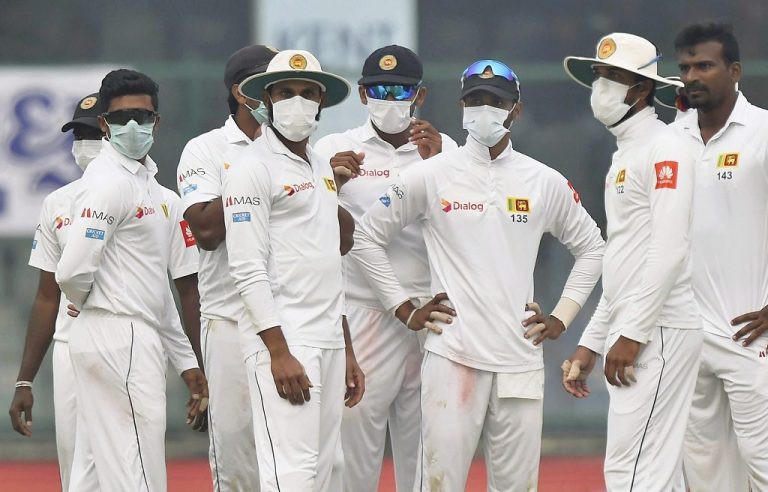
Just when one thinks Indian media has set the bar low enough, they decide to set it lower. The India Sri Lanka series may be a bit of a bore considering the one sided matches and the fixture fatigue, but one issue became a hot topic of discussion: Sri Lankan players took the field at the Delhi stadium for the 3rd test, with pollution masks on.

Thus, Delhi’s pollution, India’s apathy, and how the Lankan players’ action was an insult to India became the talking point. And once the media has a narrative (read Christians under attack etc), they actively search for more stories which help further the narrative, and even retrofit unconnected stories (egs demonetization deaths) to further the set narrative.

Thus, when news broke out that Sri Lanka’s sports minister had recalled the ODI team from the Lankan airport itself, Indian media got into action and added their own unverified spin:

The above reports were based on a Times Now report, which went for the jugular, squarely blaming the smog for the team being recalled:

The misinformation was across the board as Deputy Executive Editor, CNN-News18 Zakka Jacob, also added fuel to the fire by making similar claims (tweet was later deleted):

So while Indian media was busy defaming India, the Sri Lankan media had covered the same issue, giving the detailed explanation for the same. A report in the Lankan media clarified that the Sports Minister had recalled the team since the team was leaving without his approval, which was a blatant violation of the country’s sports law which requires Sports Minister’s approval.

The report claimed that Sri Lanka Cricket sent the team composition for ministry approval yesterday evening, which gave the Minister less than 12 hours to sanction it. The minister was quoted as saying:

“How can I approve a team at such short notice? If you go by the Sports Law, it requires the list to be sent three weeks prior to leaving. Here, they are sending a team just three to four hours before leaving the country. So I had to recall them. I have nothing against the players. In fact, Thisara called me last night from the flight and said, ‘Sir we have already boarded’. But I told him, ‘Nothing doing’. If I allowed them to go, I am setting a precedent here. They can go tonight but I want to ensure it doesn’t happen again.”

The report gave another angle to the issue, saying that sources claimed that the Board wanted the selectors to reconsider their decision to omit Dinesh Chandimal and Kusal Perera from the squad.

But there was no mention of any “smog” issue. Perhaps this was because, smog was a problem in Delhi, and there is not a single ODI scheduled in Delhi!

The funniest part in this saga is, Times Now, which had gone on the aggressive, in the same bulletin carried a telephone conversation with the Director of Cricket Operations in Sri Lanka, who went on record to make similar claims that it was Sri Lanka’s internal administrative issue. Then why the hurry to declare smog as the villain?

What does this indicate? The race to break news leading to erroneous reports? A lack of care for proper reporting? Or finding incidents to suit a narrative which one wants to peddle?

Modi Government needs to do a lot more to encourage innovation

0

India is on the cusp of digital and technological transformations. Five years back, had you told someone that senior citizens would start using mobile apps to order cabs, food, and hotels, he/she would have laughed at you, however, this is the reality of today.

World Bank has showered praises on India after India’s displayed a record jump of 30 notches in the World Bank’s ease of doing business survey. This change in perception is also acknowledged and conceded by many global business tycoons who are looking to expand their presence in old as well as new businesses.

After coming to power, Modi government has laid lots of emphasis on new technology. Make in India is promoted through various channels, start-up entrepreneurs are invited to different forums and new policies are made to encourage entrepreneurs to join the band-wagon. Apart from this, Modi government has kept LED, Solar and E-Vehicles on top priority. Within no time, India became one of the hottest destinations for solar companies. Manufacturers across the globe started pushing their products in India.

The continuous efforts by the government have opened gates of opportunities for us, but it is equally important for us to understand whether we can tap the opportunities or not.

A study conducted by IBM states that more than 90% start-ups in India fail within 5 years. One of the most cited reasons is lack of innovation. As per the survey, 77% venture capitalists believe that Indian startups lack unique models and hence they are more prone to mimicry. This is not far from reality. Most of the Indian startups, including the best performing startups, are replicas of existing business models. India fails to create platforms like Google, Facebook or Twitter. The best minds of India are busy in copy-pasting successful service models running outside India. Due to lack of technical expertise, these models get copied very easily and then they die in the rat race.

The manufacturing segment is equally disappointing. In 2014, Indian research and manufacturing entities filed 1,428 international patent applications while Japan filed 42,381 patent applications, China filed 25,548 patent applications and South Korea filed 13,117 patent application. This is clearly reflected in the nature of businesses in India. Most of the technology-driven businesses in India are built around the trading framework in which products are purchased from China, Japan, Germany, Korea or USA and sold in India. A friend recently returned from China after visiting some of their manufacturing hubs. He was appalled to learn that many Indian manufacturing giants, who claim to manufacture products, are just importing parts from China and assembling it in India under their name. Sad truth is, even the best labs in India are filled with incompetent people who don’t inspire good researchers to stay in India.

Apart from this, many entrepreneurs fail to get rid of red-tapism and bureaucratic roadblocks. In the last few months, I have met many SMEs owners who are struggling in the claws of bureaucratic tussles. Many who have been in the business for a long time agree that there is a drastic positive change in the way government officials treat them or interact with them, but the overall process has not changed a lot. A few days back, EESL floated a huge tender for Electric Vehicle chargers. The programme was managed under the guidance of professor Ashok Jhunjhunwala, who is a very respected professor from IIT Chennai. Professor Jhunjhunwala was handpicked by the Union Government to drive the 100 per cent electric vehicle (EV) dream. Sadly, the hurried process flopped before taking off. There were operational mismanagement, but even the specifications mentioned were ridiculous and very primitive compared to what other countries are using. Struggling between egos and inefficiencies, the tender ended up in a chaos.

Officials from these organizations concede that we don’t have incentive and infrastructure to create new technologies. “Don’t jump into a new business. The policies will keep changing and at the end, you will be frustrated. Wait to adopt tried and tested business models,” one of the officials told me during a discussion. He was not wrong. The system doesn’t encourage to start anything new. Any new model has to face hundreds of audits and certifications by clueless government officials.

Many brilliant solutions are proposed at different forums, of which some solutions are simple and quick. For example, the government should aggressively encourage industry-academia partnership. In most of the cases, the government announces many such programs, which fail to impress in reality. Due to lack of support and fund, most of these programs fail on ground level. Initiatives by governments to involve students fail to go beyond paper-work. From B.Tech projects to Ph.D. thesis, copy-pasting is encouraged by the public sector as well as the private sector. Intellectual Property (IP) laws are laid down, but Indian IP enforcement is very weak and ineffective. This is very demoralizing for innovators. Unless there are strong IP laws and enforcement, private players wouldn’t support new ideas. The count of good educators who can inspire others is very dismal. As long as selection processes for teachers and professors are not improved, the pool of educators will always be mediocre or bad.

Modi government has not done enough to bolster technological advancements in India. R&D and Higher education have not been given enough attention. If this continues, we may miss the train of growth again.

Pakistan suspects India’s hand in terror attack after Indian astrologer’s prediction comes true

0

Pakistan is perhaps the best conspiracy theorist. It is no secret the country sees an “Indian hand” in pretty much everything. The establishment has convinced its people that everything that goes wrong in that country is the “saazish of RAW” and “saazish of Mudi and Dobhal”.

On 13th October 2017, an Indian astrologer, Anirudh Kumar Mishra predicted that Pakistan might see terror attacks in the month of November.


It so happens, that on December 1st, in a dastardly terrorist attack on the Agricultural Directorate in Peshawar, at least 13 were killed and several injured. Tehrik-e-Taliban had claimed responsibility for the attack.

Post the attack, Anirudh Kumar Mishra tweeted :


In a shocking (and amusing) turn of events, The Express Tribune, Pakistan, reported that a senate panel had asked the Ministry of Internal to investigate India’s role in the terrorist attack based on how Aniruddha predicted the attack, off by just 1 day.

Express Tribune reported :

“Expressing concerns over the fresh wave of terrorism in the country, Senator A Rehman Malik accused India of instigating acts of terrorism in Pakistan, insisting that its agency, RAW, was using Afghanistan’s soil for such nefarious activities.”

Senator Rehman Malik moved a resolution stating :

“The Senate Standing Committee on Interior strongly condemns the painful terror attack on the Agriculture Training Institute, Peshawar wherein on December 1, 2017, 12 innocent people, including students, were martyred and 35 were injured.”

This report obviously came as a surprise to Anirudh Kumar Mishra.


By the way, Anirudh has made another prediction :


While Pakistan already suspects him of being a “RAW agent”, as they suspect every Indian is, maybe if his prediction regarding Gujarat Assembly Elections come true, he will morph into a “BJP agent” overnight?

People react after Kapil Sibal represents Sunni Wakf Board in the Ram Mandir – Babri Masjid dispute

0

Today the Supreme Court started the final hearing in the almost non-ending Babri Masjid – Ram Mandir dispute. This case is being heard by Chief Justice Dipak Misra, Justices Ashok Bhushan and Justice Abdul Nazeer who will deal with with 13 appeals against the 2010 verdict delivered by the Allahabad High Court.

During the build-up to this matter it was revealed that senior advocate and Congress leader Kapil Sibal would be appearing on the behalf of the Sunni Wakf Board. This was first revealed by BJP leader Subramanian Swamy and was later confirmed by legal websites.

Such a decision by a Congress leader came as a bit of a surprise for many considering the amount of effort it has been putting into wooing Hindus ahead of the Gujarat assembly elections. This has included sending Rahul Gandhi on a temple darshan spree and later declaring him a Janau dhari Hindu and a Shiv Bhakt. 

The irony of this situation wasn’t lost on the people, who decided to react:


But the drama didn’t end here. Soon after the hearing began it was reported that Sibal wanted that the hearing be adjourned until July, 2019, to preserve the decorum of law and order. Applying a simple logic it meant that, if accepted, it would mean that the issue would remain on the afterburner till 2019 lok sabha elections without any scope for resolution.

Such a stance by Sibal too didn’t go unnoticed:


Even a BJP spokesperson reacted:


This effort by Kapil Sibal didn’t yield any results and as per reports, the Supreme Court rejected his plea for such an adjournment. The next hearing in this matter is expected to be on 8th February 2018.

This isn’t the only time Sibal has been in the news for the choice of his clients and the stance taken by him.

We had reported how during the Triple Talaq case, Sibal had made 6 crazy arguments while appearing for the All India Muslim Personal Law Board (AIMPLB) which was against banning this draconian practice. Sibal was also seen opposing an NIA enquiry in the infamous Love Jihad case of Kerala.

In both cases he tasted defeat after instant triple talaq was banned by the Supreme Court and an NIA probe too was sanctioned in the love jihad case.

Security forces eliminate the remaining terrorists responsible for attack on Amarnath pilgrims

0

The terrorists active in Jammu and Kashmir had reached a new level of barbarity on 10th July after it was reported that they had decided to target a bus carrying Amarnath pilgrims.

In the resulting gunfire, 7 Hindu pilgrims, mostly women died and 11 others were injured. Initially the security forces suspected that the 3-5 Pakistani backed terrorists belonged to the Lashkar-e-Taiba and Hizbul Mujahideen were behind this attack.

The mastermind of this dastardly attack was said to be Abu Ismail who was a top Lashkar e Taiba (LeT) terrorist active in Kashmir.

About 2 months after the attack, the security forces were successful in eliminating Ismail in an encounter which took place in the Aribagh area of Nowgam, which is situated on the outskirts of Srinagar. Along with Ismail, his Pakistani aide, Chotta Qasim too was eliminated by the forces.

Now the security forces have notched another major victory after it has been reported that the security forces have successfully killed the remaining perpetrators of the Amarnath attack in an encounter on Monday. This encounter took place in Qazigund area of the state.

In total the army managed to eliminate three Lashkar e Taiba terrorists namely, Abu Maviya, Abu Fuqran and Yawar Basir. Of the three terrorists, Abu Furqan and Abu Maviya are considered to be Pakistanis and Abu Fuqran was even a divisional commander of the LeT. A fourth injured terrorist though managed to escape the site but was successfully nabbed from a maternity hospital in Anantnag.

Apart from the Amarnath terror attack, this group which was led by Abu Fuqran was responsible for attacking security forces in Lower Munda and they also attacked a police party at a bus stand in Anantnag.

The encounter started on Monday afternoon after these terrorists opened fire on an army convoy while it was travelling to Srinagar via the Jammu-Srinagar national highway. Unfortunately a Jawan lost his life as a result of this ambush.

The security forces later cordoned the area and launched a search operation for these terrorists which ended at about 2 AM on Tuesday.

After this successful encounter, Shesh Paul Vaid, the DGP of Jammu & Kashmir took to twitter to make the announcement:


Thanks to this success of the Indian security forces, it can be said that the victims of the Amarnath attack may have finally received some form of justice for the unprovoked and barbaric attack against them.

Uttar Pradesh Civil Polls – Another vote for civilisational India?

0

In the recent results of UP’s Civic and Mayoral Polls, yet again people have reposed their faith on the BJP, and Yogi Adityanath. Questions on the credibility of the government on issues like Secularism, Gau Rakshak etc have practically been dismissed by the people at large. Since 2014, most of the recent electoral expressions of the people’s voice have repeatedly hinted at the revival of the Civilisational view of India so powerfully, that artificially concocted concerns seem to be withering away in its face. It seems, perhaps for the first time, that scientific modernity and civilisational identity are orthogonal and can actually coexist in the success of our nation.

The other day I was reading a very insightful book by Douglas Murray, called the Strange Death of Europe. The book beautifully brings out what may possibly be a very fundamental death-wish afflicting the people of the continent in the context of recent developments. It possibly may be born out of Freudian Organic Elasticity towards death or may simply be the growing disillusionment with excessively materialistic pursuits. What is striking however, is that the European civilisation as we know it today is so young, hardly even in its ‘teens’. And it has taken just a few centuries for it to begin showing signs of suicidal fatigue.

Standing in stark contrast to Europe are two much older civilisations of India and China that weathered so many more battle scars and yet exhibit considerable, though varying, degrees of resolve to survive. It is not often realised but, it is simply too wondrous to imagine the intrinsic strength of these civilisations. What the fundamental ingredients to such longevity are, is a matter of separate deliberation.

The story of India over the last millennium is particularly relevant. Possibly attributable to a number of reasons, including a systemic societal degradation, India was defeated by a number of invaders, Islamic, and Europeans alike. The long period of foreign domination was characterised by two distinct governance patterns. While the Islamic rule relied on brutal physical suppression, the British period was possibly defined by a strategic, even subtler psychological suppression through crafted education and socio-economic systems. But the end goal of both, it may be argued was the total annihilation of all native Indic identities – both religious and cultural.

The interesting, and perhaps inadvertent offshoot of the British systems was the rise of the realisation, propagation and revival of civilisational pride, which arguably was impossible in the pre-British era of Islamic dominance. The tallest assertion of this self-confidence came from Swami Vivekananda, whose electrifying speeches jolted sleeping Indian generations.

Vivekananda formed that cornerstone on which millions of Indians felt the new India could be built. It may well be said that his works represented the modern philosophical expression of our long subdued civilisation.

Vivekananda’s conception of India was so gigantic that it sought to reverse the physical and psychological brutality of a thousand years and rekindle the civilisational pride that was nearly extinguished. Unfortunately, that philosophy never saw a political manifestation. There were glimmers of hope indeed – in Tilak’s utterances, in Bose’s optimism. But as history would have it, both were undone.

And so, when on the midnight of 15th August, 1947, India became independent, the political ideology that found itself governing the country was built on an inferiority complex inflicted with an almost pathological distaste for our civilisation. To it, India would rather be a concept born in 1947, and everything preceding the magic date was contemptuous.

What transpired 1947 onward has been only a more organised self-destruction through perpetuation of the disregard and disdain for India’s civilisational value systems. The ruling political dispensations collaborated with the Left inspired intellectual regime and built a nation ashamed of her identity and past. After seven long decades, it was pretty successfully imbibed into the very psyche of the average educated, urbanised Indian.

This politico-intellectual alliance operated unchallenged since independence, fundamentally because a paradigmatically different interpretation of India as a Civilisation found no expression. The entire establishment rested on the assumption of inferiority of Civilisational India and superiority of the India born in 1947. The propagation of this conception has always been central to the thriving of the entire class that benefited from incumbent systems.

On the other end, Vivekananda’s ideal of India was just too enormous for any one individual to assimilate, simplify and express – even if it was to be done to a country of a billion people who subconsciously still subscribe to that very philosophy.

2014 was a watershed year because, after about 67 years of Indian independence for the first time Vivekananda’s conception of India seemed to have found, howsoever minuscule, a political expression in the form of Modi. Large numbers of Indians who still could not understand Nehru’s conception of India characterised by an inherent inferiority complex, worship of English and West, and too self centered to put country first, found in Modi that conviction which hinted at the possibility of civilisational revival. This was unthinkable before 2014. Indians possibly had reconciled to the end of India as a civilisation.

Since May 2014 a bunch of campaigns clinically targeted at the demolition of this very political expression have been relentlessly executed. Be it Award Waapsi, No space for dissent, Ghar Waapsi, Gau Rakshak or such others. These are merely symptoms of an extreme, even suicidal, malice towards the possibility of Indian Civilisation in modern times. The fact that a Hindi speaking Chai waalah is running the country, speaking on matters of Economics, Science, Technology and to whom the world seems to be listening, is simply unpalatable to the incumbents. After all these were the exclusive preserve of English educated elite, beyond the reach of the ‘uneducated’, civilisational India.

Since the passing of Vivekananda in 1902, India had hoped for a political expression. This aspiration remained fearfully silent, ashamed of being mocked for over 100 years. But Modi has kindled a small hope. It is a relief that after more than half his term, people still see a small possibility of its realisation.

Lives of nations are complex but, there are two essential dimensions of progress – Scientific Modernity and Civilisational Value Systems. While Science imparts rationality, Value Systems impart unity and self-respect. The two are not mutually exclusive. As long as development and governance are not compromised, successive electoral verdicts, including the present UP civic polls, have firmly expressed India’s pride and respect of her civilisation.

India gives refuge to 1300 Buddhists who were displaced from Myanmar’s Rakhine region

0

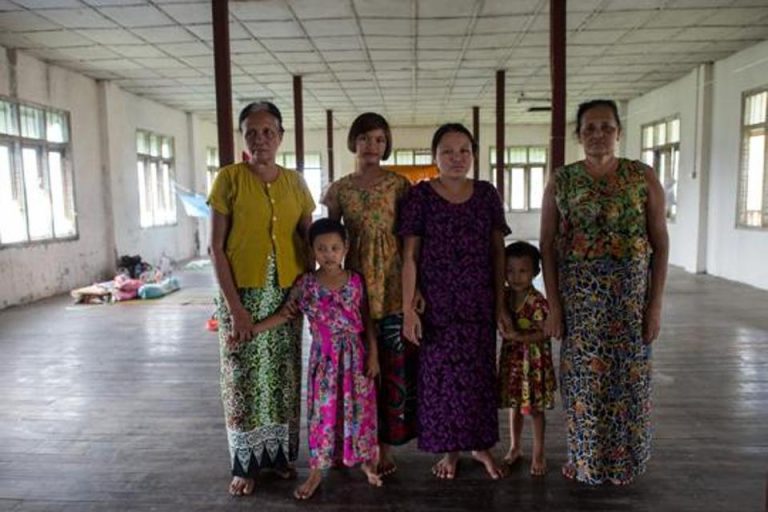
The Indian government in a sign of benevolence has allowed more than 1300 Buddhist refuges from Myanmar’s Rakhine region, to enter Mizoram.

Such a displacement of these refugees was supposedly spurred by the ongoing struggle between the Myanmar army and the insurgent Arakan Army, which as per media reports mainly comprises Buddhists.

As per reports, these Buddhists have taken refuge in four villages of the state. The district administration has been constructing makeshift relief camps to accommodate these refugees who seem to have arrived in the state on 25th November. Apart from these camps, they are also living in Buddhist homes and temples.

Senior police officers have declined to term their arrival as a security threat as of yet and are taking measures to ensure that there is no tension between these refugees and the local residents.

As per T. Arun, the Deputy Commissioner of Lawngtlai, they are two rules in a refugee situation related to national security and humanitarian assistance respectively. The refugees who are being taken care of on humanitarian grounds, are being provided food to prevent starvation and are being guarded against the outbreak of diseases.

Myanmar in recent years has become infamous for its internal conflicts which result in its local populace having to flee the “war zone”.

One of the most well-known example is the displacement of Rohingya Muslims, which resulted in more than 40,000 of them entering India illegally, apart from the 14,000 more Rohingyas who are registered with the United Nations High Commissioner for Refugees.

Over the years, the perception of the Rohingyas though have changed from being persecuted minorities to potential security threats after reports surface about them starting to get radicalized by the Lashkar-e-Toeba (LeT) to avenge the sectarian violence in Myanmar. And it was also found that their retribution was also for some reason aimed towards India.

The Rakhine region which is also seeing a conflict between the Rohingyas and the Myanmar authorities, has meant the Hindus there too are paying a heavy price.

We had reported how the Mayanmar Army had issued a statement about Rohingya terrorists killing 28 Hindus including women and children, after a mass grave containing their bodies was discovered in the Rakhine state. Later 17 more such bodies were found barely 200 metres from the previous spot.

Open Letter to Mani Shankar Aiyar from the ghost of Aurangzeb

0

Dear Mani Shankar Aiyer,

I recently heard that you compared Congress President/Prince Rahul Gandhi to me. Well, congratulations on the coronation, but not.

First of all, how dare you to under-rate my achievements? During our times, being the Mughal son was no guarantee that I would be the next emperor-in-waiting. I had to prove my worth by first being the Governor of north Afghanistan, Deccan and yes, Gujarat, whereas your Prince is still struggling to measure the size of Earth. (Read in The Bhootian Express about how he guffawed at the 45000 crore acre land given to Adanis). Tell your prince that Gujarat is not bigger than UK.

I was never given things on a platter like your prince. I had to fight wars with the Qutub Shahis, Adil Shahis and the Safavids. I had to fight wars against my own brothers Shuja, Murad and Dara Shikoh, whom eventually I got murdered. Did Rahul Gandhi have to murder anyone? Forget fighting, he did not even beat anyone, not even in state elections.

And you have the audacity to equate your Prince with my dad? My Dad? Although I imprisoned him in the later years of his life in Agra Fort and did not even allow a state funeral, yet, I am furious at this comparison. My father also had to serve Governership of Deccan, Bengal, Bihar, Delhi and Gujarat and fight political wars against his mother Nur Jahan before winning the Mughal emperorship; whereas your prince has lost all these provinces. The only Jagir of Amethi which your prince rules is in shambles and has no (not even a single) monument that glorifies the achievement of dynasty.

Yes, if your Prince’s inclination for Islamic parties would have been a benchmark for our comparison, I would have at least understood but knowing that he is a ‘Janeu Dhaari’ Kafir Hindu, it feels irritable to say the least.

So, I would ask you to please take back your words and apologize not just to me, but to the whole Mughal family for maligning our dynasty. Had I been alive, I would have ordered elephants to crush your head or imprisoned you in Red Fort, but being only a ghost, I can only assure you that unless you retract your statements, we would haunt you and keep chai cups wherever you go.

Regards,
Ghost of Aurangzeb.

Rahul Gandhi finally accepts lying on Twitter, because it was too embarrassing

0

Rahul Gandhi has been asking one question a day to the Modi government through Twitter, but it really wouldn’t be the Rahul Gandhi we all adore, if he didn’t make some really blatant gaffes.

Today, for his 7th question, he decided to question Prime Minister Narendra Modi on price rise. He included a comparative chart with percentage increase in price of items from the UPA era to now. We include the photograph, because Rahul Gandhi soon deleted this tweet.

In the comparative chart, Rahul charts the difference of prices of Gas Cylinders, Daal, Tomatoes, Onions, Milk and Diesel. Assuming he got his prices right, it was found that in the percentage increase column, every percentage had been hiked by a whopping 100%.

The change in gas cylinder prices from Rs. 414 to Rs. 742 should have been 72%, while in the chart shared by Rahul, it was 179%. The prices of Diesel for example, that seem to have gone up by 13%, from Rs. 56 to Rs. 63, has been mentioned as 113%. Every percentage on that list had been hiked by 100%.

As soon as Rahul Gandhi tweeted this chart, Twitter users starting calling out the lie.


Rahul Gandhi, who has now filed his nomination to become the President of the Congress party uncontested, is no stranger to making embarrassing gaffes or on occasions, lying blatantly.

A few days ago he alleged that the government of Gujarat had given away 45,000 crore acres to the Adanis, which is basically, larger than the land area of the earth. He had lied about loans to the Sanand factory which was debunked in a statement by Tata Motors itself.

Earlier he was confused between profit and turnover. He also lied about Sardar Patel’s statue being made in China. His supporters were also caught lying about the MoU signed between India and Japan for bullet trains. The list is endless.

We hope he can stick to facts moving forward, but with this penchant for misrepresentations, lies and gaffes, we doubt that’s a possibility.

FactCheck: Can Banks gobble up your deposits as per a new proposed ‘Bail-in’ Bill?

0

Falsehood flies, and the Truth comes limping after it

~Jonathan Swift

This is an apt quote when discussing the Financial Resolution and Deposit Insurance (FRDI) Bill, 2017. Many columnists in mainstream media have already sounded their alarm bells. They have shared fear inducing articles laced with half truths and complete lies. This has created an unnecessary panic amongst the commoners. Before we get onto breaking down the lies, an explainer is needed.

The Background:

In his Budget Speech of 2016-17, the Finance Minister Mr. Arun Jaitley had said:

“A systemic vacuum existed with regard to bankruptcy situations in financial firms”

He also declared that a new Bill will be introduced to address the same. In furtherance to this, a Committee under the Chairmanship of Shri Ajay Tyagi was formed which submitted a comprehensive report in September 2016. The report laid down the background, need and structure for this new bill. Further the Government also placed this bill for public comments.

Before we understand what this new bill means to you, an analysis of the current system is a must. If the new proposed system is an improvement over the existing, then surely it merits our support. Right now the insolvency procedure for banks is handled by the Reserve Bank of India. To add to this The Deposit Insurance and Credit Guarantee Corporation insures deposits for all commercial banks and “eligible cooperative banks”. Under the current regime, if an insured bank is wound up or goes into liquidation, every depositor is entitled to receive a maximum of Rs.  one lakh  even though they may have a deposit/Fixed deposit of say Rs 10 Lacs. This amount was fixed at Rs 1 lakh in 1993. Surely this is not very high. This provision has been rarely used in our present financial system. Often RBI has ensured that if a small bank fails, a big bank takes it over and ensures the depositors are not staring at a humongous loss.

The Proposed System:

One has to understand that Banks are not the only players in the financial system. There are Insurance companies, Non Banking Financial Companies, Pension funds, public sector firms like State Bank of India (formed under an Act of the Parliament), Regional Rural banks etc.

The very objective of the Bill seeks to place the new system in perspective. It reads and I quote (emphasis added):

“To provide for the resolution of certain categories of financial service providers in distress; the deposit insurance to consumers of certain categories of financial services; designation of systemically important financial institutions; and establishment of a Resolution Corporation for protection of consumers of specified service providers and of public funds for ensuring the stability and resilience of the financial system and for matters connected therewith or incidental thereto.”

The keywords here are the bill is designed to “protect the consumers”. The bill seeks to regulate all these entities under one single head. This system shall ensure that “regulatory forbearance” is removed. This means that many a times a regulator “may” delay a “financial resolution” with a hope of revival, putting every stakeholder at a greater risk of loss.

The Bill provides for a framework to grade organisations based on grades such as Low, moderate, material, imminent and critical risk to viability. This provides depositors a transparent way to gauge the health of a financial institution. Can the naysayers point out a system in the current regime which informs commoners the health of their respective banks?

The Bill seeks to form a “Resolution Corporation” which will take over the management of a financial firm once it is classified as ‘critical’. It will resolve the issues of the firm within one year (may be extended by another year). The Resolution may be undertaken using methods including: (i) merger or acquisition, (ii) transferring the assets, liabilities and management to a temporary firm, or (iii) liquidation. If resolution is not completed within a maximum period of two years, the firm will be liquidated. The Bill also specifies the order of distributing liquidation proceeds.

The key here is to understand and appreciate that a Regulator’s primary duty is to try and revive a failing  institution whereas the resolution itself aims at ensure “orderly failure”. This new bill systemises this. For a commoner this will ensure fast, efficient and speedy resolutions for you. A distinct improvement over the current system.

Just like the Insolvency and Bankruptcy code this new bill also provides for timely and professional solution to any crisis. It goes without saying that having a framework to resolve an issue IN NO WAY means that the Government is expecting banks to fail, as is being projected. This is “in case” something goes awry then regulatory framework is in place and to start off with, this same framework makes sure that “nothing goes wrong”. Definitely better than existing regime.

Currently the bill has been sent to the Parliamentary committee. This committee is expected to submit its report soon after which it will be taken up for discussion in the parliament.  Even the Finance Minister, Mr. Jaitley said a ‘lot of corrections’ could still take place.

The Lie:

1. Savings Bank account balance will be converted into an FD under “Bail in Provision”

Heavy reliance is was placed on Section 52 of the Proposed bill to spread panic that in case a bank fails, then the Savings account balance shall stand converted into another instrument and the bank can “simply refuse to pay”

Nothing can be so blatant and farther from truth than this. While only the first part of the section is being quoted, the provision specifically and unequivocally excludes the following:

As is evident, the common deposits, FD’s RD’s are EXCLUDED from this bail in provision. They shall continue to be protected. In fact, this provision might be better than the existing system because currently all the money above Rs 1 lac is lost, whereas it appears that with the bail-in provision, the amount over and above the insurance limit will at least be recoverable as some form of security.

The difference is that the new bill does not mention the amount of Insurance. As this new bill seeks to repeal the Deposit Insurance Act and merge it under a new regulator, it is but common sense that the Insured account shall be either same as existing one or even higher. It can no way be lesser than INR 1 Lac, which was fixed 24 years ago.

Lie 2: All your bank money is lost or converted into an instrument in a dying entity:

Lie. Already explained above. But a valid question is how much money will a depositor get in case a bank fails?

Section 29 provides powers to the regulator to decide the amount payable from the Corporation fund. This has not been finalised as yet. In my opinion it will not be lesser than INR 1 Lac in any case which is the current provision. I expect this to be significantly higher than this.

Why Cant it be mentioned in the Bill Itself what the Insured amount will be?

While this is desirable but not advisable. Having a strict amount leaves out any scope for upward revision. However the bill could be worded in a such a fashion: “a minimum amount of INR__________is insured or a higher amount as maybe decided by the Corporation”.

Lie 3: My money in savings account will be used to bail out big NPA accounts.

No. In case a bank has lent money to a lot of wrong companies and it eventually is facing insolvency or imminent death then everybody is at risk of losing money, including you. This bill is in fact making sure we don’t get to that stage. Historically except for badly managed co-operative banks, no big banking crisis has hit our financial system. The RBI has always ensured the depositor interest is protected. This Bill gives them more teeth to do so.

CONCLUSION

A particular clause, from a draft bill is being taken out of context, to create mass hysteria. The clause while not perfect, seems to be an improvement over the current situation, and since it is only a draft bill, the clause can be further improved. In such times it is important to not spread panic among depositors i.e. the common man. The media, instead of being a good partner or medium for voicing people’s concerns is indulging in complete lies to garner eye balls and spread their own propaganda. It is clear that they have no role to play in the interest of the people of this country.