Home Blog Page 7494

On Guru Purnima: Thirty-four meanings of the word ‘Guru’

Today is Guru Purnima, a festival celebrated by the Hindus, Buddhists, and Jains in honour of the guru-s. Among Hindus, the festival is also called Vyasa Purnima, for it is believed that Veda Vyasa was born on this day. The Sikhs also have a festival Guru Parb, but that is celebrated on a different day.

As per the Concise Oxford English dictionary, the English word guru has three meanings: (1) a Hindu spiritual teacher, (2) each of the ten first leaders of the Sikh religion, and (3) an influential teacher or expert, for example “a management guru”.

As one can guess from the first and second meanings, the word guru in English comes from Hindi and Punjabi. In turn, the word guru and Hindi and Punjabi comes from the Sanskrit word guru.

The Online Etymology Dictionary traces the Sanskrit guru to Proto-Indo European (PIE) *gwere in the sense of “heavy”. The Latin word gravis meaning “heavy” is also believed to derive from PIE *gwere. English words related to gravis are grave (meaning weighty, as in “a grave matter”), gravitate, gravimeter, and gravity.

Interestingly, the word for the scientific concept of gravity is gurutvakarshana in many Indian languages including Hindi, Marathi, Telugu, and Gujarati. The first part of this word is gurutva, which means the quality of being guru or heavy.

“Heavy” is one of the primary meanings of guru in Sanskrit also. However, the word is customarily used in many other meanings in Sanskrit. Here is a list of thirty-four meanings of the word guru based on the citations in the nineteenth century lexicons Shabda-kalpa-druma and Vachaspatya.

(1) “one who swallows ignorance”. Indian etymologists in the first millennium BCE derived guru from the root gri (“to swallow”). The same root gives the Sanskrit word nigarana (“swallowing”), from which comes the Hindi word nigalna (“to swallow”).

(2) “one who teaches dharma and scriptures”. The root gri also means “to speak” or “to instruct” in Sanskrit. The meaning is from this sense of the root.

(3) “one who is praised by gods, gandharva‑s, humans, etc”. This comes from the passive sense of gri (“to speak”).

(4) “one who destroys darkness (=gu) with brilliance (=ru)”. This meaning is as per the Guru Gita, which is a part of the Skanda Purana. In the latter half of twentieth century, the Guru Gita was popularized in the West by Swami Muktananda of the Siddha Yoga movement.

(5) “one by whom darkness (=gu) is destroyed (=ru)”. This meaning is also from the Guru Gita.

(6) “one by whom the disease of worldly existence (=gu) is removed (=ru)”. This meaning is also from the Guru Gita.

(7) “one who is beyond qualities (=gu, standing for gunatita) and beyond form (=ru, standing for rupatita). This meaning is also from the Guru Gita.

(8) “one by whom the bondage of maya (=gu) is released (=ru)”. This meaning is also from the Guru Gita.

(9) “Brahma (the creator)”. Brahma is called guru in the Kashi-khanda of the Skanda Purana.

(10) “Vishnu”. Vishnu is called both guru and gurutama (“the most superior guru”) in the Vishnu Sahasranama of the Mahabharata.

(11) “Shiva”. Shiva is called guru in the Shiva Sahasranama, also in the Mahabharata.

(12) “The Supreme Brahman”. Towards the end of George Harrison’s single My Sweet Lord (1971), which was top of the charts globally, the chorus sang the famous Guru Gita verse listing the meanings (9) to (12): gurur-brahma gurur-vishnuh gurur-devo maheshvarah, guruh sakshat para-brahma tasmai shri-gurave namah.

(13) “Brihaspati, the teacher of the gods”. This is why Thursday, named after Jupiter, is called both guru-vaar and brihaspati-vaar in Hindi.

(14) “Prabhakara, the teacher of Mimamsa philosophy”. Mimamsa is one of the six orthodox schools of philosophy in Hinduism.

(15) “Dronacharya, the teacher of the Pandava‑s and Kaurava‑s”. Dronacharya, after whom the Dronacharya Award is named, is often called Guru Dronacharya or simply Guru Drona.

(16) “one who performs nisheka rituals”. The nisheka rituals are Hindu ceremonies like garbhadhana, etc.)”

(17) “one who gives a mantra”. This is why many mantra-s are referred to as guru-mantra.

(18) “the father”. The feminine form of guru is gurvi, one of whose meaning is “the mother”.

(19) “any of the eleven male elders”. The eleven male elders consist of the teacher, the father, elder brothers, maternal uncles, paternal uncles, maternal grandfathers, paternal grandfathers, father-in-law, protectors, king, and community elders.

(20) “any elder in general”. This group is called guru-varga and includes not only teachers, parents, elder siblings, uncles/aunts, parents-in-law, and grandparents, but also any protectors, the midwife, and the king.

(21) “one who is great”.

(22) “one who is ageless”.

(23) “one who is large”.

(24) “one who is powerful”

(25) “one who is honourable”. The abstract noun derived from guru is garima which has meanings corresponding to (21) to (25), i.e. greatness, largeness, honour/dignity, etc.

(26) “one whose speech has profound meaning”.

(27) “heavy”. It is this sense of guru from which modern words gurutva or gurutvakarshana meaning gravity are derived.

(28) “one who grants siddhi-s (=gu), burns sins (=r), and is same as Shiva (=u)”. This meaning is as per Agamasara, a Tantra work.

(29) “one who for the sake of attainment of jnana (=gu) illuminates the truth (=r) and bestows oneness with Shiva (=r)”. This meaning is also as per Agamasara.

(30) “abundance”. The first verse of Kalidasa’s Meghaduta (“the cloud messenger”) uses the word guru in this sense.

(31) “a long syllable”. This is the meaning of guru in the context of Indian prosody, a field where the concepts and/or examples of Fibonacci sequence, Pascal’s triangle, and de Bruijn’s sequence were known much before Leonardo Fibonacci, Blaise Pascal, and Nicolaas Govert de Bruijn lived.

(32) “the Pushya constellation”. Pushya is one of the 27 constellations in Indian astronomy.

(33) “the velvet bean creeper (Mucuna pruritus)”.

(34) “the foxtail millet grass (Panicum italicum)”. Coincidentally, millets are called mote anaj (“fat grains”) in Hindi, and Sanskrit guru also means large (23) and heavy (27).

Thus, the word guru, which means “heavy”, is indeed heavy for it is pregnant with so many meanings in Sanskrit. When one considers this fact, the word can be considered an autological word, defined by Wikipedia as “a word that expresses a property that it also possesses.”

With that, I wish you a very Happy Guru Purnima 2017.

Air ticket prices to and from Delhi to drop as DGCA slashes fees

In some good news for travellers, flights having Delhi’s Domestic and International airports as either source or destination would now see their ticket prices slashed. This would be a result of a 89.40% reduction in Airport Charges as ordered by the Central Government bodies.

In the new tariff structure which became effective from 7th July, the User Development Fee charged by the Delhi airport would go down to Rs 10 and Rs 45 for Domestic and International flights originating at Delhi. The User Development Fee for flights culminating at Delhi has been totally scrapped.

Earlier the User Development Fee used to be as high as Rs 578 for a flight between Mumbai and Delhi and about Rs 1,335 for a Delhi-New York flight. Inbound passengers too had to shell out almost a similar amount.

This price reduction is a result of a long battle between the Airports Economic Regulatory Authority of India (AERA) and GMR Infrastructure’s Delhi International Airport Limited (DIAL) over airport charges.

The airport charges are fixed for a duration of 5 years so the current rates were fixed for the 2014-2019 slab. From 2004-2009 the airport charges were increased by 346% while DIAL had demanded an increase of 775% which had led to it knocking the appellate board of AERA.

The AERA had passed an order to reduce these airport charges back in December 2015, which couldn’t be implemented as DIAL went to the Delhi High Court, which ordered a stay on the revised charges until the issue was disposed off by AERA’s appellate panel.

While the case continued to remain in a limbo due to the stay order of Delhi High Court, National Carrier Air India decided to do something about it and petitioned the Supreme Court regarding the matter.

According to Air India, DIAL had already earned Rs 188 crore more than its 2014-19 revenue target on 1st April 2014 itself. It further claimed that had the old tariff continued, the Airport Developer would have earned a whooping Rs 9000 crores more than its prescribed target by 2019.

The Supreme Court took cognisance of the matter and on 3rd July vacated the stay order by the Delhi High Court which allowed the lower rates to kick in.

The Air Passengers Association of India (APAI), which is a body to safeguard the consumer’s interest, has demanded that all the excess revenue which the DIAL has ‘illegally’ earned should be returned to the airline and the flyers. The body also wants a removal of the Airport Development Fee and a reduction in landing and parking charges as has apparently been recommended by the AERA.

Media spreads fake news about ‘near collision’ between two monorail trains in Mumbai

The mainstream media continues spreading unverified information through its platforms while ruing about ‘fake news’ at the same time. Another example of this was witnessed yesterday, when many media reports suggested that commuters in Mumbai Monorail almost fell victim to a deadly head-to-head collision.

A picture of two monorail trains almost touching each other was touted as a proof of this averted collision. The trains did appear to be moving in opposite directions and stopping just in time to leave hardly a few inches of space between them.

Fake News about Mumbai Monorail by Firstpost
Firstpost tweet claiming the two trains almost collided

This is how many mainstream media outlets reported, with some reports being published today:

Google News snapshot
Media reports that suggests the trains almost collided head one

However, the truth was something else, and it was brought to fore on Twitter by a journalist named Rajendra Aklekar, who has been a working journalist for 21 years and has even authored a best-selling book on Indian Railways history according to his Twitter bio.

He specifically mentioned to a report by Firstpost, informing them that there was no near collision and the two trains came close to each other because one of them was sent to rescue the other, which was left stranded due to power failure:


Ironically, the Firstpost report itself had made a mention of this fact. A paragraph in the report read:

The Mumbai Metropolitan Region Development Authority (MMRDA) said it was a “technical error”. “One rake had suffered a power failure. So another was sent to tow away the affected rake,” it said.

So either the Firstpost staff did not understand what MMRDA said or they deliberately chose a false and sensationalist headline that would make Mumbai residents feel that the monorail systems are so horribly wrong that there could be a head-on collision between trains some day.

It appears that Firstpost, and a couple of other media outlets, trusted a tweet by a user named “Dharam Tiwari” who bio says “former journalist”. The following tweet claiming averted collision was embedded in the Firstpost report and a couple of other reports by the media outlets:


It is not clear if the above “former journalist” was told by someone that it was an averted accident, or he just assumed so by looking at two monorail trains being so close to each other.

But somehow his tweet, and possible assumption, was taken as a credible piece of information and the media outlets repeated the ‘accident averted’ line even though MMRDA had clarified that the other train was sent for rescue.

Sadly, hours after the clarification by MMRDA and the tweet by Mr. Aklekar, The Asian Age published an ANI sourced report this morning that made the same claim. It looks like the “trains almost collided” line is now going to be repeated by other media organisations as a news agency (ANI) has filed the report. A mistake by an agency gets repeated all over, as media outlets usually re-publish agency reports without cross-verification.

To quote the “former journalist” whose tweet appears to have started it all:


Journalist ‘accidentally’ shares porn clip in Congress party’s media WhatsApp group

In some embarrassment for the Goa unit of the Congress party, a journalist named Barnabe Sapeco “accidentally” shared a pornographic clip in the official WhatsApp group the party maintains for communicating with the media. The incident, which happened on Saturday, seems to be turning out to be a subject of amusement for many.

According to the report, photojournalist Barnabe Sapeco forwarded a video to the WhatsApp group. That itself might have been a bit unnatural as the group is used by the party, to send out press statements and press conference invites to journalists, not the other way round.

The video turned out to be a porn clip, which caused a lot of hullabaloo among the 80 odd members in the group that comprises both the journalists and Congress leaders.

The chief spokesperson of the Goa Congress Sunil Kawthankar, who is also the admin of that group, promptly sprung into damage control mode. Terming it a serious issue, the admin stated that he had removed Barnabe Sapeco from the group. He also claimed to have apologised to all the other members, and reiterated that such an irresponsible act was highly objectionable and could not be tolerated.

Barnabe Sapeco, who apparently is also a former General Secretary of the Goa Congress, on his part claimed that he shared the porn clip by accident. He claimed that he was sent that video by someone and later it accidentally got forwarded to the WhatsApp group. He also apologised for the ‘inconvenience’ caused.

This isn’t the only time the Congress party has been involved in a WhatsApp related gaffe. Recently the Meerut district president of the Congress party was removed from all positions of the party after he was found using the word Pappu in a message he had composed about Rahul Gandhi.

The ironical thing was that he hadn’t bore any ill will towards Rahul Gandhi while using that word, and was actually trying to sarcastically attack Rahul’s opponents using it.

Now ED raids Lalu’s daughter Misa’s residence – find out the details

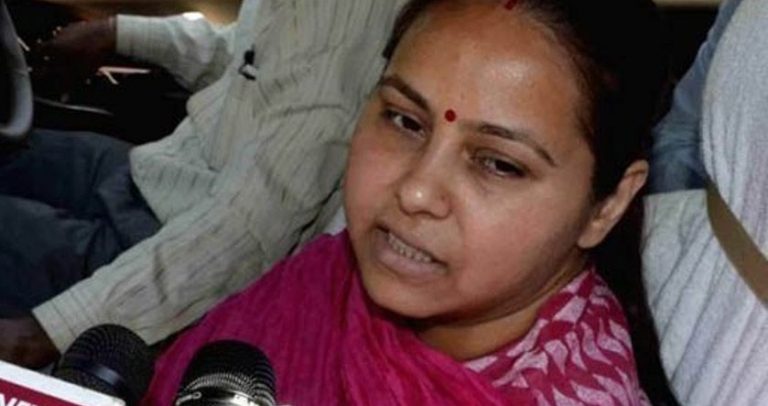
A day after the Central Bureau of Investigation (CBI) conducted searches at 12 premises of the RJD supremo over irregularities in awarding tenders for hotel maintenance during his tenure as the Railway Minister, the Enforcement Directorate (ED) on Saturday raided three farmhouses in Delhi owned by Lalu Prasad’s daughter and Rajya Sabha MP Misa Bharti in connection to a money laundering case.

The central probe agency swooped on Bharti’s farmhouses in Ghitorni, Bijwasan and Sainik Farms early this morning.

The raids were connected in connection to a racket involving two Delhi-based businessmen Surendra and Virendra Jain and others. The Jain brothers, who were arrested by the ED under provisions of Prevention of Money Laundering Act, allegedly laundered a whopping Rs 8,000 crores using shell companies.

It could be noted that one of the firms that the arrested duo dealt with was Mishail Printers & Packers Private Limited, a company together owned by Bharti and his husband Shailesh Kumar.

According to the ED, 1,20,000 shares of Mishail Printers & Packers Private Limited were bought at a rate of Rs 100 per share by four shell companies – Shalini Holdings Limited, Ad-Fin Capital Services Private Limited, Mani Mala Delhi Properties Private Limited and Diamond Vinimay Private Limited – between 2007 and 2008. These 1,20,000 shares were further bought back by Bharti and his husband at a cost of Rs 10 per share, the agency said. The firm was registered at the address 25, Tughlaq Road, New Delhi till the shares were bought back by Bharti, the ED said.

Earlier, the ED had arrested Bharti’s chartered accountant Rakesh Agrawal in connection to the money laundering probe. Reports suggest that it was Agrawal who provided accommodation entries or black funds of about Rs 60 lakh to Mishail Printers & Packers Private Ltd.

Last month, the Income Tax Department had seized the benami properties of Misa Bharti and her husband Shailesh Kumar, her brother and Bihar Deputy Chief Minister Tejaswi Yadav in Gurugram, Delhi and Rewari.

Lalu’s family is also at the centre of another scam involving three-acre slice of premium land in Patna where “the biggest shopping mall of Bihar” is being developed by Meridian Construction Limited, a firm owned by RJD MLA Syed Abu Dojana.

According to an Indian Express report, quoting CBI records, a purported contract between Dojana and Lalu’s younger daughter Chanda shows that 57 per cent of the complex under construction on this land at Saguna More in Danapur would be owned by her while 43 per cent would be allocated to the developer.

Amid standoff with China, India to invite heads of ASEAN nations for Republic Day parade

Amid the ongoing standoff with China at India-China-Bhutan tri-junction, India has decided to invite the heads of 10 ASEAN nations for the Republic Day parade, 2018. The move will give a further boost to India’s Act East policy.

The Association of Southeast Asian Nations (ASEAN) is a regional intergovernmental organisation comprising ten Southeast Asian states – Brunei, Cambodia, Indonesia, Laos, Malaysia, Myanmar, Philippines, Singapore, Thailand and Vietnam. It is for the first time ever that leaders of so many states will be the chief guests in Republic Day, which showcases India’s military might.

It could be noted that 4 ASEAN countries – Vietnam, Philippines, Malaysia and Brunei – are currently engaged in disputes with China in the South China Sea. Philippines dragged China to the International Court of Justice (ICJ) in the Hague over the dispute. The ICJ ruled against China in July last year and observed that China had violated international law in South China Sea.

India and ASEAN countries are marking 25 years of dialogue partnership, 15 years of summit-level interaction and five years of strategic partnership through “shared values”, and “common destiny”, reads a statement by Ministry of External Affairs.

India and ASEAN nations have successfully forged strong strategic partnership in areas of economy, defence and security. The Modi government has been emphasising on a “dynamic” and “action-oriented” relations with ASEAN countries.

At the India-ASEAN Delhi Dialogue, held in 4 July, External Affairs Minister Sushma Swaraj said India and ASEAN share a common geographical space where they face common traditional and non-traditional security challenges.

“Freedom of navigation and respect for international law is therefore imperative in this context. Equally, we remain committed with ASEAN to enhance our maritime cooperation, to realise the full potential of our ocean economy. We will continue to step up cooperation in countering terrorism, piracy and other transnational crimes,” Swaraj had said.

Minister of State for External Affairs VK Singh in his reply to the Parliament on 23 December, 2015 had said that there was a clear intent to engage with the ASEAN countries not just to promote economic cooperation and cultural ties, but also to develop a “strategic relationship”.

“On strategic issues, we have increasing convergence on security interests with key partners both in bilateral and multilateral format. Closer cooperation in combating terrorism, collaborating for peace and stability in the region and promotion of maritime security based on international norms and laws are being pursued,” Singh had said.

Mob threatens to kill Bihar advocate who had accepted Hinduism after renouncing Islam

Recently it was reported how Mohammed Anwar, a lawyer from Bihar’s Begusarai region had converted to Hinduism along with his sons, after he was being threatened by some radical Muslims for failing to follow the tenets of Islam. A few radicals were also unhappy with him because he didn’t eat beef and used to donate money for the construction of temples.

His house was reportedly attacked on 2nd July by a mob, which accused him of not performing the Namaz 5 times a day. They also reportedly expressed displeasure over the fact that his kids used to study in English medium schools and not in a madrasa. The mob had also reportedly beaten up his sons aged 9, 11 while they were there.

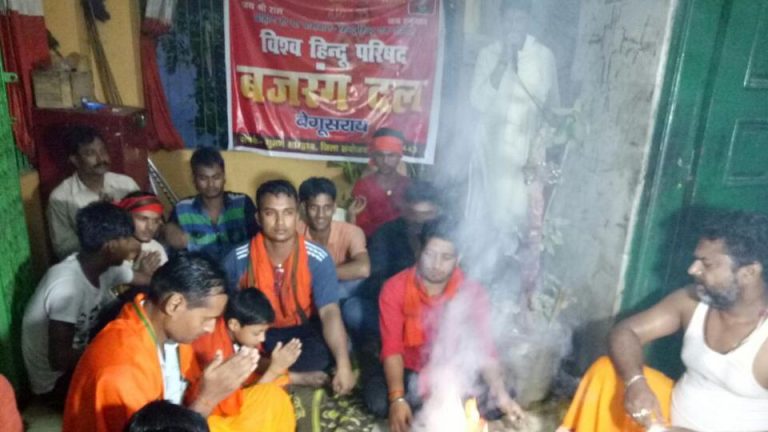
This prompted Mohammed Anwar to convert to Hinduism and become Anand Bharti, with the conversion ceremony taking place in a Shiva Temple.

Anand might have thought that after conversion he won’t be bothered by radical Muslims calling for him to be more pious, but as it appears that problems have only increased for him and his family after their religious conversion.

According to reports, soon after his conversion, tension increased in the area which has resulted in Anand getting continuous death threats from radical Muslims.

On Friday, a mob of 15-20 people surrounded Anand and his client at a town square. They proceeded to threaten them and the Bajrangi Dal’s District Chief Subham Bharadwaj with death. Bharadwaj was the one who had organised the conversion ceremony of Anand. The mob also hurled vile obscenities.

Soon the police came to know about the incident and dispatched station head Mohammed Ali Sabri to the spot. Seeing the police, the mob reportedly fled.

This has resulted in Anand being provided a bodyguard by local SP Ranjeet Kumar. The SP has also assured action against the mob if Anand provides a written complaint.

This isn’t the only time converted Muslims have received threats for converting from their religion. In 2015, a Muslim family from Uttar Pradesh who had converted to Hinduism in the infamous “Ghar-Wapsi” program had to accept Islam again, after facing threats and boycott from the Muslim community.

It needs to be seen how long “Anand Bharti” can retain his new religious identity.

Cow vs Kaaba – the missing spine of ‘liberals’ when it comes to Islam

0

When a man was killed in Dadri on suspicion of cow slaughter and beef consumption, it elicited, and rightly so, concern and outrage from many. The leading outragers were those who self-identify as “liberals”.

Apart from absolving the state government and taking selfies outside the house of the murdered man, these liberals decided to attack the belief that supposedly was the central reason why the man was killed – the belief that cow is a sacred animal which shouldn’t be slaughtered for food.

In fact, they decided to attack the cow itself, even as they desperately tried to paint every crime as cow related violence.

If you are active on social media, you would remember that many of these liberals had changed their display pictures to that of a cow with blood on her mouth – the way lion’s mouth looks after a kill.

In fact, the expression on a lion’s face after a kill is that of a contentment, for the big cat has just satisfied its hunger, but that picture of the cow had a sinister look in its eyes with its nostrils blowing out anger, as if it were hungry for more. You know, a bloodthirsty cow.

Cow, the only being who can legitimately say ‘not in my name’, was made a symbol of hate.

This hate campaign resulted into a public slaughter of a cow by the Congress party workers in Kerala. If one is liberal enough to consider speciesism as a form of discrimination, what happened in Kerala was a ‘hate crime’.

It didn’t end with public display of hatred by killing of a cow. Only a few days back, “Cow is food” posters were flashed in ‘not in my name’ protests, because liberals were on a mission to drill some rationalism into the thick head of stupid people who think that cow is mother.

I don’t find it entirely wrong to attack a belief, if that belief is the central reason behind a crime. Except that I never find these liberals attacking Islamic beliefs when a crime has been committed due to that.

Where are “Kaaba is just a building” posters on the lines of “Cow is food” posters? Or worse, if the cow can be drawn as a man-eater, how exactly should one draw Kaaba or the Prophet? A man has died, just like a man had died in Dadri.

I’m referring to Muslim mobs going on rampage, destroying government and private properties and desecrating Hindu temples in the Basirhat region of West Bengal. All because the mobs believe that Kaaba is sacred and a Facebook post didn’t show it in good light.

But there is no outrage at all from the “liberals” directed at Kaaba the way they got all creative and aggressive with the Cow. The spine to take on a belief that leads mobs to indulge in violence is missing.

To be fair, this anatomical mystery is not unique to the Indian liberals. When Charlie Hebdo cartoonists and satirists were killed, even their western counterparts too largely focused on the cartoons rather than the belief that led to the killing. Similarly, a teenager’s Facebook post is being blamed than the belief that makes a mob bay for blood.

We don’t really know what exactly was the nature of the Facebook post that offended the Muslims so much. Some claim that Kaaba was shown as Shiva temple or Shivalingam.

Regardless of whether that Facebook post did show Kaaba as Shivalingam or not, it is anybody’s guess how many “liberals” will endorse such imagery. They will condemn it as “provocative”. The image will be argued to be “supremacist” as it would show Muslims bowing to a Hindu symbol.

Bad to tinker with the sacred of one by inserting another religion’s symbols, no?

How about a painting that shows Hindu god Krishna taking part in Eid celebrations?


That is apparently shared heritage.

Liberals can continue to dodge these questions by dismissing them as “whataboutery” (which is why I used “how about” – so smart of me) but they have to ask themselves why do they employ these double standards when it comes to the faith and beliefs of Muslims.

When a belief leads to violence, why do they choose to counter Hindu beliefs with rationalism (and not much quarrel I have there personally) but choose to avoid countering the Muslim beliefs?

Cow gets their tongue? Or the spine genuflects in sajda?

I can think of only four reasons why they have such glaring double standards:

First. They are scared of the repercussions. If they choose to change their display picture to a cartoon of Kaaba, their own picture will be seen garlanded with flowers the next day. In that case, for god’s sake, and for Allah’s sake, stop your “all religions are the same” nonsense. Clearly some religions are more intolerant and violent; have the guts to acknowledge that without false equivalences.

Second. They actually believe that considering a building or place sacred is more logical and rational a belief than considering an animal sacred. You know, that is not liberal, but Abrahamic belief; or a Hinduphobic belief. And in this case again, stop your “all religions are the same” nonsense as you clearly believe that Hinduism is a lesser religion. Again, have the guts to acknowledge that and be honest like the Jihadis who say the same openly.

Third. They believe that some acts are provocative enough to attract violence. In the current case, they believe that hurting religious sentiments through an image is more provocative than stealing cattle (one of the key reasons leading to cow related violence). Well, you should stop calling yourselves liberal then, for it is very conservative a thought to put religious beliefs over economic considerations.

And the fourth one. They are deluded hypocrites. In which case, you don’t need to do anything. Continue being the same, as you’re only helping your enemies.

Allowances paid to Jawans deployed in Siachen and Maoist areas hiked by more than double

The risk and hardship allowances for armymen posted in Siachen and forces deployed for counter-insurgency operations in Maoist infested areas have been more than doubled. The increased payments are among the higher allowances the government notified in the Gazette on 6 July.

According to an official statement, the allowance paid to soldiers deployed at Siachen – the highest battlefield in the world – has been increased from Rs 14,000 to Rs 30,000 per month and for officers it has been hiked from Rs 21,000 to Rs 42,500 per month. Similarly, the High Altitude Allowance has been raised from Rs 810-16,800 to Rs 2700- 25,000 per month.

The Counter Insurgency Operations Allowance has been hiked from Rs 3,000-11,700 to Rs 6,000-16,900 per month. The Command Battalion for Resolute Action (CoBRA) Allowance, paid to CRPF personnel deployed in Maoist-infested areas, has been increased from Rs 8,400-16,800 to Rs 17,300-25,000 per month.

MARCOS and the Chariot Allowance, paid to marine commandos, has been increased from Rs 10,500-15,750 to Rs 17,300-25,000 per month.

For Sea Going Allowance, the conditionality of 12 hours has been reduced to four hours and the allowance has been increased from Rs 3,000-7,800 to Rs 6,000-10,500 per month.

The allowances for Modified Field, Field and Highly Active Field Area have been hiked from Rs 1,200-12,600 to Rs 6,000-16,900 per month. Flying Allowance has been raised from Rs 10,500-15,750 to Rs 17,300-25,000 per month and this has been extended to the BSF Air Wing also.

Aeronautical Allowance now has been extended to the Indian Coast Guard, Higher Qualification Incentive for Defence Personnel, Test Pilot and Flight Test Engineer Allowance, Ceilings of Deputation (Duty) Allowance for Defence Personnel, Detachment Allowance and Para Jump Instructor Allowance.

Lalu in fresh trouble as CBI raids his Patna home: Here’s all you need to know

RJD supremo Lalu Prasad Yadav’s family literally woke up to to a shock today after they found the CBI at the doorstep of his Patna home. A similar raid was being carried out at 11 other locations.

This trouble follows similar scrutiny of Lalu’s family members by other investigative agencies. Recently Income Tax officials had seized an alleged benami house and plot of land owned by Lalu’s daughter Misa Bharti.

Even Lalu’s son Tej Pratap Yadav who is the current  minister for Health, Minor Water Resources, Environment and Forest in the Bihar government, had received a notice from BPCL for falsely claiming ownership of a land to start a petrol pump. He is also involved an a Patna Zoo Soil scam in which he allegedly gave a Rs 90 lakh contract via Patna Zoo to a company in which he, his mother and siblings were shareholders.

Now that the past has finally caught up with Lalu again, lets look at the whole development:

Why did the raids take place:

According to the CBI, this case pertains to Lalu tweaking a tender process in order to benefit certain hoteliers while he was the Railway Minister in the UPA government. CBI says that it could make out a case of conspiracy and fraud based on the evidence it has so far.

Apparently three acres of land in western Patna was transferred in 2006 to a company called Delight Marketing Private Ltd, which is known to Lalu’s family. The land was subsequently transferred to another company called Lara projects, which reportedly is owned by Lalu’s family. Even though the land was valued at about Rs 32 crores, it was transferred to Lara at just about Rs 65 lakh.

The CBI is also examining tenders that were awarded to private firms for operating railway hotels near stations. A tender awarded for the maintenance of IRCTC Hotels/BNR Hotels in Delhi and Puri in 2006 is also under scrutiny.

BNR hotels, which were dubbed as Heritage Hotels of the Indian Railways, were taken over in 2006 by IRCTC. But these were then transferred to M/s Sujata private limited for maintenance and upkeep. The transfer was done while disregarding the set guidelines.

So who all are accused in the case?

As reported by ANI, various big shots are under the radar of the CBI. This includes Lalu, his wife Rabri Devi and his son Tejashwi. PK Goel, the former Managing Director of IRCTC, the promoters of Hotel Chanakya and Hotel Sujata, and Saira Gupta, the wife of RJD leader Prem Chand Gupta are also among the accused.

Which places were raided by the CBI?

A total of 12 places were raided by the CBI today from 7:30 in the morning. These include Lalu’s Patna residence, residence of RJD leader Prem Chand Gupta, the New Friends colony in Delhi, Chanakya BNR hotel in Ranchi and residence of former IRCTC MD PK Goyal. Locations in Puri were also raided.

What does Lalu have to say about it?

Initially, nothing. He wasn’t even at his house when the raids took place. He was in Ranchi to appear in his fodder scam case, and said that he would speak later. Later he dubbed everything as a political vendetta.

What did alliance partner Nitish have to say?

Alliance partner Nitish doesn’t seem to have reacted yet and was reported to have had a meeting with Senior Officials. This comes at a critical juncture for him as he has already aggrieved his “Mahagathbandhan” partners by formally backing NDA Presidential candidate Ram Nath Kovind.

Things might have turned especially tricky for Nitish as BJP is calling for him to sack Deputy CM Tejashwi Yadav and he won’t want to create an image of someone who shelters the corrupt.

The Congress though tried to provied full support for Lalu by questioning the silence of 13 years regarding this matter, thereby also possibly blaming their own government for inaction.

What next?

The news has broken that CBI  questioned Rabri Devi and Tejashwi Yadav so it remains to be seen if they do the same with Lalu.