The Rouse Avenue Court granted four-day custody of Jagdish Arora and Anil Agarwal to the Enforcement Directorate (ED). This case is related to irregularities in awarding a Delhi Jal Board tender for the supply of electromagnetic flow meters.
Special judge Bhupinder Singh granted custody to ED after hearing the submissions of ED’s counsel and the counsels for the accused persons.
The Enforcement Directorate (ED) produced retired chief engineer Jagdish Arora and contractor Anil Agarwal and sought seven days of custody. They were arrested on Wednesday.
It was submitted by the ED’s Special Public Prosecutor, Manish Jain and advocate Ishan Bainsla that the custody of the accused is required to confront them with the digital data recovered during the investigation.
It was also submitted that some other people are being summoned. They need to be confronted with the accused.
It is alleged that the accused awarded the Delhi Jal Board (DJB) contract for supply, Installation, Testing and commissioning (SITC) of electromagnetic flow metres and corresponding O&M operations for five years to M/S NKG Infrastructure Ltd on September 20, 2018 for a total negotiated cost of Rs. 38,02,33,080, despite the fact that the company did not meet the technical criteria.
It is alleged by the ED that accused received an illegal gratification to the tune of Rs. 3 crore from M/S NKG infrastructure limited and M/S Integral screws Industries and awarded the contract of DJB worth Rs. 38 crores for Supply, Installation, Testing and commissioning (SITC) to M/s NKG infrastructure Ltd. Thereafter, NKG Infrastructure Limited subcontracted the work to M/S Integral Screw Industries, the proprietorship firm of Anil Kumar Agarwal.
Accused Anil Aggarwal was represented by advocate Nagesh Behl.
Counsel for the accused submitted that Alka Arora purchased the flat in 2014 and the contract was awarded in 2018. It was stated that the FIR and ECIR were lodged in 2022 and the bribe was paid in 2023 after retirement. It is very strange. Nothing has been recovered.
The counsel argued that this tender was awarded at a lesser price. They are misleading the court. There is no charge sheet in the schedule offence by the CBI unless they are not in picture.
They should have waited for the charge sheet, counsel argued.
(This news report is published from a syndicated feed. Except for the headline, the content has not been written or edited by OpIndia staff)
In a dramatic Senate Judiciary Committee hearing, the CEOs of major tech companies face intense scrutiny over the potential harms of their platforms to teens, CNN reported.
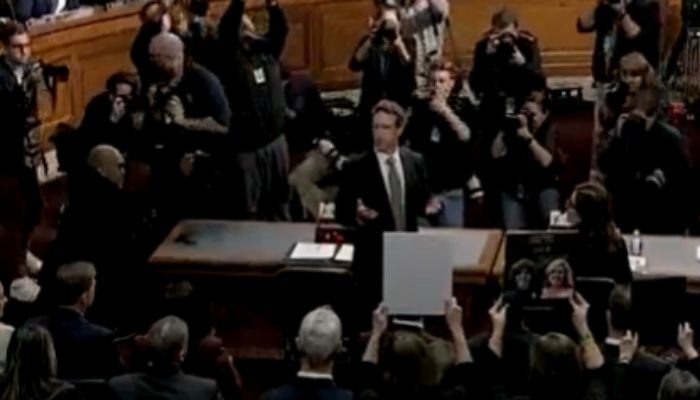
In a tense Senate Judiciary Committee hearing, Meta CEO Mark Zuckerberg stood to offer a public apology to families affected by the alleged repercussions of social media platforms, acknowledging the pain and suffering they have endured.
In case you missed it, Sen. Josh Hawley went scorched earth on Mark Zuckerberg and forced him to apologize to the families of children who were exploited by predators on his platforms. pic.twitter.com/TQXVaCZEK3
“I’m sorry for everything you have all been through. No one should go through the things that your families have suffered, and this is why we invest so much,” Zuckerberg said, emphasising ongoing industry-wide efforts to mitigate the negative impacts associated with their products, as reported by CNN.
“We are going to continue doing industry wide efforts to make sure no one has to go through the things your families have had to suffer,” he added.
Ted Cruz destroys Mark Zuckerberg over child s*xu*l exploitation material?
The media only ever talks about CSE on X even though it’s a much bigger problem on Instagram.
The apology came amid a grilling of five tech executives, including Zuckerberg, Snap CEO Evan Spiegel, X (formerly Twitter) CEO Linda Yaccarino, TikTok CEO Shou Chew, and Discord CEO Jason Citron.
The Senate Judiciary Committee focused on examining the potential harms inflicted on teenagers by these platforms.
However, the hearing took a combative turn when Missouri Republican Sen Josh Hawley called on Zuckerberg, a billionaire, to financially compensate families affected by the adverse effects of his company’s platforms on their children. The demand for compensation underscored the severity of the allegations against these tech giants.
The atmosphere in the hearing room was charged as dozens of parents stood, holding up pictures of their loved ones allegedly harmed by social media. The room fell silent at the sight of grieving families, creating a poignant backdrop for the unfolding proceedings.
Lawmakers, including Texas Republican Sen Ted Cruz and South Carolina Republican Sen. Lindsey Graham, began to filter in as the audience awaited the testimonies.
Senator Lindsey Graham’s opening remarks set a confrontational tone, accusing the tech CEOs of having “blood on their hands” due to the alleged negative consequences of their products. Graham argued that these platforms, particularly Meta, have a product that is “killing people,” and he called for the repeal of Section 230, a federal law providing immunity to websites and social media platforms for their content moderation decisions and user-generated content.
Graham cited the case of South Carolina state house Rep Brandon Guffey, who lost his eldest son to suicide and is now suing Meta.
Guffey claims that after his son’s funeral, he received messages demanding money in exchange for explicit photos of his late son, who had unwittingly become a victim of sexual extortion on Instagram. The lawsuit alleges wrongful death, gross negligence, and other claims against Meta.
Senator Ted Cruz displayed a cutout of a warning screen displayed on Instagram to individuals who were searching for child abuse material. The text on the warning read, “These results may contain images of child sexual abuse.”
Cruz pointed out that Instagram (Meta) gave users two choices following the warning which included, “Get resources or see results anyway”. “Mr Zuckerberg what the hell were you thinking?” the Senator asked.
This hearing once again highlighted the bipartisan criticism of social media companies among lawmakers.
Senator Graham acknowledged the rare unity between Democrats and Republicans on the issue, emphasising the need to address the abuse facilitated by tech platforms, according to CNN.
Despite the bipartisan concern, meaningful legislation to regulate social media companies at the federal level is yet to be passed. The focus has shifted to state legislatures and courts, where battles over new policies, such as age minimums for social media use, are being waged.
During the hearing, the CEOs sought to convey their commitment to child safety on their platforms by emphasising their roles as parents.
Snap CEO Evan Spiegel mentioned that his wife approves every app their 13-year-old downloads, TikTok CEO Shou Chew highlighted being a father of three young children, X CEO Linda Yaccarino identified herself as a mother, and Discord CEO Jason Citron emphasised his role as a father of two.
However, Zuckerberg, despite being a parent himself, did not explicitly mention his fatherly role in his remarks. The CEOs’ parental connections aimed to humanize them and demonstrate a personal stake in ensuring the safety of young users on their platforms.
As the hearing unfolded, it became clear that lawmakers are demanding more than apologies – they are pushing for accountability, regulatory measures, and, in some cases, financial compensation for the alleged damages caused by social media platforms, CNN reported.
The Senate Judiciary Committee has concluded its hearing.
Two men, Noor Mohammad and Nabi Mohammad were convicted and sentenced by a Delhi Court in the Delhi anti-Hindu Riots on the 31st of January 2024. While sentencing the two, the Court observed that the crimes which were committed were motivated by hate and greed.
“Riotous acts were guided by hatred, while robbery and loot of the cash amount were guided by greed,” Additional Sessions Judge Pulastya Pramachala of Karkardooma Courts said while sentencing Noor Mohammad alias Noora. Noora and Nabi Mohammad were convicted earlier this month in FIR 221 of 2020, registered at Police Station Khajuri Khas. Noora was convicted for being a member of a riotous mob which vandalized and set on fire various shops, robbed some individuals and violated a prohibitory order passed by the Police. Nabi Mohammad was convicted for the robbery.
While Noora was sentenced to four years in prison (sentences to run concurrently for various offences), Nabi Mohammad was sentenced to imprisonment already undergone by him in the case.
Convict Noor Mohammad @ Noora has been held guilty for offences punishable under Section 148/427/435/436 IPC read with Section 149 IPC. Convict Noor Mohammad @ Noora has been further held guilty for offences punishable under Section 392 and 188 IPC. Convict Nabi Mohammad has been held guilty for offence punishable under Section 411 IPC.
Noor Mohammad, according to the court order, formed an unlawful assembly on the 24th of February 2020 between 2:30 PM and 3:00 PM near Chand Bagh pulia. The court specifically observed that the aim was to cause damage to people belonging to the Hindu community.
“The object whereof was to cause maximum damage to the property, vehicles and persons of the area, as well as to person belonging to Hindu community, commit criminal trespass, vandalism, theft, and arson in the shops, houses and properties of the other persons in the said area”, the court observed. The court also observed that Noor was a part of the assembly whose common objective was the use of violence.
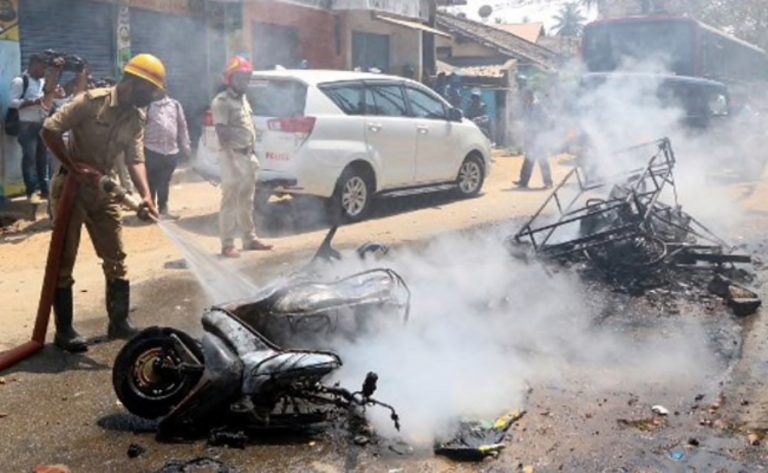
The court detailed, “Noor Mohammad committed riot and also vandalized and set on fire Auto Mobile Shop of Dilip; robbed him and Shiv Kumar of their mobile phones, besides causing damage to the goods lying in the aforesaid shop; vandalized and set ablaze shop in the name of Ashok Foam and Furniture; set ablaze the motorcycles of Ramdutt Pandey, Manoj Negi, Sonu Sharma, Pappu and Ashok Kumar. This mob including convict Noora, had assembled in violation of prohibitory order passed by ld. DCP (N/E) under Section 144 Cr.P.C”.
As per the order, a mob of which Noor Mohammad was a part of, approached from Mustafabad and were equipped with iron rods, dandas etc. The rioters broke open the main gate of Giri Auto Mobiles. Around 40-50 rioters entered inside that property and they set two motorcycles on fire, which were standing outside the workshop. These rioters also broke open shutter of workshop and set ablaze 13 motorcycles as well as spare parts, which were lying inside the workshop. There was one more gate, which led to plot inside that property. Two victims/complainants had come to this plot. Two boys including Noora from those rioters also came inside that plot. They demanded mobile phone and money from both the complainants on the threats of setting them ablaze. They took away mobile phones from both the Hindu victims and gave five minutes to flee away. Both these complainants jumped over the adjacent plot and saved their life. Shiv Kumar Raghav had brought Rs.2.5 lac to his office in order to lend it to his friend for marriage of his daughter. He had kept that amount in a back side room in this plot, beneath a mattress, because of worsening condition. When the situation came under control, then both these complainants came back at about 8 PM to this property. They saw that the workshop was on the fire. The articles in the back side room were scattered here and there and amount of Rs.2.5 lacs was also missing. Accordingly, they had suffered loss of Rs.2.5 lacs and Rs.3.2 lacs respectively.
Interestingly, while handing down the 4-year conviction to Noora Mohammad, the court said that his background shows that he was prone to getting carried away in religious fervour. “The overall assessment of the given background of the convict Noora shows that he was prone to get carried away by a misconceived sense of religious cause”, the court said. Citing an observation from the case of Lokeman Shah v. State of W.B., (2001) 5 SCC 235, the court said that they found that Noora Mohammad fell in the same category. The portion of the judgment cited said that in a communal riot, those who take to the streets looking for prey don’t know the people – they are simply overtaken by religious frenzy. The people who do so are largely illiterate and get moved by the provocative speeches of the literate leaders.
Noora Mohammad was therefore imprisoned for 4 years of rigorous imprisonment by the court. While handing down this sentece, the court said, “Keeping in view the discussion held herein above, I find that though the crime committed in the case is not a lighter crime, but lack of education, influence of mob sentiments, unsettled life and given family background of convict Noora cannot be over looked”.
Nabi Mohammad was sentenced to the prison time already undergone by him. He was convicted for stealing. “As far as convict Nabi Mohammad is concerned, I find that facing trial in this case and spending time in Jail after conviction, would have given him sufficient lesson”, the court said.
Delhi anti-Hindu riots
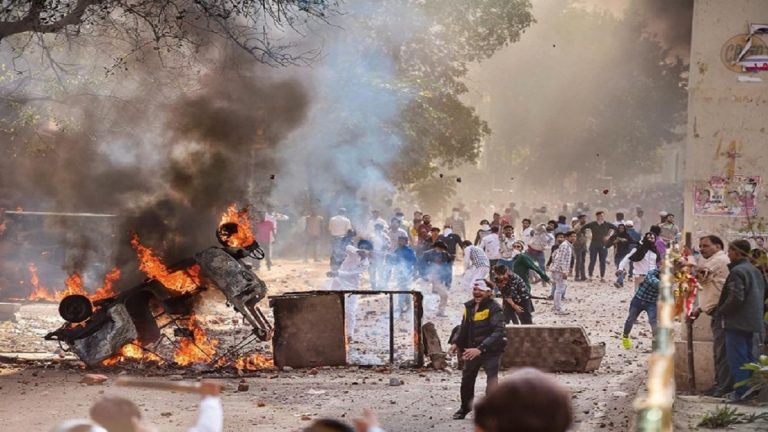
On the 24th and 25th of February 2020, India’s national capital Delhi saw large-scale anti-Hindu riots which marked the culmination of the hostility, hatred, and anger spread by the anti-CAA protests by the Islamists in Shaheen Bagh and other areas. Shahdara, Maujpur, Bhajanpura, Brahmapuri, and other parts of northeast Delhi witnessed violence perpetrated by the Islamists. 53 people died in these riots while more than 200 people were left injured.
While many people wish to look at the Delhi Riots 2020 in isolation, the sequence of events starting right from the 1st of December 2019 proves otherwise. It proves that the violence was a concerted effort to push India toward anarchy. It proves that the Delhi Riots was no anti-Muslim pogrom, it was indeed, a well-oiled plan against Hindus.
OpIndia had extensively covered the anti-Hindu riots, which were falsely presented by the mainstream media as an anti-Muslim pogrom, and established facts documenting tragic cries of Hindus which would otherwise have gone unheard.
The damage to the property in these riots had been enormous. An Intelligence Bureau Constable was murdered in the riots along with a Head Constable of the Delhi Police. Amidst all of this, one gun-wielding man was spotted brandishing his gun at the Police and firing shots. The rioter was identified as Shahrukh. A Hindu man Dilbar Negi was burnt to death after his hands and legs were chopped off by Jihadis. Delhi was in the grip of communal violence ever since the passage of the Citizenship Amendment Act. What Delhi saw in these anti-Hindu riots was only the crescendo of a fire that was lit by radicals months ago.
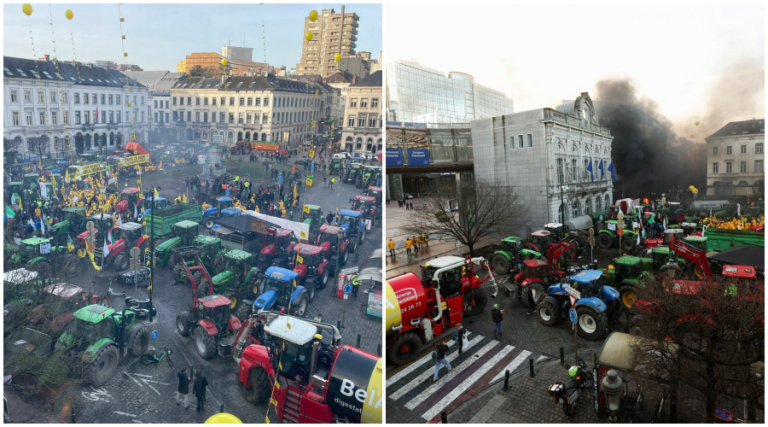
The widespread protests by farmers are gaining momentum across many EU countries. Farmers with their tractors, who have been protesting in France, Germany and Italy etc, have started blocking roads, with a large group of over a thousand farmers marching on to EU headquarters in Brussels, Belgium.
Farmers moving to or arriving in Brussels to lay siege to the city ahead of the EU Summit.
Farmers across Germany, France, Spain, Belgium, Poland are all protesting against the anti-farmer policies. pic.twitter.com/cgwPLjwbwH
As per the latest reports, the protesting farmers have started burning tires, and setting fire to the barricades erected outside the EU parliament where a summit of EU leaders is underway. They are throwing eggs at security personnel and raising slogans.
BREAKING:
First videos emerge of fires set and barricades built by protesting Belgian farmers in front of the European Parliament in Brussels.
Farmers are protesting in Germany, France, Belgium and other European countries.
For weeks now, farmers across several EU nations have been protesting against price pressure, harsh climate regulations and steep taxes imposed on them.
As per a Reuters report, some demands of the farmers have already been met, like the EU Executive Commission’s proposal to limit imports from Ukraine and relax some climate regulations.
In France, the government has dropped plans to gradually reduce subsidies on diesel. However, farmers across EU are adamant that the measures are meagre and EU policies are still hurting them.
The farmers also want a trade deal with the Mercosur group of South American countries to be accepted in its current form, a demand that French President Macron and Ireland PM Leo Varadkar are opposing.
Across major EU nations, there are already reports of empty supermarket shelves as supply and logistics of agricultural produce are impacted.
As thousands of tractors and trucks marched to Brussels to blockade the EU summit, slogans like “Ursula, we are here”, “No farmers, no food” etc were found on posters, banners and chalked on roadways.
Major roads in Belgium, France and Italy were also blocked, to disrupt logistics at major ports and traffic, as per reports.
On Wednesday, French police arrested 91 protestors who had stormed into Europe’s largest food market, the Rungis market.
French farmers have been protesting by throwing manure, rotten fruits and other material on government buildings. The rising cost of living, the impact of the Russia-Ukraine war, steep taxes and unfriendly climate regulations have been hunting the farmers for years, the protestors complain.
Earlier, German farmers began a statewide agitation on 8th January by clogging roadways and major highways in almost all 16 Federal states of Germany with thousands of tractors and trucks.
The most intense pushback has been in the Netherlands, where government efforts to dismantle farms and reduce the number of animals on them have been met with violent and ongoing protests following a 2019 court ruling on nitrogen emissions. Similar brawls in Belgium resulted in tractor convoys jamming Brussels’ European Union district in March of the previous year.
The Muslim side faced another setback in the Gyanvapi case after the Varanasi district court allowed Hindus to worship in the Vyas Cellar in the mosque complex, as the Supreme Court of India refused to hear their petition against the district court order. Hours after the Varanasi court delivered the verdict allowing worship of Hindu deities in the Vyas Ji Ka Tehkhana (the basement cellar of the Vyas family), the Committee of Management, Anjuman Intezamia Masajid, Varanasi filed an urgent application on 31 January seeking status quo at the mosque site.
As per reports, the lawyers of the mosque committee approached the residence of a Supreme Court registrar yesterday night seeking an urgent hearing at night itself, raising the apprehension that pujas will be performed by Hindus inside the mosque during the night. In response, the registrar told them that he would get back to them after taking instructions from the Chief Justice of India.
In its application, the masjid committee alleged that the administration was acting in ‘hot haste’ to implement the court order and was allowing puja by Hindus at the night itself. They claimed that this action was pre-empting any legal challenge to the court order by the Muslim side.
The Muslim side wrote, “There is no reason for the administration to undertake this task in hot haste in the dead of the night as the order passed by the Trial Court had already given them one week to make the necessary arrangements. The obvious reason for such unseemly haste is that the administration in collusion with the plaintiffs is trying to foreclose any attempt by the Mosque Managing Committee to avail of their remedies against the said order by presenting them with a fait accompli.”
However, the Supreme Court rejected this plea and refuse to accept the petition, and asked the Masjid Committee to approach the High Court instead.
At around 7 AM today, the registrar informed the Muslim side that the CJI has declined to accept the petition. The registrar called committee’s Advocate-on-Record Fuzail Ahmad Ayyubi on phone, saying the CJI DY Chandrachud has said that they have to approach the Allahabad High Court against the Varanasi court order, and they can’t go to the Supreme Court directly.
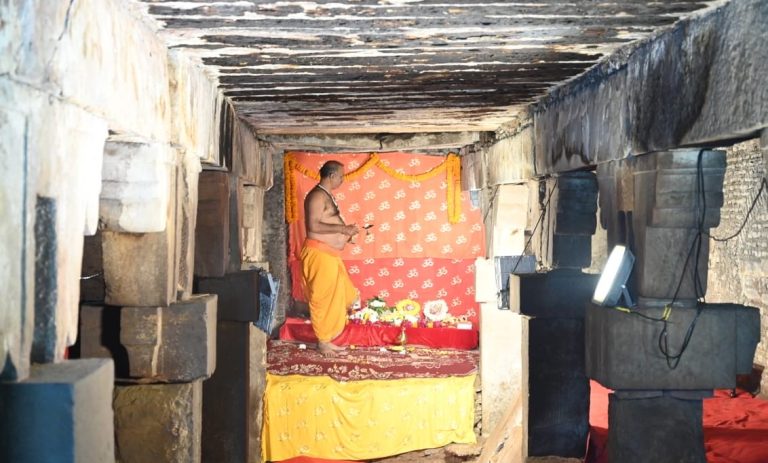
It is notable that hours after the district court order, the Vyas family offered puja in the Vyas Ji Ka Tehkhana, as the administration opened the cellar just after midnight, and made arrangements for worship as ordered by the court. The administration created a pathway to the southern basement by cutting the iron grill that surrounds it, and opened the locks.
After that, the administration officials let the members of the Vyas family to enter the Vyas Ji Ka Tehkhana to perform puja rituals. Idols of deities recovered in the cellar, details of which have been mentioned in the recently published ASI report and were in the custody of the district administration, were placed inside the cellar for the puja. The first rituals in the cellar after 31 years were conducted after the midnight and were completed around 3.30 AM. Later in the morning, women from the Vyas family entered the cellar for prayers.
According to Varanasi Divisional Commissioner Kaushal Raj Sharma, regular full-fledged puja of the deities inside the cellar would commence in compliance with the district court order from Thursday onwards. Advocate Vishnu Shankar Jain said that there will be 5 aartis daily at the Vyas cellar – Mangala Aarti at 3.30 AM, Bhog at 12 PM, Apranh Aarti at 4 PM, Sanyakaal Aarti at 7 PM and Shayan Aarti at 10.30 PM.
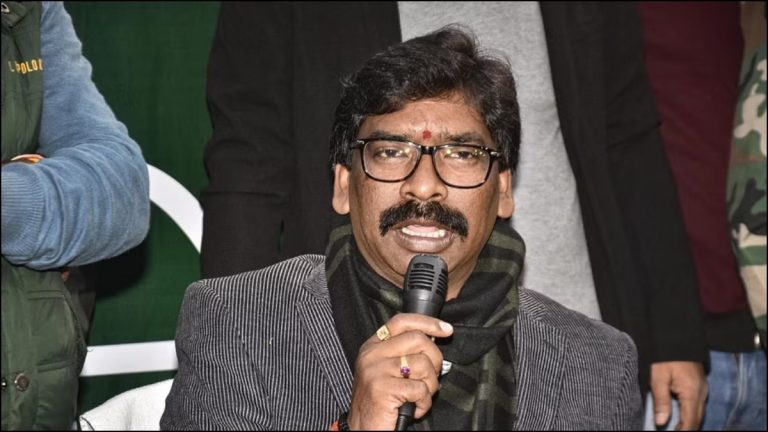
Former Jharkhand Chief Minister and JMM executive president Hemant Soren has been produced in the PMLA Court from the ED office in Ranchi.
Soren was arrested by the Directorate of Enforcement (ED) in a money laundering case related to the alleged land scam on Wednesday night.
Meanwhile, the former Jharkhand Chief Minister alleged that the Enforcement Directorate (ED) tried to tarnish his image by conducting raids at his Delhi residence.
A day after Soren’s arrest, the Jharkhand Chief Minister Soren released a video message in which Soren claimed that he was not linked to the money laundering case in which he was arrested.
“Most probably ED will arrest me today, but I am not worried as I am Shibu Soren’s son…After a full day of questioning, they decided to arrest me in a planned manner on matters that were not related to me,” Soren said in a video message recorded just before his arrest.
After a prolonged moment of speculation in the media and a hide-and-seek drama, Jharkhand Chief Minister and Jharkhand Mukti Morcha (JMM) Chairperson Hemant Soren was arrested by the Directorate of Enforcement (ED) in the land scam case on Wednesday night.
“No evidence has been by them found yet. They also tried to spoil my image by conducting raids at my Delhi residence. We have to fight a new fight now against those who commit atrocities against the poor, Adivasis, Dalit and the innocent,” he added.
He further said that he has to fight a new battle against those people who are accusing innocent people–the poor, Adivasis, and Dalits.
“Struggle is in our blood and we will do that. I will not cow down. Ultimately truth will prevail and will win the battle,” Soren said.
Earlier on Wednesday evening, JMM Chief Hemant Soren met Governor CP Radhakrishnan at Raj Bhawan and handed over his resignation after over six hours of questioning by the ED in connection with a money laundering probe linked to the alleged land scam case.
Jharkhand Transport Minister Champai Soren, who was named as JMM legislative party leader, after Hemant Soren’s arrest, claimed that he has the support of 47 MLAs and will continue to safeguard the pride of the state.”We will continue to work to safeguard the pride of Jharkhand. We have staked a claim to form the government in the state. We have the support of 47 MLAs. You have seen how the voice of the Adivasis here has been suppressed over the years,” he said.
Recently, Champai Soren wrote a letter to Governor CP Radhakrishnan, staking a claim to form the new government in the state.
Champai Soren, the state transport minister, is a seven-time MLA and he represents the Seraikella constituency in Jharkhand. Before joining the JMM, he was an independent MLA.
According to the ED, CM Soren was questioned as a part of the probe into the ‘huge racket of illegal change of ownership of land by the mafia’.
The probe pertains to huge amounts of proceeds of crime generated by forging official records by showing ‘fake sellers’ and purchasers in the guise of forged or bogus documents to acquire huge parcels of land having value in crores.
(This news report is published from a syndicated feed. Except for the headline, the content has not been written or edited by OpIndia staff)
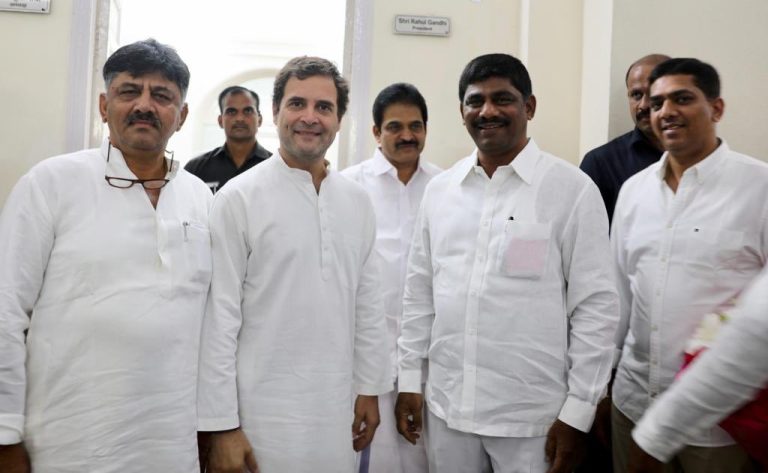
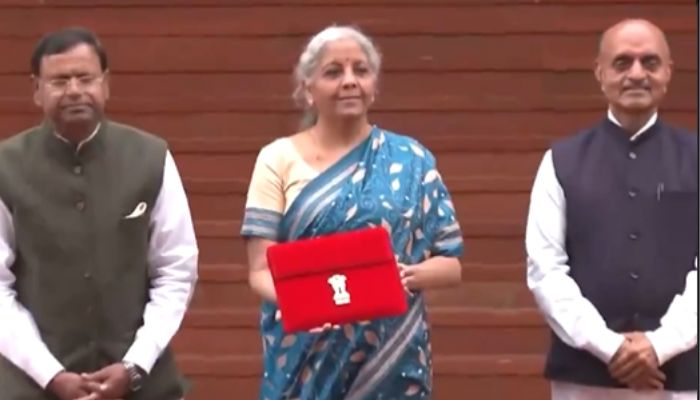
On Thursday, February 1, Finance Minister Nirmala Sitharaman presented the Interim Budget for 2024. While reacting to the budget, Lok Sabha MP from Bengaluru Rural, Congress leader DK Suresh accused the centre of not releasing funds to South Indian states. He also went on to say that in future, South Indian states may demand a separate country for themselves and become a separate nation.
DK Suresh, who is the brother of Karnataka Deputy CM DK Shivakumar, said in response to the budget that the money collected through from Southern states are being used in Northern states. The Congress MP further warned that if this alleged ‘injustice’ continues, they (Southern states) will be forced to demand a separate country.
Budget Reactions LIVE | Congress MP DK Suresh Says 'Taxes From South Indian States Going To North,' Demands Separate Country For South India #BudgetWithRepublic#Budget2024#Congress
DK Suresh was speaking to media personnel outside the Parliament after presentation of the budget. He went on to say that the money from southern states is being distributed in the northern states.
In response, BJP MP from Bengaluru South, Tejasvi Surya has criticised the Congress MP for his divisive language. He wrote, “While the Congress Party has a history of ‘Divide and Rule’, its MP Sri @DKSureshINC plays the trick again now, wanting the North and South to be divided.”
Rashtrakavi Kuvempu, in our Nada Geethe, says, "Jaya Bharatha Jananiya Tanujaate, Jaya Hey Karnataka Mathe (Victory to you Mother Karnataka, The Daughter of Mother India!).
“Kannadigas will never allow this to happen. We will give them a befitting reply in the Lok Sabha elections & ensure that #CongressMuktBharat attains fruition”, MP Tejasvi Surya further wrote.
Earlier, Finance Minister Nirmala Sitharaman presented the last budget of Modi government’s second term. This was the 6th budget presented by Ms Sitharaman.
Congress’ history of stoking a North-South divide
This is not the first time that Congress and its ecosystem has tried to create a North-South divide in the country. Back in November 2023, current Telangana CM Revanth Reddy fanned ‘North-South’ divide in his attempt to rundown chief minister K Chandrashekhar Rao.
In a discussion with India Today in November 2023, Reddy asserted that the first CM of Telangana, K Chandrashekhar Rao (KCR) has ‘Bihari genes’ and indicated that he was a better choice for the state than KCR. “My DNA is Telangana. KCR’s DNA is Bihar. He belongs to Bihar. KCR’s caste is Kurmi. They migrated from Bihar to Vijayanagaram and from there to Telangana. Telangana DNA is better than Bihar DNA,” he can be heard saying.
Further, following the humiliating losses in Rajasthan, Chhattisgarh, and Madhya Pradesh in the recently concluded assembly elections, the Congress ecosystem tried to rationalise the setbacks by amping up a dangerous narrative: stoking up the north-south divide and deepening fissures within the Indian society.
A raft of social media users from the Congress ecosystem resorted to inflaming the ‘north-south’ divide, a political construct long championed by the divisive parties to whip up regional chauvinism among the masses and ward off the threat of national parties making inroads on their home turfs. But for the Congress supporters and ecosystem, playing up the north-south divide was an easy way out to rationalise away their mortifying poll-drubbing after the rare political triumph in Telangana, which had instilled an air of arrogance in Congress supporters.
On Tuesday (30th January), Dharwad Zilla Durbala Alpasankyatara Abhivrudhi Seva Sangha demanded that the Anjuman-e-Islam organisation defer elections until those imprisoned in the Hubballi riots case are released on bail.
The Sangha president IM Torgal stated that the Old Hubballi incident has “morally discouraged” the Muslim community.“There is dissidence between two groups. Due to mistakes committed by some youths, their family members are suffering a lot. Therefore, the Anjuman-e-Islam should not hold elections until all of them get bail,” he urged.
Torgal stated that Anjuman-e-Islam’s sitting president, Yusuf Savanur should resign immediately. “If elections were to be held, they should be fair and impartial,” he said.
It is worth recalling that in April last year, Anjuman-e-Islam had announced to take up the legal fight on behalf of those arrested for the mob violence unleashed in Hubballi, Karnataka. Post the violence unleashed by the Islamist mob, the Muslim body is providing legal support to the 154 arrested individuals.
As reported earlier, violence had gripped Hubballi on the 16th of April 2022 after an Islamist mob had laid siege at the Old Hubli police station. The violence that was unleashed was after the Muslim mob thought the police were not acting against a Hindu man who had allegedly sent an “objectionable post” over WhatsApp, that offended the Islamic sensibilities and religious feelings.
A mob had gathered outside the Old Hubli Police Station at the time, demanding action against a person who posted an ‘objectionable social media post’. A case was earlier registered against that person identified as Abhishek Hiremath and he was subsequently arrested. However, the mob assembled outside the police station and turned violent, pelting stones at the station and police vehicles. Following this, the mob allegedly hurled stones at a nearby Hanuman temple and a hospital.
Just days before extending legal support for the Muslim mob arrested for the violence, Anjuman-E-Islami had offered “puja” at the Hanumantha temple in Dharwad in a show of “solidarity” and “brotherhood”.
As reported earlier, the police investigations revealed links of the mob involved in violence with Raza Academy, a radical Islamist outfit responsible for the 2012 Azad Maidan riots in Mumbai. A provocative speech by a controversial Muslim cleric named Maulana Wasim outside the Old Hubballi police station had enraged the Muslim mob culminating in attacks against the police station in Hubballi. The violent mob had attempted to kill the policemen. In their complaint, police constables Anil Kandekar and Manjunath from Kasaba police station described how they narrowly escaped being lynched by the irate fanatics.
In December last year, 35 accused persons in the Old Hubballi riots case were granted bail. Mohammed Yousuf Savanur, president, Anjuman-E-Islam, Hubballi-Dharwad had said that earlier the court granted bail to 11 accused.
In October last year, Karnataka Deputy Chief Minister DK Shivakumar sought the withdrawal of the 2022 Hubballi riot cases in a letter to the Additional Director General of Police (ADGP) Hitendra.
Union Finance Minister Nirmala Sitharaman on Thursday (1st February) presented the 5th and last budget of the Modi government 2.0. The budget was not presented in full as is tradition during every Lok Sabha election year.
“In the full budget in July, our government will present a detailed roadmap for our pursuit of Vikasit Bharat,” the Finance Minister said with a smile as the House echoed with applauds.
FM takes a jibe at the previous Congress-led UPA
Sitharaman began her address by adding context to the new budget mentioning how far the Indian economy has come since 2014 vis a vis where it stood pre-2014.
She said that a white paper will be presented on the pre-2014 mismanagement showing where India was then and where India is now.
Taking a jibe at the Congress-led UPA govt, the Finance Minister said that the Modi government is working with an approach to development that is “all round, all-pervasive and all-inclusive”.
“Previously, social justice was mostly a political slogan. For our government, social justice is an effective and necessary governance model. This is secularism in action, reduces corruption and prevents nepotism and prevents ‘bhai bhatijavaad’,” she said.
Lakhpati Didi
The target to benefit 2 crore lakhpati didis has been increased to 3 crore lakhpati didis.
Housing for middle class
On housing for the middle class, the FM said, “Our government will launch a scheme to help deserving section from the middle class living in rented houses or slums or chawls and unauthorised colonies to buy or build their own houses.”
PM Awas Yojana Gramin
The FM announced that the Centre is close to achieving a target of giving 3 crore houses under the PM Awas Yojana Gramin despite the challenges posed by the pandemic.
“Two crore more houses will be taken up in the next 5 years to meet the requirement arising from an increase in the number of families,” she said.
Railways
The government announced three major railway corridor programmes namely, the Energy, mineral and cement corridor; the Port-connectivity corridor and the High-traffic density corridor.
The FM said that these projects under the PM Gati Shakti will enable multi-modal connectivity and reduce logistics costs by improving efficiency.
40,000 normal rail bogies will be converted to Vande Bharat standards to enhance the safety, convenience and comfort of passengers.
Green energy
Viability gap funding will be provided for harnessing offshore wind energy potential for initial capacity of 1 GW. A capacity of 100 MT will be set up for coal gasification and liquefaction plant to be set up by 2030.
Faced mandatory blending of compressed biogas in compressed natural gas for transport and piped natural gas for domestic purposes will be mandated.
Financial assistance will be provided for procurement of biomas aggregation missionary to support collection. The FM said that the government will expand and strengthen electric vehicle ecosystem by supporting manufacturing and charging infrastructure.
Greater adoption of e-buses for public transport will be encouraged through payment security mechanism. A new scheme of bio-manufacturing and biofoundry will be launched for promoting green growth.
Blue Economy 2.0
The Centre has announced launching a scheme for restoration and adaptation measures and coastal aquaculture and mariculture will be launched with an integrated and mulsectorial approach.
Comprehensive development of tourist centres
Mentioning how 60 cities set up as centres for G20 meetings across India garnered global attention to India’s diversity, the FM said that states will be encouraged to take up comprehensive development of iconic tourist centres, branding and marketing them global scale.
The FM said that a framework will be established for rating of the centres based on quality of facilities and services.
Long-term interest-free loans will be provided to states for financing the development.
Focus on island tourism
For domestic tourism, the FM announced that new projects for port-connectivity, tourism infrastructure and amenities will be taken up on Indian islands including Lakshadweep.
“This will help in generating employment also,” the FM said.
Pradhan Mantri Matsya Sampada Yojana
Implementation of PM Matsya Sampada Yojana to be stepped up to enhance acquaculture productivity from existing 3 tonnes per hectare to 5 tonnes per hectare; to double exports to Rs 1 lakh crore and to generate 55 lakh employment opportunities.
5 integrated acqua parks to be set up.
Technology for a tech-savvy youth & defence sector
The FM said that this era will be a “golden era” for India’s tech-savvy youth.
The FM announced a corpus of Rs 1 lakh crore with 50 year interest-free loan. The corpus will provide long-term financing or refinancing with long-tenures and low or nil interest rates.
“This will encourage the private sector to scale up research and innovation significantly in sunrise domains,” the FM said.
The FM also announced that a new scheme will be introduced to strengthen deep tech technologies for defence purposes and expedite “aatmanirbharta”.
Boost to infrastructure development through capex
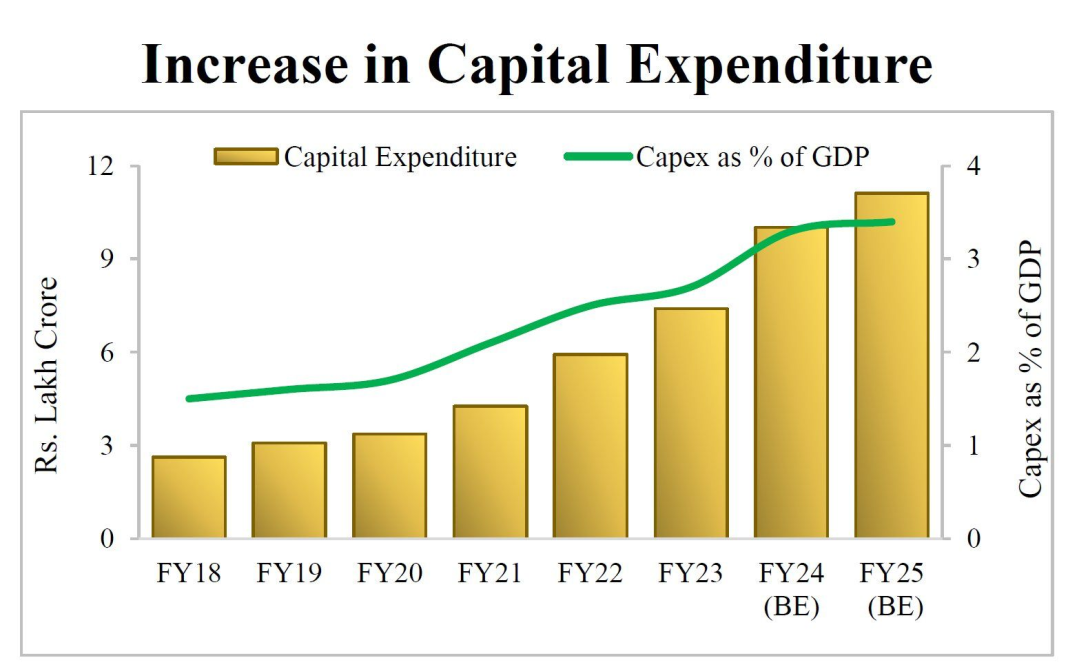
The capital expenditure (capex) has been increased by 11.1% to Rs 11,11,111 crore to boost infrastructure development. This would be 3.4% of the GDP.
Assistance to states
The budget proposes a provision of Rs 75,000 crore as a 50-year interest-free loan to support milestone-linked reforms by state governments.
The Centre through Budget 2024 has said that it is ready to assist states in the development of aspirational districts and blocks under the “Aspirational Districts Programme”.
The Budget also mentions giving “utmost attention to make the Eastern region and its people a power driver of India’s growth”.
Savings through rooftop solar electricity
The FM said that through rooftop solarisation, one crore households will be enabled to obtain up to 300 units of free electricity every month.
The budget projects savings of up to Rs 15,000 to 18,000 annually for households from free solar electricity and selling the surplus to distribution companies.
Navigating demographic changes
The government has announced the formation of a high-powered committee for an extensive consideration of the challenges arising from fast population growth and demographic changes.
The committee will make recommendations to address these challenges.
Revised estimates of 2023-24
Revised Estimates of total receipts other than borrowings is Rs. 27.56 lakh crores, of which tax receipts are Rs. 23.24 lakh crores.
Revised Estimates of total expenditure is Rs. 44.90 lakh crores.
Revenue receipts at Rs. 30.3 lakh crores are expected to be higher than Budget Estimates.
Revised Estimates of fiscal deficit is 5.8% of GDP.
Budget estimates for 2024-25 shows low borrowings by Centre
Total receipts other than borrowings at Rs. 30.80 lakh crores. Total expenditure at Rs. 47.66 lakh crores. And Tax receipts: Rs. 26.02 lakh crores.
Fiscal deficit in 2024-25 is estimated to be 5.1% of GDP.
Gross and net market borrowings through dated securities during 2024-25 are estimated to be Rs. 14.13 lakh crores and Rs. 11.75 lakh crores respectively, both less than that in 2023-24.
“Lower borrowings by central government will facilitate larger credit for private sector,” FM said.
Healthcare and health infrastructure
The central government will set up a committee which will examine issues and make relevant recommendations to implement the plan to set up more medical colleges by using existing hospital infrastructure under various departments.
The FM said that Centre will encourage vaccination for girls in the age group of 9-14 years to prevent cervical cancer.
Various schemes for maternal and child care will be brought under one comprehensive programme for synergy in implementation.
Aanganwandi centres will be upgraded under Saksham Aanganwadi and Poshan 2.0 will be expedited. The U-Win platform will be rolled out across the country.
Healthcare cover under Aayushman Bharat scheme will be extended to all Asha and Aanganwadi workers and helpers.
Agriculture
The government has said that it will promote private and public investment in post-harvest activities. The FM announced that application of Nano DAP on various crops will be expanded in all agro-climate zones.
The government will form a strategy to achieve self-reliance for oil seeds like mustard, groundnut, sesame, soya bean and sunflowers to cover research for high-yielding varieties, widespread adoption of modern farming techniques and so on.
Withdrawal of disputed direct tax demands
The FM announced that the government is doing away with the backlog of disputed direct tax demands up to Rs 25,000 up to financial year 2009-10 and up to Rs 10,000 for financial year 2010-11. The move is expected to benefit one crore tax-payers.
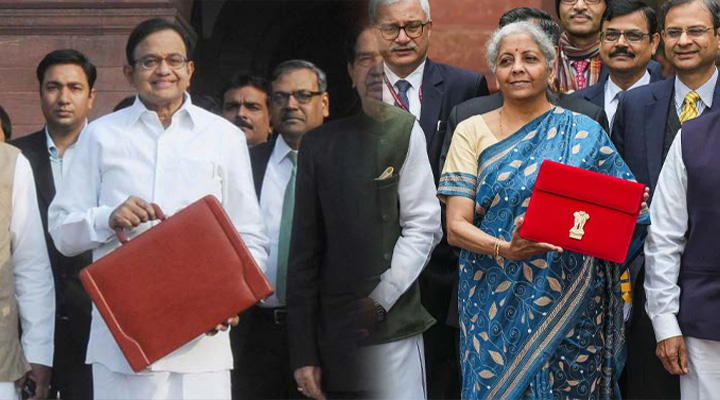
Union finance minister Nirmala Sitharaman presented the interim budget in the parliament today, which is the last budget of the 2nd Modi government. Ahead of the budget, the ministry published a note on the Indian economy, showing how much the economy has progressed in 10 years during the Modi government. The comparisons of numbers from the interim budget of 2014 and the current interim budget show a massive difference between the two budgets, both after 10 years of rules of UPA and NDA govts.
A study of the 2014 interim budget shows means and measures to hide the real state of the economy and artificially boost numbers. On the other hand, the 2024 interim budget has shown that India is the best-managed large economy in the world, well on track to become a $5 trillion economy.
Not only Modi government accelerated the growth of the economy, but the govt also absorbed the deferred liabilities of the previous UPA government. In order to show the numbers in good light, the Dr Manmohan Singh government had pushed payments of subsides on Oil and fertilizers amounting to ₹35,000 crore for the year 2013-14 to the next year, which artificially reduced the deficit of the UPA govt. But this played havoc with cash flow of the related companies, destroying growth.
In the 2014 interim budget, Finance Minister P Chidambaram had reduced plan expenditure by ₹80,000 crore, again to manage deficit. This meant that essentially all productive investment was killed. The payments to all infrastructure and other companies were put on halt, to reduce expenses in the govt books. As a result, growth in the economy stalled. Numbers show that only ₹8,000 crore was spent in January to March 2014, against the usual spent of ₹85,000 crore.
Between 2005 to 2014, the capital expenditure of the government fell from 23% to a mere 14%. This resulted in the stalling of job growth.
On the other hand, the interim budget presented by Nirmala Sitharaman show a massive increase in capital expenditure under the Modi government, firing the growth engine. Capex is on a record high and continuously increasing. Effective overall capex is ₹15 Lakh crore now, and ₹11.1 crore of it is only on Infrastructure development like roads, railways, ports etc.
The last 10 years of NDA have been high growth and high job and employment generating years. Moreover, there are no ‘Sleight of Hand’ in the budget to hide expenses to artificially show a better economy.
India was 10th largest economy in terms of GDP in nominal terms in 2014, and now the country is 5th largest economy. FDI inflows have more than doubled from $304.03 billion to $642.21 billion. Individual’s weighted mean income as per income tax returns have gone up from ₹3.1 lakh to ₹11.6 lakh. The consumer price inflation has gone down from 10.08% in 2013 to 5.65% in 2023.
With the growth in economy, the income tax burden has also come down for individuals. The effective tax rate was 19.22 % for income upto ₹15 lakh in 2013, and now it is 10.4%, almost half.