Home Blog Page 1576

BJP to hold Parliamentary party meeting tomorrow amid suspense over next CMs in Madhya Pradesh, Rajasthan and Chhattisgarh

0

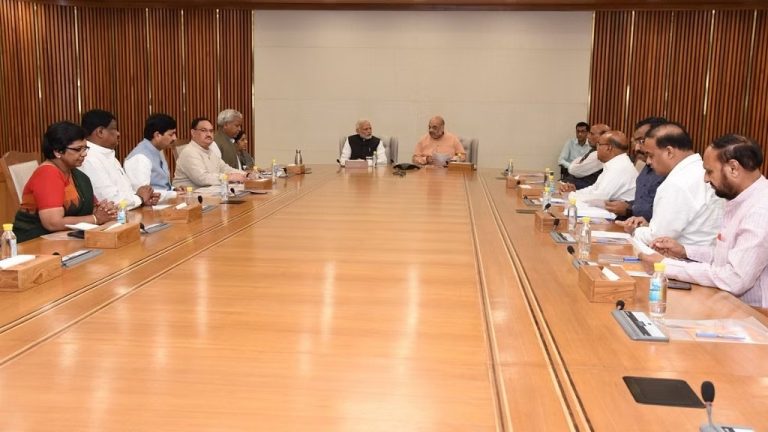
The Bharatiya Janata Party (BJP) will hold the Parliamentary party meeting tomorrow at Balayogi Auditorium in the Parliament House complex amid suspense over the selection of Chief Ministers in three states – Rajasthan, Madhya Pradesh and Chhattisgarh.

Prime Minister Narendra Modi along with all the party MPs will be present at the meeting.

BJP has the crucial task of selecting potential chief ministerial candidates to lead new cabinets for the upcoming five years.

A BJP tsunami swept the Hindi heartland on the counting day for four states that polled for their assemblies last month with the party getting stunning mandates in Madhya Pradesh, Chhattisgarh and Rajasthan.

It stumped not just their rivals but also some pollsters who had predicted tight races in these states.

The election results in four states, especially the losses in Rajasthan, Madhya Pradesh and Chhattisgarh, came as a huge blow to the Congress’s hopes for 2024 as it is now out of power across a vast swathe of the Hindi heartland.

The BJP, which had been battling close to 20 years of incumbency, won a resounding mandate bagging 163 seats while the Congress finished a distant second at 66 seats.

In Rajasthan, the vote count painted a starkly different picture to what some of the pollsters had predicted, with the BJP poised to form the government, winning 115 seats, and the Congress trailing at 69 seats.

Of the 90 assembly constituencies in Chhattisgarh, the BJP bagged 54 while the Congress won 35. 


(This news report is published from a syndicated feed. Except for the headline, the content has not been written or edited by OpIndia staff)

Press release announcing Mahanth Balaknath Yogi as next CM of Rajasthan is fake: State BJP

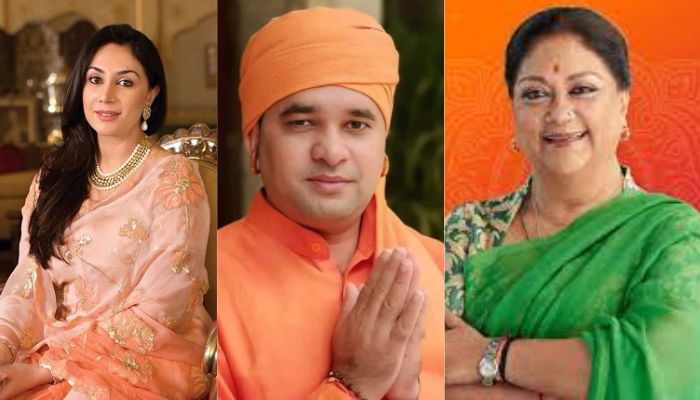
Days after the BJP achieved a resounding victory in Rajasthan, speculations have been rife over the appointment of the next Chief Minister of the state. Following these developments, on 6th December, a purported press release attributed to BJP claimed that the party had selected Mahanth Balaknath Yogi as the next Chief Minister and appointed two Deputy Chief Ministers to assist the CM.

It also stated that Senior BJP leader and MLA from Sawai Madhopur Kirodi Lal Meena and MLA from Rajsamand Diya Kumari will be the two Deputy Chief Ministers. However, the Bhartiya Janata Party’s state unit took to X (formerly Twitter) and alerted that the press release claimed to be theirs is Fake. 

From its official Twitter handle BJP4Rajasthan, the party tweeted, “Fake Alert!” along with the forged press release having the party’s name as the header to make it look authentic.

Earlier on 3rd December, the BJP defeated the ruling party Congress after it secured 115 seats. While Congress bagged 69 seats, other parties in the likes of Bharat Adivasi Party and Bahujan Samaj Party secured 3 and 2 seats respectively. 

Since then, the race for the next Chief Minister of Rajasthan has thrown up many probable faces including the likes of Mahanth Balaknath, Diya Kumari, Former CM Vasundhara Raje, Union Jal Shakti Minister Gajendra Singh Shekhawat among others.

Decide in 3 months representation to ban dangerous dog breeds: Delhi HC asks Centre, stresses need to promote local breeds of dogs

0

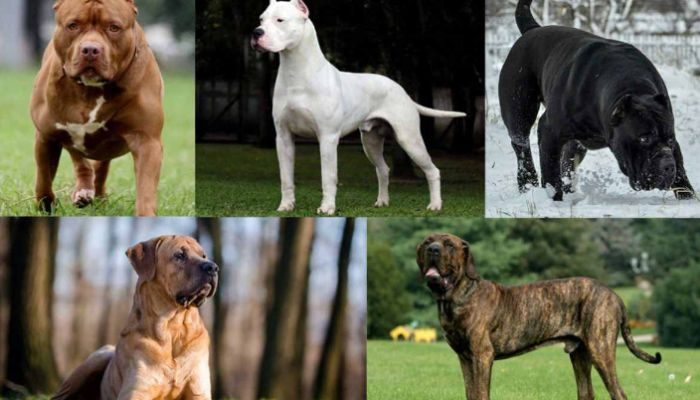
On 6th December (Wednesday), the Delhi High Court asked the Union government to expeditiously make a decision, preferably within three months, on a representation to ban and cancel licenses for the possession of “dangerous” dog breeds like Pitbulls, Terriers, American Bulldogs, and Rottweilers.

Notably, the petition was filed in October. The matter is being heard by a bench headed by Acting Chief Justice Manmohan and it also includes Justice Mini Pushkanra. The court asked the petitioner to let the authorities ‘take a call’ on this matter, noting that they were the ones who needed to draft the relevant laws and regulations on this issue.

The court ordered, “They (the authorities) shall decide representation as expeditiously as possible, preferably within three months.”

During the proceedings, the bench also emphasised the need to promote the local breeds of dogs stressing that they are “sturdy”. The court observed, “Indian breeds need to be taken care of. They are far more sturdy. They don’t fall sick that often because they have acclimatised. Today we are vocal for local.” 

The Counsel of the Union government apprised the Delhi High Court that the representation has already been sent to the department concerned and a decision will be taken after consulting with stakeholders. 

Earlier, on 5th October, a division bench headed by then Chief Justice Satish Chandra Sharma had refused to entertain the petitioner’s PIL on the issue. The court directed the petitioner that they should first approach the government authorities with their grievance. 

The petition filed by Legal Attorneys and Barristers Law Firm alleges that dog breeds like Bulldogs, Rottweilers, Pit Bulls, Terriers, and Neapolitan Mastiffs are “dangerous dogs”. It noted that these “dangerous” breeds of dogs are banned in more than 12 countries including India. However, the Municipal Corporation of Delhi was still registering them to be kept as pets, the petition added.

Additionally, it brought the court’s attention to several incidents of such dog breeds attacking people including their owners.

The petition stated, “lt is the need of the hour to ban and cancel the license to keep dogs such as Pitbull, Terriers, American bulldogs, Rottweilers, Japanese Tosa, Bandog, Neapolitan Mastiff, Wolf Dog, Boerboel, Presa Canario, Fila Brasileiro, Tosa Inu, Cane Corso, Dogo Argentino and crossbreeds of above-mentioned dogs.” 

According to the petitioners, it is the duty of the Centre and the state government to act as a welfare state and to take preemptive action to save the lives of the citizens from the risk of any major dog bite incident by these “dangerous” breeds.

Delhi: INDI alliance meeting to be held today at Kharge’s residence

0

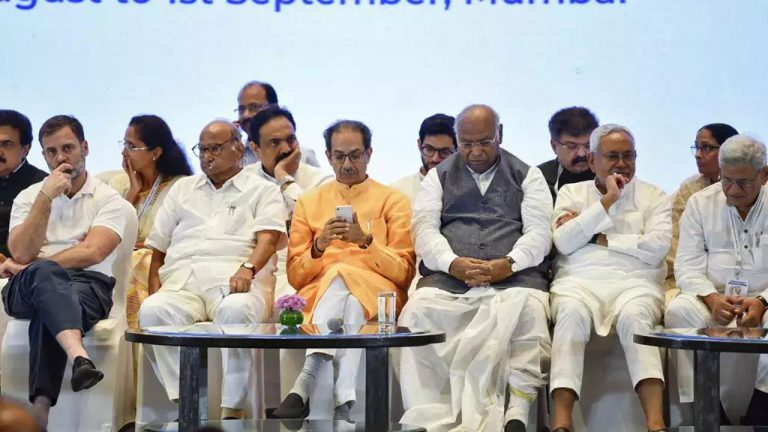
A meeting of the floor leaders of the INDIA bloc will be held today at 7 pm at Congress national president Mallikarjun Kharge’s residence here in the national capital.

According to the sources, the Trinamool Congress and Shiv Sena (UBT) are likely to skip the meeting.

Earlier today, amid speculations that Mamata Banerjee is likely to skip the INDIA bloc meeting due to scheduling issues, the West Bengal Chief Minister clarified, saying that the opposition leaders will be meeting shortly whenever the Congress comes up with a favourable date.

“I was not informed earlier. Only a day before yesterday, Rahul called me up and told me about the meeting…We will be meeting shortly whenever they decide,” Mamata said before leaving for her scheduled North Bengal tour on Wednesday.

Speaking about scheduling issues, the Chief Minister said that her counterparts need prior invitations at least seven or ten days in advance.

“Other Chief Ministers also have meetings. They need to know about the program seven days ago or 10 days ago,” she said.

Meanwhile, Shiv Sena (UBT) leader Sanjay Raut said that the next meeting of the INDIA bloc can take place between December 16 and 18 and many things including the face of the alliance will be decided at that time.

“The INDIA alliance meeting was supposed to be held today but some prominent leaders were not available. There is a wedding in Mamata Banerjee’s house, MK Stalin is busy with the relief operation in his flood-hit state, Nitish Kumar is not well, and Akhilesh Yadav is not available, therefore this meeting will be held on the 16th or 18th of December. The face etc. everything will be decided in the meeting. We are together and you will see its result in 2024,” Sanjay Raut said.

Seat sharing for the Lok Sabha polls, which is just four months away, is likely to be at the top of the agenda. The next INDIA bloc meeting would also be crucial for Congress, particularly as the party lost Rajasthan, Chhattisgarh and Madhya Pradesh Assembly polls, the Hindi heartland states that send a large number of members to the Parliament.

The first meeting of the joint opposition convened in Patna on June 23 and the second meeting was held in Bengaluru on July 17-18. The third meeting happened in Mumbai during August 31-September 1.

The INDIA alliance had appeared on shaky ground when the Samajwadi Party Chief Akhilesh Yadav accused the Congress of betrayal after the Congress failed to reach a seat-sharing agreement for the Madhya Pradesh election.

The Samajwadi Party has mellowed its stance now, party spokesperson Rajinder Chaudhary said that the results in the assembly polls would strengthen the INDIA bloc.

INDIA or ‘Indian National Developmental Inclusive Alliance’ is a group of 28 opposition parties, including the Congress. The parties have come together to take on the National Democratic Alliance (NDA), which is led by PM Modi’s Bharatiya Janata Party (BJP), and prevent it from winning a third straight term at the Centre in the 2024 Lok Sabha elections.

In the Mumbai meeting, the opposition parties adopted resolutions to collectively contest the upcoming 2024 Lok Sabha elections while announcing that seat-sharing arrangements would be finalised as soon as possible through a spirit of give-and-take.

The theme chosen by the INDIA bloc for the elections is “Judega Bharat, Jeetega India” (India will unite, India will win) to take on the ruling Bharatiya Janata Party (BJP)-led government.

(This news report is published from a syndicated feed. Except for the headline, the content has not been written or edited by OpIndia staff)

24 seats reserved in PoK because it belongs to India: Amit Shah in Parliament introducing bill to increase seats in Jammu and Kashmir

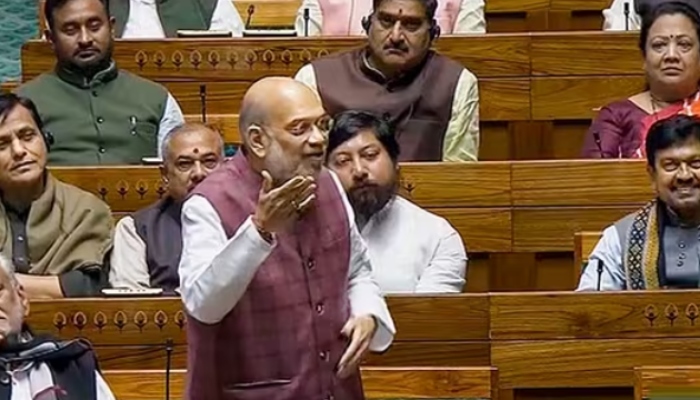
On Wednesday (6th December), Union Home Minister Amit Shah said that the two bills related to Jammu and Kashmir that the Union government introduced in parliament are geared at providing justice to those who have been denied their rights for more than 70 years. During a debate on the Jammu and Kashmir Reservation (Amendment) Bill and the Jammu and Kashmir Reorganisation (Amendment) Bill, Shah criticized the Congress while not naming the party, asserting that the exodus of Kashmiri Pandits could have been avoided if terrorism had been dealt with without regard for vote-bank politics.

While defending the bills, he stated that the two bills would provide representation to those who were forced to flee Kashmir due to terrorism. Amit Shah reported to the House that one seat in the Kashmir assembly would be reserved for those displaced from Pakistan-occupied Kashmir. He also stated that one of the two bills would nominate two members of the Kashmiri migrant community to the assembly.

“When they (Kashmiri Pandits) were displaced, they were forced to live as refugees in their country. Around 46,631 families were displaced in their own country. This Bill is to get them rights, this Bill is to give them representation,” he said.

“Had terrorism been tackled at the beginning without considering vote-bank politics, Kashmiri Pandits wouldn’t have had to leave the valley,” he added. He also declared that 24 seats in the Jammu and Kashmir Assembly would be reserved for Pakistan-occupied Kashmir (POK), which belongs to India.

Amit Shah stated while tabling the Jammu and Kashmir Reorganisation Bill, 2023 in the House that Jammu previously had 37 seats but now has 43. Meanwhile, Kashmir has 47 seats, up from 46.

Further criticizing the Congress party, Shah said that those responsible for stopping the exodus were enjoying vacations in England. “There was an era of terrorism (in Jammu and Kashmir) after the 1980s and it was a horrifying scene. Those who lived on the land considering it their country, were thrown out and no one cared about them, neither did they try to stop it. Those who were responsible for stopping it were enjoying vacations in England,” he added.

The Jammu and Kashmir Reservation (Amendment) Bill, 2023, introduced in Lok Sabha on July 26, 2023, aims to modify the reservation act of the union territory. Members of the Scheduled Castes, Scheduled Tribes, and other backward classes would be given preference in jobs and educational institutions under this bill. It provides social and educational reservations to people living in backward villages and similar areas along the Line of Control and International Border.

The Jammu and Kashmir Reorganisation (Amendment) Bill, 2023 amends the Jammu and Kashmir Reorganisation Act, 2019, which facilitated the reorganisation of the erstwhile state into the union territories of Jammu and Kashmir and Ladakh. This amendment proposes to increase the total number of seats in the Jammu and Kashmir legislative assembly from 83 to 90, of which seven would be reserved for scheduled caste members and nine seats for legislators from scheduled tribes.

The bill also empowers the Lieutenant Governor to appoint up to two members of the Kashmiri migrant community, including one woman, to the assembly. Persons who moved from the Kashmir Valley or any other part of the state of Jammu and Kashmir after November 1, 1989, and have registered with the Relief Commissioner are considered migrants. Additionally, one member representing displaced persons from Pakistan-occupied Jammu and Kashmir may be nominated.

​’PoK wasn’t a mistake, it was a blunder’: Amit Shah talks about ‘Nehruvian blunders’ in Kashmir in Lok Sabha, leaves opposition fuming

Union Home Minister Amit Shah on Wednesday (6th December) addressed the Lok Sabha on the ongoing debate on the Jammu and Kashmir Reservation (Amendment) Bill, 2023 and the Jammu and Kashmir Reorganisation (Amendment) Bill, 2023.

Defending the abolition of Article 370 and Article 35A, Shah responded to the Congress’s repeated challenge in the past to the Centre’s claims that terror incidents had declined in the valley.

The Union Home Minister also listed the several steps the Central government had undertaken to counter terrorism, eliminate separatism and restore normalcy to Jammu and Kashmir.

In the latter part of his speech, Shah explained why he approved the usage of the words “Nehruvian blunder”, which was objected to by the Opposition benches. “I want to support the usage of the word Nehruvian blunder. Kashmir had to suffer due to the blunder that had happened during Nehru’s rule,” the Home Minister said.

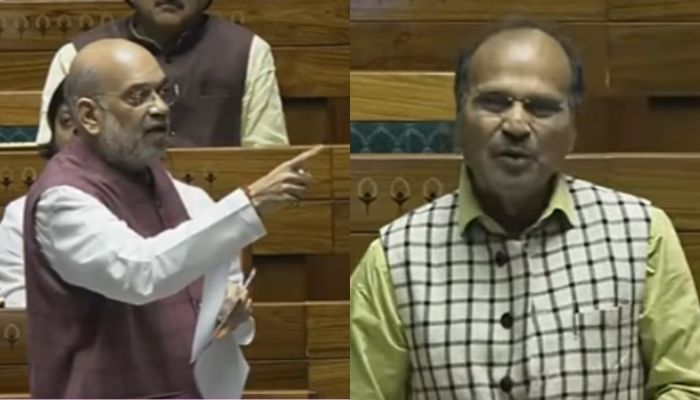
Notably, before Shah’s address, Leader of Opposition in Lok Sabha Adhir Ranjan Chowdhury in his address asked for a dedicated debate on Kashmir and Nehru’s contribution and mistakes regarding the same. In response, Amit Shah said that he is ready. What followed is this.

Amit Shah listed the the two big mistakes made by Nehru during his time as Prime Minister because of which Kashmir had to suffer for years to come.

“Two mistakes that happened due to the decision of (former PM) Pandit Jawaharlal Nehru due to which Kashmir had to suffer for many years. The first is to declare a ceasefire – when our army was winning, the ceasefire was imposed. If there had been a ceasefire after three days, PoK would have been a part of India today… The second is to take our internal issue to the UN,” he said.

The Home Minister then quoted former Prime Minister Jawaharlal Nehru from his letter to Sheikh Abdullah derived from Nehru Memorial and Library, Jawaharlal Nehru collection, JNSC 143.

Quoting Nehru, Amit Shah read the excerpt which was as follows, “After the experience with the United Nations (UN), I have concluded that a satisfactory result cannot be expected from there. I considered this a good decision (ceasefire) but this matter was not dealt with properly. We could have deliberated some more on the ceasefire and come out with a better solution. And I think this was a mistake we made in the past.”

Amit Shah then looked at the Opposition benches and asked if they had an objection to this. The Congress replied with a yes only to be immediately countered by Shah that they could not object because these were Nehru’s words.

“Why are you telling me Nehru Nehru Nehru, Nehru has himself said this,” he told the Opposition in a fierce counter. The Congress then began to outrage and eventually staged a walkout.

Earlier today, Union Minister Jitendra Singh also took a jibe at the Congress saying that those who did not implement the Constitution of India in J&K are today teaching those who sacrificed 3 generations to implement the Constitution in the valley.

Singh said, “One of the consequences of what historians have termed the “Nehruvian Blunder” was the delayed integration of Jammu and Kashmir into India in 1947. Nehru’s belief that he had a better understanding of Jammu and Kashmir than his own Home Minister, Sardar Patel, contributed to this delay.”

He added that Nehru dismissed Mukherjee’s concerns about Article 370 which were reiterated by former Prime Minister Lal Bahadur Shastri during a debate in the House in 1963.

“In 1963, Pandit Nehru himself acknowledged the need to address Article 370. However, neither Nehru nor subsequent governments took concrete steps to repeal Article 370, allowing it to become an entrenched political issue,” the Union Minister said.

Union government tells parliament it is working on new technologies such as Small Nuclear Reactors to make a clean energy transition

The Union Government on Wednesday (6 December) informed that it is working on new technologies such as Small Nuclear Reactors to make clean energy transition.

In a written reply to a question in the Lok Sabha today, Union Minister of State (Independent Charge) Science & Technology; MoS PMO, Personnel, Public Grievances, Pensions, Atomic Energy and Space, Dr Jitendra Singh said, nuclear power is considered as one of the most promising clean energy options for power generation.

There is a thrust world over for a strategy to use nuclear power that could reduce reliance on fossil fuels over the coming years. Small capacity atomic power plants, popularly called Small Modular Reactors (SMRs), with their unique features of modularity, scalability, small footprint and improved safety present themselves as an attractive option for repurposing of retiring coal-based thermal power station sites, said a statement issued by the Department of Atomic Energy.

Deploying Small Modular Reactors (SMRs) across the country especially in locations not suitable for large nuclear plants, can produce large amount of low-carbon electricity. In order to move away from fossil fuel consumption, SMRs can be installed and operated for repurposing the aging fossil fuel-based power plants.

However, SMRs are not expected to serve as replacement to conventional large-sized nuclear power plants, which serve as base load plants, as per the department.

Nuclear power plants are installed and operated in line with stringent regulatory requirements to contain radiation and to avoid exposure to public in all circumstances. The techno-commercial aspects of SMRs are still in initial stages even globally and its large-scale deployment depends on various factors including regulatory harmonization globally by International Atomic Energy Agency (IAEA), especially considering emergency planning zone and public acceptance. 

Small Modular Reactors

Small Modular Reactors (SMR) is a promising technology in industrial decarbonization especially where there is a requirement of reliable and continuous supply of power. India is considering steps for development of SMR, to fulfil its commitment to Clean Energy transition, the atomic energy department added.

Last year Union Minister Dr Jitendra Singh had said that the Indian government is taking steps for the development of Small Modular Reactors (SMR) to produce clean energy. The Small Modular Reactors will have up to 300 MW capacity, and they are being built to fulfil India’s commitment to the Clean Energy transition. He had said that in terms of base load power, nuclear energy can play a big role in the de-carbonization strategy.

Small Modular Reactors (SMR), with up to 300 MW capacity, are flexible in design and require a smaller footprint. Being mobile and agile technology, SMR can be factory-built, unlike the conventional nuclear reactors that are built on-site. Thus, SMRs offer significant savings in cost and construction time. SMR is a promising technology in industrial de-carbonization, especially where there is a requirement of reliable and continuous supply of power. It is said that SMR is simpler and safer as compared to large nuclear plants.

According to the International Atomic Energy Agency, SMR designs are generally simpler compared to traditional reactors. They are also safer, due to inherent safety characteristics of the reactor, such as low power and operating pressure. Due to this, they use passive safety systems and do not require human intervention or external power to shut them down in case of emergencies.

SMRs also operate longer without the need for refuelling. While traditional nuclear plants require to be refuelled in 1 to 2 years, SMRs need refuelling every 3 to 7 years. SMRs are used for various purposes, like producing electricity, heating, water desalinisation and steam for industrial applications.

SMR is a very new technology developed in recent years. Akademik Lomonosov in Russia was the first Small Modular Reactor to be commissioned, which started commercial operation in 2020. The modular reactor is actually a floating plant, as it is placed on a barge docked in the Pevek harbour. After that, many such SMRs are under construction in various countries.


UP: FIR against Maulvi and Mutawalli of a mosque in Sitapur over the high volume of loudspeakers

0

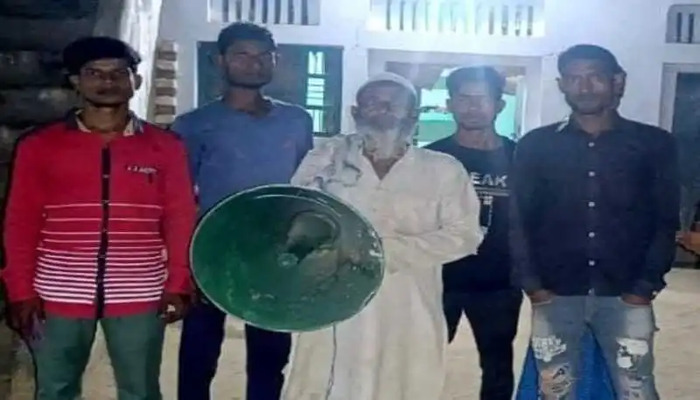
In the Sitapur district of Uttar Pradesh, Police have booked a mosque’s Maulvi and Mutawalli for playing loudspeakers at volumes higher than the prescribed standard. The accused have been identified as Maulvi Abdullah and Mutwalli Babbu Khan.

The FIR was registered on Sunday (December 3) after a mosque located near the Kotwali police station in Sitapur was blaring Azaan on loudspeakers exceeding the prescribed decibel limit despite repeated warnings from the police. Police earlier had asked Maulvi Abdullah and Mutwalli Babbu Khan to operate the loudspeakers under the prescribed decibel limit while blaring Azaan, however, the duo were reluctant to do so. Subsequently, the police registered a suo motu FIR in the matter.

Police station in-charge Sub-Inspector Ashmit Bharti has filed a complaint in the matter. SI Bharti said that he was patrolling in his station’s jurisdiction area on December 3 when he learnt that a mosque nearby was playing sound on loudspeakers beyond the prescribed decibel limit which was causing inconvenience to the local residents.

Abdullah, son of Deen Mohammad, a resident of Sitapur, has been appointed as the Maulvi in this mosque situated close to the police line, and Babu Khan, son of Sartaj, a resident of the same area, has been appointed as the Mutawalli. According to Sub Inspector Ashmit Bharti, both of them had been instructed numerous times to keep the decibel level of the mic and loudspeaker under appropriate limits. However, the duo did not take directions seriously. The police deemed Abdullah and Babbu Khan’s actions to be a breach of the Uttar Pradesh government’s rules and regulations, as well as Supreme Court orders in this regard.

The accused have been charged under Section 188 of the IPC as well as Section 5/6 of the Noise Pollution Regulation and Control Rules 2000. OpIndia has a copy of the FIR. Taking to X, Sitapur Police informed that the Uttar Pradesh Police Department is conducting a 15-day special campaign to remove illegal loudspeakers put in places of worship. So far, 12 loudspeakers have been removed and the volume of 356 mics has been lowered as part of this initiative in the Sitapur district.

“In the last 15 days, in the action against loud loudspeakers in various police station areas, a total of 12 loudspeakers were removed and the volume of 356 was reduced and legal action was taken by registering a case against 02 persons, “Sitapur Police posted.

Gujarat’s Garba declared an Intangible Cultural Heritage by UNESCO

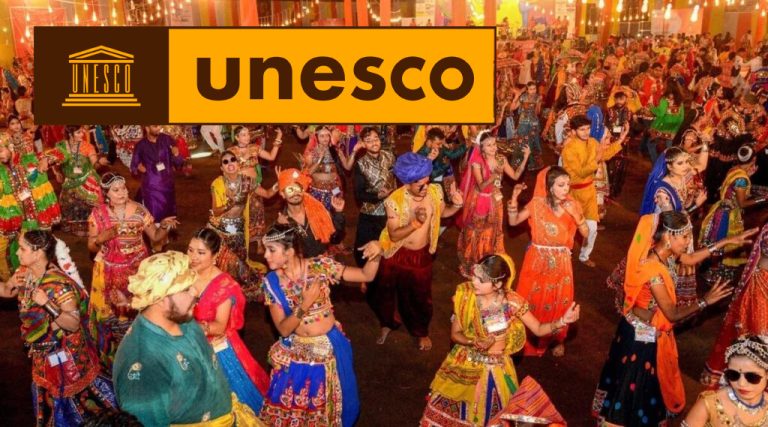
Garba, the famed traditional dance form of Gujarat has been declared as an Intangible Heritage by the United Nations Educational, Scientific and Cultural Organisation.

In a post on social media platform X (formerly Twitter) on Wednesday, UNESCO posted, “New inscription on the Intangible Heritage List: Garba of Gujarat, India. Congratulations!”

The decision was made during the 18th session of the Intergovernmental Committee for the Safeguarding of the Intangible Cultural Heritage, underway at the Cresta Mowana Resort in Kasane, Botswana.

The session, which began on December 4 is scheduled to go on till December 9, according to UNESCO.

Garba is a ritualistic and devotional dance that is performed on the occasion of the Hindu festival of Navaratri.

The dance takes place around a perforated earthenware pot lit with an oil lamp, or an image of the mother goddess Amba.

Participating dancers move around the centre in a counter-clockwise circle, using simple movements while singing and clapping their hands in unison.

The Gujarati dance starts with slow circular movements and the tempo slowly builds up to a frenzied whirling.

The practitioners and bearers of Garba include from the dancers to the musicians, social groups, craftspeople and religious figures involved in the festivities and preparations, according to a citation by UNESCO.

Garba is transmitted across generations in urban and rural areas through practice, performance, imitation, and observation, it said.

Apart from Garba, the Rickshaws and rickshaw painting in Dhaka, Bangladesh; Jamu wellness culture of Indonesia, Songkran in Thailand, the traditional Thai New Year festival, have also become new inscriptions on UNESCO’s Intangible Heritage List, amongst many others.

are some other elements from India on the Lists of Intangible Cultural Heritage.

As of January 2022, a total of 14 Intangible Cultural Heritage (ICH) elements are inscribed on UNESCO’s Representative List of Intangible Cultural Heritage of Humanity.

These include the traditional brass and copper craft of utensil making of the Thatheras of Jandiala Guru in Punjab, the Nawrouz festival, the Kumbh Mela, the Durga Puja of Kolkata, Ramlila and Vedic Chants.

(This news report is published from a syndicated feed. Except for the headline, the content has not been written or edited by OpIndia staff)

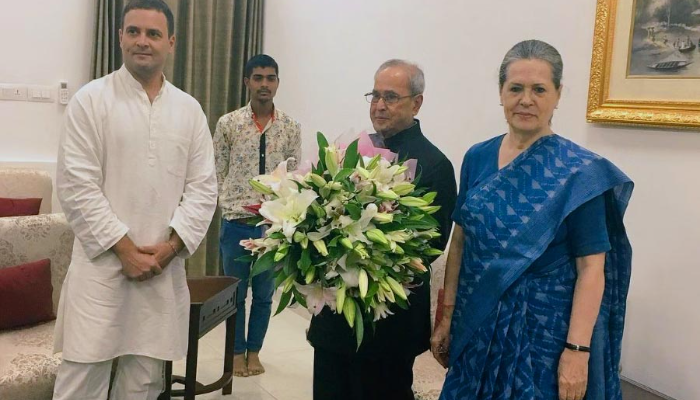
Pranab Mukherjee knew Sonia Gandhi would not make him PM, was upset over ‘politically immature’ Rahul Gandhi for tearing ordinance: Reveals Sharmistha Mukherjee

0

The late former President Pranab Mukherjee’s daughter, Sharmistha Mukherjee revealed that her father was disappointed about the way Rahul Gandhi disregarded an ordinance that had been brought in by the then-UPA (United Progressive Alliance) government in 2013 to spare convicted leaders like Rashtriya Janata Dal supremo Lalu Yadav from disqualification. He also knew that Sonia Gandhi would not make him the PM after renouncing the post in 2004. Sharmistha Mukherjee has made several such revelations in a new book, In Pranab, My Father: A Daughter Remembers, which is based on the diary entries of the former president.

“I’ll tell you what my opinion on the ordinance is. It’s complete nonsense. It should be torn up and thrown away. That is my personal opinion,” Rahul Gandhi declared while tearing the ordinance in a press conference held by another prominent Congress leader Ajay Maken who was defending the decision. The Congress scion had embarrassed the then-Manmohan Singh government hours before the prime minister met with President Barack Obama in Washington DC and publicly rebuked his party’s old guard.

The Congress spokeswoman talked about her new book, “In Pranab, My Father: A Daughter Remembers,” which includes intimate tales and experiences from her father, in an interview with India Today. The Gandhi scion’s observations, according to the now-deceased veteran Congress leader were “politically immature” and she stated that her father realised that the former was “losing the battle of perception.”

She revealed that following the party’s poor performance in the 2014 Lok Sabha elections, Pranab Mukherjee was particularly displeased with Rahul Gandhi’s frequent absences from Parliament. She divulged that her father had mentioned to a journalist during an interview that he did not anticipate being appointed prime minister by Sonia Gandhi.

Sharmistha Mukherjee unveiled, “In 2004 after Sonia Gandhi renounced her claim (of being the Prime Minister), there was media speculation about who would be the Prime Minister. The names of my father and Manmohan Singh were doing the rounds. I asked him excitedly if he would be the Prime Minister. But he said no and that Manmohan Singh would be the Prime Minister.” As per Sharmistha, Pranab Mukherjee told her, ‘No, she will not make me the PM. It’ll be Manmohan Singh,’ indicating that Sonia Gandhi will not make him the PM.

Rahul Gandhi, the current Lok Sabha MP from Wayanad voiced in a Congress Working Committee (CWC) meeting just before the 2009 general election that he was against a coalition government. Sharmistha Mukherjee claimed that her father wrote about this occurrence in his journal. She highlighted, “Baba (Pranab Mukherjee) said he (Rahul Gandhi) should put his thoughts coherently. Rahul Gandhi said he would meet him.” She noted that the UPA government from 2004 to 2014 did not witness much interaction between the two leaders.

Sharmistha Mukherjee remembered a day when her father mocked Rahul Gandhi for wanting to become prime minister. “Rahul Gandhi came to see baba while he was walking in the Mughal Gardens in the morning. He disliked being disturbed while walking or doing puja. But still, he met him. Later, I came to know that Rahul Gandhi was supposed to meet him in the evening.”

She added, “When I told baba about this, he was not amused. He sarcastically said if Rahul Gandhi’s office cannot differentiate between am and pm, how can he become the Prime Minister?”

Pranab Mukherjee served as India’s finance minister and subsequently became minister for External Affairs, Defence, Finance and Commerce. He was India’s 13th president (2012 to 2017). He died on August 31, 2020, at the age of 84. He was awarded India’s highest civilian honour, the Bharat Ratna in 2019 by his successor as president Ram Nath Kovind under the NDA (National Democratic Alliance) government led by Prime Minister Narendra Modi.