Home Blog Page 1577

Delhi Riots 2020: Court summons ED special director over non-appearance of prosecution in PMLA case against Tahir Hussain

0

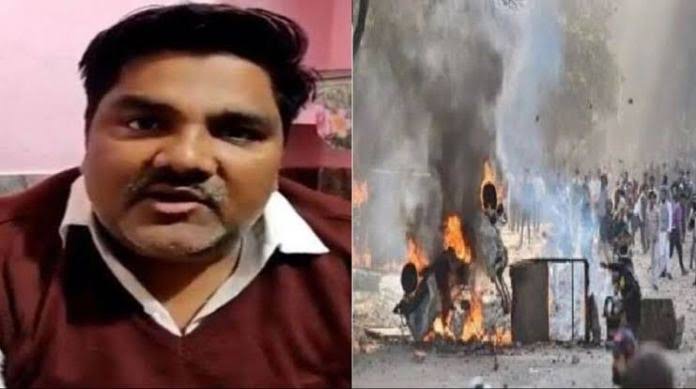
Delhi’s Karkardooma Court on Tuesday summoned the Special Director of Enforcement Directorate (ED) over the non-appearance of Prosecution in a money laundering case against Aam Aadmi Party’s former Councillor Tahir Hussain.

This case is related to the North-East Delhi Riots of 2020.

Additional Sessions Judge (ASJ) Amitabh Rawat summoned the Special Director of ED in person on December 8, 2023. The court said, “Previously also, there was non-appearance on behalf of the prosecution in the Court to file reply and supply of application/judgments/arguments. Though it was stated that such a thing would not happen again, however, it has again happened.”

The court noted that there was a direction to provide an advance copy to the counsel for the accused. However, neither an advance copy has been supplied nor even a reply has been filed in the Court. “In these circumstances, let the Special Director (Directorate of Enforcement) appear in person on the next date on December 8 at 2.00 PM,” ASJ Rawat ordered on December 5, 2023.

The court also directed to produce accused Tahir Hussain physically from Judicial Custody on the next date. The court passed the order while dealing with an application moved on behalf of Tahir Hussain. He had moved an application on November 18, 2023, for which the prosecution had sought time to file a reply.

His counsel advocate Naveen Kumar Malhotra submitted that he has not been provided with any advance copy of the reply of the said application. The court noted that the IO was not present in the court nor was anybody on behalf of the prosecution. “It is already 12.30 PM. The court has waited for around half an hour since 12 PM for somebody to appear on behalf of the prosecution,” the court observed.

On January 11, 2023, the court framed the charges against ex-MCD councillor Tahir Hussain in a money laundering case. He has been charged with the offence of funding the Delhi riots of 2020 through laundered money. He has not pleaded guilty and claimed trial.

The Delhi High Court had dismissed his plea challenging the trial court order framing of charges in a money laundering case. Earlier, the trial court had passed the order on framing of charges against Tahir Hussain and said, “Tahir Hussain, in a conspiracy to fraudulently withdraw money from the accounts of certain companies owned or controlled by him through bogus and malafide transactions with bogus entry operators on the strength of fake bills with him being the beneficiary and with intent putting it to use towards riots, then accused Tahir Hussain would be set to be deriving or obtaining property as a result of criminal activity associated with/relatable to the scheduled offence as the proceeds of crime and will be guilty of money laundering.”

Tahir Hussain is an accused and facing several cases in relation to North East Delhi Violence. Enforcement Directorate (ED) had registered a complaint against him in connection with alleged funding of riots. His counsel had submitted that no case of money laundering was made out against his client. He had argued that the basis of the Enforcement Directorate case is the alleged transaction of Rs. 1.5 crore on fake and bogus invoices.

He argued that in the light of the said transaction, only a case of GST is made out against him for transactions through fake and bogus invoices. According to the Delhi Police, Tahir Hussain is one of the prime accused in connection with North East Delhi Violence held in February 2020.

ED had registered a complaint against him and other accused in the Prevention of Money Laundering ( PMLA) Act.

(This news report is published from a syndicated feed. Except for the headline, the content has not been written or edited by OpIndia staff)
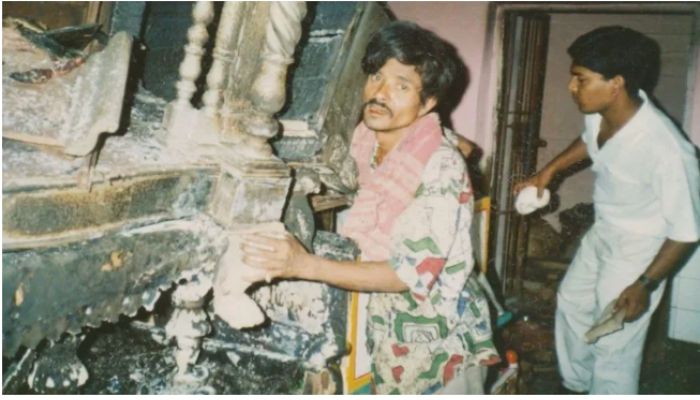
Did you know: 3,500 temples were demolished, and 2,400 Hindu women were raped in Bangladesh on suspicion of Babri demolition 2 years before karseva

December 6, 1992 – This is the date when Hindu organizations mark ‘Shaurya Diwas’. However, on this very day, the anti-Hindu ecosystem tries to make Hindus feel that they have destroyed the place of worship of another religion.

The truth is that that disputed structure was built by Islamic invaders after demolishing the Ram Temple. This same leftist-liberal gang forgets what was happening during this time in Bangladesh when Hindus were struggling for Ram Temple.

When the struggle for the Ram temple was underway in India and mere rumours about the demolition of the disputed Babri structure had spread (long before the demolition itself), violence against Hindus had already started in Bangladesh.

Hindus fought for 5 centuries and obtained the right to the Ram Temple through judicial means, but the Islamist crowd did not follow rules and regulations.

2nd November 1989 – This was the day when symbolically the first stone for the Ram Temple was laid at the disputed site. As soon as the news reached Bangladesh, violence began.

In October 1990, 26 months before the demolition, a rumour was spread by the media of Bangladesh that the disputed Babri structure had been demolished in India.

The media there also played a big role in this. The atmosphere in Bangladesh at that time can be understood from the fact that in 1988, the then-dictatorial President Hussain Muhammad Ershad declared Islam as the official religion of Bangladesh. Now comes the day of 30th October, 1990.

Irshad was addressing a youth conference at ‘Bang Bhawan’ that day. He was saying that while he is there there will be no violence against minorities.

At the same time, a mob of fundamentalist Muslims was attacking Hindu shops. The mob targeted Gauri Math, which was situated to the south of ‘Bang Bhawan’, that is, at a distance of a few kilometres from Ershad’s programme.

Properties belonging to Hindus were being set on fire. The ‘Human Rights Congress for Bangladesh Minorities’ (HRCBM) said in its report that all this happened in front of the police administration.

The report said that the violence against Hindus in Bangladesh in 1989-90 cannot be called a riot because it was carried out by a single party, like in 1964.

The then-ruling parties were also involved in these atrocities. In 1992, Jamaat-e-Islami, an ally of the ruling party BNP (Bangladesh Nationalist Party), was itself involved in the violence.

The report states that in 1989-90 alone, more than 1000 women were raped, hundreds of temples were demolished and houses of Hindu minorities were looted and set on fire.

On the night of 6th December 6, 1992, terror was unleashed on Hindus in Chittagong. 3 children were burnt alive in Qutubdia. After this, violence spread in the capital Dhaka and other parts of the country.

HBCUC (Hindu, Buddhist, Christian Unity Council) visited the ground and prepared a report and ascertained the damage. This report revealed that 28,000 houses, 3,500 temples/religious institutions and 2,500 commercial establishments of Hindus were either damaged or completely demolished.

Not a single Hindu shop was left in Shankhari Bazaar in Old Dhaka. In Sylhet district, the minorities were treated so badly that many of their future generations will remember this. Taufeed Ahmed, the then MP from Bhola and Narul Islam Nahid, Secretary of All Party Alliance, believed that the figures given above were less. Meaning the atrocities were more than this. The women were not only gang-raped but were also forced to walk naked on the streets.

Many underage girls were also raped, including girls as young as 5 years old. In some villages, no woman aged between 5 years and 70 years was left behind.

Taslima Nasreen has also mentioned in her novel ‘Lajja’ how the Dhakeshwari temple was attacked in 1992. The main temple was burnt.

The ‘Natmandir’ built for the entertainment of Gods and Goddesses was also set on fire. Sridam Ghosh located near the temple was also burnt.

Madhav Gudiya Math was also demolished. Jayakali temple was also not left out. Everything was destroyed after entering the premises of Brahmo Samaj.

Shoni Akhara temple was looted in Demra. There was devastation as far as the eye could see in Brihabhadra and Loki Bazaar. Shops selling umbrellas and jewelery were looted on Islampur Road. 300 terrorists together targeted 25 houses. The names of many Hindu shops were replaced with Urdu names.

Writer Taslima Nasreen has mentioned these incidents in ‘Lajja’. She writes how a sweet shop named ‘Moro Chand’ located on Nobabpur Road was demolished. Also, in the temple of Maa Kali located in Rayer Bazar, her statue was broken and thrown on the ground.

The Battali temple in Thathri Bazaar was destroyed and looted. Shops like ‘Kamdhon Poshari’ and ‘Shukla Mishthan Bhandar’ were looted in Nobabpur. A factory of Jatin & Company was set on fire.

Ratan Shankar Bazaar located on Sodorghat Road was destroyed. Similarly, the temple of Nag Devta was reduced to dust. Taslima Nasreen writes that these were not riots, because in a riot both sides fight.

Whereas this was oppression by one community on another community. Have you ever seen those who make a hue and cry about Babri mentioning this destruction? The Islamic mob that created havoc in Bangladesh in 1989-92 and tortured Hindus – why is this not talked about?

Durga Temple located on Lalbagh Road, Girigovardhan Jeetu Temple located on Pushparaj Saha Lane, Raghunath Jiu Akhara located on Harnath Ghosh Lane and Kamrangichar Crematorium located on Lalbagh – all of them were destroyed in 1990 itself.

Thousands of Muslims marched towards the Indian Embassy. The same India had given Independence to Bangladesh. During that time 14 temples were demolished in Sutrapur. 17 Hindus were stabbed in Beltoli Lane of the city.

‘I regret it’: DMK MP Senthilkumar expresses regret in Parliament for ‘Gaumutra’ remark after backlash, asks for the comment to be expunged

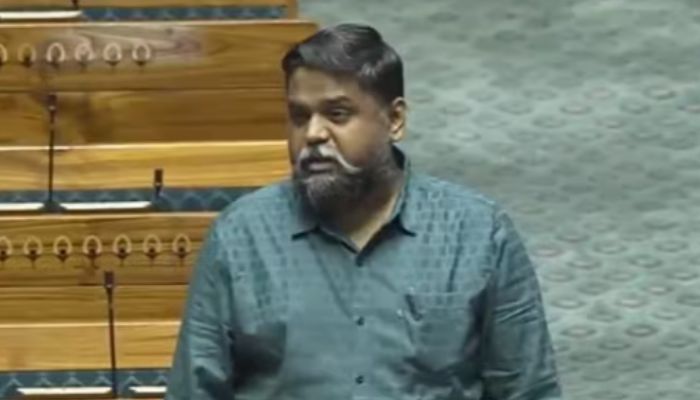
DMK MP Senthilkumar who stroked controversy a day earlier by making a pejorative ‘Gaumutra’ comment in Parliament, expressed regret for what he calls were “inadvertent remarks”. After facing backlash for his controversial statements in Parliament and issuing a half-hearted apology on Twitter, the DMK leader stood in Lok Sabha and withdrew his commentary. He also requested the Lok Sabha speaker to expunge his hurtful comments adding that he apologises if it hurt the sentiments of the people.    

“The statement made by me yesterday inadvertently, if it had hurt the sentiments of the Members and sections of the people, I would like to withdraw it. I request the words to be expunged…I regret it,” the DMK leader was quoted saying by News agency ANI. 

Reacting to his apology, Lok Sabha Chair Kirit Solanki noted that the hateful comments were already expunged from the House proceedings. 

Meanwhile, earlier on Tuesday (5th December), hours after throwing the Gaumutra jibe at the Hindi heartland states in Lok Sabha, DMK MP Senthil Kumar had made a half-hearted apology for his comments. Taking to X, he claimed that he did not use the term with ‘any intent’.

He tweeted, “Commenting on the results of the five recent state assembly elections, I have used a word in an inappropriate way. Not using that term with any intent, I apologize for sending the wrong meaning across.”

Pertinent to note that minutes after posting this lame apology, the DMK MP from Dharmapuri, Senthil Kumar was seen brazening his remarks out before media channels. 

When asked about what he meant by Gaumutra states, Senthil Kumar said, “See you look at the statement as such and then you come into things. I said they are very good at election manoeuvring. They are very good at where their strength is. They are good in the Hindi heartland. They are good in the Gaumutra states. But they cannot enter into four southern states because our principles and ideologies are different. So it is just basically meant to make an ideological statement about what they are good at and where we are. It is always said that unity in diversity is what we look at.”

Notably, the DMK leader has a history of taking Gaumutra jibe in the parliament house. He also cited that there was no outrage on the last occasion when he did so. He then used this argument to support his current insensitive remarks for which he has now expressed regret after facing massive backlash for his Hinduphobic remark. 

Further advancing in support of his statement, Senthil Kumar tried to give it an ideological cover by saying that the Gaumutra term (meaning cow’s urine) used by him has nothing to do with cows. 

He said, “I am not saying anything related to cows. It is only the principles and the ideology which you say. Gaumutra doesn’t translate into a cow. It doesn’t just translate into a sacred animal thing which people are saying. There is much more to it. There is a much more scientific and radical thing to it. It is not just what people want to interpret certainly. It is not the BJP that has made a thing out of it. Because there are other people in the house. It has got nothing to do with the alliance partners and the election results in the Hindi states. Elections are fought on certain principles and ideologies.”

A repeat offense of ‘deliberate’ utterance of ‘Gaumutra’ jibe popularised by Pulwama terrorists to dehumanise and mock Hindus

Evidently, on 5th December, the DMK MP from Dharmapuri Senthil Kumar made the pejorative ‘gaumutra’ remark to mock the Hindi-speaking states in the Northern part of India. While addressing the Parliament on ‘The Jammu and Kashmir Reorganisation (Amendment) Bill 2023’, the DMK leader referred to states in the Hindi heartland as “Gaumutra states”. 

He said, “The people of this country should think that the power of this BJP is only winning elections mainly in the heartland states of Hindi, what we generally call as the ‘Gaumutra states’.”

Previously, in February 2022, he mocked the BJP government by making the Hinduphobic ‘gaumutra’ comment in the parliament. In his speech on the Motion of Thanks to the President, Senthilkumar said that if the government at all wants to implement the National Education Policy, it should do it in their ‘Gaumutra’ states.

Furious over the execution of the National Education Policy in the state of Tamil Nadu, he had said, “According to NEP, gross enrollment ratio has to be 50% which Tamil Nadu has achieved long ago. If they want to implement this policy, they should implement the Dravidian model for the development of the country. Why is their policy being thrust upon us? We reject it. If they want to implement it, they should do it in their Gaumutra States.”

It is worth noting that the ‘Gaumutra’ jibe has been used by Islamists and their apologists as a racist, derogatory slur against Hindus. The Pulwama terrorist Adil Ahmed Dar had also said that he killed the CRPF soldiers to kill those who ‘drink cow urine’, to mock Indians, especially Hindus. 

In 2019, a Pakistan-backed Jaish-e-Muhammad terrorist in a suicide attack had killed as many as 40 CRPF soldiers in Pulwama. Following the attack, a video was released in which the terrorist Ahmed Dhar could be heard saying he wanted to punish and kill the ‘cow urine drinkers’ in the name of Allah.

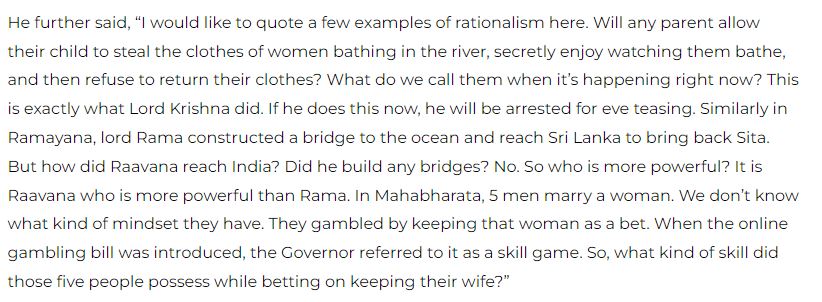
Earlier in May, the same MP had made derogatory remarks on Hindu gods and beliefs. Speaking at a Dravidar Viduthalai Kazhaagam, he had made derogatory comments on Krishna, Mahabharat, etc. He had also said that the people in BJP-ruled states have no brain.

Senthil Kumar’s comments on Hindu gods in May 2023

Furthermore, apart from the Hinduphobic ‘Gaumutra’ remarks, several old videos of DMK MP Senthilkumar have also resurfaced on the internet in which he could be heard mocking and abusing Hindu deities Shri Krishna and Shri Ram, Hindu epics Mahabharat and Ramayana as well as Hindu rituals. 

Love Jihad in UP: Dalit girl kidnapped, compelled to eat beef and converted to Islam by Shoaib

0

A case of love jihad has come to light in the Hardoi district of Uttar Pradesh where a man named Shoaib is accused of the forceful conversion of an 18-year-old Dalit girl to Islam. Her father disclosed that the victim suffered from sexual abuse and was force-fed beef. On 4 December, authorities informed that a case had been registered and an investigation was underway. Notably, women are also named among the perpetrators.

The instance is reportedly from a village in the Sursa police station neighbourhood of the Hardoi district. On 17 June the accused who is a resident of the Firozabad district abducted the girl from Sonepat. The family members searched for her but failed to find their daughter. Her father works in a factory in the Sonepat district of Haryana to support the family.

However, on 3 December she returned to her Hardoi hamlet on her own and revealed that the offender took her to Firozabad where she was compelled to embrace Islam and consume beef. Furthermore, she was forced to marry him after which he sexually violated her. Shoaib and his entire family subjected her to both physical and mental torture. The girl discovered an opportunity on 3 December and went to her aunt’s (mother’s sister) house first before returning to her village. She then narrated the entire ordeal to her family.

The culprit and his family began looking when they couldn’t find her inside the house and arrived at Hardoi. After a while, they forcefully started to take the teenager away from her home which led to a dispute between the two sides. The locals called the police on 112 to complain about the same. The cops immediately reached the location and arrested three persons who were arguing while other individuals fled from there after they saw them.

The police launched a case against Shoaib, Najma Khan, Aqib, Reshma and Mehraj along with five other unidentified people on the complaint of the victim under various sections of the Indian Penal Code, Scheduled Castes and the Scheduled Tribes (Prevention of Atrocities) Act and the Uttar Pradesh Law Against Religious Conversion Act. Three offenders are already in police custody.

According to Nripendra Singh, Additional Superintendent of Police of Hardoi the matter is being probed and appropriate legal action would be taken taken. He added that the police at present are searching for the absconding offenders.

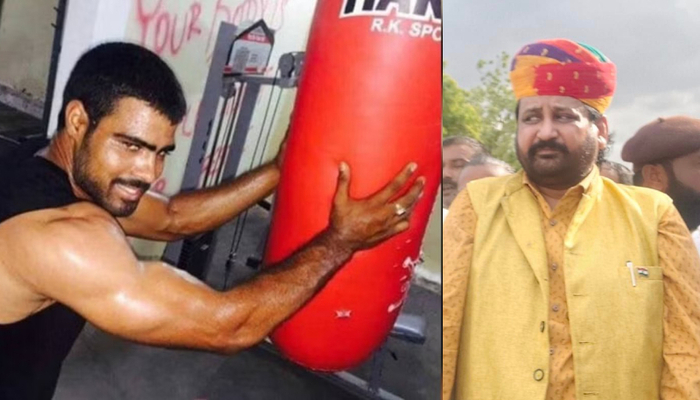
National level athlete to Lawrence Bishnoi’s ‘manager’: Who is gangster Sampat Nehra who killed Rajput Karni Sena leader Sukhdev Singh Gogamedi

On Tuesday (December 5) Rashtriya Rajput Karni Sena leader Sukhdev Singh Gogamedi was shot dead by unknown assailants in Rajasthan’s Jaipur. After the killing, the Rajput community called a ‘Bandh’ in the state. It has now been reported that gangster Sampat Nehra who is currently lodged in Bathinda Jail masterminded the murder plot. Sampat Nehra is said to be an ally of gangster Lawrence Bishnoi. Reportedly, around ten months ago, Rajasthan Police had received information regarding conspiracy to kill Sukhdev Singh Gogamedi.

Once a national-level decathlon athlete, Sampat Nehra turned to the criminal world and became a dreaded gangster. During his college days, Nehra met Lawrence Bishnoi and the duo soon became good friends. It is said that after becoming a gangster, Bishnoi blindly trusted Nehra. He is seen as Lawrence Bishnoi’s top henchman. Sampat Nehra has been involved in numerous gang wars, weapon supply, and carrying out Hawala transactions.

Much like Lawrence Bishnoi, Nehra also controls a crime ring from behind bars. Sampat Nehra was tasked with finding fresh recruits for the Lawrence Bishroi gang and providing them with firearms. In a certain sense, Sampat Nehra is the ‘ manager’ of the Bishnoi gang. When he was released from prison he would commit crimes. Subsequently, he changed his name and fled to South India. He was apprehended for plotting to murder actor Salman Khan, whom Lawrence Bishnoi had earlier threatened multiple times.

Sampat Nehra is from Raigarh, Rajasthan, and his father, Ramchander, was an ASI in the Chandigarh Police. His youth was spent in Punjab. At Punjab University, he met Lawrence Bishnoi. In DAV College, he was Bishnoi’s junior. He won silver in the Decathlon Hurdle Race at the national level. Lawrence Bishnoi had founded a group in college called the Student Organisation of Punjab University (SOPU) which was headed by Sampat Nehra. He was arrested for the first time in 2016 for car robbery.

Notably, many extortion-related cases have been filed against Sampat Nehra. There are 25 cases registered against him, of which 12 are murder cases. He has a reward of Rs 2 lakh on him. Moreover, Nehra’s criminal activities were primarily centred in three states: Punjab, Rajasthan, and Haryana. Sampat Nehra also reconnoitred Salman Khan’s residence in Mumbai. It is said that Nehra had tasked Lawrence Bishnoi with assassinating Salman Khan. He also gave Rs 4 lakh to buy the rifle which would be used to kill the actor. 

Nehra was staying in Telangana under a false identity while conspiring to kill Salman Khan, however, before he could execute his plan, Haryana Police arrested him. Lawrence Bishnoi had threatened a bookie saying “I will chew you raw,” and his name had also surfaced in connection with the murder of Punjabi rapper/singer Sidhu Moosewala. In these cases, Delhi Police apprehended and questioned Sampat Nehra. It is said that some other Punjabi singers are also on the target of the Bishnoi gang. Sampat Nehra was previously imprisoned at Delhi’s Mandoli jail, where he said there was a threat to his life, before being transferred to Tihar.

Several other criminals belonging to the Lawrence Bishnoi gang are also imprisoned at Bathinda. In addition to the twelve murders, Nehra also has six cases of culpable homicide and five cases of dacoity registered against him. Moreover, three extortion cases have been filed against him. Sampat Nehra, arrested from Cyberabad, is also wanted in the murder of history-sheeter Ajay Jaitpura in Sadulpura court premises of Rajasthan on January 17, 2018. It took several days and painstaking efforts for the Haryana Police to arrest Nehra.

Haryana Police had to camp in Telangana for 15 days to arrest Nehra. The operation lasted three days. Nehra had taken a flat in Hyderabad with two MBA graduates. He has also admitted that he was involved with eight attempted murders. He was expanding his network in Gurugram by establishing a base in Manesar. He had banded up with Anil Chippi and the Kala Jatheri gang. He had plotted to depose the Kushal and Amit Dagar gang, who wielded power in Gurugram.

Sampat Nehra had pleaded in court five years ago requesting a bulletproof jacket for himself. He has stated that rival gangs may assassinate him. The court had directed the police to ensure security measures for him. When wrestler Suhail Kumar was imprisoned in Mandoli in a murder case, Sampat Nehra had claimed that his life was in danger. He was relocated at that point. Now he’s back in the news for the assassination of Karni Sena President Sukhdev Singh Gogamedi.

The police have detained Rohit Rathod, a resident of Jhotwara, Jaipur, in this case. He is originally from Makrana, Nagaur. Nitin Fauji, of Mahendragarh, Haryana, was also arrested. Protests are also going on in Barmer, Churu, and Rajsamand, with marketplaces being closed. As reported earlier, after breaking into Sukhdev Singh Gogamedi’s house in Shyam Nagar, Janpath and conversing with him, the assailants abruptly fired 17 shots in 20 seconds, inflicting fatal wounds on the Rajput leader. Sukhdev Singh was rushed to Metro Mass Hospital in Jaipur following the incident. However, he was declared dead by doctors at the hospital. Along with Sukhdev Singh, one of his associates has also received critical gunshot wounds.

BJP lodges police complaint against TMC leaders for insulting PM Narendra Modi and Home Minister Amit Shah

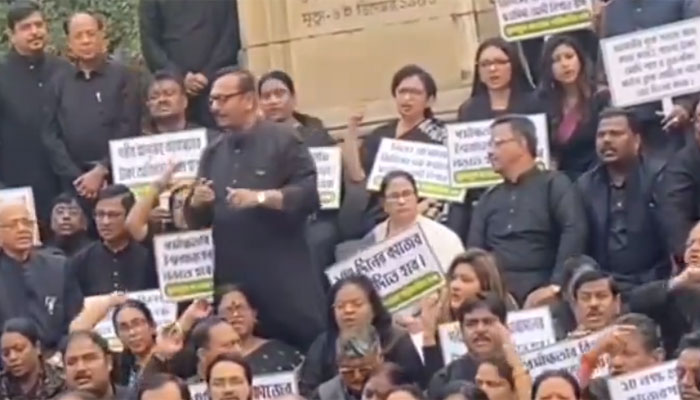
On 5th December, Bharatiya Janata Party (BJP) leader Suvendhu Adhikari said in a post on X that two FIRs had been registered by BJP’s Malati Rava Roy and Sikha Chatterjee for insulting Prime Minister Narendra Modi and Home Minister Amit Shah.

He said, “The TMC thieves had the audacity to try and smear Hon’ble PM’s & Hon’ble HM’s reputation by hurling all kinds of abuses and engaging in name-calling within the WB Assembly Premises. Two FIRs have been registered by Smt. Malati Rava Roy & Smt. Sikha Chatterjee in this regard. I am sure Mamata Police won’t lift a finger and take any action to bring these miscreants to justice. I would like to assure all these offenders, one day all of you will be taken to the task for this disrespectful behavior. Just wait for the day. Till then remember one thing; when you spit at the moon, it falls back on your face!” (sic)

In her complaint, Roy said that on 20th November, TMC leaders were sitting on the premises of the Assembly House and protesting against the Central Government. During the protest, Ashima Patra and Mosaraf Hussain of TMC allegedly raised derogatory slogans against PM Modi and HM Shah. She added that other MLAs also joined them in raising the slogans. Roy named 60 MLAs in her complaint. She further alleged that the ‘criminal activity was conspired by Aroop Biswas, Janab Firhad Hakim and Chandrima Bhattacharya’.

Sikha Chatterjee filed a similar complaint against the TMC leaders. Adhikari also shared video of the derogatory slogans raised by the TMC leaders.

Complaint filed against BJP leaders by TMC

On 4th December, State Minister Chandrima Bhattacharya filed complaints against BJP leaders for wearing T-shirts with alleged derogatory remarks against West Bengal Chief Minister Mamata Banerjee. She claimed that BJP lawmakers undermined the dignity of West Bengal and its residents.

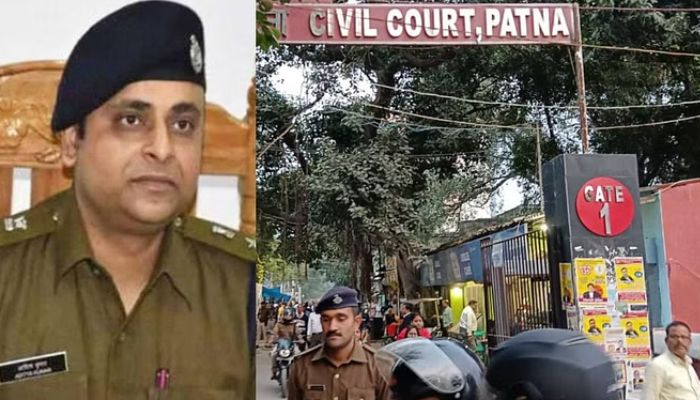
Bihar: IPS officer surrenders in case for creating fake WhatsApp profile of Chief Justice of Patna HC and influencing criminal proceedings against him

0

On Tuesday (5th December), absconding IPS officer and Former Gaya SSP, Aditya Kumar surrendered in front of a Patna court. Notably, he was absconding for more than 7 months after a case was registered against him for his alleged involvement with or being negligent against the liquor mafia. The 2011-batch IPS officer Kumar is also accused of creating a fake WhatsApp profile of a former Patna High Court Chief Justice to influence criminal proceedings against him and seek favourable postings. 

Kumar surrendered before the Patna court after his pre-arrest bail plea was denied by the Supreme Court. The apex court had given him a two-week ultimatum to surrender and it was about to expire on 6th December. As a result, he finally surrendered in the court of ACJM-1 in Patna Civil Court on 5th December. After the surrender, his lawyer applied for bail, but the court rejected this demand. He was then taken into judicial custody and sent to jail till 18th December.

Kumar was accused of creating a fake WhatsApp profile for Bihar DGP to drop the case against him

Notably, on 15th October 2022, the Economic Offenses Unit registered a case against him at Fatehpur police station in Gaya for negligence against the liquor mafia. Consequently, the police headquarters suspended him. 

It is alleged that to get the case closed against him and get a better posting, Kumar’s accomplice Abhishek Aggarwal created a fake profile of the Chief Justice of Patna High Court and contacted the then DGP of Bihar. 

As per reports, Aditya Kumar then allegedly duped the then Bihar DGP SK Singhal through the fake WhatsApp account that had the photograph of former Chief Justice Sanjay Karol as the profile picture. It is further alleged that his friend Abhishek contacted the Bihar DGP from the WhatsApp number and asked him to drop the case against Kumar in connection with his alleged involvement with liquor mafias and sought favourable postings

Earlier, the Supreme Court bench rejected Kumar’s bail plea after the lower courts denied him bail. The apex court had observed that the larger issue involving the IPS officer and two other judicial officers could not be neglected and directed Kumar to surrender within two weeks.

The order had said, “This Court believes that the petitioner is not entitled to the benefit of anticipatory bail, mainly on account of the seriousness and gravity of the alleged offences and apparent non-cooperation.” 

Additionally, the apex court ordered the Economic Offence Wing (EOW) of Bihar Police to submit the entire case diary of the criminal case in a sealed cover on 12th December, the next date of the hearing in the case.

It is important to note that Bihar Police, working under the Home Department of Chief Minister Nitish Kumar couldn’t track him down for more than seven months despite the victims being from high-profile backgrounds, i.e., a Chief Justice of Patna High Court and DGP of Bihar Police. 

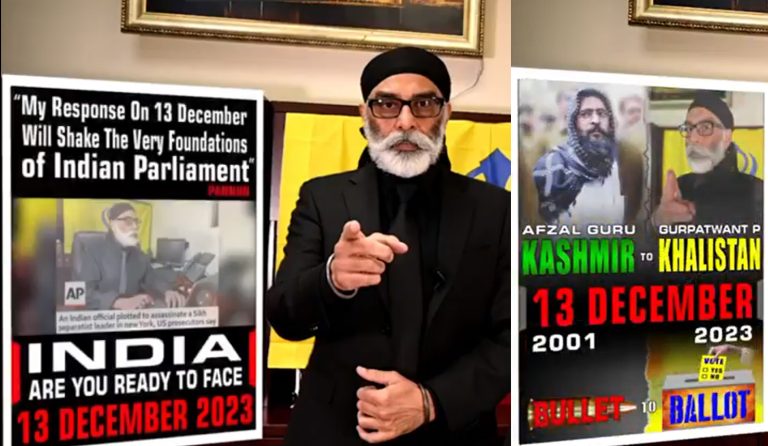
US-protected Khalistani terrorist Pannun issues another warning to India, threatens to attack Parliament and invokes Afzal Guru

Pro-Khalistan separatist Gurpatwant Singh Pannun has released a fresh video to threaten India with a ghastly terror attack on the Indian Parliament on or before 13th December. This ominous date coincides with the 22nd anniversary of the 2001 terrorist attack orchestrated by Mohammad Afzal Guru that rocked the Parliament.

Afzal Guru received a death sentence for his role in the deadly assault which resulted in the deaths of six Delhi Police personnel, two Parliament Security Service personnel and a gardener while wounding eighteen other individuals. All five assailants were eliminated by security forces in a gunfire after the terror attack which was covered by TV channels.

Pannun who is a leader of the banned Sikhs for Justice terror group alleged that an attempt by Indian authorities was made to assassinate him, however, the grand scheme fell through, in the published footage which also featured a poster of Afzal Guru with the caption ‘Delhi Banega Khalistan’ (Delhi will become Khalistan). He further warned that by no later than 13 December he would reply by launching an assault on the Indian Parliament and shake its foundation.

Gurpatwant Singh Pannun’s threat comes at the same time as the Winter Session of Parliament which started on 5 December and would last until 22 of the same month. The threats issued through the menacing clip have put security officials on high alert, raising concerns about possible disruptions during the current session.

Security authorities unveiled that the Khalistanli radical is possibly being directed by Pakistan’s intelligence agency ISI’s K-2 (Kashmir-Khalistan) department to advance its anti-India agenda. This has exacerbated the likelihood that Indian security agencies now have to deal with the country’s two infamous adversaries simultaneously which are operating as a team.

The US protects Khalistani extremists on its soil

Notably, the US Justice Department has alleged that India plotted to kill Pannun in the US which was foiled. An Indian national named Nikhil Gupta was charged by the United States Justice Department on 29 November (local time) for his alleged role in the alleged plot to kill US-based Khalistani terrorist Gurpatwant Singh Pannun in New York. The “assassination attempt” was allegedly thwarted by the country’s agencies. According to the indictment, the accused was approached by an unidentified Indian government employee to arrange for a local hitman to assassinate Pannun.

Gupta is being prosecuted with murder for hire, a crime which carries a potential 10-year sentence. The Justice Department mentioned that the assassination plot was directed from India by an Indian government employee identified in the documents as CC-1. Nikhil Gupta is also suspected of being involved in the worldwide trafficking of guns and drugs. Moreover, it was purported that he tried to employ an undercover Drug Enforcement Administration (DEA) agent as a hitman.

New Delhi responded to the accusation and asserted that it was against government policy and was concerned that one of its officials was associated with the conspiracy. It also disassociated itself from the same. Ministry of External Affairs spokesman Arindam Bagchi noted, “We cannot share any further information on such security matters. As regards the case against an individual that has been filed in a US court allegedly linking him to an Indian official, this is a matter of concern. We have said and let me reiterate that this is contrary to government policy.”

The official added, “The nexus between organised crime, trafficking, gun running and extremists at an international level is a serious issue for law enforcement agencies and organisations to consider and it is precisely for that reason that a high-level committee has been constituted and we will obviously be guided by its results.”

Afterwards, the Indian government formed a high-level inquiry committee to probe into “all the relevant aspects of the matter.” Arindam Bagchi informed, “We have already said that during the course of discussions with the US on bilateral security cooperation, the US side shared some inputs pertaining to nexus between organised criminals, gun runners, terrorists and others.”

He further continued, “We had also indicated that India takes such inputs seriously since they impinge on our national security interests as well, and relevant departments were already examining the issue. In this context, it is informed that on November 18, the Government of India constituted a high-level enquiry committee to look into all the relevant aspects of the matter.” He declared that India would implement the appropriate follow-up measures in light of the committee’s conclusions.

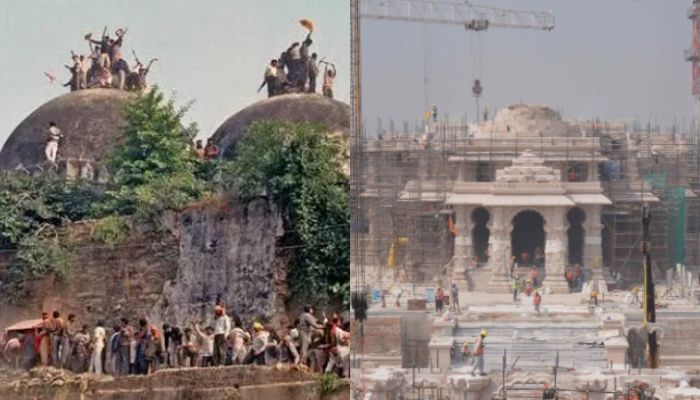
31 years of Babri demolition: Remembering the Karsevaks who razed the face of adharma to the ground to pave the way for a Bhavya Ram Mandir

Saryu Mata (the Holy river in Ayodhya) bears witness to the events and incidents of Ramayana in the Treta Yug to the reclamation of the Bhavya Ram Mandir in Ayodhya in the present day. She was the source for Bhagwan Ram, a reincarnation of Bhagwan Vishnu, and his devotees in Ayodhya to return to Vishnu Ji’s abode Vaikunth Dham.

On 2nd November 1990, once again, albeit in shocking circumstances, the souls of Shri Ram’s devotees departed for Vaikunth right from the banks of Saryu. The Mulayam Singh-led UP Police had opened fire on a large group of kar sevaks who had come to Ayodhya to demand that the Babri structure be demolished and Ram Mandir be reconstructed.

The Kothari brothers – Ram (23) and Sharad (20) Kothari – were the first ones to mount a Saffron flag atop the Babri controversial structure. A report filed on 3rd November 1990 in Jansatta said that an unidentified kar sevak from Sriganganagar, Rajasthan fell after being shot and as he fell, he wrote “Sitaram” on the road with his blood.

It remains a mystery whether the Karsevak had written his name or was his devotion and adherence towards Lord Ram that made him write “Sitaram” in his own blood.

The report mentioned that even after Karsevak fell to the ground, the CRPF personnel shot seven bullets into his skull.

As per official figures, 16 kar sevaks were killed in cold blood. But actual numbers are believed to be much higher. Their only crime was that they staged peaceful demonstrations by expressing their religious reverence and singing bhajans.

Little did they know that their act would send a wave across the country that would come right back to hit that very spot on 6th December 1992 for nothing and no one could soil the spirit of Ram Bhakts.

25 months later, on 6th December 1992, Hindus reminded the world once again that they hadn’t remotely been deterred in their fight for divine justice.

The Vishwa Hindu Parishad organised a kar seva in Ayodhya in 1992 and an area was marked for worship on 6th December. Kar sevaks from across the country began to pour into Ayodhya in large numbers even as security personnel were deployed in equally large numbers.

According to Mahant Brajmohan Das, who witnessed the demolition of the Babri structure on 6th December 1992, the birthplace of Shri Ram was filled with joy and enthusiasm. “Only those who were present in Ayodhya on that day can explain what God’s miracles and powers are,” he said.

All arrangements including food, accommodation et cetera were made for thousands of devotees. “There seemed to be complete Ram Rajya in Ayodhya,” he said. Despite what ensued in 1990, the number of karsevaks visiting Ayodhya in 1992 and security personnel deployed was so large that the Mahant said that if the massacre was repeated, no one would come out alive.

Finally, on 6th December 1992, a kar sevak entered an empty bus belonging to the security forces near Hanumangarhi and raced it towards the Babri structure shattering all barricades and paving the way for kar sevaks who followed.

Call it divine intervention, the symbol of tyranny, savagery and bigotry was razed to dust that day; this formed the cornerstone of the Ram Janmabhoomi movement. Kar sevaks cut the barbed wire barricading the Babri structure and climbed atop it.

The three worn-out tombs of the Babri structure were brought down in less than 6 hours amid Holy chants of Shri Ram Jai Ram Jai Jai Ram. This was the first line of treatment for the wounded Hindu civilisation, all thanks and namans (bowing down) to the kar sevaks who risked their lives once again.

Documentaries were made by the mainstream media to blot the image of kar sevaks, nat up sounds of Jai Shri Ram were played by the ecosystem of the day to push a narrative to demonise the Holy chant.

Even as the Hindus, the kar sevaks removed the Babri structure from the face of the earth – as should be the case with every symbol of adharma (roughly translating to injustice) – we paid the price for it in the war of narratives that were to come.

Hindus displayed to the world that when justice is delayed and denied when a civilisation seeking justice is brutalised and demonised, we will come to our own defence.

Come to think of it, our patience knows no bounds but when we are pushed to the edge and tested, we end adharma once and for all – be it slaying Ravan in Treta Yug, demolishing Babur’s Babri structure in 1992 or bulldozing the mafia to the ground today.

31 years on, every year on this day a certain ecosystem mourns the physical death of Babri structure while the civilisational wounds of a devout Hindu continue to be healed. On 22nd January 2024, Ram Lalla’s Pran Pratishtha will be performed and He will finally be resting comfortably watching over us from His Bhavya Mandir.

On 6th December 2023, we must remember and celebrate the men and women across the nation who enabled this movement and reignited hope in Hindus. They taught us that bullets and barricades can’t kill our souls. We must dare to demolish injustice to the ground every time it pops its ugly face and pave the way for justice.

Unknown gunmen strike again in Pakistan: Hafiz Saeed’s aide Hanzla Adnan, who plotted the Udhampur attack, killed in Karachi

0

On the intervening night of 2nd and 3rd December, Lashkar-e-Taiba terrorist Hanzla Adnan was shot by unknown gunmen near his residence in Karachi Pakistan. He was then secretly taken to a hospital in Karachi by the Pakistani Army, where he succumbed to his injuries and died on Tuesday (5th December).

Adnan Ahmed alias Hanzla Adnan was very close to Lashkar-e-Taiba Chief Hafiz. On the night of 2-3 December, unknown assailants carried out the attack in which Hanzla Adnan received 4 bullets. Adnan was attacked amid tight security outside his safe house. After being shot, he was secretly admitted to a hospital in Karachi by the Pakistani army. He died on 5th December. This is considered a big setback for Hafiz Saeed. Hanzla Adnan had recently shifted his operation base from Rawalpindi to Karachi. 

Hanzla Adnan was the key conspirator in the Udhampur attack of 2015 wherein a BSF (Border Security Force) convoy was targeted by the LeT terrorists. 2 BSF soldiers were killed in this attack while 13 other jawans were injured. The attack was investigated by the NIA and a charge sheet was filed on 6th August 2015.

Hanzla Adnan was also the mastermind behind the 2016 attack on a CRPF convoy in Pampor. In this attack, 8 soldiers were martyred, while 22 soldiers were injured. In both these attacks, Hanzla – sitting in Pakistan – was giving instructions to the terrorists. Adnan was also called Lashkar-e-Taiba’s Communication Expert. 

Hanzla Adnan played a big role in carrying out the suicide attack in the Srinagar and Pulwama areas of Jammu and Kashmir. Hen was often deputed to the Lashkar camp in PoK to influence and train the newly recruited terrorists. ISI and Pakistani Army used to send Hanzla Adnan to train especially those terrorists who were about to infiltrate into India and carry out terrorist attacks.

In the last few months, there have been multiple such incidents in Pakistan wherein unknown gunmen have killed terrorists in a sudden attack. Many terrorists from different terror outfits have been eliminated in such attacks.