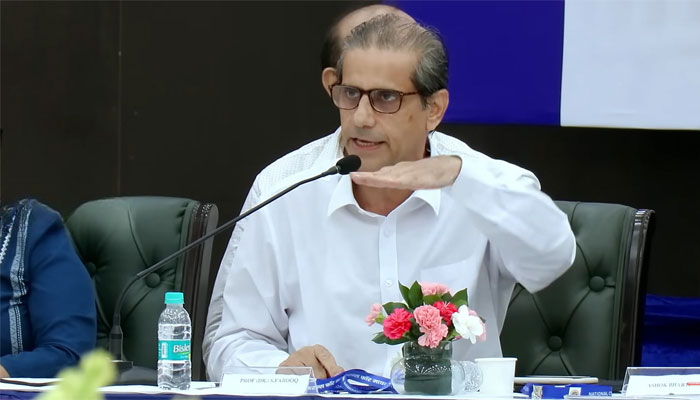
On 8th August, the National Conference Of Minority organised National Round Table Discussion on UCC and Atrocities on Minorities at the Constitution Club in New Delhi. Former Chief Minister of Jammu & Kashmir Farooq Abdullah, Congress leader Udit Raj, Controversial Lok Sabha MPs Badruddin Ajmal from Assam and Simranjeet Singh Mann from Punjab, among others, were speakers.
Among the list, the infamous advocate Mehmood Pracha’s video is going viral on social media, where he accused Prime Minister Narendra Modi, Home Minister Amit Shah, Rashtriya Swayamsewak Sangh and other Hindu outfits of riots, orchestrating Manipur and Nuh violence and more.
Who is this lawyer filled with so much hatred and igniting 30Cr Muslims to March against our beloved leaders @narendramodi & @AmitShah ?
Are Hindus ready or remotely ready to take on such radical mindsets?
YouTuber Anas Hashmi uploaded videos of the event. In the 7-minute video, he called those who directly or indirectly praise Prime Minister [Narendra Modi] and Home Minister [Amit Shah] or go to meet them should be boycotted. He further called such people “traitors”.
He then accused Rashtriya Swayam Sewak Sangh activists of planning to remove the constitution and impose the rules as told in the Hindu text Manusmriti. As PM and HM have been members of RSS, Parcha insinuated that the Prime Minister and Home Minister, two of the highest chairs in the country, are “planning to remove the constitution”. Parcha said, “What will you achieve by meeting such people? You can only bow to them and seek guidance on how to betray your community.”
Parcha accused PM and HM (RSS) of hijacking all the institutions. He also accused them of hijacking top leadership of SC/ST, minorities [Muslims] and OBCs. “We have to identify the traitors among us; otherwise, we will not be able to progress,” he said. Parcha added, “Identify the traitors. Identify those who claim Himanta Biswa Sarma is a good chief minister. Identify them, punish them and socially boycott them.”
Parcha then tabled his plan to go after RSS activists. He provoked the attendees and his followers to identify the members of RSS on the grassroots level, especially those who have progressed financially. He said, “Identify them and file cases of corruption against them. Question the authorities on how these people got rich”.
He further urged the top leadership of different communities to come forward and protest against the government. He said, “To save the constitution, you should be prepared to face a lathi charge and jail time. The leaders, MPs, and MLAs should come forward as people expect us to be in front of them. If someone believes he is a leader, he should be ready to face a lathi charge, bullets and jail time”.
Parcha accused PM and HM of being “cowards” as they are not allowing Army to get back 2,000 KM of land taken away by China. He said, “Either PM gets back the land or resigns from his post. We will march and get back the land. This should be our first agenda.”
Parcha accused PM and HM of being directly involved in the Manipur violence. He provoked his followers to Gherao PM and HM on the Manipur issue. He claimed RSS has two affiliates in Manipur named Arambai Tenggol and Meitei Leepun that are behind the unrest in the state. He accused Home Minister Amit Shah and Manipur CM N Biren Singh of involvement with these organisations. He then made one of the most bizarre statements that came out of his mouth. He accused RSS and BJP of being hand-in-hand with Pakistan and China to weaken the country’s border areas.
He then accused RSS and BJP of Nuh violence and the Delhi 2020 riots. He called for taking action against HM Shah to the level he gets arrested as he is “the main mastermind behind all the incidents in Manipur”. Parcha claimed HM Shah went to Manipur to ensure the “Gujarat Model” was being implemented in the state. He appeared to have hinted towards the Gujarat Riots of 2002 by the Gujarat model. The left-liberal has accused PM Modi, HM Shah and other RSS, BJP, VHP and Bajrang Dal leaders of the riots. Contrary to their claims, a Muslim mob ignited the riots after 59 Hindu Karsewaks were burnt alive in Godhara.
Mehmood Pracha was featured in ISIS magazine.
Mehmood Pracha, who had called for Muslims to take up arms, was featured as the poster boy for a pro-ISIS media outlet and is accused of spreading communal hatred in the past.
As India went through communal turmoil during the anti-Hindu riots earlier in February 2020, a publication titled ‘Voice of Hind’ issued by Al-Qitaal Media Center and Junudul Khilafah al-Hind had featured Mahmood Pracha on its cover page. The cover was titled “So, Muslims, where are you going?”. It was featured with the subtitle “A Call to the Muslims of India”.
The magazine had praised slain terrorists in Kashmir. It also urged the Muslims to reject the idea of an Indian nation-state and fight for the ‘caliphate’ instead.
Mehmood Pracha had called for ‘Muslims and Dalits to acquire Arms License”
In addition to this, Mehmood Pracha has also been accused of exhorting Muslims to take up arms. In a press conference last year, Shia cleric Maulana Kalbe Jawad and Mehmood Paracha announced that they would be setting up a camp in Lucknow to teach Muslims and Dalits about the ‘right to self-defence and how to apply for a firearm licence.
Mahmood Pracha had cited the incidents of mob lynchings and the Sonbhadra massacre as reasons for conducting the camp. He said those events would not have occurred if the victims had legal firearms to defend themselves. They were basically planning to raise an armed militia to combat ‘mob lynchings’, using licenced weapons. Later, Mahmood Paracha was seen holding that training camp inside a Lucknow Mosque, where he was training Muslims about how to fill out forms for licences and acquire firearms, even though an FIR had been registered against him for his incendiary speech.
In 2020, the special cell of the Delhi Police conducted raids at Pracha’s office in relation to the Anti-Hindu Delhi riots case.
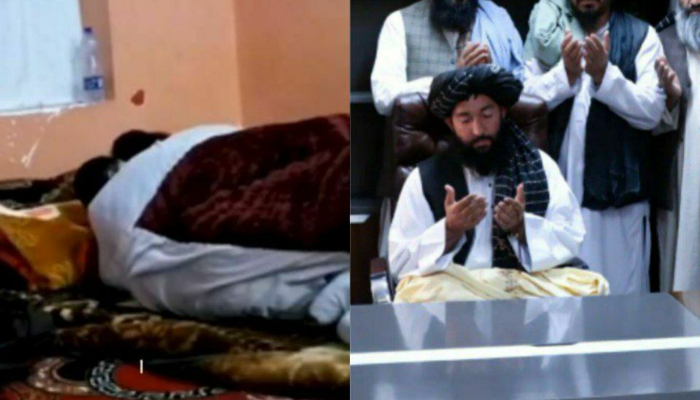
A shocking video from Afghanistan has emerged where Mullah Ahmed Akhund, a senior Taliban member and the head of the Da Afghanistan Breshna Sherkat (DABS), was seen in a homosexual relationship with his 21-year-old bodyguard.
Furthermore, the Taliban, who are often quite severe about homosexuality and stone gays to death as punishment, have permitted him to maintain his post without taking any action against him. According to the most recent release by DABS, he is still in charge of the directorate and is authorised to carry out his duties without interference from them.
The footage appeared to be recorded with a hidden camera in which Mullah Ahmed Akhund can be seen standing on a bed and undressing after which he lies down. He is then joined by his bodyguard who also removes his clothes and goes under the quilt with him.
Taliban deputy chief Mullah Ahmed has been caught having a homosexual relationship with one of his guards.
Mullah Ahmad is not only the deputy head of the Taliban but the head of the Brishna Company in Kabul.
The young man previously worked alongside the Taliban leader in the Breshna Sherkat. Notably, he was also seen in the company of Mullah Mohammad Fazl, the Deputy Minister of Defense for the group.
Mullah Ahmed Akhund was chosen on 20 August of this year to lead DABS under the direction of the Taliban’s deputy prime minister. He stated that he would “do basic work” in the Breshna department of Kabul in his inauguration address.
DABS is an independent and autonomous company established under The Corporations and Limited Liabilities Law of the Islamic Republic of Afghanistan (IROA). It works as a limited liability company owned by the government of Afghanistan. It operates and manages electric power generation, import, transmission and distribution.
The Taliban are silent about punishing their leaders and fighters despite daily media accusations of moral corruption and the “Bacha bazi” of the outfit in their outposts and dormitories. Bacha Bazi is a slang term used in Afghanistan Pakistan and in the history of Turkestan for a custom which involves child sexual abuse by older men. The practice pertains to sexual slavery and child prostitution of young adolescent males or boys, also known as dancing boys.
A recording revealed an individual named Abdullah having fun with a number of other Taliban terrorists as well as multiple women in a room. It was released by the Taliban intelligence last year. According to the individual who captured the incident, both men and women were present and the wine and barbeque bar was set up.
The accused, who was later identified as the brother of Alam Gull Haqqani, was then accused that “he used to come here, provided passports and take eight hundred dollars” by him.
ویدیو از ماه جنوری است، زمانی که برادر رییس پاسپورت، عالم گل مجاهد با گروهی از زنان در یک رستوران در مجلس به باوران طالبان غیر اسلامی بازداشت میشود. اما اتهام اصلی به این طالب، فروش پاسپورت و سو استفاده از زنان نیازمند است. pic.twitter.com/SiDs48SS7E
— Nusrat Iqbal – نُصرت اقبال (@IqbalNasrat) March 16, 2022
Social media reaction
Netizens pointed out the hypocrisy of the Taliban and raised questions after the clip came to light. A person highlighted the irony and commented, “Top commander of Taliban which says punishment for homosexuality in Islam is death was caught in a homosexual relation with his bodyguard.”
The irony of this – Top commander of Taliban which says punishment for homosexuality in Islam is death was caught in a homosexual relation with his bodyguard. https://t.co/WqvZebrt8D
Another remarked, “Majority of Taliban have homosexual relationships from their teenage. Abuse of boys is common in Afghan society.” He also referred to Bacha Bazi and labelled it as a “rotten society.”
I don't know why it's a news. Majority of Taliban have homosexual relationships from their teenage. Abuse of boys is common in Afghan society. Baccha baazi is a common. It's a rotten society. Madrassas have boys who are abused as young as 9. Boys without beard is what they like
A social media user wrote that Taliban sleeping with one another is the Afghan tradition and called the Taliban an extremist homosexual terrorist organisation who hates women and ethnic groups because of the aforementioned reason.
Taliban sleeping with one another, as is the Afghan tradition. The Taliban are an extremist homosexual terrorist organization, it's not hard to see where their hatred of women and other ethnic groups comes from. https://t.co/RXpDD3ZR6a
An individual urged the Taliban to punish the accused. He posted, “If the Taliban is really an Islamic emirate, it must punish these criminals, otherwise it will lose its credibility. The Holy Prophet said that those who were before you perished because if their nobles stole, they would let them go, and if the weak stole, they would punish them.”
اگر طالبان واقعن امارت اسلامی است باید این جنایتکاران را مجازات کند در غیر آن اعتبار خود را از دست خواهد داد پیامبر اکرم مى فرماید کسانی که قبل از شما بودند هلاک شدند زیرا اگر بزرگوارشان دزدی می کردند او را رها می کردند و اگر ضعیفان دزدی می کردند عذاب او را اجرا می کردند.
Human Rights Watch and Out Right Action International observed that under the Taliban, lesbian, gay, bisexual and transgender (LGBT) Afghans and those who don’t follow strict gender standards in the country faced a horrific situation and serious dangers to their safety and life in a report published in January 2022.
The 43-page document titled “Even If You Go to the Skies, We’ll Find You: LGBT People in Afghanistan After the Taliban Takeover” was derived from 60 interviews conducted with LGBT individuals there.
Many respondents related disturbing tales of being threatened or targeted by Taliban members because of their gender identity or sexual orientation. Some also shared stories of being mistreated by relatives, neighbours, or love partners who now support the Taliban or believed that retaliation against LGBT people in their community was important for their own protection.
They were consequently compelled to leave their houses to avoid being attacked by Taliban members or their allies. Others talked about how devastating it was to lose the life they had laboriously established over the years, leaving them open to potential harassment at any time due to their sexual orientation or gender identity.
LGBT people were at grave risk in Afghanistan even before the Taliban took full control of the nation on 15 August 2021. A law that specifically criminalised same-sex relationships was passed under the leadership of then-President Ashraf Ghani in 2018. Additionally, the previous penal law included ambiguous language that was frequently interpreted as categorising same-sex relationships as a criminal offence.
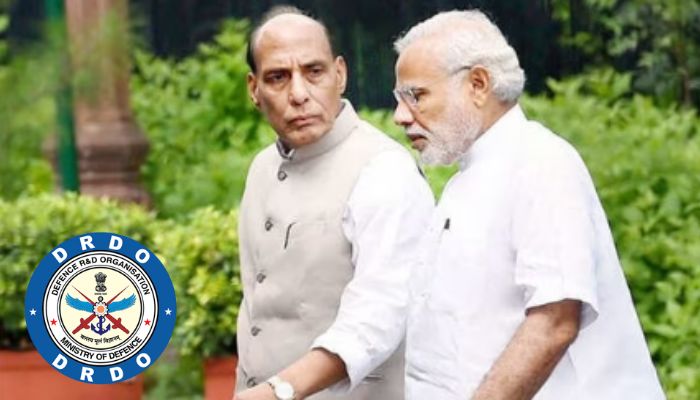
On Wednesday (23 August), the union defence ministry set up a high-power team to overhaul the Defence Research and Development Organization (DRDO). Defence Minister Rajnath Singh has constituted a nine-member committee of experts to review and redefine the role of various departments within DRDO, as per reports.
The newly constituted high power committee will be headed by Prof Vijay Raghavan, who previously served as Principal Scientific Advisor to the Government of India. He was also one of the key architects of the National Research Foundation (NRF).
The committee will have to submit its report within three months and work with a mandate to overhaul the DRDO.
The other experts in this DRDO review committee include –
Lt Gen (Retd) Subrata Saha – Former Deputy Chief of Army Staff
Vice Admiral S N Ghormade – Former Vice Chief of Navy Staff
Air Marshal B R Krishna – Former Chief of Integrated Staff
Sujan R Chinoy – Director General of MP-IDSA
Manindra Agarwal – Professor at IIT Kanpur
S.P. Shukla – President SIDM
J D Patil – Larsen and Toubro, Defence
Dr S Unnikrishnan Nair – Distinguished Scientist, ISRO
Rasika Chaube – Financial Advisor, Ministry of Defence
As per the Hindustan Times report, DRDO Chief Samir V Kamat conveyed Minister Rajnath Singh’s decision to the committee. He also informed its members of the terms of reference which are as under.
Restructuring and redefining the functions of Department of Defence (R &D) and DRDO. It will also include their relationship with each other and with academia and industry.
Ways to maximise the participation of academia, MSME, and start-ups in the development of cutting edge technologies.
To adopt a Performance driven approach. This include ways to attract and retain high-quality manpower. Additionally, it include a system of project based manpower by using incentives and disincentives and strict performance accountability, thus weeding out the non-performers.
Focus on utilising the expertise of NRIs/foreign consultants and inter-country collaborations so as to develope cutting edge and disruptive defence technologies.
Modernise administrative, personnel, and financial frameworks to expedite project implementation.
Laboratory structures to be rationalised to better evaluate their performance process.
This major decision to review and overhaul the functioning of the DRDO and the entire defence research and production eco-system comes in the wake of concerns regarding lack of accountability and delayed research works in the organisation.
DRDO typically works like a government PSU and handles everything related to defence, like research, development, and production. It has been a long-awaited demand to improve its coordination and support for the private sector.
India will experience history at 6:04 pm on Wednesday when Chandrayaan-3’s Lander Module (LM) is slated to touch down close to the Moon’s south pole. Pragyan’s success will symbolically represent India’s presence on the moon by leaving impressions of the ISRO and the country’s flag, which features the Lion Capital of Ashoka at Sarnath, on the lunar surface.
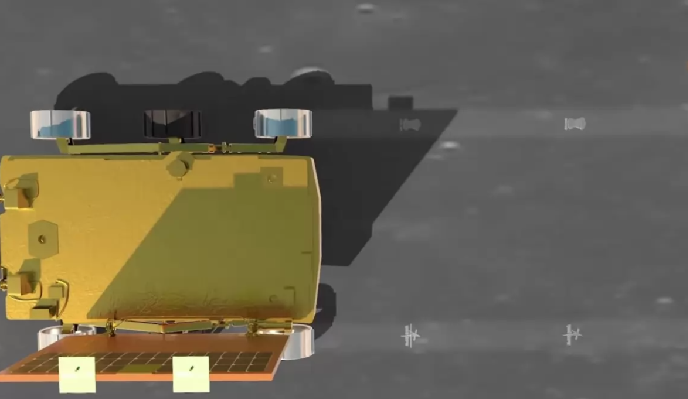
The logo impressions on the rover are displayed in a curtain-raiser movie by ISRO which was released ahead of the launch of the mission. The logo will be imprinted by Pragyan’s rear wheels as it moves across the moon’s surface.
After the soft landing, the rover will use one of the lander’s side panels as a ramp to drop from the belly onto the Moon’s surface. A lunar day (or around 14 days on Earth) will be the mission life for the lander and rover as they explore the area. ISRO representatives do not rule out the chance that they could regenerate for a subsequent lunar day, though.
The south pole region of the Moon will also be investigated because places that are permanently under shadow may contain water. Four scientific instruments on Chandrayaan-3 will investigate moon quakes, how the moon’s surface enables heat to pass through it, the plasma environment near the moon’s surface, and the precise distance between the moon and the earth.
Beyond its scientific goals, the rover will also leave behind impressions of the ISRO and the Lion Capital of Ashoka at Sarnath, which serves as India’s national emblem.
The countrymen and the world is looking forward to the successful landing of the Chandrayaan 3 which was launched from the Satish Dhawan Space Centre in Sriharikota on July 14 this year.
While this is India’s third lunar mission and second attempt at a soft landing on the moon, the mission entered the lunar orbit one month after launch and the lander and rover are scheduled to touch down on the lunar surface at 06:04 pm on August 23.
Bihar Chief Minister Nitish Kumar has come under fire for a blatant display of VVIP culture. On Tuesday (22nd August), an ambulance was blocked for the passing of the Chief Minister’s convoy in Patna. In a 30-second video shared by BJP leader Amit Malviya, an ambulance can be seen parked by the road as Nitish Kumar’s convoy passes. The man recording the video points the camera to the ambulance inside which a man and a woman can be seen seated beside a person lying on a stretcher. The woman seated by the patient appears to be crying. The man recording the video then points out how the CM’s convoy is passing by blocking the ambulance and other vehicles parked by the road to make space.
प्रधानमंत्री बनने का सपना देख रहे नीतीश कुमार की संवेदनहीनता देखिए। उनके क़ाफ़िले की रफ़्तार कम ना पड़े, इसके लिए वो किसी की जान दांव पर लगा सकते हैं। एक तरफ़ जहां मोदी जी ने कई दफ़ा ना सिर्फ़ अपने क़ाफ़िले बल्कि रोड शोज़ तक एंबुलेंस को रास्ता देने के लिए रुकवा दिये, नीतीश बाबू… pic.twitter.com/gJjz5Jj9wo
Malviya, in the caption, tweeted that Nitish Kumar is dreaming of becoming the prime minister and can put someone’s life at stake “so that the speed of their convoy does not decrease.” Look at the insensitivity of Nitish Kumar who is dreaming of becoming the prime minister. They can put someone’s life at stake so that the speed of their convoy does not decrease. On the one hand, where Modi ji stopped many times not only his convoy but even roadshows to give way to the ambulance, Nitish Babu did not think at all about the family crying in the ambulance. This is the truth of the arrogant coalition of corrupt and insensitive people. Shameful!” the BJP leader tweeted.
A Twitter user, Ashish Ranjan (@Aashishbihar), also a journalist, pointed out in the comments that the road on which the convoy was passing is the main road connecting PMCH, Bihar’s biggest hospital and several ambulances pass through it every day. He tweeted, “This is the main road connecting PMCH, Bihar’s biggest hospital, on which not one but many ambulances cross at times, but we have not seen such insensitivity of a king drowned in arrogance till date.”
यह बिहार के सबसे बड़े अस्पताल पीएमसीएच को जोड़ने वाली मुख्य मार्ग है जिसपर एक नहीं कई एम्बुलेंस कुछ देर पर क्रॉस करती है लेकिन अहंकार में डूबे राजा की ऐसी संवेदनहीनता हमने आजतक नहीं देखी है
BJP leader Vikram Goud tweeted the video claiming that the patient in the ambulance was critical and that the relatives had pleaded that they be allowed to pass.
Drunk on power, @NitishKumar has not only killed law and order in #Bihar but has also put humanity to shame today!
An ambulance carrying a critical patient was halted as his convoy passed by. Despite the patient's relatives pleading, they were forced to wait until the convoy… pic.twitter.com/cfhtRTvJ7X
A longer, 55-second video shows how the ambulance has been stopped and asked to park to the side of the road as the convoy is about to approach.
पटना में मुख्यमंत्री के काफिले के दौरान पुलिस प्रशासन ने मरीज को लेकर जा रही एंबुलेंस को रोक दिया। वायरल वीडियो में देखा जा सकता है कि नीतीश कुमार की पुलिस ने इंसानियत को ताक पर रखकर एंबुलेंस को तब तक रोके रखा जब तक की सीएम का काफिला पास नहीं हो गया।#Patna#NitishKumar… pic.twitter.com/hMe8a8Rz4y
About two hours later, Malviya tweeted another video, this time of RJD Chief Lalu Prasad Yadav, showing a senior police officer holding an umbrella for the former Bihar CM. Malviya tweeted, “A senior police officer carrying an umbrella for Lalu Prasad, accused in corruption cases and recently out on bail citing ill health, is not only the pinnacle of VIP culture but also a sign of a weak government. Because the police is roaming around with an umbrella for the culprits, the morale of the criminals in Bihar is high.”
भ्रष्टाचार के मामलों में अभियुक्त और हाल ही में ख़राब स्वास्थ्य का हवाला देकर जमानत पर चल रहे लालू प्रसाद के लिए छाता लेकर घूम रहा एक वरिष्ठ पुलिस अधिकारी ना सिर्फ़ VIP कल्चर की पराकाष्ठा है बल्कि एक दुर्बल सरकार का परिचायक भी।
In the video, the cop can be seen holding the umbrella for Lalu and then handing it over to another person, albeit being mindful that the umbrella is covering Lalu properly even as it is held by one of his aides. As they stop, the cop spots something near Lalu’s shoulder and seems obliged to clean it. The RJD chief is out on bail in the fodder scam case.
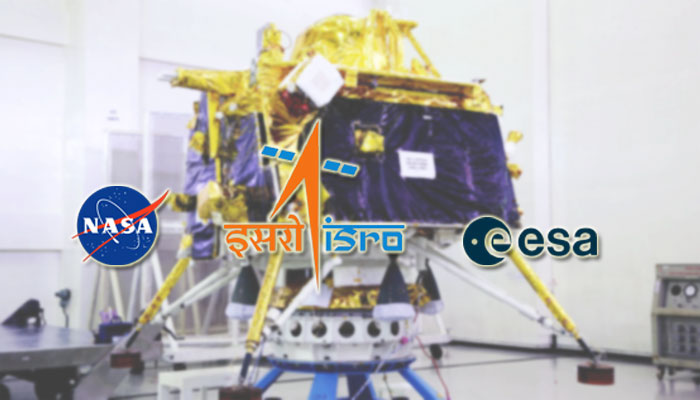
On 14th July, Chandrayaan-3 was launched from the Satish Dhawan Space Centre in Andhra Pradesh’s Sriharikota by the Indian Space Research Organisation (ISRO). Since then, ground stations of the National Aeronautics and Space Administration (NASA) and the European Space Agency (ESA) have supported the Indian space agency in monitoring the health of Chandrayaan-3.
Chandrayaan 3 comprises a Lander and a rover. The main objective is to conduct scientific studies on the surface of the moon for 14 days period. While ISRO will be using its deep-space communication antenna for the project, other space agencies will assist in the project.
ISRO has a 32-meter deepspace tracking station in the country that enables the space agency to track, command, and receive telemetry and scientific data from the spacecraft. However, in several instances, the spacecraft gets beyond the range of ISRO’s antenna. At that time, communicating with the spacecraft will not be possible.
Constructing large-scale antennas and control stations worldwide is an expensive project. Space agencies and commercial entities worldwide seek support from the partner organisations’ ground stations to mitigate the cost of establishing new antennas. International collaboration in space exploration holds the utmost importance because of its exponential cost.
Speaking to the Hindu, ground operations engineer at ESOC Darmstadt, Germany, Ramesh Chellathurai, said, “Since the launch of Chandrayaan-3, ESA has been supporting the mission by utilizing two of the ground stations in the ESTRACK network to track the satellite in its orbit, receive telemetry from the spacecraft and forward it to the Mission Operations Centre in Bengaluru, and forward commands sent from Bengaluru to the flying satellite.”
Based on the technical capabilities and geometric visibility of the satellite, two stations of ESA were selected to provide support. A 15-meter antenna in Kourou, French Guiana, and the 32-meter antenna of Goonhilly Earth Station, UK, are continuously monitoring ESA and rallying the information to ISRO.
Chellathurai said, “These two stations have been communicating with the Chandrayaan-3 mission regularly, providing a complete communication channel between the Mission Operations Team in Bengaluru and the Chandrayaan-3 satellite.”
The ground stations become crucial on the day of the landing. Apart from the two stations, ESA’s 35-metre deepspace antenna in New Norcia, Australia, tracks and communicates with the Lander Module at the time it starts to descend to the moon’s surface. During the process, It serves as a backup station for ISRO’s own ground station. Both ISRO and New Norcia antenna will receive information about the Lander Module’s health, location, and trajectory simultaneously.
Like all our deep space stations, New Norcia is controlled remotely from our ESOC #MissionControl centre in Germany.
It is managed locally by our Australian partners, @CSIRO.
Such backup support is common during key moments of space missions. Once the Rover lands on the moon, the information will be routed to the connected ground stations via the Lander Module. The information collected by Kourou and Goonhilly will be forwarded to the Mission Operation Centre in Bengaluru.
NASA to provide telemetry and tracking coverage during descent phase
On the other hand, NASA’s Deep Space Network’s Deep Space Station (DSS)-36 and DSS-34 at Space Communications Complex and DSS-65 at Madrid Deep Space Communications Complex would provide telemetry and tracking coverage during the descent phase.
The information collected by NASA’s stations, including health and status and instrument measures, are passed to ISRO’s ground station in real-time. These stations also monitor the radio signal for the Doppler Effect, which is the primary tool for navigation of the spacecraft. As the DSN Complex in California is on the exact other side of the Earth from India, it can be in view of the Moon when India cannot see it.
NASA’s Deep Space Network has the world’s largest and most sensitive scientific telecommunication system. It comprises a global array of immense radio antennas crucial for interplanetary spacecraft missions. These antennas provide insights through radar and radio astronomy observations that help understand the solar system and the universe.
Space agencies collaborate to assist each other
India is part of The Coordination Group for Meteorological Satellites (CGMS) with China, Europe, Japan, the United States, Russia, and the Republic of Korea. Other partners include the World Meteorological Organization (WMO) and UNESCO’s Intergovernmental Oceanographic Commission (IOC). Recently, CGMS celebrated 50 years of collaboration in different fields related to meteorological satellites. CGMS was established in 1972 by satellite agencies from Europe, Japan, and the United States to coordinate the operation and use of geostationary satellites. Over the years, the number of members and applications increased.
Similarly, during different missions, space agencies worldwide take support from each other as it is expensive to establish their own antenna network. Collaborations help reduce costs and share information about space projects that help in future endeavors.
Enforcement Directorate is now conducting raids in Jharkhand after Chhattisgarh as a part of the investigation into the liquor scam. Officials are looking into the entire situation from the perspective of money laundering. Large-scale raids in regard to this commenced on 23 August in Jharkhand and West Bengal.
The agency has intensified operations at 32 to 34 locations in both states connected to Jharkhand Finance Minister Rameshwar Oraon, his son Rohit Oraon, and liquor baron Yogendra Tiwari since Wednesday morning. These bases are situated in Kolkata, Ranchi, Deoghar, Dhanbad and Dumka. The investigators conducted simultaneous searches at all these places beginning at 6:30 am and are still underway.
#WATCH | Ranchi | Enforcement Directorate (ED) raids the premises of Rohit Oraon, son of Jharkhand Minister Rameshwar Oraon, in connection with liquor scam.
Raids are going on at multiple locations including Ranchi, Dumka and Deoghar: Sources pic.twitter.com/jJFhX2WqRB
More than a dozen teams from the Enforcement Directorate were included in the aforementioned probe. The reason for the operation at the Jharkhand Minister’s premise was his son and his close association with the liquor mafia. Yogendra Tiwari’s booze business is believed to be heavily funded by him. Both the minister and his son live together in Ranchi.
The agency is reportedly conducting raids at seven different spots in Ranchi’s Harmu and Bariatu. Jamtara is also witnessing the same along with eight places in Deoghar. Yogendra Tiwari, his family members as well as several of his close friends have been the subjects of the investigation. Five distinct areas in Dumka City are the target of the raids.
The Tanishq dealership at Tata Dealership Chowk, Tiwari Automobile, Pappu Sharma’s home in Kumharpada and Anil Singh’s house close to Theka Baba Mandir are places where the action is going on. Pappu Sharma and Anil Singh work with Yogendra Tiwari whereas Tanishq Showroom and Tiwari Automobile are charged to be affiliated with him. Furthermore, there is information on the operation in the Gilan Pada office.
A huge crowd of people living nearby has gathered during the inquiry and elaborate security arrangements have been made as a result. A raid was carried out at the Kaushiki Radhika apartment in Bekarbandh, Dhanbad. There, the house of Yogendra Tiwari’s employee was searched. An investigation at Grewal’s Dhanbad apartment had also been executed.
A raid has been launched at the Jamtara residence of Yogendra Tiwari. The investigation team also visited Chianki, Rameshwar Oraon’s ancestral hamlet in Palamu, at the same time to search his family home. Simultaneously, raids took place at the Arya Inn Hotel in Mihijam and the office on the second floor of the State Bank of India (SBI) building in Palamu.
The raids are taking place all around that include the Deoghar home of the Congress leader and chief minister of United Bihar. The action is occurring at the house of Congressman and district-20 vice president Munnam Sanjay. An investigation team also reached the residence of Abhishek Jha, a land trader to conduct a raid. He is Pandit Vinod Nand Jha’s grandson, a former chief minister of Bihar.
There have been numerous searches at Yogendra Tiwari’s properties. A team is going over the documents in Deoghar’s Maihar Garden and Biscomaun Bhawan. Raids are taking place at the homes of a number of people, comprising land trader Abhishek Jha, Congress leader Munnam Sanjay, liquor baron Yogendra Tiwari, Minister Rameshwar Oraon and Nexagen showroom owner Vinay Singh.
Munnam Sanjay remained silent when approached for his reaction to the ongoing inquiry. Howvere, he refused to comment on anything. However, one of his coworkers stated, under the condition of anonymity that the papers found on the premise are being looked into and the gate has been locked from inside. Moreover, no one was allowed to leave.
According to Enforcement Directorate, a whopping Rs 2161 crore was generated in the Chhattisgarh liquor scam. The nexus comprised senior government officials, politicians and other individuals. It has caused a loss of a staggering Rs 2,161 crore to the exchequer. The agency found that between 2019 and 2022, unaccounted illicit liquor worth 30 to 40 per cent of the overall sales in the state was sold at the behest of the syndicate.
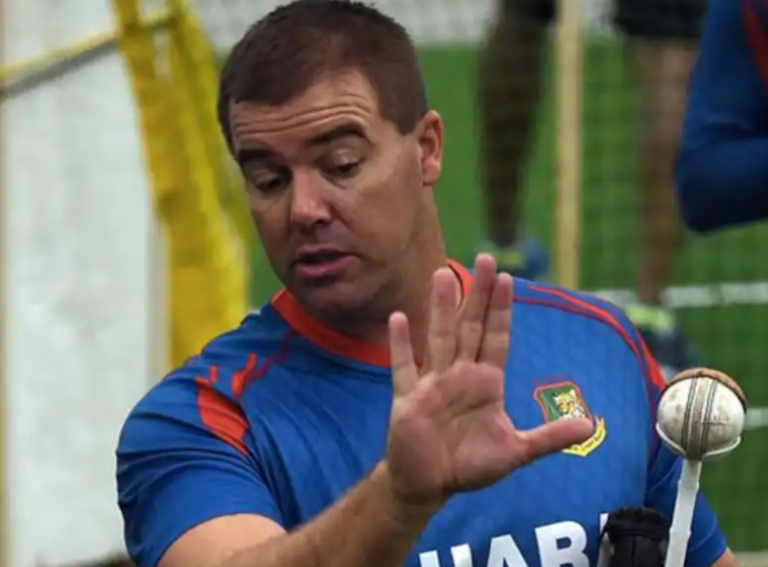
On Wednesday, Henry Olonga, a former Zimbabwean cricketer, put an end to rumors that fellow cricketing icon Heath Streak had passed away. Olonga stated that Streak is absolutely alive and well, defying his earlier tweet, which he had posted hours ago.
Olonga shared the update on Twitter in an effort to clear up confusion and counter potential erroneous rumors. “I can confirm that rumors of the demise of Heath Streak have been greatly exaggerated. I just heard from him. The third umpire has called him back. He is very much alive folks,” he tweeted.
I can confirm that rumours of the demise of Heath Streak have been greatly exaggerated. I just heard from him. The third umpire has called him back. He is very much alive folks. pic.twitter.com/LQs6bcjWSB
Olonga also posted a chat of him with Streak in which the latter could be seen confirming that he was ‘very much alive’. Streak meanwhile also asked Olonga to revert the rumors.
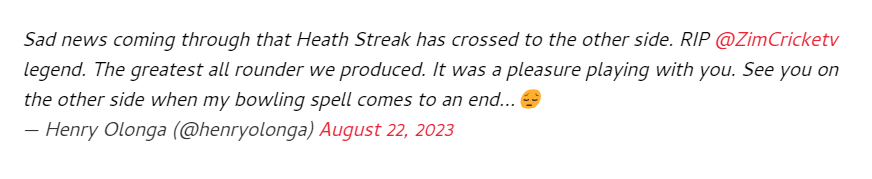
Reportedly Olonga himself had tweeted on August 22 that Streak had passed away. “Sad news coming through that Heath Streak has crossed to the other side. RIP legend. The greatest all-rounder we produced. It was a pleasure playing with you. See you on the other side when my bowling spell comes to an end,” he had said. The tweet, however, now stands deleted.
screenshot from ABP news
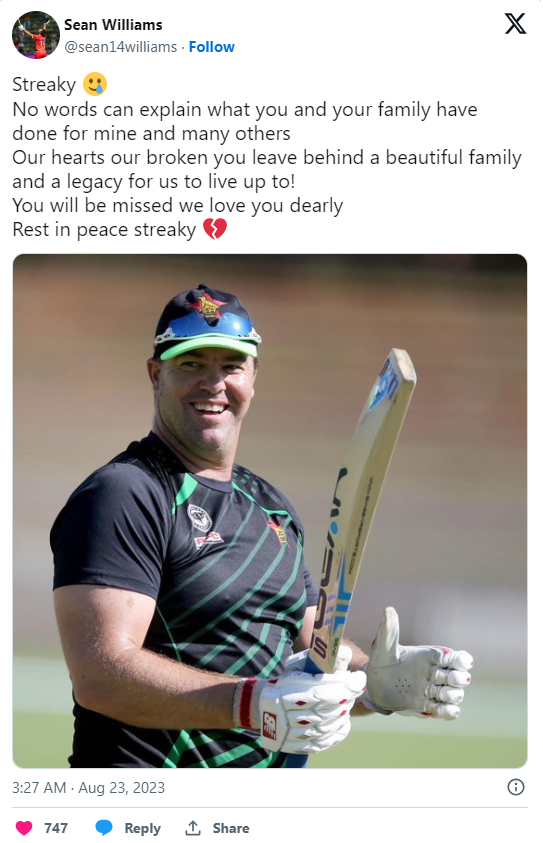
After Olonga, Zimbabwean cricketer Sean Williams also happened to pay tribute to Streak saying, “No words can explain what you and your family have done for mine and many others. Our hearts are broken you leave behind a beautiful family and a legacy for us to live up to! You will be missed we love you dearly. Rest in peace streaky.”
Screenshot from Twitter
Several media houses like the Guardian, News18, India.com, ABP news, and Sportsstar quickly picked up the news without probably verifying the facts and claimed that Heath Streak, a legendary Zimbabwe cricketer was no more.
NDTV and Sportstar reported Streaks death
“Heath Streak, Legendary Zimbabwe Cricketer, dies at the age of 49 after prolonged Cancer,” wrote NDTV while Sportstar mentioned also followed the erroneous news spread.
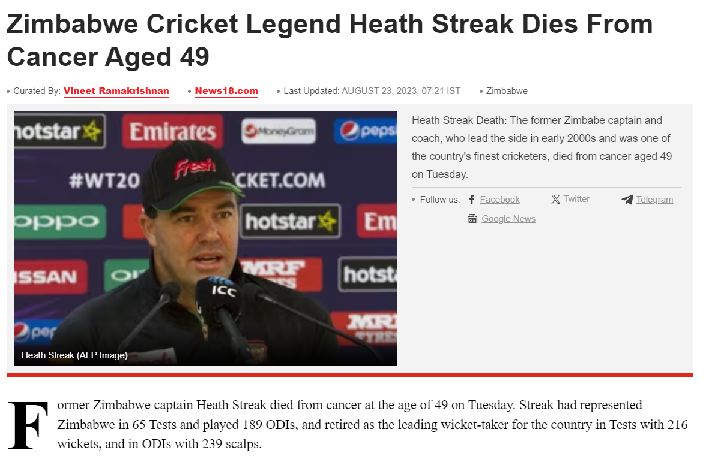
News18 reported death of Streak
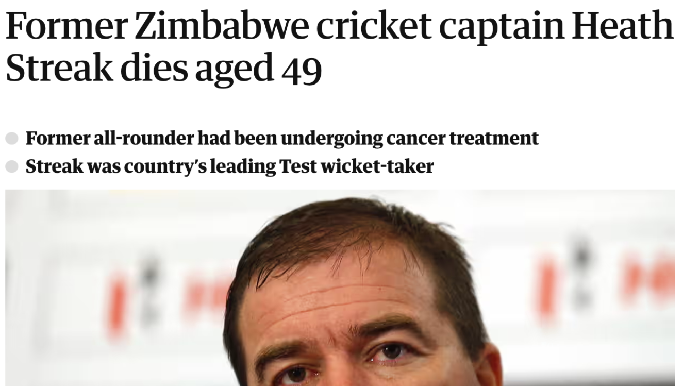
Meanwhile, the Guardian also paid tributes to the legendary cricketer and said that he was battling cancer. “Former all-rounder had been undergoing treatment for cancer. Streak dies at the age of 49,” the report read.
Guardian reported Streak’s death
However, after Olonga’s tweet clarifying Streak’s message, the media houses reversed the news and claimed that the social media triggered confusion. “Heath Streak not dead,” said NDTV while the news report by Sportstar stood deleted.
News of death deleted by Sportstar
According to the reports, one of the greatest all-around bowlers in international cricket history, Heath Streak, took 216 wickets in 65 Test matches. He achieved a 4-wicket haul in an innings 16 times during this period and a 5-wicket haul in an innings 7 times.
Streak managed to take 239 wickets in ODIs at an average of 29.82. The Zimbabwean cricketer amassed 2,943 runs (13 half-centuries) in ODIs compared to 1,990 runs (1 century, 11 half-centuries) in Tests.
Streak, who has been battling liver and colon cancer, observed his situation deteriorate in May of this year, which prompted his family to admit him right away to the hospital. Olonga was among those who tweeted about his passing. His prompt correction, though, ought to alleviate any anxiety brought up by his initial tweet. Streak’s rumoured ‘death’ had been reported widely, upsetting both cricket players and spectators. But now that Olonga has provided an update, it is safe to conclude that Streak is very much alive.
Former US President Donald Trump on Monday night (21st August) night announced that he will surrender before authorities in Georgia over his indictment in the 2020 election interference case. Taking to his platform Truth Social, Trump wrote, “I’ll be going to Atlanta, Georgia, on Thursday (24th August) to be arrested.” Trump remains a contender to the 2024 US Presidential Elections.
Trump on Monday agreed to a $200,000 bond and accepted bail conditions barring him from threatening co-defendants or witnesses in the case.
On 22nd August, the US business tycoon’s two co-defendants in the case surrendered at an Atlanta jail after accusing Trump and his associates of manipulating his 2020 election loss in Georgia to Joe Biden by 11,000 votes. John Eastman, Trump’s former lawyer, and Republican poll watcher Scott Hall surrendered before the county sheriff’s office. 17 defendants are reportedly likely to surrender by Friday (25th August).
Eastman’s surrender came after agreeing to a $100,000 bond agreement. He said, “I am here today to surrender to an indictment that should never have been brought.” Meanwhile, Hall had agreed to a $10,000 bond deal requiring him to report to pre-trial supervision every month.
What is the case?
On 15th August, the grand jury in Georgia indicted Donald Trump in the 2020 election interference case formally accusing him of attempting to overturn his defeat in the state in the 2020 Presidential election. The 98-page indictment was the fourth criminal case against the former US President.
The charges were approved by the grand jury for the violation of Georgia’s Racketeer Influencer and Corrupt Organisation (RICO) law. Several conspiracy charges have also been approved against Trump including several counts of pressurizing public officials to violate their chair. Trump is also accused of false statements and writing and filing false documents.
A total of 19 people have been indicted in the case including Trump, who is in the forefront for the Republican nomination for the 2024 Presidential elections. Trump campaign officials, lawyers, and Trump government officials have been charged. Trump had lost by 11,000 votes to the now-President Joe Biden. The angle of manipulating voting equipment also emerged in the course of the probe.
What could be the political repercussions of Trump’s surrender?
So far the reports in the US media go, the surrender itself seemingly won’t impact Trump’s Presidential bid. Rather, he reportedly continues to be a leading contender in the Republican presidential nomination.
Trump is leading by a wide margin in the national polling average against his Republican counterpart and Florida governor Ron DeSantis by about 40 points. Moreover, Trump announced on 20th August that he will not partake in the primary presidential debates against his Republican counterparts. He cited the wide leads he enjoys according to polls over his rivals for the GOP nomination.
Trump’s decision has likely bolstered confidence in the public as he pointed to a CBS News survey saying “It has me leading the field by legendary numbers.” This even as Trump was reportedly being persuaded for the debate by Fox News bigwigs. Instead, a pre-recorded interview of Trump with former Fox News host Tucker Carlson is expected to be featured on Wednesday (23rd August), the same evening as the first Republican presidential debate.
Republican opinion polls reportedly show that Trump is the preferred choice of over half of the GOP’s primary voters. In a sense, with Trump out of the debate, the onus now falls on the trailing Republican candidates to convince why they should be the preferred choice.
In another campaign pitch, Trump has reportedly declared his plans to implement a “universal baseline tariff” on all imports to the US. “When companies come in and they dump their products in the United States, they should pay, automatically, let’s say a 10% tax…I do like the 10% for everybody,” the former President said. He also threatened to impose reciprocal tax against the taxes in India on certain American products including Harley-Davidson motorcycles.
Meanwhile, Trump’s former employee, Yuschil Taveras, who was Mar-a-Lago’s IT manager, has implicated the former President in a classified documents case. He has reportedly accused Trump and two aides of “efforts to delete security camera footage.” Prosecutors say Taveras changed his testimony after switching lawyers. Trump, 77, faces 40 charges in the case and has pleaded not guilty along with his personal aide Walt Nauta and Mar-a-Lago maintenance worker Carlos De Oliveira.
It is a proud moment for India as all the countrymen are looking forward to the successful landing of the Chandrayaan 3 which was launched from the Satish Dhawan Space Centre in Sriharikota on July 14 this year. Post-landing the Chandrayaan-3 is expected to investigate the elemental composition of the Earth’s only natural satellite, its surface plasma environment, lunar seismicity, and thermophysical features.
While this is India’s third lunar mission and second attempt at a soft landing on the moon, the mission entered the lunar orbit one month after launch and the lander and rover are scheduled to touch down on the lunar surface on August 23.
Earlier, India faced the partial failure of the Chandrayaan-2, whose lander Vikram and rover Pragyaan crashed on the Moon’s surface in the early hours of September 7, 2019. Vikram was about 335 meters (0.335 km) from the Moon’s surface on the day of the 2019 lunar landing when the Indian Space Research Organisation (ISRO) lost communication with it. The issue occurred during the “Fine braking phase” of Vikram’s final approach (an altitude of 5 km to 400 m), which started while the lander was 5 km from the lunar surface, according to the preliminary data.
The lander’s green line began to deviate off course when it was just over 2 km in altitude and finally stopped at a location that was obviously below 1 km in altitude and somewhere around or below 500 m.
Why Chandrayaan-2 failed?
Days before the launch of Chandrayaan 3, ISRO Chairman S Somanath had commented on the incident that happened in 2019 and had said, “The primary issues were, one, we had five engines which were used to give the reduction of the velocity, which is called the retardation. These engines developed higher thrust than what was expected.” He said that the additional thrust caused errors to build up, which in turn made the lander less stable during the ‘camera coasting phase’ of the soft landing.
This was an instance of the second problem. “All the errors got accumulated, which was on the higher side than what we had expected. The craft had to make very fast turns. When it started to turn very fast, its ability to turn was limited by the software because we never expected such high rates to come,” Somanath added.
VIDEO | "The ability to handle parameter variation or dispersion was very limited in Chandrayaan-2. So, instead of success-based design, we are doing a failure-based design in Chandrayaan-3. What all can fail, and how to protect it — this is the approach that we have taken," says… pic.twitter.com/GnpHAUbyt2
The third issue arose when the lander increased its speed despite being near the surface because the landing place was far away. According to Somanath, this was partially caused by the landing spot’s relatively tiny size (500 m × 500 m). “In a nutshell, the problem in Chandrayaan-2 was that the ability to handle parameter dispersion was very limited,” he was quoted as saying.
However, India’s first deep space mission, Chandrayaan-1 played a crucial role in discovering the molecules of water on the moon. An Indian PSLV rocket carried the Chandrayaan-1 spacecraft into Earth orbit on October 22, 2008. On November 8 of that year, Chandrayaan-1 successfully entered orbit around the Moon after a series of orbit-raising maneuvers.
How India’s first deep space mission, Chandrayaan-1 discovered water
Chandrayaan-1 fired its engines several times at exact intervals over the following four days to achieve a circular orbit of 100 kilometers (62 miles), which would allow it to examine the Moon closely with its 11 instruments, about half of which were provided by NASA and European space agencies. On August 29, 2009, communication with the orbiter was lost, but the mission’s main goals, including finding water on the Moon, were accomplished.
In an interview, Srinivasa Hegde, the project’s director, recalled how Dr. K Kasturirangan was responsible for the mission’s conceptualization. Kasturirangan wanted the Indian Space Research Organisation (ISRO), which he led from 1994 to 2003, to play an insignificant role in India’s goal of becoming a superpower. This sowed the seeds for carrying out more challenging missions. Everyone seemed to agree with the proposal of a Moon orbiter when it was presented.
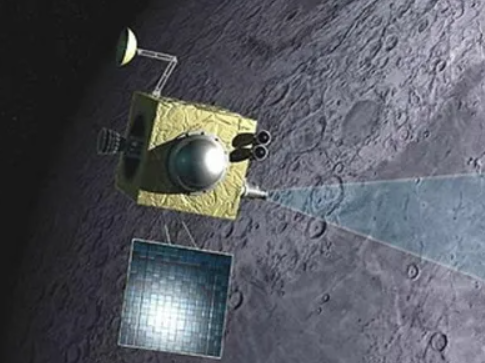
Chandrayaan-1 discovered molecules of water on Moon (Times Now)
At the time, ISRO already had satellites with geostationary orbits that could accommodate a large amount of fuel. The only modification needed was to adapt a geostationary satellite for the Moon because the fundamental infrastructure was already in place. The PSLV rocket from India, according to preliminary estimates, could launch an Earth-bound orbit beyond which the fuel on the spacecraft could potentially be utilized to travel to the Moon and perform orbital capture. Chandrayaan-1 was an all-around logical advancement of ISRO’s capabilities.
Finding water on the Moon was a primary scientific objective when ISRO was planning Chandrayaan-1. However, it was NASA’s Moon Mineralogical Mapper (M3) that helped the Chandrayaan-1 identify water and differentiate between ice, water, and vapor. The discovery that our Moon contains water was made definitively by M3, which also revealed that the majority of the water has been concentrated at the poles of the Earth’s natural satellite.
Earth to Moon: 146 missions so far, first began in 1958
Notably, though several missions led by India to the Moon have made the countrymen and the world altogether proud, many other countries and space organizations (chronologically) like the Soviet Union, the United States, Japan, the European Space Agency, China, Luxembourg, Israel, Italy, South Korea and the United Arab Emirate have also conducted Moon missions with specific objectives.
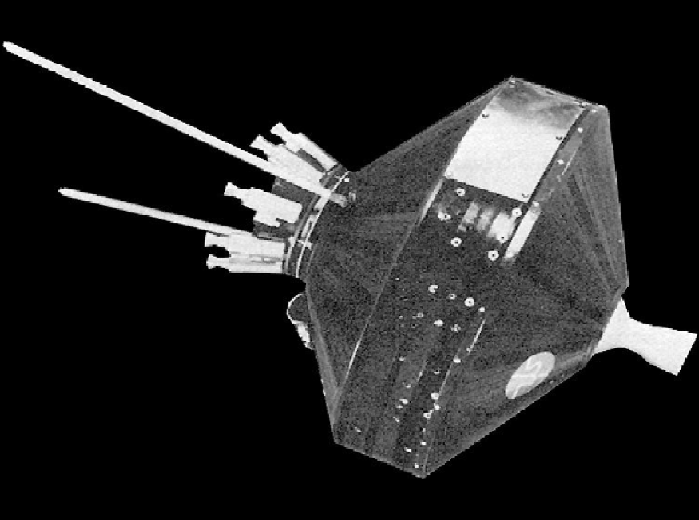
The urge to get connected to the Moon began in the year 1958 when the United States first sent spacecraft named Pioneer 0 beyond the Earth’s orbit. However, the mission which was launched in the month of August 1958 ie exactly 65 years ago today failed due to a gearbox malfunction resulting in a first-stage explosion. Since then the Earth has made 146 launches including the failed ones to the Moon. The number also includes flybys, impact probes, orbiters, landers, rovers, and crewed missions.
Pioneer 0 launched by the US (Image source- NASA)
Russia successfully made contact with the Moon in 1959
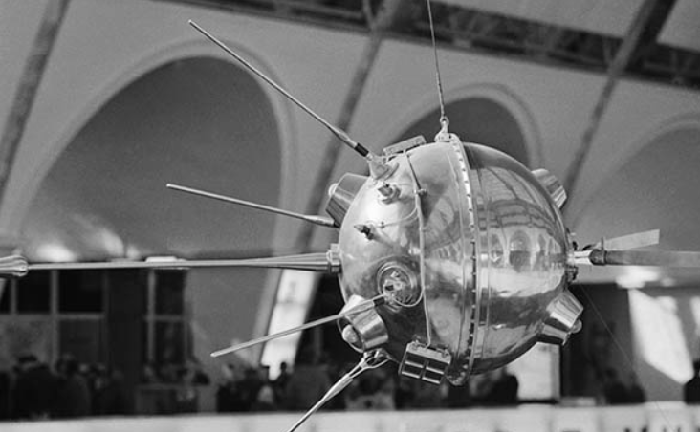
After repeated 10 attempts including 6 by Russia and 4 by the US, Russia became the first country to force a human-made object to make contact with another celestial body. Luna 2, also known as Lunik 2, was the sixth spacecraft in the Soviet Union’s Luna program to be launched to the Moon. Its original name was the Second Soviet Cosmic Rocket. It was the first spacecraft to touch down on the Moon’s surface on September 12, 1959, using a Luna 8K72 s/n I1-7B rocket. The said spacecraft emitted a sodium gas cloud so that the movement of the spacecraft could be seen visually in addition to the radio transmitters returning operational data to Earth.
While Luna 2 was traveling to the Moon, it was equipped with five different types of instruments to perform a variety of tests. Determining the electron spectrum of the Van Allen radiation belt, a region composed of extremely charged particles, was the main scientific goal of Luna 2. The magnetometer and radiation detectors were looking for magnetic and radiation fields on the moon that resembled the Van Allen radiation belt that circles Earth. Although it confirmed earlier observations of the Van Allen radiation belts that were taken from Luna 1 around the Earth, Luna 2 was unable to detect any form of radiation belts circling the Moon.
The abrupt cessation of Luna 2’s radio transmissions on September 14 indicated that it had impacted on the Moon, making it the first spacecraft to make only one such contact with a solar system body.
The Soviet Union’s Luna 2 mission, the first of many deliberate Moon crashes was successful. Similar effects were experienced with the subsequent US-built Ranger missions. To note, while Luna 2 was the first to make contact with the other celestial body, Russia’s Luna 9 managed to be the first one to make a soft landing on the lunar surface.
Luna 3 returned the first image of the far side of the Moon
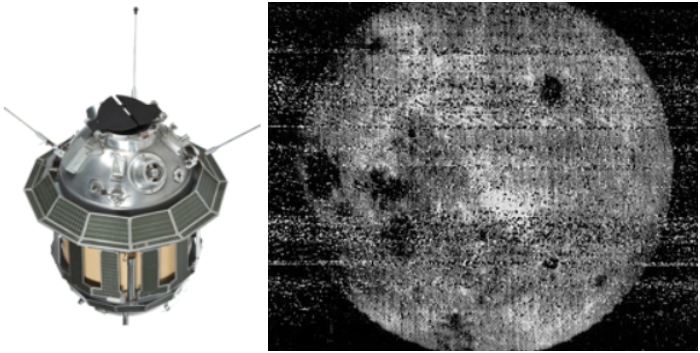
Out of 146, the next successful space mission to the Moon was also conducted by Russia Luna 3 Soviet spacecraft which was launched using a Luna 8K72 rocket in the year 1959. It was the third Soviet spacecraft to be sent out to the Moon’s proximity and the first mission to take pictures of the Moon’s far side. The historic, never-before-seen views of the far side of the Moon generated excitement and fascination when they were published around the world, despite the fact that they returned exceptionally poor-quality images. Only two dark, low-lying regions, later nicknamed as the Sea of Moscow and the Sea of Desire, could be seen in these views, which contrasted greatly with the adjacent side’s mountainous landscapes.
First ever image of Moon captured by Luna 3 (NASA)
29 photographs were captured in all by Luna 3, covering 70% of the far side of the Moon. The spacecraft started spinning once the photography was finished, flew above the Moon’s north pole, and then turned back towards Earth. A total of 17 watchable but substandard photos from Luna 3 were sent to the nation as it got closer to the Earth. These photos were ultimately made public all across the world.
Ranger 7 and Ranger 8 by the US managed to capture clearer images
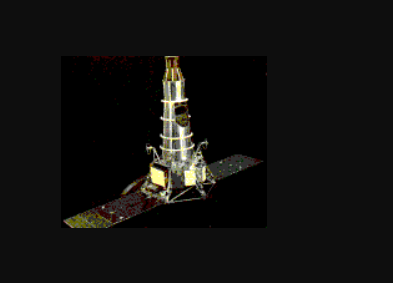
In later years, the United States launched the Ranger series of spacecraft which carried television cameras with wide and lower angles to capture and transmit high-resolution photographs of the lunar surface to the Earth. Ranger 7 accomplished the goal by transmitting over 4,300 photographs while Ranger 8 transmitted 7,137 lunar surface photographs to the Earth before these crashed into space. The main objective of these space missions was only to get clear images of the Moon’s surface which helped the country select landing sites during the Apollo mission. The performance of these spacecraft was recorded to be excellent.
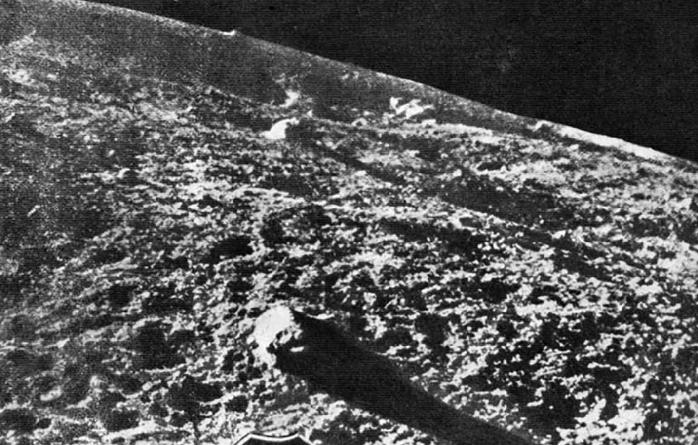
After the list of other successful Moon missions by the US (Ranger 3), and Russia (Zond 3), Luna 9 launched by Russia again became the first spacecraft to make a successful landing on the surface of the Moon. On February 3, 1966, Luna 9, a human-free space mission of the Soviet Union’s Luna program, touched down on the moon’s surface. Seven hours after landing, the spacecraft was able to capture up-close images of another celestial body from its surface. The photographs included a panoramic view of the lunar surface as well as views of the horizon and adjacent boulders. The spacecraft made its final known contact on February 6, 1966.
First picture of the Moon taken from the Moon by Luna 9 (Universe Today)
Luna 10 became the first one to orbit around the Moon
In March 1966, Russia launched another spacecraft named Luna 10 which became the first-ever spacecraft to orbit the Moon. It became the first artificial satellite of the only natural satellite of the Earth. Luna 10 conducted considerable research while in lunar orbit, acquiring crucial information on the density of micrometeoroids, the strength of the Moon’s magnetic field, its radiation bands, and the chemical composition of lunar rocks which were discovered to be similar to basalt rocks on Earth. The first indication of mass concentrations, which are dense regions below mare basins that modify lunar orbital patterns, was perhaps its most significant discovery. Luna 10 conducted 460 lunar orbits and revealed 219 active data transmissions before radio signals disconnected on May 30, 1966.
Apollo 11 by the US made humans walk on the Moon
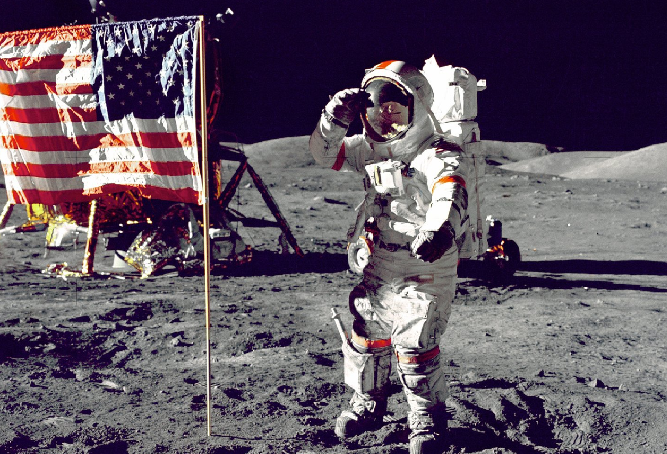
Several space missions directed to the Moon continued to be undertaken by the US until Zond 5 launched by Russia made it the first Earth life to travel to and around the Moon in the year 1968. However, Apollo 11 spacecraft launched by the United States became the first one to make humans take a walk on the surface of the Moon.
On July 20, 1969, Commander Neil Armstrong and Lunar Module Eagle Pilot Buzz Aldrin successfully landed on the lunar surface, and six hours and 39 minutes afterwards, Armstrong made history by becoming the first person to walk on the Moon. Aldrin joined him around 19 minutes later and they spent roughly two and a half hours together exploring the location they had called Tranquilly Base upon landing.
Neil Armstrong became the first person to walk on the Moon (Image- Media Village)
21.5 kg of lunar material was recovered by Armstrong and Aldrin back then as they returned to Earth. The fifth crewed mission of NASA’s Apollo program, Apollo 11 was launched by a Saturn V rocket from Kennedy Space Centre on Merritt Island, Florida, on July 16.
First Robotic probe to land on the Moon
While the US later carried out several crewed landing missions, Russia in the year 1970 launched Luna 16 to establish its first mechanized probe on the surface of the Moon. Luna 16 was the first robot to land on the Moon and bring back lunar soil for analysis on Earth. The sample, weighing 101 grams (3.56 ounces), had been brought back from Mare Fecunditatis, a region on Moon renamed. It was the third mission overall to return lunar samples, and it was the Soviet Union’s first mission to do so successfully.
In 1993, three extremely small (0.2 gram) samples of Luna 16 soil were sold at auction by Sotheby’s for USD 442,500. On November 29, 2018, Sotheby’s resold the samples for USD 855,000. Sotheby’s is an American multinational corporation having its headquarters in New York City. It is one of the world’s largest brokers of fine and decorative art, jewellery, and collectables.
Japan’s first space mission to the Moon
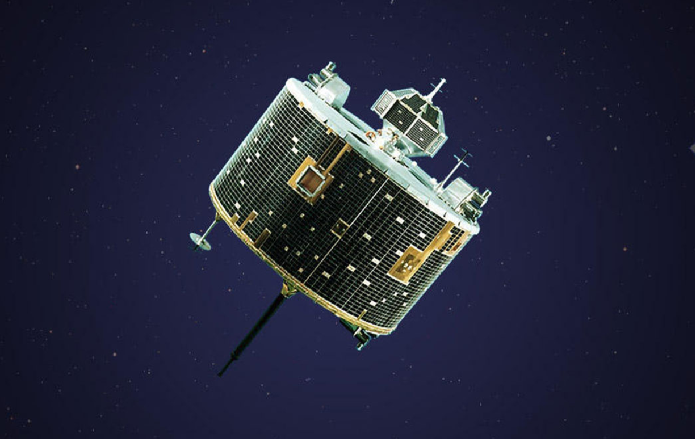
In the year 1990, the Institute of Space and Astronautical Science of Japan launched its Hiten named spacecraft to carry out its first robotic lunar probe after Russia and the US. Developed largely to test and validate technologies for upcoming lunar and planetary missions, Hiten was Japan’s Earth-orbiting satellite. The spacecraft was launched near the Moon with the small satellite it was carrying by the name of Hagoromo.
Before being purposefully crashed onto the Moon on April 10, 1993, Hiten was placed into a highly elliptical Earth orbit and traveled over the Moon ten times. This Japanese spacecraft with two modules was intended to fly by the Moon and release an orbiter. It was the first lunar mission undertaken by Japan and the first robotic lunar probe since the Soviet Luna 24’s flight in 1976.
Europe Space Agency in the year 2003 joined the race
The European Space Agency (ESA) developed the Small Missions for Advanced Research in Technology (SMART-1) spacecraft as a scientific demonstrator for a mission to the Moon to test solar-electric propulsion and other deep space capabilities.
It became the first European spacecraft to orbit the Moon.
The study of permanently lit polar mountain summits and potentially ice-containing dark regions of the lunar surface comprised the mission’s second phase. It was launched on September 27, 2003, and in September 2006, it was intentionally crashed onto the Moon.
China’s Chang’e mission, named after the Moon goddess in Chinese mythology
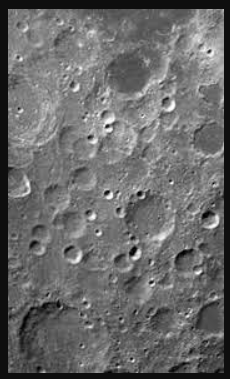
In the year 2007, China also joined the world’s efforts to study the moon by sending its first ever uncrewed Chinese lunar-orbiting spacecraft Chang’e 1. The spacecraft was launched on October 24, 2007, from Xichang Satellite Launch Center. The spacecraft entered the lunar orbit on November 5 and sent the first snap of the natural satellite on November 26 that year.
The mission’s main technical goals were to build a basic engineering system for lunar exploration, launch China’s first lunar orbiter, validate the technology required to fly lunar missions, begin scientific exploration of the Moon, and gain experience for future missions. Obtaining three-dimensional stereo images of the lunar surface, examining the distribution and abundance of elements there, measuring the thickness of the lunar soil, assessing its resources for helium-3 and other elements, and investigating the environment between the Moon and Earth were additional scientific goals.
As a result, the spacecraft obtained information that was eventually utilized to produce an exact and detailed 3-D map of the lunar surface. Additionally, Chang’e 1 made history as the first lunar mission to use a microwave radiometer to do passive, multi-channel, remote sensing of the moon.
First Lunar Image obtained by Chang’e 1 (NASA)
The spacecraft operated until March 1, 2009, after which it was removed from orbit. After Chang’e 1, China continued to send 4 more spacecraft to the moon all of which successfully attained the slated objectives. China recently in the year 2020 sent its fifth lunar exploration mission making history by becoming the third country to recover samples from the Moon after the United States and Russia.
On January 3, 2019, China’s Chang’e-4 spacecraft successfully landed on the far side of the moon and started sending images. Chang’e-4 became the world’s first to land on the lunar far side, which faces away from the earth. The landing site was in the Von Kármán crater in the South Pole-Aitken Basin. China’s previous mission, Chang’e 3, had landed on the near side of the Moon. Chang’e is named after the Moon goddess in Chinese mythology. Its rover, named Yutu, continues to study the lunar far side.
In 2020, China’s Chang’e 5 mission returned to Earth with samples from the Moon. The spacecraft is now on an extended lunar orbit to test technologies.
Chandrayaan-1 by India discovered water molecules on the Earth
The Chandrayaan-1 spacecraft from India was a key component in the discovery of water molecules on the Moon. It was sent into orbit around the Moon with the intention of sending an impactor there.
The study of the Moon’s chemical, mineralogical, and photogeologic mapping was one of the goals of the research. The spacecraft also carried scientific instruments from the United States, the United Kingdom, Germany, Sweden, and Bulgaria in addition to the five Indian tests.
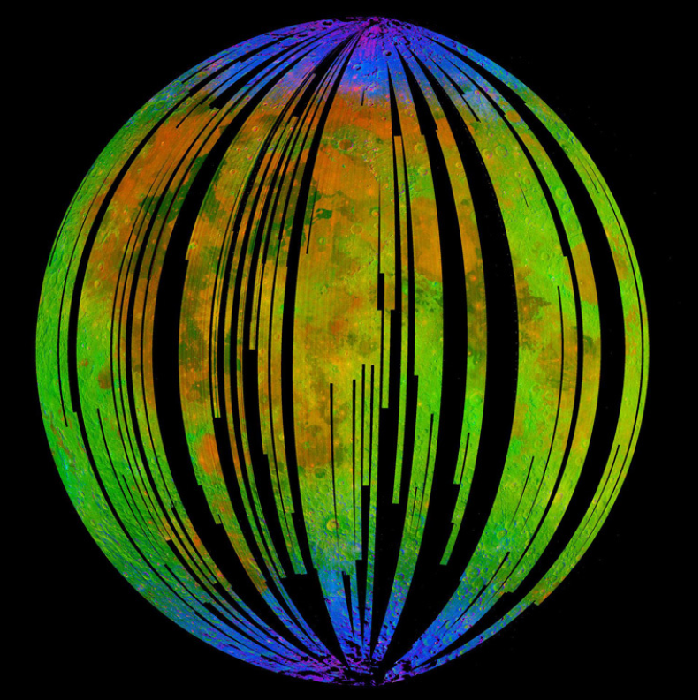
Chandrayaan-1’s instruments found small amounts of water and hydroxyl (blue) on the surface of the Moon (NASA)
The first private lunar probe was led by Luxembourg
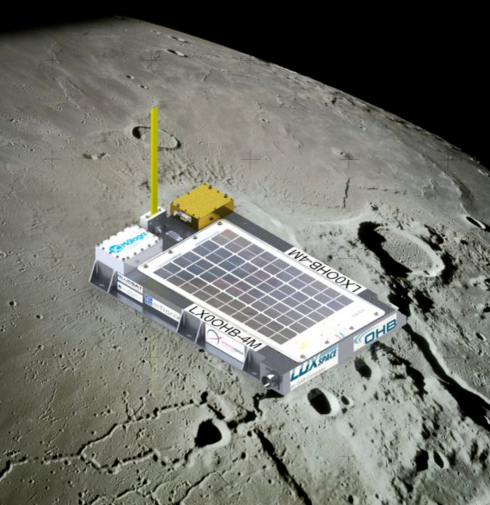
The first privately funded lunar probe to successfully fly by the Moon was Manfred Memorial Moon Mission (4M). It was administered by LuxSpace, a subsidiary of the German multinational corporation OHB System, and was dedicated to the late Manfred Fuchs, the founder of OHB Systems, who passed away in 2014. On October 23, 2014, it was launched in conjunction with the Chinese Chang’e 5-T1 test spacecraft.
After the October 28, 2014 moon flyby, the spacecraft entered an elliptical Earth orbit and continued communicating until 11 November 2014, surviving four times more than it was intended to.
After its orbit dropped on March 4, 2022, the spacecraft and the rocket stage to which it was attached most certainly collided with the Moon’s surface. Thereby, Luxembourg became the eighth country to reach the surface of the Moon.
And, now this year in July, India launched the Chandrayaan-3 spacecraft which is scheduled to make a successful landing on August 23. As reported earlier, The Chandrayaan-3 mission will send scientific equipment to the moon in order to investigate its elemental composition, surface plasma environment, lunar seismicity, and thermophysical features.
ISRO has identified three key goals for the Chandrayaan-3 mission. These goals include accomplishing a safe and gentle landing on the Moon, displaying the rover’s mobility on the lunar surface, and performing on-site scientific studies.
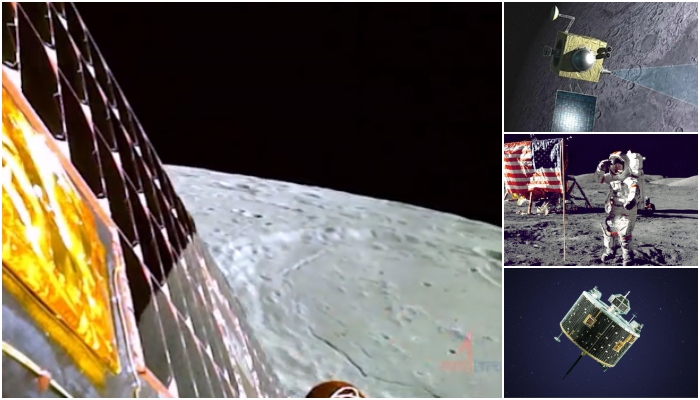
Notably, India’s third lunar mission managed to capture stunning lunar surface images after entering the Moon’s orbit on August 7 this year. “The Moon, as viewed by Chandrayaan-3 spacecraft during Lunar Orbit Insertion (LOI) on August 5, 2023,” tweeted the Mission’s official Twitter handle.
The spacecraft also captured crucial images of the Moon on August 20, the video of which was shared by the ISRO from its official handle.
The spacecraft, mounted on GSLV Mark 3 (LVM 3) heavy-lift launch vehicle, successfully lifted off from the Satish Dhawan Space Centre in Andhra Pradesh’s Sriharikota on July 14.
Conclusion
In addition to being India’s ambitious lunar mission, Chandrayaan 3 represents a fantastic chance for the country to engage in international cooperation. Several nations and space agencies have expressed an interest in working with India to exchange knowledge, materials, and goals in the said research. This collaborative project will encourage knowledge exchange and hasten the development of lunar science.
India continues to strive for scientific excellence in space exploration, and this mission is an example of that commitment. The project’s objectives, which center on lunar exploration, technological advancements, and international cooperation, hold considerable promise for increasing our understanding of the Moon and beyond. The world is eagerly anticipating the discoveries and revelations that Chandrayaan-3 will make as it makes a safe landing scheduled on August 23 on the lunar surface.