Home Blog Page 2050

As PM Modi launched National Sickle Cell Anaemia Elimination Mission from Madhya Pradesh, here is a comprehensive explainer of the genetic disease   

On the 1st of July, Prime Minister Narendra Modi launched the National Sickle Cell Anaemia Elimination Mission (NSCEM) from Shahdol, Madhya Pradesh. The aim of this Mission is to eliminate chronic disease by 2047. 

PM Modi emphasised that the biggest beneficiaries of these efforts will be the people of Adivasi societies – Gond, Bhil, and others. He further stated that the nation is taking ‘Sankalp’ (pledge) to secure the lives of people from tribal communities, free them from sickle cell disease (SCD) and safeguard the lives of more than 2.5 lakh affected children and their families.

He said, “Sickle Cell Disease is a disease that impacts tribal sections of societies significantly. The government is committed to eliminate the disease before India celebrates its Amrit Kaal in 2047.”

Union Minister for Health and Family Welfare, Dr. Mansukh Mandaviya, Governor of Madhya Pradesh Mangubhai Patel, Chief Minister of Madhya Pradesh Shivraj Singh Chouhan, and several Union Ministers and State office bearers were also present at the event. 

Sickle Cell Disease, its symptoms, treatment, and precautions

Sickle cell disease (SCD) is a chronic single-gene blood disorder. An infected patient’s body has the presence of abnormal haemoglobin, the protein which is responsible for carrying oxygen in Red Blood Cells (RBCs). Normally, RBCs are round or disc-in shape and are flexible, so they can move easily through the blood vessels. But some red blood cells of an SCD patient become rigid and sickle or crescent-shaped, which slows or blocks the flow of blood, resulting in the name sickle cell anaemia.

The symptoms of sickle cell anaemia can vary in severity and can include Chronic pain, Anaemia, Increased susceptibility to infections, Organ damage, and delayed growth and development. 

As these sickle-shaped cells are rigid they can block the flow of blood through the vessels and lead to pain episodes known as “sickle cell crises.” This can occur in various parts of the body, including the bones, chest, abdomen, and joints. 

The abnormal RBCs are fragile and can easily break down. As per medical research, normal healthy RBCs are expected to last for 120 days before replacement but in the case of an anaemic patient, the RBCs expire within 10 to 20 days. This leads to a shortage of RBCs in the body, resulting in anaemia, which can cause fatigue, weakness, and shortness of breath.

These rigid sickle cells can also harm the spleen making people more susceptible to infections. The spleen is an organ in the body that filters blood. An SCD patient may have swelling in their hands and feet. 

The blockage of blood flow and/or reduced oxygen supply can damage organs such as the spleen, kidneys, lungs, and brain, leading to serious complications. Further, SCD is a chronic disease that is characterised by its persistence and ongoing nature.

As stated above, SCD is a single-gene blood disorder. It means that a patient is likely to suffer from SCD only when the individual gets two infected genes, one from the mother and one from the father. In case only one parent has a gene-related disease, then the offspring or kid is said to be a “carrier” but the individual will be healthy. 

Now, as per Hopkins Medicine, if a carrier has a child with another carrier, there is a higher probability, nearly 25%, that the child will have SCD. Additionally, studies have highlighted that SCD is widespread in populations living in malaria-endemic regions, this is claimed to be a major reason why the tribal population is more prone to this disease and the government is specifically focusing on this aspect.

That is why, early tracing and matching Sickle-cell genetic status is a potent weapon against this disease. Sickle cell anaemia can be diagnosed by blood tests, which identify and measure different types of haemoglobin in red blood cells, including the abnormal haemoglobin that causes sickle cell anaemia. Testing the blood of newborns is key to combating the disease. Prenatal test of unborn babies is also possible to find out if they have the disease.

As per The National Heart, Lung, and Blood Institute (NHLBI), the only treatment to cure the illness is bone marrow or stem cell transplants, however, both of these treatment processes are said to have their own hazards. Apart from this, blood transfusions are done to reduce the complications of the disease. Doctors also prescribe medicines that can reduce symptoms caused by sickle cell anaemia.

There is no medicine to cure the disease. Earlier, people with the disease used to die in their childhood. But now with proper management and treatment, people with sickle cell anaemia can live into their 50s.

As it is an inherited disease, nothing can be done to prevent getting the disease. People can undergo a blood test to see if they are carriers and can pass on the disease to their children.

Components of the National Sickle Cell Aanemia Elimination Mission (NSCEM)

Informing about the Mission on the 1st of July, PM Modi said, “NSCEM combines both screening and awareness strategies to ensure early detection and treatment while promoting education about the disease as people may not be aware that they suffer from this disease, and may unintentionally transfer it to the next generation, hence the role of screening becomes even more important in this regard.”

During the event, Health Minister Mandaviya emphasised that this is a genetic disease. Subsequently, he asked people from the high-burden states to match their Sickle Cell Genetic Status Cards before marriage to ensure that the disease is not transferred to the next generation.

He said, “The elimination programme reflects the government’s Intent and determination to eliminate the spread of Sickle Cell Diseases. Across 278 districts of India, screenings will be done for people between 0-40 years to stem the further spread of the disease.” 

The program is a part of the National Health Mission (NHM). In the next three years, the program aims to screen approximately 7.0 crore people and promote early diagnosis and intervention. 

The program is currently implemented in 17 high-focus states across the country. The 17 states are- Gujarat, Maharashtra, Rajasthan, Madhya Pradesh, Jharkhand, Chhattisgarh, West Bengal, Odisha, Tamil Nadu, Telangana, Andhra Pradesh, Karnataka, Assam, Uttar Pradesh, Kerala, Bihar, and Uttarakhand.

Apart from the announcement of the mission, PM Modi also launched training modules for primary, secondary, and tertiary care. These include medical officers, staff nurses, Community Health Officers, Auxiliary Nurse Midwives, and Accredited Social Health Activist workers. 

Further, PM Modi also released an awareness module for Sickle Cell Disease for Non-Health Functionaries, Parents, and Teachers, as well as a counseling module for patients, caregivers, and pregnant women.

Early detection and gene status matching are crucial in preventing the hereditary transmission of sickle cell disease (SCD), as it is a genetic disease. To emphasize this, Prime Minister Modi distributed Sickle Cell Genetic Status Cards to beneficiaries during the event.

During the event, PM Modi also highlighted efforts made by his government for improving holistic health care in the country. He stated that the government has successfully brought down the numbers of Kalaazar from 11,000 in 2013, to under 1000 today, and malaria cases from 10 lakhs in 2013 to under 2 lakhs today. 

Similarly, leprosy cases have come down from 1.25 lakh to 70-75 thousand. In this, he also highlighted how his government is determined to eliminate the spread of tuberculosis by 2025. 

Additionally, PM Modi also launched the distribution of about 3.57 crore digital cards to Ayushman Bharat Pradhan Mantri Jan Arogya Yojana (AB-PMJAY) beneficiaries. Out of these around 1 crore cards are being distributed physically to the beneficiaries in Madhya Pradesh alone.

NIA conducts raids across three States to bust Pakistan-run ‘Ghazwa-e-Hind’ module, recovers incriminating material. Read details

0

The National Investigation Agency (NIA) on Sunday conducted raids at five places in Bihar, Gujarat and Uttar Pradesh in connection with ‘Ghazwa-e-Hind’, a radicalized module being run by Pakistan-based suspects.

The agency searched one place in Darbhanga and two in Patna in Bihar, one in Surat (Gujarat), and one in Bareilly (Uttar Pradesh). The raids were conducted at the premises of these suspects across three states. Incriminating material, including digital devices (mobile phones, memory cards), SIM cards and documents were seized during the raids, said the NIA.

The case came to light after the arrest of Marghoob Ahmad Danish alias Tahir, of Phulwarisharif area of Patna district by the Bihar Police, which registered it on July 14, last year. The NIA took over the case and re-registered it on July 22, last year and Marghoob was chargesheeted on January 6 this year under various sections of the Indian Penal Code and Unlawful Activities (Prevention) Act, 1967.

“The accused was found to be a member of the Ghazwa-e-Hind module, which was operated by Pakistan-based operatives, with the objective of radicalizing impressionable youth for the establishment of Ghazwa-e-Hind over Indian territory,” said the NIA.

Investigations revealed that Marghoob was the admin of a WhatsApp Group ‘Ghazwa-e-Hind’, created by a Pakistani national named Zain. “Marghoob had added many Indians, Pakistanis, Bangladeshis and Yemeni nationals to the Group with the aim of establishing sleeper cells in the country for carrying out terrorist activities,” said the NIA.

It further said that the accused had created various social media groups of the ‘Ghazwa-e-Hind’ on WhatsApp, Telegram and BiP Messenger. “He had also created another WhatsApp group in the name of ‘BDGhazwa E HindBD’ and had added Bangladeshi nationals to it.”

Further investigations showed that various suspects involved in the case were in contact with Pakistan-based handlers and were involved in propagating the idea of Ghazwa-e-Hind, said the NIA. “Further NIA investigations in the case are in progress,” added the agency.

(This news report is published from a syndicated feed. Except for the headline, the content has not been written or edited by OpIndia staff)

Uttar Pradesh: Yogi Adityanath government planning to use eight rivers as inland waterways for goods and passenger transport

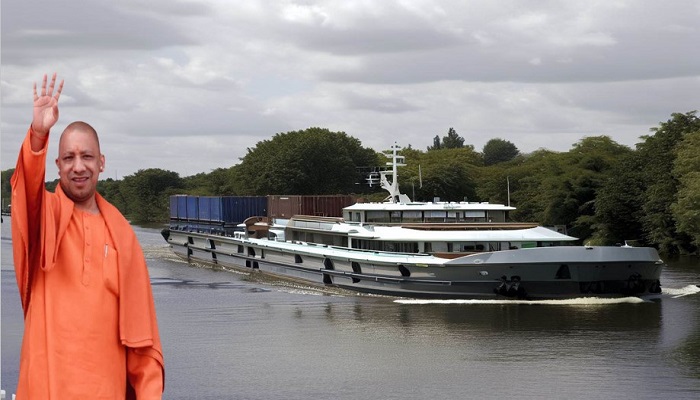
On the 2nd of July, the Press Trust of India (PTI) reported that the Yogi Adityanath-led state government is working on a plan to use eight rivers as inland waterways. The aim is to improve connectivity and transport goods, especially bulk cargo such as foodgrains and fertilisers. 

Senior state government officials have informed that the Yamuna, Gomti, Assi, Ghaghra, Rapti Betwa, Chambal, and Varuna rivers will be used as waterways to transport goods and people. On the 1st of July, Transport Minister, Dayashankar Singh confirmed reports about this plan in an interaction with PTI. 

Singh said, “Mother Nature has blessed Uttar Pradesh with so many rivers. The potential of these rivers has been neglected in the past. We are making an effort to make the rivers more useful for the public. The plan to develop waterways is a step towards this.”

Minister Singh stated that the plan is in the initial survey phase. The modalities of it will be decided as per the survey and the feasibility of different rivers. However, they are moving ahead with the intention to realise the aim to strengthen and expand the waterways.

Singh further added, “The work on the waterways will be expedited following the formation of an inland waterways authority. Work is underway to get it cleared by the state cabinet in the coming months.”

Reportedly, the proposed waterways authority will comprise officials from the transport, irrigation, and tourism departments. However, the transport department officials have been given responsibility for the initial work to survey prospective waterways.

The officials involved highlighted that this move of the state government is in line with the Union government’s Maritime India Vision 2030. Under this initiative, the Union government wants to increase the share of inland waterways to five per cent by 2030. Apparently, work to achieve this stated target of 5% has already started. 

Currently, inland water transport has a share of two per cent in India’s modal mix. Since Inland waterways are considered the most economical mode of transportation, the Union government has been trying to increase its share significantly. 

For this, the Union government has planned to increase the share of Inland waterways to five percent, according to the Maritime India Vision 2030.

Inland waterways will boast Public mobility

Earlier on 28 February 2023, the world’s longest river cruise, MV Ganga Vilas, completed its maiden voyage in Dibrugarh, Assam. The luxury river cruise started its journey on January 13 from Varanasi in UP. During its journey, it covered the incredible inland waterways of 27 river systems spanning over 3,200 km across five Indian states (Uttar Pradesh, Bihar, Jharkhand, West Bengal, and Assam). 

Transport Minister Singh also emphasised utilising this aspect of inland waterways. He said, “Apart from looking at the waterways’ potential to ferry cargo, we are also planning to boost public mobility, both for short and long distances. The transport department will run water taxis in the rivers where it is feasible. We will get further clarity on this once the survey is completed.” 

After the survey process, the authorities will develop fairways to ensure that the cargo boats and water taxis have the least available depth for movement all throughout the journey. 

At present the Ganga and Hooghly rivers from Prayagraj to Haldia are designated as National Waterways 1, Brahmaputra in Assam as NW2, among several rivers designated as national waterways.

As part of the Maritime India Vision 2030, efforts are currently underway to achieve a minimum available depth of 2.5 meters in the Barh-Ghazipur stretch and 2.2 meters in the Ghazipur-Varanasi stretch of National Waterway 1 along the Ganga River. This work falls under the Jal Marg Vikas Project, which is being carried out by the Inland Waterways Authority of India, with technical and financial support from the World Bank.

Times Now Navbharat-ETG survey: BJP alliance to secure 325 seats if elections held today, Congress to get 111 seats

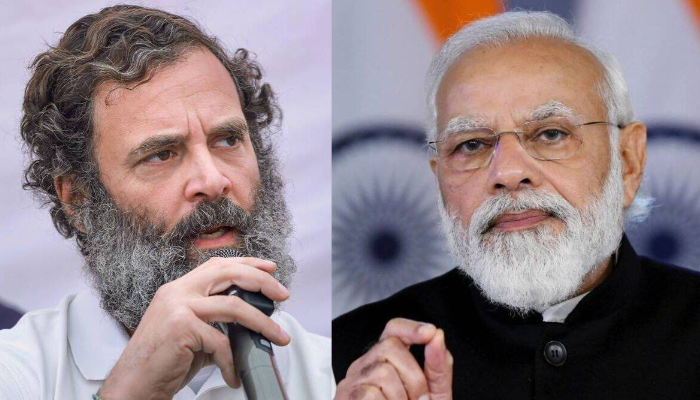
The 2024 Lok Sabha elections are scheduled to take place less than a year from now. As the general elections are approaching, the political temperature is rapidly increasing in the country and people are deciding between their preference for Bharatiya Janata Party stalwart and Prime Minister Narendra Modi and Congress leader and disqualified Wayanad MP Rahul Gandhi.

The people’s preference right now was highlighted in Times Now Navbharat and ETG’s recently concluded survey. While the opposition is planning to join the fight through the formation of an alliance, the incumbent party is fervently trying to win the poll for a third straight time. After Patna, the opposition’s next meeting will be organised in Bengaluru whereas the National Democratic Alliance led by BJP is also actively expanding its fold.

The survey of Times Now Navbharat-ETG has revealed that the BJP alliance can return to power again with 285-325 seats while the Congress-led alliance can be restricted to 150 seats. If elections are held now, BJP’s seats will decrease as compared to last time, however, it will still get an absolute majority in the centre.

As per the survey, BJP can win 22 to 24 seats in Madhya Pradesh. Furthermore, they are likely to get 20 to 22 seats in Rajasthan, and the Congress looks to be capturing only 3 seats in the state, where it is in power.

The BJP’s supremacy in the 2019 polls in West Bengal is set to be sustained as per the poll. It is predicted to prevail in 18–20 constituencies while Trinamool Congress (TMC) is projected to hold 20-22 seats in the region. NDA is expected to be able to obtain 22–24 seats in Bihar as well, whereas the Rashtriya Janata Dal–Janata Dal United–Congress grand alliance can take 16–18 seats.

Congress party might secure 111-149 seats all over India. Y. S. Jagan Mohan Reddy’s Yuvajana Sramika Rythu Congress Party (YSRCP) could end up as the third-largest party with 24-25 seats in the country followed by TMC and Odisha’s incumbent Biju Janata Dal (BJD) which can win between 12-14 seats.

The survey was done out of a sample of 1.35 lakh. 40% of the people’s feedback was taken by going door to door, while 60% were talked to on the telephone.

France: Memorial to Holocaust victims and WWII resistance in Paris suburb vandalised during anti-police riots, house of mayor attacked

On Thursday, a memorial commemorating Holocaust victims and members of the French resistance in Paris was vandalised and defaced by drawing graffiti on it during the extensive riots that followed the killing of 17-year-old Nahel M. at the hands of a police officer in a suburb of Paris. The historical site was defaced with a variety of anti-police sentiments.

The 200,000 Frenchmen who were deported to Nazi concentration camps during World War II, as well as those who fought in the underground resistance movement against the Nazis when France was occupied by Germans, are honoured at the Mémorial des Martyrs de la Déportation et de la Résistance (Memorial to the Martyrs of the Deportation and the Resistance) in Nanterre, a suburb of Paris in France.

European Jewish Congress referred to the incident as “truly horrifying” and a ” shameful act of disrespect for the memory of the victims of the Holocaust.” They also called for an unequivocal condemnation of the act.

Videos of the incident show youths chanting slogans and writing anti-police messages on the wall of the memorial

Combat Antisemitism Movement tweeted, “The vandalization of this monument desecrates the memory of the victims of the Nazis. Amid the social unrest currently roiling France, Holocaust memorials must be respected and protected.”

They said that the Memorial to the Martyrs of the Deportation in Nanterre honours the 200,000 people who were sent from Vichy France to German concentration camps during WWII.

Ariel Goldmann, president of the United Jewish Social Fund posted, “The vandalism was an absolute outrage and a disgrace. Nothing is respected.”

The mayor of a village south of Paris, Vincent Jeanbrun, alleged on Sunday that the protestors crashed a car into his house, injuring his wife and one of his kids. “Last night, a milestone was reached in horror and ignominy. My home was attacked and my family was the victim of an assassination attempt,” he wrote on social media. “My wife and one of my children were injured. It was an attempted murder of unspeakable cowardice,” he added.

Despite a significant police presence, violence has been raging in cities such as Lyon, Pau, Toulouse and Lille across France since Tuesday. Stores have been looted and cars and structures including the largest library in Marseilles called Alcazar, set on fire by the rioters.

Over 2,000 people have already been arrested by the police. The government deployed 45,000 police to city streets across the country to head off a fifth night of violence. 

Meanwhile, mourners gathered at a mosque in Nanterre on Saturday afternoon local time for the victim’s funeral service. Silence reigned as the crowd awaited the coffin’s departure from the mosque and subsequent interment. He was laid to rest in Nanterre’s Mont Valérien cemetery.

Protests and unrest ensued in Paris suburbs after a teenager was killed by a police officer on 27 June. The 17-year-old named Nahel M. was a delivery agent. He was stopped by the police and was asked to show documents while he was driving when he tried to flee the scene during which shots were fired. One of the bullets hit him in the chest and he died on the spot.

The instruction to stop was issued under a routine traffic check. The victim was previously convicted of failing to stop at a signal as well as driving without a license. The accused official was detained on suspicion of manslaughter.

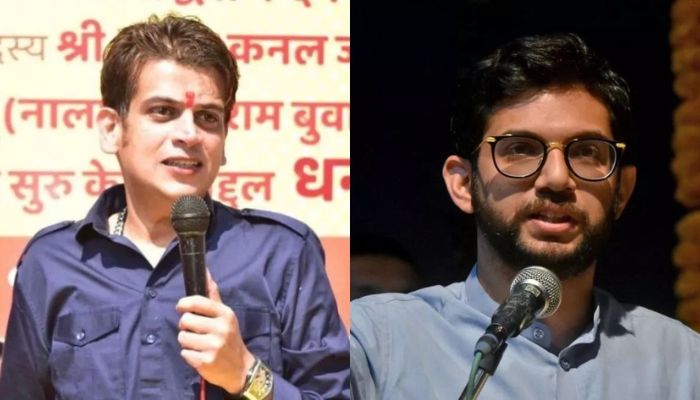
‘Aditya Thackeray did not give me time for 4 months’: Rahul Kanal explains why he left Uddhav Thackeray’s Shiv Sena

In a major blow to Uddhav Thackeray’s Shiv Sena faction, Rahul Kanal, a prominent leader and close aide of Aditya Thackeray, has resigned from the party and joined the Shiv Sena led by Maharashtra Chief Minister Eknath Shinde on Saturday, July 1, 2023. Kanal, who was a key member of the core committee of Aditya Thackeray-led Yuva Sena, has now joined the CM’s faction.

Addressing his decision to switch sides, Kanal asserted that he faced no external pressure to join the Shiv Sena. Despite allegations of corruption being levelled against him, he stated, “Some claim my name is involved in corruption, but if there would have been any pressure against me, I would have joined long back,” as he candidly expressed his reasons to join Shiv Sena.

Furthermore, Kanal expressed his disappointment regarding the lack of attention he received from Aditya Thackeray. Highlighting the difficulties he encountered in trying to communicate with the leader, Kanal revealed, “I have been trying to speak to him for the last 4 months since I quit the Yuva Sena group because there were issues. But despite that, no one tried to contact me.”

Contrary to the perception of being a close aide, Kanal emphasised that it took him four months to establish contact with Aditya Thackeray, questioning the level of accessibility faced by ordinary individuals.

“People call me a close aide of Aaditya Thackeray but it took me 4 months to get in touch with him. I don’t know what common people would have to face,” he added. Should any of the corruption allegations against him be substantiated, Kanal affirmed his willingness to quit politics.

The split within the Shiv Sena, which occurred last year when Uddhav Thackeray was in power, resulted in two factions. Eknath Shinde, who was then a minister in the Maha Vikas Aghadi (MVA) government, led a rebellion within the ranks, leading to the downfall of the Thackeray-led government. Subsequently, the Shinde camp, with the support of the BJP, assumed power.

Where does Quran say to kill people: Bhojpuri actress Sabiha Shaikh, who adopted the screen name ‘Rani Chatterjee’, criticises movie ’72 Hoorain’

Bhojpuri actress Sabiha Shaikh, popularly known as ‘Rani Chatterjee’, has hit out at the makers of the upcoming movie ’72 Hoorain’. The film, directed by Sanjay Puran Singh Chauhan, exposes the dark face of Islamic terrorism from 9/11 to 26/11.

Shaikh was reportedly unimpressed after watching the trailer of the much-anticipated movie. She claimed that such films are made so that people in society could remain divided along religious lines.

The actress alleged that filmmakers are now encashing people’s emotions for minting money. “The depiction of the Quran in this movie is wrong. Quran does not teach to take anyone’s life. If the director or producer of 72 Hoorain had read the Quran, then, they would not have used such dialogues” she said.

While comparing ’72 Hoorain’ with ‘Adipurush’, she accused the makers of the movie of distortion. “After ‘The Kerala Story’ became a hit, people started to encash this trend. Hatred is being spread either through politics or films. The general public has nothing to do with this,” she claimed.

Sabiha Shaikh alleged, “What do you want to achieve by showcasing such hateful films to the new generation? Where does Quran say to kill people? Can you show it to me? A wrong message is being sent (to the society). This is part of the agenda to spread hate.”

“I am a Muslim. But will you call me and my family members, a terrorist? The Kerala Files (sic) showed that girls are being forcibly converted to Islam. In the South, people are being converted to Christianity. But none wants to talk about it?” she further claimed.

“You are making an anti-Muslim film. Given the current situation (in the country), the film (72 Hoorain) is likely to do well. But who will compensate for the hate that you will spread in this process,” the Bhojpuri actress claimed.

How Sabiha Shaikh became Rani Chatterjee

During an interview with Hindustan in June 2020, she opened up about her journey from Sabiha Shaikh to her screen name ‘Rani Chatterjee.’

The actress recounted, “While shooting for my debut film ‘Sasura Bada Paisawala’, I was at the Gorakhnath temple and there was a scene where I had to hit my head near the idol of Lord Shiva.”

“At that time, many media personnel were present. The director felt that if people get to know my real name, then, they may not allow us to shoot the particular scene. It could have been detrimental to the movie. So, the director asked me to use the name of ‘Rani’ (similar to a character in the movie),” she added.

Shaikh informed, “Someone asked producer Sudhakar Pandey about my caste name. In those days, the name of Rani Mukherjee was popular. So, he came up with the name ‘Rani Chatterjee.'”

She concluded, “After the name was published in newspapers, my parents were angry with the development…The name turned out to be great for my career.

Maharashtra: Ajit Pawar and over 30 other NCP MLAs join the BJP alliance; Pawar takes oath as Dy CM, 8 other NCP MLAs to be ministers

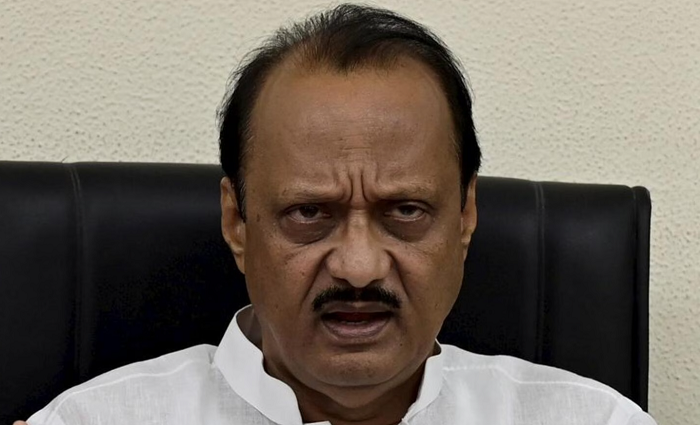
In a massive political development in Maharashtra, 30 NCP MLAs led by Ajit Pawar have revolted and joined the BJP-Shiv Sena (Shinde) government in the state on Sunday, July 2, 2023. 8 MLAs of NCP will be sworn in as ministers, as Ajit Pawar becomes Deputy Chief Minister.

Ajit Pawar on Sunday reached Raj Bhawan with 29 NCP MLAs, including Hassan Musharraf. The Ajit Pawar faction of the NCP joined the Maharashtra government today after an oath-taking ceremony at the Raj Bhawan. Chief Minister Eknath Shinde and Deputy CM Devendra Fadnavis also reached the Raj Bhawan.

After reaching the Raj Bhawan, Ajit Pawar submitted his resignation from the post of the leader of the opposition to Governor Ramesh Bais.

NCP MLAs who are expected to be made ministers are Sanjay Bansode, Dhananjay Munde, Chagan Bhujbal, Dilip Valse Patil, Baburao Atram, Anil Bhaidas Patil, Aditi Tatkare, and Hasan Mushrif. Narhari Zirwal, who was acting speaker of the Maharashtra legislative assembly last year at the time of a rift in Shiv Sena, will also join the ruling alliance. Praful Patel is also among the NCP MPs joining the BJP alliance and is likely to become a minister in the union cabinet.

The move by Ajit Pawar comes after rumours that he was upset about being denied the post of party’s state unit chief. Ajit Pawar had also offered to resign from the post of Leader of Opposition, seeking an organisational responsibility. In his revolt, he has also taken senior NCP leader Praful Patel along with him.

It is notable that Sharad Pawar, who was resigning from the post of NCP president a few weeks ago, had retracted from his decision to resign and made Praful Patel and Supriya Sule the executive presidents of the party. Praful Patel leaving Sharad Pawar is also considered as a major organisational blow to the party that revolves its politics around Maratha and Muslim votes in the state.

Maharashtra BJP President Chandrashekhar Bawankule said in his reaction, “Instead of calling it a political earthquake, it is important to see that Ajit Pawar and more than 40 NCP MLAs are coming together under the leadership of Prime Minister Narendra Modi for the welfare of the country and Maharashtra. Ajit Pawar and all the people have come to support the resolve of PM Modi. I congratulate them.”

NCP has 54 MLAs in the assembly and Ajit Pawar has already succeeded in taking more than two third of the MLAs with him. The oath taking ceremony will start at 4 PM.

Delhi: Police officer prays before Lord Hanuman, then joins demolition of the temple in Bhajanpura; a dargah also demolished

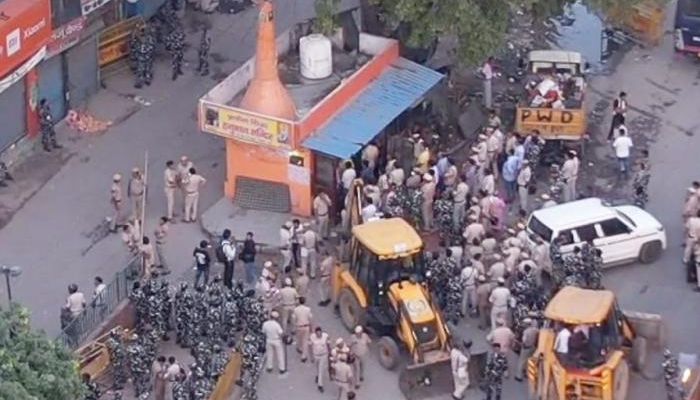
On Sunday, 2nd July 2023, the Delhi administration demolished two religious places on the footpath in the Bhajanpura area to widen a road. Additional DCP Subodh Goswami of the Delhi police offered prayers to the Hindu deities at the temple before respectfully removing the idols from the temple. The other site peacefully demolished in this drive was a dargah.

On Sunday morning, the Public Works Department (PWD) initiated an anti-encroachment drive in the Bhajanpura area of North East Delhi. The purpose of this operation was to remove a Hanuman temple and a dargah. To ensure the smooth execution of the drive and handle any potential disturbances, Delhi Police personnel were heavily deployed, along with the presence of central forces. Additionally, the entire area was carefully monitored using drone cameras.

The construction of a double-decker flyover by the PWD is currently underway in this area. The design involves the construction of a metro route on the upper level and a road on the lower level. However, the presence of a dargah in the middle of the road and a Hanuman temple on the side has resulted in persistent traffic congestion. There has been a long-standing demand for the removal of these structures to alleviate the traffic jam situation.

According to the police, prior to the demolition of the temple, Subodh Goswami, the additional DCP of North East Delhi, participated in a prayer ritual within the temple premises. Following the prayers, the idols were respectfully removed, and only then did the demolition drive commence.

DCP Joy Tirkey of North East Delhi confirmed that the police engaged in a conversation with the devotees of the temple, and they willingly agreed to cooperate with the police during the demolition process. This mutual understanding was reached as the demolition was necessary to expand the road infrastructure.

DCP Tirkey said, “It was a very peaceful operation, and even the bhakts of the temple helped us during the demolition drive. They took the idols with the utmost respect. When we arrived here, we requested their cooperation. I want to emphasize that during a conversation with them, they understood that the decision to widen the road was made by the religious committee of the government.”

He added, “Some matters fall under the civil administration, while my responsibility is to maintain law and order. When we spoke to the people, they agreed and even assisted us.”

NIA requests Home Ministry to shift 12 gangsters in jails in north India to Andaman and Nicobar Islands

Amidst a crackdown on gangsters and their syndicates, the National Investigation Agency (NIA) has reportedly held discussions with the Ministry of Home Affairs (MHA) to shift around 12 gangsters imprisoned in Delhi, Haryana and Punjab jails to Andaman and Nicobar Islands. These gangsters are said to be operating their syndicates from behind bars. 

The NIA had earlier requested that up to 25 gangsters be transferred from jails in northern India to those in southern states in a letter to the MHA. The NIA list included gangster Lawrence Bishnoi, who has been named as the prime accused in the Sidhu Moosewala murder case.

Reportedly the initial proposal was to transfer the gangsters to prisons in South India, however, this would be an extensive procedure since permission would have to be obtained from the state governments. Since the Andaman and Nicobar Islands is a Union territory administered by the MHA, the procedure will be expedited. The agency is currently seeking legal opinion as well, Indian Express quoted an MHA source as saying.

Moreover, the NIA is also contemplating shifting the gangsters to Assam’s Dibrugarh Central Jail where Waris Punjab De chief and pro-Khalistan Amritpal Singh and his aides are imprisoned.

In August of last year, the NIA filed two FIRs against a number of gangsters in the northern states, alleging a conspiracy by a criminal syndicate with bases in both India and abroad to raise money and recruit youths to commit “sensational crimes,” including the targeted murder of prominent figures, with the goal of “striking terror in the minds of the people.”

In August of last year, the NIA filed two FIRs against a number of gangsters in the northern states, alleging a conspiracy by a criminal syndicate with bases in both India and abroad to raise money and recruit youths to commit “sensational crimes,” including the targeted murder of prominent figures, with the goal of “striking terror in the minds of the people.”

The NIA, during its investigation, found that the majority of these gangsters were “operating smoothly” from behind bars.

“NIA investigations revealed that several murder plots were planned in different states’ prisons and carried out by an organised network of operatives based abroad. We are working to dismantle the growing nexus between terrorists, gangsters, and drug smugglers, and to destroy their infrastructure and funding,” an NIA official told IE.

Recently, NIA in its chargesheet filed in a terror-gangster case alleged that gangster Lawrence Bishnoi expanded his terror network in a manner similar to that of gangster Dawood Ibrahim. 

“The rise of Lawrence Bishnoi and his terror syndicate bears striking parallels to the rise of Dawood Ibrahim, a wanted terrorist, gangster, and drug kingpin who heads the notorious organised terror syndicate D-Company,” the NIA charged in its chargesheet.