Home Blog Page 2155

London: Man arrested after a car nudges into gates of British Prime Minister’s residence

A man was arrested on Thursday in London on suspicion of criminal damage and dangerous driving after a car crashed into the gates of 10 Downing Street, the official residence of the British Prime Minister. PM Rishi Sunak was in his office at the time of the incident but left soon after in a motorcade from another exit for a pre-scheduled departure. No injuries have been reported.

The 2009 silver Kia, which was registered in London, can be seen slowing down as it approaches Downing Street’s main entrance in surveillance footage of the event. Footage of the incident shows the car crossing the street and then moving straight ahead towards 10 Downing Street at a slow speed. The car had reversed into a Ministry of Defence car park across the road before crossing the road.

The Metropolitan Police informed that the occurrence is not being treated as terror-related. Following the incident at 16:20 British Summer Time (BST), a portion of Whitehall, the main thoroughfare that passes through the centre of various government offices, was evacuated.

Since then, the police barrier has been lifted and traffic on the route has resumed. The automobile was put onto a police recovery truck and driven away from the site at 19:45 BST.

Officers examined the vehicle and also took a cell phone from the car. Sniffer dogs and a forensics officer were at the location investigating the car. It was not clear if the crash had been deliberate or not. Many people on social media noted that the car was moving to slow to call it a ‘crash’.

One witness reported seeing police holding the culprit “face to the floor” and detaining him while pointing Tasers. Witness 44-year-old Simon Parry heard a “bang” and saw officers pointing Tasers at the man. “A lot of police vehicles came very quickly and were very quick to evacuate the area,” he stated.

“We saw people that were in a panic running away and we saw people who were excited,” he described the reaction of people regarding the instance.

Matthew Torbitt, a 32-year-old, claimed he heard a loud blast and was halted on Whitehall when police cordoned off the area.

Armed and unarmed police officers are stationed at the street’s entrance 24 hours a day, and Whitehall is the only route that leads there. The PM and the Chancellor Jeremy Hunt as well as a network of offices that connect to other government buildings were in Downing Street at the time of the crash.

Whitehall was reportedly “pretty much back to normal” with people entering and exiting Downing Street on foot as usual, and it looked that the gate had sustained minimal damage.

Central London is an iconic landmark and has been a target in the past including one in which a driver struck several pedestrians with a vehicle outside government offices near Westminster Bridge. At least four people, including the assailant, were killed and forty others were injured in the terrorist attack.

Recently an Indian-origin man named Sai Varshith Kandula (19) was charged with attempting to kill the US president after he rammed a U-Haul truck into the White House barricades.

Hindu org conducts survey of Americans about their understanding of caste: How it shows bias, ignorance and high chance of racial profiling of Hindus

The California State Senate in the US recently passed legislation (SB-403) that would ban caste-based discrimination in the State. A similar measure is being submitted in the State House of Representatives, according to the bill’s supporters, who are led by the nonprofit Equality Lab. This is necessary before the governor can sign the bill into law.

The Unruh Civil Rights Act, which states that everyone in the state of California is entitled to the full and equal accommodations, advantages, facilities, privileges, or services in all business establishments, is amended by SB 403, which was introduced by California Senator Aisha Wahab, to include caste as a protected category.

As per the reports, those who have suffered systematic injury as a result of caste bias and prejudice are explicitly protected under SB 403’s provisions. Additionally, it establishes clear legal repercussions for anyone who tries to escape accountability or responsibilities for condoning or taking part in caste-based violence.

However, the understanding of caste by Americans is biased and firmly associated with Hinduism and India. While the proponents of the legislation believe that caste does not automatically mean India and that it is found across multiple religions and not just Hinduism, the opponents tend to believe that caste is associated with Hinduism due to the popular narrative.

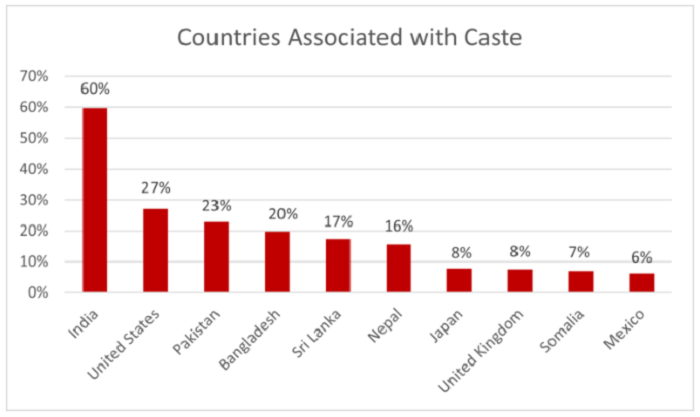
A recent survey conducted by the Coalition of Hindus of North America (CoHNA) in March 2023, which is based on a YouGov US national sample of 1,500 responses, provides utter clarity on the American understanding of caste. The survey revealed that Americans claiming caste exists across geographies from Japan to South America is a misdirection and that they firmly believe that caste is clearly associated with India and therefore Hinduism.

Americans think caste is clearly associated to India and Hinduism

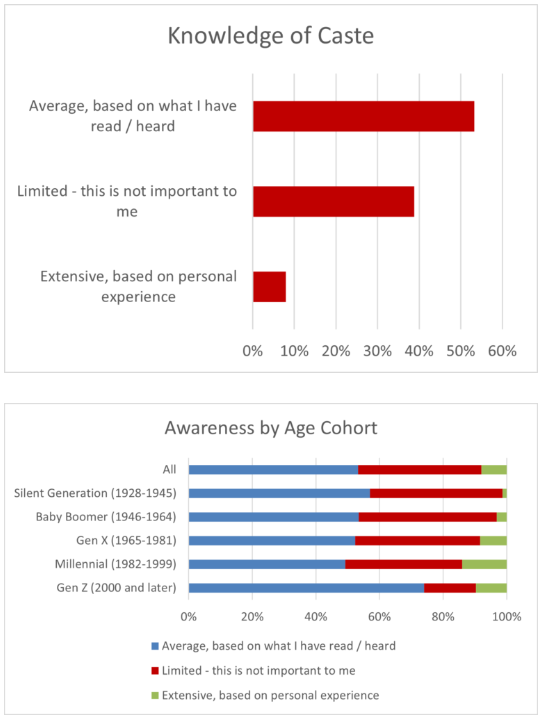
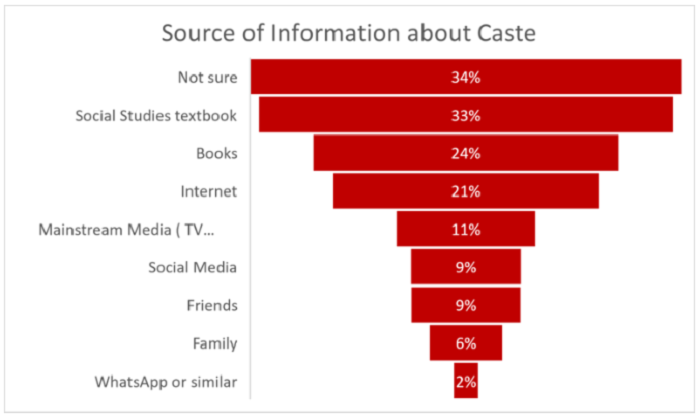
The survey also noted that only 8 per cent of those surveyed have first-hand knowledge of the caste system. It is not as prevalent as is suggested. Even for those who claim to have in-depth knowledge of caste, it is impossible for them to differentiate between castes based on last names or other traits. The vast majority of those polled stated that they first learnt about caste through their social studies textbooks in middle and high school.

Few people are aware that India has 25,000 sub-castes in addition to thousands of castes. In India, there are an astounding 4.6 Million castes, subcastes, and clans according to the socioeconomic census conducted in 2011! A resounding majority of those who do have an opinion on the subject hold that there are just four castes. Caste is taught in American schools in a manner that is congruent with this.

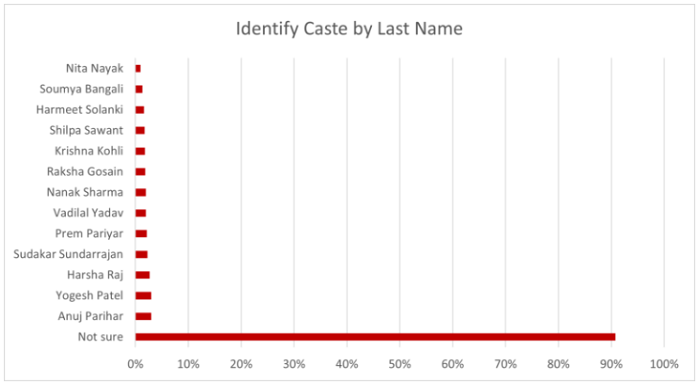
According to the Equality Labs Caste Report (p.44), a person’s last name is frequently the best indication of their caste origin. However, the survey revealed that nine out of ten respondents indicated they had no idea how to identify one’s caste from his/her surname. 

Americans can’t identify caste from one’s surname

A combination of apparently “Dalit” or “Upper Caste” names in the study included a number of popular Indian names. The first notion was that the typical American would not be able to distinguish between “Dalit” and “Upper Caste” last names. It is evident that caste is connected to India and Hinduism, at least in the thoughts of a statistically significant cross-section of Americans, but attempting to pinpoint a caste based on last name is no more accurate than a wild guess.

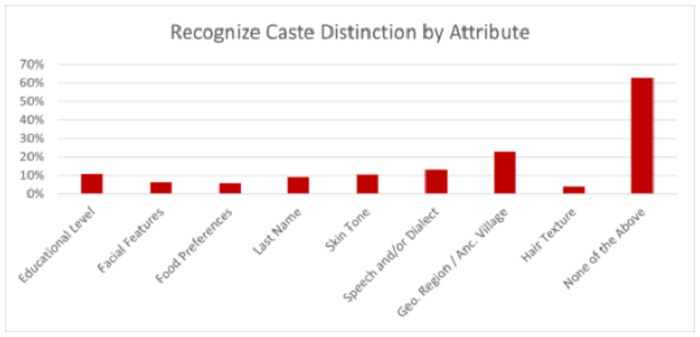
And this is a scathing refutation of the myth that one can readily discern “caste” based on characteristics like last name, eating habits, skin tone, etc.

Most people in America either have a basic understanding of the system based on what they have read or heard or don’t think it’s significant. Only the Millennial and Gen-Z groups share information based on personal experience in any appreciable quantity. This is not caste-based prejudice; it is only a knowledge of the concept, the survey noted. 

General knowledge of caste system among Americans

The poll further looked at where most Americans get their information on the caste system from. The survey revealed that more than half of respondents from all generations had been exposed to the caste system by the time they completed high school. More people would have first encountered caste talks in their employment if caste conversations were as common in the workplace or on college campuses as is stated.

How Americans learn about castes

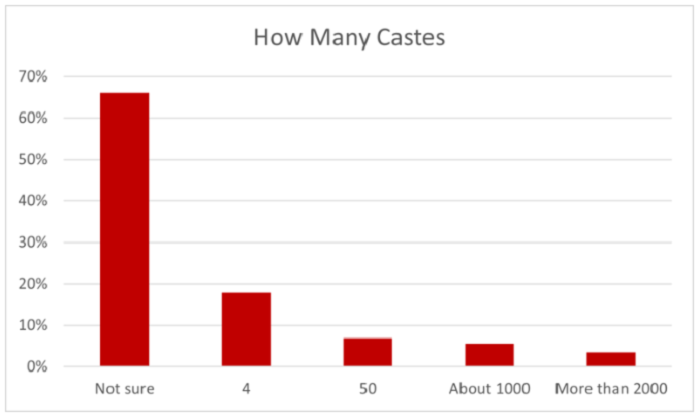
Also, the Americans have very little knowledge about the total number of castes in existence. As per the survey, majority of them claimed that they were unsure about the number while the others said that there are only four castes. Very few agreed to believe that there are more than 2000 castes existent in the world.

How many castes do Americans think exist

According to some estimates, there are thousands of castes and more than 25,000 ‘sub-castes’; however, the 2011 socioeconomic census of India found that there are an astounding 4.6 million castes, sub-castes, clans, etc.

Before hastily passing legislation forbidding it and attributing the (mythical) prejudice on Hindus from India who reside in America, a more thorough, statistically sound research of the real prevalence of caste-based systems of discrimination in America is necessary. It is also immoral to pass laws and regulations based on false or unreliable information since doing so might result in the targeting and profiling of Hindu Americans and other small-scale minorities, as well as civil rights violations. “Specious arguments that caste laws do not target Hindus or people of Indian origin are rejected with the results of this statistically valid survey,” report by Coalition of Hindus of North America stated. 

Indian Economy is set to surpass 7% growth rate in the fiscal year 2023: Manufacturing to be the key driver. Read details of the SBI report

The Indian economy is on track to surpass 7 per cent growth rate in Fiscal Year 2023 with manufacturing being the key driver, according to a report released by the State Bank of India. 

State Bank of India’s research report, Ecowrap released on Friday said that India’s growth in the fourth quarter of FY23 is likely to be 5.5 per cent, which would lead to the country’s growth for FY23 at 7.1 per cent. This is in line with the advance estimates released by the National Statistical Office (NSO) in January that pegged growth for the year ended March 31, 2023, at 7 per cent. 

According to Ecowrap the variegated patterns of growth emerging across the globe is bringing forth unprecedented challenges before policymakers, regulators and economists in assessing the real rates of projected growth, not only during the current year — 2023 — but continuing through 2024 and 2025 as the inflation trajectory management for central banks has been elongated after the surprising turn of events last year. 

Amidst this global hullabaloo, the SBI Research report said India is expected to continue its showdown in pursuing a different pathway of zeroing in on drivers of growth, looking for a renewed surge in resilient manufacturing while supporting services sector to embrace enhanced efficiency. 

Locally, domestic consumption and investment stand to benefit from stronger prospects for agricultural and allied activities, strengthening business and consumer confidence, and strong credit growth while supply responses and cost conditions are poised to improve as inflationary pressure is easing, the report said. 

The Union Budget 2023-24’s emphasis on capital expenditure is expected to crowd-in private investment, strengthen job creation and demand, and raise our growth potential, the report said. 

RBI has estimated Q4FY23 Real GDP growth to be 5.1 per cent and full year FY23 estimates by National Statistical Office (NSO) is 7 per cent. For 2023-24, RBI is projecting GDP growth at 6.5 per cent with the first quarter (Q1) pegged at 7.6 per cent. 

SBI’s ANN (Artificial Neural Network) model, based on 30 high-frequency indicators from key sectors, and tuned/trained to project the GDP numbers forecasts the quarterly GDP growth for the fourth quarter of fiscal 2022-23 (Q4FY23) at 5.5 per cent, the SBI Research Ecowrap said. It added at this rate, India’s GDP growth for FY23 is likely at 7.1 per cent. 

World Economic Outlook (WEO) report from International Monetary Fund (IMF) in April 2023 revised the baseline growth forecast from 3.4 per cent in 2022 to 2.8 per cent in 2023, before settling at 3 per cent in 2024. The report said advanced economies (AEs) are expected to see an especially pronounced growth slowdown, from 2.7 per cent in 2022 to 1.3 per cent in 2023. 

Global headline inflation in the baseline case is set to fall from 8.7 per cent in 2022 to 7 per cent in 2023 on the back of lower commodity prices though underlying (core) inflation is likely to decline more slowly, the report said. 

Meanwhile, India Inc continues to front lead the economic turnaround while embracing better operational and financial efficiency, the SBI Research Ecowrap said. It added in Q4FY23, around 1,700 listed entities reported top line growth of 12, while PAT grew by around 19 per cent as compared to the same period previous year. It added the same set of companies reported earnings before interest, taxes, depreciation, and amortization (EBITDA) growth of around 23 per cent in Q4FY23. 

The report said corporate results, ex-banking, financial services and insurance (BFSI), for Q4FY23 showed both top line and bottom line growth of around 10 per cent, while EBITDA grew by 7 per cent as compared to Q4FY22. 

Further, the report said it was pertinent to mention that corporate margin, which was continuously under pressure for last few quarters, shown sign of improvement in Q4FY23. As reflected in results of around 1,500 listed entities ex-BFSI, EBITDA margin, on aggregate basis, improved from 13.96 per cent in Q4FY22 to 14.34 per cent in Q4FY23, according to the report. 

SBI research report also said green shoots are also emerging on foreign capital inflows in capital markets with year-to date (YTD) foreign institutional investors (FIIs) inflows in FY24 touching USD 6 billion, a reversal of trend from 2022. 

It also added that start-ups financing has been hit due to banking turmoil in the US, in particular failure of niche banks though it also offers a gearing up pedestal to domestic FIs to ring fence the financial needs of these changelings internally to ensure the sweet spot enjoyed by India grows in a disruptive and disproportionate manner. 

(This news report is published from a syndicated feed. Except for the headline, the content has not been written or edited by OpIndia staff)

Supreme Court grants interim bail to AAP leader Satyendar Jain, accused of money laundering

On Friday (May 26), the Supreme Court of India granted interim bail to Aam Aadmi Party (AAP) leader Satyendar Jain for a period of 6 weeks.

As per reports, the apex court turned down the plea of the Enforcement Directorate (ED) to first let a panel of doctors from the All India Institute of Medical Sciences (AIIMS) examine the AAP leader.

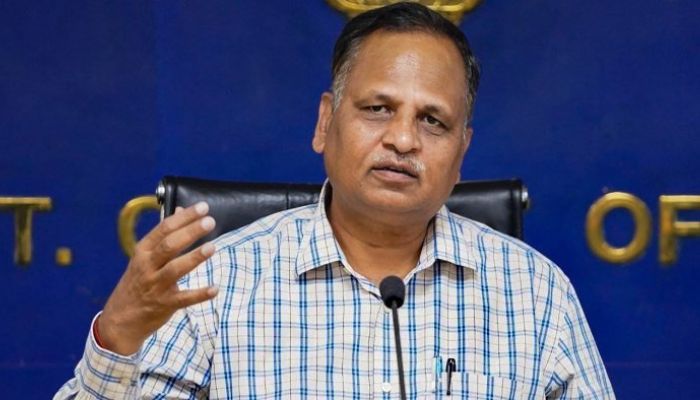
Satyendar Jain, who has been arrested in connection to a money laundering case filed by ED, has now been granted bail till July 11, 2023. He has been directed to not speak to the media during the 6-week interim bail period. The case is adjourned for hearing till July 10 this year.

The AAP leader has been in Tihar Jail since May 2022. After his bail petition was dismissed by the Delhi High Court on April 6, 2023, he approached the Supreme Court. 

On April 6 this year, the Delhi High Court made scathing observations about Satyendar Jain while dismissing his bail application. A single Judge Bench of Justice Dinesh Kumar Sharma stated that there was enough evidence to suggest that the AAP leader maintained indirect control in the alleged money laundering operation.

It must be mentioned that the Enforcement Directorate had earlier attached properties worth ₹4.81 crores, belonging to five companies – Akinchan Developers, Indo Metal Impex, Mangalayatan Projects, Paryas Infosolutions, and J.J. Ideal Estate Pvt Ltd.

The court rejected the defence of Satyendar Jain that he did not have physical possession of the attached properties. It also noted that the special court under the Prevention of Money Laundering Act (PMLA) took cognisance of the usage of Kolkata-based hawala operators by Satyendar Jain and his accomplice.

Justice Dinesh Kumar Sharma took note of the special treatment provided to Satyendar Jain in Tihar Jail. “The special treatment extended by the prison authorities to Satyender Kumar Jain shows that the ED’s apprehension throughout was correct that being a former Minister of Prisons and Health he is receiving favourable treatment from the prison officials including the prison doctors,” he said.

Bihar: JDU govt decides to remove a 350-year-old Temple to build a flyover, BJP opposes. Read about the war of words

The decision of the Bihar government to remove temples as part of clearing encroachments from roads has been opposed by the BJP. This has also led to a war of words between the Janata Dal United (JNU) and the Bharatiya Janata Party (BJP).

The latter objected to the removal of a 350-year-old temple in Patna, while the former countered that several temples had been removed from national highways and other locations with the approval of the Centre.

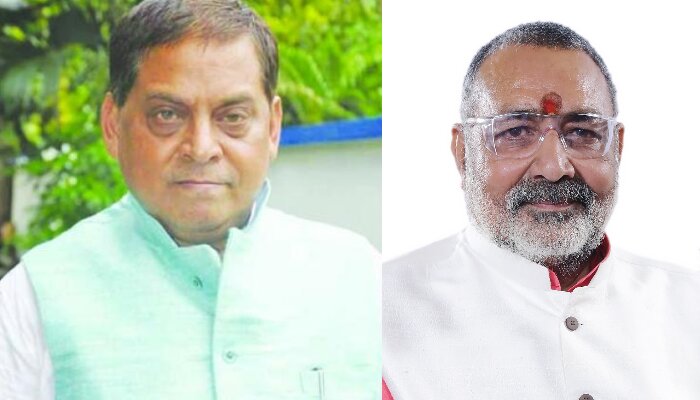
The dispute began when Begusarai MP and Union Minister Giriraj Singh vowed to protest in order to oppose the Bihar government’s intention to demolish the 350-year-old temple that is now in the way of an upcoming flyover on Patna’s Ashok Rajpath road.

Neeraj Kumar, a former minister and JD(U) MLC questioned the BJP’s lawmaker decision not to oppose the relocation of temples off national roads.

“First, the alignment of the proposed flyover on Ashok Rajpath was cleared by BJP MLA Nitin Nabin when he was road construction minister. Second, when the matter of removing temples from roads had come up in 2018, several BJP-ruled states told the courts concerned that temples could be removed,” he stated in an interview with The Indian Express.

“I want to know from Giriraj Singh why he did not oppose the removal of 15 temples during elevation and repair work between Simaria and Khagaria along NH-31,” he remarked citing central government data.

“In fact, several temples had been removed to clear encroachments in Rajasthan, Delhi, Madhya Pradesh, Uttrakhand, Karnataka and Assam. We respect all religions and our government has shifted several temples, gurudwaras and churches when they had to be removed to clear encroachments in the recent past,” the JD(U) leader mentioned.

He accused the BJP of using the temple argument to deflect attention away from governance-related concerns. In addition, Neeraj Kumar, who also serves on the Bihar State Religious Trust Council, claimed that no BJP MP nor MLA had contributed to the maintenance and development of the revered Patan Devi temple.

He alleged that however, six JD(U) legislators had given Rs 7.75 crore in support for the same. “Notably, JD(U) MLC Aafaq Ahmad donated Rs 50 lakh, thus reaffirming our belief and respect in the shared culture and tradition of our communities.”

The centuries-old building on Ashok Rajpath, according to BJP national general secretary (OBC Morcha) Nikhil Anand, should be protected from demolition in the name of encroachment.

“There are policies, but there are exceptions also. One cannot remove the 350-year-old structure just because it is within the encroachment area or town planning area. Will the Bihar government remove many mosques or Mazars that come in the way of a national highway,” he questioned.

He charged that the Bihar Chief Minister is attempting to pacify minorities. “Nitish Kumar should give one example where any mosque or Mazar has been removed in the name of development in Bihar. This historical site, which is basically a temple, is being removed to send a message to a certain section of society in the name of appeasement.”

The JD(U) and the BJP have been at odds ever since Bageshwar Dham peethadhish (high priest) Dhirendra Krishna Shastri visited Patna earlier this month for five days for religious functions. The ruling party poked fun at a number of top BJP figures for attending his sessions, while the opposition fired back by arguing that everyone was allowed to affirm their beliefs.

The Nitish Kumar administration was also slammed by the BJP for not allocating the Gandhi Maidan in Patna for Bageshwar Dham Sarkar’s event, which was instead hosted in Naubatpur, a suburb of Patna.

Tamil Nadu: NCPCR confirms that the two-finger test was conducted to humiliate minors to defame priests of Lord Nataraja Temple

On Friday, the National Commission for Protection of Child Rights (NCPCR) conducted an investigation into the ‘forced virginity test’ also known as the two-finger test on minor girls as exposed by the Governor of Tamil Nadu earlier this month. According to some reports, Dr RG Anand of the NCPCR revealed that no two-finger test was performed on minor girls in Chidambaram and the test was conducted by touching their private parts. However, it was later revealed in a report by Swarajya that the media misquoted him and that the NCPCR probe had confirmed that two-finger test was indeed conducted.

On May 4, the governor of Tamil Nadu, Ravindra Narayana Ravi, stated that the minor girls in the state were forced to undergo the two-finger test, also known as the virginity test, by the state administration in an effort to defame the podhu dikshithars. He also said that false cases of child marriage were filed against the podhu dikshithars, whereas there were no such marriages.

Pothu dikshithars are the hereditary priests and custodians of Sri Sabanayagar Temple, popularly known as Lord Nataraja Temple. Parents were arrested and put in prison. And the girls, sixth and seventh standard students, were forcibly taken from home to the hospitals and made to undergo ‘two-finger tests,’ virginity tests. Some of them tried to commit suicide,” he was quoted as saying.

The NCPCR took cognizance of the revelation and launched an investigation into the case. The NCPCR has commenced suo motu procedures to examine the charges, despite the Tamil Nadu police and health department authorities refuting these assertions. Irai Anbu, the chief secretary of Tamil Nadu, was also given instructions by the NCPCR to produce a report on this issue.

On Wednesday, NCPCR member Anand travelled to Chidambaram as part of the continuing probe. He immediately went to the Nataraja Temple and asked about the accusations made by the Podhu Dikshithars there. After that, he went to the Chidambaram All Women Police Station and questioned Collector in-charge R Rajasekaran, and SP, R Rajaram, the investigating officers of the case, and the doctors who conducted the tests on the girls.

Additionally, Dr Anand went to the girls’ homes and conducted individual interviews with both their parents and the girls. The Podhu Dikshithars’ legal representative, G Chandrasekaran, was present during the investigation.

“In response to the interview given by the Tamil Nadu Governor, the NCPCR chairperson requested a report from the Tamil Nadu Chief Secretary, which has already been submitted to us. My visit is aimed at cross-checking the information mentioned in the report. I interviewed the Dikshithars, officials, and the victims. A comprehensive report, including their statements, will be prepared and submitted to the NCPCR chairperson within the next two or three days,” he added.

The girls, according to Anand’s quotes, claimed that there had been no child marriage and that they had been forced into fraudulently accepting it throughout the investigation.

Two finger test declared unconstitutional in 2013

In this procedure, two fingers are inserted into the rape victim’s vagina by a medical professional in an effort to ‘test the laxity of the vagina’ and determine if the hymen is ruptured. The test is frequently used to label rape victims as being habituated to sex.

The medical proof of prior sexual encounters is used to refute the rape allegation, either to imply that the victim lied about the rape, to suggest that the rape was not harmful, or to argue that the victim is morally odious and hence not entitled to justice.

The problematic test was declared as unconstitutional in 2013 by India’s Supreme Court. The test has no scientific basis and it instead re-victimizes and re-traumatizes women, the court had said. It had also then stated that the test violates the right of rape survivors to privacy, physical and mental integrity and dignity.

‘Bhagwa love trap’ conspiracy theory reaches Karnataka, Islamists attack Hindu man sharing snacks with Muslim classmate

On Thursday (May 25), a frenzied mob of Islamists attacked a Hindu man for sharing snacks with his Muslim classmate.

As per a report by Times Now, the incident took place at an eatery named Gopika Chaats in the Chikkaballapur district of Karnataka. The group of extremists spotted the duo dining together and confronted them at the food outlet.

Once the mob realised that the man accompanying the Hijab-clad Muslim woman was a Hindu, they began thrashing him publicly. The girl came to the victim’s rescue and tried to placate the mob but to no avail.

Despite telling them that she knew the Hindu boy well, the extremists reprimanded the Muslim girl for hanging out with him. According to Times Now, the girl has filed a complaint with the police, following which a case was registered in connection to the case.

The police have initiated a probe into the case and efforts are underway to nab the accused. Meanwhile, the girl was forced to issue an apology by her family.

‘Bhagwa love trap’ conspiracy theory and its aftermath

In recent times, a new menace of Islamist mobs attacking Hindu-Muslim couples has come to light. Multiple videos have surfaced on social media where these extremists are seen harassing, abusing, molesting and physically assaulting Hindu men and Muslim women under the garb of combating ‘Bhagwa Love Trap.’

It is based on a baseless theory about Hindu outfits, supposedly training Hindu youth to lure, and entrap Muslim women and turn them into non-Muslims. Opindia has reported that an Islamic cleric by the name of Sajjad Nomani has been making such outrageous claims since 2021.

The conspiracy theory soon took the form of a social media hashtag, which Islamists used to share videos of random hijab-wearing Muslim women and their male Hindu friends/ acquaintances and partners without their consent.

The posts are often accompanied by emotional messages and sought public help in identifying the couples. Soon after, social media was rife with videos of Islamist mobs ambushing random Hindu-Muslim couples.

This would then be followed by heated arguments, physical assault on the Hindu men, and even molestation of the Muslim women. The victims have been targeted on roads, restaurants, eateries, and even hotels.

Based on local reports and social media videos, OpIndia has compiled a total of 30 cases where Hindu men and Muslim women were attacked by extremists under the pretext of the ‘Bhagwa love trap.’

The attacks were carried out under the pretext that a sinister plot was underway to convert Muslim women to Hinduism by luring them into a love trap – a conspiracy theory espoused by Sajjad Nomani in multiple videos.

Video of one Masoom spitting in food at Salaam Chicken Restaurant in Ghaziabad goes viral, police investigation underway

A video of a person spitting in the food packaging polythene at Salaam Chicken Restaurant in the Loni area in the Ghaziabad district of Uttar Pradesh has been viral online sparking an outrage.

On the basis of the complaint lodged by the Hindu rights group Hindu Yuva Vahini (HYV) at Loni police station, a case has been registered against the accused, whose name is ironically, ‘Masoom’. He works at the said chicken restaurant. According to reports, the Police are examining the viral video and an investigation is underway.

Former district minister of Hindu Yuva Vahini, Shubham Kumar said that the viral video of a person packing food in the polythene after spitting in it is of the Salaam Chicken Restaurant near Loni Giri Market. This restaurant is owned by Salaam and Ayub Qureshi. Kumar alleged that the act of the accused had hurt the sentiments of the people. The HYV activists have also demanded that the restaurant in question be closed.

Meanwhile, Loni Tiraha police station in-charge Rampal has said that a case has been registered against accused Masoom and an investigation is being conducted into the matter.

Notably, in January this year, a similar incident was reported wherein a man named Taseeruddin was arrested for preparing spit-filled rotis at a restaurant in the Sahibabad area in the Ghaziabad district of Uttar Pradesh. The matter came to light after a video of Taseeruddin spitting on the dough while preparing Rotis went viral on social media. The roadside eatery was identified as one ‘Madina Hotal.’

Days after Vigilance officer probing corruption by Arvind Kejriwal alleged ‘break-in’ to steal files, CCTV footage confirms the break-in: Watch

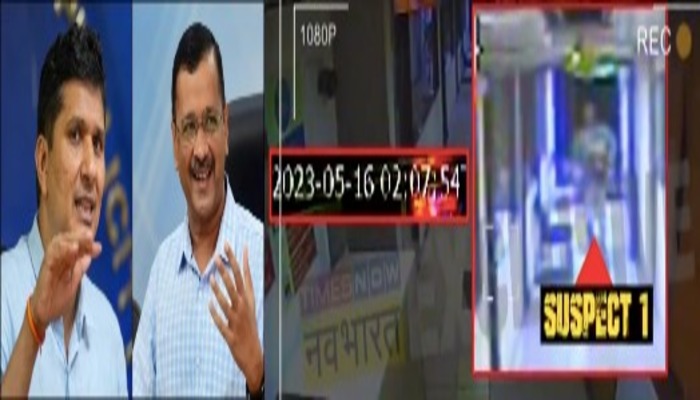
Days after Special Secretary (Vigilance) YVVJ Rajshekhar, who was tasked with probing the alleged corruption in Delhi CM Kejriwal’s residence renovation and was divested of his duties earlier this month wrote a letter to the Ministry of Home Affairs, Delhi L-G office, and Delhi Anti Corruption Branch alleging a break-in at his office and tampering with the files, a CCTV footage has been accessed by TimesNow of the break-in.

In the CCTV footage, three suspects were seen coming out of Vigilance Secretary Rajshekhar’s cabin (room no. 403) with some files at around 2:07 am on the intervening night of 15th May and 16th May. The suspects took the files to the adjacent room (room no. 404) having photocopiers and paper shredders. Room number 404 also had a board that read ‘Entry prohibited, Confidential room’. It is notable that Rajshekhar was soon after asked to hand over the sensitive files to the Delhi government. 

YVVJ Rajshekhar’s letter

In his letter to the Ministry of Home Affairs, Delhi L-G office, and Delhi Anti Corruption Branch after being shunted out, YVVJ Rajshekhar wrote that in the wee hours of the night, his office was broken into, and sensitive files related to the excise policy probe, renovation of Chief Minister Arvind Kejriwal’s residence and those referred to central investigation agencies was photocopied. Room no. 403, Special Secretary (Vigilance) at Delhi Sectt, was broken into on the intervening night of 15th and 16th May at 3:00 AM. The letter also expressed apprehensions that his office might have been bugged.

“However, it is understood from a preliminary enquiry that Sh. Manish (MTS) has opened the room of the undersigned and allegedly photocopied all the records i.e. from the 15th May 2023 night to the 16th May 2023 til 3:00 AM. The undersigned is not sure whether any record/file was taken away or otherwise tampered with it or photocopied. It is a serious lapse in the present scenario”, the letter stated.

Delhi L-G reinstates YVVJ Rajshekhar to his position

On Monday, Delhi Lieutenant Governor VK Saxena reinstated Rajshekhar on the basis of the Central government’s ordinance revising the Supreme Court order giving the power to post, transfer and appoint officers to the Delhi Government. It is notable that the Centre has brought an ordinance notifying rules for the Government of National Capital Territory of Delhi (GNCTD) which restored some of the power back to the central government as well.

However, Services Minister Saurabh Bharadwaj in a memorandum on Tuesday called the Vigilance Secretary’s reinstatement as “unauthorized and illegal” as he asserted that he is the competent authority for work allocation. 

Even though the AAP government continues to label Rajshekhar as an “illegal occupant” of the position, Rajshekhar met with vigilance officers on Wednesday and asked them to compile an inventory of records to verify they had not been tampered with while he was absent.

Cases that YVVJ Rajasekhar was probing against the AAP government

It is notable that YVVJ Rajasekhar is also probing several other cases, including excise department chargesheets and their sanctions under various provisions of the POC (Prevention of Corruption) Act, FBU case pertaining to the setting up of a separate intelligence unit, allegations of overspending on political advertisements, and charges of favourable treatment to AAP workers in hiring venues for Mohalla Clinics. He was also probing the liquor scam and Arvind Kejriwal spending taxpayers’ money on building his palatial mansion.

British man, abandoned by UK, shot in war-torn Sudan, his disabled wife starves to death

A British man, stranded in Sudan, was shot while his wife died of starvation in the war-torn city of Khartoum due to the abject negligence of the UK authorities, reported BBC.

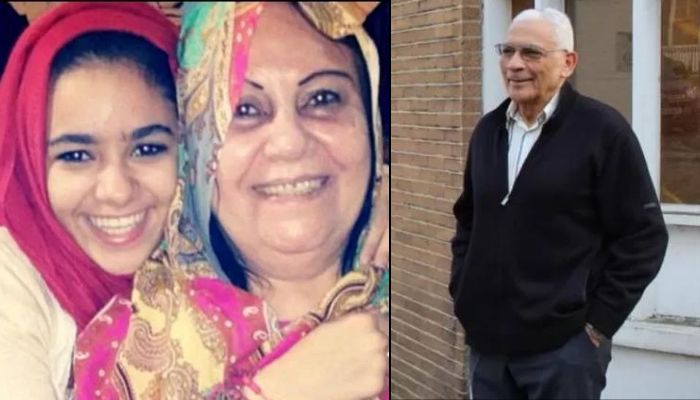
The victim, identified as 85-year-old Abdalla Sholgami, was reportedly not evacuated despite living opposite to the British embassy building. He and his disabled wife Alaweya Rishwan were left to fend for themselves.

It must be mentioned that Britain sent its Army and Royal Air Force to evacuate diplomats staying at the country’s embassy in Khartoum. Despite multiple requests, the family of Abdalla Sholgami was not rescued.

He was instead told to go to an airfield, which is located 40 km outside the city, to hop on an evacuation flight. It implied that Abdalla Sholigami and his wife had to cross the warzone.

As such, they stayed put in their home until supplies ran dry. The 80-year-old man was forced to step out of his home, following which he was shot thrice by snipers. He sustained injuries on his chest, hand and lower back.

Abdalla Sholigami was rushed to another part of the war-torn city by a family member but his disabled wife was left home alone. With no food and water at her disposal, she died of starvation.

Despite their attempts of the family to contact the UK’s Foreign Office, the family did not receive any help. The dead body of Alaweya Rishwan was discovered by an official from the Turkish embassy. She is yet to be buried.

Abdalla Sholigami managed to survive the gunshot wounds and escaped to Egypt. He was reportedly treated by his doctor-son without any anaesthetic.

Azhaar, the granddaughter of Abdalla Sholgami, said, “I was informed they had 100 troops who came and evacuated their staff. They could not cross the road? I’m still very disappointed in them.”

“What happened to my grandparents was a crime against humanity, not only by the RSF, not only by the (Sudanese army) but by the British embassy, because they were the only ones that could have prevented this from happening to my grandparents,” she emphasised.

While speaking about the matter, the UK Foreign Office said, “The ongoing military conflict means Sudan remains dangerous… the UK is taking a leading role in the diplomatic efforts to secure peace in Sudan…Our ability to provide consular assistance is severely limited and we cannot provide in-person support within Sudan.”

The Sudan Conflict and Operation Kaveri

There is an ongoing conflict between Sudan’s military and its main paramilitary force. They are fighting to take control of the country. The war threatens the stability of Sudan and the wider region. 

As such, the government of India launched Operation Kaveri to evacuate Indians from war-hit Sudan. The Minister of State for External Affairs V Muraleedharan went to Jeddah, Saudi Arabia, to manage the evacuation.

The Minister of External Affairs Dr S Jaishankar regularly updated about the evacuation process on social media. Apart from Indian Nationals, foreign nationals were also evacuated by India.

The Indians were evacuated from Port Sudan to Jeddah after the Sudanese army and the paramilitary Rapid Support Forces (RSF) agreed to extend their ceasefire amid ongoing violence in the capital Khartoum and the western Darfur region.

Indians are being taken from Port Sudan to Jeddah on Navy ships and C-130J planes, from where they are being flown to India on C17 jet planes. On April 30, Dr S Jaishankar informed that 229 Indians reached Bengaluru.

On April 29, 365 passengers reached India in one batch, and 231 reached home in another batch. In a tweet, Muraleedharan mentioned that around 2,100 Indians were scheduled for evacuation from battle-torn Sudan.