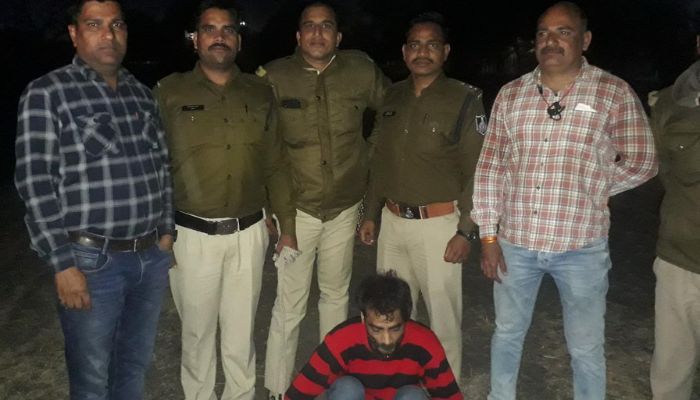
The Supreme Court on Friday dismissed a plea filed by a person seeking Rs 75 lakh compensation from YouTube for allegedly carrying sexually explicit advertisements which distracted him during the preparation for the Madhya Pradesh Police exam.
A bench of Justices Sanjay Kishan Kaul and Abhay S Oka slammed petitioner Anand Kishor Choudhary for filing an “atrocious” petition and imposed a cost of Rs 25,000 on him. The petitioner could have chosen not to watch the advertisements, said the apex court.
It said that such petitions are an utter waste of judicial time.
“One of the most atrocious petitions filed by the petitioner stating that while preparing for MP Police exams, he subscribed to YouTube where there were sexual advertisements. He sought notice to YouTube and a ban on nudity in ads and Rs 75 lakh compensation. If you do not like the ad, do not watch it. Why he watched the ad is his prerogative. Such petitions are an utter waste of judicial time,” the bench said.
Choudhary moved the apex court seeking Rs 75 lakh compensation from Google-owned streaming platform, YouTube and alleged that he was distracted by the sexual content in advertisements on the platform while he was preparing for the exam and hence unable to pass a Madhya Pradesh police recruitment examination.
He also sought a blanket ban on nudity on social media platforms.
Initially, the bench was imposing a cost of Rs one lakh on the petitioner, however, he apologised to the court, claiming his parents are labourers and sought to withdraw the petition.
To this, Justice Kaul said, “Aap ko lagta hain ki publicity ke liye jab chahe idhar aa sakte ho. Cost kam kar dunga lekin maaf nahi karuna (You think you can come to this court whenever you want publicity. I will reduce the costs but will not forgive you).”
The bench then reduced the costs to Rs 25,000 and asked the MA student to deposit it with the Supreme Court’s Mediation Centre.
As the petitioner told the bench that he is unemployed to which Justice Kaul said, “Rozgaar nahi hain toh hum recovery karenge (If you are unemployed, recovery will be done if you don’t pay).”
(This news report is published from a syndicated feed. Except for the headline, the content has not been written or edited by OpIndia staff)
On December 8, the results of the Gujarat Assembly Elections 2022 were announced. Bharatiya Janata Party (BJP) performed beyond expectations in the elections and won 156 seats out of 182 Assembly seats breaking all the previous records. With a 52.5 per cent vote share, BJP is the single largest party in Gujarat, with next to nil opposition in the house for the next five years.
As per the Election Commission of India, BJP got a total of 1,67,07,957 votes combined on all seats. Compared to its 2017 performance, BJP secured 57 more seats and increased its vote share by 3.45 per cent. In the 2017 elections, BJP had got a total of 1,47,24,031 votes, combined on all seats.
BJP’s vote share in 2022 Gujarat Assembly Elections. Source: ECI
Congress has reduced from 77 seats to 17 seats, losing its strength by 60 constituencies. In the 2017 elections, the grand old party had received 1,24,37,661 votes, which was 41.44 per cent of the total votes cast on all seats. However, this year, the party got only 86,83,966 votes, which was 27.3 per cent of the total votes cast. In totality, the party lost 14.14 per cent vote share.
Congress’s vote share in 2022 Gujarat Assembly Elections. Source: ECI
Coming to Aam Aadmi Party (AAP) which contested 29 seats in the 2017 elections and got 29,509 votes in total, which was 0.10 per cent of the total votes cast. However, in the 2022 elections, the party contested all seats except Surat (East), where its candidate withdrew his nomination. The party got 41,12,055 votes, which is 12.9 per cent of the total votes cast. AAP won 5 seats that are Dediyapada, Gariadhar, Botad, Jamjodhpur and Visavadar.
AAP’s vote share in 2022 Gujarat Assembly Elections. Source: ECI
In his statement, AAP Chief Arvind Kejriwal said, “Gujarat is BJP’s stronghold, and we have penetrated their fort”. But is it true that AAP managed to steal the vote share of the BJP in Gujarat? OpIndia did a detailed analysis of Gujarat’s 2022 and 2017 election results, and this is what we found.
First of all, let’s talk about the deposit AAP has lost in Gujarat. It is true that AAP has a massive vote share jump compared to the previous election. However, it is notable that the party has lost its deposit on 126 seats.
AAP lost the deposit on 126 seats. Not in alphabetic order. Data Source: ECI
Its candidates managed to save the deposit only on 55 seats.
AAP managed to save the deposit on 55 seats. Not in alphabetic order. Data Source: ECI
Now the question is, does AAP managed to take over the vote share of the BJP? Or it was more of Congress’s and other parties’ loss that helped AAP in getting most of the votes.
Performance on five seats AAP won
In Dediapada, AAP got 1,03,433, BJP got 63,151 votes, and Congress got 12,587 votes. In 2017, BJP got 61,275 votes and Bharatiya Tribal Party (BTP) got 83,026 votes. This year, BTP managed to get only 2,991 losing over 80,000 vote shares. It was majorly BTP’s vote share that got shifted to AAP as BJP, in fact, gained almost 2,000 in these elections on this seat.
Source: ECI
In Gariadhar, AAP got 60,944 votes, BJP got 56,125 votes, and Congress got 15,099 votes. In 2017, BJP got 50,635 votes, and Congress got 48,759 votes. While BJP has gained got around 5,500 more votes, Congress has lost over 33,000 votes. On this seat as well, AAP did not get any benefit from BJP voters.
Source: ECI
In Botad, AAP got 80,581 votes, BJP got 77,802 and Congress got 19,058 votes. In 2017, BJP got 79,623 votes, and Congress got 78,717 votes. AAP got a major share of Congress’s votes to win the seat. BJP indeed lost a couple of thousand votes in this seat, but that cannot be considered a major win of AAP over BJP.
Source: ECI
In Jamjodhpur, AAP got 71,397 votes, BJP got 60,994 votes, and Congress got 13,514 votes. In 2017, BJP got 61,694 votes, and Congress got 64,212 votes. While BJP got 700 more votes, Congress lost over 50,000 votes, giving AAP an edge to win the seat.
Source: ECI
In Visavadar, AAP got 66,210 votes, BJP got 59,147 votes, and Congress got 16,963 votes. In 2017, BJP got 58,781 votes, and Congress got 81,882 votes. While BJP got over 300 more votes this year, Congress lost over 64,000 of its vote share, giving AAP a convenient edge to win the seat.
Source: ECI
Analysis of the seats where BJP lost vote share
As per our analysis, BJP lost vote share on 37 seats. Here is a detailed analysis of these 37 seats. Out of these 37 seats, BJP won on 23 seats and Congress won on 9 seats. AAP managed to win 2 seats out of these 37 but on those two seats BJP had lost only 2,521 votes compared to 2017 assembly elections.
Data source: ECI
If you look closely, AAP lost a deposit on 19 out of these 37 seats. There are eleven seats where BJP lost more than 10,000 votes. Let’s check how many votes AAP managed to get on these seats.
In Dhari, BJP lost 25,064 votes, and AAP got 37,749 votes. On this seat, Congress lost 48,666 votes. It cannot be definitely stated that AAP got any share from BJP’s lost vote share as Congress lost more votes compared to what AAP got. BJP won this seat.
Source: ECI
In Dhanera, BJP lost 20,459, and AAP got 1,130 votes. On this seat, Congress lost 44,649 votes. AAP lost the deposit on this seat. Independent candidate won this seat.
Source: ECI
In Santrampur BJP lost 18,398 and AAP got 24,554 votes. On this seat, Congress lost 27,551 votes. It cannot be definitely stated that AAP got any share from BJP’s lost vote share as Congress lost more votes compared to what AAP got. BJP won this seat.
Source: ECI
In Dhoraji, BJP lost 16,789 votes, and AAP got 29,794 votes. On this seat, Congress lost 30,888 votes. It cannot be definitely stated that AAP got any share from BJP’s lost vote share as Congress lost more votes compared to what AAP got. BJP won this seat. Dhoraji saw a significant fall in the vote cast as well. In 2017, 1,95,383 voters voted but in 2022 only 1,55,049 voters voted.
Source: ECI
In Keshod, BJP lost 15,623 votes, and AAP got 24,497. On this seat, Congress lost 9,025 votes. AAP lost the deposit on this seat. BJP won this seat.
Source: ECI
In Halol, BJP lost 14,704 compared to their 2017 performance, and AAP got 21,788 votes. On this seat, Congress lost 51,459 votes. AAP lost the deposit on this seat. BJP won this seat with a huge margin.
Source: ECI
In Jetpur (Chhota Udaipur), BJP lost 12,907, and AAP got 48,262 votes. On this seat, Congress lost 39,695 votes. BJP won this seat.
Source: ECI
In Dharampur, BJP lost 11,400 votes, and AAP got 50,217 votes. On this seat, Congress lost 39,191 votes. AAP got benefitted from the loss of both the BJP and Congress. BJP won this seat.
Source: ECI
In Jasdan, BJP lost 11,236, and AAP got 47,636 votes. On this seat, Congress lost 38,526 votes. AAP got benefitted from the loss of both the BJP and Congress. BJP won this seat.
Source: ECI
In Amraiwadi, BJP lost 11,083, and AAP got 7,787 votes. On this seat, Congress lost 4,534 votes. AAP lost the deposit on this seat. BJP won this seat.
Source: ECI
In Bayad BJP lost 10,395 and AAP got 5,647 votes. On this seat, Congress lost 49,682 votes. AAP lost the deposit on this seat. Independent candidate won this seat.
Source: ECI
It is clear that on seats where BJP lost over 10,000 votes, AAP may have profited from BJP’s share but that appears to be limited because Congress has lost a significant chunk on the majority of these seats, and it is likely that Congress support based had shifted its loyalty toward AAP.
Stats of seats where AAP got over 50,000 votes
There are 19 seats where AAP has received over 50,000 votes. Out of a total of 41,12,055 votes the party received, these 19 seats are responsible for 12,49,233 (30.37 per cent) votes. Notably, on these seats, Congress has lost 7,91,785 of its vote share, and BJP gained 1,20,268 compared to the 2017 vote share. In Kamrej, Rajkot Rural, Gariadhar, Limdi and Olpad, BJP got more votes than in 2017. However, in Botad, Jamjodhpur, Limkheda, Katargram, Khedbarahma, Varachha Road and Dharampur, BJP lost vote share. However, this loss was only 35,661 votes. It is evident that AAP gained mostly from the loss of Congress and other parties, even in the seats where it has performed at its best.
By comparing the vote shares of BJP and Congress from 2022 and 2017, it is evident that AAP did not dent BJP’s vote share in the Gujarat Assembly Elections but got benefited from the loss of Congress and other parties. While AAP has become a national party by winning a substantial chunk of the vote share in Gujarat, it is far from comparing itself with BJP in the state.
There were a lot of speculations about the elections in Gujarat. The election results have come. The Bharatiya Janata Party has not only managed to save its stronghold but has also broken all the records with the thumping majority. The Congress has now started to mark its end here and the very beginning of the Aam Aadmi Party in the state seems to be the end of it.
The Gujarat assembly elections were an election for the BJP to save its fortress and for the opposition to break it. In the end, the BJP won. The saffron party has not only secured a victory but it has shined like never before by securing 156 out of 182 seats. On the other hand, the opposition parties have completely failed in their ‘Stop BJP Campaign’.
The BJP: What is anti-incumbency?
In Gujarat, the BJP has done a very good job in three decades. Significant work has been done in Gujarat in every field, including infrastructure, electricity, water, development of tourist places. The major contribution to this is that of Narendra Modi. The people of Gujarat have reposed faith in Modi, in the BJP and it is still intact. This is one of the major reasons why the BJP wins elections from panchayat to assembly here with a huge majority.
The 2017 assembly elections were really difficult for the Bharatiya Janata Party. The Patidar agitation was going on in full swing. Other communities were also united, the party was fighting for the first time without Narendra Modi as the CM face. People were looking for an alternative to Narendra Modi. The Congress was much more active than it is now. However, the BJP somehow saved the government with 99 seats.
There was no such problem against the BJP in this election. Various communities were also attached to the BJP during these five years. Also, no new movements or agitations did arise in the state. The situation changed to such an extent that Hardik Patel and Alpesh Thakor, who had once been against the BJP government, contested this election on a BJP ticket.
Apart from this, last year, the party changed the entire cabinet, including the chief minister, and its direct effect was seen recently. Due to Corona, people had some dissatisfaction with the Vijay Rupani government. However, this was the situation in all the states then and perhaps the BJP would have retained power even if it had fought with the same government, but the party’s aim was not just to retain power. And results made it clear that the party has fulfilled what it actually aimed for.
The Bhupendra Patel government worked quietly for a year. The effect of this was seen in the results of this election. Bharatiya Janata Party bagged the top spot right from the first round of vote counting. At one point in time, BJP was leading on more than 160 out of 182 seats. From the beginning itself, it was clear that BJP will form a government with a clear majority. The BJP won 156 seats in the 2022 Gujarat assembly elections with a surge of 57 seats as compared to its performance in the 2017 Gujarat assembly elections.
The changes in Congress
After a major setback at the Centre in 2014, the graph of the Congress has been steadily going down. However, in 2017, the party won 77 seats in Gujarat. But then the same situation happened here, which happened in the country after 2014. The reason is that the party does not have leadership. And if there is no leadership, then the organization also collapses and if there is no organization, then even a respectable figure cannot be obtained, let alone forming a government. These results underlined this.
The Congress leaders who were working hard in Gujarat in 2017 also did not show much interest. The party’s high command also seemed to have just completed the formalities. Rahul Gandhi did only three rallies. Priyanka Gandhi did not come even though she was invited. Till the end, the party did not even start campaigning. At last, PM Modi had to say from the public platform that the Congress is still alive!
However, the party works hard when it gets a response from the people as well. Seeing the constantly declining graph of the party here, people did not even come out to support them. The seats where the Congress has won are the seats where the candidates were strong and they have won with their own popularity and ability and not on account of the party symbol.
The decline of seats and votes for Congress was visible from the morning sessions on the counting day. Congress looked nowhere in the race as BJP swept the majority of seats in all five sections of the state. The Congress and NCP alliance fighting against the BJP could not even cross the 50 mark in the trends anytime during the counting. Finally, it had to settle on 17 seats. For a party to claim the seat of the leader of the opposition in the house, it should at least have 19 elected members in the assembly. For the first time in the history of Gujarat, no party in the opposition qualified to claim it.
Aam Aadmi Party ended before it could get a good start in the state
The Aam Aadmi Party started campaigning this time six months ago. It started creating an atmosphere a year ago. But the party could not do much. In the end, it had to be content with breaking the Congress vote. The party did not perform well even in Surat where the party emerged.
The Aam Aadmi Party used social media extensively in this election, but social media does not win elections. To win elections, a party needs the organization and workers who work on the ground. The AAP had workers, but those who would go to a Facebook post and write ‘Only AAP’. The lack of workers seeking votes made the party suffer in this election.
Kejriwal and the Aam Aadmi Party also made promises of freebies, but they also did not catch the inclination of the people. On the other hand, during this period, the scams of the Delhi government that came out also forced the people to vote against AAP. The rest was done by party president Gopal Italia.
The Aam Aadmi Party also lacked leadership. Gopal Italia and Isudan Gadhvi, both leaders, could not even save their own seats. And if there is no capable leadership, then the organization does not survive, and even if it survives, then people do not work. And no political party in the whole world can stand in comparison with the BJP in terms of organization.
AAP made hype on social media as it contested 181 out of 182 seats as if it was going to make a government on its own. In the end, AAP was restricted to single-digit figures and could win on 5 seats only. It did not touch a double-digit figure anytime during any round of counting
AIMIM failed to lure the ‘Muslim voter’
Asaduddin Owaisi’s party AIMIM’s performance was even worse. They contested 14 seats, all of which were Muslim majority seats. The results are no different than expected. The party lost everywhere. The Congress’ votes were cut by AIMIM in many seats out of the 14, as has been the case in all elections.
In short, this election was an opportunity for the BJP to break records, for the Congress to survive and for the Aam Aadmi Party to make inroads; in which the BJP has fulfilled its target on account of Modi’s popularity, three decades of work and strong organization. The Congress could not perform as expected and the Aam Aadmi Party and AIMIM miserably failed.
Vikas Walker, father of Shraddha Walkar, who was allegedly brutally murdered, demanded the death penalty for accused Aaftab Poonawalla while also alleging that he faced “many problems” because of the Vasai Police.
Vikas alleged that if the Vasai Police had helped him, “Shraddha would have been alive”. However, he added that Delhi Police has assured his family that they will get justice.
Addressing a joint press conference with BJP leader Kirit Somaiya in Mumbai, Vikas said, “My daughter was brutally murdered. I faced many problems because of the Vasai police, if they had helped me, my daughter would have been alive.”
“Delhi Police assured us that we will get justice. Maharashtra Deputy CM Devendra Fadnavis also assured us of the same,” he added.
Seeking a probe against the family members and relatives of the accused, Shraddha’s father also demanded Aaftab be hanged till death.
“I expect a similar lesson for Aaftab Poonwala in the way he murdered my daughter. He should be hanged. A probe should be conducted against Aftab’s family members, relatives and all others included in the incident,” he said.
Pointing out the drawbacks and misuse of some mobile applications (dating apps), he also sought “restrictions” on them.
“There should also be restrictions on some mobile apps. Children older than 18 yrs of age should be somewhat controlled and they should be given counselling. What happened to me shouldn’t happen to anyone else. I tried to talk with my daughter but she didn’t respond to me in the last two years. I was never told what was happening with my daughter,” he said.
Vikas claimed that he had a conversation with Shraddha in 2021 and Aaftab on September 26, however, he did not tell him about her whereabouts.
“The last time I had a conversation with Shraddha was in 2021. We talked about her whereabouts, she said that she was living in Bengaluru. I talked to Aaftab on September 26 when I asked him about my daughter, but he didn’t give an answer on it,” Vikas said.
He said that he was against the relationship of Shraddha and Aaftab and was unaware of the violence that she was subject to.
“I was against the relationship of Shraddha Walker and Aaftab Poonawala. I was unaware of the domestic violence Shraddha was subjected to by Aaftab. I feel, his family members knew everything about what he was doing with her,” he said.
Blaming the dating apps, Vikas said that his daughter came in contact with Aaftab because of it.
“Aaftab pursued Shraddha to make up her mind to leave. It was because of dating apps that Shraddha came in contact with Aaftab,” he said.
Earlier today, Saket Court in Delhi extended the judicial custody of Aaftab Amin Poonawala for 14 days said officials.
He was produced through video conferencing in the court today.
The 28-year-old, who dismembered Shraddha’s body and stored the chopped body parts in a refrigerator before disposing of them in the forests of south Delhi’s Chhatarpur, is currently in Judicial custody.
Aaftab is accused of strangling to death his live-in partner Shraddha and chopping her body into 35 pieces. He is also alleged to have preserved the chopped body parts in a refrigerator before dumping them in forested areas in Delhi and Gurugram.
Police had earlier said Aaftab, who confessed to killing Shraddha and chopping her body into 35 pieces, was giving misleading answers to questions.
Delhi Police had submitted in court that Aaftab was giving wrong information and was misleading the investigation.
(This news report is published from a syndicated feed. Except for the headline, the content has not been written or edited by OpIndia staff)
A day after the results of Vidhan Sabha elections for the States of Gujarat and Himachal Pradesh were declared, social media users informed West Bengal Chief Minister Mamata Banerjee that polls could be conducted without violence.
BJP IT Cell Head, Amit Malviya, tweeted, “Yesterday, results for two state elections were announced. Incumbent retained one, lost another. But no instance of violence, booth capturing, intimidation, rape or murder of political workers reported.”
“But all this happened under Mamata Banerjee’s watch after WB results last year…”he added.
Y’day, results for two state elections were announced. Incumbent retained one, lost another. But no instance of violence, booth capturing, intimidation, rape or murder of political workers reported.
But all this happened under Mamata Banerjee’s watch after WB results last year…
One Twitter user pointed out, “Election of Gujarat and HP showed how elections are done. No pre-poll or post-poll violence. No bombs..no bullets. No booth capture. No stopping the opposition from filing nominations…That’s real democracy…#NoVoteToMamata.”
Election of Gujarat and HP showed how elections r done. No pre poll or post poll violence No bombs.. no bullets. No booth capture. No stopping the opposition from filing nominations..
“That is also without any violence, murders etc otherwise Indian public has already seen what happened during CPM rule in West Bengal and what’s going on in Mamta rule in West Bengal. In the last election of West Bengal, there was unbelievable post and pre-election murders and violence,” another Twitter user said.
That is also without any violence, murders etc otherwise Indian public already seen what happened during cpm rule in West Bengal and what’s going on in mamta rule in West Bengal. In last election of West Bengal there was unbelievable post and pre election murders and violence.
Using violence as an instrument to subdue their political opponents has become a distinctive feature of the TMC rule in West Bengal. Ever since the Mamata Banerjee-led retained power in the state, the persecution of dissenters and opposition workers has only intensified.
In an overwhelming number of such incidents, the victims have been BJP supporters and workers while the accused were said to be the supporters of the TMC party. More than a dozen BJP workers lost their lives in the post-poll violence that ensued following the victory of the TMC party in the assembly elections in 2021.
As per reports, 303 people were forced to flee their homes. Among them, 47 victims were unable to return to their workplaces while 92 victims had their houses demolished. About 164 victims were forcibly evicted from their homes and were thus unable to return to their places of residence.
OpIndia reached out to some of the victims of the violence and spoke with them about their horrific experiences, a year after the post-poll violence in West Bengal.
Earlier in February this year, elections in 108 municipalities in 20 districts of West Bengal were marred by incidents of violence, vandalism, assault, and election malpractices.
The ‘fraudulent’ elections took place in the backdrop of the Supreme Court’s decision to not deploy central armed forces for the civic body polls in the State.
American journalist Bari Weiss, who recently exposed how Twitter systematically banned right-wing accounts and non-mainstream narratives in a long sequence of tweets, mentioned how Dr Jay Bhattacharya, a professor of health policy at Stanford University, was one of the victims of the high-handedness of a ‘select few’ employees at the social media platform.
Weiss, in the second part of the ‘Twitter Files’, highlighted how Bhattacharya’s tweets were blocked from trending because he claimed that Covid-19 lockdowns could harm children.
3. Take, for example, Stanford’s Dr. Jay Bhattacharya (@DrJBhattacharya) who argued that Covid lockdowns would harm children. Twitter secretly placed him on a “Trends Blacklist,” which prevented his tweets from trending. pic.twitter.com/qTW22Zh691
In fact, following Bari Weiss’ exposé, the professor himself turned to Twitter on December 9, Friday, to attest to how the social media giant blacklisted him for expressing his personal opinions on the dangers of Covid-infused lockdown on children.
“Still trying to process my emotions on learning that @twitter blacklisted me. The thought that will keep me up tonight: censorship of scientific discussion permitted policies like school closures & a generation of children were hurt,” tweeted the Stanford professor.
Still trying to process my emotions on learning that @twitter blacklisted me. The thought that will keep me up tonight: censorship of scientific discussion permitted policies like school closures & a generation of children were hurt. 1/2
In his following tweet, he expressed gratitude to Twitter CEO Elon Musk, who, shortly after taking over the firm, exposed internal conversations regarding the banning of the Hunter Biden story on the social media network. He also implied that the US government had a significant role in the internal workings of Twitter, which he predicted would be revealed in the coming days.
“I’m curious about what role the government played in Twitter’s suppression of covid policy discussion. We will see with time, I suppose. Thank you @bariweiss and @elonmusk. Sunshine is the best disinfectant,” Bhattacharya tweeted.
I’m curious about what role the government played in Twitter’s suppression of covid policy discussion. We will see with time, I suppose.
For the uninitiated, Dr Jay Bhattacharya is a professor of health policy at Stanford University and a research associate at the National Bureau of Economic Research. He directs Stanford Center for Demography and Economics of Health and Aging. As research, he focuses on the health and wellbeing of vulnerable populations with a particular emphasis on the role of government programs, biomedical innovation, and economics— including the epidemiology of Covid-19 and evaluating policy responses to the epidemic.
His broader research interests encompass the implications of population aging for future population health and medical spending, the measurement of physician performance tied to physician payment by insurers, and the role played by biomedical innovation on health. He’s published 135 articles in top peer-reviewed scientific journals in medicine, economics, health policy, epidemiology, statistics, law and public health among other fields. He holds an MD and PhD in economics, both from Stanford University.
Dr Jay Bhattacharya had called the shutting of schools during Covid lockdowns catastrophic
Dr Jay Bhattacharya had been on the front lines of analysing, studying, and even fighting the COVID-19 pandemic since its very beginning. In 2020, the professor co-authored the Great Barrington Declaration, an open letter questioning the efficacy of Covid-19 lockdowns. The professor then emphatically stated that the effects of the lockdown on children and the youths were catastrophic, including worse physical and mental health and irretrievably lost life opportunities. The professor had called for a return to normal life for non vulnerable children and youngsters.
The Stanford professor had appeared on multiple talk shows and interviews where he had reiterated the social harms caused by protracted absences from school, economic disruptions and forced isolation of older people during the pandemic.
In fact, last month, in a podcast hosted by Technology Policy Institute, the professor had spoken extensively about the responses of public health and economic experts to Covid-19 where he re-emphasised how the costs of the lockdowns and school closings were enormous.
— Technology Policy Institute (TPI) (@techpolicyinst) November 2, 2022
“They’re devastating, and we still haven’t paid them all, especially for the poorest countries in the world. We’re going to continue to pay them for a very long time. The schooling loss in the U.S. was bad, but you should look at what happened in Ghana where four and a half million kids never came back to school after two years out. The generational inequality we’ve developed—but we sort of pushed through—but the lockdowns are almost unimaginable,” the professor had said.
In May 2022, the professor appeared in another interview where he reiterated the adverse effects of lockdowns. “I think that probably the single worst [policy] was school closures,” said Bhattacharya. “Even short interruptions in the schooling of children can result in long-term ripple outcomes in their lives.”
In September 2021, the Canadian Paediatric Surveillance Program showed that children are at low risk of severe outcomes from COVID-19, Bhattacharya added as he went on to list the negative effects of lockdowns. “The economic effect of the lockdown policies that we followed, especially on poor countries, has been particularly devastating,” he said. “Some estimates suggest that 100 million people worldwide were thrown into poverty, dire poverty, less than $2 per day of income or less.”
According to Bhattacharya, there was no good evidence that lockdowns prevented the spread of COVID-19.
“There was no good evidence that… [lockdowns] were capable of stopping the diseased from spreading,” he said “The Great Barrington Declaration called for focused protection of the old.”
He pointed to Florida and Sweden as case studies. “If you compare Florida and California, the age-adjusted death rate from COVID is very similar,” said Bhattacharya. “California locked down, Florida didn’t lockdown. Sweden did better than most countries, certainly better than the United States, despite not putting in place school closures and a whole host of lockdown-related policies.”
Stanford professor receives death threats for the Great Barrington Declaration
Other health leaders, including National Institute of Allergy and Infectious Diseases director Dr Anthony Fauci, had then condemned the Great Barrington Declaration and called the document’s proposal for herd immunity “nonsense and very dangerous.”
Bhattacharya revealed how soon after the Great Barrington Declaration gained widespread attention, he received death threats, hate mail and questions on where he receives his funding from.
UNICEF asks for reopening of schools on priority
Notably, in July last year, when the world was still fighting the Covid pandemic, UNICEF urged the decision-makers and governments to prioritize and plan for the safe reopening of schools. It also stated that keeping the schools shut due to the fear of the pandemic could lead to a “generational catastrophe”.
“The losses that children and young people will incur from not being in school may never be recouped. From learning loss, mental distress, exposure to violence and abuse, to missed school-based meals and vaccinations or reduced development of social skills, the consequences for children will be felt in their academic achievement and societal engagement as well as physical and mental health. The most affected are often children in low-resource settings who do not have access to remote learning tools, and the youngest children who are at key developmental stages,” remarked UNICEF in its statement.
WHO Chief Scientist also urged for reopening of schools
Soumya Swaminathan, the Chief Scientist at the World Health Organization furthered UNICEF’s appeal of reopening the schools. Quoting UNICEF’s Tweet, Swaminathan wrote, “With teachers & adults working in schools prioritized for vaccination & preventive measures to reduce spread of #COVID19, schools can be safely opened. 150 million children out of school with limited access to online education & midday meals will take a much bigger toll on them.”
AIIMS director suggests opening school in a staggered manner
All India Institute of Medical Sciences (AIIMS) director Dr Randeep Guleria too in an interview earlier had stated that schools in areas with fewer Covid-19 cases must reopen. “Districts should open schools in a staggered manner and bring back children on alternate days, said Dr Guleria.
The Supreme Court on Thursday stayed the death penalty of a flower vendor accused of raping and murdering a juvenile in Tamil Nadu’s Pudukkottai in 2020. A bench comprising Chief Justice of India DY Chandrachud, Justices PS Narasimha, and JB Pardiwala, also asked for the Tamil Nadu government’s statement on the issue. According to the reports, Aditya Sondhi, the Senior Advocate, represented the petitioner.
In 2020, the appellant named M Samivel alias Raja was convicted of rape and murder of a 7-year-old Dalit kid who was killed after a penetrative sexual assault. Before perpetrating sexual assault on the youngster, the accused allegedly established acquaintances with her. Fearing that the girl might tell someone about the crime, the accused smashed her head against a tree and dropped her body into a dry pond.
Examination of the girl’s body found injuries on her head, face, neck, and chest, multiple abrasions on the abdomen, thighs, and private parts, among others. Apart from smashing her against a tree, he had also beaten her with a stick. The vicitim was a class II student.
The accused was found guilty by the trial court and was condemned to death by hanging. The Madurai Bench of the Madras High Court further affirmed the death punishment imposed by Sessions Judge Pudukkottai in the case under the Protection of Children from Sexual Offences Act in January (POCSO Act).
A panel of Justices S Vaidyanathan and G Jayachandran emphasized that allowing someone like the accused to thrive in the world would ‘contaminate the brains of co-prisoners on the verge of release.’ The High Court ruled that the presumption was against the accused in this case as Section 29 of the POCSO Act imposed a statutory presumption on the accused.
The bench had dismissed the accused’s contention about the delay in filing a first information report (FIR), reasoning that it was natural to hunt for a missing person in all possible locations and only after determining that the missing person could not be found would one consider filing a police complaint.
The case dates back to June 2020, when a seven-year-old Dalit girl had gone missing and her parents lodged an FIR after searching for her for a day. The Police later found the girl in a deserted location near her village and found that she was sexually abused and killed by M Samivel from the same village. He was arrested by the Police on July 2. During interrogation, he confessed to his crime of sexual assault and murder.
Th girl was seen with her before she disappeared, and his clothes were found to be stained with her blood.
The FIR against the accused was then booked under Sections 376 (rape), 302 (murder), 364 (abduction), and 201 (misleading police) of the Indian Penal Code. Charges under the sections of the Protection of Children from Sexual Offences Act, 2012, and SC/ST (Prevention of Atrocities) Amendment Act, 2018 were also slapped against him.
A 19-year-old AC mechanic named Akhtar Mathar Hussain reportedly sexually assaulted a 5-year-old girl in Taloja, Mumbai, inside a lift at a housing complex. The incident became apparent after the child returned home and began vomiting, making her parents suspicious of any untoward incident with her.
Maharashtra | After the girl reached her home, she started vomiting. After being asked by her mother, she revealed the incident & her parents along with neighbours gathered outside eventually nabbing the accused before he could escape, after victim girl identified him: SI, Taloja pic.twitter.com/Bdg96Qex7n
The accused was nabbed after the neighbours in the society got to know about the incident. According to Sub Inspector J Sonawane, Mohd Akhtar Mathar Hussain (19) sexually assaulted a 5-year-old girl in Taloja, Raigad district. While the youngster was playing, he reportedly took her to a lift and assaulted her. Akhtar was visiting a nearby fla for work.
The police have informed that when the girl arrived at her house, she began vomiting. When her mother inquired, she narrated the events. The parents, along with neighbours, gathered outside and finally apprehended the accused before he could escape. The child reportedly identified the accused.
Further details in the case are awaited as of now. The report will be updated as soon as details of the incident emerge.
Former actress Meghan Markle has courted controversy for mocking the late Queen Elizabeth II and disrespecting royal family traditions. She made the insulting remarks during the second episode of the new Netflix documentary series titled, ‘Harry & Meghan.’
In a video clip that had gone viral on social media, Markle was seen laughing uncontrollably as she described how Prince Harry introduced her to Queen Elizabeth II.
“It was like that…Like I curtsied as though I was like…Pleasure to meet you, Your Majesty? Like, was that okay?” Meghan Markle was heard as saying. Prince Harry seemed to not like the idea of his wife mocking his family traditions and cultural beliefs.
However, social media users were not impressed by her ‘attempted humour’, with many rebuking her for not being respectful of other cultures and belief systems.
Netizens haul Meghan Markle over the coals for “mocking” having to curtsy to the late Queen
“Meghan Markle mocking the late Queen but don’t forget she still wants her title as the DUCHESS OF SUSSEX,” wrote ‘El American’ Editor, Ben Kew.
Meghan Markle mocking the late Queen but don’t forget she still wants her title as the DUCHESS OF SUSSEX pic.twitter.com/Gn7m2gg0gW
Journalist Colin Brazier pointed out, “There’s nothing so private as a marriage. But, honestly, how does Harry reconcile the values he once espoused – including an Army officer’s oath to defend the Queen – with his wife’s not-so-thinly-veiled contempt for the things our late monarch stood for.”
There’s nothing so private as a marriage. But, honestly, how does Harry reconcile the values he once espoused – including an Army officer’s oath to defend the Queen – with his wife’s not-so-thinly-veiled contempt for the things our late monarch stood for.pic.twitter.com/lRjFfFpUsW
“So Meghan Markle is making fun of the Queen in that documentary but I didn’t notice her having a problem with the monarchy giving her a multi-million dollar wedding which was more like a circus! The most drab royal wedding dress I’ve ever seen!” one user called out her hypocrisy.
So Meghan Markle is making fun of the Queen in that documentary but I didn’t notice her having a problem with the monarchy giving her a multi-million dollar wedding which was more like a circus! The most drab royal wedding dress I’ve ever seen!
Social campaigner Anna McGovern wrote, “Harry said that having to explain to Meghan Markle that she would have to bow to his grandmother (the Queen!) was “weird”. Exactly two months after the Queen died, they slander the Royal Family and reap the monetary rewards. This is a pathetic performance we all see through!”
Harry said that having to explain to Meghan Markle that she would have to bow to his grandmother (the Queen!) was “weird”.
Exactly two months after the Queen died, they slander the Royal Family and reap the monetary rewards.
In June this year, videos surfaced on social media showing Prince Harry and his wife Meghan Markle being booed as they arrived and left the church service honouring Queen Elizabeth II’s 70 years on the throne.
The duo had made their first public appearance at the Queen’s Platinum Jubilee celebrations in the UK since stepping back from royal duties two years ago. They attended the Trooping the Colour, albeit they did not appear on the Buckingham Palace balcony owing to their withdrawal from royal responsibilities.
On December 7, External Affairs Minister (EAM) S Jaishankar gave a befitting reply to RJD MP Manoj Kumar Jha’s “2014-centric foreign policies” charge against the Modi government in Rajya Sabha during the winter session of the Parliament.
The RJD MP said in Rajya Sabha that it seems like the foreign policy has been shaped only after 2014 when the Modi government came to power. He asserted that the “2014-centric foreign policy approach undermines the people and processes involved since 1947.”
In response to this, EAM Jaishankar called 2014 a watershed moment and that after 2014, India’s foreign policy has become more effective, dynamic, and prominent. I am glad that you brought up this 2014 issue and I hope you will be supportive of it.
“Since you are asking me, I will say that yes, 2014 was a watershed moment, things have changed better after 2014. Yes, India’s foreign policy has become more dynamic, more effective and prominent after 2014,” EAM S Jaishankar responded.
RJD MP Manoj Jha also claimed that he can do the job of external affairs minister better than Jaishankar.
Reacting to this in a subtle manner, EAM Jaishankar said, “Professor Jha suggested that he could do my job better, he is free to hold that opinion.”
S Jaishankar responds to Manoj Kumar Jha’s questions on India’s stand on Russia-Ukraine war
Jha also raised the Ukraine-Russia war issue and India’s neutral stand as well the Gaza dispute. The Rajya Sabha MP said that a fight between the oppressor and oppressed India never was neutral. “In a fight between an elephant and an ant, your neutrality helps the elephant.”
On Ukraine Russia War, Jaishankar reiterated that India has always urged both Ukraine and Russia to resolve disputes through dialogue and return to diplomacy. Prime Minister Narendra Modi had also told in strong words to the Russian President Putin that “this is not an era of war.” The Modi government is also working to soften the impact of the war on Indian people whether it is fuel, fertilizers or food inflation. “So if it is your contention that we have put the Indian people first, then I plead guilty,” Jaishankar said.
Reacting to the Gaza issue, Jaishankar detailed that India backs a two-state solution with both countries living peacefully side-by-side. Our empathy for Palestinians has not changed and the financial support for Palestinian refugees has gone up during the tenure of the Modi government.