Home Blog Page 3376

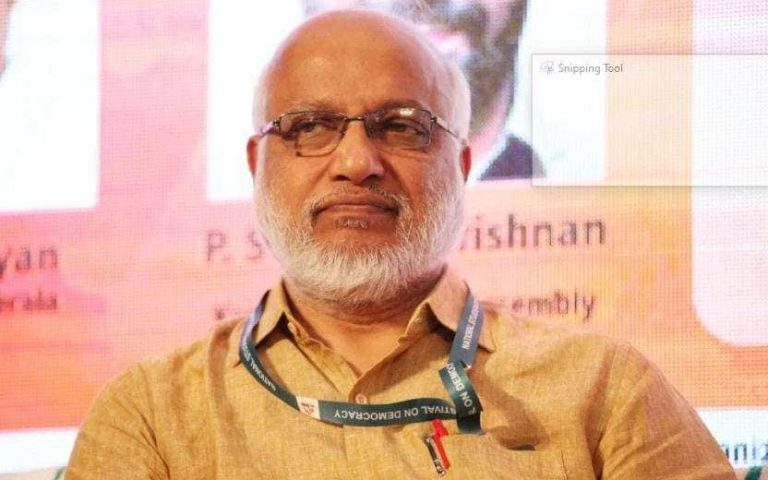
‘Many of the Prophet’s ideas are close to Communist ideals’; ‘Marx, Lenin are prophets of modern times’: CPI(M) Politburo Member M A Baby

0

In a recent Facebook Post, Communist Party of India (Marxist) leader M A Baby has compared the ideals of Islam with those of Communism. The CPI(M) Politburo member was seen elaborating in a Facebook post the egalitarianism in Islam over the practice of fasting during the ongoing month of Ramzan. He further claimed that Marx, Engles, Lenin and other Communist mavens were the prophets of modern times.

On fasting and Islam

M A Baby started off talking about the concept of fasting which is observed in the Muslim society during the month of Ramzan. He compared religious fasting in Islam with (Vrata) fasting among Hindus and fasting among Christians before Easter. “There are some very humane ideas behind most of the religious traditions. In my view, fasting rituals are mainly purifying the mind and body. Most religions have this kind of fasting. This is the time when Navaratri Vratham is happening in North India. And the time when Christians are looking to fast before Easter. Those who fast during Ramzan are reminded of crores of people around the world who are starving by the extreme circumstances that created social and economic inequality,” he wrote on Facebook.

“The Holy Prophet’s lesson is that after making sure that no one is hungry in the surrounding area, you can eat. It is the idea of a kind of equal society that is what is being shared by man,” said Baby, suggesting that by remaining hungry, one expresses his solidarity with the unfortunate others who are left without consuming an ounce of food. Postulating that ‘many of the Prophet’s ideas are close to Communist Ideals’, Baby wrote, “The days of fasting are bringing that hunger to the centre of our thinking. That is the greatest meaning of fasting.”

MA Baby reminded that the lesson of the Prophet is that one should eat only after making sure that no one around is hungry. Baby wrote that when Indian Marxist leaders like K Damodaran and C. Shekhar framed slogans for labour organisations, they included “Sallallahu Alaihivasallam” ((peace and blessings of Allaah be upon him) in them.

Prophets, Jesus Christ and Karl Marx

M A Baby wrote that all the ‘Prophets’, in a way, stood for humanity and human equality during their time. He suggested that the ‘revolutionaries’ like ‘Marx, Engels, Lenin, Rosalaxburg, Mao, Hochim, Antonio Gramsci, Fidal and Che Guevara’ were prophets of modern times. “They are the ones who fought to create an equal society in their lands. These are the ideas that populate my mind every Ramadan fast,” M A Baby wrote while concluding his Facebook Post.

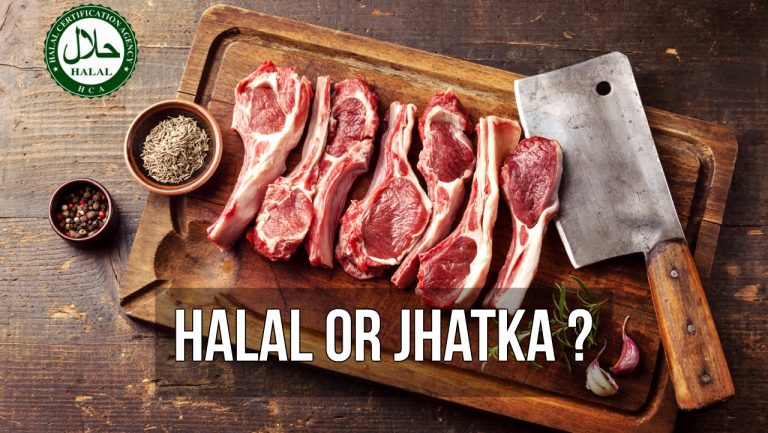
Why Jhatka lost to Halal, even in India: Understanding the challenges and the way ahead

The Halal controversy, that started in Karnataka, has ended up sparking a raging debate in the rest of the country. A week ago, Hindu Janajagruti Samiti launched an agitation against Halal meat and calls to boycott Halal products were made.

Hindu Janajagruti Samiti Karnataka spokesperson had released a video asserting that thousands of crores of rupees are being collected over certifying meat as Halal, which it claimed would pave the way for India to become an Islamic state. Gowda argued that this money is used to fund anti-national conspiracies in the whole of India against the state. “We urge all Hindus to boycott Halal meat, Halal products and use the Jhatka meet which employs the Hindu way of slaughtering. Let us participate in the economic boycott of such antinational activities,” Mohan Gowda urged in the video released by a handle on Twitter.

As the Halal vs Jhatka meat controversy rages on and turns into a national debate, it becomes essential to understand what is Halal, what is Jhatka and why even in India, Halal has reigned supreme. It is also becoming imperative to understand what challenges India faces in developing a market for Jhatka meat, that would benefit the non-Muslims of the country.

What is Halal meat and ‘Halal’ certification for vegetarian products

Halal is a method of slaughter and packaging of meat that is in tune with Islamic sensibilities and religious practices. Halal can only be performed by a Muslim man. Thus, non-Muslims are automatically denied employment at a Halal firm. There are certain other conditions that must be fulfilled that makes it quite clear that it is intrinsically an Islamic practice. Guidelines are available on the official website of a certification authority of Halal in India which makes it clear that non-Muslim employees cannot be employed in any part of the slaughtering process.

The Department of Halal Certification of the European Union says,  “The name of Allah must be invoked (mentioned) at the time of slaughtering by saying: Bismillah Allahu Akbar. (In the Name of Allah; Allah is the Greatest.) If at the time of slaughtering the name of anyone else other than Allah is invoked (i.e. animal sacrificed for him/her), then the meat becomes Haram “unlawful.””

The Halal certification department also specifies the exact Islamic method of slaughtering. It says that the slaughtering of the animal must be done in just one stroke without lifting the knife, using a sharp knife. It says that the windpipe (throat), food-tract (oesophagus) and the two jugular veins must be cut in a single stroke. Care must be taken that the head is not severed and the spinal cord is not cut. The rules also say that meat slaughtered by a machine can’t be Halal, it must be slaughtered by a Muslim person.

It is pertinent to note that the Halal process is not just limited to the slaughter, but also to packaging, shipping etc. Therefore, throughout the chain, if the meat is Halal, only Muslims would be employed and the name of Allah would be invoked to make it in line with Islamic practices.

Halal certification is also granted for vegetarian products and not just meat. Products like flour, wheat etc are also seen with Halal certification. Halal India, the certification authority in this particular instance, states that processed food is considered Halal if it is not contaminated by ingredients that are considered ‘najis’ as per Sharia Law. Furthermore, the equipment used for its production should not be contaminated with ‘najis’ either. ‘Najis’, as per Sharia law, are substances that make a product ritually unclean. Substances such as alcohol, dogs, swine, and milk of animals Muslims are not permitted to drink and other such things are considered ‘Najis’.

What is Jhatka meat?

Simply put, Jhatka, as the word suggests, means “swift”. In the Jhatka method of slaughter, the animal is killed instantaneously without the animal suffering like it does in the Halal process of slaughter. In Jhatka, the head of the animal is immediately severed and therefore, it is not bled to death slowly. Another key difference between Halal and Jhatka is that Jhatka has no religious process that it follows and therefore, can be consumed by everyone regardless of religious affiliations.

The underlying idea of Jhatka is to kill the animal with minimum torture to it.

How is Halal discriminatory? Hindus not employed, Sikhs not allowed to consume Halal

Halal is inherently discriminatory in several ways. It is most important to note that in the meat industry, if a company is to product Halal certified meat, they cannot hire non-Muslims to slaughter the animal. Given that several marginalised Hindus work in the meat industry, the mere condition that only Muslims can slaughter the animal becomes discriminatory towards Hindus involved in the industry.

Further, it enforces the Islamic tenets on non-Muslims. A non-Muslim – a Hindu or Sikh for example – is forced to consume meat processed after invoking the name of Allah. This stands against the rights of non-Muslims who are forced to conform to the religious tenets of Islam, which they do not follow.

Further, Sikhs specifically do not consume Halal meat as a part of their religious beliefs.

Sikhs call the Halal process “kuttha”, which means meat obtained after killing the animal in a slow, painful process.

The Sikh encyclopaedia says:

Historically, there is no positive injunction enforcing jhatka mode of slaughter laid down by the Gurus. However, Guru Gobind Singh, when manifesting the order of the Khalsa in 1699, enjoined Sikhs to abstain from kuttha or Halal meal introduced by the Muslim ruling class. That many high ranking Hindus had succumbed to the practice of eating kuttha is evidenced by a verse of Guru Nanak`s in Asa Ki Var: “They eat kuttha of goats killed with the pronouncement of alien words, i.e. kalima, but do not allow anyone to enter their cooking square (to guard against pollution by touch)…”Instructions regarding jhatka mode of slaughter are contained in various Rahitndmas or codes of conduct for the Sikhs, and the Sikh chronicles written during the eighteenth and nineteenth centuries.

They all affirm that Guru Gobind Singh made the taking of kuttha one of the four major kurahits, or violations of the Sikh code of conduct. However, two of these sources say positively: “Kill the male goal in the jhatka way if you want to eat, but do not ever look at any other type of meat” {Rahitnama of Bhai Desa Singh,), and “Slaughter male goats through jhatka and cat; do not go near carrion or kuttha” (Ratan Singh Bharigu, Prdchm Panth Prakash). Rahitnama of Bhai Desa Singh also enjoins the slaughtering to be carried out away from the kitchen. Traditionally, it is also to be away from a holy spot.

Therefore, Halal becomes discriminatory to not just Hindus but Sikhs and other non-Muslim sects as well.

What about the facetious questions posed to Hindus demanding Jhatka?

Hindus and Sikhs, especially Hindus, didn’t insist on Jhatka meat because religiosity and awareness is low among Hindus.

First of all, it is essential to remember that there is a very regulated and strict procedure described for animal slaughter in Hinduism, followed by Shakta sampradayas. Pashubali is one of those essential religious practises by certain sampradayas in Hinduism and it is also one of the arguments used against those who talk about the cruelty met out to animals during the Halal process of slaughter. The standard question that is thrown around is – “Hindus slaughter animals during Pashubali too. So are Hindus and Sikhs against Halal because they are Islamophobic?”

To answer this question, it is essential to realise that both theologically and in practice, the Islamic method of slaughter is barbaric which is not the case in Pashubali. The theological concept of Pashubali lies on the basis that it is performed to please the Deity and under the command of the Deity Herself therefore, the slaughter is done in a manner that the animal’s suffering is minimised.

Besides the question of Pashubali, Hindus are often asked, ‘in which shastra it’s written that only jhatka should be eaten, every time the Halal vs Jhatka debate is resurrected.

These are facetious arguments that Hindus and Sikhs must not necessarily take seriously. These questions stem from Abrahamic lenses where something has to be specifically allowed or disallowed in religious texts. Hinduism is not based on one book and the “One Prophet, One God” concept therefore, there are several things that are traditionally essential to Hinduism, not necessarily mentioned in the texts. For example, Circumcision is not specifically disallowed in any Hindu scripture. Does that mean all Hindus would go and get circumcised simply because it is not disallowed?

Hinduism does not have the concept of “haraam” but that also does not mean that Hindus must be forced to adhere to tenets of a religion they don’t follow. Just because our texts do not forbid Hijab, does not mean that Hindus must be forced to wear it. Similarly, even if Halal is specifically not disallowed in Hinduism, it does not mean that Hindus should be forced to submit to Islamic tenets.

Did Halal certification market develop only because Muslims insist on Halal?

Broadly yes, but a big factor are exports. For any business practice to become institutionalized, it needs to be undertaken on an industrial level. Industrial-scale kicks in the export of meat. Exports can’t happen with a bunch of local shops coming together. It requires a grand scale and it develops its own systems. Large abattoirs were set up for export purposes. Many of the countries where Indian meat companies export business want Halal certificates because those are Muslim countries, and this led to many big companies getting a Halal certificate. The entire business supply chain over the decades went on to ‘normalize’ and ‘standardize’ Halal certification. This meant that only Muslim butchers can be hired in such abattoirs because that is one of the conditions of getting a Halal certificate.

So there can’t be a Jhatka certification unless we are exporting jhatka meat?

Not really. The moot issue is the ‘industrial scale of business’. If there is a sudden spike in the demand for Jhatka meat and where Hindu and Sikh consumers insist on Jhatka meat, the companies would happily oblige and go for Jhatka certification too. There are some very small outfits already in the Jhatka certification system but some big organization needs to champion this cause of supply of such certification once the demand is there.

Jhatka Certification Authority, for example, led by Ravi Ranjan Singh, is one such Jhatka certification authority that is trying to break the Halal juggernaut.

Understood. It’s demand and supply. So all that is needed is that demand for Jhatka rises?

Wish it was so simple. While demand by Hindus and Sikhs will surely push the companies to change, there will be big resistance from the companies themselves because institutionalized systems and processes have internalized the Halal process. It will mean setting up special abattoirs where slaughter takes place as per Jhatka rules. That means investment in infrastructure and manpower. Companies might as well give money to some media houses to brand demand for Jhatka as ‘bigotry’ instead of spending money on creating this infrastructure and supply chain.

But why do we need Jhatka? It’s just a certificate. Let’s eat Halal only. What’s the harm?

Well, there are several aspects pertaining to Halal that make it problematic and something that non-Muslims need to develop an alternate system to. First and foremost, Halal is extremely discriminatory. As explained early in the article, Halal is not just discriminatory to Hindus, given that they only hire Muslims, it is also discriminatory to Sikhs since religiously, Sikhs consume Jhatka meat only.

Further, most businesses have started serving only halal meat now to save the cost of maintaining 2 supply chains, for halal and non-halal meat. Therefore, it is discriminatory to those who do not wish to consume Halal at all. Going to eateries means them having to submit themselves to the choice made for them by the Islamist lobby.

Apart from the discriminatory nature of Halal, there are certain other issues as well.

As we can see with the case of Himalaya, halal economy is not just restricted to meat products now. Pharmaceutical products, personal care products, cosmetics, and even flour, all come with halal certification now. With its ever-growing scope, it is creating the grounds for restricting the job prospects in these sectors to people from only one religion. Further, this parallel system of certification runs without any checks and balances from the government. 

Further, an organization like Jamiat Ulema-e-Hind (JUH), one of the oldest halal certifying trusts in India, is constantly in the news for their legal support to the accused in terror-related cases. Therefore, there is enough antecedent proving that the money from the Halal economy is being used to further terrorist activity in the name of Islam.

This appears an uneven fight where other side is stronger? What can an ordinary person do?

Create awareness. Insist on Jhatka whether buying meat online or having cooked food from any restaurant. Let them know that demand is growing. Support local jhatka sellers, many still exist. Encourage and help them to be on online apps. Ask these apps delivering daily needs to create a jhatka category, at least for meat to start with.


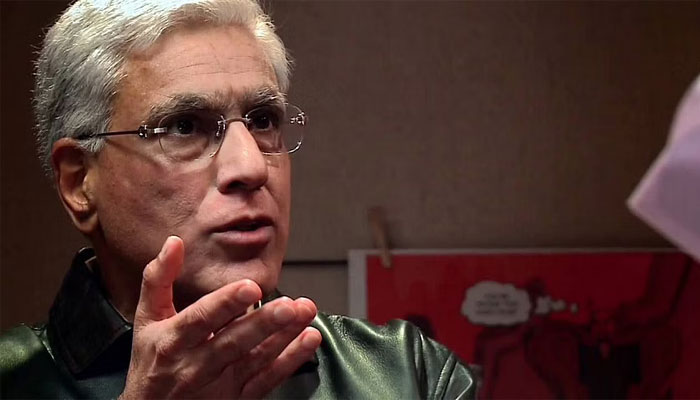
The Wire’s Karan Thapar uses Pakistani platform to spread misinformation on Hindus, Hinduism and Modi, read what happened

On April 1, Karan Thapar, who is a news presenter with The Wire had, attended Islamabad Security Dialogue via video conferencing as a speaker on day one of the events. The discussion titled ‘Navigating disinformation and discourse in the information age’ was an attempt to discuss the impact of disinformation and fake news on the current political structure of South Asia. During the discussion, which was attended by members of several think tanks from Pakistan, Thapar ranted against the Modi government and referred to the Hindu God Hanuman as ‘Humayun’, the second emperor of the Mughal dynasty.

Interestingly, a speaker from India spoke against Narendra Modi-led (Hindu) government while addressing members of several think tanks from Pakistan, where Hindus face atrocities almost on an everyday basis.

Thapar shared a platform with Shane Harris from Washington Post, Liu Xin from Chinese state media China Global Television Network (CGTN) and several Pakistani and international media personalities. It is notable that though only the part of the clip where he addressed Bajrang Bali not as another name of Bhagwan Hanuman but Lord Humayun is being circulated on the social media platforms, the overall 7-minute address of Karan Thapar was full of misinformation and highly biased opinion towards Hindus at large.

Mosharraf Zaidi, the founder of think tank Tabadlab, moderated the session. He asked Thapar about his views on how the people of India are being misled by the politicians, particularly Hindutva leaders like Prime Minister Narendra Modi, the RSS and the BJP. He pointed out that such leaders being in power is, in a sense, a collective failure of ‘secular, enlightened, progressive India’.

Agreeing with his thoughts, Thapar said that since PM Modi came to power, the “problem” was on the rise and the alleged crisis is at its peak today. He said, “I’m not saying that it’s all going to go higher but compared to the situation of 2014, the situation today is considerably worse than most people imagine.” He alleged that BJP is deliberately instigating Hindus, that comprise 80% of the population, in the name of religion. “People are very religious. Religions pervades their life, their thinking, their relationship, their psychology is very close to them, and that tends to be the case in countries where economic development is limited. And religion is, I won’t use that phrase opium of the masses because it is deliberately pejorative, but it is soul of the soulless world,” he added.

He further alleged that BJP knows where to scratch and open old wounds, such as the partition that happened in 1947. In that process, they demonized another religion. To put things in perspective, the partition happened because the Muslim leaders wanted a country for Muslims. Unlike what the Congress party and Left-oriented ‘historians’ would have us believed, it was first promulgated by Syed Ahmad Khan, the founder of the Aligarh Muslim University. That 14th August last year was announced as Partition Horrors Remembrance Day had irked so-called liberals for this very reason.

The foundation of Indian Secularism is built atop the corpses of Hindus who were raped, massacred and butchered during the Independence Era. In order for their political careers to succeed, the Congress tried extremely hard to create an ‘alternative history’ for the citizens of India where the horrors of partition were relegated to the dustbins of history. A tragedy of that scale should not be washed away. After all, those who forget history are condemned to repeat it.

To prove his point, Thapar gave the example of Uttar Pradesh Chief Minister Yogi Adityanath’s speech, where he had said the UP Assembly elections were a fight of 80% vs 20%. He claimed in UP, that 80% are Hindus, and 20% are Muslims, so it was obvious what he was referring to. Which is amusing because Yogi Adityanath had made it categorically clear that he did not talk about Hindus and Muslims.

He had said he was talking about 80% of those who were in favour of the BJP irrespective of their religion and 20% of those who were against the BJP. There are millions of Hindus in UP who voted for the Samajwadi Party and lakhs of Muslims, especially women, who voted for the BJP. While CM Yogi did not and had no intentions to divide the population on religious grounds, the media houses, including that of Thapar, presented it wrongly and misled the public.

Thapar then claimed BJP leaders ask those to go to Pakistan who oppose them. He added, “When politicians talk about Ali and Bajaranga Bali. Bajarang Bali is another name for the Lord Humayun, it becomes obvious what is happening, and it is sad to know that it is happening.” Whether it was Freudian slip or slip of tongue, one may never know, but Bajrang Bali is Lord Hanuman, not Humayun. Humayun was the second Mughal emperor, son of Babar. One cannot say about Thapar, but he is certainly not our lord.

Thapar tried to make a point that a conscious Hindu who speaks for himself in India is possibly against the secular structure of the country. He said, “I am not going to pretend and say this, but we were always aware that there were some things that were beyond a line, and you didn’t cross it. That line has been breached. It hardly exists today, and that is the saddest part of it. It’s been done deliberately. It’s yielded enormous political results, and undoubtedly it will keep happening.”

He added, “And as a result, this is becoming a different country once this devil has been let out of the bottle. I’m not saying genie. It is impossible to try and put it back. And I’m not saying Westernized Indians. There are a lot of very deeply Hindu people who also feel that this deliberate exploitation, this deliberate use of their religion for political purpose is wrong.”

He further claimed that Hinduism is a different kind of faith. It is accepting, and the politicians are trying to convert it to something else. He alleged those leaders are “horribly misunderstanding the very nature and character of Hinduism.”

Quite rich coming from someone who mistakes Bhagwan Hanuman for Mughal emperor.

Essentially, Thapar was speaking at a stage provided by Pakistan. The same Pakistan where Hindus face atrocities every other day. Hindu girls are kidnapped and converted to Islam. The number of Hindus in Pakistan has come to the point of extinction. Sadly, the likes of Thapar have opposed laws like CAA. Instead of speaking up for those Hindus living in hell-like-situation in Pakistan, they are working extensively to stop the government from opening doors for the persecuted Hindus to enable them to come and make India their homeland.

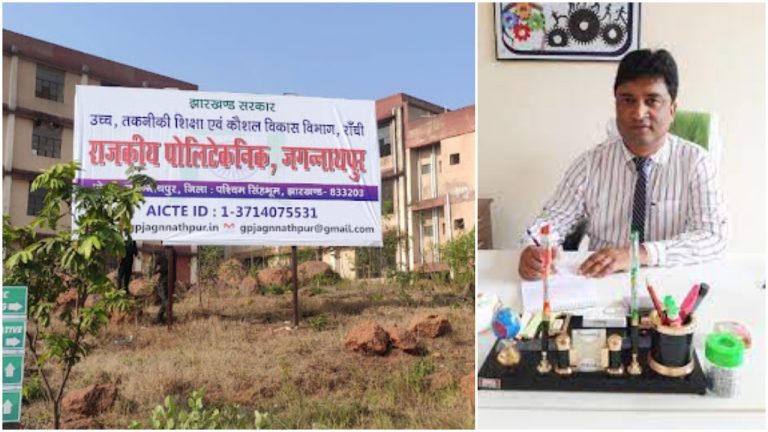
Jharkhand: Govt college suspends two students for chanting ‘Jai Shri Ram’ slogans during Hindu New Year celebrations

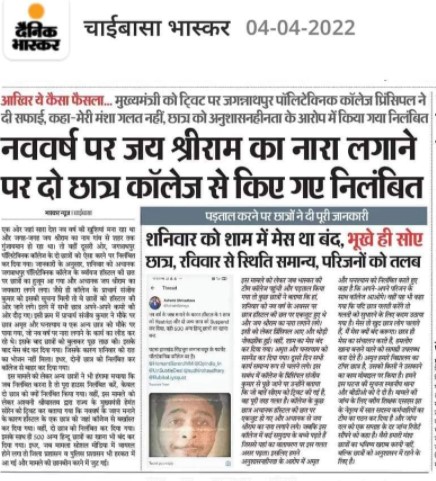
A ruckus ensued in the Government Jagannathpur Polytechnic college in Jharkhand on April 2, 2022 (Saturday), as students got together to celebrate ‘Nav Samvatsar’, the first day of Hindu New Year. According to the Hindi daily Dainik Jagran, two students namely Amrit and Ghanshyam were suspended and one other student was rusticated after the principal found them chanting Jai Shri Ram and Bharat Mata Jai slogans to commemorate the occasion. As a form of punishment, nearly 500 Hindu students were also denied food.

SS of the report published in Dainik Jagran e-paper on April 4, 2022

Ashwini Srivastava, a Twitter user, tweeted about the incident. Tagging CM Hemant Soren in his Tweet, Ashwini Srivastava stated that on Saturday, April 2, 2022, a group of students gathered on the terrace of Jagannathpur Polytechnic College’s residential hostel building to celebrate the first day of Hindu New Year. Students celebrated and chanted ‘Bharat Mata ki Jai’ slogans, which infuriated some ‘secular’ students and those from a ‘particular community.’ These students complained to the college principal, who rusticated one of the students and suspended two others who led the celebration. Along with this, almost 500 Hindu students were denied food on that day.

Centre of Indian Trade Union, Jharkhand also Tweeted about the incident and asked the DIG of Kohlan range in Chaibasa, Jharkhand to intervene and resolve the issue.

Meanwhile, a Dainik Bhaskar team visited Jagannathpur Polytechnic College and spoke with students. The students testified that on April 2, a group of students had gathered on the terrace to celebrate ‘Nav Samvatsar’ by chanting ‘Jai Shri Ram’ slogans when the principal arrived and raised objections. This sparked a minor argument between the students and the principal, who then suspended Amrit and Ghanshyam. The mess was also shut and the students were denied food for the rest of the day.

Dr Sanjeev Kumar, the college’s principal, however, denied the allegations. He claimed that on April 2, a group of college students unexpectedly gathered on the terrace and began chanting ‘Jai Shri Ram’ slogans.

Govt college principal defends suspension of students for chanting ‘Jai Shri Ram’ slogans, calls it a ‘disciplinary action’

Because students from various communities study here, this type of behaviour would be detrimental to the college environment, said Dr Sanjeev Kumar, adding that Amrit and Ghanshyam were suspended as a result of this disciplinary action.

He further denied that the college had shut the mess and refused food to the students. He said that the mess is handled by the students themselves and the college just provides the inventories.

He added that Amrit was the college topper and that he had been instigated.

Dr Sanjeev Kumar went on to say that the college had informed the local police station and the BDO about the incident and that they had begun an investigation. He also stated that the college has formed a 7-member team led by professor SS Jha to conduct an internal investigation into the matter. The team has been given 7 days to submit a report on the matter.

The principal stated that his intention was not to jeopardise the students’ future, but rather to discipline them.

Jharkhand: Maulana Md Wahid arrested for torturing a 14-year-old girl, used to burn her face and hands with incense sticks

A 35-year-old ‘exorcist’ Maulana Md Wahid was detained in the Chatra district of Jharkhand on Sunday for reportedly torturing a 14-year-old girl and burning her with incense sticks to “fend off bad spirits”.

Wahid was allegedly torturing the 14-year-old girl for four days, causing her to lose her mental stability, according to police. They said he beat her and charred her face, lips, and hands with flaming incense sticks.

According to reports, the girl became unwell after playing Holi, and the exorcist, Maulana Md Wahid, told her family that he will heal her through exorcism.

According to Superintendent of Police Rakesh Ranjan, Wahid was detained after the girl’s family filed a complaint at the Lawalong police station. According to him, a complaint was filed under relevant sections of the IPC, including 307 (attempt to murder) and the Protection of Children from Sexual Offenses (POCSO) Act.

The girl was rushed to Chatra’s Sadar Hospital, and as her health worsened, she was transferred to Ranchi’s Rajendra Institute of Medical Science (RIMS) in Jharkhand.

Sri Lankan central bank governor resigns amid a worsening economic crisis

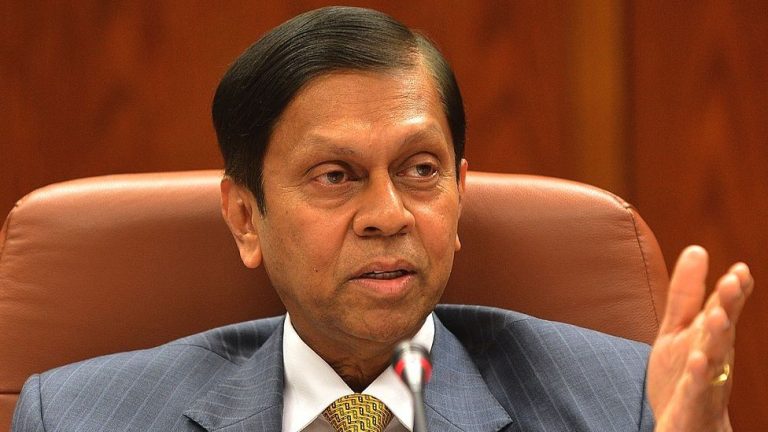
The governor of Sri Lanka’s central bank, Ajith Nivard Cabraal, on Monday submitted his resignation to President Gotabaya Rajapaksa as the country faces its worst economic crisis in decades.

Cabraal’s resignation came seven months after he presided over the role to steer the country’s central bank and manage the economy pummelled by the ravages of the coronavirus-induced downturn and soaring debt crisis. On Monday, Cabraal took to Twitter to announce that he has stepping down from the post.

“In the context of all Cabinet Ministers resigning, I have today submitted my resignation as Governor, Central Bank, Sri Lanka to President Gotabaya Rajapaksa,” tweeted Cabraal today.

Earlier, the 26-member Sri Lankan cabinet submitted letters of resignation, except for Prime Minister Mahinda Rajapaksa even as public fury against the government over the economic crisis continues to rise. Cabraal, a veteran policymaker anointed to the position in September last year, favoured reducing reliance on foreign debt, especially from the Washington-based International Monetary Fund.

However, the crisis continued to deepen over the months as the economy remained in a free fall since the COVID-19 pandemic crushed the country’s tourism sector.

Angry protests have swept the island nation as the country finds itself embroiled in a dire economic crisis, reflected in the shortages of food, fuel, power and gas. Besides shortages and soaring inflation, the country devalued its currency last month ahead of talks with the International Monetary Fund (IMF) for a bailout.

The dire economic crisis that is engulfing Sri Lanka

Sri Lanka is faced with the worst economic crisis in its history, with inflation reaching a record high of 17.5% in February 2022. The residents of the island nation are struggling with an acute shortage of food, and cooking gas. Power cuts are frequent and people are seen standing in long queues in the National Capital for buying diesel fuel.

The government, headed by President Gotabaya Rajapaksa, has been seeking credit lines from countries such as India, China and even Bangladesh for purchasing milk powder and diesel. The situation is so grim that the central bank is forced to buy oil from Iran by bartering tea leaves.

Schools in the western province of Sri Lanka were forced to postpone the exams of their students because the country had run out of printing paper. Due to a shortage of US dollars, it had become impossible to finance the imports. Electricity power cuts have stretched up to 14-16 hours a day, making it impossible for factories to churn out products and remain profitable.

US Trade Representative Katherine Tai praises cabinet minister Piyush Goyal, says India an important and strategic partner

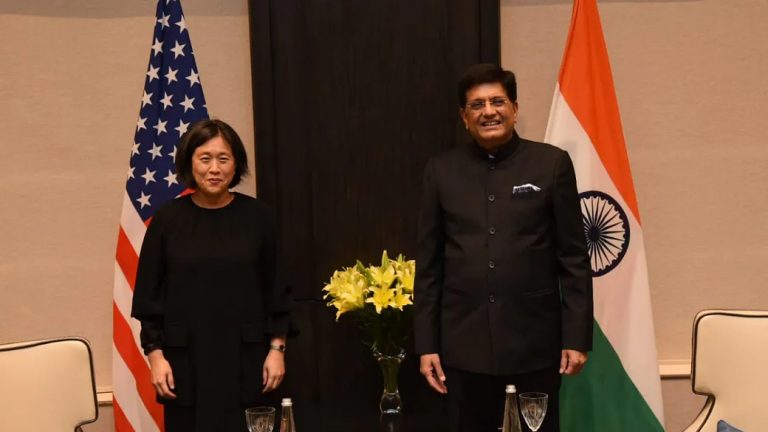
During a hearing on the United States Trade Policy Agenda before the Senate Finance Committee on Thursday, US Trade Representative Katherine Tai asserted that India is a key commercial and strategic partner of the US. She stated that, despite some significant disagreements, the two nations have committed to collaborate on a variety of subjects, including market access commitments. She also praised Piyush Goyal, Indian Minister for Commerce & Industry, Consumer Affairs & Food & Public Distribution, and Textiles.

Praising Piyush Goyal, Tai said, “He is very, very charismatic and also a very strong advocate for his country’s policies; some of which I think we will be able to strategically align with and some of which will and have proven to continue to be challenging for us.”

Concerning the disagreements, she stated that during her November trip to India, there was significant pushback from India on the matter of alleged shrimp dumping.

Last year, the US obtained access to India for pork exports, according to Tai who met Piyush Goyal at the trade forum. “It was important for us as the US Trade Representative and for me personally to go to Delhi to revive that trade policy forum,” she added.

As a consequence of the forum, the US obtained commitments from India to open up or resume trade in a number of areas for the first time. During the discussion, Goyal stated that the United States and India have recognized the need of diversifying their key supply chains and that both are set to play a key role in establishing a resilient supply chain. He also proposed taking the bilateral relationship, which has evolved in recent years, to the next level of involvement, notably through defense cooperation and the Quadrilateral Security Dialogue.

Stressing the importance of the recent meeting, Tai said, “It was the first time in four years that the Trade Policy Forum (TPF) had met at all. The last time it met in 2017, it was so fraught that the two sides did not even issue a joint statement. This time we issued a joint statement that was really robust, around five pages I think, and included important principles where we agreed to work together as well as market access commitments that we have made to each other.”

She went on to say that this will be a complex relationship for the foreseeable future. However, the Indian reaction to the Russia-Ukraine crisis is critical, and there is a need to continue to devote attention and capacity to achieve breakthroughs.

“With respect to India, India is such an important trade partner and a strategic partner. India is complicated, and we live in a complicated world. It was extremely important for us in the Biden administration to restart that trade policy forum with India and to do it at the ministerial level,” Katherine Tai said in response to a question at the hearing.

Kerala: Fire fighting officials give training to members of Islamist outfit Popular Front of India, 2 suspended

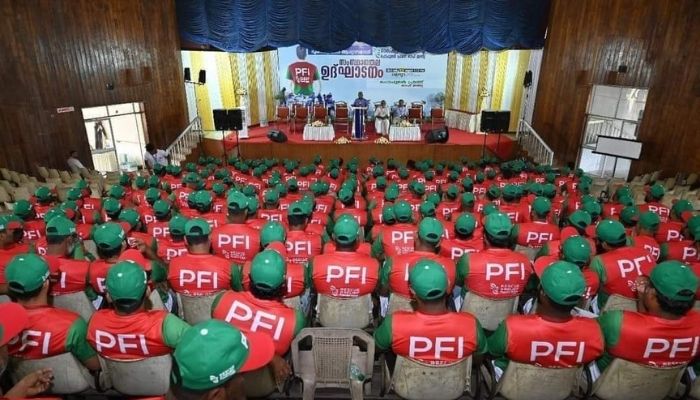
Kerala state fire fighting officials were seen giving training to workers of the Islamist organization, the Popular Front of India (PFI) in Ernakulam district’s Aluva Tehsil, as per reports. The incident took place during the last week of March, and controversy erupted in the state after Kerala state BJP President K Surendran lashed out at the state government over the same

Some officials of the Kerala Fire and Rescue Services were seen giving training to Popular Front of India members and workers of its political outfit SDPI (Social Democratic Party of India) at an event in Aluva’s Priyadarshini Auditorium. Reportedly, the event was organized to mark the inauguration of PFI’s ‘Rescue and Relief Team’ for which state fire fighting officials were invited.

On March 31, K Surendran took to Twitter to address the incident and shared some photos from the event. He wrote, “Kerala Fire & Rescue Service gave training to the members of the radical Islamic outfit Popular Front of India. PFI and SDPI are involved in several terrorist activities. The Pinarayi Vijayan govt is giving a red carpet for these Jihadi forces.”

As shared by Surendran in the tweet, it can be noticed that state officials in police uniforms are seen giving demonstrations to a gathering full of PFI members. After the controversy erupted, the Pinarayi Vijayan administration asked DGP Fire Force B Sandhya to submit a report on the incident. In the report to the Government, the DGP accepted that there was a major lapse from the department and promised to seek action against the officials involved.

Officials from the state fire department stated that they were invited to a cultural fest of PFI and hence gave demonstrations of rescue operations to the members present there. However, in a new circular, B Sandhya addressed that the Kerala Fire and Rescue Services department is barred from giving training to religious or political outfits hereafter. According to a report by News18 Kerala, as of today, two officials have been suspended and three have been transferred according to a state investigation report.

Freebies may lead to financial crisis like in Sri Lanka and Greece, top officers flag concerns with Prime Minister Modi

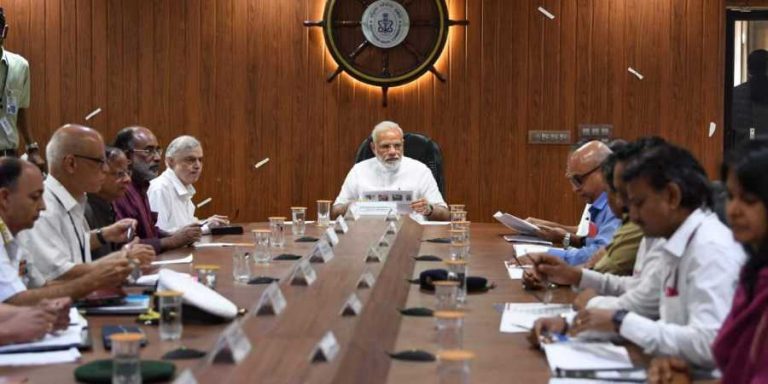
During a nearly four-hour meeting on Saturday, several top bureaucrats briefed Prime Minister Narendra Modi that the announcements of freebies in several states are financially unsustainable and that they needed to be persuaded to make a balanced decision that aligned political imperatives with economic stability.

They expressed alarm over populist initiatives and freebies promised by political parties during elections. They cautioned that if the trends persisted, some states may end up in the same situation as cash-strapped Sri Lanka or Greece.

The pronouncements made by state governments like Punjab, Delhi, Telangana, Andhra Pradesh, and West Bengal, as officials stated, are unsustainable and a remedy is needed at the moment. Several political parties are providing free electricity, putting a strain on the state budget. Also, it restricts their capacity to commit more finances to critical social sectors like health and education.

Although it was not particularly highlighted in the meeting, central government officials also voiced fears about the “unsustainable” consequences of the transition to the old pension system in states like Chhattisgarh and Rajasthan. Officials say the norm of political parties competing to deliver freebies before every election would have major long-term consequences for state and central government finances.

According to some reports, the bureaucrats, who held prominent positions in the states before going to the Centre, warned that numerous states were in dire financial straits and would have gone bankrupt if they had not been a member of the Union.

The discussion focused on socioeconomic development, according to some officials, and the PM asked the secretaries to take all feasible efforts to reduce poverty and come up with governance ideas given their broad experience in state governments and at the Centre.

Free schemes in trend

Several political parties like the Aam Aadmi Party and the All India Trinamool Congress offered tonnes of freebies before the elections. This trend is growing as many other political parties are imitating this action in search of power. In fact, after coming to power on promises of freebies claiming that they have the calculations to fund freebies sorted, AAP government in Punjab asked Centre for Rs 50,000 crore aid for two years as the state’s financial situation is very bad.

In the recent assembly elections of 5 states, these political parties announced various schemes where they promised free electricity for households and free money to all women. However, these schemes are not feasible to the society whether it is the social sector, or the economic sector.

India’s power distribution companies are suffering badly. In such circumstances, when past dues are already unpaid, offering free electricity and increasing the burden on the power industry is hardly something to be celebrated.

States get a percentage of national taxes and GST, while their own revenue streams are restricted to alcohol excise and petroleum VAT, as well as property and motor vehicle registration fees. In such a position, efforts to mobilise resources are constrained, depriving them a foundation from which to spend that money on appeasements.

Hyderabad drug case: Chiranjeevi’s niece Niharika Konidela, Rahul Sipligunj among 140 detained after a raid on Banjara Hills pub

On April 3, in a major anti-narcotics operation, Hyderabad Police detained more than 140 people, including famous Tollywood personality Naga Babu’s daughter Niharika Konidela and playback singer Rahul Sipligunj. As per reports, at around 3 AM, Police raided the Pudding and Mink pub at Radisson Blu Hotel located in Banjara Hills. During the raid, Police confiscated cocaine and other narcotics.

Children of well-known personalities were detained, including the daughter of the former DGP of Andhra Pradesh and the son of the MP of the Telugu Desam Party. Sipligung, who was present at the party when Police raided the premises, had sung a song for a campaign promoting drug-free Hyderabad under Hyderabad Police’s banner.

During the raid, those who were in possession of the drugs tried to get rid of them. As per Police’s press release, so far three people have been booked in the case including pub manager Mahadaram Anil Kumar, and partner in pub Abhishek Vuppala under various sections of the Narcotic Drugs and Psychotropic Substances Act. A person named Arjun Veeramachineni is absconding. When the Police raided the premises, they found over hundred people consuming alcohol. Upon further investigation, they found packets of white powder believed to be cocaine in the possession of the pub manager.

The Police said, “On thorough checking of the premises, five small packets containing white powder suspected to be cocaine were found in one of the plastic containers used for holding drink straws present on the bar counter in the custody of its Manager Anil Kumar.” All detained were taken to Banjara Hills Police Station for further investigation.

Speaking to Hyderabad Times, a police officer of Banjara Hills PS said, “Around 150 people were partying at a pub last night. The pub doesn’t have permission to operate post-midnight. A singer and actress were among those detained as a prohibited substance was found on the premises. We are still interrogating and are yet to file an FIR. More details will be revealed soon.”

It is unclear if all the detained were involved in drug abuse. Rahul left the Police Station at around 8 AM, while Niharika was spotted leaving PS at around 12 PM. As per the CNN-News18 report, 45 of the 140+ detained had to undergo a drug test, and medical reports are awaited.

Naga Babu’s statement

Actor Naga Babu issued a video statement following the arrest of his daughter. He claimed his daughter was only present at the premises and was not involved in the drug abuse. He further claimed Police had confirmed her daughter was clean.

He said, “My daughter Niharika was detained for being present at a pub in a five-star hotel last night. Police have nabbed the management for running the pub beyond permitted timings. However, the Police have confirmed she is clean and has nothing to do with the drugs that were recovered.”

He further urged everyone not to share any false or baseless reports on social media platforms.

It is notable here that Niharika is married to Chaitanya Jonalagadda, the son of senior police officer J Prabhakar Rao. Rao is the IG of the Guntur district. Niharika’s father Naga Babu is the brother of South superstar Chiranjeevi. Niharika and RRR hero Ram Charan are cousins.

Former Union Minister Renuka Chowdhury denied the involvement of her daughter in the case

There were reports that Tejaswini Choudhury, daughter of former Union Minister and Congress leader Renuka Chowdhury was involved in the case and was detained by the Police for questioning. Renuka categorically denied the claims and said the reports were baseless. She said, “I condemn the news coming in the media on my daughter Tejaswini Chaudhury. The allegations against my daughter in connection with the police raid on the Pudding and Mink pub at the Radisson Blu Hotel are untrue. I condemn the ongoing propaganda that Tejaswini was detained and questioned by the police. There is no truth in any of such allegations and it is being done solely with the purpose to tarnish our family’s reputation.” Meanwhile, Telangana Congress demanded a CBI probe in the case.