Home Blog Page 3377

Halal certification is purely religious: Where does it stop and why is the Govt of India even allowing it

A lot of discussions have been going on over the Halal certification issue. In previous articles we have explained how the Halal meat industry practises discrimination against non-Muslims and eventually cuts off non-Muslims from jobs and employment, just to maintain the religious requirements of the Halal process.

Many companies, Islamists, and Halal proponents have clarified that the Halal certificate is also there for non-meat products like vegetarian food items, cosmetics and other FMCG goods. There have been claims from some elements that Halal certification is just a certification for ‘purity and authenticity’, and a Halal certification (on non-meat products) does simply imply that the product is ‘good’.
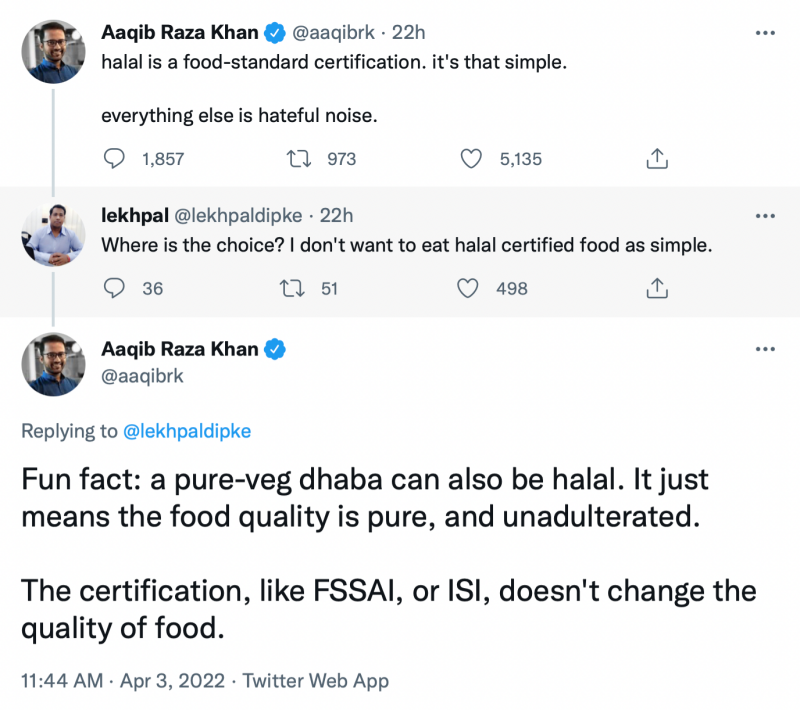
Quint journalist claiming Halal certificate is just for purity

Why do we need a Halal certificate anyway? And more importantly, what is the justification behind the certification apart from religious belief?

There are many questions that this claim raises.

There are existing certifications by the government

If we start accepting Halal certificates on products, does that mean the existing government certifications on consumer products like ISI, and FSSAI are not enough? Is there a transparent, scientific and well-defined method that decides the so-called purity, or goodness of the products? The answer will be no because Halal certification is issued by religious Islamic organisations, for example, the Jamiat Ulama-e-Hind in India, whose areas of speciality include providing legal assistance to terrorists and murderers.

Halal certification is purely religious, even in non-meat products because it considers whether the said products contain any ingredients that are prohibited in Islam. The very idea is discriminatory in itself because the basis of the certification here is a religious belief, whether a certain ingredient is ‘allowed’ in the Islamic faith or not.

Where does it stop?

We have explained earlier how the whole idea of Halal certification is discriminatory towards other communities. It imposes a religious belief on non-followers too. Halal certification thus encourages a parallel economy. In a secular country like India, where over 80% of the population is Hindu, and where numerous religious beliefs thrive along with several cultures, the very idea of Halal is outrageous.

If a Halal certificate is there for non-meat products, and a considerable section of the population wants it on a range of products like cosmetics, non-meat food items, and other FMCG products, where does it even stop? What if this need for the certification is extended next to, say, railway station buildings, buses, clothes, rubber, petroleum products?

If one community demands Halal certification on products, and the government allows it, what is going to stop other communities from demanding similar certifications? What if the Sikhs, Jains, and Buddhists demand consumer goods to be ‘certified’ fit for consumption only after they have been okayed by their respective religious authorities? What if the majority Hindus demand it too?

Isn’t this similar to extortion? A ‘certified’ system of ‘hafta wasooli’?

There are already existing government-specified norms, quality parameters and regulatory requirements that companies have to meet to get their products certified fit to be marketed. So why is this parallel system of ‘certifying’ them for one particular community is even continuing? Since the government has nothing to do with it and does not mandate it? Isn’t this just a means to make companies shell money to ‘buy’ that certificate to meet the demands of a certain community? Isn’t this a sophisticated version of “pay us 25,000 Rs every month, or you cannot open your shop in our area”?

Why does the government even allow it?

FSSAI doesn’t give Halal certificates. In India, there are several religious bodies that issue the so-called certificate to products, deciding their ‘purity’ as per the Islamic faith. The main Halal certification bodies in India are

  • Halal India Private Ltd
  • Halal Certification Services India Private Limited
  • Jamiat Ulama-E-Maharashtra- A state unit of Jamiat Ulama-E-Hind
  • Jamiat Ulama-i-Hind Halal Trust

So, there is an entire parallel certification process that is operating outside the ambit of the respective state and national authorities. The government of India is allowing bodies affiliated with one particular religion to issue quality of supposed religious purity and admissibility to consumer products.

Does this not undermine the entire idea of having a government body’s certification process for the quality and standard of goods? And why does the government of a secular democratic republic where Hindus are in majority and numerous faiths like Christianity, Sikhism, Jainism, and Buddhism exist in significant numbers is even allowing one particular faith to run its own certification business?

Does the Akal Takht give its stamp and certification to consumer goods in exchange for a fee? Do companies need to pay the Vatican to have their products cleared for consumption by Christians? Does the Dalai Lama issue his stamp and seal to products that are to be used by Tibetan Buddhists? And where do Hindus even apply?

Why is there a system of parallel economy, running with the government’s blessings in ‘secular’ India, especially for one community? Just because they demand it? How is this even fair?

Conclusion

It is futile, and even unfair to an extent to target private companies that have sought the Halal certificate to market their products, to Muslims. The onus of the issue is on the government, to either mandate that the government certification is enough for any company to sell their goods or explain why they have allowed a particular community to demand a parallel certification mechanism in a so-called secular country.
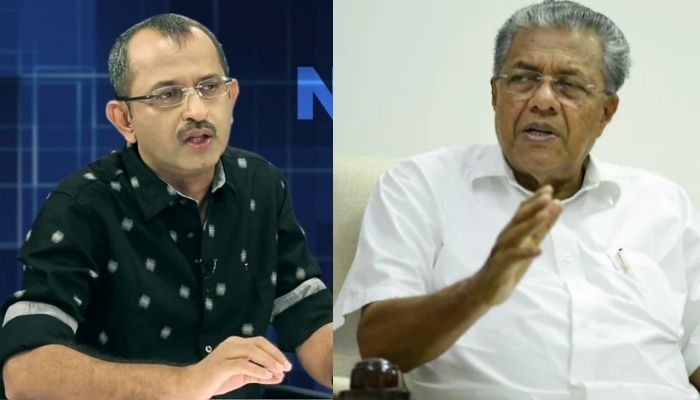
Kerala: Communists intimidate journalist who questioned assault on an auto driver by CPI (M) goons during ‘Bharat bandh’, here is what we know so far

The Left Democratic Front (LDF)-led government in Kerala has resorted to intimidatory tactics against prominent Malayali journalist Vinu V John for questioning the assault on an auto driver by Communist party goons during the ‘Bharat Bandh’ last month.

John, who works with Asianet News, had questioned CPIM Rajya Sabha MP Elamaram Kareem, who sought to trivialise the assault by his party goons. It must be mentioned that the ‘failed’ Bharat Bandh was observed by the Communist party between March 28 and March 29 this year.

On March 28, an auto driver named Yaseer was thrashed by CPIM-backed trade unionists for ferrying a patient to a hospital in Malappuram. Yaseer was mercilessly beaten, following which the began bleeding from his nose.

While reacting to the news, CPIM Rajya Sabha MP Elamaram Kareem had claimed, “We had given the strike call two months ago…. Now they say someone was scratched and pinched.” Kareem is also the General Secretary of the Centre of Indian Trade Unions (CITU).

An infuriated Asianet News journalist Vinu V John had slammed Kareem for downplaying the assault on the auto driver and inquired about the reaction, had the CPI(M) Parliamentarian been assaulted.

During his news hour programme on last Monday, he had remarked, “They should have vandalised the vehicle in which Elamaram Kareem was travelling. And then the occupants — if he were travelling with his family — should have been de-boarded. The tyres of the vehicle carrying Elamaram Kareem should have been deflated.”

He had added, “Elamaram Kareem, like Yasser, should have been slapped in the face and left bleeding from his nose. Then he would have realised whether it was just scratching, pinching or insulting.” CPIM party workers, who interpreted his words as a direct threat, marched to the Asianet News’ office in Thiruvananthapuram on Wednesday (March 30).

Communist party resorts to intimidation and coercion tactics

“He has openly made a statement on the channel to attack Elamaram Kareem and his family. A democratic society can never accept this kind of call for violence,” alleged CM State Secretariat.

The Communist Party of India (Marxist) had also refused to send its party spokespersons to the show hosted by Vinu V John. Posters against the Asianet News journalist were put up in public places by party workers.

Written in Malayalam, the posters read, “Is Vinu V. John a media goon? Protest and react against the uncultured Vinu V. John. Protest against Vinu V. John’s call for violence against Elamaram Kareem. Isolate Vinu V. John.”

An Independent MLA backed by the Left, PV Anvar went on to threaten the journalist with physical harm. “If I didn’t have these three letters — “M-L-A” — on my forehead, I would have known how to deal with him (John),” he had warned. Anvar went on to label John as ‘polluted’, ‘filthy’ and ‘degenerate’ and claim that the journalist has several fathers.

In a tweet, author Rejimon Kuttappan had said, “Solidarity with Asianet News Vinu V John. He told us the story of strikers going rouge on the streets trashing common man. He criticised Elamaram Kareem for trivialising attacks. Today, TUs are marching to his office. Embarrassing, Sitaram Yechury!”

Asianet News, Independent analysts back journalist Vinu V John

On Sunday (April 3), Executive Editor of the news channel Sindhu Sooryakumar extended her support to Vinu V john. She had remarked, “Vinu has the full support of Asianet. But we are also talking to CPM leaders to eliminate the misunderstanding since Vinu did not say what he is being accused of,” she said.

Sindhu Sooryakumar informed that the channel will take all possible legal action against the threats made by the Rajya Sabha MP. According to media panellist and advocate A Jayashankar, John was being made a scapegoat by the Communist regime to compensate for the flop show on Bharat Bandh.

“He had not said that Kareem should be assaulted, or that the car in which his family was travelling should be stopped and the tyres deflated. He had only asked how Kareem would react had he been in the place of that autorickshaw driver. Anyone can understand from the video which is still circulating,” Jayashankar pointed out.

He further emphasised, “This was misinterpreted by the CPM to get a hold on the issue at a time when a large number of people and businesses had turned against them for shutting down the state for two days.”

In retaliation to the posters pasted on walls by CPI(M) workers, Vinu V John changed his Twitter Dp and cover photo with the image of the posters.

According to lawyer Harish Vasudevan, the Communist regime had overreacted to the comments made by John. “He (John) had only asked how a CPM leader would react if such a thing happened to him. It was not a call to attack Kareem,” the lawyer said.

Vasudevan further emphasised, “A political party should not have targeted a journalist. Instead of focusing on the larger issue (of the strike affecting the people), they simply narrowed down the focus on a journalist. That should not be the priority of a political party,” he added.

Bharat bandh failed to make any impact

As per reports, banking services and public transport were affected on March 28 as strikes were held in a few states, with Kerala being one of them. Offices across the state reported only thin attendance and all the educational institutions remained closed. However, the essential services remained largely unaffected.

On March 29, bank unions also joined the strike to protest against the government’s move to privatize two public sector banks as announced in Budget 2021-22. Also, the public transport services across the state were hit. The trade unions had protested against the Central government’s policies allegedly affecting workers, farmers, and people in general.

Except for Kerala (where state unions exercised their writ with force), the strike had very little impact on the lives of people otherwise. It was business as usual elsewhere. This however did not stop the usual suspects from claiming that the Bharat Bandh threw Indians into a state of confusion.

Times Of India gives away POK to Pakistan

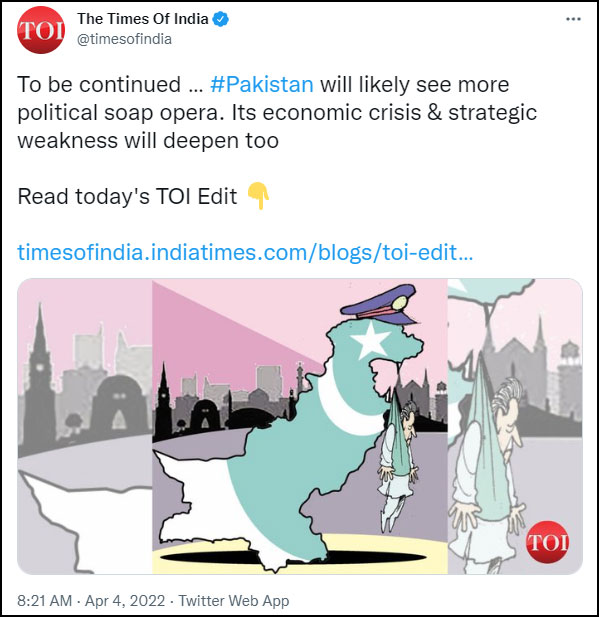
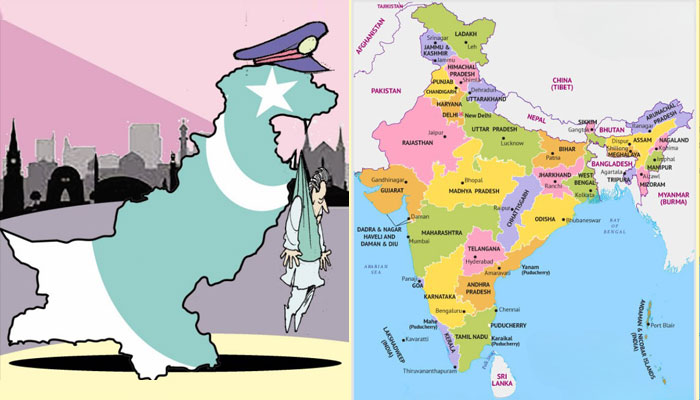
On April 4, the English Daily Times Of India shared a wrong map of Pakistan in which they had given away Pakistan Occupied Kashmir (PoK) to Pakistan. The report was about the increasing crisis in the neighbouring country, and while talking about the possibility of economic crisis and strategic weakness, Times of India shared the wrong map of Pakistan.

Screenshot of TOI Tweet depicting PoK as part of Pakistan. Source: Twitter

The cartoon that TOI published in the tweet covered a significant portion of J&K and Ladakh (Gilgit-Baltistan). The Archived version of the tweet can be seen here.

Entire portion of Kashmir that has been illegally occupied by Pakistan and China is an integral part of India.

Netizens criticized TOI over the wrong map

Several netizens pointed out the wrong map and criticized Times Of India for the blunder. Twitter user iMac_too questioned TOI if they had donated PoK to Pakistan.

Another Twitter user Akshay tagged PMO and HMO in the tweet and urged TOI to correct the cartoon.

A Twitter user questioned if the law against publishing a wrong map of India was only for the general public or media houses were covered under that too.

Twitter user Chaitanya told TOI to learn to use the correct map.

Zee Journalist Madhaw Tiwari also chipped in and said it was a wrong map.

A history of news agencies publishing wrong maps of India

This is not the first time a news agency has shown the wrong map depicting PoK as part of Pakistan. In the past, India Today, CNN, Aaj Tak, Google and Twitter have made blunders in a similar manner. In April 2020, India Today showed a distorted map of India in a graphic during a show hosted by Rajdeep Sardesai.

In August 2017, CNN posted the wrong map of India on Independence Day. The map was changed after the uproar. In December 2020, Aaj Tak streamed the wrong map of India while discussing Bharat Bandh. In June 2021, BBC showed the wrong map of India while covering the Delta variant of Covid-19.

In June 2021, Google showed the wrong map of India, depicting Pakistan Occupied Kashmir and Aksai Chin as separate entities and not a part of the Indian Union. In June 2021, Twitter committed the same mistake and showed a distorted map of India in the career section on its website. Notably, Twitter has been a repeat offender in this context.

Uttar Pradesh: Man tries to enter Gorakhnath Temple shouting ‘Allahu Akbar’, injures two cops with a sharp weapon

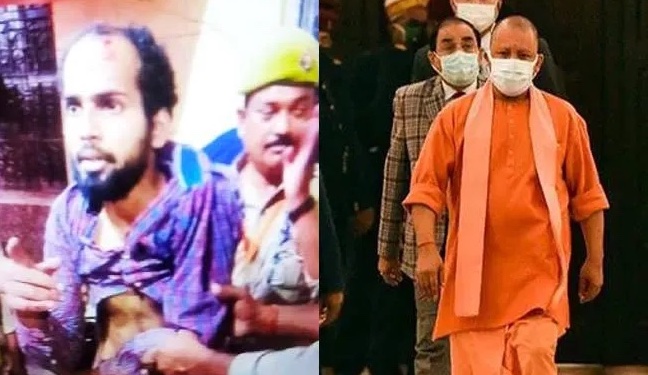
On April 3, a man forcibly tried to enter the premises of Gorakhnath Temple in Gorakhpur district, Uttar Pradesh. He was armed with a sharp-edged weapon and injured two cops who tried to stop him. The attacker, identified as Ahmad Murtaza Abbasi, dodged security personnel at the temple for around ten minutes before getting overpowered. Notably, Uttar Pradesh Chief Minister Yogi Adityanath is the head priest (Mahant) of Gorakhnath Temple and has his personal accommodation on the temple premises. At the time of the attack, CM Yogi was not at the temple.

Series of events at Gorakhnath Temple

As per eyewitnesses, Abbasi wanted to enter the premises at any cost. The main gate of the temple is in front of the Gorakhnath Police Station. Constable Gopal Gaud and Anil Paswan were deployed at the main gate for security. A man tried to enter the premises at around 7:15 PM, and when the Police personnel stopped him for checking, he tried to snatch their weapons. When he failed, he drew a sharp weapon and attacked the Police personnel.

Before the Police personnel could realize what had happened, Abbasi seriously injured them. After that, he approached the main gate of the temple while shouting ‘Allah-hu-Akbar’. Constable Anurag Rajput and AIU officer Anil stopped him. Abbasi tried to injure them as well. He almost reached the gate when Constable Rajput and AIU Anil overpowered him.

As soon as the locals learned about the incident, they rushed to the temple premises and thrashed Abbasi. Reports suggest Abbasi was not alone. There was another man with him who escaped when Abbasi got overpowered. He left a bag behind in which the Police found a laptop, pen drive, an air ticket and a PAN card.

Deputy inspector general of Police (Gorakhpur range) J Ravinder Goud, along with the senior superintendent of police Vipin Tada visited the temple premises to take stock of the incident. The investigation into the incident is underway, and the Police are still trying to assert the motive behind the attack. Reports suggested that when Abbasi got captured, he was heard shouting, ‘someone shoots me’.

ADG Zone Akhil Kumar said in a statement that the incident was serious as CM Yogi often visited the temple. The Police are investigating every possible angle, including the possibility that it was a terror attack.

The ‘script’ lives

Some reports suggest Abbasi, a chemical engineer by profession, claimed during interrogation that he was mentally upset due to family issues. As per reports, he has is a chemical engineer from IIT Bombay. His parents were detained by the Police from their residence.

Security of the temple premises has been increased.

Pakistan: Punjab Assembly members engage in hand to hand combat on first day of Ramzan

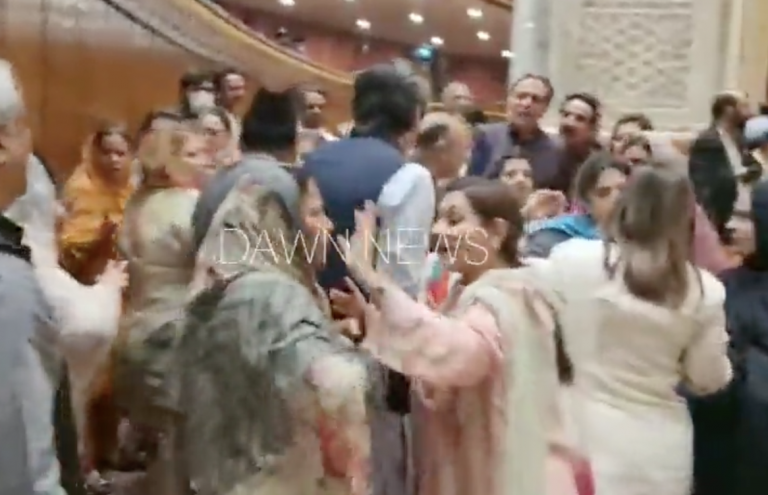
Visuals of Pakistani lawmakers engaging in fistfight have come to light amid the major political drama in the neighbouring country on the first day of holy month of Ramzan. In a video shared by Pakistani journalist, women members of Punjab Assembly can be seen getting violent with each other as they punch each other.

At around 28 seconds, when one man appears to be intervening to stop the fight, other man comes forward asking him to not get involved.

Earlier in the day Pakistan President Alvi dissolved national assembly on Pakistan Prime Minister Imran Khan’s advice. Legal experts in Pakistan, however, say that this was in violation of the constitution. Prior to that, Imran Khan had sacked Punjab governor Chaudhry Mohammad Sarwar. Last Friday, Sarwar had accepted Punjab Chief Minister’s resignation and the post had since been vacant.

The Assembly in the largest province in Pakistan had gathered to elect a new leader. Sarwar, according to reports, was not towing the government’s line. According to certain reports, Sarwar conducted backdoor conversations with the leadership of the Pakistan Muslim League (Nawaz) and was empathetic towards the opposition party.

Amidst all this, Pakistani lawmakers in Punjab province beat each other up.

Odisha: Dozens of holy earthen hearths in the kitchen of Jagannath Temple in Puri vandalized

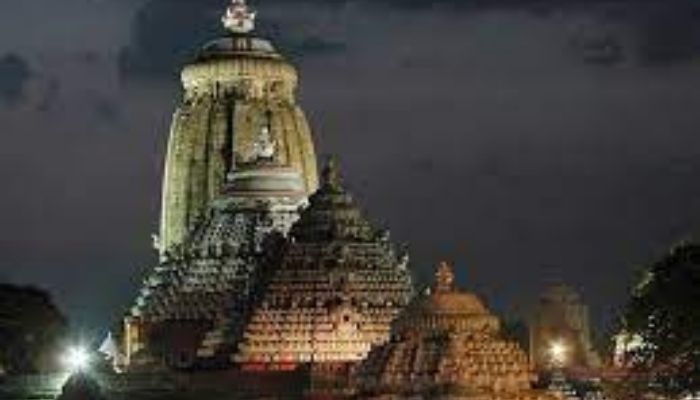
In a shocking incident, as many as 40 earthen hearths in the kitchen of Shree Jagannath Temple of Puri in Odisha were vandalized by unknown miscreants. These hearths (Chulhas or ovens) are in regular use for making the raj bhoga offered to Lord Jagannath and his sibling deities. The number of vandalized Chulhas however differed in different reports. Saswat Panigrahi, the editor of Zee News Odisha, has tweeted that as many as 90 such Chulhas were vandalized. This incident was reported by the temple officials on Sunday 3rd April 2022.

On the other hand, India Today reported that over 100 chulhas were vandalised in the incident.

The district collector Samarth Verma visited the spot along with Superintendent of Police VK Singh. Samarth Verma said, “Around 40 Chulhas were vandalized in the Rosa Ghar. we have sought a report in this regard and strict action will be taken against the person responsible for the incident.”

He further said, “The CCTV footage is being examined to identify those involved in this incident. A joint inquiry by police and temple officials has been ordered. The incident will affect the devotees in getting the ‘Mahaprasad’ but things will be normalized in two days.”

Informing about the daily rituals, he said, “The temple administration prepares the offering for the Lord on ‘Kotha Chulhas’. Only one or two of these ‘Kotha Chulhas’ were amongst the ones vandalized. Therefore, the rituals of the temple were not affected.” However, an official said that there was a delay in serving the morning offerings by 30 minutes.

Shree Jagannatha Temple in Puri dates back to the 12th century. According to the records of rights, there are a total of 240 registered hearths in the kitchen out of which 40 are damaged. The ‘Mahaprasad’ is cooked only in the earthen pots. Around 400 cooks and 200 assistants are directly engaged in the process of preparing the ‘Mahaprasad’. devotees get this ‘Mahaprasad’ in Ananda Bazar.

Saswat Panigrahi tweeted, “This has happened for the first time in the history of Puri Srimandir. As many as 90 Chulhas – meant for preparing Mahaprasad – inside the divine kitchen were vandalized. Such a bizarre incident has raised a serious question mark on the security of Jagannath Temple.”

The temple officials informed that only the cooks are allowed to be inside the kitchen, therefore, it is suspected that some servitors may be involved in vandalizing these hearths on Saturday night following a dispute over completing traditional rituals.

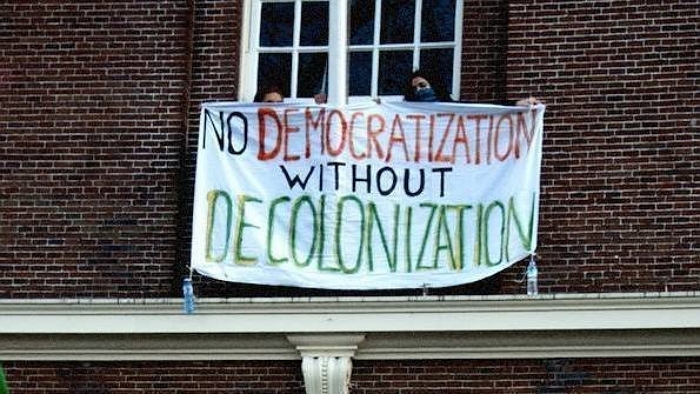
75 years after decolonisation of India, now the need of the hour is decolonisation of the individual

Decolonisation is the removal of domination by a nation on foreign territories. While it was historically a territorial process, it has over time acquired subtler elements, particularly around the development and promotion of indigenous knowledge. Back in 1945, when the United Nations was established, there were around 75 crore people (about a third of the world population) that lived in colonised territories. Today, we have only 17 non-self-governing territories, including Anguilla, Bermuda, Cayman Islands, Falkland Islands, Montserrat, Gibraltar, Guam, Pitcairn and Tokelau, among others.

In India, the process of decolonisation has been a gradual but sure-footed one. Sri Aurobindo started advocating for Poorna Swaraj in 1907, going against the proposal of colonial self-government given by Dadabhai Naoroji. Hasrat Mohani, Bal Gangadhar Tilak, Maghfoor Ahmad Ajazi and  Bipin Chandra Pal reinforced this call for complete independence, and after the INA trials in Delhi, the entire country was electrified with such a spirit of liberation and emancipation that Clement Attlee had to constitute the Cabinet Mission and initiate specific policy-steps to get the ball rolling for Indian independence from the colonial yoke.

But the key question is whether India was truly liberated, beyond the political dimension, in the years following 1947. Have we truly been decolonised, when it comes to socio-political orientations, but more importantly mental constructs and individual state of being? Possibly not.

While the Constitution-making exercise in India was inspired by western systems of governance and yet independent in its drive under Dr. Bhimrao Ambedkar, the laws of India were largely handed down by the Britishers. The Indian Penal Code (IPC), 1860 was introduced during English colonial rule on the recommendations of a Law Commission headed by Thomas Babbington Macaulay.

Article 372 of the Indian constitution talks of the adaptation and modification of laws taken from before the establishment of the Constitution by the President, but more importantly clause (2) of the said Article says that nothing stops ‘a competent Legislature or other competent authority from repealing or amending any law adapted or modified by the President under the said clause’. From official dress codes to the Common Law, we see how the British Raj moulded the contemporary Court system of India.

This is even seen in the administration of justice, wherein there is a certain pre-eminence of Hobbes’ philosophy of sovereign absolutism, whereby justice is allowed by the state as a matter of concession. In sharp contrast, we have had a historical Indian ethos of justice, where justice was above class disparities or the ruler-subject dynamics. For instance, King Samaneedhi Cholan is said to have executed his own son to grant justice to a cow whose calf he had killed!

And yet today, we see the colonial mindset in the manner in which salutation, reference and accessibility of Courts is rather contradictory to the Indian ethos and still somewhat along the lines of the British Raj’s ethos that we should have rid ourselves of. In a country where judges continue to be addressed as Lordships and Ladyships, we must fundamentally rethink some of the key nuances of our judicial and legal system.

Socially, there are still lingering effects of colonial ways of thinking. A major example is land tenure and class disparities in rural India. Land distribution and ownership of land, as done initially in modern times by the British Raj, still affect voting patterns of various cross-sections and strata of rural Indian society. Mobilisation of peasants in insurgency movements like Maoism and the Naxalbari movement owe their roots to the inherent hegemony entrenched in the tenure system. Exploitation of peasants by the landed gentry has historically led to class-based resentment and formations of political fora by the peasants to voice their demands.

Even though the Government of India abolished the landlord regime in the 1950s, the landed class continue to hold a certain sway and this imbalance impacts electoral dynamics even today. Interestingly, studies have shown that the legacy of the colonial rule influence our political institutions by modulating the voter-response to interventions that seek to either reduce or terminate existing differences.

I believe land reform and distribution are major policy-steps that must be looked at, as a priority, besides an institutionalised thrust to negate and remove existing differences. The British Raj also affected our understanding of religious and social structures, with interpolations and even impositions in their cruel census exercises, besides civil codes and family laws. India is a country of immense diversity on religious, ethnic and cultural lines, and the boundaries between different communities was not always clear.

Several scholars have argued that the modern politicised communities in India found their definite socio-political boundaries through the census enumeration that the British Raj initiated. There were even instances where new caste demarcations arose. David Washbrook, in his seminal book ‘South India: Political Institutions and Political Change’ (1975), spoke of how the dominant agricultural castes of South India such as Kamma and Reddy are of recent origin and were formed mainly through political reasons by numerous sub-castes coalescing in the early 20th century.

Similarly, as per John Henry Hutton, Yadavas were formed by combining castes such as Idaiyans and Ahirs, while Jangidas were formed by bringing together several artisan castes such as smiths, carpenters and goldsmiths. The existence of classifications or even divisions in Indian society before census enumeration is not questioned but rather the utilitarian and politicised way in which it was entrenched and used for political purposes is something that one saw in the era of the British Raj.

What was and is a larger malaise in the populace, however, is the existing and increasingly dominant predilection for dogmatic and rigid constructs and trends, a development that is at odds with the Indic and Dharmic inclination towards acceptance, cosmopolitanism and encouraging multiplicities and even paradoxes. The Nāsadīya Sūkta of the Rig Veda is a beautiful reminder of the broad thinking and inherent profoundness of the Indic way of thinking:

नासदासीन्नो सदासीत्तदानीं नासीद्रजो नो व्योमा परो यत्|
किमावरीवः कुह कस्य शर्मन्नम्भः किमासीद्गहनं गभीरम्॥

Wherein the seers of the past spoke of transcending even the binary of existence and non-existence! Beyond and besides systemic reform, which without evolution of individual psyche and cultural perception remains just a surface-level restructuring, we must realise the ways in which the colonial and western orientations have seeped into our very way of thinking and being.

The proclivity to polarisation in society and politics arises from a certain gravitation towards binaries and dogged alignment with and around them. The word dichotomy itself arises from the Greek term διχοτομία dichotomía – “dividing in two”.  Western thinking, as per Jacques Derrida, has been founded upon the ‘logic’ of binary oppositions, such as rational/emotional and freedom/determinism, and one of the two is always given a more privileged position than the opposite.

This is in sharp contrast to the thinking of Indian luminaries like Sri Ramakrishna Paramhansa, who famously said, “যত মত তত পথ” – “As many opinions so many ways”. The Dharmic way of life and thinking has historically had the most vibrant and dynamic flux and interaction of disparate philosophical traditions, ontological and epistemological points-of-debate and socio-cultural diversity.

This was the land that hosted the Śramaṇic traditions of Ājīvika and Ajñanas on one hand and the elements of Smarta traditions such as Pañcāyatana pūjā on the other. This was the land where philosophical skeptics like Cārvākas thrived, as did Āstika schools of tradition such as the Vaiśeṣika with seminals works such as Praśastapāda’s Padārthadharmasaṁgraha. This was the land where we saw wave-after-wave of foreign invasions and yet a curious assimilation and acceptance of cultural and civilisational elements from abroad into the very fabric of the Indic society, in a seamless way.

Why then must we be slaves to a limited and parochial way of opting for binaries, of rejecting the broadness of thought that our civilisation heritage endows us with? Why must we act like sheep in following ideologies, cults, figures, political parties or `fads’, without ratiocination and introspection? The final frontier of colonisation (and the struggle against, thereof) is of the mind, of the individual, and this is the colonisation that spiritual, social and cultural luminaries have fought against since times immemorial. This is the colonisation that is the easiest to fall victim to, given that we grow and develop as individuals in specific socio-cultural, political and philosophical settings.

Based on the same, we are often quick to undertake ‘othering’ of people who may not align with us. When that develops further into dogmatic thinking, hatred may arise, in a rather regressive manner. Ours is the culture and civilisation that spoke of the oneness of all beings, nay the entirety of the Universe itself. Ours is the civilisation that had expositions of universal unity since before it came to be written in seminal works such as the Upashama-prakaranam of the Yoga-Vāsiṣṭha or in the Srimad Bhagavad Gita (9.15):

ज्ञानयज्ञेन चाप्यन्ये यजन्तो मामुपासते |
एकत्वेन पृथक्त्वेन बहुधा विश्वतोमुखम् ||

This was the land that gave us the Jain concept of Anekāntavāda – multifacetedness of reality and various other ancient systems of value pluralism. This was the land that gave us the Catuṣkoṭi system of logic and argumentation as well as various schools of contextualism. This was the land that gave us the Vedic wisdom of एकं सद्विप्रा बहुधा वदन्ति (`Truth is One, it can be known variously’).

We must own our traditions and heritage, and not be enslaved by any way of thinking that is shallower than that which our civilisation has provided us with. That is the final layer of decolonisation: Ātmaviupaniveshīkaraṇ (आत्म-विउपनिवेशीकरण) or the decolonisation of the individual. It is not about the correctness (or not) of a certain way of thinking or being, but rather the active recognition that it is one of many other possible ways, and each in their own ways are `correct’ ways, as truth is inherently multifaceted and multidimensional.

Biologically, those species that ‘conform’ (to a certain set of functionalities and states-of-being) and not adapt to varying conditions have fallen prey to vagaries of nature and natural selection, and oft gone extinct. Given our human faculties and our civilizational ethos, we are equipped to be individually decolonised from rigid constructs, not only from a point of survival, but a point of realisation. And this is a profound message that India can gift the world, as it has over millennia, in the modern context. I would like to conclude this meditation with a Shloka from the Rig Veda (6.75.14): पुमान् पुमांसं परिपातु विश्वतः – ` May the man protect the other on every side’.

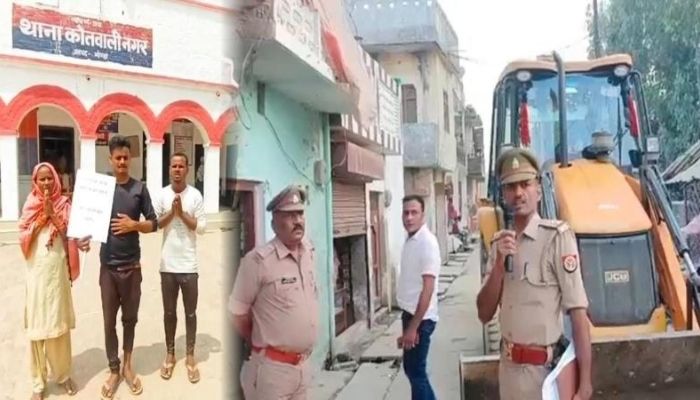
Surrender of criminals continues in Uttar Pradesh, rape accused reaches police station in fear of bulldozer, pleads not to encounter

In Uttar Pradesh, the third accused in the gang rape of a Dalit girl in Gonda district, Israel, along with his family members, surrendered before the police after the police threatened to demolish their house. Gonda Police SP Santosh Kumar informed about this on Sunday 3rd March 2022. On Saturday, police arrived at Israel’s house with a bulldozer. The police had also announced a reward of 25 thousand rupees for the accused Israel. At the time of making the arrest, the family members of the accused also had placards in their hands, which said, “Sir, I am surrendering. Don’t shoot me.”

Giving details of the surrender, Superintendent of Police Gonda said, “A miscreant with a reward of 25,000 rupees wanted in a rape incident has surrendered today in Thana Kotwali Nagar. The name of the accused is Israel. His father’s name is Yusuf. Two other accomplices with a reward of Rs 25,000 have also already been arrested after being shot in a police encounter in the incident.”

Giving details of the previous developments related to the case, SP Gonda IPS Santosh Kumar said, “Four days ago, the woman from the Dalit community had come with her daughter to the public hearing. She said that there was an incident of gang rape of her girl. Police took it seriously. The lawsuit was filed under relevant acts including the SC/ST Act. Police teams were formed to nab the accused. One of the accused in the incident, Raja, was caught after being shot in a police encounter. The accused named Rizwan was also arrested late last night after being shot in a police encounter.”

SP Santosh Kumar further said, “Today, the third accused, Israel, surrendered. Our police team had reached the house of the remaining accused with a bulldozer yesterday. There were warnings of action against the helpers and asylum givers of these accused. After that today he (Israel) has surrendered with the entire family. The police team is also constantly looking for another wanted culprit in this case. Our team is committed to bringing these four accused to justice. Our effort will be to get the maximum punishment for these accused in a short time from the fast-track court.”

This is not the first time that miscreants in Uttar Pradesh surrendered fearing the well-known bulldozing action of the Yogi Adityanath government. The fear of ‘Yogi’s Bulldozer’ had forced a rape accused to surrender in district Pratapgarh of Uttar Pradesh. Notably, the Yogi Adityanath-led BJP government in Uttar Pradesh has been re-elected into power, and the improved law & order situation in the state played a vital role in the win. Famous by the name ‘Bulldozer wale baba’, CM Yogi Adityanath made it to headlines on several occasions after the UP administration razed down illegal constructions and buildings linked to criminals.

Oscar producer explains what transpired behind the scenes after the infamous ‘punch gate’ involving Will Smith and Chris Rocks

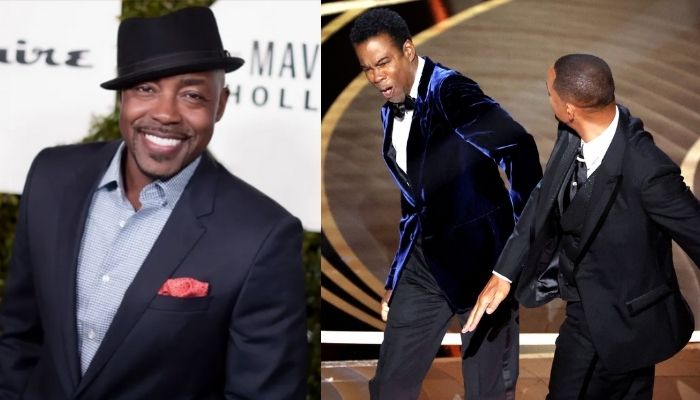
Days after renowned Hollywood actor Will Smith physically assaulted standup comedian Chris Rocks, Oscars producer Will Packer revealed details of what transpired behind the scenes of the unprecedented incident.

In an exclusive interview with Good Morning America, Packer informed that the Los Angeles Police Department (LAPD) was ready to go in and arrest Will Smith. He added that Rocks refused to file a complaint, despite repeated suggestions made by the Police Department.

“They said we will go get him. We are prepared. We’re prepared to get him right now. You can press charges, we can arrest him. They were laying out the options,” he recounted.

Packer pointed out, “He (Chris Rocks) was like, ‘No, no, no, I’m fine,” Packer said. “And even to the point where I said, ‘Rock, let them finish.’ The LAPD officers finished laying out what his options were and they said, ‘Would you like us to take any action?’ And he said no.”

The Oscars producer informed that Rocks did not adhere to the prepared list of jokes and began freestyling. Packer said that the controversial joke on Smith’s wife was impromptu.

While recounting the punch gate, he said, “My heart dropped and I just remember thinking oh no not like this. He (Chris) certainly saved what was left of it at that point.” Will Packer, the first black producer in the history of Academy Awards, said that the untoward incident overshadowed several key moments of the show.

Will Smith resigns from Academy

Faced with a possible suspension by the Academy of Motion Picture Arts & Sciences over ‘punch gate’, Will Smith voluntarily resigned from the professional honorary organisation. The actor said that he was willing to accept any additional disciplinary action taken by the Academy’s Board of Governors.

He had said, “The list of those I have hurt is long and includes Chris, his family, many of my dear friends and loved ones, all those in attendance, and global audiences at home. I betrayed the trust of the Academy. I deprived other nominees and winners of their opportunity to celebrate and be celebrated for their extraordinary work. I am heartbroken.”

Will Smith conceded, “I want to put the focus back on those who deserve attention for their achievements and allow the Academy to get back to the incredible work it does to support creativity and artistry in film.”

While reacting to the development, the President of the Academy of Motion Picture Arts & Sciences, David Rubin, informed that the organisation has accepted the resignation of Will Smith.

“We will continue to move forward with our disciplinary proceedings against Mr. Smith for violations of the Academy’s Standards of Conduct, in advance of our next scheduled board meeting on April 18,” he added.

Will Smith punched Chris Rocks at the Oscars

The acclaimed actor had punched stand-up comedian Chris Rock for making fun of his wife Jada Pinkett’s appearance during the 94th Academy Awards. While on stage to present the best documentary award, Chris Rock said, “Jada, I love you. GI Jane 2, can’t wait to see you.”

The comment upset Smith so much so that he rushed onto the stage to physically punch the comedian. After returning to his seat, the ‘King Richard’ star yelled, “Keep my wife’s name out your f**king mouth.” 

In 2021, Pinkett had opened up about alopecia, an autoimmune disease that leads to the loss of hair in clumps. Last year, she also posted a picture on Instagram with a shaved head after being inspired to speak out about her hair-loss journey.

The lead character in the 1997 movie ‘GI Jane’ was Demi Moore, who played the role of ‘bald-headed Lieutenant Jordan O’Neil. Although there has not been a sequel to the movie, Chris Rocks had suggested that a ‘bald’ Jada Pinkett could feature in ‘GI Jane Part 2’.

Given that the hair loss of Jada Pinkett is due to the autoimmune disease of Alopecia, many social media users found Rock’s remarks as ‘insensitive.’ Indian liberals had even extended their support to Smith for assaulting Rocks.

During his acceptance speech, he apologised to the Academy for his physical altercation and later posted a long note on Instagram. “Chris. I was out of line and I was wrong. I am embarrassed and my actions were not indicative of the man I want to be. There is no place for violence in a world of love and kindness,” he had said.

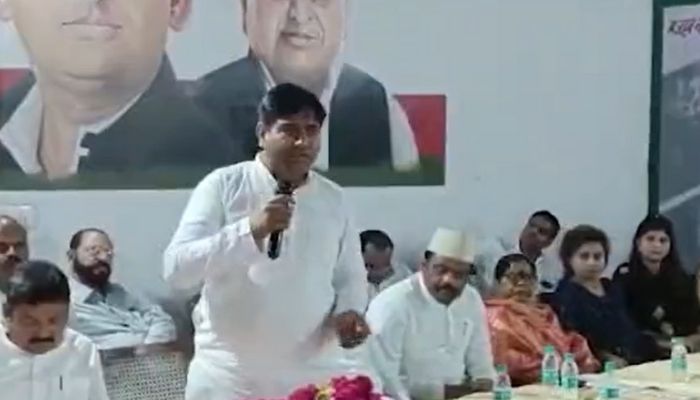
SP MLA Shazil Islam issues threats to BJP, says ‘will fire a bullet for every word said by Yogi Adityanath’

Samajwadi Party’s MLA Shazil Islam’s video went viral on social media in which he was seen issuing threats to the Bharatiya Janata Party and Uttar Pradesh’s chief minister Yogi Adityanath. In this video, he said that as there are more SP MLAs in the assembly than earlier, they will now fire a bullet for every word said by Yogi Adityanath.

SP MLA Shazil Islam said, “National President of our party (Akhilesh Yadav) declared that we the members of Samajwadi Party will fight the government both in the assembly house and on the streets. There is no need for us to be panic. Gone are the days when he (Yogi Adityanath) used to behave like a dictator. There is a strong opposition present in Uttar Pradesh now. Our beloved leader, the fearless panther Akhilesh Yadav is with us. So, if he says a word from his mouth, our guns will fire the bullets and not the smoke. That’s what I want to say.”

Shazil Islam is an MLA from the Bhojipura assembly seat in the Bareilly district of Uttar Pradesh. His video is now rapidly going viral on social media. Shazil Islam was speaking in the felicitation ceremony organized by Samajwadi Party workers.

According to a report by DNA India, MLA Shazil Islam praised Akhilesh Yadav and said that SP’s national president Akhilesh Yadav is the leader of the opposition, and if CM Yogi, as chief minister, says abusive words, then we are also not going to sit quietly.

He said, “I went to take oath on the 28th March, so those who were there before us told that it was good that our 126 MLAs are elected. Earlier there were 47 MLAs. Sometimes only 30 of them attended the house and sometimes only 25 of them would be present there in the house. At that time, chief minister Yogi Adityanath used to say a lot of things to us in the house. He didn’t just abuse but attacked us with his words. Today we have a good number of people. National president Akhilesh Yadav is the leader of the opposition. If CM Yogi, as the Chief Minister, says abusive words, then we are also not going to sit quietly.”

Bhojipura MLA Shazil Islam’s family has always been active in politics. His father Islam Sabir and grandfather Ashfaq Ahmed were also MLAs. Shazil Islam had won the first assembly election in 2002 as an independent candidate. He is counted among the top SP leaders of western Uttar Pradesh.