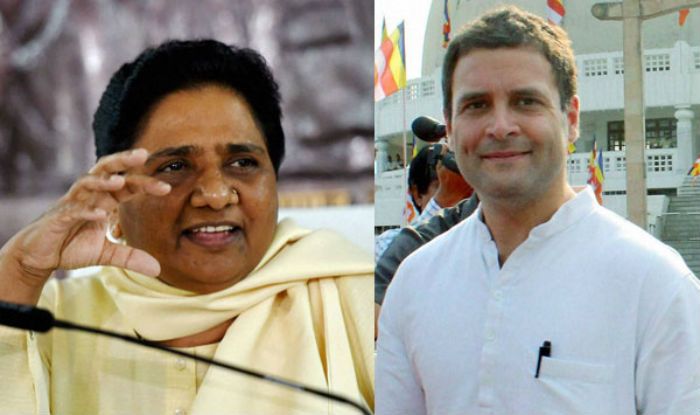
Leader of Opposition in Lok Sabha, Rahul Gandhi on Thursday indicated that if Bahujan Samaj Party chief Mayawati had fought the recent parliamentary elections with the Congress, they would have won
Addressing students at the Mool Bharti hostel in his constituency of Raebareli in Uttar Pradesh, Gandhi asked, “Why doesn’t Mayawati fight elections properly?”
In a conversation with students, one of them spoke about issues regarding the hostel when Rahul Gandhi intervened and asked, “What do you think about Kanshiram Ji?”
After the student gave his response and also mentioned Mayawati, Rahul Gandhi asked, “Why doesn’t Mayawati fight elections properly?”.
“We wanted Behenji to fight elections along with us against the BJP,” Rahul Gandhi said referring to the BSP supremo.
“However, for some reason, Mayawati Ji isn’t contesting, which disappoints us greatly. Because if all three parties come together, the BJP would never win,” the Congress MP said adding the doors of the INDIA Alliance are always open for her.
Mayawati, however, hit back at the Congress’ “double standards”. In a post in hindi on X the BSP chief said,” In the states where Congress is strong or where it has governments, there is animosity and casteist attitude towards BSP and its followers, but in a state like UP where Congress is weak, there is deceptive talk of alliance with BSP, if this is not the double standard of that party then what is it?.”
She said that whenever BSP contested elections in UP and other states in alliance with “casteist parties” like Congress, their base vote has been transferred to them but those parties have not been able to transfer their base vote to BSP. In such a situation, BSP has always had to face losses.
Notably, Congress and Samajwadi Party had contested the 2024 parliamentary elections together as part of INDIA alliance, while BSP fought the elections independently.
Meanwhile, Leader of Opposition in Lok Sabha Rahul Gandhi in his interaction with students at Raebareli asked them to ensure their participation and responsibility in the development of the country.
Rahul Gandhi, addressing students in the Mool Bharti hostel in his Lok Sabha constituency, Rae Bareli, said, “The Constitution has given all of you equal rights and opportunities to move forward and shape your future. Recognize your rights.”
“The Constitution has given all of you equal rights and opportunities to move forward and shape your future. Recognise your rights,” he added.
(This news report is published from a syndicated feed. Except for the headline, the content has not been written or edited by OpIndia staff)
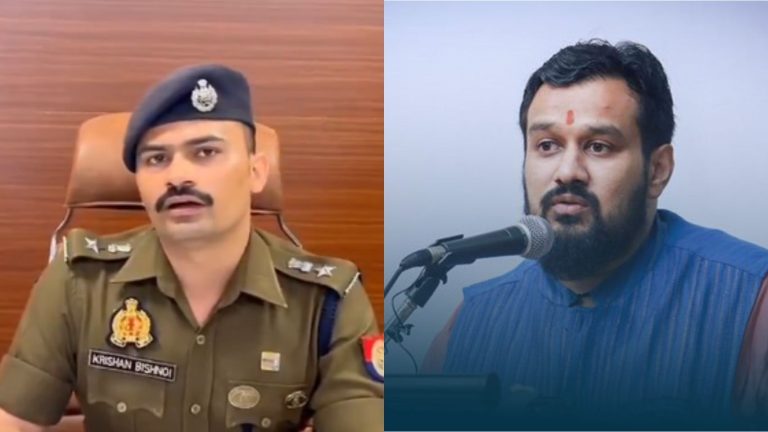
In a breakthrough in the ongoing investigation into the Sambhal violence, the Sambhal Police today (20th February) arrested wanted accused Ghulam in connection with the violence. Addressing the media after the arrest of the accused, Sambhal SP Krishan Kumar Vishnoi revealed that the accused confessed that there was a conspiracy to kill advocate Vishnu Shankar Jain during the Sambhal violence on 24th November 2024.
According to SP Vishnoi, Ghulam confessed that Shariq Satha, the mastermind of the Sambhal violence, and his gang enjoyed political patronage earlier which made it easier for them to operate in the Deepa Sarai area in Sambhal. But now it has become difficult for the gang to carry on their criminal activities due to strict police action. Ghulam also revealed he was shown a picture of advocate Jain for identification. His leaders had entrusted him with the task of killing Jain by taking advantage of the violence.
SP Vishnoi said that Ghulam, who has a long criminal history, supplied weapons to the attackers during the violence. Around 20 criminal cases are pending against Ghulam in several districts including Sambhal. SP Vishnoi further revealed that Ghulam had a conversation with his boss Satha a day before the violence, i.e. on 23rd November 2024. Satha was informed by a local about the court-mandated survey of the Sambhal Jama Masjid that was to be conducted on 24th November 2024.
Ghulam also disclosed to the police that Satha operates an automobile theft gang in Delhi NCR from abroad. Ghulam runs this automobile theft gang for Satha in the NCR which steals vehicles from the NCR and sells them in the northeastern states and sells them at the India-Myanmar border in Manipur in exchange for weapons.
The police recovered a huge cache of arms from Ghulam which had weapons made in countries like Germany, the UK and Czechoslovakia. The accused was involved in smuggling the weapons across the country.
The police have arrested 79 accused in connection with the Sambhal violence so far.
Sambhal violence
On 24th November, during the second round of court-mandated survey at Jama Masjid, Islamist mobsters gathered outside the mosque and engaged in violence. They pelted stones at police, opened fire at police personnel and set ablaze vehicles and shops. At least 20 police personnel were injured during violence and four mobsters were killed in the mayhem, likely from illegal guns carried by rioters.
Nashik District Court on Thursday sentenced Maharashtra Agriculture Minister Manikrao Kokate and his brother Sunil Kotake to two years of imprisonment and imposed a fine of Rs 50,000 each in a forgery case.
The verdict was delivered in a case dating back to 1995, where the brothers were accused of document forgery and fraud related to government housing scheme.
Former Minister Tukaram Dighole had filed a petition against the Kotake brothers, alleging that they misrepresented their income to purchase a house under the government’s quota in 1995.
The complaint was lodged at the Government Wada police station in Nashik. The case has been in court since 1997, with the court now delivering its final decision.
According to case details, between 1995 and 1997, Manikrao Kokate and his brother Sunil Kokate obtained flats under a government housing scheme by falsely claiming low income and stating that they did not own any property. However, subsequent investigation raised concerns about irregularities in their claims.
A case was registered under Section 420 (cheating), 465 (forgery), 471 (using forged documents), and 467 of the Indian Penal Code (IPC) based on the allegations.
There were four accused in the case, including the Kokate brothers and two others. However, the court did not sentence the other two accused.
(This news report is published from a syndicated feed. Except for the headline, the content has not been written or edited by OpIndia staff)
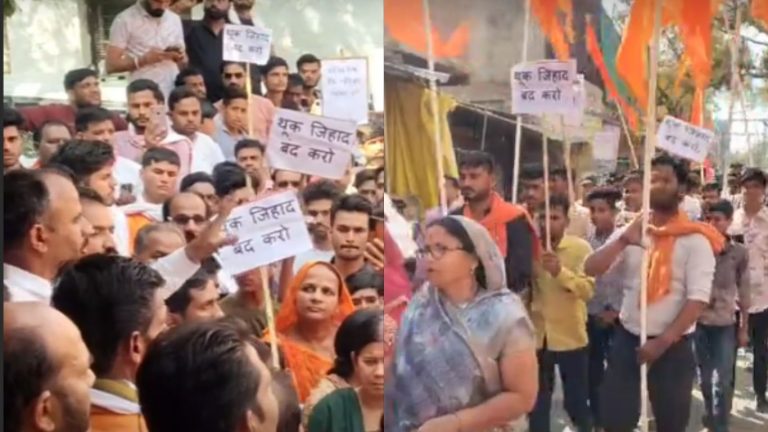
A Bandh was observed by Hindu organisations on Wednesday (19th February) in the Khategaon Police Station area in the Dewas district of Madhya Pradesh after some Muslim men spat on Hindu devotees taking part in Narmada Parikrama in Tamkhan village on 17th February.
As per reports, Prakash Yadav and his wife were going on a bike to attend the Narmada Parikrama on 17th February. The couple had a scuffle with some Muslim men as they passed by Tamkhan mosque in the evening. The Muslim men allegedly misbehaved with them and spat on Prakash Yadav’s wife.
The incident sparked outrage among people from the Hindu community. A Bandh was observed by Hindu organisations. Later, members of several Hindu organisations gathered near Sri Ram temple and took out a rally carrying saffron flags through the main routes of the town to the police station. They handed over a memorandum, addressed to the Collector and the SP, additional SP, and the SDM.
Hindu organisations said that illegal activities are taking place in the mosque
The memorandum stated that the Maulvi and Sadar of the Tamkhan mosque also misbehaved with the devotees participating in the Parikrama. It said that the mosque was built on encroached land belonging to the government and that immoral, illegal and unconstitutional activities have been taking place inside the mosque. The memorandum also accused some anti-social elements in the area of indulging in illegal mining activities. The Hindu organisations demanded a cease to illegal mining and the seizure of the machinery like tractors and boats engaged in the mining.
Culprits identified as Mohsin, Akram and Islam
Police registered a case against three people identified as Mohsin, Akram and Islam. One of the culprits is reportedly on the run. A team of police personnel led by the SDM and the Tehsildar sealed the route which was being used for illegal mining. Police have arrested two accused and are searching for others. One of the accused is a minor.
Notably, 54 villages in the Dewas district including Tamkhan village were selected by the government for renaming. Tamkhan village was to be renamed as Kanhapur.
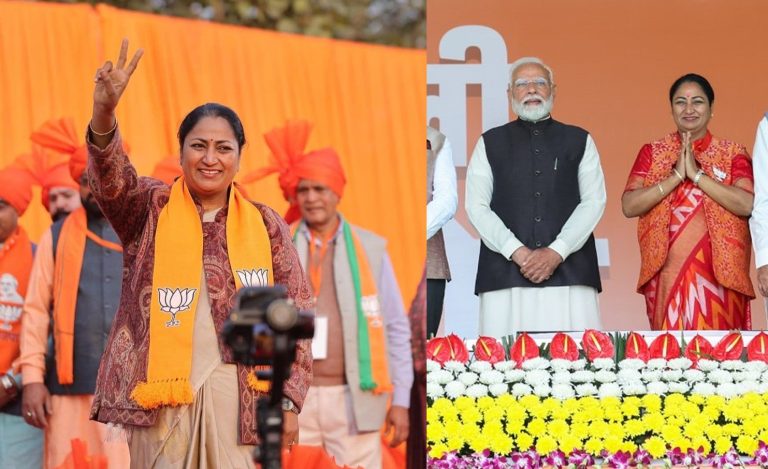
Over 10 days after BJP won the Delhi assembly elections defeating Arvind Kejriwal’s AAP, first-time MLA Rekha Gupta was picked by the party as the next chief minister of Delhi. The Shalimar Bagh MLA took the oath of office and secrecy at the Ramlila Maidan in Delhi on Thursday, 20 February.
Along with the CM, BJP MLAs Parvesh Verma, Ashish Sood, Manjinder Singh Sirsa, Kapil Mishra, Ravinder Indraj Singh, Kapil Mishra and Pankaj Singh were also administered the oath of office by Lt. Governor V.K. Saxena.
50-year-old Rekha Gupta has become the fourth woman CM of Delhi and marks the return of BJP to power in the state after 27 years. The outgoing CM is also a woman, Atishi of AAP who replaced Arvind Kejriwal in September 2024. The earlier woman CMs of Delhi were BJP’s Sushma Swaraj and Congress leader Sheila Dixit.
However, while Rekha Gupta is the fourth woman CM of Delhi, she is the second one who can complete her term. BJP’s Sushma Swaraj and AAP’s Atishi were just stop-gap arrangements after existing CMs resigned. Sushma Swaraj occupied the post for just 52 days in 1998, while Sheila Dixit served as Delhi CM for 15 years in three full terms from 1998 to 2013 before Arvind Kejriwal won the elections.
Sushma Swaraj was made the CM of Delhi in October 1998 after CM Sahib Singh Verma resigned due to the infamous onion price crisis. She was not a member of the Delhi assembly but was an MP and union minister at that time. However, she resigned from the post of CM in just two months in December 1998.
The political journey of Rekha Gupta
A grassroots leader and a three-time Municipal Councilor, Rekha Gupta has risen from the ranks and worked in different organisational capacities in the party. As a former councillor, she is familiar with the issues and problems of the national capital.
Born in Nandgarh village in Haryana’s Jind district, she was only two when her parents moved to Delhi. Her father used to work for the State Bank of India.
Rekha Gupta started her political journey with Akhil Bhartiya Vidyarthi Parishad (ABVP), a student body affiliated to the Rashtriya Swayamsevak Sangh (RSS). She has served as general secretary of BJP Mahila Morcha in Delhi and as a member of its national executive committee. In these roles, she initiated numerous campaigns for the welfare of marginalized communities and women.
Rekha Gupta has been an active member of Rashtriya Swayam Sewak Sangh (RSS) since childhood. She studied at Delhi University’s Daulat Ram College and joined Akhil Bhartiya Vidyarthi Parishad (ABVP). She became the secretary of Daulat Ram College in the year 1994-95. In the year 1995-96, she became the Secretary of the Delhi University Students’ Union (DUSU). In the following year, Rekha Gupta became the President of the DUSU.
She joined BJP in 2002 and rose to become the National Secretary of BJP Yuva Morcha in the year 2004-2006. Rekha Gupta became a councillor from North Pitampura in 2007, and was re-elected five years later. She worked on developing basic facilities in the area, such as libraries and parks, in this capacity.
After becoming the Municipal Corporator, she was also entrusted with the responsibility of the Chairperson of the Women Welfare and Child Development Committee MCD for two consecutive years from 2007-2009.
She is also the BJP State General Secretary Mahila Morcha. In March 2010, she was given the responsibility of BJP as a National Executive Member. She has also served as the national vice-chairperson of the BJP Mahila Morcha and the national in-charge of Uttar Pradesh Mahila Morcha.
Rekha Gupta contested her first Assembly election in 2015 when she lost to the AAP’s Bandana Kumari. She again contested in 2020, but lost again, even though the margin came down. She contested the MCS elections in 2022 and won from Shalimar Bagh ward, becoming a councillor for the third time. However, she lost the mayoral election to AAP’s Shelly Oberoi in 2023.
In this year’s election, she contested against AAP’s Bandana Kumari, and managed to defeat her by around 30,000 votes.
She is also the founder of a Delhi-based NGO called AAS Foundation.
After her election as leader of BJP legislature party, Rekha Gupta expressed her gratitude to Prime Minister Narendra Modi, the party leadership and people of Delhi for the responsibility bestowed on her and said every moment of her life will spent in fulfilling it.
Rekha Gupta said her getting responsibility as Chief Minister is also a moment of honour for women of the country, who constitute about half the country’s population.
“I want to thank PM Modi, BJP high command people of Delhi for giving me this opportunity, after 27 years, a new chapter is beginning. It is moment of pride for the women in the country. We have staked claim to form the government…each and every commitment of BJP, fulfilling it is the ultimate goal of my life,” she said.
Rekha Gupta also expressed gratitude to PM Modi and party leadership for their expressing trust in her.
“I take pledge that every moment of my life will be spent in fulfilling this responsibility. Fulfilling the commitments that BJP has made to people, that is the aim of my life. The Delhi government will work in a time-bound manner under leadership of PM Modi and all MLAs will work to fulfil the commitments as Team Modi,” she said.
Rekha Gupta earlier expressed her gratitude to the party on X and said she would work with full honesty, integrity and dedication for the welfare of the people of Delhi.
“I express my heartfelt gratitude to the top leadership for trusting me and entrusting me with the responsibility of the post of Chief Minister. This trust and support have given me new energy and inspiration. I pledge that I will work with full honesty, integrity and dedication for the welfare, empowerment and overall development of every citizen of Delhi. I am fully committed to this important opportunity to take Delhi to new heights,” she said.
The BJP won 48 seats in a historic mandate, ousting the Aam Aadmi Party from power.
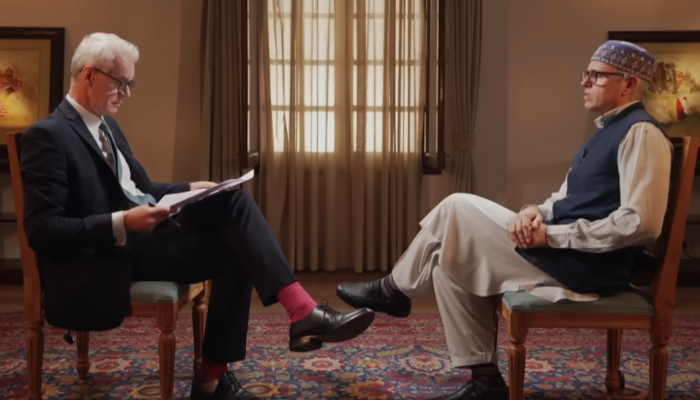
iThe British Broadcasting Corporation (BBC) notorious for its anti-India bias and controversial reporting conducted an interview with Omar Abdullah, the Chief Minister of Jammu and Kashmir. Stephen Sackur whose recent interaction with former Chief Justice of India DY Chandrachud was criticised for blatant agenda pedding by the BBC, sat down with Abdullah to explore various topics.
A video titled “Omar Abdullah on being Chief Minister of Jammu and Kashmir and its many challenges,” was published on the BBC’s official YouTube channel on 19th February. As expected, the exchange was dominated by Sackur’s condescending remarks which appeared to reflect his personal views disguised as inquiries.
The host of HARDtalk reminded Abdullah of his political detention post the repeal of Article 370 after which the latter recounted the past few years along with his electoral victories and losses as he asserted that “nothing is static in politics.” However, Sucker was quick to point out that even the leader’s feelings are not static because, despite his claims to the contrary, he chose to participate in the assembly elections and even brought up his earlier comments regarding the same.
Declaring Jammu and Kashmir a union territory in August 2019 was referred to by Sackur as a “demotion of its status” and he questioned Abdullah about his change of mind to which the latter replied, “People asked if the assembly wasn’t good enough for me then how could it be good enough for them either to contest or cast their votes and I didn’t have an answer to it.” However, the answer seemed to infuriate the host because he wanted Abdullah to boycott the elections.
Abdullah reasoned that it would have been a loss for them rather than New Delhi since there wouldn’t have been any representatives from Kashmir in the assembly. Sackur was clearly unsatisfied with the counter and called Abdullah’s involvement in the assembly elections as a “humiliating exercise.” He even accused him of being a proxy of Prime Minister Narendra Modi, who is carrying out the government’s agenda in the valley and “allowing them to do what they will with Jammu and Kashmir.”
Sackur seemed to have substantial reservations about the development and progress undertaken in the valley in recent years and a steep fall in terrrosism – which was only feasible after abrogation of Article 370. The Modi government’s only goal, as demonstrated by his administration’s actions, is to improve the lives of the people of Jammu and Kashmir. Nevertheless, the BBC couldn’t grasp this straightforward reality, as it must adhere to its own narrative.
Hence, the host only delved into rhetorics propagated by the Western media instead of focusing on the facts. Furthermore, his implication that Jammu and Kashmir is not merely another region of India but rather a distinct territory where Delhi functions as an ‘outside’ force, was quite apparent. He claimed that senior leaders of National Conference were unhappy with Abdullah’s “soft approach” which they deem incorrect and pushed that he should strongly condemn the alleged “demotion.”
BBC’s odd obsession with Artcile 370
In an attempt to criticize Abdullah for dropping his plan to struggle for the reinstatement of Article 370, Sackur quoted him and stated, “Hoping for the restoration of Article 370 from the people who snatched it will be foolish.” The latter, however, denied the charge and talked about the resolutions that his government adopted in the assembly. Sackur appeared to be fixated on Article 370 and seemed quite eager for its reintroduction in Jammu and Kashmir. The BBC, for whatever reason, seems to be unable to accept a peaceful and prosperous valley devoid of gunfire and cries of jihad.
Notably, Sackur passed a similar remark about the alleged disappointment of legal scholars with his stance on Article 370 in the interview with Chandrachud. He asked, “Article 370 was part of the Constitution, which guaranteed the special status, the autonomy of the state of Jammu and Kashmir, now that had been out the place of the very inception of the modern state of India. You agreed that the government had a right to abrogate Article 370. Many legal scholars were deeply disappointed with your decision because they felt you had failed to uphold the Constitution. Explained to me why you took the decision you did.”
A judge cannot defend or criticize their own rulings, he answered and then explained that Article 370 was intended to eventually disappear and merge with the Constitution. “Was 75 years was too short a period to abrogate such a provision,” Chandrachud added.
Abdullah praised PM Modi for his efforts to bring Delhi and Kashmir closer – not just in miles, but in minds – three years after the latter made a commitment to bridge both “Dilli ki doori” and “dil ki doori.” PM Modi also complimented Abdullah’s photographic skiils. The development transpired last month during the inauguration of the Z-Morh Tunnel in Sonamarg. Sackur, predictably, also had an issue with their bonhomie and voiced his disapproval by saying, “It sounds like you and Modi are becoming pals.”
However, Abdullah termed it as “working in a congenial relationship” which shouldn’t be misunderstood and reiterated his opposition to the Bharatiya Janata Party and their policies, but streesed on maintaining a “good working relationship” with the centre. Sackur was visible upset when Abdullah told him that he would have an amicable relationship with PM Modi despite knowing that he would never repeal Article 370 because other issues pertaining to Jammu and Kashmir are also very important. The former looked more eager for Article 370 at this point than Abdullah, whose entire political approach is predicated on it.
BBC wants Public Safety Act removed
Following his unwarranted attack on PM Modi, Sackur accused the Delhi-appointed lieutenant governor of having more power than the chief minister and even commanding the police. He then stated that people believe that Abdullah has no real authority and hence cannot fulfil his promises including revocation of Public Safety Act. The Jammu and Kashmir Public Safety Act, 1978 is a preventive detention law under which a person is taken into custody to prevent them from acting harmfully against “the security of the region or the maintenance of the public order.”
He then accused Abdullah of not keeping his word as the latter conveyed that some vows can only be completed after statehood is granted to Jammu and Kashmir. Sackur then charged that it made him “look powerless to his own people” but Abdullah argued that the people of Jammu and Kashmir are not ignorant and are well aware of the situation on the ground. He added that his party was elected by them to work with the government of India and fulfil its commitments.
According to Sackur, the Public Safety Act was passed by the National Conference, which has been headed by Abdullah’s father and grandfather for many years. The law has been used to imprison thousands of local inhabitants without a trial and now he will have the same authority. “So you are enjoying the fact that you are powerless and if this detention process continues it won’t be your fault,” he responded bitterly when Abdullah pointed out that the police are under the LG.
Additionally, when Sackur accused him of using the act while he was previously in power from 2010 to 2014, Abdullah emphasized that the situation in Jammu and Kashmir is different from the rest of India and that it is a sensitive province that has not historically been peaceful. The interviewer intended to turn a blind eye in an attempt to give it a different color, even though the well-known facts regarding the issue of jihad, separatism and Pakistan-based terrorism should have been ample reason for him to comprehend the significance of the act.
Abdullah also highlighted that the act is not necessary and can be removed since the situation in Kashmir has been impoved. Sackur went on to mention recent violent incidents including the grenade attack and killings of six construction workers by terrorists in the valley and contended that people in Delhi have been stating that things were better under the LG. He even cited former chief minsiter Farooq Abdullah who blamed Pakistan for these terror strikes in Jammu and Kashmir and “warned the country to put and end to its nefarious actions as well as find a way to be friends otherwise issues will arise.”
Abdullah replied that Pakistan never stopped “meddling” into India’s affairs when asked about his opinion on his father’s statements. “It will be foolish for any of us to suggest that the twrrorism in Jammu and Kashmir has been purely indigenious and without any outside assistance,” he added. He also supported a friendly working relationship between New Delhi and Islmabad. However, he confirmed that there is no such scope at the moment with the current terror attacks including on security forces and construction camps in Jammu and Kashmir.
It’s interesting to note that there was no mention of attacks on Hindus who were singled out for only because of their faith including during 2024 Reasi attack as though their lives were less important than others.
Is there no development in Jammu and Kashmir?
Sackur stated that abrogation on Article 370 “was a pathway to modernization, stronger economic growth and development in the territory,” per Modi government and inquired if they were able to achieve what they promised in the past 5 years. Abdullah claimed that it has not been done and that his government will accomplish this by introducing new measures including fresh industrial and tourism policies. He added that he would also complete the projects he began when serving as chief minister earlier to produce hydroelectricity.
On the other hand, government statistics revealed that the total number of visitors in 2024 was approximately 2.95 million, a sharp rise from the 2.71 million in 2023 and the 2.67 million in 2022. Better road connectivity, greater scope for tourism, and focus on agriculture, especially the cultivation of fruits such as apples, pears, and walnuts which are major exports from the region are the primary drivers of the economic growth of the valley, with recent reports revealing a significant rise in the Gross State Domestic Product (GSDP).
Sackur talked about how young Kashmiris have voiced their concerns regarding 60% reserved jobs and mentioned the promises in National Conference’s election manifesto to which Abdullah responded that the matter is under consideration in high court and “a cabinet subcommittee has been tasked with reaching out to various stakeholders and explore options.” The former insisted that the court might overrule any decision made by Abdullah’s government even when he assured that they would work things out.
Sackur seemed to have serious problems with the Indian judiciary. He even highlighted the disagreements within the National Conference and asked, “Is there any part of you that is beginning to think after few months of chief ministership in this reduced union territory status rather than full statehood with autonomy that you have made a terrible mistake and you are in a very stocky position.”
His intentions came full circle when he again attempted to stress that contesting assembly elections was a terrible idea for Abdullah and pushed him to share his opinion. Abdullah stated that there are moments when he questions himself but he will never give up or walk away and try to do his best because he has been selected by the people for 5 years.
Sackur once more tried to present Jammu & Kashmir as an unusual place because to its predominantly Muslim population and Abdullah’s status as one of the most powerful Muslim leaders in the nation. Moreover, the interview would have been incomplete without the introduction of the word “majoritarianism” in relation to the ruling saffron party and the former akin to his Western counterparts did not disappoint. “Majoritarianism has been used to capture the degree to which the BJP wants to use its authority in Delhi, in the Parliament to impose its will on the country. How alarmed are you as a Muslim by what you see happening,” he asked.
Kashmir is undeniably distinct because the people brutally exterminated its own minority population, elevating its Muslim-majority status which happened during the National Conference’s administration. However, this particular truth found no place in the entire interview as if the genocide of the Kashmiri Hindus had no affect on the region.
Abdullah played right into his hands and alleged, “It is worrying. I have always made this point that just because the BJP wants to show it doesn’t believe in appeasing Muslims and they have always accused the Congress of doing so. The BJP wants to show they are different. However, to systematically target Muslims to be able to prove that you don’t appease is wrong. India, at least for now has the word secular in its Constitution.”
BJP releases its manifesto before every elections and people vote for it. It’s not a hidden exercise. Why is the will of the majority referred to as “majoritarianism” when the government, does not agree with left-liberals? Didn’t Britain exist from the Eurepoean Union as people voted for it even though there were those who opposed the move. Was it “majoritarianism” then? These journalists engage in meaningless political rhetoric and whataboutry instead of discussing facts and offering data to expose the policy-level discrimination against Indian Muslims by the Modi government. However, they cannot even if they tried because the discrimination is only in their propaganda and not in reality.
Propaganda against Indian institutions
Sackur then charged Abdullah of putting too much faith in the Indian institutions like the Parliament and the judiciary as an ultimate protection, according to some Muslims in the country despite his passionate statements. He even towed the Islamist line and added to the propaganda around Uniform Civil Code (UCC) and dubbed it anti-Muslim. He accused Abdullah of telling them to have faith in Indian democarcy and the Parliament.
Notably, Sackur had even asked Chandrachud if, as a Hindu, he sought religious guidance before making decisions in court. “Stephen, if you look at social media and try and derive what was said by a judge from social media, you’ll get the wrong answers. What I said was this. I was asked specifically, I make no bones of the fact that I’m a man of faith. Our Constitution does not require you to be an atheist to be an independent judge and I value my faith. But what my faith teaches me is the universality of religion and irrespective of who comes to my court and I dare say that applies to other judges in the Supreme Court as well, irrespective of who comes to you as a litigant, you dispense equal and even-handed justice,” the latter replied.
Chandrachud further conveyed, “And therefore, what I said was this, judicial creativity is not just about intellectual ability and skill. It’s also about perception. And we work in areas of conflict. We work in areas of intense conflict. Now, within that area of conflict, how do you find a sense of calm, of equanimity? Different judges have different ways to approach that need for calm and equanimity. For me, My time in meditation in prayer is very important. But my time in meditation and prayer teaches me to be even-handed to every religious group and community in the country.”
Sackur not only publicly voiced his disapproval of the Indian judiciary but he also challenged their adherence to their Hindu religious beliefs and attempted to cast aspersions on their ability to render fair decisions because of the same.
“What other alternative is there for the 15% of the population. Can someone point it out? If you cannot trust your Parliament or political parties other than the BJP that rely on Muslim votes to get seats and are current allies of the saffron party. If you cannot rely on them to see folly of their ways, if you cannot rely on the courts to keep such forces in check then what other option do 15% of the population have? Because they certainly cannot rise up in arms against the majority of the population. I won’t for a moment suggest that they should look for alternate homes in the neighbourhood. So, what other else is there other than to make use of the democratic options that are avaialble to us,” the chief minister countered.
The host dubbed it as “potentially bleak outlook” for Indian Muslims. However, Abdullah reaffirmed his trust in Indian courts and Parliament to deliver justice. Sackur was dissatisfied when Abdullah did not share his belief that Indian Muslims should not have faith in any of the nation’s institutions. The colonial mindset, which split India on religious lines for its own gain has not changed much and continues to rear its ugly head in one form or the other, even after several decades. Does BBC want Indian Muslims to revolt against the Indian state and Hindus and create unrest in the country?
Sackur concluded the interview by alleging that the “trajectory is not great in Jammu and Kashmir” as he asked his guest about the next 10 years. Abdullah refused to make any declaration considering the unpredictable and drastic changes the area has undergone since the two sat for an interview a decade ago.
It is important to highlight that the United Kingdom has been grappling with the repercussions of the Pakistani grooming gangs and the apparent protection they received from politicians and law enforcement. Meanwhile, the BBC has prioritized interference in India’s affairs through purported interviews aimed at promoting its own perspectives. Is this a reflection of the British mouthpiece’s inability to counter the incompetence of its government in safeguarding its young girls and minors from predators? Hence, it has opted to criticize India rather than addressing its own, far more severe and alarming issues.
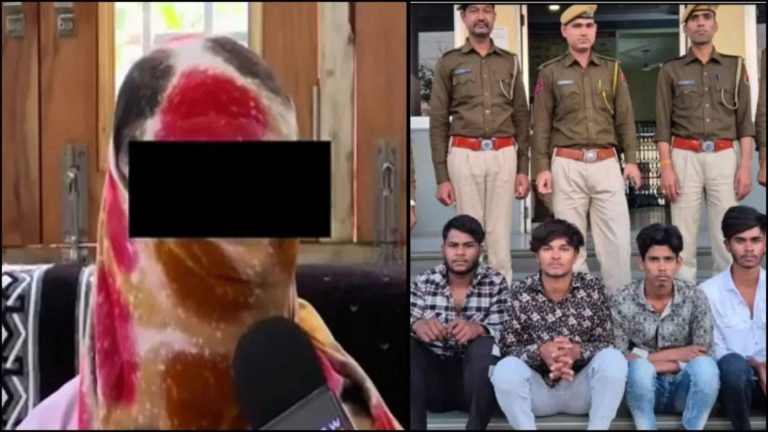
The ‘Muslim gang’ that trapped Hindu girls in Beawar, Rajasthan, used to take them to the local Maulvi. Hindu girls were also forced to smoke cigarettes. Hindu girls were also asked to introduce the gang to their minor friends. If the girls didn’t agree, they were threatened with murder of their entire family. The girls were stopped from wearing jeans and tops as well while they were sexually exploited.
6 Muslim youths have been arrested in this case of sexual exploitation of minor girls. Ajmer lawyers have also refused to fight their case.
According to a report in Dainik Jagran, the gang that trapped Hindu girls in Beawar used to ask them to go to the mosque and meet the Maulvis. Attempts were being made to convert them. The victims have said that Muslim boys used to tell them about fasting during Ramzaan and used to give training for Namaaz. They used to tell them to recite Kalma as well. The girls have made many more shocking revelations.
A victim, while talking about one of the gang members said, “He trapped me through a friend. He used to threaten that friend. When I got trapped, he started threatening me to make him talk to other girls. He gave me a small phone… He threatened me to meet him. He called me to meet him for 5 seconds, then took me to a cafe. He did bad things there. He took my photo, and threatened me on this pretext. He threatened to kill my family members too. He even beat me up. He used to bring me teddy bears and chocolates.”
The victim further said, “He has also taken a lot of money from me. I have given him almost ₹10,000. My family members caught me talking on the phone. He did obscene acts even after I refused. He threatened to kill my family members, so I did not tell anyone at home. He used to ask me to smoke cigarettes etc. He used to ask me to recite Kalma, observe fasts and wear burqa. He used to threaten me even if I wore jeans and top. He used to say that you consider a stone as God… come to our society. He beat me up and also made cuts on me.”
The second victim said, “The boy’s name is Kareem, earlier he used to come to the school. His friends are Sohail Mansuri, Rehan Mansuri and Sohef. They trapped me through the girls they had already trapped. He asked me to read Namaaz and wear a burqa. He told me to offer five Namaaz on Fridays. He told me not to wear short clothes. He used to ask me to meet him sometimes and to contact other girls. He used to tell me about danger to the family.”
The police has also recorded the statements of the victims. In this case, Rehan Mohammad (20 years), Sohail Ansari (19 years), Lukman (20 years), Arman Pathan (19 years), Sahil Qureshi (19 years) have been arrested by the police. The court has sent them on 4-day remand. The police has seized their vehicles and is also interrogating another accused Nadeem Qureshi. The police has also collected forensic evidence in this case. On the other hand, the families of the accused are blaming the Hindu victims.
It is worth noting that all these Muslim boys used to trap minor Hindu girls first and then blackmail them by taking their obscene photos and videos. Those girls were asked to contact other girls. If they did not do so, they were threatened to make the photos and videos viral. Money was collected from them and they were threatened. Conversion has also been revealed. Now the police is taking action in this case. The police has also said that there is no angle of ‘love jihad’ in this case.
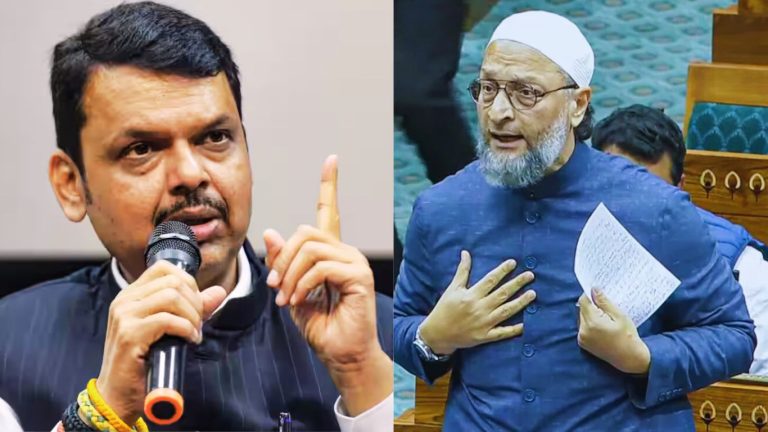
The BJP-led Maharashtra government’s decision to set up a panel to formulate a law to deal with cases of Love Jihad has attracted outrage from the expected quarters. Rattled by the Maharashtra government’s decision, AIMIM president Asaduddin Owaisi attacked the government on X (Formerly Twitter).
Owaisi questioned the need for a law against Love Jihad calling it a violation of the right to privacy. “Maharashtra government seems to have no other work except investigating interfaith marriage. It has now set up a panel to make a law against ‘Love Jihad’. Even the Modi government has said there’s no definition of love jihad, and many investigation agencies have debunked this conspiracy theory,” wrote the Hyderabad MP.
“The BNS already criminalises promising to marry after hiding one’s religious identity. Forced religious conversion is also a crime. This is just an attempt to create an “Uncle Sarkar’. The government interferes in who you marry, what you eat, which language you speak, where you live, and what religion you believe in. What happened to the right to privacy? It’s a fundamental right for everyone to choose their religion and spouse,” he added.
Maharashtra government seems to have no other work except investigating interfaith marriages. It has now set up a panel to make a law against "love jihad." Even the Modi government has said there's no definition of love jihad, and many investigation agencies have debunked this… pic.twitter.com/K723xY0scj
Owaisi is right when he says that the right to choose religion and spouse is a fundamental right under the Constitution of India. However, his insinuation that two individuals from different religions marrying each other is always a simple case of interfaith marriage is misleading. His statement is an attempt to cover the ugly reality of love jihad cases with a veil of consensual interfaith marriages. Owaisi is echoing an opinion that is shared by a so-called liberal section of society which includes activists, people of media, law, etc. Love Jihad cases have consistently been rejected as a right-wing construct by this ‘liberal’ lobby that chooses to ignore all the evidence before their eyes.
CM Devendra Fadnavis distinguished between consensual interfaith marriage and love jihad
Explaining why the Maharashtra government is planning to introduce a law against love jihad, Chief Minister Devendra Fadnavis said on Sunday (16th February) that the cases of love jihad are on the rise in the state. He distinguished interfaith marriages from cases of love jihad saying that the latter involves fraud and deception. Fadnavis said that there was nothing wrong in interfaith marriages but cases of love jihad are different and need strict action.
“The Supreme Court has highlighted the reality of ‘Love Jihad’ in its verdict and endorsed it. We are seeing a rise in such cases, even in states like Maharashtra. Firstly, we must understand that a person from one religion marrying someone from another religion is not wrong. However, when such marriages are conducted with deceptive intentions, providing false identities, and then abandoning the children after marriage, it is a serious issue. Strict action must be taken in such cases,” he said.
Nagpur: Maharashtra CM Devendra Fadnavis says, "The Supreme Court has highlighted the reality of 'Love Jihad' in its verdict and endorsed it. We are seeing a rise in such cases, even in states like Maharashtra. Firstly, we must understand that a person from one religion marrying… pic.twitter.com/KgBrVAS3ZJ
The Maharashtra government has set up a seven-member panel headed by the director general of police and including officials from the women and child welfare, minority affairs, law and judiciary, social justice, special assistance and other departments. The panel will suggest measures to deal with cases of love jihad and forced conversions. If a law against love jihad and forced conversion is passed by the Maharashtra government, the state will join the list of states including Uttar Pradesh, Karnataka, Gujarat, Madhya Pradesh, and Chhattisgarh which have passed the anti-conversion laws to prevent forced religious conversions. Earlier this month, the Bhajan Lal Sharma-led Rajasthan Government tabled the ‘Rajasthan Prohibition of Unlawful Conversion of Religion Bill 2025’ during the budget session in the state assembly.
Rising cases of Love Jihad across states
Last month, a minor Hindu girl was allegedly forced to convert to Islam by a Muslim man named Imam Ali Ansari in Sitapur village of Mauganj district in Madhya Pradesh. The victim’s family accused Ansari of love jihad.
In September 2024, a 26-year-old woman named Mahalakshmi was found chopped into thirty pieces and kept inside a fridge in Bengaluru’s Vyalikaval. Her estranged husband, Hemant Das, later unveiled that his wife had an extramarital affair, and he believed her lover Ashraf was responsible for the heinous murder.
In the same month, a man named Fahad Hussain trapped a woman by concealing his identity and pretending to be Deepak in Agra, Uttar Pradesh. Later, the girl came to know that his real name is Fahad Hussain. Forced by the circumstances, she embraced Islam and did Nikah with him, all in the name of love. Hussain even forced the girl into prostitution.
On Monday, 30th September 2024, a man named Aalim Ahmed in Bareilly, Uttar Pradesh, was sentenced to life in prison for rape, fraud and forced conversion of a Hindu woman to Islam. The court also convicted Ahmed’s father of criminal intimidation and sentenced him to two years in prison in a case involving fraud, religious coercion, and rape. A 20-year-old woman had filed a police complaint in May 2023 saying that accused Mohammed Aalim Ahmed, 25 had introduced himself as Anand Kumar. She alleged that the accused forced her to convert her to Islam and aborted her child during her pregnancy with him.
In October 2024, a Muslim man identified as Sahil Khan was arrested by the police for trapping Hindu girls by posing himself as a Hindu man named Raju in the Kawardha district of Chhattisgarh. Sahil Khan used to befriend girls by masquerading as a Hindu and then raped them in the name of teaching them occult magic. He even defrauded a woman of Rs 3 lakh in exchange for releasing her husband from jail. Khan also obtained a fraudulent Aadhar card with his fake name.
In November 2024, a case of love jihad came to light in the Moradabad division of Uttar Pradesh where a Muslim youth named Shariq posed as Honey to trap a 20-year-old young woman from the Katghar police station area. He raped in the name of getting her a job and then forced her to embrace Islam.
In Beawar, Rajasthan, the 6 Muslim men arrested on 19th February 2025 for the rape and blackmail of minor girls through online trapping and grooming have been thrashed by lawyers inside the court when they were produced for a remand hearing. The accused were identified as Rihan Mohammad, Sohail Mansoori, Lukman alias Sohaib, Arman Pathan, Sahil Qureshi and Afraz.
The abovementioned cases came to light within a span of five months. It is because of the rising number of such cases that the governments of some states passed specific laws to prevent love jihad and forced conversion. The problem is not restricted to India, it has emerged as a global menace. Recently, investigations into cases of child sexual abuse in the UK revealed that grooming gangs comprising mostly British-Pakistani men have been sexually exploiting children across cities in the country. The Left-liberals and Islamists have long been conflating Love Jihad with consensual interfaith relationships to divert attention from the actual issue. Every time the issue of Love Jihad is raised, these people try to undermine it by crying ‘Islamophobia’ which only contributes to the problem an results in persecution of Hindus.
An NIA court sentenced a Trinamool Congress (TMC) leader Bablu Mondal in the 2019 Birbhum bomb blast case. The court also imposed a Rs 10,000 fine.
In an order dated 13th February 2025, Judge Shubhendu Saha found TMC leader Bablu Mondal guilty under section 286 of IPC and Sections 3 and 5 of the Explosives Substances Act.
The blast had occurred in the house of Bablu Mondal in Gangpur village under the Lokepur Police Station precinct. The Lokepur police arrested his two sons, Niranjan Mondal and Mrityunjay Mondal, in 2019. The duo had absconded after being released on bail while Bablu Mondal had surrendered later.
Although no one was injured in the blast, the residential premises of Bablu Mondal and his sons were found during the investigation to be used for the storage of illegal explosives and the making of crude bombs. It was found that Mondal had been storing explosives in his house since the 2019 Lok Sabha elections.
In the course of police custodial interrogation, it was disclosed by Bablu Mondal’s sons that their father Bablu Mondal stored some explosives or bombs in a tin box which had exploded. Accused Bablu Monal had also stored two pistols. wo country made improvised one-shooter firearms including a pipe gun and a pistol.
The NIA, which took over and re-registered the case in September 2020, charged all three accused on 5th September 2022. Investigations to track the absconding accused are ongoing.
Notably, the West Bengal police’s botched-up investigation into the matter raised serious questions as all three accused managed to get bail. It was only after the Calcutta High Court directed the National Investigation Agency to take over the case that the accused could finally be brought to justice.
The saga of botched up investigation against TMC leader in a TMC-ruled state
Arup Kumar Dutta (PW1) who was the officer-in-charge of Lokepur police station in 2019 stated that on 20th September 2019, he received information from one Prasanta Das that there was an incident of an explosion at the residence of Bablu Mondal. The officer along with his team arrived at the accused Bablu Mondal’s tin shed residence which was completely blown away. PW1 added that he found the smell of explosives at that place and fragments of tin. One Helaram Das of that village produced a written complaint to him against Bablu Mondal and his two sons on the spot.
The FIR was sent to the police station through Constable Kenaram Murmu. The FIR having been produced at the police station before the duty officer Rabindra Nath Dey, the investigation started. The case was endorsed for investigation by S.I. of Police, Abdul Hai. He took up the process of investigation. In relation to this case, the I.O. of NIA interrogated him and he stated everything to him.
On reaching at the spot Inspector Arup Kumar Dutta cordoned off the premises of Bablu Mondal to prevent any interference with the evidence on the spot. The witness identified the accused Bablu Mondal on dock.
In his cross-examination, he could not recall whether he diarized the fact of receiving information regarding the explosion from the village police. He made General Diary Enquiry (GDE) before leaving the police station but do not remember the reference. The officer also did not record the statement of any of the witness nor did seize anything.
In his testimony, Helaram Das (PW2) said that he is a Gangpur village resident and knows Bablu Mondal as a co-villager. He stated that about three years ago, after two to three days of Biswakarma Puja, there was a huge explosion in the home of Bablu Mondal. It was about 5.30 or 6.00 pm. His home situated next to his residence. On hearing the sound of an explosion, some of the co-villagers came there. Police from Lokpur P.S. also came on the spot. Before the police, he submitted a written complaint. The Written FIR was shown to the witness he identified the same to be the written complaint described by Mrityunjoy Das of the village under his instruction.
During cross-examination, Helaram Das said that He did not ask any of the inmates of the house of Bablu Mondal but he heard his sons saying “gas cylinder exploded”.
In his statement, SI Abdul Hai (PW3) who was the first Investigation Officer (IO) of the state police-initiated case, said that visited the P.O. and prepared a rough sketch map with index. Abdul Hai said that he interrogated and recorded the statement of the complainant (Helaram Das) while Lokepur police station officer-in-charge Arup Kumar Dutta was present there. He cordoned off the premises of P.O. From there he collected some pieces of paper carton with the smell of gunpowder, some pieces of tin and fragments of broken mud wall. All of these articles had the smell of gunpowder or explosives. He made the seizure of articles by preparing a seizure list.
Abdul Hai added that sent the seized article for forensic examination through the Ld. J.M., Dubrajpur. He also interrogated the available witness and recorded their statement. In addition, he raided the house of accused Bablu Mondal to arrest him and his two co-accused sons Niranjan and Mrityunjoy. The accused were taken to court and the police got their custody. The accused were taken to their house to recover illegal firearms. One shutter pipe gun having wooden butts, Metal Barrel, Pipe Gun, Tigger and Firepin along with other countrymade weapons were seized.
The PW3 said that the seized arms were sent for examination by the Arms Expert through the Court. All the other seized articles were sent for examination to CFSL.
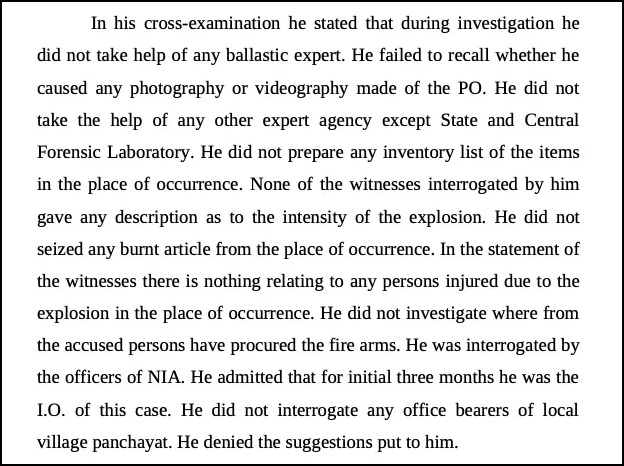
However, during cross-examination, SI Abdul Hai said that he did not take the help of any ballistic expert. The officer also failed to recall whether he got the photography or videography done of the explosion site.
Moreover, the Investigation Officer also failed to take assistance of any other expert agency except State and Central Forensic Laboratory. The officer did not prepare any inventory list of the items in the place of occurrence. While Abdul Hai (PW3) said that he interrogated the witnesses, none of those interrogated by him gave any description as to the intensity of the explosion and if anyone was injured due to the explosion. The police officer also failed to seize any burnt articles from the place of occurrence.
As the investigating officer for the initial three months, Abdul Hai did not care to probe where from the illegal explosives and firearms were procured by the accused TMC leader. He did not interrogate any office bearers of local village panchayat.
The cross-examination of PW6 Dr Debashish Saha, Assistant Director (Chemistry Section), SFSL, Kolkata further reveals the lapses in investigation conducted by the West Bengal police in this case.
In his testimony, Dr Saha said that he visited the explosion spot at the accused Bablu Mondal’s house prepared a one Spot Visit Report and submitted it to SP Birbhum.
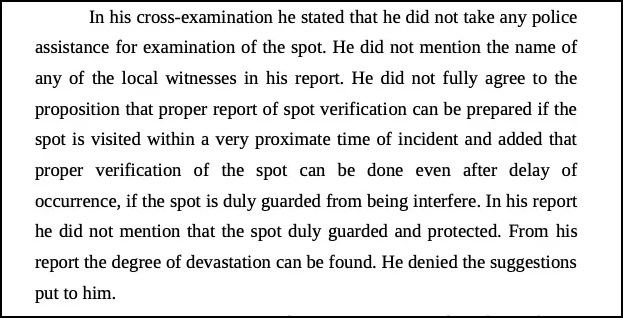
In his cross-examination, PW6 said that he did not take any police assistance for examination of the spot. Dr Saha failed to mention the names of any of the local witnesses in his report. He did not fully agree to the proposition that a proper report of spot verification can be prepared if the spot is visited within a very proximate time of the incident and added that proper verification of the spot can be done even after delaying of occurrence if the spot is duly guarded from being interfered. In his report, Dr Saha did not mention that the spot was duly guarded and protected.
The special public prosecutor argued that the co-villagers of the accused had adduced their evidence on the dock to establish the fact of the explosion at the residence of the accused. The evidence of expert witnesses proved the fact of the presence of explosive substance at the place of occurrence. The witness stood firm in the course of cross-examination and confirmed the prosecution case.
The defence counsel, on the other hand, argued that since no one was injured and no videography of the blast site has been done or produced before the court, the case was not “trustworthy” and demanded that the accused be acquitted.
Court observations and judgement
Based on the analysis of witness statements and evidence produced before the court, judge Shubhendu Saha observed that there indeed was an explosion at the house of accused Bablu Mondal on 20th September 2019.
“Now, while I had reached to the conclusion that the fact of explosion at the home of the accused by use of explosive substance is established, the presence of the explosive substance is also automatically proved. Thus by proving the fact the prosecution is successful is discharging the burden of proof. The prosecution has asserted the fact and proved the fact exists,” the judge said.
The court further held that the offence punishable u/s 3(a) of The Explosive Substances Act, 1908 for causing the explosion of a nature likely to endanger life and serious injury to property is established and proved beyond all reasonable doubt. The court noted that while no one was injured in the explosion, it did cause damage to the accused’s residence.
The NIA court also held that the offence punishable u/s 5 of The Explosive Substances Act, 1908 for possessing explosive under suspicious circumstances is established and proved beyond all reasonable doubt.
“The accused is liable to be convicted for such offences,” the court order reads.
The court ruled out any attempt to cause the explosion or the accused meeting any other person to hatch criminal conspiracy. “As such the accused is entitled to be acquitted from these charges,” the court said.
Addressing the question of whether the accused person possessed any arms in contravention of section 5 of the Arms Act, 1959 and engaged in the sale or transfer of such arms, the court observed that “The very fact of recovery of the firearms from the possession of the accused, being not proved, makes this allegation for offence punishable under the Arms Act, 1959 not worthy of credence.”
Regarding the main question of whether accused Bablu Mondal is liable to be held guilty of an offence punishable u/s 286/120B of IPC read with section 3/4/5 of The Explosive Substances Act, 1908 and section 25(1-A)/35 Arms Act, the court stated that the accused is fit to be held guilty.
“In the course of the discussion made above, the answer is apparent. It is already held that the accused is fit to be held guilty for an offence punishable u/s 286 of IPC and section 3 and 5 of Explosive Substances Act, 1908 since the for such offence is successfully brought home by the prosecution…” the court said.
The NIA court stated that it is not being “unmindful” of the fact that the writing in the FIR lodged by Helaram Das before the Officer in Charge is not proved and that Mrityunjoy Kumar (PW22) who scribed the FIR, identified the endorsement, however, denied the contents to be in his handwriting.
However, the Lokepur police station officer-in-charge’s endorsement receipt proves the reception of the FIR and it is also that it based on this FIR that an investigation was launched in this case.
“The steps taken in course of investigation are proved by the relevant witnesses and the fact and allegation of the prosecution case is proved during trial. As such the fact of non-marking of the FIR ultimately leaves no scar on the face of the prosecution case,” the court observed.
Thus, the court found Bablu Mondal guilty of the offence punishable under section 286 of the Indian Penal Code and he is convicted u/s 235 (2) of the Code of Criminal Procedure.
He was also found guilty of the offence punishable under sections 3 and 5 of the Explosive Substances Act, 1908 and he is convicted u/s 235 (2) of the Code of Criminal Procedure.
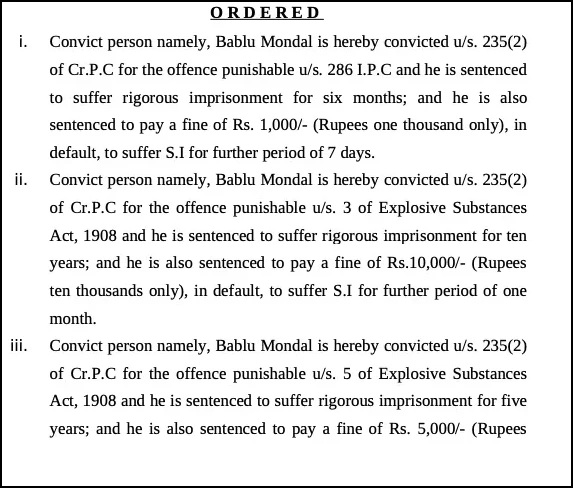
“Convict person namely, Bablu Mondal is hereby convicted u/s. 235(2) of Cr.P.C for the offence punishable u/s. 286 I.P.C and he is sentenced to suffer rigorous imprisonment for six months; and he is also sentenced to pay a fine of Rs. 1,000/- (Rupees one thousand only), in default, to suffer S.I for further period of 7 days,” the court ordered.
The court further sentenced Bablu Mondal for ten years and imposed a fine of Rs 10,000. “Bablu Mondal is hereby convicted u/s. 235(2) of Cr.P.C for the offence punishable u/s. 3 of the Explosive Substances Act, 1908 and he is sentenced to suffer rigorous imprisonment for ten years; and he is also sentenced to pay a fine of Rs.10,000/- (Rupees ten thousand only), in default, to suffer S.I for a further period of one month,” the court stated.
All images contain excerpts taken from the relevant court order
He was also convicted under section 235(2) of Cr.P.C for the offence punishable u/s. 5 of the Explosive Substances Act, 1908 and sentenced to five years of rigorous imprisonment alongside a fine of Rs 5000.
The court, however, stated that these sentences would run concurrently. Meanwhile, the convict is allowed to challenge this judgment before the Calcutta High Court.
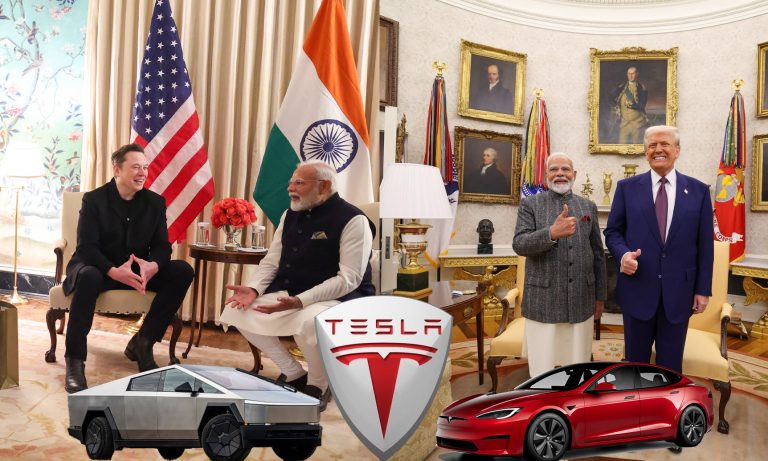
US President Donald Trump has described Tesla CEO Elon Musk’s decision to set up a car manufacturing unit in India as ‘unfair’ to the United States. The comment came during a joint interview, aired on Tuesday, that Trump and Musk gave to the Fox News presenter Sean Hannity.
During the interview, Trump acknowledged that it is impossible for Musk, head of the Department of Government Efficiency (DOGE) in the Trump government, to sell his US-made cars in India due to high tariffs imposed by India. However, he said that if Musk sets up a car manufacturing unit in India, it would be unfair to the US. “Every country in the world takes advantage of us and they do it with tariffs…It is impossible to sell a car, practically, in, as an example, India”, Trump said.
“The tariffs are like 100% import duty”, said Musk agreeing with Trump. “Now, if he built the factory in India, that’s okay, but that’s unfair to us. It’s very unfair,” Trump added.
President Trump’s comments came after Tesla started hiring in India, a sure-sign indication that it is starting its operations in the country soon. On its official LinkedIn page, Tesla advertised several positions in India on Monday. The company is seeking candidates for several positions in customer support, services, operations, order, store etc areas. The positions are available in Mumbai and Delhi.
Notably, the Modi government has reduced import duty for electric vehicles, paving the way for Tesla’s entry into India. In this year’s budget, the duty for EVs priced above $40,000 has been slashed to 70 per cent from 125 per cent levied earlier, almost halving the tariff. Moreover, if a company assures an investment of ₹500 million over a five year period, the import duty will be only 15% for cars imported as Completely Knocked Down (CKD) units valued at $35,000 or above.
It is expected that Tesla will be making major investments in India and claim the duty concession on CKD units they import till the local facilities are ready. Earlier Musk had criticised India’s high tariffs on EVs on several occasions and cited it as the reason why Tesla cars are not sold in India.
Trump discussed reciprocal tariffs with PM Modi
During Prime Minister Modi’s visit to the US last week, Trump raised the issue of high tariffs on cars in India with him. “I told the Prime Minister Modi yesterday – he was here. I said, here is what you do. We’re going to do – be very fair with you. Whatever you charge, I’m charging”, said Trump. Musk supported his proposal calling it fair. Since assuming office last month, Trump has been pushing to boost domestic manufacturing for which he is planning to impose reciprocal tariffs on countries that impose tariffs on US imports. However, he expressed his willingness to finalise an early trade deal to resolve the tariff issue between India and the US.