Home Blog Page 5561

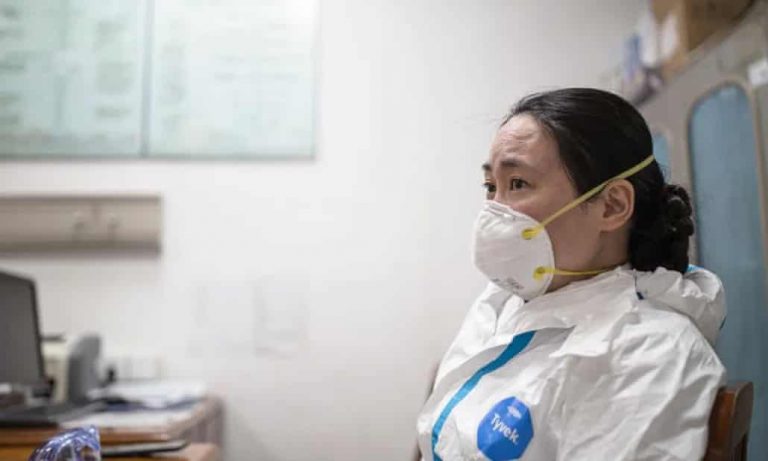
Ai Fen, doctor in Wuhan, who was first to raise alarm over Wuhan Coronavirus, disappears in China after criticizing authorities

Ai Fen, director of the emergency at Wuhan Central hospital, has disappeared after criticizing Chinese authorities over their handling of the Wuhan Coronavirus pandemic. She was the first person to raise the alarm over the virus. Her whereabouts remain unknown. She had alerted her superiors and colleagues of a SARS-like virus seen in patients in December, however, she was reprimanded. Eventually, after seeing so many people die, she criticized the authorities for suppressing early warnings of the outbreak in an interview. The Chinese government has subsequently been trying hard to get the interview off the internet.

It was only two weeks ago that Ai Fen had gone public with her story and spoken to a Chinese magazine, Renwu.

“If I had known what was to happen, I would not have cared about the reprimand. I would have fucking talked about it to whoever, where ever I could,” she said in the interview, as reported by The Guardian. On the 30th of December, Ai had received the lab test results of a patient suffering from flu-like symptoms and resistant to the usual treatment methods. It said ‘SARS Coronavirus’. She took a picture of the results and sent it to a former medical school classmate. By evening, the photo had spread across medical circles in Wuhan.

Read: As the world grapples with Wuhan Coronavirus, China engages in daylight robbery, theft and increased military activity: Read how

The same night, Ai Fen received a message from the authorities at her hospital saying that information about this new disease should not be released arbitrarily in order to avoid causing panic. Two days later, after being summoned by the head of the hospital’s disciplinary inspection committee, she was reprimanded for “spreading rumours” and “harming stability”. Subsequently, the staff was forbidden from passing messages or images related to the virus.

“We watched more and more patients come in as the radius of the spread of infection became larger,” Ai Fen said as the doctors began seeing patients with no connection to the epicentre of the pandemic in Wuhan, its wet market. “I knew there must be human to human transmission,” she said. Her observation was eventually confirmed by the Chinese authorities on the 21st of January when cases had already increased exponentially.

After this interview went public two weeks ago, President Xi ordered her interview erased from the internet. Dr Ai Fen herself has disappeared now, whereabouts unknown.

Read: WHO chief who shielded China in the wake of Wuhan Coronavirus had covered up other epidemics in the past: Here are the details

Ai Fen, however, denied that she is a whistleblower. “I am the one who provided the whistle,” she insisted. Nevertheless she has disappeared now, as so many dissidents in China often do, and her whereabouts are unknown. Dr Li Wenliang, the doctor who had tried to warn others about a SARS-like epidemic in Wuhan, had died on February 7, after days of treating coronavirus infected patients at a hospital in Wuhan. He was also one of the doctors who were warned by Wuhan authorities not to ‘spread rumours’. The Chinese authorities issued an apology to the family of the deceased doctor for the manner in which he was treated when he was alive.

Congress MP from Kerala’s Kasaragod, hotspot of coronavirus outbreak, moves Supreme Court seeking opening of Karnataka-Kerala border to ambulances, essential items

0

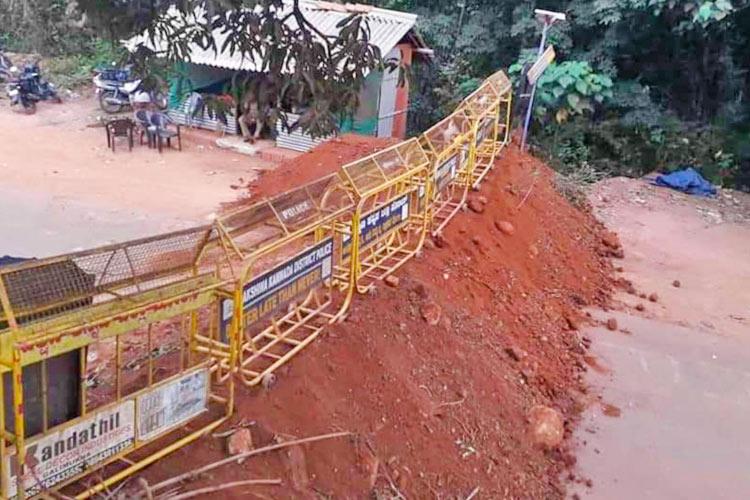
The Congress Member of Parliament from Kasaragod, Kerala, which is one of the hot-spots of the coronavirus outbreak in the country has approached the apex court seeking directions to the Karnataka government to open Karnataka-Kerala border for the movement of ambulances, other emergency vehicles and for the transport of other essential and non-essential items to Kerala.

The petition filed by Unnithan sought directions to Karnataka to allow the movement of ambulances, emergency vehicles, trucks and other vehicles carrying essential and non-essential items to Kerala. It also sought to put a stay on the blockade imposed by Karnataka with its border states. The petition said that the enforcement of a blockade at a critical time like this when the supply of commodities is scarce and when a medical emergency has plagued the entire country is a clear violation of Articles 21 and 19(d) of the Constitution.

“This blockade has also resulted in cutting off the essential lifeline of National Highways and State Highways and Major District Roads leading to the State of Kerala which has resulted in the shortage of supply of essential and non-essential items to the State of Kerala leading to shortage supply of food and medical supplies,” the plea said while seeking a stay on the blockade from the Supreme Court for the movement of ambulances and essential items between Kerala and Karnataka.

The number of coronavirus cases in the country is on a steady rise with Kerala being the worst-hit by the contagion and alone contributing 194 to the nationwide tally of 1071. Most of the cases registered in Kerala have a travel history to middle-east countries, particularly to the United Arab Emirates and Saudi Arabia.

It is noteworthy to mention that Kasaragod has emerged as one of the hotbeds of the coronavirus outbreak in the country. A couple of days back, 34 news cases of COVID-19 were registered in the town in a single day, surpassing the previous high of 28 cases, raising alarms for the state administration.

With the coronavirus cases soaring, state governments across the nation have mandated state-wide lockdown of cities, towns and villages, along with state borders, to curb the insidious spread of the deadly contagion that has so far affected 721,000 people globally and rendered about 25000 dead.

On similar lines, Karnataka has sealed its borders as the tally of coronavirus patients increases. Reacting to the alarming surge in the number of the cases of the enigmatic contagion in the neighbouring state of Kerala, Karnataka has fortified all the entry/exit points between Manguluru and Kasaragod, to prevent any influx of people from Kerala and stave off a crisis as faced by the Uttar Pradesh government after migrant workers in Delhi congregated at the Delhi-Uttar Pradesh border.

Street war in Kolkata during lockdown: Councillors Shams Iqbal and Rahmat Alam Ansari booked as their supporters throw bombs at each other

While the entire nation is under lockdown due to the coronavirus pandemic around the world, police personnel and health care professionals are burdened with not only keeping the disease at bay but are also struggling to prevent healthier people from violating curfew and create law and order situations.

In Kolkata late on Sunday night, a vicious street war had reportedly broken out in Ward No 134 and 137, allegedly between two rival Councillors and their supporters. As per a report in India Today, the street battle went on throughout the night, and locals were forced to inform the police.

The street-war occurred in the Kachhi Sadak area on Sunday night. Even police personnel were allegedly assaulted in the fight.

The report states that Kolkata police have informed that FIRs have been registered against the Councillors of the two Wards, namely Shams Iqbal and Rahmat Alam Ansari, for violating lockdown orders and rioting.

Locals have reportedly informed that supporters of the two Councillors were hurling bombs and abuses at each other. As per reports, 7 persons in total have so far been arrested by the police. The area is reportedly a minority-dominated locality which often sees violence, especially in the time of elections.

RSS comes to the rescue of Pakistani Hindus amidst Coronavirus lockdown: Here are some pictures

0

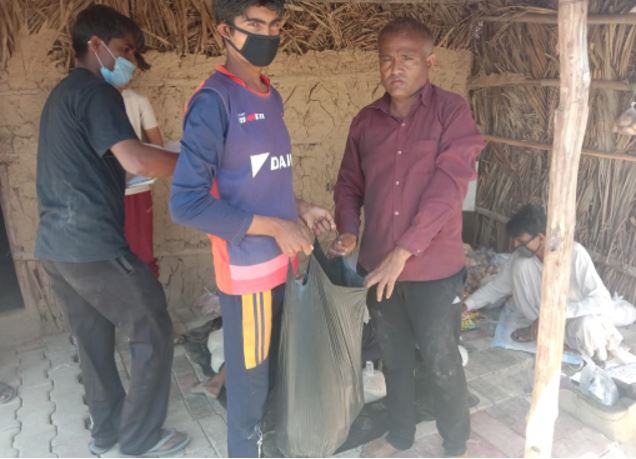
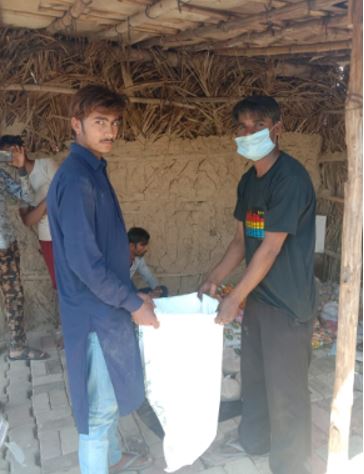
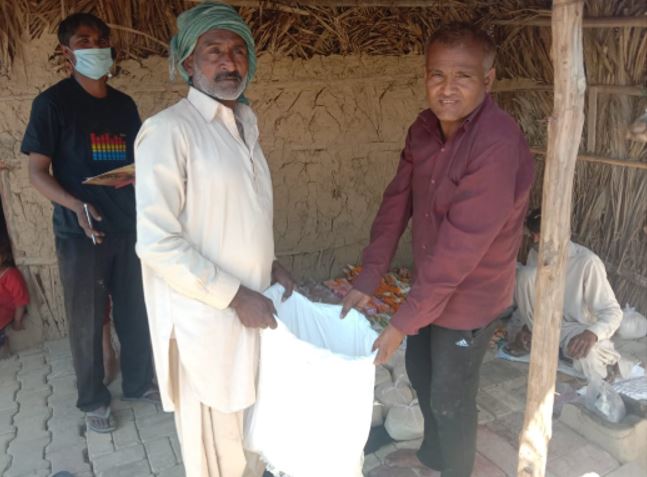
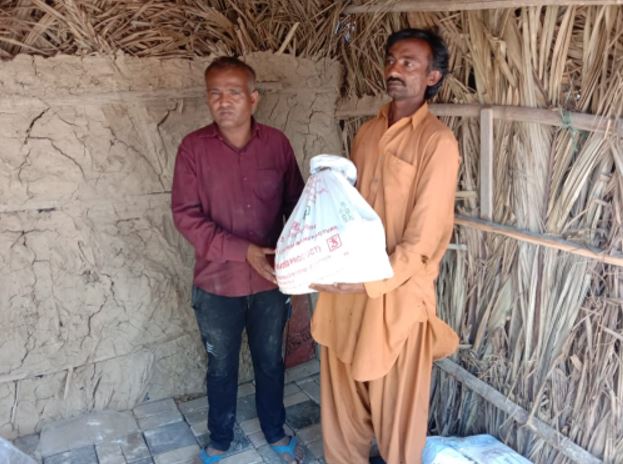
The Rashtriya Swayam Sevak Sangh (RSS) has always been the frontrunners at times of natural calamities or disasters. The attitude of selfless service and nation above individual interests motivate the volunteers to step in and help local communities. Their endeavour has remained unchanged even in the wake of the deadly Wuhan Coronavirus outbreak.

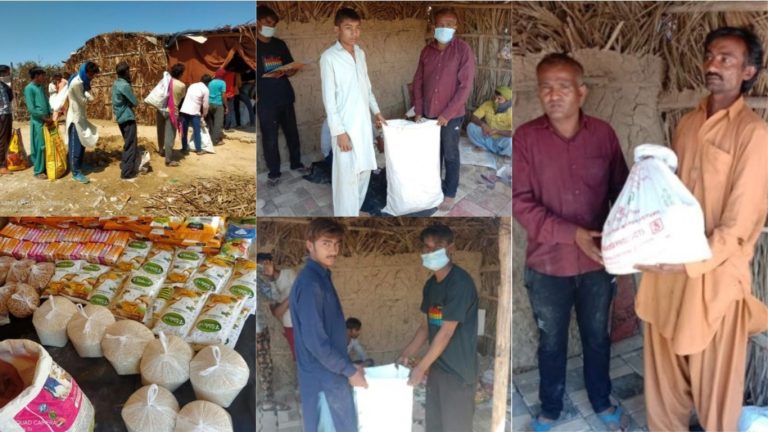
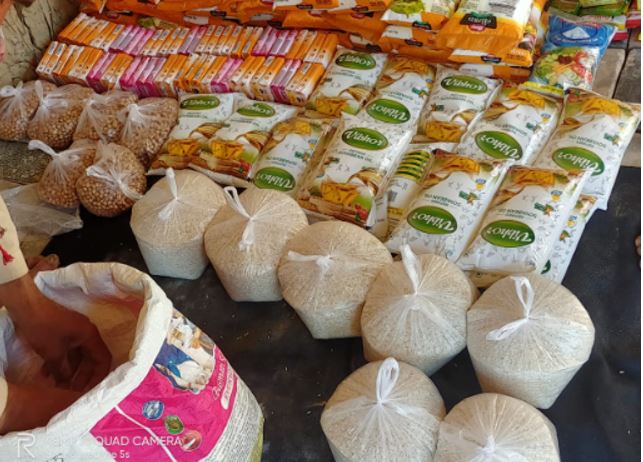
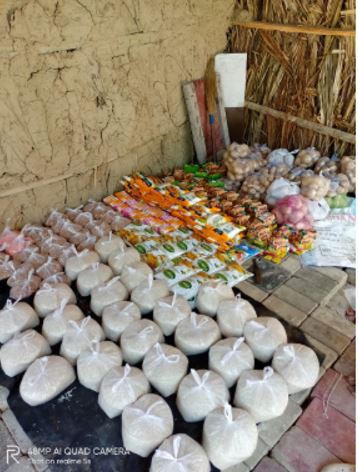
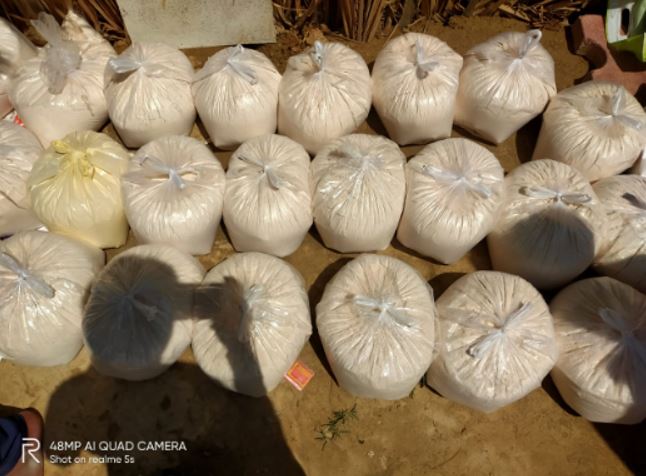
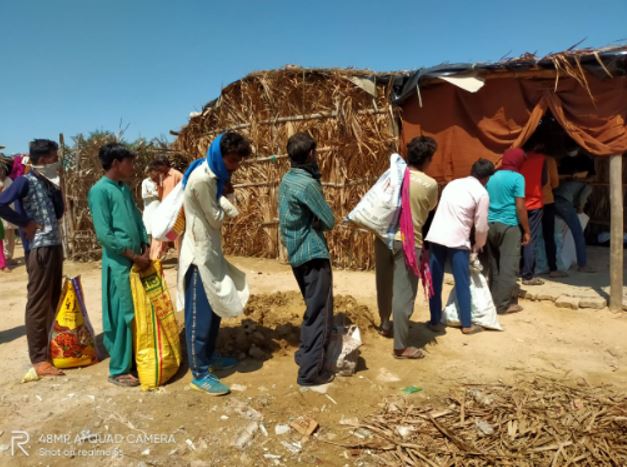
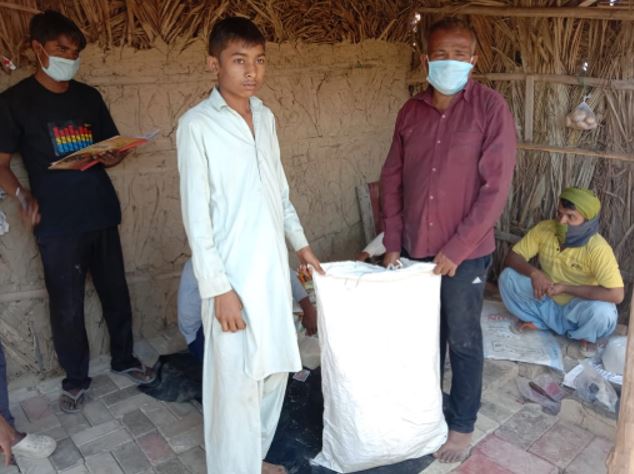
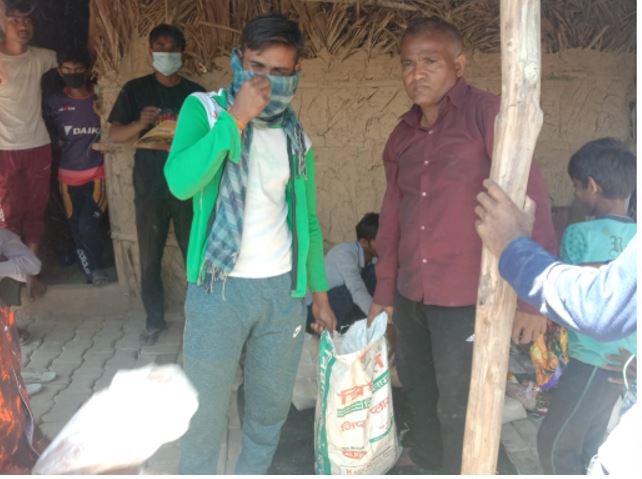
At a time when migrant workers are fleeing home with no jobs, the Pakistani Hindus living in squalor in Adarsh Nagar has found a new light of hope. It is important to remember how these persecuted and marginalised group was ostracised by the left-liberal jamaat during the Anti-CAA agitation. Nonetheless, The RSS volunteers met those living as destitute in India and provided them ration.

RSS member handing out ration
Ration
Coronavirus: RSS distributes rice, wheat and essential items to Pak Hindus
Queue to collect ration
Coronavirus: RSS distributes rice, wheat and essential items to Pak Hindus
RSS member handing out ration
Coronavirus: RSS distributes rice, wheat and essential items to Pak Hindus
RSS member handing out ration

In Odisha and Karnataka, RSS Swayamsevaks have distributed masks and have conducted awareness drives. In Madhya Pradesh, they have sanitised an entire village while in Kerala, Swayamsevaks and Seva Bharti volunteers have been assisting police and fire services in cleaning and disinfection works.

Earlier, in a viral video, RSS workers are seen cleaning hospital beds and brooming floors in a bid to help the hospital authorities. Senior functionaries have revealed that around 70,000 daily shakhas of RSS and its affiliate organisations have been asked to prioritise the fight against COVID-19. Meanwhile, the top brass of the organisation is closely monitoring the situation on the ground.

UP: TOI journalist fear-mongers, insinuates that disinfectant spray is ‘chemical solution’ to kill humans

While the world struggles to combat the Chinese Coronavirus pandemic, it was expected that the mainstream media at least now would set aside their political partisanship and strive hard to cover the events objectively. However, that hasn’t been the case yet and it appears that things are unlikely to improve anytime soon. Even as Wuhan Coronavirus poses a severe threat to the safety and security of the country, journalists continue to engage in fearmongering and rumour-mongering to undermine the efforts being made by the central and state governments.

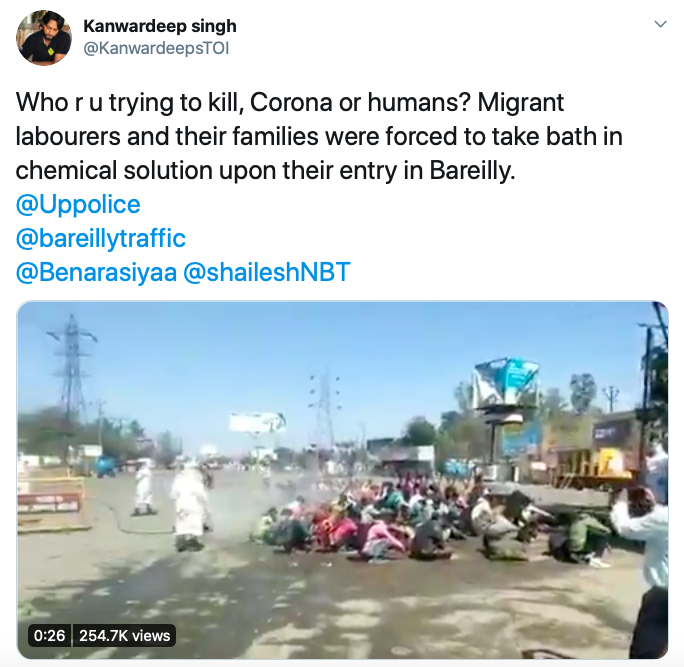
On Monday, Kanwardeep Singh, a journalist with Times of India, shared a video of Uttar Pradesh Police spraying people with disinfectants in the wake of the Wuhan Coronavirus pandemic. He suggested that the people were being showered with toxic chemical substances that could potentially kill them. He said, “Who r u trying to kill, Corona or humans? Migrant labourers and their families were forced to take bath in chemical solution upon their entry in Bareilly.”

Via Twitter

In the video, it could be seen that people wearing hazmat suits were spraying disinfectant on the migrant labourers who had returned to Uttar Pradesh from elsewhere. The objective of the disinfectants is to kill the virus if it were present in the clothes of the individuals. The disinfectant does not harm people as such. However, the journalist with Times of India gave the impression that the authorities were jeopardizing the health of the migrant labourers.

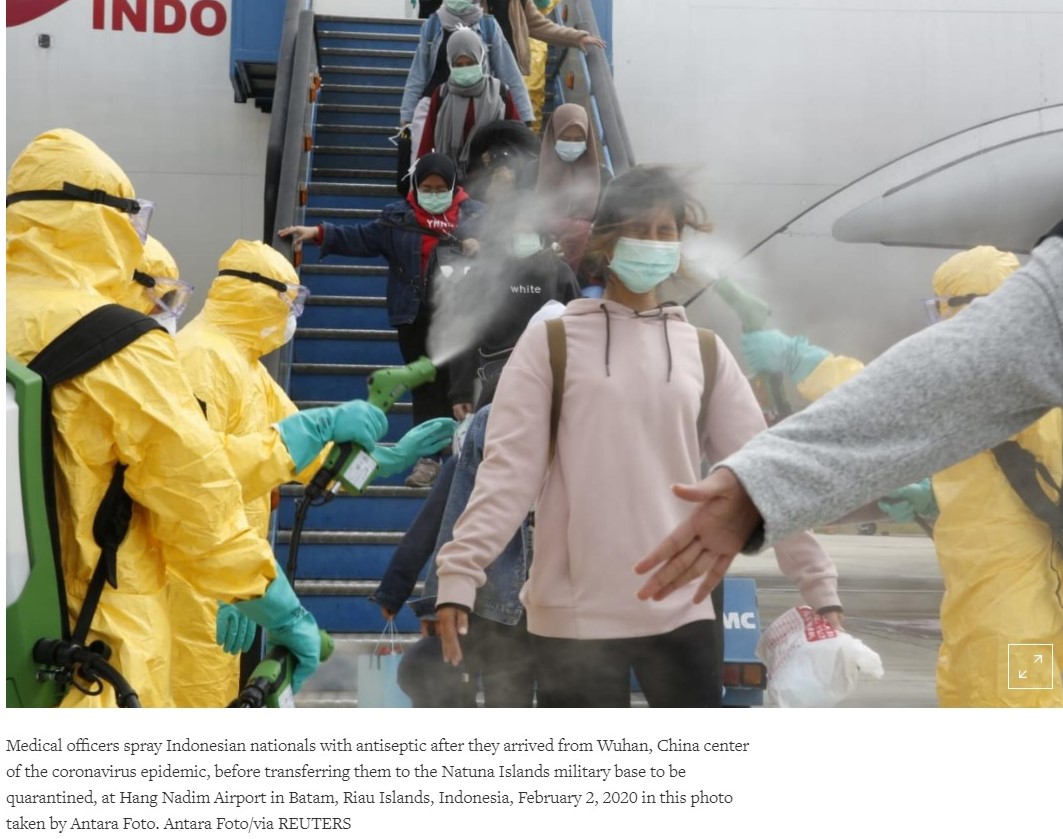
A casual glimpse through the internet provides numerous pictures from abroad where authorities use a similar procedure for people arriving from elsewhere. One such photo shared in a Reuters report from the 2nd of February shows medical officers spray Indonesian nationals arriving from Wuhan in China, the epicentre of the pandemic, with the antiseptic spray.

Source: Reuters

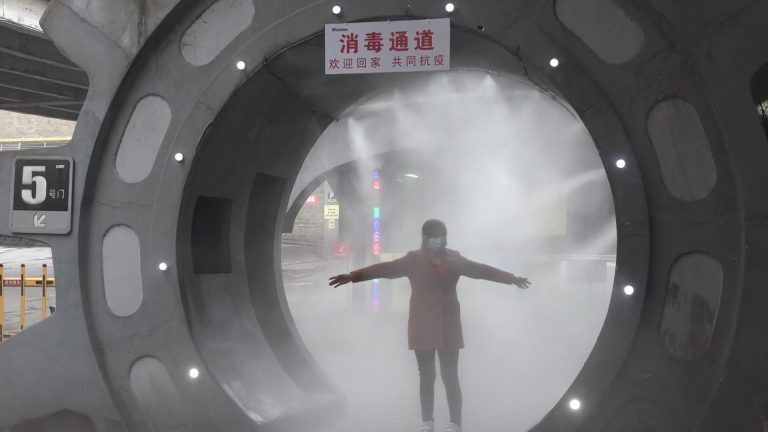
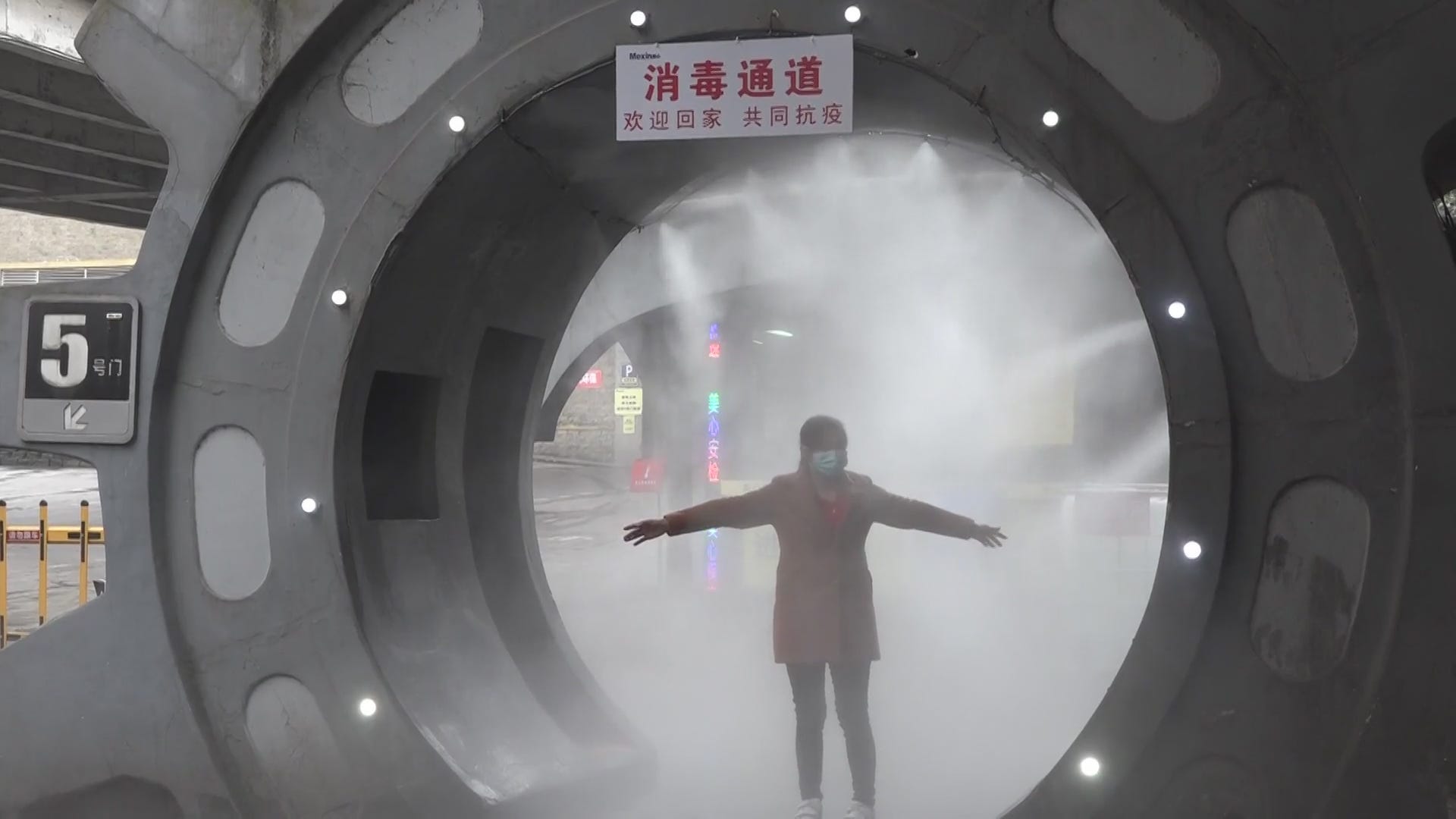
China has constructed ‘disinfectant tunnels‘ for people to walk through which supposedly kills 99% of the viruses. It’s part of China’s wide-ranged efforts towards combating the crisis within its own territory. The tunnels apparently sanitize people within 2 seconds. The tunnels are equipped with infrared detectors that activate the spray when a person walks in.

Source: Reuters

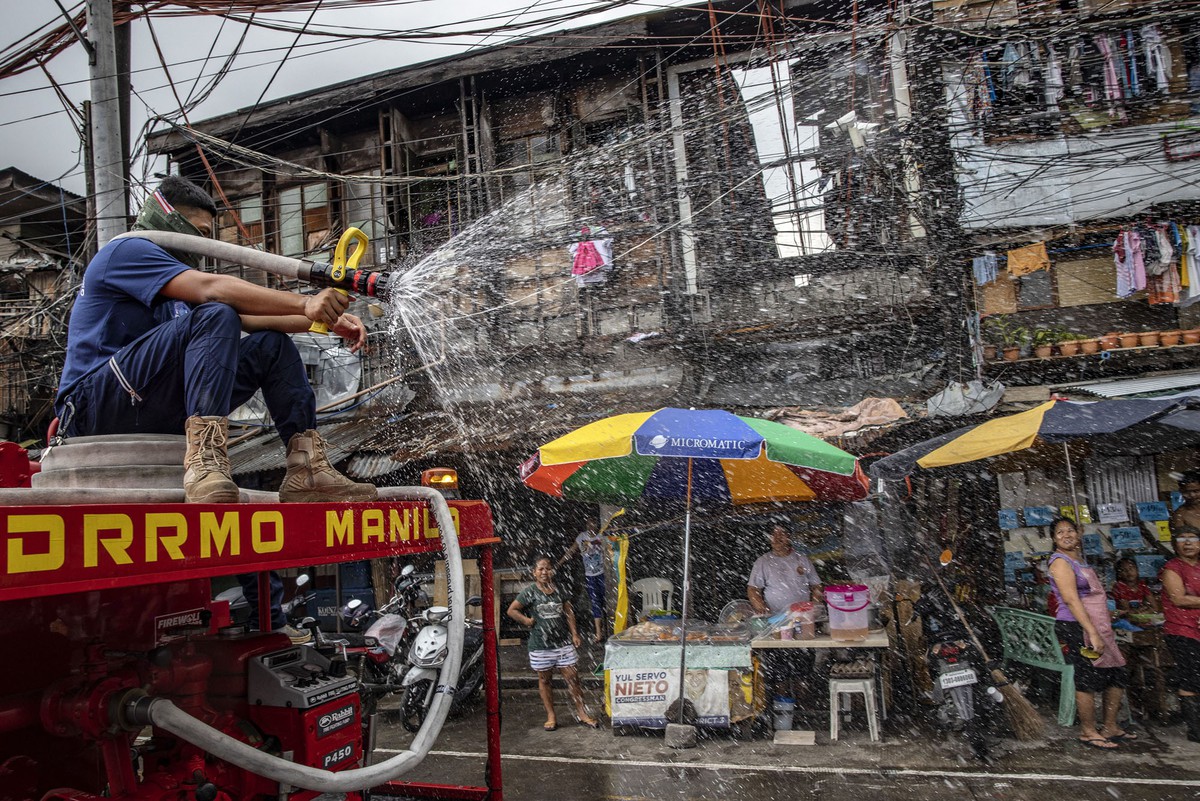
There are also other images available on the internet from other countries such as Philippines where antiseptic solution is sprayed on crowded places with people present in order to disinfect the environment. These solutions, quite obviously, pose no threat to the health of people.

MANILA, PHILIPPINES – MARCH 11: A disinfection worker sprays anti-septic solution against COVID-19 aboard a firetruck along a street on March 11, 2020 in Manila, Philippines. Philippine President Rodrigo Duterte on Monday declared a state of public health emergency as the number of people infected with COVID-19 in the country rose to 33 from just 3 cases last week. With over 115,000 confirmed cases around the world, the coronavirus has so far claimed over 4,000 lives. (Photo by Ezra Acayan/Getty Images)

In fact, closer home in India, too, disinfectants were sprayed on people.

The tweet by the Times of India journalist is quite clearly directed towards inducing panic among people and inspire in them a distrust towards the authorities. In times of a pandemic, it is essential that citizens do not start doubting necessary tasks being carried out by the authorities. However, the journalist in his infinite wisdom appears to believe that now is a good time to engage in rumour-mongering and thereby, jeopardize the safety and security of millions of people.

After the video went viral on social media, Bareilly District Magistrate took to Twitter to clarify that the administration was asked to disinfect buses but ended up using the same on passengers as well.

An ‘action’ against those responsible has been ordered by the DM. It is still not clear if the ‘action’ has been ordered by DM due to apparent ‘demeaning’ step of making them squat on ground, or whether the chemicals were inappropriate, because that doesn’t appear to be the case. He further clarified that such mass disinfecting method is being used worldwide.

“However, while carrying it out, we should have taken care of safety and made sure people are not inconvenienced,” he tweeted.

Coronavirus lockdown: Kerala Chief Minister Pinarayi Vijayan allows sale of liquor as ‘lack of alcohol may cause social problems’

0

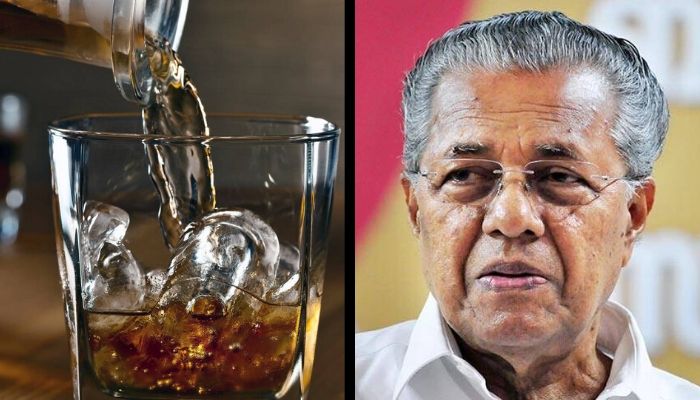
The Chief Minister of Kerala, Pinarayi Vijayan, on Monday announced that the state government will allow sale of alcohol amidst coronavirus lockdown to those with “valid doctor’s prescription”. He said that the sudden unavailability of alcohol may lead to social problems. Hence, the state government has asked the Excise Department to provide liquor to those with a valid doctor’s prescription. Moreover, the Department has been tasked to treat alcoholics exhibiting withdrawal symptoms in de-addiction centres in the State. The Kerala Government is also planning to start the online sale of liquors.

The decision of the Communist party government in Kerala has drawn the ire of both the Indian Medical Association and Kerala Medical Association. Dr Abraham Varghese, IMA State President, reportedly said that such a move cannot be accepted on scientific grounds. “Doctors have no legal liability to give a prescription to get them liquor,” he added stating that handing out such prescriptions may lead to cancellation of a doctor’s licence.

Even though Kerala accounted for only 1 death due to Coronavirus infection, around 9 people have died due to the unavailability of alcohol. 7 out of 9 had reportedly committed suicide. However, Kerala has the highest number (194) of coronavirus positive cases in the country as of 30th March 2020.

On Friday, a 38-year-old man had allegedly committed suicide at Thavanur near Kunnamkulam, Kerala after he failed to get liquor during the countrywide lockdown. The deceased had been identified as Sanoj. The relatives of the deceased said that he was upset for the past two days following the non-availability of alcohol. Sanoj, who worked as a painting worker was found hanging in his room in his house on Friday morning.

Arunachal Pradesh: 21-year-old Indian youth abducted by China’s People’s Liberation Army, says memorandum to Governor

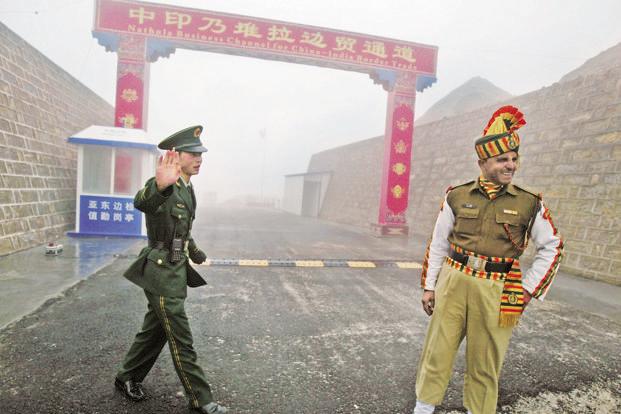
The Tagin Cultural Society (TCS) in Arunachal Pradesh has alleged in a memorandum to the governor that a 21-year old youth was abducted by China’s People’s Liberation Army from Asapila sector near the McMahon line in the state’s Upper Subansiri district. Togley Singkam and his friends, Gamshi Chadar and Ronya Nade, had gone to collect traditional herbs from the land belonging to the Naa clan of the Tagin community and also for fishing.

“On the fateful morning of 19th March, the three friends were busy fishing when the Chinese security personnel ambushed them. While other two friends could successfully escape, Tongle Sinkam was abducted at the gunpoint by the Chinese security personnel,” the TCS said in the memorandum to the governor. “He did not cross the LAC or any international border. On the contrary the Chinese security personnel who picked him up in inhuman way had rather transgressed into Indian territory thereby violating international norms/law that guides such matters,” it said.

The McMahon Line separates Tibet from Arunachal Pradesh. China claims the northeastern state of India as its own like it claims a lot of other territories that do not belong to it as its own. The friends of the abducted youth informed the TCS upon their return and Singkam’s family filed a complaint at the Nacho police station on the 23rd of March, the memorandum said. Upper Subansiri’s superintendent of police Taru Gusar told PTI that the Nacho police station’s officer-in-charge has been sent to the spot for a detailed inquiry. The governor’s office has confirmed that the memorandum has been received. Officials at the Army’s Eastern Command headquarters in Kolkata said they are checking the details with its personnel posted in the area.

The TCS has urged the governor to take up the matter with the Center and secure Singkam’s release. It was further said that the Tagin community lives in the border areas and such incidents make their lives miserable. The alleged abduction comes at a time when the world is struggling to grapple with the Wuhan Coronavirus pandemic unleashed by China into the world. While the world’s attention remains focused on the pandemic, China has been selling faulty equipment and has upped its ante on the military front.

Mujeeb Mohammed, the Infosys employee who urged people to ‘spread the coronavirus’, followed Zakir Naik on social media: Report

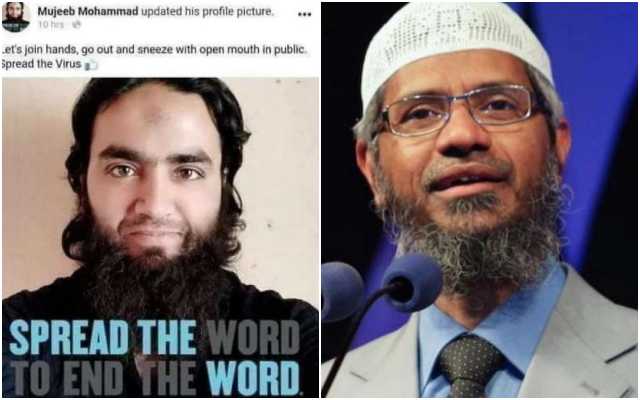
The Infosys employee in Bangalore, who was arrested by the Police for urging people to spread the Wuhan Coronavirus among the population, has turned out to be a fan of the radical Islamic preacher Zakir Naik, Deccan Herald has reported. Mujeeb Mohammed had written in a post on social media, “Let’s join hands, go out & sneeze with open mouth in public. Spread the virus.” Later, he was fired by his employers as well.

Mujeeb has been charged under IPC sections 153A (promoting enmity between different groups on grounds of religion, race, place of birth, residence and language), 505 (statements conducting to public mischief), 270 (a malignant act to spread the infection of disease dangerous to life) and 109 (abetment, if the act abetted, is committed in consequence of the abetment).

A police officer has reportedly said that Mujeeb Mohammed followed Zakir Naik on social media and watched, ‘liked’ and shared the Radical Islamic preacher’s speeches. “He is into the habit of posting messages that hurt the religious sentiments of other communities,” the officer claimed. Another of Mujeeb Mohammad’s posts says, “My stun gun is ready-killing dogs”. Mujeeb Mohammed’s post urging people to spread the virus had created quite the furore on social media. Netizens demanded strict action from Infosys, adding that such people are a threat to society. Mujeeb was subsequently apprehended by the police.

Zakir Naik has been the inspiration for many radicalized individuals in recent times. The National Investigation Agency (NIA) had said in October last year that most of the 127-odd terrorists arrested by security agencies in India for suspected ISIS links were inspired by the speeches of the radical Islamic preacher currently living in Malaysia.

Islamists wish death upon Nirmala Sitharaman after Finance Minister of German state committed suicide over Coronavirus outbreak

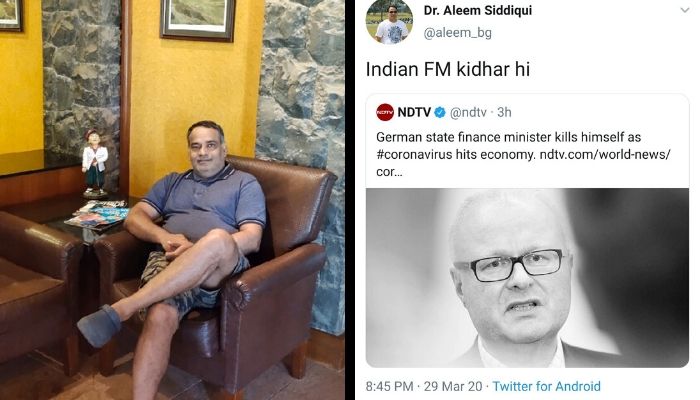
The Finance Minister of Germany’s Hesse state, Thomas Schaefer, committed suicide due to concerns over his country’s economy, amidst the Wuhan Coronavirus outbreak. His body was discovered near a railway track on Saturday. When the news of his death surfaced, everyone was left in a state of shock. While some Netizens paid tribute to him, others called the decision to end his life, a wrong choice. Meanwhile, brainwashed radical Islamists took to Twitter to wish the same fate upon India’s Finance Minister Nirmala Sitharaman.

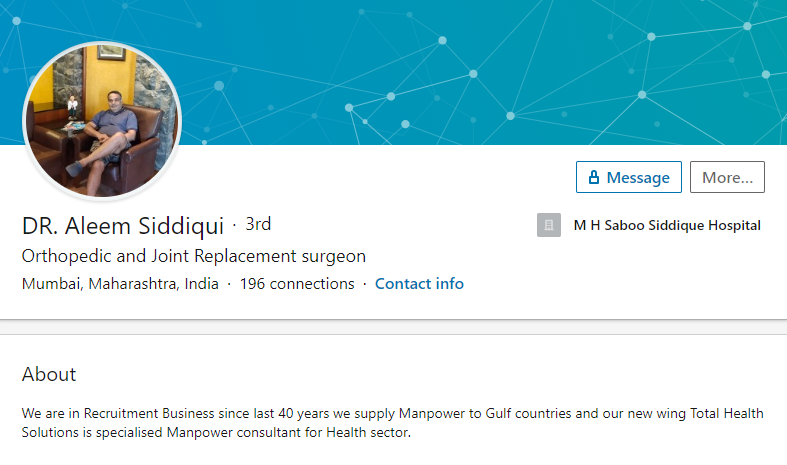
Aleem Siddiqui is a Mumbai based doctor.

Orthopedic Surgeon Aleem Siddiqui wants FM Nirmala Sitharaman to die
Screengrab of his LinkedIn profile

Other rabid Islamists too rejoiced and wondered when Sitharaman will also face similar fate the FM of the German state.

Recently, former Chief Election Commissioner DY Quraishi had wished that PM Modi dies of coronavirus. However, he later on claimed that he did not mean it.

Modi government has been battling coronavirus with proactive steps: Here are the key developments since January

As the Wuhan coronavirus pandemic has gripped almost the entire world, many countries have taken extreme measures to arrest the spread. The Indian government headed by Prime Minister Narendra Modi had taken pro-active steps to counter the Chinese pandemic.

From screening every passenger entering the country, setting up quarantine facilities to enforcing a nation-wide lockdown, the government has been working on a war-footing. A series of decisions taken by the Modi government has limited the impact of the pandemic in the country.

In a series of tweets, Akhilesh Mishra, CEO of BlueKraft Digital Foundation, explained the detailed break up of Modi government’s pro-active steps to fight the health crisis and presented the details on how the centre swung into action soon after China notified about the Coronavirus infection on January 7.

Here is a timeline of the decisions taken by the government of India to handle the Chinese epidemic COVID-19:

January 7, 2020: China notified the world about COVID-19. The WHO officials announced they had identified a new virus. The novel virus was named 2019-nCoV, identified as belonging to the coronavirus family.

January 8, 2020: The Health Ministry under the Indian government did its first mission meeting to discuss the necessary actions to be taken.

January 17, 2020: The Indian government decided to take pre-emptive steps to limit the pandemic. The Modi government started screening of all passengers arriving from China.

January 25, 2020: Principal Secretary to Prime Minister Modi chaired a high-level review meeting on the instructions of PM. Dedicated teams from central government begin inspection of all airports. Nearly 20,000 incoming travellers from 115 flights at seven airports were screened for the transmission. All state hospitals were put on alert and kept in the loop.

January 27, 2020: The central government had held a cabinet meeting to review preparedness to counter the Chinese pandemic. Health Ministry held a review meeting with all the Principal Secretaries of the state to review the preparedness.

The government of India asked all the airlines to report illness of any passengers on all flights directly or indirectly connected with China.

January 29, 2020: The government of India banned the export of N95 masks and Personal protective equipment (PPE).

January 30, 2020: The first case was confirmed in Kerala’s Thrissur district in a student who had returned home for a vacation from Wuhan University in China. WHO declares Chinese COVID-19 as a health pandemic. Six labs were identified for testing.

January 31, 2020: Quarantine facilities are set up by the Indian government at Manesar and Chawla camp for the people who return from China. Another facility with 50-bed critical care centres was set up at Safdarjung hospital, New Delhi. By the end of January, quarantine facilities were set up and testing labs were identified. 

February 1, 2020: Modi government began evacuation of Indian citizens stuck in China. India evacuates 324 passengers from Wuhan, China using Air India flights.

February 2, 2020: India evacuated remaining 330 Indians and 7 Maldives nationals from Wuhan, China.

February 3, 2020: PM Modi constituted an Empowered Group of Ministers (E-GoM) headed by Health Minister to tackle emerging situations.

The Government of India put up advisory against travel to China and suspends all types of e-Visas given to Chinese passport holders. By the end of February, travel advisories were extended to other places like Taiwan, South Korea, Singapore, etc.

February 7, 2020: Health Minister gave a statement in the Parliament: A total of 1,39,539 people returning from 1275 flights were already screened. 150 passengers who were suspected to have carried the symptoms were sent to quarantine facilities. Integrated Disease surveillance network tracking was done for almost 7,000 people. 305 symptomatic travellers referred to isolation centres and being monitored.

February 13, 2020: Health Minister Dr Harshavardhan addressed media on the status, actions that have been taken and the preparedness of all the states, ministries concerned.

February 22, 2020: Modi government issues travel advisory to people visiting Singapore.

February 24, 2020: Vietnam, Nepal, Indonesia, Malaysia added to the screening list

February 26, 2020: Another travel advisory issued by the central government to avoid travel to South Korea, Iran and Italy.

Air India evacuated another batch of 76 Indians and 36 foreigners from Wuhan, China.

March 3, 2020: India’s began its actions to tackle COVID-19. The Modi government introduces universal screening for all incoming passengers at all airports. There were just six reported cases of COVID-19 infections in India by March 3.

Prime Minister in a high-level meeting reviewed the country’s preparedness and interacts with various ministries and state governments.

March 4, 2020: Prime Modi Narendra Modi sends a direct message as he announced that he will not participate in any ‘Holi Milan’ programme as experts have advised reducing mass gatherings to avoid the spread of coronavirus.

March 7, 2020: PM Modi held another review meeting to stake stock of the situation. The government of India issues new quarantine guidelines to all the passengers who had returned to India, asks to self-monitor themselves and follow the recommended DOs and DONTs.

New visa restrictions imposed on visas granted to France, Germany and Italy. Regular visas granted to all foreign nationals who had travelled to these countries also suspended.

March 10, 2020: Indian Air Force evacuated 58 Indian pilgrims from Iran.

March 11, 2010: The Indian government suspended all visas to India except diplomatic visas till 15 April 2020. India also suspended visa-free travel facility for OCI card holder’s till 15 April 2020 and all the Indian nationals coming from COVID-19 hit nations after 15 February needed to be quarantined for 14 days.

Another 44 passengers were evacuated from Iran on 11 March. 83 people were evacuated from Italy by Air India.

March 12, 2020: Prime Minister Narendra Modi tweeted on urgency and importance of the situation. PM Modi asked the nation to not panic over the coronavirus outbreak. In a social media post, PM Modi urged the nation to ‘say no to panic, say yes to precautions’.

The Prime Minister assures that the government was “fully vigilant about the situation due to COVID-19 Novel Coronavirus. Across ministries & states, multiple steps have been proactively taken to ensure the safety of all. These steps are wide-ranging, from the suspension of Visas to augmenting healthcare capacities.”

March 14, 2020: With positive cases still below 100, 52 labs were set up to test the symptomatic patients.

March 15, 2020: Under the leadership of Prime Minister Modi, the leaders of South Asian Association for Regional Cooperation (SAARC) member nations connected with each other via video-conference to formulate a strategy to tackle the outbreak of the novel coronavirus in the region. The idea to hold the discussion via video-conference was proposed by Prime Minister Narendra Modi who called on his SAARC contemporaries in this regard on March 14.

Prime Minister Modi, in collaboration with the SAARC, announces to set up COVID-19 Emergency Fund based on voluntary contributions from member countries. India announced US$10 million as its initial contribution to support the initiative.

March 18, 2020: At below 175 cases, India decides to quarantine all passengers travelling from or transitting through four GCC countries -Qatar, UAE, Kuwait, Oman. The government also bans travelling to European Union (EU), EUFTA, Turkey and the United Kingdom.

March 19, 2020: With still less than 200 cases, Indian reacts to the global pandemic in a war mode. Prime Minister Modi addresses the nation in the wake of Wuhan coronavirus epidemic. Prime Minister Modi urged citizens to follow resolve and restraint. He also called for a ‘Janta Curfew’ (public curfew) on March 22.

The government decided to set up a COVID-19 Economic Response Task Force to monitor the economic impact that is being caused due to global pandemic.

All incoming international flights to India stopped after 22nd March. Export of ventilators prohibited.

March 20, 2020: Prime Minister Modi interacted with all the Chief Ministers of all the states, requests for augmenting facilities and greater support to vulnerable sections of the society.

March 21, 2020: The centre puts 75 districts on lock-down. PM Modi interacts with the Pharma industry and urges the industry to work on manufacturing RNA testing kits for COVID-19 on a war footing.

March 22, 2020: Janata Curfew to be followed across the country. The Indian Railways stop all its services across the country, except goods movement from March 22. Metro, inter-state transportation suspended.

India increases its testing capacity now to perform 50,000 tests/week.

March 23, 2020: The centre asks state governments to enforce strict guidelines on lockdown in 75 districts. The government suspends all domestic airlines operation from March 24.

Prime Minister Modi interacts with industry leaders, India Inc and urges to use their CSR funds for humanitarian causes during the Chinese epidemic.

March 24, 2020: PM Modi addressed the nation and announces a nationwide lockdown for 21 days till April 14 to fight the spread of Chinese Coronavirus.

March 26, 2020: The Narendra Modi government announced a massive economic package. Finance Minister Nirmala Sitharaman unveils a Rs 1.75 lakh-crore welfare stimulus package to the country. Her announcement came as 21-day nationwide lockdown began on Wednesday to curb the spread of highly contagious illness.

March 27, 2020: The Reserve Bank of India came up with a massive relief package. Imposed a moratorium on loan repayments. Eased norms on policy rates, capital loans. Measures were taken to inject liquidity to the tune of Rs 3.74 lakh crore to the economic system.