Home Blog Page 580

India and Kuwait sign 4 MoUs in defence, sports and cultural cooperation during PM Narendra Modi’s visit

India and Kuwait signed four Memorandum of Understandings in the areas of defence, sports and cultural cooperation during Prime Minister Narendra Modi’s visit to the Gulf nation, the Ministry of External Affairs said on Sunday.

MEA Secretary CPV and OIA, Arun Kumar Chatterjee during a special briefing today, said the MoUs are expected to deepen the multifaceted bilateral relationship as well as open avenues for newer areas of cooperation.

“Following the delegation level talks today, four bilateral documents were signed during the visit. The first one is a Memorandum of Understanding on defence cooperation, the second one is a Cultural Exchange program for the years 2025-2029, the third is an executive program on cooperation in the field of sports for the period 2025- 2028. We also had Kuwait joining as a member of the International Solar Alliance (ISA),” he said.

“We are pretty confident that this historic visit of the Prime Minister will open up a new chapter in the relationship between India and Kuwait. Both the sides have been able to identify several important areas of cooperation and the governments will be working towards fulfillment of the plans that have been made during this visit,” Chatterjee added.

The MoU on Defence cooperation will institutionalize bilateral cooperation in the area of defence. Key areas of cooperation include training, exchange of personnel and experts, joint exercises, cooperation in defence industry, supply of defence equipment, and collaboration in research and development, among others, a statement by MEA said.

“The MoU between India and Kuwait in the field of Defence cooperation will institutionalise the bilateral cooperation in the areas of defence. The key areas of cooperation would include training, exchange of personnel and experts, joint exercises, cooperation in defence industry, supply of defence equipment and collaboration in research and development,” Chatterjee said.

Cultural Exchange Programme (CEP) between India and Kuwait for the years 2025-2029 will facilitate greater cultural exchanges in art, music, dance, literature and theatre, cooperation in preservation of cultural heritage, research and development in the area of culture and organizing of festivals, an MEA statement said.

“The cultural exchange program will facilitate greater cultural exchanges in art, music, dance, literature and theater. Cooperation in preservation of cultural heritage, research and development in the areas of culture and organization of festivals,” he said.

Executive Programme (EP) for Cooperation in the Field of Sports for the years 2025-2028 will strengthen bilateral cooperation in the field of sports between India and Kuwait by promoting exchange of visits of sports leaders for experience sharing, participation in programs and projects in the field of sports, exchange of expertise in sports medicine, sports management, sports media, sports science, among others, the statement said.

“The executive program for cooperation in the field of sports will strengthen bilateral cooperation in the fields of sports between India and Kuwait by promoting exchange of visits of sports leaders for experience sharing, participation in programs and projects in the field of sports, exchange of expertise in sports medicine, sports management, sports media, sports science among some of the areas that we have identified,” Chatterjee said.

Kuwait became a member of the ISA. The International Solar Alliance (ISA) collectively covers the deployment of solar energy and addresses key common challenges to the scaling up of use of solar energy to help member countries develop low-carbon growth trajectories, the MEA statement said.

“Kuwait becoming a member of the International Solar Alliance collectively covers the deployment of solar energy and addresses key common challenges to the scaling up of use of solar energy to help member states develop low carbon growth trajectories,” Chatterjee said.

The MEA Secy said that Kuwaiti side acknowledged the important contribution made by Indians there in their economy. Both sides agreed that working groups in the sectors of health and education will identify new sectors of cooperation.

“Regarding the health and education sector, both the sides acknowledged the important contribution that Indians are making in the Kuwaiti economy today and the Kuwaiti side also acknowledged the major contribution that the Indian diaspora is making for the development of the Kuwaiti economy on the issues like health and education. We have separate working groups that have been set up. Both the leaders agreed that these working groups will be meeting frequently and regularly to identify new areas of cooperation. On manpower front also we have a joint working group that exclusively looks at manpower-related issues of Indians in Kuwait and that working group usually looks at and addresses the major issues that are there in this sector but in the general context the leaders discussed about the contribution of the of the Indian community here,” Chatterjee said.

He said that intensification of visits from Kuwaiti side may be anticipated as new areas of cooperation have been identified.

“The elevation of a relationship to a strategic partnership means you have taken your bilateral relationship to the next level. Which means you will have greater intensity of cooperation in several areas, plus we have identified new areas. We will see intensification of exchanges and visits in the coming days to materialize whatever has been planned by the leaders of both the countries,” he said.

Chatterjee added that health is an important sector that has been identified for cooperation.

“Health and pharmaceuticals is one important area which both the sides have identified for cooperation and that could include investments by the Kuwaiti side in India or expansion of the trade basket to increase pharmaceutical exports also from India. Pharmaceutical would continue to be one of the important sectors of cooperation between our two countries,’ he said.

Prime Minister Narendra Modi concluded his two-day official visit to Kuwait, and emplaned for New Delhi on Sunday.

Visiting Kuwait at the invitation of Sheikh Meshal Al-Ahmad Al-Jaber Al-Sabah, the Emir of the State of Kuwait, PM Modi held multiple engagements and held discussions to further deepen the India-Kuwait ties.

In a special gesture, the PM of Kuwait came to see off PM Modi at the airport as he left for India.


(This news report is published from a syndicated feed. Except for the headline, the content has not been written or edited by OpIndia staff)

Germany’s Christmas market attacker identity sparks debate – Ex-Muslims deny he was one of them: A pattern of deception and impact on genuine ex-Muslims

On 20th December, a 50-year-old Saudi-born doctor identified as Taleb Al-Abdulmohsen rammed a BMW car into the crown at a Christmas market in Magdeburg, Germany. The incident claimed lives of five people and left over 200 injured. Several of the injured individuals are in critical condition. The German authorities are examining the motive behind the attack. Taleb, who identified himself as an ex-Muslim atheist on social media, has sparked global outrage with his actions. Notably, the ex-Muslim community has come forward and raised serious concerns about his claimed identity as an ex-Muslim atheist.

Ex-Muslim community questions attacker’s authenticity

Taleb fled Saudi Arabia in 2006. He publicly identified himself as an ex-Muslim atheist. He used this persona to get asylum in Germany citing possible persecution in his homeland. However, prominent ex-Muslims have raised concerns over the said identity and pointed out inconsistencies in his behaviour. The ex-Muslim community is now suggesting that Taleb was using the “label” strategically for his personal gains.

German ex-Muslim atheist Ali Utlu has accused Talen of duplicitous behaviour. In a statement, Utlu said, “He acted as an ex-Muslim publicly while threatening others, especially Saudi women, in private. According to media reports, Utlu was in contact with Taleb till 2018. However, he distanced himself from Taleb due to troubling interactions.

In a post on X, Utlu questioned, “We organized ex-Muslims openly say that he practiced taqiyya. If someone was as Islamophobic as him, wouldn’t he try to kill Muslims in an attack instead of Christians at a Christmas market?”

Similar accounts were shared by Canadian ex-Muslim activist Yasmine Mohammed who described Taleb as “unstable” and aggressive. She alleged that Taleb targeted female activists from Saudi Arabia. He even sought Yasmine’s help to “expose” one such woman. She expressed suspicion that Taleb might have collaborated with the Saudi authorities to undermine female dissidents.

The role of taqiyya – A bigger conspiracy?

Some ex-Muslims have suggested that Taleb might have employed Taqiyya. For those who are unaware, Taqiyya is an Islamic practice that allow concealment of faith under duress. It is often used to infiltrate ex-Muslim community. Maral Salmassi, who is an Iranian-German entrepreneur, released a video dismissing claims that Taleb was an atheist. She argued that his actions aligned more with Taqiyya as he used to advance Islamist objectives while deceiving others.

According to Britannica, Taqiyya can be described as a doctrine practised primarily by Shia Muslims. It permits to follow religion under secrecy under threat. As Taleb belonged to Shia community, those who are sceptic that he was an ex-Muslim, believe that his actions fall in line with Taqiyya.

Al-Abdulmohsen’s asylum and the German authorities’ oversight

In 2016, ten years after Taleb fled Saudi Arabia, Germany granted him asylum. His persona of an ex-Muslim played a significant role in getting asylum status. There were allegations of terrorism, rape and smuggling against Taleb in Saudi Arabia and the authorities sought his extradition. However, German authorities refused his extradition while citing possible risk to his safety. Evidently, in the light of recent events, it is possible that the German officials overlooked the warnings about his extremist tendencies.

Reportedly, a woman had alerted authorities that Taleb had threatened to carry out a terror attack. However, no significant action was taken on the woman’s revelations about Taleb’s intentions. It is possible that his carefully curated image of an ex-Muslims influences the authorities leading to leniency in his case leaving room for the recent attack to happen.

The impact on genuine ex-Muslims

The incident has raised serious concerns among the genuine ex-Muslims. They fear that Taleb’s actions would stigmatise their community and jeopardise their asylum claims. Ex-Muslims are always under risk as they left Islam. They face death threats, violence and estrangement from the community. Many of the ex-Muslims hide the fact that they have left Islam and do not share their identity as an ex-Muslim with their families fearing adverse reactions from them.

In a statement, Yasmine Mohammed voiced her fears and stated that such incidents will lead to scrutiny on ex-Muslims. She said, “This path to asylum was already fraught with challenges. Now it’s harder.”

Taleb Al-Abdulmohsen – A case of manipulation?

The life of Taleb Al-Abdulmohsen in Germany was full of contradictions. On social media, he developed a person of ex-Muslim. He championed anti-Islam themes and regularly interacted with ex-Muslims. He was often seen criticising German policies and even supported the far-right party AfD. He openly admired individuals like Elon Musk as well.

However, his refusal to engage with prominent ex-Muslim individuals including Brother Rachid raised suspicions among the ex-Muslim community. Brother Richard is a veteran interviewer. He noted that Taleb repeatedly avoided tough questions about his stance. He said, “He always had excuses, citing temporary medical conditions.”

Furthermore, there have been allegations that he had extremist tendencies. Many from the ex-Muslim community believe that Taleb manipulated his persona for personal and ideological gains. The Magdeburg attack, targeting a Christmas market, appears to align more closely with extremist Islamist motives than those of a genuine ex-Muslim atheist.

A pattern of deception?

Taleb is not the first “ex-Muslim” who apparently falsely claimed to have renounced Islam to secure asylum. For example, Afghan migrant Abdul Shokoor Exedi sought refuge in the United Kingdon claiming that he had converted to Christianity. After he got asylum, he was implicated in serious crime including a chemical attack. After his death, his funeral took place following Islamic rituals which revealed his true affiliations.

The need for clarity

The Magdeburg Christmas market attack needs deeper investigation as there are complexities around the identity and ideology of the accused. As the case moves forward, the ex-Muslim community remains resolute in distinguishing themselves from individuals like Al-Abdulmohsen, emphasising their genuine struggles against oppression.

Notably, this case has once again brought forward the methods used by asylum seekers to seek refuge in Western countries. Asylum policies, identity verification and methodology of granting asylum has come under scrutiny. There are broader implications of ideological manipulations as in such cases identification of possible threats go unchecked.

Union Govt to launch ‘Jago Grahak Jago App’, ‘Jagriti App’, and ‘Jagriti Dashboard’ to protect consumers from unfair practices in digital marketplace

Department of Consumer Affairs will launch ‘Jago Grahak Jago App,’ ‘Jagriti App,’ and ‘Jagriti Dashboard” for public use on National Consumers Day 2024 i.e. 24th December, 2024.

As part of the government’s broader strategy and ongoing efforts to strengthen consumer protection in the digital era and curb unfair practices in e-commerce and online services, the Central Consumer Protection Authority notified the Guidelines for Prevention and Regulation of Dark Patterns in 2023 and specified 13 dark patterns, namely: False urgency, Basket Sneaking, Confirm shaming, forced action, Subscription trap, Interface Interference, Bait and switch, Drip Pricing, Disguised Advertisements and Nagging, Trick Wording, Saas Billing and Rogue Malwares.

CCPA had earlier issued notices to IndiGo Airlines and BookMyShow under Consumer Protection Act, 2019 for alleged Misleading Advertisement/Unfair Trade Practices in the form of deceptive design patterns/dark patterns.

It came to the notice of the Central Consumer Protection Authority (CCPA) that BookMyShow had allegedly imposed an extra charge on customers after the booking of confirmed tickets. Re. 1 per ticket was automatically added as contribution towards ‘BookASmile’ in the form of pre-tick without consent of the consumer. This amounted to ‘Basket Sneaking’ as defined under the clause (2) of Annexure 1 of Guidelines for Prevention and Regulation of Dark Patterns, 2023. After CCPA’s intervention, BookMyShow addressed the issue of ‘Basket Sneaking’ by giving customers are an option to choose whether or not they wish to contribute towards BookASmile.

Based on the grievances lodged at National Consumer Helpline, the Central Consumer Protection Authority issued notice to InterGlobe Aviation Limited (IndiGo Airline) for alleged unfair trade practices / dark pattern pertaining to ‘Confirm Shaming’ on Indigo Airlines App and Lack of Transparent Communication on Seat Assignment.

After the CCPA intervention, IndiGo Airline has resolved the issue by changing the wording to “No, I will not add to the trip”, which ensures clarity and neutrality. The wordings used earlier were “No I will take risk”, which amounted to ‘confirm shaming’ which is a Dark Pattern. In another issue, the Airline was directed to address the issue with the “Skip” button on the “Selection of Seat” page and to undertake a comprehensive re-examination and redesign of their web check-in page. Accordingly, the airline addressed the issue of ‘Preferential Seating’ by modification of their website/app by providing a disclaimer on the left side of “skip button” where it is written that “You can skip preferred seat selection and complete your booking. IndiGO will auto-assign a seat prior to your travel”.

As part of its legislative intent, CCPA held several meetings with industry stakeholders and requested  them to refrain from using Dark Patterns which amount to Unfair Trade Practice under the Consumer Protection Act 2019. CCPA has also focused on expanding its consumer outreach by utilizing its social media platforms through informative posts, videos and stories on dark patterns. CCPA has also trained it’s team at National Consumer Helpline to effectively address the grievances pertaining to Dark Patterns.

Department of Consumer Affairs is now also equipped with means and resources to identify dark patterns on e-commerce platforms and is soon going to empower consumers with these tools. As part of the intensive research done by students, Prince Aman and Nameet Mishra, NCC LAB, Department of Electronics Engineering, IIT(BHU), three apps have been coded, namely; ‘Jago Grahak Jago App,’ ‘Jagriti App,’ and ‘Jagriti Dashboard’.   These are part of an intelligent cyber-physical system, which operates in real-time and runs on the Airawat AI Supercomputer under the National Supercomputing Mission for AI and Data Analytics. This innovative system analyses existing text and design elements on e-commerce platforms to determine whether they are being used to influence consumer psychology.

The ‘Jago Grahak Jago App,’ provides essential e-commerce information about all URLs during a consumer’s online activities, alerting them if any URL may be unsafe and requires caution. Meanwhile, the ‘Jagriti App,’ allows users to report URLs where they suspect the presence of one or more dark patterns declared illegal. These reports are then registered as complaints to the Central Consumer Protection Authority (CCPA) for possible redressal and subsequent action. Additionally, the CCPA is being strengthened with the ‘Jagriti Dashboard’ which is used to generate real-time reports on e-commerce URLs for the presence of the aforementioned dark patterns, enhancing the capability to monitor and regulate online consumer interactions effectively. This solution will aid the CCPA in identifying dark patterns, speeding up the resolution of consumer disputes and will go a long way in curbing practices that are detrimental to consumer interests.

Through above initiatives, Department endeavours to:

  • create a transparent and fair digital marketplace where consumers can make informed decisions without being tricked or coerced;
  • educate consumers about their rights;
  • regulate e-commerce platforms to prevent practices such as subscription traps, where consumers are unknowingly signed up for recurring payments, or misleading product offers and
  • Encourage companies to adopt ethical design practices that prioritize consumer rights and transparency

(PIB press release)

Russia-Ukraine war: Ukraine downs 52 UAVs and drones launched from Russia

0

The Ukrainian Air Force reported an attack by Russian forces, involving 103 Shahed drones and other unmanned aerial vehicles (UAVs), launched from multiple locations including Bryansk, Millerovo, and Berdyansk.

Ukraine’s Defence Forces repelled much of the attack, downing 52 UAVs and drones across several regions.

In a post on the social media platform Telegram, the Ukrainian Air Force wrote, “The enemy attacked with 103 Shahed UAVs and drones of other types from the directions of Bryansk, Millerovo, Orel, Kursk, Primorsko-Akhtarsk, Berdyansk. The launch of an Iskander-M ballistic missile from Crimea towards the Kherson region was also recorded.”

“The air attack was repelled by anti-aircraft missile troops, aviation, electronic warfare units, and mobile fire groups of the Air Force and Defence Forces of Ukraine. It has been confirmed that 52 Shahed UAVs and drones of other types have been shot down in Poltava, Sumy, Kharkiv, Kyiv, Chernihiv, Cherkasy, Kirovohrad, Zhytomyr, Dnipropetrovsk, Kherson, Mykolaiv, and Zaporizhia regions,” the post added.
However, the attack caused damage to private properties and civilian infrastructure in Kherson, Mykolaiv, Chernihiv, Sumy, Zhytomyr, and Kyiv, though no casualties were initially reported.

“Due to the active countermeasures of the Defence Forces, 44 enemy drones-simulators were lost in location (without negative consequences), and one UAV flew towards Belarus. In Kherson, Mykolaiv, Chernihiv, Sumy, Zhytomyr and Kyiv regions, private businesses, apartment buildings and property of citizens were damaged due to the Russian attack, initially without casualties, assistance is being provided to the victims,” the Ukrainian Air Force said.

Earlier on Friday, a Russian missile attack on Kyiv left at least one person dead and 12 others injured, while several embassies sustained damage, according to Ukrainian authorities, CNN reported.

The Kyiv City Military Administration confirmed the casualties in a Telegram post, noting that five of the injured were hospitalised and others received treatment at the scene.

(This news report is published from a syndicated feed. Except for the headline, the content has not been written or edited by OpIndia staff)

Pakistan-trained Tehreek-ul-Mujahideen terrorist Javed Munshi arrested near Bangladesh border in West Bengal

0

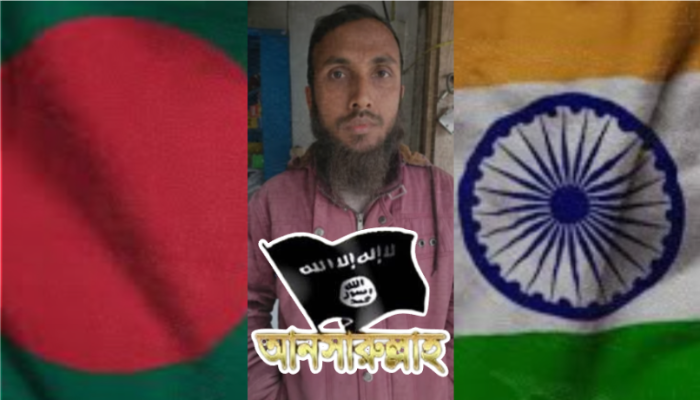
Acting on a tip-off, a team from the Special Task Force (STF) of the West Bengal Police apprehended a Pakistan-trained militant near the Indo-Bangladesh border in the Canning area of West Bengal’s South 24 Parganas district.

The police identified the militant as Javed Munshi, who was arrested on Saturday. Munshi had reportedly arrived in the Canning area a few days earlier, intending to exfiltrate into Bangladesh under instructions from Lashkar-e-Toiba (LeT) operatives, the police stated.

Javed Munshi, an expert in IEDs and weapons handling, is affiliated with the banned terrorist organisation Tehreek-ul-Mujahideen (TuM). He has a history of involvement in terror-related activities, including his alleged role in the 2011 murder of Shaukat Shah, a leader of the Ahl-i-Hadith, and has served multiple jail terms on terrorism-related charges.

During preliminary interrogation, Munshi admitted to having visited Bangladesh, Nepal, and Pakistan multiple times using fake Pakistani passports, acting on the instructions of his handlers. He is also wanted by the Jammu and Kashmir Police.

The arrested individual has been handed over to the Jammu and Kashmir Police, who will take him back to Kashmir on a transit remand to facilitate further investigation.

This operation underscores the ongoing efforts of the West Bengal Police to secure the state’s borders and mitigate potential threats to national security, according to police officials.

(This news report is published from a syndicated feed. Except for the headline, the content has not been written or edited by OpIndia staff)

Samajwadi Party MLA calls BJP a ‘Hindu terrorist organisation,’ later denies statement despite viral video

On 21st December, Samajwadi Party (SP) MLA Suresh Yadav stirred controversy with his remarks, labelling the Bharatiya Janata Party (BJP) a “Hindu terrorist organisation”. His remarks came during a protest in Barabanki, Uttar Pradesh, against the ruling party for Home Minister Amit Shah’s comments on B.R. Ambedkar in the Lok Sabha.

Notably, HM Shah’s Lok Sabha speech was trimmed in a way that made it appear as though he was insulting Ambedkar. Detailed fact-check on the controversy can be checked here.

As Yadav’s remarks drew criticism, he issued a clarification, claiming he did not make any such statement despite videos of his speech going viral on social media.

What is the controversy about?

A protest was organised at the Sugarcane Institute in Barabanki by the SP and Congress on 21st December against HM Shah’s remarks on Ambedkar. During the protest, Yadav launched a scathing attack on the BJP. He claimed that the BJP is a “Hindu terrorist organisation” aiming to destroy the democratic fabric of the country and insult the legacy of great leaders. A video of his remarks was widely shared on social media.

The BJP condemned the statement, terming it irresponsible. National spokesperson of the BJP, Shehzad Poonawalla, accused the SP of harbouring anti-Hindu sentiments and promoting divisive rhetoric. He called for an apology from the SP leader.

Suresh Yadav’s clarification

Following the backlash, Yadav issued a clarification and denied the allegations. He claimed that the viral video was doctored. He said, “I have been a legislator for several terms and know what to say and what not to say.” Accusing political opponents of conspiring against him by editing the video, he said, “I categorically deny making such remarks.”

Who is Suresh Yadav and his history of controversies?

Suresh Yadav is an SP MLA from the Sadar constituency of Barabanki. He is well known for making controversial statements. Yadav is a close aide of SP chief Akhilesh Yadav and has frequently found himself in the midst of controversies. Notably, his family has also faced legal troubles. His brother, Dharmendra Yadav, was charged under the Gangster Act, with properties worth over ₹1 crore seized, including luxury vehicles and real estate.

Additionally, Yadav’s nephew, Arjun Yadav, who is Dharmendra Yadav’s son, was also booked under the Gangster Act. Dharmendra Yadav’s two marriages have reportedly resulted in frequent family feuds, including incidents of violence that have drawn police intervention. Such legal and personal controversies have kept the family in the spotlight.

Professor alleges ‘caste discrimination’, institute says promotion denied due to harassment charges: Here is what’s happening in IIM-Bangalore

The Indian Institute of Management (Bangalore) has come under the scanner over an alleged case of ‘caste-based discrimination.’

An Associate Professor of marketing at the centrally funded business school, Dr Gopal Das has accused the IIM-B officials of discriminating against him on the basis of caste.

Dr Das has alleged that he was denied ‘equal opportunities’ at the esteemed institution. He had registered his complaint with the President of India Droupadi Murmu during her visit to IIM-B in January this year.

DCRE claims to find ‘evidence’ of caste discrimination

Following directives from the Office of the President, an inquiry was initiated into the matter by the Directorate of Civil Rights Enforcement (DCRE) of the Karnataka government in March 2024.

DCRE claimed to have found ‘evidence’ of caste discrimination and denial of equal opportunity by senior officials at IIM-Bangalore.

The officials include Dr Rishikesha T Krishnan (Director), Dr Dinesh Kumar (Dean), Dr Devi Prasad Shetty (Chairman of the Board of Governors), Profesor Rahul De, Professor Sreelata Jonnalagedda, Professor Ashish Mishra, and Professor Chetan Subramanian.

Additional Director General of Police (ADGP) Arun Chakravarthy claimed, “Evidence indicates that Dr. Rishikesha T. Krishnan, Director of IIM-B, publicly disclosed Dr. Gopal Das’s caste through a mass email, leading to allegations of huDCRE filed its inquiry report with Karnataka’s Department of Social Welfare on 26th November 2024.

Karnataka Congress govt wants IIM-B officials booked under SC/ST Act

It further accused IIM-B officials of ‘not establishing institutional mechanism’ to address the grievances of SC/ST employees.

On 9th December this year, the Department of Social Welfare directed the Bengaluru Police Commissioner to initiate action against 6 officials of IIM- B (barring Dr Devi Shetty who secured a stay on proceedings from Karnataka High Court).

The Congress government in Karnataka has now recommended booking the officials under the stringent Scheduled Castes and Scheduled Tribes (Prevention of Atrocities) Act 2015.

IIM-B debunks outrageous claims of ‘caste discrimination’

According to the Indian Institute of Management (Bangalore), Dr Gopal Das has been working at the business school since 2018.

The officials clarified that although he applied for the position of Assistant Professor, he was appointed as an Associate Professor based on his credentials.

It further added that Dr Gopal Das was made part of several committees and entrusted with other responsibilities like the chairmanship of the Institutional Review Board.

IIM-B highlighted that the denial of his promotion was based on harassment charges filed by doctoral students and had nothing to do with his caste.

Dr. Das’s allegations of discrimination against the Institute and its faculty arose only when his application for promotion was put on hold due to complaints of harassment lodged by some doctoral students against him,” it stated.

The officials further added, “An inquiry conducted by IIMB, as per the rules, with a committee that included a reputed academic from the SC category from an eminent institution, found that the students’ complaints were justified.”

They pointed out, “The Diversity and Inclusion Grievance Redressal Committee (DIGRC) found Dr. Das’s complaints of harassment and discrimination to be unfounded.

The Indian Institute of Management (Bangalore) had submitted all evidence to the DCRE, which did not consider them.

‘Cruelty is terrorists hiding behind children’: Israel slams Pope Francis’ address

0

Israel’s Foreign Ministry swiped back at Pope Francis, whose Christmas address criticized Israeli airstrikes in Gaza as “cruelty.”

“Cruelty is terrorists hiding behind children while trying to murder Israeli children; cruelty is holding 100 hostages for 442 days, including a baby and children, by terrorists and abusing them,” the Foreign Ministry said on Saturday night.

“Unfortunately, the Pope has chosen to ignore all of this, as well as the fact that Israel’s actions have targeted terrorists who used children as human shields,” the Foreign Ministry said. “The pope’s remarks are particularly disappointing as they are disconnected from the true and factual context of Israel’s fight against jihadist terrorism — a multi-front war that was forced upon it starting on October 7.”

The Pope opened his annual address to Catholic cardinals on Saturday by remarking, “Yesterday, children were bombed. This is cruelty. This is not war. I wanted to say this because it touches the heart.”

The comments follow a recent controversy over a Nativity scene at the Vatican which featured baby Jesus wrapped in a Palestinian keffiyeh. Images of Pope Francis inaugurating the scene on Dec. 7 created a backlash. Israel’s Diaspora Affairs and Combating Antisemitism Minister Amichai Chikli accused the pontiff of perpetuating a “dangerous blood libel” against Israel and distorting history.
The scene was removed days later without explanation.

In November, the Pope raised Israeli ire for calling for an investigation of Israeli “war crimes” and “genocide” in Gaza.

At least 1,200 people were killed, and 252 Israelis and foreigners were taken hostage in Hamas’s attacks on Israeli communities near the Gaza border on October 7. Of the 97 remaining hostages, more than 30 have been declared dead. Hamas has also been holding captive two Israeli civilians since 2014 and 2015, and the bodies of two soldiers killed in 2014.

(This news report is published from a syndicated feed. Except for the headline, the content has not been written or edited by OpIndia staff)

Will buying second-hand cars now cost more? Read what the recent changes in GST on used cars mean for buyers

On Saturday, the Goods and Services Tax Council decided to make the GST on used cars uniform for businesses. As per the new rule, the GST payable for the purchase and sale of all kinds of used cars will be 18%, which was earlier 12% for some categories of cars. Moreover, the GST for used Electric Vehicles has also been raised to 18%.

However, the individuals buying or selling used vehicles will need to pay GST at the existing rate of 12%.

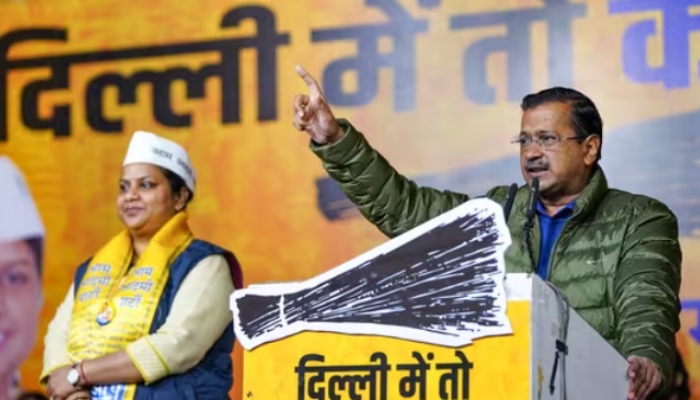
The GST on used cars has attracted strong opposition from opposition parties, with AAP chief Arvind Kejriwal alleging that govt is breaking the dreams of the middle class by increasing taxes on old vehicles. He alleged that “BJP government at the center is working only for the rich and industrialists.”

It is notable that the GST Council is comprised of finance ministers from all the states, apart from the union govt’s representatives. For voting in the Council, the centre’s vote weightage is 33.33%, while the rest 66.67% comes from the states, including opposition-ruled states. All decisions of the GST council must be approved by a minimum of three-fourths of weighted votes (75%) of the members present and voting.

Therefore, it is wrong to blame only the central govt or the union finance minister for the decision. It was approved through voting by states and the centre.

Now coming to the GST on used cars, it is important to note that this is not a new provision, the tax was already there on buying and selling of used cars. This GST is payable by used car dealers, and the tax is calculated only on the margin the used car dealer makes, not the total price of the car.

For example, if a used car dealer buys an old car for ₹5 lakh and sells it for ₹5.5 lakh, the GST payable will be 18% of the margin ₹50,000, which will be ₹9,000. But if such a transaction is done by an individual and not by a business establishment like a dealer, the GST rate will be 12%.

Earlier, the GST on used ‘small vehicles’, which is vehicles below the length of 4000 mm and engine capacity below 1200cc, was 12%, while the vehicles with above this numbers were already taxed 18%. For diesel vehicles and SUVs the engine size limit was 1500cc. This means, now the 12% slab for used cars has been removed, and all used cars will attract 18% GST.

Therefore, if we take the above example, the earlier GST for a car below 1200cc bought from a dealer was 12% or ₹6,000, and now it will be 18% or ₹9,000, representing a hike of ₹3,000. Although any hike in price is not desirable from the consumer’s point of view, the hike for most cars bought by middle-class individuals will not be prohibitive.

Most people in India buy entry to mid-level cars, costing below ₹10 lakh. As the price for used cars will be much less, the additional GST for the purchase of such used cars will also not be much.

It is notable that the 18% GST on used cars remains lower than the GST on new fuel-powered cars, which is 28%. Larger cars also attract additional cess at various rates based on size and engine capacity, and total tax on a new vehicle can go up to 50% for diesel SUVs above 1500cc and longer than 4 metres.

However, the inclusion of used electric vehicles in the 18% bracket is surprising, as at present the GST on new EVs is 5%. This represents an anomaly as the tax is now much higher on used electric vehicles compared to new EVs, which is not the case with fossil fuel vehicles.

Delhi Police step up efforts to identify, deport illegal Bangladeshi immigrants

0

Delhi Police has stepped up efforts to identify, detain and repatriate Bangladeshi immigrants living in the National Capital, without valid documentation.

“In response to growing concerns about the illegal stay of Bangladeshi immigrants residing in the country without any valid Indian document, the Outer District Police has stepped up efforts to identify, detain and repatriate individuals living in National Capital, Delhi without valid documentation,” as per an official release.

A series of operations/joint checking have recently been conducted in the jurisdiction of the Outer District.

“Dedicated teams from Police Stations and Special Units including District Foreigner Cell officials were formed to carry out intensive searches and gather information to trace illegal Bangladeshi Immigrants across the district,” the release read.

During these operations/joint checkings, door-to-door checkings have been conducted.

175 individuals have been found to be under suspicion residing in the jurisdiction of Outer District. Thorough interrogations have been conducted and their documents have also been carefully checked and verified. Teams were sent to their native places to authenticate their identities in coordination with the local police in their respective areas, the release read.

This comes amid claim over illegal Bangladeshi immigrants in the national capital.

On December 15, Delhi Chief Minister Atishi wrote to Union Home Minister Amit Shah, accusing the BJP-led Central government of settling a “large number” of “illegal Rohingya migrants” in Delhi without consulting the state government.

Atishi claimed the issue has persisted for years and called on the BJP-led central government to provide the Delhi government with a complete list of Rohingyas and their addresses.

Additionally, she also demanded that no further rehabilitation of Rohingyas in Delhi should take place without consulting the Delhi government and its residents.

In a counter-allegation, Delhi Bharatiya Janata Party (BJP) President Virendra Sachdeva accused the Aam Aadmi Party (AAP) of settling illegal Rohingya migrants in Delhi to secure their vote bank.

Speaking to ANI, Delhi BJP President Sachdeva said, “Rohingyas and Bangladeshis are taking away the rights of Delhi’s citizens. These illegal immigrants must be removed, and we have made repeated demands to this effect. Delhi belongs to its residents and the people of India. The AAP is settling foreigners in Delhi and must answer for this… Hardeep Puri ji has already clarified the matter. We have not allocated any housing to Bangladeshis or Rohingyas. AAP is doing so for their vote bank politics.”