The Jain, Gujarati and Sindhi communities in Bhopal have decided to prohibit pre-wedding photoshoots along with inviting choreographers for Sangeet ceremony. According to them, the pre-wedding photoshoot is a new type of “pollution” bedevilling the society while the increasing trend of employing a choreographer for the Sangeet ceremony in the name of modernisation is rapidly destroying the Indian culture and tradition.
According to the reports, the decision was taken after Munishree Prasad Sagar Maharaj, a Digambar Jain saint who is doing Chaturmas in Bhopal, instructed the Digambar Jain Panchayat Committee to take a tough stand against the practice of pre-wedding shoots. He even advocated ostracisation of people from the community who support the pre-wedding shoots.
A similar decision was taken by the Gujarati community and Sindhi Central Panchayat Committee. The working committees of both the communities will soon issue guidelines directing the members to ban pre-wedding shoots and choreographers in Sangeet ceremony.
Munishree Prasad Sagar Maharaj claims that pre-wedding photoshoot is incompatible with their culture. He has further alleged that the Sangeet ceremony is a new kind of profligacy that has started in the marriage ceremony. Along with this, he has also stated that the choreographers indulge in vulgar activities with the females on the pretext of teaching them dance moves. He has suggested parents to refrain their sons and daughters from participating the pre-wedding shoots.
On Monday, while the Parliament was debating the Citizenship Amendment Bill, controversial journalist Barkha Dutt was busy looking for a ‘modern-day Gandhi‘ who would fast unto death against the Bill. After the Lok Sabha passed the CAB with a thumping majority, Barkha Dutt’s will does appear to have manifested itself, although in a slightly altered fashion. People in the ‘secular’ camp have decided that ‘Civil Disobedience’ is the proper way to move forward with their agenda.
Harsh Mander, who is associated with a foreign-funded NGO and helped draft the viciously sectarian Communal Violence Bill as a member of Sonia Gandhi’s National Advisory Council, declared that he will register himself as Muslim and refuse to submit his documents for the NRC. Then, he says, he will demand the same punishment as any undocumented Muslim. It’s unclear whether he will undergo circumcision as well.
If CAB is passed, this is my civil disobedience:
I will officially register Muslim. I will then refuse to submit any documents to NRC. I will finally demand the same punishment as any undocumented Muslim- detention centre & withdrawn citizenship.
Join this civil disobedience
The campaign against the NRC appears to be gaining momentum. Numerous people are coming forward to assert that they will not be submitting any document to prove their citizenship during the NRC exercise.
The process of enumeration through NRC & CAB amounts to profiling and dehumanization of the minorities
I , Mini Nair refuse to submit to this immoral act by not submitting the requisite documents needed to prove my citizenship. I will not be a mute spectator.
Certain other people are also asking Muslims to not submit their documents. In all fairness, it doesn’t come across as a very good idea.
When NRC will come, not a single Muslim should submit his/her documents. Let’s defy the rule just like नमक सत्याग्रह
I am ready to go to Detention cell with my Muslim brethren.
Let’s see, how big Detention cell Vomit Shah can create to accommodate 20 cr Indians#IndiaAgainstCABhttps://t.co/3av7tgpn05
The ‘Secular’ camp has demonstrated a remarkable lack of understanding about the CAB and has been in a state of meltdown ever since the Bill was tabled. They have come up with obnoxious arguments for opposing the Bill and the NRC. Sreenivasan Jain of NDTV even claimed that Muslims are a minority in the three Islamic States mentioned.
While it is clear that these people know the difference between CAB and NRC, they are deliberately using the two together, sometimes interchangeably, to fear-monger.
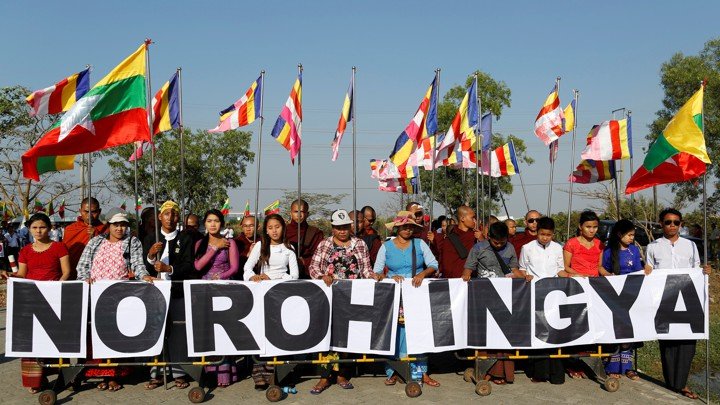
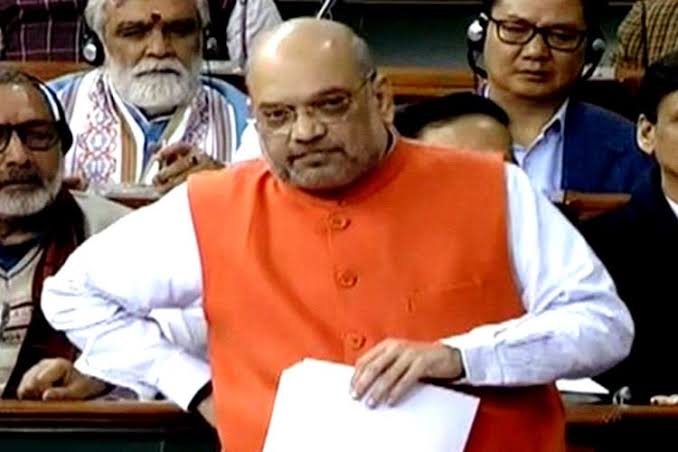
The main objection from the ‘Secular’ camp appears to be that the Rohingyas will not be included in the CAB. Home Minister Amit Shah made it clear on the floor of the Lok Sabha that India will never accept Rohingyas in the country. The ‘Liberals’, it appears, not only want Rohingyas to be included within the CAB but also Ahmadiyyas and Shias from Pakistan. It is, of course, utter stupidity for India to allow such a thing but ‘liberals’ do not care. They will be perfectly willing to sell India down the drain as long as they can claim the moral higher ground. It’s narcissism of the highest order.
‘Liberals’ appear to forget that the Shias and Ahmadiyyas who are in Pakistan currently fought a Civil War against Hindus in 1947 so that their children could grow up in an Islamic state. India cannot permit everyone to come back here simply because things did not work out the way they thought they would. However, ‘liberals’ do not care for such details.
Regarding the efforts being made by ‘liberals’ with respect to Rohingyas, they have always had a soft spot for them despite the fact that Rohingyas are known to have committed genocides of Hindus in Myanmar. Under such circumstances, it appears foolish for India to provide citizenship to them. Moreover, Rohingyas could always go to Bangladesh. In fact, many of them pass through Bangladesh in order to reach India. They cannot be called refugees.
‘Liberals’, of course, have struggled hard to protect Rohingyas ever since India made it clear that they will not accept them in the country. Prashant Bhushan, another individual associated with a foreign-funded NGO, even appeared for them in the Court. However, despite their many protestations, the Indian Government has not changed their position.
The main grudge that ‘liberals’ have with the CAB is that it does not provide privileges to Muslims that people of other religions from the three countries have been granted. They do not care one bit about the immense persecution non-Muslims are forced through in the said places. According to liberals, it’s not only Indian Muslims that India must care about, it’s also Muslims from the Islamic States that India must look out for despite the fact that there are numerous Islamic States who can take care of them if they so choose.
‘Liberals’ seem unable to cope with the simple notion that India owes a special responsibility towards the persecuted Hindus, Buddhists, Jains and Sikhs of the Indian subcontinent, a responsibility that India does not owe for anyone else. An average Indian perfectly understands why a persecuted Hindu, Buddhist, Jain or Sikh should find refuge in India, however, liberals, deracinated as they are, cannot come to terms with the obvious.
Moreover, liberals appear unable to distinguish between refugees and economic migrants. There’s an immense difference between the two. The Bangladeshi Muslims who have come to India haven’t done so because they are persecuted for their faith in Bangladesh. That is not something that can be said for Hindus of the same country. Therefore, India must treat these two categories differently. These are simple matters which liberals do not understand. They want India to treat economic migrants the same way that refugees are meant to be treated. And that is the root cause of their opposition towards the NRC.
The CAB is merely India fulfilling its responsibility towards the non-Muslims from the three Islamic states in the neighbourhood. And the NRC is designed to augment India’s national security. It’s utterly bizarre that any Indian should be opposed to both these propositions. The extent they are willing to go to in order to undermine the NRC is indeed a matter of grave concern and perhaps, strict action ought to be taken against them. And if ‘Secularism’ mandates that CAB is morally reprehensible, then, perhaps ‘Secularism’ is not a good thing after all.
As we agonize over the happenings in this nation, it has become extremely painful to bear what is going on, the incidents of brutal violence against women have become a regular affair. We hear how young girls and women can be easily set on fire, how they can be pulled from bus stops in broad daylight and gang-raped, how they can be gang-raped/murdered/burnt without recognition and thrown away like piece of garbage, how acid can be thrown at their face and bodies with little impunity, how minor girls lured into love jihad and left behind, we cannot help wonder what is going on in this country? It is a country that lost its moorings, particularly its institutions, the political, the police, the judiciary and even the media. We have created an elite that seems to show little empathy for the larger population, sitting in ivory towers ruling over with abandon to the sufferings of the common man.
From North to South, East to West this is going on while our politicians go on discussing in parliament and assemblies, courts go on giving bails to culprits with unending delays in sentencing, police go on with complete apathy to the cries of the helpless and media go on with selective reporting of the crimes. We are spending literally millions of dollars worth of taxpayers’ money to protect the most corrupt but we cannot protect the most helpless. We have created a political elite with commandos roaming around the country but we cannot save a young girl who was set on fire running for 1 km crying for help. We have police who thinks that their job is to protect the elite and their political masters but not the common person.
We speak of our large heart to shelter the oppressed in neighbouring countries facing brutalities but we are not paying the urgently needed attention to the plight of brutalities against the girls and women in our own country. We spend 46 lakh crore rupees and support 14 lakh personnel in the military to protect against external aggression but we are unable to protect a few thousands of women from brutal internal aggression. The Constitution of India is not even worth its paper if it cannot help the helpless under the apathy of the system we ended up today in 70 years of independence. The sad truth is, it is cursed to be born in India, especially if you are a woman.
Today India has perhaps the best administration since independence in the Center, but the system has become so endemic that it is taking a lot of effort and time to steer the country. Even 7 years after a rusted rod shoved into a young woman’s vagina and her intestines pulled out, in spite of so much furore, protests and chest-beating by millions in the country and her parents running from pillar to post, we have a system that waits forever to hang the culprits. The juvenile who was supposed to have perpetrated the most heinous of the acts was allowed to go free. Now, in a matter of a few days, we are hearing how women and girls are hardly safer in this country only because media chose to project while this is happening all along. A country, which cannot respect its women, where a woman cannot feel safe, it cannot flourish and it cannot progress.
We may say rapes are not unique to India, but India stands out in its barbarism, the brazenness, the impunity and most importantly the real culprit – the response of its institutions. I hear that the NHRC is concerned about how the rapists were killed in police encounter in Hyderabad, but where are these so-called ‘respectable’ people when girls and women are gang-raped, killed and burnt alive in broad daylight. One small country Singapore with just 58 lakh people sent 400 convicts to gallows in just a decade, and that too mostly on drug charges, while India with a population of 12,000 lakh people and with the worst of crimes did not hang the demons from Nirbhaya case for the last 7 years. Singapore canes (whipping) thousands every year even for theft and burglary while we feed the most brutal rapists mutton biryani in our jails using taxpayers’ money.
These two lines in an article in Times of India relating to the girl who was set on fire, sums up the situation in many parts of India. I want to emphasize that things have come to this pass particularly in UP not due to current administration which has done yeoman job of curbing notorious criminals within a short period and did its best to save the girl, but only to emphasize the kind of system that developed during last few decades and the urgent need to make Police accountable, everywhere across the country.
“1) The survivor had been gang-raped by the accused in December last year but the FIR was registered in Rae Bareli only in March this year on the intervention of a local court
2) The rape survivor was admitted to Lucknow’s SPM Civil Hospital with 90 percent burns after being allegedly set on fire by five men, including two of the accused who are out on bail.”
Here are questions to ponder.
On what basis did Police not register FIR for a girl reporting gang rape and end up in a situation where court having to force them to file an FIR months later?
On what basis did the Court give bail to the accused? Did the police take bribes to water down the case and let the accused go free on bail?
Why did not the police give any protection to the girl who was so brazenly set on fire given that the accused was given bail just a few days ago?
Around the same time, Hyderabad veterinarian Preeti Reddy (name changed) was brutally raped and killed, just a few miles away a 30-year-old Dalit woman in Telangana was gang-raped and burnt to death by perpetrators who happens to be all Muslims. The same media, reporting the brutal case of Preeti Reddy, goes about with almost no coverage for that family, as if the worth of life and the brutality of crime are dependent on the religion and the status of the victim and that of the perpetrators. Unable to bear to see what happened to his wife with little response from the administration, her husband attempted suicide.
A few years ago, soon after the news of Love Jihad of Christian girls came out, Rajdeep Sardesai rushed to Kerala but he did not feel it worth reporting when Hindu girls are subjected to the same and have been reported for years. Daily across India, particularly in West Bengal and Kerala, Muslim youth are encouraged actively to lie about their religion to vulnerable minor Hindu girls, marry them along with other women and abandon them after bearing children. Just a few days ago a charred body of a 20-year-old girl in the Muslim majority district of Malda in West Bengal, was found but the media has little interest in that. There is no mistake that perpetrators who are committing these brutal crimes are both Hindus and Muslims but it cannot be ignored that the proportion of crimes by Muslims is very high compared to the percentage of their population.
The cost of women safety issues to India’s economy is staggering. In 2014, late finance minister Arun Jaitely mentioned how the news of one Nirbhaya incident in 2012 cost India literally billions of dollars in terms of tourism revenue. When the country is struggling with the economy, news of such incidents cannot come at the worst time. If there is one front where India can quickly improve the job situations and make a big effect on the economy it is on the tourism front and this only adds the need to address this with utmost urgency. Besides, there are the break India forces looking for every possible way to weaken India, these forces are waiting in the wings to defame and blame current administration in Centre, which is the best hope India has to change the situation around.
Here are some suggestions to consider to improve the situation:
Make Police accountable. NCW Chairman Rekha Sharma has been speaking for a long time how the Police apathy is the biggest factor for inability to curb the violence against women. NCW should be given powers to summon police and take disciplinary action against policemen who are apathetic or even part of the crime. Just this one action can make the biggest difference. Police should be dismissed (not suspended) and given a mandatory jail sentence for not acting in a timely manner when distress call was made or refuse to file FIRs. When police itself commit crimes against women, then their sentencing should be double that of a regular convict.
Gang rapes, acid attacks, burning alive need to be categorized as terrorist acts because of their brutality and ability to strike terror and insecurity to women and families in many areas. This allows central institutions and Central police to act.
Necessary laws need to be amended so that the safety of women is not just left to state jurisdiction and affected families should be able to get the required justice by reaching out to Central institutions. If necessary, we need to amend the constitution but it may be easily addressed by categorizing the brutal acts as terrorist acts.
Laws should also be amended to establish a very clear deadline for adjudication of rape cases and make sentencing mandatory without parole. Brutal gang rapes and acid attacks should have a mandatory death sentence with a fixed time frame and with a very small number of appeals. Politicians should not be allowed to pardon rapists for appeasement before elections.
Police ‘help desk’ privatization using public-private partnership with powers to take Police to task for inaction or not acting timely manner (i.e, with the required urgency). The online records should be available with clear data on the progress of every single violence case against women, available on the NCW website in different languages.
Set up a vigilance force consisting of well-established organizations such as RSS, Art of Living as well as other reputable NGOs, that can work with Police to monitor in particularly violent areas.
NCW website with its facilities to report crimes should be available in local languages and it should be provided as Smart Phone app, also in local languages. NCW need to have a call Center catering to people who speak any of the major languages, perhaps even by State for families to call in need and get help.
Work with private technology eco-system to provide women with low-cost panic buttons, which upon pressing will immediately contact police, families, and friends with the exact location. This technology is available today and can be improved and made easily affordable.
In cases of dowry killings, the Government needs to be proactive because relatives do not pursue cases for reasons such as concerns for raising children.
We need to study the effects of pornography on violence against women.
India is the only country where the Divine is worshipped in feminine form in the grandest manner. Living abroad many women mention how this is so unique in India. Our ancestors have created the system of worshipping goddess, tying Rakhi to look at other young women who are not your spouse as sisters and many others. As the rural Indian population is moving away from their families and starts living in sprawling and demeaning urban ghettos, we need to think out of the box to address the problem while at the same time making our institutions accountable. More than the laws, we need accountability and speedy justice.
Just days after the tragic incident wherein the 23-year-old rape victim in Unnao succumbed to her injuries after she was burnt alive, another minor girl from Kanpur was allegedly molested by some men, who even threatened her with the ‘Unnao rape victim-like fate’ if she approached the police for the same.
The victim said that her family members were hit by the molesters when they objected, also alleging that police refuse to take action against the accused. “When I reached the Naubasta police station with my family, the accused reached there and threatened us with consequences ‘like the Unnao case’. “The police did not take any action there. My family is living in fear,” she alleged.
According to the victim, the accused Deepak Jadaun had attempted to molest her. When she protested, he and his friends dragged her into a house, but she screamed and the locals gathered at the spot.
The minor girl has also made a video and posted it on social media, seeking justice for herself and action against the accused.
Superintendent of Police Aparna Gupta said that she was apprised of the matter and both, the victim and the accused had filed cross FIRs against each other. Gupta said that the matter was being investigated and the video was also being verified. She said that the FIR has been registered.
Recently, many shocking incidents of rape and assault on minor children have emerged in Uttar Pradesh. The 23-year-old victim who was attacked on early hours of November 5, allegedly by the out-on-bail accused when she along with her family were on their way to a court in Rae Bareli to attend a hearing in the rape case had died after hours of fighting at the Safdarjung Hospital, Delhi. The five men who attacked her also included the two who were accused of raping the woman in December.
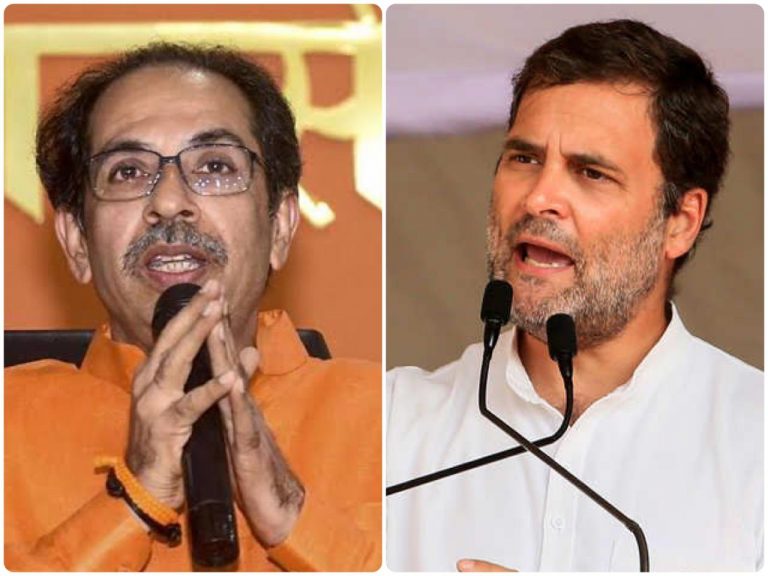
After voting in favour of the Citizenship Amendment Bill 2019 in Lok Sabha yesterday, Shiv Sena seems to have buckled under the pressure of their coalition partner Congress as Shiv Sena chief Uddhav Thackeray has declared that he will not extend his support to the CAB until “things are cleared”.
Maharashtra CM Uddhav Thackeray: We will not give support to the Bill (Citizenship Amendment Bill) unless things are clear. pic.twitter.com/v06hdA0W9O
This volte-face from the Maharashtra chief minister came following senior Congress leader Rahul Gandhi’s blistering criticism of the parties who support the Citizenship Amendment Bill 2019. In a tweet posted by the Wayanad MP, he asserted that anyone who supports it is attacking and attempting to destroy the foundation of our nation.
The #CAB is an attack on the Indian constitution. Anyone who supports it is attacking and attempting to destroy the foundation of our nation.
However, earlier today, when Shiv Sena MP Arvind Sawant was asked if the party will extend its support to the CAB in Rajya Sabha as well, he replied in the affirmative, stating that Shiv Sena will always support issues of National Interest.
Arvind Sawant, Shiv Sena on if the party will support CAB (Citizenship Amendment Bill) in Rajya Sabha after supporting it in Lok Sabha: Alag alag bhumika hoti kya humari? Rashtra ki hith ki bhumika lekar Shiv Sena khadi rehti hain, yeh kisi ki monopoly nahi hai. pic.twitter.com/9c3wHW6Uj5
It is noteworthy to mention that Shiv Sena had recently published a scathing article criticising the Citizenship Amendment Bill 2019 floated by the BJP government in its editorial mouthpiece Saamana. The article censured the central government arguing that the ‘selective acceptance’ of Hindu illegal refugees might touch off a religious war in the country. It also accused the BJP of carrying out ‘invisible division’ of Hindus and Muslims over the bill.
However, the Shiv Sena backed the Citizenship Amendment Bill 2019 when it came to voting in the Lok Sabha.
Thackeray took to Twitter to clarify Shiv Sena’s stand regarding the flipflop.
“There’s a perception that whoever votes with the Central Government is a patriot and who voted against is anti national. We must get out of that illusion”#CitizenshipAmendmentBill
After the embarrassment faced by Rahul Gandhi over CAB, Thackeray tried to pacify the alliance partner by targeting the BJP.
If these queries are not answered, we won’t be supporting the CAB in the Rajya Sabha. Every party supporting or opposing it, is asking for clarity in national interest. Clarity must be ensured.#CitizenshipAmendmentBill
He said that unless the Central government clarifies a few questions, the Shiv Sena will vote against the bill in Rajya Sabha.
It is also pertinent to mention that the recent back-pedalling of Uddhav Thackeray can be attributed to the fragile alliance his party has with Congress in Maharashtra. The Shiv Sena has already shunned its support to Hindutva in order to stitch an alliance with NCP and Congress. The chief ministership of Uddhav Thackeray is surviving on the tenuous coalition of the Shiv Sena, NCP and Congress party. In such a scenario, many believe that Sena’s support to the CAB in Lok Sabha might have irked the Congress royals.
A day after HM Amit Shah demolished the Congress’s criticisms during the Citizenship Amendment Bill debate in the Lok Sabha, he took on the Opposition over the Kashmir issue.
“The situation in Kashmir is completely normal”, Home Minister Amit Shah told the Lok Sabha on Tuesday and attacked the Congress for its pitch after the abrogation of Article 370 that had predicted bloodshed in Jammu and Kashmir.
“The situation in Kashmir valley is completely normal. I can’t make Congress’ condition normal, because they had predicted bloodshed after the abrogation of Article 370. Nothing of that sort happened… not one bullet was fired,” Amit Shah said, responding to questions on the situation in the Kashmir Valley.
HM Amit Shah in Lok Sabha: Situation in Kashmir valley is completely normal. I can’t make Congress’s condition normal, because they had predicted bloodshed after abrogation of article 370. Nothing of that sort happened, not one bullet was fired pic.twitter.com/xg6rqyZ7Fx
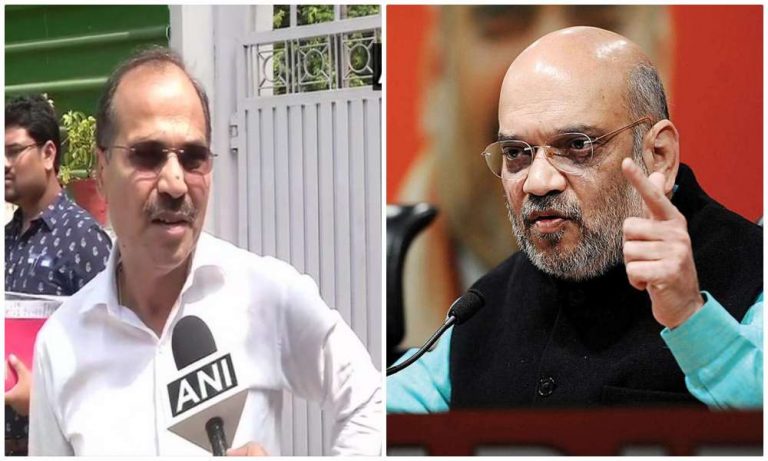
Countering Congress’ motor-mouth Adhir Ranjan Chowdhury’s claim that the continued detention of political leaders indicates that the situation in Kashmir was far from normal, the Home Minister said a decision on releasing detained political leaders, including the three former chief ministers in Jammu and Kashmir will be taken by the local administration and the central government will not interfere in the matter.
“We don’t want to keep them even a day extra in jail, when administration thinks its right time, political leaders will be released. Farooq Abdullah’s father was kept in jail for 11 years by Congress, we don’t want to follow them, as soon as the UT administration decides, they will be released”, said Amit Shah.
Amit Shah:We don’t want to keep them even a day extra in jail,when administration thinks its right time,political leaders will be released.Farooq Abdullah’s father was kept in jail for 11 years by Congress,we dont want to follow them,as soon as admin decides,they will be released pic.twitter.com/PTKePOEn7x
Notably, in the year 1953, Sheikh Abdullah (Farooq Abdullah’s father) who was considered to be a good friend of the then Prime Minister Jawaharlal Nehru, was put behind bars by the ruling Congress party, in connection with the infamous ‘Kashmir conspiracy case’. It was alleged that the top Kashmiri leadership under the guidance of Sheikh Abdullah was trying to promote secession.
Abdullah was released in 1964 in what was seen to be a peace deal between the two parties for an agreement on Kashmir. The same year, he visited Pakistan and 11 years later, Abdullah and the then Prime Minister Indira Gandhi signed an accord paving way for him to return to power in his state.
Amit Shah continued to cut down Congress to its size by chiding it for not worrying enough about the people but instead politicking using the Kashmir issue.
“99.5% students sat for exams there, but for Adhir Ranjan ji this is not normalcy, 7 lakh ppl availed OPD services in Srinagar, curfew, sec 144 removed from everywhere. But for Adhir ji the only parameter for normalcy is political activity. What about local body polls which were held?” Amit Shah said.
Amit Shah then reminded Adhir Chowdhury that under the BJP rule, local body elections were conducted in the Jammu and Kashmir and there are now hundreds of public representatives working to avail the government’s welfare schemes to teh poor.
HM: 99.5% students sat for exams there,but for Adhir Ranjan ji this is not normalcy,7 lakh ppl availed OPD services in Srinagar,curfew,sec 144 removed from everywhere. But for Adhir ji only parameter for normalcy is political activity. What about local body polls which were held? https://t.co/YXEJAiA3MEpic.twitter.com/vwahLWeACO
It is notable here that Congress has been crying foul over the abrogation of article 370 and the eastwhile state’s bifurcation even as many of its own leaders had supported the move. Congress leaders Jyotiraditya Scindia, Karan Singh and former CM Deepender Hooda had supported the abrogation of Article 370.
As the Citizenship Amendment Bill was passed by the Lok Sabha last night, left-liberal media and opposition parties have gone on an overdrive in spreading propaganda against. Most oppositions against the CAB are based on lies, or poor understanding of the proposed amendment to the citizenship law. Here are some of the baseless complaints made about the CAB and the respective facts.
Citizenship Amendment Bill is against Indian Muslims, they need to get their papers ready to continue living in the country.
One of the worst lies being spread is that Indian Muslims need to worry about the bill. The Citizenship Amendment Bill has nothing to do with Indian citizens, Muslim or otherwise, as it seeks to grant citizenship to religious minorities in Pakistan, Bangladesh and Afghanistan. People belonging to Hindu, Jain, Buddhist, Sikhs, Parsi or Christian communities from these three countries who have come to India before 2014 for religious persecution and already living in India will be able to apply for citizenship after the amendment is passed. No Indian citizen will be asked to produce any document to prove citizenship after the CAB is passed, it is just false propaganda being spread by some people.
Muslims from other countries can’t become Indian citizens after CAB is passed
CAB is a special one-time measure for the religious minorities who have already come to India after facing persecution in the three specified countries. The amendment does not cancel the existing naturalisation laws. Any person from any foreign country seeking to be Indian citizen can apply for the same under the existing laws. There is no bar on Muslims from anywhere in the world to seek Indian citizenship under existing laws, CAB does not prohibit that. They can apply for Indian citizenship under section 6 of the Citizenship Act, which deals with citizenship by naturalization.
Muslims for Pakistan, Bangladesh and Afghanistan can’t apply for citizenship or refuge in India
Although Muslims from these countries have been excluded from the CAB, it does not mean the door is shut forever for becoming Indian citizens. The points made in the above para applies here also, although they are not given blanket relaxation to apply for citizenship under CAB, the usual naturalisation law remains available to them.
Illegal Muslim immigrants living in India will be deported after CAB is passed
CAB gives citizenship to people of six communities from three countries living in India, but it does not deal with the deportation of illegal immigrants. Although it protects Hindus, Jains, Buddhists, Sikhs, Parsis or Christians who had entered India illegally from deportation by giving an opportunity to apply for citizenship, it does not say anything about deportation as that is the subject matter of another law, the Foreigners Act, not the Citizenship Act which the bill seeks to amend. The process of deporting anyone entering and living illegally in India is an ongoing process, and the CAB does not change that.
Any Hindu can become Indian citizen after CAB is passed
Hindus, Jains, Buddhists, Sikhs, Parsis or Christians from only from Pakistan, Bangladesh and Afghanistan, who are already living in India for at least five years can apply for citizenship. It does not give automatic citizenship to Hindus, they must have lived in India for at least five years, and after that, they have to apply for citizenship. It is not particularly biased in favour of Hindus as many are arguing. Six communities from three countries have been given relaxation, for everyone else the normal naturalisation law remains applicable. For example, there are lots of Sri Lankan Tamil Hindus living in camps in Tamil Nadu, but they have not been included in CAB. These Sri Lankans had fled the country during the war with LTTE in 1990s and are living in several camps.
If CAB is about religious persecution, why Shias, Ahmediyyas, Balochs and Rohingyas are not included
All these groups are Muslims, they are not recognised as separate religions anywhere in the world. As Muslims, they are not minorities in Pakistan, Bangladesh and Afghanistan, which are either officially Islamic countries or have a very high Muslim majority. Therefore, it is not possible to include Muslims in the bill as it is specifically made for religious minorities in those countries. Still, if any Muslims are being persecuted in these Islamic countries for practising their version of Islam, they can apply for asylum in India. India has already provided asylum to Tibetans, and a large number of people from Afghanistan, Sri Lanka, Uganda etc.
Moreover, Balochs and Rohingyas are not religious groups, they are ethnic groups. Baloch people are not wanting to migrate to India or any other country, they are demanding an independent nation in the Baloch region. Therefore, it does not make sense to include in CAB. In the case of Rohingyas, although they fled Myanmar after they were allegedly targeted by the military, their situation was not the same what minorities are facing in the three Islamic countries. Rohingyas were targeted in retaliation after they had attacked people from other communities, including Hindus, in Myanmar. Rohingya groups are conducting terror activities in Myanmar for a long time. Many such terrorists entered other countries along with ordinary Rohingyas, and they remain undetected. Therefore, the Rohingya groups remain a security threat to India, and they can’t be given any blanket relaxation for citizenship.
CAB is against the Indian Constitution as the constitution prohibits discrimination in the name of religion
The constitution of India is for citizens of India, and the CAB is a special provision for people who are not citizens of India. Therefore, it is incorrect to say that CAB violates the constitution. Moreover, our constitution and laws already have several discriminatory provisions. We don not have equal law for every citizen, the constitution allows different laws for different religions in several matters. We have Hindu Temples under government control but not Mosques or Churches. We have different laws for schools run by Hindus and non-Hindus. Haj subsidies and salaries for Imams but no such facility for Hindus, the list goes on. As the constitution already allows discrimination among even the citizens, it can’t be said that excluding Muslim citizens from Pakistan, Bangladesh and Afghanistan violates the Constitution of India.
People in North East are opposing CAB because it is discriminatory
Although it is true that some people in north-eastern states, particularly in Assam, are protesting against the Citizenship Amendment Bill, their reason is completely different from the left-liberals and opposition parties. People in north-east are against giving citizenship to illegal immigrants from Bangladesh or anywhere, regardless of religion, and that’s why they are opposing it. People in the northeast don’t want any foreigners to be given citizenship, while outside northeast the opposition to the bill is over the exclusion of Muslims. Both the groups are actually on completely opposite stands in their opposition to the bill.
The Wire journalist Arfa Khanum Sherwani’s tweet from December 4, 2019
It is hard to make sense of this at first sight. Is she praising the government or criticizing it? Given her general track record, I think it is safe to assume this tweet was intended as criticism of the Modi government.
Which gives us a terrifying glimpse of how ‘liberals’ really see the world. Seriously? Is she implying that Pakistan is better than Israel?
The State of Israel is the only democracy in the Middle East. Israel has defeated entire coalitions of its enemies many times more powerful than they are. Israel is also the only country in the Middle East to have freedom of speech, freedom of religion, dignity and equal rights for women and homosexuals.
Israel has just 5 million people but is a technological superpower. A tiny desert nation with no natural resources, Israel has also pioneered technologies such as drip irrigation and water harvesting, which humanity will need desperately in the years to come.
Did you know that Nazi symbols are not actually banned in Israel, despite everything that the Jewish people went through during the holocaust? Such is the absolute commitment that Israel makes to freedom of speech and expression. Suffice to say that Israel’s neighbors would take another thousand years to even understand the principles involved here and why they matter.
Any country in the world would be proud to achieve what Israel has. But for Indian ‘liberals’, Israel is not great. Israel is supposed to be sinister, a sign of evil. And, would you believe it, worse than Pakistan?
In fact, opponents of the CAB kept bringing up Israel in the Lok Sabha yesterday.
Asaduddin Owaisi during the Citizenship Amendment Bill debate in Lok Sabha
What they do not realize is that they are not tarnishing the good name of David Ben Gurion. They are only exposing themselves. If history survives, it will not remember Owaisi. But it will surely thank David Ben Gurion for creating the only democracy in the Middle East.
What we saw yesterday was a coming together of all sorts of folks: Politicians, intellectuals, journalists, activists. With one single aim. To whitewash history and deny the suffering of Hindus in Islamic states such as Pakistan and Bangladesh.
Sure, everyone had their own little sub-interest. The Congress refuses to accept how they failed the nation in 1947. The Congress refuses to acknowledge their role at the table with the British and how they had a clear incentive to partition the country on religious lines, getting rid of their big political rival. They want us to believe they just got lucky.
Then, there were the regional parties like Trinamool Congress, which have their fingers in at least two pies. One is a vested interest in votes of people who may be illegal migrants from Bangladesh. The other is a strategy of playing off Bengal against the BJP ruled North East.
Then of course there were intellectuals with their open letters and petitions.
But to see all these groups come together under one umbrella with the single aim of pushing a radical Islamist agenda is terrifying. How else do you describe people who are trying to deny relief to persecuted Hindus from Pakistan and Bangladesh? Who could possibly dispute that Hindus were the victims of Partition? Who could possibly believe that economic migrants should be treated the same as refugees escaping for their life?
We have had these arguments a million times. No, the Indian Government has no obligation to treat foreign citizens of all backgrounds “equally.” And even domestically, India gives special privileges to religious minorities all the time. The only intellectually honest thing here is to similarly extend special privileges to those among migrants who are minorities in Pakistan or Bangladesh.
It’s not like ‘liberals’ don’t know about this. They just don’t want to treat Hindus as human beings; that’s all.
The liberal ‘idea of India’ is that there should be no India at all. Every generation of Indians “loses” some or the other part of this historic nation of Bharat. Seventy years ago, we lost Pakistan and Bangladesh. Around thirty years ago, when the Kashmiri Hindu genocide happened, we had essentially lost Kashmir. Now, we are approaching a tipping point in the North East, specially Assam.
And Bengal is finally in play. Whatever is left of Bengal, that is.
No, ‘liberals’ don’t care one bit what happened to Hindus of Pakistan or Bangladesh or Kashmir. They don’t care one bit what is happening in Assam. And things that are beginning to happen in Kerala and Western Uttar Pradesh.
They know what they are doing. Each time India loses a part of its body, their aim is to rush with anesthetics and tell us that all is well. That what we lost didn’t matter and was never ours to begin with. Whitewash what happened to the Hindus there. And most importantly, remind us that in whatever part of India we still have left, the Hindus are a majority. As such, they must give special privileges to the minority community!
As demographic change continues, in course of time, another bit of India is lost. Ironically, ‘liberals’ argue that this is even more reason to bend over backwards. Because the loss of another bit of India means that the percentage of Hindus actually increases in whatever portion remains!! In fact, if you ask them, the remaining portion of India is under moral obligation to open the doors and welcome even more demographic change.
Rinse and repeat, until India has shrunk to nothing. And Hindus have nowhere to go.
With the Citizenship Amendment Bill and abrogation of Article 370, the liberals sense a disturbance in the force. A bit of pushback. Hindus demanding a bare minimum piece of land where they can be free.
It is not incidental that the opposition forgot yesterday that Afghanistan shares a border in India. They don’t want to remember PoK. They have happily given it up for lost. The idea of India project is about making us forget. Making us forget that India has been around for thousands of years. Making us forget that Hindus have been around for thousands of years, living on much more territory than Bharat has today. Ultimately, making us forget that we even exist.
The Lok Sabha had passed the historic Citizenship Amendment Bill on the night of 9 December.
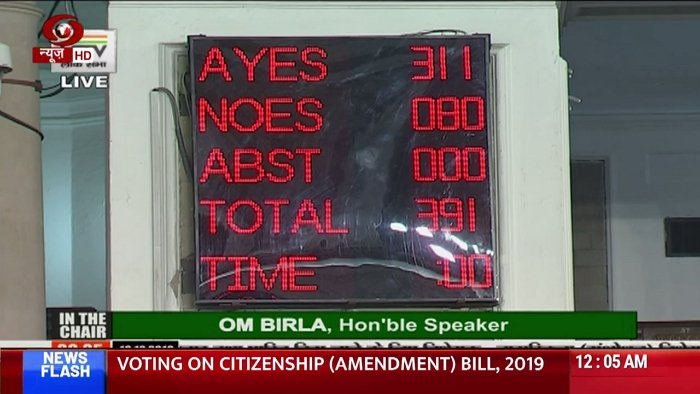
The bill, which was passed by the 16th Lok Sabha in January 2019, had lapsed as it could not be passed in Rajya Sabha before the 2019 general elections. Now, it was re-tabled at the lower house of the parliament on December 9 and was passed with 311 MPs of Lok Sabha voting in favour of it, while 80, voting against it in the division of votes that took place just after midnight. Now the bill is scheduled to be tabled in the Rajya Sabha on December 11.
Sources: Citizenship Amendment Bill 2019 to be tabled in Rajya Sabha tomorrow pic.twitter.com/nSARNY1RpU
The Congress party, which has been opposing the bill, has issued three-line whip to its Rajya Sabha MPs to be present in the House tomorrow. Likewise, issuing a whip, the Bharatiya Janata Party has asked all MPs of the Rajya Sabha to remain present in the House on December 10 and December 11.
However, after getting the numbers in the lower house, the government is all geared up to get the bill passed in the Rajya Sabha also. Due to the Amit Shah’s detailed groundwork and floor management, it is expected that the bill will get the consent of the Upper house as the arithmetic seems to be in favour of the same.
To understand the possibility let us analyse the permutation and combination of numbers in the Upper house:
The UPA-led opposition, supported by the Congress and Trinamool Congress, has a combined strength of less than 100 out of 245. Congress has 46 MPs, but Motilal Vohra is absent due to health issues.
The current strength of the Rajya Sabha is 238. So the halfway mark is set at 120.
TMC supremo Mamata Banerjee has 13 members in the Upper House. Likewise, the Samajwadi Party has 9, DMK has 5, both the RJD and the BSP have 4 MPs each. With this, the number rises to 100 provided other smaller parties are also included along with these numbers.
Now, if we look at the Bharatiya Janata Party-led NDA’s numbers in the Upper house, it has 83 MPs of its own, including newly elected MPs Arun Singh and KC Ramamurthy. The Shiromani Akali Dal has 3 MPs while AIADMK has 11 members, both of whom are in favour of the bill. Moreover, JDU’s Nitish Kumar has also decided to support the bill.
Apart from these, 12 other members, which include a few independent MPs and the allies of the North East and other smaller parties, are to be considered on BJP’s side.
Despite the political difference between BJP and Shiv Sena, due to which their alliance fell apart, Uddhav Thackeray’s party has extended their support to the bill. Moreover, few neutral parties have also extended support to the central government. Sena has 3 MPs in Rajya Sabha.
Naveen Patnaik’s Biju Janata Dal (BJD) has declared support for the bill. So have YSRCP, TDP and BJP’s Bihar ally JDU. BJD has 7 MPs in the Rajya Sabha. YSRCP and TDP have 2 each and JDU has 6. NDA member SAD has 3 MPs too. The 4 nominated MPs are also expected to vote in favour of the bill.
Considering that at least 2 BJP MPs including Anil Baluni are on medical leave and the support of two independent contenders is also missing, still, with the help of regional parties, the BJP may just manage to clear the halfway mark.
The present regime, under the supervision of Home Minister Amit Shah, has been silently laying down the groundwork for the Citizenship Amendment Bill since the beginning of Parliament’s winter session. BJP had edged forward with a similar exercise on the proposal to repeal Article 370 also, which they were successful in.
Railway Minister Piyush Goyal and his cabinet colleague Dharmendra Pradhan were working to bring AIADMK to their side, they also kept BJD in the loop. Likewise, the party’s general secretary, Bhupendra Yadav was in talks with JDU. Meanwhile, Parliamentary Affairs Minister Prahlad Joshi has been talking to smaller parties including YSR and TDP.
The Bill is likely to be moved in the Rajya Sabha on Wednesday, to cross its final hurdle. If CAB is passed in both houses of Parliament and notified in the Gazette of India, the Citizenship Act, 1955 will stand amended.
This will mean that all Hindu, Sikh, Buddhist, Jain, Parsi or Christian refugees from Afghanistan, Bangladesh or Pakistan, who entered into India on or before the 31st day of December 2014 without any valid travel documents such as passport, will not be considered an illegal migrant at all. In fact, such persons will be granted Indian citizenship by proving that they have resided in India for 5 years and additionally for a period of 12 months, right before applying for citizenship by naturalization.
Importantly, it is only applicable to the people from these communities. The move will protect minority refugees from Pakistan, Bangladesh and Afghanistan.
The Union Cabinet cleared the Bill for Parliament on December 4, 2019, and was passed by the Lok Sabha on December 10. The Bill is to be tabled in the Rajya Sabha on December 11, Wednesday.
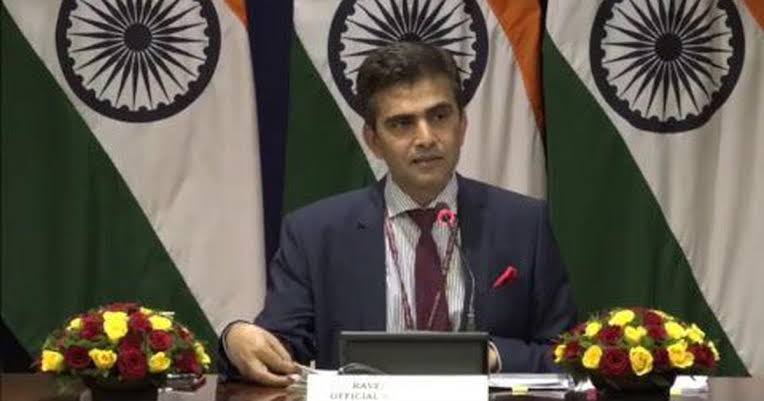
Ministry of External Affairs today released a statement calling out United States Commission on International Religious Freedom (USCIRF), a US federal government commission over its statement calling the Citizenship Amendment Bill (CAB) ‘dangerous turn in wrong direction’.
We regret the inaccurate and unwarranted comments made by USCIRF on #CAB. They have chosen to be guided by their prejudices and biases on a matter on which they have little knowledge and no locus standi.
In a statement issued by the MEA, the ministry’s official spokesperson said that the statement made by USCIRF is ‘neither accurate nor warranted’. The statement further read that the CAB provides expedited consideration for Indian citizenship to persecuted religious minorities already in India from certain contiguous countries. The bill seeks to address the difficulties they are currently facing and to meet the basic human rights.
The MEA clarified that the CAB does not affect the existing avenues available to those all the communities interested in seeking Indian citizenship. “Neither the CAB nor the National Register of Citizens (NRC) process seeks to strip citizenship from any Indian citizen of faith. Suggestions to that effect are motivated and unjustified,” the statement reads.
In a sharp rebuttal, the MEA spokesperson further called out USCIRF and said that given its past records, the position articulated by the same is not a surprise. “It is, however, regrettable that the body has chosen to be guided only its prejudices and biases on a matter on which it clearly has little knowledge and no locus standi”.