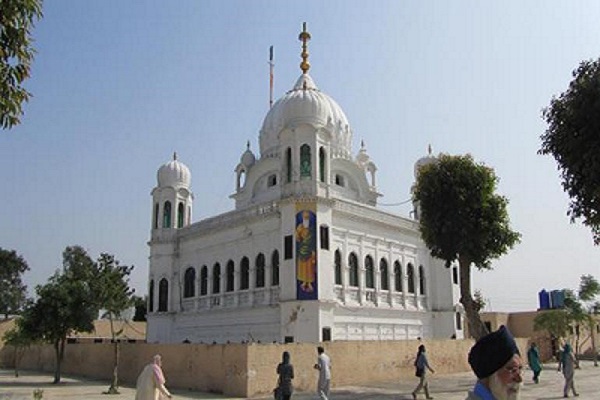
The apprehensions raised by the Indian security establishment about Kartarpur corridor being used by the terrorist state of Pakistan to push Khalistani terrorism seems to have been proved right as a top minister of Pakistan government has revealed that the opening of the historic Kartarpur corridor was the brainchild of Pakistan Army chief General Qamar Javed Bajwa to ‘hurt India forever’.
According to the reports, Pakistan’s Railways Minister Sheikh Rashid, a known motormouth considered to be a close aide of Prime Minister Khan, said that the Kartarpur Corridor will hurt India. While Pakistani media has reported that this step of ‘peace and love’ by Gen. Bajwa has ‘won over’ the Sikh community in India it may also be an indication that the corridor may be used by Pakistan Army and ISI to create more instability in the country by reviving Khalistani terror around the areas of Indian state of Punjab.
Earlier, Pakistani government had claimed that Prime Minister Imran Khan had initiated the construction of Kartarpur Corridor. However, Pakistan Railway Minister Sheikh Rashid has now said that the Kartarpur corridor is the brainchild of Army chief General Bajwa.
“India will remember forever the kind wound inflicted on it by Gen Bajwa by opening Kartarpur corridor,” he said. “Gen Bajwa strongly hit India by opening the corridor. Through this project, Pakistan has created a new environment of peace and won itself, love of the Sikh community,” he said.
On November 9, Pakistan Prime Minister Khan had inaugurated the Kartarpur corridor to facilitate the visa-free entry of Indian Sikh pilgrims to celebrate the 550th birth anniversary of the founder of Sikhism Guru Nanak Dev.
Inaugurating the corridor, Imran Khan had told a gathering of over 12,000 devotees which included Congress leader Navjot Singh Sidhu and former Indian Prime Minister Dr Manmohan Singh, “I had no idea of the importance this place holds. I found out a year ago. I am happy we could do this for you”.
Ever since the proposal to develop the Kartarpur corridor came up between India and Pakistan, the Indian security agencies have been raising strong concerns regarding the national security implications of the project. The Indian intelligence agencies are very much apprehensive about Pakistan’s over-eagerness to open Kartarpur corridor as it provides an opportunity for the terror state to “exploit Sikh sentiments to support Khalistan agenda” in India.
The Indian security establishment had raised concerns against the opening of Kartarpur corridor after they had accessed information that terrorists being trained near the border district of Narowal in Pakistan’s Punjab province, the same district where Kartarpur Sahib Gurdwara is situated.
The reports of terror camps near the Indian border comes months after a Pakistani spy, part of a larger espionage network, was caught by the military intelligence from Gurdaspur in Punjab. The accused Pakistani spy was sending photographs and information related to the construction of Kartarpur corridor to his handlers in Pakistan through his WhatsApp number raising doubts about Pakistan’s intention to build the corridor.
Earlier, the Chief Minister of Punjab, Captain Amarinder Singh had also warned the country about Pakistan’s treacherous plans to use the Kartarpur corridor to inflict terror on India, especially by reviving Khalistani terror. Captain Amarinder Singh had reiterated his position on the opening of the Kartarpur Corridor by Pakistan. He claimed that it is an ISI ploy to strengthen anti-India forces, including the Sikhs For Justice (SFJ).
Not only that, ahead of the inauguration of the corridor, in an act of provocation against India, Pakistan had featured Khalistani terrorists and anti-Indian elements including Jarnail Singh Bhindranwale in its official song to welcome Sikh pilgrims to Kartarpur Sahib. Kartarpur Sahib is believed to be built where Guru Nanak had died.
Pakistan’s Ministry of Information and Broadcasting had released a video of the official Punjabi song welcoming Sikh pilgrims to Pakistan for the Kartarpur Corridor, which displays posters of Khalistani separatist leaders Jarnail Singh Bhindranwale, Maj Gen Shabeg Singh and Amrik Singh Khalsa in the background.
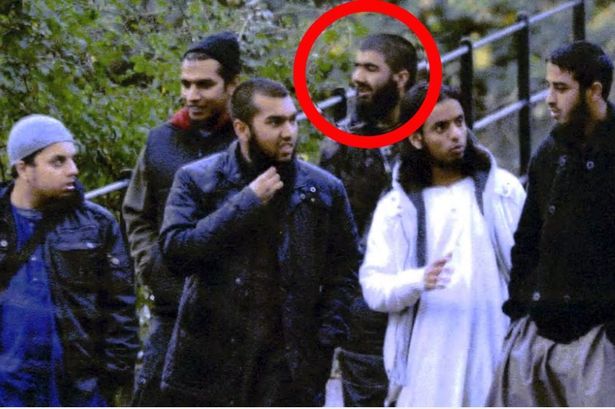
Usman Khan, the 28-year-old Pakistani-origin ISIS terrorist, who murdered two innocent people in a knife rampage, became a terrorist after he was reportedly ‘bullied’ by fellow students at the school, reports The Sun.
According to the reports, a fellow schoolmate of the terrorist has claimed that the Usman Khan turned a terrorist as he was bullied at school. Usman Khan’s former classmate remembers him as the ‘quietest student’ in the class, who became a recluse and only had one friend.
An anonymous classmate revealed that Khan had desperately tried to fit in and be liked at school by wearing the latest clothes but had no confidence and would never speak up. He said that Usman Khan was bullied after starting secondary school when he started to grow facial hair at an early age, before his peers.
The classmate is now shocked after he got to know that Usman Khan had become an ISIS terrorist after leaving school. Fortunately, most students who get bullied in school don’t turn to terrorism as defence mechanism. Media outlets got slammed on social media for attempting to ‘justify’ Khan becoming a terrorist because of ‘bullying’.
Please shut up w this.
Ppl don’t join ISIS because they’re bullied or because they’re unemployed or because of climate change. Just stop.
Ask him why he joined ISIS. He’ll tell you point blank it was to serve Allah.
Omg leftist in Britain too, in India leftist will put the supreme court in question if they hang a terrorist after 20 yrs of trials pic.twitter.com/LeRzY5lbLg
On Friday, Pakistani-origin Usman Khan was shot dead by the London Police after he had carried out a terrorist attack by stabbing multiple people near London Bridge before being tackled to the ground by bystanders. He was wearing a fake suicide vest and was eventually shot dead by the police.
The 28-year-old Usman Khan, who killed two innocent people in London was a convicted terrorist banned from entering the capital. Khan was released from jail on condition that he obey 20 strict conditions, including not going to London. However, probation officers had granted him an exemption to attend an ex-prisoners’ conference organised by Cambridge University after wrongly believed that he had been reformed.
Shockingly, Usman Khan had previously boasted about his UK benefits while plotting a “Mumbai-style attack”. Khan and the plotters had plans to raise funds to build a terrorist training camp in Pakistani-controlled Kashmir. The group also had also planned to carry out a “Mumbai-style attack” on high-profile figures, according to court documents.
Khan was recorded by police boasting about his UK benefits could him the same amount in a day that people in Kashmir in a month. He had said, “On jobseeker’s allowance we can earn that, never mind working for that.”
Reportedly, Usman Khan’s journey to becoming a terrorist began around 2008 when he was influenced by Anjem Choudary, the hate preacher who once led the extremist group Al-Muhajiroun (ALM). Khan had become a member and was involved in activities such as distributing leaflets to convert non-Muslims.
Usman and eight other men were being watched as part of a massive counter-terrorism operation that spanned Stoke-on-Trent, Cardiff and London. The nine were plotting to kill Boris Johnson, then London’s Mayor, and blow up sites including the Stock Exchange and the London Eye but were arrested and charged in 2012.
Later, he was released under strict bail conditions in December last year, he had to wear a tag, attend deradicalisation sessions and was under surveillance by MI5.
During their trials in 2012, the secret police recordings of Khan’s desire to attack non-Muslims were presented to the court. “Bro, these kuffar [non-believers], yeah, you know these flipping dogs, yeah, these scabby kuffar, bruv, they need to get dealt with, bruv. Because they haven’t got the fear inside them no more, man,” Usman Khan had said in these recordings.
More despicable details have emerged in the Hyderabad shocker as the police have filed the remand report in the brutal gang-rape and murder of Hyderabad veterinary doctor Dr Preeti Reddy (name changed) in Shamshabad. It is now revealed that the four accused dragged her into an open plot, forced her to drink whiskey, hit her on the head, raped and killed her – all within one hour.
According to a report by New Indian Express, the four accused continued to rape her inside the cabin of the lorry even after she had died. Following this, one of the accused got down and brought her clothes. Later they kept driving on the highway towards Shadnagar looking for dark patches to dispose of the body. They then wrapped her body in a blanket and set it on fire so that it cannot be identified.
The Hindu quoted a senior Police officer saying that by the time Shiva, the accused who had taken the two-wheeler for repair, got back after repairing her vehicle, she had died due to asphyxiation. However, he proceeded to assault her body anyway.
On 27th November, as Preeti Reddy (name changed) was returning home from work a little after 8 pm to pick her vehicle, she noticed a flat tyre. She immediately called her sister, who suggested that she leave her two-wheeler at the toll plaza and take a cab home. Before she could, two men approached her, who offered to take her vehicle for repair.
The woman was then ambushed and dragged into the bushes by the accused barely 50 metres from Tondupally toll plaza behind a line of trucks that was parked near the road. Her charred body was found under an underpass next morning.
Note: This report has been updated with relevant information
In yet another horror from Telangana, a software engineer has accused a man of attempting to raping her on Saturday after she had become unconscious. This makes it a second cases of rape and sexual harassment from Telangana within a span of three days, reports.
According to the reports, the victim lady had come in contact with a man Jayal Chand through a matrimonial website for a marriage proposal for her elder sister. The lady has been meeting the accused since last 10 days and had even gone to a movie together recently.
On Saturday, he had met the lady in her house. As there was no one in the house, he allegedly tried to violate the techie after which she became unconscious. Later, Chand escaped from the house.
The neighbours who saw the lady in an unconscious state rushed to her house and took her to Gandhi Hospital. Madhapur Additional DCP M. Venkateshwarlu confirmed that Chand had tried to violate her and efforts were on to collect more details from the victim.
The state of Telangana has been rocked by a brutal rape case which occurred last week. On Wednesday night, a 27-year-old veterinarian Dr Preeti Reddy (name changed) was brutally raped and murdered and her body was set ablaze on the outskirts of Hyderabad. Four people have been reportedly arrested in connection with the case.
According to the reports, the four accused had pre-planned the crime and raped, murdered her after they had noticed that the victim had parked her two-wheeler at the Tondupally toll plaza. The Telangana police have also confirmed that Preeti Reddy was kidnapped and gang-raped. The police confirmed that a lorry driver named Mohammad Pasha from Narayanpet in Mahababub Nagar district was allegedly the main suspect.
As the country was just about grappling with the heinous crime perpetrated against Dr Preeti Reddy (name changed), another body has also been found in a similar condition. In the same area of Hyderabad, Shamshabad, where Dr Preeti Reddy was brutally raped and later murdered by being burnt, another charred body of a 40-year-old woman has also been found. However, initial probe her revealed she has most likely committed suicide.
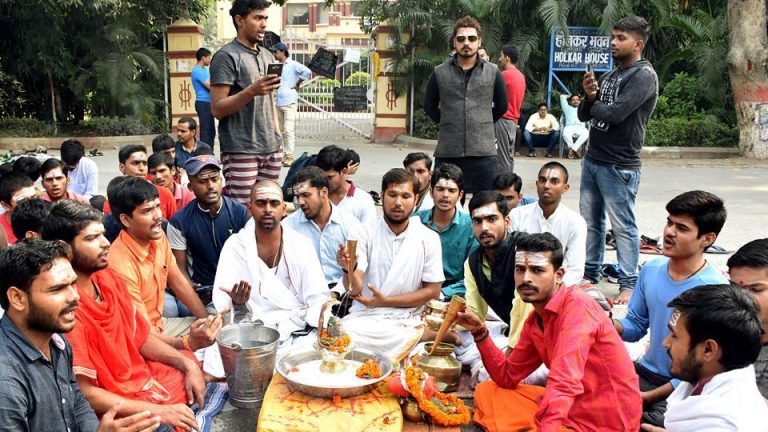
The controversy surrounding the appointment of Feroze Khan as the Assistant Professor in the faculty of Sanskrit Vidya Dharma Vigyan of BHU continues to rage on as the SVDV students remain resolute in opposing the varsity administration’s decision. Even as the 10-day deferment sought by the administration from the students to resolve the issue draws to an end, the protesting students have stated that they will boycott the exams and classes until the issue is settled.
The student’s protest against the appointment of Feroze Khan is gaining strength as eminent personalities have rallied behind the students in their demands. The protest has found support from several quarters with many Acharyas, Shankaracharyas, Banaras Education Council, Dharmasangha Education Group, former Professors as well as the saints from Ayodhya and Swami Raghvacharya who is associated with the birthplace of Ram, Mahants committed to protecting Hinduism backing the protest mounted by the students.
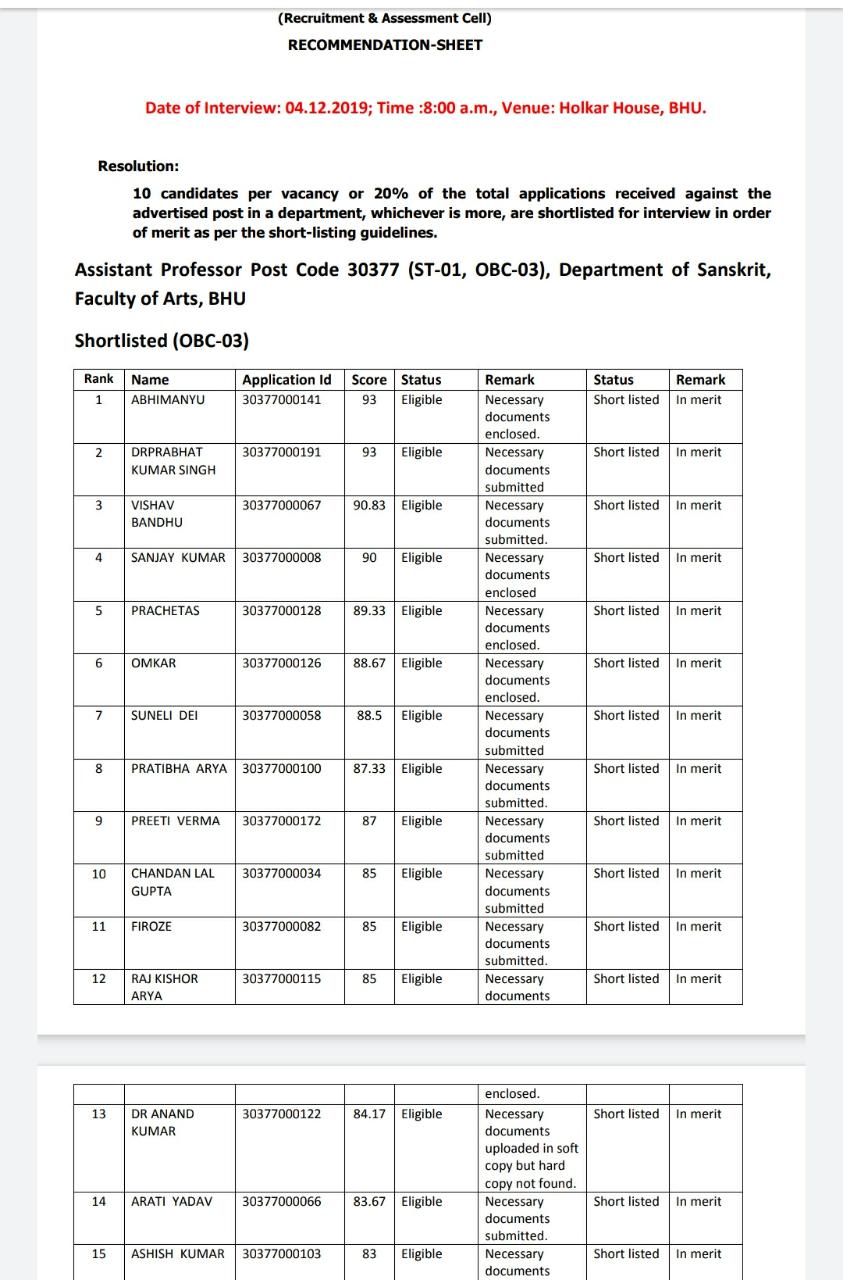
However, the administration has remained tight-lipped about its decision on the controversy. Reports suggest that Dr Feroz Khan’s interview is going on for recruitment in other Sanskrit departments of the BHU. Yesterday (29 November 2019) Dr Khan was interviewed for Associate Professor in the Sanskrit Department of Ayurveda. The interview was shifted to the VC guest house instead of Holkar Bhavan to avoid the protest staged by the students. The administration provided security to Dr Khan and shifted him to VC guest house to protect him from the outraging students. Dr Feroze’s another interview at the Faculty of Arts is lined up for December 4.
An Executive meeting to take cognizance of the entire matter is scheduled on December 7. The BHU students are hopeful that the administration will concede to their demands and an amicable resolution to the matter will be achieved. However, the students do not want to be complacent about their demands and therefore the demonstration continued even after the administration ended the 15-day sit-in protest. Now, students of other departments have also come out in support of the SVDV students agitating against the candidature of Dr Feroze Khan for teaching Sanskrit in the theology department.
In order to shake the conscience of the defunct administration, yesterday the students of the Birla hostel of the Faculty of Arts, as a mark of symbolic protest, carried out a funeral procession of the administration. Abhishek Singh, a student of the Faculty of Arts, told Opindia, “To protect the values of Mahamana and to support the movement of SVDV students in opposition to the administration’s anti-Sanatan practices, we are taking out the funeral procession of the Vice-Chancellor.” Hundreds of students from Birla Hostel, including Utkarsh, Mrityunjay Tiwari, joined the SVDV’s Shubham Tiwari, Anand Mohan Jha, Shashikant Mishra.
#SVDV के छात्रों के समर्थन में धर्म और मालवीय मूल्यों की रक्षा के लिए चलाए जा रहे आन्दोलन को गति देने के लिए बिरला छात्रावास के छात्रों ने कुलपति का पुतला दहन कर अपना आक्रोश व्यक्त किया। अभिषेक सिंह ,उत्कर्ष, मृत्युंजय तिवारी सहित कई छात्र शामिल हुए।#BHU#firozekhanpic.twitter.com/xuXuPjYjhJ
Dr Munish Mishra said, “We have a method of protest but there are students of other faculties who are out on the streets in our support. We respect their spirit. Whatever be the method, the objective of everyone is to protect the religion and principles propounded by Malviya.
Earlier on 29th November, the students of SVDV had written a letter addressed to Prime Minister Modi and Ministry of Human Resource Development for a high-level inquiry into the values of Mahamana, the preservation of Sanatan tradition and the appointment of Feroz Khan and the protection of Sanatan Dharma and Culture. In the past too, many Acharyas, distinguished citizens, professors, and others have written to the President Ramnath Kovind, requesting for an intervention in the ongoing issue.
महामना मूल्यों, सनातन परम्परा की रक्षा, फिरोज खान की नियुक्ति की उच्चस्तरीय जाँच के लिए तथा सनातन धर्म और संस्कृति की रक्षा के लिए संस्कृत विद्या धर्म विज्ञान संकाय के छात्रों ने प्रधानमंत्री और मानव संसाधन विकास मंत्रालय #HRD को पत्र लिखा। #SVDV#BHU#ferozekhanpic.twitter.com/uDukKYsYCm
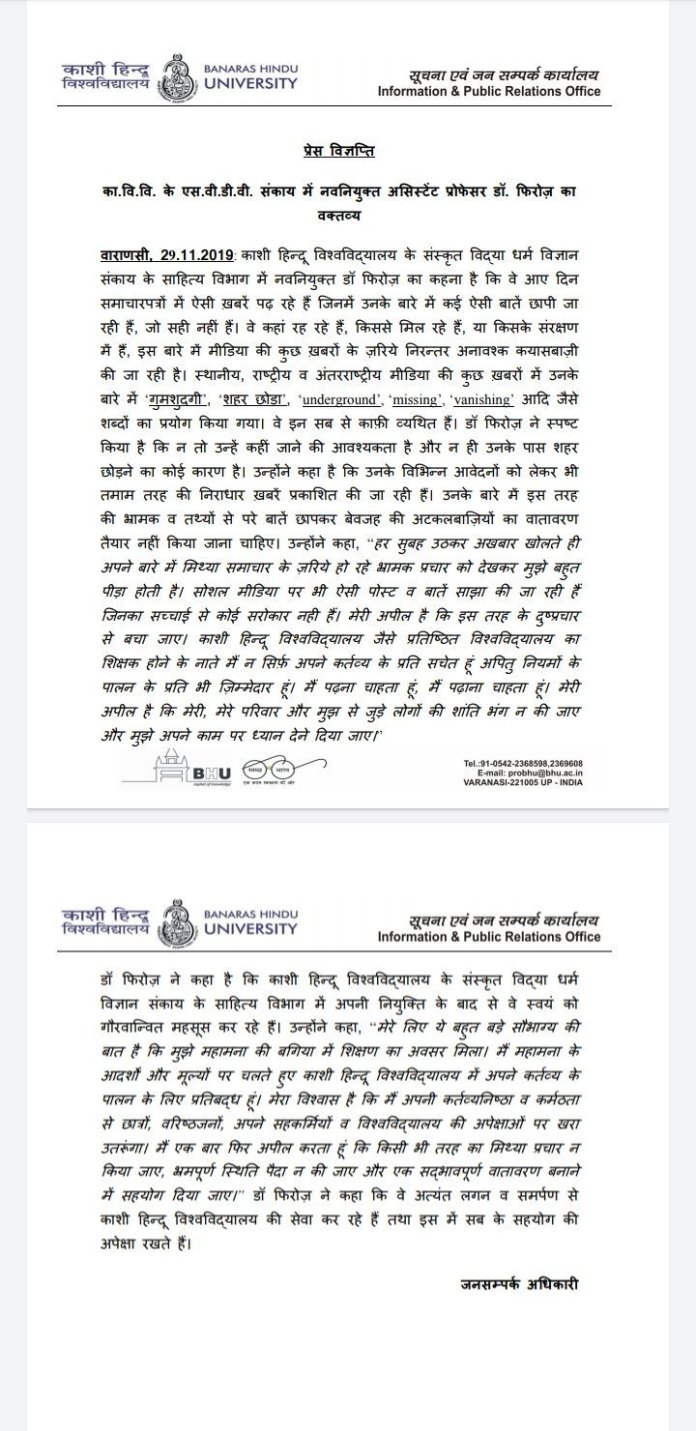
With a legion of lies and distortions doing the rounds on the Internet, the university administration has issued an official statement on behalf of Dr Feroze. In the statement issued, Dr Feroze affirmed to the Malviya values, to serve BHU and exhorted media to not engage in spreading lies about the issue.
When asked about how do the BHU students plan to protest today (30 November), Shashikant Mishra told Opindia, “Today there is a program in which all the deities present in the campus will be garlanded and worshipped starting with the Shiva temple in Ruia hostel.”
It is noteworthy to mention that the student movement continues undeterred. Most students claim that they will not give up the protest until the university administration orders the transfer of Dr Feroz Khan from Sanskrit Vidya Dharma Vigyan to other faculty departments. They have also warned that if the administration reneges on its promise, they are prepared for initiating a large-scale protest.
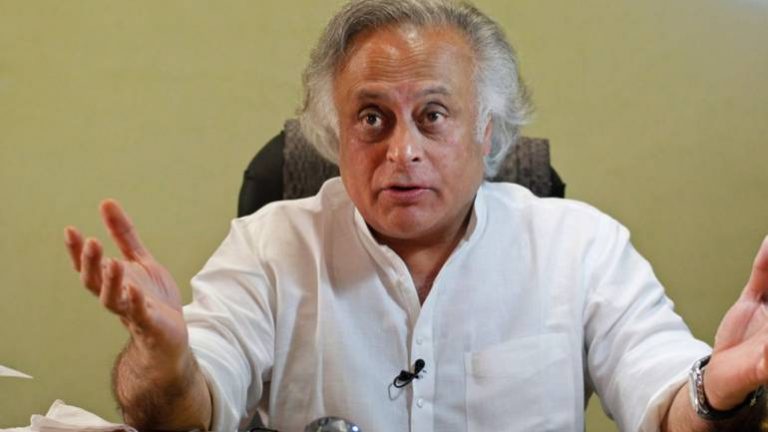
Speaking in an event to launch a book by Rajdeep Sardesai, Senior Congress leader and Gandhi family’s close aide Jairam Ramesh yesterday glorified the caste politics accompanying Haryana elections result as caste politics at its “majestic” best.
Italian family’s close aide @Jairam_Ramesh is in awe of ‘majestic’ caste politics. These jokers 24*7 talk about sekoolarism & allegedly divisive politics of BJP pic.twitter.com/F9N6d5vodh
When controversial journalist Rajdeep Sardesai asked the Congress leader the reason behind the sudden spring in the step of the opposition following the formation of government in Maharashtra, Ramesh responded that the growing anxiety among the people regarding the economic slowdown in the country and disenchantment among them were the reasons why the opposition parties came together to put up an anti-BJP front.
“I think Rajdeep you should plan another book-How Modi is losing India in 2019. In the last 6 months, triggered by the growing realisation that we are in the midst of an unprecedented economic crisis has provided people with an opportunity to express their discontent against the ruling regime. In our obsession and fascination for Maharashtra, let’s not forget Haryana elections result. The Haryana election results in many ways was a caste politics at its majestic best,” Ramesh said.
However, Sardesai gave short shrift to the argument tendered by Jairam Ramesh claiming that the economic gloom doesn’t seem to be the primary cause behind the galvanisation of the opposition parties. Ramesh then asserted that the singular reason behind three disparate parties coming together in Maharashtra is the common enemy-BJP. “The old Chanakya maxim-‘The enemy’s enemy is my friend’ has played out in Maharashtra,” Ramesh said. In effect, Ramesh unapologetically admitted to compromising its party’s stand on various issues as long as their nemesis-BJP can be defeated.
Ramesh’s utterances also reveal that the Congress party which claims to be the sole custodian of Secularism in India and routinely accuses the BJP of indulging in divisive politics has no qualms in exalting the caste politics bedeviling the Indian polity.
During the interaction, Jairam Ramesh also said that Congress had played a major role in the creation of Shiv Sena.
In the recently concluded Haryana assembly election, the tally of BJP came down to 40 from earlier 47, which was short of majority mark. But the party was able to form a government with the support of Jannayak Janta Party with 10 MLAs and 7 independent MLAs.
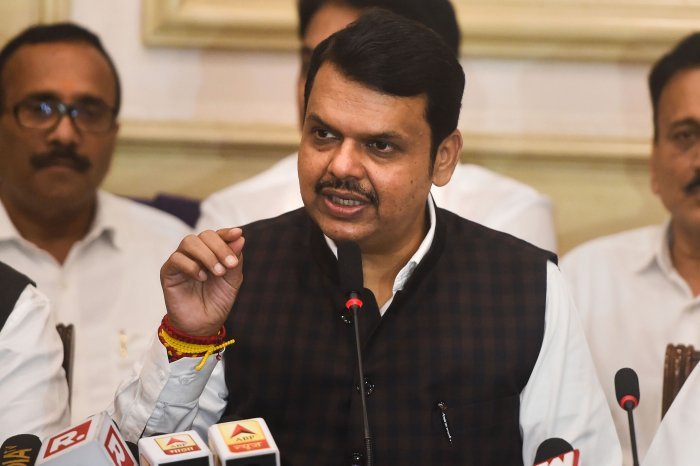
Former Maharashtra Chief Minister Devendra Fadnavis has alleged that the ongoing session of the Maharashtra Assembly is illegal and unconstitutional. Today the Uddhav Thackeray led Shiv Sena-NCP-Congress government won the trust vote in the assembly. The alliance won the support of 169 MLAs in the 288-member house.
#MahaMurderOfDemocracy !
Registered my strong protest in the Legislative Assembly against the illegal and unconstitutional way for calling this Maharashtra Assembly Session. pic.twitter.com/I7GTOnCxZt
Objecting to the way the proceedings took place in the assembly, Devendra Fadnavis said that it was a murder of democracy, and “one of the biggest insults of our great constitution given by our great leader Bharat Ratna Dr Babasaheb Ambedkar and also against the parliamentary procedures.”
According to Fadnavis, when the assembly session was held on 27th November, it was started with ‘Vande Mataram’, and it was concluded with the national anthem. It means that the session was adjourned sine die, as according to rules the session starts with the national song and ends with the national anthem.
On 27th November, when Assembly session was held, it started with ‘Vande Mataram’ & got concluded with National Anthem. It means that session is adjourned sine die. #MahaMurderOfDemocracypic.twitter.com/wWpkvSzQwG
Therefore, to hold an assembly session for the floor test of Uddhav Thackeray government, the governor needed to summon a new session. But the message for the new session was sent to MLAs at 1 AM, and the session started without Vande Mataram. Devendra Fadnavis said that starting a session without Vande Mataram is a violation of rules. Addressing the assembly, he said, “Assembly starts with ‘Vande Matram’ and ends with national anthem when it is called. This session started without ‘’Vande Mataram’ that is the reason it’s violating the rules.”
He also questioned why they were informed about the session so late. “We were intimated last late night. Why was this done? Was it done because our MLA should not reach the assembly?” he asked.
Fadnavis also said that the protem speaker was also changed, and this happened for the first time in the history of India. He says that the once appointed, the protem speaker continues till the election of the regular speaker. “At every step our great constitution is being insulted by this government,” he said.
Once appointed protem Speaker continues till the regular Speaker gets elected. But protem Speaker also got changed and this happened for the first time in the history of India. At every step our great constitution is being insulted by this government. #MahaMurderOfDemocracypic.twitter.com/TwLOZhsRR0
The BJP leader also said that as per procedure, the house needs to elect the speaker first and after that only the trust motion can be placed for consideration of the house, but the speaker’s election was also skipped by the government. He Fadnavis tweeted that he “strongly condemns this unconstitutional behaviour and methods,” adding the hashtag #MahaMurderOfDemocracy.
The newly elected government has denied the allegations, saying that the assembly session was held with the consent of the governor.
In India the political doctrine of nationalism is on an upsurge, taking giant leaps forward, changing the socio-political framework and causing tectonic shifts. This has been a trend in global politics. The quintessential example of this being the defeat of liberal political forces across the globe. Congress, who calls itself a liberal political front, losing the battle to Prime Minister Narendra Modi’s nationalistic force of BJP in India; Jair Bolsonaro, who has been repeatedly called a ‘fascist’, ‘authoritarian’ by libertarians, winning majority in Brazilian general election; the victory of Boris Johnson in Britain; Increasing threat of trade war between nations all insinuates and indicates a certain surge in nationalistic feelings over libertarian doctrine across the globe. Liberalism across the globe seems to be in a crisis and what makes it even complicated is that the liberals are making it even more complicated. With a meagre understanding of both doctrines’ on-ground implications, it would be byzantine to get a grip of changing dynamics in Indian politico.
Background to Liberalism and Nationalism
To grasp the paradigm shift in India, it is important to understand the fundamentals of both the doctrines. Liberalism is more than one thing. Maurice Cranston says, “a liberal is a man who believes in liberty” (1967: 459). Liberalism, a social and economic philosophy originating in 17th and 18th century West, is an idea of liberty, freedom and self-determination for an individual, less centralised free government, Laissez-fair capitalistic economy and minimal interfering establishment.
Liberalism is the culmination of rationale social thinking in Western society that promoted a sense of the importance of human individuality, a liberation of the individual from complete subservience to the group, and a relaxation of the tight hold of custom, law, and authority. Liberalism, significantly earlier ones, was derived from the social ideologies of individualism – propagating for individuality and minimum state interference in an individual’s pursuit of Socio-cultural-economic goals – and embedded adversarialism. Adversarialism cherished contradictions and disagreements as a notion of growing knowledge base and propagating independent thinking. Libertarians, therefore, argue for a system of governance where a central government can protect civilians from harm and ensure law and order under the umbrella of justification.
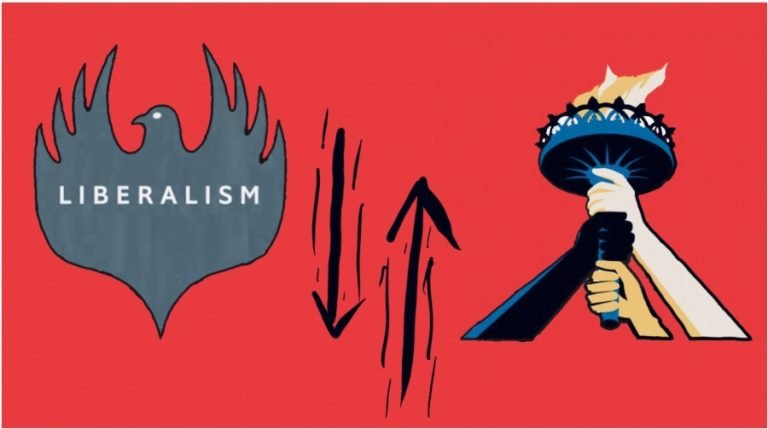
The basic principles of liberalism – laissez-fair capitalist economy, liberty/individuality and freedom of all kinds. Sourced from Economist.
Nationalism, the ideology of the nation-state, stands for the sense of togetherness of people in terms of ethnic, religious, linguistic, territorial, and other unities. Nationalism inspires to work towards a self-governing state and government controls aspects of the economy to promote the nation’s self- interest. Nationalism is a political-social doctrine of responsibility, fundamental duty and devotion towards the nation-state, national interests, nations culture and fellow nationals. And the doctrine of fiercely espousing or holding political sovereignty for the nation and national control of the economy. Protection of national interests, the promulgation of sovereign nation-state and promotion of national identity are central ideals of the ideology of nationalism. Nationalism evokes a strong sentiment of sovereignty, responsibility, unity and autonomy in those affiliating to a common nation.
Both the ideologies, in India’s context, seldom came in economic conflict as both argued for open market and capitalistic economy. But both of the doctrines locked targets over each other when it came to Socio-politico India. In the 21st century India, the skirmishes have intensified. Nationalism seems to be winning the battle and has cornered the liberal doctrine. Liberalism’s failures is paving the way for nationalism’s rise.
How Liberals aid Nationalism in India
Pseudo-Secularism – an artful and ostentatious nepotistic formula for the promulgation of inequality, injustice, discrimination, favouritism, duplicitousness and embedded hypocrisy – is one of the prime reasons behind the rise of religious nationalism. The establishment’s approach, however exceedingly fawning and obsequious, for handling the mix of multi-religious diversity sprayed across the vast canvas reflects spuriousness and banality. An enmesh of unequal ideals and selectivity under the veil of secularism has been masqueraded into the system, which has created a sense of marginalisation in the majority. This marginalisation, exclusion and discrimination of Hindus, via the manipulated imposition of ideals of secularism, created a fire ground for nationalism to thrive. As nationalists demanded fair two-way system of secularism, majority of Hindus, except for elitists, chose nationalism. Narendra Modi in 2019 through surfing the same wave reached to the zenith with the largest electoral majority in decades.
Libertarian Hindu hatred festered liberalism instead of fostering. This might be the biggest reason behind the rise of nationalism over liberalism in today’s India. Hinduphobia, a term rarely used, is a manifestation of anti-Hindu sentiments and hatred towards Hindu culture. This, a character generally associated with liberals, Islamists and communists in India, is one of the strongest polarising cause for the majority of Indian specifically those ones living in rural India. Whenever a Muslim was lynched by a Hindu, libertarians transformed into canon guns blasting the fortress of an entire religion of Hinduism. But whenever a Hindu suffered in the hands of Muslim, was lynched on grounds of religion, as in the case of Ankit Saxena, Chandan Gupta, TN Ramalingam, Bharat Yadav, Dr Narang, Dhruv Tyagi, the liberals remained silent and activism was put to rest for those moments. This selective trait and uncontrolled practice of favouritism, has gone under the skin of Indian masses steering them towards nationalism over liberalism.
One more ailing limb in the gangrenous body of Indian libertarians is the mindful chicanery – the wanton sabre made from the mendacious metal of spuriousness – that has turned the majority of Indian populace away from believing in liberalism. The mix of chicanery is the artful blending of character and fundamental principles with a little added salt of verbal deception. As in the case of humanising terrorism. When the liberals address terrorists with unnecessary humanising verbose of they being a ‘son of a schoolmaster’, a ‘Dhoni fan’, a ‘PhD Scholar’ and when they do a caste-based classification of Indian soldiers who lost their lives on the line of duty; their chicanery remains on full-on display. When the liberals chose to defend the Islamic veiling practice of hijab or burqa, while at the same time ruthlessly attacking the Hindu veiling practice of ghoonghat; they display their mix of hypocritical chicanery and dishonesty to the cause of true liberalism. As a counter to libertarians vindictive propaganda, hoi-polloi chose to side with national interests rather than chicanery.
Hypocrisy, one of a tangled feather in the enmeshed hat of libertarians, the expert art of deceit, is the one of the biggest driving force behind the depreciation of liberals in India. Double standards and contrasting stance involving the same issue but different groups and excessive outrage over one crisis but numb silence over the other, has been the trait of liberals. Liberartians embedded hypocrisy streamed the majority to choose nationalists over them. Faced with the need of showing true liberalism over favouritism, the liberal ostrich burying its head under the sand of silence is an unsurprisingly common sight for the majority of the people in India.
Entitlement, an unambiguously identifiable character of a liberal in India is his/her elitist nature. Elitism, despite being fundamentally illiberal and undemocratic, has become a consistent preference of liberals. Subscription to the idea of equality, freedom and equal opportunity was supposed to be the essential prerequisites for becoming a liberal, but in India, this essentiality was not entertained. Liberals, through their elitism, created a system of exclusion. Liberals camps over a institution of favouritism and elitism, which rightfully creates a feeling of resentment in the hearts of those excluded. The feeling of resentment spawned by this elitism and exclusion —which rapidly morphs into deprivation and injustice the further you move from the urbanite culture – is a fissile material for demagoguery of all kinds. The entitlement also forces or inspires conformity in the social circle, harming the fundamental liberal ideas of adversariality. The supposed harbingers of freedom, the galloping horses of liberty, turned out to be a unconventional fallacy. Liberal’s elitism further steered nationalism towards becoming the doctrine of masses.
Liberartians in India also, surprisingly, espouses and exercises a buffed up form of authoritarianism – the advocacy of strict obedience to authority (in this case the liberal elitist’s collective will) at the expense of personal freedom. They, in sharp contrast to liberalism, promote subversion and artful coercion to any individual, idea or institution challenging their ‘set of rules’. In their quest to hide the liberally illicit realities, they go on to exercise authoritarianism, trying to subvert, sledge or change the outcome of social undertakings through quite the illiberal means. Authoritarianism again created exclusion which festered liberal ideals and fostered nationalistic ones.
Nationalism in India is taking giant leaps forward and is suddenly becoming a household doctrine, a kind of movement through out the nation. Nationalists aim for holistic development; complete integrity; sovereignty; safety and security; and preservation of Indic culture. India’s nationalism is a protective shield against the malevolent anti-India forces. It is wrong to assume that nationalism forced the decline of liberalism in India, while in reality, it is the liberalism that steered the rise of nationalism. Liberartians through their hypocrisy, pseudo-secularism, Hinduphobia, authoritarianism and elitism has created a base ground for nationalism to further and foster. Liberalism in India has been the biggest bolstering force behind the rise of nationalism.
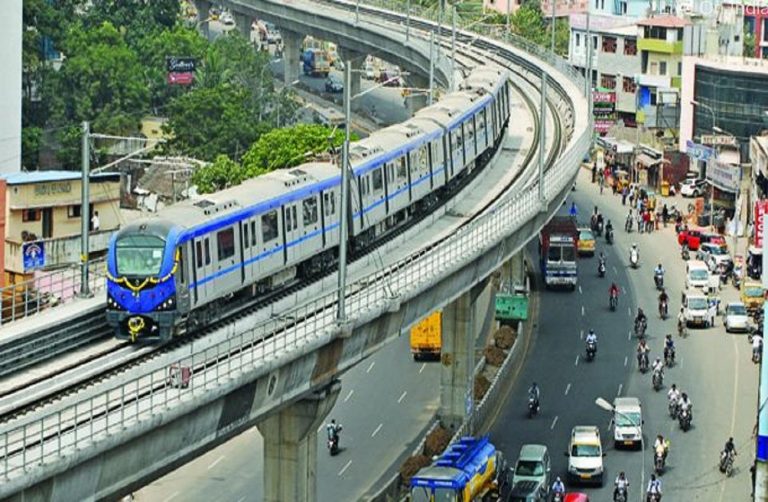
The troubles for Mumbai Metro seem to be mounting after the Shiv Sena-NCP-Congress government came to power in Maharashtra. A day after new CM Uddhav Thackeray stopped construction of the metro car shed in the Aarey Milk Colony despite clearance from the Supreme Court of India, today cases were registered against officials and a contractor for allegedly cutting of trees along the route of Metro Line in Thane.
Work is currently underway on the Wadala-Ghatkopar-Thane-Kasarvadavli Metro Line 4, a 32.32 km route. On Thursday, the Mumbai Metropolitan Region Development Authority (MMRDA) had cut five to six trees near Teen Hath Naka in Thane to clear areas for the metro route. According to activists, this was done in violation of the Bombay High Court order.
The Naupada police have lodged cases against the contractor and MMRDA officials under relevant sections of the Maharashtra (Urban Areas) Protection and Preservation of Trees Act 1975, a police official said. Mayor of Thane city and Shiv Sena leader Naresh Mhaske strongly criticized the alleged cutting of trees for the metro route, and he had ordered the civic officials to register a complaint with the police. Mhaske said that he issued the order after receiving numerous complaints from citizens and NGOs against cutting of trees.
The MMRDA officials have, however, denied allegations of cutting trees, and said that trees were only pruned for transplantation. Pramod Ahuja, director (works), of MMRDA, said, “We have merely pruned the branches of some of the trees on this route. All these trees are supposed to be transplanted to Shildaighar. None of the trees will be cut. The HC had vacated the stay on cutting of trees for Metro-4 while hearing the petition filed by Thane Yuva Pratishthan. We have all the required permissions to transplant these trees.”
Even the activists seemed to have agreed that trees were pruned and not cut. environmentalist Rohit Joshi, who had filed two petitions against cutting trees for Mumbai Metro, said that “the authorities have chopped the branches in the dead of the night when there was no need for the same.” He added that while the High court has vacated the stay on first petition, the stay on the second petition is still there. He said he will file a contempt petition and that a huge protest will be held by environmentalists and Thane residents for cutting the branches of trees.
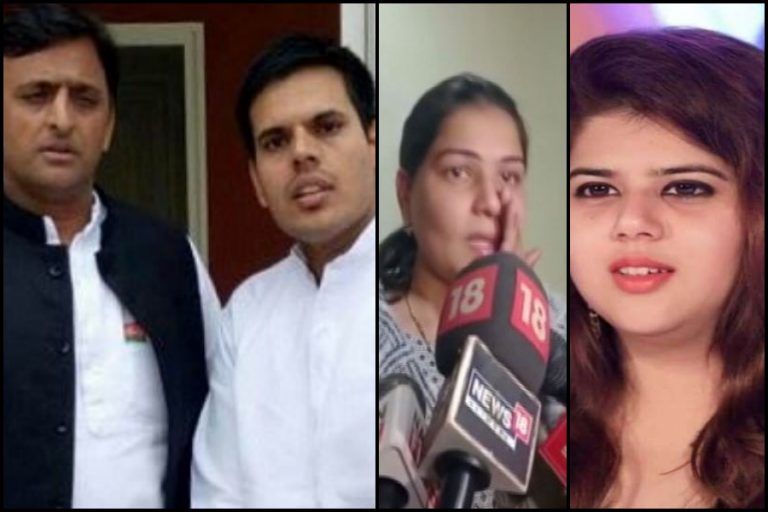
Samajwadi Party (SP) leader Anil Yadav appears to be embroiled in a raging controversy as his former wife has levelled serious allegations against him and his family. Anil’s former wife has accused him of forcibly dishing out divorce to her. She has also asserted that she was threatened with her son’s life to have a physical relationship with her brother-in-law.
The allegations came to the fore just a day before SP leader Anil Yadav is set to tie knots with the INC media panelist Pankhuri Pathak. Anil and Pankhuri are slated to marry on December 1, 2019.
The victim’s lawyer Vijay Kumar Pandey spoke to the media reporters last evening stating that, Anil, who was married to his client from 2013 and had a son with her, had suddenly changed his behavior and started assaulting and abusing her from 2016 onwards.
Even the in-laws have been accused of being complicit in the assault and abuse meted out to the victim. Anil’s wife claims that despite flagging the issue several times to her mother-in-law and father-in-law, they turned a blind eye to her protestations and sided with their son. “You spent just one and a half crores on your marriage but now Anil is a 10 crore man,” the wife’s in-laws allegedly said. She has also said that she was locked in a room for over 12 months by her husband and brother-in-law. She claims that she was treated like a hostage and was monitored round the clock.
In addition to this, Anil’s first wife had alleged that INC media panelist Pankhuri Pathak has blackmailed Anil into marrying her. “Anil had told me that he had gone on a foreign trip with the Congress media advisor where she had deceptively recorded a video of him. He is stuck with her because of that video. Anil had threatened to kill their son and in 2018 he had forcibly made her to sign on the divorce papers,” she alleged.
In an another explosive revelation, Anil’s former wife alleged that her brother-in-law forcibly made physical relations with her and repeatedly threatened her with killing her son if she refused to comply.
However, the SP leader Anil Yadav has repudiated the allegations levelled by his former wife claiming this is being done to grab his property. He has contended that the divorce happened on mutual consent and that he had been living separately from his wife for three years. He has also stated that he is preparing to sue his former wife in the court of law.