Home Blog Page 5934

Are the JNU protests over fee-hike justified? Here’s what the data says

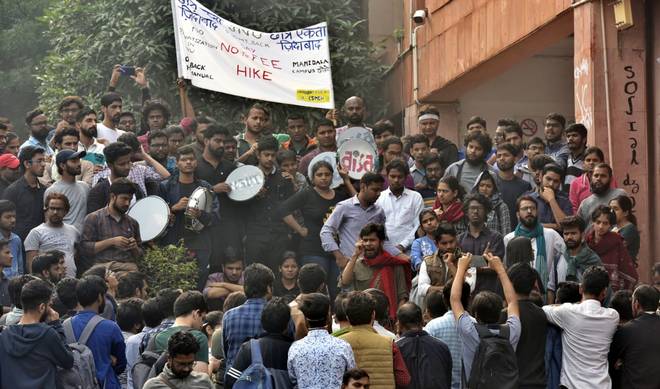
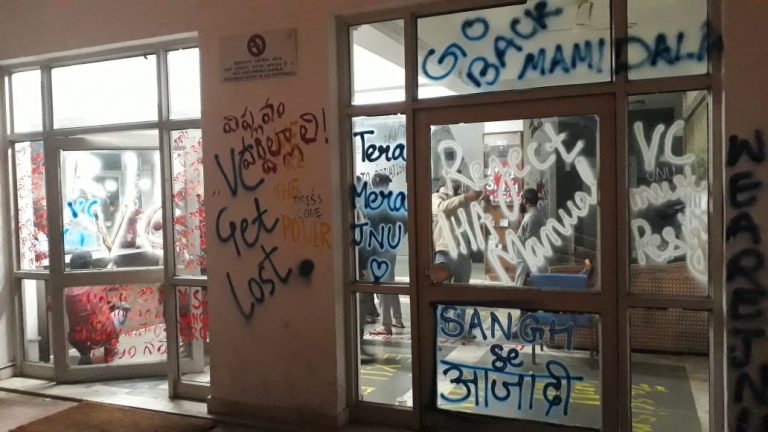
The perennial protests in JNU held the city hostage as they marched on the streets demanding a roll-back of the supposed fee-hike. They violated section 144 that was imposed in and around the university and the Police had to detain ‘students’ and lathi-charge the protesters to break off the crowd.

Under such circumstances, numerous debates have erupted on social media on whether the protests held and demands made by the JNU protesters are legitimate. Anurag Singh, an alumnus of IIM-Lucknow and a value investor, recently posted a tweet thread on the social media platform where he elaborated on the fee structure of the JNU and analyzed whether the protests were justified on the basis of data available in the annual report of 2018.

The investment made in JNU

There are nearly 8000 students at JNU, the majority of which are in social sciences. Anurag Singh further pointed out that almost 55% of the students were pursuing an M.Phil or a PhD degree. Furthermore, the income of the University was Rs. 383.62 crore while its expenditure was Rs. 556.14 crore. Thus, if one counts only the government aid/subsidies that the university receives, each student consumes about Rs. 4.40 lakh every year.


As Singh says in is an article for SwarajyaMag, “At any campus across the world, the strength of students declines as we move from undergraduate courses to postgraduate, and there are very few who pursue doctorate-level courses. This is also driven by financial compulsions as people need to get back to the earning workforce fast and get on to a career track.”

The Quality and Quantity of Academic Content

The academic content and research don’t appear to speak very highly of the university either. With over 4,000 students pursuing M.Phil or PhD degrees, just over 1,000 research articles were published in journals in the academic year 2017-18. Also, the ‘students’ attended nearly 2000 international conferences during the academic year and yet, there’s no evidence that anything good ever came of it.


As Singh says, “This implies that there is just one “article” published for every 4.5 students each year. This, when there are 600-plus Ph.D.s granted annually. Would you consider this any worthwhile research work?” He also says that for all the investment, JNU has been able to produce only four people with patents to their credit. Furthermore, there does not appear to be any student with a patent to his credit.

Is the fee hike justified?

When the data is compared with the ridiculously low fees that are charged from students at the university, it becomes obvious that the output does not justify the investment. As Anurag Singh says, “JNU is a perfect example of bad socialism. If you give something for free, people have no incentive to work and earn.”

He states in his article for SwarajyaMag that “they pay a generous Rs 6 for library and Rs 40 as a refundable security deposit. How a university was allowed to run with this fee structure and without any hike for decades is itself a research paper in the making. Of-course, nobody at JNU would have time to research on this. IIT Delhi, which is located close by, charges about Rs 2.25-odd lakh annually and IIMs charge about Rs 5 lakh to Rs 10 lakh per year. We don’t see any strikes at those places. Students know they need to jump into the job market, start their earning life and also repay the student loan that they carry. JNU is free of any such thoughts or troubles. Probably, the reason why students have much time left to create new troubles of their own.”

Meanwhile, the ‘intellectual’ class continues to fawn over the perennial protesters. Ravish Kumar even went ahead to assert that students in the Hindi heartland should emulate the conduct of JNU ‘students’. There appears to be very little willingness to address the elephant in the room here, which is, the lack of output compared to the massive investment.
‘Peace-loving’ Pakistani man gets 10 years for planning murder of Dutch politician who had planned Prophet cartoon competition

0

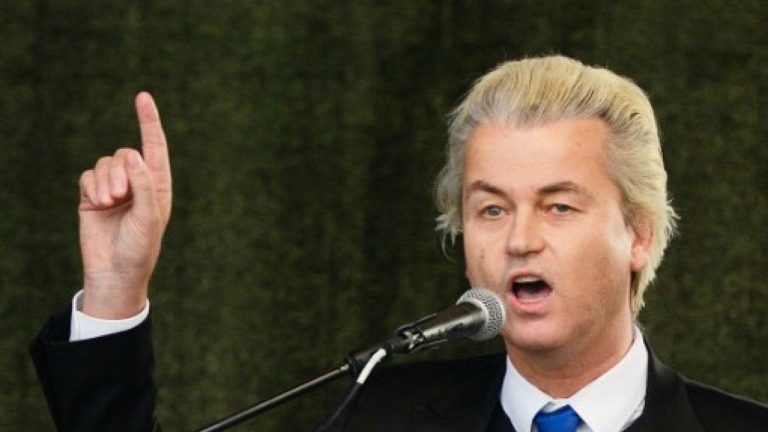
In yet another embarrassment for terror state of Pakistan, a Dutch court has sentenced a Pakistani man to 10 years imprisonment on Monday for plotting the assassination of Dutch MP Geert Wilders.

Reportedly, the Dutch court found the 27-year-old Junaid, guilty of planning the murder of Wilders, who announced a Prophet Mohammed cartoon competition.

Junaid, who refers to himself as a “peace-loving” man had travelled from France to Holland, to plot the murder of Dutch MP Wilders. During the trial, he had stated that he had only visited Holland to protest against the cartoon competition.

However, he was arrested in August 2018 at a train station in The Hague after he posted a film on Facebook, wherein he claimed he wanted to “send Wilders to hell” and urged others to help.

The Judges at The Hague’s district court has now found the man guilty of “planning a murder with a terrorist motive” and incitement to commit a terror attack.

Read: ‘Islamophobic’ Dutch Politician receives death threats on Twitter from Pakistani Muslims for a now-cancelled cartoon contest

The Judges ordered handed down a 10-year sentence handed to Pakistani man Junaid on Monday. Defending the harsher punishment to the accused, the court had said, if the attack had succeeded it would have struck at the country’s “political and constitutional” heart and “caused a wave of fear”.

“Wilders was exercising his freedom of speech. The suspect wanted to carry out an attack in one of the parliament buildings: the heart of Dutch democracy,” added the judges.

Dutch MP Geert Wilders had announced a plan to hold the cartoon competition last year, which had sparked mass demonstrations in Pakistan and a march from Lahore to Islamabad by some 10,000 protesters. The protestors had even demanded the Pakistan Prime Minister Imran Khan to cut diplomatic ties with the Netherlands.

Read: Pakistani pop singer wanted a Dutch MP killed for blasphemy, this is where she learnt bigotry from

In June 2018, Wilders had announced Prophet Muhammad cartoon competition to be held at his party’s parliamentary offices. Later in August, he was forced to cancel the event after threats of terrorist violence became too significant.

The events were cancelled after thousands of supporters of TLP took to the streets of Pakistan calling for the expulsion of the Dutch ambassador and for diplomatic ties with the Netherlands to be severed. The Pakistani government, trying to take credit for the cancellation of the event, called it a “great moral victory for the Muslim Ummah” and a that “major crisis” had been averted.

Wilders is a known vocal critic of Islam He has been quoted in an interview as saying “I don’t hate Muslims, I hate Islam.” He said in the same interview, “Islam is not a religion, it’s an ideology, the ideology of a retarded culture.”

NRC will be implemented across the country: HM Amit Shah in Rajya Sabha

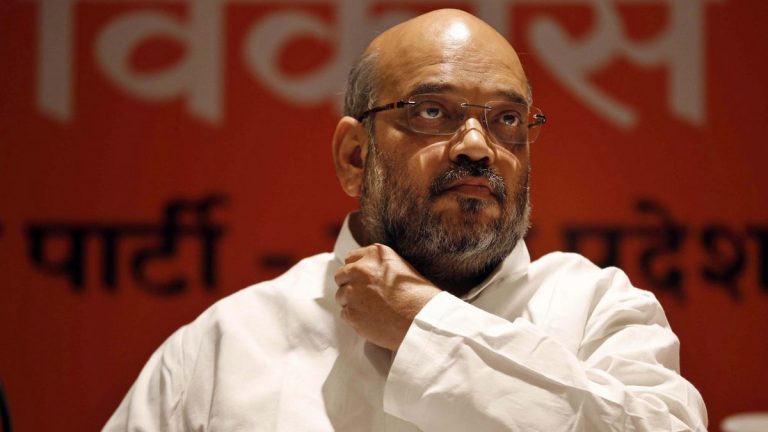
Union Home Minister Amit Shah speaking at the Rajya Sabha today said that the NRC (National Register of Citizens) will be implemented across India. He said that no one should be worried about NRC as it is just a process of getting everyone under the NRC irrespective of their religion.

Kashmir issue:

Union Home Minister Amit Shah addressing Rajya Sabha began by taking on the questions on the Kashmir issue raised by Congress’ Ghulam Nabi Azad and gives a crystal clear picture on the current situation in the Valley by reaffirming that not a single civilian has died in police firing in Kashmir after August 5.

He spoke about the communication blockade in Jammu and Kashmir after the revocation of Article 370. “Section 144 is removed from Jammu and Kashmir. We agree that mobile and internet are important facilities and needs to be restored soon. But we must remember that it was the BJP that had brought mobile to the Valley. But when it comes to the safety of the country, we have to set a priority. As we all know, the situation in Kashmir remains tensed due to threats from across the border. As far as the internet is concerned, its restoration will be carried out at an appropriate time on admin inputs,” he said.

Read: Home Minister Amit Shah proposes a single multipurpose ID card, census of 2021 to be digital using mobile app

He said that there has been no shortage of medicines, all English language newspapers and TV channels available in Valley. Markets are shut in the afternoons but reopen in the evenings and over 20,000 schools are open, said the Union Minister.

NCR in Assam:

Speaking on the NRC, he said that it was monitored by the Supreme Court and no religion is targeted or isolated in it.

Talking about those names which have been excluded from the final draft of the NRC in Assam, Amit Shah said, “People whose names are not in the NRC have the right to approach the tribunal…Assam government is also ready to foot the expenses of people who can’t afford a legal counsel.”

To clear opposition’s qualms, Shah spelt out the difference between NRC and the Citizenship Amendment Bill. “NRC has no such provision which says that no other religion will be taken under NRC. All citizens of India irrespective of religion will figure in the NRC list. The NRC is different from Citizenship Amendment Bill.”

Read: Rajya Sabha: Narendra Modi heaps praises on the NCP amidst political turmoil in Maharashtra

“Citizenship Amendment Bill is needed so that refugees get Indian citizenship. Hindu, Buddhist, Sikh, Jain, Christian, Parsi refugees should get citizenship, that is why Citizenship Amendment Bill is needed so that these refugees who are being discriminated on basis of religion in Pakistan, Bangladesh or Afghanistan, get Indian citizenship”, specified Shah.


Finally, putting all the speculation to rest, Amit Shah took this opportunity to declare Modi Government’s plan on NRC. Making a huge declaration that NRC would be eventually carried out on a nationwide basis, Shah spelt out that no one needs to worry as no faith will be excluded in the process.

The nearly month-long winter session of Parliament beginning Nov 18 will see over 35 legislations taken up, including the Citizenship (Amendment) Bill, 2019. The session, which will end on Dec 13, will see a total of 20 sittings.

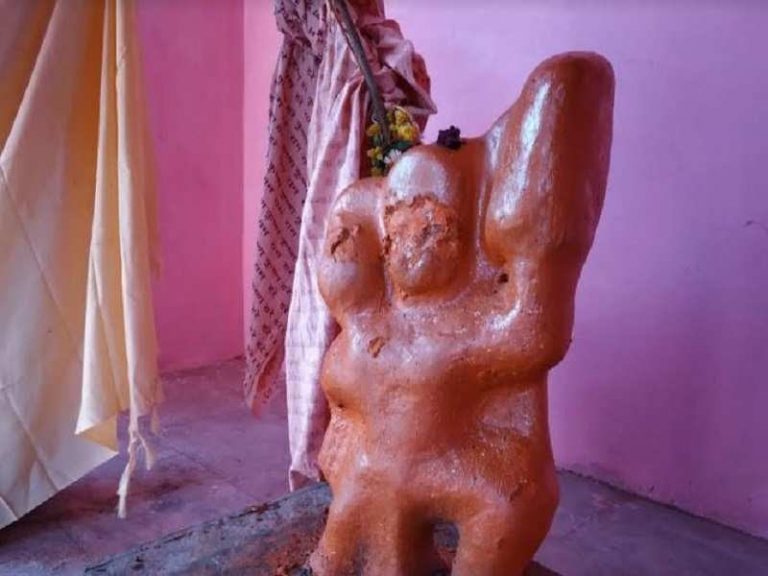
Agra: Idol of Lord Hanuman desecrated at Itmad-ud-Daula, eyes gouged out

0

Tempers in the area are running high as the idol of Lord Hanuman in Itmad-ud-Daula of the Agra city was found vandalised by an unknown person, says a report by Times of India. The desecration of the idol took place in the thickly populated area of Mahavir Nagar where the unidentified miscreant had scooped out the eyes of the idol.

According to the priests of the temple, Mahavir Das, the incident most likely happened on the intervening night of Monday and Tuesday as he found the eyes of the idol gouged out on Tuesday morning.

The station house officer of Itmad-ud-daula, Udayveer Singh Malik, said that on Tuesday morning residents living near the temple reported incident of vandalism at the temple. Recognising the sensitive nature of the complaint, the idol was replaced by afternoon and a FIR was loged against unknown person under IPC section 153 (Want only giving provocation with intent to cause riot), Malik said. The police is also looking at CCTV camera footage for further investigation.

Read: Concerns of Hindus anywhere should be concern of Hindus everywhere

Earlier too, there have been several incidents of vandalism of temples across Uttar Pradesh. In one of such case, a Muslim youth entered a Temple in Khatoli(Uttar Pradesh) in July and attempted to break the Murti of Hanuman in it. He also abused the devotees worshipping at the Temple. The people present at the scene managed to get hold of the perpetrator but couldn’t prevent him from smashing the glass at the Temple. The Police came in and arrested him.

In another incident of temple desecration in June this year, a Muslim mob ransacked a temple in Rohanya village in Pilibhit, Uttar Pradesh to oppose loudspeakers. The mob broke the loudspeaker and took away the idols of the temple along with them. Five men, Mehboob, Monis, Israel, Azaad and Alanoor have been arrested and a case was registered for trying to create enmity between religious groups.

In Meerut in June 2019, a Muslim mob entered a temple in Ghasauli village and thrashed a group of Dalit men who had put up loudspeakers in the temple for playing devotional songs. The Muslim community had objected to the loudspeaker on temple premises, which is near a mosque after the men from Dalit community put them up.

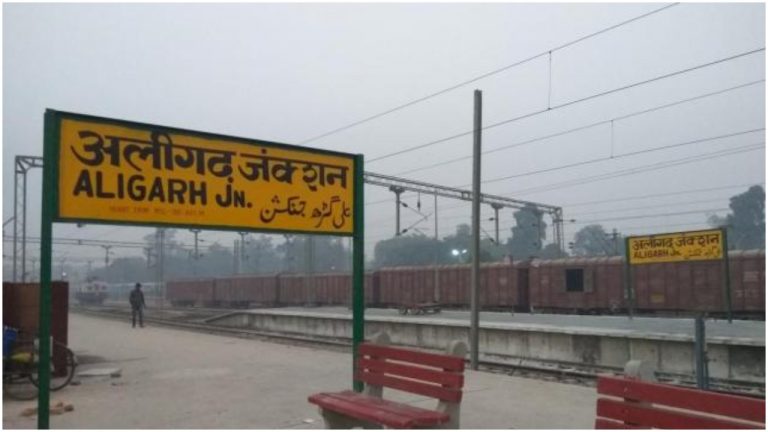
Uttar Pradesh: BJP lawmakers urge CM Yogi Adityanath to rename Aligarh to ‘Harigarh’

Amidst the speculation that the name of Agra may soon be changed to Agravan, demands are being made to change the name of Aligarh by its ancient name ‘Harigarh’.

According to the reports, the BJP lawmakers have now requested the Yogi Adityanath led Uttar Pradesh government to rename the city of Aligarh into ‘Harigarh’. Speaking to the media, Aligarh MP Satish Gautam has reiterated the demand to rename the city by stating that Harigarh was the ancient name of the city. He said the demands have been made for a very long time now.

Local BJP MLA Sanjeev Raja also stated that the name of the city was changed to Aligarh during the Mughal period. In 2015, the Vishwa Hindu Parishad had also insisted about renaming Aligarh as Harigarh. Aligarh was named after Mughal governor Najaf Ali Khan

Read: Agravan when? UP govt asks historians to check if Agra city was ever known by any other name

BJP leaders also added that the idea to change the name of Aligarh was first mooted by the then UP Chief Minister Kalyan Singh in 1992. However, his attempts were thwarted by the then Congress government at the centre. With Modi government back at the centre, the hopes to restore the name of the place has been revived yet again.

Two days back, there were reports that the Yogi Adityanath government had asked historians and experts asked to look into the matter of change of the circumstances in which the name of the city of Agra was renamed into the present form. Last year, BJP MLA from Agra North, Jagan Prasad Garg, had requested the Chief Minister to change the name of the city to Agravan soon after Faizabad and Allahabad were renamed as Ayodhya and Prayagraj respectively.

JNU administration moves Delhi HC seeking contempt against protesting students, Delhi Police for violating court order

The Jawaharlal Nehru University administration on Tuesday approached the Delhi High Court seeking contempt action against its “students” and the Delhi Police for violating a court order against holding a protest within 100 metres of the varsity’s administrative block.

According to the reports, the JNU administration has stated that the protesting students had grossly violated the August 9, 2017, order of the high court by holding a protest within 100 metres of the administrative block and disrupting its day-to-day working.

The university also added that the Delhi police also violated the court order by refusing and failing to take action to maintain law and order in the university and removing the blockade around the administrative block.

The central government filed the petition on behalf of JNU, seeking direction to issue contempt notice against the students and Delhi Police and also demanded punishment in accordance with the Contempt of Courts Act for alleged wilful disobedience of the court order.

Read: Ravish Kumar incites violence, wants students from Hindi heartland with ‘third class’ ideology to be more like JNU goons

Senior standing counsel Monika Arora, representing the varsity also sought direction to Delhi Police Commissioner Amulya Patnaik to provide assistance to the JNU in controlling the ongoing and any future contemptuous acts of the students and their leaders and removing them from within 100 metres of the administrative block.

Earlier in the day, the Delhi Police had registered two FIRs in connection with Monday’s protest march. Reportedly, the Delhi Police had registered FIR against unknown protestors for allegedly violating prohibitory orders, obstructing police officers from discharging duties, and causing hurt.

The second FIR was filed for the alleged damage caused to public property at Aurobindo Marg in South Delhi. According to the police, almost 30 police personnel and 15 students were injured during the eight-hour protest.

Read: There is no ‘fee hike’ in JNU: While free education may be a right, free accommodation is certainly not

The case has been filed under IPC sections 147 – punishment for rioting, Section 148 – rioting, armed with deadly weapon, Section 149 – every member of unlawful assembly guilty of offence committed in prosecution of common object, Section 151 – knowingly joining or continuing in assembly of five or more persons after it has been commanded to disperse, Section 34 – acts done by several persons in furtherance of common intention and Section 3 of the Prevention of Damage to Public Property Act.

The violent protests had erupted in JNU after the university administration had introduced fees for utility services like water and electricity on an actual basis, and a fixed charge of Rs 1700 per month for services like sanitation, maintenance, cook etc.

The room rent was also increased from ₹20 to ₹600 for single-seater and from Rs 10 to Rs 300 for double seater. One time security which is refundable had gone up from Rs 5,500 to Rs 12,000 and the students have been protesting against it.

Following the violent protests, the JNU administration had announced a ‘major rollback’ in the hostel fee hike. Despite the rollback, the JNU goons had resorted to shocking vandalism during the protest and had desecrated the soon-to-be inaugurated statue of Swami Vivekananda on campus shocking citizens across the country.

Congress MP Shashi Tharoor joins UK firm which had hosted NDTV’s Nidhi Razdan in controversial Kashmir event

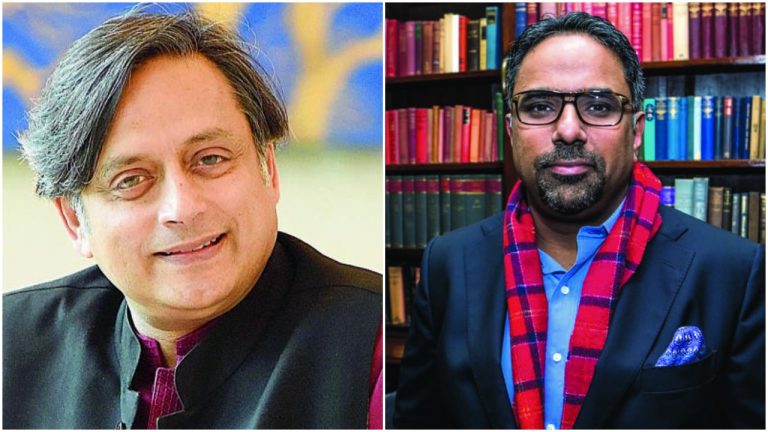
In what may trigger a controversy, Congress MP Shashi Tharoor has now decided to join a UK-based advisory firm CTD Advisors which had recently organised anti-Indian events in London.

According to the reports, the Thiruvananthapuram MP Shashi Tharoor will be joining as a strategic advisor at a UK firm known as CTD Advisors. Shashi Tharoor will be providing strategic advice to the clients of the firm, who operate in opaque and unfamiliar political and regulatory environments and manage their reputational risk.

The CTD Advisors was founded last year by former British banker and business strategist Shoaib Bajwa as a Pakistan-origin-London-based international affairs advisory firm with global access. CTD Advisors had hosted the event ‘The Cost to Britain of the Kashmir Crisis: Is There a Solution?’ at the Chatham House, London on November 7 which had caused a huge controversy after it had resorted to peddling falsehood against the Indian government by inviting anti-Indian voices.

Read: Defence analyst slams Nidhi Razdan’s claim that she countered Pakistan at UK Kashmir event, exposes her lies and anti-India statements

NDTV journalist Nidhi Razdan had attended the event along with other anti-Indian voices. She had mirrored the lines what were being peddled by Pakistan to paint India as evil and Pakistan as a victim of terrorism. To the delight of the Pakistani establishment, she also added that India’s credentials at the world’s largest democracy have been shadowed by the events in Kashmir.

The event was attended by former Pakistani envoy to the UN Maleeha Lodhi and Lyall Grant, UK’s former National Security Advisor, who stated in the event that “Modi’s actions in occupied Kashmir are radicalising Kashmiris and that has a direct impact on UK’s national security where more than 1 million Kashmiris live.”

The event was shockingly endorsed by terrorist organisation JKLF. The JKLF had called the event as an event that managed to ‘bring Kashmiri voices’, by referring to Razdan’s speech. The JKLF had also thanked the organisers profusely. It is needless to remind here that ironically, JKLF has been one of the chief initiators of radicalisation and terrorism in the Kashmir valley. Its chief Yaseen Malik is currently facing charges for killing Indian Air Force personnel in cold blood.

Tharoor will be joining the firm along with former UK National Security Advisor Sir Mark Lyall Grant, who was also one of the invitees to the anti-Indian event organised by Bajwa. Former Head of British Defence Intelligence Chris Nickols and the Friends of Israel Group’s Honorary President Lord Stuart Polak will also be part of the firm.

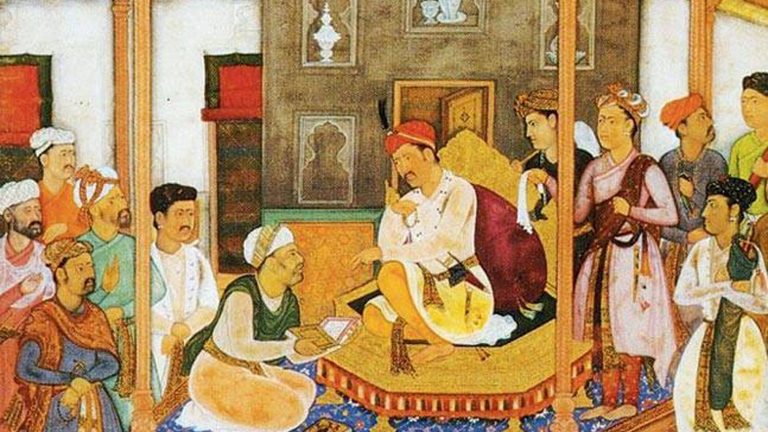
Mughals established ‘Akhand Bharat’: Unintentional comedy erupts as Islamists trend #ThanksMughals

Scratch a ‘liberal’ find a Mughal apologist. But then, there are few who not only normalise the barbaric violent history of Mughals but also glorify it. Days after the hashtag ‘MosquesofIndia’ trended by some Muslims on Twitter revealed how there are many more mosques in India which are built over demolished Hindu temples, the same set of Islamists took to Twitter to thank Mughals. Except, this time it led to some unintentional comedy as Mughals were even credited for things like creating the ‘Akhand Bharat’ which existed even before Islam was born.


Irena Akbar is a former journalist with Indian Express and has a complicated relation with facts. But she could try her hand at comedy.

She urged everyone to trend ‘ThanksMughals‘ with pictures of their legacy.


Irena Akbar then wondered where would the PM address the nation on 15th August had it not been for the Red Fort.


Red Fort was ‘chosen’ as part of the Independence movement because it was one of the most prominent non-colonial structures in Delhi. The Hindu structures were either demolished and structures like Qutub Minar or Jama Masjid were built or the others were built by the British.

Perhaps it would do her good if she reads history. Of the time when Mughals fell and the holy symbol of Khalsa Panth was unfurled at the Red Fort. Even before India became independent in 1947.

Read: Fact check: was Aurangzeb a “secular” ruler as his sympathisers claim he was?

Of course, she was also ‘proud’ to be ‘Babur ki aulad’ (descendant of Babur).


Babur’s commander Mir Baqi built the Babri Masjid in Ayodhya after demolishing the ancient Hindu temple at the Ram Janmabhoomi.

Read: All the historical literary evidence point that the Babri Masjid was built on the ruins of Ram Temple: Noted historian Meenakshi Jain speaks to OpIndia

Despite thousands of historical evidence that suggest otherwise, Akbar (Irena, not the Mughal Emperor who did not look like Hrithik Roshan) refuses to accept the forceful conversions that were rampant under the Mughal rule.


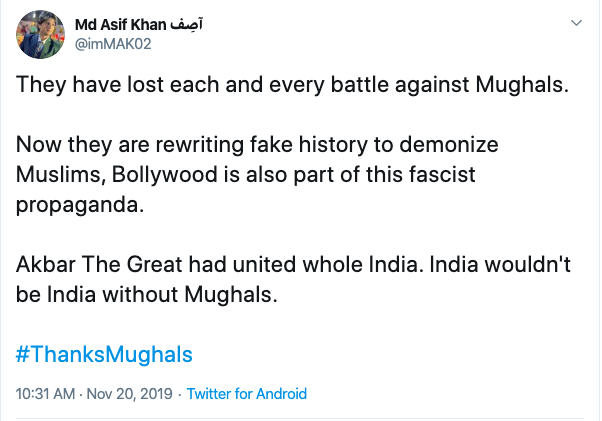
Islamist and fake news peddler Mohammad Asif Khan also joined in and said how ‘they’ had lost all the battles against Mughals.

‘They’ lost all battles against Mughals

In a now-deleted tweet, he spoke about how ‘they’ lost all battles against Mughals and now ‘they’ are writing ‘fake history’ to demonise Muslims. Presumably, when. he said ‘they’, he was referring to the Hindus. These are the very people who rather express pride in Mughals who raped, killed, converted and suppressed Hindus for centuries and demonise Hindus just like the Mughals did.

He alleged that Bollywood is also part of this ‘propaganda’. While there are many, many stories of valour and bravery, perhaps Khan could start with the first significant military victory against the Adilshahi forces by Maratha King Chhatrapati Shivaji Maharaj.

You see, India’s culture was rich even before the country was invaded by foreigners. Mughals destroyed many cultural symbols and structures and built their own over them. They looted and plundered India’s wealth and took it back home. While Islamists seem to hold the Mughal history dear, and it is a part of India’s history, it does show their deep-seated hatred for Muslims when they would worship the very forces that oppressed Hindus and attempted to destroy their faith.

Unfortunately, the problem today lies in not what happened in the past but people not willing to acknowledge the historical wrong and crimes.

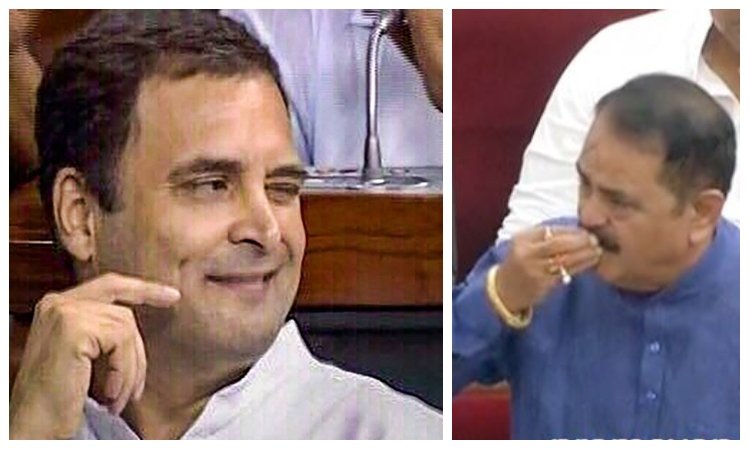
After Rahul Gandhi’s infamous ‘hug and wink’ in Parliament, now Congress MLA blows kisses in Odisha Assembly

Congress supremo Rahul Gandhi’s ‘hugs and winks’ in the Parliament seems to have become a pacesetter for his coteries. Following the footsteps of his mentor, Congress MLA Taraprasad Bahinipati managed to turn the Odisha assembly session on Tuesday into a comic session after he blew a flying kiss to Speaker SN Patro for being allowed to raise issues faced by his constituency.

The Jeypore MLA, who was the first to ask questions in the House, was seen throwing a kiss at the speaker at the end of his speech which he later said was a sign of gratitude since the speaker gave him the opportunity to speak first amongst the 147 members of the House and he did not intend to hurt anyone.


“I wanted to thank the Speaker. The flying kiss was a mark of my appreciation for him as he showed concern for the backward areas in my constituencies,” he said.

Read: ‘For five seconds, I was shocked. I was very angry,’ Sumitra Mahajan on Rahul Gandhi’s infamous wink

“I am indebted to the Speaker for giving me the opportunity among the 147 members of the House to raise the first question,” Congress MLA Bahinipati told reporters outside the Odisha Assembly.

The MPs and MLAs in the Parliament and the State Assembly’ are generally expected to observe the law and conduct oneself appropriately, but considering Rahul Gandhi himself has several times in the past shown similar deportment, the MLAs conduct in the Odisha Assembly on Tuesday does not surprise anyone.

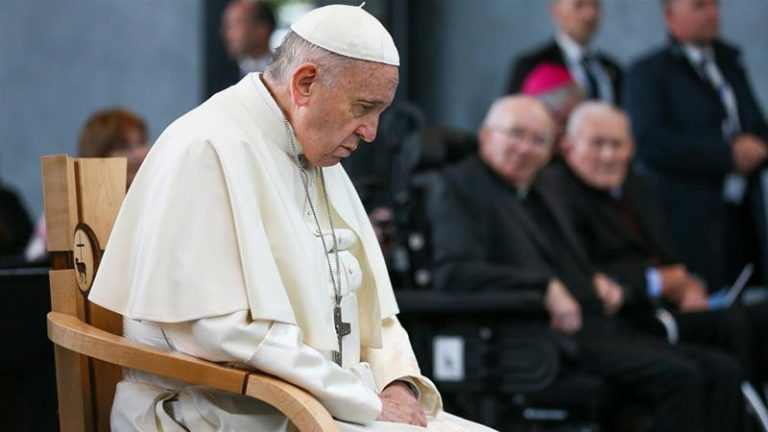
The skeletons keep tumbling out: Three more former altar boys accuse two priests of sexually abusing them inside Vatican Church

0

In yet another case of sexual abuse emanating from the Vatican church, three former altar boys of the Catholic church have now made shocking allegations stating that they were sexually abused two priests in the Vatican, reports Guardian.

The child abuse cases have yet again rocked the Catholic church as several anonymous former altar boys at the Vatican’s youth seminary have accused at least two priests of sexually abusing them by kissing and fondling three of them in the Nineties.

Reportedly, Le Iene (‘The Hyenas’), an Italian investigative TV programme broke these allegations in 2017, stated that the senior seminarian, who is now a priest, had sexually abused teenagers who served as altar boys at papal masses in St Peter’s Basilica. The allegations of abuse in the Vatican’s youth seminary dates back to the 1980s and 90s when the boys were aged between 10 and 14, will be telecasted in an Italian TV show on Sunday.

These shocking cases of sexual abuse have now come to light just two months after the Vatican Church had announced Father Gabriele Martinelli and Father Enrico Radice will stand trial over accusations of covering up sexual crimes.

Read: Pope of ‘Mafia like Church’ must resign, knew of sexual abuse allegations and did nothing : Archbishop

According to one of the victim altar boys, a priest sat him down on his lap and fondled his penis. In the programme, one of the victims had alleged that one of the priests, who was managing the school’s communal showers, tried to remove his bathrobe. “He wanted to undress me,” the victim alleged. “I tried to wriggle away. I was 13 years old. I fell to the ground and asked him what are you doing?. I then got up and ran away,” said the victim.

Another victim alleged that he was abused at the Casa Santa Marta, a place where many priests stay. The victim said he was arrested by a priest at the youth seminary when he was 10 or 11 years old. “He asked me to go upstairs to his room, made me sit on his legs, began to stroke my thigh and then put a hand on my private parts,” he told Le Iene.

Reportedly, the priest allegedly persisted with the abuse and later stopped it as the alter boy refused the advances.

Read: Investigation reveals nuns in Catholic institutions in India facing ‘decades of abuse’ by priests who enjoy protection

The victims, who are now aged between 37 and 40, had come forward together a few years ago to share their agonies to the public. The third victim has also made similar allegations but chose not to go into detail for the programme. They claimed that a fourth former altar boy suffered worse sexual abuse than they did, but he refused to talk.

The allegations were corroborated by several people who claimed to have witnessed some of the abuse.

The fresh allegations come just months after Catholic leaders had gathered for an unprecedented summit at the Vatican to tackle widespread paedophilia within the church. At the close of the summit in February, Pope Francis promised the church would “spare no effort” in bringing abusers to justice and would not cover up or underestimate abuse.

In March this year, Cardinal George Pell, who is third in seniority after the Pope in the Vatican, was convicted and sentenced to six years in prison for sexually abusing two choirboys in the late 1990s.

George Pell, who was the former Vatican treasurer, is the most senior Catholic figure ever to be found guilty of sexual offences against children. Pell had abused young choir boys in a Melbourne cathedral in 1996 and 1997. Ironically, George Pell was one of the inner circle of nine cardinals chose by Pope Francis to deal with issues such as sexual abuse of children by the clergy, fixing account books and financial reforms.

Similarly, in January this year, in a major embarrassment to the Vatican Church and Pope Francis, Vatican priest Hermann Geissler, who was appointed to handle sex-abuse cases within the Catholic Church has quit from his position two months after being accused of sexual abuse.

Hermann Geissler, who was the Chief of staff in a Church Congregation for the Doctrine of the Faith, was accused of sexual harassment by a former nun named Doris Wagner-Reisinger. The former nun of the Church had earlier accused an unnamed Vatican priest of making sexual advances towards her during a confession session in 2009