Friday, April 10, 2026
Home Blog Page 5955

NIA files supplementary charge-sheet against Yasin Malik and others in the 2017 terror funding case

0

The National Investigating Agency today filed a supplementary charge sheet against Kashmiri separatist leader Yasin Malik alleging that the JKLF chairman had relations with Pakistan based terrorists Hafiz Saeed and Syed Salahuddin.


Malik was today presented in a Delhi court in connection with the terror funding case of 2017. The NIA filed a supplementary charge sheet which included names of Yasin Malik, Shabir Shah, Asiya Andrabi, Masarat Alam and Rashid Engineer. The charge sheet was filed under Sections 18/20/38/16 of the UAPA act. Extending Malik’s custody till October 23, Additional sessions judge Rakesh Syal put up the matter for hearing on the same day.

According to NIA, in the light of fresh evidence in the form of social media interactions, call records, oral and documentary proofs, the charge-sheeted accused are said to have close ties with the cross border terror masterminds Hafiz Saeed & Syed Salahuddin.

The National Investigation Agency (NIA) had registered a case against Pakistan-based terrorists and sympathisers including 7 top separatists, 2 hawala conduits and some stone pelters in the Jammu and Kashmir terror funding case of 2017.

The NIA had on April 2019 arrested the infamous JKLF chief Yasin Malik in custody for 12 days in the terror funding case. As per NIA sources, Yasin Malik had then admitted that he was instrumental in bringing together the disparate factions of Hurriyat Conference and formed the Joint Resistance Leadership (JRL), which spearheaded the violent agitations in 2016 in Kashmir Valley, by issuing “Protest Calendars” leading to economic shutdown for over four months.

Recently, after being dormant for a long time, a high-profile case involving the murder of four IAF personnel in Kashmir by terrorists, purportedly led by Yasin Malik, finally saw some movement after remaining stuck for almost three decades. Two charge sheets were filed by the investigative agencies mentioning Yasin Malik’s alleged role in the murder of IAF personnel in Jammu and Kashmir.

Pakistan FM Qureshi fumes when cornered for endorsing a lie peddled by Pak PM imran Khan over Kashmir

Pakistan Finance Minister Shah Mehmood Qureshi lost his temper when a reporter asked the names of the 58 countries which their Prime Minister has lauded for supporting Islamabad on its stance on the Kashmir issue at the UNHRC.

During a talk show on Pakistan TV channel Express News, the host Javed Chaudhry asked Qureshi to name these countries as he had repeatedly endorsed Khan’s statement that 58 countries had supported Islamabad on the Kashmir issue.

[youtube https://www.youtube.com/watch?v=vBUZE3C_c64]

“On whose agenda are you working?” Khan snapped at talk show host Javed Chaudhry. “Are you going to tell me or decide which countries have or have not supported Pakistan at the UN? You may write whatever you want!” said the visibly irked minister.

When Qureshi was further pressed for endorsing Khan’s comment on his own Twitter handle, Qureshi blasted, “No! No! Show me the tweet I have written, not what Prime Minister Khan has written. You have said my tweet, show that to me. I want my tweet.”

Completely losing his cool, Qureshi started literally shouting at the show host and accused him of ‘running an agenda’.

Oddly still, even after the minister was shown his tweet, Qureshi audaciously commented that he found nothing wrong in the tweet. “I stand by what I have said. What is so surprising in this, whose agenda are you following?

Compelled by the disposition of lying through his teeth, Pakistan Prime Minister, Imran Khan had audaciously commended 58 countries for supporting its Kashmir rhetorics in a Tweet posted on September 12, and most expectedly, Qureshi had endorsed this lie. It is, however, pertinent to note here that there are only 47 members in the UNHRC.


Time and again, Pakistan has made several attempts to internationalise the issue of Kashmir but has not received support. Most of the countries, including major powers agree that the Kashmir conflict must be resolved between the two neighbours.

Pakistan has been repeatedly snubbed by the international community on several platforms after it cried foul over India’s decision to abrogate Article 370 in Jammu and Kashmir, with many countries backing India on the matter. India has always maintained that the decision to repeal Article 370 was an internal matter.

After facing severe humiliation and isolation at the global stage, the terrorist state of Pakistan had finally admitted that there were no takers for the anti-India propaganda pushed by his country.

Congress MLA from Rae Bareli, Aditi Singh, served show cause notice for defying party’s boycott call during special assembly session

The Congress party has now issued a show-cause notice against Aditi Singh, party MLA from Rae Baereli, Sonia Gandhi’s Parliamentary Constituency, for defying the party call to boycott the special assembly session called by the BJP in UP Assembly to discuss sustainable development goals defined by the UN. She has been asked to file her reply within two days.


Congress workers, too, are protesting outside Aditi Singh’s residence for attending the session which was boycotted by the Congress party. Calls are also being made for her resignation.


Aditi Singh had justified her decision to attend the session by invoking Mahatma Gandhi’s legacy. “If we want to pay true tributes to Mahatma Gandhi we will have to follow his path and it can only happen if country develops,” she had said. In the past as well, she has refused to toe the party line on certain matters and sided with larger national interests. Singh had gone against the party’s stand on abrogation of Article 370 and supported the move. Singh had also stayed away from the elaborate ‘peace march’ organised led by Congress General Secretary Priyanka Gandhi Vadra in Lucknow on Gandhi Jayanti.

BBC Radio says talking about Sikhism may offend Muslims, veteran Sikh host Lord Singh quits in protest

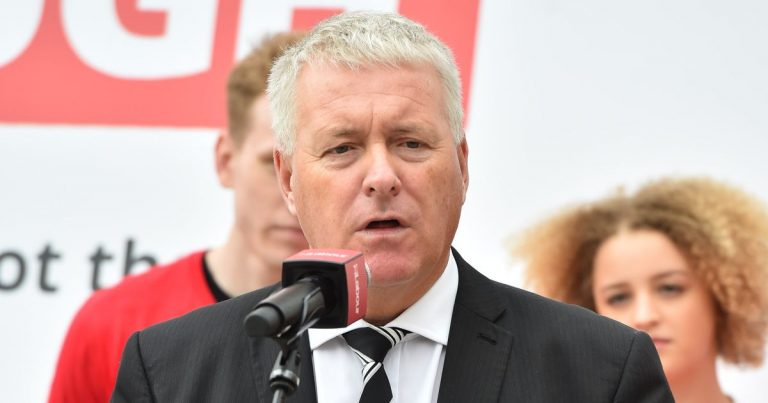
Protesting over the prejudice and intolerance of British Broadcasting Corporation (BBC), veteran show host Lord Singh of Wimbledon has quit BBC Radio Four’s ‘Thought for the Day’ after 35 years, while blasting them for over-sensitivity.

According to the reports, Inderjit Singh, known as Lord Singh who has been a famous voice of the Today programme for over three and a half decades, said that the BBC tried to block him from discussing a guru from his religion who fought against the forced conversion of some Hindus to Islam in 17th century India.

A celebrated interfaith activist, Indarjit Singh hit out at the BBC for its ‘prejudice and intolerance’ after he was told that the broadcast may have offended Muslims, despite that fact that there was no criticism of Islam on the show.

Hitting out at the BBC, he said organisation’s ‘misplaced sense of political correctness’ forces contributors to say only non-controversial statements. Speaking to the reporters, Lord Singh said, “It was like saying to a Christian that he or she should not talk about Easter for fear of giving offence to the Jews.”

Lord Singh of Wimbledon, who is now 87, was let go after he threatened to quit instead of having his religious teachings insulted. However, he was not informed regarding who was actually offended by his broadcast.

After quitting the radio, Commission for Racial Equality advisor Lord Singh complained about his treatment but a review by BBC director of radio James Purnell rejected his complaint.

“The need for sensitivity in talking about religious, political or social issues have now been taken to absurd proportions with telephone insistence on trivial textual changes right up to going into the studio, making it difficult to say anything worthwhile. The aim of ‘Thought for the Day’ has changed from giving an ethical input to social and political issues to the recital of religious platitudes and the avoidance of controversy with success measured by the absence of complaints,” said Singh.

He said he believed Sikhism founder Guru Nanak and even Jesus Christ would not be allowed near Thought for the Day’ if they were alive today.

A BBC spokesperson said, that ‘Thought for the Day’ is a live topical segment and it was usual to make editorial changes so that it reflects the biggest news stories of the day. “We disagree with Lord Singh and don’t recognise his characterisation of Thought for the Day.” said the spokesperson.

Reportedly, Lord Singh discussed the achievements of Guru Tegh Bahadur on his ‘Thought For The Day’ show. However, he did not explicitly state that he was banned for speaking about Guru Tegh Bahadur.

Born in Amritsar, Guru Tegh Bahadur was the ninth of the ten Gurus who founded Sikhism and is honoured and remembered as the man who championed the rights for all religious freedom. He taught liberation from attachment, fear and dependence.

During the reign of Mughal Emperor Aurangzeb, Islam was imposed on people and Hindu temples were demolished and turned into mosques. Guru Tegh Bahadur protested against the imposition of Islam amidst huge persecution and also refused himself to convert to Islam. As a punishment in 1675, he was beheaded in Delhi at the age of 54. The site of his execution has become an important Gurdwara known as Gurdwara Sis Ganj Sahib.

IAF admits downing own chopper, ‘big mistake, will take action’ says Air Chief Marshal RKS Bhadauria

0

The IAF chief, Air Chief Marshal RKS Bhaduria in a press release on Friday admitted that the downing of Mi17 chopper on February 27 was a big mistake of the Indian Air Force.

“Court of Inquiry has been completed and it was our mistake as our missile had hit our own chopper. We will take action against the two officers. We accept this was our big mistake and we will ensure such mistakes are not repeated in future,” said the newly appointed IAF Chief during a press conference.


On February 27, the day Indian and Pakistani air forces were engaged in a fierce dogfight, a Mi-17 IAF helicopter crashed in Jammu and Kashmir’s Budgam after it was hit by an Indian missile.

The helicopter was flown by Sqdn Leader Siddharth Vashisht with other members Sqdn Ldr Ninad Mandvgane, Kumar Pandey, Sergeant Vikrant Sehrawat, Corporals Deepak Pandey and Pankaj Kumar. It crashed at Budgam after taking off from Srinagar airport at 10.10 am, soon after Pakistani Air Force jets had attempted to violate the Indian airspace at around 9.30 am that day.

The fierce engagement had forced Pakistan to abandon its misadventure at Uri but the air defence system is believed to have fired at the helicopter by then, killing all the personnel and a civilian on the ground, officials had said at the time of the incident. A high-level probe had found at least four officers guilty for the crash.

An Indian Air Force court of inquiry confirmed that the aircraft became the unfortunate target of its own forces, contrary to Pakistan’s claim that they had shot it down. The probe confirmed that the ‘Identification of Friend or Foe’ (IFF) system on-board the helicopter was switched off and there was a “vital gap” in communication and coordination between the ground staff and the crew of the chopper.

The IFF helps air defence radars identify whether an aircraft or helicopter is friendly or hostile.

Moreover, elaborating on the Balakot strikes, the air chief said, “Air Force has achieved many important milestones in the last year including 26th February when we successfully targeted terror camps in Balakot. On 27th February in the aerial battle after attack by Pakistan, Indian Air Force lost one MiG-21 and Pakistan lost one F-16.”

Speaking on the future possibility of Balakot-like strike, he said, “If there is a terror strike (from Pakistan), it will be responded as per the government decision on it.”

Answering ANI’s question on whether Pakistan would be able to jam India’s communication with pilots as they did in case of Wing Cdr Abhinandan Varthaman, IAF Chief RKS Bhadauria said that: We have taken steps to ensure safe radio communication. They won’t be able to hear our communication.


It was reported earlier that the Indian Wing Commander, Abinandan Varthaman, whose aircraft was shot down on February 27 during a dogfight with Pakistan Air Force (PAF) jets and he was captured subsequently, could not hear instructions asking him to turn back because his communications system was jammed by Pakistan.

Meanwhile, the Indian Air Force on Friday also showcased the story of the Balakot aerial strikes through a promotional video at the annual Air Force Day press conference, addressed by Air Force Chief Air Chief Marshal Rakesh Kumar Singh Bhadauria.


In a brave retaliation to the ghastly Pulwama attack, India had conducted the Balakot airstrike in the wee hours of February 26 when Indian warplanes crossed into Pakistani territory and dropped bombs in the vicinity of the town of Balakot in Khyber Pakhtunkhwa province in Pakistan.

A story told by defence spending of India, Pakistan and China over the decades

Usually, defence budgets are seen in a very restricted fashion. The absolute amount allotted and the rise in the budget from the previous year is what’s primarily evaluated. But defence spending tells a much deeper economic and geopolitical story that needs to be analysed especially now that we have the advantage of hindsight.

Let’s start off by comparing India’s and Pakistan’s historical defence budgets (amount in billion US dollars).

Historical defence budgets of India and Pakistan

The comparison has been made for every ten years but the years 1965, 1971 and 1999 have been included for they signify conflicts between India and Pakistan, and 1991 and 1992 have been mentioned as they were the peak years of Pakistan’s Operation Topac in Jammu and Kashmir.

Following graph shows the percentage rise in budgets for both nations.

Percentage rise in defence budgets of India and Pakistan

1965 Indo-Pak War

In 1963 and 1964, Pakistan’s defence spending was $0.74 bn and $0.83 bn respectively. During the year of the war – 1965 – it crossed the one billion mark for the first time to reach $1.348 bn.

This reflects an increase of 82% in two years and 61% in one year! To add perspective, in the last 30 years, not even China has increased its military spending by this much in a span of one year despite witnessing incredible economic growth.

We now know why Pakistan did so. After India’s loss in the 1962 Indo-China war and with the death of Jawaharlal Nehru, Pakistan saw a great opportunity to cut-off Kashmir from India. Planning for this war clearly shows in the rise in its defence budgets.

Meanwhile, India’s military spending fell by 4.6% between 1963 and 1965. In 1963, India’s defence budget was 10.09 times of Pakistan’s; by 1965 it fell drastically to 5.29 times.

Preparation for a war against India is aptly evident in the purchases of arms made by Pakistan from 1963 to 1965. It bought arms worth $0.497 bn in this period; $0.216 bn was spent on aircraft (43.4%) and $0.166 bn on armoured vehicles which include tanks (33.4%). A total of 77% spent on arms that were immediately needed against India.

1971 Indo-Pak War

Pakistan’s military spending during 1965-1970 again saw a rise; it reached $1.561 bn in 1970 seeing a 16% growth. In the same period, India’s spending FELL by 0.43%. The valley between the spending reduced further – 10.29x in 1963, 5.29x in 1965, 4.55x in 1970. This probably buoyed Pakistan to risk another conflict with India.

Similar to 1965, Pakistan’s spending prior and during the war may reflect its intentions, or at least, it does show preparedness for conflict. From 1968-1971, Pakistan bought arms worth $1.97 bn of which $0.84 bn was spent on aircraft (43%); $0.66 bn on armoured vehicles (33%); and $0.16 bn on ships (8%).

Operation Topac

Operation Topaz or the Zia Plan was Pakistan’s detailed and rather ingenious plan to burn and cut-off Kashmir from India through terrorism, pro-Islam and anti-India propaganda, and by forcing the Indian Army to spread all over J&K and Punjab thus thinning its efficiency and abilities.

It was thought of in 1984, planned till 1986, and brought into play in 1989. Now look at Pakistan’s defence budget rise during the 1980s — 121% from $2.31 bn to $5.1 bn. A clear sign of Pakistan’s insidious intentions.

This reveals another aspect. The Soviet-Afghan War took place between 1979-1989. By 1989 the Soviets had exited. During this period Pakistan acted as America’s ally in training the Mujahideen, supplying them with weapons, funnelling funds; Pakistan was America’s eyes on the ground.

Is it, thus, just a coincidence that during this period Pakistan’s defence budget more than doubled? Not at all. This shows Pakistan embezzled American funds and directed them towards its own budget.

The years 1991 and 1992 were the most active militancy-wise in Kashmir. Again, Pakistan added funds to its defence budget during this period. India, on the other hand, was weakest economically and militarily with its defence budget shrinking a whopping 12% between 1989 and 1992.

Focus also on Pakistan’s paltry growth in defence spending during 1990-2000; just 8.4%. This reflects how once Russia exited Afghanistan, Pakistan no longer had American funds to add to its own budget.

Each war till the 1990s (whether conventional or covert) that Pakistan imposed on India had one thing in common – Pakistan’s military spending expanding prior to the conflict and India’s shrinking.

UPA II

The worst phase for our military was 2010-2013 when the defence budget FELL by 0.13%. If we step back a year, that is to 2009, military spending increased from 2009 to 2013 by just 0.26%. In the same period, Pakistan increased its spending by 20% and China by 35%. Two enemies to contend with along with serious internal issues and the government didn’t even give the forces enough funds to cover inflation!

Correlate this to the tremendous corruption during this very period and it becomes clear that the money meant for our security was instead being was pocketed.

Now for some other interesting statistics regarding the defence spending of the two neighbours.

Defence spending of India and Pakistan

Which nations were top weapon suppliers during periods when both nations were at war? (time period = year preceding a war, year of the war, and the subsequent year)

Top weapon suppliers to India and Pakistan before wars

We turn to the top 5 weapon suppliers for India and Pakistan from 1950 to 2018 enabling a holistic picture that caters to wars and changing geopolitical times.

Overall top weapon suppliers to India and Pakistan

There are many recent deals like the Rafale one that haven’t been accounted for in the data.

Of the total $4.00 bn of weapons imported from Israel, $2.09 bn have been purchased since 2014 (52%), that is when Narendra Modi came to power! As importers of arms, India ranks first with imports of $121.1 bn while Pakistan ranks 18th importing arms worth $37.4 bn.

To conclude, I give a brief comparison of India’s and China’s defence spending, after all, China is India’s most potent long-term threat (amount in billions).

Defence spending of India and China

In 1990, our military spending was at par with China, and look how by 2013 the difference became unassailable. A sad state indeed of how India couldn’t capitalize on its economic potential and thus modernize its forces as needed.

From 1990 to 2013, China’s budget increased 8.4 times while India’s by just 2.6 times. China expanded economically at an unprecedented rate in the last 30 years which reflects in its military spending. India, however, missed the bus. Too much internal politics, too much corruption, lack of vision, no proper long-term growth plan. Irreparable damage done.

Following graph shows the percentage rise in budgets for both nations.

Percentage rise in defence budgets of India and China

Some more valuable statistics for both nations.

Defence spending of India and China

Despite India’s average defence budget as a share of GDP being 35% more than China’s in the last 30 years, presently China’s overall spending is 260% more than India’s. This shows how a robust economy should be the utmost priority; military spending and modernization of forces becomes a natural byproduct.

A major takeaway from the above data is that China has not been frenzied about military development. This is in stark contrast to Pakistan or even to most Western countries. A 2% military spending of GDP and 10.8% of government spending is not exorbitant. To lay this in perspective here is the spending as a % of GDP for a few other nations:

  • France: 2.6%
  • South Korea: 2.8%
  • Russia: 3.8%
  • America: 3.8%
  • Saudi: 10.1%


Accused Ayush Vedant arrested after woman’s allegations of online harassment go viral on social media

Recently, a 20-year-old woman named Ankita Shukla had shared her ordeal of online harassment that she had been facing by a group of men, allegedly associated with the BJP IT cell. Fed up with the continuous harassment and police inaction despite her written complaint, Ankita had to open a Twitter account to have her voice heard.

In a series of tweets, Ankita had shared the lewd messages, Facebook posts and chats where a group of men, namely Ayush Vedant, Kunwar Anmol, Shrikant Rathore and others had been hounding her. Ankita had shared that she had filed a written complaint regarding the online harassment at cybercrime cell, Jamshedpur and still had received no help.

Now, OpIndia.com has learnt from reliable sources that Ayush Vedant has been arrested and as per our source, he is being taken to Jamshedpur. He was arrested some time this afternoon. The whereabouts of other men involved in the matter are not known as of this moment.

After Ankita’s tweets went viral, the National Commission of Women has taken cognisance of the matter. In a later tweet, Ankita stated that NCW chairperson Rekha Sharma had talked to her personally and has assured all help. In his defence, Ayush has said that Ankita also indulged in being abusive and targeted him and his family. His mother has filed a police complaint regarding the same.

This is a developing story and we will update our report with more information as and when we receive it.

Spreading misinformation, violating suspension orders: UP govt to probe fresh allegations on Dr Kafeel Khan

Recently Dr Kafeel Khan, one of the accused in the BRD Medical College and Hospital children’s death case in Gorakhpur, had taken to social media to spread false news that he has been given a ‘clean chit’ in the 2017 case in a departmental inquiry.

The Uttar Pradesh government has now initiated a fresh inquiry against him for spreading misinformatio in the media and forcibly entering a hospital and trying to treat patients during his suspension period.

On September 22, 2018, Dr Khan had reportedly forcibly entered the paediatric ward of the district hospital in Bahraich with some of his supporters and tried to treat patients despite being under suspension. Khan’s actions had caused panic in the ward and had also allegedly endangered the lives of critically ill children at that time. With this, Dr Khan faces a total of seven charges.

Rajnish Dubey, the Principal Secretary Medical Education Department, who heads the probe against Khan, has stated that the Khan has been found guilty of indulging in private practice and being attached to a private nursing home in Gorakhpur till April 2017. Dubey will head the probe on the fresh allegations too.

Without divulging the full details of the report, various media houses lapped up this information and reported that a departmental inquiry had ‘absolved Dr Kafeel Khan of all the charges’ of medical negligence and corruption at Gorakhpur’s BRD medical college where several infants had died due to disruption in oxygen supply over alleged nonpayment of dues. Media reports had even said that Khan has now demanded a CBI probe and referred to himself as a ‘scapegoat’.

On September 28, BRD medical college had released a statement in which it clarified that there have been reports in various media publications like Times of India, Amar Ujala, NDTV, News 18 as well as social media like WhatsApp, Twitter and Facebook regarding suspended Dr Kafeel Khan absolving him of all the accusations. The statement acknowledges that Dr Kafeel Khan has also made statements on social media in this regard.

It said that while Dr Kafeel Khan has been found not guilty of negligence and corruption, but he has still been found guilty of running a private practice and two other accusations. The committee is still inquiring into the matter and no decision has been taken in case of Dr Kafeel Khan. Other than these, inquiry is still on for other accusations against him.

The administration said that it is incorrect to say that Dr Kafeel Khan has got a clean chit.

In an extremely tragic incident, 30 children had died in the Baba Raghav Das Medical College, Gorakhpur over a period of 48 hours in August 2017. Some of the deaths happened after contractors allegedly stopped supplying liquid oxygen due to non-payment of dues of about Rs 63 lakh. Khan was arrested after it was revealed that he was involved with taking oxygen cylinders meant for the hospital away for use in his own nursing home.

Khan was also allegedly arrested in 2009 in Delhi on charges of impersonating someone in the examination for medical registration. Some reports have also claimed that he was suspended from Manipal University for criminal cases against him.

Propagandists share 2017 incident of Dalit man beaten to death allegedly for attending Navratri event as recent one

Even as the country is gripped in the fervour of Navratri festivities, some Hinduphobic usual suspects have resorted to demonising Hindus by passing off a 2 years old tragic news of a Dalit man beaten to death allegedly for attending a Garba event as a recent one to fuel discord among society and create fissures within Hindu community.

The case pertains to an untoward incident happened in October 2017 in Gujarat where a Dalit man was beaten to death allegedly for watching Garba event. Several Hinduphobic propagandists have shared this 2017 report to allege as if the incident has happened during the current Navratri festival.

It all started when ParanjoyGuha Thakurta, who has been caught lying through his teeth on multiple occasions, shared the old news article and depicting as if the incident happened during the continuing Navratri celebrations.

‘Journalist’ Paranjoy Guha Thakurta sharing 2017 news without disclaimer

He did not issue any disclaimer that the above unfortunate incident is from 2017. Soon, the article was picked up by the usual suspects like actor Swara Bhaskar who shared the old piece of news expressing shock at the unfortunate incident and asking “What the F*** is happening India??”

2017 incident shared by Swara Bhaskar

When Twitter users pointed out that the news article is about a 2 years old incident and not a current one, instead of humbly apologising for misleading her followers with a past news article, Swara continued her propaganda asking if the perpetrators of the incident are jailed or not.

Clarification issued by Swara Bhaskar that incident is old. However, this clarification didn’t get as much traction.

To her credit, at least she bothered to clarify and put disclaimer that the incident is from 2017.

The Karnataka Pradesh Congress Seva Dal too shared the old news of a 21-year-old Dalit man beaten to death allegedly for watching the Garba in its bid to assert that people in India are unsafe under Modi rule.

Karnataka Congress Sevadal sharing 2017 incident

Congress leader Harish Iyer, who identifies himself as a motivational speaker, also joined the list of personalities who shared the misleading news without caring to inform their readers about the year in which it happened.

Congress leader Harish Iyer sharing 2017 report without disclaimers

This triggered ‘The Logical Indian’ to publish a new article about the death of the Dalit man, portraying it as if the incident happened in the ongoing Navratri. Furthermore, no disclaimer was provided by the Logical Indian about the provenance of the incident in their headlines or in the body, making the readers believe that the incident was of recent occurrence.

The Logical Indian sharing 2 year old news as latest in a now deleted tweet
The Logical Indian’s article on Dalit man lynched, now deleted

However, perhaps after realising that they have indulged in publishing news without verifying, The Logical Indian abruptly pulled down the article without tendering any explanation for the same.

Fun fact: The Logical Indian’s Facebook page started out as an Arvind Kejriwal fan page in December 2013 which wanted to see him as the next prime minister of India.

The Logical Indian’s Facebook page which was originally Arvind Kejriwal fan page

The Hinduphobic bigots who partook in disseminating the misleading news report showed no regard for first verifying the news, the time and date of its occurrence and other related details before sharing it with their followers. For them, hatred for the current regime trumps everything else. It is to this end that a 2-years-old news piece was shared as the latest one to demonise Hindus as intolerant and oppressive and plant seeds of doubts among Dalits against Hindus.

In a first, Western Railways installs three benches made of recycled plastic at railway station

0

In its effort to promote the central government’s flagship initiative, the Swachh Bharat Abhiyan, the Indian Railway Western Railway zone, has installed three benches made of recycled plastic in the premises of Churchgate station in Mumbai.

According to a senior WR official: “It is perhaps the first time that recycled plastic is used in a core passenger amenity on Indian Railways. Following innovative and eco-friendly ways to curb the menace of plastic pollution, three benches made of recycled plastic have been installed at platforms 2 and 3 at Churchgate,” he said on Thursday. He also specified that these benches are strong and can bear a lot of weight.


These benches are made from the collection of plastic in a drive held at Western Railways under ‘Bottles for change’ Program in association with M/S Bisleri International Pvt. Ltd. They have been made from post-consumer mix plastics such as multi-layered plastic (MLP) and plastic bags/pouches.

Nearly 109 tonnes of plastic waste was collected during a fortnight-long cleanliness drive carried out by the Western Railways at its stations.

As an appreciation gesture, M/s Bisleri International Private Limited placed three benches made by recycled plastic as a part of its CSR initiative. Almost 40 to 50 kg of soft plastic went in the making of one bench, the official said, adding these seats are waterproof and ideal for outdoor locations.

The ‘Bottles for Change’ is aimed to educate the public about the importance of sending plastic objects for recycling and not to treat it as waste which leads to a cleaner environment.

“These benches are strong and heavy which will help in protecting the environment from contamination,” the ministry tweeted on Wednesday.