Friday, April 10, 2026
Home Blog Page 6085

High Level Committee recommends CSR expenditure to be made tax deductible, non-compliance to be made civil offence with no imprisonment

After facing lots of criticism over strict punishment for non-compliance with CSR norms, there is some good news for the corporate sector, as a high-level committee has recommended that CSR expenditure should be made tax-deductible, and suggested that the non-compliance of CSR should be a civil offence attracting only penalty, not imprisonment.

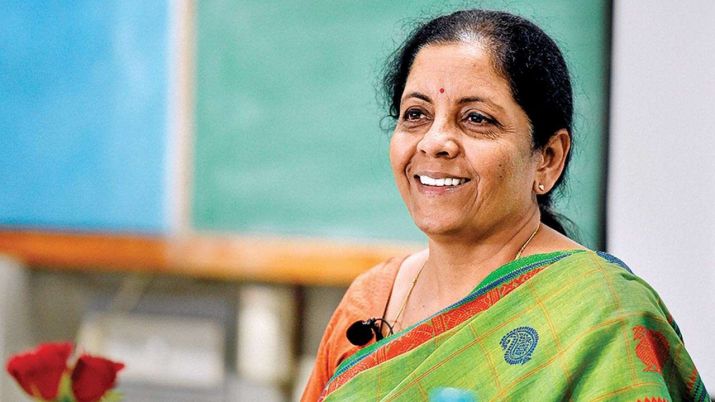
The Report of the High-Level Committee on CSR was presented to the Finance and Corporate Affairs minister Nirmala Sitharaman by Injeti Srinivas, Secretary, Corporate Affairs. The committee has made several important recommendations in regard to the mandatory Corporate Social Responsibility.

The report recommends that CSR expenditure should be made tax-deductible from the income, and the mode of CSR implementation should be tax neutral. It suggests that implementing agencies should be treated as partners and not service providers, so that the issue of indirect tax applicable to them can be addressed.

The committee has also recommended that unspent balance on CSR should be allowed to carry forward for a period of 3 to 5 years. The report says that the unspent CSR amount should be transferred to a separate account designated for this purpose. The amount in this amount will have to be spent within three to five years, else it will be transferred to a fund specified by the central government.

In a very important recommendation, the committee has suggested that violation of CSR compliance should be made a civil offence and it should be shifted to a penalty regime. If accepted, it would remove the provision of jail sentencing for CSR compliance violation, which will only impose a financial penalty for the same. The committee recommends a penalty of 2-3 times of the default amount, adding that there should not be any imprisonment for defaulting on CSR compliance.

It has also recommended aligning schedule 7 of companies act, which deals with CSR activities, with Sustainable Development Goals (SDG) by adopting an SDG plus framework.

The scope of CSR activities has been suggested to expand with the inclusion of sports promotion, senior citizens’ welfare, welfare of differently-abled persons, disaster management and heritage protection. The committee has suggested balancing local area preferences with national priorities, the introduction of impact assessment studies for CSR obligation of ₹5 crore or more, and registration of implementation agencies on MCA portal.

The committee has recommended that the government should not treat CSR as a means to resource gap funding for government schemes. The committee also wants to emphasize on active CSR work by the corporate sector, and has recommended that passive CSR activities allowed under the law, such as contribution towards PM’s national relief fund or any such fund of central of state governments, should be discontinued. However, it suggests creating a specific fund to transfer unspent fund allocated by companies for CSR.

The report recommends that companies with CSR amount below ₹50 lakh should be exempted from forming a CSR committee. It has also recommended that the reporting on CSR should be strengthened, and it should be brought under the purview of statutory financial audit.

The High-Level Committee on CSR was constituted in October 2018 under the Chairmanship of Secretary (Corporate Affairs) to review the existing CSR framework and make recommendations on strengthening the CSR ecosystem, including monitoring implementation and evaluation of outcomes.

As per the Companies Act, companies having a minimum net worth of ₹500 Crore, or minimum turnover of ₹1000 crore, or minimum net profit of ₹5 crore have to spend 2% of average net profit made in the last three years in CSR activities. The recently amended Companies Act has added the provision of jail term upto three years for non-compliance of CSR. This had attracted a huge uproar, and last week Finance Minister Nirmala Sitharaman had assured that the penal provisions like jail term will not be implemented.

The full report of the committee can be accessed here [PDF].

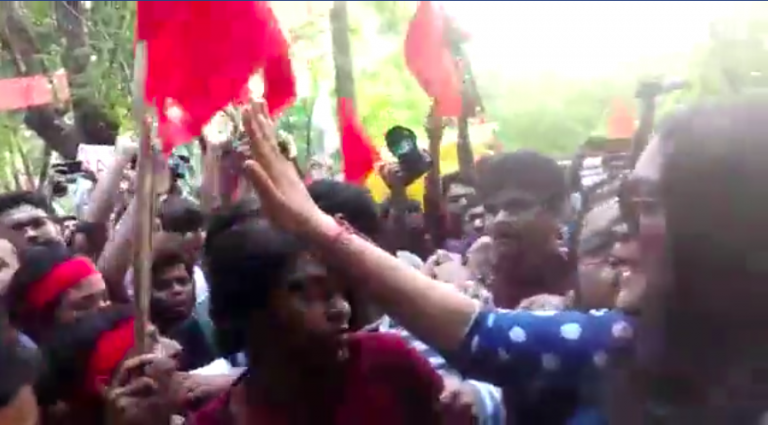
Priyanka Gandhi’s aide Sandeep Singh manhandles ABP Ganga news reporter, threatens him with “Thok ke baja dunga”

In a shocking incident, a journalist was manhandled by Congress General Secretary Priyanka Gandhi’s close aide Sandeep Singh when he was asking Priyanka her views on abrogation of Article 370. ABP Ganga reporter Nitish Pandey was blatantly abused, threatened by Singh for doing his job: asking questions.

[youtube https://www.youtube.com/watch?v=X3lacYTCUxs?start=30]

When Priyanka denied speaking to the reporter over the issue after which Sandeep Singh started issuing threats to the reporter.

While issuing threat to Pandey, Singh menacingly said, “Suno Suno, Thok ke yahi baja dunga, marunga toh yehi gir jaoge(Listen, I will give you such a sound beating that you will collapse here).”

However, the journalist didn’t cow down from the threats issued by Sandeep and persisted with his questions to Priyanka Gandhi. The reporter was then manhandled by Singh as he continued to beseech Priyanka Gandhi to intervene and stop the hooliganism. “Right in front of you Priyanka ji, your workers are pushing away the cameras, roughing up journalists,” Pandey said.

However, as can be seen in the video, Priyanka showed no interest in rescuing the beleaguered journalist while he was being roughed up and threatened by Singh. Pandey made repeated entreaties to Priyanka to intervene but she turned a blind eye to his predicament.

On realising that his intimidation has been caught on camera which might put his political bosses in a fix, Singh tried to shift the blame on the journalist, accusing him of being a BJP paid stooge. “You have been paid by the BJP to do this,” Singh said to Pandey.

Sandeep Singh is a detractor turned Congress admirer. He had once shown black flags in a demonstration against erstwhile PM Dr Manmohan Singh and is now a political advisor to Rahul Gandhi and also writes his speeches. The former JNU student, Singh has also been travelling with Priyanka Gandhi ever since she was appointed as Congress general secretary in Uttar Pradesh. As JNU Students Union President, he was associated with AISA (All India Students Association), the students wing of the far-left Communist Party of India (Marxist-Leninist). As per reports, he was also associated with Anna Hazare movement for Lokpal. Eventually he started writing speeches for Rahul Gandhi.

Ayodhya case day 5: SC asks for exact spot of Ram’s birth, Ram Lalla lawyer says it is below the Babri Masjid dome

0

The day-to-day hearing in the Ram Mandir-Babri Masjid land dispute case in the Supreme Court got into its fifth day, after a three-day interval. After the weekends, the court remained closed on Monday due to Eid. A Constitution Bench comprising Chief Justice of India Ranjan Gogoi, Justices SA Bobde, DY Chandrachud, Ashok Bhushan and Abdul Nazeer is hearing the case.

The 5-judge bench resumed hearing the case with Senior Advocate CS Vaidyanathan, appearing for Ram Lalla Virajmaan, making his submissions in the case.

The Ram Mandir case has been taken up for a day to day hearing after the efforts to arrive at an amicable settlement through mediation failed.

Counsel for deity Ram Lalla Virajmaan puts forth their submissions:

CS Vaidyanathan read out the pleadings of Muslim parties in the case. “They don’t have a case that they have been in continuous possession of the premises”, he submited.

The counsel argued on how the birthplace (Janamasthan) can be regarded as a juridical place. He said that there was a temple at the spot before the mosque was built. There is no evidence that namaz was offered in the inner courtyard, added the senior advocate.

Hindus have been undertaking the holy pilgrimage to Ayodhya since time immemorial. While putting forth this submission, Vaidyanathan cited the reference of a 72-year-old Muslim witness named Mohammad Hasim. According to the lawyer, the witness had testified that Ayodhya is as sacred for Hindu’s as Mecca is for Muslims.

Supreme court asked the Ram Lalla’s counsel, as to which spot was regarded as Ram’s birthplace. To this CS Vaidyanathan submitted that the birthplace was below the central dome of the Babri Masjid. Three judges of the Allahabad High Court had held that there was a temple at the disputed site, Vaidyanathan informed the bench.

By 2:1 majority, the birthplace was narrowed down to the spot under the central dome of the demolished mosque. However, Justice Sharma treated the entire property as the birthplace. Justice SU Khan of the high court had said that the mosque was built on the ruins of the temple,” the senior advocate told the bench.

Citing an SC order, the counsel said that the presence of an idol is not necessary for a place to be regarded as holy in Hinduism. If there is a sense of reverence – religious efficacy is believed- no idol is required for a place to be regarded as holy, said C S Vaidyanathan.

He added, “There is no need for the actual presence of idol, belief and faith of Hindu persons make the place holy. Medieval travelogues by foreign travellers mention parikrama by Hindu devotees at the Ram janmabhoomi. This indicates that the practice of worship in the outer courtyard continued. There is no proof that between 1856 and 1949 there was only a mosque. The evidence will show that between 1855 and 1934 there is no proof that namaaz was actually offered in the mosque.”

Hindus believe, even PM Modi once said Hindus see God in every animal, tree, river, hill, & stone. Then every place & every object is holy. Why give special importance to one place or a temple? Only one of the 2 contradictory beliefs can be true, not both, said the counsel appearing for Ram Lalla.

Meanwhile, Senior advocate K Parasaran, also appearing for deity Ram Lalla Virajman, added to the argument, explaining the abstract nature of Hindu religion and the importance of symbolism.

Justice Ashok Bhushan agreed with Parasaran’s argument, citing the Kamadgiri temple parikrama. “Ram and Sita are believed to have lived on that hill- sanctity attached based on this belief alone”, said the judge.

After the hearing resumed post-lunch, CS Vaidyanathan submitted that the birthplace itself is a deity. It’s not the abode of the deity. So, there cannot be a partition of the Janmasthan.

Quoting (2005) 1 SCC 457, para 16, to state that a religious endowment does not create a title in respect of the property dedicated in anybody’s favour, Vaidyanathan argued that possessory right cannot be claimed against a place which itself is a deity.

Justice SA Bobde asked, so your submission is that there used to be a temple there and by virtue of the ruins, it continues to be a deity? To this the counsel replies, the structure may have been ruined but the faithful devotees remained.

In the meanwhile, CJI Gogoi reprimanded Rajeev Dhavan, the counsel for the Sunni Waqf Board, who objected to Vaidyanathan citing findings of reports etc and called this “hop, skip and jump” way of argument, adding that no evidence has been placed on record yet. Gogoi asked Dhavan to wait for his turn to place his evidence if he so wishes to.

The CJI clarified that the counsels can take as much time as they want to put forth their submissions, “Mr Vaidyanathan you argue your case as you want and take as much time as you want. We are not in any hurry. This is for all the Counsel. Let us be loud and clear here. We are not in any hurry and we don’t want any more interruptions”.

With this, the bench concluded the hearing for the day, and it will resume tomorrow.

The daily hearings were prescribed by the Constitutional bench on August 2 after taking note of the failed mediation by a three-member panel led by former Supreme Court judge FMI Kalifulla, also comprising of spiritual guru Sri Sri Ravishankar and senior advocate and renowned mediator Sriram Panchu.

The panel had said in its report that the Hindu and the Muslim parties had not been able to find a solution to the long-standing title suit.

Arrest warrant issued against Shashi Tharoor for his Hindu-Pakistan comment

0

A Kolkata Magistrate Metropolitan Court had issued arrest warrant against Congress leader Shashi Tharoor in connection with case filed by Sumeet Chowdhury over his Hindu-Pakistan comment.


The warrant issued pertains to a remark made by Tharoor last year. Advocate Sumeet Chowdhury had filed a case under Section 153A/295A of the Indian Penal Code and Section 2 of The Prevention of Insults to National Honour Act, 1971. Chowdhury said that the reason behind his registering a case was that the politician wantonly insulted the nation by questioning its secular credentials, besides refusing to apologise for the same.

In July 2018, Shashi Tharoor had said that if BJP won 2019 Lok Sabha elections, it would create a condition leading to the formation of a “Hindu Pakistan”.

While addressing an event in Thiruvananthapuram, Tharoor had stated that the BJP will compose a new constitution which will turn a secular India into much like Pakistan, where the rights of minorities are trampled upon.

“If they (BJP) come back in power again, our democratic constitution will be violated and they will radically alter it” the Congress leader had said.

Tharoor had further added, “The new constitution will do away with the principles of equality and instead enshrine Hindutva beliefs, stripping the minorities of the equality and relegating them to second-class citizens, which the great founders of this country-Mahatma Gandhi, Sardar Patel, Nehru and Maulana Azad would not have wanted.”

Though Congress and its leaders are known for their derogatory remarks and false equivalences, they also have the tendency to stand by defending their statements with impunity. Tharoor had not only stood firm to his statement but also refused to apologise for the same. Not only that, even the Congress party did not openly condemn the statement but gave an excuse that what Tharoor said was in his personal capacity.

Amusingly, the ‘Why I am a Hindu’ author was busy promoting his new book ‘The Hindu Way: An Introduction to Hinduism’ on Twitter when the arrest warrant was issued.

BBC’s fake reportage on Kashmir did not start in 2013, it began in the 1990s

Turns out BBC has a history of reporting fabricated stories. Days after the BBC published reports that all is not well in the valley following abrogation of Article 370, the Indian Government has refuted the claims and asked BBC and another ‘news’ channel to provide raw footage for their claims that the Indian Army had resorted to violence in Jammu & Kashmir.

As it turns out, however, BBC’s fake reportage on Kashmir goes way back. As far back as in the early 1990s, the British media house was airing blatantly fake news on the matter even then. For instance, in 1993, the BBC claimed that the Hazratbal Shrine was raided by the Indian Army in an Operation Blue Star-like event as a consequence of which it had caught fire.

In reality, the Border Security Force had surrounded the Mosque after terrorists had occupied it. While civilian separatists were killed in the violence that ensued when they demanded that the BSF end their siege of the Mosque, the BBC’s coverage of the issue was horribly inaccurate.

Two years later, in 1995, when the Charar-e-Sharif shrine was burnt down by Kashmiri terrorists, the BBC aired footage of Russian tanks in Chechnya which created the impression that it was the Indian Army’s use of tanks that had damaged the shrine. After the Indian government registered their objection to BBC’s propaganda, the BBC aired a correction in its Asian segment, not to the rest of the world. It attributed the error to technical goof-ups.

During the Charar-e-Sharif incident as well, BBC’s first report said that Indian troops had “stormed” the town and “captured” the shrine. BBC’s television network continued to use the term ‘storm’ even after BBC Radio corrected itself in subsequent broadcasts.

Thus, it becomes evident that BBC’s reportage on Kashmir is less than reliable. Even on general issues regarding India, BBC has displayed a remarkable tendency to twist facts to peddle an anti-India narrative. Earlier in March, after the Pulwama attack and India’s retaliatory strike, BBC was exposed for selectively airing only anti-India views in their Kashmir segment. Interestingly enough, it isn’t the first time that BBC has run biased or fake news on Kashmir.

Last year, BBC was exposed by OpIndia over their shoddy ‘research’ which claimed that the rise of Hindu nationalism in India is the reason behind increased instances of fake news. In reality, the ‘research’ said no such thing because the methodology did not permit the ‘researchers’ to make such far-fetched claims. BBC’s ‘research’ on fake news had proved to be the biggest fake news of all.

One wonders at this point whether one could dismiss it all as sheer incompetence or whether there’s genuine malice involved. If things haven’t gotten better since 1993, one tends to believe there’s much more to it than mere incompetence.

Former Pakistani Interior Minister Rehman Malik shares old video claiming police atrocity in Kashmir, gets called out by J&K Police

0

Deflated by the lukewarm response from the global powers and international organisations to Pakistan’s shrill assertions about the abrogation of Article 370, well known Pakistani personalities have now embraced the latest hack of scare-mongering in their bid to draw world’s attention on India’s internal matter-Jammu and Kashmir by using falsehood. Today, former Pakistani Interior Minister Rehman Malik shared a fake video claiming that Indian Armed forces are perpetrating atrocities on Kashmiris.


In his post, Malik tagged the US President Donald Trump and the United Nations to act against the alleged atrocities purportedly committed by the Indian Armed Forces against the Kashmiris by suppressing their right to self-determination. Malik stated that Gunship helicopters were used by Indian forces to attack villages in Jammu and Kashmir. Malik also claimed that though there has been a complete lockdown in the state, some Kashmiris have been sending the videos of alleged Indian brutality to them. They same video also has been posted by many persons from Pakistan making the same claim.

However, Jammu and Kashmir Police, being aware of the hybrid warfare that Pakistan and its leaders are indulging into, promptly refuted the allegations made by Senator Malik. Calling the video posted by Malik as “malicious content”, JK Police have taken up the matter with Twitter Support to get the misleading snippet removed. Malik has apparently tried to pass off an old video of shell explosion as a recent one.


The video is from 2018, when a live shell lying in a house exploded after the house caught fire in Kulgam in Jammu and Kashmir. The incident had happened during an encounter between Indian security forces and terrorists. Six civilians had lost their lives in this unfortunate incident, but it is confirmed that the video is old and it is not from the last week.

The Jammu and Kashmir police had clarified at that time that immediately the house caught fire, people had rushed to despite the police asking them to stay away. As a result, they were hit when the shell exploded due to the fire.


Yesterday too, a Pakistani journalist who couldn’t digest normalcy prevailing in the Valley attempted to incite unrest in the state by purveying fake news. Pakistani journalist Waj Khan had tweeted that there is a rift between the Jammu and Kashmir Police and the CRPF personnel in the state as one Muslim Kashmiri Policeman killed 5 CRPF soldiers for not allowing a pregnant woman to travel as she didn’t have a curfew pass. However, CRPF and Kashmir Police both rubbished the malicious lies peddled by the Pakistani journalist.

The state is gradually returning back to normal as the residents of Jammu and Kashmir are slowly coming to terms with the new reality. This is, however, in opposition to the fancied situation held by Pakistan, which would want to keep the pot boiling and somehow get the international community to intervene on the issue. The UNSC had already rejected Pakistan’s requests claiming Kashmir is a bilateral issue between India and Pakistan according to Shimla Agreement.

Social media warfare: Pakistan and ISI use Twitter to spread fake and malicious news to spread fear after abrogation of Article 370

Recently, the Narendra Modi-led government has asked micro-blogging site Twitter to suspend eight accounts for spreading rumours about the prevailing situation in Jammu and Kashmir, following the abrogation of Article 370 of the Indian Constitution.

There was one fake account which pretended to be Kashmiri separatist leader Syed Ali Geelani.

Syed Ali Geelani’s fake account, now suspended.

According to journalist Aditya Raj Kaul, that account was run by the Pakistani Army, solely to spread fake news and indulge in fear mongering.


Recently, the Centre sent a list of eight more such accounts to Twitter India, claiming that these accounts are being operated on the behest of neighbouring Pakistan. These are not all. Days after the Article 370 was abrogated, a pro-separatist Twitter account (@WithKashmir_), also believed to be operated by Pakistani’s ISI and army, was found sharing maliciously edited video of Republic TV’s editor Arnab Goswami. An old video of Arnab Goswami from February 2019 in the wake of Pulwama attack was promoted by that Twitter handle and spread by many Indian ‘journalists’ to project that Arnab had asked for the genocide of Kashmiris. After Republic TV threatened legal action, the account was deleted.

The Central Reserve Police Force (CRPF) had on Monday dismissed as malicious a tweet by a Pakistani journalist about an alleged rift between the central force and the Jammu and Kashmir Police.


Even today, the Jammu and Kashmir Police caught former Pakistan Internal Minister Senator Rehman Malik trying to spread lies after he circulated fake videos on Twitter. Senator Malik had claimed that the Indian Army had used Gunship helicopters to attack villages in Kashmir. He even asked US President Donald Trump to mediate on the Kashmir issue.

However, the Jammu and Kashmir police shot back at Rehman Malik for spreading fake news and also reported his propaganda tweet to Twitter to further action.


There has been a spurt in the spread of fake news and misinformation from both Pakistan and a certain section of Indian media after the historic decision of abrogation of Article 370 and bifurcation of Jammu and Kashmir on August 5.

As normalcy is prevailing in the Jammu and Kashmir, the Pakistani establishment seems to be disgruntled and are trying various means to instigate violence against Indians, particularly Hindus in Kashmir. A large number of Pakistanis resorted to hate-mongering and exposed their genocidal tendencies in social media after the Indian government decided to abrogate of Article 370.

Pakistani establishment seems to have lost their mental balance as they attempted to push Kashmiri Muslims to resort to committing genocide against Hindus. Earlier, an ‘intellectual’ from Pakistan has endorsed genocide against Hindus in Kashmir following the abrogation of Article 370. A video had gone viral in which self-proclaimed Pakistani intellectual Tariq Pirzada can be seen instigating Kashmiri Muslims to resort to genocide against Hindus if they settle in Kashmir. He further added that Indians have illegally ‘occupied’ Kashmir just like Jews occupied Palestine.

Earlier it was reported by India Today that cyber experts in the security agencies have found that thousands of fake accounts have been created from Pakistan to peddle fake news, fake videos and propaganda against India.

To add fuel to the fire, some of the sections of Indian political establishment, pseudo liberal-secular media and intelligentsia are parroting the lines of Pakistan to keep the pot boiling in Kashmir. The Congress party and its ecosystem are hell-bent on inciting the people of Jammu and Kashmir by deliberately toeing the Pakistani line on Jammu and Kashmir.

In another video, Mushahid Hussain, a Pakistani politician had revealed people like writer Arundhati Roy, West Bengal CM Mamata Banerjee and political parties like the Congress were “sympathisers” of Pakistan, who can be helpful for the cause of Pakistan.

Supreme Court refuses to interfere on the restrictions imposed in J&K, says government should get time

0

The apex court of the country today declined to interfere in the curbs imposed on communication and people’s movement in Jammu and Kashmir after the government revoked Article 370 and Article 35A and bifurcated the state into two Union Territories. The restrictions were put in place ahead of the historic moves to fully integrate Jammu and Kashmir into India were announced by Home Minister Amit Shah.

A Supreme Court bench comprising Justices Arun Mishra, M R Shah and Ajay Rastogi said it was too premature for it to intercede in the everyday functioning of the administration. The court has further put off the hearing on the plea for two weeks.

In response to the petition filed by Tehseen Poonawala, in which he had challenged the government’s move to impose restrictions and “other regressive measures”, the court refused to meddle in saying that the government should be given appropriate time for the normalcy to prevail. Poonawala sought withdrawal of restrictions and other alleged regressive measures including communication blockade in J&K.

When the Supreme Court asked the government how long it will take to restore normalcy in the state, Attorney General KK Venugopal informed the court that the government is monitoring the situation on a day to day basis. Citing that in the aftermath of the death of Burhan Wani, 46 persons had died in the violence, the AG said that the situation in Jammu and Kashmir is dynamic, and certain section of people are waiting for just one opportunity to create disturbances.

The apex court also criticised the petition saying it is badly drafted. Justice Mishra said, “Even the petitioner may not know the truth. It is a very badly drafted petition”.

The court said that every pros and cons have to be considered before arriving at a decision, asking who would be responsible if something really bad happens after lifting the restrictions. Justice Shah said that government also want to revert to normalcy as soon as possible. Justice Mishra added the court is all for liberty but there has to be a real picture before them, some reasonable time has to be given to wait for normalcy.

Tehseen was not the only one to file a petition in the Supreme Court for lifting the restrictions on communication channels in the state. The editor of Kashmir Times, Anuradha Bhasin today filed a petition seeking an urgent hearing to remove restrictions imposed in the state in the aftermath of Article 370 abrogation.

Vrinda Grover, advocate of Bhasin, asked the courts to direct the state administration to provide a conducive environment for journalists to carry on their jobs unimpeded. The SC bench headed by Justice Arun Mishra asked advocate Vrinda Grover to hand over the memo to the registrar and that he will look into it.

After the government took the momentous decision of repealing Article 370 on August 6 last week, assorted liberals and separatist sympathisers have expressed their disapproval with the government’s move. Senior Congress leader P Chidambaram said that move was a “constitutional manoeuvre” while many others insinuated that the decision was made to subdue the population of India’s only Muslim-majority state.

The government, on the other hand, has claimed that it is committed to the development of Jammu and Kashmir and the decision taken by it will bolster growth and development in the state besides facilitating greater integration of state with the Indian union.

The situation in the state is closely monitored by security and administrative agencies and based on the dynamic situation, restrictions are tightened or relaxed as deemed appropriate by the local authorities.

Pakistani Minister urges Punjabis in Indian Army to refuse service in Kashmir, receives befitting reply from Indians

Fawad Hussain, Federal Minister for Science & Technology in Pakistan, has issued an appeal to Punjabis in India to refuse to serve the Indian Army in Kashmir.


The bizarre appeal, which shows how desperate the clueless leaders of Pakistan are, demonstrates that Pakistanis are clutching at straws after being refused support by even their supposed allies over the Kashmir issue. Fawad’s tweet is receiving befitting replies from Indians on the social media network.

Tajinder Pal Singh Bagga, BJP Delhi spokesperson, said that the Indian Army is saying in one voice that they will thrash the likes of Fawad with shoes.


Another user pointed out that Sikhs occupy the highest positions in the Indian Army and they serve the country with complete devotion. He said, and correctly so, that the men in uniform in Indian Army are Indian before they are Punjabis or Sikhs.


Others pointed out that a statue of Maharaja Ranjit Singh was recently vandalized in Pakistan. That Pakistan should be the last to appeal to Punjabis.


Pakistanis are having a meltdown on social media ever since the abrogation of Article 370. The thorough refusal by the international community to stand by them has left them with very few options. The state of their economy offers them very little leeway to consider any serious military options. Furthermore, India has demonstrated in recent times that Pakistan’s proxy war will attract a disproportionate retaliation.

In absence of any substantive options, Pakistanis have been reduced to spouting inanities on social media. Surely, even Fawad is aware that Indians serving in the Army are far too patriotic to succumb to Pakistan’s insidious designs. However, since no other real options exist on the table, he has decided to attempt to sow seeds of division within the Indian Army, an attempt that is doomed to fail.

You are thieves, you have been guzzling money for 20 years: Pakistani national accuses their UN representative Maleeha Lodhi

In a video which went viral on social media, Pakistan’s Permanent Representative to the United Nations, Maleeha Lodhi was seen leaving a United Nation’s event organised in New York mid-way after being heckled by a Pakistani National who accused her of corruption.

“You are a thief and don’t deserve to represent Pakistan. What are you doing from the last 20 years? You are not representing us,” the visibly irked man reportedly questioned Lodhi when she was addressing media persons on the sidelines of the event. Pakistan-based journalist Naila Inayat had shared the video on social media.


Though the diplomat asked the Pakistani national to calm down, he continued to denounce her. Lodhi further said that she won’t respond to his questions.

Just as Lodhi was about to leave, the man heckled her and said: “You guys are stealing our money, You guys are thieves and you don’t deserve to represent Pakistan.” He further shouted, “Shame on you. You have been eating money all these years.”


Maleeha Lodhi, who was once called out for rumour-mongering as she had flashed a picture of an injured Gaza girl with no connection to India while alleging she was a victim of pellet guns in Kashmir, had in January 2019, knocked the UN to take action against Islamophobia and anti-Islamic speech. She had said that Pakistan’s Prime Minister Imran Khan has called for urgent action to counter Islamophobia.

Ironically, Cricketer-turned-politician Imran Khan had blatantly supported Pakistan’s vague blasphemy laws during the general elections in Pakistan last year.

Similarly, in 2018 India had slammed Pakistan after the Pakistani envoy had made a cynical attempt to raise Kashmir in the UN saying that the people of Kashmir are victims of “egregious crimes” such as killings and mass-blinding.

India had then too criticised Pakistan for their ’empty rhetorics’ and staunchly put it in its place by reminding them that the state of Jammu and Kashmir is an integral and inalienable part of India.