Home Blog Page 6264

Massive push for healthcare benefits: Modi govt reduces contribution of employees and employers for Employee State Insurance scheme

In a massive relief for Employees and Employers across the country, the central government led by Prime Minister Narendra Modi has reduced the percentage contribution of Employees and Employers that goes towards ESI Scheme (Employee State Insurance Scheme).

The Modi government has reduced the rate of contribution under the ESI Act from 6.5% to 4% (employers’ contribution being reduced from 4.75% to 3.25% and employees’ contribution being reduced from 1.75% to 0.75%). This would benefit 3.6 crore employees and 12.85 lakh employers.

Even though establishments are compulsorily required to enrol under ESIC, several establishments avoid the enrollment due to the high percentage of contributions required to be made by the employers. The Modi government’s decision to reduce the percentage contribution of employers as well as employees is bound to increase the participation of establishments in the ESI Act.

The reduced rate of contribution will bring about a substantial relief to workers and it will facilitate further enrolment of workers under the ESI scheme and bring more and more workforce into the formal sector. Similarly, reduction in the share of contribution of employers will reduce the financial liability of the establishments leading to improved viability of these establishments.

The government of India has constantly tried to bring workers into the ambit of ESIC and as a result number of insured workers increased from 2.1 crores in 2015-16 to 3.6 crore in 2018-19.

The ESI Act is an important provision by the Central government and forms a part of Employee health benefits. Any establishment that has more than 10 employees is required to enrol under the ESI Act.

Under this act, a specified percentage is meant to be deducted from the employees’ salary and the specified percentage is meant to be contributed by the employer. The deductions and contributions are monthly and is meant to be deposited with the ESI corporation under the central government.

This amount is then used to provide free treatment of the employee should they fall unwell.

As soon as the employee is registered under the ESI Act, he starts to get free treatment from the ESI hospitals which are run and maintained by the ESI corporation (under the central government) and state governments.

Though the employee himself (IP = Insured Person) starts availing free medical treatment as soon as he is enrolled, his family (dependants) are eligible to avail free medical treatment after the completion of 2 years of being enrolled under the ESI Act.

The ‘dependants’ who can avail of free medical service after 2 years of the employee being enrolled under the ESI Act are the spouse of the employee, the children of the employee and dependent parents.

Even superspeciality treatment like cancer treatment, dialysis etc is included in the scheme. This scheme also gives pregnancy benefits to the employees. If an employee is pregnant, they get all treatment up to the delivery of the child and beyond (maternity care). ESIC also pays the salary of the lady for the statutary period of maternity leave specified by the government of India (6 months).

In fact, if an employee meets with an accident and is, for example, hospitalised for a prolonged period, other than the cost of treatment, the salary is also paid by ESIC and not the employer.

This benefit is available for employees earning a salary up to Rs. 21,000 per month. Anybody earning above Rs. 21,000 per month is not eligible for ESI scheme.

Under the ESI act, if certain tests are not available or done by the ESI hospitals, the ESIC has contracts with several private hospitals and diagnostic centres where the patient can simply show their credentials and avail of the tests. The bills are then settled by the ESIC.

Isreali Prime Minister tweets a note of thanks to Modi for standing by Israel in UN

A day after India stood by Israel and voted against the granting of the status of observer status in UN to the Palestinian-Lebanese organisation ‘Shahed’, the Israeli Prime Minister Benjamin Netanyahu on Wednesday took to Twitter to thank Prime Minister Narendra Modi for India’s support at the UN.


“Thank you @NarendraModi, thank you India, for your support and for standing with Israel at the UN,” Netanyahu tweeted.

Earlier, Maya Kadosh, deputy chief of mission at the Israel embassy in India, had in a tweet thanked India for standing with Israel.


Kadosh mentioned that the organisation has links with Hizbullah and Palestinian Islamic Jihad that was designated as a terrorist organisation in 1997. “This is a good sign… India was the first country to support us amongst the Asia group, so we are very happy,” she added.

In a rare move, India on Tuesday voted in favour of Israel in the UN Economic and Social Council (ECOSOC) to deny the Palestinian non-governmental organisation ‘Shahed’ the observer status, after Israel said the organisation did not disclose its ties with Hamas.

On 6th June, in a resolution initiated by Israel, the Hamas allied group “The Palestinian Association for Human Rights – Witness” was prevented from receiving a special status at the UN.

The resolution was rejected by an overwhelming majority of 28-14 at the UN Economic and Social Council (ECOSOC). Besides India, the countries which supported the Israeli motion were the U.S., the U.K., Canada, France, Germany, Ireland, Ghana, Norway, Netherlands, South Korea, Ukraine, Brazil, Colombia, El Salvador, Eswatini, Jamaica, Japan, Kenya, Luxembourg, Malawi, Malta, Mexico, Paraguay, Philippines, Andora, Togo and Uruguay.

The countries which voted against the motion were Turkey, Pakistan, Azerbaijan, Iran, Sudan, Yemen, Venezuela, Saudi Arabia, Egypt, Belarus, Angola, Morocco, China and Russia.

Kerala govt transfers two police officers investigating rape case against Bishop Franco, nuns express shock and despair

The rape accused Christian priest Bishop Franco Mulakkal seems to have strong backing from the Kerala Communist government as the Pinarayi Vijayan government has transferred two police officers who were probing against the Bishop.

According to the reports, Kottayam Superintendent of Police Harishankar and Vaikom Deputy SP Subash, who were the investigating officers in the Bishop Franco’s rape case have been issued marching orders by the state government raising serious questions about possible attempts to sabotage the investigation.

Harishankar and Subash were responsible for the arrest of the rape accused Bishop Franco after a serious interrogation. The two main investigating officials have now been transferred to low key posts raising serious doubts on the intentions of the Kerala government to provide justice for the rape victims.

Reportedly, the rape victims and their supporters, who stood against Bishop Franco are now in a sense of deep shock and despair. Sister Anupama, one of the five nuns who led the protests against Franco in August 2018, said that Bishop Franco’s political and financial influence was behind these transfers. “We are in a state of shock after learning about the transfers. This is worrisome,” she told the media.

“The trial in the case began only last month [May 10] and we fear DySP K Subash Kumar’s transfer will affect the case. There have been many attempts to silence some witnesses. His transfer at this stage raises many doubts,” said Sister Anupama.

The Kerala government seems to be trying very hard to sabotage the rape case against Bishop Franco. The Kerala government has also conveniently appointed a CPI(M) member CS Ajayan as the Defence Attorney for Franco Mulakkal, in addition to two other lawyers.

The Pinarayi Vijayan government has strongly stood behind the rape accused Bishop Franco and has now caused a huge controversy after it withdrew its decision to award a cartoonist, who had expressed his opinion on rape accused Bishop Franco through his art form. The state government had decided to withdraw the award given to the cartoonist Subhas. State Culture Minister AK Balan after examining the cartoon had confirmed that it hurt religious sentiments.

Franco Mulakkal, Bishop of the Roman Catholic Diocese of Jalandhar, was accused of raping a 44-year-old nun at a guest house in Kuravilangad in May 2014 and subsequent sexual exploitations afterwards. The nun had registered a complaint in June 2018 and has also claimed that despite her complaints, the church took no action on the bishop.

The congregation had also stood by the rape accused and referred to him as an “innocent soul”. The Malankara Orthodox Church had been supporting the rape accused Bishop and attempts were also made to vilify the victim nun.

Despite the initial delay in the arrest of the Bishop, Kerala police acted subsequently upon the incriminating pieces of evidence present against Bishop Franco Mulakkal of the Archdiocese of Jalandhar, Punjab, for allegedly raping a nun from Kerala on multiple occasions. Rape accused Bishop Franco was granted conditional bail in the case on October 15 in the case.

After his release, Bishop Franco was given a grand welcome in Jalandhar where people had arrived in large numbers. Since his release, the Missionaries of Jesus has attempted to silence those four nuns for supporting the victim nun who had accused Bishop Franco of rape.

The four nuns who had supported the rape survivor nun were asked to leave the Kuravilangad convent, and go to convents, previously assigned to them. Shockingly, apart from threats and intimidation, Father Kuriakose who had testified against Bishop Franco was found dead under mysterious circumstances.

Meet the controversial anti-Hindu evangelist, Bishop Ezra Sargunam, who wanted to punch Hindus in the face

Bishop Ezra Sargunam is a controversial evangelist from the state of Tamil Nadu. He has close ties with the DMK and has on several occasions supported them, especially during the elections. He is known for his deep-seated hatred for Hindus and a penchant for Church Planting.

In a video clip that went viral on social media yesterday, he could be seen addressing a group of people and encouraging them to beat up anyone who claims that Hinduism is a religion.


In the video clip, he first tries to establish that Hindu religion doesn’t exist. He says that the during the time of the British the census takers were confused as to who they can classify as a Hindu. A committee defined the identity ‘Hindu’ as someone who wasn’t a Muslim, Christian, Sikh or Buddhist.

According to him, a group of Brahmins at that time said that they wouldn’t accept scheduled castes and tribal people as Hindus. They would also only accept a “Good Brahmin” as a Hindu. He claimed that these Brahmins classified 50% of the country’s population as not Hindu. Then while supposedly referring to the recent rise of Hindu Nationalism in the elections he said that this happened because everyone was “Hinduized” for political gains. In his own words, he said that Hinduism is an “Artificial Religion”.

The Bishop then urges the group to take up the challenge and spread the word that there is no such thing as Hindu religion. If at all anyone does oppose to this, the Bishop without hesitation asked the group to punch them in the face and make sure they bleed. He added that they could just ask for forgiveness from God after punching them and then they would be forgiven.

In the following video clip, we could hear the Bishop making a baseless allegation that Prime Minister Modi had not only helped loan defaulters to leave the country but was also financially helping them through RBI.


In an interview with a Christian prayer channel, Jebam TV, in January the ‘brave’ Bishop narrated his ordeal while attempting to convert Hindus during the Allahabad Kumbh Mela 50 years ago.


While studying at the Allahabad Bible Seminary during 1961-62, he along with some other students went to distribute religious literature to the pilgrims gathered on the banks of the Ganges for the Kumbh Mela. He was subsequently thrashed, chased away and was trampled upon by a stampede. Injured he had to walk back to his seminary for 15 miles as his companions left him in the heat of the moment. Poor Ezra was utterly dejected and had almost quit his mission.

A paragraph from www.ecionline.org narrating the incident

Ezra studied theology and was conferred the “Doctor of Divinity” degree for his dissertation on International Development and Church Growth. Well-aligned with his passing passion for Church Planting. As written on the website of Evangelical Church of India (ECI), Ezra took his first steps of Church Planting in a village called Porur on the outskirts of Madras.

A paragraph from the Evangelical Church website

From then onwards the Bishop had gone to numerous ECI churches across the country. The website strongly claims that 2000 ECI churches were established in the country by 2005.

A paragraph from the Evangelical Church website

However, establishing a mere 2000 churches didn’t quench the thirst of Ezra the Church Planter. The ECI has set a humble goal of establishing 100 thousand churches by 2056.

He was a man of literature as well, noted works included: Multiplying Churches in Modern India, Mission Mandate, Religious Toleration and Social Harmony and Perayar Nirubangal. Supposedly he’s also an orator in great demand.

Bishop Sargunam is also the founder of a socio-political organisation called Social Justice Movement of India supposedly working for the upholding the rights of the oppressed in India. In 2000, the Bishop was protesting against the Gujarat government after an alleged attack on a Church in Gujarat village. The Bishop was the Chairman of the Minority Commission of Tamil Nadu at that time.

Gujarat Minister of State for Home, Mr Haren Pandya, had written to the Tamil Nadu government that the Bishop was trying to instigate Christians in the village and creating a “law and order problem”. The Tamil Nadu Government was also informed that the chairman of its Minority Commission had no jurisdiction over Gujarat and had adopted a stance of non-cooperation with the authorities.

Christian conversion programmes have been rampant in India. A Gujarat village had banned Christians from entering after being fed with their attempts to convert. In January Union Home Minister Rajnath Singh on Tuesday said that there is a need to check mass conversions that are occurring in the country while speaking at a function organized by a Christian body. Last year, raids conducted by Jharkhand police revealed that NGOs have spent Rs 250 crore on forced conversion.

ISRO aims at a giant leap, plans to have India’s own space station

ISRO chief K Sivan said in a press conference on Thursday that ISRO is all set to propel itself to achieve the ambitious project of launching India’s own space station. The program would be an extension of its Gaganyaan mission.

Speaking about the formidable project, K Sivan asserted that the ISRO will have to sustain the Gaganyaan programme after the launch of the human space mission. It is to this end that ISRO is planning to have its own space station, he stated.

ISRO is scaling unprecedented heights with its recently announced Chandrayaan-2, the second mission to Moon that is scheduled for July 15 launch.

The Chandrayaan-2 would comprise of three parts namely: the Orbiter, the Lander (Vikram) and the Rover (Pragyan). The Rover would be housed within the Lander. The Orbiter and the Lander would be an integrated module weighing about 3.8 tonnes. This module would be launched using a Geosynchronous Satellite Launch Vehicle Mark III (GSLV MK III) designed to launch satellites into geostationary orbit.

Reportedly, the Chandrayaan-2 mission would cost Rs 603 crore while the GSLV MK III would cost Rs 375 crore. There are also reports that the mission would carry several foreign payloads as well, including that of NASA.

Another shocker from Uttar Pradesh: 5-month-old baby raped by her own relative

Days after Uttar Pradesh CM Yogi Adityanath ordered the state police to take stringent action against the child assaulters, another shocking case of rape has been reported from the Hamirpur district of Uttar Pradesh. According to reports, a 5-month old baby was brutally raped by one of her relatives.

A youth in kinship had taken out the 5-month-old baby under the pretext of playing with her and then raped her. On his return, the family members suspicious of wrongdoing fiercely beat him up and then handed him over to the police. The child was admitted to the hospital and the accused was lodged in jail for carrying out the rape.

The accused in police custody

This incident has happened in the Hardoi Gojor area of the Hamirpur district. A youth resident of the village of Chikasi in Hamirpur came in his kinship to meet his relatives. He said to his relatives that he is taking the baby out to play with the girl. But he took the child in the woods and raped her there.

When OpIndia contacted, the Hamirpur police said that the accused has been identified as Muktiyar Singh. He has been arrested and charges under Section 376 (rape) of the Indian Penal Code and POSCO act has been slapped against him. The medical examination of the child has established the occurrence of rape with her.

After committing this rape, the young man reached home and laid the baby down on the bed. However, seeing the child covered in blood, the villagers sensed foul act committed by the youth. When questioned, the accused attempted to escape the place. The suspicious villagers grabbed him and gave him a fierce beating him before handing him over to cops.

“Policemen die in the line of duty but the police don’t go on a strike”, Mamata Banerjee on doctors strike in West Bengal

In a display of complete insensitivity West Bengal Chief Minister Mamata Banerjee the junior doctors who have been protesting against the violence that took place at the NRS Hospital in which two doctors were critically injured, to resume work within 4 hours or face action. The junior doctors at the state-run SSKM Hospital staged protests after doctors and interns at the NRS Hospital were brutally attacked by a mob on the premises of the hospital after a patient named Mohammed Sayeed reportedly died of natural causes.

On her visit to the SSKM Hospital Banerjee condemned the doctors for going on strike and asked them to resume work else leave the hostel. “They are outsiders. The government will not support them in any way. I condemn doctors who have gone on strike. Policemen die in the line of duty but the police don’t go on a strike”, said Banerjee.

She blamed the BJP and CPI for the situation and said that the parties are communalising the issue. She said that tried talking to the doctors over the phone but they refused to talk to her. “You have to give service to the people. You cannot be a doctor without providing service to the people. Similarly, police cannot call for a strike. It is their duty. It is unfortunate that the BJP and the CPI(M) are doing politics here. They are playing Hindu-Muslim card here. Health Minister Chandrima Bhattacharya met junior doctors on Wednesday and requested them to speak to me. I was holding the call but they just refused to talk to me over the phone”, she added.

Meanwhile, doctors in Hyderabad also came out in support of the doctors in Bengal. Doctors in Hyderabad held protests Nizam Institute of Medical Sciences (NIMS). Doctors affiliated to Resident Doctors Association (RDA) at NIMS and Telangana Junior Doctors Association (TJUDA) were among the doctors who held the protests. RDA Convener Dr. G Srinivas demanded stringent action against the culprits.

Doctors at AIIMS Delhi have also backed the junior doctors’ strike in West Bengal.


Senior doctors of the Resident Doctors Association (RDA) AIIMS staged a symbolic protest by wearing bandages and holding placards at AIIMS today against the brutal attack on doctors in West Bengal. They will be going on a strike tomorrow.

Modi govt to develop educational institutions and hospitals on Waqf properties, provide free UPSC coaching for Muslim girls

According to the latest schemes launched by the Modi government, Waqf properties across the country will be geo-tagged, digitised and 100% funding will be provided by the government to develop schools, colleges, hospitals, community centres, common centres and hostels under the Pradhan Mantri Jan Vikas Karyakra.


Minority Affairs Minister Mukhtar Abbas Naqvi while chairing the 80th meeting of the Central Waqf Council said that geotagging and digitalisation of the waqf properties which are around 5.77 lakh across the country, will ensure transparency and safety of records. He said that the government plans to utilise the waqf properties for educational empowerment and employment-oriented skill development of the needy.

Naqvi said that earlier government had identified 90 districts for minority communities’ development but the Modi government has expanded the number of such districts to 308. “GIS/GPS mapping of the Waqf properties has been initiated with the help of IIT Roorkee and Aligarh Muslim University. The Central Waqf Council has provided video conferencing facilities to 20 State Waqf boards and it would be provided in the remaining State Waqf boards by the end of this year”, said Naqvi.

The government is also planning to provide free coaching for UPSC, Banking and State services exams.


The Union Minister, on Tuesday, had talked about connecting Madrasas with the formal education system in order to enable the students of these seminaries to contribute to the development of the society.

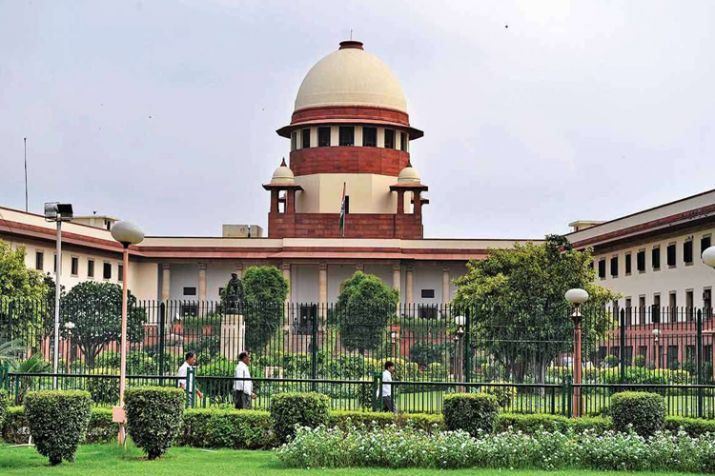
SC rejects plea of disgraced ex-cop Sanjiv Bhatt seeking to examine 11 additional witnesses in 1989 custodial death case

The Supreme Court on Wednesday rejected to entertain a plea by the tainted ex-Gujarat cop Sanjiv Bhatt seeking to examine 11 additional witnesses in a 1989 custodial death case.

A vacation bench of the Supreme Court comprising of Justices Indira Banerjee and Ajay Rastogi maintaining that a three-judge bench had already passed an order on May 24 on a similar plea, ruled, “We are not inclined to entertain the petition. The same is devoid of merits. We dismiss it.”

Senior advocate Maninder Singh, appearing for the Gujarat government, said that final argument is over in the 30-year-old custodial death case and the Jamnagar Sessions Court has reserved its verdict for June 20 or the first week of July.

The case stems from the custodial death of one Prabhudas Vaishnani in Gujarat’s Jamnagar in 1989 when Bhatt was serving in the district as additional superintendent of police. According to the prosecution, Bhatt had detained more than a hundred persons during a communal riot in Jamnagar, Gujarat and one of the detainees, Prabhudas Vaishnani had died in hospital after he was released.

He was suspended in 2011 on charges of remaining absent from duty without permission and misuse of official vehicles and later sacked in August 2015.

Sanjiv Bhatt had on Tuesday moved the Supreme Court challenging the Gujarat High Court order which had denied his request to summon certain additional witnesses for examination during the trial in the three-decade-old custodial death case. Bhatt’s plea was mentioned for urgent listing before the vacation bench, which agreed to hear it on Wednesday.

The Gujarat government had termed the move as a tactic to delay the trial.

Last year in September, the sacked ex-IPS officer, Sanjiv Bhatt was taken into custody by the Gujarat CID over a 1998 case of planting drugs. Despite repeated attempts by the tainted officer’s lawyers and family, Bhatt was denied bail after the Palampur court took cognisance of his criminal past, behaviour and false statements. Afterwards, he had reportedly approached the high court for the same. The Gujarat government had then vehemently opposed Bhatt’s bail application.

The Palanpur Drug planting case pertains to an incident in 1998 when Sanjiv Bhatt was serving as the DCP of Banaskantha. He was then accused of trying framing a lawyer in a fake narcotics case.

The anti-Modi cop is also well known for his legal fight against the Gujarat government and especially Prime Minister Narendra Modi. Modi, who had served as the former chief minister of Gujarat, was accused by Bhatt of being complicit in the murder of Muslims during the 2002 Godhra case. However, the SIT set up by the apex court then had given Modi a clean chit.

Mumbai Police finds no evidence against Nana Patekar in sexual harassment case filed by Tanushree Datta

The Mumbai Police has filed a ‘B summary’ report in the Tanushree Datta alleged harassment case against actor Nana Patekar. A ‘B summary’ report is filed by the police when they are unable to find evidence in support of the complaint made and therefore they can’t go ahead with the investigation.


The Oshiwara police station filed the ‘B summary’ report to the Magistrate in Andheri, Deputy Commissioner of Police Paramjit Singh Dahiya told PTI.

Tanushree’s lawyer, Nitin Satpute has told Times Now that they have so far not received any official communication from the police. He also stated that if the Mumbai Police is thinking of filing a closure report, they’d “challenge” it.

There have been rumours galore that Nana Patekar has been given a clean chit in the case by the Mumbai Police. However, Tanushree’s lawyer scotched such rumours, claiming it to be a handiwork of Nana Patekar to play psychological games and get the police to give him a clean chit.

Earlier, actor Tanushree Datta had emerged out of woodwork after almost 10 years and levelled harassment allegations against actor Nana Patekar. Datta accused Patekar of sexually harassing her 10 years ago on the sets of their movie ‘Horn Ok Pleasss’.

In addition, Tanushree Datta had also alleged that the actor had inappropriately touched her even after her staunch objection to the lewd, vulgar or uncomfortable dance sequence with him.

The allegations were made by Tanushree amidst the raging MeToo controversy in October 2018 which took the country by storm. Many prominent personalities had to bear the brunt as the victims came out to recount their ordeal. AIB founder Tanmay Bhat and propagandist Kunal Kamra faced the public ire for not raising their voice against their friend’s sexual molestation attempts despite being cognizant about it.