Home Blog Page 6448

India suspends cross-LoC trade with Pakistan in Jammu and Kashmir, says trade routes being misused to fuel terrorism

0

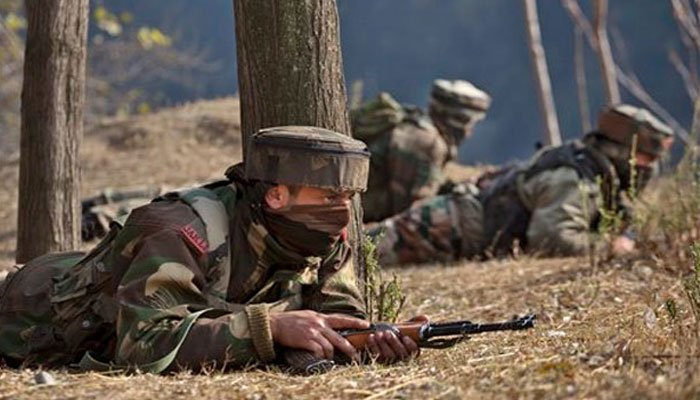
The Ministry of Home Affairs has issued an order suspending the LoC trade with Pakistan occupied Kashmir through Jammu and Kashmir. The decision to discontinue the trade has been taken by the government in the light of multiple reports citing misuse of trade routes by the Pakistan based elements for funnelling illegal weapons, narcotics and fake currency etc.

MHA order (Source: PIB)

The MHA order says that it has received many reports of trade routes being misused on a very large scale. MHA has asserted that the character of the trade along the LoC has changed and third party trade and products and foreign countries have found their way through the route. It has also alleged that the anti-national and unscrupulous elements are exploiting the trade route as a conduit for funnelling Hawala money, drugs and weapons, under the pretext of trade.

The ongoing investigation by NIA has revealed that many terrorists and people associated with terror outfits are involved in LoC trade. It has stated in its report that many hostile elements and people associated with proscribed organisations who have crossed over to Pakistan have started trading firms in Pakistan and are operated by terror outfits operating from Pakistan.

The Government of India had stripped off the MFN status to Pakistan after a Jaish-e-Muhammad terrorist killed 40 CRPF personnel in an attack in Pulwama. According to the inputs received by the agencies, LoC trade is liable to be misused on a greater extent in order to evade the consequent higher duties.

The Ministry arrived at the decision of suspending the LoC trade at Salamabad and Chakkan-da-Bagh in J&K. The government is also working towards bringing in a stricter regulatory & enforcement mechanism in consultation with various agencies. The issue of reopening of LoC trade will be revisited thereafter.

AugustaWestland chopper scam middlemen Christian Michel denied bail to celebrate Easter with family

0

Christian Michel, the middleman in the Rs 3,600 crore AgustaWestland scam faces judicial heat yet again. A Delhi court has rejected Michel’s interim bail plea to celebrate Easter. He is a British national and an accused in the VVIP chopper deal.


The order was passed by Special Judge Arvind Kumar who had earlier reserved the judgment until 4 pm. The judgement was passed after lawyers from both sides presented their arguments.

Michel’s lawyers Aljo K. Joseph and Vishnu Shankar told the court that the week from April 14 to 21 is a holy week for the Christians and Easter falls on April 21. “Michel wishes to attend the holy mass on Easter and would like to make offerings during the Easter days,” Michel’s lawyer said. They said that despite being Christian, their client was not allowed to pray in a holy mass.

DP Singh, special public prosecutor, appearing for CBI and ED opposed Michel’s plea on the ground that India is a country of various festival and thousands of prisoners are in jails. He further added that every prisoner has faith in religion and as such Michel can’t be allowed to go out of jail to celebrate festivals.

Singh also argued before the court that if Michel comes out on interim bail and makes a statement outside, it can derail the investigation. So, this year Michel will have to celebrate Easter sans his family and friends. He has been in custody since he was extradited to India from Dubai on December 22, 2018. His extradition is viewed as a massive diplomatic victory for India in the global political scenario.

This is the second time in four months that Michel’s bail plea has been rejected by the Delhi court. Earlier, he was denied bail on February 17, 2019. This was done after investigating agencies CBI and ED had expressed their apprehensions before the Special Court that he could use his political clout to flee India while the investigation is under process.

Michel along with Guido Haschke and Carlo Gerosa is among the three middlemen who are under the scanner by ED and CBI in this high profile chopper scandal. Michel is important in this probe due to his technical operational knowledge of the aircraft, the military bases and the pilots.

Hindu voters in Raiganj, West Bengal stopped from voting, proxy votes cast in many villages: Report

As the second phase of the Lok Sabha elections commences today, reports of rampant political violence and poll malpractice have been pouring in from West Bengal. Among this, a report has surfaced that Hindu residents of a Muslim dominated village have been barred from voting in the Raiganj constituency in the state.


The news channel crew proceeded to confront the polling staff and identification officer in charge of the booth along with the people who had alleged that proxy-votes have been cast in their name. The staff offered no answers.


The Times Now report reveals that the presiding officer at booth number 191 in Raiganj constituency had no clue as to who were the people who had cast their votes while almost 600 Hindus of the village claim that they were unable to cast their votes.

The report states that rampant proxy-voting has taken place in the area. Some Hindus have alleged that they were stopped from going near the polling booth by groups of Muslim men and had their voter ids snatched away. Other Hindus have claimed that when they managed to reach the polling booth, they found to their shock that their votes have already been cast.

The first polling officer who is also the identification officer was unable to offer any answer on how such level of proxy voting took place. The presiding officer has reportedly claimed that it is not his responsibility to confirm the identities of the voters.

The Times Now crew who exposed the rampant proxy-voting was also allegedly abused and threatened by the presiding officer. The report states that the cases of proxy-voting and forceful obstruction of Hindus from exercising their democratic rights have happened in numerous villages in the constituency.

BJP West Bengal has taken up the issue and moved to the Election Commission over the issue. It is notable here that there were already reports of violence and election malpractice coming in from the Raiganj constituency. BJP candidate Debashree Chaudhury had alleged that TMC workers were campaigning with groups of Muslims and they had tried to capture a booth there.

Congress’ Sam Pitroda says ‘something’ is wrong with EVMs, which he will find if allowed to ‘study’ one EVM for one year

As the elections are underway, senior Congress leaders are yet again raking up the issue of EVM malfunction, perhaps, realising that their defeat is imminent and inevitable in the ongoing Lok Sabha polls. Senior Congress leader and a mentor to Rahul Gandhi, Sam Pitroda indulged himself in a strange rant against the EVMs. He claimed that he will need an EVM for 1 year to determine if there are any faults in the machine.


While talking to the media, Pitroda said that he is not satisfied with the Electronic Voting Machines (EVMs) and has been unable to pinpoint any visible faults in them as he doesn’t have an EVM. He insisted that if he is given the EVM for a year to study, he will be able to tell if there any faults in it.

Pitroda further added that the designs of the EVMs, its software, every little signal that emits from the machine will have to be analysed to before forming any conclusion. “One thing is clear that there is some problem in the EVMs but what is the problem we don’t know,” Pitroda exclaimed. This strange argument made by Pitroda reveals that Congress has been making contentions of EVM malfunctioning entirely based on conjectures and they have no objective basis for the allegations levelled by them.

This is not the first time that Congres has levelled accusations of EVM malfunctioning. In fact, a few months back, in a hackathon event, allegedly sponsored by Congress, the hacker was seen making tall assertions about EVM hacking that was contradictory in nature and essentially self-defeating. Senior Congress leader Kapil Sibal was seen watching over the proceedings of the hackathon which was nothing but a sham.

Despite the Election Commission’s stern denunciation, the Congress party has been continuing to blame EVM malfunctioning for its losses without providing any evidence to back their claims. This hack of blaming the EVMs and levelling outrageous and unfounded accusations of EVM tampering on the opposition has been Congress’ modus operandi for some time now. Perhaps, in a bid to save their president from the ignominy of an election defeat, Congress comes up with concocted theories of EVM malfunctioning and machinations by the opponents to tamper with the EVMs so that the opponents can be blamed and their president can escape media scrutiny.

Second Bangladeshi actor who campaigned for TMC asked to leave India, Gazi Abdun Noor’s Visa had already expired

A few days ahead of the second phase of Lok Sabha elections, Bangladesh actors were spotted in different towns of West Bengal canvassing for Mamata Banerjee’s party TMC candidates. Ferdous Ahmed and Gazi Abdun Noor, who are actors of Bangladeshi origins, were found frequenting in the rallies conducted in various districts of West Bengal. After Ferdous Ahmed, now the MHA sources confirm that Gazi Abdun Noor has also been asked to leave India.


In fact, according to the sources, Gazi Abdun Noor’s visa had already expired. He continued to be in India despite the termination of his visa tenure. The sources have affirmed that appropriate action against the actor will be taken regarding his overstay in violation of the visa validity. Prior to this, Ferdous Ahmed was also blacklisted by the MHA for campaigning for TMC candidate Kanhaiya Lal Agarwal in North Dinajpur district. The MHA had earlier called for a report from the Foreigners Regional Registration Office(FRRO) inquiring whether he had violated any visa conditions.

The BJP had approached the Election Commission registering its protest against the use of foreign nationals in election campaigning. BJP West Bengal President Dilip Gosh had said, “How can an Indian-registered political party engage foreign nationals for political road shows in West Bengal. I have never heard this before. It seems the party doesn’t have an Indian star for canvassing. Tomorrow, Banerjee will invite Pakistan Prime Minister Imran Khan to campaign for the TMC. We condemn this as Bangladeshi film stars should not be part of India’s biggest democratic festival”, said Ghosh.

TMC leader Madan Mitra who was seen with Gazi Abdun Noor dismissed the allegations of MCC violation raised by the BJP, claiming that the Model Code of Conduct says that a foreigner cannot be a candidate and there is no harm if anybody participates in campaigning. Gazi had also defended himself saying that he didn’t say anything in the roadshow, and also didn’t board the vehicle of TMC candidate Sougata Roy. He said that he knew that he can’t be a part of the Indian Election process, and initially he was not aware that he was taken to an election roadshow.

Bangladeshi model-actor Gazi Abdun Noor stars in Bengali television period drama Karunamoyee Rani Rashmoni which airs on Zee Bangla and digital platform ZEE5.

Note: Some media reports are naming the actor as Ghazi Abdul Noor, but his name is Gazi Abdun Noor.


The man who hurled shoe at GVL Narasimha Rao was raided by IT Department in 2018

The man who hurled a shoe at BJP leader GVL Narasimha Rao while was addressing a press conference at BJP headquarters in New Delhi today has been identified as a Kanpur based doctor Shakti Bhargav. Fortunately, the shoe missed the target and did not hit Rao.


Bhargav is the owner of Bhargav Hospital in Kanpur. Last year, a team of Income Tax officials had raided Bhargav’s residence and other places connected to him. He also owns a real estate company.

According to the IT Department, Bhargav had failed to disclose the source of an income of Rs 8 crore that he had invested in a company called Skyline Construction Private Limited. A Kanpur based builder named Anup Aggarwal also has invested in the company and the IT Department has started investigating the establishments related to Aggarwal.

The IT Department had reportedly recovered an amount of Rs 28 lakh and jewelry worth Rs 50 lakh during a three-day long search at the locations connected with Bhargav and his associates in Lucknow, Kanpur, and Varanasi. He was also unable to disclose the sources of income of over Rs 10 crore which he had allegedly used to buy the three properties. A probe is also going on against Bhargav in relation to eight companies related to him and his relatives, which were not revealed to the IT department and the other government agencies.

A family feud is also going on in Bhargav’s family relating to three bungalows. The bungalows were allegedly bought by Bhargav’s parents for rs 11 crores but he later used fraudulent means to buy them for Rs 11.5 crores. Bhargav’s parents had filed a case of harassment following which Bhargav was reportedly ordered by the court to hand over the bungalows to his parents.

His lawyer, Abhishek Atrey has claimed that Bhargav is ‘mentally unstable and suffers from paranoia’.

Election Commission is setting a bad precedent, and it’s not good for democracy

Banning movies, books and leaders- institutional havoc may soon become a reality in India. I am not exaggerating and nor am I making a prediction, but it has been a case that India’s institutions have gone unchecked for far too long. Consequentially, they’ve started taking decisions that are not theirs to take and thus, they’re doing more damage than any good to the society as a whole.

The subject of my thesis was something very similar as I explored the costs associated with institutional overreach and I’ve written on multiple times since then, but this election season makes me want to highlight it yet again. Consider the biopic on India’s PM, Mr Narendra Modi. The movie was made by a private agent, it was funded through private money and the movie would have been released in theatres. Those who would have watched the movie would have done so with their OWN money. So, to watch or not watch the movie was a consumer’s choice and, in all likelihood, the movie would have been watched by those who are supporters of the Prime Minister and his party. Thus, by no stretch of imagination can we say that the movie would influence elections– why would anyone spend his or her money to watch a movie of a person who they don’t admire? And if they do watch it, then they must admire the person so how is it a problem?

What is unethical, is to use the pretext of free and fair elections and infringe upon the constitutional rights of common citizens. What is even worrisome is how this unethical infringement of rights is done selectively and conveniently. For instance, a senior journalist released a book on the Rafale controversy, and the book was sold at a nominal price. Mind you, Rafale matter is in court and the court had already given a clean chit to the government (The recent judgement only made new evidence admissible in court but the original judgement that gave the government a clean chit stands as before). The CAG too has found that the NDA deal was cheaper than the UPA deal yet there’s a deliberate attempt to lie and mislead the people on the Rafale deal. Despite that, the book was released and people bought it to read it. However, if a book is not going to influence the voters then how will a movie influence them?

In fact, if the criteria to ban is for it to influence voters then by that logic, TV debates, news (both pro and anti-government) and even NGO campaigns must be stalled during the election cycle. Why stop at this? Why not ban any discussion on elections or the likely outcome of the elections during the period? The question that one should be asking at this moment is where we draw the line and when will it be enough!

In this tendency to ban “information” we are doing a great disservice to the country and its voters. Essentially, we are withholding information that we believe could be important (as we think it would influence the voters) for the voter to take an adequate decision regarding their voting preferences. Is it ethical to leave the voter without such information given that the ideal situation would be to have well-informed voters who can elect good political leaders?

The story doesn’t end here, as the election commission has prohibited candidates (that violated the rules) for campaigning for a couple of days. An important question is if the ban is even implementable? After all, any candidate can always put out their tweets or connect with their voters digitally without a paid promotion etc, so it is no longer possible to stop a candidate’s campaign in the digital space. A far more important question is if the ban even works in ensuring electoral discipline? Of course not. A ban on campaigning that can only be partially imposed is a non-credible threat so people may continue to violate the norms if they believe that it would result in electoral success. This makes the entire episode of banning candidates nothing beyond a media exercise that will fail to resolve the key campaign problem of blatant violation of such rules.

On one hand, we’re trying to infringe upon the rights of citizens under the pretext of free and fair elections and on the other, we seem to be enforcing a punishment on candidates that will not ensure their compliance with the rules of the game. If this is not an absurdity, then I wonder what is.

Time has come for the election commission to act where it is required and withdraw from areas where it’s not at all required. A private movie should not bother the commission but the blatant misuse by candidates should be a cause of concern for them. It is time that we bring electoral reforms to ensure that the EC is equipped enough with enforcing a strict punishment for any campaign violation. Only when there is a credible threat will all candidates comply with the election rules- until then, it should stop banning movies and books and let private citizens enjoy and exercise their choice.

“Party pyaari hai, parivar se badhkar nahin,” Congress’ Shatrughan Sinha campaigns for SP candidate and his wife Poonam Sinha

Congress leader Shatrughan Sinha seems to be forgetting which political party he belongs to as he was today found campaigning for his wife and Samajwadi Party leader Poonam Sinha against Congress’ candidate Acharya Pramod. When confronted with it, Sinha said, “Party pyaari hai, but parivar se badh kar nahin hai. (I love the party, but not as much as my family.)”

Within days of joining the grand old party, Shatrughan Sinha has turned out to be an embarrassment for the Congress. Today, Shatrughan Sinha was out and about campaigning for his wife Poonam Sinha, the Samajwadi Party candidate for the Lucknow Lok Sabha constituency even as Congress has fielded Acharya Pramod from Lucknow.

In a road show held earlier today, Sinha had joined his wife Poonam and Samajwadi Party leader Dimple Yadav, urging people to vote for his wife. This, apparently, has miffed Acharya Pramod who has asked Sinha to decide whether he is playing for the party or the family. He has now gone on to say that Rahul Gandhi must ask Sinha should also follow ‘party dharm’ instead of the ‘patni dharm’ he is currently following.

As reported by Republic, Acharya Pramod said, “Shatrughan Sinha and Akhilesh Yadav should decide whether Rahul Gandhi should become the Prime Minister or Narendra Modi.” It is embarrassing considering BSP and SP have kept Congress out of the pre-poll alliance. Hence having Shatrughan Sinha to campaign for a BSP-SP alliance candidate instead of his own colleague has eventually left Congress red-faced.

The day Sinha had joined Congress, Union Minister and BJP leader Arun Jaitley had wished luck to Congress, saying, “our problem is now yours“. Jaitley said, “Some eminent former BJP men have been accepted by the Congress as a gift. We thank Congress. Our problem is now yours. Good luck!”

The actor-turned-politician had been openly speaking against BJP and taking part in Opposition rallies for quite some time before being unceremoniously booted out. He was particularly upset after BJP decided to field Union Minister Ravi Shankar Prasad from Patna Sahib seat, from where he is a sitting MP. Sinha then joined Congress and is contesting from a Congress ticket from the same Patna Sahib seat.

Amidst all this, if politicians are keeping their family first, where does the nation come in the list of priorities?

Election Commission bans ‘Chowkidar chor hai’ advertisement of Congress in MP, calls it highly derogatory and defamatory

Congress has faced a major setback in its Madhya Pradesh’s election campaign amidst the ongoing Lok Sabha polls, as the EC has put a ban on Congress’ advertisements titled ‘chowkidar chor hai’ in the state and issued orders to end the broadcast of the same with immediate effect. Puncturing Congress’ year-long rhetorics, the EC urged the party to submit all the material related to the campaign to the poll panel.


Taking cognisance of an appeal made by BJP’s Shantilal Lodha, the State Election Commission of Madhya Pradesh in its order dated April 17 2019, stated that the Congress’ advertisement campaign is highly derogatory and defamatory. It also says that since the campaign did not obtain a clearance from the Media Certification and Monitoring Committee  before its release, the advertisement has been banned.

SS of the order passed by Madhya Pradesh Election Commission officer banning Congress’ ad campaign

The decision has come after the Bharatiya Janata Party (BJP) objected to the campaign citing it maligns the image of Prime Minister Narendra Modi.

Earlier, the BJP leader from Madhya Pradesh had raised objections to the advertisement claiming that the language used in it is shameful and defamatory. He said that PM Modi is renowned as ‘Chowkidar’ in the country and calling him a ‘Chor’ maligns his image.

When the state election commission ordered the Congress to file a response, the party blatantly denied that the chowkidar reference was directed at Narendra Modi but failed to explain who it is actually referring to in the advertisement.

Taking cognisance of the matter, Madhya Pradesh’s Chief Electoral Officer VL Kantha Rao then ordered a ban on the advertisement with immediate effect. The Congress Madhya Pradesh unit has also been asked to submit all the material related to their ‘Chowkidar Chor Hai’ ad. The order also took note of the notice issued to Rahul Gandhi by the Supreme Court for inventing facts on its verdict on Rafale.

Rahul Gandhi had distorted the SC order while talking to the media, and said that Supreme Court has accepted that there is some form of corruption in Rafale deal and that “chowkidaar ne chori karwayi hai”. The Supreme Court observed that it had on “no occasion” made any comments as attributed by Gandhi and that the judgment was solely on the legal question of admissibility of documents produced by review petitioners. The top court has asked Rahul Gandhi to reply by April 22.

Meanwhile, a BJP delegation comprising Union ministers Ravi Shankar Prasad and Hardeep Singh Puri among others had also met Chief Election Commissioner Sunil Arora on Tuesday with a complaint and demanded action against Gandhi for repeatedly using the term ‘chowkidar chor hai’ and making false attributions to the Supreme Court.

The delegation urged the Commission to ban Congress president Rahul Gandhi from campaigning in the Lok Sabha polls and impose the “heaviest penalty” on him, saying he levelled false allegations against Prime Minister Narendra Modi on the Rafale aircraft deal.

Saffron Swords – a book that exposes the lie peddled by Marxist historians that Hindus didn’t have courage

One of the defining characteristics of history writing by historians of India is that they make it bereft of ideas. As a social scientist would tell, this is one of the classic ways in which historians can hide, distort a part of history as it really happened, and present their own version for future generations; the argument being that if history textbooks generate ideas and are taken seriously by readers, they will make the study of history ‘contingent’. Events of the past will then be seen as that could have gone either way, making the reader go deeper and search for more ideas.

One of consequences of that will be to explain why right people armed with the right ideas didn’t always win. This process generates empathy for those who fought and struggled valiantly and be an inspiration.

Manoshi Sinha’s book Saffron Swords does exactly that. It tells us the story of those Indians who fought valiantly against invaders and armies, based on an immense moral courage. To me, this book will do what our textbooks haven’t been able to do for the children of India and many adults like me. It will generate ideas for us to look deeper in the history we haven’t been exposed to as part of our education.

Manoshi’s book is a beginning of a change. It goes against most of the textbooks written on history in the last seventy years, especially our textbooks where the courage of Hindus is not mentioned as it was felt to be not worth writing about for our school children.

Our textbooks are not sympathetic to the heroes who showed courage and bravery. They find mention in Manoshi’s book. Their names, their lives, their inner selves on why they fought which was lost to the pages of history finds a home. Our children who did not get ideas about what it meant to have courage now find so in these pages.

Ideological ambivalence and contradictions are important for studying history, especially for people who have lived under slavery and whose history was distorted by their masters. This is true for Blacks, for Jews and for Native Americans and I will add for Hindus. They have no one to write a history for them that would tell what they went through. They need a history that will provoke them into looking at their own minus the prism of western historians.

Ideas have power and those generated from reading history have a power to change the destiny of a people. The ideas that motivated the heroes are documented in the pages of Saffron Swords. The example they set lives on long in people’s minds and has been captured beautifully. It gives us the idea that our ancestors resisted, rebelled and did not accept the foreign rule and its atrocities lying down. This is an idea that has been denied to our children.

What was our nation conceived in? It was conceived in dharma. Yet, today the entire thought process of the people, of our constitution, our history textbooks all take us away from this concept imposing many an alien concepts in the name of secularism that have no place in our Indian ethos.

While growing up, reading our textbooks I got the feeling that our invaders and their dynasties and our local heroes were virtually identical people. Textbooks for our students are silent about the fact that Akbar slaughtered thirty thousand people in Chittorgarh, mostly women and children, Babur built the Babri masjid by destroying the Ram temple and Aurungzeb destroyed the holiest spots of Hinduism. Our history textbooks are silent about Jaziya (tax) that Hindus had to pay in order to survive.

Reading our books, one gets the feeling that our state historians have tried to minimize the evil the invaders were and suppress the glory of the heroes who opposed them. Our heroes’ passion to defend the motherland and the two entirely different values represented by the warring sides is missing from our books. As a result, they become ‘virtually identical people’ and difficulty arises as to choose who was morally right of the two.

Akbar and Maharana Pratap both seem to be equally identical, equally idealistic; one the justice loving emperor of India trying to unite everyone, the other opposing him, a rebel king trying to retrieve his kingdom. The choice is easy to make then.

All wars, all conflicts in the history of India have been presented to us in a way that is crafted in a language designed for deceit. Is that why we don’t see any passion in our children that can come from reading our history?

The history of India, the valiant resistance by its children to invaders and conquerors could have been presented as one of the greatest gifts to the world, for people fighting against oppression and injustice. It couldn’t be. Its relevance was lost to the history writing in the last seventy years that in my opinion made us descend into further shame and humiliation.

The book Saffron Swords by Manoshi Sinha tries to undo that injustice.