Home Blog Page 6738

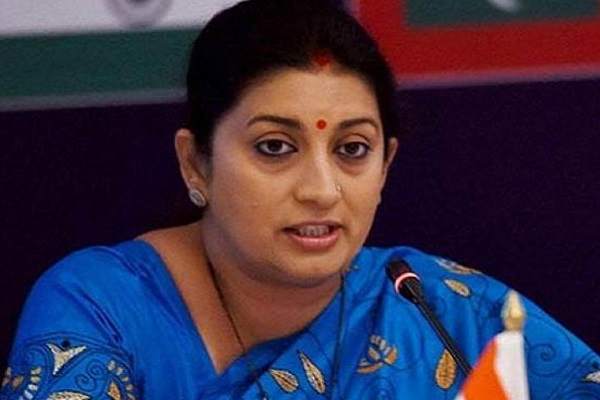
Smriti Irani questions the Kerala government’s intentions on women empowerment

0

Launching a searing attack on the Communist Party of India (CPI), Union Minister Smriti Irani assailed the Kerala government for being dismissive towards the condition of the nuns in Kerala. She had alleged that the Kerala government endorses women empowerment only when it is politically convenient for them.


Smriti Irani’s remarks came just a day after the four nuns who stood against rape accused Franco Bishop Mulakkal and supported the survivor nun were asked by the Missionaries of Jesus congregation to leave the Kuravilangad convent in Kerala and rejoin their communities in other parts of the country.

Referring to the ‘punishment’ meted out by the Missionaries of Jesus congregation, Smriti Irani chastised the Kerala government for turning a blind eye to the ordeal of the nuns and not providing adequate security to them.

In October 2018, the communist government in Kerala had maintained a stoic silence when Catholic Federation threatened that nuns will be thrown out if they continued with their protest against Bishop Franco. The Missionaries of Jesus has often taken a perverse stand on the issues concerning the abuse of nuns. From doggedly defending Franco Bishop to releasing rape victim’s photos, the Missionaries of Jesus has tried everything in its power to discredit the victim and those who have come forward in her defence.

On the other hand, the Kerala government is trying its best to ensure that women can enter the Sabarimala temple despite massive protest by devotees. The government has provided security to women wanting to enter the shrine, in line with the Supreme Court’s order. But when it comes to nuns harassed by the church, the government turns a blind eye.  It is this cowardly attitude of Kerala government against the Church authorities is what Smriti Irani is calling into question.

Belt and Road Initiative: China and the world

0

In 2013, Chinese President Xi Xinping, mooted the idea to revive ancient Silk route and termed it as One Belt One Road (OBOR). He presented OBOR as a program which will propel infrastructure growth in participating nations and increase connectivity across Central Asia, Europe and Africa thus significantly increasing trade. The projects that China had financed before 2013 were amalgamated in OBOR. 6 years later much has changed, for one, OBOR has now been renamed as Belt and Road Initiative (BRI) and China has contributed significantly towards infrastructure development in many nations, building new ports, airports, railway lines, power plants, housing and in some cases even whole cities from scratch vital to the progress of any nation. Today, projects worth almost $340bn are underway in various countries and this amount is expected to increase to $1tn in 6-7 years.

However not everything about BRI is helpful for participating nations as it also brings a spate of problems, like- high amount of debt and scale of operations from infrastructure nowhere near to the forecasts shown in a feasibility study which restricts the revenue. While some countries such as Sri Lanka have already suffered a great deal because of this, many others such as Pakistan, Maldives, Malaysia and Djibouti are at high risk of defaulting on their debt repayments and getting stuck in a debt spiral. What were the factors that led these countries to such a situation and what is their present position?

Sri Lanka

After the end of the bloody civil war, China was the very first country to start investing in the country. Starting 2009, almost $8 billion were invested in multiple projects, Hambantota port, Mattala Rajapaksa International airport, an affordable housing project in Jaffna, a port city dubbed as Sri Lanka’s Dubai, roads and a number of hospitals among many others. Hambantota port was shrouded in controversy even before its construction began in 2008. The capacity of Colombo port, Sri Lanka’s largest, had just been increased by 30% in 2003. It was the expansion of one of the two terminals, another terminal could be expanded later and by 2008 port wasn’t even operating at full capacity which could be realised in later years thus rendering the need for whole new port questionable. The construction of the new port finished in 2010 and since then it hasn’t seen much business, handling just 1 ship a day on an average.

The revenue from port wasn’t enough for Sri Lanka to pay back the loan to China, so in 2017 an agreement was signed to lease the port to China for 99 years in lieu of repayment of the loan for that particular project. Mattala airport, located near Hambantota, was constructed in 2013 at a cost of $209mn out of which China lent $190mn. Initially, several airlines operated from there but ceased operations eventually due to low demand. Without any revenue, the airport became unsustainable as the operating cost was still being incurred while there was no revenue. India entered into a joint venture to run the airport in 2017 basically to keep an eye on Hambantota port. As of in 2018, no flights are scheduled from the airport due to the absence of demand. According to the 2012 annual report by the Ministry of Finance and Planning of Sri Lanka, China had invested $3.851bn in the country; $3.841 billion in loans and only $10 million as grants. Currently, China Communications Construction Company (CCCC) is engaged in building the Port City also known as Colombo International Finance City. It is being presented as Sri Lanka ’s own London and Singapore in terms of financial importance. The deal was signed during the tenure of Mahinda Rajapaksa and construction was to begin in 2011.

In 2014, Prime Minister Ranil Wickramsinghe suspended the project citing damage to the environment, however, the construction was resumed in 2016 after CCCC threatened to bring a legal case against the government for damages. Construction is expected to complete by 2041 and total estimated investment in the project by then would be $16bn. Today Sri Lanka is entangled into a web of debt where it is constantly borrowing more to pay off existing commitments; government borrowed $3.5bn in 2018 to pay off loans maturing at the end of this year. As per Finance Minister, Mangala Samaraweera, the situation will be worse in 2019 when loans worth $4.9bn will have to be repaid. The current government has blamed the previous administration of Mahinda Rajapaksa for not carrying out proper feasibility studies for personal gains. A recent New York Times report claimed: “large payments from Chinese port construction fund flowed directly to campaign aides and activities for Rajapaksa, who had agreed to Chinese terms at every turn and was seen as an important ally in China’s effort to tilt influence away from India in South Asia.” The report goes on to allege that Rajapaksa’s campaign and his aides received a total of $7.6mn from China for 2015 elections.

Pakistan

China-Pakistan Economic Corridor can easily be termed as the crown jewel of Belt and Road Initiative. CPEC is an umbrella program under which China would undertake multiple projects for transportation, energy and communication. Initially, in 2014, the total worth of planned projects were estimated to be at $46bn but now it has increased to $62bn. Financing for projects will be provided by Exim Bank of China, China Development Bank and Industrial and Commercial Bank of China in form of loans. As of now, projects worth almost $26bn are in various stages of construction.

Gwadar deep sea port is located in Balochistan region, being constructed by China Overseas Port Holding Company (COPHC), is one project under CPEC, once completed, it will have a capacity of handling 1 million tonnes cargo annually. Pakistan has already leased the land to COPHC for 40 years. Pakistan government claims that Gwadar port will generate a significant amount of revenue given its proximity to the Gulf of Oman from where majority of oil passes, however as per contract91% of revenue from the operation of the port and 85% of revenue from free zone will go to COPHC. China is also building a gated city near Chinese workers working at the port. Only Chinese nationals will be allowed in the city and China has also asked Pakistan to legalise Yuan in the port. As per estimates, 500,000 Chinese nationals will be living there by 2022. This is more than the local populace of that area which numbers around 250,000. It can alter the demography of Balochistan, an already troubled province, in a significant manner. It also shows that port may not generate as many jobs for locals as Pakistan is hoping since the majority of positions will be held by Chinese workers.

Besides CPEC, China and Pakistan are also engaged in another program named North Indus Cascade Project, under which China will build 5 dams on the Indus River. This project is valued at $50bn and it is independent of CPEC. This is presenting an even more significant challenge to Pakistan. The new government under Imran Khan has pulled $14bn Diamer Bhasa Dam out of the project citing strict conditions over Chinese financing which would give ownership of dam to China. World Bank and IMF have refused to provide funding for this project citing “it lies in the disputed territory of Gilgit-Baltistan.” Khan has also asked for a review of terms of all projects under CPEC to make them friendlier towards Pakistan but much to his chagrin, China has refused to review the projects that are already under construction.

Now Pakistan is finding it difficult to repay debt. In the financial year 2016-17, Pakistan borrowed $10bn to service foreign debt. It also issued bonds against national assets such as Karachi airport, dams and highways. Things will get difficult for Pakistan once payment for debt under CPEC start in 2021 and at the peak, it will have to make annual payments of $3.5bn. In addition, Pakistan will have to spend $22bn for capital goods till 2022.

Realising that repayment of debt may not be possible; Pakistan invited Kingdom of Saudi Arabia(KSA) to join CPEC in September 2018 and KSA agreed. However since then, Pakistan has declared that KSA will not be joining, whether this is due to objections from China or some other reason is not clear. With a balance of payment crisis, foreign reserves are at an all-time low, Pakistan approached IMF for a bailout of $11bn dollars. However no deal has been finalised as IMF is demanding to see the details of loans under CPEC, a standard practice to check the financial health of any sovereign looking for a bailout, but Pakistan has declined to share the details. Moreover, to add to the woes of Pakistan, USA has declared that it will not allow Pakistan to use any money received from IMF towards repayment of Chinese loan. Pakistan also approached Saudi Arabia and China for financial assistance and has also received $7bn from the former and latter has also agreed to provide assistance but the details of such assistance have not been made public.

With the present economic situation and an ever-increasing debt burden, it’s entirely possible that Pakistan may end up being not able to repay the debt accrued under CPEC and North Indus Cascade Project upon which Hambantota port like deals may be struck between Pakistan and China handing over vital national assets to China.

Maldives

Till 2012 China didn’t even have an embassy in archipelago nation and since then has invested over a billion dollars in many projects across the country. China undertook an expansion project of international airport, which was earlier awarded to Indian company, GMR, but was later cancelled even though GMR quoted a cost of $511mn whereas China will undertake the project at a cost of $800mn, a 1.3 mile long bridge connecting male to the airport worth $400mn and a hospital. All these contracts were signed during the previous government. These contracts have increased Maldives’ debt considerably. The current finance minister Ibrahim Ameer told reporters “We believe most of these projects are at inflated prices so we are looking at them. We cannot do much in terms of renegotiation but going forward our objective would be to reduce cost.” He revealed that the cost for the hospital has already run up to $140mn whereas the rival original offer was for $54mn. Former President Mohammed Nasheed claimed that the Chinese ambassador to the Maldives handed over a $3.2 billion invoice to the new government, however, China denies these allegations. If the Maldives was to pay back the entire loan back to China by itself, it will need to set aside an amount equal to 10% of its GDP annually. The new administration has asked India for assistance and has secured financial assistance of $1.4bn which will be utilised in repaying Chinese debt.

Malaysia

China has so far invested a total of $34bn in Malaysia. East coast rail link, Forest City and Singapore-Kuala Lumpur are the most valued of all. The total valuation of Forest city after completion is estimated to be $100bn. It can house 700,000 people. Over two-thirds of apartments have been sold to Chinese nationals whereas Malaysians have bought only about 10% of apartments as they are too costly for locals. China is also building a deep sea port close to Malacca Strait that is large enough for an aircraft carrier. This port has brought in questioning China’s strategic aims as Malacca Strait is one of the world’s most vital sea routes from where most of the world trade takes place, including oil. 80% of China’s trade passes through here and it would want naval presence nearby to protect its interest. PM Mahathir Mohammed, who defeated Najib Razak in recent elections under whom deals with China were signed, has been very vocal against Chinese projects in the country. He termed Forest City akin to having a Chinese town in the middle of the country which can create demographic problems and has declared that no foreign nationals will be allowed to live in the city but the constructions will go on. He has also cited concerns about the growing debt which the country might not be able to pay back and consequently has cancelled projects worth $22 billion fearing Malaysia will end up in a situation akin to Sri Lanka where it will have to hand over the control of territory to China.

Malaysia has also cancelled East coast rail project, that would connect East coast of peninsular Malaysia in South China all to the west with Thailand for transportation of goods, along with Singapore-Kuala Lumpur High-Speed Rail project and gas pipeline calling them unnecessary. This change in the stance of Malaysia has been detrimental to China’s BRI as many countries have now adopted a policy of wait and watch before entering into contracts with China under BRI. Malaysia used to be the most welcoming country towards Chinese investment and signed a lot of contracts but now it is a frontrunner in cancelling projects and most vocal against the policies of financial assistance provided for the projects. China surprisingly has shown an accommodative approach towards Malaysia and has agreed to discuss the terms of contracts. Soon after PM Mahathir’s comments on Forest City project, China appointed a Malaysian national as new Managing Director, earlier this post was occupied by a Chinese national.

There is a striking similarity among Chinese investments across countries in the Indian Ocean Region:-

  • Financial assistance to the government to avoid any meaningful resistance against projects;
  • Opaque decision-making process;
  • Lending more even when the country is struggling with high debt;
  • A strategically located port and;
  • Resistance to any external participation which might ease repayment burden on the host nation.

Currently, Former PM of Malaysia Najib Razak is being probed by law enforcement agencies in relation to payment for gas pipelines projects awarded to China for which 88% of total payment was made and the project completion is less than 15%. Even former President of Sri Lanka Mahinda Rajapaksa and Former Maldives President Abdulla Yameen are under investigation for receiving election campaign funding from Chinese companies. China was quick to utilise its influence in developing port near strategic sea routes and choke points. Gwadar port in Pakistan situated just north of Gulf of Oman provides access to Strait of Hormuz form where the majority of world’s oil passes. This port also provides China with an alternative land route for its trade, bypassing the need to cross the Indian Ocean and areas under the influence of the USA and its allies.  Melaka port in Malaysia is located at the southern end of Malacca Strait, which connects South East Asia, East coast of China and East Asia with Central Asia and Africa is the busiest sea route. A military base in Djibouti along Bab-el-Mandeb strait which connects Asia to Europe and North America through Suez Canal.

China has also been quite rigid in laying down the conditions for financing which generally have not been in best interest of borrowing nation, consequently country ends up with a lot of debt not able to pay it back, neither able to bring in any other country as party to the project to ease loan burden due to China’s objections. Brahma Chellaney, a fellow with Delhi based think tank Centre for Policy Research, said it is in the interest of China if countries are not able to pay back the loans since it gives China control of vital assets. It is in the interest of participating nations to keep the process transparent and allow investment in limited quantum and in a phased manner so as not to end up borrowing more than they can pay back and risk unsustainable level of debt.


After Gujarat and Jharkhand, Uttar Pradesh approves 10% reservation for economically weaker sections

0

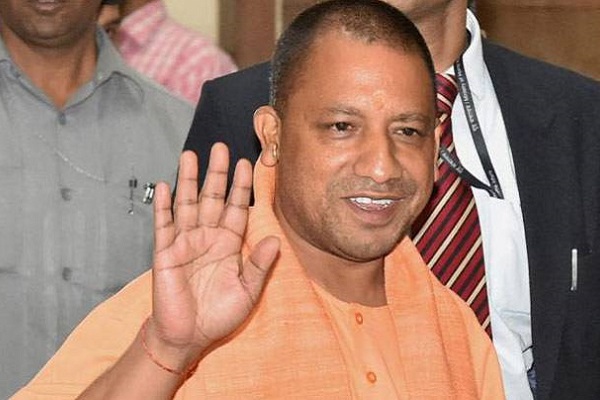
The Uttar Pradesh government has approved 10% reservation for the economically backward people among the upper castes in relation to jobs and educational institutions. The government spokesperson Shrikant Sharma told that the decision to implement the Constitution (124th Amendment) Bill, 2019 was taken at a meeting of the State Cabinet presided by the Chief Minister.

“The cabinet meeting presided over by Chief Minister Yogi Adityanath approved the notification granting 10 per cent reservation to the poor among the upper castes which have come into effect on January 14,” said Shrikant Sharma.

The act, which was passed by the Parliament in the winter session provides for 10% reservation for the economically weaker sections in the General category in jobs and educational institutions. “The UP government will implement the quota fully without touching the reservation for other sections of society”, Sharma said.

Gujarat and Jharkhand have already approved the act with now Uttar Pradesh joining the league as the third State to have approved the act. The proposal for the implementation of the 10% reservation for economically weaker sections of the upper caste in higher education institutions has been approved by Deputy CM Dinesh Sharma who holds the Higher Education portfolio.

Many farmers across Madhya Pradesh discover only Rs 25-30 to few hundred rupees of farm loan waived by govt

0

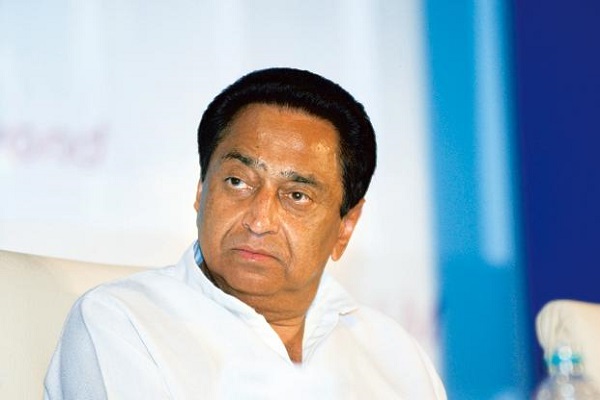
After Madhya Pradesh government initiated farm loan waiver scheme for the state as per promises made during election campaigning, reports have emerged casting suspicion on the rollout of the scheme. Many farmers across the state, who had taken the loan from banks before 31 st March 2018 and that of more than Rs 1 lakh, have reportedly got loan waiver benefit of mere Rs 25-30.

According to a report by Amar Ujala, farmers in the state were waiting to see the list of nominees for the Jai Kisan Rid Mukhti Yojana, and to check if their names were included. The scheme was launched by Kamal Nath government, in accordance with its poll promise, to waive off loans of 55 lakh small and marginal farmers across the state.

When the list of beneficiaries was made available at nearest town halls, farmers in many villages were enraged on finding that the list did have their names, but the amount that was waived of ranged from Rs 25 to few hundred rupees, while their loan amounts stood at more than Rs 1 lakh. A farmer in Jaitpur, according to report, said that out of 2 and a half lakh loan, only Rs 25 have been waived off. Similarly, a farmer in  Sikandarpur village in Kurwai Tehsil of Vidisha claimed that out of his Rs 30,000 loan amount, a minuscule amount of Rs 300 has been waived off.

On 17th January, reports had emerged that amongst various beneficiaries listed by the government eligible for farmer loan waiver did not even exist in reality. In one particular case, the farmer had already paid his loan amount, yet his name appeared in the list of beneficiaries for the government’s loan waiver. His loan of Rs 31000 was waived off by the government. However, the farmer insists that he has already paid up his loan amount and has a bank receipt to support his claim.

The Madhya Pradesh government is clearly, finding it hard to implement his party’s poll promises made by Congress President Rahul Gandhi during his election campaigning. The lofty promises of farm loan waiver had already taken 3 lives in Madhya Pradesh. It now remains to be seen, whether the Rs 25-30 loan waivers are a mistake and whether these will be rectified or not.

Madhya Pradesh: Farmers block Damoh-Sagar highway over protests

Farmers in Madhya Pradesh blocked the Damoh-Sagar highway protesting over the absence of bags for the purchase of urad dal, bringing traffic on the highway to a standstill. The farmers were also upset with the surveyor. Farmers in Madhya Pradesh are upset with the surveyors accusing them of trying to force their way.

As per reports, for the purchase of urad dal, surveyors were hired. For sale of urad dal, a token system was put in place, but in a lot of places, it led to chaos. Eventually, police were called to control the situation. Earlier this week, too, farmers had blocked roads protesting unavailability of bags for the purchase of urad.

On Monday, the purchase of urad dal was staled for over five hours and roads were blocked over half an hour. Farmers had alleged that while there are no bags available for the purchase of urad dal, traders were buying urad dal stealthily. The last date for the purchase of urad dal was 17th January, but the produce was still not weighed. This infuriated the farmers.

Farmers also allege that while the farmers have been waiting to sell their produce, some traders were purchasing urad dal through unfair means.

It has been a month since Kamal Nath-led Congress government was formed in Madhya Pradesh, making huge promises to the farmers. However, in last one month, the problems of farmers only seem to be increasing. As many as three farmers have committed suicide in the state due to the debt burden. In December, farmers were lathicharged as well as severe mismanagement of urea rocked the state.

There are also allegations of a scam brewing in the state as it was recently reported that Rs 120 crore non-existent farm loans were ‘waived off’ in Madhya Pradesh. The Congress after assuming power in Madhya Pradesh had cleverly altered the conditions to waive-off farms loans in contrast to their earlier stand.

Interim Budget may go beyond conventional vote-on-account, indicates Finance Minister Arun Jaitley

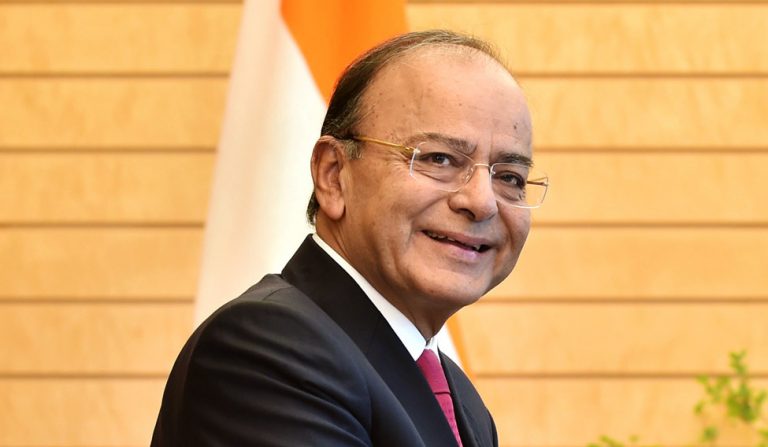
Finance Minister, Arun Jaitley, while addressing at the Indian Business Leader Awards function, through video conferencing, organised by CNBC-TV18, on January 17, dropped strong indications that the Interim budget 2019 may go beyond the convention and be more significant than a vote on account.

This came at the backdrop of speculations on whether Jaitley, who is currently in New York, for his medical treatment, would be available to present the crucial February 1, interim budget.

However, dropping no hints that he would be unable to perform the crucial task, Jaitley was quoted as saying, “The convention has always been that the election year budget normally is an interim budget and ordinarily there should be no reason why we should move away from that convention. But then the larger interest of the economy always dictates what goes into the interim budget and that is something which cannot be discussed or disclosed at this stage.”

Traditionally there are no big announcements in the Interim Budget but, some sources have revealed that the union government is thinking of introducing direct cash benefit scheme for farmers and is planning to introduce certain tax benefits for the middle class as well.

Rubbishing doubts that he is under pressure to present a populist budget after the recent election defeat in three states and ahead of general elections in April-May, Jaitley said: “The NDA (National Democratic Alliance) government had been in this game for far too long to have nervousness about the budget. We are confident and proud of our performance over the last five years. The NDA government has succeeded in restoring the credibility of the economy and its decision-making process over the last few years.”

However, Arun Jaitley did confirm that in order to deal with a few economic challenges, which would be in the interest of the country, the Government might deviate from the election year convention.

He suggested that issues confronting the farm sector would constitute one such challenge, which can cause the government to take a detour of convention and pointed to the problem of high production and slower rise in prices of key agriculture products.

Though the reference to the farm sector is seen to be crucial as the government might be under pressure to announce measures for the farm sector which is linked to more than half of the population, however, Jaitley made it sufficiently clear that the government will stick to its path of fiscal prudence.

“I have always believed that fiscal discipline is always rewarded. In the past when governments have not stuck to it, we have seen the consequences,” the minister said. But he also added that in “unusual situations”, a deviation from the fiscal consolidation path might be required, which was understood by the markets and analysts.

Along with addressing the issues pertaining to the farm sector, Jaitley also showed concern about the growth rate. As per the report, Jaitley said the 7-7.5 per cent growth rate will not suffice and the eight per cent barrier would have to be crossed. However, Jaitley did say that the problems could not be addressed through “negative politics”. He added that the “nawabs of negativity” may come together but they wouldn’t hold together or have enough credibility.

Though Jaitley refrained from expressing any view on any rate cut, he did specify that India cannot have a real rate of interest that’s higher than anywhere else in the world.

Addressing to the recent grievances between the government and RBI, which saw Urjit Patel’s resignation nine months before the end of his term as governor, the minister said that the central bank and the Centre have often had different points of view but it has been resolved through consultations.

‘2016 Rafale deal achieved objectives of better price, delivery and terms’: MoD spokesperson rubbishes The Hindu report

The Hindu today published a story authored by N Ram, a foremost member of the family that owns the paper. In the article, which lifted content revealed by another journalist and passed them off as a The Hindu ‘exclusive’, N Ram made some fantastical claims deriding the Rafale deal. After the article was published, the Ministry of Defence spokesperson has issued a detailed response to the article. In the point by point response, MoD spokesperson has rubbished the claims made. 

The full statement has been reproduced below:

1. The article is factually inaccurate. It does not adduce any new arguments. All the issues have been answered in detail by the Government at various fora and most recently by the Raksha Mantri in an open debate in the Parliament.

2. The deal for the purchase of 36 Rafale fighter jets in 2016 achieved the objectives of a better price, better delivery period and better terms compared to the earlier proposal.

3. The pricing details which are of confidential nature and covered by the Indo-French security agreement of 2008 were shared with the Supreme Court in a sealed cover. The Supreme Court has gone through the details of pricing and commercial advantage. The Supreme Court has not found anything adverse in the deal and has refused to order an investigation as sought by the Petitioners. The CAG has been given access to all the files related to Rafale deal. It is best to await the report of an authoritative agency like the CAG.

4. The author has rightly pointed out that the cost of the basic aircraft in the 2016 deal was better than the offer of 2007 after considering escalation even though several media reports and political parties keep comparing the cost of the basic aircraft of 2007 with the cost of fully loaded aircraft in 2015.

5. The India Specific Enhancements were part of the requirements of the Indian Air Force to achieve tactical superiority over our adversaries. These were part of the 2007 bid and continued to be part of the 2016 deal. The cost of the India Specific Enhancements was on a fixed basis in the 2007 bid which was negotiated down in the 2016 deal. However, to compare the cost for the MMRCA contract which never materialized with the cost of the 36 aircraft procured in 2016 is fallacious. The author while indicating the price of ISE as 1.4 Bn Euro in 2007 has failed to include the in-built escalation factor that would have worked between 2007 and 2015.

6. Surprisingly, in the headline of the article, the author has compared the un-escalated price of 2007 with the price of 2016 without considering the escalation factors inherent in the price bid. Later, hidden deep in the article itself it is stated that the price is 14.2% higher compared to the escalated price as probably this figure does not attract as much attention as a 41.4% higher price.

7. The author has also missed the main advantage in terms of price obtained by the Government in 2016 deal which was mentioned by the Raksha Mantri in Parliament.

8. This change from a firm and fixed price to a flexible rate was possible only because the deal was structured under an IGA. This factor is expected to lead to a substantial commercial advantage over the delivery period of 36 Rafale aircrafts.

9. A negotiation, especially, between two countries is a comprehensive deal and by selectively picking certain aspects while ignoring others, creates doubts by vested interests on a matter of vital national security. This has been repeatedly pointed out by the Government and accepted by the Supreme Court.

10. The issue of dissent within the Indian Negotiated Team has also been answered by the Raksha Mantri in the Parliament. In the highest traditions of the Civil Service, all views are aired and recorded and a collegiate decision taken after considering such opinions. Decisions on the deal were taken after due process of inter-ministerial consultation.

11. The issue of benchmarking and the offer of EADS to give a 20% discount are related. Even the UPA Government had rightly rejected the EADS offer of 20% discount in 2012 after opening of bids as violative of procedure. Consideration of this offer by the Government would have again made the Government subject to charge of violating basic procedure. It is best to avoid the pitfalls of a corporate battle which has been going on since 2012 which has adversely affected the capabilities of the Indian Air Force. The controversy should be put to rest in the interest of national security.

Congress leader discovers a new low yet again, after mocking Amit Shah’s diagnosis, says he doesn’t have swine flu at all

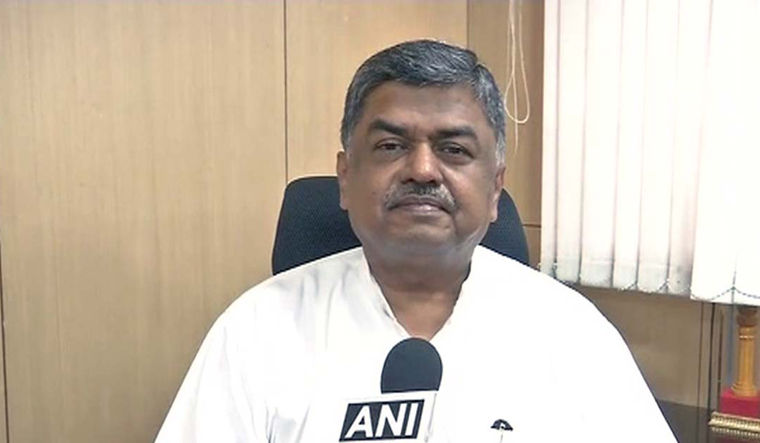
Despite facing flak over his recent remarks against BJP President Amit Shah, Congress leader and Rajya Sabha member BK Hariprasad has yet again issued a controversial statement claiming that he has received reports stating that BJP President Amit Shah does not have any flu, reported ANI.

According to ANI, BK Hariprasad claimed that he knew few people belonging to All India Institute of Medical Sciences (AIIMS) and went on to say that he has received reports regarding Amit Shah not suffering from any flu.

“We have a report that he (Amit Shah) doesn’t have any flu, we also know people in All India Institute of Medical Sciences (AIIMS), they said he is not admitted because of the flu. Let me get the facts then I will get back to you,” said Congress Rajya Sabha MP.


On Thursday, BK Hariprasad, who is a Congress MP from Karnataka had mocked BJP President Amit Shah’s health condition, as he had said that Shah was suffering from ‘suar ka zukam’. He had warned Amit Shah of facing a more graver disease than swine flu (H1N1 flu) if Karnataka govt is destabilised after Amit Shah had taken to social media to inform his followers that he has been diagnosed with H1N1 flu.

Hariprasad had reportedly asserted that Amit Shah is currently suffering from Swine Flu due to panic, and if he is eyeing Karnataka, he will be suffering from a disease far worse than this. The remark comes in the wake of the speculations of a few Congress MLAs turning rebel and switching over to the BJP camp.

West Delhi: Man, wife and son stabbed to death by Mohammad Azad, in full public view

0

A 35-year-old woman, her husband and their minor son were brutally stabbed by one Mohammad Azad on Wednesday following a quarrel over what is believed to be a minor issue. Sunita and her husband Veeru had succumbed to their injuries and as per latest reports, their son Akash too breathed his last on Friday morning.


According to the Police, the incident was triggered by an incident on the 14th of January. “The incident was triggered on January 14 when a bottle of Sunita’s daughter identified as Neha, fell from the balcony and hit Mohammad Azad, standing on the road. Later Azad and Veeru indulged in a heated argument but they were separated by some locals”, the Joint Commissioner of Police Madhup Tiwari said. “Today Azad misbehaved with Sunita over the same issue. Sunita later narrated the entire issue with Veeru and Akash following which the fight began,” the officer added.

“Azad took out a knife from his residence and first stabbed Akash. When Sunita and Veeru tried to save their son, Azad stabbed them too,” he stated. The Police are currently investigating the entire matter and is ascertaining the truth behind the event.

chilling details of the incident have since surfaced in the case. Veeru and Sunita’s married daughter Khushboo, who is reportedly five months pregnant, had to run with her two youngest siblings calling for help from neighbours to save her parents and brother. Though the incident occurred in full public view, none of the neighbours had come forward to help the family. Instead, neighbours allegedly kept making videos of the incident with their mobile phones.

As per reports, the accused has been arrested on Thursday and the weapon used for murder has been recovered by the Police. “During interrogation, the accused revealed that he was at loggerheads with the victim’s family on some petty issue. On January 16 a quarrel had taken place between them and when the victim’s family came to his house, he became agitated and lost his control. He took out a meat chopper from his house and stabbed Sunita, Veeru and Akash in full public view as his neighbours watched in horror,” the DCP, West District, Monika Bhardwaj.

In a further twist of events, the accused’s daughter has claimed that he was abusing her sexually for the past three years. “The man’s daughter was afraid that he would kill her too. She was being violated for long, but had kept quiet because of his violent behaviour,” said the DCP.

Incidentally, the murder spree occurred in West Delhi, the same region of the capital city where Ankit Saxena was brutally murdered by her Muslim girlfriend’s family last year.

Odisha: Congress MLA resigns after party suspended him for praising non-Congress Chief Minister

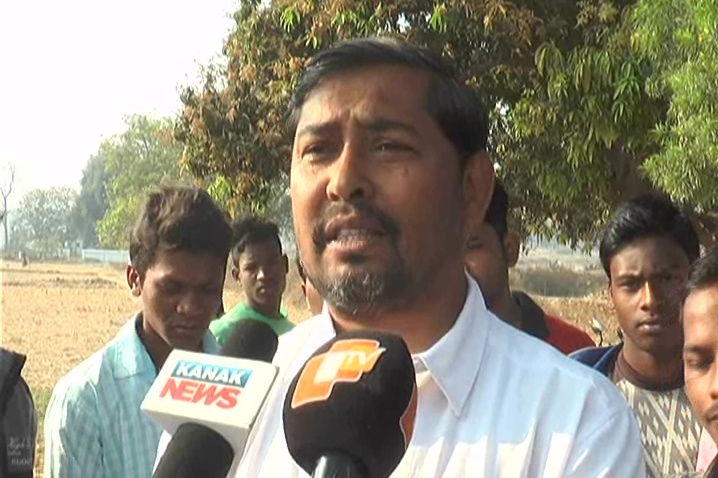
MLA from Sundargarh constituency in Odisha, Jogesh Kumar Singh has submitted his resignation from Congress party after he was suspended for his alleged anti-party remarks. He also resigned from the legislative assembly. This has come days after Jharsugda MLA Nabha Das, declared defection to BJD. Jogesh Kumar Singh had openly praised CM Naveen Patnaik for his “extraordinary work”, and also decided not to attend upcoming President Rahul Gandhi’s rally in Odisha.


“Jogesh Singh has given statements which are against the party. He had categorically stated that he will not be attending the meeting of AICC president Rahul Gandhi in Odisha on January 25,” PCC disciplinary committee convenor, Ananta Sethi told media. He added that they served the MLA a show-cause notice, to which no answer was received.

The suspension could not have come at the worst time, since the party is fighting the battle of existence in the state since the year 2000, and many of its leaders are defecting to incumbent Biju Janta Dal. Jogesh Kumar has asserted that neither his any statements were against party nor did he indulge in any anti-party activities.

“I am surprised as I have not done or spoken anything against the party. Is praising State’s Chief Minister who was awarded best administrator award wrong?” Singh was quoted by reports. He also said that his decision not to attend Rahul Gandhi upcoming rally in the state on 25 January, was taken even before the declaration of the rally.

“I had already finalised public meetings in my constituency much before Rahul’s itinerary was finalised. Besides, I have to attend my close friend’s wedding on January 25. If my refusal to attend Rahul’s meeting enraged the party, I have nothing to say,” Jogesh Singh was quoted by Times of India. He has also rubbished claims of the party that, he was sent a show-cause notice and that he did not give back a reply.

This is not the first time that national party is facing such a crisis. In the run-up to 2014 general elections, two Odisha Congress leaders Anup Sai, legislative party secretary and Bhupinder Singh, Leader of Opposition, had defected and joined the BJD. Similarly, Nayagarh district president of Congress Kumar Hemendra Singh had also joined BJD and had accused that time vice-president of Congress Rahul Gandhi of turning a blind eye towards the party’s grassroots-level workers.

Along with Jogesh Singh, another party leader and MLA from Salepur Prakash Behera had also praised CM Patnaik development works in the state. He is also speculated to quite the party and join BJD. However, Ananta Sethi has said that MLA Behera, has so far not indulged in any anti-party activity, but added that leaders who indulge in same will not be spared.

MLA Jogesh Kumar Singh had declared that following his suspension, he will resign from the party and also from his MLA post. However, he has not responded to speculations that he will join BJD soon.

The elections to the Odisha Assembly will take place concurrently with Lok Sabha elections later this year.