Home Blog Page 6810

Sohrabuddin Shaikh and Tulsiram Prajapati case: Special CBI court acquits all accused

0

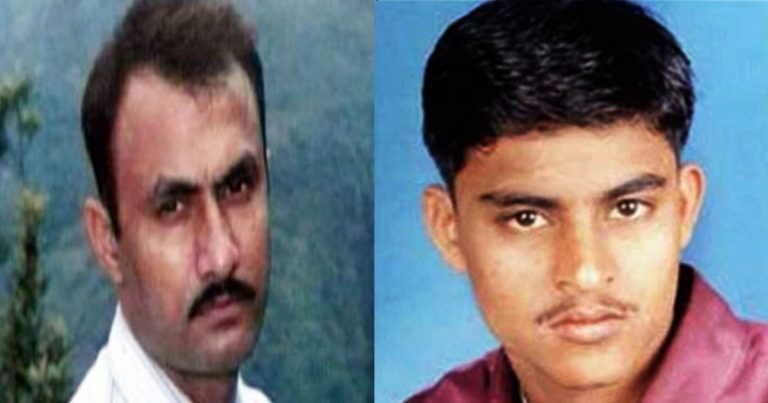
The special CBI court today acquitted all the accused in the Sohrabuddin Shaikh encounter case in Mumbai due to lack of evidence. The court said that the government has put in a lot of effort but there was no satisfactory evidence and the witnesses had turned hostile.


The special CBI court also said that the allegations that Tulsiram Prajapati was murdered through conspiracy is also not true.


According to the CBI, Shaikh, a notorious gangster, his wife Kausar Bi and his aide Tulsiram Prajapati were abducted by Gujarat police from a bus when they were on their way from Hyderabad to Sangli in Maharashtra on the intervening night of November 22 and 23, 2005.

Shaikh was killed in an alleged fake encounter on November 26, 2005, near Ahmedabad while the CBI claims his wife Kauser Bi was killed three days later and her body was disposed of. A year later, on December 27, 2006, Prajapati was also shot dead by Gujarat and Rajasthan police in an alleged fake encounter near Chapri on Gujarat-Rajasthan border.

The case was initially probed by the Gujarat CID before the CBI took over in 2010. In 2013, the Supreme Court directed that the trial is shifted to Mumbai from Gujarat on the central agency’s request to ensure a fair trial. In the course of the trial, as many as 210 witnesses were produced of which 92 turned hostile.

A total of 38 accused were charge sheeted of which 16, including BJP President Amit Shah, then Rajasthan Home Minister Gulabchand Kataria, former Gujarat police chief PC Pande and former senior Gujarat Police officer DG Vanzara were discharged in the case.

‘Tatlu’ gang members Sadam and Asgar arrested for selling fake ‘Mughal-era gold bricks’

0

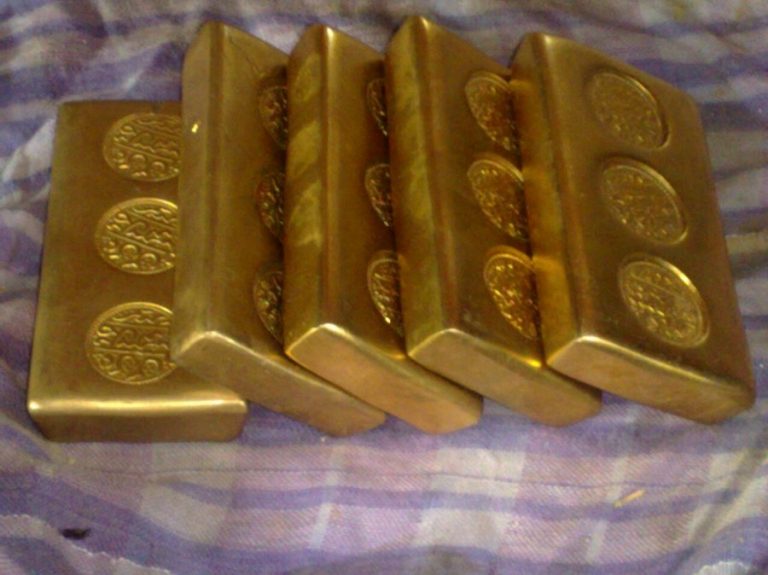
Two history sheeters, namely Sadam alias Sada, and Asgar, alias Pola, of the ‘Tatlu’ gang were arrested here in Haryana, for allegedly conning people from other states, by luring them on the pretext of selling so-called ‘Mughal era gold bricks’ which they supposedly found while excavating the grounds near Havelis in Mewat and Rajasthan, reports Hindustan Times.

The police who arrested the accused near Nuh bus stand on Wednesday said that the gang members tried to dupe a 50-year-old farmer from Bihar, by tempting him to buy the so-called Mughal era gold brick, at half the market price. After the farmer realised that he has been cheated, he decided to play along and led the two into a police trap.

Ramashish Mandal, a resident of Darbhanga in Bihar, fell for the story the gang members concocted. The gang members claiming to be labourers, who dig up land for construction of a building or a well took Mandal to a deserted area where they showed him the gold brick weighing between 700 and 800 grams, wrapped in a dirty, smelly cloth. They claimed that the gold which they found while digging earth belonged to the Mughal era.

Wanting to get rid of the same, fearing the police, the gang members pretended to be disposing of the gold which was actually worth 35 lakhs in 10 lakhs. Mandal was lured by them to buy a small portion of the brick for 2.5 lakhs. “They asked me not to expose it to sunlight for 21 days. I agreed and bought a portion for Rs 2.5 lakh and returned home, Mandal told the police.

The farmer, however, in a rush to make ornaments for his daughter, decided not to wait for the 21 days as directed by the swindlers and took the piece of gold he bought, to a local village jeweller, who thereby, confirmed that it was not gold but only brass.

Though realising that he has been conned, Mandal continued to remain in touch with the gang members over the next two weeks. He told them that he wanted to buy the remaining portion and requested them to sell it for Rs 2 lakh.

On December 18, Mandal contacted the Nuh police and narrated the events, following which a trap was laid and the imposters were caught.

The accused were produced at a court on Thursday and were sent to police custody. Police had recovered a motorcycle and Rs 75,000 from their possession. A case under sections 420 (fraud), 506 (criminal intimidation) and 34 (common intention) of the Indian Penal Code were registered at the Nuh police station.

Rajesh Duggal, the superintendent of police, Mewat, said that the five-member, ‘Tatlu’ gang has duped more than 200 people in the last two years. The gang members confirmed that they bought data of mobile phone numbers from agents in Delhi, Jaipur, and Rajasthan. They called the numbers at random and conned people falling in their trap.

“They have admitted having cheated people from Delhi, Bihar, Haryana, Jammu and Kashmir, and Odisha and have revealed the names of three more gang members who are absconding,” said Duggal.

Earlier this month, 2 other members of the same gang, named Mubeen and Mubarik were arrested by Haryana police for duping a man from Punjab. The gang members had lured the victim on the pretext of selling a Mughal-era gold brick worth Rs 35 lakhs and had looted the money from him by threatening him with illegal weapons.

In a similar incident, police had arrested a member of the same ‘Tatlu’ gang, named Mohammad Salim Khan (25), a resident of Bharatpur, Rajasthan way back in 2013, who used to loot people from Jammu & Kashmir and Odisha by luring them on the pretext of selling them gold bricks of Mughal era found during excavations behind Taj Mahal.

Not just hijabs but mufflers, scarves, mangalsutras, all removed for NET exams

Every few months the Internet is abuzz with the familiar outrage that a Muslim girl was stopped from appearing for a competitive exam because she was wearing a hijab.


It invariably boils down to religion. Muslims vs the rest of the country.


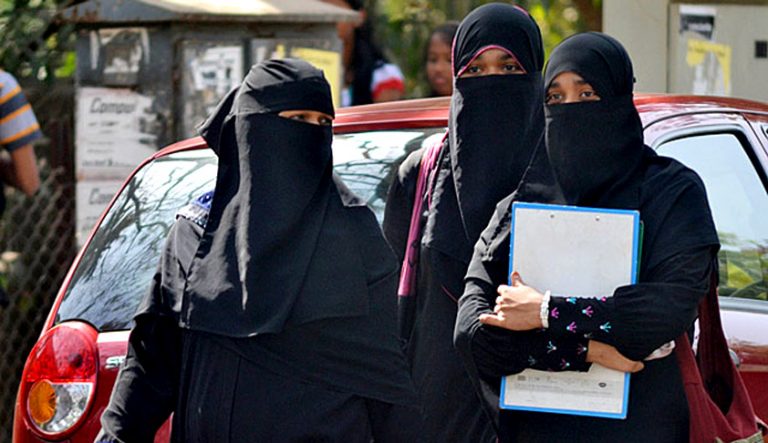
However, that is not true. It is not just hijab, but scarves, jewellery and mufflers are asked to be taken out before entering the examination hall. It is just a rule.


In the NET (National Eligibility Test), which is mandatory for the pursuing PhD, conducted in July this year candidates were asked to remove their mangalsutra and rings too before entering the examination hall. In a competitive exam in Telangana held in September this year, the candidates were asked to remove the mangalsutra too. The women repeatedly asserted that the direction went against their religious sentiments but the officials refused to heed their requests. Husbands of those affected could be seen protesting outside the school with the Mangalsutra of their wives in their hands. In another competitive exam CTET in Uttarakhand, women candidates were asked to remove mangalsutra, bangles, anklets and toe-rings too.

In 2015, for All India Pre Medical Entrance Test, the CBSE had issued an adisory banning had scarves to prevent copying during exams, which was even backed by the Supreme Court.

Modi govt rejects idea of a separate timezone for Northeast India. Here’s why it was the right decision

On December 19, Minister of Science and Technology Dr Harsh Vardhan informed the Lok Sabha that a High-Level Committee has rejected the proposal to have two time zones in the country for strategic reasons. Currently, India has a single time zone, which is 5:30 hours ahead of Greenwich Mean Time. The Indian Standard Time is based on 82°5′ E longitude, but given that the country extends from 68°7′ east to 97°25′ east longitude, this means the eastern and western parts of the have to follow a time which is behind and ahead of the respective local solar times.

Due to this reason, there have been demands to formulate multiple time zones in the country. It has been argued that there will be huge power savings as a result of separate time zones, as the states in the east will start and end the workday early compared to the western part, thereby saving on the power needed for lighting. At present, while the sun rises at around 4:30 in summer, the workday starts almost 4-5 hours after that, which is a waste of valuable daylight.

But the government of India has been rejecting the idea for a long time. In 2001, a committee under the ministry had examined the issue and had ruled that since the expanse of the Indian State is not large like the USA, no need has been felt for different time zones. This time the government has cited strategic reasons for the decision to maintain the single time zone for the country.

Although there are compelling reasons for having separate time zones, the problems that may arise with that are also grave. The other countries that have multiple times zones in single land mass, the population density is much less compared to India. But in India, any border between separated time zones will run through densely populated areas, creating huge chaos.

Separate time zones will mean separate schedules for same trains, flights that criss-cross the country on a daily basis. Lakhs of people will need to reset their watches every time they enter a different time zone. Moreover, the administration in India is not known for its efficiency.

Although these problems can be addressed with better management and technology, actually a better solution already exists for all the problems cited in a single time zone. And that solution is, everyone is free to operate on their own time zones. Confused? Let me explain.

Although India has a single time zone, it does not mean that everyone has to follow the same routine. The regions in the east can start and end their work day one or two hours earlier, and get all the benefits of having a separate time zone, without the chaos associated with it. Individual organisations, companies, factories, educational institutions, public sector units, state governments can fix work hours based on their geographic location. For example, an office in Kolkata can have a workday of 8 to 4, there is no bar on doing so.

It is not very difficult to do so, and actually, this is already followed in many places. In Assam, the tea gardens follow a different time zone, known as Tea Garden Time or Bagan Time, which is one hour ahead of IST. Most tea gardens in the organised sector in Assam start their workday at around 7 AM. Even the administrative offices of public sector companies like Oil and Natural Gas Corporation Limited (ONGC) and Oil India Limited (OIL) in Assam start working at 7 AM.

Likewise, several colleges in Assam start their classes at 7 AM, or even before that. State governments and other organisations in both the public and private sector can start their workday accordingly. Multinational companies already operate across different time zones, so it should not be a problem to advance the worktimes of private sector offices in the eastern region. As long as total work hours do not exceed prescribed limits set by labour laws, there is no bar on the private sector to fix their own work timings. In fact, the factories that work multiple shifts already have different work hours across the country. The same can be extended to administrative offices too.

While talking about the benefit of separate time zone, it is said that there will be huge savings in money due to better utilisation of daylight. In the analysis of estimated savings, the entire power bill of an organisation is taken into account. But that is the wrong approach to estimate that, because the light is not the only purpose that uses electricity, it is not even the largest user.

In fact, with the advent of LED lights, the lighting takes a minuscule amount of power in a house. Most power is consumed in cooling, running computers and other equipment etc, and those uses will remain fixed no matter what the work timings are. Therefore, if one takes into account only the electricity needed for lighting, the estimated benefit will come down significantly.

Coming back to the Lok Sabha, the minister was answering a question by Jayadev Galla from TDP. In the question, he says that smaller countries like France has 12 time zones, and Britain has 9 time zones. That is misleading information presented by the member of Parliament at the lower house. France and Great Britain has only one time zones each. But as both the countries have several overseas territories across the globe, a legacy of colonies they had in past, those territories have separate time zones according to their geographic locations.

Those are separate land masses located at different continents, most of them being islands at oceans, hence they do not suffer from any problem that India might face with multiple time zones.


PM Modi to flag off India’s fastest engine less train on 29 December

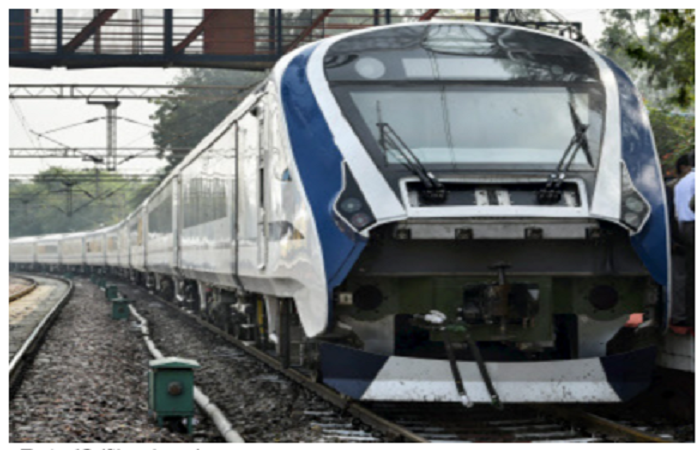
Prime Minister Modi will flag off India’s fastest self-powered engine less train called Train18 on 29 December from Varanasi. According to reports, Train 18 will be faster than presently running super-fast trains like Rajdhani, Shatabdi and Tejas express.

The train will run between Delhi and Varanasi and replace the 30-year old Shatabdi trains. As per the tentative schedule, the train will depart Delhi at 6 am and reach Varanasi at 2 pm. For the return journey, the train will depart Varanasi at 2.30 pm and reach New Delhi station at 10.30 pm.


The train in its initial tests at Kota-Sawai Madhopur section crossed the 180 kmph mark, although it has been designed to run at 160 KMPH. But, unfortunately, a very low percentage of tracks in India’s widespread railway network are designed to withstand such speed and they are being upgraded.

The train has been manufactured at Integral Coach Factory in Chennai and has 80% of its components manufactured in India. Railway ministry has already asked ICF to manufacture 6 more sets. ICF has also received demands of the train from abroad, although it has specifically designed for Indian tracks. ICF GM Sudhanshu Mani also stated that in the next 30 months, the train would be 100% indigenous, with no need for imported components.

Its prototype took an investment of around 100 crores, and 18 months to be made functional by the team at ICF.

The train will have 16 coaches, with 2 executive coaches which will have 52 seats and rest of the coaches have 78 seats each. The coaches will be equipped with Air-Conditioners and rotating seats which can be aligned in the direction of travel. It will also have automatic doors like metro trains, in addition to GPS, WiFi, and infotainment for passengers.  The footstep in a coach’s doorway will slide outward when the train stops at a station enabling passengers to alight safely.

Tejashwi Yadav shocker: RJD de-facto supremo uses rape analogy to criticise Bihar CM Nitish Kumar

The leader of opposition in the Bihar Legislative Assembly and RJD’s de facto supremo, Tejashwi Yadav today resorted to unparliamentary language to critique Nitish Kumar’s government in Bihar. Tejashwi Yadav said that Nitish Kumar has ‘raped’ the public mandate in Bihar.

Tejashwi Yadav was addressing media on the occasion of RSLP chief Upendra Kushwaha’s joining of the Bihar Mahagathbandhan. Leaders of Mahagathbandhan in Bihar were present, including Hindustani Awam Morcha (HAM) leader Jitan Ram Manjhi and Congress leader Shaktisinh Gohil, at AICC office in Delhi.


Tejashwi Yadav said, “Nitish Kumar has insulted the public mandate, in my opinion, he has raped the mandate.” He also went on to claim that the prevailing atmosphere in the country is that of an undeclared Emergency and that the Modi government’s fascist moves have imperilled the constitutional validity of various democratic institutions.

As the election season is around the corner, Politicians have often been expected to rejig their stance as per their political wisdom to favour their fortunes but one should always be sensitive in using appropriate language to criticise their opponents.

The opposition leaders in Bihar have come together and formed a Mahagathbandhan in Bihar. It will be interesting to see how the coalition pans out and if it dies the same gradual death as the previous Mahagathbandhan formed at the centre.

It is however interesting to note that most women’s rights activists and journalists who are quick to lash out at such statements have not criticised Tejashwi for his unbecoming use of a rape analogy. Such analogies diminish the seriousness of a heinous crime like rape and violence against women. But, perhaps because Tejashwi is now the de-facto supremo of the ‘secular party’ RJD that plays a rather important role in the mahagathbandhan to defeat BJP, the silence is to be expected.

Nuns supporting rape accused Bishop Franco to take charge of convent where the victim resides

0

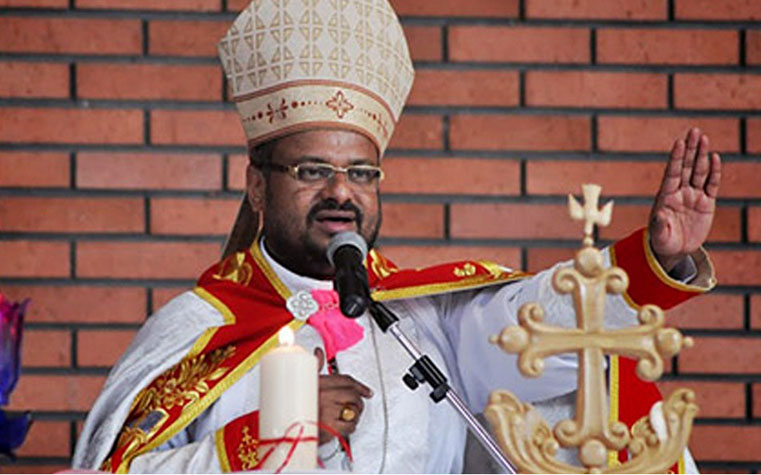
The Syro-Malabar Church, which had given an arousing welcome to rape accused Bishop Franco Mulakkal soon after his release, has once again stoked controversy after it decided to award prominent posts to those nuns who supported rape accused Bishop Franco, reported The News Minute.

According to the report, three nuns from the Jalandhar Diocese of the church who had stood behind the rape accused Bishop Franco has been awarded transfers to the Kuruvilangad convent under the Missionaries of Jesus at Pala in Kottayam district. Incidentally, they are posted to the same convent where the rape survivor nun and the fellow nuns who supported her have also been staying.

The three nuns who have been assigned to take charge of the posts are C Jyothis, C Lisyu and C Anitha. According to TNM, the nuns have already reached the convent but haven’t taken any charge yet. Recently, two other nuns-Aneet and Stella were also transferred to the Kuruvilangad convent from Jalandhar. However, only Aneet stayed while Stella flew back to Jalandhar.

It is reported that appointing the nuns close to Franco, the Church is trying to send a message that it intends to keep nuns subservient to them and answerable to the affairs. The Church by awarding prominent posts to the nuns has once again stood by the rape accused Bishop Franco.

“The nuns didn’t have any clue that there will be such a change. Even after Jyothis, Anitha and Lisyu came to the convent, the nuns were not aware of the exact intention. Only after one of the three sisters began running the daily affairs, the sisters became aware of the change,” TNM quoted as said by a source close to the convent.

Interestingly, the three nuns who have been transferred are reportedly very critical of the victim and supporting nuns. Sister Anitha and Sister Aneet were also part of a team which visited Chief Minister Pinarayi Vijayan in Delhi pleading innocence of Franco.

“The sisters fear it is an agenda to put pressure on them to leave the convent themselves or to mentally harass them,” reported TNM.

Franco Mulakkal, Bishop of the Roman Catholic Diocese of Jalandhar, is accused of raping a 44- year-old nun at a guest house in Kuravilangad in May 2014 and subsequent sexual exploitations afterward. The nun had registered a complaint in June this year and has also claimed that despite her complaints, the church took no action on the bishop. The congregation had also stood by the rape accused and referred to him as an “innocent soul”.

Bishop Franco Mulakkal, Archdiocese of Jalandhar, Punjab, was arrested by the police officials on September 21st after the investigating team finally found evidence that linked him in the sexual harassment case. However, The Kerala High court had granted him conditional bail on October 15 after asking him to appear before the investigation team once every two weeks and had also ordered to surrender his passport.

Chhattisgarh: Congress CM Bhupesh Baghel appoints co-accused in sex CD scandal as his political advisor

Newly elected Congress chief minister in Chhattisgarh, Bhupesh Baghel has reportedly hired former scribe Vinod Verma as his political advisor. Verma, who is a member of Editor’s Guild of India, was arrested last year from Ghaziabad by Raipur Police after a case of blackmail and extortion was registered against him by BJP leader Prakash Bajaj.

As per reports, Bajaj had alleged that he was being harassed over phone by an unknown caller who told him he had a CD of his ‘aaka’. The explicit CD reportedly featured PWD minister Rajesh Munat.

The police had claimed to have recovered as many as 500 CDs and pen drives from Verma’s residence during a raid. He was released on bail last year in December after the police failed to file a charge sheet against him in 60 days.

In September this year, the CBI, which had taken over the investigation, filed a charge sheet naming Verma and Baghel and other three as accused in the case. One more accused, Rinku Khanuja, allegedly committed suicide in June this year.

As per the charge sheet, the accused were booked under sections 469 (forgery for purpose of harming reputation), 471 (using as genuine a forged document), 120B (criminal conspiracy) of the Indian Penal Code and section 67A of the IT Act (whoever publishes or transmits or causes to be published or transmitted in the electronic form any material which contains sexually explicit act).

Congress era lobbying in the eye of the storm? USA starts investigating Airbus payment to lobbyist in India

0

In what could be another expose of a scam during the UPA government, the US Department of Justice is investigating suspected transactions by aircraft manufacturer Airbus in various countries, including India, reports French publication Le Monde. Parallelly, CBI is also reportedly investigating mysterious payments to an NGO named Advantage India by Airbus and missile maker MBDA. The NGO is owned by Deepak Talwar, a corporate lobbyist. It may be noted that Airbus is a shareholder in MBDA.

According to allegations, France based Airbus SAS and UK-based MBDA had paid around ₹90.72 crore to Advantage India for education and health care-related activities. In 2010, Advantage received ₹45 crore from Airbus, while in 2012-13 the NGO was paid ₹20.9 crore by Airbus and ₹13.7 crore by MBDA, in violation of FCRA rules. When the accounts of the NGO were investigated by the Income Tax department, it was revealed the amount was not used in any healthcare or education activities. Instead, the fund was diverted to accounts belonging to Deepak Talwar and his family members.

Talwar is known for his proximity to politicians, journalists, bureaucrats etc, including Praful Patel. Patel was the aviation minister in UPA government and during his term, the Air India had taken the controversial decision to purchase 111 aircraft, which included 43 aircraft from Airbus. Talwar is also under investigation for meeting the CBI director Ranjit Sinha about 63 times in 2014 at Sinha’s official residence. His name had appeared in Nira Radia tapes too.

Deepak Talwar is already under investigation in India for his role in several aviation contracts. He is at present wanted by Indian authorities, who lives in Dubai at present. Last year, UAE had barred him from leaving the country, after it was revealed that he was being probed by Income Tax authorities in India.

Advantage India says it used the fund to buy mobile medical units, medical equipment, medicines, ambulances and to recruit doctors, but agencies say many bills are suspected to be fake. They could not find any record of patients being treated by the NGO. Why the aircraft manufacturer paid such a huge sum to the NGO has raised serious questions.

Airbus is suspected to have made illegal payments in many countries, which DoJ is probing since 2017, but it was revealed recently. Airbus is also under investigation by National Financial Office (PNF) in France and the Serious Fraud Office (SFO) in Great Britain for irregular transactions. The two agencies are investigating the company for the presence of middleman in negotiating several large contracts in various countries, including India. According to Le Monde, DoJ has requested information from PNF and SFO that could fall under the jurisdiction of the United States.

After the publication of the report by the French media house, Airbus issued a statement saying that “it is well known that Airbus is the subject of a public inquiry and is therefore not able to comment in any form on current procedures”, confirming that it is under investigation by DoJ. The Company also said it is cooperating with DoJ in the investigations, along with PNF and SFO.

It can be noted the AgustaWestland scam had surfaced after Italian authorities had probed the company for paying bribes to receive the contract in India. After which, the Indian government started probing the case. The probe by DoJ along with UK and France investigators may have a similar effect if the charges are proved.

Sajjan Kumar wants to ‘settle his children and grandchildren’ before he surrenders, seeks 30 days’ time

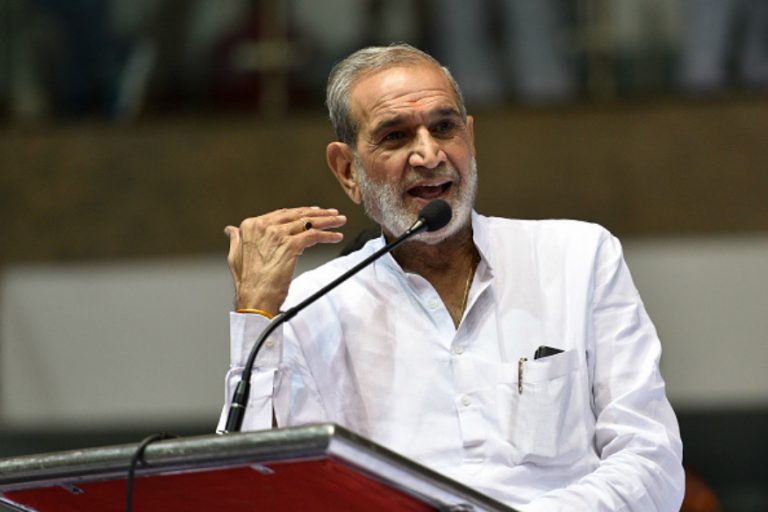
In an outrageous move, 1984 Sikh genocide convict Congress leader Sajjan Kumar who quit the party after his conviction, asked for 30-days’ time to surrender as he has ‘needed time to settle his children and grandchildren’. He said he had six grandchildren and the sentence came ‘all of a sudden’.

Sajjan Kumar said he also needed time to appeal to the Supreme Court over and above settle the matter between his children and property. He has been given time till 31st December to surrender but he has sought extra time till 30th January.

On 17th December, Delhi High Court pronounced Congress veteran Sajjan Kumar guilty in 1984 Sikh massacre case and sentenced him to life imprisonment.

A bench of JusticeS S Muralidhar and Vinod Goel pronounced the sentence in the case related to the murder of five Sikhs in Delhi’s cantonment area after the assasination of former PM Indira Gandhi in October 1984.

As per reports, in 2013, the trial court had convicted former councillor Balwan Khokkar, former MLA Mahendra Yadav, Kishan Khokkar, Girdhari Lal and Captain Bhagmal in the case and had acquitted Sajjan Kumar. In November, prosecution witness had identified him in the court. The case relates to killing of five Sikhs in Raj Nagar part I area in Palam Colony in South West Delhi on 1st-2nd November 1984 and burning down of a Gurudwara in Raj Nagar part II during that period.