Home Blog Page 6918

Narendra Modi and BJP’s arc of political realism

It was Dr Martin Luther King who said, “The arc of the moral universe is long, but it bends towards justice”. But, the curve of the arc is so imperceptible that most people just do not see it.

Rebecca Solnit writes in her article, The Arc of Justice and the Long Run:

“I don’t know what’s coming. I do know that, whatever it is, some of it will be terrible, but some of it will be miraculous, that term we reserve for the utterly unanticipated, the seeds we didn’t know the soil held. And I know that we don’t know what we do does. As Shane Bauer points out, the doing is the crucial thing.”

The largest mountain and the largest volcano in the solar system, both are the same – Olympus Mons on the planet Mars. The mountain rises up to a height of a staggering 26 kilometres that makes it three times the height of Mount Everest. But if one were to attempt climbing it one would hardly get the feeling that one was on a mountain. Its slope is so gentle that it almost looks flat.

The popular perception of volcanoes is that of a steep mountain hiding within its bosom vast amounts of destructive energy that, once unleashed, can devour whole cities. The absence of tectonic plate movement on Mars allows the Martian crust to remain fixed in place over a magma hotspot, allowing repeated, large, lava flows. At its base, Olympus Mons is 550 Kms. The curvature of this volcano is just as imperceptible as the moral arc of Dr King. The energy contained within Dr King’s moral universe can also be infinite, but as Ms Solnit writes, “sometimes hope lies in not looking forward but backwards to study the line of that arc”.

The UPA’s own Olympus Mons erupted with repeated magma flows in the shape of Adarsh, 2G, CWG, Antrix-Devas, Tatra Trucks, Coalgate, and a number of other explosions, and in the absence of any tectonic plate movement within the Congress party, the crust at the top just became thicker and thicker. However, it also became possible for people to see the curvature of the arc of moral injustice, and when Anna Hazare decided to sit on a fast demanding the institution of a Jan Lokpal; he touched a raw nerve in almost every ordinary citizen of the land.

The overwhelming response from the people was quite infectious and the contours of a moral revolution were just getting outlined. The movement that began on 5th April 2011 at Jantar Mantar soon grew into a mass civic protest across urban India. By keeping politicians of all hues at bay, it derived a moral legitimacy that similar protest movements had failed to garner in the past.

It would have been obvious to even a child that a government, neck-deep in corruption, would never agree to the proposals put forward by civil society; that it would resort to deception, lies, subterfuge, disinformation, and physical coercion to crush the movement; exactly how the Manmohan Singh government responded to Anna Hazare’s challenge.

It had no compunction in orchestrating a debate in the Lok Sabha and then adopting, what was euphemistically called a “sense of the house” resolution on three key issues raised by Anna Hazare. The “sense of the house” resolution moved by Mr. Pranab Mukherjee on 27th August 2011, read: “This House agrees ‘in principle’ on following issues — (i) Citizen’s Charter, (ii) lower bureaucracy under Lokpal through an appropriate mechanism, and (iii) establishment of Lokayukta in the States; And further resolves to forward the proceedings of the House to the Standing Committee on Law and Justice while finalizing its report.”

A Standing Committee, we know, is where all inconvenient demands are sent for ceremonial burial. Anna Hazare broke his fast the next day, and from then began his journey into obscurity and irrelevance.

Political battles cannot be fought non-politically. Whoever advised Anna against converting the protest movement into a new political association had obviously never been a student of history. By dissociating his movement from Arvind Kejriwal and denouncing the formation of the Aam Aadmi Party, Anna Hazare failed to see the truth behind his moral pretensions. Political realism, as defined by Robert Musil, the Austrian writer, in his novel, “The Man Without Qualities” is a “sensibility driven by needs rather than by ideas.” Robert D. Kaplan, in his essay “Kissinger, Metternich, and Realism” writes: “Realism is thus about deftly playing the hand that has been dealt you. It is not exciting or inspiring.”

Looking back, can we say that Anna Hazare knew Arvind Kejriwal and his associates better? The precipitous descent of the Aam Aadmi Party into a bottomless pit of moral turpitude has made it indistinguishable from the Congress, and today stands completely exposed as nothing but the B-team of Sonia Gandhi’s outfit. Drunk with power, Arvind Kejriwal has destroyed the magical dream that the Anna Hazare movement had evoked. Kejriwal’s moral arc flattened even before it had begun to emerge. As Dr King said: “The ultimate measure of a man is not where he stands in moments of comfort, but where he stands in times of challenge and controversy.” Both Kejriwal and Anna Hazare failed abysmally on this measuring scale.

The curve of the moral arc that began to become perceptible from April 2011 actually started to point towards justice only from that day on 20th May 2014 when Narendra Modi first entered the Parliament.

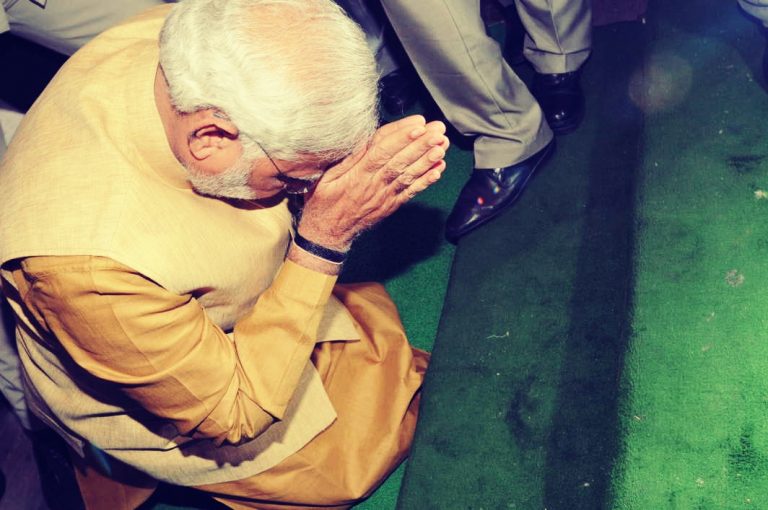
This is how The Indian Express reported it: “As he stepped into Parliament for the first time, Prime Minister-designate Narendra Modi on Tuesday bowed, with his forehead touching the stairs, to register his high respect for the “temple of democracy”.

“Soon after arriving at the main gate of the Parliament building, Modi was greeted with bouquets by BJP leaders. After accepting their greetings, Modi touched the ground of the entrance with folded hands.

“I visited the Gujarat Chief Minister’s chamber for the first time when I became the Chief Minister. I entered the Gujarat Assembly for the first time after I became the Chief Minister. I have come here also for the first time,” the 63-year-old said later in the historic Central Hall of Parliament.”

Never before had any Prime Minister shown such deep reverence for an institution and touched the entrance steps with his forehead. The arrogance of the office had precluded any such behaviour from the days of Nehru and his descendants. Even the normally servile and naturally bent Manmohan Singh did not show the respect his office demanded, perhaps, because he knew that he was there by accident, and only at the pleasure of his party President.

The moral arc of the Congress party had actually flattened that night on 25th June 1975 when Nehru’s daughter switched off the light of freedom and the darkness of Emergency pervaded the land. Though officially it was ended in March 1977, yet its miasma poisoned the very air for another 37 years until the 2014 elections gave a complete majority in the Lok Sabha to the BJP led by Narendra Modi. Admittedly, there had been periods of energy during the previous NDA terms, but these were inevitably structured around “coalition compulsions,” to use Manmohan Singh’s infamous phrase.

The euphoria generated by the success of the Narendra Modi-led BJP, suddenly gave rise to new expectations and a new confidence among the suffering masses of this country who had been toiling under the crushing burdens of inflation, unemployment, corruption, insecurity, hunger, lack of education and health services, and a host of other disorders that an indifferent political and administrative dispensation had been inflicting upon them.

In a land that has been brought up on a steady diet of mythological lore of divine avatars descending from their heavenly abodes to rid this earth of evil demons, it became very easy for people to believe that Modi was some kind of a 21st century avatar of Lord Krishna who had descended upon Hastinapur to rid it of its Kauravas and their evil empire.

A tremendous amount of goodwill for the new PM and his team gushed forth like a torrent predicting the imminent demise of the ecosystem that had protected and nurtured the evil Queen and her court of rakshasas. Fake news traders, whose very existence depended upon this evil ecosystem, saw doom and gloom for their kind. Stories discrediting each and every decision of the new government began to appear in both print and visual media. The judiciary, the civilian bureaucracy, and the law enforcement agencies having deep-rooted connections and links with the corrupt regimes threw their combined efforts into thwarting the reforms and preventing the Modi government from delivering on the promises made during the election campaign.

Being used to a flat moral arc they were unable to reconcile with the new curvature that forced them to raise their eyes from the feet of their benefactress and look ahead to a new geography where the mountains were vertical and not flat.

Four-and-a-half years on, some of us may be unhappy that Modi has not “deftly” played the hand that the people have dealt him. Many of the promises remain unfulfilled – some are not even works-in-progress. But, for the first time in our history, he has given us a corruption-free government at the centre. His team may not be as energetic and committed as he is, but then one cannot expect all the fingers of a hand to be equal. The ascetic life he has led has given him the physical attributes that enable him to take the burdens of office without flinching.

The Congress knows that if it has to regain power it has to somehow destroy Modi. The constant personal abuse directed at him is symptomatic of the deep frustration with his style of open and transparent governance as against the opacity of his opponents. The Congress President, not known for either hard work or political intelligence, has been resorting to outright lies, calling the PM “a thief” when he has nothing with which to substantiate his allegations. A supposedly suave, urbane spokesperson like Shashi Tharoor has become indistinguishable from a Jignesh Mewani in his language and demeanour. The moral arc has not only flattened but completely disappeared from the political spectrum of the Congress.

Narendra Modi and the BJP’s arc of political realism may be imperceptible to some at the moment. What the future holds may be terrible or miraculous, but the seed is sown and we shall wait with anticipation to see what fruit it sprouts.

One thing, however, is looking more and more certain. Modi will not sacrifice morality at the altar of political realism, compromising the future of the nation for short-term gains. For him, the trajectory of the moral arc is clearly visible and if we, in our ignorance and impatience fail to see it, he is not going to flatten the beam for our convenience. If we fail him now, we will have no one to blame but ourselves. Therefore, for now, by keeping our faith in him, we can hope that the arc will become manifest for us to see.

I for one am confident that its trajectory will remain firmly focused in the direction of justice and will not get flattened like the Congress’s Olympus Mons that is stagnant and immobile at the top.
Naxal letter claims DD cameraman was ‘caught in ambush’, Police say ‘targeted murder’

0

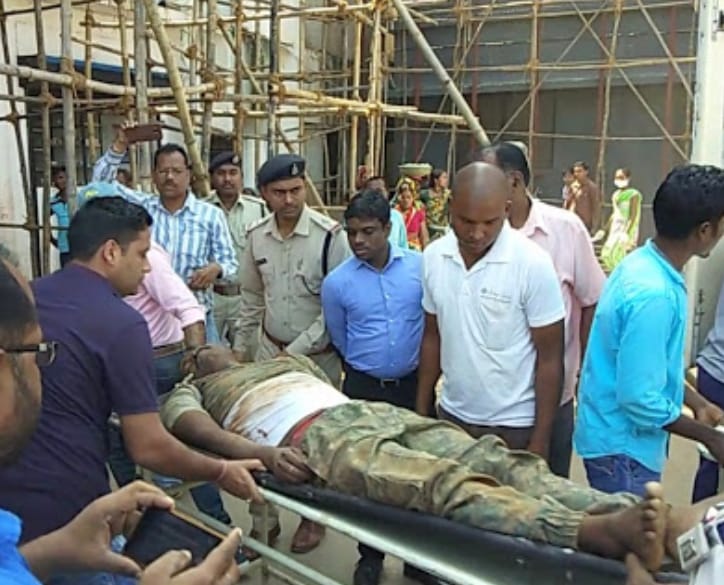
Days after Doordarshan cameraman Achyutananda Sahu was murdered by Naxals in Dantewada, the Naxals in the area have released a letter, claiming that cameraman Sahu was killed in an ambush and they (Naxals) had no intention of killing him.


In the letter, the left-wing terrorists have stated that they were opposed to a road being constructed from Bharatpur in Dantewada to Burgum and the ambush on the police team was a retaliation as the road is causing harm to the crop sown by farmers. They have stated that the Chhattisgarh government and police are spreading lies stating that the Naxals are targeting media persons. The letter also claims that the upcoming elections should be boycotted and any ‘BJP Sangh Parivar members coming to ask for votes should be killed and chased away while candidates from other parties should be interrogated in a ‘Jan Adalat’. The letter also asks journalists not to come accompanied by security forces.

Dantewada SP Abhishek Pallav has rubbished this claim and stated that the Naxals have killed the DD cameraman deliberately.


SP Pallav has stated that the body of Achyutananda Sahu had multiple bullet wounds and fractures on his skull. indicating that the attack on Sahu was no ‘mistake’ but a deliberate, cold-blooded murder, Pallav further asserted that if it was only an ambush on the security forces why did the Naxals loot Sahu’s camera.

The attack on October 30 had resulted in the deaths of two CRPF personnel and the DD cameraman Sahu. DD journalist Mormukut Sharma had narrowly escaped the ambush. Sharma’s video secretly shot during the fierce ambush had gone viral on social media. Amidst sounds of firing bullets in the dense forest, Sharma was seen sending a message to his mother that he believed would be his last.

Chhattisgarh goes into polls in two phases on 12 and 20 November.

Chhattisgarh: Ruckus in Congress office as the party releases list of final candidates for upcoming elections

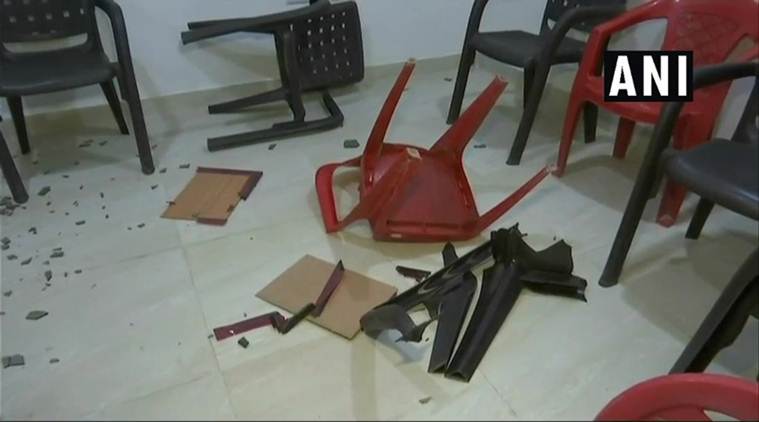
Protests erupted at the Chhattisgarh Congress office yesterday after the party released the last list of candidates for the upcoming legislative assembly elections. The announcement of candidates has upset many within the party which has led to tension in the office.

As per sources, angry supporters of Ejaz Dhabar, who has been denied a ticket from Raipur South constituency, started creating a ruckus and vandalised Congress office. Dhabar was considered a strong candidate, but the ticket was given to Kanhaiya Agarwal, which angered his supporters. Few days back, a video had gone viral in which Dhabar was reportedly seen threatening Chhattisgarh Congress in-charge P L Punia that if he is denied a ticket, he will create a disturbance.

As per reports, party workers also created a ruckus in Bilaspur office over ticket distribution. Among those who are denied tickets is Dr Renu Jogi, wife of former chief minister Ajit Jogi, following which she has joined her husband’s Janata Congress Chhattisgarh.

With elections around the corner, the infighting within Congress has peaked. Yesterday we had reported how swords were drawn between senior Congress leader Digvijaya Singh and Jyotiraditya Scindia over candidate selection in poll-bound Madhya Pradesh.

Madhya Pradesh, Chhattisgarh, Telangana, Rajasthan and Mizoram are scheduled to go for elections in the coming weeks. First phase of voting in Chhattisgarh will take place on 12th November and second phase elections will be held on 20th November. Mizoram is scheduled to go to polls on 28th November along with Madhya Pradesh. Rajasthan and Telangana will vote on 7th December. The results for all five states will be declared on 11th December.

Out of the five states where Assembly elections are to be held, currently Rajasthan, Madhya Pradesh and Chhattisgarh have BJP governments, Telangana has TDP government and Mizoram has Congress government.

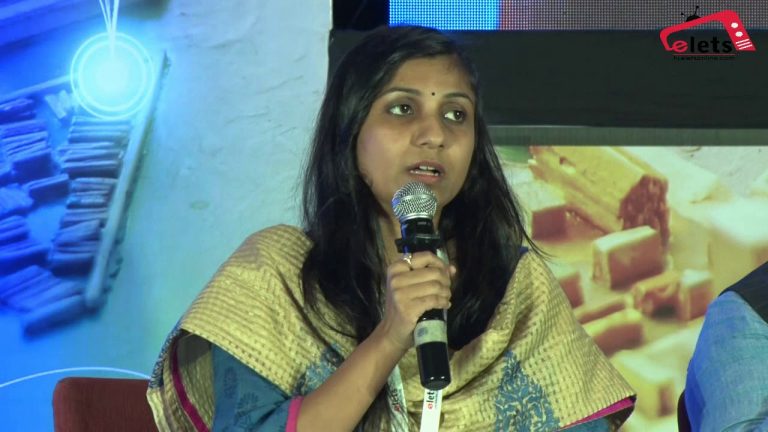
Uttarakhand: District Magistrate leads by example, enrols her son in an Anganwadi centre

0

Swati S Bhadoria, the District Magistrate of Chamoli is setting an example for others after she decided to enroll her toddler son in an Anganwadi center. As per reports, Bhadoria, an IAS officer, has enrolled her son in an Anganwadi in the Gopeshwar village of the state instead of an expensive city school.


The decision to join her son to one of the Anganwadis is commendable as it comes at a time when most of the bureaucrats and politicians seem to have living an extravagant life. According to Swati Bhadoria, the factor that prompted her to make this decision was to make sure that her son is grown up in an atmosphere which encourages sharing.

“Anganwadi centers have all the facilities and a holistic environment which is good for the growth of a child,” the Chamoli District Magistrate said expressing happiness at her decision.

She further added that her son is feeling very good at the Anganwadi center along with the rest of the students. “Education, fun and food go hand in hand at these centers,” she said. Swati said that one of the reasons why she joined her son to Anganwadi is to change the general attitude towards Anganwadi centers.

The DM speaking to the media said that children attending the Anganwadi Centre in Gopeshwar village are taken care of and well-fed. With the provision of basic amenities including medical care, the youngsters can have ‘holistic growth’ at the center, says Bhadoriya. She said that she chose to enroll her own son at the state-run facility as it is good for his social, mental and physical growth.

Swati’s husband Nitin Bhadoria, also an IAS currently posted in Almora as District Magistrate expressed his happiness over his son attending the Anganwadi center. “My son had food with his classmates and was visibly happy when he returned home,” said Nitin Bhadoria.

“Tuesday was Abhyuday’s first day here and he had khichdi with the rest of the children,” said Manju Bhatt, a volunteer at the Anganwadi center.

In 2017, another IAS officer in Chhattisgarh Avnish Kumar Sharan had started the trend in the state by sending his daughter to the local government school. Inspired by his example, legislator and parliamentary secretary Shivshankar Paikra also had admitted his five-year-old son in the local government school in Pathalgaon block in the state.

Five people shot dead by suspected ULFA militants in Assam

0

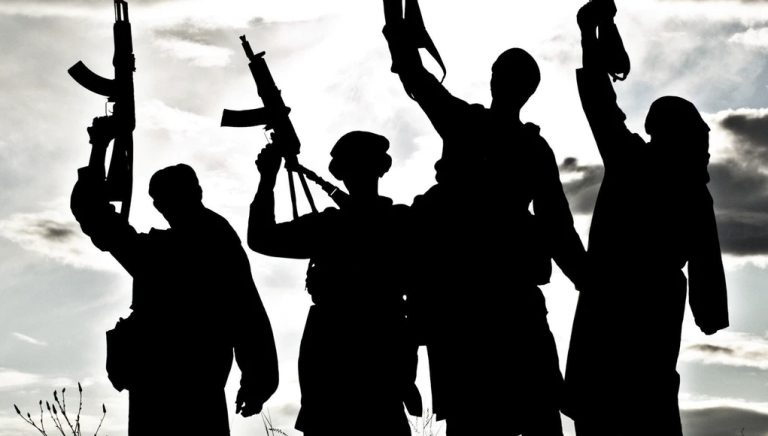
Threatening the push Assam back to dark days of terror and violence during 1980s and 1990s, 5 persons were shot dead by suspected ULFA militants in Assam. The incident happened at Kherbari village near Dhola in eastern Assam. The location is near the India’s longest Dhola Sadiya bridge over Lohit river.

According to reports, 6 suspected ULFA militants came to the village in the evening in Army fatigues, face covered with cloths. They went to a grocery shop in the village and asked six persons present there to come with them in the pretext of asking for some information. They took them away from the village to an isolated place, and asked them to sit in a row. After that, they started blindly firing at them. The firing killed five of them, but missed one person who was sitting at one end, who had lied down immediately after firing started. As it was dark, and the firing had caused smoke in the area, the attackers could not see the victims properly, and left assuming that all six are dead.

The deceased have been identified as Subol Das, Dhananjay Namashudra, Shyamal Biswas, Ananta Biswas and Avinash Biswas, three of them from the same family. Sahadev Namasudra was able to miraculously escape the massacre.

Security forces have already a launched a massive search operation in the area, including CRPF and Assam police commando teams. The area is not very far from past ULFA camps on Assam-Arunachal border. Assam government has asked DGP and ADGP of the police, and minister Keshab Mahanta, to go to the location immediately. Chief minister Sarbananda Sonowal has said that strongest action will be taken against the perpetrators of this heinous crime.


Section of politicians and activists in the state are already trying to create a divide between Assamese speaking and Bengali speaking people in the state. This incident has the potential to ignite that tension into a massive conflict. Given that context, Sonowal also directed all law enforcing agencies to maintain peace and take stern action against anybody trying to destabilise the environment in the state.

Trying to gain political mileage from the incidence, WB chief minister Mamata Banerjee used it to repeat her opposition to NRC, asking if the attacks are a result of recent development on NRC.


But probably the attack has nothing to do with NRC, the most probable reason behind that is proposed amendments to the Citizenship Act, which seeks to give citizenship to religious minorities from neighbouring countries. While several Bengali organisations in Assam are supporting the amendment, many non-Bengali organisations are opposing it. They fear that if large numbers of Hindu Bangladeshis are settled in Assam, the demography of the state will change forever, and Bengali will become the dominant language, like Tripura.

The state is facing continuous protests against the amendment, and even ULFA has spoken against it. ULFA also has a history of attacking people from other states, that’s why they are the main suspects of the attacks.

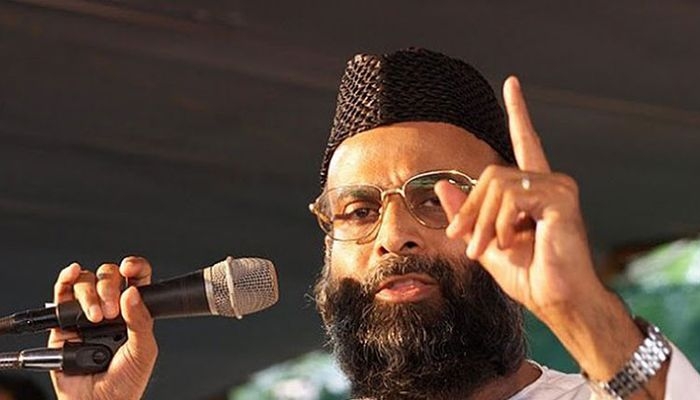
Karnataka government changes prosecutor in Bengaluru blast case in final stage of trial, delays case against Madani by several months

0

The Congress-JDS government in Karnataka has replaced the Special Public Prosecutor in the 2008 Bengaluru blast case when the trial was just about to complete. On September 20, the Karnataka High Court had ordered that the trial into the case have to be completed within two months, and the trial was in its final stage.

On Thursday, former public prosecutor K Rudraswamy appeared in the special terrorism court with a notification from the state government appointing him as the Special Public Prosecutor for the case, effectively replacing current prosecutor Sadashiva Murthy. This means that the trial that was to be concluded by November 20, will now have to be extended by several months, as the new prosecutor will require that much time to study the enormous volume of documents and witness statements recorded in the case.

This case pertains to the serial blasts in Bengaluru on 25th July 2008, where two persons were killed and dozens were injured. A total of nine low-intensity crude bombs were used in the blasts.

Kerala’s PDP (Peoples Democratic Party) leader Abdul Nasser Madani is one of the prime accused in the case. In 2009, two Lashkar-e-Taiba terrorists were arrested from the Bangladesh border, and their interrogation revealed significance information about serial blasts in several cities in India, including the Bengaluru blasts. From this investigation, several Muslim youths were arrested, and Abdul Nasser Madani’s link with the blasts was revealed. He was arrested in August 2010 for his involvement in the blasts by Karnataka police.

Sadashiva Murthy said that he was removed from the case without any prior intimation to him. Talking to Times Now, he said that he had almost completed the case, and he was conducting the case effectively without yielding to any pressure. He said that many people were not satisfied with the way case was going on. When asked who are these people, he said that Madani was very influential in the previous government, and his influence continues now also.


Other than PDP, Madani had also established Islamic Seva Sangh in 1989, which was banned in 1992 for terrorist activities. He was also accused of fanning hatred following the Babri demolition, and alleged to have links with Pakistani terror outfit Lashkar-e-Taiba.

In 2011 while hearing a bail plea of Madani, Justice Markandeya Katju had wondered how can a person on wheelchair pose a threat if granted bail, referring to the amputated leg of Madani. But Justice Gyan Sudha Misra had declined bail, saying the charges against the person are serious.

Madani had requested permission for visiting Kerala from October 29 to November 4 to meet his ailing mother, and Sadashiva Murthy had sought stringent conditions for allowing this visit. In its order granting him permission, the court had said that Madani cannot meet any party member, can’t carry or share any documents with anyone. Now sources in the legal department in the state say that he was removed from the case due to this reason. If the allegation is true, this suggests that Madani wields significant influence on the Kerala government, who has effectively delayed the case by several months which was to be over by next month as per High Court order.

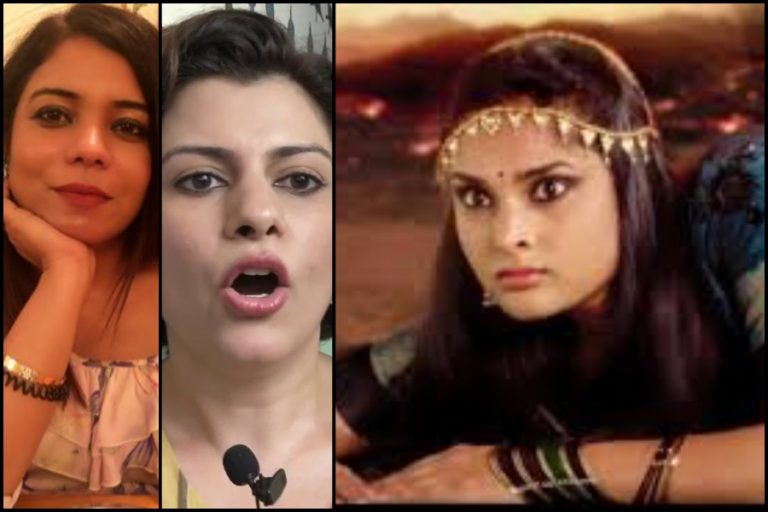
Congress IT cell head’s Twitter meltdown, Congress-friendly ‘journalists’ come in the line of fire

Congress IT cell head Divya Spandana had a major meltdown on Twitter after people, including Congress-friendly journalists, pointed out that her tweet comparing PM Modi to ‘bird pooping’ was not in good taste. She took to Twitter to let the world know that she, as a former member of parliament and Congress party’s social media and digital communication in-charge, does not ‘give two hoots’ about the views of the voters.


Hell hath no fury like a woman scorned. When Hurricane Birdie hit Twitter, no one, including Congress-friendly journalists could escape the ire.

First, she accused The Wire‘s Rohini Singh, who called out Divya’s tweet as being distasteful, of having a ‘dirty mind’.


Then she corrected herself and accused Singh of having a ‘convoluted, manipulative, dirty mind’.


Ouch.

Next to come in the line of fire was Shekhar Coup.. err. Shekhar Gupta of ThePrint. Gupta had wondered aloud that first Divya had ‘ruined further the taste of our already rotten political discourse’ after which Divya went on to insult our collective intelligence.


He then wondered if this is the decency Rahul meant when he had hugged PM Modi?

Triggered, Divya Spandana pointed out that Gupta talking of standards is more like the kettle calling the pot black.


The next casualty of the fury was NDTV‘s Nidhi Razdan.

At first Congress-friendly ‘journalist’, Pallavi Ghosh had ‘clarified’ from her ‘sources’ that Divya’s tweet was not in reference to PM Modi.


Right after the ‘clarification’ from Ghosh, Nidhi tweeted how Congress sources say that the party does not approve of the language used by Divya.


Shocked at Divya’s brazenness, Nidhi again tweeted how Divya, who holds an official position in the Congress, cannot absolve herself of the responsibility of telling the nation what exactly she meant by her tweet.


Divya hit out on Nidhi and refused to offer any further explanation.


Nidhi, as a responsible citizen of India who votes, was shocked at being referred to as a monkey.


Not taking the slow comprehension skills of Nidhi lying down, Divya suggested Nidhi visits Srinagar to feel better. One wonders why Divya suggested that Nidhi visits Srinagar specifically.


To that, Nidhi retorted at how she wishes she could do that, but she has an actual job to do, because of which she couldn’t.


A friendly reminder: A few weeks back Twitter was abuzz with speculation of promotion/punishment of Divya Spandana after she changed her bio on the Twitter profile, removing her designation as Congress IT cell head. This infighting between ‘journalists’ who are overtly sympathetic towards Rahul Gandhi, and Divya Spandana who is considered to be a close aide of Rahul Gandhi, is only furthering speculation that all might not be well within Congress and this might be an indirect message to Divya that her time in the party is up.

Not taking the job-jibe lying down, Divya responded in kind.


So, if Nidhi, who has a job with NDTV, is lucky to have a job, as ‘few’ people have one, one wonders whether Divya is a lucky one or the unlucky one?

US slams Pakistan for lifting ban on Hafiz Saeed’s terror organisations

0

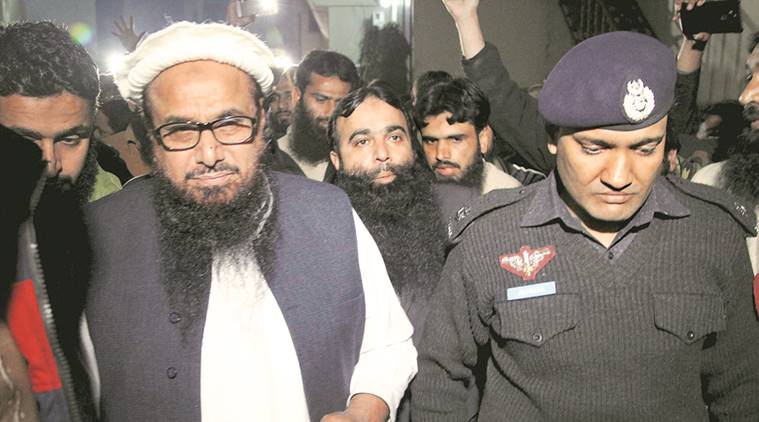
The United States Tuesday slammed Pakistan for effectively lifting the ban on Hafiz Saeed led Jamat-ul-Dawa and Falah-i-Insaniyat Foundation (FIF), which is against Pakistan’s commitment to the Financial Action Task Force (FATF) and also against its commitments to fight terrorism under the UN Security Council resolution, it said.

Mumbai terror attack mastermind Hafiz Saeed’s outfits JuD and FIF are no longer on the list of banned outfits in Pakistan.

Former President of Pakistan, Mamnoon Hussain had passed a presidential ordinance in February that amended the Anti-Terrorism Act 1997 and banned the individuals and terrorist organisations listed by the UN Security Council. JuD and FIF were proscribed under this ordinance. The present Pakistan Tehereek-i-Insaf (PTI) government led by Imran Khan, who is known to have a soft corner for terrorists, neither tabled the bill before the Parliament to convert it into an Act nor extended it. As a result, the ordinance has lapsed.

A US State Department spokesperson while addressing to a question on the recent lapse of the ordinance that led to the lifting of the ban on the two outfits said, “The expiration of the ban on JuD and FIF runs counter to Pakistan’s commitment to work with the Financial Action Task Force (FATF) to address weaknesses in its counter-terrorism financing regime.”

“As we have said before, the United States is deeply concerned that this development will jeopardise Pakistan’s ability to meet its commitments under UN Security Council Resolution 1267 to freeze and prevent the raising and moving of funds belonging to or associated with UN-designated terrorist groups,” the spokesperson said.

Hafiz Saeed had filed a petition before the Islamabad High Court challenging the former president’s ordinance under which his terror outfits had been banned for being on the watch list of the United Nations Security Council. His counsel had informed the judge about the lapse of the ordinance due to the failure of the government to extend it or table it before the Parliament for converting it into an Act. Subsequently, the judge said that Saeed’s plea was no longer effective as the ordinance was not extended by the government.

He further contended in the petition that he established Jamaat-ul-Dawa in 2002 and cut off ties with his other banned terror group Lashkar-e-Taiba. The terrorist went on to blame India for continuing to malign the Jamaat-ul-Dawa for its association with Lashkar-e-Taiba.

India has been persistently pushing Pakistan to castigate the mastermind behind the 2008 Mumbai blast, Hafiz Saeed, a Pakistani Islamist militant, who is also a co-founder of Lashkar-e-Taiba which was responsible for the attacks in which 166 people were killed. In accordance with Modi government’s ‘no tolerance’ policy, the NIA in January 2018 had filed a charge sheet against Hafiz Saeed, along with others, for instigating separatist activities in Kashmir.

Mizoram Elections: Amid Congress opposition to their voting rights, Bru refugee camps urge political parties to stay away

0

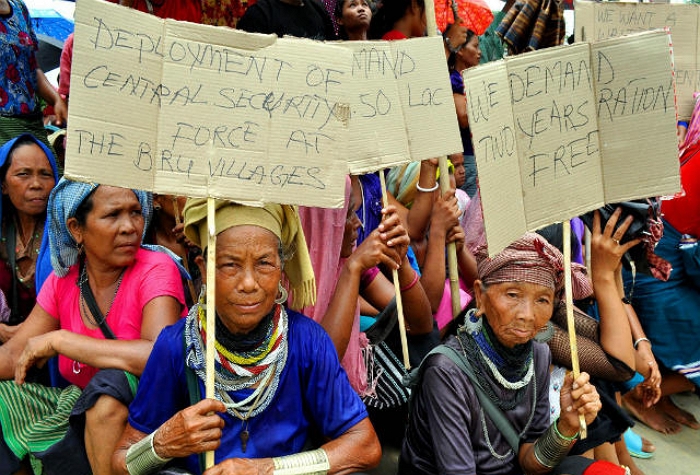
An Apex body representing the Bru refugees from Mizoram living in Tripura has appealed to the political parties in Mizoram not to come for election campaigning. The election for the Mizoram Assembly election is scheduled for 28th November.

Vice president of Mizoram Bru Displaced People’s Forum (MBDPF) R Laldawngliana said that the community members were not keen on attending election campaign meetings by parties from Mizoram. “We do not welcome poll canvassing inside the camps. The members here are not looking forward to attending public meetings by the parties, just before the polls,” he said.

More than 30,000 people belonging to the Bru community from Mizoram are living in six refugee camps in neighbouring Tripura, for the last 21 years.

In October 1997, Bru National Liberation Front (BNLF) militants had killed a forest official in Mizoram, which resulted in a revenge ethnic violence. Before this, some Mizo organisations were already claiming that Bru people are not indigenous to Mizoram and their names should be deleted from electoral rolls in the state. Following the murder of the forest officer, large-scale violence took place on Bru villages, where dozens of villages were burned down and many people were killed. Following this violence, a large number of Bru families fled to Tripura, who were given shelter in Kanchanpur and Panisagar areas in North Tripura.

Repatriation of Bru people to Mizoram was started in 2010, and around 1600 families were resettled in the state, but the process was stopped after Mizo organisations started protesting. The people in camps also expressed fear in going back. Since then, they are living in Tripura, with financial and other assistance from the central government. In 2013 assembly elections and 2014 Lok Sabha elections, refugees having their name in the electoral roll in Mizoram were able to vote from their camps in Tripura itself. The election commission had set up facilitation centers in Tripura, where the people could vote using postal ballots. Mizo organisations and the Congress government in the state had opposed this move by EC.

This year too, the Mizoram government has said that they will not allow the Bru people living in Tripura to vote. The govt has also opposed the revision of electoral roll for the Bru tribals. Mizoram home minister R. Lalzirliana has said that only those Bru people who have returned to Mizoram would be allowed to vote, and people living in Tripura would not be allowed to vote in Tripura. ON the other hand, the Election Commission has affirmed that the people will be allowed to vote. The EC is considering opening poll both at a border town in Mizoram for refugees.

This has made the situation very volatile. MBDPF thinks that if election campaign is done at refugee camps in Tripura, it may lead to law and order problems. They also don’t want the residents of the camps to get divided into party lines. That’s why they have asked the parties to stay away from the camps.

Details of funds collected by ‘activists’ in the name of Kathua rape victim not available with victim’s family, Shehla Rashid denies charges

As per a report on News18, the family of the Kathua rape victim is forced to sell off their livestock to pay expenses of travelling from Kargil to Pathankot, where a trial court is hearing the matter.

“I had to attend court three to four times. Each time I had to travel, I sold some of my sheep and goat to pay for the expenses,” the father of the victim said but insisted that he will even sell his property without any hesitation if needs be. “I will fight this case till the end,” he said.

As per a report on The Tribune, the family of the victim has also demanded details of the funds collected for them during a campaign run by social activists in January this year. “We have information that lakhs of rupees were collected from different parts of the world by exploiting the incident by some people,” the report quotes the grandfather of the victim as saying before adding, “Those who were in the forefront to ensure justice are now even hesitating to attend our phone calls.”

“After reaching Samba, we tried our best to get details about the funds collected during the campaign but to no avail due to the evasive attitude of the so-called crusaders,” the report quoted the biological father of the victim, “Those who had promised to provide every possible help to us six months back are pretending to be busy with other ‘important’ work.”

We had earlier reported that a leaked audio tape had emerged which suggested that the huge sum of funds collected in the name of the victims’ family never actually reached them. In the tape, two people are supposedly heard discussing how “huge funds” were collected in the rape victim’s name, which never made its way to the family.

Leftist JNU activist Shehla Rashid had claimed that funds of over 40 lakhs had been collected from donors. She had later also stated that the lawyers are not charging money and hence a sum of rupees 10 lakhs will be handed over to the rape victim’s family.

Media reports had claimed that though lakhs of rupees were collected in the name of helping the family, the funds never reached them. Reports stated that the JNU student union and many online ‘activists’ who had campaigned for the Kathua victim had never bothered to hand over the funds to the victim’s family. Rashid had denied the allegations and later stated that the money was delayed because the family did not have a joint bank account and PAN.

It is notable here that one of the main activists of the campaign, Talib Hussain, was later arrested on rape charges and was sent to jail.

Update: Shehla Rashid, the leftist student leader who was actively involved with the fundraising has denied the Tribune report. In a Twitter thread, she has asserted that the report is false and that she had met the family personally and none of them had any complaints.


The journalist who reported the story has, however, stood by his report. He has asserted that he has a recording of the conversation with the family of the victim.