Home Blog Page 6927

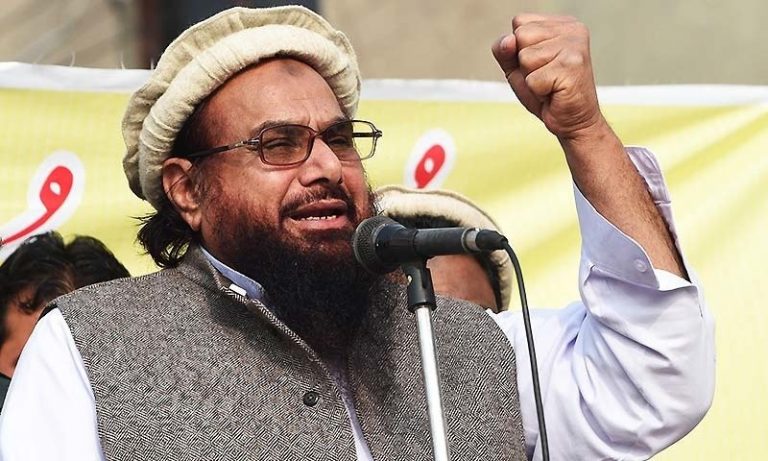
Oxford University research study predicts that in near future, Pakistan may have Hafiz Saeed as its PM

A massive hold of jihadi forces in Pakistan could probably result in terror mastermind Hafiz Saeed being ‘elected’ prime minister, according to a report recently published by Oxford University and India-based think tank Strategic Foresight Group (SFG).

As per earlier reports, Pakistan’s Tehreek-e-Insaf’s (PTI) Imran Khan had emerged victorious as the new Prime Minister of Pakistan, after he beat the alliance of Lashkar-e-Toiba chief and 26/11 mastermind Hafiz Saeed.

It was speculated after Imran Khan assumed office that the military’s grip over Pakistan’s politics would be firmer than ever and as Khan has been sympathetic to the Taliban in the past, going so far as to support their political mainstreaming, it was a raising concern among neighbouring countries that the fundamentalist forces are gaining a stronghold in Pakistan.

Recently, an ordinance banning on Hafiz Saeed’s LeT and Falah-e-Insaniyat foundation in Pakistan as per UNSC sanctions has lapsed after Imran Khan’s government made no attempts to table it in the parliament to convert it into a law, paving the way for both the terror organisation to further mainstream their operations.

The 87-page report titled ‘Humanity at Risk-Global Terror Threat Indicant’ published by the Oxford University and SFG is based on an analysis of over 200 such terror groups throughout the world, claiming that only one-fourth of these organisations are motivated by their ideology.

One of the most alarming analyses of the report mentions a warning that Pakistan-sponsored terror strikes foreseen in India could possibly trigger a full-scale war between the two neighbours.

The report shows concern about jihadi outfits getting all the support they need from the state machinery, intelligence agencies and criminal networks. Recalling the birth and spread of Al-Qaeda in Pakistan and the subsequent harbouring of Osama Bin Laden in Abbottabad, the report highlights that terror outfits are getting state-sponsorship in Pakistan.

The report also states that LeT and JeM together pose a greater threat to humanity than ISIS. It also states that Pakistan holds three times greater risk to humanity through terrorism than Syria does, five times that of Libya and seven times that of Iraq. “If we look at the most dangerous terrorist groups, based on hard facts and statistics, we find that Pakistan hosts or aids a majority of them. Also, there are a significant number of groups based in Afghanistan which operate with the support of Pakistan,” the report mentions.

The report also adds that by mid-2020s, Pakistan could have a substantial number of legislators elected with the help of Lashkar-e-Tayyiba (LeT) and Jaish-i-Mohammed. It adds that as the USA prepares to leave Afghanistan, Taliban will again increase its foothold. With Al-Qaeda expanding its operations in Thailand, Bangladesh, and Myanmar, these countries might descend into chaos too, predicts the report.

Adding further, the report asserted, “If we follow trend-lines rather than headlines, we find that Lashkar-e-Taiba, Taliban, Jaish-e-Mohammed are a much greater risk to humanity than ISIS or Daesh at this stage. Indeed, even Al-Nusrah Front and Al-Shabaab are a greater threat than Daesh. Nevertheless, greater attention is focused on Daesh than the groups that can threaten humanity on a large scale.”

The publication has been based on hard facts and statistics, predicting that if the most dangerous terrorist groups were looked at, it can be found that Pakistan hosts or aids a majority of them, with a significant number of groups based in Afghanistan which operate with the support of Pakistan.

Page 77 of the report reads, “In order to assess future risks, it is necessary to measure the armed strength of terrorist groups. It is also necessary to examine their intent to acquire and use weapons of mass destruction. The stronger a group is in terms of attracting armed members, the greater the risk it poses to humanity. If a group intends to acquire nuclear weapons, its risk potential multiplies by several times.”

Lashkar-e-Taiba (LeT) has the power to build its party infrastructure and contest the federal elections successfully with other extremist groups, including active unofficial support from the military. “Pakistan [could] then elect Hafiz Saeed as the head of government,” predicted the report.

Fact check: Are 5 million Indians dying every year due to medical negligence?

News Agency PTI published a story claiming that as per a study conducted by Harvard University last year, there have been as many as 50 lakh deaths due to medical negligence in India. The story was on a specialised course, Acute Critical Care Course (ACCC) which is mandatory for surgical trainees in the US and the UK, which aids medical institutes in bringing down the death rate of patients and was carried by many media houses.

The Hindu
The Week
IndiaTimes.com
Business Standard

All the reports carried the unedited version of PTI, which claimed that a study conducted by Harvard University last year showed that nearly 5 million (50 lakh) deaths occur in India due to medical error triggered by lack of practical knowledge among the doctors and nurses to handle patients.

Claims that Harvard University study stating 50 lakh death annually due to medical negligence

However, that is not true. The study from Harvard School of Public Health from 2013 states that about 5.2 million injuries (not deaths) take place in India due to medical negligence. Moreover, the Harvard School of Public Health report is from September 2013 and not last year as talked about by PTI.

2013 report of Harvard School of Public Health

The death rate in India currently is 7.3 per thousand people while the population is pegged at about 133.92 crore (approximately). So based on the calculations, between 97 to 99 lakh people die in India every year. Of which about 45 lakh deaths are recorded for people over the age of 60 years. Going by these statistics, if PTI report is to be believed as many as almost every other person who died in India died due to medical errors.

Over and above that, there is a difference between medical error and medical negligence. Medical error would be an error in planning or executing an action. Using adverse drug, improper transfusion, surgical injuries, etc are medical or clinical errors. On the other hand, an action by a doctor or a medical professional which leads to one suffering an avoidable injury is medical negligence.

“After 2019 elections, Rahul Gandhi will have to search for his party with a telescope,” Amit Shah in Hyderabad

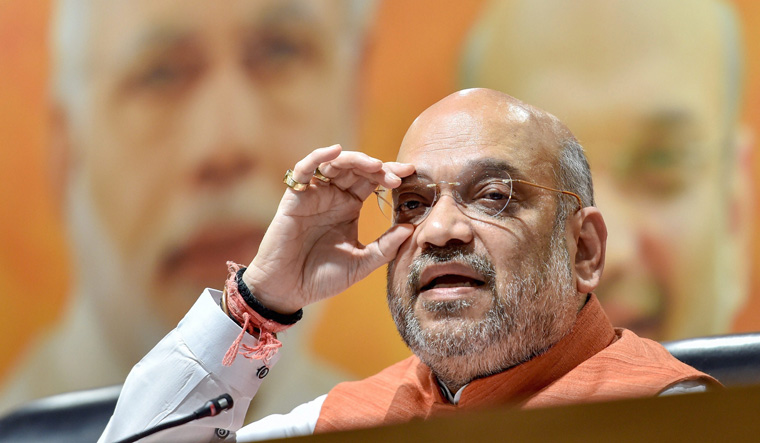
A fierce attack was made against the Congress party by BJP President Amit Shah in Telangana yesterday, where he announced that by the time the 2019 elections are over, the Congress party will be reduced to almost nothing.

Shah, taking a jibe at Rahul Gandhi stated that the Congress President will have to use a telescope in order to search for his beloved party after the elections. Shah was addressing a public gathering of Bjp’ s Yuva Morcha in its National Maha Adhiveshan in Hyderabad yesterday.


Further continuing his speech, Amit Shah also stated that in case the Congress president had been vividly dreaming of winning the elections this time, he must be reminded of the history of massive support that the BJP has garnered since 2014.

Shah also pointed out that how unaware and ignorant the Congress has been towards the BJP’s accomplishments and could only dream of winning the elections. Referring to the speculations of a grand alliance of opposition parties, Shah told that even the ‘Mahagathbandhan’ will not have any effect on BJP’s winning spree.

Amit Shah also took a jibe at Akhilesh Yadav and Mayawati scheming to form an alliance for the 2019 general elections. Shah declared amidst a loud applause that the BJP Yuva Morcha will brave fight 50% of the party’s fight and ensure its victory.

Addressing the Vijay Lakshya 2019, Yuva Maha Adhiveshan in Hyderabad, the BJP chief further stated that after the humiliating defeat that Congress faced in 2014 if Rahul is still hoping for a Congress victory in 2019, that is nothing but dreaming and his party will be reduced to inconsequential levels after 2019.

The state of Telangana will be holding assembly elections on 7 December 2018 along with Rajasthan. Though the BJP is yet to declare a CM candidate, popular Hindu spiritual leader Swami Paripoornananda has recently joined BJP and is being mentioned by many as the ‘Yogi of the South’.

When we become selective with free speech, we give the State a direct pathway to suppress our rights

0

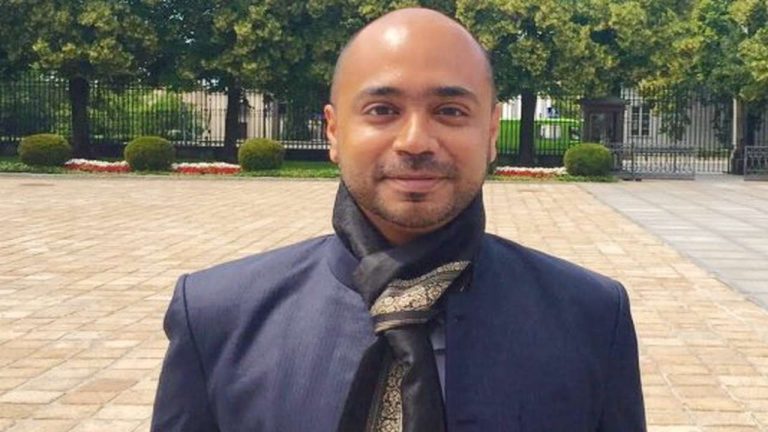
On Tuesday, October 23rd security and defence expert Abhijit Iyer Mitra was arrested by Odisha police for his alleged derogatory remarks on Odiya culture and the Sun Temple. As of now, he has been charged under IP63C Sections 294, 295A, 153A, 500, 506 and Section 67 of the Information Technology Act. All of this after Abhijit Iyer has already apologised unconditionally to the legislators on Odisha for his comments.

Frederick Douglass had once said “To suppress free speech is a double wrong. It violates the rights of the hearer as well as those of the speaker.” Without the freedom to speak every other right makes no sense. If you cannot express yourself freely does anything really matter?

The episode of the jailing of Abhijit Iyer has also showcased another dark side of the entire debate when it comes to freedom of expression in India. One can look across the political spectrum and unfortunately we will find a handful of people who will stand consistently for the average citizens right to speak freely.

Every discussion about free speech is laced with whataboutery and over emotionalism. If there was a T-Shirt that could be made to explain the state of free speech in India it can be summed like this “I stand for your right to speak freely until you say what I want to hear”.

This is the state of affairs across the political spectrum. On odd days the left wing of India cries there is an assault on free speech and on even days the non-left of India cries there is an assault on free speech. The cry depends on who is the person that is being oppressed and what is the nature of their speech. If the speech is critical of Islam we know who will stand up for that type of speech. If the speech is critical of Hinduism we know who likes that kind of speech.

But that is not how free speech works. Freedom of speech cuts across the board (other than a direct call to violence). It can either be enjoyed by each and every member across the board or it cannot be enjoyed by anyone. And we are at a tipping point in this country. Year after year the state of affairs is getting worse when it comes to freedom of expression in India. We cannot be selective in our support for free speech. Because, when we become selective we give the state a direct pathway to suppress our rights. In the fight for free speech, the words don’t matter, what matters is the right to basically utter those words.

Today it is Abhijit Iyer Mitra, but tomorrow that could easily be any one of us. What has happened with Abhijit should be a wake-up call for everyone. The state cannot have so much power where it can basically lock someone up for something as subjective as “offending feelings”.

If you cannot get over your innate anger because Abhijit insulted your beloved temple or your beloved state just do one simple thought experiment, change the name of accused from Abhijit Iyer to yourself and imagine how it feels. If you fight for the rights of free speech only for the people you admire you are not really for free speech. You basically like selective speech. By allowing the Odisha government to trample an average citizens rights we are basically emboldening this climate of suppressing freedom of expression.

It does not matter if you are left winger or a right winger or from the cult of spaghetti monster. Do not let the government of Odisha destroy the rights of one of our fellow citizens. Speak up, and let the honourable Chief Minister of Odisha know that what has happened in his state is wrong and unethical. I would like to end with the words of someone I have a lot of socio-political disagreements with.

Glenn Greenwald had once said, “You can’t cheer when political officials punish the expression of views you dislike and then expect to be taken seriously when you wrap yourself in the banner of free speech in order to protest state punishment of views you like and share.”

Wake up and smell the coffee. Today it is Abhijit Iyer, tomorrow it could be you and I. Never let the State no matter which political party you support have so much control over your life.

As calls for ordinance to build Ram Mandir gain momentum, Owaisi ‘challenges’ BJP to bring law

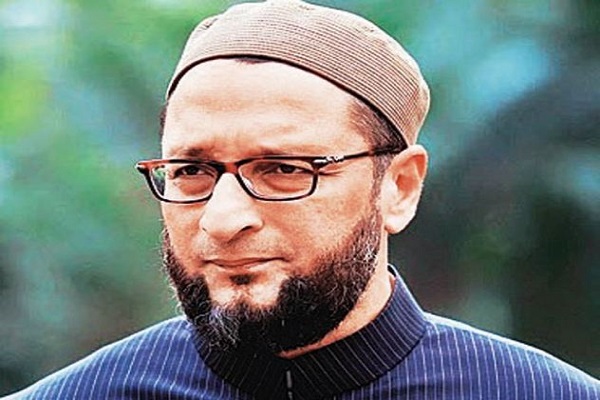
Controversial Muslim leader Asaduddin Owaisi has dared the NDA government to bring an ordinance to felicitate the construction of the Ram Mandir at Ayodhya after the Supreme Court adjourned the matter until January 2019.


While Owaisi’s dare was quite clearly made with the intention of taunting the Bharatiya Janata Party, genuine calls for an ordinance on the matter or a law is gaining momentum across the country.

The Vishwa Hindu Parishad too has expressed its frustration with the continuous delays in the matter by the Court and has asserted that the judicial route does not remain an appropriate option any longer. It has demanded a law be enacted in the Winter Session of the Parliament so that construction of the Temple at Ram Janambhoomi could soon begin.


Across social media as well, calls for Parliamentary intervention have been gaining momentum.


The ball is certainly in the Bharatiya Janata Party’s court now. With Lok Sabha elections next year, Ram Mandir appears all set to take centre stage once more.

A Ram Mandir at Ram Janmabhoomi is the people’s will and an ordinance is needed

Here is a question. Can you tell me which year it was when the Ram Janmabhoomi / Babri Masjid case was first filed in court?

You know it was a long time ago. But how long?

Perhaps it was filed in the 1980s, when Rajiv was PM? Back when we were all using black and white TVs?

No.

Then, perhaps it was filed when Indira was Prime Minister? Or perhaps in times of Nehru? Wrong again. It’s much older than that!

The filing of the suit predates the Second World War. It predates Mahatma Gandhi’s Dandi March. It predates the Jallianwallah Bagh massacre, the First World War and even the birth of Gandhi. It predates the discovery of the polio vaccine, the discovery of penicillin, the first automobile and first ever powered flight by the Wright brothers.

Untitled.png

Would you believe that the case was filed in 1855-56? That is even before the First War of Indian independence in 1857!

They say justice delayed is justice denied. One hundred and sixty-three years later, I wouldn’t say that justice is being “denied.” I would just say that we need a new word for what is happening.

It is time for India as a whole to stop kicking the can down the road. Thus far and no further.

After independence, India did not really take off the way we would have liked. By opting for a (near) Communist destiny, the Nehru-Gandhi dynasty put India on the wrong side of history. The devastated continent of Europe put itself back together. Japan and Germany rose from the ashes of World War 2.  The countries of the Middle East transformed their landscapes with gleaming skyscrapers. The countries of South East Asia rose up as “Asian tigers.” And, of course, China took off.

India remained, for the most part, a spectator. Poverty and corruption became endemic and then synonymous with India. The hopes and dreams of the nation remained in chains. The turnaround began in 1991 after Nehruvian secularism imploded spectacularly, coinciding with the collapse of global communism.

Since that lowest ebb in 1991, India has been surging, aiming for its rightful status as a global superpower.

But we know that India is more than just another country. India is an ancient nation, an inheritor of one of the world’s most influential civilizations. What was the ultimate goal of Alexander the Great when he set out of Macedon? He was looking for India.

Eighteen Hundred years later, what did Christopher Columbus set out to do when he bumped into America? He was looking for India.

That is who we are. We are India. The Americans like to say that the USA is the “shining city on the hill.” They are wrong. We are India. We are the shining city on the hill. Throughout the ages, they’ve all come to look for India. The search for India has shaped the history of the world.

This is not an empty, sentimental boast. This is a fact.

And what do we mean by a resurgent India? It means that we recover the position that we had in the world. And today we have the confidence to do it.

Who are we? What is our brand value? Our brand is that we are the sole inheritors of the ancient Hindu civilization. The mentality of the “second-class citizen” has been hammered into us by centuries of conquest and colonialism. But Hinduness will always be our distinguishing identity, even for those whose ancestors were converted by the same forces of conquest and colonialism.

A Ram Mandir at Ram Janmabhoomi is a symbol of rebuilding India. It is the overwhelming will of the people. And even those who are likely to be against the Ram Mandir know that very well in their hearts. Why do you suppose certain lawyers have been begging the Supreme Court to keep deferring the hearing and the verdict?

One hundred and sixty-three years and they still want more delay. Why? Because they are scared. They know that once the Ram Mandir becomes a talking point, their political masters will be crushed at the polls by the overwhelming will of the nation.

Because they know that every Hindu carries within their heart a bit of the sacred memory of who we were. They are scared of that little flame and what it can do.

Seventy years ago, in the euphoric first days of independence, Indians wanted to rebuild the Somnath Temple. At that time as well, there was one particular political master, a darling of the British, who resisted. Because he was steeped in the colonial superstition of the Indian Hindu being destined to lose every single time. But Indians decided to rebuild Somnath anyway.

If that all-powerful master back then could not stop the will of the Indian Hindu, do we really need to worry about what his minions want today? No way.

We need to rebuild the Ram Mandir at the birthplace of Shri Ram. Like all things historic, there is a right way to do this. The right way is for this to come from the elected government that represents the Indian people. Let there be an ordinance. Let it pass in the Lok Sabha, the House of the People.

Any other way to achieve the Ram Mandir will not do justice to the fact that the temple must be a symbol of resurgent Hindu civilization. The will of the people has to be expressed by the House of the People.

We have a had a bad few hundred years, but we are still here today. And we can again be the nation that we were. It is time to rebuild. Time to rebuild the shining city on the hill.

Kerala: Its first brush with Democracy And Nehru

First the admission, I began writing this piece long time back as Modi Government and undeclared Emergency has been a constant theme ever since Narendra Modi arrived on the national scene, much to the surprise and obvious chagrin of political pundits and Congress’ first family affiliated journalists.

The constant theme was that the nation created by the demi-God of democracy, Pt. Jawaharlal Nehru has gone to the dogs. They went to Nehru because most of them owe their current position to their parentage and their ancestors depended on Nehru for the positions they created for their incompetent progeny. Another issue was that it was not possible for them to go to Rajiv since he had the blot of 1984 – the biggest genocide in Indian history, on his name and Indira had real Emergency to her credit.

So they danced around Nehru as the defender of democracy. Narendra Modi, the outsider, they hated and attacked with obvious irrationality. They even attacked Modi for hurting the federal structure of India.

Between the Father and daughter duo, the founding members of the modern version of Congress, they sacked Eight and Fifty Elected Governments respectively, using the tool of President’s rule under Article 356, ostensibly meant to be used in the extreme case of breakdown of constitutional machinery. Out of 124 cases of imposition of President’s rule and sacking of democratically elected Governments in the state (hail federalism!), 87 are by Congress Government and the fascist BJP has between Atal Bihari Vajpayee and Narendra Modi only 8 instances of imposition of president rule in a state (Vajpayee- 5 and Modi-3). This data takes the wind out of the cunningly crafted narrative of creating a demon of dictatorial tendencies out of Narendra Modi, who has, in reality, often to the annoyance of his own vote base, been anything but.

This same cabal jumped at a fake news by Scroll.in claiming that the BJP chief while declaring support and sympathies of the protesters peacefully struggling to protect their faith, also declared that the central Government is contemplating the dissolution of Kerala Government.

In the aftermath of the crackdown of the Communist Government of Kerala on the real devotees of Sabarimala, to gain entry into the Temple for fame-hungry atheists, with more than 1000 arrested, I would personally think sacking of Kerala Government for human rights excesses, justified. However, Narendra Modi has been a stickler of Constitutionality and would not have supported any such move.

Armed with this news, which later was declared by The Scroll as being fake and incorrect was enough for the traditional Modi detractors like Swati Chaturvedi, an ex-News reader on NDTV, Nikhil Waghle and even the erstwhile Modi supported and recent turn-coat Rupa Subramanya to attack Modi.

(Read OpIndia’s report here: Lies about Amit Shah’s Speech in Kerala)

As a common citizen, I would think that if Narendra Modi decides to sack the Kerala Government, looking at the way, Communist Government has made the state an ideological battleground between state machinery and Hindus of the state; he would be justified in doing so. Whether he does it or not, is another matter. As we look at it, more than 1000 common citizens have been arrested in the state.

Let us look at how Nehru, hailed as the hero of democracy by the journalistic coterie of fanboys and girls of the first family of Congress, would have handled the situation, with a short view of how he did handle it in his term as the Prime Minister.

Coming back to Kerala, the state was carved out after the State Re-organization in the year 1956. The Communists won the elections subsequent to the state reorganization, with a slim majority in 1957. Born in an Aristocratic, Brahmin family, as most of the senior Communist leaders are, EMS Namboodiripad became the Chief Minister of the state forming the first Communist Government in any state of India on 5th of April, 1957.

The next two years were going to be tumultuous as Nehru was never going to be comfortable with a non-Congress Government. The Congress, thrown out of power, immediately sprung into action (much like 2014). The Statesman reported, “Ever since the Communist Ministry took office, the opposition parties have done all in their power to bring it down… They, especially the Congress, have cared a little about the means…In some places, the Congressmen supplied the provocation that led to unfortunate events.”

The events were precipitated by Education Reforms Bill. The Bill introduced in the Kerala Assembly by the Communist Education Minister, Professor Joseph Mundasseri, a renowned literary figure. The bill gave powers to the government to standardize the salary and structure across the educational institution.

The Bill was strongly opposed by the Church which had strong control over the educational institutions across the state. Prof. Joseph said that “a section of people in Travancore -Cochin wanted to monopolize education even by challenging the constitution” and blamed the Church squarely for that. The bill was opposed on the grounds of unconstitutionality in the Supreme Court, but the SC supported the bill. The battlegrounds shifted to the state then. Communist mouthpiece The New Age, dated 6th of August, 1958, reports Communist Party state secretary, MN Govindan Nair, declaring that “the trouble in the state was the deliberate creation and a result of a conspiracy between the Imperialist, the Congress and the Catholic Church.”  The Education Bill received presidential assent on 19th February 1959 and became a law.

On 11th of June, 1959, Land Reforms Bill was placed for discussion. On the 11th of June, Congress Party began agitating with the support of Nair Society, The Church and the Muslim League, calling it Liberation Struggle or Vimochana Samaram. The protests entered into violent phase from 1st of May, 1959. Communist Government responded with around 1,50,000 detentions, 1000 imprisoned and 15 shot dead by the Police.

That the Congress in Kerala together with their Church and Muslim League colleagues worked in tandem with CIA was later accepted by the US Ambassador, Mr Moynihan who admitted (in his memoir A Dangerous Place ‘What Congress and CIA Brought Down: By Prakash Karat, 26th October 2017 in Outlook‘)  the engagement in West Bengal and Kerala, but said it was limited to providing funds to the Congress Party, which he said, asked for it (Statement of Moynihan, Published by PRD, The Government of Kerala, 2007).

Huge funds came in from America for the Church as well (As per the Autobiography of Father Vadakkan). The Church mouthpiece, The Deepika, always prompting people for violence wrote in its editorial, “The Chief Minister Namboodiripad who killed Twelve persons and wounded many for the sake of maintaining his terror regime. History teaches us that if one person being alive becomes responsible for the death of many, that person has no right to live.” This editorial takes away all the pretence of peace which one associates with the church while observing it from a distance.

The Congress Party submitted a memorandum to the central government on 10th of July, 1959. This became public on 20th of July, 1959 and the Communist Government replied to it on 28th of July, 1959. AICC President Smt. Indira Gandhi met the President on 25th of July, 1959 and sought the sacking of Kerala Government. She made a speech where she famously said, “The Constitution is for the people and not the people for the Constitution. And if the Constitution stands in the way of meeting People’s grievances in Kerala, The Government of Kerala Should be Changed.” On July, the 31st the Proclamation of dissolution of Kerala assembly was signed by the President Dr Rajendra Prasad.

The Governor’s report submitted to support this imposition of President Rule also mentioned among the reasons large-scale release of heinous criminals who were a part of Communist cadre after coming to power. The Government was sacked even when the party in power enjoyed a majority. The Governor recommended sacking of the elected Communist Government, without any floor test, merely on his personal conviction, claiming “I am quite convinced that the Government has lost the support of the majority of the people.”

Home Minister GB Pant quoted the complete surrender of the law and order machinery to the newly formed Communist Government in  the newly formed state under EMS Namboodaripad as one of the key reason, citing as an example the release of 34 Communist cadre activist sentenced for murdering the Policemen (more things change, more they remain the same) and otherwise too, a large-scale and indiscriminate release of criminals belonging to the Communist party. Morarji Desai noted that Nehru was hesitant in sacking the elected government which was still in majority, but the will of the Congress president prevailed, latter being his daughter, Indira. Nehru denied, even in the face of overwhelming proof indicating otherwise, that there was any Congress Conspiracy in this sacking of the first majority Communist Government of Kerala and claimed a popular movement against the elected government in Kerala became so big that it was “quite beyond my capacity to stop it”. This also meant the acceptance of the Church and Muslim league (latter was earlier called by Nehru as a dead horse) as an important pressure group.

Out of 124 cases of imposition of President’s rule and sacking of democratically elected Governments in the state (hail federalism!), 87 are by Congress Government and the fascist BJP has between Atal Bihari Vajpayee and Narendra Modi 8 instances of the imposition of president rule in a state (Vajpayee- 5 and Modi-3).

Often the past has answers for the present. Sometimes the Past is also a mirror to the present. We all need to look into the past some time to get an honest perspective of the things. Whether or not the current central government can find solace and solution in the history is not for me to say.

This re-reading of history of Kerala tells us that before jumping on the Modi Government on the basis of motivated fake news, let us remember that we might have already escaped the worst dangers of lapsing into tyranny as Plato says every democracy runs the risk of, very narrowly, courtesy the First Family of the Indian National Congress.


BJP leader Nandlal Mudami brutally attacked by Naxals, condition critical

0

In a gruesome incident, one of the BJP’s strongest candidates in Dantewada, Nandlal Mudami, was attacked by Naxalites on Sunday evening. The attack took place when Mudiyami was having dinner in his house in Palnar, Dantewada.


According to the reports, Mudami was seriously injured in the incident and was quickly rushed to a nearby district hospital for treatment. The attack took place at around 8 PM on Sunday evening when Nandlal Mudami, a member of Dantewada Zila Panchayat, was at his house in Palnar village, Dantewada Additional Superintendent of Police Gorakhnath Baghel told PTI.

Shortly after the incident, his relatives informed police and rushed him to Dantewada hospital, he said. “Mudami’s is being treated and his condition was said to be critical,” said Baghel. A search operation has been initiated in the neighbouring areas to locate the attackers, he added.

According to Abhishek Pallav, Superintendent of Police, Dantewada, Mudami played a significant role in bringing people in Palnar to the mainstream. This angered the Naxals. “We used to keep getting the info that they are planning to strike back,” he said.

The attack on Mulani came on the heels of the Naxal attack in Bijapur in which Naxals blew up a bunker vehicle carrying CRPF personnel. 4 CRPF jawans lost their lives and 2 were critically injured in that attack.

Last month, The Maoists had warned the voters to boycott the assembly polls, scheduled to be held in two phases next month by putting up posters and throwing pamphlets in Bastar and Kanker region of Chhattisgarh. The first phase of polls will be held on November 12 covering 18 constituencies across eight Naxal-affected districts namely Bastar, Kanker Sukma, Bijapur, Dantewada, Narayanpur, Kondagaon, and Rajnandgaon. The remaining 72 constituencies will go to polls on November 20.

#MeToo: Symbiosis law college suspends teacher over sexual harassment allegations

0

Days after a group of students from Symbiosis Law College, Hyderabad accused an assistant professor of sexual harassment, the college confirmed that it has suspended Srinivas Methuku, the faculty member.

After receiving the complaint from a group of eight girls, the Institute constituted an internal complaints committee as per the University Grants Commission (UGC) guidelines.

The principal director of Symbiosis International University, Vidya Yeravdekar, said that “The ICC interacted with the victims who claimed that they felt uncomfortable by his actions. As an interim action, we suspended the assistant professor on October 15, 2018.”

Earlier, in written complaint to the Union Ministry of Women & Child Development, one of the students had alleged that the professor ogled at her breasts and private parts. The students had confirmed that a committee from the law school in Pune which visited the Hyderabad campus after their complaint had asked the two female students to give an undertaking that they will take back the complaint and pull down a social post that allegedly defames the institution and the professor.

However, on Friday, two students were evicted from their hostel with immediate effect. The students alleged that they were targeted after they ‘outed’ a professor and that the institution was indifferent when it came to handling sexual harassment accusations.

The institute, however, in its detailed response to the allegations levelled at them says that the disciplinary action they took was only on the basis of ‘continuous misconduct’. The institute claims that two students have misrepresented the facts in the sexual harassment case to divert attention. It alleged that the “whole #Metoo Campaign was orchestrated to divert the attention from the core issue of disciplinary misconduct by these two students and to derive the benefit of exemption from attendance shortage.”

Not long back, as a part of the ongoing #MeToo movement, students of the Symbiosis Centre for Media and Communication (SCMC) had taken to Twitter and Facebook to share stories of alleged sexual harassment, intimidation and assault on campus.

Taking cognisance of the harrowing experiences the students had shared on social media, the SCMC had appealed to the students to come forward, promising them help.

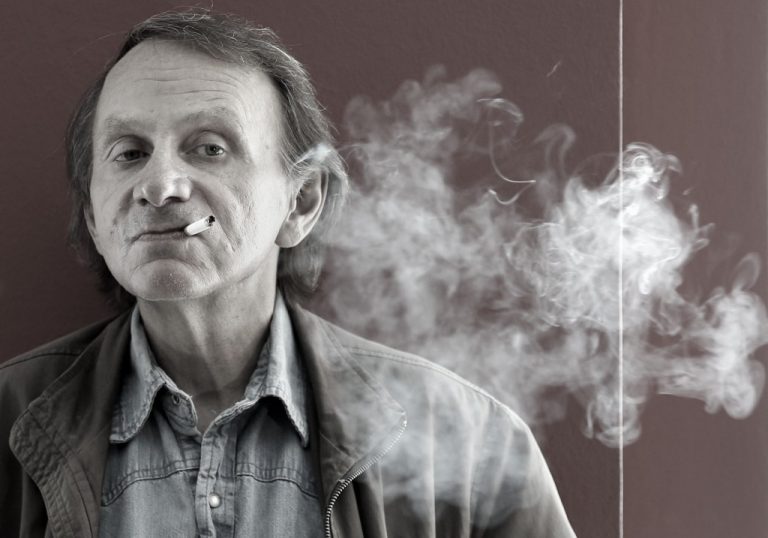
Michel Houellebecq: The perils of secular atheistic materialism through the eyes of a French ‘Islamophobic’ intellectual

The European Court of Human Rights (ECHR) has ruled that insulting Prophet Muhammad is not free speech. An Austrian women criminal conviction by an Austrian court was upheld by the ECHR on the grounds that her comments on the Prophet “goes beyond the permissible limits of an objective debate” and “could stir up prejudice and put at risk religious peace.”

For certain intellectuals, the move will come across as merely the latest step in secular Europe’s eventual inevitable fall to Radical Islam. A prominent intellectual who has written extensively on the spiritual decline of Europe that has felicitated such a collapse is Michel Houellebecq. Houellebecq is a controversial French author, often dubbed an Islamophobe, who has critiqued modern European culture and argued that the current liberal European lifestyle is unsustainable.

Houellebecq’s book ‘Submission’ created quite the storm when it was first released. The book, set in 2022, describes the narrator’s personal journey in a politically charged France on the backdrop of national elections where the far right French nationalists and radical Islamic groups are involved in a series of violent clashes with each other and the very real possibility of the entire country descending very quickly into chaos and complete anarchy. The lead in the book, Francois, is a melancholic middle-aged professor who does not quite really gel well with the time he has been born into. He leads a meaningless life, without a wife or a family, who just passes from one temporary sexual relationship to another without ever forming an emotional bond with his partner.

The meaning of the title of the book becomes abundantly clear in one of the quotes by a character in the novel, “It’s submission. The shocking and simple idea, which had never been so forcefully expressed, that the summit of human happiness resides in the most absolute submission.” The novel, thus, mulls the idea that submission could be the path forward for a truly happy European society.

It is quite clear from Houellebecq’s ‘Submission’ that he does not believe an Islamic takeover of liberal Europe will necessarily be a bad thing for the future of its people. It appears that he believes Islam can discipline the liberal westerners and assist them in leading a more meaningful life, something that Christianity can no longer felicitate. At the end of the novel, Islam eventually takes over France, the order is restored, women are veiled, polygamy is legalized and the high unemployment rate is resolved after women are removed from the workplace and sent into the homes. The novel ends with the narrator, who was conflicted about converting to Islam, poised to convert with the prospect of a better life, a prestigious job and wives chosen for him.

From his personal history, however, it appears that Islam is not Houellebecq’s preferred solution to what he regards as the core threat towards the European people, their secular atheist materialistic culture. He admitted during an interview with The Guardian that he was “probably” Islamophobic. Despite allegations that his novel, Submission, was Islamophobic, he strongly maintains that it was not. “Everything returns to order … the moderate faction manages to control its extremists, which is far from a given at the moment.”

Houellebecq has been very sharp in his critique of liberal sexual mores. In his book, ‘Whatever’, he writes, “It’s a fact…that in societies like ours sex truly represents a second system of differentiation, completely independent of money; and as a system of differentiation, it functions just as mercilessly. The effects of these two systems are, furthermore, strictly equivalent.

Just like unrestrained economic liberalism, and for similar reasons, sexual liberalism produces phenomena of absolute pauperization. Some men make love every day; others five or six times in their life, or never. Some make love with dozens of women; others with none. It’s what’s known as ‘the law of the market’…Economic liberalism is an extension of the domain of the struggle, its extension to all ages and all classes of society. Sexual liberalism is likewise an extension of the domain of the struggle, its extension to all ages and all classes of society.”

Again, in Submission, Houellebecq reveals his disdain for liberal sexual mores through the narrator, “Hidden all day in impenetrable black burkas, rich Saudi women transformed themselves by night into birds of paradise with their corsets, their see-through bras, their G-strings with multicoloured lace and rhinestones. They were exactly the opposite of Western women, who spent their days dressed up and looking sexy to maintain their social status, then collapsed in exhaustion once they got home, abandoning all hope of seduction in favour of clothes that were loose and shapeless.”

According to Houellebecq, Catholics are not regarded by Muslims as their real enemy. He writes, “For these Muslims, the real enemy—the thing they fear and hate—isn’t Catholicism. It’s secularism. It’s laicism. It’s atheist materialism. They think of Catholics as fellow believers. Catholicism is a religion of the Book. Catholics are one step away from converting to Islam—that’s the true, original Muslim vision of Christianity.”

The author appears to endorse the idea that secularism is doomed to failure from the very onset. He writes in ‘Submission’,  “they argue that belief in a transcendent being conveys a genetic advantage: that couples who follow one of the three religions of the Book and maintain patriarchal values have more children than atheists or agnostics. You see less education among women, less hedonism and individualism. And to a large degree, this belief in transcendence can be passed on genetically. Conversions, or cases where people grow up to reject family values, are statistically insignificant. In the vast majority of cases, people stick with whatever metaphysical system they grow up in. That’s why atheist humanism—the basis of any ‘pluralist society’—is doomed.”

Houellebecq’s reasoning does appear to be grounded on solid facts. Eric Kaufmann, professor of politics at Birkbeck college, University of London, and a specialist in demography in his book ‘Shall the Religious inherit the Earth?’ asserts that it is very much the case. And even he doesn’t believe that is necessarily a bad thing. “As a utilitarian”, Kaufmann writes, “I believe that the maximisation of collective happiness is the proper end of humanity; and on that score, religion seems more rational than irreligion.” And the reason given is very simple, religious people have more children than their secular counterparts. It is argued that unlike materialists, who often turn out to be hedonists, religious people are prepared to make sacrifices to promote and sustain their values.

Houellebecq’s criticism of liberal sexual mores is not without merit as well. Sexual liberalism has created a class of men who cannot find sexual partners in an era where monogamy is increasingly on the decline.

There have been occasions when mass murders have been committed by men who were sexually frustrated and vehemently angry with the fact that they could not find sexual partners. Jordan Peterson, the clinical psychologist and professor at the University of Toronto, also sympathizes with the notion that the sexual revolution has created classes of losers and winners in the sexual marketplace.

A study on Tinder, the hookup app, revealed that the bottom 80% of men are competing for the bottom 22% of women while the top 78% of women are competing for the top 20% of men in terms of attractiveness. Thus, it appears clear that in an extremely sexually liberal community, a significant portion of men will find themselves unable to satisfy their sexual urges. It can have devastating consequences as a high proportion of sexually frustrated men is deeply problematic for any society. Peterson speculates that “enforced monogamy” may be the only way to solve this problem.

Liberal sexual mores are also associated with low birthrates while sexually conservative societies tend to have more children. Thus, coming back to the demography argument, liberal sexual mores do appear to be unsustainable in the long term.

Houellebecq isn’t the only author who has focused his attention on these issues. Cultural commentator Mark Steyn wrote in his bestselling book, America Alone, “The continent has embraced a spiritual death long before the demographic one. In those seventeen European countries that have fallen into the “lowest-low fertility,” where are the children? In a way, you’re looking at them: the guy sipping espresso at a sidewalk cafe listening to his iPod, the eternal adolescent charges of the paternalistic state. The government makes the grown-up decisions and we spend our pocket money on our record collection…the long-term cost of welfare is the infantilization of the population.”

It is important to note that European governments may well have been forced to open the doors for migrants from regions of the world with evidently higher birth rates precisely due to falling birth rates combined with the behemoth welfare state apparatus. To maintain a massive welfare state, you need taxpayers who are going to pay for it. And in the absence of taxpayers, you have little choice but to import them from other nations. As Steyn says, Europe’s “lavish welfare states are unsustainable with their post-Christian birth rates.”

A regular feature in all of Houellebecq’s books is a narrator who is non-religious and has an extremely pessimistic view of the world. The narrator often suffers from depression and an aching loneliness. In Submission, the author finds some solace as he looks poised to convert to Islam. Such a description may not be too out of sync with reality. Official ‘well-being statistics’ do show that religious people of all hues are happier than their atheistic counterparts. Also, as a matter of fact, studies show that religious societies are more tightly knit, more cohesive, more bound together, all of which are indicators for greater happiness.

Whether a society based on Islamic values will be better for Europeans than the current society based on secular atheistic materialism only time will tell. But it cannot be ignored that Europe currently is in a state of crisis felicitated precisely by progressive values. And although people may disagree with Houellebecq on a variety of issues, the criticisms of secular atheistic materialism he has raised through his works are pertinent enough to raise serious concerns about the dominant social dogma among the intellectual elite all over the West.