Home Blog Page 6928

BJP leader Nandlal Mudami brutally attacked by Naxals, condition critical

0

In a gruesome incident, one of the BJP’s strongest candidates in Dantewada, Nandlal Mudami, was attacked by Naxalites on Sunday evening. The attack took place when Mudiyami was having dinner in his house in Palnar, Dantewada.


According to the reports, Mudami was seriously injured in the incident and was quickly rushed to a nearby district hospital for treatment. The attack took place at around 8 PM on Sunday evening when Nandlal Mudami, a member of Dantewada Zila Panchayat, was at his house in Palnar village, Dantewada Additional Superintendent of Police Gorakhnath Baghel told PTI.

Shortly after the incident, his relatives informed police and rushed him to Dantewada hospital, he said. “Mudami’s is being treated and his condition was said to be critical,” said Baghel. A search operation has been initiated in the neighbouring areas to locate the attackers, he added.

According to Abhishek Pallav, Superintendent of Police, Dantewada, Mudami played a significant role in bringing people in Palnar to the mainstream. This angered the Naxals. “We used to keep getting the info that they are planning to strike back,” he said.

The attack on Mulani came on the heels of the Naxal attack in Bijapur in which Naxals blew up a bunker vehicle carrying CRPF personnel. 4 CRPF jawans lost their lives and 2 were critically injured in that attack.

Last month, The Maoists had warned the voters to boycott the assembly polls, scheduled to be held in two phases next month by putting up posters and throwing pamphlets in Bastar and Kanker region of Chhattisgarh. The first phase of polls will be held on November 12 covering 18 constituencies across eight Naxal-affected districts namely Bastar, Kanker Sukma, Bijapur, Dantewada, Narayanpur, Kondagaon, and Rajnandgaon. The remaining 72 constituencies will go to polls on November 20.

#MeToo: Symbiosis law college suspends teacher over sexual harassment allegations

0

Days after a group of students from Symbiosis Law College, Hyderabad accused an assistant professor of sexual harassment, the college confirmed that it has suspended Srinivas Methuku, the faculty member.

After receiving the complaint from a group of eight girls, the Institute constituted an internal complaints committee as per the University Grants Commission (UGC) guidelines.

The principal director of Symbiosis International University, Vidya Yeravdekar, said that “The ICC interacted with the victims who claimed that they felt uncomfortable by his actions. As an interim action, we suspended the assistant professor on October 15, 2018.”

Earlier, in written complaint to the Union Ministry of Women & Child Development, one of the students had alleged that the professor ogled at her breasts and private parts. The students had confirmed that a committee from the law school in Pune which visited the Hyderabad campus after their complaint had asked the two female students to give an undertaking that they will take back the complaint and pull down a social post that allegedly defames the institution and the professor.

However, on Friday, two students were evicted from their hostel with immediate effect. The students alleged that they were targeted after they ‘outed’ a professor and that the institution was indifferent when it came to handling sexual harassment accusations.

The institute, however, in its detailed response to the allegations levelled at them says that the disciplinary action they took was only on the basis of ‘continuous misconduct’. The institute claims that two students have misrepresented the facts in the sexual harassment case to divert attention. It alleged that the “whole #Metoo Campaign was orchestrated to divert the attention from the core issue of disciplinary misconduct by these two students and to derive the benefit of exemption from attendance shortage.”

Not long back, as a part of the ongoing #MeToo movement, students of the Symbiosis Centre for Media and Communication (SCMC) had taken to Twitter and Facebook to share stories of alleged sexual harassment, intimidation and assault on campus.

Taking cognisance of the harrowing experiences the students had shared on social media, the SCMC had appealed to the students to come forward, promising them help.

Michel Houellebecq: The perils of secular atheistic materialism through the eyes of a French ‘Islamophobic’ intellectual

The European Court of Human Rights (ECHR) has ruled that insulting Prophet Muhammad is not free speech. An Austrian women criminal conviction by an Austrian court was upheld by the ECHR on the grounds that her comments on the Prophet “goes beyond the permissible limits of an objective debate” and “could stir up prejudice and put at risk religious peace.”

For certain intellectuals, the move will come across as merely the latest step in secular Europe’s eventual inevitable fall to Radical Islam. A prominent intellectual who has written extensively on the spiritual decline of Europe that has felicitated such a collapse is Michel Houellebecq. Houellebecq is a controversial French author, often dubbed an Islamophobe, who has critiqued modern European culture and argued that the current liberal European lifestyle is unsustainable.

Houellebecq’s book ‘Submission’ created quite the storm when it was first released. The book, set in 2022, describes the narrator’s personal journey in a politically charged France on the backdrop of national elections where the far right French nationalists and radical Islamic groups are involved in a series of violent clashes with each other and the very real possibility of the entire country descending very quickly into chaos and complete anarchy. The lead in the book, Francois, is a melancholic middle-aged professor who does not quite really gel well with the time he has been born into. He leads a meaningless life, without a wife or a family, who just passes from one temporary sexual relationship to another without ever forming an emotional bond with his partner.

The meaning of the title of the book becomes abundantly clear in one of the quotes by a character in the novel, “It’s submission. The shocking and simple idea, which had never been so forcefully expressed, that the summit of human happiness resides in the most absolute submission.” The novel, thus, mulls the idea that submission could be the path forward for a truly happy European society.

It is quite clear from Houellebecq’s ‘Submission’ that he does not believe an Islamic takeover of liberal Europe will necessarily be a bad thing for the future of its people. It appears that he believes Islam can discipline the liberal westerners and assist them in leading a more meaningful life, something that Christianity can no longer felicitate. At the end of the novel, Islam eventually takes over France, the order is restored, women are veiled, polygamy is legalized and the high unemployment rate is resolved after women are removed from the workplace and sent into the homes. The novel ends with the narrator, who was conflicted about converting to Islam, poised to convert with the prospect of a better life, a prestigious job and wives chosen for him.

From his personal history, however, it appears that Islam is not Houellebecq’s preferred solution to what he regards as the core threat towards the European people, their secular atheist materialistic culture. He admitted during an interview with The Guardian that he was “probably” Islamophobic. Despite allegations that his novel, Submission, was Islamophobic, he strongly maintains that it was not. “Everything returns to order … the moderate faction manages to control its extremists, which is far from a given at the moment.”

Houellebecq has been very sharp in his critique of liberal sexual mores. In his book, ‘Whatever’, he writes, “It’s a fact…that in societies like ours sex truly represents a second system of differentiation, completely independent of money; and as a system of differentiation, it functions just as mercilessly. The effects of these two systems are, furthermore, strictly equivalent.

Just like unrestrained economic liberalism, and for similar reasons, sexual liberalism produces phenomena of absolute pauperization. Some men make love every day; others five or six times in their life, or never. Some make love with dozens of women; others with none. It’s what’s known as ‘the law of the market’…Economic liberalism is an extension of the domain of the struggle, its extension to all ages and all classes of society. Sexual liberalism is likewise an extension of the domain of the struggle, its extension to all ages and all classes of society.”

Again, in Submission, Houellebecq reveals his disdain for liberal sexual mores through the narrator, “Hidden all day in impenetrable black burkas, rich Saudi women transformed themselves by night into birds of paradise with their corsets, their see-through bras, their G-strings with multicoloured lace and rhinestones. They were exactly the opposite of Western women, who spent their days dressed up and looking sexy to maintain their social status, then collapsed in exhaustion once they got home, abandoning all hope of seduction in favour of clothes that were loose and shapeless.”

According to Houellebecq, Catholics are not regarded by Muslims as their real enemy. He writes, “For these Muslims, the real enemy—the thing they fear and hate—isn’t Catholicism. It’s secularism. It’s laicism. It’s atheist materialism. They think of Catholics as fellow believers. Catholicism is a religion of the Book. Catholics are one step away from converting to Islam—that’s the true, original Muslim vision of Christianity.”

The author appears to endorse the idea that secularism is doomed to failure from the very onset. He writes in ‘Submission’,  “they argue that belief in a transcendent being conveys a genetic advantage: that couples who follow one of the three religions of the Book and maintain patriarchal values have more children than atheists or agnostics. You see less education among women, less hedonism and individualism. And to a large degree, this belief in transcendence can be passed on genetically. Conversions, or cases where people grow up to reject family values, are statistically insignificant. In the vast majority of cases, people stick with whatever metaphysical system they grow up in. That’s why atheist humanism—the basis of any ‘pluralist society’—is doomed.”

Houellebecq’s reasoning does appear to be grounded on solid facts. Eric Kaufmann, professor of politics at Birkbeck college, University of London, and a specialist in demography in his book ‘Shall the Religious inherit the Earth?’ asserts that it is very much the case. And even he doesn’t believe that is necessarily a bad thing. “As a utilitarian”, Kaufmann writes, “I believe that the maximisation of collective happiness is the proper end of humanity; and on that score, religion seems more rational than irreligion.” And the reason given is very simple, religious people have more children than their secular counterparts. It is argued that unlike materialists, who often turn out to be hedonists, religious people are prepared to make sacrifices to promote and sustain their values.

Houellebecq’s criticism of liberal sexual mores is not without merit as well. Sexual liberalism has created a class of men who cannot find sexual partners in an era where monogamy is increasingly on the decline.

There have been occasions when mass murders have been committed by men who were sexually frustrated and vehemently angry with the fact that they could not find sexual partners. Jordan Peterson, the clinical psychologist and professor at the University of Toronto, also sympathizes with the notion that the sexual revolution has created classes of losers and winners in the sexual marketplace.

A study on Tinder, the hookup app, revealed that the bottom 80% of men are competing for the bottom 22% of women while the top 78% of women are competing for the top 20% of men in terms of attractiveness. Thus, it appears clear that in an extremely sexually liberal community, a significant portion of men will find themselves unable to satisfy their sexual urges. It can have devastating consequences as a high proportion of sexually frustrated men is deeply problematic for any society. Peterson speculates that “enforced monogamy” may be the only way to solve this problem.

Liberal sexual mores are also associated with low birthrates while sexually conservative societies tend to have more children. Thus, coming back to the demography argument, liberal sexual mores do appear to be unsustainable in the long term.

Houellebecq isn’t the only author who has focused his attention on these issues. Cultural commentator Mark Steyn wrote in his bestselling book, America Alone, “The continent has embraced a spiritual death long before the demographic one. In those seventeen European countries that have fallen into the “lowest-low fertility,” where are the children? In a way, you’re looking at them: the guy sipping espresso at a sidewalk cafe listening to his iPod, the eternal adolescent charges of the paternalistic state. The government makes the grown-up decisions and we spend our pocket money on our record collection…the long-term cost of welfare is the infantilization of the population.”

It is important to note that European governments may well have been forced to open the doors for migrants from regions of the world with evidently higher birth rates precisely due to falling birth rates combined with the behemoth welfare state apparatus. To maintain a massive welfare state, you need taxpayers who are going to pay for it. And in the absence of taxpayers, you have little choice but to import them from other nations. As Steyn says, Europe’s “lavish welfare states are unsustainable with their post-Christian birth rates.”

A regular feature in all of Houellebecq’s books is a narrator who is non-religious and has an extremely pessimistic view of the world. The narrator often suffers from depression and an aching loneliness. In Submission, the author finds some solace as he looks poised to convert to Islam. Such a description may not be too out of sync with reality. Official ‘well-being statistics’ do show that religious people of all hues are happier than their atheistic counterparts. Also, as a matter of fact, studies show that religious societies are more tightly knit, more cohesive, more bound together, all of which are indicators for greater happiness.

Whether a society based on Islamic values will be better for Europeans than the current society based on secular atheistic materialism only time will tell. But it cannot be ignored that Europe currently is in a state of crisis felicitated precisely by progressive values. And although people may disagree with Houellebecq on a variety of issues, the criticisms of secular atheistic materialism he has raised through his works are pertinent enough to raise serious concerns about the dominant social dogma among the intellectual elite all over the West.


SC issues notice to Gautam Navlakha on plea against release, HC initiates contempt proceedings against Gurumurthy for calling release biased

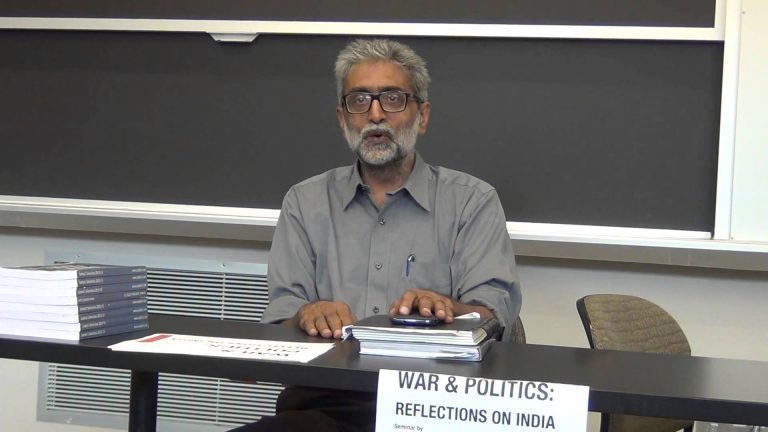
The Supreme Court of India has issued a notice to Gautam Navlakha, one of the accused in Koregaon Bhima violence case. The notice is in connection with the Maharastra government’s plea against the Delhi government order allowing Navlakha to be released from house arrest.

The Delhi High Court had released the alleged Urban Naxal Gautam Navlakha from house arrest after five weeks of the arrest on October 1. The High court had quashed the order of his transit remand issued by a chief metropolitan magistrate. A bench of justices S Muralidhar and Vinod Goel had cancelled the transit as it was not compliant with the basic requirements of law and the Constitution.

Following this, a plea challenging the order of the Delhi High Court was filed in the Supreme Court on last Wednesday by the Maharashtra government. The Maharastra government had argued that the accused has been arrested for involving in grave offences under UAPA. The Maharastra police are still pursuing the investigation and hence production of translated copies of case diary to the court was not feasible, said the counsel representing the state government.

The Pune Police had arrested Gautam Navlakha and four other activists on August 28 in relation with their alleged involvement in the Elgaar Parishad and the Bhima Koregaon violence. Historian Romila Thapar had filed a plea in the Supreme Court against the arrest of five ‘Urban Naxals’ but the top court headed by the then Chief Justice of India Dipak Misra on September 28 had refused to interfere with arrests of these five ‘Urban Naxals’.

Interestingly, on a day when Supreme Court issued a notice to Gautam Navlakha over his release from the house arrest, the Delhi High Court has initiated a contempt case against the RBI part-time director and Chartered Accountant S Gurumurthy for his articles and tweets against the Delhi HC Judge S Muralidhar, after the latter had ordered the release of Navlakha from the house arrest.

The Delhi High Court has taken the suo-moto cognisance and initiated criminal proceedings against S Gurumurthy after he had claimed bias in Justice S Muralidhar’s judgement in connection with the activist’s release. The Delhi HC initiated the proceeding after it received a letter from Advocate Rajshekhar Rao stating that it was a deliberate attempt to attack a sitting judge of the High Court and to scandalise the judiciary.

Justice S Muralidhar, the Delhi High Court judge who passed the judgement to free the accused Gautam Navlakha is claimed to be the husband of activist Usha Ramanathan, who has associated with Navlakha in the past with various movements. Hence, there were some speculations regarding the relation between the Delhi High Court judge and the release of the accused ‘Urban Naxal’.

Swaminathan Gurumurthy in the past had also made similar allegations about the Justice S Muralidhar and had questioned the credibility of the High Court judge in connection with granting bail to Karti Chidambaram in INX Media money laundering case.

Good news for Sibal, SC may defer Ram Mandir case until after 2019 elections

Congress leader and senior Supreme Court lawyer Kapil Sibal would be a happy man today.  While representing the Sunni Waqf Board in the Ram Mandir-Babri Masjid case in Supreme Court, Sibal, in December 2017 had asked the court to defer the trial until after 2019 or as many inferred, until the next Lok Sabha elections.

With today’s adjournment of the matter till January 2019, it seems increasingly unlikely that any verdict will be reached before general elections next year.

The Supreme Court has adjourned hearings in the Ayodhya dispute until January next year. Uttar Pradesh SG Tushar Nehta had sought an early hearing citing the nature of the case. However, the CJI rejected early hearings asserting that the “the court has its own priorities.”


Priests from Ayodhya are upset with the delay and insist that the Court should make arrangements for the speedy resolution of the conflict.


The Supreme Court has also said that it will decide in January whether the case should be heard in February, March, April or after that.


The Supreme Court was hearing a batch of pleas challenging Allahabad High Court’s 2010 verdict which divided the disputed land into three parts, where two-third portion to be shared by two Hindu plaintiffs and one-third to the Sunni Muslim Waqf Board. The case will now be heard in first week of January before appropriate bench for fixing a schedule for hearing.

Rajdeep attempts to insult Hindus by equating Sati with Sabarimala traditions, gets caught in his own hate

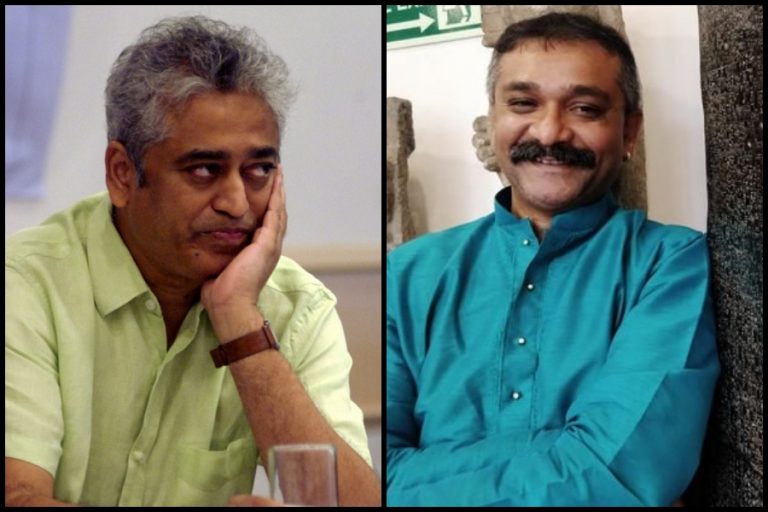
Controversial journalist Rajdeep Sardesai yesterday tried to equate the Sati tradition with Sabarimala, implying that if any tradition is opposed by the majority, it doesn’t mean the tradition may necessarily be good for the larger society.


Sati is an obsolete practice where a widow would immolate herself on her husband’s pyre which has been abolished in India. Raja Ram Mohan Roy had led a crusade against the Sati system, polygamy, child marriage and the caste system and Brahma Samaj, a socio-religious reform movement played a major role in reforming and modernising the Indian society.

Sardesai claims that Raja Ram Mohan Roy’s movement to abolish Sati faced opposition from the whole ‘Hindu India’. Similarly, the way people are opposing the Supreme Court’s judgement of allowing women of all age group to the Sabarimala shrine in Kerala, Sardesai asks, what should be our moral responsibility be.

Sardesai was corrected by many, including author Amish Tripathi, who pointed out that it was not the whole of India that practised Sati. He pointed out how almost none of the widows in the Hindu epics Ramayan and Mahabharat committed Sati.


Now Sardesai shifted his focus from saying whole ‘Hindu India’ opposed the campaign to ban the practise of Sati to the fact that the practice was prevalent. He talks about how the society-sanctioned customs and traditions should go with time.


He then pointed out how 8,135 confirmed instances of Sati between the fifteen year period of 1813 and 1828 is not ‘minor’ as pointed out by Tripathi.


He was again explained the flaw in his argument that he could not compare Sati, which spoke of the right to life versus the Sabarimala temple which speaks of the right to access.


There has been a constant attempt by the ‘liberal’-activists to demonise Hindu traditions and festivals. Sardesai’s tweets reek of Hinduphobia under the garb of liberalism and was rightly pointed out by Mohandas Pai. He reminded Rajdeep that states like Rajasthan had the custom of committing ‘Jauhar’ because, after the husband’s death, women didn’t want to be taken captive by Islamic invaders and turned into sex slaves. One recalls the case of Rani Padmavati and how she committed Jauhar to escape the wrath of Allahuddin Khilji.


To that, in his usual modus operandi, Rajdeep said, “You read mythology, I read history sir. You seek to semitise Hinduism and turn it into religion of hate and exclusion, I see it as a great religion of reform, pluralism and inclusion. Happy to debate anywhere, anytime. Gnight, shubhratri”.

However, in that statement, Rajdeep made a grave error. Rajdeep has often displayed his pathalogical Hinduphobia while championing the cause of “minority rights” that basically translates into an Anti Hindu, Pro Muslim stand. In fact, he even wrote a vile essay after the brutal murder of Hindu activist Prashant Poojari. Rajdeep had written that the murder of Poojari cannot be compared to the Dadri lynching because the former had a “political context”. This argument clearly pointed to Rajdeep’s malaise against Hindus and Hinduism.

In his response, however, Rajdeep betrayed his own cause. As aptly pointed out by Author Sandeep Balakrishna, Rajdeep in his response basically admitted that Semitic religions are innately violent and intolerant. This is something that Rajdeep has perhaps spent his career trying to disprove.


In Rajdeep’s quest to defame Hinduism, he ended up admitting that Semetic religions, or Abrahamic religions are innately intolerant. One has to wonder whether Rajdeep hate for Hinduism is so strong, that it has the potential to make him say things which he has tried to deny for the better part of his career.

Congress supported MLA Jignesh Mevani makes another crass comment, asks PM Modi to hang himself

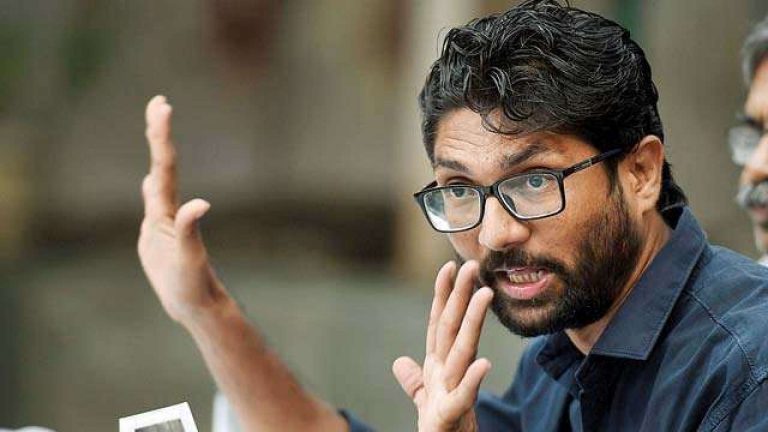
In a tweet, controversial Congress ally, Jignesh Mevani, has asked Prime Minister Modi to hang himself. The tweet says, “You have worn Gandhi’s spectacles, you are putting up Sardar’s statues, you have worn Netaji’s cap too! In a similar vein, if you hang yourself with a noose around your neck like Bhagat Singh, how will it be?”


Although the tweet does not specifically name Prime Minister Modi, it is quite obvious it directed towards him. As per the tweet, it was a WhatsApp forward but the fact that Mevani tweeted it himself is, without doubt, an endorsement of the crass message. Many people on social media have condemned it and stated that an elected representative should display a better behaviour.


Mevani appears to be obsessed with using crass words for the Prime Minister. Only a couple of days earlier, he had called Modi a ‘Namak haram’. In 9 minutes, he had called the Prime Minister Namak haram 6 times.

On another occasion, Mevani had said that Modi should retire from politics and go to the Himalayas to ‘melt his bones’, which colloquially means, ‘to go and die’. In another bizarre tweet, Mevani had himself photographed with a person dressed as Narendra Modi where he could be seen admonishing the duplicate Modi and asking him to fulfill his promises.

Mevani had also tweeted once that he doubted if anyone had told ‘I love you’ to Prime Minister Modi following which Twitter users had comprehensively expelled Mevani’s doubt and ‘I love you PM Modi’ was trended by thousands oF people.

Election Commission announces schedule for Assembly Elections in 5 states

Election preparations in the five states of Madhya Pradesh, Chhattisgarh, Rajasthan, Mizoram and Telangana are in full swing. The five states are going to polls next month. The Election Commission has announced the poll dates for the five States. The poll schedule for all the five States is as follows:

Chhattisgarh

Phase I-

Last date of filing nominations – 23/10/2018

Last date for withdrawal of candidates – 26/10/2018

Date of poll – 12/11/2018

Phase II-

Last date of filing nominations – 2/11/2018

Last date of withdrawal of candidates – 5/11/2018

Date of poll – 20/11/2018

Madhya Pradesh

Last date of filing nominations – 9/11/2018

Last date of withdrawal of candidates – 14/11/2018

Date of poll – 28/11/2018

Rajasthan

Last date of filing nominations – 19/11/2018

Last date of withdrawal of candidates – 22/11/2018

Date of poll – 7/12/2018

Telangana

Last date of filing nominations – 19/11/2018

Last date of withdrawal of candidates – 22/11/2018

Date of poll – 7/12/2018

Mizoram

Last date of filing nominations – 9/11/2018

Last date of withdrawal of candidates – 14/11/2018

Date of poll – 28/11/2018

Counting for all the five states will be held on December 11, 2018. The political parties have already come out with the list of candidates for the Assembly elections. Elections will be held on 40 seats in Mizoram, 119 seats in Telangana, 200 seats in Rajasthan, 231 (230+1 nominated) seats in Madhya Pradesh and 91 (90+1 nominated) seats in Chhattisgarh.

In the Naxal affected state of Chhattisgarh, security has been prepped up to ensure security during elections. According to the information given by Inspector General of Police (Bastar range) Vivekananda Sinha, about 500 companies of the Central Armed Police Forces are arriving here ahead of the November 12 elections. Bastar borders the states of Odisha, Andhra Pradesh, Telangana and Maharashtra.

Talks are being held with the neighbouring states to ensure there’s no cross-border movement of Maoists. Satellite trackers with SOS buttons will be used to track the movement of the security personnel from the district headquarters. To track the movement of Naxals in the three districts if Sukma, Bijapur and Dantewada, drones will also be used.

Out of the five states where Assembly elections are to be held, currently Rajasthan, Madhya Pradesh and Chhattisgarh have BJP governments, Telangana has TDP government and Mizoram has Congress government.

Gujarat: Congress MLA arrested for accepting bribe from person accused irrigation scam

0

Congress MLA from Dhrangadhra, Gujarat, Parsotam Sabariya was arrested on Sunday for allegedly demanding and accepting a bribe from persons accused in an irrigation scam in Morbi district, over 60 kilometers from Rajkot.

A team of Morbi police had picked up Sabariya from his residence in Trajpar village on the outskirts of Morbi town at around 4 am on Sunday and had brought him to Morbi town for questioning. After grilling him for hours, he was formally arrested by ‘A’ Division police in Morbi town at 2 pm.

Besides Sabariya, a lawyer named Bharat Ganesh, an executive engineer in the irrigation department, CD Kanani, a contractual person, and two others have earlier been arrested in connection with a scam pertaining to construction and repair of dams, digging of ponds and repair and restoration of percolation tanks in villages in Morbi district.

Karanraj Vaghela, Superintendent of Police, Morbi, said that Sabariya had demanded Rs 60 lakhs from some accused in the irrigation scam, in return for not raising the issue in the Assembly and with the state government. He ultimately settled for Rs 35 lakhs, out of which Rs. 10 lakh was given to him through a middleman. Another Rs 25 lakh was given to the middleman in the form of a cheque, Vaghela said.

Inspector RJ Chaudhary of Morbi ‘A’ Division police station confirmed, that the alleged middleman identified as Bharat Vakil has also been arrested.

According to police, a grant of Rs 20 crore required for 334 minor irrigation projects was approved by the Gujarat government in villages in Morbi district. SP Vaghela furthered that the state government, after receiving complaints, had launched an investigation into the irrigation projects which revealed irregularities and mismanagement of Rs 1.12 crore in 51 such projects. Other projects are also being inspected for suspected irregularities and corruption.

Similarly last month, the Enforcement Directorate (ED) has registered a case of money laundering against Karnataka Congress leader D K Shivakumar. The case was in relation to the income tax raids which were carried out at his premises last year and a huge sum of cash was allegedly recovered. DK Shivakumar has also been accused of being involved in illegal mining and land scams.

In another such case, a Manipur Congress MLA had been reportedly arrested in August in connection with a missing arms case. The National Investigation Agency has arrested Manipur Congress MLA Yamthong Haokip for having a connection with the theft of 56 pistols and 58 magazines from Director General of Police’s armoury located within the premises of 2nd Manipur Rifles Battalion, Imphal between September 2016 and early 2017.

Last year too, we had reported how Mumbai police nabbed Mohammad Jamadar, vice-president, South Mumbai District Congress Committee, in an alleged 15kg gold smuggling racket. Earlier, Ashton Sequeira, an NSUI (student wing of the Indian National Congress) leader (District Secretary) had been arrested among 5 others for stealing and attempting to sell antiquated idols of Jain Tirthankaras worth crores of rupees.

#MeToo: Suhel Seth fired by Tata Group after allegations of sexual harassment surfaced against him

0

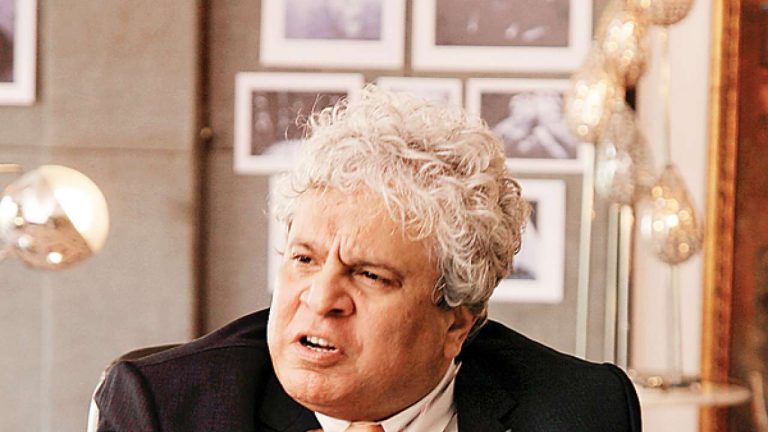
The #Metoo movement in the country has led to the fall of another prominent individual, as Author and Marketing guru Suhel Seth has been sacked as a consultant by the Tata Group.

According to reports, Tata Sons has decided to terminate the contract of brand consultant Suhel Seth, after he was accused by several women of sexual harassment.

Suhel Seth reportedly played a crucial role in restoring the brand name of the Tata Group after the industry giants had met with a management crisis within the group in 2016 when Cyrus Mistry was removed as chairman of Tata Sons.

As soon as the accusations against Seth surfaced, Tata Sons said, “Tata Group is committed to promoting a safe workplace for women. We have noted the recent reports regarding Mr Seth in the media. We are looking into the issue and will decide on a further course of action in this regard.”

Six women had accused Suhel Seth of sexual misconduct in the past including model Diandra Soares, filmmaker Natashja Rathore, writer Ishita Yadav, and author Ira Trivedi. Diandra Soares had accused Seth of misbehaving with her at a party in New Delhi and tried to forcibly kiss her.

Mandakini Gehlot, another female journalist narrated a similar accusation against Suhel Seth after he had allegedly kissed her. Filmmaker Natashja Rathore had a similar story. She said, “You then threw yourself at me although I was clearly uncomfortable. You shoved your tongue down my throat even when I resisted, I whacked your head and said ‘behave yourself’. You put your hand into my kurta and grabbed my breast.”

The ‘MeToo Movement’ has grabbed the headlines in the country with startling revelations coming from across the spectrum involving several prominent personalities like stand up comedians, journalists, cinema stars and politicians. Union minister M J Akbar who was accused by over a dozen women of sexual harassment had to resign from the cabinet over sexual misconduct allegations.

Many people like Alok Nath, Rajat Kapoor, Varun Grover and comedians like Tanmay Bhat and Gursimran Khamba, co-founders of All India Bakchod are all being accused of sexual misconduct. Notable filmmakers like Vikas Bahl, Sajid Khan and Journalists like Vinod Dua and Sidharth Bhatia of The Wire, Prashant Jha of the Hindustan Times have been accused.