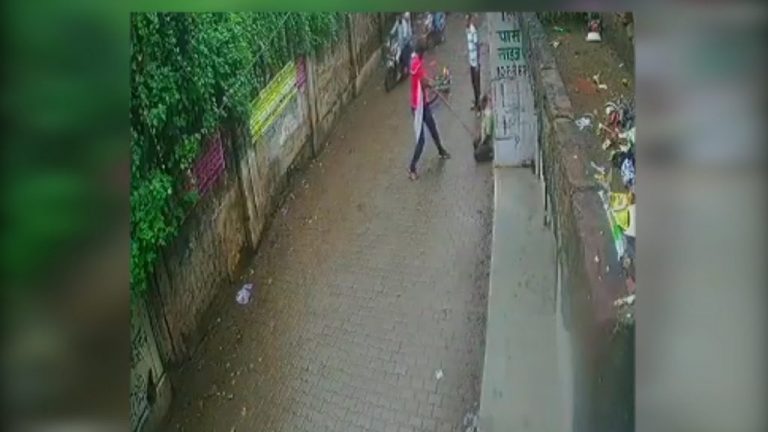
Disgraced former IPS officer Sanjiv Bhatt has been reportedly taken into custody by the Gujarat CID over a 1998 case of planting drugs. It is reported that the probe is underway after High Court orders. The interrogation of 7 people is being done in this case, including Sanjiv Bhatt, where two other police officers were also involved.
Dismissed IPS officer Sanjiv Bhatt has been detained by CID (Crime) of Gujarat in connection with Palanpur drug planting case of 1998. Probe underway after HC orders. Interrogation of Sanjiv Bhatt & seven others underway. 2 more former police officers also involved.
The Palanpur Drug planting case pertains to an incident in 1998 when Sanjiv Bhatt was serving as the DCP of Banaskantha. He was then accused of trying framing a lawyer in a fake narcotics case. Earlier in June 2018, the Gujarat High Court had asked the state CID-Crime to investigate the FIRs lodged in the case. In 1996, a lawyer from Rajasthan was booked for allegedly carrying 1.5 kg of narcotics and it was alleged that Sanjiv Bhatt, in connivance with others, had planted the narcotics. Former judge of the Gujarat High Court, Ramanlal Rajmal Jain is also said to be involved in the case.
It later emerged that the lawyer, Sumer Singh Rajpurohit, who was booked was allegedly kidnapped from Pali (Rajasthan) and the drugs were planted on him by Palanpur police. In a sordid twist, it was also alleged that the Palanpur police had done so to get the lawyer to vacate the property which was allegedly belonged to the relative of the then Gujarat HC judge, Ramanlal Rajmal Jain.
The High Court’s order in this regard stated:
“It was shockingly mentioned that if the said advocate vacates the property, the Palanpur police would release him from jail in the said narcotics case. In fact, within only three days of Sumer Singh Rajpurohit remaining in police custody, the property was vacated by his brother, and on vacating the property, the Palanpur police filed a report under Section 169 CrPC saying that the person occupying the room at Lajwanti City Hotel where 1.5 kg narcotics was found was not Rajpurohit and that he may be released.”
Disgraced cop Sanjiv Bhatt is said to have played a key role in the entire episode of abduction and planting of narcotics in order to frame the lawyer. Recently, Sanjiv Bhatt, who is also a bigot, had his security cover was withdrawn by the central government and an illegal construction in his house was mowed down. He was caught spreading anti-India propaganda on Twitter, disgracing a woman’s dignity by morphing her picture, and sharing fake images of the recent Kerala floods.
In a shocking incident which occurred in Allahabad in the Shivkuti police station area, three men have brutally assaulted a 70-year-old retired policeman Abdul Samad Khan in broad daylight.
Khan was reportedly attacked when he was on his way to buy groceries on Monday, 3rd September. After the attack, the police took him to hospital but the former sub-inspector later succumbed to the injuries inflicted during the brutal lynching.
The retired sub-inspector was attacked by three assailants. One of the assailants was the Khan’s neighbour Yousuf, and others were reportedly called Ibnu and Sheru. The CCTV footage shows the retired cop, Abdul Samad Khan, trying to shield himself as the three of the accused hit him with sticks. Khan, at last, gives up and is left bleeding on the street.
Brijesh Kumar Srivastava, the Superintendent of Police said “According to the investigation so far, these people had some property dispute related to a house and had argued before. The incident was of Monday morning when Khan was going on his bicycle and was attacked by Mohammad Yusuf, his brother Mohammad Sebu and relative Ibne. He was beaten badly with canes and was left on the streets. He was then taken to a nearby private hospital where he died on the evening.”
Shockingly, the barbaric incident took place in front of many people, but no people came to rescue the retired cop. It is reported that the bystanders ran away into their buildings, as soon the attack on the retired cop occurred.
The Allahabad High Court has taken suo-moto cognizance of the attack and has asked the Uttar Pradesh government to provide information on the action taken with matter to this case by tomorrow.
A brutal and barbaric case of rape and murder of a 9-year-old girl has come to light in Boniyar, Uri. According to reports, Uri police have claimed that after the decomposed and mutilated body of the girl was found in a forest on September 2nd, they had solved the case and have arrested 5 accused persons, including the girl’s stepmother and halfbrother.
Moving. Top @JmuKmrPolice cop SSP Baramulla @hussain_imtiyaz breaks down while narrating the details of horrific rape and murder of a 9 year old girl in Boniyar, Uri of North Kashmir. Kudos to J&K Police for arresting all accused including step mother and brother within 48 hours. pic.twitter.com/1rkawcvYZD
Journalist Aditya Raj Kaul had shared a video of SSP Baramulla Imtiyaz Hussain stating that this was the most heinous and barbaric case of rape and murder he had seen. Sesh Paul Vaid, the DGP of Jammu and Kashmir has expressed on social media that the bone-chilling rape and murder was committed on the instigation of the stepmother and it is a case worse than the Kathua rape and murder case.
A bone chilling story of gang rape and murder of a 9 year old girl in #Uri by her step brother and 2 other accused instigated by her step mother. A case worse than Asifa of Rasana Kathua. @JmuKmrPolice has solved the case and arrested all the accused.
According to reports, police in Boniyar station had received a complaint on 24th August from a local person that his daughter has been missing. The police reportedly launched a search for the girl but she could not be found for several days. on September 2nd, the decomposed and mutilated body of the girl was found in a nearby forest. A SIT was then formed to launch a detailed investigation into the case.
According to reports, after preliminary forensic analysis, it was revealed that the girl had been raped by several persons, her eyes had been gouged out, her body parts were burned with acid and her head had been struck with an axe.
during the police investigation, it was revealed that the girl’s father had two wives, a local woman and a woman from Jharkhand named Khushboo. During the course of interrogation and rounding up of suspects, it was revealed that the girl was the daughter of Khushboo and her father’s first wife Fehmeeda was always jealous of her because she thought the second wife and her child received more love and attention from their husband.
After interrogation by police, Fehmeeda reportedly revealed that she had lured the girl into the forest and according to a premeditated plan, asked her 14-year-old son and two of his friend to join her.
While in the forest, the 14-year-old allegedly raped the girl and even his friends took turns raping her. Later Fehmeeda allegedly strangulated the girl and the 14-year-old hit her head with an axe. One of the other accused allegedly went back to the village and brought back a bottle of acid to burn the girl’s body. Another accused allegedly gouged out the girl’s eyes. According to reports, the injuries and the cause of death have all been corroborated in the forensic analysis. The girl’s body was then covered with twigs and branches and was hidden in the forest.
After an investigation, the weapons used in the crime, including the knife and the axe, the acid bottle and other incriminating pieces of evidence have been recovered by the police. SSP Baramulla Mitiyaz Hussain has reportedly informed that all the accused in the case have been arrested and they will soon be charge-sheeted in court.
The case has sparked massive public outrage and condemnation in the region. It is notable here that after many cases of rape and murder of minors, the central government had promulgated an ordinance making the rape of children below 12 years of age an offence punishable by death sentence. Madhya Pradesh was the first Indian state to pass the law of awarding the death penalty to child rapists. However, juvenile justice laws allow lesser sentences for offenders under 16.
As Madhya Pradesh assembly elections come closer, Congress party is increasing its soft-Hindutva approach. After Madhya Pradesh Congress President promised that they will they will build Gaushalas in every panchayat of the state, another comment from a party leader to appease the ‘majority community’ has come forward.
According to a video accesses by Republic TV, Congress party media in-charge and key Rahul Gandhi-aide Randeep Singh Surjewala played the ‘Brahmin’ card at an event of the ‘Brahmin Samaj’ at Haryana’s Kurukshetra on Monday. At the event, he claimed that Congress party has ‘Brahmin DNA’. He then adds that there is Brahmin Samaj’s DNA within the Congress. He is quoted as saying, “One of my colleagues asked why is a Brahmin conference being held using Rahul Gandhi’s photo and under the Congress party flag and the Tricolour? I said that I will respond to this from this platform one day. Indian National Congress is that party, my friends, in whose blood there is Brahmin Samaj’s DNA.”
He also says that Rahul Gandhi embarked on the Yatra of Bhole Nath alone (referring to the Congress president undertaking the Kailash Mansarovar Yatra).
Hoarding of Brahmim Sanmelan where Randeep Singh Surjewala was chief guest
Surjewala went on to compare Rahul Gandhi with Gods and BJP leaders with Demons, referring the Gandhi family scion as a ‘Shiv-bhakt’ (devotee of Lord Shiva).
‘The fight between Gods and Demons has been happening since time immemorial. In Mythology, whenever Vishwamitra sat for prayers, demons would try to foil it. Whenever anyone prayed for Bhole Shankar (Lord Shiva) demons would gather to foil it. Even today, Shiv-bhakt, your son, Congress chief and our leader Rahul Gandhi is on his way to Bhole Shankar’s Yatra to Kailash Mansarovar. And who’s trying to foil his trip? Leaders of the BJP’.
The statements of Surjewala is interesting in the context of the fluid position that Congress has taken on religion. Most times it tries to project itself as messiah of minorities, with its then PM Manmohan Singh declaring that minorities have the first right over resources and allegations of Rahul Gandhi asserting that Congress is a party of Muslims, but during election times it turns to the other side of the spectrum, from Temple Run by Rahul Gandhi before Gujarat elections to he being declared a ‘Janeu dhari Brahim’ by his party leaders to he undertaking the Man Sarobar Yatra.
It is also intriguing that Congress’ claims of being a Brahmin party come weeks after BJP had questioned Rahul about Congress reportedly being called a “Muslim party” at a meeting between Muslim intellectuals and Rahul Gandhi. They had also questioned whether Congress coined the term Hindu Terror just to position themselves as a Muslim party.
It’s that time of the year again when student leaders across the university try to woo the students to elect them as their leaders. The dynamics of students’ politics has changed a lot over the last a couple of decades in DUSU elections as narrated by students and people who have seen this election over the years. A group of students feel that DUSU elections are all about people who want to get into mainstream politics, money, muscle power and is infected by caste combinations. There’s another group of students who feel that DUSU elections is a great platform to understand the value of their vote and get a glimpse of how the world’s biggest democracy operates.
When I finally made up my mind to pen down my thoughts on DUSU elections, having witnessed them myself over last 14 years, I was surrounded by a dilemma, whether to be unbiased towards both the ideologies but having interacted with some students myself changed my opinion to focus on the former than on the latter.
As a member of the prestigious Delhi University, for almost fifteen years, in different responsibilities, it is important for me to help students and other stakeholders understand how we ourselves are responsible for whatever we observed in the DUSU polls year on year. My goal to write today is to be able to answer all the apprehensions which surround the students and teachers about DUSU.
One can assume that people who contest in DUSU elections or college elections are future leaders and or at least aspire to be leaders in their lives. One should, however, not have a myopic vision to envisage these students getting into mainstream politics, only.
DUSU leaders, as I like to call them, have been and will continue to be successful journalists, academicians, for everyone has a different understanding of leadership. Having said that, it stays a harsh reality that our country really has a dearth of effective leaders. However, there is no shortage of leaders in the country. DUSU and other University elections have given great leaders to the country, thus making it of great significance. Mr Arun Jaitley, Mr Ajay Makkan, Mr Vijay Goel, Mr Vijender Gupta are a few to mention. Recently nominated to Rajya Sabha by President of India, Mr Rakesh Sinha also contested for DUSU president in 1986. The list of successful entrepreneurs, journos and academicians is very long. Mr Rajat Sharma, Mr Ashok Tandon and Mr Shriram Khanna are to name few.
DUSU, as a platform is a great opportunity not only for students who are contesting the elections but also for other students to show and develop their leadership skills by following the elections closely and motivating their peers to come out and vote in larger number.
A large section of students do not participate or take a keen interest in DUSU elections because they feel that the entire election is polluted by money, muscle power and caste. Students who have good leadership skills tend to get pessimistic because of the aforementioned reasons and mostly don’t get support from their parents and teachers. Political Stalwarts, University representatives and think tanks are now focusing more on a leadership vacuum in India than at leadership at a global level. Any vacuum needs to be filled up sooner or later. The only question is who fills it and how soon?
It is a harsh reality that DUSU elections are now dominated by various caste factors and majorly these combinations are proving palmy for almost all the students’ organizations. But for this dominance of caste politics in university, students are equally responsible as much as the student organizations. Swami Vivekananda defined a leader or leadership, as not merely a position where someone gets the necessary power to give command over a group of other men and women.
In Vivekananda’s point of view, leadership is a work of responsibility, it is a duty. Unfortunately, most often, we have failed to be a leader and don’t fulfil our responsibility of choosing the right leaders. We have not shown enough interest to vote and elect our leader, a leader who can represent us. The poll percentage of DUSU elections is abysmally low and it’s falling every year. Student’s organizations such as ABVP and NSUI which dominate DUSU elections have fielded candidates from all the castes and economic background over the last five decades. But their choice majorly depends on what the student community demands.
All these political parties want to win the elections and therefore they tend to support candidates whom the students want to elect. Tomorrow, if students community decide that they want a to elect a leader who has good oration, carries a pleasing personality and is strong in his/her academics, the student organizations will be pushed to support the candidate with required skills. But unfortunately, students at large choose an easy way of turning a blind eye to DUSU elections and hence result is clear in front of us.
The youth of this country is making a tremendous contribution towards the development. We have seen almost everyone coming out with their perspective, ideology and thought process on social media. There’s a great sense of satisfaction to see students coming forward to participate in debates, crucial dialogues and decision making. We have improved percentage of voting at State and General elections but we are lacking behind in University elections. DUSU is recording around 40-50 % voting over the past few years.
Another aspect which leaves many in a conundrum over DUSU elections is the role of national-level political parties. I feel the presence of the student organizations affiliated with these political parties is important to both strengthen the role of students in building democracy and identification of future leaders. DUSU is a sizable election where candidates have to cover around 50 colleges spread throughout the city. The time of the campaign has also been reduced from ten days earlier to now almost 3-5 days only. Because of the paucity of time, it is almost impossible for candidates to reach out to each and every college and hence it becomes easy for the student’s community to relate their own ideologies with those of the organization which is backing the candidates.
DUSU has been led by RSS backed ABVP and Congress backed NSUI. Almost all the students studying in university colleges and departments are aware of the policies and ideology of both the groups at local and national level. Thus, it gets easy for them to elect the candidates on the basis of ideologies and the narrative these national parties are set at centre stage.
NOTA has also been introduced in DUSU and votes in NOTA are also increasing. However, to speak from political aspirations the objective with which NOTA was introduced has not been achieved. Students who come unaware about the candidates opt for NOTA. In my view, election officers must think of some innovative steps like a brief introduction of all the candidates on their website or maybe launch a mobile application on DUSU elections, having information on all the candidates. This will help students choose and make a wise decision.
I put forward my views today, with a hope that students across different DUSU affiliated colleges will come out in large number and vote in DUSU elections 2018. Participating in elections is very important for our democracy and the future of our country. University, with the help of NSS and other students, should also come out with ideas similar to that of Election Commission to motivate students to participate in the festival of Democracy called DUSU elections.
Before I conclude, I would like to quote Nobel laureate, Mr Kailash Satyarthi, “The power of youth is the commonwealth for the entire world. The faces of young people are the faces of our past, our present and our future. No segment in the society can match with the power, idealism, enthusiasm and courage of the young people.”
For, the youth needs direction; they can change the world and what better way to begin than to understand the power of their vote, the power to change who leads them, the power to empower!
A session court in Assam today convicted main accused Zakir Hussain of the horrific crime of rape and murder of a 13-year-old girl in Batadrawa in Nagaon district of Assam.
In a crime that shook the entire state of Assam, the class 5 student girl was gang-raped and then set on fire on 23rd March this year. The crime was done at the victim’s house where she was alone after returning from school. Zakir Hussain and two other persons barged into the house, raped her and then set her ablaze by pouring kerosene on her.
When family members saw smoke coming out of the roof they rushed to the house to find the girl in a critical condition. She was immediately rushed to the hospital and admitted with 90 percent burn injury, from where she was sent to Guwahati Medical College and Hospital. Before succumbing to injuries, she had given a dying declaration to police identifying the three criminals, based on which police nabbed Zakir and another juvenile, while the third was absconding.
All three accused studied in the same school as the victim and they were known acquaintances of the victim.
After the wide publicity and outrage the case had generated, police went into overdrive mode in the investigation of the case, and the charge-sheet was filed in just a month. Zakir and the others were charged with rape and murder, while five others Abdul Rajek, Zubeda Khatun, Muklesur Rahman, Abdul Rashid and Fakruddin where charged under relevant sections of IPC for harbouring the offenders and destructing evidence.
After this incident, Gauhati High Court had approved a state government proposal for setting up exclusive fast-track courts for trial of cases related to rape and murder of women and children in Assam.
After a fast-track trial, the Nagaon session court pronounced the verdict today, convicting Zakir Hussain. The Quantum of punishment will be announced on September 7. The court acquitted the others accused in the case for lack of enough evidence.
As the Madhya Pradesh state assembly elections draw close, Congress party is back to its ‘soft Hindutva’ colour. MP Congress chief Kamalnath had yesterday shared on Twitter that it is his party’s ‘promise’ that they will build Gaushalas in every panchayat of the state.
It was not so long ago that a youth Congress worker in Kannur had slaughtered a calf on the road, in full public view. He had also later gone on to claim that he had committed the act after the approval of the state Youth Congress president. Rajil Makkutty had claimed that not only the state Youth Congress president was aware of his plan to slaughter a calf on the road, but he had also encouraged him to carry out his ‘protest’ strongly. It is notable here that as per the Youth Congress workers, the act was a protest against the government order to ban the open selling of cattle for slaughter. The Youth Congress workers had brutally slaughtered a calf on the road and had even gone ahead to pose for photographs with the carcass of the slain animal.
Congress and its then Vice-President Rahul Gandhi had quickly made a show of condemning the act and ‘distancing’ themselves from the incident, claiming that the said Youth Congress worker had been suspended. But it was later revealed that the claims of his ‘suspension’ were as hollow as the many promises of Congress and Rajil Makkutty was not only attending various Congress political events across the state, he was also reportedly seen at the Congress plenary session in March this year. Soon after Makkutty slaughtered the calf and Congress leadership quickly jumped to feign ‘condemnation’ over the act, a sitting Congress MLA in Kerala, VT Balram was seen enjoying a beef party with his associates.
Earlier in June, Congress’s minister in Karnataka Shivanand Patil reportedly sat and listened while a Muslim cleric declared before him that cows will be slaughtered for Bakrid in the state, despite the fact that cow slaughter is illegal in the state.
Congress, whose president has repeatedly claimed that the fictional ‘Hindu extremists’ are a bigger threat than Islamic terrorists, seems to change its policies and promises solely for the purpose of electoral gain. While the party slaughter cows on roads of Kerala, its state chief promises Gaushalas in MP. While Congress fraternises with PFI in Karnataka its president goes in a temple hopping spree while campaigning in Gujrat.
Whatever may be the party’s position, Congress has time and again proven that its top leadership holds only contempt for Hindus and their practices. Let us not forget that it was the UPA government which had tried to demolish the Ram Sethu claiming that Lord Ram is only a fictional character. In recent times, it has been proved that it was the UPA government which propagated the idea of ‘Hindu Terror’ to malign Hindu groups and appease Muslim fanatics. With Kamal Nath now declaring his dedication for building Gaushalas in every panchayat if voted to power, the question that comes to one’s mind is, how can Congress celebrate the brutal slaughter cows in one state and pretend to care for them in another.
The Congress regime and most of the people it patronised through the decades are spooked. They are spooked because they have been unseated from the throne, politically, in the media and elsewhere. The Modi government has not a single scam to its credit since it assumed power and Congress is now desperate to sprinkle some mud on the Modi government to reduce its credential to the abysmal levels of its own.
The Rafale deal is one such ploy. Despite several clarifications by the government and experts, Congress and its cronies refuse to relent. They repeat the same lies over and over again hoping that the allegation of corruption, fictitious as it may be, sticks with the Modi government.
The cronies focus on five lies and it is essential that these five lies are debunked summarily.
1. Rs 59,000 crores for 36 Rafale Jets is way overpriced than what the UPA/Congress government had negotiated with France
This is just not purchase of bare jets but includes Meteor missiles of extraordinary range, other weapons, training systems, performance-based logistical and enhanced maintenance support. The UPA/Congress contract envisaged in 2012 was only for the production of bare aircraft that would’ve called for many separate additional contracts, delayed by years and thousands of extra crores. In fact, One wonders why did UPA/Congress envisage only bare aircraft? Was the scandal of Mirage-2000 – jets first, weapons later, only a prototype?.
2. Why is NDA government afraid for a Joint Parliamentary Probe if the purchases are fair, as Ms Priyanka Chaturvedi, Congress spokesperson, wickedly strutted on Sunday.
The Opposition knows the government can’t make a public statement due to inter-governmental secrecy clauses. If the Opposition wants detail, it could ask the Parliament for a secret session as permitted by Clause 245-252 of Rules of Procedure and Conduct of Business in the Lok Sobha for all the financial and technical details. Or shut up.
3. The government has ignored the “70-year public sector undertaking with a long, clean record and gave the contract to a 12-day old company…to favour a millionaire friend,” says Ms Chaturvedi
Ms Chaturvedi ought to know that this “millionaire friend,” presumably Anil Ambani has already filed a Rs 5,000 crore case against her bosses’ National Herald on the matter. But first thing first. This “70-year-old public sector undertaking,” presumably HAL, has been out on a limb on all previous licence productions. That’s because the concerned Original Equipment Manufacturers (OEMs) never take guarantee on aircraft manufactured by HA. In the Rafale case, Dassault Aviation (the OEM for Rafale) has refused to take responsibility for the work-share of HAL. Further, HAL assessed manhours which were nearly three times than taken by the OEM.
As for Anil Ambani’s Reliance ADAG, the OEM (M/s Dassault and partners) could choose any offset partner in India from a list of 100 which includes Reliance. However, the deal between them is of a different kind. Reliance ADAG has a 49 per cent stake in DRAL, the joint venture formed with Dassault. This JV is for aerostructures for Dassault’s Falcon 2000 civil aircraft, completely unrelated to the Rafale deal.
4. Why buy only 36 aircraft when 126 fighter jets were required?
UPA/Congress never signed the deal in 2012. The Indian Air Force projected an urgent need for 36 aircraft in 2014. The Modi government anyway is set to grant approval for the acquisition of 114 new fighter jets for over $20 billion later this month.
5. The government has sacrificed the interest of the country (presumably by buying lesser aircraft at a higher price)
It’s a bit rich coming from Congress. The Jaguar, Mirage-2000, SU-30 MKI acquisitions bordered on scandals in the past. Despite the criticism, they continued to be bought. 21 Westland WG-30 deal of 1985, bought for Pawan Hans and VVIP travel, had to be junked after accidents. The 1987 Jaguar deal was censored by PAC for the money spent (Rs 1500 crores) had gone down the drain as the planes were outdated. (No one is now flying Jaguar in 2018 but for the IAF). So indifferent have been past governments that in the 90s, India was compelled to procure 20-30 ground MiG-21s from East European countries. This second-hand purchase had to be done to keep the Air Force working.
It’s not NDA but the insensitivity of Congress which is compromising the safety of country. As former chief of Air Staff S. Krishnaswamy: To whom this piece owes a lot of its facts, states:
“Thanks are due to those who pushed the decisions against the odds..arguments devoid of merits have an adverse impact…the morale of our military takes a beating. We as a nation must debate while staying with decency and facts. Accountability to the nation must be driven home, on which no one should be spared.”
The people of this country should be ready to counter the motivated elements who spout lies constantly, armed with the truth and the truth alone. The sanctity, sovereignty, independence and security should not, and cannot be compromised because a bunch of people get restless without political power. This country is above them and the truth needs to be told..repeatedly.
In a shocking incident in Bihar, a tribal woman had to pay the price of refusing to become a Naxal by giving her own life. According to reports, Basanti Koda was a resident of Kanimoh village in Lakhisarai district in Bihar. She had an inter-caste marriage some time ago and they had a two years old son. Naxals were reportedly against this inter-caste from the beginning and later they started putting pressure on Basanti to join their organisation. When she didn’t agree with their demand, the Naxals allegedly decided to punish her.
According to reports, she was at her maternal home along with her son when around 30 to 40 Naxal terrorists entered the village in the late night on Sunday. They took her along with them, and later they mercilessly cut her throat with a sharp weapon in a nearby jungle.SP Kartikeya Sharma has reportedly informed that around 7 in the next morning police got information about the body lying in the jungle.
The Naxals also suspected her of being a police informer. After the incident, the entire village went into a state of shock, with nobody willing to say anything due to fear of retribution by the Naxals if they say anything against them. The local police have sent the body to Lakhisarai for post-mortem.
After getting information about the incident, a team of STF, CRPF reached the site led by ASP Pawan Kumar Upadhyay. The security forces have reportedly started a search operation looking for the terrorists in and around the place. ASP Upadhyay also told that the husband of the woman Umesh Paswan is a former Naxal member but he had stopped Naxal activities in recent times. He has also told that the Naxals had also accused Basanti of being a police informer.
This is one of the many incidents where the Naxals have murdered tribals. Recently in Gadchiroli, Maharashtra, Naxals had brutally killed two tribals named Sonu Pada and Somaji Pada whom they had kidnapped some days ago from Chhattisgarh. Last month, the Naxals also had allegedly beheaded a man in Jamui, Bihar and had hidden explosives in his body.
In the previous article in the series, we discussed the incestuous network of civil rights organizations and their history of arrests under various governments and regimes. We discussed how there is a web of organisations that peddle the same kind of agenda that goes against the interests of the nation. We also showed how all the ‘Urban Maoists’ raised and put under house arrest belonged to one of the organisations in the entire web. This incestuous nexus that terms itself the ‘civil society’ and often one would find this ‘civil society’ coming together to condemn the hanging of terrorists like Afzal Guru or even Kasab, the arrest of Maoists, Naxals, and even be fraternising with Kashmiri separatists.
The media often parrots the line of such “civil society” that is, after all, not very civil. There are times when one wonders how can sections of the media possibly be coordinated enough to publish similar articles, on the same day, taking the same line of argument. Is it because they all magically think alike? Is there a deeper connection?
Remember the coordinated demonisation of the Amarnath Yatra. Articles after articles talking about how the Amarnath Yatra is not about faith alone about has a ‘political context’ to it? In the current article, we shall discuss how the Amarnath Yatra was demonized by various sections of the media based on the report of one such organization that fits perfectly well into the incestuous nexus of the very ‘civil society’ we explored in Part 1 of this series.
The narrative that Amarnath Yatra is more political than spiritual was parroted by many portals.
The National Herald, the mouthpiece of the Congress party, published an article titled, “Is Amarnath Yatra more political than spiritual?” based on the assertions made in the aforementioned report.
The Wire, which has a complicated relationship with the truth, also published an article based on the assertions of the report titled “On the Amarnath Yatra, Faith and State Go Hand-in-Hand”.
Firspost published a report on the Amarnath Yatra as well titled “Amarnath Yatra attack: Armed with faith, unfazed by tragedy, thousands of pilgrims leave for shrine” which makes use of the assertions made in the aforementioned report.
Foreign Policy published an atrocious article where it states India is trying to create a ‘Jerusalem like’ situation in the ‘divided’ region of Kashmir through the Amarnath Yatra. The article quoted the members of the organizations that published the report as well.
Foreign Policy article on Amarnath Yatra
Sabrang India, which has the controversial activist Teesta Setalvad as one of its editors, also published an article in which it used the report in question to demand the demilitarization of the Amarnath Yatra and increased focus on its environmental impact.
The concerned report titled ‘Amarnath Yatra: A Militarized Pilgrimage’, on the basis of which all of the portals wrote the abysmal articles was published by the Jammu Kashmir Coalition of Civil Society (JKCCS) in collaboration with Bangalore based Equitable Tourism Options (Equations). It’s website describes the organization as “a federation of human rights organisations and individuals working in Indian administered Jammu and Kashmir.”
The JKCSS has three constituent organizations: Association of Parents of Disappeared Persons (APDP), Public Commission on Human Rights (PCHR) and the International People’s Tribunal on Human Rights and Justice in Indian- administered Kashmir (IPTK). Apart from the glaring fact that not just Kashmir, that even Jammu is being referred to as “Indian administered” gives one a hint about the inherent biases of the creators of the report.
The report makes the assertion that “The current day rituals and belief of the Amarnath Yatra are therefore only as old as 150 – 160 years, and can hardly be considered to be ancient. However, there has been an attempt to retrace the history of the Yatra to ancient times and to the practices of Kashmiri Pandits.”
The report also attempts to further the narrative that the Amarnath Yatra is not religiously significant. It states, “Several Kashmiri Pandits, some living in the Valley and others living in Jammu and Delhi also asserted that while some people from the community to go on the Yatra, it is not religiously significant. They also shared that the day of Shravan Poornima is not celebrated as Raksha Bandhan in Kashmir. According to some of the Kashmiri Pandits interviewed, there has been no specific tradition to visit Amarnath on Shravan Poornima, instead, the community visits a Shiva temple in the vicinity of their homes.”
The report goes on to state, “In the initial 140 years or so of the Yatra’s existence it seems to have stabilised and became a matter of routine, with not too much of an impact on the people of Kashmir. In 1985, with the resurgence of the
Hindu right wing and the Ram Janmabhoomi campaign, several shrines attracted the attention of the Vishwa Hindu Parishad and especially, one of its subsidiary organisations, the Bajrang Dal, which were used to revive a fundamentalist form of Hinduism.”
The report makes the insinuation that the Amarnath Yatra is not a religious but a political Yatra which the state supports to assert its domination on Kashmir. The environmental concerns that it voices appears to be merely a ruse to cloak its true intention of casting aspersions into the nature and integrity of the spiritual Yatra. It becomes clear when the report states on its 10th page, “After passing by posters and hoardings announcing the Yatra all the way from Islamabad1 to Pahalgam, as the team approached the Nunwan camp, it came across buses full of people shouting slogans like ‘Hindustan mein rehna hai bum bum bhole kehna hai’. Clearly, for some, the reason to participate in the Yatra was not spiritual alone.”
We shall now delve a little more into their background of the organisation that published such a motivated report on the Amarnath Yatra, which was, in turn, picked up by National Herald, The Wire, Foreign Policy, First Post, etc.
JKCCS is affiliated to Coordination of Democratic Rights Organizations (CDRO), an organization we have reported on extensively in the first part of this series, among other organizations. The CDRO has People’s Union for Democratic Rights (PUDR), Civil Liberties Commitee, Andhra Pradesh (APCLC) and Committee for Protection of Democratic Rights (CPDR) as its constituent organizations and has links with PUCL through its fraternal organization, PUDR and Committee for Release of Political Prisoners (CRPP). These organizations have a history of its members being arrested for various activities related to Naxalites as have mentioned in our report.
The IPTK, which is a constituent organization of JKCSS, has Gautam Navlakha as one of its conveners. Gautam Navlakha is one of the activists who was raided by the Pune Police in connection with the violence at Bhima Koregaon and had links with an ISI funded Kashmiri Separatist. Gautam Navlakha is associated with the PUDR as well.
As per ‘The Global Intelligence Files’ published by WikiLeaks, Pervez Imroz, the President of JKCCS, the founder of PCHR and one of the conveners of IPTK, said in an event organized by the federation that “the civil society had an important role to shape up the opinions in Kashmir. At a time when even lakh troopers besides cops are leaving no stone unturned to suppress the movement, it is the responsibility of the civil society to give vent to aspirations of Kashmiris”.
In an interview that was published on TwoCircles.net and reproduced by YouthKiAwaaz, Imroz makes some contentious statements. He says that “Army camps in Kashmir have succumbed to ‘mandir culture’” and “the State is hell-bent on bringing radical ‘Hinduisation’ of army ranks”. In the interview, he states, “Barring Maoists and radical humanists, all streams of the parliamentary left in India didn’t care about Kashmir and confined themselves to rhetoric.”
He also makes the argument that India “can be considered” a ‘Brahminical Hindu’ state in response to a question that sought a comment on remarks made by many that Kashmir will become an Islamic State if it secedes from the Indian Union. But the most controversial statement in the interview was when he said: “…our primary concern is to put the military out and a majority in Kashmir believe that Pakistan is an option which is a lesser evil than the present regime.”
It is also pertinent to mention that a resolution was adopted on the 20th of April, 2013 at a public meeting organized by the JKCCS which recognized “the people and territory of Jammu and Kashmir to be under occupation of the Indian State in denial of the peoples’ legitimate right of self-determination”.
The resolution was signed by Andhra Pradesh Civil Liberties Committee (APCLC), Andhra Pradesh; Association for Protection of Democratic Rights (APDR), West Bengal; Bandi Mukti Committee (BMC), West Bengal; Naga Peoples Movement for Human Rights (NPMHR), Nagaland; Organization for Protection of Democratic Rights (OPDR), Andhra Pradesh; Jammu Kashmir Coalition of Civil Society (JKCCS), Jammu and Kashmir; Peoples Democratic Forum (PDF), Karnataka; Peoples Union For Civil Liberties (PUCL), Jharkhand; Peoples Union For Democratic Rights (PUDR), Delhi; Campaign for Peace and Democracy, Manipur (CPDM), Delhi. All of these organizations are coordinating organization of CDRO except PUCL which is linked to CDRO through its fraternal organization PUDR.
In September 2016, Khurram Parvez, Program Coordinator of JKCCS, was put in preventive detention by Jammu & Kashmir Police. 52 academics, activists, lawyers and writers issued an open letter for the immediate release of Parvez including Arundhati Roy and Gautam Navlakha. Parvez Imroz had once claimed in a press conference that the Indian government was conspiring to kill him. As per a report by KashmirWalla, Imroz was arrested by the Police as well and a case under FIR No. 353/2013 has been lodged against Imroz at the Shergari Police Station, Srinagar. JKCSS also claimed that its researcher and lawyer, Kartik Muruktula, was detained and interrogated by the Police at the Wagah Border upon his return from Pakistan.
Significantly, a connection also emerges between separatists in Kashmir and the so-called ‘Urban Maoists’. The JKCCS which calls India an occupying force in Jammu and Kashmir is affiliated to the CDRO which is intricately linked to many who were arrested for alleged links to Maoists. And a resolution was adopted by various organizations associated with the CDRO along with JKCSS at an event which was organized by the latter.
Considering the ideological inclinations of the publishers of the report on Amarnath Yatra, it is intriguing that none of the media outlets cared to inform their readers of the JKCCS’ history. Surprisingly, only The Wire attempted to offer a critique of the report and mentioned occasions when members of the JKCCS found themselves in trouble with the law. The organization that published the report has as its President, a man who believes Pakistan is a better option for Kashmir than India. That itself should have raised a red flag. It is even more bewildering that the mouthpiece of the main opposition party in India published an article endorsing the assertions made by the report which was published by an organization with clear separatist ideological inclinations.
The report didn’t just come from the organisation that had separatist links and links with an organisation that featured the ‘urban Maoists’ raided recently, but also an organisation that gets foreign funding from Christian organizations. That part of the investigation will be dealt with in the next part of the series. The first part of the series can be read here.