Home Blog Page 7117

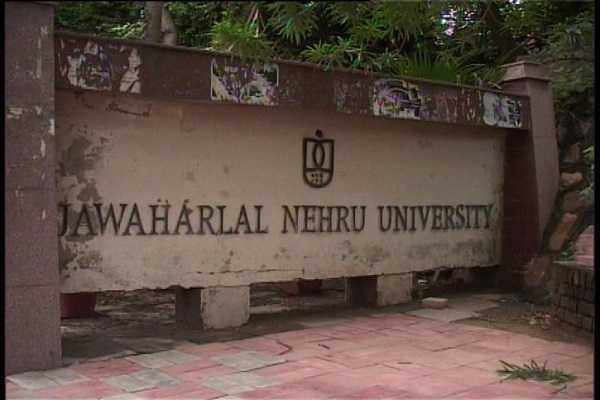
‘Research fellows from JNU and TISS to be sent to interiors’, Republic TV accesses another Urban Naxal letter

An explosive letter by alleged urban Naxals has been accessed by Republic TV which exposes a sinister link between the urban Naxals and Kashmiri separatists. As per the report, a letter was written by Comrade Sudha Bhardwaj who is a Chhattisgarh High Court Advocate and represents various organisations like Jagdalpur Legal Aid and Bastar Solidarity Network. The said letter was written by Bhardwaj to one Comrade Prakash which talks at length about a meeting that took place on 19th March, 2017 in Nagpur. The said meeting was also attended by Comrade Surendra Gadling and Comrade Shoma Sen, two of the five arrested in June this year over charges of organising the Elgaar Parishad held at Pune’s Shaniwarwada on 31 December 2017, which is believed to have instigated the Bhima-Koregaon violence a day later.

As per the Republic TV report, the letter names one Comrade Ankit and one Comrade Gautam Navlakha who are allegedly in touch with Kashmiri separatists. It says how ‘human rights violation’ by the ‘enemy’ in Kashmir should be broadcast on social media and through other media houses. The letter asks them to get in touch with one Comrade Prashant who could help with legal assistance for pellet gun case in the Supreme Court.

The letter further states how after the conviction of Delhi University professor Dr Saibaba with Maoist links who is convicted of waging a war against India, the urban cadre is little fearful. The letter says that ‘just like Kashmiri Separatists give special package to extremist organisations, their affiliates and stone pelters, we must devise a package for our interior and urban cadre so that they are committed to our organisation, continue working and are mentally prepared to face mishaps and legal challenges.’

Speaking of security forcing managing to choke the money supply, the letter mentions how students from JNU and TISS need to be sent to interiors for which immediate monetary aid was required. That after the arrest of Comrade Advocate Prashant, she (Sudha) had stopped receiving funds. Prashant Rahi, along with Saibaba and a JNU student Hem Mishra was convicted under the Unlawful Activities (Prevention) Act.

Earlier, a sensational letter recovered by the Pune Police from suspected Maoist sympathiser Rona Wilson, a JNU alumnus, revealed a Rajiv Gandhi type assassination plot for Prime Minister Modi.

On Swami Vivekananda’s death anniversary, here are 5 quotes which are extremely relevant today

0

In our hectic 21st century lives, we often take the wisdom of our ancestors for granted. Wisdom, that has stood the test of time. Today is the death anniversary of Swami Vivekananda, a day of despair but also a day for us to introspect. This day provides us with the opportunity to look back at Swamiji’s life and his teachings.

I sense that most of us don’t have the attention span to go through the pragmatic monk’s life, thus here are five quotes that prove Swamijis progressive mindset and relevance in our times.

“Arise, awake and do not stop until the goal is reached.”

This is one of the most common of Swamiji’s quotes. Swamiji always talked about the need for consistency and perseverance. Long before the ‘motivational videos’ on youtube or the overtly shallow ‘5 steps to become kings’ self-help books, the need to set a goal in order to achieve the desired disposition was talked about this man of greatness. It is worthy to keep in mind that the ‘reward system’ that we now know and talk about was discovered much later. Swami Vivekananda believed that only continuous and focused approach can be the means to achieve the desired and there are no shortcuts. A tip that can help us immensely in today’s world where every day may seem like a battle that we are losing.

“You have to grow from the inside out. None can teach you, none can make you spiritual. There is no other teacher but your own soul.”

The idea that the self is not divorced of spirituality is in itself a very powerful message. Swami Vivekananda always emphasized the need to realize that spirituality cannot be attained by external means. It must be an eternal process. He believed that all that is required for spiritual knowledge is embedded inside our mind we just need to unlock it by looking inward, and not waste our time on finding spirituality through external means. He believed no one can help anyone in matters of spiritual conquest it is he or she, who must take the initiative.

“In a day, when you don’t come across any problems – you can be sure that you are travelling in a wrong path.”   

Swami Vivekananda was a pragmatic person and this quote of his only reinforces that personality. In our daily lives, we tend to get bogged down by negativity and criticism of our fellow human beings. We suffer from anxiety and insecurities because we tend to weigh our own self-esteem through others assessment of us. Swamiji in this quote acknowledges that problems are merely part of life and they will always be there. It is the perception that matters, how one perceives such problems makes all the difference. If one views these problems as being stepping stones towards success then life can be much easier.

“The greatest sin is to think yourself weak”

We are greeted with many failures and some of us start to think that we just cannot take it anymore. It can be a toxic relationship, academic problems, problems in one’s marriage, etc. We tend to have little faith in ourselves and much lesser in our strengths. Swamiji believes that it is the greatest sin to consider yourself as weak as we can never estimate our true limits if we don’t push ourselves. It is only when we push ourselves we discover that we are much stronger than we anticipated.

“Neither seek nor avoid, take what comes.” 

If asked why so many of us feel down or disappointed, many would reply with- expectations. It is an exclusively human thing to have expectations from fellow human beings. Though, Swamiji advised that not to expect or avoid anything in life. He asked to take life as it presents itself to you. His words hold merit as we in our lives are always trying to outdo everyone else in order to seek happiness through economic means or avoiding that person who broke our hearts. But if we look at this from a grand scheme of things, nothing really matters. It would serve us right to pay heed to Swamiji’s words to avoid unnecessary emotional and physical toll that expectations bring.

Times of India calls brutal murder of a student by student wing of PFI ‘paying back in same coin’

3 days ago, members of Campus Front, the student wing of banned radical Islamist organization Popular Front of India stabbed and killed a 19-year-old student named Abhimanyu. According to reports, Abhimanyu was a member of SFI, the student’s wing of CPM. Another student named Arjun, also 19, was reportedly seriously injured in the attack.

The attack which originated from a dispute between the two student organizations soon over graffiti for the new academic year in Maharaja’s College, Ernakulam, soon took a very violent turn when reportedly a violent mob of over a dozen Campus Front workers attacked Abhimanyu and his friends. Abhimanyu was declared dead in hospital.

SFI and its parent organization CPM have called for bandhs in the state, several news outlets have come up with their ‘analysis’ of the brutal murder. One such article, published in the Times of India is worth attention. The article seems to have disregarded even basic decency in an attempt to divert the public’s attention.

The insensitive part is the article’s headline which reads as ‘Campus Front pays SFI back in the same coin’. The article’s title does not even try to represent the slightest sympathy or express the minimum level of decency in describing an incident where a 19-year-old boy was brutally stabbed inside a college campus by radical elements.

TOI article headline

Right in the beginning paragraph, the article makes its intentions clear. The article mentions, “SFI had used violence to gain an upper hand in the college campuses over the years but now a new kind of politics is emerging in campuses which has close links with religious fundamentalism.”

Reading the article makes one feel that Times of India is justifying what happened to Abhimanyu. While the article is not incorrect in saying that SFI has indulged in violent politics just like the PFI, when a boy is stabbed to death, one would expect basic decency in headlining from a media house like Times of India.

The article quotes a CPM leader as saying campus violence is taking place because the college managements have ‘imposed restrictions’ on campus politics.

It is notable here that PFI is a radical Islamist organization and has been involved in many instances of violence and murder in the past. It is also under investigation for carrying out radicalization activities in the state of Kerala. We had also reported how SFI had brutally attacked ABVP students while the police had simply looked on.

While both SFI and PFI do seem like two sides of the same coin, murder needs to be condemned unequivocally.

Aligarh Muslim University faces consequences if it doesn’t give reservation to Dalits or prove minority status 

The Aligarh Muslim University (AMU) might land in deep trouble to see its grants from the centre evaporate if it either fails to prove its minority status or doesn’t provide reservation to SC, ST and OBCs, Indian Express has reported.

As per the report, Ram Shankar Katheria – Chairperson of National Commission for Scheduled Castes (NCSC), AMU has a month to prove its minority status via legal documents. Katheria who is also a BJP MP, further stated that if they fail to do so, they would have to provide reservation for the backward castes, failing which he would urge the Modi government to stop grants for the university.

The report claims that Katheria met with the university’s pro-vice chancellor and a deputy registrar, during which he asked for the proof of AMU being a minority institution.

As detailed in a Times of India report, thanks to Article 15 (5), minority institutions are exempted from constitutional reservation. The university’s Pro-Vice Chancellor Tabassum Shahab has thus sought to avoid giving reservations by contending that the institution is a minority one via AMU Act, 1981.

There though might be a spanner in the works for the university as according to a Hindustan Times report, the Allahabad High Court had judged back in 2006 that the AMU was not a minority institution. This decision was then appealed by the UPA government.

As per AMU’s spokesperson Shafey Kidwai, the matter of university’s minority status is currently pending before the Supreme Court. The spokesperson also claimed that it doesn’t reserve seats for Muslims but mainly reserves 50 per cent of them for internal students.

Incidentally such a strong push by the NCSC comes after Uttar Pradesh Chief Minister Yogi Adityanath similarly demanded that seats be reserved for Dalits at minority-run institutions like the Aligarh Muslim University and the Jamia Milia Islamia. Yogi had argued that if institutions like the Banaras Hindu University (BHU) could provide reservations for Dalits, then so could the AMU and Jamia.

Kerala HC denies bail to 2 Christian Godmen of the Malankara Orthodox Church accused of rape

The Kerala High Court took a strong note of the rapes by the priests of the Christian church, decided not to grant any interim protection to the two Christian godmen who are booked for the sexual assault.


Father Abraham Varghese of the Niranom diocese had gone to the court after a case was registered by the Kerala police against four priests, including him, under non-bailable sections of the Indian Penal Code. The alleged rapists were of the view that the case is fabricated by the police.

Justice Raja Vijayaraghavan declined their appeal of not to face arrest till the next hearing. The court did not provide for any protection for the accused rapists and adjourned the court till Monday. Varghese, 42, and Job Mathew, 40, of the Malankara Syrian Orthodox Church, moved to the Kerala High court for anticipatory bail pleas, after the Crime Branch wing of Kerala Police slapped rape charges against four of the five Malankara Syrian Orthodox Church priests.

The Kerala high court directed the police to produce all the necessary documents to the court, including the complaint filed by the husband. The crime branch had registered an FIR and charged the Christian priests with rape charges after recording the woman’s statement.

The alleged rapists claim that case against them are purely politically motivated and due to the pressure exerted by the vested interests. They altogether rejected the allegations of any sexual harassment towards the woman

Interestingly, they argued that the entire allegation revealed that sexual intercourse, if any, was fully consensual.

The matter emerged in the past week when a married woman accused five priests belonging to the Malankara Orthodox Church of blackmail and sexual abuse. As per the victim’s husband, his wife was abused by the priests for a whopping 380 times. It seems that the sexual abuses in the churches have become a worrying trend in the society recently.

Shafique Ahmad, troll who abused EAM Sushma Swaraj on Twitter, arrested, claims police

Mau Police in Uttar Pradesh has confirmed on Twitter that one Shafique Ahmad who wrote an abusive tweet to Minister of External Affairs Sushma Swaraj has been arrested. On 28th May 2018, one Shafique Ahmad tweeted an extremely derogatory and abusive tweet to Swaraj.


Vigilant twitterati reached out to Mau Police and Uttar Pradesh Police to take action against the abuser. Mau Police swung into action and informed that the said person has been arrested under various sections of the IT Act.


This action by the police is encouraging as usually such abuses go unpunished because many times it does not violate the service terms of the social media platform, which makes it difficult for the law authorities to get to the bottom of things. This step by the police shall hopefully act as a deterrent to those who think they could say absolute rubbish and get away with it.

Recently, External Affairs Minister Sushma Swaraj faced a lot of abuse over the Lucknow passport office incident where an ‘interfaith’ couple had accused a passport officer of indulging in moral policing and harassment. Lucknow office, on getting a tweet from Sadia Anas alias Tanvi Seth on Twitter, swung into action, and without verification issued passport in less than 24 hours.

Eventually, the police found out that Sadia does not live at the address she has put up in her passport application form. Since this is not the first time Swaraj and her office have issued passports to people for trivial reasons while many Indians stranded abroad don’t get an audience with them, many on Twitter were critical of the enthusiasm of Lucknow office. Unfortunately, under the cloak of anonymity, some of these tweets ranged from abuses to threats. Irrespective of gender, no one should be subjected to any sort of abuse or threat.

However, Swaraj, who was not in India when the episode took place, on her return focused on the abuses instead of the lapse of judgement in her office. She painted even many of her supporters, who were only critical of her office, as ‘trolls’.

Congress-JDS alliance indulges the whims of their Minority Minister: Gives him the Fortuner as demanded

The Karnataka minority minister and Congress leader, B Z Zameer Ahmed Khan desirous of getting a Fortuner car got his demand met by the Karnataka government as reported by India Today. Wanting to avoid this kind of internal unrest, Kumaraswamy, the new CM was quick on meeting the minister’s demand just a day ahead of the budget that he would be presenting.


Considering VVIP treatment as their birthright, Karnataka Minister and Congress leader B Z Zameer Ahmed Khan last month demanded that an Innova car, which was allotted to him, is ‘low level’ and since has travelled in big cars since childhood, he should be given a Fortuner for official use. When questioned by India Today, he said that since he used to a particular standard of living and had various health issues forbidding him to travel in a ‘low level’ car, his demand was justified.

Commenting on Chief Minister H D Kumaraswamy’s decision to use his personal car for official use, Khan had said since Kumaraswamy is ‘popular’, people will easily recognize him in whichever car he uses. But since he is yet to reach that level, he will be ‘visible’ to people only if he is travelling in a government car. Hence he asked for a Fortuner.

However, when this news of him demanding a big car last month was doing the rounds, attracting a lot of criticisms for the same, he came out to blame the media for exaggerating his demand for a Toyota Fortuner SUV for official use.

“Media has made it a huge issue. I simply made a request for an SUV, and not for any particular brand. Am I asking for Lexus or BMW? I am used to travelling in an SUV. One has to tour the entire district. I am asking for a car under the government provision,” he told media here.

B Z Zameer Ahmed Khan had few days post this squabble raised another controversy by demanding to rename the Haj Bhavan.

A few days ago he came up with a suggestion that the Haj Bhavan, which accommodates Haj pilgrims, be renamed after Tipu Sultan. But after strong opposition from the BJP, the minister backtracked saying, ‘I did not say it must be renamed, it was only a request.’ When this raised altercations the minister backtracked by saying that he had received requests from various districts and since it was a public demand he merely gave them a voice.

Everything said and done, it is rather intriguing that in mere desperation to somehow make this alliance work, the Karnataka government in trying to keep its flock together is fulfilling any and every ludicrous demand coming their way.

4th of July and the 11th of September – Two days that bring both hope and despair

0

4th of July marks the death anniversary of India’s great monk, Swami Vivekananda. It is also the 126th anniversary of American Independence from colonial rule. In a remarkable poem dedicated to Liberty, celebrating the event, the Swami had given a glimpse of his prodigious talent, not only as a writer of immaculate prose but also of beautiful poetry.

September 11, 2018, will mark the 125th and the 17th anniversary of two events that shook the earth in diametrically opposite ways.

It was on this date in the year 1893 that a young Indian monk rose to deliver his address to an entranced audience at the first World’s Parliament of Religions in Chicago. Swami Vivekananda’s sublime opening words, addressing the audience as “sisters and brothers of America,” were remarkable in emphasising the common brotherhood of all the people who inhabit this world. Vivekananda thundered, “Sectarianism, bigotry, and its horrible descendant, fanaticism, have long possessed this beautiful earth. They have filled the earth with violence, drenched it often with human blood, destroyed civilisations, and sent whole nations to despair.” 

The response to his brief but powerfully delivered address was electrifying and it seemed as if the world would rise in unison to the call of the young monk that would “ring the death-knell of all fanaticism.”The orange-robed monk, devastatingly handsome to behold, and radiating the brilliance of the sun, was easily the most sought-after speaker at the Parliament of Religions. Before the Parliament concluded on 27th September, he had spoken several times on the great religions of the East emphasising their common theme of universality and tolerance.

Looking at the life of Vivekananda, born Narendra Nath Datta, one is struck by the fact that he did not come to Ramakrishna, his Guru until he was 20 years of age. The sudden death of his father and the economic troubles that followed drew him in despair to Dakshineswar, but his Guru would soon be gone, being struck down by throat cancer.

The disciple would suffer many more privations as the former admirers of Ramakrishna stopped supporting him and his fellow devotees. Vivekananda was 25 when he decided to become a wandering monk and during the next five years travelled the length and breadth of the Indian subcontinent, meeting people from all walks of life; discoursing with scholars; learning the fine points of different religions; developing a deep understanding of the social and cultural heritage of this ancient civilisation. Like the earlier Sakyamuni, he found suffering everywhere and resolved to work for and uplift the toiling masses.

In 1893, when he was 30 years old, he embarked on his first visit overseas, travelling via Japan, China and Canada to the United States where he would address the Parliament of Religions in Chicago. In the next four years, he travelled all over the US and Europe, meeting people and giving discourses on Advaita Vedanta, introducing his audiences to the great and vast philosophical treasures of India.

In the process, he developed quite an impressive entourage of followers and disciples, some of whom returned with him to India to work by his side. In 1897 he was back in Calcutta via Colombo, lecturing audiences en route. In the West, he would mainly talk about India’s great spiritual heritage, but in India, his concerns would be centred on social issues: caste and untouchability; elimination of poverty; universal modern education including a scientific temperament; and freedom from colonial rule.

On 1st May 1897, he founded the Ramakrishna Mission, an organization with a different agenda from that of the Ramakrishna Math that he had founded immediately after the death of his Guru in 1886. While the Math was essentially involved in the propagation of the message of Advaita Vedanta, the Mission would take up social work as its purpose. The volunteers of the Mission have rendered invaluable service during natural catastrophes like cyclones and floods, and during man-made disasters like famines and religious conflicts.

The Swami embarked on one more visit to the West in 1899, this time spending about six months in the US. Before returning to Calcutta in 1900, he stopped in France, Austria, Greece, Turkey and Egypt. Two years later, on 4th July 1902, he would be dead, not having completed 40 years on this earth.

The amount of work that this remarkable man packed into just 15 years is perhaps the reason that he died at such a young age. His peripatetic life, combined with the fire of his intellect would have taken a heavy toll of his physical self that eventually could not keep pace with the demands made on it. The institutions and the written body of work that he has left behind are the legacies of this brightest star in the Indian firmament.

But, within twenty years of his historic Chicago address, and hardly a decade after the untimely death of the Swami, the world was plunged into perhaps the most brutal conflict till then – the First World War – that claimed about 40 million casualties, and rendered even more destitute and homeless.

Barely twenty more years would pass and the world would witness an even bigger catastrophe in the Second World War that claimed an estimated 73 million casualties, demonstrating in the Nazi holocaust the depths of depravity that the human heart can descend to, and the even more devastating power of nuclear weapons that led to the annihilation of Hiroshima and Nagasaki. Stalin’s efforts to make “obsolete classes disappear” added another estimated 20 million to these numbers. The end of the Second World War would create new geographies, carving nations along religious and ethnic divides, bringing untold misery to vast numbers.

The cold war between the two superpowers would keep the world on the brink of a nuclear catastrophe, as each side vied with the other for maximum deterrence. The fall of the Berlin Wall and the end of the cold war has not diminished the threat. Conflicts have become endemic and new fires keep flaring in different parts of the globe. The earth is on a short fuse and its political leaders are prone to light it at the slightest provocation.

Exactly 108 years to the date of Swami Vivekananda’s address to the Chicago audience, the two towers of the World Trade Centre in New York would be reduced to molten rubble and ashes, resulting in about 3,000 deaths and more than 6,000 injured casualties. Far from ringing “the death knell of fanaticism” as hoped by the Swami, this reckless act by the Al Qaeda terrorists plunged the world into another long and bloody cycle of armed conflict that has resulted in the total destruction of Iraq, and Afghanistan, the two cradles of ancient civilisations.

The protracted civil war in Syria, and the wintering of the short-lived Arab spring, only continued further bloodshed and destruction. Seven years after the attack on New York, there is no remorse and the drums of self-righteousness are beating louder. Mutual suspicion and hatred for the others are pushing the world towards a cataclysm whose aftershocks will continue to reverberate for centuries to come.

India has forgotten Swami Vivekananda, and his memory is now confined to the various Maths and Ashrams that he founded, and some educational institutions run in his name. The 150th year of his birth anniversary in 2013 was marked by mere tokenism by the Manmohan Singh government and the society at large.

The government’s apathy was understandable for it had abandoned every tenet that was dear to the Swami, but the indifference of the common people is most disheartening. India and the world need the Swami’s message today perhaps more than what was required 125 years ago. The non-duality of Advaita that he believed in and spoke about has all but disappeared from the earth in a Sartrean nightmare in which “Hell is the other” and from where there is “No Exit.”

I am reminded of an anecdote from Vivekananda’s life. During his visit to Kashmir, distressed at the sight of destroyed temples and images of Hindu deities, he asked the Goddess in the Khir Bhawani temple how she had permitted the invaders to wreak such havoc. The Goddess appeared to him in a dream and said: “What does it matter if the invader destroys my temples and images? Tell me, do you protect me, or do I protect you?” 

The great apostle of non-dualistic Advaita was instantly cheered by this admonition and happily went his way. Today’s leaders, on the contrary, firmly believe that it is they who protect the gods.

July 4 and September 11 are two dates that bring both hope and despair to the mind. Liberty that was born on July 4 died on September 11, and the hope that was born on September 11 died on July 4. But the bringer of hope has been consigned to institutions while the forces of darkness are roaming unhindered, extinguishing the light of reason and plunging the earth into the deepest pit of despair.


Yeddyurappa locks horns with Kumaraswamy: ‘You’re seen as an illegitimate child born out of an unholy alliance’

As reported by Times of India, Karnataka Chief Minister, H D Kumaraswamy lock horns with B S Yeddyurappa in the legislative assembly on Tuesday, after the leader of the opposition accused the Chief Minister of being inconsistent in his stand on farm loan waivers and for not sticking to the promises he made during the formation of a coalition government.

Yeddyurappa, while addressing the motion of thanks to the governor’s address went into a tooth and nail fight with Kumaraswamy.

In a snappy comeback, Yeddyurappa lashed out saying, “You are seen as the illegitimate child born out of an unholy alliance. Questions are already being asked on how long the (saandharbika shishu) circumstantial baby will survive.”

Yeddyurappa took a dig at Kumaraswamy by reiterating some of his controversial statements where he called himself a “child of circumstance” and that he was not obligated to the people, but to the Congress party, Yeddyurappa said it is an “insult” to the people of the state. “He (CM) has called himself a child of circumstance. Anything that is born in an atmosphere of selfishness, hatred, jealousy will not have a natural lifetime. His comments show he is guilty because he is ruling without getting people’s mandate,” Yeddyurappa said.

The former chief minister also took a jibe at the CM, mocking him for his own comments, while digging into the past when Kumaraswamy in election rallies prior to the Karnataka elections had said, “I will rather die than go with Congress.” I will give in writing on a bond paper, we will not go with Congress.”

Yeddyurappa reminded the CM of the promises he made of clearing dues taken by farmers from private money lenders, during a visit to a temple in Dharamasthala. This led to a bitter squabble between the two politicians as Kumaraswamy rejected the charges and sought proof. It led to allegations and counter allegations on decisions made during the JD(S)-BJP coalition government of 2006.

However, intermittently the speaker K R Ramesh Kumar, kept intervening and requesting the two dignitaries to not to dig into the past.

Regardless of the warnings issued by the speaker of the house and Kumaraswamy, the former CM kept slamming the CM, by digging into the past. Accusing the JD(S)-Congress government of pushing Karnataka into deep debt, BS Yeddyurappa, demanded a white paper on the state’s finances before chief minister HD Kumaraswamy presented the budget on Thursday.

Yeddyurappa claimed the Chief Minister had promised to waive loans worth Rs 53,000 crore and he should explain how he will arrange funds when the state has already run up debts of Rs 2.4 lakh crore and PWD and irrigation bills worth Rs 10,000 crore are still pending. The former CM also demanded that the JD(S) draw up a plan to fulfil promises made by them in the election manifesto that included Rs 6,000 monthly pension to all senior citizens aged over 65 years and Rs 2,000 allowance to all pregnant women.

Claiming that internal politics and tiffs amongst the coalition have brought governance to a standstill. Yeddyurappa, mockingly called the present CM a puppet in the hands of the coalition, taunting as to who the real CM was, Kumaraswamy or Siddaramaiah: “While one remote control of the government is in Delhi (Congress high command), the other is in Padmanabhanagar (Deve Gowda’s residence in Bengaluru),” he added.

Shekhar Gupta’s rant on Modi’s Foreign Policy displays his repelling hatred

When Harsh Gupta offered to write a rebuttal to Shekhar Gupta in Shekhar Gupta’s own publication, it was obviously seen as an act of graciousness. Since it has been a while I have read anything from Shekhar Gupta’s stable (except for those odd tweets that keep popping up on the TL), I got curious as to what prompted Harsh Gupta to react. I got a chance to read both the original article and Harsh Gupta’s rebuttal. I was astounded by the unbelievably incoherent rant of Shekhar Gupta, and at the same time also felt that Harsh Gupta was way too nice in his critique.

Shekhar Gupta begins by saying this – “The picture today has no resemblance to what we saw until about a year earlier.”

According to him, what was the picture a year earlier? He goes on to explain: “Narendra Modi was then hopping from one capital to another, hugging heads of states. India was a rising power and Modi, its powerful, extroverted, energetic new leader, a star.”

So India was a rising power just about a year back? If you read ‘The Print’ in the last one year, you wouldn’t even know we were a rising power. Do you know why? Just do a “Foreign Policy” search on their website. 40 pages worth of results show up, dating back to a year. And you have to search for the proverbial needle in the haystack. Why didn’t Shekhar Gupta find it fit enough to carry articles on how we had become a rising power?

And then Shekhar Gupta throws in an example as if he was doing a small favour – “He (Modi) wowed the world with his decisive, and positive intervention on the Paris climate deal, for example”

Stunning, almost. The Indian Prime Minister has wowed the world with a “decisive and positive intervention”, and yet, leave an article on this, the tweet-on-any-topic Shekhar Gupta couldn’t even write a tweet about this huge achievement by our Prime Minister. What explains Shekhar Gupta’s excessive focus only on negative news, and passing references to positive news as if they are a rarity?

Now that he is done with the formalities of telling us that our Foreign policy was awesome just about 6 months back, he asks the question – “What threw the train off the rails?”

And the answer to the question (as also rightly pointed out by Harsh) is truly baffling. Fasten your seatbelts because you may fall off from your chair.

“Two external negatives were not the Modi government’s fault: The rise of Trump and a new Chinese assertion.”

Two negatives were not Modi’s fault, but our “foreign relations” are in tatters, according to Gupta. Until recently, it has become a fashion to blame Modi for anyone who even tweets anything abusive. Now, the fad has extended to even blaming him for faults of other world leaders. Soon, maybe Modi will have to answer why Trump tweets the way he does!

We now have the “two external negatives” out of our way. We have already ready 30% of the article and we are yet to be told why exactly our foreign policy is in “tatters”. Realising this, Shekhar Gupta gives us the first peek into his reasoning:

“The Modi government’s greatest blunder is to exploit sensitive external relations in its domestic politics.”

As is his wont, he doesn’t give us immediate examples but tells us that “In building strategic relations, the best leaders bat like Sunil Gavaskar, not Virender Sehwag”. Phew, get to the point Shekhar, will you?

And he gets to the point, in style. Shekhar Gupta is upset that Prime Minister Narendra Modi has “exploited” a “sensitive action” like the “one set of local, tactical and limited “surgical” raids” while campaigning during elections in various states. And tells us that Indira Gandhi never campaigned on such issues. That, my friends, is his bone of contention. Indira Gandhi never did something like this, and therefore how dare Narendra Modi do it?

To call out a daring first of its kind surgical strikes as a “set of local, tactical and limited” exposes the “tatters” in which Shekhar Gupta and his ilk are! We now move on to his next argument – “Similar misjudgements were made on trade.”

Shekhar Gupta’s basic argument is that since it is well known Trump doesn’t treat anyone well, it is Modi’s fault for being nice to him. Perhaps Shekhar Gupta wanted Modi to get all muscular like a Bollywood hero, mouth some dialogues and come back home? Do you have any doubt in your mind that Shekhar Gupta would have been on the forefront in criticizing Modi had he done anything like this?

Here’s where Harsh Gupta’s rebuttal punches deep holes into Shekhar’s piece. I strongly recommend that you read the piece to understand how a factual rebuttal should look like. Harsh clinically demolishes Shekhar’s arguments on trade, Doklam and Trump. I have nothing further to add to Harsh’s arguments.

However, it beats me why these commentators continuously want to tell us that Doklam was a failure while there is a widespread acknowledgement of how we didn’t even blink in times of extreme stress too. Why do they want to see India fail more than they want it to succeed? Am I making a grossly exaggerated statement? Let me present to you another example then.

“Declining military might is compounded by the economic slowdown. You can fool your people by changing how you calculate your GDP.”

So when the GDP growth was lower than in previous quarters, we had the best methods of calculating GDP. When it sees a remarkable turnaround, using the exact same formula, the people are now being fooled?

We would be doing injustice to Shekhar Gupta if we don’t mention his unsavoury remarks on our Defence Minister, Ms Nirmala Seetharaman. “Four years have effectively seen four defence ministers, the current one being an ineffectual photo-op caricature.”

What explains this language and hatred? What explains talking about military pensions in an article about Foreign policy? What explains bringing in RSS in an article on foreign policy? What explains bringing in GDP calculations in an article on Foreign policy? Is it because he didn’t have enough to criticize and therefore resorted to such high flowery language and a low number of facts?

Harsh Gupta did an awesome job demolishing Shekhar’s rant, but the amount of hatred built inside of Shekhar and his ilk is extremely repelling now.