Home Blog Page 7125

Watch: Yogi Adityanath refuses to wear the Muslim skullcap at Sant Kabir’s Mazaar

Uttar Pradesh Chief Minister Yogi Adityanath, who was on an inspection visit to Sant Kabir’s Mazaar ahead of Prime Minister Modi’s visit in Sant Kabir Nagar district of UP, politely declined to wear the Muslim skullcap when the warden tried to put it on.

Earlier in 2011, Prime Minister Narendra Modi, who was then the Chief Minister of Gujarat, had also politely declined to wear the Muslim skullcap, which had triggered nationwide controversy.

Prime Minister Modi, who is scheduled to visit the Mazaar on Sant Kabir’s 500th death anniversary today, will pay floral tributes and visit the Sant Kabir Cave.

Watch: Government releases video of surgical strike

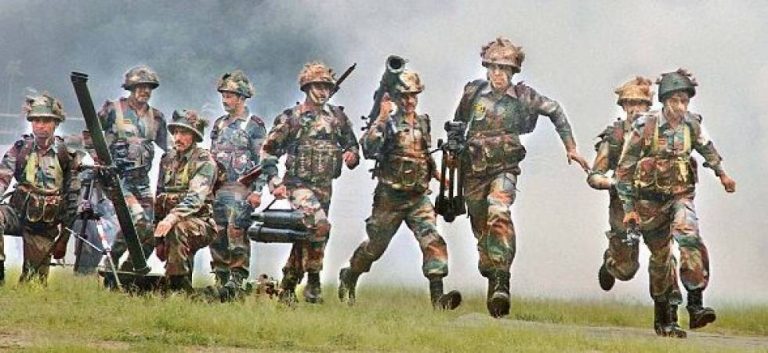
Six hundred and sixty days after the Indian Army carried out the surgical strike on terror-launchpads in Pakistan, the exclusive visual footage of the same was released by the Government and picked up by media houses like the Republic TV and Times Now.

The Indian Army had carried out this gallant act on Pakistan on September 29, 2016. A total of four videos, authenticated by Lt Gen DS Hooda who led the operations, have been accessed which show how the Indian army blew away the Pakistan terrorists and destroyed the terror-launchpads.

The video begins with the map of the target area inside the Pakistan territory. The footage has been recorded with head-mounted cameras and UAVs. The UAV aerial shot gives the overhead view of the terror camp 1 with its coordinates. It shows a time stamp of ‘0615 hours’ and date stamp of ’27-09-16′ while establishing the position of the Pakistani terror camp.

The first picture in the video showed a Pakistani terrorist near the bunker, the head-mounted camera establishing the location of the enemy. Another shot was taken by the sophisticated cameras showing the terrorists along with the Pakistani Army. The video also shows the target area before and after the decimation, with back to backfiring on Pakistan terror bunkers, with rocket launchers and anti-bunker missiles launched by our special forces conducting the surgical strike.

The video shows the second target being stricken as captured by the UAVs at 6.13 am and within a span of 20 seconds, the third attack on the terror bunkers was recorded by the cameras. A total of eight strikes were captured on camera.

In a colored photo of Target three, four terrorists hanging out in the terror safe house in Pakistan occupied Kashmir (PoK) just a few kilometers away from the LoC border was seen. The heat mounted cameras showed a sudden bombardment that shook the ground, spattering the safe house into shambles. In the target four videos, the Pakistani terrorists are seen hovering around the LOC within the Pakistan territory.

The video footage accessed by these media houses were recorded on head-mounted cameras and by UAVs on September 29, 2016, and contains a time-stamp that leaves no doubt that the Surgical Strike, which was denied by Pakistan and defamed by the opposition, irrefutably and unquestionably took place. One if left to think now that will the opposition, which included people like Sanjay Nirupam, who had called the operation  ‘fake’ and had demanded proof, would come out in the open and seek an apology for disregarding the efforts of the Indian Army. As a citizen of the country, this is the basic, he and all the others who had raised a finger at the authenticity of this act of dauntlessness, owes to them.

In a highly scientific ratings, akin to their own ‘survey’, Thomson Reuters Foundation one of the worse rated on Facebook

The ratings of Thomson Reuters Foundation on social networking site Facebook has dipped to 1.6 (when we last checked) after perception experts felt Thomson Reuters Foundation is nothing short of yellow journalism.

Facebook ratings of Thomson Reuters Foundation

The Thomson Reuters Foundation, the philanthropic arm of Thomson Reuters conducted a survey to find out which of the 19 (world’s biggest megacities as ranked by the United Nations) cities are safe for women – and which need to do more to ensure women are not at risk of sexual violence and harassment and harmful cultural practices and have access to healthcare, finance, and education. In the said survey, India fared as the most dangerous country for women. The Ministry of Women and Child Development (WCD) refuted the poll in a statement and even raised questions regarding the qualifications of the ‘experts’ who were interviewed for the said survey.

The social media experts, who believed Thomson Reuters’ survey was flawed, took to Facebook to voice our their views. Interestingly, they did not keep their identities hidden, unlike the experts Reuters consulted.

Expert reviewing Thomson Reuters Foundation

However, some of the experts reviewing the foundation were even armed with facts and figures, unlike the ‘experts’ referred to by Reuters.

Thomson Reuters getting taste of its own medicine.

While there is no denying about crimes against women taking place in India, where almost every woman has experienced harassment of some form or other, the survey seems way too subjective to be a fair representation of India’s safety as compared to other countries.


Pakistan promises to curb terror funding: Will the country, well known for double-crossing for once live up to its words?

As reported by DNA, Pakistan has submitted a comprehensive action plan to the Financial Action Task Force (FATF) to stifle the funding of militants groups, including Mumbai attack mastermind Hafiz Saeed-led JuD and its affiliates, to avoid being blacklisted by it.

Pakistan fears that being added to a list of countries deemed non-compliant with anti-money laundering and terrorist financing regulations by the FATF, its strained economy would suffer a further blow. FATF, an inter-governmental body established in 1989 to deal with issues like money laundering, terrorist financing and other related threats to the integrity of the international financial system has already placed Pakistan on it’s ‘Grey List’.

Quoting sources in the Ministry of Finance, the report said that Pakistan plans to conceptualize choking the financing of terrorist groups like Da’esh (ISIS), Al Qaeda, Jamaat-ud Dawa and its affiliates Falah-e-Insaniyat Foundation (FIF) and Lashkar-e-Taiba (LeT), Jaish-e-Mohammad (JeM), the Haqqani Network and persons affiliated with the Taliban, all responsible for mass destruction around the world.

The report revealed that if the FAFT endorses the 26-point Action Plan, it will formally place Pakistan on the grey list, otherwise if rejected Pakistan would fall under its ‘Blacklist’. Pakistan will have to deliver on the first goal by January next year and complete all the 26 actions by September 2019.

Unfortunately, Pakistan has a history of retracting from its commitments. The world, and India, in particular, has witnessed this fraudulence umpteen number of times. Pakistan has violated the ceasefire along the International Border (IB) and the Line of Control (LoC) in Jammu and Kashmir more than 720 times this year, the highest in past seven years. The horrifying figure represents a 230 per cent rise compared to 2016 – it is also the highest count in over a decade.

In 2016, there were 449 incidents of ceasefire violations in which 13 civilians and 13 security personnel were killed and 83 civilians and 99 security personnel were injured. Similarly, In 2014, there were 583 incidents of ceasefire violation in which 14 civilians and three security personnel were killed and 101 civilians and 28 security personnel were injured. In 2015, the number of ceasefire violations was 405, 347 in 2013, 114 in 2012, 62 in 2011 and 70 in 2010.

As years progress the unrest is constantly escalating, owing to the unscrupulousness Pakistan exhibits. Last month Pakistani troops violated the ceasefire along the Line of Control (LoC) in Uri sector in Jammu and Kashmir by opening fire. Officials from the Indian Army have time and again specified that Pakistan often violates the ceasefire norms with an intention to push in more terrorists to Jammu and Kashmir.

Incessant ceasefire violations by Pakistan have completely derailed the lives of the locals dwelling in the border area, leaving India with no option but to retaliate.

As it’s rightly said, ‘habits die hard’, and Pakistan nurturing the predisposition of abstaining from the commitments it makes, we are left with no option but to believe that this time too, Pakistan will definitely live up to our expectations, and fail to deliver what it has been lately promising, that is ‘curb the funding of terrorist groups’.

Eleven individuals from Kerala go missing in Dubai, triggering fears of them joining the Islamic State

Eleven individuals belonging to two families hailing form north Kerala have gone missing in Dubai, triggering fears of them joining the Islamic State, Hindustan Times has reported.

As per the report, one complaint in this regard was filed by a Kasaragod resident named Abdul Hamid who claimed that his daughter Nazeera, her husband Mohamad Sabad, his second wife Rahanath and their children have been missing from 15 June.

The report claims that Sabad used to run a mobile repair and perfume shop in Dubai. As per the complaint, his family had gone to visit him a month back and no contact has been established with them since 15 June.

The report even quoted a relative as claiming that Sabad had seemed a “little radicalised” as he kept talking about the holy war. The relative speculated that he and his family might have relocated to Yemen.

As per an Indian Express report, another youth named Ansar, his wife Zeenath and their three kids are also missing, taking the total incognito individuals to 11. The report also quoted intelligence sources as claiming that those missing seem to have reached Yemen to join ultra-conservative Salafi hardliners.

A New Indian Express report hinted the same by claiming that the police fears they might have joined the Islamic State.

Incidentally Kerala has been plagued by the problem of radicalised individuals joining the Islamic State, with reports claiming that at least 21 of them have gone down this route since 2016. Most of them hailed from Kasaragod, the district where there two families also belong.

We had also reported in December of last year that six youths from Kannur, who allegedly worked with the radical group Popular Front of India (PFI), had joined ISIS. Such decisions though have come at a cost to them as, it was reported in January that one such youth had been killed fighting for the terrorist group.

Thomson Reuters survey concluding India most dangerous for women is inaccurate, WCD ministry denounces the poll

The Thomson Reuters Foundation, the philanthropic arm of Thomson Reuters conducted a survey to find out which of the 19 (world’s biggest megacities as ranked by the United Nations) cities are safe for women – and which need to do more to ensure women are not at risk of sexual violence and harassment and harmful cultural practices and have access to healthcare, finance, and education.

Union Minister of Women and Child Development (WCD), Maneka Gandhi, also denounced the poll. Calling the poll results as ‘subjective opinions’, Gandhi said that India has improved tremendously in areas of sexual violence, non-sexual violence, human trafficking and other parameters in recent times and hence the poll results are ‘a surprise and clearly inaccurate’.

In a statement released by the ministry, talks about how there has been a significant improvement in terms of financial inclusions through various schemes like Sukanya Samrudhhi Yojana and Jan Dhan Yojana. The statement reads, ‘India has registered a significant reduction of 22% in Maternal Mortality Ratio since 2013. There has been a drastic reduction in child marriage over the years, with reports of marriage in the age group of 0-9 years now being nil. Further, the percentage of women age 15-19 years who were already mothers or pregnant has dropped from 16% in 2005-06 to 7.9% in 2015-16.’

The statement cites NCRB data where 38,947 cases of rape have been registered in the year 2016. In the year 2014 and 2015, 36,735 and 34,651 cases were reported, an increase in reporting is due to favourable environment for women to access police authorities.

Stating that rate of rape in India stands at 0.03 per 1000 population against 1.2 rapes per 1000 in the US, the statement reads that ‘The cases of acid attack are only incidental in the country and as mentioned earlier, practices of stoning, female genital mutilation etc. are not seen here. India can thus not possibly be the worst in the world in terms of violence.’

With regards to the survey conducted by Reuters, twenty experts from various fields were contacted from each city to conduct the particular survey and these experts on behalf of all the women in the different cities concluded that “India Most Dangerous For Women”. Interestingly, information on their designation, credentials, country of expertise or qualifications is not made available to the public, which makes one question the reliability.

As mentioned by the foundation, a figure as small as 380 experts was surveyed to determine the fate of these 19 megacities of the world. The world with a total population crossing 7.6 billion, with India population equivalent to 17.74% of that of the total world population, one wonders how is the sample size a fair representative for India.

The poll was a repeat of a survey in 2011 when experts saw Afghanistan, Democratic Republic of Congo, Pakistan, India, and Somalia as the most dangerous countries for women.

This particular survey was not received too well by Indians at large who took to Twitter to challenge the base of this basic survey.


People on Twitter raised doubts as to who these experts were to conclude that India is the most dangerous place for women. They also mentioned that this was a deliberate attempt to denigrate Indians.


Basically, what Thomson Reuters Foundation seems to have conducted is a ‘perception poll’ and not a statistical poll. As per statistics, Nearly 2.5 million cases of sexual violence were reported globally in 2014, according to the United Nations Office on Drugs and Crime, with many countries reporting more than 100 instances of rape or sexual assault per 100,000 people. Of the 77 countries that reported to the United Nations, Sweden, the U.K., Botswana and, Australia had the highest reported rates of sexual violence. The U.S. has especially high rates of rape, specifically. As per statistics, the number of rape incidents per 100,000 citizens in different countries, India is in the 94th position.

It is rather surprising that India, according to this survey, has been placed above Islamic countries many of which are dealing with issues related to rampant genital mutilation, polygamy, sexual slavery and subjugation. A 2016 survey by the U.N. Children’s Fund showed that 87 percent of women and girls aged 15-49 in Egypt have undergone genital mutilation. Despite that, Egypt is ‘perceived’ as safer as compared to India.

While there is no denying about crimes against women taking place in India, where almost every woman has experienced harassment of some form or other, the survey seems way too subjective to be a fair representation of India’s safety as compared to other countries.

Nigeria overtakes India in extreme poverty as 44 Indians pull themselves out of poverty every minute: Study

According to a study by Brookings Institute based on a projection by the World Poverty Clock, India is no longer home to the most number of people living under extreme poverty. That dubious distinction has been grabbed by Nigeria and if current trends hold, India could drop to number 3 with 44 Indians pulling themselves out of poverty every minute.

The study, published in the ‘Future Development’ blog of Brookings, says, “At the end of May 2018, our trajectories suggest that Nigeria had about 87 million people in extreme poverty, compared with India’s 73 million. What is more, extreme poverty in Nigeria is growing by six people every minute, while poverty in India continues to fall.”

According to N.R. Bhanumurthy, a professor at the National Institute of Public Finance and Policy, the findings of the study supports the growth story of the country augmented by the economic reforms of 1991 implemented by PV Narsimha Rao. “Basically it supports the growth story and the 1991 economic reforms that have helped reduce poverty,” he told TOI. “Going ahead, the challenge is to meet the Sustainable Development Goals, which will help realise the study’s findings that India would be able to eliminate extreme poverty by 2030,” he added. Bhanumurthy was also optimistic that India will be able to completely eradicate poverty by 2030.

The prospects for African countries does not look very bright. The researchers note that 90% of the world’s poor could be living on the continent by 2030. Currently, they account for two-thirds of the world’s extreme poor. They were also worried that the target of ending extreme poverty by 2030 could not be achieved if current trends persist. “The task of ending extreme poverty by 2030 is becoming inexorably harder because we are running out of time. We should celebrate our achievements, but increasingly sound the alarm that not enough is being done, especially in Africa,” they said.

The study defined extreme poverty as those living on less than $1.9 a day. It also estimated that there will be only 3% of Indians living in poverty by 2030 and extreme poverty could be eliminated altogether by then.

Indian shooter gets divorce from husband who tortured her for not accepting Islam after marriage

Indian shooter from Jharkhand Tara Shahdeo was granted divorce from her husband by a Ranchi court on Tuesday on the grounds of cruelty, Times of India has reported.

What makes this case stand out is the fact that the national level shooter married a person who was pretending to be a Hindu, and who post their marriage started torturing her for not accepting Islam.

As reported by us last year, Tara had married a professional shooter believed to be named Ranjeet Kumar Kohli on 7 July 2014 in Ranchi. Both were married as per Hindu rituals but Tara says that just a day after the wedding, she came to know that Ranjeet was not a Hindu.

His real name as reported was Raqibul Hasan Khan. Barely a month after her marriage to Raqibul, Tara left the house of her in-laws and accused her husband and her mother-in-law of mentally and physically torturing her. She also alleged that the duo used to pressurise her to accept Islam if she wanted her married life to be normal.

Things were taken to such an extent that a group of maulvis were also called a couple of days after their wedding where Tara was asked to convert. She alleges that she was beaten up badly when she refused. Besides this it has been alleged that he in-laws threatened to kill both her and her family if she exposed the torture.

As reported by TOI, Tara filed a divorce petition in January 2017 which was followed by a CBI chargesheet in May.

Now about a year and a half later Tara has been granted a divorce by family court’s principal judge B K Gautam, who observed that she was subject to cruelty and that nobody could be forced to change their religion.

As per an Indian Express report, the husband Raqibul is currently in jail, his mother Kaushal Rani is out on bail. Another accused named Mushtaq Ahmed who had helped Raqibul change his identity, is also in jail.

Following the divorce Tara announced that she will continue fighting to get justice in the matter registered by the CBI.

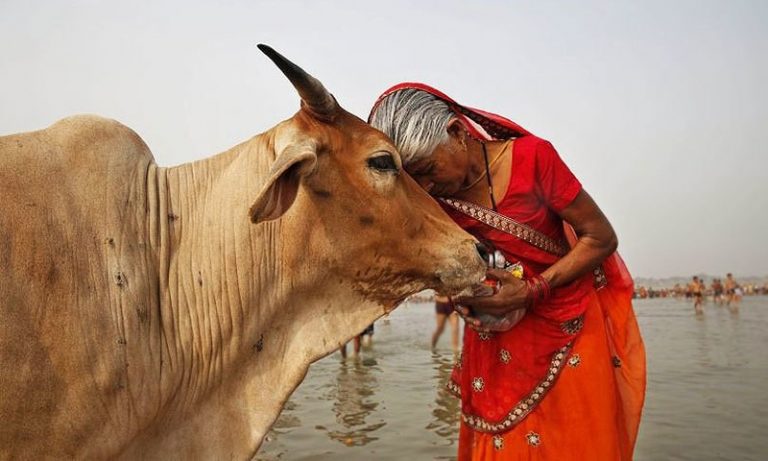
Cattle smuggling menace becoming a threat to life and livelihood of small farmers across India

A fresh incident of cattle smuggling has been reported in Barada, Haryana. According to reports, cattle thieves stole 3 buffaloes belonging to one Krishna Chouhan in Ugala village. The thieves reportedly entered the cattle shed late on Monday night and took away 3 buffaloes worth Rs 2 lakh. When the owner Krishna Chouhan tried to stop them, they even threatened him with guns.

In another incident, on Sunday night a group of cattle smugglers fired upon a police vehicle chasing them near Ambala and managed to escape. It is reportedly the second such incident in the area. In the first incident, smugglers had attacked with stones and injured one ASI Om Prakash. In both the incidents, the smuggling vehicle had no number plates.

Incidents of rampant cattle smuggling and violence by cattle thieves have been constantly reported, but often fail to get an adequate response. In another similar incident in UP just a day ago, cattle thieves had reportedly stolen buffaloes of a local home guard in Meerganj area. They took away the buffalo in a pickup vehicle after threatening the owner with guns.

A day prior to the Meerganj incident, in the Sumera village near Aligarh, a mob of Muslim men had reportedly targeted, beaten up and fired upon a person named Dhananjay Pandit. Pandit had stopped a truck full of chickens and had asked for the papers for chicken trading and slaughter license, which the owners did not have. A mob of Muslim men from the same village had then gathered up and started threatening and beating up Pandit. They even fired upon Pandit. The police had to pacify the mob fearing the incident might lead up to communal violence.

Cattle smuggling has been an absolute menace in small towns and villages across the country. In a recent report, it was stated that the state of West Bengal is losing almost Rs 100 crores a month due to failure to stop illegal cattle trafficking. Even police officials of certain northern districts were accused of providing a safe passage to smugglers to ferry cattle through the Bangladesh border. Last year in September, the smugglers had fired and killed a BSF jawan at the India-Bangladesh border.

In Odisha last year, a group of tourists were brutally attacked and several women were molested when they tried to stop a band of cattle thieves from beating and torturing the animals.

These cattle smugglers are always armed and bold enough to take risks. As evident by the above incidents, they do not hesitate to attack and even kill anyone who tries to resist. In mainstream media, these incidences are often under-reported, save instances when the farmers and victims retaliate and attack the smugglers. Because then it gets a biased narrative of ‘cow vigilantism’. Media and even authorities often fail to realise that cattle are expensive and the livelihoods of farming families are dependent upon them.

Not only these smugglers are creating a massive loss of revenue, their rising attacks are putting the livelihoods and even lives of the farmers at risk. There is an urgent need to launch a widespread crackdown on cattle smugglers ensuring strict and quick punishment for the perpetrators.

Amended Maternity Bill could create 1.2 crore job loss for women in FY 2018-19

According to a TeamLease report shared exclusively with the TOI, women’s hiring in the workforce is set to dip sharply in the workforce due to the Maternity Bill (Amendment) Act that came into force last year. The report has estimated a net job loss of 11-18 lakh for women for the fiscal year 2018-19 which is over and above the average annual attrition rate of women employees in the workforce. The study was conducted among 300 employers in 10 sectors: aviation, BPO/ITeS, real estate, education, e-commerce, BFSI, IT, manufacturing, retail and tourism.

TeamLease Services co-founder and executive VP Rituparna Chakraborty said, “Historical data shows that the Indian workforce has been losing women workers at the rate of 28 lakh per year for seven years from 2004-05 to 2011-12. The net job loss (11-18 lakh for 10 sectors for FY19) over and above this number is attributable solely to the Amended Maternity Act.” She further added that if the estimated job loss attributable to the Amended Maternity Act is applied across all sectors, then the estimated job loss could go up to 1.2 crores.

The amended Act is seen to affect micro and small enterprises the most who run on low-cost margins. The Act entitles a women employee to 26 weeks of paid leave and mandates that every firm that hires over 10 employees should provide these benefits to its female employees, the cost implications of which are too much of a burden for micro and small businesses. Saundarya Rajesh, founder of Avtar Group, said, “The six-month maternity leave has had very wide and positive acceptance among large organisations. Even medium-sized organisations (Rs 50-100 crore turnover) have accepted this and have budgeted for provision in their payouts for 10-12% of their employee base to be on maternity leave at any given point of time. Unfortunately, this is not the case with micro and small enterprises.” She added, “Businesses that have a turnover of up to Rs 10-15 crore find it very difficult to afford six-month paid maternity leave, along with identifying (and paying for) temporary replacements. I suspect that if women’s workforce participation rates are tracked state-wise and town-wise, a pre- and post-six-month maternity leave scenario will show a distinct dip after 2017. In non-metros, there is still evidence of male domination and patriarchy and this, combined with the six-month maternity leave, has dealt a double whammy to women’s employment.”

Earlier, the Economic Times had also reported that startups and SMEs were reluctant to hire women employees after the Amended Maternity Leave Act came into force. Many had made the argument that it was not affordable for such small enterprises due to lack of resources to provide 6 months of paid leave to one of its employees. We had in an earlier report highlighted the shortcomings of the Bill including the fact where wore paid parental leave is linked to widening gender pay gap and firms hiring more temporary employees to reduce employee benefits costs.