Home Blog Page 7128

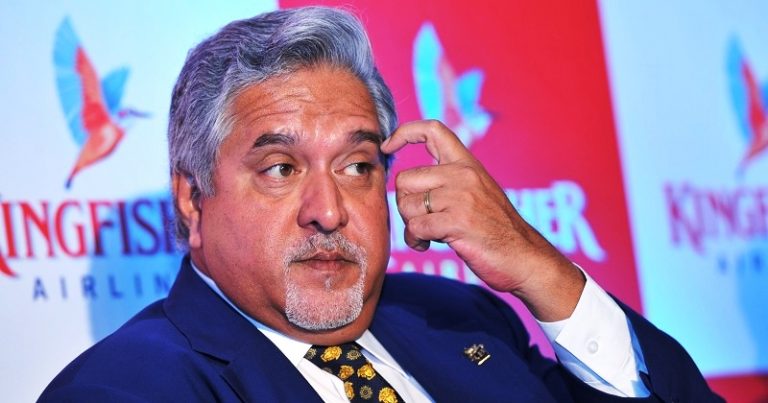
Vijay Mallya makes his letter written to PM Modi public, saying he has become ‘poster boy’ of loan default

Liquor baron Vijay Mallya today released his letter written to Prime Minister Narendra Modi and said he was “making every effort” to settle his dues to banks but he had been made the “Poster Boy” of bank default and a lightning rod for public anger.

Mallya said he had written letters to both the PM and the finance minister on April 15, 2016, to explain his side of the story in connection with the loan default case and to “put things in right perspective.” No response was received from either of them,” he said in a statement.

He further said, “I have been accused by politicians and the media alike of having stolen and run away with Rs 9,000 crore that was loaned to Kingfisher Airlines (KFA). Some of the lending banks have also labelled me a wilful defaulter“.

Mallya, who is currently fighting against extradition to India from the UK, also said the Central Bureau of Investigation (CBI) and Enforcement Directorate (ED) have filed charge sheets against him “with various untenable and blatantly false allegations acting at the behest of the Government and lending Banks”.

The 62-year-old is wanted in India for defaulting on loans worth almost Rs. 9,000 crores and also in a money-laundering case. He took a flight out of India just when a group of banks launched efforts to recover around the default amount from him. He was arrested in the UK last year on an extradition warrant.

Earlier last year the liquor baron had offered a negotiated one-time settlement of the dues. In a series of tweets last year, Mallya offered to negotiate with banks for one-time settlement of dues and sought the Supreme Court’s intervention.

Banks had previously turned down Mallya’s offer of Rs 6,868 crore in April 2016 to settle the dues that are in excess of Rs 9,000 crore, including interest. The loans were advanced to his now-defunct Kingfisher Airlines between 2006-2012.

Emergency apologists must read the letter written by George Fernandes’ mother to the President

0

As India observes the 43rd anniversary of Emergency imposed by Indira Gandhi, we have many interpretations of the dark period for India’s democracy and freedom. The period has been compared to that under Hitler’s regime by Arun Jaitley. On the other hand, some Gandhi family loyalists have strived hard to play down the nature of the emergency regime and whitewash the whole affair with wordplay and mental gymnastics.


The Shah Commission had indicted the acts of Indira Gandhi and her regime. However official records are written in a language that common people often fail to understand. Memoirs and letters that were written during this period are perhaps a better guide to the impact of the emergency on the people of India.

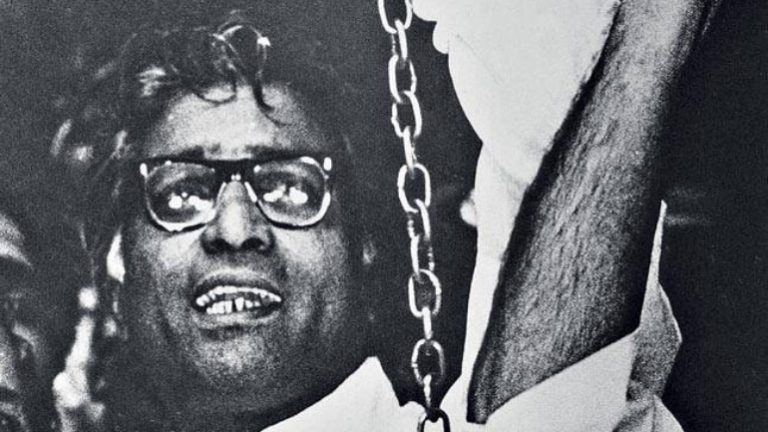
A touching letter by a mother of an imprisoned son that reveals the nature of dictatorship that had been established for about 20 months has been forgotten in post-emergency India. The letter written by Mrs Alice Fernandes, a trade union leader and mother of George Fernandes to the President (dated May 24, 1976) reveals the brutal police state that was established under Mrs Indira Gandhi.

This letter was included in the book ‘Indira Gandhi: Tryst With Power’ by Nayantara Sahgal [1] (daughter of Vijaylakshmi Pandit and Indira Gandhi’s cousin). Mrs Sahgal attributes the letter to the underground protest movement in her notes. The letter, as quoted in the book is reproduced below (emphasis added):

Sir : 

It is with a heavy sorrow stricken heart that I am writing this, further to my letter dated May 12, 1976 (copy enclosed for ready reference), with the hope of obtaining justice at your hands…

On Saturday, May 1 at about 9 p.m., my 44 year old second son, Lawrence Fernandes, was taken away from our residence by the police, on the pretext that they wanted to interrogate him about the Habeas Corpus petition filed in February by my third son, Micheal Fernandes (an officer in Indian Telephone Industries and a trade union leader) who has been detained without trial under MISA [2] in prison since 22 December 1975. After keeping up this pretext for about an hour, the police began questioning him about the whereabouts of my eldest son, George Fernandes, and then subjected him in a most inhuman, reckless and ruthless manner to third-degree methods of physical torture, going on with this torture into small hours of the morning until 3 a.m.

Besides beating him with clubs (until five of them were broken to pieces) they used a Banyan root to clout him with and booted him and slapped him. They also used vulgar language in abusing him and our family and threatened him that if he did not reveal the whereabouts of George Fernandes he would be thrown on the railway tracks and killed under a moving train, leaving no evidence of their hands in his death. They were actually preparing to do so at 3 a.m. when his physical condition deteriorated to an almost irreparable state.

After thus reducing him to a condition of physical, mental and nervous wreck, he was kept in solitary confinement upto May 20, during which period he was subject to further torture and interrogation. He was kept without food for 3 days and was not given proper food on other days and not allowed cigarettes. During all these 20 days he was allowed to bath only on 3 days and made to remain in same clothes in which he was taken away on treatment. He was taken to different doctors and hospitals, each time under a different and false name impersonating him as a police officer, for treatment to keep him alive. On one night a doctor was brought to the police station itself for treating him. 

On May 9, my son was taken by police car 300 kilometres away to Davangere, and on May 10 produced before a magistrate there as though arrested in Davangere on the previous day. He was tortured and kept in a closed lockup there until May 11, and then brought back to Bangalore … He was refused lawyers help and not allowed to contact home or anybody else either by letter or by phone. He was not allowed newspapers and kept in solitary confinement. He was threatened with dire consequences if he reported to the magistrate or anybody else about his torture. Finally, on May 20 he was produced in the Second Metropolitan Magistrate’s chambers during lunch time and they removed to the Bangalore Central Prison where he has been maintained in a cell meant for condemned criminals, or for convicts who are mentally unsound, or under punishment for violation of jail rules. 

In addition to oral complaints, I had lodged written complaints, sent telegrams and letters to all concerned from the highest o the lowest level of authority, but without any result or even acknowledgement, or the whereabouts of my son, Lawrence was informed to us. On May 20, upon being informed by a lawyer, I went to the prison, and although I waited along with the lawyer from 6:45 to 7:30 pm, I was not allowed to meet my son. On 21st, after waiting for over 3 hours form 10:45, I was taken at about 2 p.m. to the cell to see him.

I found him looking dead. He was unable to move without the help of two persons helping him about, and then too with great pain and limping. His left side is without use, as if crippled, and both his left leg and hand are still swollen. He is in a mentally and physically wrecked condition and is unable to talk freely without faltering. He is terribly nervous and mortally afraid of the police, of anyone in khakhi uniform, of the approaching sound of anyone walking with shoes on, or of any person, all of whom he fears to be interrogators and tormentors… As if to deal a further blow, yet another page was added to this sordid, inhuman act by serving on him in the prison in the afternoon of May 22 an order of detention dated May 21, signed by the commissioner of police, detaining him under MISA. 

Whatever I have stated here is on the basis of what the family could gather from Lawrence during the visits to him in the cell.. I urge upon you in the name of all that is good in the civilised conduct of human beings and their governments, and in the name of justice, to order a thorough judicial enquiry into this barbaric torture, and take suitable action against concerned authorities. I also urge that he should be transferred to a good hospital, and specialist medical and psychiatric treatment be given to him, and daily visits to him be the family allowed so that he may regain his mental and physical health and become a human being …

The torture meted out to Lawrence Fernandes is corroborated by another Mr Madhu Dandavate in his letter to Indira Gandhi. Lawrence’s story has also found a mention in LK Advani’s memoirs ‘My Country My Life’. If this sort of brutality can be whitewashed and Indira Gandhi be absolved of all crimes under her regime, then I believe that we have to change the dictionary meaning of ‘civilisation’, ‘dictatorship’ and ‘democracy’ at the earliest to suit the narrative of Gandhi family loyalists. For others who believe in democracy and freedom, the emergency was a dark chapter in the history of India which deserves to be condemned without any hesitation.

Notes : 

[1] Indira Gandhi: Tryst With Power by Nayantara Sahgal Pages 254-57

[2] MISA: Maintainance Internal of Security Act: A draconian emergency law enacted by Indira Gandhi government that authorised indefinite preventive detention of individuals, search and seizure of property without warrants, and wiretapping.

Sadiya Anas alias Tanvi Seth of ‘interfaith’ couple gave wrong details in passport application, claim reports

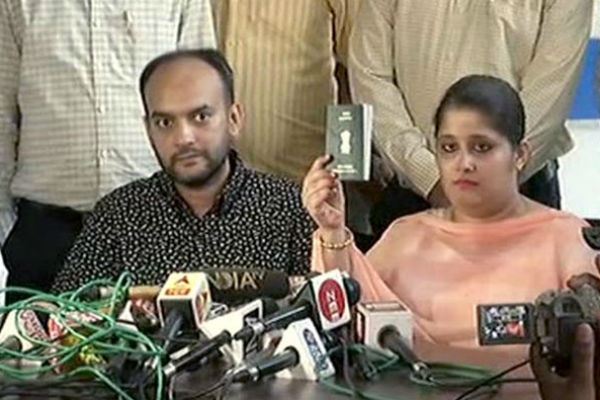
Sadiya Anas alias Tanvi Seth, the woman from the ‘interfaith’ couple from Lucknow, whose tweet to the external affairs minister Sushma Swaraj created a nation-wide furore, reportedly gave incorrect details in her application. News reports claim that a police team that went to verify her address provided in the application found no proof of her residing there.

According to the reports, a police team that went to the Kesarbag, Lucknow address provided by Sadiya to verify her residential details could find no proof of her living there. In a reportedly 2 hours long search the police team neither found any evidence of her residing nor her in-laws, who live on the given address, could come up with any witness or evidence of her being a resident at that address.

According to reports, Sadiya had claimed that though she is employed in Noida, she lives in Lucknow and works from home. But Kesarbag police has reportedly found in its investigation that she does not live in the Lucknow address and her cell phone call data shows her to be present in Noida up until 14th June. Neighbours to the house have reportedly informed that Sadiya lives in Noida with her husband and daughter and had come to Lucknow after 14th June only to get her passport issued. She had reportedly applied for the passport on June 19th.

Sadiya Anas alias Tanvi Seth had an argument over Lucknow RPO employee Vikas Mishra over the discrepancies in her name. In her nikahnama with husband Anas Siddiqui, Tanvi’s name was reportedly mentioned as Sadiya Anas but she had applied for her passport in the name of Tanvi Seth.

Reports claim that after the police verification report, Sadiya alias Tanvi’s passport, which was promptly issued to her the next day after the media uproar, may now be rejected. Reports claim it will even be under the lawful purview of the Lucknow RPO to initiate proceedings against Sadiya alias Tanvi, on the grounds of providing false details.

It has also been reported that the said RPO showed unreasonable hurry to provide Sadiya with her passport after she alleged religious discrimination. Reports claim that she was given her passport in person from the same office while under normal circumstance the passport is sent via speed post. The RPO office also allegedly sent her documents for verification one day after they issued the passport. The regulations demand that passport is given only after the documents have been verified.

Sadiya Anas alias Tanvi Seth had alleged that she was misbehaved by employee Vikas Mishra and was spoken rudely over religious aspects of her name change. The veracity of her allegations then came under the scanner as Vikas Mishra claimed that he had not misbehaved with her and was merely performing his duty. In another unexpected development, one of the ‘eyewitnesses’ of the incident has claimed that he was kidnapped by unknown persons.

Saifuddin Soz now has Sardar Patel on his target, and the Congress is silent

0

Controversial Congress leader Saifuddin Soz launched his book in the national capital on Monday. Two things were of interest to average Indians: (a) Would Congress be seen in public with the leader who echoes secessionists’ voices; (b) Would Congress respect the popular sentiment and punish its key man in the Kashmir Valley.

Soz in the past one week has brought the focus on Congress and its’ exchanges with the secessionist forces. Officially, Congress dubbed Soz’s statements as stray remarks and “cheap gimmick”. The party also talked about the state unit taking action against him.

However, even as Congress threatened action, Soz continued speaking the voice of secessionists to the media, stating that Kashmiris would prefer freedom. This was incongruous and appeared a classic smokescreen: to run with the hare and hunt with the hounds.

Hence the interest in the book launch of Soz and the related two questions, uppermost in mind. There was no live coverage of the event but TV news and newspapers this morning were all airbrushed versions: Manmohan-skips; Chidambaram-stays-away-as-panelist etc. There was no media questioning on what senior Congress leader Jairam Ramesh was doing in the event. Is he not part of Congress? And isn’t his presence a soft message to Soz that he remains one of the boys?

So has Congress really distanced itself from Soz? Or would it distance itself from Jairam Ramesh?

Now look at what Congress has promised as action against Soz: It has said that it’s the state unit which will take an action. Really? Since when state units have mattered to hideously dynastic Congress? Since when state units could take decisions independent of central command? And if the state unit absolves Soz of any guilt, maybe a week, a month or a year from now, shouldn’t it be seen as a ruling of the Congress leadership itself?

Soz’ brazenness shows the support he is getting from his own ranks. At the book launch, he made another shocker: That Sardar Patel wanted to exchange Kashmir for Hyderabad with Pakistan. Nobody has asked Congress if it believes in this claim.  And if it doesn’t, would it move to take action against Soz?

There must be a lot in Soz’s persona for Congress to play this game of red herring. And it’s involvement in the Kashmir politics.

The media, mostly TV channels have also merrily stated that Arun Shourie termed the famous “surgical strike” as “farzical strike” in a bid to attack the Modi government. What they haven’t reported and which is highlighted in a Hindi report is that journalists questioned him, pointing out that the claims of “surgical strike” was made by the army itself. So by terming it “farzical strike,” isn’t Shourie insulting our own armed forces?

In response, the news report states, “शौरी ने पत्रकारों को भी गधा बता दिया और फिर गुस्से में निकल गए.(Shourie called journalists as asses and walked out in anger).”

If the above report is true, it throws up very disturbing questions. One, that Shourie sidetracks facts; two, his lack of tolerance and respect for fellows of own profession; and three, the “deep state” within India which advocates Kashmir’s independence and toes the lie of terrorists, ISI and Pakistan.

Above all, independent voices in this country must question these forces and our very own media for their commitment to India’s integrity and sovereignty.

NSUI president accused of seeking sexual favours for political posts

The Congress party on Monday said that it will probe the allegations of sexual harassment against Fairoz Khan, the president of its student wing NSUI. A woman member of National Student’s Union of India (NSUI), the student’s body of the Congress, from Chhattisgarh has alleged that NSUI national president Fairoz Khan has been abetting female members of the organization to make sexual relationship with him in lieu of political posts. Fairoz Khan has, however, rebuffed the charges against him as being ‘politically motivated’ and ‘baseless’.

The Congress’ decision to carry on a probe came in as a letter, purportedly written by the woman, with details of several WhatsApp conversations, allegedly between Khan and two others, had reached the media on Sunday evening.

NSUI joint secretary Ruchi Gupta told DNA that the party is taking suo motu cognizance of the charges. “Given the seriousness of the charge, we have set up a committee comprising of All India Mahila Congress president Sushmita Dev, Lok Sabha MP Deepender Hooda, and Ragini Nayak to investigate the complaint. The committee is already in touch with the complainant,” said Gupta.


The complainant in her letter also mentioned that “The National President has not only mentally tortured me to compromise but he has also mentally tortured my younger sister to come to his room. He has also asked my friend to meet him at his private residence at night. There are many other young female activists who also faced the same but they have refrained from coming out publicly so that no other girl is molested or mentally tortured.” This allegedly happened when Fairoz Khan was in Bangalore campaigning, ahead of the Karnataka elections.

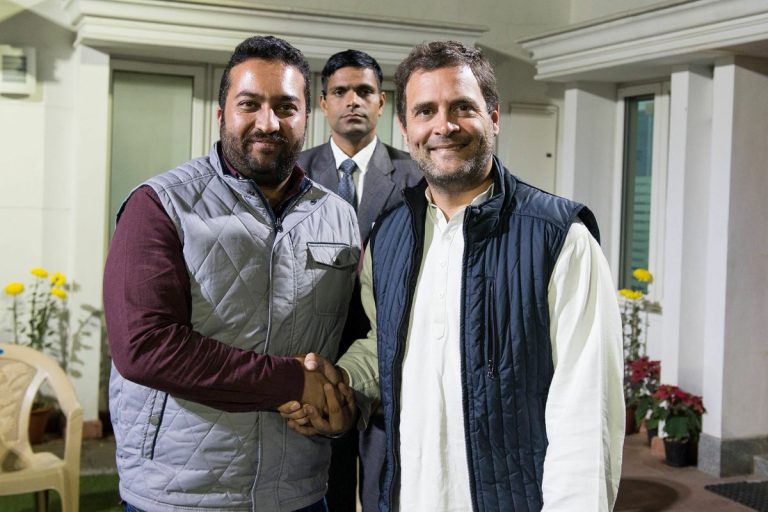
Recently, pictures (which took Twitter by the storm) of the accused Fairoz Khan posing with the heavyweights of the Congress party, the self-proclaimed ‘shehzaada’, the party president Rahul Gandhi and the former party president Sonia Gandhi surfaced questioning the intimacy shared by them.


Twitterati lashed out shaming the party president, Rahul Gandhi who constantly sings the song of women empowerment but shamefully associates with people accused of sexual harassment.

Caging the mind: Congress, Freedom of expression and the mindset of Emergency

0

We live in the world of rhetoric. Noise clouds our intellect. We believe those who scream the loudest. We are told lies so often that we take them for the truth. Rahul Gandhi, who has had an uninterrupted run of electoral debacles, has mastered this art of lying with confidence, lying repeatedly, until those lies are taken as truth. This is largely based on their presumption that public memory is short. Rahul Gandhi and the party he represents stands for the worst phase in the democratic history of India. Mr Gandhi and his associates keep on shouting from the top of their lungs about how the constitution is under-threat, how we are passing through near-democracy.

The Media during Emergency, LK Advani, one of the staunchest opponent of Emergency, had said in an interview, ‘crawled when asked to bend’. Unfortunately, a large part of the media has not yet learned to walk straight, since apart from a minor aberration, Congress continued to rule over India, even after Emergency. While Rahul Gandhi, now out of power, danced about with placards proclaiming the right to free speech, largely standing in the defence of those who speak of breaking India; he maintained a stoic silence on the role his party played in the darkest era of Indian democracy.

The media and a large part of the intelligentsia, still not walking straight, enamored and charmed with the suave appearances that the first family of India, since the time of Jawaharlal Nehru, the first Prime Minister India, continued inventing stories which added to the aura of the Brown Sahibs of Anand Bhawan and kill stories which went against their carefully cultivated image. The episodes of downright tyrannical behaviour were swept under the carpet to create a Nehru, who was the guardian of Indian democracy, an Indira who loved the poor and a Rajiv Gandhi who was the most modern of the leaders we ever had.

India’s first Prime Minister, Pt. Jawaharlal Nehru, coming from a rich, privileged background was much-loved by the intellectuals who themselves mostly drew from the social elites and who believed Nehru to be their representative. Indian History and now much-maligned Hinduism had an inherent tolerance towards varying thoughts and varying ideologies.

While the Rigvedic Rishis went about looking for a Universal truth, Charvak came in who denounced the very principles of Gods and after-life and was still accepted and revered as a Rishi. The Sanatan Hindu though took into its fold from orthodox and ritualistic Tri-vedics to the near Atheist Sankhya Darshan to the extreme atheist, Charvak. No one was beheaded, no one was excommunicated.

Nehru called himself an accidental Hindu, neither took pride in the historic tolerance of Indian mind nor credited it for the social intolerance weaved in the fabric of the Indian society. An absolute freedom of expression in a world inhabited by those who cannot even take a minor humour on the matters of religion is impossible.

From Sage Charvak and Sage Kapil, Indian had walked a long distance under thousands of years of Islamic rule, by the time British came in with their 11th century Magna Carta and its subsequent revisions under the Monarchy. A violent, intolerant world had descended on India when on the 5th of September, 1927, Lala Lajpat Rai (derisively termed as Hindutva-leader by modern day left-liberals) rose to defend Criminal Law Amending bill (which would later become  Section 153A), on the grounds of the communal environment perpetrated by centuries of intolerance on a free-flowing Indian society. The bill, created in the aftermath of the publication of a book called Rangeela Rasul, made it an offence to insult a religion or attempt to outrage the religious feelings of any class of Indian people. Lalaji was particularly unambiguous and scathing in his criticism of those whose write mischievous literature merely to stoke communal tensions.

This was way before the modern liberal days when fake news on Semen balloons or an imaginatively placed beef at the scene of the crime is taken as a proof of intellectual freedom. Lala Lajpat Rai said quoting Rangeela Rasool and Unniswin Sadi ka Maharishi, “I consider that all persons who indulge in this kind of propaganda, are nothing but enemies to the country. “Even then he stopped short of proposing wanton censorship by the state as he said, “No progress is possible unless legitimate criticism is freely allowed and fully protected.” Having said this, having supported the amendment to the law, he recommended the name of Pandit Madan Mohan Malviya to be a part of the select committee which eventually framed the law.

Post-Independence India:

The British left, they handed over the power to the political party most powerful at the time and Indian constitution took shape. The changes and restrictions brought in the space of freedom of speech would make a very interesting reading and would prompt Congress President Rahul Gandhi to take another of those much lampooned sudden vacations to undisclosed locations.

The first amendment to the Indian constitution came about with the first couple of years of the constitution coming into effect. Barely six Month into being a constitutional democracy under the Prince Charming of modern Liberals came to the case of Magazine called Cross Roads, run by communist Romesh Thappar, which was critical of Nehru’s policy. The then Congress Government in Madras banned the circulation of the journal under the Madras Maintenance of Public Safety Act, in all likelihood at the behest of Pandit Nehru, who never took criticism kindly, much unlike the modern day journalist wishing death by swine flu on the current PM who they fondly call fascist. Romesh Thappar approached the Supreme Court. The case was heard by a six-judge bench, which overturned the ban, stating-  The act (Article 19(2) of the constitution) is not intended for petty disorders.

This was followed by another case Brij Bhushan Vs State of Delhi where the Congress government in Delhi attempt to suppress the publication and circulation of Organizer under the East Punjab Public Safety Act, 1949, which again was overturned on the 2nd of March, 1950.

We can see how quickly after the constitution of India came into being, the Congress Government started on its censorship journey, snubbing any voice which could impact the demi-God status of Nehru in the Indian polity negatively. It can be argued that the government worked only on national interest. However, the argument can be turned both ways, since the fact remains that the liberty of people of any society largely depends on the nobility and broadmindedness of its leaders.

These magazines which Nehru government attempted to ban criticized his policy, never mocked or ridiculed him individually at a personal level as is the bane of journalists nowadays, poking nose even into the marital status of the prime minister. But Nehru, accustomed to the hero-worship he was accorded with, could tolerate no such dissent. The last straw for Nehru was the vehement opposition of partition by Hindu Mahasabha, right at the time he was trying to show some tangible success in abating the violence of partition with the Nehru-Liyaqat pact. Dr Mukherjee was of the opinion that this would formalize the partition which he was of the opinion, should be annulled.

Nehru, in spite of all the whitewash done by later day fanboy historians and fangirl journalists, remained feudal and aristocratic in his politics and outlook. His conduct and statements remain a testimony to it. For instance, a report in The Times dated 28th May 1951, mentions that Nehru said regarding the Press, “Part of Indian Press is dirty and indulges in vulgarity, indecency and falsehood” and that “it ought to be taught manners.”

Unforgiving to criticism, Nehru got poet Mazrooh Sultanpuri arrested for good two years in jail. It is surprising that in spite of all this he continued to get the favour of Indian intellectuals, mostly on account of his sophisticated elite outlook. While he could get individual intellectuals like Balraj Sahni and Mazrooh Sultanpuri arrested, organizations would fight back.

After two defeats in the courts, and admission of Sardar Patel that the constitution in its current structure then. did not allow restricting opposing views, as Nehru desired.  Nehru wanted to cement the partition, and Dr Mukherjee wanted it to be rolled back. Dr Mukherjee wanted the two positions to be taken to the people and allow the people to decide. Nehru wanted his view to prevail, with a threat that Dr SP Mukherjee’s view endangered India’s relation with foreign countries, namely Pakistan and thence the amendment.

Dr Shyama Prasad Mukherjee was outnumbered, but valiant in his fierce opposition to the attempt of the good-looking God of democracy to throttle the right to free speech. Dr Mukherjee contested Nehru and said that while the parliament was vehemently Congress, millions outside the parliament, ordinary people would support him. Nehru called his contention scandalous. Dr Mukherjee retorted by calling Nehru’s intolerance scandalous. Always a feudal Landlord, Nehru said, “We will not only give the press freedom, we will make them understand freedom.” I wonder what modern-day crusaders of liberty and tolerance would say to that freedom thrown at them like a morsel from some rich landlord.  Dr Mukherjee who went down fighting for the Freedom of Expression lost the battle 228 to 20.

The second challenge to the freedom and liberty came about by the inheritor of power from the Nehru family, Mrs Indira Gandhi, as Emergency. The victory over Pakistan in 1971, put Indira on the pedestal. When economy floundered, opposition increased and Mrs Gandhi felt threatened about her position, she promptly imposed Emergency in the name of national security on 25th of June, 1975.

In keeping with the Nehru’s belief in India to be their family fiefdom, the powers passed into the hands of her eldest son, not even a cabinet member, Sanjay Gandhi. The entire opposition was put in jail. Opposition leaders who were out, were either in exile or underground. Young men were picked up by the police without any charge and incarcerated. The provision of Habeas Corpus was suspended. This essentially meant that the young men picked up by the state could not be searched for under the directives of courts.

Numerous cases were filed in various courts across the country, and they, in turn, directed the state to inform the whereabouts of the missing individuals to the family members. To contain this, Mrs Gandhi got Supreme Court to take all these cases under its jurisdiction. A convenient bench was constituted which agreed to the Government view that under Emergency the fundamental right to life guaranteed under the constitution remains suspended.

Justice Hans Raj Khanna was the lone judge who dissented in the five-member bench which heard the case. The four judges sided with the government, one being Justice MH Beg, who made the imprisonment without charges under draconian laws like MISA sound like a family vacation when he observed that “We understand that the care and concern bestowed by the state authorities upon the welfare of detenues who are well housed, well fed and well treated, is almost maternal.” 

One can only imagine how heartless it would have appeared to the families of the detainees held by the state under emergency. How difficult must the circumstances have been for the lone, dissenting judge is evident from the editorial written in NYT which says, ” If India ever found its way back to the freedom and democracy that were proud hallmarks of its first Eighteen years as an independent nation, someone will surely erect a monument to Justice HR Khanna of the Supreme Court…the submission of an independent judiciary is virtually the last step in the destruction of a democratic society, and the Indian Supreme Court decision appears close to utter surrender.” 

The favour was, however, promptly returned by Mrs Gandhi when Justice HR Khanna’s name came up for the CJI of India in 1977 and Indira Gandhi promptly sidelined him in favour of Mr Beg of the grotesque remark mentioned above. Sidelining seniority in judicial appointment was not new for Mrs Gandhi. In 1969, she had earlier picked Mr AN Ray as the CJI sidelining three senior judges, so much for the respect and independence of the Judiciary. Before we rush in to join voice with those sloganeering on “Judiciary in Danger” at the behest of Congress, we must pause, close our eyes and reconstruct the past in our minds.

Mrs Gandhi was followed by the young and dynamic leader in her son, Mr Rajiv Gandhi, who apart from his other achievements, not including bringing a foreign-born person to the topmost decision-making echelon of Indian polity by virtue of a surname, is also credited with trying to bring in an amendment to the Postal Bill.

At that time, before internet and Mobile phone, postal letters formed the majority of communication. Rajiv Gandhi brought in Indian Post Office Amendment Bill (1986). This bill offered sweeping censuring rights to the government, allowing it to read and interrupt the letters between any two private individuals. As luck would have it, Rajiv with his limited understanding of the system, presumed the then President Gyani Jail Singh to be mere rubber-stamp and rubbed him in a wrong way. The president refused to sign the bill and returned it exercising pocket-veto. We only have an annoyed president to thank for saving us from the state scrutinizing all those love-letters kids of 80s and 90s wrote to their beloved. The bill was eventually withdrawn by NDA Government under Vajpayee, yes by those Hindutva-fascists in 2002.

After the sad demise of Rajiv Gandhi, Sonia Gandhi locked Dalit Congress President Sitaram Kesri, whose son rode a rickety bicycle in Patna as per some reports and took charge of Congress, and went on to become extra-constitutional head of Government supported by Communist think-tank which also included Arvind Kejriwal.

By the time, Mrs Sonia Gandhi took charge, Media was already under control, still struggling to regain the posture since Emergency; with an extra-constitutional official think-tank, supported by other unofficial think-tanks, intellectuals were aligned well with the party; old modes of communication had faded away, rendering the dismissed Postal Amendment act useless. Information Technology was offering a new way for the citizens to communicate.

One can trust the good old party to revisit its past and invent new ways to censor thoughts, secure in the knowledge that with obedient media and short public memory, it will still be hailed as a defender of democracy. Even if it is a lie, repeated often, it will begin resembling the truth. So, up came the draconian Section 66A. Always excellent on rhetoric, Congress pretended that this was a step needed for women’s security making it difficult to be opposed in the parliament without appearing anti-woman. The bill was passed without any debate under the din about 26/11, a month after the worst terrorist attacks on the shores of India, killing more than 200 Indians.

Such was the rush of Congress to pass the bill the censure our communication in the new age media. It is significant to note as we come to the end of this short history of Congress in the space of liberal thoughts that while the Democratic Congress under Sonia Gandhi brought in this act in the name of women security, resulting in the arrest of two girls from Maharashtra under the act, the scrapping of the act in 2015 was welcomed by the government under the ‘fascist’ Narendra Modi.  To gain political points, even P Chidambaram welcomed the scrapping of the act, claiming it was poorly drafted (by his own government), while his son Karthi Chidambaram had used the same law for getting a Puducherry businessman Ravi Srinivasan for tweeting on his corruption cases.

The next time Rahul Gandhi comes talking about Freedom of speech, do try to educate him about his history because media will not.


“Empty rhetoric” will not change the reality of Jammu & Kashmir being an integral part of India – India’s reply in UNGA debate

India has slammed Pakistan at the UNGA (United Nations General Assembly) General Debate and said that no amount of “empty rhetoric” will change the reality that Jammu & Kashmir is an integral part of India. This happened after Pakistan’s envoy made a reference to the Kashmir at the debate.


Maleeha Lodhi, the Pakistani Ambassador to the UN made a remark during the General Assembly’s debate on ‘The Responsibility to Protect and the Prevention of Genocide, War Crimes, Ethnic Cleansing and Crimes against Humanity’ that the people of Kashmir are victims of “egregious crimes” such as killings and mass-blinding.

India used the right-to-reply to counter Pakistan’s rhetoric and to put it in its place in the General Body of the U.N.

Sandip Kumar Bayyapu, the first secretary in India’s Permanent Mission to the UN stated that while the general body is having a serious debate for the first time in a decade on an issue of equal importance to every member state. A single delegation has yet again misused the platform to make an unwarranted reference to the Indian state of Jammu & Kashmir.

Bayyapu said that cynical attempts by Pakistan to raise Kashmir in the past have failed to find any takers in the UN body. He said –


“I would like to place on record and reiterate that the state of Jammu and Kashmir is an integral and inalienable part of India. No amount of empty rhetoric from Pakistan will change this reality,”

Lodhi in her remarks earlier alleged that the international community is ‘selective’ in its approach when it comes to indignation at some transgressions while they willfully ignore others, this according to her, has quickly turned any norm set by the international community into pretence.

Don’t touch Nidhi’s Air Conditioner : Cut down on your Diwali crackers instead

Ms Nidhi Razdan is angry. The Executive Editor of NDTV has just had it with India’s big bad government shoving its decisions down her throat.

Untitled

The government is considering making it mandatory for manufacturers to make 24 C the default setting on all their air conditioners. A default setting, you know, like a mobile phone. Or as someone on Twitter pointed out, like taps are kept turned off by default. The nanny state isn’t stopping you from changing the settings on your AC, any more than it is stopping you from turning on the tap in your house.

And why is the government doing this? Because Air Conditioners freaking wreaks havoc on the environment. Air Conditioners use refrigerants … their manufacturing requires HFCs (Hydro Fluoro Carbons). These are among the worst greenhouse gases, with the ability to warm the planet at thousands of times the pace of carbon dioxide. In fact, they are so bad for the environment that representatives from nearly 200 countries met especially in Vienna to come up with a global accord to put a lid on these things.

Yes, yes … we know Nidhi Razdan gets it. Air Conditioners are terrible for the environment and you got to keep the ice caps from melting, the polar bears from disappearing and the sea level from rising and swallowing up the planet. She is the executive editor of NDTV. Wouldn’t she know?

But you see, an air conditioner is something that Nidhi probably uses. She is likely part of the small fraction of Indians who can afford them. Isn’t there a better way to save the planet? Something that does not inconvenience the aristocracy?

Today the aristocrats are being made to press an extra button or two on their air conditioners. Only God knows what bigger sacrifices they will be asked to make tomorrow. This must be the beginning of fascism!

Surely there is a better way. A way to save the environment on the backs of hundreds of millions of ordinary Indians instead of executive editors at NDTV.

Found it!

Untitled.png

Caught red-handed! These terrorists who were gathering ammunition to destroy the air that everyone (including aristocratic TV anchors) have to breathe in. Just look at their faces. See the pure evil.

Throw these people in jail. Don’t you dare touch Nidhi’s air conditioner.

Remember the 3 infants, aged between 6 and 14 months, who approached the Supreme Court against Diwali crackers in 2015? Unconfirmed sources are telling me that the children might approach the court again, this time demanding “Azaadi” for Executive Editors of news channels to use their air conditioners as much as possible. And you must necessarily fall for emotional blackmail when people file petitions in the name of children.

So, please support Executive Editors of English news channels who need to have their AC working at full blast. If not, you are not just evil, you also hate children. So shame on you!

India and Israel to finalise deal for 4500 Spike missiles worth USD 500 million, say reports

India and Israel are all set to finalise a government-to-government deal for purchase of 4500 Spike Anti Tank Guided Missiles worth 500 million USD. According to a report in Hindustan Times, the deal is set to be sealed ahead of Israeli defence secretary Udi Adam’s visit to Delhi on July 2nd.

As per the report, officials from both the countries are waiting for final approval from the Indian government. The Spike ATGM deal between India and Israel has been on the table for months. The initial proposal was to procure 8000 ATGMs from Israel’s Rafael Advanced Systems for the Army. From the 8000 missiles, according to the initial proposal, 3000 ATGMs were to be manufactured in India under the ‘Make in India’ initiative. However, the proposal could not be negotiated to finalisation and on November 2017, India’s defence ministry had declared that it had decided to scrap the deal.

Indian defence ministry then reportedly asked India’s premier defence research organisation DRDO to produce Anti Tank Guided Missiles. According to some reports, India considered going ahead with the Israeli deal because DRDO was expected to take a minimum of 3 years to produce 3rd generation ATGMs.

Indian government reportedly aims to arm all of its 382 infantry battalions 44 mechanised infantry units with the 3rd gen ATGMs. The deal was one of the key agendas of Israeli PM’s meeting with PM Narendra Modi during his visit in January 2018. After Netanyahu returned from India, he had declared that the deal is back on the table. The Indian government had reportedly insisted on the deal being on a government-to-government basis.


However, under the fresh deal, India will directly purchase 4500 missiles and a percentage of the missiles will be manufactured in Hyderabad.

The Spike ATGM deal is considered to be one of the most important deals for Rafael Defence Systems and Israel. Following DRDO’s testing of its own indigenously developed NAG- 190 ATGMs in desert conditions this year, speculations were rife in Israeli media over the possibility of India scrapping the deal and going ahead with its own ATGMs. However, the fact that DRDO’s missiles were expected to take some years to be operational and Spikes were ready to be used considering Indian army’s immediate need, the deal went ahead. It is notable here that Rafael’s CEO Yoav Har-Even was also a part of the delegation that came with PM Netanyahu to India.

India is the lead purchaser of Israel’s weapons. The bilateral trade between the two countries had reached approximately 4.5 billion USD in 2016. According to estimates, India alone accounts for 41% of Israel’s defence exports.

Not leaving on a jet plane: After China, Mamata’s trip to Chicago gets cancelled

Foreign tours might just not be working for West Bengal’s Chief Minister Mamata Banerjee at the moment, after her trip to Chicago has been cancelled, just days after the one to China was cancelled, reports The Indian Express.

The visit to Chicago was planned for August to attend a program organised by the Vivekananda Vedanta Society of Chicago on 26th of that month, to mark the 125th anniversary of Swami Vivekananda’s legendary speech at the Parliament of World’s Religions. The Ramakrishna Mission had invited Mamata to be the Chief Guest at this event.

The event, though, has since then been cancelled, with the death of a Ramkrishna Mission’s monk being given as one of the reasons. The report quotes a letter written by Vivekananda Vedanta society’s president – Swami Ishatmananda on 11 June where he cited the sudden demise of Swami Abhiramananda – the assistant general secretary and trustee of Ramkrishna mission and “unforeseen difficulties” as the reason for the program’s cancellation.

A New Indian Express report though claims that there may be more to the matter than meets the eye. The report claims that a Hindu organisation comprising of NRI’s in Chicago was unhappy with the invitation extended to Mamata, and had threatened to protest against her at the airport.

The report also claims that one of the reasons for the event’s cancellation would have been to not divert attention from PM Modi’s visit to Chicago happening during the same time frame. This claim though might be disputed by many, considering the amicable chemistry Modi and Mamata had displayed during the former’s recent visit to Vishwa Bharati.

For Mamata though, the Chicago event’s cancellation might mean a loss of another foreign trip, just days after she cancelled her visit to China, after supposedly getting miffed owing to her request for a meeting with Chinese Communist party leaders, not being granted.