Home Blog Page 7174

‘Does Chandrababu Naidu think he is the Nizam of Andhra Pradesh?’: BJP Spokesperson GVL Narasimha Rao

National Spokesperson of the Bharatiya Janata Party and Rajya Sabha MP, GVL Narasimha Rao, has slammed the Chief Minister of Andhra Pradesh, Chandrababu Naidu, after a video emerged of a senior minister in his cabinet demanding that Ramana Deekshitulu be arrested and thrashed after the former chief priest at Tirumala Tirupati Devasthanam made a series of allegations against the state government and Temple administration and accused them of corruption.


GVL Narasimha Rao linked Chandrababu Naidu to Tipu Sultan and the Nizam and wondered if the real cause of insensitivity towards the former chief priest is that the state government has skeletons in its closet that it does not want to be exposed. Rao told reporters on Friday, “The TDP is interfering in the TTD administrative affairs as if the temple is another political outfit. If the State government does not have anything to hide and no one to protect, it should immediately come forward to probe the allegations.” Rao also slammed the state government for sacking the priest claiming they had no authority to do so. “They interpreted GO 611 as per their convenience and decided to sack the priests. Who are they (government authorities) to remove the priests who are not even government employees?” he said.

We had reported earlier that Ramana Deekshitulu had accused the state government and Temple administration of impropriety and corruption and also rued the fact that the authorities had no respect for the scriptures and traditions. Since then, Jaganmohan Reddy, leader of Opposition in the AP Assembly, has asserted that the controversy surrounding the TTD is evidence of Chief Minister Naidu’s lust for money and power. BJP MP Subramanian Swamy has also come out in support of the sacked chief priest and stated that he will move the Supreme Court against the state government’s decision to sack him and request a Court-monitored CBI investigation into the matter.

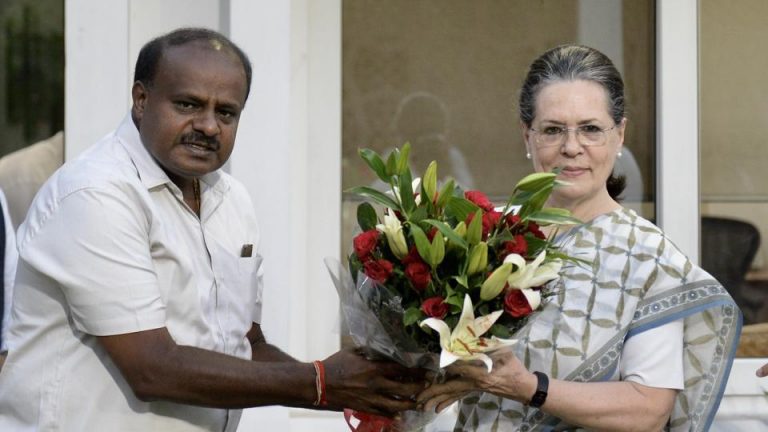
Kumaraswamy meets PM Modi amidst turmoil within the Congress-JDS alliance in Karnataka

The Newly appointed Karnataka Chief Minister, Kumaraswamy is scheduled to visit Prime Minister and other union ministers today for the first time after assuming the portfolio.

The chief minister is also expected to visit Rajghat to pay tribute to the father of the nation. He would likely expand his cabinet ministry upon his return to Bengaluru.

The Congress-JD(S) alliance has yet not finalized their cabinet as reportedly there is disgruntlement within both parties rank regarding the post-poll alliance and birth allocations.

The Trip to Delhi comes after a revealing comment made by Kumaraswamy on Sunday. Kumaraswamy stated that the people rejected him and his party and His chief ministership is because of Congress patronage and not a public mandate.


“Mine is not an independent government. I had requested the people to give me a mandate that prevents me from succumbing to any pressure other than you. But today I am at the mercy of the Congress. I am not under the pressure of the 6.5 crore people of the state,”

His statement may insinuate at the growing discontent between the JD(S) and Congress, and how this alliance may limit his abilities to take an independent decision.

This trip to Delhi and Kumaraswamy’s visit with The Prime Minister comes when the negotiations with Congress still persists at the state level. Interestingly, Rahul Gandhi has left the country for the annual medical check-up of Sonia Gandhi. The Karnataka Congress In-charge KC Venugopal commenting upon it sated –

“Karnataka leaders and I are discussing with Janata Dal (Secular). When it will be finalized from our side, then only it will reach the leadership. That is the procedure. Rahul Gandhi is available on phone,”

With the growing pressure from the Karnataka BJP to deliver on JD(S)’s electoral promise of farmer loan waiver along with the seemingly growing distance between the Congress and JD(S), this trip can prove to be crucial in Karnataka politics and it’s future.

Kerala: Inquiry begins against private charity for missing children even as unresolved complaints of child rights violation soar

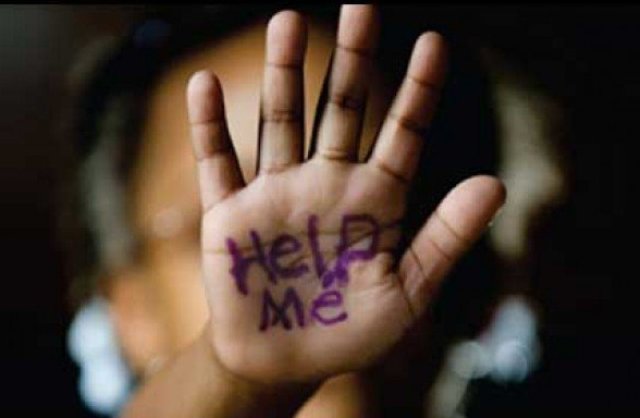
After over 50 children go missing in a private charity, Janaseva Sishu Bhavan, the National Commission for Protection of Child Rights (NCPCR) has begun an inquiry and put the secretary of the trust Jose Maveli on notice and asked him to produce the missing children. The District Collector took over the institution citing violation of the Juvenile Justice Act. Following a series of complaints on violations, including illegal detention of children from other states, lack of proper documentation and missing children, the state government took over the trust for three months. A team of officials from Tamil Nadu found trafficked kids from the orphanages run by Maveli.

As per reports, 2,266 complaints of child rights violations are unresolved in Kerala in last five years. There have been an increase in molestation cases against children in the state. Recently, a businessman, Moinudeen Kutty, was arrested for allegedly molesting a minor girl inside a cinema hall in Malappuram district in Kerala. The child’s mother has also been arrested and charged under the POCSO act for allowing the 10-year-old’s molestation by Moideen Kutty.

As per an RTI filed by Advocate DB Binu, who had earlier exposed exorbitant expenses of Communist leaders in Kerala, has revealed that 2,266 complaints related to child rights violation filed between March 2013 and March 2018 are unresolved, which have been increasing every year. Thiruvananthapuram, which is represented by Congress leader Shashi Tharoor in the Lok Sabha, tops the list when it comes to children feeling threatened and denied protection in school and public places.

Leaving Karnataka on edge, Congress President Rahul Gandhi again goes away

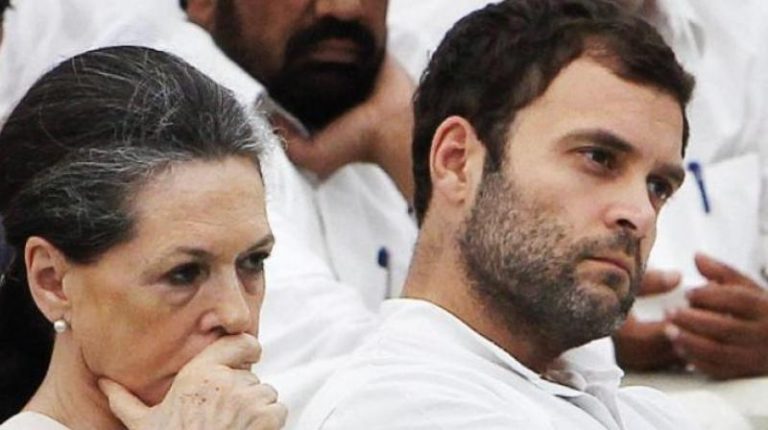
Even as Congress and JDS continue their deliberations over portfolio allocation in the alliance which is already on a shaky ground, Congress President Rahul Gandhi has chosen to take this opportune moment to fly abroad for his mother Sonia Gandhi’s ‘annual health checkup’.

Rahul Gandhi tweeted a message to BJP ‘social media troll army’ to not get too worked up because he will be ‘back soon’.


One wonders if ‘soon’ will be before the Congress-JDS alliance in Karnataka breaks off before it even gets a chance to take off. As per reports, the tension over portfolio allocation refuses to die down even as former Karnataka Chief Minister Siddaramaiah clarified that the matter would be resolved in 3-4 days. Even as the lobbying for ministerial berths continue within the alliance, the same has been postponed by a week as Congress President and his mother will be away for ‘health checkup’.

We had earlier reported Rahul Gandhi’s uncanny habit of going on vacations during times of crisis or whenever there is a time where he has to own up to his failures. After losing Gujarat and Himachal Pradesh elections, Rahul Gandhi went to watch Star Wars. During Tripura results, he was in Italy, ‘visiting‘ his Italian grandmother for Holi. And after Karnataka elections, Rahul was again missing in action. Even the call to H D Deve Gowda offering support to form an alliance was reportedly made by his mother, Sonia Gandhi.

Gujarat Congress MLA uses foul language for Modi, Amit Shah and others in a gathering addressed by Hardik Patel

Former Congress MP and currently Gujarat Congress MLA Virji Thummar, in a gathering addressed by Patidar leader Hardik Patel used choices abuses and foul language for Prime Minister Modi, Gujarat Chief Minister Rupani, BJP President Amit Shah and BJP Gujarat President Jitubhai Vaghani, which is very unbecoming of a public representative. In the video posted by Hardik Patel on his Facebook account, shows the Congress leader Thummar can be seen extending support to Hardik Patel on behalf of Congress party.

Speaking in Gujarati, he said that an invitation to address the Patidars (present there) was also extended to the BJP leaders, but they did not come. Insulting BJP Gujarat President Jitubhai Vaghani, he said, “Vaghani, your mother must not be a Patidar, otherwise you would not have uttered such words for Hardik. If you were born to a Patidar, you could not say such words for Hardik. Referring to BJP President Amit Shah as ‘taklu’ (bald), he said, “I want to tell that ‘takla’ if Hyderabad Nizam and Junagadh Nawab had to flee India, then your mother has no power to speak against the Patidar community.’ To a cheering crowd, he said, ‘the drama you did to distribute mangalsutra in Karnataka, then why don’t you try and get the mangalsutra of Jashodaben’s (Prime Minister Modi’s estranged wife) mangalsutra back, then we will hail BJP.’ Addressing Hardik, he said, “If Congress comes to power, the ‘takla’ will have to pay for this.’ He said he is speaking on behalf of Congress party that he stands by the Patidars.

Other Patidar leader called the Gujarat education minister Bhupendra Chudasma as ‘impotent’, and said, “our enemy isn’t Nitinbhai Patel (Deputy Chief Minister) but the education minister whom even private schools don’t listen. We are not impotent like you, we will take the fight to Delhi.” He further said that Patidar leaders of BJP aren’t our enemy, but RSS is our enemy.”

Another Congress MLA Lalit Kagathara extended support to Hardik and crediting his 2017 victory to Hardik, he said, “I want to tell you all only one thing, that you ask thousands of questions, but have you asked why are the trustees of Sisdar (community body) go and welcome Vijay Rupani (who belongs to the Jain community) so excitedly? Did you ever ask why trustees of Unjha and Khodal Dham excitedly greet Narendra Modi?”

Later Hardik Patel addressed the gathering he said, “we are fighting against people who have elected themselves after killing thousands of people. He asked why are remaining Patidar MLAs of Congress not present? Are they flying kites at home? If BJP is not letting you speak in the Vidhan Sabha, have a sit in outside. We elected you to Vidhan Sabha because you are brave sons. Not sons of those (he claps hands to show eunuchs) sitting in Kamalam (BJP headquarters).”

Makes one wonder whether Congress President approves of this language.

Narendra Modi inaugurates country’s first 14-lane expressway, slams Congress and its allies

Prime Minister Narendra Modi on Sunday inaugurated the Eastern Peripheral Expressway (EPE) and the first phase of the Delhi-Meerut Expressway (DME). The latter is the country’s first 14-lane highway and is equipped with various features targeted towards reducing pollution and improve air quality. The EPE connects Haryana’s Kundli on NH1 and Palwal on NH2 as well as the phase 1 of the DME.

Narendra Modi held a roadshow and also addressed a rally in Baghpat. In his rally, he complimented the infrastructure development carried out by the NDA government and highlighted the achievements of the ‘Make in India’ campaign.


The Prime Minister also slammed the Congress and it allies during his address. He accused the alliance of working as obstacles in the path of development.


Prime Minister Modi asserted that Congress could never respect democracy due to their subservience to the Nehru-Gandhi dynasty. He further added that when international agencies praises India and its policies, opposition politicians and their supporters start attacking them as well.


Samajwadi Party leader, Akhilesh Yadav, has said that the expressway was inaugurated only after an Supreme Court order, insinuating that the Modi government does not deserve credit for the construction.


Chief Minister of Uttar Pradesh, Yogi Adityanath, has also slammed the Congress calling the party useless which cared very little for the welfare of people.


The Delhi-Meerut expressway is expected to reduce travelling time between the two cities by 60 minutes. Also, it is touted to be the first expressway that has dedicated bicycle tracks.

Expressways, vikas and the disaster of anti-Modi alliances

Today Prime Minister Narendra Modi, now in the fifth year of his term, inaugurated two mega expressways. The first of these is a phase of the 14 lane Delhi-Meerut Expressway that connects the capital to the UP border. That’s right. Fourteen lanes.

The second is 135 kilometres of the Eastern Peripheral Expressway, stretching the length of the National Capital Region, bypassing Delhi, connecting Ghaziabad and Greater Noida on the UP side to Faridabad and Palwal on the Haryana side.

Some of you might remember July 2016, when a traffic jam in the Delhi-Gurgaon area came to dominate the ‘national’ news. Remember how Modi’s usual detractors in media, Congress and AAP jumped into the act and made a national spectacle out of a jam on the road? Remember?

Untitled.png

Indeed, under BJP governments, even traffic snarls can become national news. From parts of the country administered by ‘secular’ governments, goons of the ruling party going on a murder and gangrape spree rarely make the news.

So today’s two new gleaming expressways in the Delhi-NCR region are the answer to the question the opposition was asking in July 2016. By the way, Mr Sisodia, how is that free Wifi in Delhi coming along?

In fact, Narendra Modi and Nitin Gadkari today are following in the footsteps of the previous NDA government of Atal Behari Vajpayee. Lest we forget, here is what Manmohan Singh’s government admitted before the Supreme Court in 2013:

Untitled.png

From the ToI report:

“In an interesting affidavit filed before the apex court, the Centre said the length of national highways in the country was 29,023 km in 1980, which expanded to 76,818 km by the end of 2012. This means 47,795 km of national highways was added by successive governments in 32 years.

However, the affidavit revealed that during 1997-2002 (ninth five-year plan), when the NDA was in power, 23,814 km of national highways were added to the existing NH network or nearly 50% of the total length of national highways constructed in three decades. This remains the largest construction of national highways during any five-year period since independence.

In fact, during the nearly 10-year rule of the UPA government, the total length of national highways laid was much less – nearly 16,000 km, the affidavit said.”

There is a lesson for the Indian voter here. What would you rather have? A BJP government that can be taken to task over a traffic jam? Or a government under which ruling party goons regularly gangrape and murder dissenters while the crimes go unnoticed and unpunished?

A relentless, hate-filled media and establishment keep the BJP government on its toes. That is how you get BJP to build the Eastern Peripheral Expressway. That is why it so happens that half of all the highways constructed in India between 1980 and 2012 were built during the BJP’s 5-6 year term.

What can the Congress offer you? A pliant media and establishment given to covering up their corruption and inefficiency? Along with a cap with the words “I am <Insert Caste>”?

Is that all you want? A cap with your caste written on it?

There is one more story here that must be told. Prime Minister Narendra Modi laid the foundation stone of the Eastern Peripheral Expressway on November 5, 2015.

If you remember correctly, three days later, Narendra Modi suffered the biggest setback of his Prime Ministership: a massive defeat at the hands of the “Mahagathbandhan” in Bihar.

The Prime Minister was able to keep his promise: in just 30 months, he has dedicated the Expressway to the service of the nation.

What became of the ragtag Mahagathbandhan that was forged in Bihar to stop Modi? It crumbled to dust under the weight of its own contradictions.

Today the nation is witnessing the formation of a much larger, much more unholy alliance. Anything to keep Modi out of power. A challenge has been thrown to the intelligence of the voter. The example of Bihar is before our eyes. In Karnataka, the circus has only just begun. The real loser in each case is the people. Will the voter rise to the occasion in 2019?

Indian Army seizes heavy arms and weapons with Pakistani markings from terrorists killed in Kashmir

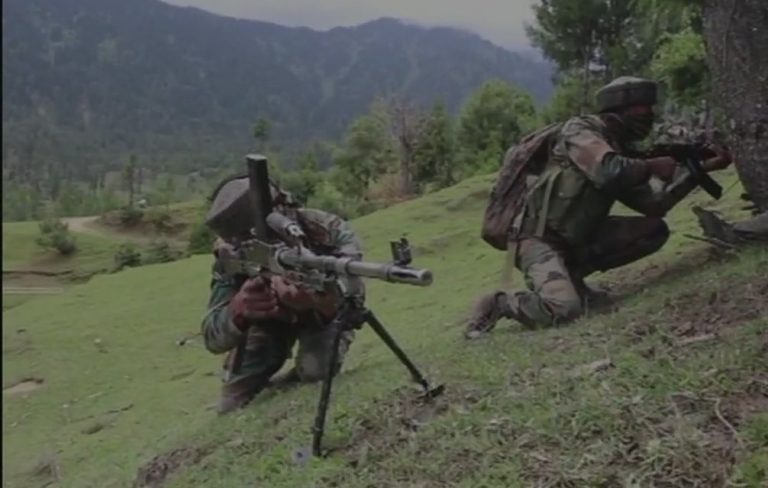
In an operation conducted by the Indian Army, the security forces have recovered heavy arms and modern weaponries from the slain terrorists along the LoC in Kashmir. The Army said that the weaponries had the markings of Pakistan and these are indicative of Pakistan aiding and abetting of terrorism in India.


The Army, during an encounter, killed five terrorists and foiled their infiltration bid along the LoC in Tangdhar sector of Jammu and Kashmir early morning on Saturday, 26th May. This operation is the second in past 10 days, as earlier the army had killed four terrorists near Kupwara. The Army also said that the movement of terrorists was very close to the Pakistani forces.


The infiltration comes after General Bipin Rawat had issued a warning to Pakistan to shut down terror operations in Kashmir. He said, “Pakistan is continuously violating ceasefire, causing damage to life and property. When such things happen, we can’t remain silent. If Pakistan wants peace, they should take initiatives to stop terrorists who infiltrate to vitiate the atmosphere.”

He also accused Pakistan of violating ceasefire through infiltrations. He also said the India expects peace at the borders. It said that the Pakistan needs to shut down its terror camps for peace to return at the borders.

Last week, the Centre had announced ceasefire in Jammu and Kashmir during the holy month of Ramzan. The Home Minister however, reiterated that the security forces have the right to retaliate if attacked or if essential to protect the lives of the people.

Remembering Nehru and his ‘Himalayan blunders’

0

Pt. Jawaharlal Nehru (the title of Pandit is a little incongruous for a sworn secularist) passed away on this day, 54 years ago in 1964. His larger than life image though has only lately begun to be put in perspective. A lot of it has to do with social media for it loosened the grip of mainstream media and academics in controlling the narrative, hiding the ugly and sprucing up the good.

This revisit on Nehru’s early years, his rise in Congress echelon, manipulation at the time of independence to PM’s seat, his shaping of Hindu Civil Code etc are now being fiercely ripped out in open. I would presently concentrate on two of his actions which have put India’s eastern and western borders in permanent strife. I am of course referring to Pt. Nehru’s conduct during the incursion of Pakistani raiders in Kashmir in 1947 and the disastrous China War of 1962.

Pakistan Raiders in Kashmir in 1947

Within a month of India’s independence, Maharaja Hari Singh of Kashmir offered his state’s accession to India in September 1947. Nehru refused for his “blood brother” Sheikh Abdullah was in jail. It was thus a deadlock. By next month, Pakistan’s raiders from North West Frontier Province had penetrated up till the outskirts of Srinagar, looting, pillaging, killing and raping along the way. On October 26, Hari Singh had agreed to sign the Instrument of Accession to Indian Union.

On the same day, Lord Mountbatten, the Governor-General, called an urgent meeting in Delhi. Nehru was his typical ambivalent self. Sardar Patel, the home minister, lost his cool. Sam Manekshaw, then an army colonel, was to later recall: “As usual Nehru talked about the United Nations, Russia, Africa, God Almighty, everybody until Sardar Patel lost his temper. He said ‘Jawaharlal, do you want Kashmir or do you want to give it away?’.” Nehru was thus pinned into taking an action and thanks to Sardar Patel, troops were flown to Srinagar and the airport, the only link with New Delhi, was saved.

In just a few weeks, in December 1947, Nehru had committed his grave blunder for which successive generations of India are still paying the price. He referred the matter to United Nations—there was no need for Kashmir was literally India’s “internal matter” since Maharaja Hari Singh had already acceded the state to Indian Union.

Why did Nehru go to United Nations? There are two explanations forwarded: one, he wanted Sardar Patel out of Kashmir for the latter fed up by Nehru’s antics had offered to resign just a few days before in December 1947; two, Nehru walked into a trap laid by Mountbatten who wanted UN to mediate.

(The truth is, India didn’t need Mountbatten as its Governor-General. Pakistan never considered a similar option for itself. Mountbatten then manoeuvred himself as head of India’s defence counsel).

Nehru then approached United Nations for arbitration. In the first few months of 1948, the folly had begun to hit Nehru in the face. The British stance in front of UN was completely opposite to what Mountbatten had led Nehru to believe. The Indian complaint was ignored; instead, UN Security Council began adopting anti-India resolutions.

The cat was out of the bag. Despite India’s protests, Pakistan was firmly in control of “Azad Kashmir.” India had to lose Gilgit-Baltistan region. UN and its plans for a plebiscite went kaput. India’s next generations had been condemned with the festering wound of Kashmir. Terrorism and internal security, if not secession, are everyday issues emanating from the Valley.

India’s China War of 1962

This refers to India’s political and military humiliation at the hands of China during the 1962 War. The impression successfully perpetuated all these years is that it was all China’s aggression which didn’t respond to Nehru’s brotherly overtures. The truth is more nuanced.

Britain didn’t leave India with any boundaries. India was left to settle matters with Pakistan, Nepal and China. While the first two nations didn’t cause any problem, China was a different matter altogether. They were not prepared to let Nehru get away with his “forward policy” of aggression.

India inherited the McMahon line on its eastern border with China which British had created in the mid-1930s by seizing the Tibetan territory, renaming it NEFA. The Chinese government’s plea for renegotiation was turned down by Nehru who latched on to London’s fake claim of Simla Conference (1945), legitimatizing the McMahon Line. Nehru topped it with his fake claim on Aksai China claim which even the British hadn’t made on a territory China had termed its own for over a hundred years.

Then on its Western (Ladakh) border, Nehru’s “forward policy” in September 1962 tried to force the Chinese out of territory it claimed as its own. Nehru announced on October 11 that the army had been ordered to “free our territory.” That’s how the war began with China reacting to the situation.

China fought the 1962 war while in the throes of economic hardship. Its forces were hardly elite, mostly comprising regiments of local military. Their equipment and logistics were poor. Yet they overpowered the Indians. In that short war of two weeks—China called for a unilateral ceasefire as quickly as it had gained ground—India lost 1383 of its soldiers; 1047 were wounded, 1696 were missing.

Our only clue to 1962 China War is a book by Australian journalist Neville Maxwell: India’s China War. He could pen it down by accessing the Henderson (Brooks)—(Premindra Singh) Bhagat report which had been commissioned in the wake of 1962 War disaster. Even Maxwell could copy only a part of the report which the Indian government had classified as “top secret.”

It’s been over a half century yet the Henderson-Bhagat report, as well as various correspondences of Nehru, are out of reach—being treated as “private property’ of Nehru Library, a private trust. The papers of India’s first prime minister belongs to his family and not to the state!!! The classified secret clause of “30 years” is long over yet the report isn’t being made public.

That’s how truth in this country is treated. Everyone tries to muzzle changes in school textbooks and academia in light of new findings so that their narrative remains perpetuated. Doesn’t the history of this country deserve a revision when important annals of this country are being kept locked in the form of documents inside safety vaults?


The crowning jewel of 4 years of Modi Government: The war against Maoists

In the 4 years of Modi government, the war against Naxalism has yielded very sweet fruits for the security forces. According to the official statistics published by the Ministry of Home Affairs, there has been a steady decline in Maoist violence ever since Narendra Modi came to power at the Center. Livemint quoted an unnamed senior Home Ministry official as saying, “If you look at the last four years, we have made significant progress. LWE areas, especially those in Chhattisgarh and Jharkhand, were neglected before 2014. But we have introduced infrastructure projects that are ushering in development in these areas and have also been sending out troops on area combing operations to destroy Naxal hideouts.”

In April 2018, the security forces conducted one of its most successful operations against the Naxalites. Over 35 terrorists were slaughtered during the operations, it is regarded as one of the most terrible blows the Naxals have suffered in quite a while. Earlier in the month, 44 districts were removed from the list of districts affected by Left-Wing extremism. Recently, Home Minister Rajnath Singh announced that Chhattisgarh will also get a specialized unit to combat Maoist insurgency in the state.

In May 2017, Rajnath Singh announced the formulation of a new security operation doctrine against the Naxals, ‘SAMADHAN’. The acronym SAMADHAN stands for Smart leadership, Aggressive strategy, Motivation and training, Actionable intelligence, Dashboard Based KPIs (key performance indicators) and KRAs (key result areas), Harnessing technology, the Action plan for each theatre, and No access to financing. The focus has been on utilizing technology for surveillance and assistance in conducting operations combined with strategic attempts at choking the funding mechanism of Naxalites. In March, the Enforcement Directorate had attached properties worth Rs. 68 lakh of one Maoist leader. More recently, the central government has set up a multidisciplinary committee to choke the funding received my Left-Wing extremists.

Union Home Minister Rajnath Singh had said after the announcement of SAMADHAN, “We have to bring aggression in our policy, there should be aggression in our thinking, aggression in our strategy, aggression in the deployment of security forces, aggression in operations, aggression in bringing development, aggression in road construction. We will have to be cautious that extremely defensive deployment may result in the reduction of operational offensive.” One other significant takeaway is the encouragement for the troops to be proactive in eliminating or neutralizing threats rather than reactive.

There has also been a concerted attempt at infrastructure development and increased connectivity in Maoist areas. In May last year, it was reported that the Center had announced that it will spend Rs. 11,000 crores in increasing road connectivity in 44 Maoist affected districts. In November 2017, Indian Railways started operating its first express train service in the Maoist affected region of Dantewada. It is, perhaps, a testament to the success of the Modi government’s policy towards Maoists that the Indo-Tibetan Border Police (ITBP) completed the construction of a bridge in just 30 days in the Maoist-infested Kaneri village of Chhattisgarh’s Rajnandgaon district, a feat which could not be achieved for the past 9 years.

The War against Naxalism may well be on its last legs due to the efforts of the current ruling disposition. It was reported in January that Naxal influence had been shrinking to merely 58 districts. Even Narendra Modi’s most vitriolic detractors have to concede, the offensive against Naxals has been one of the crowning jewels of his government’s achievements.