Home Blog Page 7173

CBSE results: Delhi government congratulates itself on ‘fantastic performance’ before blaming Delhi LG for creating obstacles

Delhi Chief Minister Arvind Kejriwal is a miracle. There can be no other reason for this curious study on psychology. On one hand, he congratulated and retweeted all tweets praising ‘great efforts’ of Aam Aadmi Party government in Delhi for bettering the quality of education in Delhi.

Kejriwal retweeting praises.

But in a bipolar manner, he trained his gun on the Delhi LG, with whom he has picked a bone quite a few times and ‘congratulated’ the students for scoring well ‘despite all obstacles created by LG, BJP and PM’.


The degeneration of Modi critics is a case study for nervous breakdowns. Recently, his wife, Sunita Kejriwal took to Twitter to hit out on Baijal in what appeared to be a veiled threat to stop ‘harassing’ her widow sister. She even claimed how former Delhi LG Najeeb Jung is suffering from severe illness and ‘regretting what he did with AAP government’, calling it ‘Karma’. Kejriwal then chose to take it a step further and applaud work of Atishi Marlena, who was fired as an advisor on education to Aam Aadmi Party-led Delhi government after it was found that the posts were not sanctioned. When Delhi LG congratulated the students for their results, Arvind Kejriwal didn’t let the chance of confronting him slip by.


Atishi Marlena has no prior experience to influence government policies, despite that she was holding an influential position which did not even have a sanction. Others too came in support of Marlena.


But how much of these ‘achievements’ are true and how much of it is hype? The claims that this is the first time Delhi government schools have outdone private school are not completely true.

2012 CBSE reults
2013 CBSE result
2014 CBSE result

Even in 2012, 2013 and 2014 long before Aam Aadmi Party came into existence, the government schools fared better than private schools in Delhi. In 2009 and 2010 too, under Sheila Dikshit government, government schools had done better than private schools (pdf link).

Secondly, as this well-argued blog post points out, a large number of government schools in Delhi are not offering critical subjects like Physics, Chemistry, Mathematics, and Biology. These are core subjects that bring down the pass rates as they are considered relatively difficult. This is an extremely crucial point. Government schools cannot claim to be doing their job unless they offer the crucial science stream to those interested in it.

So essentially, government schools in Delhi have always exceeded the performance of private schools. It is not something novel that the AAP government has achieved. Secondly, how in the world can Arvind Kejriwal pat himself on the back while congratulating students and blaming the LG is being logical realms. Thirdly, what Kejriwal should be doing is condemning himself and his government for not introducing vital subjects in many government schools. But then again, the AAP is known for not concerning itself with pesky issues like governance.

Infrastructure development under Modi government is rapidly transforming India

0

According to an affidavit submitted by UPA government in 2013, 50% of all National Highways constructed over 30 years since 1980 were built under just 5 years of BJP (Vajpayee’s) government. With BJP government in India since 2014, there’s again increased focus on infrastructure to improve connectivity, stimulate trade and push economic growth.

Project Bharatmala is building 35,000 km highways across 16 states, including 9,000 km of economic corridors. With planned completion by 2022, this is intended to improve connectivity, enable faster movement of goods, create 22 million jobs and decrease supply chain costs from the current average 18% to 6%. This Bloomberg report calls out India for building new roads at “breakneck pace”.

Sagarmala Project is modernizing 12 major ports and 185 minor ports along the entire 7,500 km long coastline of India. With planned completion by 2022, it would stimulate trade, create 10 million new jobs, provide logistic costs savings of over Rs. 35,000 crore per year and potential GDP increase by 2%. Similar port modernization since 1978 at Shenzhen, China had helped create seven million jobs and city’s GDP grew by 50 times to $180 billion.

For intra-city commute, while China has built more than 3,600 km of Metro network in 39 cities, India has operational metro in only 8 cities covering a total track length of 370 km. The current urban development ministry is working with state governments on expanding Metro networks across 24 new cities including Ahmedabad, Bhopal, Guwahati, Indore, Kanpur, Kozhikode, Nagpur, Patna, Pune, Vijayawada and Varanasi among others.

For inter-city commute, Bullet Train (High Speed Rail) on Mumbai-Ahmedabad route is being built through a 508 km track which includes 7 km undersea tunnel. Planned to be operational by 2022, bullet trains traveling at 320 km/h will reduce travel time between business-critical cities of Mumbai and Ahmedabad from 7 hrs to 2 hrs. In addition to Mumbai-Ahmedabad route, five more high speed corridors along diamond quadrilateral are being evaluated. With these additional corridors, High Speed Rails in India will cover more than 10,000 km.

One of the world’s largest infrastructure project, Delhi Mumbai Industrial Corridor (DMIC) is creating 23 industrial hubs, 24 smart cities, two power plants, six airports, two ports and a six-lane expressway stretching 1,500 km connecting the industrial cities of Delhi and Mumbai. Once completed, time to transport goods from Delhi factories to shipping ports will reduce from 14 days to 14 hours. The project is expected to create 25 million jobs over 7 years, with Phase 1 planned to be completed by 2019.

GIFT (Gujarat International Finance Tec City) is being developed as a large business district between Ahmedabad and Gandhinagar. As India’s first smart city with world-class infrastructure, it will have features like Automated Waste Collection System (AWCS), District Cooling System (DCS), underground cables for electric supply, smart parking, smart transport and public wi-fi. GIFT is developed as a Special Economic Zone (SEZ) with tax incentives for attracting Banks, Stock Exchanges, I.T. companies and campuses of renowned global universities. Planned to be completed by 2023, it is expected to generate one million jobs including direct and indirect employment. Spread across a construction area of 8.5 million square meters, it is significantly larger than Tokyo’s Shinjuku district (1.6 million square meters) and London’s Docklands (1.1 million square meters) (source: TheEconomicTimes report here)

“Navi Mumbai International Airport” is being constructed with capacity to handle 80 flights per hour and 10 million passengers per year. First phase is planned to be operational by end of 2019. Subsequent phases will add additional passenger handling capacity. This will significantly reduce the pressure on Mumbai International Airport which is currently choked due to capacity constraints.

In addition, UP has received approval for Jewar International Airport in Noida and construction is planned to begin in 2019. With 40 to 50 million passengers per year capacity, it will reduce the load on New Delhi International Airport and help promote tourism in nearby UP (Mathura, Vrindavan etc.)

Under Regional Connectivity Scheme (RCS), the central government has granted twenty-four airports and helipads across the country out of which 22 airports are for the North-East region (and 2 in J&K). As part of “Look East” policy, Arunachal Pradesh will have airports in nine locations, Assam will have five, Manipur will also get five, Meghalaya, Tripura, and Sikkim will have one airport each. The government wants to connect the remote areas of India with each other through air as improved connectivity is the key to economic growth of every state.

Economic corridors and highways; metro trains and bullet trains; seaports and airports – all translate to better connectivity, faster movement of goods and people, faster trade and rapid economic growth. As quoted by Finance Minister Arun Jaitley, between last year of UPA government and current year of present government, the infrastructure expenditure has increased by 134% and the road sector itself has witnessed an increase by 189%. Modi government deserves appreciation for its effort in building a new India.

This is why Naveen Patnaik won’t join the anti-Modi Mahagathbandhan

0

Karnataka elections opened a new paradigm in Indian politics. For political watchers, it is becoming increasingly clear that Congress having realised its dwindling fortunes has put its dream of coming back to power on the back burner for the time being. Keeping BJP out of power has become Congress’s primary purpose even if that means playing second fiddle to a smaller party. This has brought together many regional satraps under one umbrella to form a “Maha Gathbandhan” against BJP. N Chandrababu Naidu has already announced that all regional parties are coming together in 2019 to defeat BJP.

If we notice the leaders those were present on HD Kumaraswamy’s swearing-in ceremony, which even brought left and Trinamool together to share a stage, a key regional leader who was not present was Naveen Patnaik. BJD commanding 20 out of 21 seats in Odisha is currently the 4th largest party among opposition after Congress(44), AIADMK(37) and Trinamool(34). That’s a significant number and Naveen Patnaik joining the alliance can sway the numbers remarkably. However, in this post, I will try to analyse, why that is unlikely to happen.

Let’s first look at factors which bring together these leaders under one umbrella. Congress, of course, is facing an existential crisis and needs to be in reckoning by some way or the other. Samajwadi Party and Bahujan Samaj Party, both have Prime Ministerial ambition and are wishing for a fractured mandate in which they can bargain and get the coveted post or at least a ministry in North or South block.

What is also significant here is, they need weaken BJP to regain power in UP as BJP is a threat to them in their home as well. No such imminent threat for Mamata as recent trends may suggest but BJP is rising in Bengal and she needs to thwart that as soon as possible. Besides, her bigger ambitions are quite well known to all. She has publicly expressed displeasure over Congress’s remark that Rahul is ready to hoist the Tricolor at Lal Qilla after next elections. She also has travelled to Delhi to weave together an anti-BJP alliance to project herself as the leader of any such alliance if it becomes reality.

Tejaswi Yadav may not have as big an ambition as being PM but he would definitely scrounge for something big in Delhi. He knows he is not senior enough to be in North or South block. However, he will definitely try for other biggies like Railway for obvious reasons. Also, RJD needs to remove BJP to regain power in Bihar. Andhra Pradesh contributes 25 seats to LS and NCBN can also be a kingmaker if he can tilt numbers game and if fortune favours, he may take a shot at the PM post or at least the big 4. JD(S), of course, needs to cling on to save it from being inconsequential. As HDS’s recent statements suggest, he is ready to play a puppet to 10 Janpath as long as that keeps his CM seat in Karnataka safe. Sharad Pawar just needs to be in government, the position hardly matters to him, power does.

So, if we analyse, these are the broad reasons to form an anti-BJP alliance:

  • PM ambition
  • Cabinet ambition
  • Thwart regional threat by BJP
  • Existential crisis
  • Appeasement politics

As things stand today, Naveen Patnaik doesn’t fall into any of these categories. Neither Naveen nor BJD has any big national ambitions. In the 1999-2004 NDA govt, when BJD was part of the government, Naveen Patnaik was Steel & Mines minister as an independent charge. That’s as high as BJD has gotten as far as the central cabinet is concerned but BJD doesn’t complain about that. BJD broke up with BJP in 2009 and got 14 seats alone. Had they joined UPA, they would have been the 4th largest party, bigger than NCP. Naveen’s vision is clear as far as the road to power is concerned. He wants to rule Odisha and there is no imminent threat by any party, including BJP, to his regional ambition. Therefore, there is no strong reason on that ground, as to why he would join hands with Congress to keep BJP out either at the centre or in the state.

BJD essentially came to being primarily as an opponent of the Congress misrule post-1999 cyclone fiasco and corruption in relief distribution. BJD, in fact, has gotten better deals being in opposition, during BJP rule than Congress rule. Congress has a history of showering benefits to state which have a favourable government. BJP has not shown any such traits. 2 cabinet ministers are currently from Odisha. Odisha has got 5443 KMs of the national highway during 4 years of BJP rule against 1311 KMs of the highway during 10 years of UPA rule. Railway fund allocation has been doubled and projects expedited. Sambalpur-Titlagad-Kantabanji doubling, electrification, Sambalpur-Jharsuguda electrification, Cuttack-Barang doubling have all been completed during last 4 years apart from many ongoing new lines and doubling projects. In fact, one of the most sought-after Khurdha Road-Bolangir lines which will connect the central Odisha to coastal Odisha in the East got approved in 1994 but work began only in 2015 after Suresh Prabhu sanctioned funds. Currently, 42 KMs out of 240 KMs is complete and a pair of trains have already started plying on it.

State govt share in mining royalty share has also been increased, something that Naveen Patnaik holds close to his heart and tried spearheading a group of CMs demanding this during UPA rule but to no avail. UDAN scheme has identified 4 airports in Odisha giving a much-needed push to aviation and communication to state hinterlands and Maoist infested areas. 2 of them have already gotten DGCA certificate and scheduled flights will begin operation shortly. New ports have come up in Odisha at Gopalpur and Dhamra and Sagarmala aims to connect all these 3 ports with better connectivity.

Given, Naveen Patnaik is not keen on a central ministry and there is no imminent threat from either BJP or Congress to his local ambitions, it is only natural that he will continue with his stated “equidistance” position. Also, an NDA government at centre favours him more than a UPA government. Hence, there is no reason why would he join hands with UPA to stop NDA forming government.

Of course, the usual disclaimers like, “politics makes strange bed mates”, “1 year is a long time in Indian politics” etc do apply here.

India to become second largest electricity producer in Asia surpassing Japan

As per new studies of BMI research, India is set to overtake Japan in the production of electricity in Asia having the second largest power capacity in 2018.

Electricity being the main engine of growth for the country, has been given at most priority in the present Narendra Modi government. The government has taken the challenge of providing 24 hours electricity to every village in the country and has been delivering it successfully. The electricity production has reached an all time high 344 Giga Watts (GW) and set to surpass 363.32 GWs of production by the end of 2018, to be the second highest producer in Asia after China. India may even surpass United States of America as the second largest producer in the world by 2020.

India will surpass Japan in production of electricity by the end of 2018.

India’s electricity production is heavily dependent on coal, as 65% of the electricity is produced by thermal based power plants. The total installation of thermal power plants is now at 223 GWs, where other sources, including nuclear and renewable energy combined produce remaining 115 GWs. “India’s power sector will remain dominated by coal over the coming decade, despite significant growth in cleaner sources—notably nuclear, non-hydro renewable and natural gas,” an analysis by BMI research reported.

“Despite the prevalence of coal-fired power generation, we expect significant growth in the alternative, cleaner power sources over the next ten years—albeit from a lower base—notably in the natural gas, nuclear and non-hydro power renewable sectors,” notes the BMI research.

“This is in line with government efforts to reduce pollution across the country and international pressure to boost environmental policy,” it added.

India’s growth in production of renewable energy is commendable. India has doubled its renewable energy capacity in last five years and produces around 115 GWs of Renewable Energy, which includes 45 GWs from Hydro electricity projects, 34 GWs through Wind Power, another 21 GWs by ambitious solar projects and remaining 13 GWs with the help of Small Hydro projects, Biomass and Waste conversion. Prime Minister Modi has set an ambitious target of installing 175 GW of Renewable energy plants by 2022 of which 100 GWs alone will be from solar power plants.

In the draft National Electricity Plan released by the centre in December 2016, non-fossil fuel-based energy sources will make up little over 56% of India’s installed power capacity by 2027. India has also promised to reduce its emissions intensity of greenhouse gas emissions per unit of GDP by 33 to 35 per cent below 2005 levels by the year 2030. It had also promised to ensure that at least 40 per cent of its energy in 2030 would be generated from non-fossil fuel sources, like solar, wind or bio-fuels.

Arun Jaitley accepts the poetically written apology from AAP leader Kumar Vishwas

AAP leader and poet Kumar Vishwas has tendered a written apology to Finance Minister Arun Jaitley in the defamation case. According to reports, Jaitley has accepted the apology and the Delhi High Court has disposed of the case.


Vishwas has reportedly written in his apology letter that he had put allegations against Jaitley after believing the assertions made by party leader Arvind Kejriwal and he is currently not in contact with Kejriwal. Vishwas has reportedly also called Arvind Kejriwal a habitual liar and stated that he has vanished after spreading lies. After Jaitley’s acceptance of Vishwas’ apology letter, the defamation case has finally come to an end after many months.

Vishwas has reportedly written a poetic letter to the Finance Minister citing how he and many other AAP workers have been betrayed by Arvind Kejriwal requested him not to pursue the case.


According to reports, Vishwas was the only AAP leader against whom the defamation suit was remaining after all others accused in the case have already tendered apologies to the Finance Minister. On May 3rd, Vishwas had reportedly told Delhi High Court that his statements against Jaitley were based on information received from Kejriwal. The suit was filed against 6 AAP leaders including Kejriwal, Raghav Chaddha, Ashutosh, Deepak Bajpai and Sanjay Singh. All others except Vishwas had already tendered their apologies to Jaitley.

The defamation case, while was filed in 2015 had prominent lawyer Ram Jethmalani representing Kejriwal but after a snide remark by Jethmalani, saw a second defamation suit filed on top of it. Jethmalani had quit after the controversy calling Kejriwal a liar. 2018 has so far been the year of apologies for Kejriwal and many of his party men. Kejriwal had already written apology letters to Bikram Majithia, Nitin Gadkari and Kapil Sibal too.

‘Pakistan should vacate areas under its illegal occupation: MEA lashes out at Pak’s Gilgit-Baltistan order

0

Pakistan, showing its usual disregard and insolence, has rejected India’s protest over the Gilgit Baltistan order. Commenting on the Indian protest, A Pakistani spokesperson stated, “Pakistan categorically rejects India’s protest against the Gilgit-Baltistan Order 2018 and its claim over Jammu and Kashmir as an ‘integral part’ of India. Everything from history to law to morality to the situation on the ground belies India’s spurious claim,”

Ministry of External Affairs (MEA) summoned Pakistan’s deputy high commissioner Syed Haider Shah and lodged a protest against Pakistan’s “Gilgit Baltistan Order, 2018” earlier on Sunday.

The Gilgit- Baltistan Order had previously generated a lot of concern among politician and the general public alike in Gilgit-Baltistan. The Province till now has been given restricted autonomy under of Gilgit Baltistan Empowerment and Self Governance Order of 2009.

The new order seeks to replace the previous one. The civilian and political representatives of this province, cutting across political lines, see this as a measure by the Pakistani state which is discriminatory, authoritative and suppressive in nature.

The MEA commenting upon the illegal occupation of Gilgit-Baltistan by the Pakistani state and the unacceptable malicious nature of the order stated –

“The entire state of Jammu and Kashmir which also includes the so-called ‘Gilgit-Baltistan’ areas is an integral part of India by virtue of its accession in 1947. Any action to alter the status of any part of the territory under the forcible and illegal occupation of Pakistan has no legal basis whatsoever and is completely unacceptable. Instead of seeking to alter the status of the occupied territories, Pakistan should immediately vacate all areas under its illegal occupation,”

The MEA on Sunday also commented about the futility of such an order by Pakistan in trying to hide the illegal occupation of the part of Jammu and Kashmir. The MEA also stated that Pakistan cannot “hide the illegal occupation of the part of Jammu and Kashmir by Pakistan nor the grave human rights violations, exploitation and denial of freedom to the people residing in Pakistan occupied territories for the past seven decades.”

One member of the Gilgit Baltistan legislative assembly while talking to ANI reflected on the seriousness and unified opposing sentiment to the order. He said, “This has happened for the first time in the history of Gilgit-Baltistan that all MLAs cutting across party lines have come together for an issue. People ask as to why this didn’t happen in 2009? That time the situation was not same when GESA (Gilgit-Baltistan Empowerment and Self-Governance Order 2009) was promulgated then each party had individually pointed out the flaws in the act. Today also, the situation is same and we are watching wrong transpiring before us. Government is doing what is beneficial for it (not us). We believe, if the 2018 ordinance comes into force then Gilgit-Baltistan will never be able to rise,”

India has always maintained that Gilgit-Baltistan is an integral part of India and this move by Pakistan seems to be yet another ply to provoke India. How or whether this matter escalates will have to be observed in the next few days.

Baijayant Panda quits BJD, accuses party of ‘reprehensible Stalinist tactics’ in resignation letter

Senior Odisha politician Baijayant Panda quit the Biju Janata Dal (BJD) on Monday, by announcing his decision in a resignation letter sent to party president Naveen Patnaik. He would later also convey the same to the Lok Sabha speaker, as reported by ANI:


Following the news-break, media channel OTV News managed to get hold of Panda’s resignation letter, where he has been scathing in his attack on the BJD.

In the letter, Panda expressed deep anguish on no BJD leader arriving to pay his/her respects to his deceased father, who as per him used to be a close friend and supporter of late Biju Patnaik. This as claimed was owing to the party restraining them from doing so. His father died on 22 May.

Panda thus claimed that the BJD’s desire to expel him was “irrefutably clear”.

In a further indictment of the party’s ungratefulness, Panda reminded Patnaik about his support for the party through thick and thin since 1995 – when he got involved in politics. He also reminded Patnaik about the unflinching support he (Panda) gave him solely based on his unconditional affection and with the hope for a better Odisha.

Panda claims that the BJD has been deviating from its original philosophy of humility and transparency to corruption and goondaism, which he claims was brought to Patnaik’s attention multiple times.

He was also seen expressing his disappointment at him being attacked with stones, eggs and footwear by supporters of his then party colleague Health Minister Pratap Jena, even after which Patnaik didn’t inquire about his health and safety.

In a parting shot, Panda claimed that the organised threats to try and get his supporters to denounce him and the harassment of his relatives amounted to “reprehensible Stalinist tactics” which had no place in any Indian political party.

After the completion of his late father’s religious ceremony, he would also notify the Lok Sabha speaker of his resignation.

This decision by Panda comes a few months after he was suspended from the BJD in January. He was already suspended as the party spokesperson since May 2017.

ED to move court to seize Nirav Modi’s assets under provisions of Fugitive Economic Offenders Ordinance

The Enforcement Directorate is set to move the special court in Mumbai requesting permission for ‘immediate confiscation’ of about 7000 crores worth assets of designer diamond jeweller Nirav Modi under the recently annunciated ‘Fugitive Economic Offenders Ordinance’.

The ED will seek an official declaration to categorize Nirav Modi a ‘fugitive’ based on the charge sheet filed before a special court in Mumbai last week under the Prevention of Money Laundering Act (PMLA).

On May 24, a charge sheet including 24 accused, to name a few, Nirav Modi, his father, brother Neeshal Modi, sister Purvi Modi, brother-in-law Mayank Mehta and firms M/s Solar Exports, Stellar Diamonds and Diamonds R Us, was filed in the USD 2 billion PNB fraud case stating that over Rs 6,400 crore of bank funds were allegedly laundered abroad to dummy companies.

As said by a senior officer of ED, the court is expected to take cognisance of the 12,000 page charge sheet tomorrow and the counsel for the agency will subsequently seek its permission to invoke the provisions of the Fugitive Economic Offenders Ordinance against Modi and immediately begin the procedure to confiscate all the assets “of and linked to” Modi in India and abroad.

The court had issued a non-bailable warrant against Nirav Modi and the ED has also moved Interpol to get a global arrest warrant issued against him.

The Modi Government had bought an ordinance last month aimed at impeding economic offenders from evading the process of law by remaining outside the jurisdiction of Indian courts because as per the existing law, the ED could only confiscate assets once the trial finishes which usually is a very long process, and there have been many incidences where the offenders have fled the jurisdiction anticipating the commencement, or during the awaiting of criminal proceedings,” the government said.

The Union cabinet had approved the ordinance with the President’s consent as the Fugitive Economic Offenders Bill, 2018 which was introduced in the Lok Sabha on March 12 could not be taken up by the Parliament.

The ordinance makes provisions for special courts under the Prevention of Money Laundering Act, 2002 to declare a person as a fugitive economic offender. However, only cases of frauds, cheque dishonour or loan default of over Rs 200 crore would come under this ordinance.

As per the government, “A Fugitive Economic Offender is a person against whom an arrest warrant has been issued in respect of a scheduled offence and who has left India so as to avoid criminal prosecution, or being abroad, refuses to return to India to face criminal prosecution.”

The agency will initiate the same action against absconding liquor baron Vijay Mallya, against whom the Enforcement Directorate and the CBI had filed their respective charge sheets last year.

Should Congress get credit for the Delhi-Meerut Expressway inaugurated by PM Narendra Modi?

Former Member of Parliament and spokesperson of the Indian National Congress, Shakeel Ahmed, took to Twitter to take a dig at Prime Minister Narendra Modi and accused him of not giving credit to the Congress party for announcing the Delhi-Meerut Expressway project in his 2006 budget speech.


Although it is a fact that the project was announced by P. Chidambaram in 2006, work on the construction of the expressway had not begun till Narendra Modi came into power. The project was delayed due to one reason or the other and it was only on the 31st of December, 2015 that the foundation stone was laid for the expressway by Narendra Modi. The first phase of the project was finally completed this year in April and was inaugurated on the 27th of May by Prime Minister Modi. It is amusing that the Congress is claiming credit for a project it merely announced but could not even begin work on it in the next 8 years that it ruled the country.

Certain media outlets appear to be working to give credit to Congress and spin the narrative to indicate that work on the project has been going on for the past 13 years, which is blatantly untrue.


People on Twitter were quick to pounce on the Congress leader for trying to claim credit for a project that was not completed within the tenure of the UPA regime which lasted until 2014.


People also mocked the Congress for their perennial habit of claiming credit for the work done by other governments.


Congress seems to have developed a penchant for claiming credit for achievements it didn’t have any role in. For instance, former Chief Minister of Karnataka, Siddaramaiah, had claimed credit for an increase in forest cover in the state while the Principal Chief Conservator of Forests credit the central government’s initiative of providing free LPG connections to economically weaker sections of the society for the same. The party has also on several occasions claimed that the schemes implemented by the BJP are merely copies of schemes from the UPA era.

‘Without permission I can’t do anything’ : Kumaraswamy shows just how indebted he is to Congress

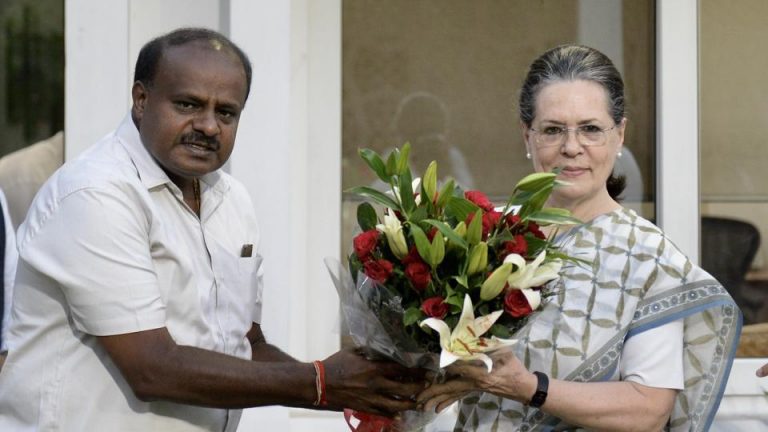
Karnataka CM HD Kumaraswamy has clarified just how indebted he is the Congress party for their support in making him the Chief Minister of Karnataka. Today, he issued a statement saying that he is at the mercy of Congress. He also said that as the CM, he is responsible for the state’s development but ‘that is a different matter’. To do anything, he has to take Congress leaders’ permission without which he can’t do anything since they have offered support to him.


This statement comes after it was reported yesterday how Karnataka CM HD Kumaraswamy has stated that he is at the mercy of Congress and not to the people of Karnataka. This generated a lot of reactions in the social media. While many condemned the statement and criticised his disregard for voters, there were also some opinions that his statement has been taken out of context.

As per reports, Kumaraswamy was speaking to reporters after paying tributes to Nehru on his death anniversary. He was answering questions of some reporters on the farm loan waiver issue. It is notable here that the BJP has given a call for statewide bandh if Kumaraswamy does not announce farm loan waivers in a day.

While most of the articles did contain the exact context and translation of the statement of Kumaraswamy, the headlines made people believe that Kumaraswamy was disrespecting the people of Karnataka and showing subservience to Congress. It was reflected in some social media reactions to the CM’s statement.


Looking at the entire text and context of his statements yesterday, it looked probable that his statement has been blown out of proportions. He was speaking about not being in the absolute majority and being the Chief Minister due to Congress support. As per the report in Deccan Herald, he also stated that he appeals to the farmers in the state to give him one week time. He reportedly added that in case he fails to waive off farmer loans he will resign as CM voluntarily. By stating ‘being indebted to Congress’ he was only referring to being in a coalition government and his inability to take decisions without consulting the Congress.

This is an exact translation of what Kumaraswamy had said yesterday.


Though till now it seemed like the newspapers headlines misled people into reacting wrongly to Kumaraswamy’s statement, his most recent statement today proves that the social media reactions were not too far off the mark anyway. It only shows the predicament of a coalition government where decisions are taken not for the benefit of people but to appease the coalition partners. It is only ironic that the coalition government was being projected as ‘victory of democracy’ by loyalists. Many have also wondered, why Kumaraswamy would bother allying with the Congress if he thought they might not let him discharge his duties to the state properly.