Home Blog Page 7284

Muslim doctor who pledged to donate organs gets threats as ‘organ donation is against Islam’

0

Arshad Mansuri, a Muslim doctor from Kanpur, Uttar Pradesh has claimed that he is receiving threats owing to his pledge to donate his organs after death. This seems to have angered a section of his community who are miffed at him for committing an “anti-Islamic” act.

As per reports, a Kanpur madrasa has issued a fatwa against Mansuri which says that organ donation isn’t permitted in Islam. Mansuri who also wants other Muslims to donate their organs as well has claimed that he is getting threatening calls and has also been facing a social boycott. He has alleged that following his complaint, the Kanpur police failed to take any action in this matter.

Other reports have claimed that Mansuri pledged to donate his organs back for medical purposes back in 2008 and has been facing a social boycott for the same. Here Mansuri is quoted as claiming that the Muslim cleric in Kanpur who issued the fatwa has also gone on to get a fatwa issued from the Islamic seminary Darul Uloom. This institution has over the years attained notoriety for issuing bizarre fatwas.

Mansuri has proceeded to put on a brave face by asserting that he won’t be intimidated by the Fatwa. He also appealed to the Islamic clerics asking them not to issue such strange diktats.

Muneef Barkati the fatwa issuing cleric has claimed that Mansuri came to him with a question asking whether it was permissible in Islam to donate one’s body or organs for medical purposes. The cleric thus answered that as per Quran, a human doesn’t own own his body, which has been gifted to him by Allah.

The cleric is also quoted as saying that its doubtful whether someone is a Muslim if he doesn’t follow what Allah says. He thus alleged that Mansuri might be someone who has merely kept a Muslim name and is trying to defame the community.

Such intolerance to organ donation was also witnessed in case of former cricketer Syed Kirmani who retracted his pledge to donate his eyes owing to it being against Islam.

Opposition parties support a no-confidence motion against the NDA government after accusing BJP of disrespecting public mandate in the past

0

After Telugu Desam Party’s (TDP) official exit from the NDA, the BJP is now faced with two no-confidence motions against its government. The YSR Congress Party had initially floated a no-confidence motion on their own but the TDP sees the possibility of a tie-up between the BJP and the YSRCP and therefore, has decided to float a no-confidence motion on its own as they had “no confidence in their (YSRCP’s) no-confidence motion.” In their endeavour, TDP and the YSRCP will be supported by the Congress, the Left, the Aam Aadmi Party, the AIMIM and the AIADMK. The motion may quite possibly be supported by the Shiv Sena and Trinamool Congress.

The BJP government, which has a majority in the Parliament on its own, is extremely unlikely to be affected by the no-confidence motion although it does have a couple of disgruntled MPs in its ranks. As of this moment, the no-confidence motion comes across as less of a serious attempt at dislodging the government and more of a demonstration of power by BJP’s allies ahead of the 2019 general elections.

The Congress Party, in the past, has on several occasions accused the Bharatiya Janata Party of destroying the foundations of democracy in the country. During the party’s Tripura campaign, Rahul Gandhi said the BJP does not believe in “constitutional democracy.” Considering the numerous times the Congress Party has blocked the Parliament from functioning, the comment is a bit rich coming from Rahul Gandhi. And with glee in their faces, the Congress will support the no-confidence motion against the BJP by YSRCP and TDP in the Parliament, despite no purpose being served by it apart from a wastage of crucial time.

We should also remember the conduct of the Congress in the 1999 vote of confidence. The 1999 vote of confidence was a tragedy in more ways than one. Betrayal apart, a crucial vote against the government came from an MP who was the Chief Minister of a state at that point in time. Giridhar Gamang of the Congress Party did not resign immediately after being elected the Chief Minister of Odisha and went to Parliament to register his vote on the motion complying with the wishes of the Chief Whip of his party.

The Congress Party which was reduced to whining when the JD(U) ditched the Mahagathbandhan for an alliance with BJP saying the JD(U) had disrespected the anti-BJP mandate by the people of Bihar ironically does not see itself disrespecting the mandate of a billion Indians when it supports the no-confidence motion by an ex-NDA ally. Atul Kumar Anjaan of the CPI had also stated that the BJP had ‘broken’ the mandate of the people of Bihar and alluded to an underhand dealing between the JD(U) and the BJP.

The AAP, as well, which has witnessed its credibility plummet rapidly over the past couple of years, probably sees the no-confidence motion as an opportunity to ruffle some feathers within the BJP. In the past, they have often said that Narendra Modi is a threat to democracy and accused the central government of not allowing the Delhi government to function. It is no wonder then that they are supporting a no-confidence motion against the NDA government.

The less said about the AIMIM and the Left the better. The Communist parties sincerely believe that democracy is well and healthy only when they are voted to power. According to them, everyone to the right of Stalin, Lenin and Mao is a fascist, basically, everyone who is not a communist, and democracy is under a grave threat whenever they lose elections, which is almost every election. The AIMIM, on the other hand, appears to believe everyone who does not adhere to Sharia Law is a threat to Islam and it does not surprise anyone that they are supporting the no-confidence motion.

A lot has changed and yet, many things seem to have remained the same, since the time the Atal Bihari Vajpayee government lost the motion of confidence by a single vote. The AIADMK led by the late Jayalalithaa had voted against the government leading to its fall, and this time as well, the AIADMK will support the no-confidence motion against the NDA government. Mayawati, memorably, had betrayed Atal Bihari Vajpayee after promising to support the government. However, in 2018, it does not have a single member in the Lok Sabha.

The Shiv Sena, whose relationship with the BJP has become increasingly turbulent in recent times, might also end up supporting the no-confidence motion. Politics does make for some strange bed-fellows and in 2018, it appears that a self-proclaimed Hindutva Party could very well end up allying itself with a party that blatantly engages in minority appeasement such as the Trinamool Congress. To be fair to Shiv Sena, it perceives itself to be under an existential threat from the BJP which it sees as encroaching upon its territory. And the Trinamool Congress is currently forced to deal with a saffron surge in West Bengal, especially after BJP’s massive victory in Tripura, the formerly left bastion.

The no-confidence motion has the support of a disgruntled regional party, an ally of the BJP trying to protect its turf in the state, a national party that is struggling to be relevant in national politics, a party that has been enduring an internal turmoil for quite a while and a couple of parties which bears a visceral hatred for the colour saffron. The motions are likely to be supported by another ally that feels the BJP is encroaching upon its turf and a party that faces a serious saffron surge in the state it rules. More than the actual vote, it’s the politics behind the motion that is the point of interest here because it is almost certain to fail on the floor of the House.

Father of BJP leader beheaded by alleged RJD supporters for naming village square after PM Modi

0

The father of BJP leader Tej Narayan was beheaded by a 20-25 strong mob on Thursday night, over a prevailing dispute regarding a village square named after PM Modi. This incident was reported from the Bhadha village in Bihar’s Darbhanga region.

As per the report, the village square was named after PM Modi about fifteen months back. This had angered a section of the population who wished to rename it after RJD supremo Lalu Prasad Yadav. The matter kept escalating and resulted in bike laden goons beheading the father Ramchand Yadav.

Seeing him getting attacked, the BJP leader’s brother Kamal Yadav, tried to save him and as a result, got gravely injured. He was rushed to a hospital where he is being regularly visited by BJP supporters. As per other reports, the BJP leader in question too was injured in the attack.

The report claims that the square was named after PM Modi in December 2016 which was opposed by members of a ‘different community’ living in adjoining villages of Luam and Bijli, who wanted it to be named after Lalu Prasad Yadav. The dispute also resulted in the involvement of the police but the matter remained unsolved.

Thus at about 2:30 AM on the said day, 20-25 bike laden youths arrived at the Modi square and started chanting “Narendra Modi Murdabad”. Besides this, they also abused the PM. This resulted in the BJP leader Tej Narayan reaching the spot to oppose their actions.

When the situation kept worsening, Narayan’s father too entered the fray and evicted his son from the spot. He then tried to reason with the attackers, asking them not to abuse the PM. The attackers though decided to take an extreme step and proceeded to brutally behead him.

The BJP protested against the attack at Karpuri chowk on Friday, which included creating a roadblock. The party has demanded that the police arrest all the attackers and that the police station head should be suspended. The cops have arrested four accused so far, are trying to track down other by raiding various locations.

As per a local report, the main opposition to naming the square after PM Modi, comprised of RJD supporters belonging to a particular community. It also quoted SSP Dilnawaz Ahmed informing about the arrest of four people. The names of the arrested though are being withheld.

Update: Even though the victim’s son has claimed that the beheading happened over naming the square after PM Modi, the police is now claiming that an old land dispute was the motive behind the crime.

Shiv Sena likely to support no-confidence motion while TRS calls it a ‘political gimmick’

0

The no-confidence motion against the BJP government, which seems doomed to fail, to begin with, has suffered another blow after the Telangana Rashtra Samithi (TRS) has ruled out supporting the motion against the NDA government. The TRS has 11 members in the Parliament. K Keshava Rao, TRS parliamentary Party leader and secretary general, said, “No question (of supporting the no-confidence motion). It is just a political gimmick. Can they muster 50 percent of the House?”


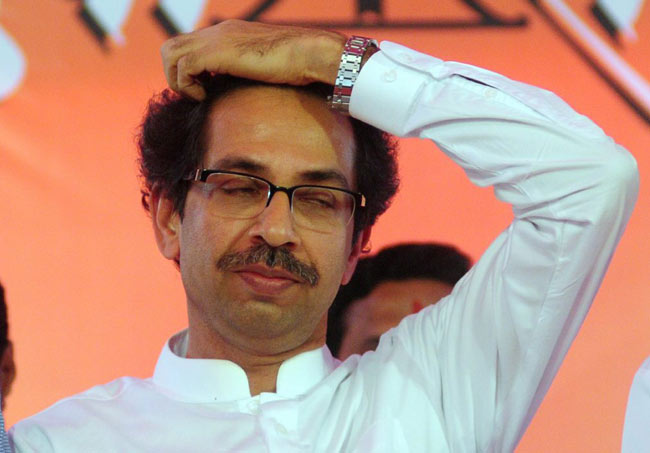
The Shiv Sena, after declaring recently that it will contest the 2019 elections alone, will support the no-confidence motion against the NDA government according to Republic. The decision was supposedly made after a phone call between Shiv Sena Chief Uddhav Thackeray and Chandrababu Naidu.

Thus far, YSRCP, TDP, AIADMK, AIMIM, the Left and the Congress Party are supporting a no-confidence motion against the NDA government at the centre. Trinamool Congress looks set to support the motion as well after Mamata Banerjee welcomed TDP’s decision to quit NDA.

The BJP government, however, looks safe in its seat for now. Shiromani Akali Dal, which has 4 MPs and a part of the NDA, will most probably vote in favour of the NDA government. The 2 MPs from JD(U), BJP’s alliance partner in Bihar, will also likely vote against the motion. Apna Dal, which has 2 seats in the Lok Sabha and part of the NDA as well, is expected to support the government as well. Together with 274 MPs from the BJP, excluding the Speaker, the BJP appears to be in a safe position.

Therefore, despite several opposition parties and ex-allies coming together, the NDA government is almost certain to survive the no-confidence motion.

Posters with pictures of Mayawati and Akhilesh displayed outside Samajwadi party office in Lucknow

0

The bonhomie between SP (Samajwadi Party) and BSP (Bahujan Samaj Party) has been seen after the victory of the parties in Gorakhpur and Phulpur seats in UP bypolls. The SP chief Akhilesh Yadav had thanked the chief of BSP after the poll results were out on social media. He had thanked the public, Mayawati, BSP, other parties and called it a victory of ‘unity’.

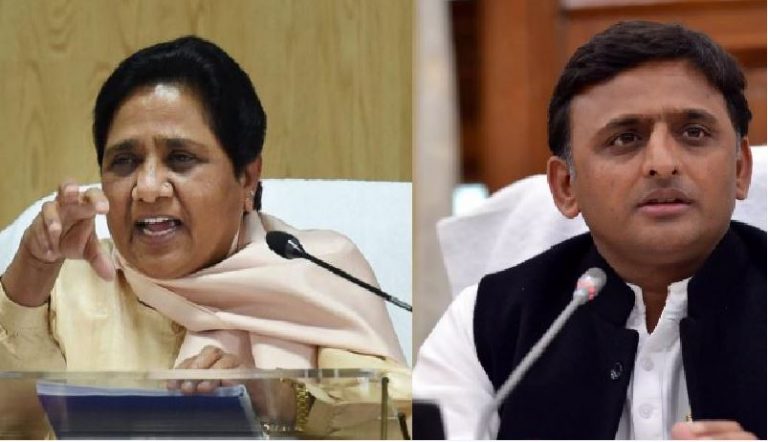
Media reported a meeting between the two leaders after the results of UP bypolls. The positive vibes between two parties have again found credence because of a poster with pictures of Akhilesh and Mayawati have been displayed outside Samajwadi Party office in Lucknow.


The fact that Mayawati has been depicted as a larger personality in comparison to Akhilesh in the picture raises questions on the nature of the partnership between two parties in future and equation between two leaders in coming days.

Arvind Kejriwal’s apology to Majithia has brought the rift within AAP in the open to full public view

0

A day after Delhi Chief Minister Arvind Kejriwal submitted a written apology to Shiromani Akali Dal’s general secretary Bikram Majithia in a defamation case, the rift within the party has started to surface. Sukhpal Singh Khaira, AAP leader and the leader of the opposition in Punjab assembly has strongly condemned Arvind Kejriwal’s decision.


Sukhpal Khaira spoke to News outlets and criticised Kejriwal’s decision. He also alleged that Kejriwal has not consulted with the party members before submitting the apology.


He also stated that the party fails to understand the timing of the apology in the defamation case and added that the state government’s special task force has found evidence to proceed against Majithia.


Yesterday, Bhagwant Mann, AAP President from Punjab who was considered the CM candidate for AAP has resigned from the party after Kejriwal’s apology. Mann

Veteran AAP leader Kumar Vishwas, who was reportedly displeased after being denied a Rajya Sabha seat, has also expressed concern over the incidents. He has been criticising Kejriwal in his poetic style on social media and yesterday stated that he has been attending court summons in several of the defamation cases and appointing lawyers on his own expenses without any help from Kejriwal or the AAP.

The AAP, founded over a hundred hollowed promises and loud rhetoric, has clearly been a vehicle for fulfilling Arvind Kejriwal’s personal ambitions. From the very beginning, after coming to power with a significant majority in Delhi, Kejriwal seemed to forget all his promises and embarked on a never before seen political rampage of personal attacks, bickering and excuses. He has lost state elections one after another, even lost deposits in most of the elections, his MLAs have been found brazenly breaking the law and the public of Delhi got none of the golden pictures they were sold.

Recently, the AAP seems to have reached a downward spiral. A big chunk of its MLAs face disqualification, senior leaders have quit. The recent incident of violence on the Delhi Chief Secretary was another low for the party’s image. Two of its MLAs face criminal charges and Arvind Kejriwal’s advisor V K Jain has resigned over the issue. Kejriwal faces another major defamation case from Arun Jaitley where he has been in the soup after his own lawyers abandoned him and several of his MLAs also have major defamation suits against them. Now that senior leaders have also started expressing lack of trust in the party leadership, AAP might be in very troubled waters. Kapil Mishra, the former water minister was suspended from primary membership of AAP after he brought allegations against Kejriwal in the 400 crores tanker scam.

Charges of corruption and scams, a brazen disregard of the law, and misbehaviour have been a common thing for AAP leaders and even Kejriwal himself is no exception to it. AAP’s years of ruling Delhi has been tainted with corruption and inaction. Now that the rift and discord within the party have been brought out in the open, it remains to be seen how long the party lasts before imploding on its own misplaced priorities.

How India should solve the key issues with electric cars for the next auto revolution

0

Indian automobile sector got a surprise when the minister for Energy Mr Piyush Goyal announced a plan to get all vehicles on Indian roads, to be electric powered, by 2030. Indeed an ambitious goal (which was later toned down by the government), and given the significant oil share in Indian imports, it is a step towards the greater good.

Realistically, the electric vehicle is not a new concept here in India. I have seen “REVA”, small electric car, on the streets of Bengaluru, during my post graduation years around 2006. Eventually, electric two-wheeler from various manufacturers became a common sight in metros.

So having said that let’s look at the prevalent issues with electric cars and the way we can tackle them.

Issues

Electric vehicles, in general, have these main issues:

  • The range is a limiting factor for any vehicle. For petroleum powered vehicles, India has a well-penetrated network of fuel stations. Electric cars are so far limited to the city only.
  • Lack of charging infrastructure — Unlike petroleum vehicles, Electric vehicles do not enjoy the support of charging station networks, eventually limiting the operating range of the vehicle.
  • Different specifications and requirements — Due to various prevailing standards (in case of two and three wheeler vehicles) existing, it further complicates the availability of a charging station.
  • Time for charging — Electric vehicles operate on battery. Recharging time for batteries had definitely improved over last few years, still, it is many-fold compared to refuelling in petrol stations, which can be maximum 10–15 minutes, including waiting time.
  • Availability of vehicles — Not many models of completely electric vehicles are available. Hybrid models are often in mid-premium to the premium segment. Price is also a limiting factor regarding vehicular adaption, given the limited range. According to Bloomberg article, India will need more than 5 times the global Electric Vehicular production, to achieve the 2030 target, estimated at 10 million.
    The battery has a limited life. It cannot be considered like Gas Cylinders to be used at 100% efficiency every time. Efficiency reduces over the charging cycles.

Core Problem

The core problem here is fragmentation. Every manufacturer has own standards for batteries and other engineering components. In the six popular two-wheeler models, hardly any model shares specifications with the other. Also, companies are so far interested in selling the vehicles, rather than building charging network for it.

New name on-board Ather Energy, got the problem right and is focusing on building a charging network collaborating with cafes and restaurants. But it is the in a very early stage, and the first vehicle is yet to be commercially roll-out in the market.

NTPC also announced Electric Chargers in Delhi NCR, with a plan to roll out throughout India, which might also be considered a welcome step.

Despite all these efforts, recently a pilot project of electric cabs by Ola and Mahindra is on the verge of failure, as drivers returning the vehicles, because of their extremely limited range (100km) and long charging hours.

Solution and Way Ahead

Given the fact that, the time needed for battery charging makes electric vehicle unsuitable for a quick refuel-and-move type of application. The only viable option could be replaceable batteries and charging booths, where batteries can be replaced. To achieve this, common battery standards are necessary, as one booth cannot really handle multiple battery types.

Charging booths could be accommodated in existing fuel stations, also on the lines of STD booths like we saw in early 2000. There could be prepaid card/card swiping machines, for battery replacement. As a promotion, it could be subsidised as well. Mr Maini who formerly developed REVA electric cars is working with Ashok Leyland for Replaceable batteries system and hope we can see them in use soon.

Battery Charging Booths can be operating on renewal energy options, as most of India is blessed with sufficient sunshine & wind. Solar panel sets to charge Battery, will further boost Renewable Energy push as well as #MakeInIndia, thereby reducing the load on the Indian electricity grid.

We can also explore building EV-Friendly highways, like electrified rail-tracks, with guaranteed availability of charging station every minimum threshold (one per 2–5 km), with toll-waiver for electric vehicles, and if necessary pickup-vehicles to arrange for battery in case a car runs out of battery in between.

Smart Charging Map, to mark nearest battery replacement booth, and charging status of batteries available there, in real-time, could further help accelerating adoption of Electric vehicles.

Batteries have limited life and there is a need for R&D, to create more charging cycle battery while ensuring its safe disposal, without polluting the environment, and simultaneously keeping cost in check.

The Support for Electro+Fuel hybrid cars can be crucial. In India we have two types of hybrid cars, one is regenerative hybrids, which uses regenerative braking to charge the battery, and those aren’t the subject of discussion here (Ciaz hybrid etc).

Another type is the Electro + Fuel hybrid cars (e.g. Toyota Prius) which operate on battery and in case it runs out of charge, it can be operated on a traditional fuel engine. One of the drawbacks of these cars is cost. The other main drawback is that government policies do not cover hybrid cars in the electric vehicle benefit.

Having said that, I believe, these could be a good alternative until we have a reliable charging infrastructure.

Priorities for the getting traction of electric vehicles could be as follows

  1. Like I suggested above, we need a common Replaceable Battery Standard for electric vehicles to be sold in India.
  2. EV Charging infrastructure as unified as petrol stations. A network of Battery charging stations and a map application to navigate and know the status of battery charging.
  3. Solar powered charging booths can help reducing stress on the Electricity Grid. This also can boost solar panel manufacturing making panels affordable for other installations as well.
  4. Smart Map for charging stations to know the distance, and current status of Battery charging.
  5. Cost of Electric Vehicles is still considerably high. Mahindra E2O, one of the (rarely) available completely electric vehicle, costs more than 5 Lakh Rs. which is unjustifiable given the size and range of the car.
  6. More focus on R&D based on standardized infrastructure to avoid further fragmentation in the Electric vehicle market could help realize the planning for 2030.
  7. Safe battery disposal mechanism, at the end of usable battery life, to keep pollution in control.

(This article has been written with inputs from @attomeybharti.)

Why should Rajasthan, MP, Chattisgarh vote for Congress that thinks these states are free riding on taxes from South India?

0

Siddaramiah is one of the few Congress CMs left in the current political scenario. There is tremendous pressure on him and the party to retain the state of Karnataka in upcoming polls. In order to do so, the CM is using all possible tactics to ensure that he has an upper hand. Divisive agenda has been continuously pursued to rake up fault lines in the society.

The issue of an official state flag, ‘Hindi imposition’ and a encouragement for a separate religion status for Lingayats are some examples. In addition to this, the CM in an article has questioned the rationale of devolution of taxes to poorer states in North India.


In his article titled ‘Developed south is subsidising populated north ‘, the Chief Minister claims that the southern states have not been given adequate autonomy to spend funds collected in their own state. He specifically raises the issue of population in his article. He writes (emphasis added) :

Historically, the South has been subsidizing the north. Six states south of the Vindhyas contribute more taxes and get less. For example, for every one rupee of tax contributed by Uttar Pradesh that state receives Rs 1.79. For every one rupee of tax contributed by Karnataka, the state receives Rs 0.47. While I recognize the need for correcting regional imbalances, where is the reward for development? The states of the South have nearly reached replacement levels of population growth. Yet, the population is a prominent criteria for devolution of central taxes. For how long can we keep incentivizing population growth?

If this logic were to be applied in the larger social context, the tax collected from hardworking middle classes should not be spent on PDS rice or welfare policies that the CM is running in the state. The middle classes are already asking ‘why are we funding minorities and poor who are having large family size?‘ The same logic can be extended to ‘how long can Hindus keep on incentivising Muslim population growth?’ Siddaramaiah seems to be suggesting that taxes collected from Southern states must not be shared with Northern states.

Though this argument is fundamentally against the accepted logic of progressive taxation ( i.e. rich pay more tax), this must also raise eyebrows in the national context. If every rich person or rich state refuses to share a part of wealth in form of taxes to poorer classes or poorer states then how can the society and nation function in the long run?

Does the Congress Party and Rahul Gandhi accept this argument? Will they accept arguments of Siddaramiah if they come to power in any of the North Indian states like Madhya Pradesh, Rajasthan and Chattisgarh this year? Should people accept a party that plays on emotions of southern states while directly jeopardising national unity and development? Do these states accept the tag of free riders bestowed upon by a party that has national ambitions?

Two terrorists eliminated following an attack on BJP leader Anwar Khan in Jammu and Kashmir

0

Security forces have eliminated the terrorists who had taken refuge in a building in Khanmoh area in Pulwama district in Jammu and Kashmir after attacking BJP leader Anwar Khan, who escaped unhurt.


On Wednesday, three terrorists fired upon Anwar Khan’s security cover, injuring Khan’s PSO, constable Bilal Ahmad, who is now stable. According to reports, the terrorist tried to snatch the rifles from the security officers, but couldn’t manage. When the guards retaliated and foiled their attempt to attack Khan, they fled and took refuge in the building.

According to police, the slain terrorists have been identified as Rasiq Nabi Bhat of Tral and Shabir Ahmad of Awantipora. Incriminating materials including weapon and ammunition have been recovered as well. Currently, the area is being searched for a reported third terrorist. According to police records, the slain terrorists had joined militancy last year.

Twitter dissociates itself from reports on fake followers of world leaders

0

Reports suggesting the percentage of fake followers of world leaders like Trump, Modi and others made waves on social media. However, a Twitter spokesperson while speaking to IANS has said that the ‘Twitter Audit’ tool is not their product. “The methodology used by ‘Twitter Audit’ is deeply flawed and their incorrect information should not be taken seriously,” a Twitter spokesperson told IANS.

In addition to that, the website www.twitteraudit.com itself declares its methodology which can be questioned. It also declares that it is not an official Twitter product.

Note on Twitter Audit report

It is quite possible that the tool ignores genuine followers who are inactive for a long time. In addition to this, those who don’t tweet often might have been considered as fake. The same Twitter Audit tool while revealing that Modi has 61% of fake followers also points out the fact that Rahul Gandhi and Shashi Tharoor have more than 60% of fake followers.

While failing to check statistics of their own leaders, Congress spokespersons went around sharing their ‘pearls of wisdom’ based on this fact and linked it to ‘fake promises’ and ‘fake vision’.

Media persons who were loyal to the first family did not miss this opportunity.

While the Twitter Audit tool may or may not be accurate to demonstrate the authenticity of Twitter followers of world leaders, the authenticity of Rahul Gandhi’s followers can be clearly seen.