Home Blog Page 7303

Sunday Guardian alleges shocking nexus between Lutyens babus and P Chidambaram

Madhav Das Nalapat, the Editor of Sunday Guardian has made shocking claims on how Karti Chidambaram and his father P Chidambaram have established deep networks in the bureaucracy. These networks had helped them run their ‘shady’ dealings according to the Sunday Guardian article published today. Mr Nalapat claimed that Karti Chidambaram’s wealth could give Warren Buffet a pause. Warren Buffet is a well-known billionaire and investment guru in the USA.


In addition to this Mr Nalapat claimed that these bureaucrats continued to rise under the NDA government. Nalapat goes on to say that former colleagues of Raghuram Rajan had accused that Rajan had tipped off Chidambaram about developments in the Aircel Maxis case. Raghuram Rajan had served as the RBI governor from 2013 till 2016.


Nalapat also alleged that a Chidambaram loyalist, C.B. Bhave had been appointed as SEBI Chairman at a time when Bhave was being investigated in the NSDL scam. ‘Naturally, this “investigation” went nowhere’, says Mr Nalapat.


In his series of tweets, Mr Nalapat highlighted that Chidambaram had allegedly acquired lands on the Chennai beach with the alleged assistance of Shaktikanta Das. Das retired as a top bureaucrat in finance ministry under NDA regime.


Mr Nalapat went on to say that no serious investigations had been conducted about land deals and none might be initiated in future as well judging by the record of probe agencies in the past.

No serious investigation into lands in urban conurbations of Tamil Nadu transferred to Chidambaram’s family and associates while he was in high office has thus far been conducted, nor is any likely, judging by the record of the probe agencies thus far. 

In his article, Mr Nalapat claims that P Chidambaram could also be the choice for PM position if UPA were to head a coalition in 2019. He concluded his article with the following lines which claimed that both foes and friends of Chidambaram would be watching further developments in the case involving his son.

Given Chidambaram’s record of assisting friends and annihilating foes, both sets of individuals will be watching the immediate fortunes of this urbane and ruthless politician from the South with unwavering attention.

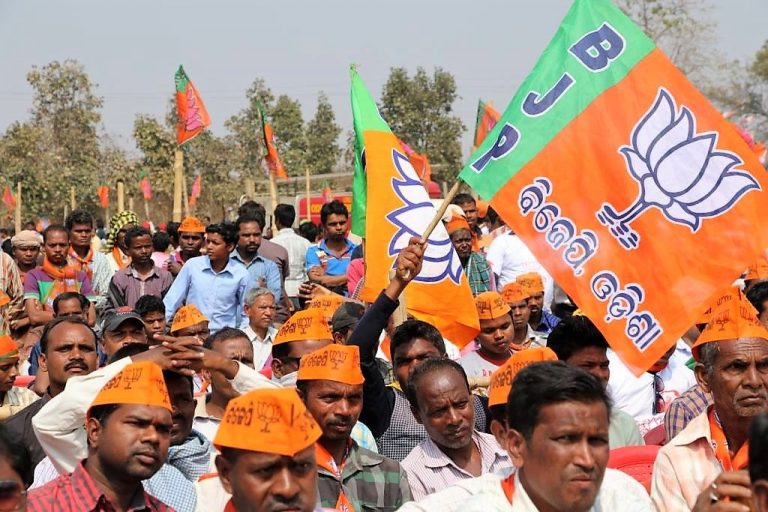
Odisha is not going to be an easy battle for BJP

0

The architect of the election juggernaut Bharatiya Janata Party (BJP), Amit Shah, yesterday made it clear that, he is not resting on the laurels of the spectacular North East victory. He would not term it as the golden period of BJP, even though they are ruling 19 states, till BJP has its government formed in Kerala, West Bengal and Odisha.

Quoting Shah verbatim, “Jab tak Odisha, West Bengal aur Kerala mein BJP nahi aa jaati tab tak party ka golden period shuru nahi hoga. Karnataka mein to hum jeetenge hi“. If you interpret it in a certain way, what Shah means here is, though Karnataka is not going to be much of a struggle, they have to pull up their socks for the other three states.

However, among the three, Odisha is the only state where BJP once had a government, though in a coalition with Biju Janta Dal (BJD). This makes Odisha the easiest among the three, or is it? Let’s explore.

The current BJD dispensation headed by Naveen Patnaik is ruling its 4th term with 18 year already in government. Out of this, BJP was a coalition partner for the first 8 years from 2000 to 2008 when BJD severed its ties with BJP citing differences in seat sharing and due to BJP’s alleged involvement in Kandhamal riots which BJD thought will hurt its “secular credentials”.

Since then, the BJD has only added to its seat count and to Naveen Patnaik’s charisma, and in 2014 it had a massive clean sweep winning 117 out of 147 seats in the assembly. To unseat BJD with the current popularity wave it is riding, BJP has to do some serious thinking and solid groundwork before it can claim to win people’s mandate. 

What works for BJD

The first, foremost and probably the only pillar on which BJD is standing ground is Naveen Patnaik. His clean image, no-nonsense attitude and non-controversial as well as non-confrontational attitude has helped him not earn a lot of political detractors as opposed to the West Bengal or Kerala government. Outside political circles, his detractors or even BJP voters in general don’t talk too harsh about him. The same can not be said about Mamata or Left in Kerala.

Naveen doesn’t play religion card nor the caste card, thereby closing this avenue for opposition to consolidate votes. He doesn’t comment on unnecessary national issues where he doesn’t have a stake, he lies low, has not shown any explicit national ambition making him a amicable guy from both end of political spectrum. How many times have you heard Naveen commenting on Modi and compare that stat with Mamata.

Overall, he is seen as a sane, docile and all weather political leader as opposed to the rabble-rouser counterpart next door. One particular precedent I would like to state here is, both West Bengal and Odisha saw huge chit fund scams to the tunes of hundreds of crores. CBI raided and arrested leaders from both TMC and BJD, however the reaction from both leaders were poles apart.

While Mamata cried central govt vendetta, Naveen calmly passed it with the cliched “Law will take its own course”. Whether he is trying to stall the investigation through backdoor channels and protecting his men is a matter of speculation, but bottomline is, he came as a clean person while Mamata came across as someone shielding the corrupt.

What also helps Naveen is his authoritative image and almost a stranglehold over party matters. You can’t be in the bad books of Naveen and be in BJD. You have to toe the Naveen’s line while in BJD. However, through all this, Naveen doesn’t come as the strict dictator, in other words, he doesn’t allow the indisciplined member to be a martyr. No tall leader, after being expelled by Naveen has seen any remarkable success in politics, Jay Panda’s fate remains to be seen. But in all of this cases, people see the expelled member being the offender deserving the fate than Naveen being the authoritarian. 

Naveen till date has not undertaken any massive reforms, which ironically works in his favour. Take Narendra Modi for example. In 4 years of power, he has taken some gigantic decisions with mammoth political consequences. Demonetisation, GST, Aadhaar seeding to name a few. How much has he been successful is for the public to judge but when you undertake programs of such epic proportions, you lay a ground for people to judge you on your intention, execution and nobility of the programs. When you steer clear of any major reform, you don’t yield ground for the public to judge you! That works hugely in favour of Naveen.

And last but not the least, the shadow of his father, the legendary Biju Patnaik, adds to the  aura of Naveen, giving him credibility. These factors combined overshadows the 18 year anti-incumbency.

What doesn’t work for BJP

To weaken Naveen’s fort, the first thing the state BJP needs is a strong local leadership, which they are lacking. They don’t have a face who can be a credible replacement for Naveen. Someone, who exudes confidence and tells people that BJP can deliver but more importantly, deliver it better than Naveen.

The local leadership is highly fragmented. Senior leaders like Dilip Ray and Bijay Mohapatra are totally sidelined. So much so that they are not even invited for local meetings and campaigns. It’s anybody’s guess that, they are not going to contest on BJP’s ticket in 2019 if some drastic measures are not taken. State president Basant Panda is uninspiring. Old timers and Sangh affiliates like Pratap Sadangi are not in a position to take decisions. Sarat Pujari doesn’t gel well with Dharmendra Pradhan.

Dharmendra Pradhan himself is still seen as an outsider. He may be a good administrator but lacks electoral wisdom. His execution of the flagship Ujjwala scheme may go onto become one of the bullet points when Narendra Modi goes back to public asking for votes in 2019 but it doesn’t resonate with people here. They don’t connect with Dharmendra Pradhan. Fact remains that Dharmendra Pradhan neither has shown the electoral acumen who can lead his party to win against a formidable BJD. He won a Lok Sabha election last in 2004.

To add to this, the personal attacks on Naveen are proving to be detrimental. As a responsible opposition, BJP should show the inefficiency, corruption, nepotism and ineptitude of the government and BJD. Naveen is still seen as a personally clean leader. Any personal attack on Naveen Patnaik is not going to help the cause. What helps BJP is a weak and totally fractured state Congress unit. The BJP should try to consolidate Congress votes in its favour apart from luring BJD voters to its fold. But that strategy seems lacking.

If you look at BJP’s campaign in other states, one of the major focus is, how they are going to bring about changes if and when they come to power. The biggest two successes of BJP in state elections in recent past are Tripura and Uttar Pradesh and this was the central point of the campaign. In Odisha, that is totally lacking.

One of the most cliched comment of Naveen Patnaik, which is joked about among Odia people, is “Kendra Abahela” or the “centre’s (govt) neglect”. This is where BJP can earn some brownie points. For the first time, Odisha has given only 1 MP to the ruling dispensation at centre but has 2 cabinet ministers. BJP govt in the centre has not shown any step motherly attitude despite having a opposition govt at state. In fact, many flagship programmes of the petroleum ministry, headed by Dharmendra Pradhan have been inaugurated from Odisha itself.

IOCL refinery has been completed and made functional. Odisha has gotten it’s fair share in Sagarmala and NHDP programmes. Railway budget allocation, every year since 2014 has been much higher than previous years. Odisha got 3 airports in the UDAN scheme.

Even after increasing the grants in almost all departments, if the parameters and indices of the state are still not improving, then Naveen Patnaik clearly lacks execution skill. This can be a used as a narrative to make a headway into BJD’s claimed success story. Also, a subtle messaging about having same party at centre and state will definitely help the state to be put on higher growth trajectory should be tried as well.

Naveen has ruled for 4 terms and clearly headed for a record 5th term unless BJP gets its pieces together. There is a BJP uprising in the state and Naveen has taken note of it. In his 20 years of political career, Naveen for the 1st time, spent a night at during campaigning, during Bijepur by-poll which the party won. That tells a lot about how seriously Naveen is taking 2019.

This probably will be the last innings of Naveen before his retirement and he will try to score a ton here. Question is, what will it take for the BJP to unseat him but more importantly, does the state BJP have it in them to achieve this? Only time will tell.


Celebrations take communal turn as some people pelted stones on people celebrating Holi

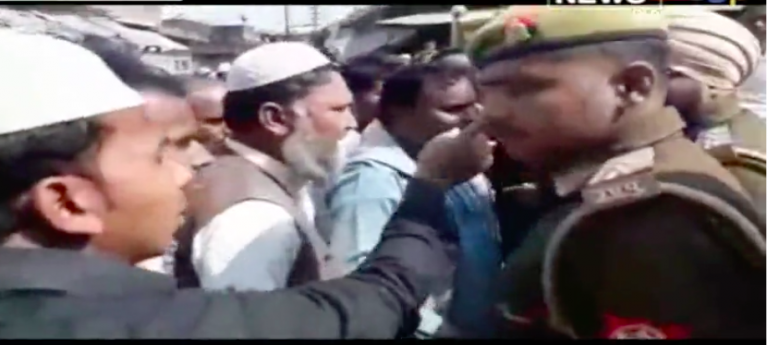
Holi celebrations in Sitapur took a communal turn as people of ‘particular community’ took an offence to being splashed colours on and beat up two brothers before resorting to pelting stones on others celebrating Holi.

Reportedly, the incident took place in Joshi Tola in Sitapur, where a group of people were celebrating Holi. At the same time, people of a ‘particular community’ came to a face-off, when some colour of Holi fell on someone who was heading towards the religious place. He got angry and claimed that people threw colours at him deliberately. At the same time, people who were in the premises of the place of worship came out and allegedly beat up one Dharmendra and Jitendra, two rickshaw drivers, following which a mob of both the communities gathered around.

Things escalated such that it led to stone-pelting. However, police reached the spot and brought matters under control. As per reports, the authorities had anticipated such clashes, since Holi fell on Friday this year and hence mosques in the region had deferred namaz timings to avoid communal clashes.

Police have filed a report against 40 people.

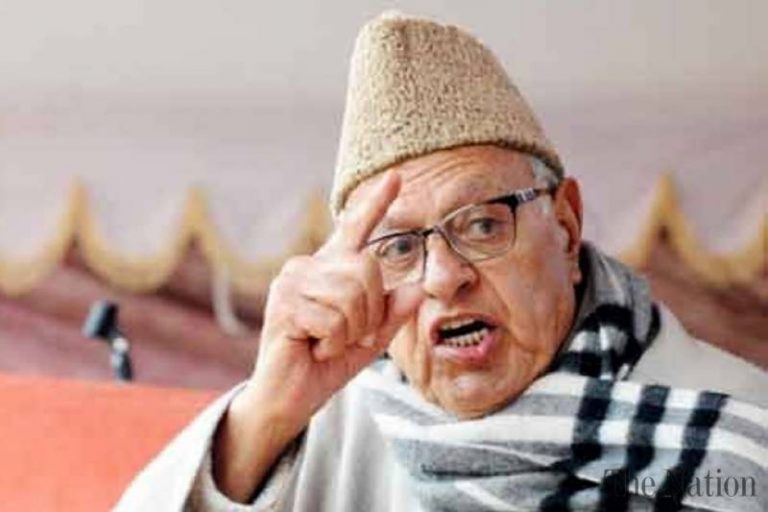
Jinnah didn’t want to create Pakistan, says Farooq Abdullah, stirs up controversy

Nehru, Sardar Patel and Maulana Azad are responsible for the partition of India and not Jinnah ‘Sahab’, said Farooq Abdullah, former chief minister of Jammu and Kashmir.


Claiming that Jinnah didn’t want a separate country for Muslims, but it happened because Indian leaders refused to accept minority status for Muslims and Sikhs in the country.

Abdullah was addressing Jammu Chamber of Commerce and Industry at Jammu Chamber House, where he said that after independence, when the issue of a separate Muslim nation was floated, a commission was set up which recommended instead of splitting up the nation, special rights be given to minorities. Abdullah said, while Jinnah accepted the proposal, Jawaharlal Nehru, Sardar Patel and Maulana Azad backed off and hence India had to be divided.

He further added that we are still facing the repercussions of the seeds of hatred which were sown then.

Numbers speak for themselves : CPIM is fast approaching its Waterloo

0

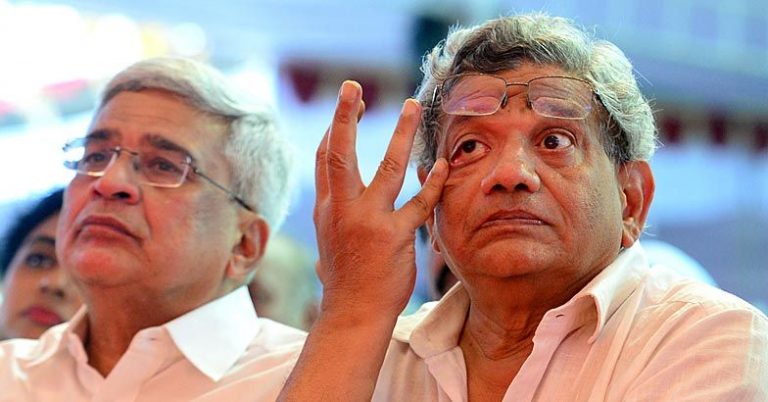
The recent ideological war within the CPI(M) on its political strategy had caught the attention of political observers. A majority of Polit Bureau members had voted against an alliance with Congress party in order to counter the BJP.

The only state where the party looked rock solid was Tripura, which has now slipped out of the party’s hands. The CPI(M) general secretary had tweeted that the ‘battle is on’ after the results of the assembly polls were out.


Mr Yechury had earlier predicted a ‘Waterloo’ for BJP in the state. If Mr Yechury, had read the history of Napoleon and kept track of his party’s performance in past three assemblies and Lok Sabha polls, he would recognise that an impending Waterloo was waiting for his party, not the BJP.


The CPI(M)’s performance in Lok Sabha has been declining ever since it reached its peak in 2004 polls. After reaching its highest tally of 43 in 2004, the party declined to 16 in 2009 and 9 in 2014 Lok Sabha polls. In terms of vote percentage as well they have gone down from 5.7% to 3.3% in a decade. It has to be noted that the party had to forfeit its deposits in 50 out of 93 seats in 2014 (see FD column).

Lok Sabha Performance of CPI(M). Data Source: indiavotes.com

The numbers speak for themselves. The CPI(M) has steadily declined in the last two assembly polls in its backyard West Bengal. It had reached its peak performance in last two decades in 2006 when it had secured 37.1% vote share and 176 seats. This was higher than its tally of 143 in 2001. In the next two assembly polls, its vote share declined from 30.1% to 20.1%. The number of seats also went down from 40 to 26.


CPI(M) performance in West Bengal over the past two decades

Its performance in Kerala has also been declining in terms of vote share. The number of seats it has secured has been fluctuating because of other factors. Its vote share was 21.4% in 2001. After rising to a peak of 30.4% vote share in 2006, it has declined to 28.2% in 2011 and 26.7% in 2016. However, its seat tally has increased from 45 to 58 because of the performance of other players in the state. In terms of popular vote, the CPI(M) is declining in Kerala as well. It is only the performance of others which is influencing its seat tally.

CPIM performance in Kerala in past two decades

All these numbers highlight that the popular support for communist ideology is on the decline. Tripura was an exception where CPI(M) was able to hold on to a vote share of 46% –48% in past 3 elections. Tripura has now been breached by BJP.

The Chinese Communist party itself has disowned many original features of communism for the sake of growth and progress. ‘What is holding back the chelas of Chinese from evolving themselves back in India?’, one wonders. If the CPI(M) does not evolve with time, they may have to die a painful political death in near future. Mr Yechury must, on some level, realise that the war is not on. They have been defeated. Their ideology has been defeated. They have been politically routed. And the last few pockets seem poised to abandon their ideology as well.

Hidden Behind Manik Sarkar’s ‘poor’ ‘white kurta’ image was bloodshed and lack of development

0

Tripura’s incumbent Chief Minister, Manik Sarkar was propagated in the media as “India’s poorest CM“. The CPI(M) leader who has been Tripura’s CM since 1998 had declared before the state assembly elections that he has a total of Rs 3,930 in cash. His total assets were declared to be valued at Rs 26 lakh. Manik Sarkar looks the part too. Always clad in a plain white kurta-pyjama, he has a lean, unassuming frame. The four-time CM does not have corruption charges on him, but he has been leading the communist party government in the state since two decades. Has the state politics been as clean as his pristine kurta? Many would disagree.

When Madhu Deb, a booth president in Ramnagar constituency in Tripura was found hanging from a tree barely days before the assembly elections, BJP leader Himanta Biswa Sarma had stated that the white attire of Manik Sarkar is getting deeply stained by the blood of innocents and the people of Tripura will avenge it soon. As per reports, Madhu was the 12th BJP worker murdered in the past six months. The BJP alleged that CPI(M) has been committing political murders in the state.

On January 3, another BJP worker Amulya Malakar was murdered in Tripura.

the body of Amulya Malakar

These incidents were not stand alone. Several murders, attacks and even rapes have been reported from Tripura where the allegations were on CPI(M) goons. The murder of RSS and BJP workers has been long going on in Kerala, Tripura has not been very far behind. Both states have been ruled by the same party. In Manik Sarkar’s Tripura, violence was not limited to murders. Recently several Muslim families had alleged that they were threatened by CPI(M) goons and were denied entry to the village mosque after they joined the BJP. Many previous communist leaders have joined BJP in recent times, and there are reports that the CPI(M) machinery commits the murders as a message for them, as to what would be their fate if the defied the communist rule. Violence has always been the choicest tool of communists and political murders are just another manifestation of it.

Murders apart, the lack of development in Tripura is another blemish on Manik Sarkar’s image. According to recent surveys, the state has the highest number of teenage mothers in the country. The state lacks even the most basic infrastructure and healthcare facilities. Addressing an election rally in Sonamura in the state, PM Modi had said that the ruling CPI(M) wants people to be dependant on it for everything and that is the new face of slavery.

An article titled “Tripura, a red state stalked by death disease and despondency” in the Swarajya magazine states that the state has virtually no industries. Basic amenities like roads and healthcare centres are a distant dream for the majority of the population. Even the state capital Agartala has no modern infrastructure and sees several hours of power cuts every day.

Tribals make almost 30% of the state population. Yet many of them live in absolute poverty. The central government schemes have not reached them yet and as per the report, out of the Rs 15,956 crore state budget, only 635 crores were sanctioned for the Tripura Tribal Area Autonomous District Council, which is responsible for the welfare of these people. BJP state general secretary Rajib Bhattacharjee states that after the NDA government came to power in the centre almost 70,000 crores has been given to Tripura for developmental work, but most of it has gone back due to lack of utilisation. Of the amount that has been ‘used’ most is expected to have ended up in the coffers of ruling communist leaders as there hardly any development to be seen on the ground. The people, especially the tribals, live in absolute poverty and starvation deaths are common in the state. The number of matriculates is just 9.2% among the tribal population.

The North East has been neglected by the media since always. It won’t be an exaggeration to say that the rest of India was not even aware of the conditions in the NE states and the problems and crimes plaguing the people there. But the present central government has been aggressive in its outreach to the NE and finally, the NE has started to become a part of the national news. The state of Tripura has been under communist rule for very long time and there is no telling how many of the crimes would have gone unreported, how many starvation deaths ignored and how many corruption charges unprobed. Manik Sarkar’s kurta might be flawlessly white, but the long communist rule has been keeping many dark secrets covered up in Tripura.

Sunil Deodhar: The man behind BJP’s miraculous victory in Tripura Assembly Elections

“There was nothing to start with. Everything had to be built from the grassroots. I had just a handful of karyakartas, and just one leader – Subal Bhowmik (now the vice-president of the BJP’s state unit) – with me then,” Sunil Deodhar told Swarajya.

Every grand success story has a hero. A hero who achieves victory against all odds, overcoming all obstacles and one who continues his struggle in the face of the great story. From losing deposits on 49 of the 50 seats it contested to emerging victorious in the next Assembly Elections, it is indeed a herculean effort. If the hero for the BJP in the General Elections 2014 was Amit Shah, in Assam was Himanta Biswa Sharma, then quite undoubtedly, in Tripura it was Sunil Deodhar.

Sunil Deodhar, who had previously managed Narendra Modi’s campaign in Varanasi in 2014, was given the responsibility of securing victory in the Left bastion. In 2 and a half years, he transformed a state unit with no vision and no direction into a ruthless machine built for victory. With slogans such as ‘Chalo Paltai (Let’s change)’ and extensive social media management, he changed the fate of the Saffron Party in the northeastern state.

Sunil Deodhar was appointed the Tripura-in-charge in November 2014 and the first indication of his efforts bearing fruit came in 2015 when the BJP dislodged the Congress in the second position in the by-polls in the Pratapgarh and Surma seats. Then, the surest sign came when the party went on to win 2 seats in the Gram Panchayat elections the next year. And before the state went to polls on the 18th of February, Deodhar stated that the BJP-IPFT alliance will secure a 2/3rd majority in the Assembly. His words have proved to be prophetic.

Deodhar targeted the much advertised clean image of Manik Sarkar and exposed it as a sham. He had said, “To break the myth about Sarkar’s goodwill as a clean leader and able administrator, BJP is questioning his simple and frugal lifestyle and also the state’s performance which has been good but only in the books.” He came up with the slogan ‘Tripura te garib mor-e, mukhya mantri chopper te chor-e’ (Poor die in Tripura, the Chief Minister rides a chopper). He took the fight straight to the Chief Minister and emerged victorious in the end.

Deodhar also coined catchy phrases like ‘Chalo Paltai’ which went viral on Social Media. Before long, ‘Chalo Paltai had become popular with the people of Tripura who would often greet each other with the phrase.
[youtube https://www.youtube.com/watch?v=3ekZOS9I71Q]

Deodhar also highlighted the Modi Doot Yojana where a Karyakarta would board the morning train from Agartala to Dharmanagar and distribute pamphlets in Bengali and Kokborok. They would collect the phone numbers of passengers and send them messages about the good work done by the BJP and the misrule of the ruling Left Front.

Deodhar also roped in Congress workers and leaders into the party to build its own base. He correctly identified the anti-Left sentiment in the public and recognized that Congress wasn’t a viable alternative. He organized morchas, booth level committees and made sure union ministers visited remote corners of the state when they were in Tripura. He inducted tribals into the party and offered them important positions which brought the neglected tribal community closer to the Party. During the Durga Puja, small booths cloaked in the imagery of the BJP could be seen along the roads in Agartala where workers sat offering people water.

He had told The Print, “In the last one year, even CPI(M) started breaking. We formed booths. Today out of 3,214 booths, 3,209 booth committees are ready. In one voter list of a booth, there is an average of 15-17 pages, on each page, there are 60 voters. We have a panna pramukh for each page and his duty is to knock on the door of each of these 60 voters in one fortnight.”

Deodhar flooded Tripura with banners and flags and Karyakartas and the results of the Assembly Elections are a testament to his hard work and dedication. To catapult a party which had secure less than 2% vote-share to a 2/3rd majority in the next Assembly Elections is indeed a miracle. And the BJP with its dedicated karyakartas and leaders has proved time and time again, hard work tends to make miracles happen more often.

A Bengali’s thoughts on BJP’s landslide victory in Tripura

0

Over time, a caricature has developed of Bengali Hindus. A pot-bellied man who spends his mornings at the neighbourhood tea shop arguing with his fellow man about politics over a cup of tea. He loves his fish and passionately advocates the virtues of communism till his throat runs dry. The cause hasn’t been helped by a plethora of Bengalis writing for various media outlets promoting all sorts of degeneracy at the cost of Hindu values. However, that is all it is: a caricature. The average Bengali is not the Bhodrolok who hogs all the limelight for all the wrong reasons and appoints himself as the moral guardian of the society. We are as different from them as any two people can be. In fact, we have a specific name for such people, ‘aantel’ and we treat them with much derision.

Contrary to popular belief, the average Bengali is not obsessed with Communism. Sure, he might not be averse to it but he is definitely not an ideological proponent of it either. We are not religious followers of Communism. Even after Trinamool’s victory over CPI(M) in West Bengal, it did not take much for the communist party’s cadres to switch sides. We love our Gods, we love our tea, we love our passionate debates and yes, we love our fish. But a pathological love for Communism, there is not. The Saffron Party’s victory in the Left bastion of Tripura is a testament to the fact.

There are good reasons why people from other communities perceive Bengalis as religious followers of Communism. The primary reason being our intellectual elite which is overwhelmingly obsessed with Communism. Bengal, after all, is where Naxalism began and indeed, Bengali intellectuals provided the intellectual framework for the movement. But the same cannot be said for the average voter or even the worker of the Party. Unfortunately, it is always the intellectual elite which regarded as the mascot of a community. The average voter in West Bengal then and in Tripura until now did not vote for the Communist parties because they harboured any sense of ideological loyalty, they voted for them simply because they judged them to be the best alternative available to them.

Another perception exists in the minds of people from other states that Bengalis are too secular and often Anti-Hindu. It is as far from the truth as could be. We are a peace-loving people, yes, and sometimes even pathologically so but we have not forgotten our roots or our identity. Even the communist cadres, in Tripura at least, and even West Bengal, are very much Hindu and devoutly so. It is just our intellectuals who come across as enemies of Hinduism. Unfortunately, our intellectuals have managed to influence a lot of our youth and as a consequence, universities in Bengal appear to be the den of anti-nationals. But even among the youth, Hinduism is very much alive and is in fashion again as the political landscape of the country changed.

The Bharatiya Janata Party began its campaign for the polls by highlighting the manner in which the communists at JNU had insulted Maa Durga and leaders of the Communist Party had lent their support to them. The people, quite obviously, did not take kindly to the insults that were meted out to our Goddess. The BJP also highlighted the CPI(M)’s support to the anti-nationals at the JNU and during the episode, Bengalis were angered at the attempt to sow seeds of division in our society. Even though a lot of Bengalis do hold a favourable opinion of Communism, they will not tolerate insults to our Gods and sympathize with anti-national sentiments.

Our intellectual elite is a different breed altogether. We have too many of them actively trying to undermine Hinduism and promoting all sorts of degeneracy in the society and even sympathize with separatist sentiments. But ‘Aantels’ do not represent us, the common folk. Our youth are not represented accurately by those at universities either who love to paint graffiti across university campuses expressing their distaste for the Indian Union. The rise of Hindu Samhati in Bengal led by Tapan Ghosh is evidence of the fact that Hinduism still rules the hearts of Bengalis. For far too long, we have been led astray by the ‘Aantels’ but we never really left the fold either.

In recent times, few Bengali intellectuals on social media, who claim to be staunch Hindus, have attempted to portray that the BJP-RSS and their supporters propagate hatred against Bengalis and other ethnicities outside North India. I feel their opinions are utter rubbish. Every community gets ridiculed for every other reason. The ridicule that Bengalis are subjected to, is it any worse than Bengalis themselves subject people from Uttar Pradesh and Bihar to when they address the region as ‘cow-belt’ and other derogatory terms? I have very friendly relationships with people from all over India on social media. I personally get along much better with people from Uttar Pradesh and Bihar and South India than with a certain section of Bengalis. So when such Aantels whine about the apparent hatred for the Bengali community, I can only laugh.

Sure, not all Bengalis who voted for BJP in Tripura agree with all the cultural agenda that the party espouses. But they are aware of the threat illegal immigration from Bangladesh poses and are proud of their identity. As a Bengali Hindu, I am happy today. I am happy that the saffron party has won in a Bengali dominated state. I am happy about the rise of Hindu Samhati in West Bengal and the consequent rise of the BJP. I can only hope that the BJP will carry forward their victory in Tripura to another state that once was a Left bastion: West Bengal. Gods willing, the red of communism will soon give way to Saffron in the hearts of all Bengalis.

After Tripura victory, BJP supporters give comrades a ‘LOL Salaam’ on Twitter

BJP supporters on Twitter have been ecstatic after the trends which point at an imminent victory for the BJP in the CPIM bastion. Some users felt that the CPIM is now reduced to a single state and has no other branches.


Though numbers are evolving quickly, a Twitter user felt that China has been losing in Tripura this time.


Lal Salaam to Vande Matarama was a welcome change said the filmmaker Vivek Agnihotri. The imminent BJP victory in this key state has brought to all nationalists.


For a party that draws inspiration from different communist regimes in the world from time to time, there was still hope left according to a Twitter user.


Another personality on Twitter liked the slogan ‘Rang De Basanti’ to the Saffron surge that India is witnessing in the past four years.


Others felt that Congress could still claim a moral victory in the state in spite of these results.


It appears that there has been a 180-degree shift from left to right in the state.


While the final results are still awaited we can clearly say that the CPIM has lost heavily in the current assembly election result.

Nagaland Assembly Elections results: The dynamics of alliances

Today is the poll-result day for the assembly elections held in three north-eastern states. Nagaland saw 75% voter turnout on the election day. The north-eastern state which has 60 assembly seats saw mainly regional players as main parties contesting but the Bharatiya Janata Party had announced an alliance with the Nationalistic Democratic Progressive Party (NDPP).

Nagaland’s recent political history has seen many ups and downs. The state has been under president’s rule twice and Chief Ministers had to be elected five times in as many years. The state is also constantly under threats from insurgents but the good voter turnout has proved that the people have chosen democracy. There also have been several instances where the church was involved in state politics. The state also never had a woman as an elected representative in the assembly which might change this year as five women had contested.

Elections were held in 59 seats as ex-chief minister Neiphiu Rio and leader of NDPP was elected uncontested after his only rival withdrew from the Northern Angami II seat. The NDPP has contested in 40 seats while its ally BJP had contested in 20. the Congress, which has given three CMs to the state assembly has fielded candidates in only 18 seats.


As per current trends (as on 12:31 PM), the BJP-NDPP alliance is leading in 21 seats while the NPF is leading in 16 seats. While the BJP has a formal alliance with NDPP, the party has maintained that they have kept the options of post-poll alliances open too. So as the elections results emerge we may see changing equations and fresh dynamics in the state political scene. Pre-poll surveys have predicted a BJP-NDPP win in Nagaland.