Home Blog Page 7304

Happy Holi: 12 Naxals including a top commander eliminated by security forces near Telangana-Chhattisgarh border

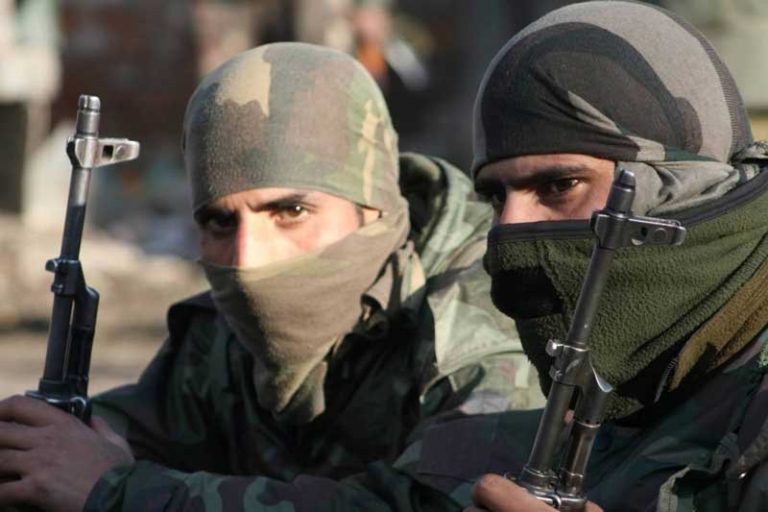
The security forces in the early hours of Friday eliminated 12 Naxals including a top commander at the Pujar Kanker village near the Telangana-Chhattisgarh border. The area of the encounter is dubbed to be the Tadapalagutta and Pujari Kanker forest areas.

This encounter was spearheaded by Telangana’s elite Greyhounds force which was formed to tackle the menace of Naxals in the state. Unfortunately, the intense gunfight resulted in the death of one Greyhound police constable named Sushil who hailed from the Vikarabad region of Telangana. Two constables are believed to have been injured. The encounter finally ended at 7 AM.

Out of the 12 slain Naxals, one of the deceased is believed to be Hari Bhushan alias Jagan, who was a top leader belonging to the Telangana State Committee of CPI (Maoists). Jagan used to be a military tactician. Another senior leader named Bade Appa Rao is also believed to have perished. Out of the remaining dead Naxals, six are supposed to be women.

The encounter began when the security forces received Intel that the Naxals were hiding in area’s jungles which resulted in the Greyhounds and local police launching a combing operation. After surrounding the Naxals, the security forces demanded that they surrender, but the left-wing terrorists decided to open fire instead.

Apart from Naxals, the security forces also found various upscale weapons like four Insas rifles, an AK-47 and an SLR at the encounter site.

This success means that the security forces are going strength to strength in 2018 when it comes to eliminating the threat of Naxals. As per data updated till 25th February on the South Asia Terrorism Portal (SATP), a total of 22 left-wing terrorists have been killed this year. Besides that, a total of 25 cadres have surrendered to the authorities.

As analysed by us, the total deaths and surrenders in 2017 stood at 149 and 547 respectively and it remains to be seen if this figure is improved in 2018.

Prasar Bharati Chairman vs Smriti Irani: Does this controversial consultant have a role to play?

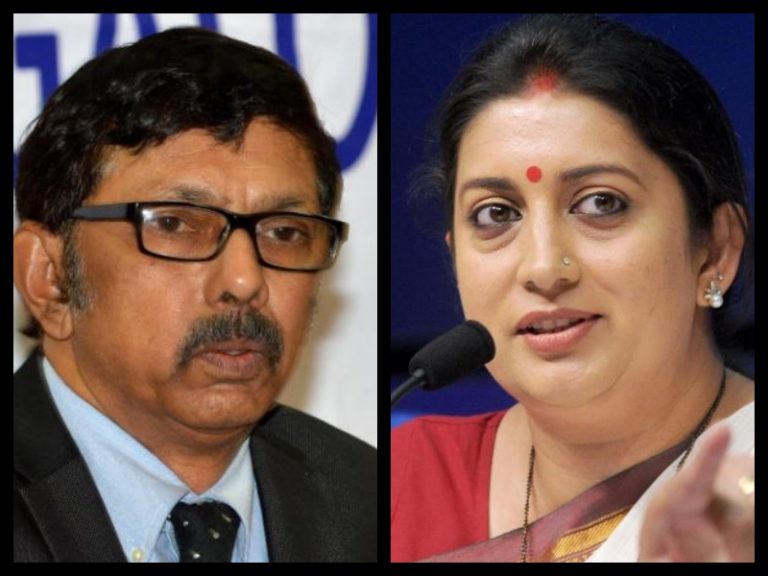
There has been a lot of chatter about the ongoing “war” between the Information and Broadcasting Minister Smriti Irani and the Prasar Bharati Chairman, Surya Prakash. Many have speculated about what the possible reasons for this “war” could be. Was it ideological? Was it because as many from the opposition say, Smriti Irani is an incorrigible control freak who won’t let anyone else run the show as they deem fit? Or are the reasons hidden? Carefully hidden in plain sight?

OpIndia accessed some documents from its sources in the Information and Broadcasting Ministry that tell a very different tale. But before we get into that, we must back up a little and take a trip down memory road. To a sting operation called “Operation Prime Minister” that was conducted in late February 2014.

In the sting operation, it was revealed that some opinion poll agencies were allegedly willing to fudge the data for money, to favour candidates and political parties. Shocking as it was, some big agencies were also involved in this sting operation. One person, however, is of relevance to today’s article. Kishore Kumar Malviya.

[youtube https://www.youtube.com/watch?v=4z5Fp6KYsEQ]

Newszstreet Digital Media Pvt Ltd said they receive black money for opinion polls. ‘We received only Rs 12 lakh by cheque, rest of the Rs 12 crores was received as cash which was black money,’ said Kishore Malviya, a consultant of the company. Kishor Kumar Malviya was also caught on tape contemplating how the numbers should be fudged just enough to make it seem “believable”.

Such a person who was allegedly caught on camera accepting that he takes cash to manipulate polls in favour of political parties and candidates, was for some reason, eventually found in the employment of Prasar Bharti.

We accessed a document which proved that Kishore Kumar Malviya was hired as a consultant in Prasar Bharati. He was not only hired as a consultant but also made the Creative Head of DD Kisan on 8th of December 2014. This is a good 10 months after the sting operation surfaced. Interestingly, Malviya’s contract was terminated only on 8th December 2017.

We also accessed an Office Memorandum (OM) where it is clearly stated that the so-called “consultants” were imposing their decisions on officers and there were complaints regarding the same. The Memorandum also details how consultants close to the Chairman have been misusing their proximity to the Chairman.

The most interesting part is that even though Kishore Kumar Malviya’s contract got terminated on the 8th of December 2017, we have been informed that the Chairman, Surya Prakash, allegedly didn’t want to let go of Malviya and he continued to work. The above office memorandum was in connection with the same, detailing why Malviya and the remaining consultants could not be retained.

The OM clearly states that the need to terminate the contracts of consultants was communicated by the Ministry on 5th February 2017 and Prasar Bharati did not respond to the same. There were 381 consultants and Malviya was one of them. 46 of these consultants were with Kisan DD, of which Malviya was the creative head. In fact, the OM also talks about the ‘clip of one of the consultants that have objectionable matter’. We have been told that this reference to the sting video that featured Kishore Kumar Malviya, allegedly fixing opinion polls.

Incidentally, the leftist propaganda website came up with an article blaming the I&B ministry for not releasing funds owing to which, Prasar Bharati had to dig into its contingency funds. The I&B Ministry issued a clarification stating that for the release of funds, a MoU has to be signed, and despite repeated reminders, Prasar Bharti had not signed the said MoU.

The question thus arises if this ongoing “war” between Minister Smriti Irani and Prasar Bharat Chairman is owing to this cleansing of tainted consultants? Is it also because the Minister is putting a stop to the financial drain that these consultants come with? Is it because Minister Smriti Irani took action, or sought to take action against the consultants who were misusing their proximity to the Chairman Surya Prakash? These questions will perhaps remain unanswered till either the Minister or the Chairman come out in the open and either confirm or deny this hypothesis. Till then, we can perhaps only hope that Minister Smriti Irani succeeds in cleaning up the system.

Note: We emailed Mr Surya Prakash a set of questions to be answered regarding this story. We will update this article with his replies when he responds.


I&B Ministry issues clarification over ‘The Wire’s’ allegation that it is withholding funds from Prasar Bharati

Controversial leftist media outlet ‘The Wire’ on Thursday came up with a story written by a well know abusive troll, which alleged that Smriti Irani led I&B ministry has withheld the salaries of Prasar Bharati employees. In the story it is alleged that due to a dispute over Prasar Bharati’s refusal to pay Rs 3 crore to private company, the I&B ministry has decided to withhold funds, required by the public organisation to pay its employees’ salary.

The report alleged that in light of the crisis, the Prasar Bharati had to resort to using its contingency fund, to pay its staff the January and February wages. There are supposedly about 5000 employees in Prasar Bharati.

Financially the report claims that about Rs 2,800 crores were earmarked in the budget for Prasar Bharati which is then issued to the organisation by the I&B ministry on a monthly basis. The trouble as alleged began when Surya Prakash the head of the “autonomous organisation” had started questioning actions taken by Smriti Irani. One of the actions allegedly being the I&B ministry demanding that Doordarshan pay Rs 2.92 crores to a private company for a work which allegedly shouldn’t have been outsourced to the private company in the first place.

Taking things to the next level, the Wire report even alleged that at a Prasar Bharati board meeting on 15th February, the Prasar Bharati chief Suraya Prakash and I&B’s representative Ali Rizvi had a heated argument regarding the money withholding saga.

Soon after the predictable outrage from mainly leftist corners, the PIB in a possible damage control, today came up with a clarification regarding the matter.

In the clarification issued by the I&B ministry, it claimed that it had come to the ministry’s notice that a deliberate, sinister, motivated campaign was launched by “some elements” to tarnish the Ministry’s image. This tarnishing as per the press release involved reporting that, “money to Prasar Bharati is not being released after December, 2017 as a retaliation to Prasar Bharti not obeying certain dictates of the Ministry”.

This claim as described in the press release is based on “ill will and incorrect appreciation with half baked fact”, which is equal to”causing loss of reputation of the Government in public eyes”. After calling it defamatory, the ministry then proceeded to bring out what it described as “facts”.

This facts include claiming that prudence and accountability is the basis of any government organisation’s functioning. Prasar Bharati it claimed is equally bound to the General Financial Rules (GFR) of the GOI like any other ministry or any organisation which receives aid from the government.

Under these provisions the ministry claims that any autonomous organisation which revives the Grant-in-Aid needs to sign an MoU with the ministry which details the financial and physical targets required to be achieved in a given financial year using those funds. But as claimed by the ministry, no such MoU has been signed by the Prasar Bharati till date.

The press release ends with the statement that, “However, the Ministry would like to re-iterate that the Government remains committed to protect the interest of all Prasar Bharati employees”.

Since the release of the press release, the author of the post has decided to respond to them:


Here she is seen claiming that her story has been somehow confirmed by Ms. Irani and questioned why the MoU angle is relevant. And finally in a contradiction to her own claim in the article that Prasar Bharati is an autonomous organisation, she questions why “Smriti Irani’s own” Prasar Bharti did not want to sign it.

Here are 5 MUDRA success stories that deserve India’s attention

You read about some of the MUDRA success stories we shared yesterday. We have found some more positive stories from the internet. This time it is from the handle of @MudraCampaign. The handle managed by department of financial services of finance ministry has shared many success stories of those who got MUDRA loans which have gone unnoticed in the mainstream media

This story of Kakoli Ghosh who is a second generation entrepreneur who brought her father’s business back to track after his death is inspiring. Her firm ‘Bigyan Jantra Silpa’ manufactures lab equipment at a workshop in Kolkata.  She took a MUDRA loan from United Bank of India and currently employs five localites in her firm.


Another lady from Ludhiana, Nivedita tells that she started off her garment business with just a single sewing machine. But now, she owns 8 of them. She thanked the prime minister and her bank manager for helping her to expand her business. Nivedita tells that she now employs several people at her firm after expansion.


This story from Varanasi shows how a small scale detergent manufacturer who has expanded his capacity to 1 tonne per day shows how funding the unfunded can generate wealth and employment. Shailendra Kumar was running a  producing 15 to 20 kg of detergents per day for three years before he secured a MUDRA loan of 5 lakh rupees. Now he has plans for further expansion and employs people at this facility.


Anwar Ali tells that he got to know about the Pradhan Mantri MUDRA yojana. He says that he got his loan within a month and now he employs three other people. He is a jute craft artist. Ali tells that he is happy that he now self-employed and hopes to expand his business. He is optimistic as jute products are being promoted by the government.


Urmila, a woman from Muzaffarnagar in Bihar earns her daily livelihood by driving an e- rickshaw. She purchased her e- rickshaw with the help of MUDRA loan. This is yet another example of how common people are being empowered through loans for self-employment under MUDRA scheme.


There might be more such stories out there. Some of them are captured and shared on the DFS_Mudra twitter handle. The media and economists who wish to study the impact of MUDRA scheme must go in search of these stories rather than criticise it from their AC rooms.

Know all about the historic law Modi cabinet has approved to strike a deadly blow on Human Trafficking

The Narendra Modi cabinet on Wednesday approved the Trafficking of Persons (Prevention, Protection and Rehabilitation) Bill, 2018, which has been dubbed as a historic law to curb Human Trafficking. As per a press release by the PIB, the union cabinet has cleared the bill for the introduction in the Indian Parliament.

Under the press release, human trafficking is referred to as the third largest organised crime which violates human rights, and is described as a, “pervasive yet invisible crime affecting the most vulnerable”. Despite the seriousness, till date there is no specific law combat this menace, for this reason the aforementioned bill has been brought into play.

Under this bill, the issue of trafficking is addressed from the point of view of prevention, rescue and rehabilitation. The forms of human trafficking addressed include: individuals trafficked for forced labour, begging and trafficking of women and children on the pretext of marriage.

This bill also seeks to maintain the confidentially of victims and witnesses, which also includes the statements recorded via video conferencing. This remote testimony would aid in the matter of trans-border and trans-state crimes. It is also claimed that the trial and the victim’s repatriation will be done within one year.

The proceedings also promise immediate protection and rehabilitation of the victims. The relief includes means to address the victim’s physical and mental trauma and rehabilitation would include education, skill development, health care/psychological support, legal aid and safe accommodation.

The National Investigation Agency (NIA) will be playing the role of an Anti-Trafficking Bureau on the national level, apart from this, dedicated institutions will be created on the district, state and central level for prevention, protection, investigation and rehabilitation regarding trafficking.

Those convicted of human trafficking would see themselves incarcerated from a duration ranging from a minimum of 10 years to life. The fine amount is pegged at, at least Rs 1 lakh.

Human trafficking in India has become a big menace in recent years. In 2016 the number of Human Trafficking cases rose to 8,132 cases, a 20% rise as compared to 2015.

This proposed bill has been welcomed by Nobel Laurate Kailash Satyarthi who in a statement called it a victory of the 1.2 million people who had participated 11,000 km long Bharat Yatra regarding this demand. After calling it a historic achievement in the fight against trafficking, he urged the Indian Parliament to pass this law.

India takes a big step towards dignity of labour via an extensive social security scheme for 50 crore workers

In what might be a huge step towards ensuring social security for millions of India workers, the Labour Ministry has proposed an extensive scheme to provide benefits pertaining to retirement, health, old age, disability, unemployment and maternity, to about 50 crore Indian workers.

As reported by the Economic Times, this ambitious scheme will be implemented in three stages, with the first stage costing a whopping Rs 18,500 crores. Under the first stage, workers would get spartan benefits pertaining to health and retirement. The unemployment benefits would be added in the second stage and other schemes would be added in the third phase.

The beneficiaries of this scheme are mainly divided into four tiers. The first tier will comprise of people below the poverty line, all the scheme’s expenses for whom will be funded by the government. The fuel for driving this funding would be generated via the funds under National Stabilisation Fund and “Building and Construction Worker Cess”.

The second tier would be made up of workers belonging to the unorganised sector, who aren’t self-sufficient but have some contributory power. In the third tier, the workforce would be comprised of those who would contribute to the scheme themselves or with the help of their employers. The final tier would see people of some affluence who will contribute out of their own pocket.

While the whole success or failure of this ambitious social security exercise rests on the implementation, this announcement comes merely a month after Finance Minister Arun Jaitley announced another humongous welfare scheme in the form of National Health Protection Scheme (NHPS).

Under this scheme, initially, 10 crore poor and vulnerable families are expected to be provided about Rs 5 lakh per year, to go towards medical costs. Expected to benefit about 50 crore people, which turns out to be about 40% of the Indian population, this program is being pegged as the “world’s largest government-funded health protection scheme”.

So in the coming years, the Central government would have not one but two new extensive welfare schemes to worry about. But if the proposed social security scheme somehow manages to click, it could see itself becoming a huge fore in ensuring the dignity of labour for countless of marginal labourers, who would then, up to a certain extent, would enjoy the same benefits as those having cushy jobs.

This time, it’s semen filled balloons: Liberals malign a Hindu festival again

0

Social Media was abuzz with news of a balloon filled with semen being thrown at students from the Lady Sri Ram college in Delhi. The family of the girl who threw the balloon at them have submitted a written apology over the incident. Without denying the harassment of having balloons thrown at them, many people have speculated on the logical improbability of semen filled balloons.

Holi has always been attacked by liberals over wastage of water. However, this time they have gone ahead and used allegations of semen filled balloons to malign the entire festival. Manimugdha Sharma, the news editor with the Times of India, said that Holi had become a byword for sexual harassment.


Not to be left far behind, part-time journalist full-time propagandist Sagarika Ghose questioned if semen filled balloons was an expression of “Hindu Pride”.


And then there are some people who think even Sagarika Ghose is worth emulating.


It is on these occasions that one marvel at the fact that liberals religiously believe that terrorism has no religion but swear vociferously with the same dedication that hooliganism does, and only when it is related to Hinduism. No liberal maligned New Year celebrations entirely when women were molested on New Year’s even in Bengaluru. However, dubious allegations of semen filled balloons being thrown at girls are enough to malign an entire Hindu festival.

The liberals figured that their endless hypocritical rants about water wastage on Holi weren’t enough to dent the popularity of the hugely popular Hindu festival. Therefore, they decided to latch on to what appears to be highly dubious allegation to malign the festival of colours. No liberal has ever raised his or her voice against the self-flagellation that prevails on Muharram. However, all their courage and humanity are only ever on display when Hinduism can be criticized.

No proper investigation has been conducted yet to verify the veracity of the claims. That the accused in this case is a girl further raises question marks on the allegations. Instead of taking the rational path and demanding an investigation on the matter, the self-ordained guardians of rationality and scepticism have thought it best to attack the Hindu festival instead.

The primary objective here is clearly not to make a point against hooliganism that does tend to occur but to portray Hinduism in poor light. Holi is celebrated by millions and millions of Indians and yet instances of hooliganism are restricted to a remarkable few. And yet, time and again, it’s these few instances of hooliganism that hog all the limelight.

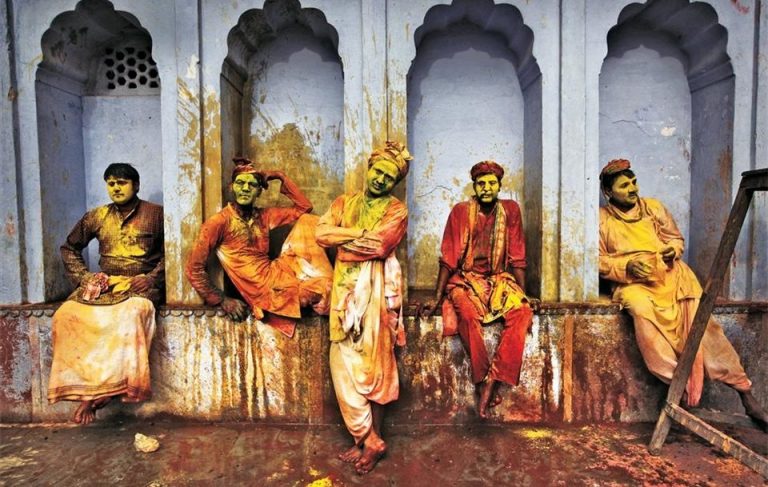
We do need strict action against hooliganism. However, maligning an entire festival due to the actions of a few is stretching things to the extreme. With time, liberals will realize that just like the widows at Vrindavan, who celebrate Holi for the ‘first time’ every year, Hindus will celebrate Holi with great gusto every year despite their best efforts at maligning it.

Digitisation and linkage to Aadhaar helps identify 2.75 crore bogus ration cards

In a positive development when it comes to pilferage of public resources, reports have claimed that total digitisation and Aadhaar linkage of ration cards has helped identify a whopping 2.75 crore bogus ones. All these bogus ration cards were potentially used to avail highly subsidised food grains. As per food ministry officials, the digitisation of ration cards started back in January 2013 but gained momentum in the past four years.

Ram Vilas Paswan, the food and consumer affairs minister was quoted as saying that the government has plugged the leakages in subsidised wheat, rice and coarse grains, which was costing a whopping Rs 17,500 crores annually. The savings though doesn’t result in monetary gain as the benefits are now being transferred to the real beneficiaries.

The states which contributed the most to these 2.75 crore fake ration cards were Uttar Pradesh with about 68.80 lakhs, West Bengal with 66.13 lakhs, Karnataka with 27.49 lakhs, Maharashtra with 21.62 lakhs and Telangana with 20.97 lakhs. Other states having large bogus ration cards include Rajasthan, Chhattisgarh and Madhya Pradesh.

In total, about 23.19 ration cards have been issued under National Food Security Act, all of which as per the report have been digitised. The Aadhaar linkage of these ration cards though stands at about 82%.

A couple of days back, CR Chaudhary, the Minister of State for Consumer Affairs, Food and Public Distribution had made a similar claim regarding ration cards. Minister Chaudhary incidentally claimed that 2.95 crore fake and duplicate ration cards were cancelled in three years of the Modi government.

Such an action against fake availing of public benefits was also noted in case of the mid-day meal scheme.

We had reported in March that the HRD ministry’s decision to make Aadhar card mandatory to avail mid-day meals had reportedly exposed a whopping 4.4 lakh fake students who only existed on paper in the three states of Andhra Pradesh, Manipur and Jharkhand.

Sri Sri Ravi Shankar’s Art of Living Foundation denies Network 18’s report on Ayodhya ‘deal’

The official handle of the Art of Living foundation has denied reports of a ‘deal’ by CNN Network 18 on the Ayodhya temple with former AIMPLB ‘s former member Salman Nadwi.

AOL foundation has denied CNN Network 18’s reports

News 18 had reported, that ‘deal’ involved a Fatwa to be organised by any of top five Islamic centres of scholarship endorsing a ‘formula’. The fatwa will clarify that giving mosque land for a temple will not violate Islamic religion in order to build public opinion in favour of the Ram temple claimed the channel.

However, the Supreme court which is examining the matter has said that it will treat this case as a land dispute alone and ignore all other considerations.


CNN Network 18’s reports were denied AOL foundation’s twitter handle. It called the reports ‘ a figment of the news channel’s imagination.’ Though it called the reports baseless and ridiculous, it did not disclose actual details of the talks.


While news channels are full of speculations regarding the Sri Sri formula, it remains to be seen if an our of court settlement is possible.

How GST has now helped catch a suspected bank loan fraud

With the Nirav Modi – PNB case, bank loan frauds have attained importance. Various dubious means are used by businessmen sometimes in collusion with bankers or sometimes fooling them as well, to extract undue loans and credit facilities. It appears another such racket has been busted, but thanks to GST.

GST’s mandate is not to catch bank frauds, but the systems in place in the GST law have helped trace such a potential fraud. Today it was reported that two people were arrested by the Mumbai commissionerate of the Central Board of Excise and Customs for allegedly exchanging paper invoices without any movement of goods and claiming false input tax credit. The two accused are Sanjiv Pravin Mehta, director of Shah Brothers Ispat Pvt. Ltd, and Vinay Kumar Arya, director of V.N. Industries Pvt. Ltd.

The cause for arrest was violation of GST laws. As per the GST law, issuance of an invoice without an actual supply of goods and wrongful availing or utilisation of input tax credit can lead to arrest. In the current case, the department has alleged that Mehta and Arya, through their companies, exchanged fake invoices, without any actual goods sold. Thus they would claim credit of the “purchases” they made. While the input tax credit claimed by Mehta amounted to Rs 5.2 crore, it was Rs 2.03 crore in the case of Arya.

While more details have not been divulged, it is not too hard to imagine what was happening. Mehta’s company could have been making fake sale invoices to Arya’s company. And Arya’s company would make corresponding fake sale invoice to Mehta’s company, either directly, or via round-tripping it through various companies. The companies would then claim credit of GST paid on “purchases”. This was in violation of GST law.

But why would someone simply inflate sales? Inflating sales with fake invoices would mean higher income and correspondingly higher taxes. Investigation have apparently revealed that these invoices were being made with a “malafide intention to defraud the exchequer by opening Letters of Credit (LCs) on fake purchase transactions”. The game was simple: create fake transactions and extract credit facilities from banks based on these fake transactions.

GST has now caught them in the act. This has become possible because the clauses embedded in the GST law, mandate that for claim of any tax credits for purchases, “invoice matching” is needed and this is done on the GST portal. Thus all the transactions, including the fake invoices, are mapped on the system, with the respective GST numbers. Thus, it becomes easy to detect cases where invoices are fraudulently generated and round-tripped across the economy. The GST department has added that it was possible that similar fraud had taken place in several other companies linked to above two companies, and that the investigations are still on.

While this modus operandi has been detected as of now, using this route will become even harder in future. The GST council is expected to soon implement the “e-way bill” provisions. An e-way bill is an electronic document which needs to be generated every-time goods are moved, and has to accompany the vehicle transporting the goods. Once this comes, every sale invoice will also need an e-way bill and thus will also trace the movement of goods. The people who have been arrested probably felt that since there is no e-way bill needed as of now, they could get away with fake bills.

The above arrests signal a decisive shift in the way GST has been administered. Till now, the Government and GST department were going slow on the tax-payers, allowing them to get used to the new law. Now it appears, the department has had enough, and will slowly tighten screws on errant businesses.