Home Blog Page 7324

Dear BJP, it is time to include the glorious legacy of Chhatrapati Shivaji Maharaj in CBSE textbooks

0

It has been almost 4 years since the BJP government came to power in the centre. The PM is an admirer of Chatrapathi Shivaji Maharaj. However, the HRD ministry in BJP has not really paid attention to an important exclusion in the CBSE/ NCERT textbooks that have been authored by left-leaning and communist educationists so far. For them, Akbar is the best example of a secular ruler in the entire history of India, but Shivaji is ‘communal’.


The love that our educationists and liberals have for Akbar and Mughals was demonstrated when Maharashtra government erased a chapter on Mughals from their textbooks. “The removal of the Mughal chapter from the textbook is nothing but the saffron agenda of BJP and RSS. It’s a pre-planned conspiracy“, claimed Samajwadi Party’s Abu Azmi. While his claim may have partial truth, the blackout of Shivaji from NCERT textbooks is definitely a conspiracy of Nehruvian secularists.

The exclusion of Shivaji from NCERT textbooks is not an aberration but a systematic exercise to infuse the concept of ‘secularism’ as understood by the Nehruvian establishment that has ruled India so far.

Have the framers of CBSE’s history syllabus taken a cue from Nehru?

Perhaps they have taken a cue from the godfather of ‘secularism’, Pandit Nehru’s book ‘Discovery of India’. Nehru considers the rise of Marathas as an example of Hindu nationalism. While writing about the great emperor Shivaji, he feels that the modern day Hindu nationalists are using him for revivalism.

In the post-partition scenario, perhaps, these educationists wanted to bury Shivaji forever so that Hindus would never find an inspirational figure of their own religion. Instead, Akbar was dished out as the sole symbol of secularism that Nehru sought to impose on Hindus of India.

In the book ‘Discovery of India’, Nehru writes (emphasis added) :

All over the widespread domains of the Mughal Empire, there was a ferment and a growth of revivalist sentiment, which was a mixture of religion and nationalism. That nationalism was certainly not of the modern secular type, nor did it, as a rule, embrace the whole of India in its scope. It was coloured by feudalism, by local sentiment and sectarian feeling.

The Rajputs, more feudal than the rest, thought of their clan loyalties; the Sikhs, a comparatively small group in the Punjab, were absorbed in their own self-defence and could hardly look beyond the Punjab. Yet the religion itself had a strong national background and all its traditions were connected with India.

‘The Indians,’ writes Professor Macdonell, ‘are the only division of the Indo-European family which has created a great national religion—Brahmanism—and a great world religion—Buddhism; while all the rest far from displaying originality in this sphere have long since adopted a foreign faith.’

That combination of religion and nationalism gained strength and cohesiveness from both elements, and yet its ultimate weakness and insufficiency were also derived from that mixture. For it could only be an exclusive and partial nationalism, not including the many elements in India that lay outside that religious sphere. Hindu nationalism was a natural growth from the soil of India, but inevitably it comes in the way of the larger nationalism which rises above differences of religion or creed. […]

Shivaji was the symbol of a resurgent Hindu nationalism, drawing inspiration from the old classics, courageous, and possessing high qualities of leadership. He built up the Marathas as a strong unified fighting group, gave them a nationalist background, and made them a formidable power which broke up the Mughal Empire.

The ideological foundation of ‘secularism’ as we know it today, was laid long back in a book that Nehru wrote when was imprisoned between 1942-46.

Future generations need to know about Shivaji and other Hindu kingdoms

If not for the internet or social media, many youngsters would not have been aware of the stupendous achievements and great values of Shivaji Maharaj. Outside Maharashtra, many people are not aware of Shivaji’s exploits against the huge Mughal empire. They are not aware of his administrative acumen and the system of ‘ashta pradhan’ (eight ministers) where each minister was given a ‘portfolio.’ Shivaji was not a bigot either. He had recruited Muslim soldiers in his army. He did not go around destroying mosques or killing innocent Muslims. Shivaji provided freedom of religion to his subjects. He was as secular as Akbar.

Similarly, the great kings of Wodeyar dynasty in Karnataka have been blacked out from textbooks. Wodeyars invested heavily in education, infrastructure, industrial growth and social welfare. In fact the premier research institute of India, IISc is built on land donated by Krishnaraja Wodeyar IV. Educationists have ignored Wodeyars and gave Tipu Sultan a central place in the history of Karnataka.

Thus, BJP that claims to be a party following the ideology of Hindutva, needs to correct this historic exclusion in our history syllabus. It needs to ensure that future generations of India learn not only about Akbar and Tipu Sultan, but also Shivaji and Jayachamarajendra Wodeyar.
UP: Woman lawyer claims Muslim ‘friend’ held her captive, tried to convert her religion and raped her

0

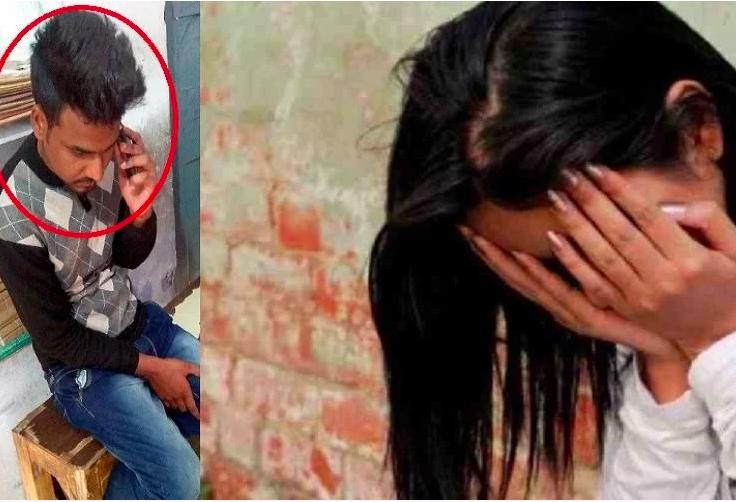
A woman lawyer was allegedly held hostage and raped for a week by a man, who had brought her from Mumbai to Bijnor under the pretext of inviting her to his sister’s wedding. The woman is a high court lawyer and the accused runs a salon in Mumbai. Acting on woman’s complaint, the police have arrested the man.

According to reports, the duo came from Mumbai to Nahtaur where Faizal had allegedly held her captive, raped her and even tried to marry her after forceful religious conversion. The woman claims she somehow managed to escape and reached the police station, where she filed a complaint.

According to reports, the woman has claimed that once she was brought to Nahtaur, she was confined to a room, where she was mentally tortured and raped. She claims she was also forced to wear a burqa and attempts to forcefully convert her religion were made. They also planned to forcefully conduct a Nikaah of her and the accused on the day of his sister’s Nikaah. When she resisted, she was beaten up. She claims the accused’s family members were also involved in this. On Sunday when Faizal and other men of the house were out shopping for his sister’s wedding, the woman managed to escape. She has filed a complaint against Faizal, his father Nazaralam, brother Shadaab, mother Naseema and sister in law Ishrat. While Faizal has been arrested, the police are on the lookout for others.

Woman alleges being assaulted and raped in Tripura for ‘daring’ to leave the CPM

0

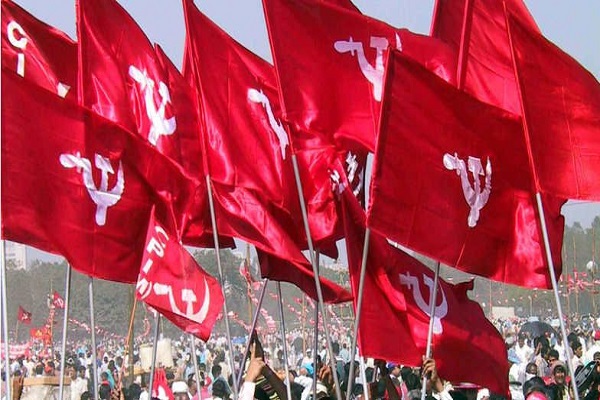
The North Eastern state of Tripura which is one of the last communist bastions in India went to polls on Sunday. The run-up to the polls was marred by violent incidents which included, targeted attacks against the cadre of the BJP, a party which is trying to make serious inroads during the elections.

As reported, BJP supporters were allegedly attacked by at least 15 CPI(M) members in Chakmanghat area of Teliamura constituency. Before that the body of a BJP booth president was recovered from Barjala, Tripura on Sunday, merely days ahead of the polls. According to BJP’s Sunil Deodhar, who has been made in-charge of the state, this was the 11th Tripura BJP activist, killed in the last 13 months.

Such political allegiances have also resulted in religious persecution, with about 25 Muslim families in a Tripura village getting boycotted by their local mosque for deciding to support the BJP.

Now to print an even grimmer picture about the political freedom in the state, a DNA report has claimed that a Tripura woman was raped and assaulted for daring to leave the CPM. As reported, the victim on March 26, 2016, was heading home in the evening, when she was held by a goon who started to brutally assault her. Soon after when she started to lose consciousness he even allegedly raped her.

Come 2018, the victim still carries the scars of that horrid evening and has lost eyesight in her left eye. As per her, she was meted out this treatment because she switched over to the BJP after being a CPM worker for many years.

Incidentally, such brutal tactics against those ‘daring’ to leave the CPM have also been employed in another communist-ruled state of Kerala.

A few days ago a class XI daughter of a BJP leader in Kerala, Kasaragod district had sent out a help plea on Facebook to save her father who was getting death threats from the CPM. As per the daughter, the CPM cadre was miffed with her father because of his decision to join the BJP.

Hindu families that were driven out of Kairana during SP rule, start returning under Yogi Adityanath

0

The town of Kairana in UP’s Shamli district had seen a mass exodus of Hindu families, mostly business owners in past several years. Dreaded gangsters were roaming free who had made the lives of Hindu businessmen a living nightmare. Kidnaps and extortions were in abundant and 2014 saw cold-blooded and brutal murders of three business owners in broad daylight.

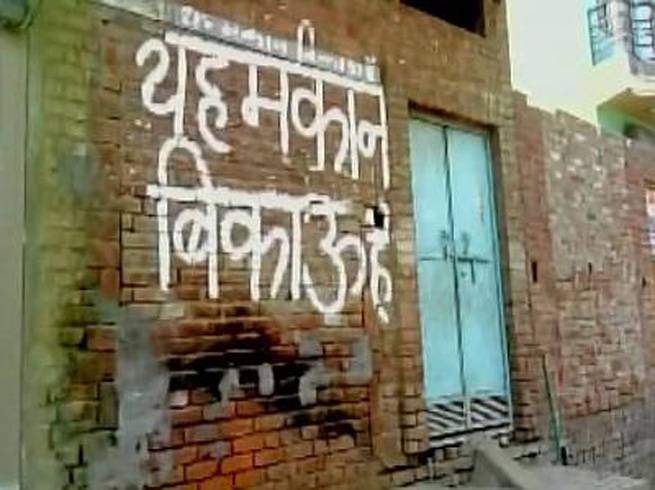
Haunting images of “Yeh makaan bikau hai” (this house is for sale )panted over many buildings and shops had become a norm in local areas and in the media. As many as 250 families had reportedly left Kairana to settle in villages of Haryana or wherever they could find a livelihood even as the Media tried their best to whitewash the Hindu exodus.

The reason behind the exodus was the free reign of gangsters in the town. Most notable of them was the gangster Mukim Kala. For years the AK 47 wielding goons of his gang had created an absolute mockery of law and order in Kairana. Mukim Kala even owned a weapons warehouse. The arrest of Mukim Kala had little effect on the situation as he still continued to run his extortion racket from jail.

Things began to change only after Yogi Adityanath took over as CM in UP. Under his government, the UP Police started cracking down on criminals like never before and several members of the Mukim Kala’s gang were either shot dead in encounters or arrested in rapid succession.

UP police arrested dreaded gangster Furkan in April last year. He was grievously injured in an encounter with cops. While Mukim Kala’s brother Wasim was killed in an encounter too, in January UP police had another major success when they shot down a noted sharpshooter Shabir in a fierce gun battle. Constable Ankit Tomar had attained martyrdom in this encounter.


UP police and the Yogi Adityanath led government had faced criticism and even notices by human rights groups regarding these encounters. But both the government and the police had made a resolute stand on the issue and the UP CM had even declared that the encounters will not stop.

While there has been a profound reduction in criminal activities in the area, the fierce and rapid action of the police has made the criminals fear for the consequences. Many criminals have surrendered on their own, fearing encounter while recently Kairana saw two renowned gangsters roam around the town carrying placards announcing that they will not indulge in unlawful behaviour in future.

A recent report in India Today mentioned that many businessmen, who had left the town fearing for their lives and safety of their families are now coming back. More than a dozen Hindu families have now returned to Kairana to restart their businesses. Ankit Mittal, a cinema hall owner who had moved his family to Haridwar, is now all set to settle back in Kairana again.

“This year, I will be bringing my children to Kairana to celebrate Holi. There is no fear; the situation has improved a lot. Earlier, when I used to visit Kairana from Haridwar, my wife would consistently be on the phone until I left from there. But now, even she is ready to return to Kairana,” Mittal told Mail Today.

“I had got an extortion call for Rs 5 lakh. In August 2014, three businessmen were killed on the streets in broad daylight. I could be one of them. I got my children admitted to a school in Dehradun and settled with my mother and wife in Haridwar,” he said.

Varun Kumar, whose own elder brother was shot dead by gangsters in front of their house is also positive about peace and safety being back in the town. He said to Mail Today :

“We shut down our shop after brother’s murder. But things seem to have changed a lot. There is no fear in the city; police have arrested most of the gangsters and even killed some of them. Now, we can hope for a better living.”

The small business owners, who are the backbone of the economy of the small town are now feeling remarkably safer. “The new government has made the change possible” is the common opinion of the residents of the city.

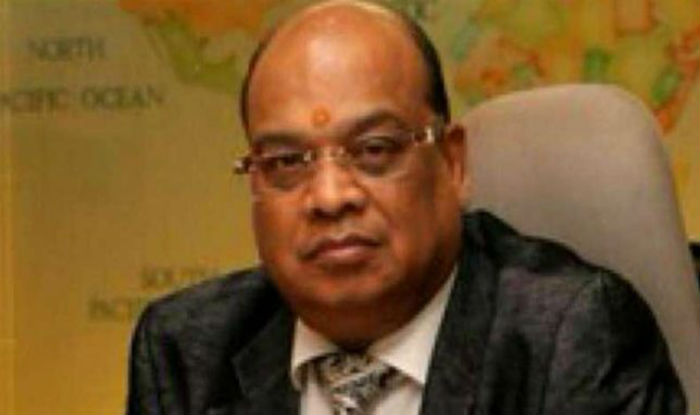
CBI arrests Rotomac promoter Vikram Kothari hours after false news of him fleeing the country surfaced

0

While the dust had not even settled on the Nirav Modi financial fraud and the ED was in the process of conducting raids, news trickled in yesterday about another businessman, Vikram Kothari, the promoter of Rotomac Pen fleeing the country after swindling Rs. 800 crores from various public sector banks.


The news of Vikram Kothari absconding was relayed by every major news agency there is.


As soon as this news of Kothari fleeing the country was broken, which turned out to be false later, the usual suspects started their cacophony about how Narendra Modi must answer.


Some didn’t even shy away from connecting the false news to demonetisation. The irony of it all is that Ms Dalal is the managing editor of MoneyLifeIndia and trustee of MoneyLifeF that deals with Finance news.


Soon, news emerged that Kothari was still present in Kanpur and hadn’t fleed the country at all.


While the news of his still being present emerged early this morning, news started trickling in about how the CBI was not only conducting raids in various locations related to Vikram Kothari but was also questioning the Kothari family.


The CBI has not registered a case against Rotomac pen promoter Vikram Kothari and has been arrested.


Now that the CBI has arrested Kothari from India, the media must be questioned as to what their source of this false news was.

As an evidence of human depravity, Twitter users followed by Congress wish death upon Goa CM Manohar Parrikar

0

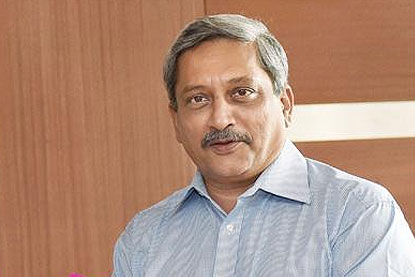
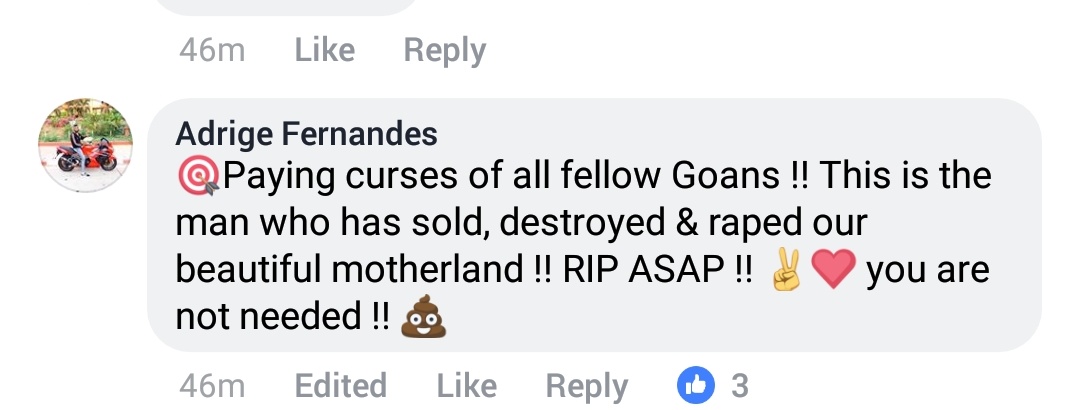
Rumours are rife that Goa Chief Minister Manohar Parrikar, who is undergoing treatment for food poisoning at Lilavati Hospital in Mumbai, has been diagnosed with pancreatic cancer. While we hope that rumours are false and pray for Parrikar’s speedy recovery, Twitter has been abuzz with people wishing for the death of Parrikar, some of whom are followed by the official Twitter handle of Congress.


Not just on Twitter, many people on Facebook, too, celebrated the rumours of Parrikar being diagnosed with cancer.


This is not the first time people have wished death upon a leader just because they didn’t agree with them. Earlier, Suprateek Chatterjee, a columnist with The Quint had also tweeted death wish on Modi. That is not the only time The Quint has given a platform to people who go upon wishing death and political assassination. Vikas Malhotra, an author at The Quint, too preferred political assassination (of PM Modi) to create history. A Times Now journalist, Prashant Kumar, had also wished for the assassination of Modi. While The Quint has distanced itself from these columnists and removed their articles, no action was taken against Kumar of Times Now. Similarly, a columnist with Shekhar Gupta’s digital portal, The Print, also wanted PM Modi assassinated. She, later on, deleted her tweet before deactivating her account.

One wonders if Congress, which follows the Twitter user who wished for Parrikar’s death, endorses his views. A difference in political ideologies should not mean one ends up wishing death upon other.

A teenager’s suggestions on dealing with rationalistic youngsters who question Hinduism

0

I would like to begin by sharing a story :

I was once at a junior debating competition in Bangkok, representing my school (which is based in Dubai). After the main event, I had the opportunity to converse with hundreds of speakers from over 80 different countries over dinner. On my dinner table aside from myself, were speakers from Slovenia, Vietnam, Canada and India. Incidentally (as a part of the conversation), I was digging my bag for some book, when a copy of the Ramayana happened to be in there. One of the students on my table caught a glance of this. Till date, I cannot forget her response. In these exact words, she said:

“Oh my God, how do you read this bullshit?”

“Why would you say that?”, I asked.

She said, “You’re a logical person and you understand science. How can you believe in all this superstitious nonsense?”

The remarks bothered me.

It was truly bothering, that in a debating competition, where the most rational, logical and judicious students of different countries meet, a student said something as insensitive as that. However, what is most unsettling is the fact that the person who said that wasn’t a student from some other country who was unaware of Hindu beliefs. It was an Indian student, who came from a Hindu family in Delhi and thought it was ‘cool’ to downgrade her own belief system in front of the apparently “modern” foreigners. While this may have been her naïve attempt to score brownie points in front of the western students, I argue that there is more to it. Without any outsiders being around, we must consider that a lot of youngsters in India view their own belief structure as nothing but “superstitious nonsense” and I, unfortunately, bear witness to the transformation in mindsets and the trend of ridiculing your own methodologies with half-baked knowledge.

And so, we come to the first question: Why has this happened?

I believe that there are multiple reasons for why this has happened. One reason behind this trend (as I have expressed in the past), is the distorted education system that only refers to Hinduism when it comes to the misinterpreted ‘caste system’ and the radically altered Sati. They deliberately avoid the scientific, mathematical, spiritual, architectural and philosophical advancements made in India through Hindu traditions and belief systems. What this does, is it makes people attribute all the “social evils” (which came from misinterpretations of scriptures) to Hinduism and forget all the brilliance that did stem from Vedic principles. Therefore, all youngsters (including myself at one point in time) think of our religion as nothing but a primitive, unsound belief system. And so, one reason to blame the cultural erosion is the Indian education system.

Another reason is a lack of understanding among parents. As much as I hate to blame parents per-se, one cannot deny that often, parents themselves are unable to communicate their belief system effectively, either because they themselves do not understand their belief system, or because they find it difficult to appeal to their young/teenage children. Either way, they struggle to get the message across.

Whatever, the reason behind the rejection of Hindu principles is, I believe that there is a systematic approach that can help us override the barrier under the Indian status quo. Being a teenager who both understands a typical youngster’s mindset, and the basis for my own religious principles, let me tell you that the current generation is not one that will accept beliefs imposed on to them. They only trust what they find to be logical. However, since changing the education system will take time, how can rational people be made to realise the reasoning behind religious beliefs? How do students or elders communicate this to the logical Indian?

In order to answer this question, I would like to make you understand how I went about studying Hinduism, through a simple categorisation. What I did was simply draw a line between three things:

  1. Spiritual/Philosophical principles
  2. Applied principles/duties
  3. Unfounded practices

I would like to briefly explain these and then tell you about how important it is for us to ensure that we do not put them in the same bowl.

The first area is spiritual/philosophical principles. Here is where we need to understand what Hinduism fundamentally stands for. That involves, the concept of Karma, where you pay for your own thoughts, words and deeds, Vasudaiva Kutumbakam, where you fundamentally believe that the entire world is your family, principles like Advaita, where every being is the same and so forth. This category of philosophical principles, I believe is the most vital ground on which Hinduism stands. And if we make it absolutely clear that these are the core principles, it should do us the best.

The second area is applied principles. This involves the prescribed manner of living and the structure of life. Beliefs like the way in which a life should be lead, stages of lives, prayer, etc. All these come into consideration when you talk of applied principles. The idea of Yoga, Ayurveda and many such scientific, mathematical, architectural and other areas all stemmed from the application of Hindu beliefs. However, the same Hindu beliefs too make it absolutely clear that your duty/way of life can change drastically based on you Desha (country), Kaala (the time when you practice) and Paatra (the subject of your deed). Therefore, the duty of a person can very much change over time.

So far, both the areas seem quite approachable to the logical mind. However, we now come to the third area where we discuss the “superstitious nonsense” that the Indian girl was telling me about: Unfounded practices.

Now, it is extremely important for us to focus on the word unfounded. Because, the idea of Nazar, ‘Nails not being cut in the night’ and even many discriminatory superstitions are all very much cultural and have no Hindu basis. By this, I mean that no scriptures endorse these beliefs. It is simply people who happened to associate one thing with another. Many people have a “lucky pen” or “lucky shirt” even today. However, we do not associate that with a specific belief system or religion. While many practices that are cultural in nature have become essential to the practice of Hinduism and must be retained, practices which add no value to Dharma and have no mention in the scriptures can be done away with.

I once again stress the importance of not mixing these three up together. Because the moment we do that, many youngsters will tend to falsely believe that these baseless superstitions stem from Hinduism and that some primitive practices are made a compulsion. In fact, many missionaries have constantly capitalised on us mixing these up. They convert people by letting them keep a few elements of applied principles and all their unfounded superstitions the same and they completely change the spiritual belief system. Therefore, those who get converted believe that they aren’t losing much of their own religion, but in actual fact, they are.

I say that the main priority for us (while talking to rationalists) is to uphold the main principles of the religion. By upholding these fundamental principles, we enable them to understand the most important segments of Hinduism. These also happen to be the most logical ones and thus, will easily appeal to well-reasoned people. Upon establishing this we can then shift focus to the applied principles, which are not a compulsion but still have sound reasoning behind them. Practices like Ekadashi fasting, for example, Yoga, the kinds of food to eat, etc. can be introduced, yet not enforced. With this, we give people a choice: something Hinduism does as a matter of principle. And finally, when the rational mind understands this, you can optionally introduce the third category of superstitions, so long as you dissociate it with the religion.

In conclusion, the moment we keep these three categories separate and insist on the importance of getting the spiritual/philosophical significance of Sanatana Dharma right, my fellow mates who always downplay our culture, will stay by us and Hinduism will stand on its highest ground with a bright future ahead of it.

Next time at a wedding don’t ever gift a Langur : This groom now in big trouble because of it

0

Wedding as people claim is a joyous ceremony which couple participates in to commit their futures to each other. If things turn out well, it is usually accompanied by a happy presence of family and friends.

As weddings are positive occasions they are usually accompanied with weddings gifts for the couple. This gifts business does cause a problem most of the time, with people scratching their heads to determine what they should bring as a present.

With generic gifts like bedsheets, crockery and wall clocks possibly almost a step away from getting banned as wedding gifts, the invitees have a real need to reinvent themselves and come up with memorable presents, and for that thinking out of the box might be needed.

Thinking out of the box is considered an important trait in the human society even though no such box in question has till date been discovered out of which one’s thoughts need to get out.

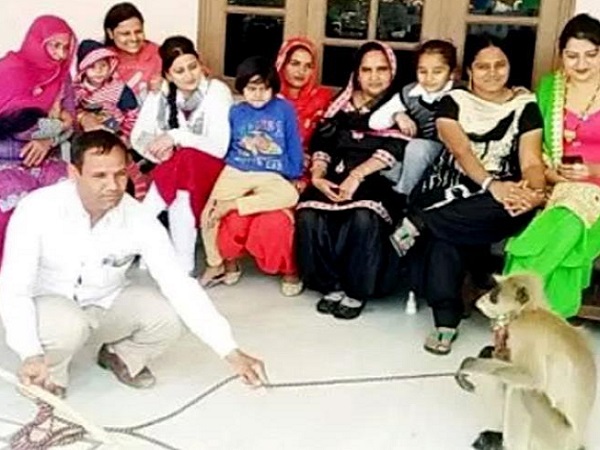
Such an out of the box thought was applied by the in-laws of a Haryana groom. As per the report, the groom Sanjay Poonia was gifted a Langur by his in-laws during his wedding on 11th February with Ritu. Turns out that Sanjay, a resident of Tohana town had a monkey menace in his fields.

So when his father-in-law came to visit him, he too noticed the trouble and was told by Sanjay that he is planning on getting a Langur to drive them away. The father-in-law liked the idea and decided to surprise Sanjay by gifting him a Langur on his wedding.

Things though didn’t work out as happily ever after for Sanjay, Ritu and the Langur as a few days later Sanjay was in a deep trouble with wildlife officials who have now booked him under the wildlife protection act.

Turns out that the Langur is a protected species and it is illegal to own or trade it. Violating the same might lead to a seven-year imprisonment and/or a fine of Rs 25,000. After a wildlife official came to now about the Langur’s presence, the cops came to Sanjay’s house and took the animal away. Sanjay, as a result, has also been booked under the sections 9, 39 and 52 of the wildlife protection act.

The Langur was to be examined by doctors on Saturday after which he would be sent to the zoo. The police would also be investigating as to who sold the Langur to the in-laws. In their defence, Sanjay’s father has claimed that they weren’t aware of the wildlife protection act and assured that they hadn’t harmed the animal.

So finally as a lesson one should ensure that the wedding gifts they give don’t end up putting the recipients in jail, which might put a strain on the relationship, to say the least. Thus gifting animals like Langurs, tigers, giraffes etc might not be such a good idea.

Along similar lines, other gifts treadmills and cookbooks may also be a bad idea as they could end up offending the couple who might wonder if you are unhappy with their weight or cooking skills.

Even as video shows Jignesh Mevani abusing police, Shehla Rashid paints the MLA as a ‘victim’

0

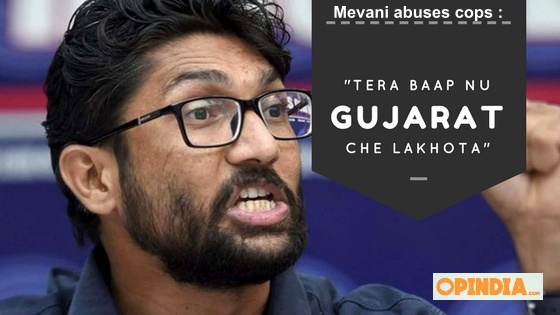
A JNU ‘student leader’ named Shehla Rashid took to Twitter today to accuse the Gujarat Police of abducting MLA from Gujarat, Jignesh Mevani.


She shared a video of the incident on Twitter too:


Twitter users who understand Gujarati were quick to point out that it was Jignesh Mevani in fact who was misbehaving with the Police and the Police was merely doing its job, based on the content of the video that was shared:


Jignesh Mevani is a Congress ally who is known for his uncouth behaviour and unsavoury remarks. He had used derogatory remarks for the Prime Minister in the recent past. He has been involved in inciting violence and fueling casteist sentiments across the country as well.

Shehla Rashid, on the other hand, seems to speak up on every issue, though she has remained silent on Islamists giving her rape and death threats.

Delhi lawyer complains about 27 AAP MLAs, discovers 10 more to be added in complaint

0

In year 2016, Delhi based lawyer Vibhor Anand discovered that some AAP MLAs were appointed Chairpersons of Rogi Kalyan Samitis (RKSs) of various government hospitals in Delhi, which he found as an instance of holding office of profit because the post was not exempted via any notification by the GNCTD (Government of National Capital Territory of Delhi).

He made a list of 27 such MLAs and filed a complaint with the Election Commission. Not only he complained about them holding posts amounting to office of profit, he further argued that the appointment of the MLAs as Chairpersons of RKSs itself was illegal, as rules allowed an MLA only to be a member of the governing committee, not Chairperson.

Following his complaint, the Election Commission issued notices to the MLAs asking them to explain their position. Some of these MLAs replied that they had been issued the notices erroneously, following which the commission asked Vibhor to file an amended affidavit with correct list of the MLAs.

While one may think that the number of such MLAs could be less and Vibhor made a longer list by mistake, further investigations by the young lawyer threw surprising results. Not only he discovered that the total number of MLAs holding post of Chairpersons of RKS of hospitals was one more i.e. 28, there were 11 more MLAs who were appointed as the Chairpersons of the District Rogi Kalyan Samiti. Out of these 11, 2 MLAs were appointed both as Chairperson of RKSs of hospitals as well as of District RKSs.

This fact ironically came to the knowledge of Vibhor after seeking information from the Delhi government itself, and he realised that the total number of MLAs holding office of profit was not 27 as he originally thought, but 37.

While he was collecting information about appointment and functioning of these MLAs as Chairpersons of hospital RKSs or district RKSs, 20 MLAs of AAP were disqualified in another office of profit case. Out of these 20, 14 were common with the list of 37 MLAs Vibhor has prepared. Two other MLAs resigned, which had led to bypolls in Rajouri Garden and Bawana in Delhi. Therefore currently, there are 21 AAP MLAs more who are holding office of profit, if Vibhor’s claims are to be believed.

If these 21 MLAs too are disqualified, the total number of AAP MLAs in Delhi assembly will get reduced to 25, and strength of Delhi assembly will fall below the half-way mark, which could trigger a constitutional crisis. Vibhor believes that the current case is similar to the case in which 20 MLAs were disqualified, and thus these remaining 21 should also be disqualified.

Out of these 21 MLAs, 10 MLAs have already been served notice due to Vibhor’s original complaint. Earlier this week, on 15th February, Vibhor sent a petition to the President of India apprising him of he situation and requesting him to direct the Election Commission to send notice to 11 remaining ones.

Not only Vibhor is seeking disqualification of these 21 MLAs, he insists that the 37 MLAs who were appointed Chairpersons in RKSs were also involved in corruption. He plans to file a PIL in the Delhi High Court soon seeking action against them.

Vibhor had earlier decided not to pursue this case as he claimed physical assault and threats by an AAP supported goon, but later decided not to give up after receiving assurances from the Delhi police.