Home Blog Page 7370

Read detailed projection by C Voter, if Lok Sabha elections were held today

0

In the latest C-Voter opinion poll conducted to gauge the mood of the nation, the NDA looks set to return to power if the General Elections were held today. With the Lok Sabha elections only a year away, the C-Voter poll comes as a reassurance to the BJP and a blow to the Congress after the results of Gujarat elections gave some hope to the opposition of a possible 2019 comeback.

The NDA is projected to gain 5 seats in Bihar after Nitish Kumar’s Gharwapsi to the NDA with the UPA being relegated to 4 seats.


Moreover, the NDA is projected to retain all the 7 seats in Delhi.


In Haryana, the NDA is projected to up its seatshare by 1 and win 8 seats.


In Himachal Pradesh, the NDA is projected to retain all of its 4 seats from 2014. In Karnataka, with the Assembly Elections looming, the NDA is projected to win 5 more seats than it won in 2014 with the UPA to win 4 seats less.


In Maharashtra, the NDA is projected to win 44 seats and the UPA is expected to drop to 4. In addition, the NDA is projected to win all the seats from Mizoram, Meghalaya, Manipur and Nagaland. The NDA is projected to make massive gains in Odisha with the alliance expected to win 12 out of the 20 seats from the state and the BJD to suffer huge losses and be restricted to 8 seats.


In Chhatisgarh, however, the UPA is projected to make a gain of 6 seats with the NDA reduced to 4 out of 11 seats in the state.


In Gujarat, the NDA is set to lose 3 seats as the UPA is projected to win 3 seats where it failed to open its account in 2014. In Jharkhand, the UPA is projected to take its tally to 6 from 2 with the NDA to lose 5 seats and drop to 7 from 12.


In Madhya Pradesh, NDA is projected to drop to 23 from 27 in 2014 with the UPA to win 6 compared to 2 the last time around.


In Punjab, the UPA is expected to make massive gains and up its tally by 6 and win 9 seats.


In Rajasthan, the NDA is projected to win 20 seats where it won all 25 seats in 2014 with the UPA winning in 5 seats. In Uttar Pradesh, the NDA is expected to secure 60 seats compared to 73 last time around and UPA is projected to take its tally up to 18.


The state-wise breakup of the projected seats are as follow :

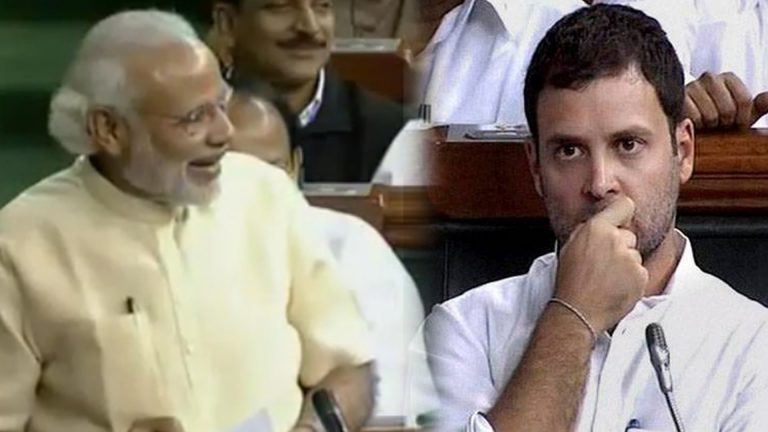
All in all, the NDA is projected to win 335 seats if the elections were to be held today, just 1 seat less than in 2014. The NDA is expected to make up for its losses in the HIndi Belt with the gains it is expected to make in Eastern States and in Karnataka. The C-Voter Poll also remarks that 66% of the voters prefer Narendra Modi as the Prime Minister of the country while only 28% of the voters want Rahul Gandhi to lead the nation. Therefore, if the NDA could again transform the battle for 2019 as a head to head war between Narendra Modi and Rahul Gandhi, its return to power is relatively assured.

Plans to bring jewellery sector under PMLA could strengthen PM Modi’s fight against black money

0

The NDA government has been trying to bring in more transparency in the jewellery sector. It is well known that gold is a popular investment where black money is parked. Earlier in August 2017 , the government had brought jewellery sector under PMLA (prevention of money laundering act).

According to the rules notified in August 2017, every jewellery store with a turnover of 2 crores would come under the PMLA radar. Every cash sale in excess of Rs. 50,000 had to be reported to the government by these stores. However, the order was reversed in October 2017 to improve easy of doing business. Gold imports had surged after the removal of the original order in August 2017.

What are provisions of PMLA ?

The Prevention of Money Laundering Act 2002 enables the government to confiscated property derived from money laundering and punish the offenders under the act from 3 to 7 years in prison. The act also empowers the government to make rules regarding maintenance of records to monitor transactions in sectors which are potentially prone to money laundering. Maintaining KYC (know your customer) records make black money transactions harder for both the customer and the owner of firms.

Plans to bring back KYC norms in Jewelry sector

The NDA government is planning to bring back the regulation with a higher cash limit for reporting. This time, it might take a more accommodating view on ease of doing business to ensure that the common man is not affected by the rules. It was found that many customers did not have PAN cards in the previous attempt to regulate use of cash in the jewellery sector. Reporting limit for cash transactions might be increased from current Rs. 50,000 limit. Bringing back the KYC reporting norms under PMLA could help in curbing future use of black money in gold purchases.


MEA vindicates OpIndia report : ‘Status quo at Doklam not altered, Media reports mischievous’

0

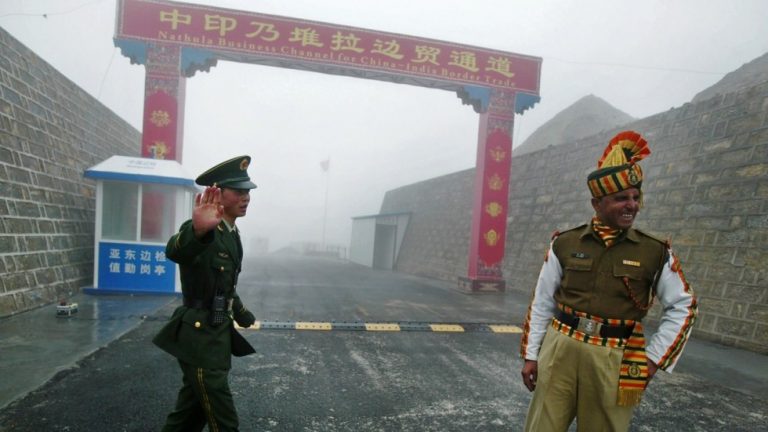
Ministry of External Affairs (MEA) has denied the claims that appeared in website The Print on Chinese activities in North Doklam. The report had claimed that there was ‘new trouble for India’ as China had stationed armored vehicles and built helipads in its territory. Despite many clarifications from the government, certain sections of the media have raised alarm on the so called ‘Chinese constructions’ close to the Doklam area.

The statement of the ministry said that it had noted these reports which questioned the government’s assurance on Doklam and raised apprehensions of trouble. It said that there was no basis for alarm as there was no change in status quo at the face off site. The MEA reiterated that there was no alteration in position of Chinese armed forces after the negotiations had successfully resolved the crisis. It went on to call false reports as ‘inaccurate’ and ‘mischievous’

We had debunked these claims in a detailed report yesterday.


The full statement of MEA is as below.

Not only The Print, but even Vishnu Som of NDTV had put their own false reports asserting that there was a PLA build up at the disputed area, and had called OpIndia report – now vindicated by the MEA – ‘rubbish’.


Despite the Army Chief’s statement, Vishnu Som had maliciously propagated that PLA is present squarely in the disputed area insinuating that status quo was being breached by China.


We had also noticed how this is the third time the same false reports are being propagated and the MEA had clarified even back in October 2017, after a similar OpIndia report that debunked assertions of ‘renewed aggression at Doklam’.


We wonder if ‘The Print’ and NDTV would have the grace to retract their stories after this MEA statement, though we are not holding our breath.

Official Twitter handle of Congress blames Modi govt for mess created by UPA

0

The official handle of the Congress Party tweeted yet another lie on the NPA (Non Performing Assets, also known as bad loans) issue. It posted an article that claimed that NPAs had risen by over 5 lakh crores in just 42 months.

The article blamed the NDA government for rise in NPAs. But in reality, the NPA problem is purely a legacy issue which has been dropped on the current NDA government.

Root cause for accumulation of NPAs

What is a NPA?

A nonperforming asset (NPA) refers to a classification for loans on the books of financial institutions that are in default or are in arrears on scheduled payments of principal or interest. In most cases, debt is classified as nonperforming when loan payments have not been made for a period of 90 days. – Investopedia


A non performing asset is basically a loan that does not bring any returns to the bank and puts a pressure on its financial health. The NPA problem has arisen in India because of three important reasons.

  • Reckless lending without accounting for risks : Projects that have high risk are usually avoided by banks. It is evident that lending was done recklessly during high growth period during the UPA regime. Some of these loans were also given due to political pressure on banks.
  • Ever-greening of loans : Postponing the date of repayment of loans without any final deadline.
  • Lack of an exit mechanism like Insolvency and Bankruptcy code for firms that have failed : Failure in business due to problems outside the control of entrepreneurs is possible. In that case a legal route for exit must be available. Otherwise, banks evergreen loans that they have extend and hide NPAs from regulatory authorities.

Why is Congress wrong in accusing NDA for rise in NPAs?

Accusing the NDA for bad loans problem is ridiculous because the lending activity in the economy has been muted in the past three years due to poor health of banking system. To solve the mess in India’s banking system, the current government has systematically taken actions to identify NPAs and enacted insolvency laws to resolve them in a transparent manner.

The finance minister had clarified in the recent session of Parliament that bulk of these NPAs originate from the pre-April 2014 period. It is evident the asset quality review (AQR) launched by the RBI in second half of 2015 has succeeded in uncovering hidden NPAs in India’s banking system.

The drive to uncover the hidden NPAs from books of the public sector banks was further aided by the amendment to the Banking Regulation Act 1949, which enabled RBI to give directions to banks to deal with NPAs. Hence, the percentage of NPAs that have been acknowledged has risen from 4.1% in March 2014 to 10.2% in September 2017.

The measures taken under the NDA have only improved the transparency and accountability in public sector banks. Therefore the Congress party is absolutely wrong in blaming the current government for the bad shape of India’s banking sector.

Find out how people are making money through these: Bitcoin, Mining, ICO, Blockchain

0

In the run up to 2018 the news feed was regularly filled with reports of a cryptocurrency (a virtual currency issued digitally which is secured using cryptography ), named Bitcoin’s value surging by more than a whooping 1500% per year to cross the $15,000 mark.

This stellar surge in the values of cryptocurrencies wasn’t limited to Bitcoin alone and the whole market surged from about $19 billion at the start of 2017 to about $600 billion till the end of the year.

The other winners of this bull run included cryptocurrenies like, Ethereum (rose 5000% in 2017) and Litecoin (rose 7500% in a year).

Amidst all this hysteria, let’s try and answer a few basic questions like, what exactly is this technology, what led to it and what it got to offer.

All this prominently began on 31st October, 2008 when an anonymous individual who called himself Satoshi Nakamoto, submitted a white paper, proposing a peer-to-peer electronic cash system.

This system was proposed in the backdrop of the global financial meltdown, which had grossly dented the confidence in existing financial institutions. It aimed at introducing a currency which would surpass them by becoming a peer to peer network, where the buyer and seller would directly exchange the currency, without any third party interference.

The white paper also laid down various principles and procedures on how these transactions can be verified and recorded using a public ledger, which will be stored as an open source, on every CPU that is connected to the network.

This heightened transparency where all the transactions would be recorded publicly using a ledger, (essentially meaning that every bitcoin would be accounted for), which meant that bitcoin became one of the first mediums which started using the blockchain technology.

Blockchain basically is that digital decentralised public ledger of cryptocurrencies, which literally means a chain comprising of blocks. Here one block denotes a new transaction and once it is complete, it is linked to the other existing transactions, thereby forming a chain.

These links can be only be verified and built by those who are authorised to decode the language, which also means that, even if the data of the block chain is leaked, it is of no value as it cannot be deciphered. Making it the most important aspect of this technology.

Now these transactions in question, in order to be performed, require solving complex mathematics problems, and in order to incentivise this process, the problem solvers during the process are rewarded with bitcoins. This process is known as mining.

With the cryptocurrency market having an enormous amount of potential, now a days many startups & established institutions have started to come up with their own cryptocurency which may be based on block chain technology.

In order to raise fund for this venture, they use a process called Initial Coin Offering (ICO), which bypasses the regulated capital raising process necessitated by banks and venture capitalists. Similar to the initial public offering (IPO) used in the stock market, the startup which wishes to raise the funds, creates a white paper to describe its technology.

Like a crowd-funding, the investors, buy the cryptocurrency using means like, traditional currency formats like dollars and rupees to give a kickstart to the venture. One of the most successful ICO’s was recorded in 2014 when Ethereum raised $18 million in bitcoins.

With the implementation of block chain technology in just the currency market, we saw a huge new potential being created. Just imagine what wonders can be done when the technology is applied in other fields.

We may in future see a CryptoIdentity – which may solve the Adhaar security issue if any, CryptoChain – a supply chain solution, CryptoRide- a peer-to-peer secure ride sharing network, CryptoVote – a network to make election process faster & cheaper, CryptoWelfare – a network to transfer public benefits in secure and quick manner.

While the future holds much promise, this cryptocurrency revolution calls for maintaining a sense of cautious optimism.

Just on Wednesday the Bitcoin experienced a bloodbath, with its value falling about 12%, to trade below $10,000 due to the global cryptocurrency market experiencing a major sell-off for a second straight day. This sell-off was largely believed to have been a result of investors fearing the prospects of stricter rules being introduced around the system.

This does bring us to the point of the government possibly being the biggest adversary of the whole cryptocurrency revolution, because it challenges the monopoly of the central banks in the monetary process. We can already see the signs of the ‘establishment’ possibly getting rustled, with the Indian Finance Ministry likening cryptocurrency as a ponzi scheme.

Many would argue that a heightened regulation is needed to imbibe confidence into the system. Recent days have seen a mainstreaming of cryptocurrencies with the advent of various various trading platforms like cex.io and CoinDesk, where one can buy and sell cryptocurrency in exchange of conventional currencies like Rupees and Dollars.

The RBI has till date issued three notifications in connection with virtual currencies and it remains to be seen what the future holds for cryptocurrencies in India and abroad in the near future.

Journalist who was excited at Modi getting swine flu is now ‘special invitee’ at an event by Modi govt

0

Supporters of the Narendra Modi led NDA government have often bemoaned its utter inability to create an ecosystem of its own and have often been left flustered by the members of the BJP endorsing the very people who malign their reputation every single day of the week, apart from wishing ill to the party leaders and supporters.

Sunetra Choudhury, a journalist at the NDTV, who infamously expressed excitement at the thought of Narendra Modi suffering from swine flu, is now a valued guest at an event hosted by the government headed by the same Modi who survived the ‘exciting’ flu. Sunetra is now a ‘special invitee’ to an event organized by the Bureau of Police Research and Development under the Ministry of Home Affairs.


The Modi government seems to be suffering from a terrible case of masochism. This isn’t the first time that Sunetra has been endorsed by the BJP. Not too long ago, senior party leader and Finance Minister Arun Jaitley released her book at an event in New Delhi.

On another occasion, Niti Aayog had announced NDTV as its media partner for the Global Entrepreneurship Summit which was was co-hosted by the government institution. Social Media users had expressed their anger then too, for the inclusion of NDTV in the event.

Needless to say, supporters on Twitter are not happy this time around as well:


Social Media outrages in the past have proven to be useful though on some occasions. There was an event organized by the Swedish Embassy which was cancelled following an outrage against the embassy and Maneka Gandhi for inviting an abusive journalist to the event which linked Press Freedom with online trolling. Similarly, Ministry of Textiles had cancelled an MoU with NDTV after social media users expressed displeasure over the association.

However, the BJP it seems can not get out of its habit of appeasing the very people who hate them the most. In spite of all the outrages, it’s always only a matter of time until the government invites another of its haters to one of its events. One wonders that why would a biased media contemplate a course correction when its transgressions are being so richly rewarded?

Even as Kejriwal remains absent, snakes mark their presence in Delhi Assembly

0

Even as Delhi Chief Minister Arvind Kejriwal remains absent in the ongoing session at Delhi Assembly, two snakes have made an appearance and marked their presence. The snake, identified as a black-headed royal snake, was rescued from the Delhi Assembly. This is not the first time the snakes were found in Delhi Assembly. Last year in August, two snakes and monkeys were found in the Delhi Assembly. The monkeys, before doing a bit of sightseeing, made themselves comfortable on the seats of AAP MLAs.

Even then, Kejriwal had not yet attended a single session in the monsoon session that was going on. According to AAP rebel MLA Kapil Mishra, despite important topics being discussed in the Assembly, Delhi Chief Minister has been missing from the Assembly.


Kejriwal’s aversion to attending office is nothing new. In 2016, he had attended only two days in office. Kejriwal, of course, enjoys watching movies in his free time.

Interestingly, the snake was rescued from Delhi Assembly just a day after Kapil Mishra was marshalled out of Delhi Assembly for posing with a picture of AAP’s billionaire Rajya Sabha nominee Sushil Gupta.


In case you were wondering, the snake around Sushil Gupta (sitting in the above picture) is a python with Kejriwal’s picture Photoshopped on the face.

Muslim politicians try to save Madrassa cleric accused of raping minor girl

0

An incident of a Madrassa cleric raping a minor girl has come to light, who hails from the Majalgaon village in Maharashtra’s Marathwada region. Apart from raping the 12 year old girl, the cleric named Maulavi Saber Farooqui has also been accused of molesting another minor. The Madrassa in question is an Islamia Arabia seminary located in the Deglur Naka area of Nanded.

As per another report, this incident came to light when a complaint was registered against the Madrassa by the mother a victim on 14th January. A day later, another such complaint was registered, which alleged a sexual assault on two other minor girls.

The Madrasa where the Farooqui cleric teaches is known for imparting Islamic education to about a 100 girls.

Since then reports have emerged which have uncovered other sinister details regarding the matter.

As per a Nanded police officer, three politicians from the village tried to pressurise the victim’s mother to not file a case against the Muslim cleric. Later based on the complaint by the mother at the, Itwara police station in Nanded, the trio was arrested on Wednesday evening.

Of the three politicians named Khalil Patel, Nawab Patel, and Ibrish Bagwan; Nawab is NCP’s former Nanded city unit president, Bagwan is AIMIM’s Majalgaon taluka president and Khalil is a former councillor.

A SIT team has been constituted to probe the matter and charges of rape and molestation have been slapped against the cleric under sections of IPC and Protection of Children from Sexual Offences (POCSO) Act. The cleric in question has been on the run.

This incident comes at the heels of a serious incident in Bihar, where Muslim clerics were arrested for raping and murdering a minor girl.

As reported by us, three Muslim clerics and the uncle of the victim were arrested in connection with this incident. This girl in question was a student in the Madrasa where the clerics used to teach. Allegedly one of the accused raped her for over an year and when he discovered that she was pregnant, he and his accomplices decided to hatch a conspiracy to eliminate her and later disposed off her body in a maize field.

NIA files chargesheet against separatists and terrorists, including Hafiz Saeed and Hurriyat members

0

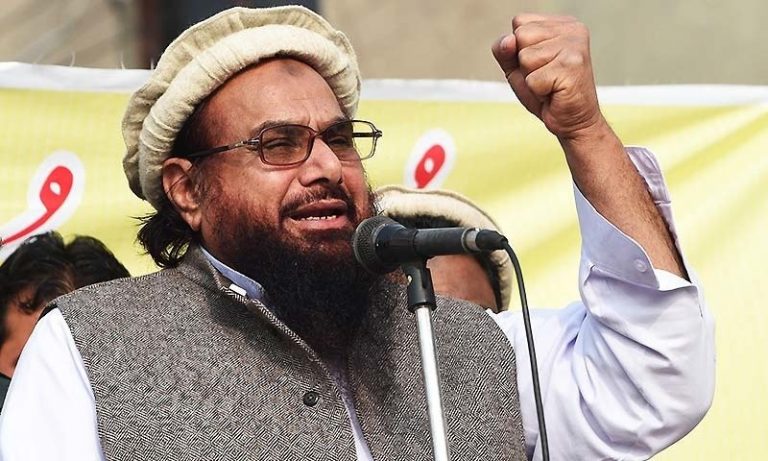
The National Investigation Agency (NIA) has filed its chargesheet against separatists, terrorists and stone pelters on Thursday for separatist activities in Kashmir. The main accused are the co-founder of Lashkar-e-Taiba, Hafiz Saeed, and Hizbul Chief, Syed Salahuddin. The list of accused also includes Aftab Ahmad Shah of the All Parties Hurriyat Conference, Altaf Ahmad Shah, Farooq Ahmad Dar, Mohammad Akbar Khanday and Raja Mehrajuddin Kalwar of the Hurriyat.


The investigation has revealed that the separatists have developed an organized network of stone-pelters and cadres who are incited to attack Indian sovereignty on Kashmiri soil. The investigation has also revealed that the separatists were receiving funds from Pakistani agencies through hawala conduits and that money was routed through fake and bogus companies floated abroad and remitted to Hurriyat leaders in Jammu and Kashmir.

The NIA conducted searches at over 60 locations and hundreds of damning documents and electronic devices were seized during the process. In addition, there are 300 witnesses in the case. The evidence collected have revealed that the persons accused were orchestrating violence against the Indian Army and stone-pelting and promoting and inciting other subversive activities against the Indian State. The investigation has also established an intimate link between separatists in Kashmir and their Pakistani handlers. The 1279-page chargesheet was filed before the Court in New Delhi and permission has been sought to continue the probe.

The raids conducted by NIA in various locations across Jammu and Kashmir, Haryana and Delhi reflects the ‘No Tolerance’ policy adopted by the NDA government against anti-India activities.The screws have been tightening around the separatists and terrorists in Kashmir and they have been feeling the heat under Narendra Modi with over 200 terrorists put to the sword in 2017. The case was first registered by the NIA in May, 2017 and the first arrests were made later in July.

The Judicial Custody of 10 people arrested by the NIA in connected with the case has ended today. Businessman Zahoor Ahmed Watali was one of the people arrested by the NIA in connection with the case, which was filed after violent protests had erupted across the valley after the elimination of Terrorist Burhan Wani by the Indian Army.

Importance of Agni-V in the Doval strategy to counter China and Congress’ lazy commentary

0

Today India successfully completed first user trial of nuclear capable Agni-V missile. The fourth (and last) experimental trial was completed on December 26, 2016.

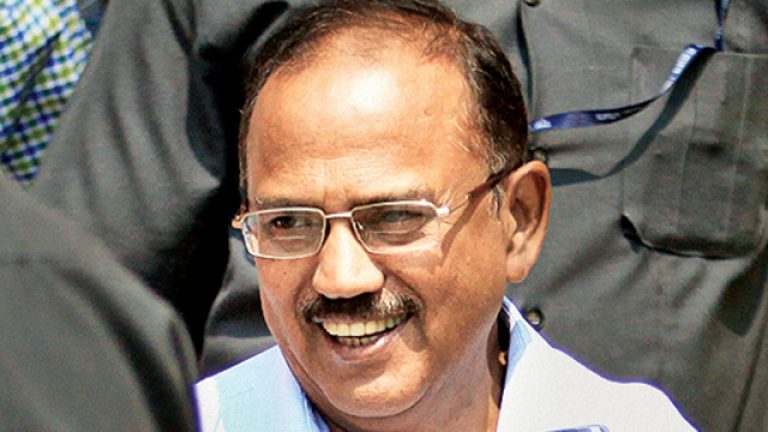
At this juncture it is appropriate to revisit one of the riveting speeches of NSA Ajit Doval on importance of missile capability to counter Chinese aggression in Asia.

Importance of Missiles in Doval’s China Strategy

On August 21, 2010, during the Universal Brotherhood Day at Vishwa Adhyayan Kendra (Centre for International Studies), one person among the audience stood up and asked a question to Ajit Doval. “How should India deal with China, because Pakistan exists and will exist because of China?” Doval answered :

I think that is a very very valid question. Let me devote some time for it. Let us put on the graph papers where [things stand] China’s comprehensive national power today is about three times higher than India. And in next 50 years we will not be able to equal it. China is converting its economic power into its military and strategic power at a very fast rate, faster than what we had anticipated. They have advanced their strategic ability build-up by about 10 years. In these days of acute economic shortages/difficulty they are doing with great [zeal] . They are doing is the time when they can do it at the cheapest cost.

After this he cites a case where China assertively stopped a US -Korea naval exercise by threatening to launch a missile. He goes on to analyse the way in which China was building naval bases in Coco Islands (Myanmar), Chittangong port (Bangladesh), Gwadar (Pakistan), and Hambantota (Sri Lanka). According to him, China is slowly becoming a blue water navy (a maritime superpower capable of operating world wide ). To counter this, Doval feels it is best to have precise missiles that can reach economic hubs of China. He went on to say :

I think the best strategy for India would be to develop its missile capacity to a very high degree. China is extremely vulnerable today because all its comprehensive national power will be burst if its economic installations are threatened. And as China is progressing at a very fast pace its economic installations are coming up very fast. [..]

If China understands that India’s missile striking capacity is so much that we can reach Guangzhou, Shanghai and the port areas, that is, within 24 hours their economic capacity would be decapacitated (it will be a deterrence). India has got to make up its mind to develop its strategic missile capacity. [..]

Fortunately, I think, there has been a lot of pressure and the government has been going ahead and I think in the last three years there has been considerable progress.

The complete answer given by Doval can be seen here :

Why Doval Strategy is India’s best bet to counter China

Ajit Doval is absolutely right in this regard. China’s economic heft and population is concentrated on its eastern coastlines. The imaginary line called Heihe Tengchong line was drawn by Chinese geographer Hu Huanyong in 1935. It divides China into two distinctly different regions. West of this line, China’s 64% of land area supports only 4% of its population, where as 96% of its population lives in the eastern side of the line. Thus, Agni V, which has a range of 5000 km should be able to reach key economic installations in any part of this area. This will be a key deterrent to Chinese aggression in Indian ocean.

Heihe Tencheong Line. Image Source : Wikipedia

Congress Mouthpiece’s Remarks on Doval’s strategy

As expected, Congress mouthpiece (National Herald) has made lazy remarks on Doval’s push for missile capability in the recent past. It tried to interpret the Doklam road building activity as a response to Doval’s missile strategy.  In its article published on Jul 15th 2017 said :

Amidst speculation that NSA Ajit Kumar Doval could visit Beijing for talks on the border standoff, questions are being asked if China’s move is to checkmate Doval’s push for long-range missiles [..]

While Doval is known to have advocated capacity building in India’s long-range missile system as a deterrent to China, observers wonder if the Chinese road building efforts are a response to convey that if a missile is ever deployed, China would be prepared to push deep into Indian territory.

The article does not appreciate the strategy or provide any alternate strategy to counter China’s activity in Doklam. It sounds more like a complaint or a lazy remark on a serious strategic issue. A national party which has been in power for so long must be more careful and responsible while making any comment on issues of India’s security. It is also important to note that Rahul Gandhi met Chinese Ambassador during the Doklam standoff. We still don’t know what transpired in that meeting.

Once the NDA government took over Agni Missile development has progressed at a swift pace. This indicates that the strategy proposed by Doval in 2010 answer to a question is seeing the light of the day. The Agni-V is a fine achievement by DRDO that deserves appreciation of the entire nation.