Home Blog Page 7385

Why the Bill seeking to declare Pakistan a terror sponsor was withdrawn and the way forward

It has been only a couple of days since Pakistan’s ceasefire violation claimed the life of a BSF jawan. Amid unprovoked mortar shelling and small arms firing, head constable R P Hazra laid down his life defending the nation. It was his birthday, the day terror state and its relentless violence snuffed out yet another life.

Just a couple of days before R P Hazra laid down his life, The President of United States of America tweeted, hinting at cutting security aid to Pakistan. And it has been reported just a few hours ago, that The United States has indeed suspended security aid to the Terror state.


With these developments, one wonder why India as a nation cheers when the United States takes decisive action against a state like Pakistan, that uses terror as a state policy, but falls short when it comes to standing up for herself, against the state that has vowed to bleed her with a thousand cuts.

In February of 2017, a private member bill was introduced in the Parliament of India by MP Rajeev Chandrasekhar, that sought to officially declare Pakistan a sponsor of terror. He had also appealed to the members of the parliament to snap all economic and trade relations with Pakistan. While this bill was met with sweeping support by the public at large, on March 10th, to everyone’s utter dismay, the bill was withdrawn by Chandrasekhar.

in view of the recent developments and renewed aggression by Pakistan as far as the border and the incredulous insults heaped against the family of Kulbhushan Jadhav go, I caught up with Rajeev Chandrasekhar to speak to him about the private member bill he had introduced last year.

I asked Mr. Chandrasekhar why he had introduced the bill in the first place. His rationale and reasons.

He said, that he couldn’t fathom why a country of 1.2 billion people wouldn’t haul up a country that his bled this country dry for so long. Why, a country like India would need to look upon other countries like the USA to take definitive action against Pakistan. There was no doubt in the mind of every man, woman and children that Pakistan was a terrorist nation, and this bill was an attempt to get the representatives of the people sitting in the parliament to declare officially what the entire nation knows beyond a shadow of doubt. We are a nation that survived enemies, fought wars and prevailed, why would we, per him, not confront our greatest enemy today that has vowed to bleed us with a thousand cuts. He said he introduced the bill because it was time we stopped piggy-backing on the USA or other nations, as an endorsement of a fact that we already know; that Pakistan is a terror nation. It is an enemy nation.

He also said that the bill was discussed subsequently for 2 Fridays and most MPs who participated in the discussion, wanted the bill to be passed and for Pakistan to be declared a terror state.

I then asked him, that if the bill was discussed to extensively, and if most MPs who participated in the debate wanted the bill to be passed, why then was the bill eventually withdrawn. 

Mr. Chandrasekhar said that when the bill was being discussed, the Home Ministry of India, said that we don’t need to bring in a legislation to declare Pakistan a terror state. The Government has all the executive powers it needs to declare Pakistan a terror state and ban trade and commerce with Pakistan. Hence, it was the Home Ministry, and specifically, Mr. Hansraj Ahir, MoS Home Affairs, who requested Rajeev Chandrasekhar to withdraw the bill.

He then introduced a resolution instead of a bill saying that the Parliament resolves that Pakistan is a terror state. That resolution has unfortunately not been admitted this session, but Mr. Chandrasekhar is hopeful that the Parliament might pass this resolution in the budget session.

I asked him, that since the Home Minister himself didn’t show resolve in passing the bill, stating that the government has executive powers, what made him think that this resolution would be accepted. 

He assured that in his informal communication with the functionaries of the government, firstly, there was no doubt in their mind that Pakistan was a terror state and it posed a clear threat to not only the security of India, but that of the entire region. He also assured that the government has full faith in the resolution that Mr. Chandrasekhar wanted to introduce in the parliament. He said there might be some quibbling about the ‘Is being dotted and the Ts being crossed’ and that is all a subject matter of debate. But the fact that the Parliament needs to speak up on behalf of the people, has been agreed upon and there is no difference of opinion there.

To conclude, Mr. Rajeev Chandrasekhar said that he wasn’t someone to give up on his beliefs in a hurry, and he was going to try his best to pursue this issue and see to it that the resolution is tabled in the budget session.

While the Government so far, hasn’t displayed the resolve the use its executive powers to declare Pakistan a terror state, this resolution, hopefully to be tabled in the budget session of the parliament gives hope that soon, Pakistan might have to face the possibility of being officially declared a terror state by India and her representatives.

Darul Uloom Deoband issues fatwa asking Muslims not to marry bank employees

0

The well known Islamic seminary Darul Uloom Deoband, in Deoband Uttar Pradesh, has issued a fatwa asking Muslim families to not marry men or women who work in banks. The logic provided for the same is that, money earned via interest is illegitimate in Islam.

This fatwa was issued after a person enquired to the Darul Ifta whether he should marry his daughter to a man, whose father worked in a bank. They had also commented that, “Obviously, the family is raised on ‘haram’ money. Is it not preferable to marry in such families”.

The Darul Ifta in its fatwa stated that, marrying such a family is avoidable and one should secure a match in a ‘pious’ family.

Incidentally this issuance of anti-bank employee fatwa, seems to have caused a rift between Islamic institutions. As per reports, the All India Muslim Personal Law Board (AIMPLB) has termed this fatwa as wrong and has asked those who issued it, to review it. As per the AIMPLB, such a fatwa would cause ‘further’ rift and confusion in the Muslim society.

Earlier the Darul Uloom Deoband was also in the news when one of its Ulemas proclaimed that a group of Muslim women that performed Lord Ram’s Aarti on the eve of Diwali, ceased to be Muslims. As per the Ulema, it has been clearly stated in Islam that if any Muslim prays to anyone except Allah, they have forsaken Islam.

Apart from this, the same Deoband had issued a fatwa against posting photos of self and family on social media websites like Facebook and WhatsApp. It has also issued fatwas against New Year Celebrations and designer, slim fit burqas.

The Deoband’s Ulemas have also issued a fatwa against a 15 year old Muslim girl for dressing up as lord Krishna and reciting Gita. A Deoband Ulema had reportedly expressed his displeasure at the girl dressing up as Lord Krishna and termed it as anti-Islamic.

‘Journalist’ Nikhil Wagle spreads fake news, blames Anna Hazare’s secretary when caught

0

Journalist Nikhil Wagle has been time and again called out on social media for his controversial postures regarding various issues.

In August he was slammed on Twitter for putting up an insensitive tweet, which tried to politicise the unfortunate deaths of children in Gorakhpur’s Baba Raghav Das Medical College.

Wagle later was exposed by his fellow journalist, when he tried to play the victim card after his TV show was stopped by Marathi news channel TV9. He had claimed that the channel took his show off air because of political pressure, but the truth of the matter was, that it was discontinued due to dismal TRP ratings.

Now in his latest controversy, he as been caught red handed for spreading fake news, by using Gandhian Anna Hazare as the central character. On Thursday, he tweeted :


As per the above tweet, going by the swarm of people, Anna Hazare was getting major public support in Karnataka, ahead of his fast against the Modi government from 23rd March, to protest against the “pitiable state of Indian farmers”.

This possibly insinuated, that the Modi government should feel the pressure ahead of Anna’s Ramlila Maidan fast, considering the massive public suppose Anna was generating in parts of the nation. This tweet of Wagle perhaps also aimed to put Modi Government in the sport considering the next major assembly election is to be held in the state of Karnataka.

Some twitter users didn’t take Wagle’s claims on face value and decided to investigate. A twitter user named Narayan pointed out that the crowd wasn’t present at any Anna Hazare rally but it was Hazare who was present at famous Sri Gavisiddeshwa, which is organised by Gavi Mutt in Koppal, Karnataka:

Image via @bns5

As reported, this Jatra organised annually under Sri Abhinava Gavisiddeshwar Swamiji’s stewardship, draws scores of devotees and Anna Hazare was a special attendee. After the event, Hazare remarked that, this event showcased the great cultural heritage of India.

So as seen above, the crowds weren’t drawn to a Anna Hazare rally, and the picture was actually of Anna being present at the Jatra.

Soon people came to know about Wagle’s lie and decided to call him out:


Possibly owing to all the pressure, Wagle today came out to apologise for his tweet and blamed Anna Hazare’s secretary for the same:


This does raise the question, as to why a journalist of his ‘seniority’ decided to merely go by his ‘trust instincts’ and not do a basic fact check before putting out the tweet. Is it because some journalists consider it okay to take refuge under ‘trust’ when the issue favours their agenda and otherwise suppress ‘unfavourable’ issues under the pretext of fact-checking?

Also, even though Wagle has now apologised for his tweet, he at the time of compiling this report hasn’t yet deleted it, raising the question whether he wishes the lie to continue propagating, while he continues to assume moral high ground.

Move over ‘biased’ media, the new tools of propaganda are here

0

The world is a different place today. Pre-2014, social media users, who were politically aware, had seen the twitter feeds of their top anchors, or more recently, had referred to fact-checks by sites like OpIndia.com, to realise that many of their favourite TV anchors and TV channels were not as “neutral” as they claimed to be. Today, almost everyone knows where an NDTV stands and also where channels like Times Now and a Republic stand. Similarly, most of us know the political inclinations and biases of the likes of Rajdeep or Arnab.

Although there are plenty of new media ventures which still fly below the radar, it is largely clear which section of legacy media leans on which side. This, is akin to the model followed in the United States, where the consumer knows exactly what political stand which media house has taken or perhaps would take in any given situation. This disclosure helps a consumer in appropriately consuming news, discounting biases which he or she may encounter. The media too is not being dishonest about its neutrality. What you see, is what you get.

While the Indian media scene has cleared up, in the run up to 2019, we will encounter a new beast. Around 5 years ago, stand-up comedy was a nascent industry with a handful of big guns. Today stand up comics are found by the dozen. Back then, most comics would swear by their political neutrality or apathy. Today, the masks are off, but only for a few.

Take the example of a comedy group called East India Comedy. They had brought out a song on demonetisation, which took various potshots at BJP, Modi and the scheme. I have to admit it was moderately funny, and some may have really enjoyed it. And it’s clearly within their right to freedom of expression. The same group more recently wrote a song on “Aadhaar”. Aadhaar is definitely fair game and there can be numerous issues relating to it, which can be criticised. But one look at the video, and you know where they are heading.

While half the song sticks to Aadhaar and makes some valid points, they soon morph into an anti-Government rant. “Anti-national” comment is mocked, a line actually goes as “Vikas ke naam pe topi”, Demonetisation and GST are ridiculed, and the piece de resistance: “acche din are only for Amit Shah’s beta”. I am not sure how any of these issues are linked to Aadhaar and why they appear in a song which they claim is on Aadhaar. I am not even going into factually rebutting their claims because “hey it’s a joke”.

The issue here is not that they are criticizing the Government. The issue here is, they claim to be “neutral”. While they claim to be doing a song on Aadhaar, one ends up listening to a song which could very well have been written by Congress’s social media team. This line will be offensive to most stand-up comics although they would not skip a heart beat while labeling any pro-Government individual as “bhakt” or “paid” or “BJP IT cell”.

While these guys are still working subtly, there are some who have gone into their full krantikari mode. Take for example, the founding member of All India Bakchod, Rohan Joshi. On his facebook page, he has virtually wished for Narendra Modi’s death:

This besides using a string of abuses for anyone connected remotely to the BJP.  Another example is stand-up comic Kunal Kamra, who has now begun conducting interviews with Jignesh Mevani, the uncouth Congress backed MLA from Gujarat who has been charged by Maharashtra police. Kamra also extols his fans to donate to leftist propaganda website The Wire, which lies habitually, and states : “No more sitting on the fence”.

To reiterate, comedians, like anyone else, have the right to be politically active, support a cause and oppose anyone they choose. The central issue here is : Are they really open about their inclinations? Will the average viewer coming to their shows or watching their videos, know that they are supporting a particular party, and thus, their skits or jokes maybe biased towards one side? Worse, have these comics become wittingly or unwittingly, tools for propaganda?

For example, just a few months back, AIB had posted a “comedy” video which featured maliciously edited footage of PM Modi, showing him in terrible light. Once social media users pointed out the inaccuracy, the group deleted the video. What of the occasions when not enough people realize that they are being fed lies in the guise of jokes? Rohan Joshi of AIB, had posted the same edited clip on his Facebook page, and has not deleted it, even after various people had commented that he was spreading an edited video. This is not how comedians operate, these are the actions of desperate politicians.

Hence, the question, in the coming 18 months or so, who is to say whether you are attending a comedy show, or a show laced with factual inaccuracies and political propaganda, in the guise of comedy? If they can question the intentions and integrity of every pro-government voice, can they be held to similar scrutiny? Most recently Kamra himself went, if I may say so, crazy, and abused Arnab Goswami because he spoke in favour of the government:


Will Kamra entertain and embrace similar claims and abuses by others, or will he then ask Twitter to suspend the “troll”? Again, the point here is not to ask these people to refrain from making “jokes” on the ruling dispensation or Modi or BJP. Please do, but at least be honest about it. To paraphrase Rohan Joshi himself, I have more respect for comedians who openly declare that they want Modi dead and at least losing in 2019, rather than those who play the “we are oh so neutral objective comedians just cracking a few anti-establishment jokes” card. You’re all tools of propaganda.

Hopefully, Rohan Joshi can not only pay heed to his own words, but impart such wisdom to his comrades as well.

BJP volunteer brutally murdered in Karnataka after disputes over religious decorations

0

Deepak Rao, a member of the BJP’s IT cell in Dakshin Kannada, was allegedly murdered by four Muslim men in Katipalla town of the state. Reports have claimed that this murder was a culmination of a dispute regarding putting up of religious decorations. This dispute had led to simmering tension between the ‘majority’ and ‘minority’ community.

Deepak was murdered in broad daylight at about 1:30 PM on Wednesday, when his bike was abruptly stopped by a car with the assailants, who then attacked him with sharp weapons, as a result of which he died.

Initial reports claimed that Deepak was a member of the Bajarang Dal. But since then the BJP had clarified that he was a BJP volunteer and not part of any Hindu groups.

Soon after the murder, the Mangalore police arrested four men in connection with the killing, with one of them being named Pinky Nawaz.

This murder has devastated Deepak’s mother who claimed that her innocent son wanted to go abroad for work, but it was she who stopped him. Deepak was the sole breadwinner for his family and supported his 55 year old mother and his 24 year old brother who is mute. He used to work as an executive in a mobile SIM card distribution company.

As a result of this incident, tension spread in the region which is known to be communally sensitive. On Thursday, thousands turned-up at his cremation ceremony which took place at a Hindu burial ground, in town.

In recent days Karnataka has had to bear witness various such murders of Hindus, including BJP and RSS workers.

We had recently reported how a poor 21 years old boy named Paresh Mesta was brutally murdered and extreme torture was inflicted upon him after he was most likely trying to escape stone pelting in Karnataka’s Honnavar town.

In June of last year, Bandi Ramesh, a BJP leader was hacked to death in the outskirts of Bellary. As per the report, he and four others were having a lunch at a dhaba, when seven-eight people attacked him with machetes. He died on the spot.

In July, a RSS worker was stabbed by unknown assailants at Bantwal in Dakshina Kannada district. He succumbed to his injuries three days later.

In October, 2016, an RSS activist was murdered in broad daylight on Bengaluru’s Kamaraj road. He was caught up by two men while he was returning from a RSS route march. About a couple of months later it was reported that Asim Sheriff, a leader associated with Popular Front of India (PFI), a radical Islamist organisation, was arrested in connection with this murder.

With the murder of Hindu leaders happening with such frequency, it might raise the question whether Karnataka is on route towards becoming the next Kerala, a state which is become infamous for such murders.

Book Review – ‘Avishi : Vishpala of Rig Veda Reimagined’ By Saiswaroopa Iyer

0

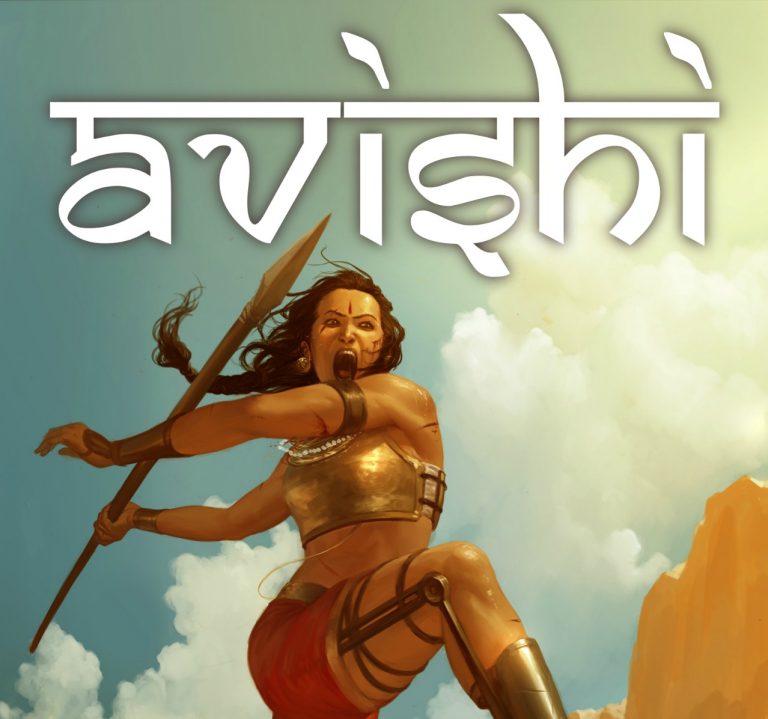
Avishi, Vishpala, these are names you may not have heard before. This book talks about Vishpala, a queen mentioned in the Rig Veda, who lost her leg during a fight and then had it replaced with a metal one. Saiswaroopa Iyer, the author, has reconstructed Vishpala’s life through Avishi and also imagined some of it, to present before us this wonderful book.

Saiswaroopa Iyer has written another book called ‘Abhaya’. Both her books have one thing in common – both talk about tales of women with unimaginable courage. When you start reading Avishi, you will be enthralled by the immense hardships she had to face and her bravery in facing those hardships without flinching. This gives a message to everyone, that women aren’t weak and never were. It dispels that misconception and inspires children who read it.

Here is a gist of the story.

Sukratu, Avishi’s father, was a soldier who worked at the king’s palace. One night, he was killed in an act of treachery in a conspiracy by General Ugra and his nephew, Khela, and was branded a traitor. Afte killing Sukratu, when Sukratu’s assassins came to kill Avishi, she was whisked away by Loha, a beggar Sukratu had taken in. Loha took Avishi to the forest of Naimisha, where all the respected rishis lived. The rishis nursed her and taught her the rules of dharma and how to fight. She grew up to be a warrior.

Once grown up, Avishi left the ashrama on Rishi Vahni’s advice and went to a settlement named Ashtagani. She still did not know her past as the shock had wiped that part of her memory. She settled in Ashtagani, got a post as a senior military recruit, and was treated with respect. Meanwhile, in Vrishabhavati, General Ugra had ascended the throne, and Khela was his right hand. Khela plotted with his friend Anudatta and killed his uncle so as to be the king. Khela was not as naïve as the other rulers and planned to change the set of rules that everyone followed. He wants to start by taking over Ashtagani. He started to cut its supplies short. A one-to-one duel where he cheated was called off. To compensate, Khela sent gifts to Ashtagani and offered to marry Avishi, who was now the head of the village. Avishi decided to go to Vrishabhavati, as she had a plan in mind that would help save everyone. She went to Khela’s palace, and later kills Anudatta when he tries to kill her. In the process, her leg is injured, and slowly gets infected. How will she fight to save Ashtagani with her leg?

I loved this book more than Abhaya, and it has inspired me. The way Avishi fought even with serious injuries, and her leadership should be a lesson to all of us. Saiswaroopa Iyer is able to alternate from scene to scene with a lot of ease, and none of it seemed abrupt. She was able to build the plot up well, as towards the end when Avishi and Khela fought, I was holding my breath, waiting for how it would end.

I loved Avishi and Shivani’s characters the best as both had plenty of courage and would never step down when challenged. They would instead face the challenge and emerge victorious. Each person in the book has his or her own importance, and none of them seem out of place. I think Saiswaroopa Iyer has outdone herself with this book. I loved her idea for the book. There are barely a handful of people who have even heard of Vishpala, and this talks about her whole life! Finding a good topic for the book is also a talent, and writing about that topic, especially if very less is mentioned about that topic is truly amazing. I have loved this book. Why don’t you try it?

To know more, Read ‘Avishi: Vishpala of Rig Veda Reimagined’ by Saiswaroopa Iyer. Avishi is available as a Kindle e-book from Kindle IN and Kindle US.

(13 year old Anvita Agarwal, runs a Twitter handle @SistersWhoRead along with her 10 year old sister. You can read more from these remarkable girls on their blog.)

AAP’s billionaire Rajya Sabha nominee Sushil Gupta sends defamation notices to Kapil Mishra and others

0

Sushil Gupta, the billionaire Rajya Sabha nominee from Aam Aadmi Party has sent defamation notices to BJP MP Parvesh Verma, BJP leader Harish Khurana and former Delhi minister Kapil Mishra for their allegations against him.


Gupta has alleged that Mishra accused him of ‘buying’ his Rajya Sabha nomination.


Meanwhile, Mishra has been defiant in his stand on Gupta.


He even referred to one ‘Ghunghru Seth” of receiving notes as he got a ‘notice’.


BJP MLA Parvesh Verma, too, had accused Kejriwal of ‘selling’ Rajya Sabha seats for Rs. 100 crore.

Interestingly, founding members of Aam Aadmi Party, who are no longer associated with Aam Aadmi Party, had also been critical of this decision and implied that money had changed hands in the Rajya Sabha nomination. However, there are no such reports of defamation notices have been sent to them.

One wonders, what’s the deal?

The National Medical Commission (NMC) Bill seems to be a disaster in the making

0

Recently in a national orthopaedic conference in Australia, there was a keynote address about the status of women, the LGBT community in Orthopaedic surgery and the issues of bullying, harassment and equality of rights and privileges while maintaining the peak of professionalism. One of the important statements that the speaker made was, “We have to do enough, and more importantly appear to be constantly doing enough, to monitor and regulate ourselves on the fronts of quality, human rights and ethics; because if we are not visibly doing enough, someone else will do it for us and that imposition will not be pleasant.”

This statement should stick to our minds for a long time to come. We should be visibly doing enough to keep ourselves clean and at par with the contemporary norms of quality and ethics, otherwise the authorities will police us. The Medical Council of India (MCI) obviously didn’t do this. They have clearly and shamelessly failed at the core issues of maintaining ethics and transparency in administration of medical training, distribution of resources for the same, regulating the practitioners to the professional levels expected by the society and guide the government in public health and human resources development policies. This indefensible failure has resulted in the government bringing in the NMC Bill. Although I agree a change, a good old full overhaul might well be necessary, the NMC bill has been complicated with poor design, exclusion of the stakeholders and most importantly things that have a potential to take things from bad to far worse in the way of corruption, quality of health care and ethics. These issues have potential to further erode the public’s trust in the healthcare system and create a status of confusion in the healthcare sector of India that will lead things to a status of disrepair which might take decades to recover if it ever does that.

Esoterica apart, let’s talk about the core issues in very objective manner.

The NMC will be formed with ‘select’ members on the panel.

We are Indians. We know how things work when people in such powerful positions are ‘selected’. This might lead to sycophancy, corruption and nepotism in selection of the NMC panel. The panel members will only technically have to be responsible to the political ‘selectors’. In a correct model, such a Council should have representatives from all the stakeholders and the stakeholders in public healthcare delivery system in a large country like India are, but not limited to:

-Medical Practitioners

-Medical Academics

-Medical Scientists (Research and Quality Control)

-Economics (Government’s representative)

-Health Insurance bodies

-Medical Indemnity Insurance providers

-Education experts

-Population and demographics experts

This will be a good bunch to plan the approach, extent, resource allocation and policies pertaining to medical education, ethics, registration and quality control, while they are also responsible to their areas of representation, meaning they feel their responsibility to uphold the betterment of their cause, not just pleasing the political selectors.

The National Medical Council may encompass all the medical and paramedic specialties, streams, systems and have separate registration mechanisms with grievance redressal mechanisms under one banner but the system streams have to stay distinctly separate from each other.

This brings us to the next level of this contentious issue: Allowing ‘Ayush’ healthcare providers to practice ‘Allopathy’ after doing a certain ‘Bridging Course’.

First, there is no such thing as ‘Allopathy’. The term ‘Allopathy’ was coined as an insult in the early days of European medicine and it literally translates to ‘The other suffering’. This was meant to say the disease is a suffering and the treatment (back in the day) was so bad, it was a suffering in itself. What you call ‘Allopathy’, goes by the name ‘Modern medicine’ or merely ‘Medicine’ these days. Also, I will be clear about this bridge-mixing the healthcare streams right away- this is an idea as bad as bad can be. I will talk about the issues and the common arguments for/against this. May be we can even have some speculative answers that show us light for the future:

1. “The MBBS doctors don’t work in rural and remote areas and allowing the ‘alternative therapy’ practitioners to practice as doctors will help this.”

Have you ever wondered why the MBBS doctors won’t work in rural and remote areas? Do you have any plausible reason why the ‘bridged’ practitioners WILL work in the rural and remote areas after they are bridged across?

I have worked for a few months in Valsad- a District hospital but still fairly ‘remote and rural’ in the terms of comparison, say with Ahmedabad or Baroda. The pay scale in government hospitals are low even in remote and rural locations. There are no ‘incentives’ the government provides for people to choose the location the government obviously does identify as rural and remote. A doctor in a career will obviously compare what their professional reimbursements are to their equivalent in a city private practice or similar realistic option they could go for alternatively. If they are not getting paid competitively, they won’t keep that job.

The next issue is infrastructure and equipment. Doctors want to be able to use their skills to the best possible extent to help a patient. This needs not just a brain and two hands, but equipment, support staff, laboratory, X-ray and imaging, operating theatres, procedure rooms, access to continuing medical education through library and medical data access, and finally, a reciprocating professional support system through a robust bilateral referrals system. When you don’t have these, it results in lack of job satisfaction and professional depravity and if you just throw some more money to incentivize this, it won’t work and it won’t attract the best candidate for the work in any case.

Finally someone who has picked a peak profession like medicine also expects some work-life balance and a respectable lifestyle. If you expect doctors who are mostly trained in large city universities to relocate to small and rural centres, there has to be some support system in the form of residence, relocation support etc, even if temporary for them to sort out long term plans on the job. The ‘Government Quarters’ are seldom available to new doctors coming to town and if they are, they are not of a quality the young professionals expect for themselves.

Various governments have tried in different ways to force young doctors to go work in rural areas through compulsory rotations, financial bonds etc and nothing of these have worked. Nobody has actually tried to lure doctors into the rural practice.

Getting to the ‘bridging’ part, why does the Govt believe that the bridged alternative practitioners will work in these rural and remote areas only after being certified? Why won’t they want to live and earn in the cities like the Doctors do? There is practically no system in India that can ensure that certain doctors will only have certain practice privileges in certain locations. For example, in Australia each doctor gets a ‘medical care provider reference number’ and this number is unique to each doctor for each hospital/ consulting location they work at. They can provide some services at some locations but not at the other location at times. There is no mention of such an arrangement in the ‘Bridging’ plan. Even if this is considered, it is an extensive data management process to enforce this in India where not all the hospitals and consulting clinics are registered and monitored by national hospitals accreditation board and most billing is out-of-pocket, not through insurance.

2. Medical doctors are sold to the Pharmaceutical industry, are corrupt and indulge in financially motivated malpractice.

I am not even going to deny this. Although I firmly believe that more doctors are honest and ethical practitioners than not, arguing against this point only makes the case of the opposition stronger. I accept your point that the lack of integrity exists in India and is undeniable.

What I will say to this is though, the ‘Bridged’ alternative practitioners are also product of the same society. Why wouldn’t they indulge in the same vices? Once they are licensed to practice as ‘Doctors’ why won’t the ‘Pharma’ industry woo them with the same ulterior motives? Why do you think they are not already doing this? As often said in their defence, these alternative practitioners are already prescribing modern medicines too quite regularly, and hence they are already within the reach of the ‘big pharma’ manipulators too.

Bridging the alternative practitioners won’t improve ethics within the medical practice. It will only further collude the field, make tracking of malpractice, suggesting improvements and imposing industrial reforms more difficult and almost impossible. And as a reason to justify the bridge course, the argument falls flat.

3. The MBBS doctors are too arrogant in their system and see the alternative therapies as inferior

We believe in our system and we respect the fact that those who have learned and are practicing the alternative therapies also believe in their system. Although, seeing that in a large treed the ‘alternative practitioners’ want to find ways to practice modern medicine while not many modern medicine practitioners are keen on practicing alternative therapies or Ayush, I actually doubt the alternative practitioners have respect for the system they have been forced to learn, in a vast majority of cases.

Modern medicine is the only system that has an ongoing self vigilance through scientific methods. All drugs, surgical procedures, therapies, diagnostics, pathology, even understanding of anatomy and physiology are constantly being tested with prevalent scientific methods, changing the ideas of past and proposing fresh. Such a constant scientific vigilance is lacking in all the ‘alternative therapies’. There is a lot of ‘Research’ in the alternative therapies but most of it is in the pattern of navel gazing and self-approval, not a very widely vigilant process. You say Metal on Metal hip replacements failed? You say Statins were doubted? Guess who researched and published those doubts?? Modern medicine scientific processes did.

When was the last time you heard that an Ayurvedic/Homeopathic/Unani/Naturopathic therapeutic method was debunked and suggested to be removed by their own respective scientific research?

4. The MBBS doctors just want to save their turf while the Ayush doctors are already partially trained in medicine.

It is right in a way but it’s not just that.

Even if I don’t think the alternative therapies are an inferior science, even if I accept them as a legit alternative to medical therapy, all I want to say is, they are different. The very philosophy that the whole system of medicine stands on is distinctly different for each of these alternative therapies and they are all quite different from modern medicine.

While they sure teach Anatomy and Physiology in the Ayush courses as well because these facts can’t be altered by esoteric and philosophic differences, the very attitude and depth with which these subjects are taught have to be significantly different. Why and how would someone teach Anatomy the same way to an MBBS student and a Homeopathy student when they well know with one, the student might one day grow up to be a cardiac or a neurosurgeon and will need exact minutia of this information always refreshed while the other student is just learning this for a term exam and is not going to ever have to cut into a person in his natural progression of career?

Did you all have an ‘optional’ language in high school? Do you remember some subjects were taught at a ‘higher level’ or a ‘lower level’? That is the distinction between the teachings of the same subject between systems.

The very understanding and thinking about how and why illness occurs and how it should be managed are radically different between modern medicine, Ayurveda and Homeopathy. One talks of molecular and cellular level activities, the other talks about balance of natural humors, while the third thinks of stimulus and response mechanisms in contentious ways. How can you just ‘bridge information’ between these systems of healthcare when their very central philosophies of development of illness, pathogenesis and therapeutics are so different they can’t stay in the same postcode??

Then some say the Homeopathy and Ayurvedic colleges have been teaching Modern Medicine pathology, therapeutics etc too, and I ask WHY? Again, don’t they just trust their system in its entirety? And if they don’t, why don’t they drop that course, sit the NEET once more and try to become a Doctor practising modern medicine? We’d love to have someone with a skeptic mind who wants to question things being taught to them and would like to make inquiries outside of the context in the modern medicine practice, because that is what we do.

5. If people of Ayush specialties want to learn modern medicine, the knowledge should not be harnessed or limited. They should have access to it.

Yes, everyone should have access to knowledge. They should feel free to learn modern medicine if they so like, but as things stand, the resources we have for imparting such knowledge are unfortunately limited. Hence, we have created multilayered guards against entry into such privilege. The NEET, the merit, the quotas, the capitation fees and private college fees.

Allowing ‘bridging’ across from alternative medicine to MBBS will completely violate the idea of access through merit (even with reservation and quotas as they are).

Often people with higher ‘scores’ in their respective streams who can’t get MBBS will get into Dentistry, Pharmacy, Physiotherapy, Nursing etc before or around the same scores where some would take ‘Alternative therapies’. Such bridging courses will be unjust to those who took other ‘non-bridgable’ alternative career when MBBS was not available at their score.

This will create a corrupt private university market out there that will admit students into ‘alternative therapies’ courses as a backdoor entry to MBBS. This will risk the overall quality of healthcare and also result in inflation in alternative therapy courses, universities and capitation fees. This is bad health education resource management.

What India needs is more actual government medical colleges at a lower cost to meet demands, not more ‘alternative’ streams towards being a doctor and paying multiple layers of fees along the way. This will bring a large number of financially hungry, dubiously trained, medically confused and difficult to regulate ‘medical’ doctors who will be a huge risk to the public health.

If Bridging is actually to be contemplated, it will have to start with a massive reform at the level of universities. All the universities in the country will have to be categorised to match levels. Level-A universities will recognise the course material of another Level-A university as compatible and so on. This may lead to all the subject modules being categorised to the quality of teaching and then people who qualify to get admission into MBBS course in a university through NEET but have done another relevant course in the past from a comparable university can get advance standing in the course and may finish their course sooner. This is the acceptable way of ‘bridging’ or establishing a cumulative learning material.

If it comes to this, it will become very apparent very quickly that courses like Dentistry, Physiotherapy, Pharmacy, Nursing, even Veterinary Science will find it easier to make significant advanced standing when changing up to an MBBS because the very central philosophy, the modern scientific methods, facts and attitudes of these streams are closer to the MBBS of modern medicine than the Alternative Therapies are.

6. The ‘bridging courses’ will make medical treatment cheaper

Nobody seems to have taken the financial stakeholders of healthcare delivery into account in these discussions. The health-insurance permeation is fortunately increasing. More and more people are covered through private health insurance, employee health schemes, compensation claims, accident and third-party insurances etc. This is a good thing because it separates healthcare financials from the emotions and the outcomes.

The insurances are basically cumulative risk management plans that share the financial risk through premiums.

The government says they will ‘allow the bridged practitioners to work as doctors’, but have they taken the view of the Insurance stakeholders?

Are they willing to take the risk of these practitioners coming in the market? Will the private health insurance companies pay these ‘bridged’ doctors the same fees for their services that they do the modern practitioners? If they take this additional ‘risk’ by accepting their practices, will this lead to rise in premiums and cost of all health insurances? By how much?

Although I am not a voter in India, I am a supporter of the current moderate right-wing government in India and yet I am harshly critical of this NMC bill, mostly in the spirit of what I said at the very beginning of the article: If we don’t regulate our own, someone else will.

(Disclaimer: I have trained both undergraduate and post-graduate medical qualifications from India, have worked in large apex government hospital, remote district government hospitals. Now I work overseas and have no financial interest in healthcare in India, although I have interest in wellbeing of India and Indians.)


Kerala CM lauds North Korea’s Kim Jong Un even as Kim threatens the world with nuclear attack

0

Even as the US and North Korea threaten the world with pushing the nuclear button, North Korea’s Kim Jong Un has found an unusual ally in Kerala Chief Minister Pinarayi Vijayan. Vijayan praised Kim and applauded him for successfully ‘defending the pressure imposed by the US’.

Vijayan was speaking at the CPM district committee meeting in Kozhikode where he is reported to have said, ‘North Korea has been following tough anti-USA agenda. North Korea has successfully defended the pressure imposed by US’ and called North Korea more effective than China in countering the US. In his new year address, Kim had warned of having a nuclear button on his table, to which US President Donald Trump, who, like Delhi Chief Minister Arvind Kejriwal likes to announce policy and diplomatic decisions over Twitter, boasted of having a bigger nuclear button on his desk, the one which actually works.


Amidst all this, Vijayan goes praising the volatile leader who could just trigger a nuclear war. No wonder the communists in India could double up as mini Kims themselves. You will not find any of the new age social justice warriors, Kanhaiya Kumar, Gurmehar Kaur and gang being critical of North Korea. Now we know, because secretly, they probably applaud Kim for ‘taking on’ the powerful US.

The only time some of them, or their friends, mentioned ever-mysterious North Korea is when Arun Shourie called some Indian media channels, which were not spewing venom against Narendra Modi, as “North Korean TV channels”. Which then makes Vijayan’s accolades for Kim a little ironic. Especially when CPM uses Kim in their posters to announce party gatherings in Kerala.

Wonder what buttons Vijayan has on his desk.

Delhi Court to hear plea seeking sedition case against Manmohan Singh, Mani Shankar Aiyar and others

0

Delhi Court is to hear a plea seeking registration of Sedition case against Dr. Manmohan Singh, Mani Shankar Aiyar and others for allegedly hatching a conspiracy with Pakistan to destabilise the Narendra Modi government and effect the outcome of the recently concluded Gujarat polls.

The plea has been filed by Supreme Court lawyer and BJP leader Ajay Agarwal. He has sought that Manmohan Singh, Mani Shankar Aiyar and others be charged under Section 120-B, 121-A and 124(A) of the Indian Penal Code (IPC).

Ajay Agarwal has said that a meeting took place at the South Delhi residence of Mani Shankar Aiyar which was also attended by Pakistan’s high commissioner and ex foreign minister of Pakistan. This meeting was also allegedly attended by former PM Manmohan Singh and former Vice President Hamid Ansari. He has also said that derogatory words were used against Prime Minister Narendra Modi in this meeting that supposedly took place.

He alleged that the Home Ministry and Ministry of External Affairs were not informed about this meeting and that it posed a great threat to the nation.

The plea in the Delhi Court comes after Ajay Agarwal had requested the NIA to investigate the matter, but his request wasn’t heard.

It is reported that Ajay Agarwal has not made Manmohan Singh, Mani Shankar Aiyar, or any of the people who supposedly attended this meeting as the respondent. He has instead made the Delhi Police Commissioner and the Hazrat Nizamuddin Police Station House officer as respondent.

It is reported that Ajay Agarwal lives in the same Jungpura Extension colony of south Delhi in which the alleged meeting took place at the residence of Mani Shankar Aiyar. He has filed the case before the Chief Metropolitan Magistrate of the Saket Court after Hazrat Nizamuddin Police Station refused to accept his FIR against the persons who allegedly attended this meeting.

The matter is to be heard today at 2PM and it remains to be seen whether his complaint would hold any water in the court of law.