Home Blog Page 7418

Madhur Bhandarkar exposes Shabana Azmi’s hypocrisy

With each passing day, everyone worth their salt is trying to take advantage of the Padmavati film controversy to score their own brownie points. On Friday night, actor Shabana Azmi took to Twitter to express her anger at the controversy and show her solidarity with the filmmakers of Padmavati.

She started with saying how action should be taken against the fringe elements who want actor Deepika Padukone, who is playing the role of Padmavati, maimed.


But then, soon she went from showing solidarity for creative freedom to targeting the government, especially Smriti Irani, the Information and Broadcasting Minister.


Azmi’s meltdown ended with her demanding that the entire film fraternity should boycott IFFI, International Film Festival of India, which begins from 20th November, to protest against the threats.


Her selective outrage got called out by filmmaker Madhur Bhandarkar, who faced violent protests by Congress workers, when his film Indu Sarkar was about to release earlier this year.

He, too, took to micro blogging site to remind Shabana of the hypocrisy and virtue signalling she often indulges in.


One Congress leader had announced a booty of Rs. 1 lakh to blacken Bhandarkar’s face.


The film Indu Sarkar was a fiction based on the 19 month long Emergency imposed by former Prime Minister and Rahul Gandhi’s grandmother Indira Gandhi in 1970s. Despite Bhandarkar’s assurances that the film was not a biopic on Gandhi’s life, Congress workers and leaders came down heavily on him.


Not surprisingly, Azmi had put up no such tweets in support of Bhandarkar.

Reportedly Censor Board is furious with filmmakers for organising private screenings without waiting for CBFC certification. They say the filmmakers sent incomplete documents. Prasoon Joshi said that the private screening held for few journalists was ‘irresponsible way of pressuring’ the board. The application was sent back due to lack of documentation and the filmmakers had to rectify and send it back.
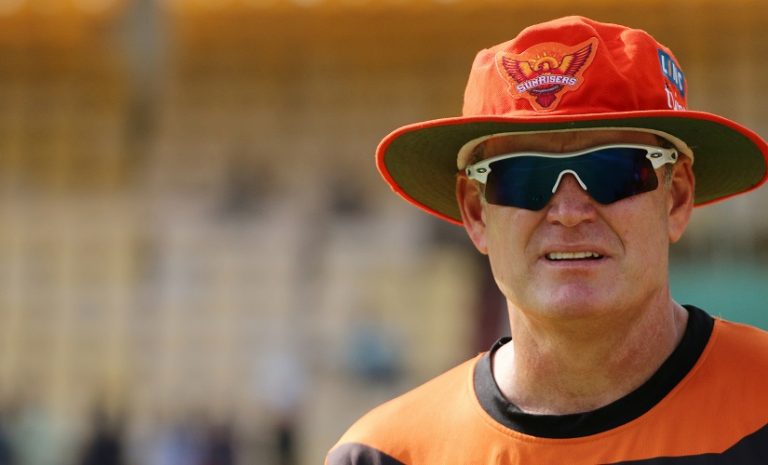
CPM supporters attack Tom Moody on Facebook after confusing him with rating agency Moody’s

0

A whole lot of opponents of Prime Minister Narendra Modi were left crestfallen and disappointed yesterday because the international credit rating agency Moody’s Investors Service – popularly known as Moody’s – upgraded the rating of India.

Although improvement of rating of India should have made every Indian feel good about it, this good news became a cause of depression for many who were looking for a shoulder to cry on. Political opponents too came up with bizarre reason downplaying the improvement in India’s status.

Among them was CPM leader Sitaram Yechury, who ‘slammed’ PM Modi for imporving India’s credit rating. The communist leader said this was a proof of growing capitalism in India. And it appears that all communists think the same.

However, not all communists are a little educated like Yechury, who at least knows what capitalism is and what is Moody’s. Due to this lack of education and awareness, a host of communists decided to attack and abuse former Australian cricketer Tom Moody on his Facebook wall.

These communists thought that it was Tom Moody who upgraded India’s credit rating, and they expressed their disappointment and anger with Moody, who has also played the part of a coach in IPL, by writing angry comments on his Facebook wall.

Tragically, almost all such terrible wishes for Tom Moody was posted on his Facebook status, where he was thanking people for wishing him birthday.

Here are the tweets where Twitterati spotted the comments on Moody’s Facebook wall :


Some of these are hilarious tweets by users mocking the youth from the most ‘literate’ state of India.


Lal Salam Tom Moody!

Congress taking Patidars for a ride

0

The political party which has not only thrived but flourished on divisive politics is now on the receiving end as the ones they ‘promised’ justice as election promise are now demanding it and Congress leaders in Gujarat are hiding instead of facing them. Patidar Anamant Andolan Samiti (PAAS) leaders, including Hardik Patel, have been asking Congress to make their stand clear on providing reservation to the Patidars.

The PAAS leaders have been asking Congress to take a stand and only then they will decide to support Congress in the upcoming Gujarat elections. The Congress has so far maintained that it will offer a 20-percent reservation to the economically backward classes (EBC), without disturbing the 49-percent reservation given to the scheduled castes (SC), scheduled tribes (ST) and other backward classes (OBC).

After extending deadlines given to Congress by Patidars number of times, PAAS has now given the ultimatum of 24 hours to Congress to declare their stand on reservation for the community. Even as Congress struggles to decide names for the candidates for upcoming elections, the PAAS conveners are giving Congress a run for their money as they are reportedly seeking as many as 30 seats.

Yesterday, PAAS leaders Dinesh Bambhania, Manoj Panara and Lalit Vasoya were called to Delhi to meet the national leaders, but it seems talks haven’t made any headway as Gujarat Congress President Bharatsinh Solanki, hurriedly left Delhi without informing them. The PAAS leaders are upset and say this is an insult to them as Solanki has reportedly even stopped answering their phone calls. Ashok Gehlot, Gujarat Congress election in-charge, also returned to Rajasthan without holding any further discussions with the Patidars.

Meanwhile, senior Congress leader Kapil Sibal and Patidar leaders who were in Delhi, boarded same flight to Vadodara where a meeting is likely to take place on sidelines of the event Sibal is attending in Vadodara.

As the deadline looms, watch this space as the battleground Gujarat heats up.

Congress supporter claims proof of ‘good deeds’ by sharing letter of appreciation from rape accused

0

The Poonawala brothers of the Congress party aren’t known to be extremely bright. We reported earlier how they are not related to the billionaire businessman, Cyrus Poonawala. We also reported on how Tehseen, the older Poonawala brother deleted offensive tweets about Smriti Irani after being called out and how Shehzad defended his brother with ridiculous arguments.

As has become their habit, Shehzad, who is not related to the more reputed and Pune billionaire, Cyrus Poonawala, has seemed to make another gaffe.

Today, in a bid to prove how he rose through the Congress ranks on merit and not because of the brothers’ association with Robert Vadra, Shehzad plugged some old appreciation letters from fellow congressmen.


The letter that came under fire was this one by Congress leader Rohit Tilak who was in 2008 the President of Maharashtra NSUI.

Users pointed out that Shehzad was sharing an appreciation letter by a now rape accused.


Tweet exchanges followed :


While Shehzad was right in saying that the letter was from 2008 and Tilak got accused of rape only in 2017, given the seriousness of the charges against Rohit Tilak, one wonders if someone in the public sphere should be flaunting appreciation letters issued by him even way back in 2008.

The great-grandson of Bal Gangadhar Tilak, Rohit Tilak was booked for rape and “unnatural sex” in July 2017. In August 2017, the complainant had tweeted to PM Modi and said political influence was saving Tilak from getting arrested. The complainant had also complained of getting ‘acid attack’ threats. Currently, Rohit Tilak is out on bail.

It begs the question : Do political figures have a greater responsibility and is it okay for them to flaunt letters by their party leaders who are now accused of grave crimes?

Those that wait : A tale of fallen heroes, and the ones he leaves behind

0

We often talk about how grateful we are for the free land we inhabit. Of the land, that builds its foundation on the strength of a man’s soul. Of the men of honour, of indomitable will and a steely heart, who stand a post while we lay in our beds, safe and sound, knowing nothing can hurt us while these men stand guard. But it is said, that freedom is free, because the price has been paid by someone else. People, we often forget to remember. Men, we often forget to honour. Soldiers, who lay their life down with a smile on their face. We often forget, that even the men who make the supreme sacrifice for our freedom, leave behind a family and take a piece of their heart with him.

But one man on Twitter ensures we don’t forget the price paid.

Harpreet (@CestMoiz) has been tweeting soldier’s obituaries for years. And his tweets moisten the eyes and swells our heart with pride. He started putting together a thread that chronicled pictures and letters of the families of martyred soldiers. He says this is what got him going.


Moments where family members break down, in the memory of the ones that left.


Of a father, who stood at the very ground where his son laid down his life..


Of a daughter who smiles, knowing that her father was a hero who saved a country..


Of young brides, who lost the love of their life, before their life even begun..


Of children who will only know their father, through the memories that the nation holds..


And of men, who will avenge their brother’s death..


We often forget to say a quiet prayer of thanks. A prayer for the men, and the families of those brave men, who without a moment’s pause, make the supreme sacrifice for us and our children.

We thank Harpreet for reminding us, ever so gently.

Jai Hind.

Vision for New India: Where we are and where we need to be

0

Amidst all the critiques and analysis of the Modi Government – one important thing is clear. The last 3 years have brought into spotlight a new work culture and ethic in Government. A hard charging, a hard-working culture that is slowly but surely dismantling the 6-decade old culture of corruption and apathy that had come to represent Government. Even the bitterest critic of PM Modi will admit to this change.  In the light of the current momentum and determination shown by the Narendra Modi government, it is worth reviving the conversation around concrete and systemic policy solutions to address the challenges our nation is facing.

In 2010, the then BJP president Nitin Gadkari had formed a Study Group to prepare a document that would draw the contours of the BJP’s “vision” of national development. Among the group’s members were current Union Ministers J P Nadda, Piyush Goyal and Rajya Sabha MP Rajeev Chandrashekhar. This document “Vision 2025: Transforming India” – the first of its type prepared by a national political party – had put forth the contours of BJP’s vision of national development with all its dimensions.

This document had set out fresh development and governance ideas that meet the rising aspirations of our people. It looked into the gaps in our development model and offered innovative, meaningful and outcome oriented solutions to the challenges our country faces.

The document says,

“We believe in enterprise and aspiration. We assure a radical change in the relationship between our people and Government. Individual aspiration should be set as high as humanly possible, with no barriers put in its way by the Government. People are creative and enterprising. They are capable of changing their lives, given an enabling environment. We believe the Government‟s job is to provide that enabling environment, without thwarting individual enterprise or subverting it with handouts. We believe that Government is a trustee of national assets, resources and money, and will always use transparent, equitable and prudent means, like auctions, when dealing with scarce, natural resources being given to private companies. We believe in responsibility. Government must be responsible with public money and national assets, and be fiscally prudent. Corporates must be responsible for ethical business and will not be allowed to make gains at the expense of the people they serve. Local communities must be responsible towards each other. Individuals must be responsible for their actions. Most important, we must be collectively responsible for enhancing and improving the lives of all those who are disadvantaged.”

The new approach introduced by the Government as part of its Maximum Governance – JAM, Mudra Bank, Make in India, Digital India, Startup India, Standup India along with insurance and pensioning for the poor – are programs which use a combination of capital, enterprise, direct benefits/subsidies and job creation, designed to decisively and sustainably tackle poverty. Many decisions taken in past 3 years will make their impact felt in the people’s lives in coming months and years. Nonetheless, there are many reforms still to be implemented and the Government should continue to take bold decisions.

Reform the banking sector

The Indian economy’s Achilles heel continues to be the public-sector banking (PSB) system and its high NPAs. The implementation of seven-pronged strategy of ‘Indradhanush’ to revive PSBs, covering appointments, bank board bureaus, capitalisation, de-stressing PSBs, empowerment, framework of accountability and governance reforms needs to be speeded up. The revival of PSB banking system is critical to sustainable growth of our economy, especially given its important role in servicing underbanked sectors of our population.

Revive public private partnerships 

One way to get private capital flows to restart is the PPP model. In the past, PPPs had become a camouflage for private profiteering. A new framework based on transparency and equitable returns to public and private players is needed soon. The Kelkar Committee report on reviving PPPs makes comprehensive recommendations to overhaul the PPP model and emphasises the need for strong and independent regulators. This needs to be finalised at the earliest so that PPPs can boom in a sounder, more transparent framework. A clear and transparent contractual framework is essential for genuine investors who do not need to face the risk of future reviews and pressures as governments change. The government must quickly implement the recommendations made in the Kelkar Committee report.

Strengthen independent regulatory institutions

If India aims to feature among the top 50 in the Ease of doing Business Ranking, this is an important signalling requirement for investors that seek to invest in projects that will have life spans across various government terms. New India cannot be realized with old corroded institutions. To allow a nation with majority of young citizens to truly tap into the vibrancy, deep changes in traditional highly opinionated, command and control regulation and administration is required. We need reasoned, high quality, consultative economic and technology regulation for entrepreneurship and Industry to thrive and for jobs to be created. It is understandable that building such institutions with powers, capability, and talent within the government sector is not easy but it’s a must.

—

PM Modi has been steadfast focused on transforming India, and the real transformation underway is the one from deal-based governance of old India to rule-based governance of “New India” – to create an Economy and people where transparency, competitiveness, efficiency, creativeness, innovation and merit thrive – creating opportunities and livelihoods for all.

What names would Devdutt Pattanaik call Mahatma Gandhi?

0

So, Sanjay Leela Bhansali’s film has run into hot water with all sorts of people. Although it is easily anticipated that the threats of violence will only lead to better collections for the film at the box office by giving it publicity, such threats are obviously to be condemned in all forms and thankfully, the UP government is taking action. The goon who threatened to kill Bhansali and Deepika, who plays the role of Queen Padmavati, has been booked for issuing threats. But this article is not about that.

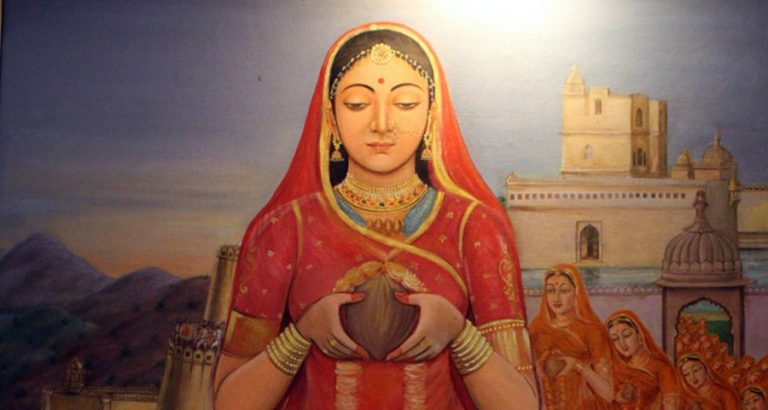
The imminent release of the movie Padmavati has led to a second lively debate about the question of honor, patriarchy and death. With the story of Rani Padmavati burning herself to death to escape dishonor at the hands of Khilji, this was bound to happen. Here are just a couple of representative examples.

Untitled.png

Untitled.png

Obviously, both sides of this debate have a point. On the one side, patriarchy does indeed condition woman towards seeing themselves as some form of property, with their worth reduced to their “honor”. On the other hand, we have first hand testimony from Yazidi women for example, of the kind of life that “kafir” women can expect to have as sex slaves under radical Islamist rule. First hand testimony wishing that ISIS would kill them and thus end the daily torture.

Devdutt Pattanaik went into a nervous breakdown on Twitter discussing this very issue. While he resorted to name calling and asking everyone whether they ‘enjoyed burning their daughter,’ I wonder if Devdutt really thought his stance through. Devdutt ended up taking a hardline stand that ‘surviving the monstrosity of rape was always better’.

While in principle, his stand sounds honourable, it is tragic that Devdutt doesn’t really differentiate between surviving rape, and choosing to live as a sex slave in an Islamic invaders harem. For someone considered a part of the elite intelligentsia, his stand lacked nuance, not to mention the abusive behaviour. He completely ignored a woman’s flight or fight instinct when faced with such a situation, and devalued the importance of honour that a woman might hold dear.

While glancing through his nervous breakdown, I came across a rather old tweet of Pattanaik where he lamented how people admire Gandhi, but never really read or understand him.


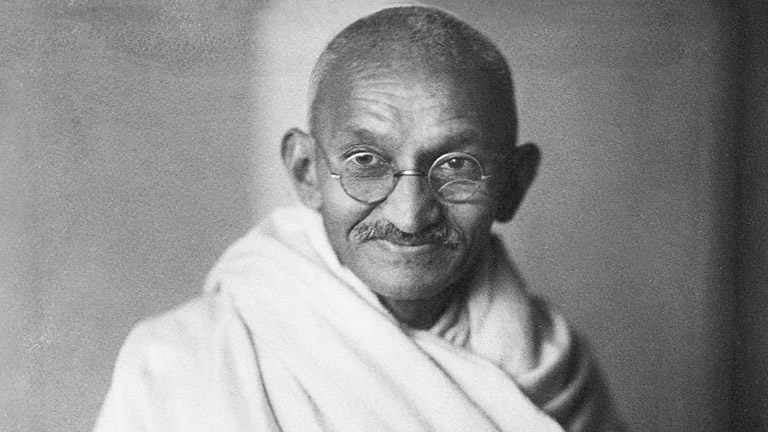
Without necessarily choosing a side, I thought it would make sense to get a perspective (and inform others) about what Mahatma Gandhi, the revered father of our nation, has said about such situations.

It turns out that the Mahatma was asked a direct question :

“How is one to protect the honor of women?”

To which, the Father of our Nation replied thus, writing in Harijan, the publication which occupies a special place in our history. He decided to break down this question under two different headings (exact quote from the Mahatma below):

“The question may be discussed under two heads:

(1) how is a woman to protect her own honour? and

(2) how are her male relatives to protect it?”

Here is the exact answer of the Mahatma with regards to question (1):

“where there is a non­violent atmosphere, where there is the constant teaching of Ahimsa, woman will not regard herself as dependent, weak or helpless. She is not really helpless when she is really pure. Her purity makes her conscious of her strength. I have always held that it is physically impossible to violate a woman against her will. The outrage takes place only when she gives way to fear or does not realize her moral strength. If she cannot meet the assailant’s physical might, her purity will give her the strength to die before he succe­eds in violating her. Take the case of Sita. Physically she was a weakling before Ravana, but her purity was more than a match even for his giant might. He tried to win her with all kinds of allurements but could not carnally touch her without her consent. On the other hand, if a woman depends on her own physical strength or upon a weapon she possesses, she is sure to be discomfited whenever her strength is exhausted.”

Now, it is not for me to comment on the Mahatma. All I can do is express my bewilderment and leave it to  the brilliant minds of this country, like Mr. Pattanaik who admire Mahatma, to widely publicize and discuss whether it is really “physically impossible to violate a woman against her will.”

I will make a similar expression of bewilderment regarding the Mahatma’s view that rape can only happen when a woman “gives way to fear or does not realize her moral strength.”  And what about the his view that a woman’s “purity will give her the strength to die before he succeeds in violating her“?

Would the ones who seem to admire Mahatma Gandhi, agree with these radical views too? I know I couldn’t.

Now for the second question, regarding protection of a woman’s honor by her male relatives, the Mahatma explains thus:

“The brother or father or friend will stand between his protegee and her assailant. He will then either dissuade the assailant from his wicked purpose or allow himself to be killed by him in preventing him. In so laying down his life he will not only have done his duty, but given a new accession of strength to his protegee who will now know how to protect her honour.”

Now, how exactly is the Mahatma prescribing that women take their lives? Luckily, the Father of our nation decided to explain further with illustrative example.

Untitled.png
click on the image for larger view

While I would not like to comment on the merits of the arguments made, I do hope that the brilliant minds of our country will have something to say. I also hope, that Mr. Devdutt Pattnaik finds some time from his incredibly busy schedule of abusing random folks on twitter, and comments on Mahatma Gandhi’s words. I, for one, can’t take a position on this. I can only say, history can’t be viewed without context and nuance, and Devdutt Pattanaik, certainly seems to lack both.

While I don’t agree with Gandhi’s views, I write this article because Mr. Pattanaik has taken it upon himself to call everyone who disagrees with his stated stand, a “Right wing troll”. He has also resorted to asking people if they enjoy burning their daughters. All of this, because some people tried to discuss why Rani Padmini might have done what she did, and that his hardline stand doesn’t hold when it comes to sex slavery at the hands of Islamic invaders.

While Mr. Pattanaik abuses people with utmost impunity, I write this wondering, what would he say to Gandhi? What names, if any, would he like to heap on the Mahatma, considering his views on the issue are far more hardline that the average people who tried to reason with him? Considering, most of his views on the subject would be unpalatable to people on either side of the spectrum? What would Mr. Pattanaik say now?

When ‘mythologist’ Devdutt Pattanaik had a Twitter meltdown

0

The recent raging controversy in the country revolves around the latest Sanjay Leela Bhansali movie which is based on Rani Padmavati. While the controversy rages on, a parallel discussion that has gripped the nation is whether Rani Padmavati was right to choose death over honour. In this regard, ‘mythologist’ Devdutt Pattanaik went on a tweet rampage that left twitterverse both shocked and disgusted.

The controversy started with this tweet of Devdutt, where he talks about how unfortunate it is that a movie would glorify someone who would choose death over rape, or the idea that it embodies.


The conversation of course drifted to patriarchy thereon.


What is rather unfortunate, and also shocking, considering Devdutt calls himself a historian, that he fails to draw a distinction not only between rape and sex slavery, but also applies the choices that women faced, when they were about to be taken as sex conquests by Islamic invaders to what a woman might do today.

When this, and much more was pointed out to Devdutt, he slipped into his meltdown mode.


Not just asinine rants, he went on to accuse people of enjoying burning their daughter, over and over again. This specific example is when someone pointed towards the ordeal of women who were taken by ISIS as sex slaves.


This was Devdutt’s response when someone asked him to ask the womenfolk in his family what they think about this issue.


Some folks were ofcourse not willing to take his rubbish lying down.


Some pointed towards his complete nervous breakdown.


Perhaps Devdutt should read the accounts of women who were taken as sex slaves by ISIS. Perhaps he would like to travel and ask those women, what they would choose.

Or perhaps, he should listen to Ms. Sunanda Vashisht. A Kashmiri Pandit who survived Islamic terrorism in Kashmir. A woman, who had a choice. A family, who was willing to choose, rather than succumb.

[youtube https://www.youtube.com/watch?v=7SD59-FPwrA]

Journalists should disclose if they’re in relationship with a politician: Barkha Dutt

0

Barkha Dutt, the former NDTV journalist, is speaking her mind these days over questions that she earlier avoided due to various reasons, one of them being the employment with the beleaguered news channel.

Recently she had accused her former employers of adopting double standards on issues like freedom of speech and economic offenses, and had got into an online duel with some of her former colleagues, especially Nidhi Razdan. The relationship between NDTV and Barkha especially deteriorated after CBI raids against NDTV promoters Prannoy Roy in a case of alleged tax evasion and financial fraud.

She was seen once again in the same avatar while interacting with students at TISS (Tata Institute of Social Sciences) in Mumbai on Thursday, where she delivered a talk on “changing face of news”.

Responding to a specific question by a TISS student Vishakha Joshi about NDTV journalists being relatives of politicians, especially from Congress and the left parties, and thus a bias possibly creeping into their reporting, Barkha Dutt said that she believes that media organizations and journalists should be transparent about such connections and disclose such relationships, which can be deemed as potential conflict of interest by many.

“There is always a potential conflict of interest in many arrangements. The honest thing to do is to reveal it,” Barkha said.

“Somewhere in NDTV’s public articulations has to be the disclosure that this editor is married to this politician, or is seeing this politician (sic). This owner is related to this, and then you have that information as an element in your information, and you have a right to reject that news if you want,” she explained her position on the issue.

Later, on Twitter, she reiterated that viewers had a right to know any conflict of interest and determine perceptions of bias based on that information.

“I am not related to any politician so this is not personal for me. As an observer conflicts of interest need to be outed. Then it’s for people to decide,” she said.

It should be noted that many senior NDTV journalists indeed are relatives of active politicians, especially from the Congress party and the left parties. For example, Sonia Singh, the current Editorial Director of NDTV is the wife of Congress leader RPN Singh, who was Minister of State for Home Affairs in the UPA government.

Ravish Kumar, the most well-known face of the Hindi news channel of the NDTV network, is brother of Congress leader Brajesh Kumar Pandey, who was the Vice President of Bihar Congress until February this year. Ravish Kumar’s brother had to resign from his post after being accused of sexually exploiting a minor Dalit girl. Brajesh Kumar still remains a Congress leader.

Not just employees of NDTV, even Radhika Roy, the promoter of NDTV and wife of Prannoy Roy, is related to politicians. She is the sister of senior CPM leader Brinda Karat.

Not many common viewers of NDTV are aware of such relationships and Barkha Dutt believes that it is only fair that such relationships are disclosed. She further said that such disclosures should also apply to information like who is funding a media organisation, and who owns them.

Apart from this statement, which might not please her former employers and colleagues, Barkha once again reiterated that she left NDTV because there was too much interference with her work, her stories were being censored and NDTV was not what they said they were.

JantaKaReporter downgrades Moody’s after Moody’s upgrades India

0

International rating agency Moody’s Investors Service upgraded the Government of India’s local and foreign currency issuer ratings to Baa2 from Baa3 yesterday, and changed the outlook on the rating to stable from positive. Moody’s also upgraded India’s local currency senior unsecured rating to Baa2 from Baa3 and its short-term local currency rating to P-2 from P-3. This happened to be the first such upgrade, since 2004.

Although we had seen signs of India’s economic surge, especially with the Ease of Doing Business rankings, this upgrade, flew in the face of all the critics and naysayers who had been crying about how PM Modi had killed the economy. Congress and Rahul Gandhi had recently criticized many actions of the Government like GST, Demonetization etc., and these same actions were hailed by Moody’s. Now, they might have needed a shoulder to cry.

Even Pro-Congress journalists like Pallavi Ghosh admitted that criticising Moody at this point would only make Congress look petty:


But being looked upon as petty is probably the last concern of a journalist named Rifat Jawaid and his pro-AAP blog JantaKaReporter. JantaKaReporter is famous in the annals of media as being responsible for multiple fake news, as well as crimes such as revealing identity of minors involved in sensitive cases. Most recently, JantaKaReporter claimed that a survey by Pew which showed PM Modi’s popularity scaling new heights, was actually a “con-job” based on an “imaginary survey” and was most probably funded by Modi!

Today, JantaKaReporter went into meltdown and declared war against Moody’s because it had raised India’s ratings. An article on the blog stated that a US federal court had indicted the agency for manipulative practices just before the global economic recession of 2008. This “questionable past” of the agency was raked up by JantaKaReporter to somehow discredit the agency as well as the ratings upgrade.

But just a couple of years ago, when the same Moody’s had either not upgraded the ratings or had issued warnings to the Modi Government, JantaKaReporter had eagerly covered all such news items without pointing out this “questionable past”:

It appears JantaKaReporter has now rescinded the following praise it had showered on the agency back then:

But the editor of JantaKaReporter, Rifat Jawaid got one thing right. In 2015, he had predicted that Moody’s would be criticized and will be called a “paid agency”. He had probably not anticipated that it would be he himself who would be doing it:

Lets hope the breakup does not affect Jawaid too much. Hang in there friend! And you can take solace in the fact that you were not bashed as much for this ridiculous u-turn because the internet found another bunny — a journalist named Mihir Sharma, who had taken ridiculous u-turns earlier too due to his hatred for Modi: