Home Blog Page 7473

A ‘particular community’ attacks and pelts stones on Janmashtami procession in Uttar Pradesh

0

Behata Gusai village in Uttar Pradesh’s Budaun witnessed communal tension on Wednesday after members belonging to a ‘particular community’ attacked a shobha yatra that was taken out to celebrate Janmashtami. This resulted in injuries to about a dozen people, including to policeman. A heavy police force has now been deployed in the area to stop the situation from worsening.

In late afternoon on Wednesday, the procession, which also contained street performers and tableaux of other Hindu gods and goddesses, was going around the village. Soon the people belonging to ‘another community’ opposed this procession and some of the elements started pelting stones on the procession. This resulted in a confrontation between the two communities, which worsened after shots were also fired in the air.

People including Naval Puri, Rahul Puri, Pramod Gupta, Ankit Sharma, Bhajan Lal Gupta and Dr Pradeep Puri were injured. This whole confrontation lasted for about 2 hours.

According to some media reports, this whole incident appeared pre-planned. Locals are also blaming the police’s lax attitude for the whole situation. The villagers reportedly inform the police about this procession every year and also demand sufficient police protection for the same as such attacks have taken place earlier too. Even after that, the local police station took the situation lightly and didn’t deploy personnel.

Local reports quote people claiming that the people from the ‘particular community’ had already created a plan and attacked the procession as soon as it reached ‘their area’. The people participating in the procession on the other hand had no clue and were caught unaware by the attackers. The attackers were reportedly so aggressive that they didn’t let anyone flee and injured anyone they could lay their hands on.

Just as the victims started to cry out for help, the police reached the spot half prepared and as a result they too were injured by the attackers. Reports also claim that the local police tried to hush the matter up in the fear of action against them by their superiors. Incidentally even the ASP of the district came to know about the incident only after the word of it spread in the region.

What raises further questions about the police is the fact that such attacks have also taken place in the previous years, and there were claims that the police could have easily prevented the whole incident.

Even though the mainstream media decided to label the attackers as belonging to a ‘particular community’, some people on social media claimed that the incident happened between Hindus and Muslims.

Know about the biggest weapon GST has, which will expand the tax base

0

Goods and Service Tax, or GST, has been marketed under the slogan “one nation one tax”. GST combines 15+ taxes which were levied on businesses and makes them comply with one standardized act across the country. This has been the main selling point of GST. However, GST has some more features which will also change the way business is done in India.

In a previous article, we had seen how GST would be stronger than demonetisation when it comes to the war on black money. GST is based on an elaborate online filing process, which maintains a digital chain of the goods or services traversing through out the country. Every business buying and selling goods is tracked, and any break in the chain (presumably to sell the goods or services without paying tax), is easily noticeable. The only way one can avoid getting caught would be to create a supply chain which at all levels, does not interact with the GST network. This is a challenging task.

Besides this, there is another feature in GST which will help broaden the tax base, and anecdotal evidence already points to this. Statistical evidence would probably emerge over the coming years. This feature is called “Reverse Charge Mechanism”, commonly known as RCM.

RCM per se is not a new feature in Indian taxation. It also existed in the service tax regime, but there has been a bit of tinkering, which makes it a potent tool in GST.

The concept is simple: In a normal sale transaction, the seller charges you for the goods as well the tax chargeable on the goods. This is know as forward charge. But in certain specified transaction, the seller may not charge you tax: he may be  an unregistered seller (out of the tax net) or he may a specified class of seller, who has been given this benefit of lower compliance burden. In such cases, Reverse charge or RCM kicks in, where the buyer has to pay tax on behalf of the seller. The buyer of course gets credit of this tax paid, and thus it is not a loss.

In GST, this RCM is mandated on two types of transactions:

a. Purchase from specified classes of dealers, who have been given the benefit of lower compliance.

b. Purchase from each and every dealer, who is not registered under GST.

When a GST registered business deals with such persons, it has to: calculate the tax leviable on such purchase, pay the tax, raise a self invoice (on behalf of the seller), and then claim the input of such tax paid. In short, the GST law penalises a registered business (by increased compliance burden) for dealing with such persons, especially persons who are unregistered in GST.

Thus, registered businesses have only two choices:

1. Make the unregistered supplier get registered, so that he collects tax on forward charge basis, and reduces the burden on the registered purchaser.

Or

2. Comply with the RCM mechanism and pay the tax on behalf of the unregistered supplier.

Either of the above choices, have a direct impact in expanding the tax base. If option 1 is chosen, then by forcing unregistered dealers to register, the tax base gets expanded naturally. As soon as there is a business which was earlier unregistered gets registered, he collects and pays GST, thus increasing the number of assessees.

In the second option, the registered business has to prepare a self invoice, and declare such invoices in its GST Return. Thus, every month, it is intimating to the GST network, the value of its purchases from unregistered dealer. At the end of the year, when the GST officers choose to scrutinise this business, they only have to ask details of such invoices, and they will have a ready database of such unregistered dealers along the value of their sales.

Once the data from various GST Returns is put together, they can get an idea of the total sales of such unregistered persons to various registered businesses, and if this turnover is seen to be crossing the GST threshold limit, the GST officers can easily take penal action against such unregistered people for evasion of tax, again expanding the tax base.

Practically, this provision has already made businesses change a lot of processes. Big registered businesses have made it a point to ensure that as many suppliers as possible are registered. Many have refused to get into business with unregistered people. The choice is pretty clear, either fall in line or be out of business.

The ripple effect of this would be better Income Tax compliance as well. Every GST registration is linked to a PAN, and as soon as some turnover is reported in GST returns, be sure that the data will eventually be mined by the Income Tax Department as well, to calculate if any Income Tax is due.

A wider tax base will not only help in increasing the tax revenue in the country, it will also pave the way for lower tax rates. GST has faced criticism from some quarters for having tax rates in excess of 28% for a few items (although the median rate is 18%). Various government officials have repeatedly hinted at lower tax rates in future, coupled with less number of rates, simplifying GST. This is only possible when a larger part of the population shares the tax burden, instead of further burdening only those honest tax payers, who are currently paying taxes.

While the RCM provision in particular and GST as a whole will have a positive impact on tax base widening and tax collection from evaders, in the short run, the transition from the old ways of doing business to this new cleaner model, will claim some victims. But the organised sector, or the compliant sector have not much to worry since, on a whole, GST will reduce their compliance burden.


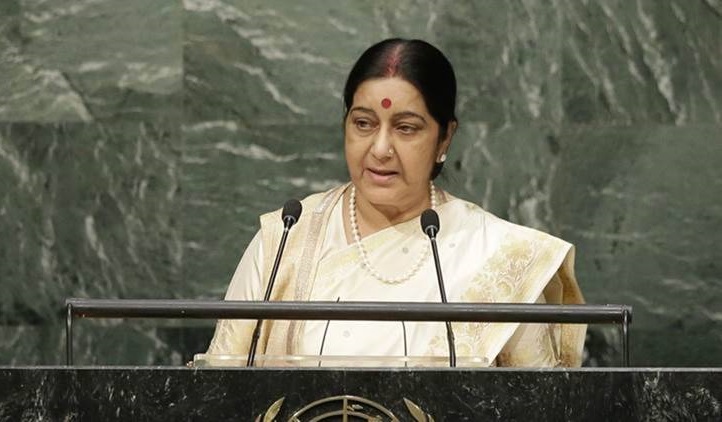
One more Indian mistreated, tortured in Saudi, seeks help from Sushma Swaraj

0

A woman from Hyderabad is reportedly being tortured, mentally and sexually, in Saudi Arabia’s capital, Riyadh. Her sister, Reshma, has sought help from External Affairs Minister Sushma Swaraj to rescue her sister.


Reshma’s sister Humeira has accused her employer of mental and sexual harassment. Reshma claims that an agent named Saeed contacted her sister and made false promise of giving her a job in Riyadh. However, later her employer started physically abusing her. She has reached out to External Affairs Ministry to help bring her sister back.

This is not the first time such cases of torture of Indians in Middle Eastern countries have taken place. In April, EAM rescued on Salma Begam, who was allegedly sent to Saudi Arabia and was facing mental and physical harassment.

In March, too, 46-year old Haseena Begum from Hyderabad, who worked as a maid in Saudi Arabia, fractured both her legs after her employers allegedly pushed her off from third floor.

One Aligarh youth, Durgesh Agarwal, too was stuck in Saudi because his employers forcibly kept his passport. It is also reported that not only did his employers torture and harass him, but also were forcing him to convert to Islam. Durgesh has now reportedly reached Dammam and is expected to fly to India soon.

Brouhaha over Sarahah – pointing out inherent flaws and risks is not victim shaming

0

The problem with the world becoming politically correct, for the fear of offending any group championing a cause, is that we are either becoming too sensitive (and hence taking an offence to everything) or too desensitized (where nothing has shock value anymore).

Nothing like the Internet where viciousness thrives under the cloak of anonymity. Nothing, also, like the Internet where people willingly sign up for ‘anonymous feedback’ for instant validation, and then cry foul when the feedback is abusive.

Within minutes I’d be hounded and I’ll get ‘called out’ for ‘victim shaming’ because ‘no one asks for abuses’, but they forget when they ‘ask’ people for ‘anonymous feedback’, they are actually ‘asking for it’ (the feedback part, that is).

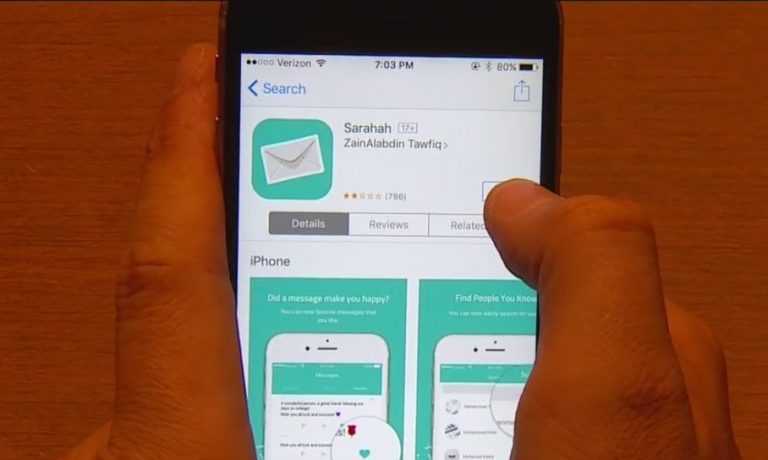
Unless you’ve been living under a rock, you’d have heard of “Sarahah”. For the uninitiated, Sarahah is an app that “helps you self-develop by receiving constructive anonymous feedback.” Created in Saudi Arabia by one Zain al-Abidin Tawfiq, it has become a nuisance on Twitter and Facebook timelines. The fad 6 months back was another anonymous feedback app called “sayat.me” and before that it was ask.fm.

Except, Sarahah which means “honesty” in Arabic has ironically become the Internet’s newest favourite corner to let your inner cruelty out. Words have power. Hurtful words, even more so. Anonymity fuels hatred. And threats.


But how many of these threats are real or perceived? If someone anonymously tells me he/she will murder me, should I really be worried? Should I panic about the rape threats? Am I in real danger? Should I cry out hoarse how Internet is not a safe space for women?

No one should be receiving threats. But if there is no real threat, or no real danger of that threat becoming a reality (say there is someone obsessed using multiple accounts, or targeting you at multiple platforms), should we just block and move on or worry ourselves silly over a frustrated anonymous person over the Internet?

Also, people assume that such ‘rape threats’ are given by frustrated men, mostly “Sanghis”. And only “Sanghis” are capable of demeaning women. Then such twisted people want the issue of ‘online abuse’ to be debated with all sincerity!


I am a woman myself and I know that such cyber bullying, especially rape threats, can freak one out. I have been at receiving end of threats and bullying. Some so-called ‘journalists’ have encouraged people who wish death upon me. Had the threat (of that loony wishing death on me) were real, I’d have approached the police, but no one takes Aam Aadmi Party supporters seriously:


Also, what if it is actually a woman behind the cloak of anonymity sending such vile messages to other women, just to soak in the panic that ‘feedback’ could create? Why people conveniently forget that most ‘sisterhood’ on Twitter (and in the virtual world) is actually just a sham? So many women, a lot of them who identify themselves as feminists, are also extremely vile to other women just because their political ideology is different. We really underestimate the extent of poison people have in them.

I am not saying ignore all the threats as being fake. But perhaps it is a good idea to get the authorities involved if the threat sounds real, instead of posting it on social media; because being featured in a listicle titled “how the Internet is a hostile place for women” may not really help as much as police could.

Again, no one is saying that we don’t deserve safe spaces and people should be shamed for going to ‘unsafe’ places. But an app or website is not really a public space like a park or a road that ought to be safe for all at all costs. These are private apps, which are open for public. You know, much like a private mall where public can walk in. They too need to be safe, but if I see a mall where there are no security guards and people are moving around wearing masks, I think I won’t walk into it even if there was a sale going on with 100% discount.

Sarahah never claimed it has any security features to tackle cyber-bullying. (Twitter at least has *some* guidelines and tools in place, however ineffective they may be at times.) Hence, it is an irresponsible app to begin with, where you have willingly given away your email id to register. And then people complain about privacy concerns!

How about reaching out to individuals whose opinion you hold high for a feedback directly than asking a bunch of strangers over the Internet for ‘honest feedback’? Anonymous and constructive are as much correlated as wine and safe driving. But somehow if you still believe that anonymous feedback can be constructive, just get something like a Secret Santa (replace the gifts with feedback notes) organised in your workplace or in your friend circle! Secret Santa is safe, Sarahah is not.

And everyone else on the social media, calm down. Delete the shady app from that Saudi guy. Find a new distraction. Go play Ludo. It’s far less annoying.

SC orders an NIA probe in Kerala’s Love Jihad case, Kapil Sibal objects

0

The Supreme Court on Wednesday ordered the National Investigative Agency (NIA) to probe a love jihad case of a Hindu girl converting to Islam and marrying a Muslim man.

In May the Kerala High Court had declared the particular marriage between the girl and a man named Shafin Jahan null and void on the petition of her father Ashokan, who is a retired army-man. The girl now named Hadiya used to be a homeopathy student when she converted and changed her name. The girl was reportedly given away in marriage by her guardian named Sainaba and her husband.

The father had then alleged that she was forced to convert after being abducted and wrongly confined at an illegal Islamic conversion centre before her so called marriage on December 19th 2016. There were further alleged that the Sathya Sarani girls hostel, the illegal conversion centre in question and was run by the Popular Front of India, which was founded by the leaders of the terrorist organisation SIMI.

The Kerala High Court had then stated that the marriage was a sham and had no standing in front of the law. The court then had also granted the custody of the girl to her parents and directed the police to provide protection to the family.

The husband in question had then knocked on the doors of the Supreme Court to challenge the annulment of his marriage. He was represented by eminent lawyers named Kapil Sibal and Indira Jaising. According to Sibal, the girl had converted to Islam before she had met the boy via a matrimonial site. The lawyers also insisted the girl in question be brought in front of the court.

The Supreme Court had then sought the response of the NIA in the matter before scheduling the next hearing on 16th August. The Court had also directed the Kerala Police to hand over the files related to the case to the NIA.

The NIA today stated that this matter didn’t appear to be an isolated case and the CJI too concurred with it and stated that this was also the view of the Kerala High Court. NIA’s Additional Solicitor General Maninder Singh also stated that there was a pattern about girls leaving their home due to differences and someone then giving them shelter. He also alleged that the two outfits involved in this were linked to SIMI.

The husband’s counsel Kapil Sibal though desperately tried to oppose an NIA probe into the matter. He first stated that the crime branch’s investigation into the matter was not complete which the court rebuffed. Sibal then even tried to question NIA’s credibility.

The court didn’t pay heed and after ordering the investigation, directed the NIA to furnish a report in the matter. The court stated that it would come to a view after considering the report and talking to the Kerala police and the girl.

This ‘journalist’ wants Brahmins to be targeted by Kashmiri terrorists and not be saved by state

0

If a person says he wants Muslim cattle traders to be left at the mercy of violent cow vigilantes — where the state or the police must refuse to provide security — he will be labelled a ‘bigot’ and violent troll wishing for lynching of Muslims. But if you wish for lynching of Brahmins, you are apparently a secular-liberal intellectual. This is the perversion Indian society has accepted as normal.

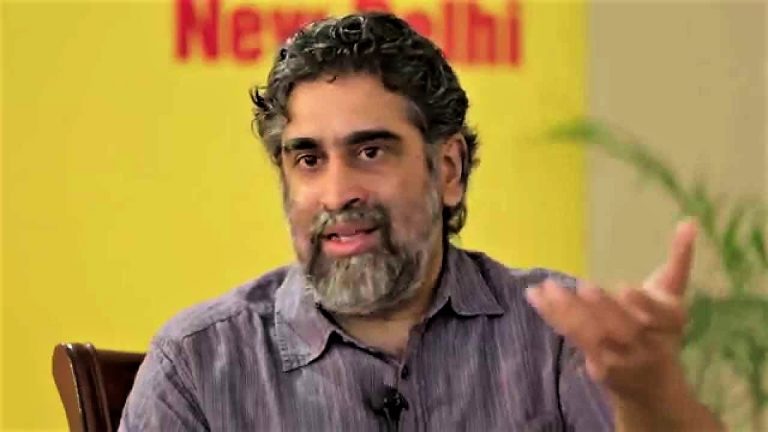
This perversion was displayed with full shamelessness today when a ‘journalist’ named Hartosh Singh Bal, who is often seen on TV news channels as a ‘neutral commentator’, almost wished that Brahmins die at the hands of Islamic terrorists in Kashmir.

This is what he tweeted:


For the uninitiated, Article 35-A of the Indian constitution empowers the state government of Jammu & Kashmir to define permanent residents of the state and the rights and privileges they can enjoy. It makes sure that no one from the rest of India, no matter how pacifist and Kashmir loving one might be, can buy an inch of land in Kashmir. The article doesn’t make any special provisions for Brahmins or any other caste by the way, not even for Kashmiri Pandits.

Essentially, it is a discriminatory article that is used to further the communal agenda that is often dressed up as “Kashmiriyat“. Recently, people have demanded that this article should go and Indians should be allowed to buy land in Kashmir and settle there.

However, for Bal, this is blasphemy. How can a non-Kashmiri, especially a Brahmin, settle on the pure Islamic land and defile it? So he virtually challenged the Brahmins to settle in Kashmir without state protection.

Anyone can understand what he was hinting at, and almost wishing for. Though such hatred for Hindus in general and Brahmins in particular is seen as ‘normal’ in the secular-liberal crowd, people on Twitter bashed Bal for his bile:


As expected, not a single person identifying himself or herself as ‘secular-liberal’ condemned Bal for his hatred, most probably because this hate is what makes a person ‘secular’ and ‘liberal’ in India.

Rahul Gandhi wants Amma err… Indira Canteen in “all cities of Bangalore”

0

Rahul Gandhi never disappoints. Whenever you get anxious and worry that you may goof up and lose your job, just look at Rahul Gandhi’s illustrious career and rest assured that if he can continue to harbour aims of becoming India’s Prime Minister some day, you too, will sail through that messed up presentation at office.

Today was another such motivational day.

Rahul Gandhi today inaugurated the Karnataka government’s Indira Canteen program, which aims to serve hygienic meals at affordable rates.

Here is what he said while inaugurating the “Indira Canteen”:


Now let’s come to the motivational parts:

Rahul Gandhi inadvertently referred to Indira Canteen as “Amma Canteen“, which is a food subsidisation programme run by the Government of Tamil Nadu back in 2013.

While 101 canteens were launched today in Bengaluru, the scheme will soon be adopted across Karnataka and more cities will be added to the scheme — something Rahul thought was best conveyed by saying that it will be available in “all cities of Bangalore”.

That’s two gaffes in less than 20 seconds.

Later, taking a dig at the Prime Minister, he said that the Prime Minister’s speeches are getting shorter:


Guess, there is something to learn from everyone.

Gorakhpur tragedy, more unanswered questions as investigation progresses

0

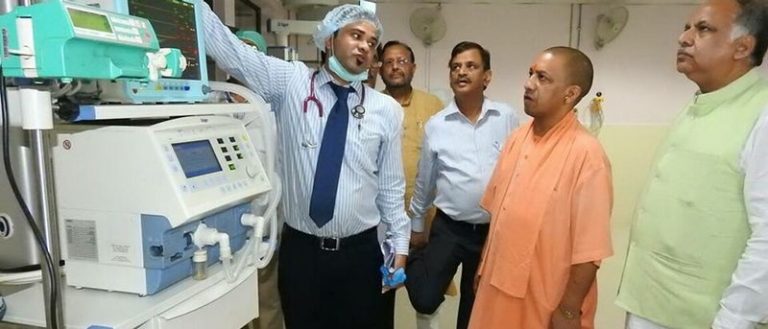
Author and journalist Neelesh Mishra, founder of rural news platform Gaon Connection, in a string on tweets has given some shocking revelations about the Gorakhpur tragedy.


He further put the following questions on Twitter:

1. INOX and Linde Gas are reputed companies supplying liquid Oxygen to hospitals including in UP: KGMC and SGPGI.

1 (a) However, #Gorakhpur Hospital chose Pushpa Sales to sell it Oxygen THAT IT BOUGHT FROM INOX. Why not buy straight from INOX?

1 (b) I asked around. INOX and Linde NEVER pay kickbacks to officials. Is that why an intermediary was created for years?

1 (c) When UP’s major hospitals including KGMC and SGPGI but Oxygen straight from manufacturers why not at #Gorakhpur ?

2. Why did the #Gorakhpur Hospital continue with the same Oxygen vendor, Pushpa Sales, for years?

3. Did the UP health minister, Pp Secy, DG Med Edu not receive the panic letters on payment or were they ignored?

4. Why was the UP CM’s office misled into tweeting immediately after the new spate of #Gorakhpur deaths to deny Ocygen shortage as a cause?

5. Then-hospital head Misra: Steps were taken to get enough cylinders. Dr Kafeel called a hero for “going to get” 3 cylinders. Who is lying? With 23 dying, why did Kafeel leave ward personally in crisis to do a chore (getting cylinders) someone else could do?

6. DG Med Education tells @GaonConnection payment transferred Aug 5. Why didn’t Principal pay firm immediately for Oxygen?

7. If an inquiry had been ordered by the UP Govt, why were Principal Misra and HOD Dr Kafeel fired without waiting for its findings?

8. Principal Misra could have averted Oxygen crisis by paying Rs. 1.25 cr available under other heads. Why did he block it?

9. Why have the health minister and medical education minister not been taken to task? Why are they deciding who is guilty?

10. How will it be determined if Oxygen shortage cause the children’s deaths? Were their fingertips and lips blue?

11. Why did the hospital admn force parents to leave with their dead kids in the middle of the night? What were they hiding?

12. Will Chief Secy Rajiv Kumar’s inquiry travel to villages of the dead children to get to the truth of what really happened that night?

12. Will bodies be exhumed? What will inquiry be based on? (Bodies of infants are not cremated under Hindu tradition).

14. Why did Principal Misra and Dr Kafeel not raise the issue of the Oxygen crisis when the CM stool a review on Aug 9?

15. Why did the #Gorakhpur DM not react to news reports of impending Oxygen crisis in @JagranNews and @AmarUjalaNews?

16. Why has the responsibility of the UP NRHM Head not been fixed over this entire crisis?

17. Is it just a coincidence that the night the Oxygen crisis happened is also the night of a surge in children’s deaths?

Meanwhile, reports are emerging that Dr. Kafeel Khan, who was hailed as a hero by the media before shady details about his past emerged, has gone underground. His private nursing home is closed since Monday morning and the patients have been discharged in a hurry. Shutting down of his clinic overnight has raised quite a few eyebrows and an inquiry could be made against him soon.

You could read our other reports on the tragedy here and here.

Many madrasas didn’t sing the national anthem on I-Day and this is the excuse they gave

0

Recently a controversy was created over the directive of the Uttar Pradesh government which directed all madrasas in the state to unfurl national flag and recite the national anthem on 15th August. The directive also asked the madrasas to photograph/videograph the event.

This soon resulted in the critics calling it a test of patriotism by the Yogi government. This charge was debunked by us in the report which pointed out how it was standard “Sarkari” circular which the Yogi government had issued after being instructed to do so by the Allahabad High Court.

As the issue continued to be in the limelight, there was naturally a curiosity over whether the madrasas would indeed follow the order. Now according to reports, many madrasas across the state deiced to defy those specific orders. As it turns out, Independence Day was indeed celebrated but it was celebrated with conditions.

As reported, three of the biggest madrasas in the state celebrate present in Kanpur, Meerut and Bareilly celebrated the Independence Day by singing Saare jahan se accha but did not record the event by stating that they did not need to give proof of their patriotism. The students at Manzar-e-Islam which is the biggest madrasa in Bareilly, hoisted the Tiranga but did not sing the national anthem which has been the traditional convention.

This was defended by clerics who alleged that the national anthem was written in praise of late British King George V. Thus according to them, it belittled the struggle of our freedom fighters because of which they had unanimously decided not to sing such songs on Independence Day. This conspiracy theory incidentally was refuted by Rabindranath Tagore himself.

This same celebration procedure was also followed in the famous Islamic seminary Darul Uloom Nadwatul Ulema. When asked about not singing the National Anthem, they reasoned that the lyrics of the national anthem had “Sindh” in it, which is currently in Pakistan. They contended that they could not pray for Pakistan and if the government decided to remove Sindh, they would sing the anthem proudly.

Rohith Vemula frustrated with worldly affairs, did not commit suicide over University action: inquiry commission

0

Justice Ashok Kumar Roopanwal (retired), who inquired into the events at University of Hyderabad that led to suicide of student Rohith Vemula, has furnished the report [pdf] which has been tabled on both the houses of Parliament.

Justice Roopanwal says that in his view, “the suicide did not relate to any activities of the university administration or the above political leaders including the vice chancellor, Prof. Appa Rao Podile. It was wholly a decision of his own. His suicide note is on the record which shows that Rohith Vemula had his own problems and was not happy with worldly affairs. He was feeling frustrated for reasons best known to him.”

The report, which was made public on Tuesday, further states that, “He wrote that there was no urgency for understanding love, pain life and death but he was rushing after them. It indicates he was not happy with the activities going around him. He also wrote that he was all alone from the childhood and was an unappreciated man. This also indicates his frustration.”

The report says that his suicide note does not indicate his anger towards the University action. The punishment was awarded to Rohith and other students for leading a group of 30 persons to another student, one Susheel Kumar, and hitting and abusing him on the intervening night of 3rd-4th August, 2015. The final report was submitted by the Proctorial Board on 31st August, 2015. The decisions of the Proctorial Board was, “Complete suspension of Mr. Dontha Prashant, Mr. Rohith Vemula, Mr. P. Vijay and Mr. Seshu Chemudugunta from the classes or courses, hostels and other relevant/connected things a student gets from university, with immediate effect for the ongoing/current semester on account of leading a group of 30 persons to Susheel Kumar’s room, abusing and hitting him.” The decision was approved by the Executive Council of the University of Hyderabad.

The findings of the commission is in line with a sane reading of the suicide note Rohith Vemula had left. However, instead of reading the note and realising how identity politics disturbed the mind of student who wanted to be a scientist, the leftists used the same suicide not to further their political agenda.

Tragically, his suicide was politicised by the same leftist students outfits, against whom Vemula had expressed his disillusionment. In his suicide note, he wrote the following lines, which were struck off presumably by him:

“ASA, SFI, anything and everything exist for their own sake. Seldom the interest of a person and this organisation match. To get power, to become famous or to be important in between boundaries and to think we are up to changing the system. Very often we overestimate the acts and find solace in traits.”

The report also said that nothing has been brought to Justice Roopanwal’s notice “which it could be shown that he was ever given a different treatment from that of the general category students by the university authorities during his stay in the university.” Hence the claims that he was harassed or ill treated by university because of his caste also seem baseless.

He further states that in his opinion, the view taken by the Executive Council of the University was most reasonable in the circumstances prevailing at that time.

“The Executive Council mainly focussed that the students should keep concentration on their academic career and not to the other things. The leniency shown by the Executive Council itself shows that the university administration was not functioning under any influence or pressure otherwise there could be no occasion to be lenient or to reduce the punishment recommended by the Proctorial Board,” justice Roopanwal added.