

Home Blog Page 7583

Delhi government’s achievements in the education sector – Truth vs Hype

0

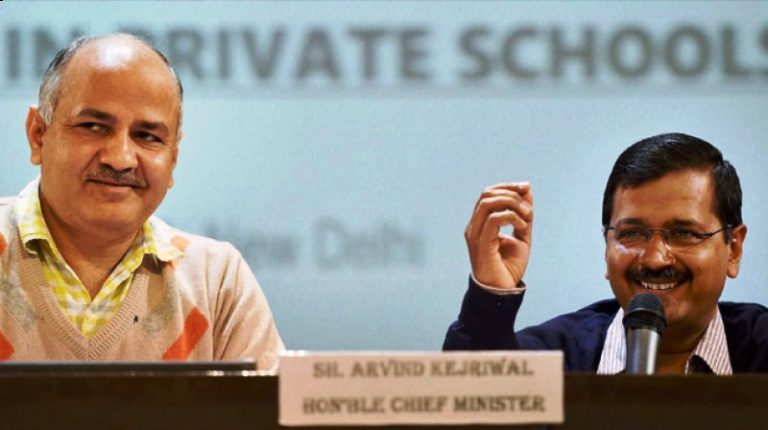
The Aam Aadmi Party (AAP) has been promoting the work done by their team in reforming the government schools in Delhi for long.

I came across this article in The Huffington Post praising the work done by Manish Sisodia, Deputy CM who also holds the Education ministry, towards reforming government schools in Delhi. The article is written by Akshay Marathe, a joint secretary of AAP. So it is hard to identify whether the article was intended to be a journalistic report or yet another advertisement by the party, for itself. One has to love the hyperbole “the Aam Aadmi Party government is rescuing an entire generation”.

One has to give credit where it is due. Manish Sisodia has indeed realised that education is something critical. He is earnest to make an impact. And he is certainly making an effort. But effort does not necessarily translate to results, and misdirected effort can exacerbate the already dismal standards of Indian schools. In the end, it is not the effort or potential which matters, it is the results that count.

When the CBSE Class 12 results were declared in May this year, the state government and party congratulated itself on how the government schools had beaten the private schools. Manish Sisodia tweeted:


Looking at this, people will believe that it is a testimony to government’s efforts translating into results. However, when one goes into details, one finds that while the claim is factually correct, it is not any miraculous turnaround.

Past records show that in the last few years, the pass percentages of the government schools have been quite similar to those of private schools in Delhi. Government schools had done marginally better than private schools this year, but this was not for the first time. In 2009 and 2010 too, government schools had done better than private schools (pdf link). As recent as in 2013, under Sheila Dixit government, government schools had done better than private schools in Class X results too.

Secondly, as this well argued blog post points out, a large number of government schools in Delhi are not offering critical subjects like Physics, Chemistry, Mathematics, and Biology. These are core subjects that bring down the pass rates as they are considered relatively difficult. This is an extremely crucial point. Government schools cannot claim to be doing their job unless they offer the crucial science stream to those interested in it.

Thirdly, as is evident from this tabulation of school wise performance in CBSE 2016 examinations, the average score in government schools is much worse than those of private schools. Nearly all the top performing schools in Delhi are privately run.

But it’s not just about government versus private schools’ performance. This competition – which is welcome if restricted to students getting better pass percentages and grades – is now turning into a bitter battle.

It is no secret that AAP has an extremely hostile relationship with the private schools in Delhi. This is also a politically convenient position for the party. Parents are understandably stressed by expenses related to education, coaching, stationary, and other facilities charged by many schools. By painting all private schools as thieves out to fleece the masses, AAP is making a visible attempt to cash in on this angst.

As a result, schools have been left with little autonomy in their admission process. And earlier this year, in a very drastic move, the AAP government was embroiled in a legal battle to take over a private unaided school, which it accused of indulging in malpractices and corruption. A couple of months back, Delhi High Court had blasted the state government for not maintaining the same standards that they expect from the private schools.

What the Delhi government is doing is, aggressively using the Right to Education act to stifle the autonomy of private schools that have not been lucky enough to qualify as “minority institutions”. The RTE is not just a draconian set of regulations resulting in the shut down of schools, it is also a sectarian law which is applicable only to non-minority schools. A large number of schools have understandable shielded themselves from this act by registering either as religious or linguistic minority schools.

The result of this has been, that despite the crazy demand at the time of nursery or kindergarten admissions, new high-quality private schools are simply not opening up in Delhi. In fact, it is Gurgaon and Noida where much of the capacity is being created.

Let’s take a look at case of International schools which are now becoming so popular especially among the urban elite. The website of the Cambridge board lists only three CIE-affiliated schools in Delhi, whereas the corresponding number is 22 for Harayana (out of which most are in Gurgaon). There are 21 in Telangana, mostly in and around Hyderabad. And there are 108 such institutions in Maharashtra, mostly in Mumbai and Pune. The shockingly low number of CIE affiliated schools in Delhi should be a sobering indicator that the hostile regime in the capital has removed any incentive for quality private players to enter the education space.

Perhaps it has to do with the kind of politics AAP engages in. It likes to be confrontational and aggressive. Whether it is about attacking the Modi government or attacking people who don’t agree with the party’s stand, this belligerent attitude seems to be percolating to forming educational policies too by its state government. But education is too important a sector to be treated like just another political battle. Hope the government realises that.
Demonetisation – how some in the low income groups are dealing with it

0

One month of demonetisation has passed and the step is already being evaluated for success or failure. While it would be early to pass a judgment, there is no denying the fact that in the past month we have seen various side effects of the step.

The most visible of these is going cashless. And people have often wondered and worried how the people belonging to the low income groups, especially those around them like house helps, building guards, construction workers, etc. are coping with. However, not many of us might have taken the effort to talk to these people to know their problems and maybe help them.

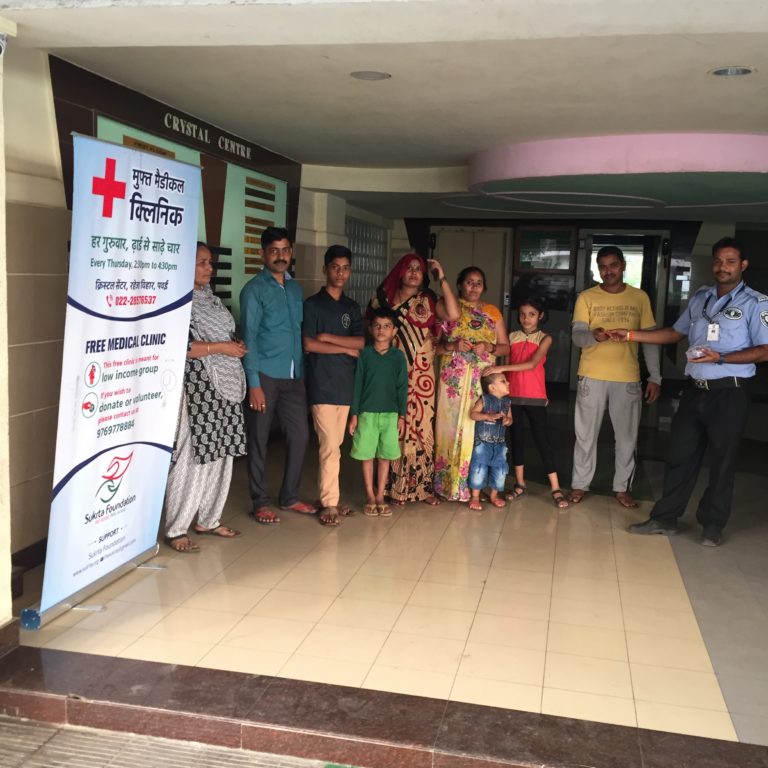
But there are people who are doing that. OpIndia got in touch with Sukrta Foundation, a Mumbai based NGO that provides 2 hour weekly free medical clinic to house helps, drivers, guards, workers, etc. who live in and around Powai in Mumbai. Sukrta started as a small initiative, but after a year of good work, every Thursday, the organisation is receiving 50-60 people queued up to avail free medical services at the clinic organised by Sukrta Foundation at Powai. So far the team has conducted around 90 sessions of free clinic and have attended to some 4000+ patients.

Vikas Goel (one of the founders) says that demonetisation didn’t lead to an abrupt increase in patient count at his clinic (assuming that the poor didn’t have new currency to spend at private hospitals, many of which were reportedly refusing to accept old notes). Last week, Sukrta went a step ahead and decided to talk to those coming at the clinic about their experiences post demonetisation.

On 1st December 2016, like any other Thursday, co-founder Surinder Gupta managed the patients while Dr. Nirmala Changrani patiently, attended to some 59 patients. This is when Sukrta team engaged with the waiting patients by talking to them about demonetisation. These are some of the experiences people shared:

“I don’t expect much difficulties because of note ban as Banks are accepting old notes till Dec end. She said even her kids’ school has allowed grace period till 30th Dec, which is a saving grace.” – Anita Naik, a housewife with a family income of 14K per month.

“I have applied for PAN card and now shall soon apply for a Bank account. Till then I have requested my uncle to deposit money in his account. I am a maid and got some advance salary from my employer in 100s. I am managing with my piggy bank.”  – Laxmi Mhatre, 32, a domestic help with a family income of 15k.

“My husband has a zero balance account and also ATM, now we shall start using it. He will get his salary late but hopefully in new currency notes. I think we can manage with cash shortage and things shall be normal soon.” – Salma Ismail, 27, whose husband binds books and family earns 7-8k per month.

“We don’t have a bank account, and we had to face difficulties as we exchanged 500 for 400. Now I will open account.” – Mamta Devi, 25, with a household income of 12k.

“Most of the ladies, who visited Sukrta Clinic said that they can manage with the cash-crunch in short term pain, however, will have to be dependent upon male members of the family for banking needs,” informed Saroj H, a volunteer with Sukrta who conducted these interviews.

A still from Sukrta Foundation
A still from the camp organised by Sukrta Foundation

Vikas told us that Sukrta Foundation doesn’t get government aid or sponsorship from any large corporate house. The organisation is run on small donations received from various good samaritans. People get to know about it through word of mouth or our social media campaigns and contribute to the causes we support. It costs them ~ Rs. 75 to treat one patient.

When asked, what excites the team to run the NGO, Vikas said, “We did some surveys in Powai and noted that many of the maids (domestic helps) didn’t have access to quality medical care. Whenever they or their family member fell sick, they would either avoid going to the Doctor or end up visiting some quacks. Even if they were able to visit government dispensaries, they were not able to procure medicines because of the high cost. In order to cater to this segment, we started our weekly clinic and dispensary.”

Apart from providing free clinic, Sukrta is also helping to educate people on social issues and how to manage finances in the post-demonetisation era. Not only they talked to the people about demonetisation, they invited Shalini Swaminathan, co-founder, Shamal, a self funded voluntary initiative to educate people about Adhaar, Bank Account, Insurance, Gold loans, etc.

The story of Abdul Latif, on whose life SRK’s upcoming movie Raees is based

0

Trailer of Shahrukh Khan’s upcoming movie Raees was released today and it has already set the chatter going if it will be a hit or a flop and whether it will also see protests from some parties as it has a Pakistani actress named Mahira Khan in it.

While we will know about those things when the movie finally releases, the other aspect that is getting attention is the real life character, upon whose life the movie is based. And that character is underworld don Abdul Latif, who was as ferocious and dangerous as Dawood Ibrahim, though not as popular in common knowledge.

And the story of Latif is very interesting as it plays an important role in the decline of Congress and growth of BJP in Gujarat, the state from where the don hailed.

Abdul Latif was born in Kalupur area of Ahmedabad in 1951 in a poor Muslim family. One of seven children of his father, he couldn’t get a decent upbringing and struggled to finish school. He was soon employed by his father at his shop, where he sold tobacco, but he started fighting with his father for more money. After getting into his 20s, he decided to go his own way.

To make quick money, he entered the world of illicit businesses and joined Allah Rakha, a bootlegger who also ran a gambling den. Latif was first employed at the gambling den. He then left Allah Rakha and joined a rival gambler, but parted ways with him too after being accused of theft.

He then became a bootlegger himself, and that’s where his journey into the world of crime, politics, and terrorism started. As a bootlegger, he established contacts and relationships with smugglers, criminals, policemen and politicians who helped and allowed this illegal business to flourish.

In the process of growing his clout and illicit business, Latif became involved in other crimes like extortion, kidnapping and even murders. He developed contacts in Pakistan too. He formed his own gang, and at one point of time in the early 80s, he was indulged in a gang-war against Dawood Ibrahim.

It is reported that Latif’s gang was almost exclusively made up of Muslim members only, which was not the case of other criminal gangs in those times. Perhaps he did it to cultivate a Robinhood type of image among poor Muslims – a community he was born in. And it worked. Latif could win in five municipal wards in local body elections of Ahmedabad in 1986-87. He was in jail at that time.

Although his political career was cut short as he was disqualified from the post, he could show that he commanded popular support among Muslims. As a result, he was increasingly used by politicians, especially those belonging to the Congress party, to win elections and to settle scores with political rivals. His proximity with the Congress party was evident as Hasan Lala, President of Gujarat Youth Congress in those times, was his childhood friend.

In the mid 80s, when anti-reservation protests (a prelude to anti-Mandal protests that India would see later) erupted in some parts of Gujarat, especially Ahmedabad, it is said that the then Congress government used Latif to target the protesters, which caused the anti-reservation protests to turn into communal riots. Many other communal skirmishes and riots in Ahmedabad saw active participation of Latif’s gang in this duration. Hindus of Gujarat, especially those in Ahmedabad, started looking for a saviour who would save them from Latif.

Meanwhile seeing the growing clout of Latif, even Dawood Ibrahim decided to make peace with him in the late 80s. In November 1989, Latif is reported to have received a message from Dawood for a meeting in Dubai. There, a maulana made both Dawood and Latif swear on the Holy Quran not to fight against each other and work as a team. And that was the beginning of Latif’s entry into the world of terrorism.

In August 1992, Ahmedabad saw AK-47s being used in a gang-war that left 9 people dead in Radhika Gymkhana. Latif’s gang members had gone there to kill one Hansraj Trivedi, but since they didn’t recognise him, they killed everyone. The orders to kill everyone came from Latif. The city was shocked at this naked display of terror.

In the following years, Latif became synonymous with crime and Islamic terrorism in Gujarat as he joined hands with Dawood, who by then had started planning the Mumbai blasts of 1993. Latif was also seen as the product of the policy of Muslim appeasement by the Congress party, which allowed such criminals to grow for petty political gains.

BJP made the arrest and downfall of Latif an election issue and it is said that it played a very vital role in the growth of the party in the state, especially in Ahmedabad.

In 1995, BJP formed its own government in Gujarat and the same year later Latif was arrested in Delhi following a two month long operation led by the Anti Terrorism Squad of Gujarat Police. Latif was lodged in Sabarmati Jail of Ahmedabad subsequently, and two years later, he was killed in an encounter when he tried to flee from the police custody.

The arrest and end of Latif’s terror was seen as a promise kept by the BJP and is seen as a major factor why BJP’s popularity and political power kept growing and Congress could never come back to power in Gujarat.

Now it is to be seen how Shah Rukh Khan’s upcoming movie Raees portrays Abdul Latif. Will he be portrayed as the communal gangster turned terrorist that he was, or will there be some whitewashing of his deeds?

(pieces of information in this article are sourced from the book “Dial D for Don” by former Commissioner of Delhi Police Neeraj Kumar)

Yet another mistake from The Hindu forces them to apologise

0

The Hindu, which keeps bragging about its (non-existent) journalism standard and ethics, has yet again displayed a sample of their mediocre journalism by first sensationalising a half-baked story, and later, after being called out, putting a small apology on 11th page of the paper.

On 30th November 2016, a group of MPs including Jyotiraditya Scindia and Asaduddin Owaisi asked a set of questions to the Ministry of Information and Broadcasting, relating to the actions taken on TV channels found violating rules. The last question from the same set was:

Whether the existing mechanism i.e., Press Council of India and National Broadcasting Standards Authority are empowered to take note of such violations and if so, the action taken by the Government in this regard and the steps taken to ensure freedom of press in the country?

To which, the Ministry replied, the last line of which is key:

Reply from the Ministry of Information and Broadcasting

On 6th December, Anuradha Raman from The Hindu, scornfully wrote an article headlined: Ministry has no news on TV standards panel

Snapshot from The Hindu

Twisting National Broadcasting Standards Authority to NBSA,  the author confidently mentioned that

The response from Minister of State for I&B Rajyavardhan Rathore was as follows: “The PCI is a statutory, autonomy body set up under the Press Council Act of 1978. As regards, the NBSA, no such entity exists as per information available with the Ministry.”

To the casual eye The Hindu’s report seems to be on the ball, but a more careful reading would reveal how The Hindu twisted and played with words. Note that the question to the I & Ministry as well as its reply, mentioned a “National Broadcasting Standards Authority”. But, The Hindu’s report says the the Ministry had no clue about the existence of a “News Broadcasting Standards Authority”. Yes both the authorities can be abbreviated as NBSA, but the Ministry’s reply did not use any abbreviation and instead used the full form.

The ministry was correct in its reply. There is an entity called News Broadcasting Standards Authority, but there is no body called National Broadcasting Standards Authority. For whatsoever reason, The Hindu rather carelessly or with some malafide intent, interchanged the two, in its haste to depict the I & B Ministry as one run by ignorant fools, when it is quite clear that The Hindu might be run by such people.

Today, The Hindu has published an apology in some unnoticeable section of the newspaper, along with other “mistakes” committed by them.

Apology published by The Hindu

Could they have avoided this misreporting? Surely yes, if someone had decided to a good job of it, or even simpler, just asked for a response from the I & B Ministry, which would have instantly let them know their obvious folly. Now here is the funny part. On the same day when The Hindu published this misleading article without asking for a response, one the elitist snobs from The Hindu, Suhasini Haider, mocked us by saying that we never asked for a response, when we had reported how the Greek embassy had slammed The Hindu for their misleading reporting.

Perhaps Suhasini Haider should implement these basic principles of journalism in her institution which has to print apologies every other day due to some or the other case of misreporting. We expect that one day The Hindu will upgrade its journalism standards. In any case, OpIndia.com will keep correcting their team.

Out of power, Abdullahs of Kashmir flirt with separatist and Jihadi sentiments

0

Farooq Abdullah, the former Chief Minister of Jammu & Kashmir and the union minister for New and Renewable Energy between 2009 and 2014, looked like courting another controversy after an address to his party workers; he was seen as whipping separatist and jihadi sentiments by extending his party’s full support to the Hurryat to aid their separatist struggle for the Kashmiri Azadi cause.

According to reports, he was addressing the party workers at the mausoleum of his father and founder of the National Conference, the late Sheikh Muhammad Abdullah, on his 111th birth anniversary.

He was reported as saying:

We’ll never be free until we are united (against India), and I am asking NC workers not to stay away from the movement.

The flames will never die. They (New Delhi) will not give you anything. You should continue with this struggle.

We are part of the movement; don’t take us as your adversaries, we are a part of you. We have fought the jihad. Be united, take this movement forward. Go ahead, we are with you.

The support comes at a time when the separatists, aided by their Pakistani handlers, are getting more and more belligerent. The valley has been witnessing almost daily violence in form of stone pelting and protest events organised by the separatists in the aftermath of killing of terrorist Burhan Wani by security forces. The protests also saw the separatists creating a bandh calendar that ensured schools, except that of Sayeed Shah Geelani’s grand-daughter’s remained closed for over 3 months.

While separatists have received support from the mainstream politicians on occasions, Farooq Abdulla’s support came as a shock to most as his party is not known to harbour anti-India sentiments. It is the least separatist among the local parties in Jammu & Kashmir. In fact, Abdullahs have often been attacked by Pakistani elements for being “agents of India” as central governments in Delhi have always supported their tenures through all means.

But ever since the formation of PDP-BJP government in the state, Abdullahs have changed their tone. Just a couple of weeks earlier Farooq Abdullah had made a comment on India’s claim over Pakistan Occupied Kashmir by saying a ‘Kya ye (POK) tumhare baap ka hai?’

Incidentally a couple of years ago, when he was a minister and was enjoying fruits of power, he was quoted by a local newspaper talking about how ‘Azadi’ was not possible and how separatist groups were not helping in growth of Jammu & Kashmir.

But after losing power and all the facilities and benefits that come along with that the Abdullahs seem to be adopting a hardline approach. Even the junior Abdullah – Omar Abdullah – has been seen making controversial and extremist statements on Twitter.


Remembering Jayalalithaa

0

Former Chief Minister of Tamil Nadu and the leader of the AIADMK party, J Jayalalithaa passed away on 5th December, near midnight. This was after a prolonged medical battle, shrouded in secrecy. She was admitted to Apollo Hospital in Chennai on 22nd September and was undergoing treatment there. A statement put out by the hospital revealed that she suffered a massive cardiac arrest on 4 December and could not recover from that.

The news of her passing away evoked a vast range of emotions. Her die-hard fans were obviously distraught at the sad news of their leader passing away mid-way into an unprecedented second consecutive term as Chief Minister. Not only her core supporters, but people from across the country paid rich tributes to her, and in the process, some unknown or relatively lesser known facets of her life came to the fore.

Journalist J Gopikrishnan, who was at the forefront of breaking the 2G scam, remembered the late former CM’s role in pushing the news into the mainstream so that it wouldn’t die down:


Another social media user recalled the testing times Jayalalithaa had to go through during her long political career. A clipping from an interview given by her, where she revealed how she was manhandled and attacked in the Tamil Nadu assembly by MLAs of the DMK, which ended up in her leaving the assembly in tears and a torn saree:


Jayalalithaa claimed that day she took a vow to not step into the assembly till Karunannidhi was unseated as the CM, and she fulfilled her vow in about two years, when she took oath as Tamil Nadu’s Chief Minister.

Some also reminisced about her stint in the Rajya Sabha, when she tore into the turncoat politicians of Jammu and Kashmir, while speaking on the Constitutional Status of Jammu & Kashmir :


The full speech (pdf link) makes for a very compelling reading.

Some also remembered her bold statement in 2003, in relation to the anti-forcible conversion law passed by her in Tamil Nadu, when she rebuked no less than the Pope:

Many recalled her stand at the time of the Godhra massacre where she called out all the major political parties for their biased and minority-appeasing view of secularism:

It is very strange and saddening to see that when such acts are perpetrated against the minority people in the country, all political party leaders rush to condemn them, but when the majority people are subjected to similar perpetration of heinous crime, not a single political leader has so far issued a statement condemning this barbaric crime. It is not as though a crime is a crime only if it committed against the minority community people and not so if it is committed against the majority community.

Another of her interview which was widely cited was when she took on Karan Thapar. Thapar was as venomous and pretentious as he always was, but a cool Jayalalithaa matched him for each punch, without once losing her temper, even though Thapar tried his best, and finally showing her displeasure with style:


Jayalalithaa may have swung between supporting the different political formations at the centre, she may not have had a blemish-free political career, but her views on many of the taboo topics of even today, are worth appreciating.

Media spins Baba Ramdev’s statement on Mamata Bannerjee

0

Baba Ramdev has often been the target of media hit-jobs, like this horrific one where we showed how NDTV’s Sreenivasan Jain cut, spliced and edited an interview of Baba Ramdev to make it look as if he had said something completely different. Something similar has happened again, but luckily no “chhota-mota” video editing was done.

Mamata Bannerjee has gone paranoid in her attack on PM Modi and demonetisation, possibly because it has hurt her corrupt party-men the most. Hence the media has been focusing on her for the past few days, just as it does on every passing “superstar” who could be seen as an anti-Modi face, like the forgotten Hardiks and Kanhaiyas.

Last week, Baba Ramdev had visited Kolkata and had dropped in at the West Bengal’s Governor’s residence for a courtesy call. As he was exiting the Raj Bhavan, media caught up with him and questioned him with regards to demonetisation and Mamata Bannerjee. Soon media was flooded with reports like:

Mamata fit for PM?
Mamata fit for PM?

Baba Ramdev has been an open supporter of PM Modi and such a sudden support for Modi’s current rival to become PM was obviously shocking. So did Baba Ramdev actually say this? Especially when Didi is gunning for the anti-Modi space? Let us see the video where Baba Ramdev spoke to the reporters:

Initially Baba Ramdev does appreciate Mamata’s simplicity of living and her efforts to curb corruption. Then the media asks him specifically whether Mamata is eyeing the PM’s post. Baba Ramdev’s reply to this question is reproduced below verbatim:

See, you have raised a very big question. In democracy, anybody can become the Prime Minister by working towards it. When the son of a tea-seller can become the Prime Minister, then Mamata di can also work towards it. Whats the problem in it? This is the democratic right of everyone.

Even after this, the media tried to make Baba Ramdev say that Mamata should be the PM after which he gave evasive answers. In short, at no point in time, did Baba Ramdev specifically say that Mamata Bannerjee had the credentials to become the Prime Minister. At best, his statement was that anybody can try to be the Prime Minister and Mamata should also try.

This was reiterated by Baba Ramdev himself when he took to Twitter to correct the media spin:


But by now, the damage has been done. The media has successfully portrayed Baba Ramdev as part of the Mamata camp, even though Baba Ramdev himself has denied this multiple times.

The truth about Nitin Gadkari arranging 50 chartered planes for his daughter’s wedding.

0

VVIP weddings, especially the ones even remotely associated with the BJP seem to have become a regular target since demonetization. The narrative being peddled has been fixed at:

When the common man and the poor are struggling in long lines at the bank, how come the very rich politicians are able to afford such lavish weddings.

The first instance being the wedding of Janardhan Reddy’s daughter against which even Kejriwal spoke in the Delhi Assembly. Though when it comes to reporting such big fat weddings of opposition party members especially from then Congress, the usual suspects conveniently decided not to make a hue and cry out of the same.

The latest victim in the wedding saga appears to be Union Minister Nitin Gadkari. Yesterday it was reported by the Hindustan Times that Nitin Gadkari for his daughter’s wedding on 4th December planned to charter a whopping 50 planes in the evening in order to ferry his invitees. This report was carried by various media houses[1][2][3].

The final amount would have been huge as normally a medium-sized chartered flight costs about Rs 3.4 lakhs per hour (The duration is calculated as per the total time the aircraft’s engine was running), plus the airport fees and crew maintenance costs are extra. The total cost per hour would in itself have amounted to Rs 17 crores. Obviously the usual outrage followed


After about 6 hours of the story getting published, ANI carried a report in which Nitin Gadkari’s office completely denied the 50 flights claim. It stated that only 10 non-scheduled flights (i.e. not operated by commercial airlines) had landed in Nagpur the previous night according to the records of the Air Traffic Contol.

Out of these, a minimum of 3 were said to be government operated flights of Union Home Minister Rajnath Singh, Maharashtra CM Devendra Fadnavis and of MP CM Shivraj Singh Chouhan.

The other flights included private jets of Ramoji Rao, Zee’s Subhash Chandra, Shiv Sena chief Uddhav Thakeray and Ramdev Baba. The rest if at-all sourced by Mr Gadkari might have amounted to maximum 3 in number, assuming they are not the flights of some other VVIPs who have not been named.

Apart from this Twitter user Spamnath Bharti carried out his own analysis of the report wherein he tried to prove that not just the part about the 50 jets was false but other claims like no flights from anywhere in the country to Nagpur being available on the 3rd and 4th December too were unfounded.

  • First the claim that no flights to Nagpur were available on the 3rd and 4th December:
  • Second as found out by him in a Marathi newspaper that the wedding muhurat was scheduled at 8:40 AM in the morning hence it calls into question HT’s claim of guests flying in to Nagpur in the evening.


As also pointed out by him in this thread, in a report published in the Indian Express, it was mentioned that very few VIP’s were invited to the wedding and most of them would attend special programs arranged on the 6th in Nagpur and the 8th in Delhi where top dignitaries like the PM, President etc would attend. The report also states that Rajnath Singh, Amit Shah, Venkaiya Naidu and others were present for the wedding that is on 8:40 AM. Hence they should have landed sometime on the 3rd thereby giving further credence to the ANI report and almost fully debunking the 50 chartered planes flying into Nagpur on Sunday evening claim by HT.

The Hindustan Times though today reported some different figures. A new report today quoted the office of Mr Gadkari as saying that only 12 chartered planes ferried VVIPs for the wedding. The same report went on to quote “sources” from the Nagpur airport authority saying least 28 chartered planes from diverse locations landed at the airport till 5 pm on Sunday, but no details of this figure were provided. Even today’s Times of India report quoted the figure of around ten planes landing in Nagpur.

All in all the original story of 50-odd planes looks very weak now.

Shocking: Former Finance Minister Chidambaram makes embarrassing mistake

0

After the scheme of demonetisation was announced by the Government of India, we have suddenly seen a spurt in the number of economists and experts of finance. Case in point was how The Hindu’s Suhasini Haider, tried to twist the statement of the Left-leaning foreign minister of Greece, into an anti-demonetisation statement. The Hindu was today slammed by the Greek embassy for deliberate misquoting his words.

Back home, we had the former Income Tax officer and IIT pass-out Arvind Kejriwal making one bizarre claim after another. We had trashed each of his ridiculous lies in a series of posts, after which one seriously wondered how he could have been an Income Tax officer.

Now another person, who should have known his stuff better, has fallen from the pedestal. Although a staunch dynasty stooge and a Congressman, P Chidambaram was regarded as one of the financial brains of the country. He has been the Finance Minister of India for multiple terms and as such, can be expected to be good with facts, logic and numbers. But today he dispelled such myths by revealing his ignorance with this tweet:


Chidambaram had claimed here that Rs 13860 crores, out of the Rs 65000 odd crores reported to be declared during the Income Disclosure Scheme which ended on 30th September, were actually not there at all, non-existent. Was this true? Not quite.

In a clearly worded press-release, the Ministry of Finance laid out the following facts:

1. After final reconciliation the revised figure of declarations received and taken on record was Rs. 67,382 crore which had been made by 71,726 declarants. (This was the Rs 65000 crore odd figure which Chidambaram referred to, again off by a few thousand crores)

2. Two sets of declarations of high value were not taken on record in the above figure because these declarations were found to be suspicious in nature being filed by persons of small means:

a. First by Mr. Abdul Razzaque Mohammed Sayed and family who filed a total declaration of Rs. Two lakh crore (Rs. 2,00,000 crore).

b. Second by Mr. Mahesh Kumar Champaklal Shah for an amount of Rs.Thirteen Thousand Eight Hundred and Sixty crore (Rs.13,860 crore).

The release further stated that these 2 sets of declarations, which were never included in the figures taken on record, were later investigated, and now, had been rejected since they were suspicious. Hence the Rs 2 lakh crores and the Rs 13860 crores (which Chidambaram referred to) were never included in the Rs 65000 odd crores (which Chidambaram referred to)

As such, since they were never included, the rejection of these figures has no effect on the original figure of Rs 65000 odd crores. Thus India’s former Finance Minister was grossly wrong in stating that there was a Rs 13860 crores hole in the IDS scheme.

It actually doesn’t take a genius to figure this out because Rs 213860 crores (the total value of the declarations rejected) is far more than the total IDS figure taken on record i.e. Rs 67382 crores. Even a school student will tell you CANNOT subtract Rs 213860 crores from Rs 67382 crores. But sadly Mr Chidambaram did not get this small bit of logic.

And this man was our Finance Minister!!!!

Greek Embassy slams The Hindu for misquoting their minister in an anti-demonetization article

0

After demonetization, many media persons thronged to get on the ground reactions from Indian citizens, politicians and anyone and everyone. Suhasini Haider, the deputy resident editor and diplomatic affairs editor of The Hindu decided to take it a step further by going international with her reporting and interviewed Greece’s alternate foreign minister Mr George Katrougalos of the ruling Syriza party.

Syriza essentially translates into ‘Coalition of the Radical Left’ and whose political ideologies include, Democratic socialism, Left-wing populism, Anti-capitalism and Alter-globalization. It in some ways is a U-turn party, after it came to power promising an end to the stringent austerity measures and ended up heaping even more stringent ones instead.  In a report on 26th November co-written by her, in the story headline Mr Katrougalos was portrayed as calling Demonetization as a “Draconian move”.

On face value the Greek Minister calling it a draconian move was hypocritical to say the least as his party itself as part of the austerity measures had imposed a weekly withdrawal cap of 420 Euros or roughly Rs 30,000 which is much less considering the higher cost of living.

Soon after the piece was published many talked about the veracity of a visiting foreign minister criticizing the internal policies of the guest country.


Some commented about her strange choice for an interview


On 3rd of December, The Hindu published this clarification put out by Panos Kalogeropoulos the Ambassador of the Greek Embassy in New Delhi

With reference to excerpts of the Greek Alternate Foreign Minister’s interview to The Hindu (“‘Demonetization is a draconian move’,” Nov.26), the Embassy of Greece wishes to declare that some comments by the Alternate Minister concerning recent monetary measures by the Indian government have been presented out of context and thus led to an oversimplification of their meaning.

The Minister was referring to European practices and has explicitly stated that he does not want to make judgment on internal affairs of which he does not have in-depth knowledge.

The clarification is nothing but an indictment of the style of reporting of Suhasini Haider and The Hindu. As was made evident by the Greek authorities, they were anguished by the fact that the report misquoted the Minister which led to an extreme oversimplification of what he wanted to actually say and stated that he did not with to make any judgement based on a country’s internal policies of which he has no knowledge of.

The fact that The Hindu, which originally reported the news, had to carry this clarification which in itself slammed The Hindu, gives us a hint as to the amount of criticism and pressure they must have been under, from the Greek embassy and officials. It is very likely that they felt extremely upset that their foreign minister was used as a pawn by Suhasini Haider, to settle domestic scores in India.

After the clarification people were quick to react:


as a response Suhasini Haidar tweeted that


Diplomacy might constitute praising the host country whether one means it or not but it certainly may not constitute criticizing a country and its internal issues especially when one has little or no knowledge of the same.
