

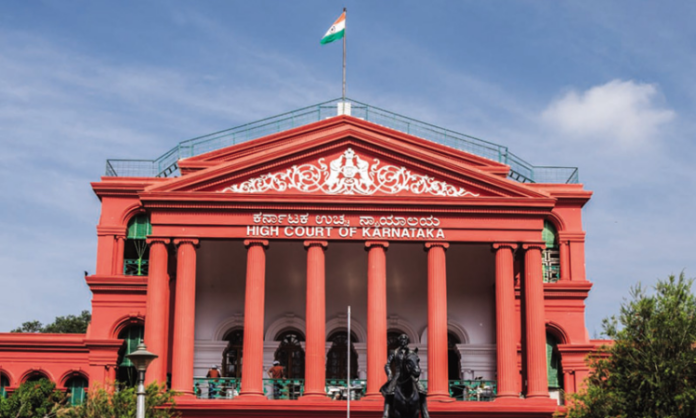
The Karnataka HC has cautioned family courts against mechanically directing husbands to pay maintenance to financially independent wives, stressing that such relief cannot be granted merely on the assumption that a husband is always obligated to maintain his wife.
Delivering the ruling, Justice Chillakur Sumalatha observed that courts must carefully assess the financial circumstances of both spouses before awarding interim or permanent maintenance. The judge emphasised that maintenance should be granted only when the wife is genuinely unable to support herself in a manner consistent with the standard of living enjoyed during the marriage.
“The fact that a woman is the wife of the petitioner cannot, by itself, justify an order of maintenance,” the Court indicated, adding that gender-based assumptions should not dictate judicial decisions.
The observations came while the High Court set aside a trial court’s order directing a husband to pay ₹20,000 per month as interim maintenance to his estranged wife.
The husband had challenged the order, arguing that while he earned around ₹60,000 per month, his wife was drawing a salary exceeding ₹1 lakh every month. He contended that the trial court failed to take her financial status into account before granting maintenance.
Agreeing with his submissions, the High Court noted that the wife’s own admitted income established that she was financially capable of maintaining herself. Although she claimed she was burdened with debts incurred during her marriage, the Court found that she had not furnished any concrete details regarding outstanding loans, EMIs, or the amounts allegedly payable.
In these circumstances, the Court held that there was no justification for directing the husband, whose monthly earnings were substantially lower, to pay interim maintenance.
Justice Sumalatha further observed that where a wife earns more than her husband and has no significant financial liabilities, such as the responsibility of caring for children, courts should refrain from granting maintenance merely because of traditional notions that women must be financially supported by their husbands.
At the same time, the High Court clarified that its ruling was confined to the interim maintenance order under challenge and would not influence the final adjudication of the matrimonial dispute. It also left the door open for the wife to seek maintenance afresh if there is a material change in her financial circumstances during the pendency of the proceedings.
